
Exploring Cloud Technology in the Era of Cloud, Blockchain and IoT

Rapid technological advancements are replacing traditional software solutions. Cloud computing, Blockchain, and IoT devices are some of the most popular solutions various companies use to ensure hassle-free business processes. If you wish to work in these fields, you can opt for a professional Cloud DevOps engineer certification. Such courses prepare you for work in the industry and help you develop the necessary skills.

You can enroll in Imarticus Learning’s SCBI program to ensure professional advancement in the software engineering industry.  
best software engineering certification courseTransforming Technologies: Cloud, Blockchain, and IoT

Recent technological advancements have made it possible for companies to adopt remote working processes. While the human workforce remains essential, technical solutions like Cloud, Blockchain technology, and IoT are making it possible to improve security, reduce error, and cut down on time-consuming work. On-premise architecture is often difficult to access, and therefore you need to create Cloud infrastructure.

As a Cloud DevOps engineer, you can help businesses shift to Cloud, enhance security through Blockchain, and opt for IoT devices. Adoption of new technologies can automate several business processes and optimize all operations. 

Companies often have to deal with various types of transactions, and doing this on-premise can be difficult. This is where Blockchain technology comes in. It records and stores all information on blocks. The data cannot be modified, and only a few can access it.

You can apply blockchain technology to IoT devices to ensure better security features. Companies that have heterogeneous infrastructure can use transforming technological solutions like multi-cloud, DevOps, and federated security. This can help with optimization and risk management.

Cloud computing also complements IoT devices. Due to Cloud computing, IoT devices can easily record and store a massive volume of data and then use it for accurate analysis.  

To learn the implementation of Cloud and other technologies like Blockchain and IoT, you can opt for a Blockchain course that takes a holistic approach and is industry-oriented. 

New-Age Software Engineering with Specializations

Suppose you are looking for a Blockchain course to learn about all current software solutions and their applications. In that case, Imarticus Learning’s Certification in Software Engineering for Cloud, Blockchain & IoT is a good choice. The duration of this course is nine months, and it provides extensive training to all students who wish to learn the latest trends in software engineering. 

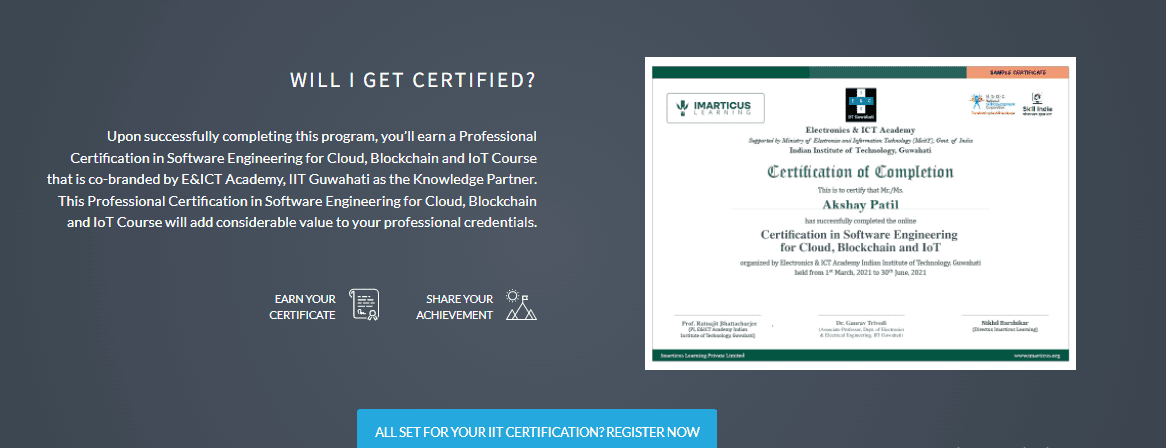
While the program focuses on the basics of software engineering, it also allows students to explore various specializations like Cloud, Blockchain, and IoT. As a student, you can develop your skills and research your area of interest before becoming a successful and Cloud DevOps engineer. This Certification in Software Engineering for Cloud, Blockchain & IoT course collaborates with E&ICT Academy and IIT Guwahati.
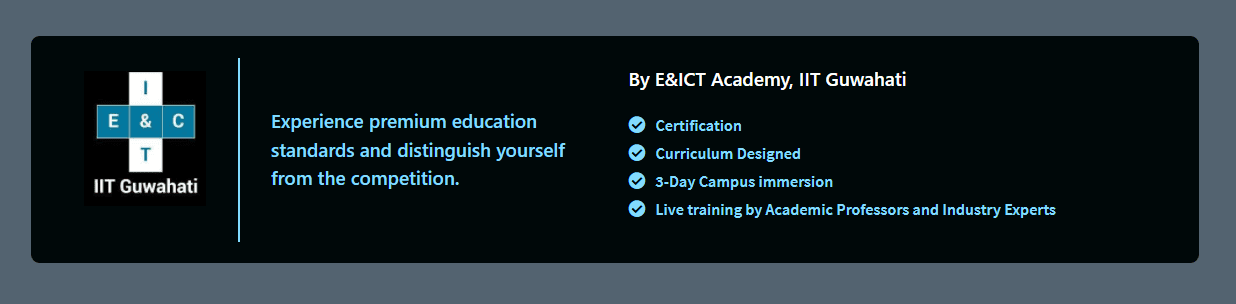
best software engineering certification courseTherefore, industry experts are there to assist you with any concepts you wish to know more about. These experts develop the curriculum so it is closely related to the current industry situations and needs. Imarticus Learning provides numerous projects for students to complete within nine months.

These projects are industry-based and, therefore, offer hands-on experience to the students. Apart from learning all crucial software engineering and Cloud skills, you will also develop extensive knowledge about NLP, machine learning, deep learning, data science, and computer vision.

There are numerous interactive sessions where you can interact with your instructors and discuss various topics with them. It will not only help you understand concepts better but also develop an interest in different fields. You can also acquire essential soft skills through interactions with peers. Such an approach towards learning will prepare you for the best careers in software engineering. best software engineering certification course
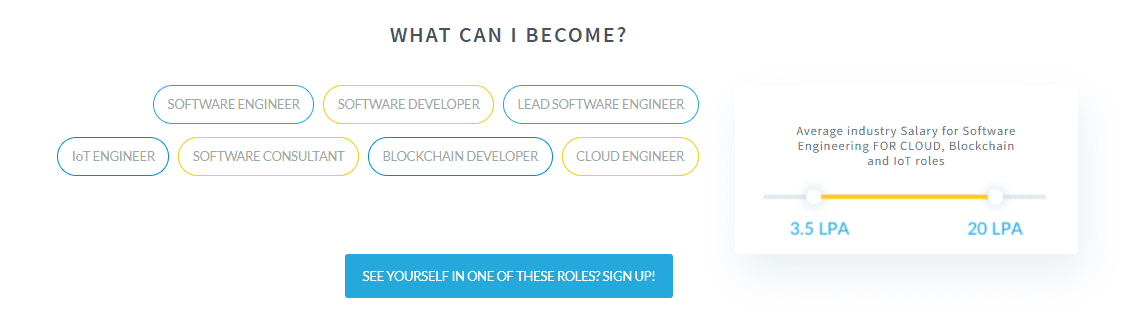
Imarticus Learning is one of the best institutes to offer professional Cloud DevOps engineer certification. With specializations in Cloud, Blockchain, and IoT, students will receive multiple opportunities for lucrative and long-lasting careers. 

Why should you Choose Agile Business Intelligence and Data Analytics as a Career Option?

The business intelligence and data analytics industry is booming right now. Data specialists are in demand, making this a great time to invest in business analytics courses in India. Business intelligence has become an integral part of business operations for both large corporations and small businesses alike in the last decade.

The demand for business intelligence has increased by an average of 20% annually, and it’s expected to continue growing into the future as businesses look beyond traditional reporting systems to more advanced business intelligence platforms. As technology continues to advance, so does the need for more people with these skillsets.

The Boom in Business Intelligence and Data Analytics Industry

– Agile business intelligence and data analytics are expected to grow by over 60% in the next three years, with more than 20% estimated job growth.

– The business intelligence industry alone will require hundreds of thousands of people.

– 25% of all organizations are already utilizing business analytics software today as a result of this boom.

– Data analytics is the business of crunching data to find insights in order to make better business decisions. This process has been made easier & faster with the advancement of big data technologies that have enabled companies to collect, store, analyze and distribute large volumes of structured or unstructured information.

– Businesses are faced with a staggering amount of competition for qualified talent willing to take on these high-demand roles – organizations need people who can manage vast amounts of information quickly and translate it into decision-making tools.

Why do you need to join Agile Business Intelligence and Data Analytics courses?

The business intelligence and data analytics industry is booming. In fact, IDC predicts that business intelligence will grow to a $76 billion market by 2020, with the demand for data professionals climbing even higher than before.

Data management teams are in high demand as well, but there’s one problem: most of these roles require skills outside of traditional business or finance backgrounds like mathematics, statistics, and computer science. That presents an issue for organizations trying to hire people who can handle complex analysis while also having some knowledge about their business domain—exactly what they need from those already on staff!

If you want to become a key player within this fast-growing field, it starts with investing in your education through Agile Business Intelligence and Data Analytics courses in India. These business analytics courses will not only provide you with the skills to advance your career, but they’ll also teach you how to use a variety of tools that are needed for business intelligence and data analytics positions.

They cover topics like data management best practices, database design principles, SQL querying techniques, and advanced business intelligence concepts such as predictive modeling or cloud-based Big Data platforms.

The demand for professionals who have business analytic skills is on the rise while there’s a shortage of skilled professionals with related experience—that makes this an excellent time to invest in your education by taking Agile Business Intelligence and Data Analytics courses today!

Become a BI and Data Analytics Specialist with Imarticus Learning

Imarticus Learning offers data & business analytics courses in India that are designed to help aspiring professionals break into the business intelligence and data analytics industry.

These BI and data analytics certification courses have been designed specifically for those seeking an edge over other business intelligence and data analytics professionals as they will help you develop business insights that are not only predictive but also prescriptive in nature!

For more insight, contact us through the Live Chat Support system or visit any of our training centers in Mumbai, Thane, Pune, Bengaluru, Chennai, Hyderabad, Delhi, and Gurgaon.

5 Reasons Why Is Cloud Computing Misunderstood

Companies are adopting Cloud computing as they shift from on-premise platforms. However, it is essential to have a comprehensive understanding of Cloud computing before starting the migration process. Imarticus Learning’s SCBI can help you gain the necessary expertise. The software engineer course is industry-oriented and helps students focus on specialized fields. 

Top 5 Reasons Why People Misunderstand Cloud Computing

While Cloud computing is essential for companies that wish to optimize and automate various processes, it can often be misunderstood. Cloud computing is one aspect of the technological developments that assist in securing and reducing errors in business. Therefore, you cannot wholly depend on the Cloud without using any external solutions.

If you have a professional Cloud DevOps engineer certification, you will identify the issues and provide the necessary software solutions. However, people expect a lot from cloud computing. Following are some of the reasons why these unrealistic expectations occur.  

  • Trying to Use Cloud Computing for Multiple Purposes

Cloud computing may not be ideal for all purposes. Before using it to replace on-premise platforms completely, companies should invest in a few trials runs to ensure the Cloud migration is the best option before using it to replace on-premise platforms completely.

Even then, you cannot migrate all applications. For example, you might have legacy applications or specific workloads which are not suitable for the Cloud. It would be best if you considered these aspects before depending on Cloud to solve all issues. 

  • Focusing on Cost Reduction

Companies often migrate from on-premise architecture to Cloud infrastructure to reduce the cost of business. However, cost reduction is not always a given when it comes to Cloud computing. It depends on what the business processes are and the total cost of ownership. So if cost is an issue, you will have to check the business model. Apart from this, Cloud computing improves agility which boosts businesses. So that is more important than reducing the cost for specific processes. 

  • Using Only One Cloud Strategy

Most companies use Cloud computing to simplify business procedures, and in doing so, they try to use one strategy for everything. But as a Cloud DevOps engineer, you will see that Cloud computing works differently for different workloads. Therefore, you need to analyze available processes and come up with strategies specific to those processes. Cloud strategies also need to work for various Cloud services. So, a strategy cannot be too simple. 

  • Assuming that Cloud is Always Secure

Cloud does offer enhanced security, but people often depend on that and do not use any other measures. Third-party hackers have attacked the public Cloud in the past few years. But people continue to misunderstand Cloud security. It is not something that is automatically enabled. Instead, Cloud security is your and the provider’s responsibility. Additional cybersecurity solutions need to be used to enhance security. 

  • No Monitoring After Cloud Migration

After the migration to Cloud is complete, people assume that there is nothing more to do. However, constant monitoring is essential. You need to monitor every operation to ensure that the company’s performance is precisely what it needs to be. Lack of post-migration management can lead to various issues and affect performance. 

How Can You Learn Cloud Computing? 

If you wish to learn Cloud computing, you will need to enrol in a software engineer course. Imarticus Learning offers Certification in Software Engineering for Cloud, Blockchain, and IoT. This course is in collaboration with IIT Guwahati and E&ICT Academy. Therefore, you can easily interact with professionals in the field and learn more about the practical applications of Cloud computing. You will receive professional Cloud DevOps engineer certification, and you can land a successful job in your field of interest. 

Imarticus Learning will ensure that you become a successful Cloud DevOps engineer. You can also explore careers in data science or computer vision or develop skills in machine learning, deep learning, and NLP.

Here’s How To Implement Better Cybersecurity Measures for the Internet

Cyberattacks, data leaks, and the growing appearance of cases in which failures have been reported in the control of the privacy of customers and users make it more necessary than ever to implement the resources and relevant actions that ensure the protection of people in the face of the imminent digital transformation brought about by a new digital society.

With the Cybersecurity program offered by Imarticus, become a cyber security expert today. Read on to discover more about cybersecurity. 

Cybersecurity and Data Protection

In a context where digital transformation and hyperconnectivity can pose new business risks, it is essential to have cybersecurity measures and information accessibility. And it is that avoiding attacks on information security, such as malware, ransomware, phishing, or malvertising techniques for the theft of strategic information or credentials, has become one of the main priorities for companies today.

Information Security seeks to protect the information in general business against risks that may affect the sustainability of the same, either in a physical or digital environment. While cybersecurity is the protection of information processed, stored, and transported by information systems that are interconnected within organizations and therefore more vulnerable to cyberattacks.

What Are the Potential Threats?

There is no doubt that cyberattacks against institutions and companies in the digital sphere will continue to increase exponentially in 2021. Despite the variety of types, four threats mainly concern experts:

  • Ransomware: Companies should not invest large sums of money in recovering compromised or ‘hijacked’ systems, they should invest in the development of preventive security policies that keep them protected, avoiding situations of digital data theft.
  • Theft of personal and sensitive data: Last year the theft of personal data increased exponentially. In 2021 the trend does not stop growing and although in previous years this information used to be sold on the Deep Web, other ways of getting money with it are being consolidated, such as extortion.
  • Cloud risks: Although this technology is quite secure, some vulnerabilities provide cracks for cybercriminals to access the files stored in these spaces. Some places in the network are normally synchronized with electronic devices that store a lot of private information about people.
  • Connected devices (IoT): There are more and more devices connected in smart homes, which raises the question of the amount of information that is shared with them and the security they have in place.

Solutions To Improve Cybersecurity

Exposing the risks, we need to come up with solutions. We, at Imarticus, believe that the main problem is the lack of culture and training in cybersecurity. Cybercriminals know this better than anyone, which is why the most widely used attack vector is people. Ethical hacking and cyber security courses from Imarticus Learning can provide an opportunity to young learners and tech enthusiasts to overcome these threats in the real world. 

Moreover, a phishing or a simple deception steals the access codes and the company or the institution is ‘hacked’. From there, introducing malware that blocks all the organization’s devices and servers and asking for a ransom for releasing them is usually the norm. 

A more sophisticated attack also steals customers’ private data and publishes it little by little until the ransom payment is made, which in most cases is requested in a Bitcoin-type cryptocurrency.

Conclusion

Therefore, all employees must implement basic cybersecurity protocols, and organizations must implement effective actions to ensure the protection of all digital information of their customers and employees. We, at Imarticus, offer cyber security expert training programs aimed at preventing and avoiding these cyberattacks and improving cybersecurity in the digital world.

Top 10 Software engineering trends you should embrace in 2021 and beyond

The year 2021 represented a breakthrough in software development innovations that are shaping our era, in the coming years we will witness its heyday. But besides witnessing them you can also be an actor with the certification in software engineering.

Technology advances and your professional development can allow you to lead the field. You must learn software engineering if you want to be part of the digital transformation. In today’s world, there are 10 very clear trends in software development. 

Cloud-computing

Although in the past this technology has faced some resistance, the COVID-19 has finally propelled its development. Especially with remote work, more and more companies are choosing to use cloud tools. It is a trend that will continue to grow in the coming years, as access to information has become vital.

AI

Artificial intelligence is here to stay, despite its incredible progress we are only at the beginning of the development of this technology. Predictive analytics, computer vision, and robotics are some of the branches that will gain momentum and are and will continue to be applied in all types of industry.

IoT

The internet of things is the basis for interacting with the user. Currently, the collection of information is vital for the development of technology and to ensure user satisfaction. There will be an increase in the use of IoT in the healthcare sector and everything related to remote work.

Big Data

With more and more ways to obtain information and with so many needs in the market, Big Data will only settle in the daily development. Combined with Machine Learning and AI the applications of Big Data are endless and useful.

Cybersecurity

As security advances increase, so does the technology to create security breaches. Cybersecurity has become a top priority not only for industry but also for governments. Protecting information is even more essential than obtaining it.

Virtual Reality

In the video game and video game industry, virtual reality has been acclaimed and will continue to be acclaimed. But it is also beginning to be adopted in other sectors such as education and training.

Mixed Reality

Mixed reality is one of the technologies with great potential in software engineering. It is a combination of virtual reality and augmented reality. This technology allows the creation of immersive experiences complemented with digital content. Perfect for training!

Blockchain

Although Blockchain is often related to cryptocurrency and bitcoin, many banks are currently interested due to the ability to share information. Blockchain will continue to be applied in finance, media, and even healthcare.

Progressive Web Apps

Progressive web apps are an intermediate between a website and an application. The advantage is that you don’t have to download anything and still have some of the benefits of an app. You could say that they are the natural evolution of web pages.

Low Code Technology Development

Technology is becoming more and more accessible and software development is not lagging. Solutions without traditional coding will allow people without much knowledge in programming to develop their ideas into digital solutions. Although there is skepticism about this approach, there is indeed more and more interest in developing applications.

The Certification in Software Engineering for Cloud, Blockchain, and IoT (SCBI) is not only a software development course but is a program that will prepare you to implement practical solutions in the main trends in various industries. Imarticus offers you the opportunity to enrich and advance your professional career. It is an extensive 9-month program that will prepare you for the challenges of the modern world with industry experts.

How the Transportation and Logistics Industry is Leveraging IoT and Blockchain for Environment Monitoring

Several external factors impact the businesses in the transportation and logistics industry. These determine the condition of the business processes and how the clients respond to them. Environment monitoring helps track all these factors that can impact the business processes and change the requirements in terms of services or products.

You can choose Imarticus Learning’s SCBI program if you are interested in the environmental monitoring of transportation and logistics businesses. As a Cloud DevOps engineer specializing in IoT and Blockchain, you can work in various industries, including transportation and logistics. 

Application of IoT and Blockchain in the Transportation and Logistics Industry

Commercial transportation is a huge part of several businesses. However, there are specific logistical challenges involved. The most significant of these challenges is cost. Following traditional methods of monitoring and evaluating transportation, companies often rely on paper transactions. This leads to an exorbitant cost that companies cannot reduce. Apart from the costs, processing times also increase. It can take ages and cause a delay in both payment and delivery. Therefore, there is a need to streamline all business operations and optimize them to reduce cost and time. You can do this through IoT and Cloud computing as well as Blockchain integration. 

best software engineering certification courseTo understand how the implementation of IoT and Blockchain can benefit the transportation and logistics industry, you need to consider environmental monitoring. Constant environmental monitoring with IoT and Blockchain can provide a clear picture of all demographic, economic, social, political, and legal factors affecting the industry. 

Apart from external factors influencing business processes, there are often risks involved that need assessment. In the transportation and logistics industry, you will have to deal with the risk of duplication or manipulation of files. If this happens, then transportation will be held up till all logistical issues are resolved. However, with Blockchain technology, such manipulation is not possible. The digital files created cannot be modified by anyone. 

IoT can also be instrumental in cargo monitoring for the transportation and logistics industry. IoT improves transparency and monitors the movement of cargo in real-time. Here sensors are used, and all parties involved are alerted in case of any breach. Thus, there is little chance of corruption or fraud. IoT and Blockchain can also assist in cargo shipping. The use of such technology ensures that the code of conduct is maintained and a continuous flow of data. The increased accessibility of information ensures that all transportation processes are optimised and transparent. 

To learn IoT and Blockchain, you can opt for a Blockchain course. However, it would be best to choose a course that includes all concepts related to software solutions. 

Understanding the Importance of IoT and Blockchain

To understand the importance and application of IoT and Blockchain technology in the transportation and logistics industry, you need to enroll in Imarticus Learning’s Certification in Software Engineering for Cloud, Blockchain, and IoT. The course offers in-depth knowledge about big data processing, IoT analytics, Blockchain fundamentals, and Blockchain development.

The duration of the software engineering program from Imarticus Learning is nine months. You will receive extensive training and industry experience during this period. Apart from the Blockchain course and specialization in IoT, you will also develop Cloud, NLP, machine learning, deep learning, and data science skills. It will open up many doors, and you can land a job in your field of interest and expertise. You can become a Cloud DevOps engineer or explore different careers. 

best software engineering certification courseThe software engineering program from Imarticus Learning is in collaboration with IIT Guwahati and E & ICT Academy. So, you can interact with industry experts and discuss the impact of IoT and Cloud computing in the current times. This will help you establish a network within the industry. 

Cloud Computing Decoded – 7 Reasons Why You Should Consider Software Engineering in Cloud, Blockchain & IoT

IoT and cloud computing backed by blockchain are on their way to revolutionizing the world. Software engineering in these areas has become critical to exploit the full potential of these technologies. Considering the business opportunities that are opening up and the multiple benefits that these technologies bring with them, you must be prepared to face the challenges of the industry.

Below you will find the main reasons why software engineering will take great importance in blockchain, IoT, and cloud computing and why a professional cloud  DevOps engineer certification is the best career move for you.

  1. Reduces Business Costs

For starters, one of the most important attractions of cloud computing for businesses is the reduction in costs. By using the cloud, companies are freed from spending money on the purchase and maintenance of equipment. Nowadays it is no longer necessary to invest in the construction of a data centre since everything that is needed can be obtained through the cloud.

 2. Provides Data Security

The Blockchain is coming to alleviate one of the main concerns about cloud computing, security. Security breaches can wreak havoc on any enterprise. Although cloud computing is currently very secure and one might believe that it is not as compatible with blockchain, the truth is that both technologies can be integrated, and this is where the cloud  DevOps engineer will shine.

3. Allows Total Mobility

How not to mention one of the main benefits of the cloud? Thanks to the cloud, all information can be retrieved, reviewed, or processed from any authorized device in just a few clicks. Indeed, this has completely revolutionized the way we work and thanks to the Internet of Things the impact is growing.

4. Promotes Collaboration

After mentioning how accessible information is thanks to the cloud, we must recognize that this also benefits the connectivity between people. Collaboration between people thanks to the cloud allows information to be shared in a simple, simultaneous, and above all secure way.

5. Helps Quality Control

Having a cloud system where all documents are stored in one place makes it easier to maintain data consistency. In this way, human errors can be avoided more easily, having a clear record of any update or change of information. And this also adds value vis-à-vis customers.

6. It Has Automatic Updates

By having a cloud computing service, updates, upgrades and modernization are generally paid for by the service provider. This is another excellent way to save costs and time. In reality, everything is left to the cloud  DevOps engineer.

7. Allows Loss Prevention

Storing all the information inside computers and physical hardware can lead to big problems if the equipment fails. Computers can fail on a frequent basis and this can lead to a great loss of information. Many companies rely on access to their information to work, so disruptions of this type are major setbacks. Cloud computing avoids this risk by ensuring access to information regardless of what happens to the physical hardware.

These are some of the reasons why these technologies have become relevant. These technologies are new, some relatively unknown, and their implementation, like any technological change, involves organizational risks. If this interests you and you want to go deeper into the subject, the professional cloud  DevOps engineer certification is the perfect option for you. With us, you will find the best cloud, blockchain, and IoT software engineering course (SCBI) designed by E&ICT Academy, IIT Guwahati, and Imarticus Learning for new-age software engineers.

Mapping Tech: Software Engineering in Cloud, Blockchain, and IoT in the New Tech-Aide

Technological breakthroughs have brought to the table new elements to develop business and design processes. New technologies are a crucial part of development in pretty much any industry.

The first thing to analyze is cloud computing engineering. Storing data in local servers can bring issues related to scalability, non-resilient development, and limited access to key information within a company. Cloud software engineering is a solution to deliver and store in-demand IT services via the internet.

Cloud computing brings opportunities to have serverless access to information using a public or private cloud solution. Going a little further, there is also the potential of a non-intermediated ledger to register and consult transactions.

Giving up the third parties involved in any transaction could dramatically reduce the timeframe but put in peril information integrity. Blockchain technology offers a solution to have a decentralized, digitized ledger in which transactions are recorded in an encrypted network.

This allows involved parties to access the immutable records, avoiding fraud and keeping track of every transaction made. In an interconnected world, wireless devices that share information without physical human interaction can be an interesting alternative to reduce time and make objects more responsive. IoT technologies are creating a new dimension, in which the physical and digital worlds work together and merge to have automated reactions.

Applications of Technological Inventions

These new inventions pose new paradigms of how things can be done and improved. Different industries have been impacted and engaged in finding new ways to adapt technologies to make more processes more efficient and transparent. From multi-cloud servers in a healthcare center to remote access to the manufacturing process, the cloud is a layer that will enable companies to be more flexible and re-imagine the way of accessing and storing data.

This added up to Blockchain technology, in which vendors, retailers, and manufacturers can follow the process with on-time information, reducing the revision processes and giving the total control of their value chains are some of the interesting leveraged advantages. Finally, the information can be collected and delivered using wireless devices that share data, in a faultless automatic way. Cutting-edge technologies integration offers a new perspective of data and operations.

New Tech-Aide

The new set of technological services also brings attention to the new roles of professionals. New tech-aide services will be needed to comply with industry demands. Systems would need to be updated to get into this new IT layer, users will need to be trained and supported, and companies will need to identify opportunity areas to adopt the technology. From cloud migration to roadmaps definition, the tech-aide will be crucial to make the transition feasible.

Immarticus As Your Career Developer

The new IT world requires getting more qualified professionals. Online software development courses with high standards are required to give the right tools to engineers. Upgrade your profile, impress employers, and get a practical industry-based deep knowledge with the Certification in Software Engineering for Cloud, Blockchain, and IoT course

offered by Imarticus. Learn technology using our advanced, flexible IT platform, in which you can learn at your own pace from industry experts and apply concepts to business cases. This extensive program offers you to get a strong foundation in software engineering and a deep understanding of new technologies through IoT, Cloud, and Blockchain development courses.

Conclusion 

New technologies are changing the industry and having impacts on clients. New-Age software engineers are in demand to make this transition happen. You can adapt your schedule and get the skills you need to be part of the IT transition with our software engineer training onlineEnroll now in our course and skyrocket your career in the new tech-aide!

What Industries Need Agile Business Analysts?

The world of business is changing fast. To keep up with the rapid pace, companies will need to adopt new strategies and technologies that work for them. One such method often get adopted by many companies is Agile Business Analysis.

This blog post will explore what industries need agile business analysts, why they’re essential in various fields, and how to become successful business analysts.

What is an Agile Business Analyst?

An agile business analyst training helps a business develop its strategy and identify the most financially sound path to take. Agile analysts use their technical knowledge of agile methodology, specifically Scrum and Kanban, to build roadmaps and plan out projects with development teams iteratively.

Why Agile Business Analysis?

  • Businesses are fast-paced, and the market is constantly changing.
  • The change in the market means that companies must adapt to new conditions.
  • The best way for businesses to adapt to new conditions is by bringing in agile business analysts who will work with the company’s teams, managers, and stakeholders to ensure that this transition into Agile management practices is smooth.

Why Do We need Agile Business Analysts?

  • Businesses, teams, and stakeholders want to be involved in the discovery process when figuring out how best to schedule work and break up projects.
  • They understand that this will increase transparency among groups because everyone wants their voice to get heard.
  • Engaging those involved ensures that everyone is on the same page and will provide a more effective product and less confusion later on.
  • The ability to be an agile business analyst can open up doors for career advancement. Agile business analysts who want to move into other areas such as marketing or finance may do so more easily by having experience in this methodology.
  • Agile business analysis is a growing trend that allows employees to be cutting edge of new methodologies and technologies.

Agile Business Analysis Job Duties and Skills

Agile business analysts typically perform the following job duties:

  • Conduct research about client business needs
  • Interview client representatives to learn about their business challenges and create use cases
  • Create wireframes, mockups, or prototypes of applications based on user research
  • Conduct testing on early versions of the application

Explore and Learn with Imarticus Learning

The Agile Business Analyst PG Program is a six-month program that will prepare students for the tasks of an Agile Business Analyst. This placement-driven curriculum teaches them to handle current business analysis processes with applicable tools and approaches through several case studies, role-playing exercises, and hands-on training.

This program features a one-of-a-kind pricing structure. Student pays their fees only when they obtain a job offer with a minimum income of 5 lakhs per annum, with the possibility of earning up to 12 lakhs per year.

Some course USP:

  • This business analyst certification course aid the students to learn job-relevant skills.
  • Impress employers & showcase skills with the business analyst Course endorsed by India’s most prestigious academic collaborations.
  • World-Class Academic Professors to learn from through live online sessions and discussions.

Here’s How Cloud, Blockchain, and IoT Architectures Provide a Robust Blueprint for a Vendor-Neutral Data Sharing and Marketing Network

It is estimated that in the coming decades, an ecosystem-based on blockchain will emerge and it is this technology that would reduce various issues such as applications, growth opportunities, identity management, supply chain province, and many more.

Taking into consideration our Blockchain certification course, it is important to note the growth that IoT is having and the importance of blockchain in emerging projects today. Especially those designed to improve the development and operation of IoT devices, which makes us assume that in the short term both technologies are positioned as the best alternative for always connected and automated systems for which the cloud will be indispensable.

Why Blockchain?

The main areas to be worked on for improvement supported by Blockchain are framed in scalability, security, interoperability, legal, compliance, and regulation. But it also seeks to bring IoT to highly secure and reliable spaces. Definitely, blockchain is a technology with many potentialities, some are still very green, but its future is promising.

Within the branch of challenges that are to be overcome in the industry, the effective management of information is an important issue to consider, so the immutability and privacy offered by the blockchain network is something that is at the forefront of the struggle in the transformation of industries.

With the use of blockchain, the data that will be sent by sensors – to speak of an example – will be hosted on the network immediately, and thus the data cannot be altered, which guarantees transparency in the data provided.

Blockchain and IoT

Combine blockchain, IoT, and cloud products to offer an end-to-end supply chain solution. For example, using IoT-enabled shipping containers and sensors that can provide real-time updates on shipping processes. The market is increasingly demanding more security, more transparency, and more genuineness in the products offered to the consumer. It is therefore essential to incorporate technology and digitization in the solutions offered to customers, to operate more securely and offer more transparency.

The combination of cloud, blockchain, and IoT allows that every time a device in the supply chain uploads information to its node of the platform it is encrypted so that it cannot be modified by the rest of the actors. It can be applied to different sectors that have value-added products, especially those that may be under the shadow of fraud. What this solution does is to put certainty and credibility in the face of those threats that may exist in the product itself or the entire sector.

The design of a digital strategy based on blockchain that allows the sustainable adoption over time of a solid plan for a supplier-neutral data exchange and marketing network is fundamental. All to achieve a transformation program that facilitates the identification of the immediate challenges in this sector and achieve greater effectiveness, efficiency, and agility of enterprises.

Certifications with Imarticus

The best certifications for software engineers focus on emerging digital fields such as cloud, IoT, and Blockchain. Software developer training aims to adopt the technology to transform business models along with a culture of continuous learning to succeed in the era of the digital economy.

Imarticus cares about your professional development so we only offer unique, cutting-edge courses that will enhance your career. The Certification in Software Engineering for Cloud, Blockchain, and IoT is a 9-month extensive program that will prepare you for the current digital era we are living in.