Let FinTech Help Jumpstart the Economy

The year 2020 opened with a global crisis. The COVID-19 pandemic is reshaping the business and development sectors. The impact of this on the world economy is calculated to be worse than the 2008 crisis. However, there are fundamental differences between the two cases. The epicentre of the economic crisis in 2008 was big banks, whereas this time around the impact is more on the Fintech. However, they can come a long way in helping economies to recover from this crisis. If you look deeper into the segment, there are some advantages in the way they work. Most of them are typically online platforms, so they can continue to function in the remote-work environment, and most of them can process a large amount of data.

How Can Fintech Help?

Fintech could leverage artificial intelligence and machine learning to collect and analyse data to perform predictive analysis. This will help the firms to re-design the products and services to suit the changing economic landscape across the world.

Most of the fintech companies are trying to rise to the challenging situation posed by the COVID-19 pandemic outbreak. Many fintech companies are relaxing their terms and conditions and amending their service norms to help their clients deal with the crisis. Fintech across the globe – from India to Russia, U.K. the U.S etc. are using their data insights and talents to extend generosity.

Let us look at some examples. The London-based fintech Aire has come forward to act thoughtfully – they have offered free access for three months to their credit insight service. They have considered that the lenders are stretching beyond limits and are struggling to put up a real-time picture of their customers.

India’s leading fintech in cryptocurrency, CoinDX has successfully raised 3 million dollars in Series A Funding. The company can use this to launch new products and support market research and development. They are actively pursuing their vision of leading India into a 5 trillion-dollar economy. Being India’s largest exchange, they are shouldering the responsibility to lead India’s crypto adoption.
Another fintech, Digital Onboarding, extended free unlimited usage to empower their customers and help them understand how to use their digital services and access money online, without having to visit their branches.

The COVID-19 crisis has pushed organizations to re-think the conventional concepts of payments and money and try to broaden and innovate the scope of re-thinking the way business is being done. This crisis is not considered as a shock that pushes the gig economy further to new levels. Instead, many fintech like to see this as an opportunity to think about continuing the business with limited resources, shifting to co-working spaces, for instance. To acquire better fintech capabilities, many organizations are encouraging their employees to enrol in good online fintech courses.

It prompts the way work has been done. They are trying to continue their work seamlessly from remote spaces using existing tools like video conferencing and project management tools. Some organizations are considering combining virtual reality and artificial intelligence to convey information more effectively than it is done through face-to-face meetings. The COVID-19 crisis has kick-started the convergence of physical and digital working and this could prompt a significant reduction in the need for big office spaces.

Conclusion

Fintech companies are leading the way to re-look and re-imagine the way business is done today. With many organizations are following the path, there will be a substantial increase in the number of businesses leveraging technology to facilitate remote working options. Businesses are surely going to benefit from this cultural shift. Fintech companies are going to jump start a transition that is going to have a ripple effect on other economic sectors.
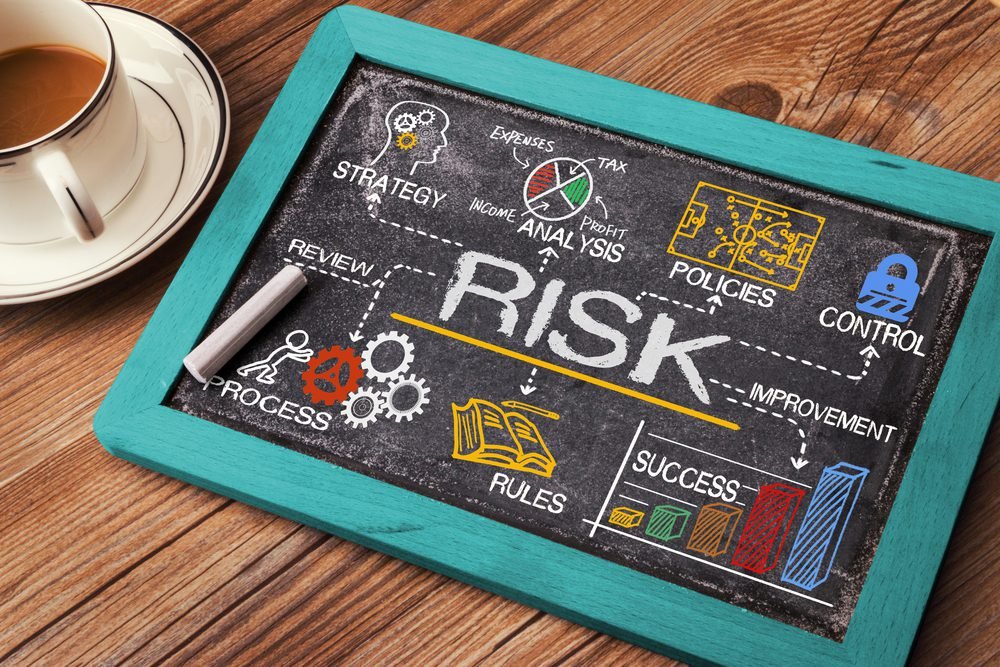

Risk Management As a Career option: All you need to know!

The world around us is more dynamic than others. With growing businesses and the economy, the world has become prone to more and more risks. However, risks increase the chances of profitability for a business. Risks if managed efficiently, can become a blessing for the company but if the risk management activities are not undertaken with caution, things can go haywire.

Therefore, it is important for anybody who manages business risks to have undergone Banking and Finance Courses after Graduation for a better understanding of the job role.

A career in Risk Management

A risk management career can be challenging and rewarding at the same time. It is considered as one of the most important jobs owing to the current situation. He plays a pivotal role in forecasting and managing business and operational risks for a company. A risk manager must be aware of the different corporate governance policies and should add value to the functioning of the organization.

The major roles taken up by a risk manager are:

  1. He identifies risk based on his experience and his knowledge of numbers
  2. He calculates the possible outcomes of a particular case or an activity to understand the level of risk the company is exposed to.
  3. He is also responsible to come up with different models based on his past experiences so that any known or common risk can be prevented.
  4. Managing the risk management team and delegating the responsibilities based on the skillset of the person.

This is not an exhaustive list. A risk manager’s job is multidimensional and has never had such significance before.

The required skillset

A risk manager must have a diverse skillset. As the job requires analysis of huge data sets, you need to have proper analytical skills to become a successful risk manager. Data interpretation and number crunching form the base of the job role; therefore, you must be good with numbers.

Also, an individual must possess critical reasoning and logical thinking abilities to become successful in the field. Apart from data crunching, an individual must also be a decision-maker who knows to take instant decisions. He must have a very strong judgment.

Other job roles in risk management

Risk management is an extensive field where different job roles can also be taken up. Risk management profiles pay very well and also provide different growth opportunities. Some of the popular job roles in risk management are as follows:

  1. Risk advisor
  2. Loss control specialist
  3. Risk specialist
  4. Financial risk controller
  5. Risk analyst
  6. Safety consultant
  7. Chief risk officer

Becoming a risk manager

An individual must be a graduate before he takes up a risk management job. However, if you are only a graduate, you will be offered a less challenging role with lesser pay To build a successful career in risk management, you will have to have a strong academic hold. The job requires hard work and preparation and you should start preparing for these roles well in advance. Some of the courses that can help your cause are listed below:

  1. Financial Risk Management: This course is very popular and a lot of risk management aspiring professionals go for this course as it provides deeper insights into the subject.
  2. Professional Risk Management: This course is taken by professionals who are looking forward to upgrading their skillsets. It has 4 online exams module. The course can be easily completed

Risk management is an ideal job for people who have experience in finance and analytics. Also, an individual can make a strong standing career in the field as it is both challenging and well-paying.

What are the Types of Business Analysis

Business analysis is a research field that aids you in seeking business requirements and shaping solutions to business issues. Also, it consists of a software-enabled development component. Business analysis provides nitty-gritty of the progress of the initial model for all kinds of projects. It encompasses the solution to help investors of projects who implement business modelling in an organized way. 

That being said, it is quintessential for business analysts or professionals pursuing a career in business analysis to learn about various business analysis techniques. Some of them are explained below:

SWOT Analysis

SWOT stands for: S- Strength, W- Weakness, O- Opportunities and T- Threats. It is a comprehensive assessment that takes into account the factors that are termed internal – such as Strength and Weakness, as well as the external such as Opportunities and Threats. 

SWOT analysis is a four-dimensional approach, wherein business analysts place the information as the answers for every dimension. Moreover, they answer the queries under all the dimensions. 

SWOT analysis is gaining popularity across various industries as it is simple and is not just limited to business analysis. In addition, it can be used at any phase of the project if required with a majority of people aware of this approach.

MOST Analysis

MOST analysis contains four components, namely

  • M-Mission
  • O-Objective
  • S-Strategy
  • T-Tactics

This is an effective business analysis model that allows business analysts to assess the working of an organization, strategies to meet the goals, and tactics to maintain the strategic arrangement. 

MOST analysis is an organized business analysis technique utilized by all the working levels in a company from top to down. The approach makes sure that companies stay focused on the objective which is a key aspect for their success story further. 

PESTLE Analysis

Different environmental aspects impact businesses in their strategic framework. These important aspects are referred to as PESTLE which is an acronym for the following:

  • P- Political
  • E – Economic
  • S – Social
  • T – Technological
  • L- Legal
  • E – Environmental

All of the above-mentioned factors influence decision making, as such, assessing these important drivers is the vital job of business analysts. Business analysts implement the PESTLE analysis technique to know and recognize the factors inside the environment of organizations and evaluate the impact of these PESTLE factors on the future landscape of organizations.

CATWOE Analysis

CATWOE analysis is a general way of thinking for a business analyst to identify the key goals of a business. It recognized the pain points and the effect of the solution on the business and people associated with it. CATWOE stands for

  • C – Clients
  • A – Actors
  • T – Transformation
  • W – Weltanschauung or World View
  • O – Owner
  • E – Environmental Constraints

CATWOE analysis puts various perceptions of market players on a shared platform and thus, offers an overall understanding of the integrity of the data, assumption, and ethical viewpoint. Further, it aids business analysts to sort different perceptions based on their merits. 

Business Process Modelling (BPM)  

Business Process Modelling technique is used during the assessment stage of a project to identify or examine the loopholes between the current and the projected business model that businesses are going for. 

In a BPM project, business analysts perform various tasks including, business model assessment, strategic planning, technical analysis for complicated business solution, and specifying process and build it.

Conclusion

To wrap up, these techniques explained above are beneficial and are a must for any business analyst striving to exercise the most effective business analysis techniques. Moreover, they can enrol in any business analysis course to grasp more about them with real-time situations.

What are the Perks of Learning Data Science with Imarticus post COVID-19?

Covid-19 has pushed most corporate sectors to the inside of people’s homes. This in turn has made the already big flow of data turn into a tidal wave. Basically, the whole industry more or less relies on data analytics now. Experts state that there is going to be a major hike in the positions for data scientists in the near future.

artificial intelligence and machine learning coursesHowever, one thing to be concerned about is that it is going to make the already competitive industry even more neck and neck.  The first preference for positions is going to be data scientists with experience, and then freshers with a high level of skills.


The best thing to do in this situation is to properly learn data science with artificial intelligence and machine learning from a good institution.

Imarticus Learning is one of the topmost options when it comes to data science in this country. They offer PG programs in the data science course with placement in renowned companies. This will give you a much-needed boost when you are starting as a fresher in the sharp-edged competitive world of data science.

Major changes

Because of the world working in a virtual space, it has recently been in the trend for companies to hire professionals from other parts of the country along with locals. This is true for all sectors, not just data science. The perk of this trend is you can get a job anywhere in the country without moving an inch from your home. The downside is, you’re competing against numerous data scientists all over the country.

The only thing that will give you an edge over others in this condition is to learn data science from institutions that will put you in a speed race with a proper destination. Basically, institutes that will enhance your skills to the maximum while giving you a placement offer right out of your course.

This will help you gain all the real-world experience you might miss out on while being stuck at home, as companies used to provide workshops as well as in-person training for the new data scientists joining the team.

 Benefits of a data science course with Imarticus Learning post Covid-19

Many institutes in India offer an artificial intelligence and machine learning course after graduation. Imarticus Learning is one of the foremost institutions when it comes to this field. They have various forms of learning to offer, such as full-time courses for students, as well as part-time ones for working professionals who want to polish their skills again or change careers. There are lots of benefits of getting a data science degree from Imarticus Learning, such as:

  • They offer a full-time course, as well as a part-time one for those already with a job.
  • They have a course set so versatile that you will never have any problems working in any sector with your data science degree.
  • They provide a data science course with placement offers to renowned companies in different sectors. So, you have a chance of working in your dream job right from the start.

Conclusion

If expert reports are to be followed, companies in the future may be inclined to hire more versatile workers than specialists. So future data scientists will need to be razor-sharp all the time with an ability to do a variety of different types of work at the same time. Check out Imarticus Learning’s all-rounded PG program on data science if you are thinking of pursuing this career or re-polishing your skills.

How to navigate the potential minefield of ‘Mergers and Acquisitions’ in the Investment Banking Industry?

Most of us are aware that Investment banking is a division within banking that broker transactional relationships between corporations and governmental bodies and private investors. But mergers and acquisitions is another ball game.

best investment banking courses with placement in IndiaIn this article, we discuss how to navigate the potential minefield of M&A and what investment bankers do in mergers and acquisitions.



We also provide recommendations on the ways one can learn investment banking to improve their career prospects.

Mergers And Acquisitions: An Overview

There are several activities included within the ambit of investment banking such as underwriting, sale of securities, facilitating reorganizations, and broker trades. But, perhaps the most important function of an investment bank is the end-to-end management of mergers and acquisitions.

In simple terms, an acquisition is when a company purchases another and positions itself as the new owner. A merger is when two companies of equal footing join forces to become a single entity. For example: When Daimler-Benz and Chrysler merged in 1998, both firms ceased to exist and a new firm called DaimlerChrysler was formed with new stocks.

Similarly, there are other transactional activities that fall under the bracket of M&A. Some of the others are:

  • Consolidations, where a new company is created by combining the core businesses while abandoning the older structures. This is done with approval from stockholders of both companies.
  • Tender Offers, where a company buys the outstanding stock of another firm at a price different from the market price. Most tender offers end in mergers although sometimes the acquiring company continues to exist as a unique entity.
  • Acquisition of Assets, where one firm directly acquires the assets of another firm that has typically declared bankruptcy.
  • Management Acquisitions, where a firm’s executives purchase controlling stakes in other firms.

Companies keep acquiring other firms mainly for two reasons: eliminating competitors by acquiring them and growing by acquiring new product lines, intellectual property, and human resources.

What Investment Bankers Do In Mergers And Acquisitions

An Investment Bank’s role in M&A can be categorized into two buckets: seller or target representation and buyer or acquirer representation. The banker performs either of these two roles on behalf of his investment banking firm.

An investment banker undertakes and oversees the following activities in any M&A transaction:

  • Representing and guiding the acquirer in determining the value of the firm being acquired, structuring the offer, negotiating the deal on their behalf, and so on.
  • Representing and assisting the target company to determine the market value of the company, providing legal advice during the negotiation process, and broker the best deal for the sale.
  • Advising both parties vis-a-vis market economy, industry trends, deal structuring, market dynamics, and pricing.
  • Performing market research and using their network to connect the seller with the best buyers.

How To Be Successful As An Investment Banker

An investment banking job is a highly lucrative career path that promises long-term stability and growth as well as a hefty remuneration. Because of the high-stakes nature of the job, companies prefer to invest in candidates with high potential and a strong background.

To become an investment banker, formal education in finance is highly recommended. Most hiring teams in investment banks look for candidates with a strong aptitude in finance, law, strategy, and operations. Similarly, prior apprenticeship or internship experience in investment banks also gives a candidate a competitive edge over others.

Conclusion

If you are seeking a growth avenue in your career as a finance professional, then entering the world of investment banks is a wise choice. For a working professional, a good way to learn investment banking is by enrolling in an online MBA in Investment Banking and Equity Research degree.

Having an MBA will have a candidate earmarked for top managerial positions in the most prestigious divisions within investment banking such as M&A.

How Can I Be an Expert in Financial Modelling?

Financial modelling is used to create strategies & business models around which the business could revolve. They are used for the evaluation of the performance of any particular firm/company. A lot of processes are performed under Financial modelling like budget analysis, resource allocation, cost analysis, etc. It helps in fruitfully utilising any company’s resources.

Financial modeling course is also used for comparative analysis of any firm’s performance to its competitors. A financial modeller has certain skills that are used for creating business strategies & for predicting the trends. Read on to know more about a successful financial modeller.

Skills Required to Become an Expert in Financial Modelling

  • A good financial modeller can read and analyse financial statements. To build a successful financial model, you will have to be familiar with accounting terminologies like accruals, amortization, revenue recognition, etc.
  • Besides being able to read financial statements, a financial modeller should be able to link various types of account statements which are the income statement, balance statement, and cash flow statement.
  • A good financial modeller has good forecasting skills. Forecasting through data analysis helps in determining the future course of a firm/company & also helps in predicting the upcoming trends. It helps in adapting to changes in the market quickly.
  • To become an expert in financial modelling, you need to have good problem-solving skills. One should be able to simplify complex problems and find solutions to them. Financial statements can get very complex, giving attention to minute details is a must for a financial modeller.
  • Good designing skills are required to build a successful financial model. You need to make the flow charts, tables in such a wat that it could be understood by other employees too. Applications that are used for creating financial models should be known to a financial modeller.
  • A good financial modeller has good presentation and communication skills so that he/she can easily convey business strategies to his/her team.
  • A good financial modeller is familiar with the different types of financial models and when to use them. Different types of financial models are Three Statement Model, Discounted Cash Flow Model, Merger Model, Consolidation Model, and many more.
  • A financial modeller is aware of the taxation processes. He/she is also good at risk identification & management.

Education Required to be an Expert in Financial Modelling

If you have done a degree in MBA and have a bachelor’s degree in accounting, it is perfect for you to enter in the financial modelling field. There are also certain certification courses available on the internet. One should also try to practice to build various financial models with real data set, this will help you in understanding the real-life problems faced while creating financial models. One can also opt for a financial modelling course from any trusted source.

A lot depends on individual performance to be a successful financial modeller. The new-age technologies like big data, artificial intelligence, etc. are also being used in Financial modelling. A good financial modeller is familiar with the latest technologies and uses them to create automation in building financial models. Data analysis is also being used by financial modellers nowadays to analyse big chunks of data & extract meaningful information that can be further used for business forecasting.

A financial modeller is very important to any firm as he/she helps in shaping their business and realising potential opportunities at the right time. It is good to study the fundamentals of Financial modelling to be able to build a financial model. This was all about how one can become an expert in Financial modelling.

Case Studies: Training Neural Networks to Play the Legendary Snake Game!

Video games play a critical role in developing and evaluating futuristic AI and ML models. Thanks to their performance in a variety of tests, the gaming world has been used time and again as a playground for testing AI devices.

This isn’t a new phenomenon, but one that goes back at least 50 years. The Nimrod digital computer built by Ferranti in 1951 is widely touted as the first known example of the use of AI in gaming. Mega Man 2 was used by Japanese researchers to test AI agents and the AI system Libratus was used to beat pro players of Texas Hold ‘Em Poker to make technological and gaming history.

The Snake game is quite a familiar feature of many childhoods because of its simple objective and playing process. The player controls the snake by eating apples which are spawned at random locations to optimize the game. For every time the snake consumes an apple, the snake must begin to expand one grid. And the one rule? Don’t let the snake collide with anything.

To take things one step further, global researchers and have been applying neural networks and machine learning algorithms to this legendary game.

Machine Learning Course If you’re a student in a neural network course or a machine learning course, this is fertile ground for experiments of your own! Here are some case studies born of such experiments:
Creating the Snake Game Using Deep Reinforcement Learning

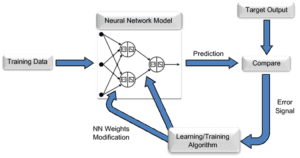
In this experiment, the researchers used a Convolutional Neural Network (CNN) that had been trained with a Q-learning variant. The aim of the experiment was to use a Deep Reinforcement Learning model in enabling a self-ruling agent to play the game with the constraints getting stricter as time passes.

A reward mechanism was also designed to train the network, make use of a training gap strategy to circumvent training during target changes and categories a variety of experiences for better training.

The final results of the experiment showed that the agent outshone the ground-level DQN model. It even surpassed human-level performances in terms of high scores and duration of survival.

Playing the Snake Game Using Genetic Algorithms and Neural Networks

Researchers at a Polish university used a framework of a neural network that essentially determined what action to take from any given data at the time. The researchers referred to the neural network as “DNA”– it functioned as the “brain” of the snake, so to speak, due to its role in influencing decisions.

The class has patterns with weights as well as other patterns with biases, reflecting each neural network layer. Next, a function is created that allows the calculation of performance. In this case, the performance included the number of moves that the snake executed without dying as well as the scores.

Neural Network TrainingThe neural networks training that were used had one inconspicuous layer with six neurons as well as a genetic algorithm to identify the best possible methods and parameters. The population of snakes was first generated and allowed to play so that researchers could identify the number of steps and the count of apples that were consumed.

Based on this, the researchers identified which snakes performed best and would be selected for breeding. The “parents” were chosen and the DNA– weights and biases– transferred to the new snake produced.

The selection stage was followed by a mutation, where every new snake ended up inheriting a neural network from its “parents”. This was repeated time and time again until the best results were achieved.

Conclusion
The video gaming world has played pivotal roles in enhancing the quality and complexity of AI and ML over the past few decades. It remains to be seen what future advances come of this surprising yet clever collaboration.

What Are the Current Hot Topics in Credit Risk Modelling

What is Credit Risk Modeling?

A large number of varying factors affect credit risk. This makes it harder to assess the credit risk of a borrower and with such large sums hanging in the balance, credit risk modelling becomes crucial.

Credit risk model involves utilising various data models in order to find out the probability of the loan being defaulted and also the impact of this default on the financial environment of the people lending the money.
Thus, institutions of finance depend on credit risk models to find out the risks where potential clients are concerned. Decisions regarding whether the loan is to be given and the amount of interest on the loan are made on the basis of the credit risk models that are being used.

With technological advancement, novel ways of credit risk modelling have been developed. The emergence of various kinds of risks and advancement in the economy today has served to affect the way in which credit risk modelling is done. Taking a credit risk course would make this topic a lot easier to comprehend while providing the person taking it with all the necessary tools to succeed.

Factors Affecting Credit Risk Modelling

From disruption of cash flow as well as a higher cost of collection to losing interest and principal, the risks of lending are of many kinds. Thus predicting the various risks in an accurate manner is important to prevent these from happening. While assessing credit risk, factors like the financial health of the customer and the effects of any default on both the lender as well as the borrower, the three important factors to consider are as follows:

  1. PD (Probability of Default): This involves predicting and determining the probability of a borrower to commit a credit default.
  2. Loss Given Default; This is in reference to the complete loss that the creditor will have to endure in case of default. This is a very crucial part of credit risk modelling.
  3. Exposure at Default: This refers to the measure of complete exposure of a creditor at a particular time.

On taking a credit risk course, an in-depth understanding of the above-mentioned topics will be available to the person taking the course.

Topics in Credit Risk Modelling Right Now

After the financial crisis that took place recently, regulators have put into effect a large emphasis on decreasing expectation for support from the government. Instead, a larger focus is asked to be placed on bettering the management and assessment of credit risks by banks. The current topics being discussed right now regarding credit risk and the statistical implications of these are listed in brief below.

  • Expecting governmental support when a matter of distress arises in banks: Using the special features of the credit swap market, it is found that government support has decreased towards banks in distress.
  • Estimation of covariance matrices through the eyes of risk management in the market: This issue, for instance, comes from centralised credit default swap clearing. A large number of special functions in regard to the loss as well as an efficient visualization tool for assessment of estimators is what is being proposed. Regularisation would improve the overall performance of various portfolio variance models.
  • Assessment and estimation of risks in pricing products: This would involve strategically picking mispriced products by a well-informed person when the measures are unknown. The total risk of estimation can be reduced.

Credit risk courses would help individuals to better understand these discussion points. A credit risk course would allow aspirants to excel in this field by providing them with all the required information.

Also Read: What is Credit Risk Modelling

What are Finance and Accounting Start-ups

A lot of companies are coming on an everyday basis. Finance and Accounting (F&A) are a compulsory chore for almost all businesses/firms. There are a lot of start-ups in this field with an increased level of funding/investment. With the advancement of technology, these start-up companies are providing digital solutions to everyday F&A problems. According to reports, more than one-third of the funding in the finance & accounting sector has been raised in the past two years. Let us see more about F&A start-ups.

What do F&A start-ups do?

Finance and Accounting companies are responsible for maintaining/analyzing financial statements. They help their clients in taxation. Nowadays, Finance and Accounting are faster and more accurate due to smart digital solutions. New F&A companies are coming into the market with new solutions and software which are attracting companies. These start-ups are helping companies in storing their financial information in one place and which can be backtracked on need. The F&A start-ups are also helping in representing firms in banking and finance-related negotiations. The technology has fuelled the growth of these start-ups and has removed the human labour in day to day accounting and managing financial records. The companies are profiting from the services of F&A start-ups and are saving their service, time, and money.

Pros of F&A start-ups

The new upcoming start-ups have systems which are better than the traditional methods of finance & accounting. The plus points which are attracting firms towards the F&A start-ups are as follows:

  •  With the help of dedicated software, all the financial records of any particular client are being stored in one place and can be backtracked when required. New F&A companies are providing secure storage of data/information. F&A companies are also able to do data recovery in case of any emergencies.
  • Modern F&A companies are also helping their clients in generating profit. Besides maintaining a financial record, they give insights on profit-generating assets. Firms use the services of an F&A professional to find out the loss-generating assets/services.
  • F&A start-ups help their clients in comparing the financial process term wise or year wise. A company can whether it is on track or not.
  • In case of any financial disputes, F&A companies help their clients to sort it out. All financial records are maintained and are produced in case of any dispute.
  • Good and correct financial information helps firms in getting loans/investment.
  • With the use of digital solutions, F&A start-ups are providing faster & accurate taxation and asset management process.

Skills Required for F&A Problems

  • Finance and Accounting can be a hectic job, one must be good at analytics, maths, and should be able to understand/manage financial statements. If you are looking to start a new F&A based company, you can learn more about it by doing a Finance and Accounting course. There are many courses available on the internet to choose from.
  • Companies look for F&A firms to outsource their Finance and Accounting-based work. With the help of outsourcing, they can focus on their core job. F&A start-ups hire smart and intelligent employees who have good analysing skills.
  • There are rules and regulations related to finance and taxation in every country. A company that is not in the field of finance and is producing a lot of revenue will need F&A experts for auditing and financial forecasting. The demand for skilled F&A professionals is increasing which is resulting in a lot of F&A start-ups.
  • Staying on top of your finance helps in raising capital. There is a lot of increase in financial complexity and it is nearly impossible to audit huge financial accounts without technology. F&A technology has helped in creating smart automated systems that can reduce human labour. The introduction of Artificial Intelligence has helped in automating financial processes like auditing, budgeting, etc.

F&A start-ups are in huge demand due to their effective solutions to various finance-related problems. This article was all about the introduction of F&A start-ups and some key insights in the F&A market. I hope it helps!

What Is Experiential Learning and Is It the Right Choice for You?

The days of rote learning are long gone. With the development of EdTech and similar technologies used across campuses all around the globe, learning now is more of an experience than a curriculum. As an organization that aims to future proof itself, it is time you adapt and embrace the modern technological interventions.

What Is Experiential Learning?
David A. Kolb, an American Education Theorist defines learning as the process whereby knowledge is created through the transformation of experience. The definition of experiential learning closely follows this.

Experiential learning is the process where candidates learn the course material through experience paired with other traditional forms of teaching.

How to Develop an Environment for Experiential Learning?

Now that you know the meaning of experiential learning, let us explore how as an organization you can develop and foster an environment that promotes the same.

  1. Create Safe Learning Spaces

One of the first and most important criteria for developing experiential learning is to develop safe learning spaces, where students have the ability and the freedom to learn better.

An important aspect to understand here is the fact that safety doesn’t entail spaces which are risk-free. After all, students need to have some form of risk evaluation in order to learn. Safe learning spaces can thus be explained as spaces where experimentation is encouraged and failures are embraced without judgment. This will not only allow the students to be more creative, but it will also promote them to be bolder with their assessments, thus fostering a better learning experience.

2. Take Account of Logistical Challenges

While the development and promotion of experiential learning can sound easy to adapt at first, there are several hurdles that you need to consider. Mentioned below are some of the most significant aspects for to you keep in mind:

  1. Survey the learning spaces you already have at your disposal and analyze if they will be able to adapt to safe environments to foster experiential learning. Not all learning spaces are built equal and thus you need to analyze and sit down with experts before you proceed further.
  2. You need to make sure that all the enrolled students understand the values of the environment, both within and surrounding the learning space and come to respect the same. Without respect for the learning environment, the students will only learn half of the principles and values and thus this aspect needs to be taken care of.
  3. If you are considering creating an environment off-campus, security is a concern you need to address. Conduct background checks on all the properties you are taking into consideration and assess with your experts which one suits your purpose the best while taking into account security measures.
  4. One of the most difficult challenges of experiential learning is scheduling for all the involved stakeholders. Be it the students or the instructors, scheduling needs to be done months prior so that no other commitments or engagements are affected in the process. This calls for careful planning and effective communication both within and with all the stakeholders to ensure a smooth process for everyone.
  5. Another concern for students and instructors is transportation. An approach followed by most companies is to hire an external contractor who will be responsible for all the transportation needs of the stakeholders. This way, there is no concern for parking and other logistical difficulties which might hinder the learning process.
  6. Last but not the least, is the concern for privacy. In this world of data leaks and compromises in security, as an organization, you need to maintain and ensure the highest standard of security and privacy for all your students and instructors. Always make use of secure databases and restricted access, so that vital information is safe to round the clock.

Conclusion
Experiential learning is one of the latest trends in the education technology industry and companies who have adapted to it, have reported benefits over other conventional learning methodologies. Now that you know all about experiential learning, go ahead and discuss it with all the stakeholders and make an informed decision on its applicability in your organization.