A Guide to Behavioural Finance

Psychological influences often govern financial decisions. Such influences and biases justify the anomalies, such as a tremendous fall in the stock price or severe rises. 

The area of study that proposes how biases and psychological influences affect the financial behaviour of practitioners and investors is known as behavioural finance.

Behavioural finance incorporates research and experiments to demonstrate how biases and emotions can be held responsible for share prices. It explains why investors do not always have self-control and are compelled to make decisions based on their biases instead of facts.

IIM L finance course on financial services and capital markets is available online and discusses these concepts in detail. This article will guide you on everything you need to know about behavioural finance.

Behavioural Finance vs. Mainstream Financial Theory

Behavioural finance assumes that individuals participating in financial transactions are irrational about their decisions. Rather, their decisions are psychologically influenced. 

Financial decision-making depends on the mental and physical health of the investors. Their decision may be biased for several reasons. Behavioural finance studies allow a deep understanding of how human emotions influence investments, risks, payments, and personal debts. 

On the other hand, mainstream financial theory assumes that individuals are devoid of human emotions, social relations, and the effects of culture. The mainstream financial theory also assumes that one can earn maximum profits through firms while the markets remain efficient. 

These assumptions are countered by behavioural finance. 

Some Concepts Related to Behavioural Finance

Five main concepts make up behavioural finance. They are as listed below: 

  • Mental Accounting:

    Mental accounting is a concept in economics that deals with how humans decipher, categorise, and evaluate economic outcomes and how each affects their spending and investment behaviour patterns. This may sometimes lead to irrational decision-making.

  • Herd Behaviour:

    “Herd instinct” is a phenomenon where the actions of others influence people who base their actions on the research done by other people. Similarly, in the field of investment, individuals often tend to imitate the financial behaviours of others. 

  • Emotional Gap:

    In this phenomenon, decisions are made based on intense emotions such as fear, excitement, anxiety, or rage. Being overpowered by emotions causes individuals to make wrong investment decisions. 

  • Anchoring:

    Anchoring is a phenomenon in behavioural finance in which an individual relies subconsciously on irrelevant information to fix a certain level for reference and make investment decisions based on the fixed reference point.

  • Self-attribution:

    This refers to an individual’s tendency to make choices based on his overconfidence in his skill or knowledge. 

Some Biases Explained by Behavioural Finance

Some biases and tendencies are important factors for properly analysing behavioural finance. They are discussed below:

Confirmation Bias 

Investors are often biased towards accepting information allied with a thought they believe in. This holds true when an investor does not even verify the correctness of the information.  

Experiential Bias

This phenomenon stems from an investor’s recent encounter with a particular investment, and when such experiences recur, they tend to instil biases in the minds of investors, leading them to believe that a past event is more likely to happen again. 

This cognitive tendency can also be labelled as availability bias or recency bias.

Loss Aversion

Loss aversion refers to the phenomenon when investors are more concerned about the losses rather than the possibility of making a profit. To put it in simple terms, investors stress more on avoiding losses rather than making investment gains. 

Familiarity Bias

Familiarity bias occurs when investors tend to invest in what they are “familiar” with. Such investment options include investing in companies that are locally owned or domestic. This bias often restricts an investor’s exposure across different sectors and types of investments, which might otherwise be less prone to risk or offer more profit than the familiar options. 

Conclusion

Behavioural finance has two assumptions — markets are inefficient, and humans are irrational. The characteristics and psychology of investors play a huge role in decision-making and determining the overall outcome of the market. Having a thorough understanding of behavioural finance can assist investors in making informed decisions.

You can pursue the IIM L Finance Course online from Imarticus to learn more about these concepts. This advanced course in financial services and capital markets will give you a complete understanding of concepts like fintech domains, capital markets, digital banking, risk management, etc.

This financial services certification course will help you prepare for a senior role in any leading organisation.

Identifying Patterns, Trends and Relationships in Data: Time Series, Cluster, Correlation Analysis and More

Identifying patterns, trends, and correlations is an essential task that allows decision-makers to extract important insights from a sea of data. This blog digs into the complex art of identifying these critical characteristics in data, shining light on their importance in sectors such as banking, healthcare, marketing, and more.

Patterns are recurring sequences or groupings seen in data and are frequently hidden under the surface. They give the predictive possibility of future events by providing an elementary understanding of the underpinning structure.

Subsequently, recognising trends entails determining the trajectory of data points over time. This temporal viewpoint benefits forecasting and strategic decision-making.

Furthermore, data relationships, or the intricate connections between variables, are critical for understanding cause-and-effect dynamics. Identifying these relationships makes it easier to develop focused tactics and solutions.

If you are looking for a career in data science, keep reading to learn about various patterns, trends and relationships alongside their anomalies and characteristics.

This will help you to have a firm grasp of data analysis if you are seeking a data analytics certification course.

What are Patterns, Trends and Relationships in Data? 

Patterns, trends, and relationships are crucial concepts in data mining, each of which plays a unique role in revealing significant insights from complicated datasets.

Patterns: 

Patterns are recurring structures or sequences found in data. They are discernible patterns or similarities that can be discovered using data analysis tools.

Recognising patterns enables analysts to get a basic knowledge of data, which aids in predictive modelling and anomaly identification.

Depending on the nature of the data, patterns can take different forms, such as periodic cycles, clusters, or correlations. 

Trends:

Trends are the general trend of data points across time. They show how data values vary or evolve, both upwards, downwards, or relatively steady.

Detecting trends is critical for projecting future changes, making educated decisions, and comprehending process dynamics. Short-term or long-term trends offer insights into the underlying mechanisms in action.

Relationships: 

Relationships in data reflect links or interdependence between several variables or properties. Relationship analysis aids in the discovery of cause-and-effect dynamics, dependencies, and correlations.

Understanding these links is critical for making rational decisions and optimising processes in a variety of fields, including business, research, and healthcare.

How to Identify Patterns, Trends, and Relationships in Data? 

While taking up a data science course, one must be fairly aware of the steps to identify patterns, trends and relationships in data.

To have a budding career in data analytics, read to know about the steps to conduct a sound data analysis. 

Step 1: Define Goals 

Goals are explicit objectives or milestones defined to direct the data analysis process for discovering patterns, trends, and linkages in data.

These goals serve as actionable behaviours, leading analysts to methodically seek persistent patterns, monitor emerging trends, and discover important linkages within the data, allowing for the extraction of useful insights and informed decision-making.

Step 2: Choose Data Sources and Types 

The selection of proper data sources and types proves crucial for identifying patterns, trends, and linkages in data.

Databases, surveys, and IoT devices are examples of data sources, and data types include numerical, categorical, and time-series data.

Analysts ensure that the data matches the objectives of their research by proactively selecting appropriate sources and kinds, making it simpler to find important patterns, trends, and correlations within the dataset.

Step 3: Visualise the Data 

It is essential to use a methodical approach to find patterns, trends, and links in data. Begin by gathering and organising data. Next, use data visualisation tools like charts and graphs to uncover trends.

Examine data throughout time to identify temporal trends. Use statistical approaches to discover links and correlations between variables.

Finally, use machine learning algorithms or advanced analytics to elicit deeper insights, allowing for more informed decision-making and problem-solving.

Step 4: Apply Analytical Methods 

To conduct effective data analysis, one must use analytical methods to find data linkages and anomalies. These analytical methods are: 

  • Time Series Analysis 

Time series analysis is a resilient method for analysing data points gathered or recorded over time. It enables researchers to find temporal patterns and trends in financial market data, temperature measures, or sales information.

Seasonality, cyclic behaviours, and long-term patterns can be identified by analysing historical data points, which may be hidden in other methods of data analysis.

  • Cluster Analysis 

Cluster analysis, often known as clustering, is used to organise data points that are similar into clusters or segments.

This approach is essential for identifying natural structures within a dataset, allowing complicated datasets to be split down into more manageable subsets.

This strategy is widely used by researchers and analysts in a variety of fields, including marketing, biology, and social sciences, to find hidden patterns and categorise data pieces based on their similarities or dissimilarities.

  • Correlation Analysis 

Correlation analysis seeks to uncover correlations between various variables in a dataset. It measures how closely two or more variables move together, allowing researchers to assess if changes in one variable may anticipate changes in another.

This strategy is very useful for determining cause-and-effect linkages or determining which elements have a substantial impact on a result.

  • Factor Analysis 

Factor analysis is a statistical approach to discover underlying elements that explain data trends. It aids in data complexity reduction by revealing links between variables, simplifying interpretation, and reducing dimensionality.

This approach is extremely useful for analysing the hidden structure inside datasets, making it a powerful tool in a variety of study domains.

Step 5: Interpret and Communicate with the Method

 A rigorous approach is required to uncover patterns, trends, and linkages in data. Data collection, preprocessing, exploratory analysis, visualisation, statistical testing, and clear communication of findings are all part of this process.

Data interpretation and communication are critical for deriving meaningful insights.

Conclusion 

The ability to discern patterns, trends, and relationships within data empowers informed decision-making, enabling organisations to unlock valuable insights, make predictions, and optimize processes for a brighter future.

If you are searching for a fruitful data analytics course to become a data analyst, you can enrol in the Postgraduate Programme in Data Science and Analytics by Imarticus Learning. This data science training would build your data science and analytics career and will give you 100% job assurance. For more information, Get in touch via chat support on our Contact Us page. Alternatively, visit one of our training centers in Mumbai, Thane, Bengaluru, Pune, Chennai, Delhi, Gurgaon, or Ahmedabad.

Role And Importance Of Sourcing In Supply Chain

Many parameters have to be taken into account to manage a supply chain effectively. Comprehending the importance of supply chain management is vital for any business looking to enhance operations, cut costs, and efficiently meet customer demands.

From warehouse management to shipping, many moving parts must work together to make sure that goods are supplied on time and at the right price. However, sourcing is a crucial element that is frequently neglected.

We’ll delve deeper into the role of sourcing in the supply chain and its importance in this article.

Role Of Sourcing In Supply Chain

In business, sourcing refers to the processes used to choose suppliers who can offer the products and services necessary for operating your business.

The following are some of the functions of sourcing and its Importance In Supply Chain Management:

Purchasing raw materials

Supplier preferences

Designing products

Manufacturers working together

Procurement

Determining the cost of goods sold

Inventory management and activity

Product Quality

Financial implications

Sourcing: Importance In Supply Chain Management

The significance of sourcing in supply chain management has been overlooked by many companies. Without a strategic sourcing strategy, you may find it difficult to acquire the appropriate resources, goods, or services at the appropriate cost and quality, which can have an impact on your revenue and success.

A supply chain’s performance depends on several essential sourcing elements. These consist of:

1. Supplier Selection

Choosing appropriate vendors is one of the most crucial aspects of sourcing. This entails assessing prospective suppliers according to a range of criteria. Reliability, price, level of service, and transportation competencies are some of the parameters.

2. Negotiation

Negotiation is an important aspect of sourcing because it can assist you in getting better terms and prices from your vendors. A solid grasp of your wants and goals as well as the market circumstances are necessary for effective negotiations.

3. Risk Management

Managing hazards related to the sourcing procedure is one of the most challenging tasks. It involves detecting potential risks, such as delays in the supply chain or quality problems, and creating backup strategies to reduce those risks.

Advantages Of Strategic Sourcing

best supply chain management and analytics training

The following are some of the incredible advantages of strategic sourcing in supply chain management.

It boosts the volume of your cost reductions by finding and choosing vendors who will provide the best value at the best price.

It enables you to bargain for lower unit costs when making large purchases, lowering the cost of products sold.

It helps vendors by providing them with regular sales and long-term cash flow information.

It gives businesses more time to concentrate on their core competencies.

Strategic sourcing assists you to develop steady supply chain relationships, particularly for businesses that depend on disruption-prone products and services.

How To Streamline Sourcing?

The following are some of the effective approaches to streamline your sourcing processes:

1. Creating A Strategic Sourcing Plan

To ensure that sourcing is performed strategically and effectively, you should create a detailed sourcing plan that details your goals, strategies, and methods for procuring materials, goods, and services.

2. Technological Investments

Technology is essential for simplifying and improving the entire sourcing process. You can enhance your sourcing skills by utilizing automated purchase systems, vendor management software, and other technological solutions.

3. Developing Strong Relationships with Vendors

By developing strong relationships with vendors, you can reduce hazards related to the sourcing process and obtain better prices and terms. Building solid vendor partnerships requires regular contact, collaboration, and an emphasis on reciprocal benefits.

Importance of Supply Chain Management Course

Enrolling in a Supply Chain Management course can be advantageous if you want to strengthen your organization’s supply chain management strategy.

A supply chain management course can provide you with the insights and skills you need to improve your sourcing responsibilities and overall supply chain control plan.

You can acquire the following by registering for a supply chain management course:

Create and put into action a strategic sourcing plan that supports the overarching aims and objectives of your company.

Identify possible risks related to sourcing and create strong backup strategies to reduce those risks.

Utilize technology to simplify and enhance sourcing operations.

Develop reliable partnerships with vendors to get better deals and conditions and prevent delays in the supply chain.

Conclusion

Sourcing is an element of supply chain management that has a strong impact on your business’s success. By adopting a strategic sourcing strategy and investing in technology and vendor relationships, you can strengthen your sourcing skills, increase revenue, and maximize competitiveness.

Your knowledge and abilities in this area can be further improved by enrolling in a supply chain management course offered by Imarticus Learning. Register now and gain the knowledge and expertise to streamline your supply chain processes, reduce costs, and increase efficiency.

Join today and start transforming your supply chain management skills!

What is Production Management?

Whether it is the manufacturing industry or the service industry, every business creates its own products and services, which we refer to as production. Production management, therefore, means supervising and handling all the activities and tasks related to the production of these goods and services.

When implemented effectively, production management can help to maximise resource use while simultaneously reducing production costs to the absolute minimum. In addition to this, it also makes it possible to utilise time and resources in an efficient manner by reducing the gap between input and output.

With that being said, mentioned below is a detailed article highlighting the definition of production management and its importance in today’s business landscape.

What Is Production Management?

Production management, also sometimes referred to as operation management, can be defined as the process of maintaining and organising all the tasks related to the production of goods and services within an organisation.

From managing production inputs, which includes raw materials, capital, and labour, to producing the desired output, which is the finished goods, everything falls under the realm of production management. 

The ultimate goal of this entire process is to optimise resources, minimise costs, and maximise productivity while maintaining product quality. For this reason, production management has become a necessity, especially for enterprises that manufacture products. It plays a pivotal role in ensuring that organisations deliver products or services efficiently, which ultimately contributes to the success and competitiveness of the business.

Importance Of Production Management

Mentioned below are a few reasons why production management is considered to be extremely important across various industries such as manufacturing, agriculture, healthcare, and more.

– Competitive Edge

When implemented efficiently, production management can turn out to be a great tool to gain that much-needed competitive advantage in today’s dynamic business landscape. A smoother flow of processes not only helps to increase efficiency but also improves the quality of products and services offered.

In addition, production management also plays a crucial role in the effective innovation of products and facilitates the entire research process in developing new and quality products. This, in turn, enables companies to emerge as market leaders since less time is spent on management, which means more resources are available to focus on the other important aspects of the business.

– Reduces The Chance Of Product Failures

Think of production management as a roadmap that outlines the systematic and organised process of developing products and services. It addresses all the potential risks and challenges that may arise during the production process. Furthermore, it also takes into account the current market needs and requirements. 

Although this roadmap does not guarantee success, by following the same, businesses can definitely minimise the chances of product failures. 

– Reputation, Goodwill, and Image

Lastly, effective production management drastically increases the number of satisfied customers. The more you deliver high-quality and useful products to your audience base, the happier they are. This, in turn, helps boost the reputation of your business and facilitates the process of turning your audience into loyal customers. 

Skills Required In Production Management

By now, you must have understood that production management is not at all an easy field. A mixture of different skills is required to be a successful production manager. 

– Let us take a look at some of these skills!

1) Technical Knowledge

Having a deep understanding of the production processes, machinery, and equipment is essential to be a successful production manager. In addition, you must also have proficiency in quality management systems and techniques to ensure that the delivered goods are of high quality.

2) Problem-Solving

A lot can go wrong during the entire process of manufacturing raw materials and ultimately converting them into finished goods. Therefore, you must possess the ability to analyse data, identify production issues, and generate innovative solutions in an effective manner.

3) Communication Skills

Production managers must also display excellent communication skills to ensure smooth operations. This includes conveying crucial information to other team members or stakeholders in a clear and understandable manner. 

Moreover, production managers are also required to be great listeners so that they can actively listen to all the queries and feedback from their team members and make any necessary changes accordingly.

Conclusion

In conclusion, production management assists businesses in navigating the intricacies of production, optimising resources, upholding quality, and adapting to changing conditions. It offers a defined path that firms can follow to quickly and successfully accomplish their production goals from conception through delivery. 

Check out the IIM Raipur Senior Management Program, provided in partnership with Imarticus Learning, if you want to advance your career in this industry or simply want to improve your production management abilities. This Chief Executive Officers course, which has a 12-month duration, provides all the tools and methods needed to advance your leadership abilities. Additionally, this CEO course brings forth several advantages, including networking, an immersive learning experience, and more.

With an IIM CEO program in your resume, you’re bound to navigate exceptional career paths!

Brand, Product and Service Management Strategies for CMOs

Chief Marketing Officers (CMOs) have surpassed traditional marketing roles to become vital players in determining a company’s success in today’s dynamic corporate world.

CMOs are no longer mere brand custodians; they are orchestrators of profound strategies that include brand, product, and service management.

As globalisation remodels marketplaces and client expectations, CMOs must manage emerging roadblocks while fostering growth and preserving brand integrity.

CMOs create and convey brand identities, encourage product innovation, and improve consumer experiences. In the digital era, these tactics are the foundations of a successful, customer-centric organisation. It is now essential to use holistic courses for marketing professionals to upgrade your career.

Join us as we analyse the delicate art of being a CMO in today’s fast-paced, always-connected world, where products, services, and brands converge to create memorable customer experiences and drive company success. Keep reading to learn more.

Who is a CMO? 

A CMO is more than a title; it represents a dynamic individual crucial in driving a company’s marketing efforts.

A CMO’s top priority is to protect a company’s brand. They are in charge of creating and upholding the brand’s identity, assuring that it connects with its desired demographic. This includes not just identifying the brand’s values but also ensuring that they are portrayed uniformly across all touchpoints.

A Chief Marketing Officer is also the principal creator of marketing initiatives. They are responsible for generating growth by finding market opportunities, analysing consumer patterns, and crafting innovative marketing strategies. They plan new products, price tactics, and marketing communications to pique the market’s interest and loyalty.

Finally, a CMO is an executive, collaborator, and visionary who traverses the challenges of modern marketing while pertaining them to broader corporate objectives. They are more than simply marketers; they are the engine that propels a business to thrive in an exigent and ever-changing environment.

Roles of CMOs in the Global Market 
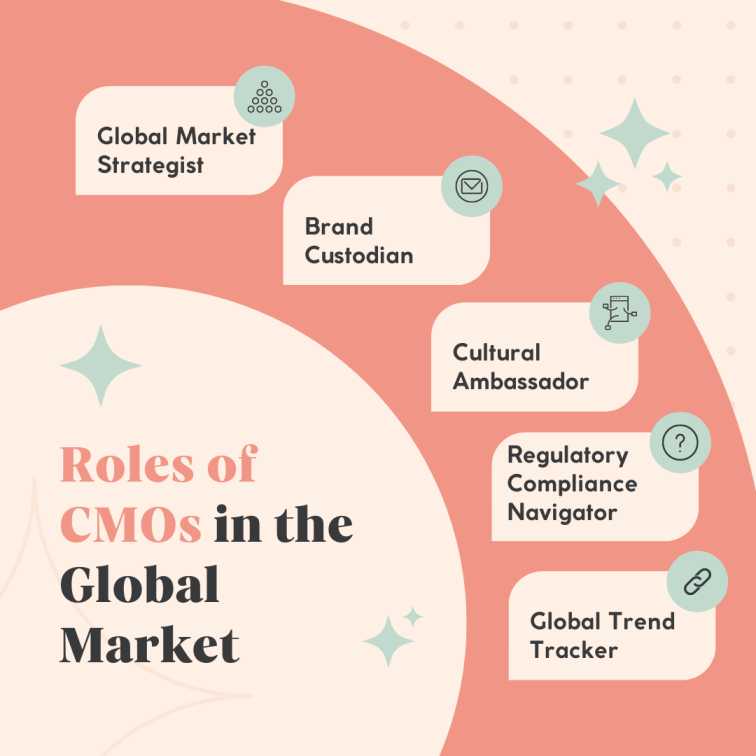
Roles of CMOs in the Global Market

CMOs serve as vital leaders, planners, and evangelists of culture who help their organisations prosper in diversified and tricky global marketplaces. Their responsibilities include both planning and tactical execution, rendering them invaluable assets in the quest for global company success.

– Global Market Strategist

To navigate, contend, and prosper in foreign markets, CMOs must establish a comprehensive strategy. This entails conducting market analysis, identifying possibilities and obstacles, and developing market-specific strategies.

– Brand Custodian

CMOs are at the forefront of safeguarding and advocating the brand’s image internationally. This involves preserving brand consistency, cultural sensitivity, and brand reputation management.

– Cultural Ambassador 

To ensure that marketing messages resonate effectively, CMOs must grasp the cultural minutiae of diverse markets. Linguistic problems, cultural allusions, and local customs are all part of this.

– Regulatory Compliance Navigator 

Operating in overseas markets necessitates adherence to a variety of rules. CMOs ensure that marketing initiatives adhere to international guidelines and standards.

– Global Trend Tracker 

CMOs keep attuned to global trends and market movements, ensuring that their organisations remain agile and adaptive in the face of evolving market conditions.

What is Brand, Product and Service Management? 

The cornerstone upon which organisations grow is brand, product, and service management. They have a noticeable effect on how people view your company, interact with your products, and eventually become advocates or adversaries. Understanding and mastering these aspects promotes development, client retention, and sustainable growth, making them critical components of every business plan.

A brand is not merely a logo or a boisterous phrase; it is the essence of a business. Brand management includes developing and maintaining a brand’s identity, values, and perception. It all comes down to identifying what your company stands for and constantly delivering on that promise. Successful brand management creates consumer loyalty and distinguishes your company in a cluttered marketplace. 

Products are tangible answers that meet the requirements and wants of customers. Identifying market opportunities, creating novel offers, and shepherding them through the product lifecycle are all part of effective product management. Pricing tactics, feature prioritisation, and product launch campaigns are all used to entice and keep consumers.

Service is an intangible component that improves the consumer experience. It includes everything from customer service to post-purchase interactions. Service management provides exemplary client experiences, responding quickly to grievances, and continually improving the service quality. Customers who receive exceptional service are more likely to become loyal supporters of the brand.

Strategies to Build a Compelling Brand Management Image 

Building a potent brand image for your organisation might seem strenuous at first. Here are some strategies that will help you grow your brand. 

1) Knowing the audience 

Understanding your audience is vital for developing an engaging brand management strategy. 

Start by performing extensive market research to determine their wants, preferences, and issues. Customise your messaging and branding to reflect their beliefs and objectives. Communication congruence across all touchpoints, from your website to social media, is paramount.

To establish trust, maintain openness, participate in honest storytelling, and aggressively seek and act on consumer feedback. Finally, a well-defined brand image that caters to the aspirations of your target audience will generate loyalty and development.

2) Deciding brand objectives 

Developing brand objectives is essential for creating a compelling brand management image. These goals act as strategic pillars, leading the brand toward differentiation and resonance.

They include objectives like increasing brand awareness, fostering consumer loyalty, and guaranteeing consistent communication. By aligning tactics with these goals, a captivating brand image emerges, attracting and maintaining customers while leaving a long-lasting impression in the market.

3) Setting the brand apart from the competition 

Employ distinctive brand management tactics to differentiate your brand from the competition. Make a point of emphasising different brand values, visuals, and messages.

Use innovative promotional activities, narratives, and visual elements. Customers will remember and approve of your brand if you are consistent and tangible.

4) Improving consistency 

Increasing brand consistency requires creating and following a defined set of brand rules. This involves keeping consistent communication, graphic elements, and consumer interactions across all touchpoints. 

Effective brand consistency builds trust, recognition, and an appealing corporate image that connects with your target audience, eventually creating long-term success.

5) Having an economic connection 

Building a compelling brand management image requires establishing economic linkages through collaborative efforts, cost-effective production, and consumer value propositions.

Brands may transmit trustworthiness and create consumer loyalty by ensuring financial stability, sustainable growth, and affordability, reinforcing their favourable market reputation.

6)  Being innovative and adaptive 

Key brand management tactics include innovation and adaptation. Accept change, encourage creativity, and keep up with market trends.

Create an engaging image that speaks to your target audience, presenting your business as forward-thinking and attentive to their requirements.

Keep your brand up-to-date as it will thrive in a dynamic market. CMOs must ensure that they adapt to various popular digital marketing channels in this digital era.

7) Measuring and monitoring 

 By tracking performance, consumer input, and market changes, these methods ensure an engaging brand image.

In the modern marketplace, consistent evaluation and adaptation are critical to maintaining a strong and compelling brand presence.

8) Having a proper employee alignment 

A great brand image is dependent on efficient employee alignment. Aligning employees with the brand’s values and endeavours enables unified communications and interaction for customers.

Employees and brand strategy working together foster loyalty and confidence, eventually forming an enticing management image that resonates with stakeholders as well as clients.

Brand Management Case Study

Nestlé’s revamp of the “Maggi” brand is one of the famous brand management success stories in India. 

Maggi experienced a significant crisis in 2015 when the Food Safety and Standards Authority of India (FSSAI) banned it because of suspicions of high lead content. Nestlé reacted quickly by withdrawing all Maggi products from the market, completing thorough quality testing, and keeping an open dialogue with consumers. Nestlé reestablished trust and relaunched Maggi with its “Trust, Quality, and Nutrition” campaign, soon regaining its leading market position. 

This case study highlights the significance of crisis management, transparency, and consumer-centric initiatives in brand management.

Product Management Strategies 

Product management strategies are critical for designing, releasing, and managing goods successfully in a competitive market. Product managers can use the following essential strategies:

1) Product development and life cycle management 

Product development and life cycle management are essential product management techniques. Product managers supervise a product’s development and oversee its complete life cycle, from concept to market. 

This comprises brainstorming, designing, developing, launching, growing, and eventually retiring. Effective management ensures that the product remains competitive, matches consumer demands, and maximises profitability throughout its life cycle, ensuring its market relevance and value.

2) Pricing strategies 

Pricing techniques in product management are critical in determining a product’s success. Pricing strategies such as value-driven pricing, price penetration, and flexible pricing can all have an impact on market positioning and profitability.

Product managers can optimise revenue, sustain growth, and improve the total product lifecycle by integrating pricing with customer value and competitive landscapes, assuring an innovative and viable approach to product management.

3) Promotion portfolio optimisation 

In product management, promotion portfolio optimisation is allocating resources strategically to multiple advertising and promotional channels depending on performance and ROI.

Companies can maximise their marketing efficacy, reach target audiences seamlessly, and obtain higher returns on advertising expenses by analysing data and directing investments on important channels.

This approach guarantees that promotional activities are in compliance with overall organisational goals and have the greatest possible impact for the budgeted amount.

4) Omni channel marketing 

A powerful product management method, omni-channel marketing effortlessly connects numerous channels—online, offline, and mobile—to create a single and consistent consumer experience.

This strategy improves consumer engagement, builds brand loyalty, and increases sales prospects. Businesses can reach their intended demographic proactively, react to changing buyer patterns, and optimise their entire product management strategy for long-term success by integrating marketing activities across different touchpoints.

5) Competitive analysis 

Competitive analysis is an essential product management strategy. Product managers acquire insights on differentiating and strengthening their offers by attentively examining rivals’ goods, tactics, and market positioning.

This method aids in the identification of opportunities, the prediction of market trends, and the refinement of product features, pricing, and marketing. Ultimately, competition research drives data-driven decisions, allowing goods to remain competitive, pertinent, and customer-focused in a volatile market setting.

Product Management Case Study 

The success of “Ola,” a ride-sharing platform, is a remarkable case study in product management in India. Ola transformed the traditional taxi business by providing a straightforward mobile application that allowed consumers to easily book trips.

Their product strategy stressed price, usability, and convenience. Ola collected customer feedback and reaffirmed its app features over time, introducing choices such as multiple car kinds, in-app payments, and safety measures. 

Ola quickly gained popularity by customising its products to the Indian market’s distinct demands and constraints, including varied payment methods and traffic circumstances.

Service Management Strategies

Service management methods are vital for service organisations as they assist in optimising performance, improving consumer satisfaction, and boosting overall productivity. Here are some of the most important service management strategies: 

– Understanding the service landscape

A thorough understanding of the service landscape is essential for developing efficient service management strategies. This includes configuring the service ecosystem, identifying pain points, and understanding consumer relationships.

Service managers may design plans to improve service quality, streamline procedures, and optimise consumer experiences by analysing these data, eventually increasing business profitability and client satisfaction. 

– Identifying the procedures of service dependencies 

Identifying notable service dependencies is an aspect of service management strategies. This involves diagramming the linkages and interactions between different services in a system.

Understanding these dependencies allows organisations to properly prioritise and manage services, assuring uninterrupted operations and rapid problem response, and ultimately improving service quality and reliability.

– Looking after content marketing strategies 

Content marketing management correlates to service management. It necessitates a systematic approach to content development, creation, and distribution that is aligned with consumer demands and corporate objectives.

Effective content strategies involve establishing objectives, tracking performance, and responding to changing market circumstances. Content marketing methods, like service management, strive to provide value and create long-term client connections.

– Incorporating KPIs

It is critical to use Key Performance Indicators (KPIs) in service oversight methods. KPIs provide measurable criteria for evaluating service quality, efficacy, and client retention.

Organisations continuously evaluate, analyse, and optimise their service delivery by aligning KPIs with strategic goals, resulting in improved performance, cost-efficiency, and the capacity to satisfy and surpass customer expectations.

– Using data analytics for marketing insights 

Implementing data analytics to garner marketing insights is an effective service management method. It allows companies to examine client behaviour, preferences, and market trends.

These insights drive customised marketing efforts, personalised services, and other initiatives that improve customer happiness and drive corporate development while optimising resource allocation and efficiency.

Service Management Case Study 

The revamping of the Indian Railways is a significant case study in service leadership in India. The government began a major makeover in response to various difficulties such as ageing infrastructure, ineffective operations, and consumer unhappiness.

The installation of computerised ticketing systems, increased passenger facilities, and rigorous timeliness standards improved the customer experience dramatically. In addition, the use of information analytics and IoT technology enabled predictive maintenance, which reduced service disruptions.

Indian Railways diversified its services to increase income by establishing luxury trains such as the “Palace on Wheels” and “Maharajas’ Express,” which appeal to high-end travellers. This diversity drew foreign visitors and contributed to the economic prosperity of the places they passed through.

The Indian Railways transformed a decrepit infrastructure into a symbol of excellence, creativity, and customer service via strategic service management, establishing a wonderful example for service sectors across the country.

Conclusion

Effective brand, product, and service management tactics must be tackled for CMOs to effectively traverse today’s changing marketplace. CMOs can generate strong brand equity, encourage consumer loyalty, and promote long-term viability by emphasising brand authenticity, creative product development, and great customer service.

The goal is to remain malleable, leverage data-driven insights, and react to changing customer preferences. CMOs that adopt these methods will, ultimately, not just thrive but flourish in a perpetually shifting business environment, positioning their organisations for future prosperity and relevance.

Wondering which courses for marketing professionals would help you become a successful CMO? Check out Imarticus Learning’s Post Graduate Certificate Programme for Emerging Chief Marketing Officers with IIM Indore.

This course would help you decode your way to becoming a new-age CFO. 

If you want to know more about their digital marketing course and study digital marketing, check out the website right away. 

Marketing Communication: Key Elements of Successful Marketing Communication Strategies

Effective communication is the backbone of any prospering company in today’s shifting economy.

Marketing communication is more than only message dissemination; it is a deliberate orchestration that bridges the gap between organisations and consumers. Understanding the intricacies of communication has never been more important in an era where consumer focus is precious and alternatives are unlimited. From figuring out your audience, to writing intriguing storylines, to tapping into varied modes of communication and adopting modern technology, it will untangle the complexity while emphasising feasible concrete ways.

This is why it has become more important than ever to take the help of solid courses for marketing professionals. Join us on this blog as we uncover the secrets of effective marketing communication, helping businesses not only connect with their audience but also make a lasting, meaningful imprint in the minds and hearts of customers.

We’ll analyse the art of crafting clear, succinct, and compelling arguments that appeal to an extensive spectrum of people. We’ll traverse the ever-changing digital landscape through real-life scenarios and in-depth analysis, looking at social network dynamics, email marketing breakthroughs, and the integration of online and offline methods.

Furthermore, we will pinpoint, allowing businesses to assess the effectiveness of their promotions and fine-tune their communication plans.

What is a Marketing Communication Strategy? 

A marketing communication strategy is an extensive method that specifies how a company’s communications will be disseminated to its intended demographic.

A well-thought-out marketing communication strategy starts with a thorough grasp of the target audience. Businesses can tailor their communications to successfully engage with consumers by analysing client demands, preferences, and behaviours. Setting specific goals, such as growing brand awareness, generating website traffic, or increasing sales, is also part of the approach.

Consistency is a vital component of marketing communication. A consistent message across all media reinforces brand identification and builds customer confidence. Creativity is also crucial; novel and entertaining content attracts consumers’ curiosity and fosters a lasting impression.

Furthermore, an effective plan changes with time. Data and feedback evaluation assist organisations in adapting their communication strategies, ensuring they remain pertinent while adapting to market developments and customer demands.

In a nutshell, a marketing communication strategy is a tactical strategy that directs how an organisation engages with its target audience. When executed correctly, it not only boosts customer engagement but also fosters permanent connections, ultimately contributing to the company’s overall success.

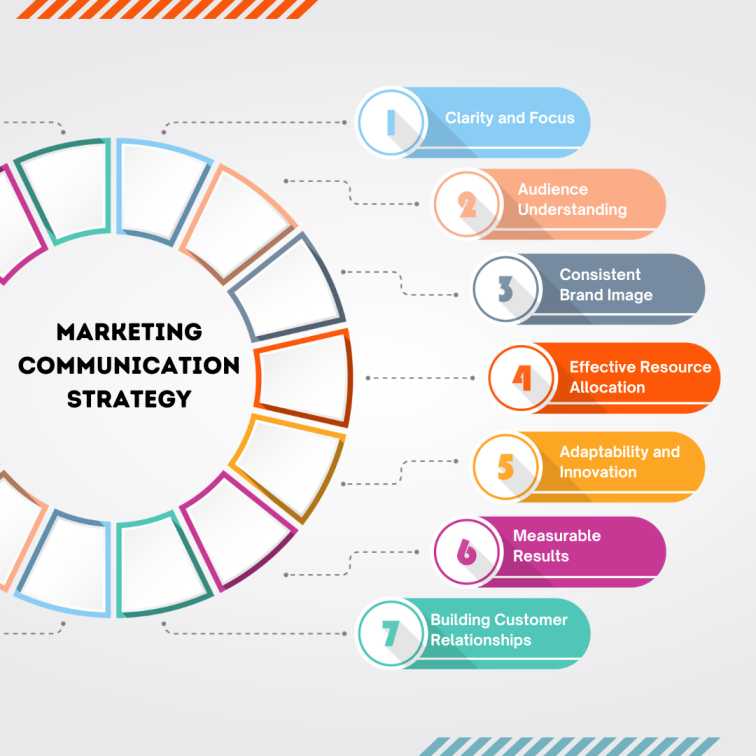
Why Do You Need A Marketing Communication Strategy? 

Marketing Communication Strategy

In today’s competitive corporate world, marketing communication strategy is not an extravagance but a requirement. It affirms that your promotional efforts are precise, cohesive, and successful, eventually leading to improved brand awareness, consumer loyalty, and business growth.

Clarity and Focus

A marketing communication strategy provides your marketing endeavours with a defined direction. It summarises your objectives, your intended demographic, and vital communications. An organised strategy ensures that everyone on your team grasps the objectives, preventing misunderstanding and allowing everyone to work towards a single goal.

Audience Understanding

Understanding your intended customer base constitutes a prerequisite for effective marketing methods. A strategy can assist you in analysing your target demographic’s preferences, behaviours, and obstacles. This knowledge is crucial for crafting targeted communications that resonate with your target audience, improving engagement and conversion.

Consistent Brand Image

Brand awareness and loyalty require a consistent brand image. A strategic approach guarantees that your brand purpose, graphics, and tone of voice are consistent across all channels of communication. Consistency fosters credibility and helps customers recognise and retain your brand in a vast array of competition.

Effective Resource Allocation

Time, money, and labour are all limited marketing resources. A strategy facilitates the prudent deployment of these resources. By finding the most profitable channels and methods, you can avoid spending money on inefficient initiatives. The aforementioned improvement optimises the efficacy of your marketing activities.

Adaptability and Innovation

Market circumstances and customer behaviour are always morphing. A versatile approach allows you to react decisively to these changes. You can discover developing trends or adjustments in consumer preferences by continually analysing data and feedback. This flexibility allows your marketing to remain up-to-date and unique, propelling your brand ahead of the competition.

Measurable Results

A successful strategy establishes specified, measurable, attainable, relevant, and time-bound (SMART) objectives. This means you can effectively measure the results of your marketing efforts. Metrics tracking helps you to evaluate the effectiveness of your efforts, identify what works, and find areas for development. Data-driven decisions improve the effectiveness of future marketing campaigns.

Building Customer Relationships

An exquisite communication strategy goes beyond merely marketing goods or services. It encourages cultivating connections with your consumers. Understanding their requirements and concerns allows you to immediately address them, establishing confidence and allegiance. Favourable client interactions usually result in recurring business, recommendations, and favourable critiques, all of which are essential for long-term success.

Advantages of Marketing Communication Strategy 

1. Trust-building 

By guaranteeing consistent and honest communications, a marketing communication strategy builds trust. Customers gain confidence and reliability as they receive consistent information across multiple platforms. By immediately addressing client demands and problems, the technique creates a sense of connection, strengthening trust. Customer loyalty is built on trust, which leads to long-term partnerships and continuous business success.

2. Reaches larger audience 

A marketing communication strategy enriches brand reach, allowing firms to reach a broader demographic. It provides additional exposure by utilising customised messages and various channels. This widespread impact raises brand awareness, engages new consumers, and boosts engagement. Effective plans employ the use of several media to maximise the ability to connect with a wide range of demographics, thereby growing the brand’s reach.

3. Optimises marketing efforts 

By rendering a systematic strategy, a marketing communication strategy streamlines marketing efforts. It ensures that resources are used wisely, the message is consistent, and campaigns are customised to the intended audience. Businesses may improve engagement, maximise ROI, and boost brand loyalty by analysing data and modifying strategy. This strategic strategy improves overall effectiveness and market impact.

Steps to Create an Effective Marketing Communication Strategy 

Step 1: Understanding your target audience

 Understanding your intended demographic is critical to establishing an effective marketing approach. It entails looking deeply into your target consumers’ demographics, psychographics, and behaviours. Businesses can efficiently adjust their merchandise, services, and communication by understanding their customers’ wants, preferences, and difficulty areas.

This information leads to the production of powerful marketing communications, ensuring they connect on a personal level with the audience. Furthermore, knowing your audience promotes empathy, helping organisations to anticipate consumer expectations, improve user experiences, and build long-term connections, resulting in higher customer satisfaction and brand loyalty. In summary, audience knowledge is the foundation of customer-centric marketing, allowing firms to anticipate consumer requirements and remain ahead of the competition in today’s market.

Step 2: Position your products 

Positioning your products requires a thorough grasp of your target demographic. Understanding their wants, preferences, and obstacles allows you to personalise your product offers to perfectly fit their demands. 

This insight enables you to build engaging marketing messages that resonate with your target audience, addressing their problem spots and emphasising the distinct advantages your goods provide. Effective positioning not only draws customers but also develops brand loyalty, laying the groundwork for long-term connections and long-term company growth.

Step 3: Create branding elements 

Understanding your target demographic is critical for developing efficient marketing components. It directs the selection of colours, fonts, and artwork that reflect their tastes.

The tone of voice is tailored to their beliefs and ambitions, resulting in an approachable brand character. Knowing their issues and desires influences the brand messaging, ensuring that it meets their demands. This in-depth insight serves as an underpinning for a brand identity that interacts with customers, establishing long-term customer connections.

Step 4: Select the appropriate marketing communication mix

Understanding your target demographic is critical in determining the best marketing message mix. Businesses may modify their strategy by analysing demographics, interests, and behaviours.

Digital channels and social media could prove successful for younger, tech-savvy consumers. Traditional media, such as print or television, may be more appealing to older people. Whitepapers and webinars can be used to engage B2B audiences with in-depth knowledge. This insight informs the channel selection, ensuring that messages resonate, engagement is increased, and desired behaviours are elicited from the audience. 

Step 5: Understand your success metrics 

Understanding your success strategies is just as important as understanding your target audience. Identifying the correct Key Performance Indicators (KPIs) is just as crucial as delving into your audience’s demographics, behaviours, and preferences.

Metrics of success can encompass everything from website traffic and rates of conversion to social media engagement and client happiness. You acquire vital insights by matching your goals with particular indicators, allowing data-driven decisions and facilitating your plans to be properly customised for optimum effect and growth.

Step 6: Execute the strategy 

Developing an efficient marketing communication strategy entails several critical phases.

Begin by creating specific goals and determining your target audience. Conduct extensive market research to determine client demands and preferences. Create an engaging message and choose relevant communication channels. Ensure that your branding is consistent across all platforms. Implement the approach, constantly monitor the results, and mine the data for insights. Prepare to modify the strategy in response to input, ensuring that it stays dynamic and sensitive to changing market conditions and customer behaviour.

Case Studies and Success Stories 

1. Coca-Cola’s ‘Share a Coke’ Campaign

Coca-Cola’s ‘Share a Coke‘ promotion tailored bottles featuring famous Indian names. This method increased brand engagement by creating a personal connection for customers. Personalisation was crucial in this case since it connected emotionally with the Indian audience’s feeling of belonging and community.

2. Dove’s Real Beauty Campaign

The ‘Real Beauty’ campaign by Dove gazed at traditional beauty norms. Dove sent a powerful message of inclusion and self-acceptance by portraying genuine Indian women of varied body types and complexions. The crucial ingredient was authenticity, which resulted in an emotional relationship with customers and increased trust in the brand.

3. Amul’s ‘Utterly Butterly Delicious’ Campaign

In India, Amul has an extended streak of excellent marketing communication. Their snappy and humorous billboard and print commercials have become famous. The crucial factor in this case was consistency in branding and message. Amul employed humour and timely communication to stay up-to-date eventually becoming a part of India’s cultural fabric.

4. Cadbury’s ‘Kuch Meetha Ho Jaye’ Campaign

Cadbury’s comprehensive marketing communication approach in India was centred on the festivities and emotions connected with sweets. Cadbury’s skillfully connected to the Indian sweet tooth by associating their product with pleasant times. The most important factor was emotional appeal, which linked the product to good feelings and cultural traditions.

5. Oreo’s Daily Twist Campaign

In India, Oreo’s ‘Daily Twist’ campaign showcased the classic cookie in a variety of culturally appropriate contexts. Oreo has shown its adaptability by embracing local festivals, events, and trends. The main factor in this case was relevancy, with the brand connecting with customers through incorporating itself into their everyday lives and cultural experiences.

Conclusion 

A good communication strategy is built on a delicate balance of science and artistic endeavour. The main ingredients are very evident, as evidenced by several powerful advertisements.

Personalisation, in which customers see themselves mirrored in a brand, creates a strong bond. Authenticity, or the honest depiction of principles and ideas, fosters great trust. Consistency in the message, both in terms of content and branding, helps people remember a brand’s identity. Emotional appeal, which touches the audience’s heartstrings, leaves a lasting impact and promotes loyalty. Relevance, the skill of effortlessly integrating a brand into customers’ everyday lives and cultural narratives, makes it essential.

Understanding these components in the context of India’s diverse and culturally rich environment is not only instructive but also necessary. It’s about accepting the complexities of traditions, ideals, and feelings. It is about recognising that each customer is distinct while still being a part of a larger identity.

If you’re interested in pursuing a digital marketing course to study digital marketing, check out Imarticus Learning

However, if you’re looking for courses for marketing professionals, check out Imarticus Learning’s Post Graduate Certificate Programme for Emerging Chief Marketing Officers with IIM Indore. This course will help you become a new-age CMO and upskill you to great lengths.

Decision-Making Essentials: Process, Data-Driven Decisions, Heuristics and Creativity in Decisions

Decision-making in marketing is a multifaceted process that forms the backbone of effective marketing strategies and plans for products or services. It encompasses a comprehensive analysis of various factors within the marketing environment.

At its core, marketing decision-making involves understanding customer needs and preferences, assessing the response of target audiences to a specific product or service, and meticulously evaluating each element of the Marketing Mix, which includes product, price, place, and promotion.

In a world where every choice can have a profound impact on an organisation’s success, understanding the essentials of decision-making is paramount. Hence, proficiency in decision-making empowers digital marketers to emerge successful in the digital realm. This can be achieved if you study digital marketing or pursue relevant courses for marketing professionals.

This guide aims to provide you with a brief understanding of decision-making in marketing by delving into the intricate process that underpins effective marketing strategies. Keep reading to gain an in-depth understanding of decision-making, the pivotal role of data-driven choices, the utility of heuristics, and the infusion of creativity to elevate decision-making to the highest levels

What is Decision Making in Marketing?

Decision-making in marketing is the process of strategically evaluating and selecting courses of action to promote, position, and sell products or services effectively in the market. It involves a comprehensive analysis of various factors, including market research, consumer behaviour, competitive dynamics, and internal resources.

Marketing decision-making entails setting clear objectives, identifying target audiences, determining pricing strategies, choosing distribution channels, and crafting promotional campaigns. It is a critical aspect of formulating marketing strategies that align with an organisation’s goals, market conditions, and customer preferences to achieve optimal results and business success.

If you study digital marketing, you will enhance your ability to make informed marketing decisions by leveraging data-driven insights and effectively utilising digital channels and platforms to gauge customer responses, refine marketing strategies, and ultimately, drive positive results for your products or services.

Step-by-Step Process of Decision Making

In most professional courses for marketing professionals, you will be taught the step-by-step process of decision-making in marketing. It primarily involves a structured approach to ensure that choices are well-informed and aligned with organisational goals and market dynamics. 

Here is a simplified outline of the decision-making process:-

Identify the problem or opportunity: Begin by clearly defining the issue at hand. Whether it’s addressing a challenge or seizing an opportunity, a well-defined problem is the first step towards effective decision-making.

Gather information: Collect relevant data and information related to the problem or opportunity. This may involve market research, consumer surveys, competitor analysis, and internal performance metrics.

Identify alternatives: Generate a list of possible solutions or alternatives. Brainstorming and evaluating different options is crucial to making an informed decision.

Evaluate alternatives: Assess each alternative based on predetermined criteria. Consider factors such as feasibility, cost, potential return on investment, and alignment with the organisation’s objectives.

Make the decision: Select the most suitable alternative based on the evaluation. It’s essential to weigh the pros and cons and choose the option that best addresses the problem or maximises the opportunity.

Implement the decision: Put the chosen alternative into action. This may involve developing marketing campaigns, adjusting pricing strategies, or launching new products/services.

Monitor and evaluate: Continuously track the outcomes of your decision. Analyse performance metrics, customer feedback, and market trends to ensure that the chosen path is delivering the desired results.

Adjust as necessary: If the decision does not yield the expected results, be prepared to make adjustments. This could involve refining the strategy, revising tactics, or even reevaluating the initial problem definition.

Document the decision: Maintain records of the decision-making process, including the rationale behind your choice and the outcomes achieved. This documentation can provide valuable insights for future decision-making.

Learn and iterate: Use the insights gained from each decision to inform future choices. Continual learning and adaptation are key to improving the effectiveness of marketing decisions over time.

What is Data-Driven Decision Making?

Data-driven decision-making is a systematic approach to making informed choices based on the analysis of relevant data and empirical evidence. In marketing, it involves using data to guide and support decisions related to product development, pricing strategies, promotional activities, and overall marketing campaigns.

Data-driven choices in decision-making are indispensable tools for modern marketers. These choices empower them to make well-informed, strategic decisions that are rooted in empirical evidence rather than intuition. 

By harnessing the power of data, marketers can optimise their marketing strategies, enhance customer engagement, and ultimately drive success in an increasingly data-driven and competitive marketing landscape. 

Role of Data-Driven Choices in Decision Making

Data-driven choices play a pivotal role in decision-making within the realm of marketing. They encompass the following key elements:-

  • Informed insights: Data-driven decisions rely on the analysis of relevant data sources, such as customer behaviour, market trends, and performance metrics. These insights provide a factual foundation for decision-makers, reducing reliance on intuition or guesswork.
  • Targeted marketing: Data allows marketers to precisely identify and understand their target audience. By analysing demographic, psychographic, and behavioural data, marketers can tailor their strategies to resonate with specific customer segments, enhancing the effectiveness of their campaigns.
  • ROI optimisation: Data-driven choices help allocate resources efficiently. Marketers can assess the return on investment (ROI) for various marketing initiatives and allocate budgets to strategies that yield the highest returns, ultimately maximising the impact of their marketing efforts.
  • Personalisation: The availability of data enables personalised marketing approaches. By understanding individual customer preferences and purchase histories, marketers can craft customised messages and offers, increasing the likelihood of conversions and customer loyalty.
  • Real-time adaptation: Data-driven decisions allow for real-time adjustments. Marketers can monitor campaign performance in real time and make necessary modifications promptly, ensuring that strategies remain effective in an ever-changing market landscape.
  • Competitive analysis: Data-driven choices extend to analysing competitors. Marketers can gather data on competitor strategies, market positioning, and customer sentiment to identify opportunities and threats, informing their own decision-making processes.
  • Predictive analytics: Advanced data analytics can enable predictive modelling, allowing marketers to forecast future trends and consumer behaviours. This proactive approach enables preemptive decision-making and strategic planning.
  • Risk mitigation: Data-driven choices also help in risk assessment. By thoroughly analysing data, marketers can identify potential risks and challenges associated with their decisions, allowing for proactive risk mitigation strategies.

What are Heuristics?

Heuristics in marketing refer to mental shortcuts or simplified decision-making strategies that marketers and consumers often employ to simplify complex choices and problem-solving in marketing.

These cognitive shortcuts help individuals make decisions more efficiently, especially when faced with information overload or time constraints. In marketing, heuristics are commonly used due to the complexity of consumer behaviour and the need for rapid decision-making. 

Here are some common heuristics in marketing:

  • Availability heuristic: This heuristic is based on the idea that people tend to rely on readily available information when making decisions. In marketing, it can lead consumers to favour products or brands they’ve recently seen or heard about, even if other options might be better.
  • Anchoring and adjustment heuristic: This involves making decisions based on a reference point, or anchor, and then adjusting from there. In pricing, marketers can use this by setting a high initial price (the anchor) and then offering discounts, making the product seem like a better deal.
  • Representativeness heuristic: People often make decisions by comparing a current situation or choice to a mental prototype. In marketing, this might involve associating a product with a familiar or iconic image to influence consumer perceptions.
  • Scarcity heuristic: This heuristic suggests that people tend to place a higher value on items that are perceived as scarce or in limited supply. Marketers often use scarcity tactics, such as “limited-time offers” or “only a few left in stock,” to create a sense of urgency and drive purchasing decisions.
  • Social proof heuristic: This is the tendency to rely on social cues or the behaviour of others when making decisions. Positive reviews, testimonials, and endorsements are examples of marketing strategies that leverage the social proof heuristic.
  • Familiarity heuristic: Consumers often opt for products or brands they are familiar with because they associate familiarity with trustworthiness and quality. Marketing efforts that focus on building brand awareness and recognition tap into this heuristic.
  • Satisficing heuristic: Instead of seeking the optimal choice, individuals may settle for a satisfactory one that meets their minimum criteria. In marketing, this can influence consumer choices when they select products or services that are “good enough” for their needs.
  • Reciprocity heuristic: This heuristic is based on the principle of reciprocity, where people tend to return favours or gestures. In marketing, offering free samples, trials, or discounts can trigger this heuristic, leading consumers to reciprocate by making a purchase.

While heuristics can be useful for simplifying decision-making, they also have limitations and can lead to biases or suboptimal choices. Marketers need to be aware of these cognitive shortcuts to craft strategies that align with consumers’ natural decision-making tendencies and enhance the effectiveness of their marketing campaigns.

Use of Heuristics

The use of heuristics in decision-making in marketing offers a valuable approach to streamline choices and simplify complex decision processes. Heuristics are mental shortcuts or rules of thumb that individuals employ to make decisions more efficiently, particularly when faced with information overload or time constraints. 

When it comes to marketing, heuristics serve several important functions:-

  • Efficiency: Heuristics allow marketers to make decisions quickly, which is often crucial in the fast-paced world of marketing. Instead of exhaustive analysis, heuristics enable rapid evaluations and choices.
  • Simplicity: Heuristics simplify complex decisions by breaking them down into manageable steps or criteria. For example, a marketer might use the “availability heuristic” by relying on readily available information or past experiences to make a decision.
  • Risk reduction: Certain heuristics can help mitigate risks in decision-making. For instance, the “anchoring heuristic” involves making decisions based on a reference point (an anchor), which can reduce the perceived risk of making a wrong choice.
  • Creativity and innovation: Heuristics can stimulate creativity by encouraging marketers to think outside the box. The “analogical heuristic” involves drawing parallels with unrelated concepts, and fostering innovative marketing ideas.
  • Consistency: Some heuristics promote consistency in decision-making. The “confirmation bias” heuristic, for instance, involves seeking information that confirms existing beliefs, which can lead to consistent choices over time.
  • Adaptation: Marketers can adapt heuristics to suit specific decision contexts. For instance, in pricing decisions, they might use the “price-quality heuristic,” where consumers associate higher prices with higher quality.

How Creativity Drives Decision-Making in Marketing

Creativity is a potent catalyst in decision-making within the realm of marketing. It infuses a unique and innovative dimension into the process, allowing marketers to devise strategies and solutions that stand out and resonate with their target audience. 

Here’s how creativity plays a pivotal role in decision-making in marketing:

  • Differentiation: Creative decision-making enables marketers to differentiate their products or services from competitors in a crowded marketplace. By thinking outside the box, they can craft unique value propositions and marketing campaigns that capture consumers’ attention and set their brand apart.
  • Engagement: Creative marketing decisions captivate and engage consumers. Creative content, such as compelling advertisements, captivating storytelling, and visually appealing designs, can elicit emotional responses and foster a deeper connection between customers and brands.
  • Problem-solving: Creativity is a potent problem-solving tool. Marketers can use creative thinking to identify innovative solutions to challenges or capitalise on opportunities that may not be apparent through conventional analysis alone.
  • Adaptation: In the ever-evolving world of marketing, creativity allows marketers to adapt swiftly to changing market conditions and consumer preferences. Creative decision-making facilitates the development of flexible strategies that can be adjusted as needed.
  • Brand building: Creativity plays a pivotal role in brand building. It helps shape a brand’s identity, personality, and storytelling, creating a memorable and compelling narrative that resonates with consumers and builds brand loyalty.
  • Risk-taking: Creative decision-making often involves a degree of calculated risk-taking. While not all creative ideas may pan out, the willingness to experiment and innovate can lead to breakthroughs and competitive advantages.
  • Consumer-Centric Approach: Creative decisions are often rooted in a deep understanding of consumer needs and preferences. By creatively addressing these needs, marketers can create products and campaigns that genuinely resonate with their target audience.
  • Innovation: Creativity is the driving force behind marketing innovation. It inspires the development of new marketing channels, technologies, and approaches, allowing organisations to stay ahead in a rapidly evolving landscape.

However, it’s crucial to strike a balance between creativity and data-driven analysis. While creativity can spark inspiration and innovation, data provides the necessary validation and measurement of creative decisions’ effectiveness. 

By combining creativity with data-driven insights, marketers can make informed and impactful decisions that drive success in the dynamic world of marketing.

Conclusion

Understanding the intricacies of decision-making is not just a fundamental aspect of effective marketing but also a vital skill for career advancement. In today’s competitive business environment, the ability to make well-informed choices can be a game-changer. 


However, it’s important to note that decision-making is not a static skill; it evolves with the rapidly changing dynamics of the marketing world. This is where a digital marketing course can make a significant difference. There are a plethora of courses for marketing professionals to choose from. By enrolling in any of these reputable digital marketing programs, you can stay updated with the latest digital trends, tools, and strategies that are essential for making informed marketing decisions in the digital age. 

Consider enrolling in Imarticus Learning’s Post Graduate Certificate Programme For Emerging Chief Marketing Officers.

This program offers a comprehensive curriculum that combines the latest industry trends with practical insights, equipping you with the tools needed to excel in decision-making and accelerate your marketing career. By taking this step, you are investing in your professional development and positioning yourself for success in the dynamic world of digital marketing.

Contact us today to build a better tomorrow in the realm of digital marketing!

The Complete Guide to Digital Marketing

Digital Marketing has become a cornerstone of modern business practices in the modern era. Its significance lies in its unparalleled ability to amplify brand visibility, engage a global audience, and drive revenue growth.

By harnessing the power of online platforms, businesses can establish meaningful connections with their target demographics, ultimately fostering brand loyalty and trust. The importance of understanding digital marketing cannot be overstated, particularly for marketing professionals seeking to thrive in a fast-evolving landscape. 

As the digital realm continues to expand, staying competitive demands a profound grasp of its intricacies. You can study digital marketing by enrolling in online courses for digital marketing.

However, to gain a brief idea of the fundamentals of digital marketing strategies and tactics comprehensively, you can read this article. From search engine optimisation (SEO) to social media marketing, and more, this comprehensive guide will give you an insight into the intricacies of everything that makes digital marketing a holistic part of business success.

Understanding Digital Marketing Fundamentals

Defining Digital Marketing 

Digital marketing, in essence, is the strategic promotion of products, services, or brands through various digital channels and technologies. It encompasses the extensive use of various online channels and tools to promote products, services, or brands. 

It’s about reaching and engaging with your target audience in the digital realm.

The Evolution of Marketing in the Digital Age

Marketing has undergone a significant transformation with the advent of the digital realm. Traditional methods have given way to a more dynamic landscape where businesses have the opportunity to connect with their audience in real-time across various digital platforms.

The Core Principles of Digital Marketing

At the heart of digital marketing are principles such as audience targeting, content relevance, and data-driven decision-making. These principles guide businesses in crafting effective digital strategies.

The Benefits and Mechanics of Digital Marketing

  • How Digital Marketing Works

Digital marketing leverages online platforms to reach potential customers where they spend their time. It involves a strategic combination of tactics like SEO, social media marketing, and email campaigns to connect with and engage your audience.

  • The Value of a Strong Online Presence

Establishing a robust online presence is crucial in today’s digital landscape. It not only enhances brand visibility but also builds trust and credibility among your audience, leading to increased brand loyalty and customer engagement.

  • Leveraging Digital Channels for Business Growth

Digital marketing channels offer diverse opportunities for business growth. Whether it’s through content marketing, paid advertising, or email nurturing, each channel plays a unique role in driving traffic, converting leads, and ultimately boosting revenue.

Comparing Traditional and Digital Marketing

Businesses commonly face the critical decision of whether to stick with traditional methods or embrace the digital age when it comes to digital marketing. This section offers a comprehensive comparison between these two approaches, shedding light on their respective strengths and weaknesses.

  • A Detailed Analysis of Traditional Marketing

Traditional marketing has long been a staple of advertising, encompassing methods such as radio, non-digital billboards, print publications, and offline events. In this section, we delve deep into the world of traditional marketing, examining its history, effectiveness, and relevance in today’s digital-dominated world.

The Advantages of Digital Marketing Over Traditional Methods

Advantages of Digital Marketing

Digital marketing has rapidly gained ground, proving itself as a powerful alternative to traditional approaches. 

Here, we have outlined the key advantages of digital marketing:-

  • Targeted reach: Digital marketing allows precise targeting of specific demographics, ensuring your message reaches those most likely to convert.
  • Real-time interaction: Engage with your audience in real-time through social media, email, and chat, fostering immediate connections.
  • Cost-effectiveness: Digital marketing often offers more cost-effective solutions, allowing for better budget allocation and higher ROI.
  • Measurable results: Digital campaigns provide extensive data and analytics, enabling informed decision-making and continuous improvement.
  • Global reach: Break down geographical barriers and access a global audience, expanding your market reach.
  • Flexibility and adaptability: Quickly adjust campaigns based on real-time feedback and changing market conditions.
  • Content variety: Utilise a wide range of content formats, from text and images to videos and interactive media.
  • Enhanced brand engagement: Foster deeper connections with your audience through social media interaction and content personalisation.
  • Improved conversion rates: Targeted marketing efforts often result in higher conversion rates compared to broad traditional advertising.

Making Informed Investment Decisions: Digital vs. Traditional 

Here is a tabular representation of the key factors to consider when deciding between digital and traditional marketing, assisting businesses in making informed investment choices tailored to their unique needs and goals.

Aspect Digital Marketing Traditional Marketing
Targeting Options Precise audience targeting Limited demographic reach
Interaction and Engagement Real-time engagement Limited interaction
Cost-Effectiveness Cost-effective options Higher production costs
Measurable Results Extensive analytics Limited tracking and analytics
Global Reach Access to a global audience Local or regional reach
Flexibility and Adaptability Quick adjustments Fixed campaign structures
Content Variety Diverse content formats Limited to traditional media
Brand Engagement Enhanced brand interaction Traditional brand messaging
Conversion Rates Higher conversion potential Varied conversion rates

Why Invest in Digital Marketing?

Digital marketing has emerged as a paramount strategy for numerous compelling reasons. Here we have emphasised its significance in achieving business objectives.

The Growing Importance of Digital Marketing in Business

The importance of embracing digital marketing strategies in the domain of digital marketing is unparalleled. 

Let’s explore some of the key aspects that play a significant part in the evolving role of digital marketing in modern business:-

  • Consumer behaviour shift: Analysing how consumer behaviour has shifted towards online interactions and purchases, necessitating a digital presence.
  • Global reach: Expanding on how digital marketing allows businesses to transcend geographical boundaries and tap into a global customer base.
  • Competitive edge: Discussing how staying ahead in the competitive landscape requires a strong digital footprint and effective online engagement.
  • Adaptation to technology: Explaining how adapting to technological advancements is vital for remaining relevant and accessible to tech-savvy consumers.
  • Measurable outcomes: Highlighting the ability of digital marketing to provide measurable results and data-driven insights for continuous improvement.

Data-Driven Decision-Making: The Backbone of Digital Marketing Success

The decision-making process in digital marketing plays a crucial part in taking an organisation miles ahead in the marketing game. On that note, since data is hailed as the lifeblood of a company, data-driven decisions have a larger role to play in this process.

Most courses for marketing professionals start initially with the integration of data in this process. However, to make things simpler, here are some key points that highlight the critical roles that data plays in achieving success in the digital realm:-

  • Harnessing data analytics: Exploring how data analytics tools and techniques empower businesses to make informed decisions based on real-time data.
  • Personalisation and targeting: Discussing how data-driven insights enable personalised marketing efforts that resonate with individual preferences and behaviours.
  • Optimising champaigns: Highlighting the iterative nature of digital marketing, where data analysis informs campaign adjustments to enhance performance.
  • Tracking ROI: Demonstrating how data allows for accurate measurement of return on investment (ROI), ensuring resource allocation to high-performing strategies.
  • Competitive intelligence: Emphasising how data can provide valuable insights into competitors’ strategies, helping businesses stay ahead.

Examining the ROI of Digital Marketing Investments

Return on investment (ROI) is a critical metric for assessing the effectiveness of any marketing strategy. 

Let’s delve into the various facets of ROI analysis in digital marketing:-

  • Measuring digital marketing ROI: Providing insights into the methods and tools used to calculate ROI for digital marketing campaigns.
  • Comparing ROI across channels: Discussing how businesses can evaluate the performance of different digital channels and allocate resources accordingly.
  • Long-term benefits: Exploring the long-term impact of digital marketing investments, including brand equity and customer lifetime value.
  • Cost optimisation: Demonstrating how ROI analysis aids in optimising marketing budgets by identifying high-yield strategies.
  • Continuous improvement: Highlighting how ROI assessment leads to ongoing refinement of digital marketing tactics for enhanced profitability.

Types of Digital Marketing Channels

Digital marketing offers a vast array of channels and strategies to reach and engage with audiences online. 

Here is an in-depth explanation of the diverse digital marketing options available, each offering unique advantages and opportunities for businesses to communicate with their target audience:-

Exploring the Wide Range of Digital Marketing Options

It is a no-brainer when we say, businesses have an extensive toolbox of marketing channels at their disposal.

Here is a holistic list of the various digital marketing avenues:-

  • Affiliate Marketing: Affiliate marketing is a collaborative approach in which businesses join forces with third-party publishers, known as affiliates, to promote their products or services.These affiliates are like partners who earn commissions for driving traffic or sales to the business through their marketing efforts.It’s a win-win scenario as businesses expand their reach without upfront costs, and affiliates earn income through successful referrals.This strategy is highly effective in diversifying the marketing reach and tapping into niche markets through affiliate partnerships.
  • Content marketing: Content marketing is a strategic approach that revolves around creating valuable and relevant content to attract and engage a target audience.It’s about providing information, insights, and entertainment that resonates with your audience’s interests and needs.By consistently delivering high-quality content, businesses build trust, authority, and brand loyalty.Content marketing encompasses blog posts, articles, videos, infographics, and more, making it a versatile tool for nurturing relationships with customers and prospects.
  • Email marketing: Email marketing continues to be a powerful means of directly engaging with your target audience.This strategy entails sending customised messages, promotions, and updates to individuals who have subscribed to your communications.It enables brands to deliver personalised content directly to interested customers, resulting in the potential for a significant return on investment (ROI). 
  • Guerrilla marketing: Guerrilla marketing takes an unconventional and creative approach to capturing attention and sparking discussions.It thrives on surprise, humour, and unconventional tactics to generate buzz and brand visibility.Examples include flash mobs, graffiti art campaigns, or viral stunts that ignite conversations and amplify brand recognition.Guerrilla marketing is about standing out in a crowded digital landscape by embracing creativity and ingenuity.
  • Influencer marketing: Influencer marketing leverages the popularity and reach of social media influencers to promote products or services.Influencers, who have cultivated a dedicated following, collaborate with businesses to endorse products authentically.This strategy taps into the influencer’s credibility and rapport with their audience, effectively extending a brand’s reach and credibility.Influencer marketing is especially powerful for reaching niche demographics and boosting brand awareness.
  • Mobile marketing: Mobile marketing focuses on reaching consumers on their smartphones and mobile devices.With the increasing reliance on mobile technology, businesses use mobile-targeted advertising, SMS campaigns, and mobile apps to engage with their audience.Mobile marketing is about delivering contextually relevant messages and offers to consumers as they navigate their daily lives, ensuring that brands stay at the forefront of their minds.
  • Podcast marketing: Podcast marketing taps into the growing popularity of podcasts as a medium for reaching and engaging audiences.Businesses can advertise within podcasts or even create their own to establish thought leadership and connect with listeners.With millions of listeners worldwide, podcast marketing offers a unique opportunity to convey messages and stories through audio content.
  • Public relations marketing: Public relations (PR) in the digital age involves earning media coverage and enhancing brand visibility through media outlets, social platforms, and online publications.PR strategies aim to create positive narratives, manage reputation, and foster goodwill with the public.PR professionals work on securing media mentions, conducting crisis management, and building relationships with journalists to bolster a brand’s online presence and credibility.
  • Search Engine Marketing (SEM): Search engine marketing (SEM) is a digital advertising strategy focused on achieving visibility in search engine results through paid advertising (PPC) and search engine optimisation (SEO).SEM allows businesses to bid on keywords, ensuring that their ads appear prominently in search results. SEO, on the other hand, involves optimising website content to rank organically. Both tactics increase visibility and drive traffic to a business’s website, making them essential for online success.
  • Social Media Marketing: Social media marketing empowers businesses to connect with their audience on various social platforms like Facebook, Instagram, Twitter, and LinkedIn. It’s about building relationships, engaging in conversations, and sharing content that resonates with your audience.Social media marketing humanises brands, fosters brand loyalty, and amplifies reach through social sharing. It’s a versatile strategy that adapts to different platforms and audiences.
  • Streaming TV Marketing: Streaming TV marketing involves advertising on digital TV platforms such as Hulu and Roku, reaching audiences who have shifted from traditional cable TV to digital streaming.It offers precise targeting options and results measurement, making it a cost-effective way to reach cord-cutters and digitally savvy consumers.
  • Video Marketing: Video marketing capitalises on the popularity of video content across platforms like YouTube. It involves creating video content that ranges from promotional videos and product demos to tutorials and vlogs.Video marketing engages audiences through visual storytelling, conveys complex information effectively, and enhances brand visibility through platforms where video content thrives.
  • Voice Marketing: Voice marketing encompasses strategies to reach users on voice-enabled devices like Amazon’s Alexa and audio-only platforms like Spotify.It includes optimising content and advertising for voice-based platforms.With the rise of voice searches and smart speakers, voice marketing ensures brands remain accessible and relevant to users who rely on voice interactions.

Conclusion

This guide can serve as your roadmap for navigating the dynamic and ever-expanding landscape of digital marketing. By exploring the various facets of this field, you can gain valuable insights into the strategies and channels that drive business growth and success.

Embarking on a career in digital marketing can be not only rewarding but also lucrative. The demand for skilled digital marketers continues to soar as businesses recognise the pivotal role that online presence and engagement play in achieving their goals. To fully capitalise on this opportunity, consider taking up a Digital marketing course.

Imarticus Learning offers a specialised Post Graduate Certificate Programme for Emerging Chief Marketing Officers that helps aspiring marketing leaders attain the knowledge and skills needed to excel in the digital realm.

Take your career further – enrol in this program today!

Effectively Leading and Managing People: Priorities, Culture, Communication, Innovation and Negotiations

Proper people management is a skill that every current and aspiring manager who aims to improve in their workplace must have. Effective people management can help improve morale and employee engagement, enhance team communication and reduce turnover.

Understanding the various people management skills can help you understand your areas of improvement and discover your strengths. This blog will discuss what people management is and the necessary aspects of it in detail. 

If you are searching for a programme to help you develop the necessary skills for executing effective people management, check out Imarticus’s Global Senior Leadership Programme. This senior leadership course offers global exposure to its candidates. 

What Is People Management?

People management is how employees are trained, motivated and directed to optimise workplace productivity and enhance professional growth. People management is used for overseeing workflow and boosting employee performance each day.

Managers, leaders, or departmental heads are responsible for involving new talent, career development and employee engagement. These professionals are also often responsible for onboarding and training new employees. 

People management is absolutely crucial for effectively managing operations and it is needed in many workplace scenarios, such as:

People management is needed in many workplace scenarios, such as:

  • Handling conflicts 

Resolving conflicts is essential to a manager’s or leader’s job role. With effective people management, interpersonal conflicts can be mediated, which helps in promoting respect and collaboration. 

  • Achieving deadlines 

Effective people management lets you understand your team’s resources and set achievable deadlines. Assigning tasks and establishing achievable goals helps encourage progress and innovation in the team. 

  • Establishing company culture 

In a managerial position, you can positively influence your work environment. You can build a rapport with your team members with your people management skills. You can also ask them for feedback on the company and turn their input into actionable changes to its culture.

Skills Necessary for People Management

For effective people management, several soft skills are needed. Here are the essential people management skills to help you better interact with your teams and perform tasks. 

  • Active listening and clear communication 

Active listening helps understand a team member’s questions, perspectives and concerns. Active listening promotes positive interactions in the workplace. Active listening is directly connected to clear communication. Listening to the concerns of your team members and then communicating to them the solutions is a way of establishing clear communication. 

  • Empowering employees 

Empowering the employees helps them in developing new skills and becoming more productive. Offering constructive feedback for skill-building and allowing them to change the workflow can help improve productivity. 

  • Flexibility

An important factor of effective team management is knowing when to be flexible and when to be more firm. You can demonstrate flexibility as a manager or leader by accommodating the needs of your employees, which also helps increase productivity. 

  • Patience 

Patience helps managers practice kindness, respect and empathy when assisting employees to overcome obstacles. Patience is also necessary when teaching new processing, handling change, training employees and resolving conflicts. 

  • Trust 

Building trust is necessary as it helps employees work together more productively and efficiently. Team members should be able to trust their leader and believe in their capabilities. A leader should be able to trust their team to complete any assigned task correctly and on time. 

Five C’s of People Management

Five C’s of People Management

With adequate people management, projects perform well, targets are fulfilled, and deadlines are met. The five C’s form the basis of an efficient people management approach and are essential for having advanced leadership skills. These elements are:

1. Create 

When choosing your team, ensure you’re building something that fits the purpose. The recruitment process has to be done correctly to ensure that people who add value to the company are being hired. Providing the necessary training is also highly essential to develop employees who have the required skills and knowledge. 

2. Comprehend 

A good manager should be empathetic – understand your team members, their goals and personalities. The better you know your team members, the better you will judge where and how they will be most effective. This will also help you in motivating and developing them.

3. Communication 

Both you and the team members should be able to convey your needs, concerns and thoughts. With practical communication skills, you can tell them when improvements are needed and when changes must be made and congratulate them for their performance. 

4. Collaborate 

To increase your team’s effectiveness, make sure you delegate the work to get the best results. Hiccups are part of a project lifecycle, but ensure that you face any issues as a team, which helps in encouraging loyalty, respect and commitment. 

5. Confront 

Conflicts occur when people from different cultural and professional backgrounds work together as a team. Conflict can create resentment, drive good employees out and undermine cooperation. When conflicts arise, managers must identify, analyse and try to resolve them. This can help team members understand each other more and find a better way forward. 

How To Develop People Management Skills

If you adequately demonstrate your people management skills, you will have a more substantial chance at future management roles. Discovering your areas of improvement and strengths can help you decide which skills you must grow. Use the following strategies for developing necessary people management skills:

  • Consider professional developmental courses: Some companies offer management training programmes, whereas others sponsor employees to attend professional development courses elsewhere. A senior management programme is a concise way of learning the necessary skills. You can find many credible courses online.
  • Choose a skill to focus on: People management requires professionals to master several skills. Choose a specific skill, learn about it, its advantages, and how to apply it in the workplace.
  • Find a business coach or mentor: Targeted attention is one of the best ways to develop people management skills rapidly. Business coaches and mentors can give you specific feedback and suggest actionable strategies. 
Conclusion 

Becoming successful at people management might be challenging, but it can learned with proper practice and techniques. To practice effective people management, you should be good at active listening, giving feedback and resolving conflicts. It would help if you also encouraged innovation and creativity in the workplace.

To become an efficient leader, check out Imarticus’s Global Senior Leadership Programme in collaboration with IIM Lucknow. This IIM course for working professionals allows candidates to choose a specialisation and tailor their programme to their needs. 

What is Corporate Credit Analysis?

The importance of credit analysis has grown in the last two decades as the financial domain continues to evolve with innovations. After the global financial crisis, conducting credit analysis was an important step to filter the bad credit risk borrowers and improve the profitability of the lending party.

Corporate credit analysis can be explained as a process in which the creditworthiness of a corporate borrower seeking funds is assessed. The main emphasis is laid on evaluating the cash flow process of the business and check whether it will be able to meet its loan obligations or not.

Credit analysts have various financial tools to evaluate the creditworthiness of the borrower based on the information collected related to the financial standing of the corporations. The tools and techniques applied by the analysts include both qualitative and quantitative measures.

Relevant financial data is collected from multiple sources including the company’s financial statements like balance sheet, cash flow statements, profit and loss statements, etc. After conducting thorough research and analyzing all the financial data the lending party concludes as to whether or not it will be feasible to provide credit to the corporation.

The credit analysis process of a corporation depicts the financial performance of the business. It also evaluates whether the loan amount applied for by the business is enough to meet the financial requirements of the project being undertaken by the company.

The purpose of evaluating the loan amount is to find out whether it will be sufficient to meet the needs of the project or the company will require additional funds. If the loan amount applied for is lower than the actual amount needed to finance the project, the lending party might not approve the loan as the chances of project failure will be higher.

Let’s delve deeper into some of the major elements of the corporate credit analysis process.

  • The Asset to Liability Ratio: The asset to liability ratio is one of the key indicators of a corporation’s creditworthiness. It measures the overall assets owned by an entity in comparison to its aggregate liability. It can be easily computed by dividing the total asset figure by the total liabilities amount of the company.A higher asset to liability ratio acts in favour of the company and means that the creditworthiness of the corporation is high. Generally, the asset to liability ratio of 2 or higher is considered as good.
  • Unpaid Receivables: Unpaid receivables are among one of the major elements of the corporate credit analysis process. To evaluate the stability of a business, it is important to look at the rate at which the receivable is becoming bad debts. If the account receivables are not paid for a higher duration, the risk associated with that particular corporation is higher.
  • Stability of Capital: A stable capital source for the company means that the stakeholders believe in the mission of the company and are committed for the long haul. This commitment helps to establish trust with the lenders and it is easier to lend money to corporations with a stable capital source. If the shareholders of the corporation are committed to the long term performance it is easier for the business to borrow money for expansion and stabilizing operations.
  • Collateral: It’s no secret that borrowing a loan using collateral is way easier than without it. Having collateral helps to instil trust among the lenders and they are more confident to provide loans as they have a safety net in the form of collateral offered by the borrower. The collateral makes up for insurance for the lending party and they can use it to recover the loan amount in case the business fails to meet its debt obligations continuously.