Capital Structure Optimisation: Finding the Right Balance Between Debt and Equity

A company’s capital structure, a critical part of a career in finance, involves the blend of debt and equity it relies on to fund its activities and expansion.

Debt comprises borrowed money that necessitates repayment and interest, encompassing bank loans, bonds, or lease agreements. On the other hand, equity represents ownership stakes that do not require repayment, including common stocks, preferred stocks, or retained earnings.

The allocation of debt and equity within a capital structure is frequently quantified using ratios like debt-to-equity or debt-to-capital.

Why Does Capital Structure Matter?

Every business has its unique capital structure needs. Large conglomerates differ significantly from small businesses, just as low-risk consumer goods companies vary from those in the seasonal travel industry.

Regardless of size or industry, businesses must carefully determine the proper capital structure to achieve their goals.

Distinguishing between risk analysis and debt management approaches for businesses and individuals is important in shaping capital structure development.

Establishing a solid foundation that minimises liabilities, maximises cash flow, and balances debt with retained earnings enables businesses to create an optimal capital structure that supports their operations and garners stakeholder support.

How To Optimise a Capital Structure?

Choosing how to fund a company takes time and effort. Managers must consider market implications.

One smart move is to favour borrowing (debt) over selling shares (equity). Debt often sends a positive signal and is cheaper due to tax benefits.

Selling shares (equity) can dilute ownership, is seen as unfavourable, and is pricier with dividends paid after-tax earnings.

A vital tool is the “interest tax shield” that lowers taxes on interest payments:

What Is Equity Capital?

Equity capital is a key concept in corporate finance. It represents capital that doesn’t involve debt and can come from various sources, like stock options, savings, company profits, or family investments.

Equity in a company’s capital structure includes:

  • Hybrid Financing: This is a blend of equity and debt commonly found in publicly traded companies, often bought and sold through brokerage firms. 
  • Convertible Equity: It’s a type of hybrid financing where convertible preferred shares can change into common shares at a fixed rate. 
  • Preferred Equity: This form of financing represents a partial ownership stake in a business or company. It has advantages, like receiving payouts before other stockholders, but it doesn’t usually come with voting rights. 
  • Shared Equity: This is another form of financing offering ownership interest, but ownership typically only happens after the business or company pays off its debts, which makes it riskier.

The two common ways companies generate equity capital are as follows:

  1. Contributed Capital

When a company gets investment in exchange for stock, it’s called contributed capital. They often offer this to venture capitalists, angel investors, or shareholders. However, it usually means giving up some control over the business in exchange for funding.

  1. Retained Earnings

Established businesses with a strong track record can fund operations, expansion, or acquisitions using profits from previous years, without the need to persuade investors to buy stock.

Yet, for startups or newer companies, attracting investors may necessitate showcasing a higher potential return on investment.

What Is Debt capital

Debt capital represents borrowed money used to support a business’s capital structure. This borrowed cash can have short-term or long-term repayment periods.

The cost of this capital hinges on the company’s financial health. Highly rated companies secure loans at lower interest rates, which is more favourable than higher rates driven by perceived risk.

The company’s balance sheet is vital in demonstrating its creditworthiness to lenders and investors.

Some of the various components of debt in a capital structure include:

  • Senior debt: In cases of financial distress or bankruptcy, this category precedes repayment. Senior debt loans typically carry lower interest rates. 
  • Subordinated debt: Although riskier than senior debt, these loans offer higher interest rates, enabling lenders to earn more. 
  • Convertible debt: These bonds can be converted into equity based on a predetermined amount specified by the debtor.

Debt capital can take various forms, including:

  • Loans or credit cards: Some companies start with family funding and maxed-out credit cards. Though not the easiest route to building a capital structure, loans or small business funds offer a less complex alternative, demanding a detailed business plan and expense breakdown. 
  • Long-term bonds: Ideal for small businesses, these debts require interest payments without immediate principal repayment. 
  • Short-term commercial paper: Often employed by giant corporations like Fortune 500 companies, these 24-hour loans secure significant sums from capital markets, typically used for substantial operating expenses. 
  • Vendor financing: Companies may utilise this debt form to cover payments to vendors while building their business by selling goods. 
  • Policy holder “float”: Insurance companies rely on this type of debt to cover expenditures as needed or to earn interest in an account until repayment becomes necessary.

How Do You Balance Debt and Equity in Your Capital Structure?

Balancing debt and equity in your capital structure isn’t a one-size-fits-all equation; it depends on your unique business circumstances

Different businesses have different goals, risks, and opportunities to consider. Some of the factors in play include:

Profitability and cash flow

Assess your business’s profitability and how steady your cash flow is. You can use more debt if your company consistently makes money and has reliable cash flow. It allows you to handle debt payments and benefit from tax advantages.

Growth potential and investment opportunities

Consider your business’s growth potential and the investment prospects available. If your company has significant growth potential or lucrative investment opportunities, you might opt for a mix with more equity. This approach allows you to seize opportunities without excessive debt constraints.

Industry and market conditions

Analyse your industry and the market conditions in which you operate. If your business competes in a rapidly changing and competitive sector, you might lean towards less debt and more equity. This approach gives you flexibility to adapt to shifts in customer preferences and technological advancements.

The balance between debt and equity in your capital structure should align with your business’s specific circumstances and needs.

Conclusion

Achieving the right balance between debt and equity in your capital structure is crucial to financial management. It requires a deep understanding of your business’s unique needs and circumstances and considerations for profitability, cash flow, growth potential, and industry dynamics.

For those looking to enhance their expertise in this critical area of finance and embark on a rewarding career in finance, consider enrolling in Imarticus Learning’s IIM Lucknow’s Advanced Management Programme In Financial Services And Capital Markets.


Centralisation vs. Decentralisation in Organisations

In a centralised organisation, decision-making authority is concentrated at the top, and all lower levels of the hierarchy obey directives from the top. A decentralised organisation, on the other hand, spreads decision-making authority over multiple individuals or departmental teams.

Various variables, such as the dimensions of the company, the tradition, and the nature of the commercial enterprise, impact the selection between centralisation and decentralisation. Possessing an accredited 

ACCA course can lead to a higher pay grade as it tells employers that you have been quality-assured by industry standards. 

Centralisation

Centralisation is an organisational structure or situation in which decision-making power and authority are concentrated at the top level of management. It entails concentrating decision-making processes and control within a few important leaders or executives. In a centralised organisation, lower levels of the hierarchy follow the orders and choices of top-level management.

Advantages

  • Enhanced quality of work: Standardised processes and greater supervision in a centralised organisation result in enhanced quality of work.
  • A clear chain of command: A centralised organisation benefits from a clear chain of command, where every employee inside the company understands who to report to.
  • Reduced office and administrative expenses: Centralised businesses adhere to standard procedures and practises, which helps decrease office and administrative costs.
  • Faster decision-making: With fewer individuals, centralised businesses often react more swiftly to a dynamic marketplace.
  • Control and accountability: In a centralised system, there is a higher level of control and responsibility, as decision-making authority is concentrated at the top.
  • Order and efficiency: Centralisation enhances order and efficiency in company processes since top-level management can assure compliance with choices made.

Disadvantages

  • Lack of flexibility: Centralisation can lead to a lack of flexibility and longer decision-making processes since all choices need to go via the top-level management/
  • Confined local autonomy: Lower-level employees may feel confined in their decision-making power and may not have the ability to make judgements that are best suited for their individual situations/
  • Communication challenges: Communication can be difficult in a centralised company since information needs to go through numerous levels of management before reaching the lower levels.

Decentralisation

Decentralisation is an organisational system in which day-to-day operations and decision-making tasks are delegated by top management to middle management In embedded organisations, top management delegates the authority to make certain decisions to lower-level members of the board.

Advantages 

  • Frees up top management: Giving lower-level managers decision-making autonomy frees up senior management and helps top managers concentrate more on important decisions.
  • Empowers team members: Decentralised frameworks provide team members more authority by allowing them to use their skills, expertise, and abilities to make significant contributions at work.
  • Reduces the pressure of daily work: A decentralised organisational structure reduces the stress of daily operations and frees up senior management to focus more on long-term objectives.
  • Maintains self-sufficiency: Since managers and employees are accustomed to functioning independently, a decentralised structure increases the likelihood that the organisation will maintain self-sufficiency.

Disadvantages

  • Loss of control: With decentralisation, senior managers may lose control over their subordinates by giving too much authority. This can lead to uneven decision-making and a lack of alignment with company goals.
  • Greater costs: Decentralisation typically involves employing skilled employees to accept power, resulting in greater administrative expenses.
  • Coordination difficulties: Decentralisation can make coordination and control more problematic, as consistent processes may not be followed across various divisions or departments.
  • Inter-divisional rivalry: Decentralisation can cause competition and rivalry among various divisions or departments since divisional leaders may feel increasing pressure to earn profits at any cost.
  • Lack of synergy and coordination: Poor synergy and coordination are frequent downsides of decentralisation. Without effective coordination, choices may be uncoordinated or inconsistent with the broader organisational plan.

Hybrid Model

A hybrid model in companies refers to a work structure that mixes both remote labour and on-site work. It allows employees to select where and when they work, balancing autonomy and assistance. The particular characteristics of a hybrid model might vary based on the organisation’s goals and the preferences of its personnel.

Here are some key aspects of a hybrid model:

  • Productivity and engagement: A hybrid strategy may boost employee satisfaction and productivity by allowing for flexibility.
  • Designing the model: Each organisation is responsible for creating a hybrid model that satisfies its unique requirements. This may involve iterative processes and methodical thinking.
  • Problems: Managing a hybrid workforce may be difficult, especially when choosing the optimal hybrid model and accommodating remote and on-site workers’ demands.

Implementing a successful hybrid work model requires careful planning and consideration of human concerns, not just institutional ones.

Centralisation vs. Decentralisation: Determining the Superior Approach

Both methods possess their own set of merits and boundaries. The choice among the 2 hinges on different factors, which include the dimensions of the organisation, the inherent characteristics of its operations, and its overarching strategic goals.

Factors to consider when deciding between centralisation and decentralisation

  • Decision-making abilities: Decentralisation involves more persons from each level than centralisation, which focuses decision-making in the hands of a limited number of people.
  • Time: Due to the concentration of authority, choices made through centralisation may take longer than those made through decentralisation as they are made closer to the action.
  • Leadership and coordination: While decentralisation spreads the load of top-level administration, centralisation offers overall supervision and coordination.

Balancing the Two

Achieving the perfect balance between total centralisation and absolute decentralisation is unattainable in the real world. Thus, it becomes crucial to discover the optimal equilibrium between these two models that will be effective for the organisation.

CEOs may encourage a more informed discussion by posing important queries like the ideal ratio of centralisation to decentralisation for the business, the advantages and disadvantages of each approach, and how the company can achieve the right balance.

Conclusion

Centralisation and decentralisation are two competing approaches to organisational administration. While centralisation brings efficiency and control, decentralisation fosters cooperation and innovation. Finding the correct balance between the two is vital for firms flourishing in a continuously changing business market. A hybrid model with features of both techniques can give the flexibility, creativity, and customisation needed for success. With an ACCA online course, you have a clear advantage over your peers in a competitive job market.

Imarticus Learning has partnered with the Association of Chartered Certified Accountants (ACCA) in the UK to offer courses for ACCA qualification preparation across India. The ACCA course is globally recognised in accounting, and finance.

The course will help you to crack the ACCA exam online by providing comprehensive study materials and interactive practice sessions. This holistic approach aims to equip you with the skills, knowledge, and confidence needed to excel in the ACCA exam online and achieve your professional goals.

Developing Effective Marketing Strategies and Marketing Plans

In today’s competitive business environment, developing successful marketing strategies and comprehensive marketing plans is critical for any organisation striving to flourish and prosper.

A company’s success is intrinsically linked to offering excellent products or services and successfully conveying its value proposition to the correct audience. This is where innovative marketing may help.

From market research and consumer segmentation to branding, advertising, and digital marketing, marketers and business executives have essential insights, best practices, and practical recommendations. The blog’s lively voice will provide readers with practical knowledge and methods that they can instantly implement to improve their marketing efforts.

This blog provides marketers and business executives with essential insights, best practices, and practical recommendations from market research and consumer segmentation to branding, advertising, and digital marketing. This blog will look into various aspects of the sales & marketing management program

What is a Marketing Strategy?

A marketing strategy is a thoroughly prepared and organised plan of action developed by an organisation to fulfil its specific marketing objectives as well as general company goals. It acts as a road map, directing the allocation of resources and efforts to successfully reach and engage the target audience.

Marketing strategy is a multifaceted structure that includes a variety of crucial choices and methods. Market research and analysis, customer segmentation, branding, product positioning, price, distribution channels, promotional activities, and competition positioning are examples of these.

Importance of Marketing Strategy and Marketing Plans 

Marketing strategies and plans have their significance in creating a successful business model. They are: 

1. Understanding the Market 

Understanding the market is critical in developing marketing strategies and plans. It helps businesses to find opportunities, analyse competition, and target certain populations. This information informs product development, price, and message, ensuring that marketing efforts are effective. Strategies that lack market understanding lack direction and may fall short of obtaining targeted objectives.

2. Creating Awareness 

In marketing strategy and strategies, creating awareness is essential. It makes a brand or product visible to the intended audience, increasing awareness and trust. Consumer interest and engagement are built on a foundation of awareness. Without it, even the most extraordinary offers may go overlooked in a crowded marketplace, making it a critical component of effective marketing efforts.

3. Building a New Customer Base 

In marketing strategy and planning, establishing a new consumer base is critical. It increases revenue sources, decreases dependency on existing clients, and strengthens market presence. Precision targeting, convincing value propositions, and purposeful outreach are all required for this endeavour. A solid marketing strategy and plan are essential tools for companies looking to expand their consumer base and sustain long-term success.

4. Planning Marketing Budgets 

Budget allocation is a critical component of marketing strategy and strategies. It allocates funds for different marketing operations such as advertising, promotions, and research. Budgets that are properly managed guarantee that marketing initiatives are executed, tracked, and optimised effectively, allowing firms to maximise their ROI and meet strategic goals while preserving fiscal discipline and responsibility.

5. Aligning the Stakeholders with the Strategies 

In marketing planning, it is critical to align stakeholders with strategy. It ensures that internal teams, external partners, and decision-makers all have a shared vision and knowledge of the business’s goals. This synergy improves implementation efficiency and aids in the achievement of marketing objectives. All stakeholders’ collaboration and dedication are critical to the successful execution of marketing initiatives.

Steps to Develop an Effective Marketing Strategy and Plan

Developing a marketing strategy for a business might not seem easy at a glance. Let’s take a look at this step-by-step guide to creating a successful marketing strategy.

Step 1: Understand your company

Understanding the organisation is an essential step in developing efficient marketing strategies and plans. It entails a detailed analysis of its assets, liabilities, opportunities, and dangers. This introspection enables the creation of tactics that are in line with the company’s basic beliefs, goals, and target audience, laying the groundwork for a successful marketing campaign.

Step 2: Know your audience 

Knowing who your audience is is a critical step in developing a successful marketing strategy and plan. Businesses may precisely customise their messaging and techniques by completely knowing their customers’ requirements, preferences, and behaviours. This personalised strategy increases engagement and conversion rates, allowing marketing efforts to be more effective in attaining their goals.

Step 3: Perfect your brand 

Improving the brand is a critical step in developing a successful marketing strategy and plan. It promotes brand identity to appeal to the target audience. A strong brand image establishes a solid foundation, increasing market penetration and consumer loyalty ensuring success in marketing campaigns.

Step 4: Consider your goals

Goal setting is a critical element in developing effective marketing strategies and objectives. It gives purpose and direction, directing decision-making and resource allocation. Organisations can measure progress, analyse ROI, and change tactics when they have clear, quantifiable targets. Setting defined, attainable goals is the cornerstone of an effective marketing strategy.

Step 5: Research your competition

Competitor research is an essential step in developing efficient marketing strategies and plans. Organisations acquire significant insights by analysing rivals’ strengths, weaknesses, and market positioning. This insight influences strategic decisions, allowing businesses to differentiate themselves and provide interesting solutions. Understanding opponents is critical for obtaining a lasting competitive edge in today’s intensely competitive market.

Step 6: Choose your channels

Choosing the correct channels is critical in building an effective marketing strategy and plan. It involves choosing the best channels and media for reaching the target audience. This strategic choice ensures that resources are optimised, messaging is conveyed effectively, and the desired market impact is accomplished, all of which contribute to the overall success of marketing operations. 

Conclusion

Developing successful marketing strategies and plans is critical for firms to flourish in today’s competitive environment. These well-structured roadmaps help organisations to align stakeholders, use relevant channels, and fulfil their goals effectively, resulting in long-term growth and success.

If you are looking to accentuate your leadership skills and excel in sales and marketing, check out this sales & marketing management program by Imarticus Learning on Executive Management Programme in Sales & Marketing Leadership. This IIM-L sales leadership program will help you to take up leadership roles in big organisations at ease and will also improve your overall sales and marketing skills.

To know more check out the website right away. 

Data Collection Methods: How Do We Collect and Prepare Data?

Understanding the complexities of data-collecting methods is critical for anybody interested in harnessing the power of data. This blog intends to look into and clarify the various approaches used in data collection and preparation.

The importance of gathering data effectively cannot be stressed enough. It serves as the foundation for essential thoughts and conclusions. Data validity is crucial for scientific research, market analysis, and policy development.

This blog will look at various data-collecting methods, such as surveys and interviews, alongside observational research and data mining. The blog demystifies the complexity of data collecting, providing readers with a thorough guide to help them in their search for reliable and relevant data. 

If you want to pursue a career in data science or take up a data analytics certification course, you can use this blog to understand various data collection methods. 

What is Data Collection?

Data collection is a systematic means of gathering and combining information or data from numerous sources for purposes of analysis, research, or decision-making. It is a vital stage in both professional and academic settings, laying the groundwork for significant discoveries and informed choices.

Data collection is the envisioned and systematic acquisition of data, which includes numerical facts, qualitative details, or other pertinent information. These data can be obtained using primary methods such as surveys, interviews, and experiments, and via secondary sources such as existing databases, literature studies, and historical records.

To ensure the validity, dependability, and relevance of the obtained data, the procedure requires meticulous preparation and execution. This approach incorporates principles of ethics, data security, and quality control techniques.

Data collecting is an initial step on the road toward understanding complicated events, finding patterns, making evidence-based decisions, and increasing knowledge in a variety of domains. Its significance cannot be emphasised, since the quality of obtained data has a significant impact on the validity and reliability of future studies and results.

Different Methods of Data Collection

If one wants to pursue a data science course, one should know the different methods of data collection. They are: 

1. Primary Data Collection 

Primary data gathering is a qualitative way of data collecting. It entails acquiring fresh and unique information directly from sources such as surveys, interviews, observations, or experiments. This method allows researchers to personalise data gathering to their individual requirements and study objectives, assuring data accuracy and relevance while minimising any biases that might occur when using pre-existing data sources.

2. Secondary Data Collection 

Secondary data collection entails acquiring previously collected information from sources such as published research papers, government reports, and databases. This strategy is used by researchers to analyse and understand current data without collecting new data. It provides insights into historical patterns, comparisons, and large-scale statistical analysis, making it a powerful tool for informed decision-making and study validation in a variety of sectors ranging from academia to industry.


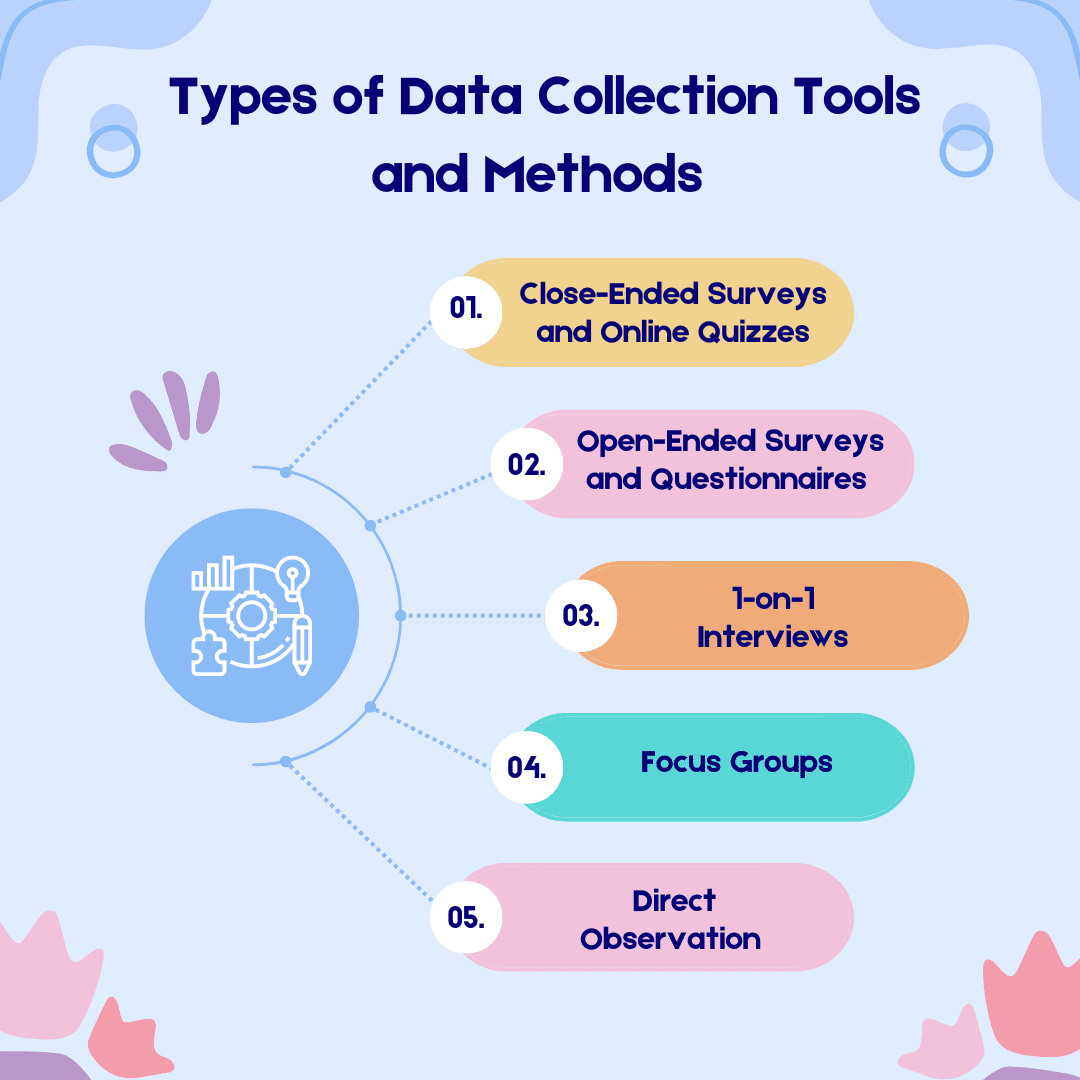
Types of Data Collection Tools and Methods 

Types of Data Collection Tools and Methods 

Data analytics course and data science training comes with various methods and tools for data collection. If one aspires to become a data analyst and take up a data analytics certification course, these methods would help them immensely. 

1) Close-Ended Surveys and Online Quizzes

Closed-ended surveys and online quizzes are data-collecting methods that employ structured questions with preset answer alternatives. Participants select from these alternatives, which simplifies data analysis. Closed-ended questionnaires are often used in market research and consumer feedback. 

Online quizzes, which are often used in education and evaluations, effectively gather data and offer immediate responses. Both strategies are useful for acquiring quantitative data in a timely and efficient manner.

2. Open-Ended Surveys and Questionnaires 

Questionnaires and open-ended surveys are significant techniques of data collection. They pose open-ended questions that stimulate comprehensive, free-text replies, resulting in rich qualitative data. These strategies are used by researchers to gather in-depth insights, opinions, and viewpoints on complicated issues. They are useful for exploratory research, qualitative analysis, and revealing unexpected discoveries because, unlike closed-ended questions, they allow for flexibility and investigation of participant opinions.

3. 1-on-1 Interviews 

One-on-one interviews are an effective method for collecting data. They entail an experienced interviewer conversing with a single respondent, asking predefined questions or delving into certain themes. This strategy yields rich qualitative data, revealing personal experiences, views, and feelings. One-on-one interviews are commonly used in social sciences, market research, and qualitative investigations because they provide a thorough knowledge of individual viewpoints and nuanced information.

4. Focus Groups

Focus groups are a qualitative data-collecting method in which a moderator leads a small group of participants in a discussion on a particular topic or issue. This strategy generates a wide range of viewpoints, ideas, and insights. Focus groups are very effective for investigating complicated social problems, customer behaviour, or product feedback. They give detailed qualitative data that assists in understanding underlying motives, attitudes, and views, allowing for more informed decision-making and research findings. 

5. Direct Observation 

Direct observation is a type of data-collecting method in which researchers watch and document events, behaviours, or phenomena as they occur. This method provides real-time, unfiltered insights into the activities of individuals, making it useful in domains such as psychology, anthropology, and market research. It reduces reliance on self-reports from participants and improves data accuracy. Structured procedures are used by researchers to methodically record and analyse observations, assuring objectivity and reproducibility.

Ethical Considerations in Data Collection Methods 

To comply with Indian legislation, ethical concerns in data-gathering procedures are critical. Researchers must acquire informed permission from participants, ensuring that they understand the goal of the study and any potential dangers. 

Privacy and secrecy must be strictly adhered to, by legislative laws such as the Information Technology Act and the Personal Data Protection Bill. Furthermore, data anonymisation and secure storage practises are critical for safeguarding sensitive information. Maintaining ethical standards in data collecting creates confidence, ensures legal compliance, and protects the rights and dignity of all engaged.

Conclusion 

The art of data collection and preparation is an indispensable skill needed to sustain in this data-driven environment. It enables individuals and organisations to get useful insights, make educated decisions and advance in a variety of disciplines. They leverage the power of data to design a more informed future by mastering these approaches and sticking to best practices.

If you wish to become a data analyst and have a budding career in data science, check out Imarticus Learning’s Postgraduate Program In Data Science And Analytics. You will get 100% job assurance with this data science course and learn in detail about various data collection methods.

To know more, check out the website right away.


What Are Data Lakes? Why Are They Important?

Data lakes have emerged as a fundamental force in modern data management, revolutionising how organisations navigate the ever-expanding depths of information. These raw data reservoirs, capable of storing massive amounts of unstructured data, are rapidly developing into the backbone of data-driven decision-making.

A data lake is, at its heart, a centralised repository that deviates from standard data warehouses’ rigorous schema constraints. Instead, it accepts data in its unprocessed form, providing a system in which data is from many sources. It is the bedrock of modern data architecture.

Data lakes serve as a lighthouse, guiding organisations to data-driven prosperity. This blog will explore further the structure, applications, and best practices, empowering readers to realise the revolutionary potential of these data reservoirs.

Interested in building a career in data science? Keep reading if you want to pursue a data science certification and learn the fundamentals of data lakes. 

What are Data Lakes?

Data lakes are robust and flexible data storage repositories vital to modern data management techniques. These repositories act as a centralised and highly scalable reservoir for holding massive amounts of structured and unstructured data, with no need for specified standards.

Unlike typical data warehousing systems, data lakes embrace data in its raw and unadulterated form. This implies that organisations store many data types in their original formats, such as text, photos, videos, sensor data, and social media material within a data lake. This is important in big data, where the volume, variety, and velocity of data created are changing constantly. 

Data lakes enable data scientists to access and analyse data without being constrained by predetermined structures, promoting more flexible research. These repositories enable smooth data integration from multiple sources, providing an accurate representation of an organisation’s data assets.

History of Data Lakes 

To create a career in data analytics, or take up a data analytics certification course, one must be well aware of the history of data lakes.

The evolution of data lakes follows a groundbreaking journey in data management. The notion of data lakes arose in response to an increasing demand for organisations to efficiently capture and analyse increasing quantities of data.

Data lakes can be traced back to the early 2000s when stalwarts such as Google and Yahoo confronted the issue of processing enormous quantities of data generated through online applications. These firms pioneered the creation of distributed file systems and parallel processing frameworks like Hadoop, laying the groundwork for current data lake architecture.

Data lakes were popularised in the mid-2010s when enterprises understood the need for large repositories for data analysis and storage. Cloud-based data lake solutions were offered by Amazon, Microsoft and Google to democratise the technology as a whole. 

Data lakes are now an indispensable component of modern data science. It enables sophisticated data analytics and decision-making along with facilitating a myriad of business operations. The aforementioned history shows the constantly evolving nature of data management catering to technological needs through time. 

Importance of Data Lakes 

Before one takes up a data science course or a data science certification, knowing the importance of data lakes is an indispensable component of data science training. They are: 

Flexible Data Storage

Data lakes provide organisations with a scalable and flexible storage option. They handle a wide range of data types both structured, semi-structured, and unstructured data, and do not require specified schemas. This enables firms to acquire and store raw data, allowing data scientists and analysts to explore and analyse it. It eliminates the unchangeable data presentation constraints of traditional data warehouses, making it easier to work with an array of data sources.

Scalability and Cost Efficiency

Data lakes are built to scale. Data lakes can expand horizontally to handle the increased data overflow as data volumes continue to grow substantially. This scalability guarantees that organisations can oversee their data properly while avoiding expensive storage expenditures. They can choose cost-effective storage alternatives and only pay for the resources they utilise, making data lakes a cost-effective solution for dealing with extensive and evolving datasets.

Advanced Analytics and Machine Learning

Data lakes are the cornerstone for advanced analytics, machine learning, and artificial intelligence (AI) applications. Data scientists and AI practitioners use an entire dataset to construct and train models by keeping raw data in its natural format. This access to a broad spectrum of data types is critical for constructing precise and robust machine-learning algorithms, predictive models, and data-driven insights that drive ingenuity and market dominance.

Data Integration and Consolidation

Data lakes make it easier to integrate data from multifarious sources. Organisations can ingest data from IoT devices, social media, sensors, and other sources into a centralised repository. Consolidating data sources improves data quality, consistency, and dependability while offering a comprehensive perspective of an organisation’s information assets. It simplifies data integration efforts while also facilitating data governance and administration.

Decision-Making in Real Time and Based on Data

Organisations may use data lakes to consume and analyse real-time data sources. This capacity enables them to make quick, educated, data-driven judgements. Data lakes enable the processing of real-time data, allowing organisations to respond to developing trends, consumer preferences, and market dynamics in real time.

Data Lakes vs. Data Warehouse 

To become a data analyst, one must know the juxtaposition of data lakes and data warehouses. Even if it sounds remotely similar, there are certain different ones ought to know to take up a data science course. They are: 

Features  Data Lakes  Data Warehouses 
Flexibility  Accommodates both structured and unstructured data.  Accommodates only structured data with well-defined schemas. 
Scalability  Horizontally scalable, handling data volumes with ease.  Vertically scalable leading to limit itself in larger databases. 
Cost efficiency  Cost-effective once one opts for cloud storage.  Requires substantial upfront investments in the infrastructure. 
Analytics  Well suited for machine learning and other AI applications.  Appropriate for traditional business intelligence reporting and query. 
Data Integration  Improves data quality and consistency.  Needs careful data transformation and integration efforts. 

Conclusion

Data Lakes are the bedrock of modern data management, providing unrivalled flexibility and scalability for storing a wide range of data kinds. Their significance is in helping organisations to fully realise the potential of raw data, enabling advanced analytics, machine learning, and data-driven decision-making in an increasingly data-centric community.

If you are thinking of pursuing a career in data analytics or if you wish to become a data analyst, check out Imaticus Learning’s Postgraduate Program in Data Science and Analytics. This data analytics course would help you pursue a successful career in data science and upscale you to greater heights.

To know more, check out the website right away. 

Introduction to Deep Learning in Data Science

In a period of unlimited information, harnessing its transformative effects has become a major goal. Data science, an interdisciplinary area spanning mathematics, statistics, computer science, and domain-specific knowledge, drives this transformation and provides lucrative professions. At the core of data science is the effort to extract useful insights, make decisions based on data, and uncover hidden trends in massive amounts of data.


Deep learning has emerged as a powerful and transformative force in this endeavour. Deep learning, a subtype of machine learning, is influenced by human brain structure and function. It is distinguished by using artificial neural networks to analyse and process data. 


This article is a foundation for abundant information, facilitating you to embark on an experience that will equip you to utilise deep learning’s potential, tackle its obstacles, and consider its future impact on the ever-changing landscape of a career in data science.

Fundamentals of Deep Learning


Deep learning teaches artificial neural networks to execute tasks requiring intelligence like human beings. It has achieved enormous popularity and success in various applications, including picture and audio recognition, the processing of natural language, and autonomous transportation. 


Here are some basic deep learning principles and components:


Neural Networks: The algorithms used for deep learning are often built on artificial neural networks shaped by seeking inspiration from the human brain’s structure and operation. These networks comprise interlinked layers of nodes (neurons) that handle and modify data.


Deep Neural Networks (DNNs): The term ‘deep learning’ implies the complexity of the neural networks utilised. Several invisible layers exist between a deep neural network’s starting point and outcome phases. Due to these hidden layers, the model can learn complex structures and descriptions from the data.


Convolutional Neural Networks (CNNs): CNNs are a type of deep neural network often used to process video and image careers. Convolutional layers are used to autonomously acquire structural characteristics from data.


Transfer Learning: It is an approach that involves improving a deep learning model that has previously been trained for a certain purpose. It applies information gained from a specific assignment to boost performance on the next.


Applications of Deep Learning in Data Science


Deep learning has significantly improved data science by allowing for better predictions, improved data analysis, and the automatic execution of complex operations. Here are a few significant deep learning applications in data science:

Image Recognition and Object Identification

Deep learning, particularly CNNs, is frequently utilised for image categorisation and object detection applications. It is also capable of detecting and locating things within photos and videos. 

Generative Models

For generating fresh data specimens, generative adversarial networks (GANs) and variational autoencoders (VAEs) are used. GANs may generate realistic visuals, but VAEs provide structured information useful for data enhancement and innovative uses.

Autonomous Systems

Deep learning is important in developing autonomous devices like self-driving automobiles, drones, and robotics. Neural networks are used in these systems for awareness, making decisions, and management.

Financial Services

Financial services use deep learning algorithms to identify fraud, risk assessment, automated trading, and credit scoring.

Healthcare

Deep learning is used in medical scanning to identify illnesses from X-rays and MRIs, cancer detection in mammograms, and organ segmentation in CT images. NLP models are used to analyse medical data and extract useful information.

Social Media Marketing

Deep learning aids in sentiment assessment of social media information, personalised marketing efforts, and customer behaviour analysis.

Environmental Monitoring

Deep learning algorithms examine satellite and sensor information for monitoring the environment, climate modelling, and calamity prediction.

Limitations and Challenges in Applying Deep Learning to Data Science


The primary restriction of deep learning networks in data science is that they learn through observations. As a result, they fail to acquire knowledge in a convertible manner. The models can only understand what was in the initial data, which is frequently not indicative of the wider operational area. For example, if a model receives instruction on photographs of cats and dogs, then it might be unable to reliably predict another species with comparable attributes.


The issue of preconceptions is a further constraint of deep learning. If the model is trained on biased information, then it will replicate similar biases in its projections. Assuming data scientists create a voice assistant and train it to recognise the sounds of people from a specific location. In that instance, the model may struggle to comprehend the local dialect or tone.


Deep learning models are incapable of juggling multiple tasks, which means they can only provide accurate and efficient answers to a single problem. Even resolving a similar problem would necessitate reprogramming the system.  

Conclusion

Deep learning has become known as a game-changing force in the field of data science. Its astonishing capacity to understand complex trends from massive datasets has cleared the path for revolutionary applications in various industries. Deep learning has transformed how we extract insights, generate predictions, and automate complicated activities.


Joining a data science course is a sensible and strategic choice for prospective data scientists aiming to leverage the potential of deep learning. Enrol in the postgraduate programme in data science and analytics by Imarticus, which provides vital hands-on exposure and an in-depth grasp of deep learning techniques. This programme educates students to traverse the shifting terrain of data science efficiently.

The Importance of Financial Services in Today’s Economy

The functions of Indian financial system are made up of various essential segments called sectors. These sectors consist of businesses and enterprises providing services and goods to their consumers. The services provided by these business institutions are mainly brokerage firms, lending entities, and other financial services like safekeeping money. 

Capital Market Course

The structure of indian financial system comprises a broad spectrum such as banking, credit cards, mortgages, payment services, taxation, investments, accounting, and planning. Financial services are also inclusive of professional and firm activities, which are often referred to as financial instruments. 

In this article, let’s learn in detail about the importance of financial services and what the main elements of a financial services course are if you think about taking one. 

What are financial services? 

The role of the Indian financial system in economic development is taken care of by business entities or professionals, with large conglomerates being dominant in this sector, contributing immensely to the country’s economic growth.

Financial services are considered to be temporary rather than tangible assets. This is because financial services have limited their horizons to the activities of financial services entities and firms. In this scenario, financial products are goods, accounts, and investments that are bestowed upon an individual. 

financial services course

Types of financial services

The importance of financial services cannot be overstated; they are the backbone of the Indian economy, and various types of services are provided by financial entities in the country. They are: 

Banking 

The banking sector is an important function of Indian financial system. The country comprises several public sectors, foreign sectors, private sectors, rural sectors, and urban cooperatives such as banks. The services offered by the banking sector are: 

Individual banking. 

Business banking. 

Loans. 

Treasury services. 

India’s banking sector is regulated by the RBI, or Reserve Bank of India, which monitors its liquidity, financial health, and capitalisation. 

Professional Advisory 

Professional advisories offer a wide portfolio of important financial services to individuals and businesses, like investment due diligence, real estate consulting, M&A advisory, risk and tax consultation, etc. These services are offered by several entities, from domestic consultants to large organisations. 

Wealth Management 

Financial services offered in this segment include investing and managing the customer’s wealth across various financial instruments. These financial instruments include, notably, equity, debt, mutual funds, insurance, derivatives, structured products, commodities, and other important financial goals.

Mutual Funds 

Mutual funds tend to offer various services highlighting the importance of financial services in India through professional investment offerings consisting of different assets, primarily debt and equity-linked assets. These buy-ins of mutual fund solutions are compared to stock markets and debt products. However, the mutual funds’ segments have witnessed immense growth over the last five years and are considered to be the low-risk multipliers. 

Portfolio Management 

This segment includes a customised range of solutions that enable clients to reach their financial goals with the help of portfolio managers. This would help in analysing and optimising their investments across a wide range of assets like equity, debt, insurance, and real estate. 

The services of portfolio management are widely targeted at different HNIs with both discretionary and non-discretionary client interventions. 

Role of the Indian Financial System in Economic Development

The core functions of Indian financial system are what enable the county to improve its economic conditions. The benefits of economic growth are therefore reflected in the people as a sign of economic prosperity. Here are some aspects that emphasize the importance of Indian financial services in today’s economy. 

Promotes Investments

The presence of financial services in the country not only creates a substantial demand for products and their producers, but it also meets the demands from one consumer to another for maximum investment. The role of financial services in India is to act as a rescue for investors like merchant bankers to enable an exponential capital raise. 

Promotes Savings 

Financial services like mutual funds and bonds provide an individual with opportunities for opening different kinds of savings. Therefore, differential investment options are now open for pensioners to gain reasonable returns without any risks. This scheme substantially increases the growth in income and other reinvestment opportunities that are initiated by the Government. 

Minimises Risks 

With the presence of insurance companies, the risks of financial services are minimised. Therefore, various types of risks are not only covered to offer protection in business conditions, but financial services also make it easier to curb losses from natural calamities. Moreover, insurance is not the only source of finance but also a great source of savings as well. 

Maximises Returns 

Businessmen acknowledge the importance of financial services due to their significance in yielding maximum returns. This is only possible because of credit availability at a very reasonable rate. They also go on leasing assets of very high value as well. This enables sellers and producers to increase turnover, which proliferates profit growth. Even during stiff competition, the producers can even sell their products at a lower margin and get high turnovers. 

Provides Greater Yields

Even though yields and returns might have a remote similarity, they are way different from one another. Yield attracts more producers to join the markets and increase their production to attract more customers. 

Hence, the importance of financial services lies in their ability to generate not only exponential profits but also serve as a great source for wealth maximization. Furthermore, financial services also enhance goodwill and induce immense diversification, which results in linear growth. 

Conclusion 

Financial services are important for enabling the user to obtain assets on credit at a very convenient and reasonable interest rate. However, it is not easy to track the growth of financial services all the time. Therefore, it is required of some individuals who are good at understanding growth. This says a lot about the importance of financial services, overall.

If you are interested in taking up a financial services course and learning about its impacts on the Indian economy, check out Imarticus Learning’s Advanced Management Programme in Financial Services and Capital Markets in collaboration with IIM Lucknow. This IIM Lucknow course on financial services enhances your knowledge of financial services and also helps to shape your professional life. 

For more details, check the website right away!

A Guide to Valuing Digital Business Models

Business digitalisation is the new architecture of a modern-era business that may be applied directly to a start-up venture or used upon an existing business model. The process is technology-driven, both for inter-departmental and client-end operations. Hence, it aims to increase business efficiency at all levels and functional departments with the ultimate objective to maximise revenue and profit with the same resources.

An important initiative of the digital business model is to create new opportunities and meaningful value drivers for business through its data-based methodical approach. If you are a CFO or an aspiring CFO, remaining industry-relevant is paramount to driving businesses to digital success. In such a scenario, CFO training courses can equip you with the upcoming digital models and tools to cement your position as an invaluable asset in your organisation.

Characteristics of Digital Business Models

The pandemic Covid-19 changed the way businesses operated globally. Artificial intelligence, which can provide practical solutions with inputs from historical databases, is the core of digital business models.

On the customer front, this model can respond to their queries when they visit concerned websites and wish to interact with the chatbots. On the business owner’s end, it provides logical solutions, both departmentally and cross-functionally.

The following are the characteristics of digital business models – 

1. Flexibility 

This business model is extremely flexible in handling problems and offering solutions. New business parameters can be easily added and obsolete ones removed so that the business model stays relevant.

2. Scalability 

The primary feature of a digital business model is its scalability. With the addition of more resources to generate more revenue and profit, the model helps maintain quality and keeps the price in check.

3. Creation of completely new business lines

Digital business models have created new business models like e-commerce platforms, which did not exist before the extensive usage of the internet became predominant in our daily lives. Similarly, it has also changed how public transportation worked in the past by introducing the system of app-based cabs, app-based food delivery, e-booking systems, etc.

4. Customer re-orientation 

Customers can now seamlessly leverage the benefits of digital business channels. Being technology savvy, most customers can easily adapt to new business ways. Online payment is a by-product of the digital business model. 

5. New business culture 

The digital business model has also developed a new culture in the relationship management between the manufacturer, the vendors and the customers. The interaction channels have been widened, and feedback from both vendors and customers reach easily. So, the goal of fulfilling the demands of clients to generate satisfaction may be achieved easily.

6. Digital business components

Digital engineering, digital strategy, interactive interface, internet of things and artificial intelligence are some of the basic components of the digital business model. 

Benefits of Digital Business Models

The benefits of the digital business model are as follows – 

1) High quality and consistency 

Digitalisation helps to deliver high-quality, reliable products consistently. This is the key to enhancing customer satisfaction.

2. Optimum pricing 

Pricing is a sensitive issue in many parts of the world. Since digitalisation, this parameter could be maintained conveniently.

3) Productivity  

Digitalisation has improved productivity to a large extent by removing unwarranted human interferences and errors. Systems and processes have been created to allow every employee to work effectively and efficiently.

4) Decision making 

A correct and timely decision takes a company to its desired goal. Earlier, veteran executives made decisions for the company solely based on their gut feelings and experience. However, present-day decision-making is made simple by abundant volumes of historical data available at their disposal.    

5) Operational cost

The slow movement in production lines and manual handling would increase operational costs in most cases. Presently, computerised production lines are efficient and faster. This, in turn, lowers the production cost.

6) Governance 

Every company must adopt digital automation to sustain itself in this dynamic business landscape. Though initial installation costs may seem high, the subsequent payback through the e-governance of business models more than compensates for the costs. Errors become minimal, and the process becomes efficient at every stage.

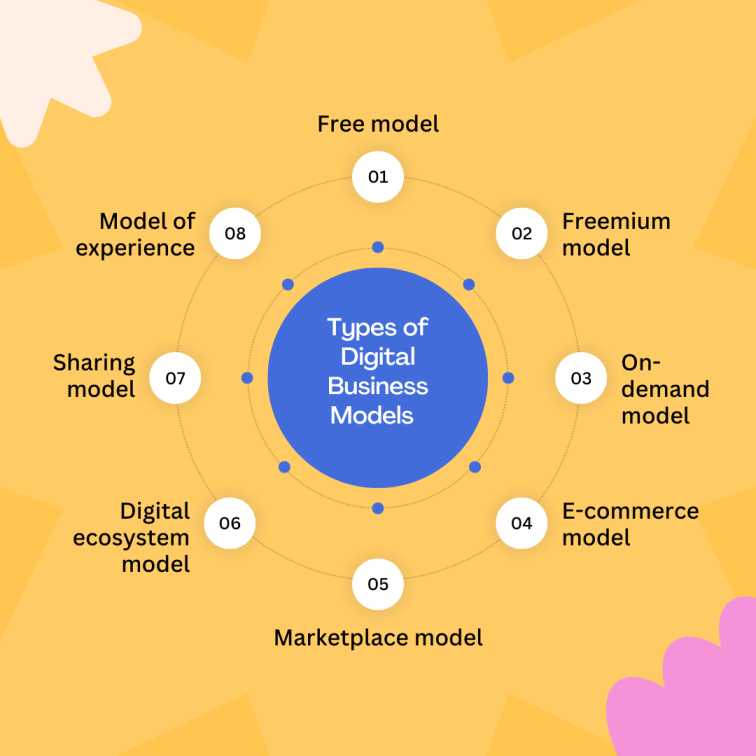
Types of Digital Business Models  

Types of Digital Business Models 

Selecting the correct business model helps a company achieve its goal quickly. Selecting the right model is also important for CFOs as they should be financially viable for the company. Some of the successful models are as follows – 

1. Free model

This model is financed by web hosting giants like Google or Facebook to generate customers and utilise them as end products. Customer feedback motivates them to float the most relevant advertisements to attract more customers.

2. Freemium model 

This business model allows users to use a basic version for free just to develop their habit of getting used to it. Later, a fee-based model is offered with added features and an advertisement-free experience. 

3. On-demand model 

This model aims to attract customers by offering viewership or usage rights to a service for a limited time, thereby creating interest in them to buy the services with a charge.

4. E-commerce model

This model allows all customers to buy products or services online instead of the traditional offline system.

5. Marketplace model 

This model utilises a two-sided marketplace where buyers and sellers can trade services or goods through a third party like Swiggy or eBay. 

6. Digital ecosystem model

This business model is by and large the most successful one and has been used by many giant companies like Google, Tesla, Alibaba, etc. The key feature of this model is to start a business with one significant product or service that immediately strikes a chord with the masses. 

7. Sharing model

In this model, the user gets access to the product or service but does not have the right to own it. These are digital renting-out services.

8. Model of experience 

This model amalgamates the digital transformation of an existing industry following the digital ecosystem model. Tesla is the best example. 

Conclusion

A Chief Finance Officer is the ultimate custodian of the business in any organisation. Since business is now being conducted in the digital model, it is a must for the candidate to get acclimatised in this digital environment. CFO certification is the only way forward in this case.

The Postgraduate Certificate Programme for Emerging CFOs by Imarticus is one of India’s best CFO training courses. Spread over 151 hours only, this CFO certification course allows you to keep up with your professional life with classes held only at weekends. 

Visit the official website of Imarticus for more details.

Understanding Leveraged Buyouts (LBOs)

In both global and domestic business environments, the usage of Leveraged Buyouts (LBOs) is quite common and is used both by large as well as small companies. When a company does not possess the required amount to buy the shares of any small or private business then it can borrow the buying price to acquire the desired deal. This borrowing of money against the assets or cash flow of a company is known as a Leverage Buyout (LBO).

If an individual is willing to commence a career in investment banking then they must have enough knowledge about Leverage Buyout (LBO). An investment banking course will help these individuals to learn more about LBO. In this article, we will vividly discuss and cover this topic.

So let’s dive in to learn more about the  Leveraged Buyouts (LBOs)!

What are Leveraged Buyouts?

In simple terms, Leveraged Buyouts can be described as a financial transaction in which one company buys or acquires another company with the assistance of equity as well as debt money. This debt amount will later be repaid by the company with the help of its and the targeted company’s future cash flow. A targeted company which is also known as the seller is a company that has been acquired or bought by some other private company.

Hence, LBOs allow a company to make big acquisition deals with a nominal amount of capital. A company can invest only 10% of its capital and the rest 90% of the amount can be taken as a debt. This form of financial transaction is profitable for both the buyer and the targeted company if the transaction is completed.

Why is LBO Used by Companies and Businesses?

There are various reasons why companies prefer to use Leveraged Buyouts (LBOs) while acquiring a company. Here are a few of those reasons:

  • When a public company is converted into a private company the Leveraged Buyout (LBO) is used.
  • Many companies also use the  Leveraged Buyout (LBO) method to acquire a large selling company without even investing a huge amount of capital.
  • When a company wants to create a new company by selling the existing part of that company then this method is used.
  • It eases the transfer of ownership of a small private company to any big company.

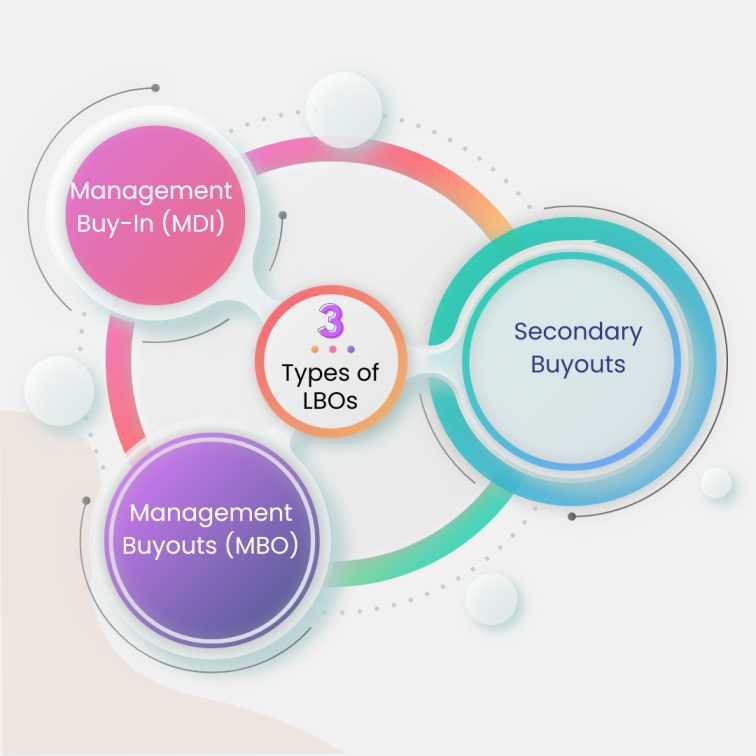
What are the Various Types of LBOs?

Types of LBOs

There are various methods through which Leverage Buyouts (LBOs) can be carried out. These methods have been elucidated below:

1. Management Buy-In (MDI)

In this method of Leveraged Buyout (LBO), the company is acquired by external investors who will create the company from scratch. This means that they will change the existing employees, board of directors, management teams, etc. This is the main reason why the management buy-in (MDI) method creates chaos initially.

However, the management buy-in (MDI) method can create excellent investment returns for the buyers if they properly carry on the changes. This method is usually applied to companies that are performing poorly or are undervalued.

2. Secondary Buyouts

A secondary buyout takes place when there is a buyout of an existing buyout. When a buyout that has been acquired with the LBO method is sold to another private company then a secondary buyout takes place. The seller after selling the buyout can instantly get a complete separation from it.

Secondary buyouts are ideal for those private companies that work under a specific category and have slow growth with high cash flow.

3. Management Buyouts (MBO)

Unlike the management buy-in (MDI) method, here the company is acquired by the management team of the targeted company. The management buyout (MDO) method is often chosen by those owners who are willing to retire. In this method, the management team does not change therefore there is no chaotic transaction of business.

Management buyout (MDO) is generally used by large companies whose one of the divisions is working poorly and is undervalued. If this method is implemented successfully then the buyers will receive high investment returns.

Advantages of Leveraged Buyouts

There are plenty of advantages that a buyer and seller will receive if their Leveraged Buyout (LBO) transaction is executed properly. These advantages have been discussed in detail here:

  • One of the greatest advantages that buyers get is that they can acquire an entire company without even spending much of its assets and capital.
  •  By using the LBO method the buyers can easily receive high investment returns and they need to pay low income taxes.
  • Even the sellers or the targeted companies receive many advantages by simply using the LBO method. They can save a company that has high cash flow but is performing poorly. By selling such a company the seller saves it from massive failure.
  • LBO also allows private groups like employees and families to acquire the selling company.

To grab these advantages a company must update their employees’ skills with the assistance of an investment banker course or an investment banking certification. There are plenty of investment banking courses online that will not only help an employee grow but also assist the company in executing more Leveraged Buyout (LBO) transactions. 

Real-life Example of Leveraged Buyouts (LBOs)

Leveraged buyouts were extremely popular before the financial crisis that took place in 2008. Many large-scale LBOs had taken place before this crisis. However, the popularity of Leveraged buyouts (LBOs) has again gained popularity since the Covid-19 pandemic.

In 2006, the biggest LBO took place in history when three companies including Merrill Lynch, Bain & Co., and Kohlberg Kravis Robert & Co. acquired an American company that was valued at around 33 billion USD. The name of the  American company is Hospital Crop. Of America (HCA).

Following this huge-scale LBO there was a halt until the Covid-29 pandemic. In 2021, the Blackstone Group bought Medline using the Leveraged Buyout (LBO). The entire transaction was valued at around 34 billion USD

Conclusion

Imarticus Learning offers a Certified Investment Banking Operations Professional course where you will learn all the necessary skills and knowledge you will need as an investment banker, financial analyst, risk management consultant and other key financial roles. If you are invested in creating a career in the banking and finance sector, you can enrol in this banking and financing course to increase your prospects and opportunities.

The Role Of Equity Research Analysts In Investment Decision-Making

Overview of Equity Research Analysts

Equity research analysts play a key role in the financial industry. They provide insightful recommendations to fund managers, investors, and financial institutions. They conduct deep analysis of publicly traded companies, to help their clients make better investment decisions.

Primarily, Equity Research Analysts can be classified into two categories: Buy-side Equity Research Analysts and Sell-side Equity Research Analysts. The Buy-side research analysts develop and maintain financial models and unravel developments that might share price development so a company makes fruitful investments.

However, the Sell-side research analysts are employed in brokerage firms or investment banks. They prepare investment reports and advise their client companies.

The skills and qualities needed to become an equity research analyst

Equity research is one of the most lucrative career options in the finance sector. This career choice is dynamic, rewarding and challenging. However, the rewards and challenges of this profession are the same. As an Equity Research Analyst, you are always in touch with the financial and investment decisions of a company. You will be on your toes to stay updated about the dynamics of business investment. This primary task of an Equity Research Analyst will demand constant brushing up of your skills and knowledge. But it will also give you an edge over others when it comes to choosing the right company or sector for your next job.

That being said, below we have listed down the key skills and traits that you must polish to become a successful Equity Research Analyst.

– Financial acumen

As an equity research analyst, you must have a solid foundation in accounting, economics, and finance. You should have the skill to interpret financial statements and financial ratios. This will assist you in evaluating a company’s financial health.

– Research skills

Strong research skill is the primary requisite to succeed in the field of equity research. You must be efficient in gathering relevant financial information from sources like regulatory filings, industry publications, and financial databases.

 – Industry knowledge

Apart from the financial industry, you need to have in-depth knowledge of other related industries. For instance real estate, consumer finance firms, insurance firms, and mortgage lenders. Any change in these industries can impact your company or client. You are expected to stay informed about their trends, regulatory changes, and competitive dynamics.

– Communication skills

As an equity research analyst, you will be required to simplify complex financial information into simpler forms. You will have to prepare reports and presentations for clients. Your suggestions and advise should be easy to comprehend. Therefore, both your written and oral communication skills have to be impeccable.

– Analytical skills

You must possess sharp abilities to identify trends, dissect complex data, and derive meaningful conclusions. You will be expected to see beyond numbers and analyse implications for all investment decisions.

– Quantitative skills

An equity research analyst must have a quantitative aptitude. You must know how to master financial data, work with statistical models and tools, assess risk, and forecast financial performance.

– Critical thinking

Professionals in the field of equity research can encounter confusing and unclear scenarios where making sound decisions is crucial. Therefore, as an analyst, you must think critically and weigh various factors to finalise the next best step.

– Adaptability

Financial markets are highly volatile and are subject to rapid changes. As analysts, you need to tailor new research and report quickly to changing conditions. You will have to quickly adapt to the changes and act efficiently to support your client or a business.

– Attention to detail

Lastly, you must have an eye for detail if you want to succeed as an Equity Research Analyst. You must be able to make error-free financial reports and check for accuracy in analysis. Minor discrepancies can cause a lot of damage to your client or company.

The role of equity research analysts in investment decision-making

The role of equity research analysts is integral in making informed decisions and strategic investments. They have to check and verify all sorts of financial data to be able to suggest the right investment choices. Here is how they guide their clients with essential financial information and analysis:

In-depth analysis

Equity research analysts thoroughly analyse the data of their clients and of the companies associated with them. They study industry dynamics, inspect management quality, assess competitive positioning, and gauge the financial health of a company. They also observe income statements, cash flow statements, and balance sheets to project the growth potential.

Risk assessment

Best investment decisions can be taken only after assessing the risks associated with it. Analysts examine market volatility, industry-specific risks, and company-specific liabilities to help investors make better risk-adjusted decisions.

Portfolio allocation

Portfolio managers rely extensively on the research and analysis provided by equity research experts. These reports influence portfolio construction as it helps the portfolio team in allocating assets and optimise risk and return.

Regulatory compliance

Trained Equity Research experts who have completed a financial analysis course become more capable of utilising the best practices of the industry functions. They know that adherence to regulatory and ethical guidelines is crucial for building trust in the money market.

Wrapping it up

The equity research segment offers rewarding career paths to both freshers and professionals from the finance field. An Equity Research Analyst needs a perfect blend of interpersonal skills and analytical prowess. You can achieve all of this through a financial analysis course. Consider taking up a financial analysis course from Imarticus Learning. Imarticus Learning is an award-winning ed-tech company offering an array of career-building courses from renowned institutions. Check out our website now for more details.