The Power of Generative AI: Applications Across Different Industries

As generative AI takes over, a tidal wave of innovation is set to hit all sectors. It will help create ground-breaking marketing campaigns, design new products, and develop code ideas—all in one go! That is the power that generative AI applications put in your hands. 

This blog explores the numerous ways generative AI is being used in the real world. We explore areas of marketing, design, science, and manufacturing. 

Definition of Generative AI

Generative AI, short for generative artificial intelligence, is a type of AI that can create new data —text, images, music, or code. It works by learning the patterns and relationships within a massive dataset of existing content. 

It is similar to having a giant library with books on every topic. Generative AI applications read all these, learn the rules of grammar, sentence structure, and storytelling, and then use that knowledge to write their own stories.

Here’s how it works:

  • Training: Generative AI models are trained on massive datasets. This could be millions of images, lines of code, or pieces of music.
  • Pattern recognition: As the model is trained, it recognises patterns and relationships within the data. It learns to recognise the elements that make up a cat picture, a pop song, or a computer program.
  • Content creation: Once trained, the model can use that knowledge to generate new content. It can create realistic images of cats that have never existed, compose music in a specific genre, or write code for a new software program.

After all, what is generative AI if it isn’t about diversification?

Examples of Generative AI

Generative AI is an emerging field with many applications. We’re already seeing it used in:

  • Marketing: New ad copy, product descriptions, and social media content.
  • Art and design: New design ideas, unique visual content, and music.
  • Science and engineering: Drug discovery, materials science, and new product development.

Here are some examples of generative AI applications by area of expertise:

  1. Text Generation

  • Jasper: Marketing copy, blog posts, website content, and scripts.
  • Writesonic: Product descriptions, social media posts, and email marketing campaigns.
  • Scribe: Academic and professional writing, research, summarising articles and reports.

Image Generation

  • DALL-E 2: OpenAI’s tool that turns text descriptions into photorealistic images.
  • Midjourney: Image generation platform for creative and artistic outputs.
  • NightCafe Creator: Digital artwork based on user prompts and artistic styles.

Code Generation

  • Github Copilot: AI assistant for programmers that suggests code completions and functions based on context.
  • Tabnine: Code completion tool that learns from your coding style.
  • DeepCode: Code quality improvement.

In terms of miscellaneous activities, here’s more of what generative AI applications can perform:

  • Murf.ai: Voiceovers in many styles and languages.
  • Amper Music: Music to your preferences and mood.
  • Synthesia: Videos from text inputs. AI presenters.

Generative AI Applications

Generative AI deals with multitudes of industries. Its applications are known to have worked within these industries successfully:

Marketing and Advertising

Marketing has gotten even more creative with generative AI applications. Here’s how generative AI is making marketing effective:

  • Personalised messages for everyone: What is generative AI but a haven for human interaction? No more one-size-fits-all marketing! Generative AI can create content, like ad copy and social media posts, that talks directly to each person’s interests. Not just that, a recent report even showed how over 44% of marketers use GenAI solely for email copy while others depend on it for social media copies.
  • Visuals in a flash: Creating great images and videos is a pain. Generative AI can create unique visuals for your brand and campaign in seconds, saving you time and money. Access fresh content, constantly, without the hassle.
  • Testing made easy: Finding the perfect marketing message is similar to finding a needle in a haystack. Generative AI can create multiple versions of ads and headlines, and you can test them all quickly to see what works best. It’s like having a million test audiences at your fingertips!
  • Targeting like a professional: The definition of Generative AI extends to analysing tons of data to know what people want. You can precisely target your ads, making them reach the right people with the right message at the right time. To learn more, opt for generative AI courses like the Advanced Certificate Programme in Generative AI by Imarticus.

Here are a few popular examples of where we can experience Gen AI:

  • Netflix: A movie trailer made just for you, highlighting the bits you’ll love most. That’s what Netflix does with generative AI, and it keeps people hooked.
  • Uber: Ever get an Uber email with a special offer just for you? Generative AI applications like this use your past rides to suggest deals that make sense and keep you seeking more.
  • BBC: The BBC uses generative AI applications to create personalised social media posts based on your viewing habits so you discover various content.

Software Development

The definition of Generative AI is incomplete without the mention of software development. This technology allows you to write repetitive code snippets. 

Moreover, you can use it for suggestions to solve problems and even instruct it to catch bugs before they sabotage your code. Moreover, 91% of Deloitte professionals believe in the power of Generative AI applications to improve organisational productivity.

Let’s look at some examples:

  • Github Copilot: This popular tool is like an AI assistant regarding generative AI applications. It suggests code completions and functions as you type.
  • Tabnine: Another code completion tool, Tabnine learns your coding style and preferences over time and gives you suggestions based on how you work. 
  • DeepCode: This AI tool goes beyond just writing code. It analyses your codebase to find potential bugs and security vulnerabilities so you can write cleaner and more secure software.

Financial services

Generative AI applications create entirely new data and are moving quickly across industries. Below are a few ways generative AI is disrupting industries:

  • JPMorgan Chase: Experiment with generative AI to analyse data and find trading opportunities.
  • HSBC: Use generative AI to create synthetic data for fraud detection models.
  • BlackRock: Explore generative AI for portfolio optimisation, building more diverse investment strategies.

Enterprises

Generative AI can automate the mundane —data entry, report generation, and even basic coding. It frees employees to do what they do best: innovate, strategise, and crush those quarterly targets.

Here’s how generative AI applications aid enterprises:

  • Personalised customer interaction: Create unique content, targeted marketing materials, and chatbots that truly connect with customers.
  • Work smarter: Brainstorm new product ideas, generate design variations, and write basic code for prototypes —all with AI as your partner.
  • Data-driven decisions: Analyse massive datasets and find hidden insights to make better business decisions.
  • Streamline operations: Less time on admin tasks means more money saved.
  • Alleviate marketing and sales: Personalised content creation means higher conversion rates and a stronger brand.
  • R&D to the rescue: Bring innovative ideas to market faster.
  • Become a risk management expert: Identify and mitigate financial risks before they strike.

Generative Adversarial Networks (GANs) 

Two AI systems are in an artistic battle. One is the generator, trying to create more realistic paintings, and the other is the discriminator, trying to separate the real from the fake. This is the basic idea of Generative Adversarial Networks (GANs), a deep learning technique that explores the limits of artificial creativity. This is where generative AI applications find their extension.

How GANs Work

Here’s an example to get you started: A forger is creating very convincing counterfeits while a detective is trying to catch the forgeries. The forger improves their technique based on the detective’s feedback, and the loop continues. 

In a GAN:

  • The generator: Creates new data, like images, text, or music, from random noise.
  • The discriminator: Analyses the generated data and tries to determine if it’s real or fake based on its training on real data.

Through this ongoing competition, the generator learns to create increasingly realistic outputs, while the discriminator becomes a sharper critic.
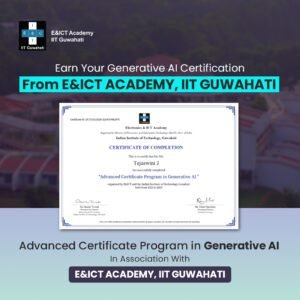
Advanced Certificate Program in Generative AI

Generative AI Applications Using GANs

Generative AI courses often cover GANs, an integral part of GenAI. GANs are no longer confined to research labs. Instead, you can find them in these areas:

  • Art and Design

GANs can create incredibly realistic images in any style. With Generative AI applications, you can generate new fashion designs that capture the essence of a particular era or designer or compose music that seamlessly blends different genres. GANs can even create photorealistic portraits from text descriptions, opening up new possibilities for personalised art.

  • Marketing and Advertising

Personalise marketing campaigns by generating targeted visuals or crafting product descriptions for specific demographics. For instance, generative AI applications let GANs create custom social media posts for a user’s interests or generate product mockups. GANs can also generate different ad variations for A/B testing so marketers can optimise their campaigns for maximum impact.

  • Drug Discovery and Materials Science

Simulate complex molecules or materials to speed up research and development. GANs can analyse huge datasets of existing molecules and materials and then use that knowledge to generate entirely new ones with specific properties. 

This can lead to breakthroughs in areas like medicine, where GANs can design new drugs with fewer side effects, or in materials science, where GANs can create new materials with better strength, conductivity, or other desirable properties.

  • Fashion and E-commerce

Create personalised clothing recommendations based on a user’s style or browsing history. Imagine a virtual stylist powered by GANs who can suggest new outfits that match your current wardrobe or create a look for a special occasion. 

GANs can also create product images for online stores, eliminating the need for expensive photo shoots and allowing for more product views to be shown. 

Summary

Generative AI applications are modifying industries, from automating tasks in companies to creating new art forms with GANs. As this tech matures, the demand for skilled people will skyrocket. 

This is the right time to register for generative AI courses. An Advanced Certificate Programme in Generative AI will give you the knowledge and skills to lead in this space, learn from industry experts, develop practical skills, and move your career forward. 

Don’t miss out –  sign up now and command generative AI!

FAQs

  • What is generative AI?

The definition of Generative AI extends to a type of AI that can create entirely new data, such as text, images, music, or even code from inputs in the same format. All you have to do is give it instructions according to the modality of the system. 

  • What is the difference between AI and generative AI?

AI is great at data analysis, the foundation for tasks like recommendation systems or fraud detection. Generative AI applications let a specialised type of AI go a step further. It can analyse data and use that knowledge to create new content, like realistic images or new product designs.

  • How to use GenAI?

Using GenAI is as simple as it gets. Describe what you want (text, image, code), and feed it data. You will have your AI output in no time.

  • What are GenAI examples?

Generative AI applications are widespread in terms of text generation (like AI-written articles), image synthesis (creating images from descriptions), and music composition (generating songs on varied styles).

Developing Your Skills in Generative AI: Programming Languages, Tools, and Techniques

Artificial intelligence encompasses tasks related to replicating human brain activities such as learning, reasoning, language comprehension, problem-solving abilities, etc., by computers or software-driven robots. Thus, AI is a modern-day technology experiencing speedy evolution with each passing day to match and surpass human intelligence. Machine learning, deep learning, etc., are different specialised verticals of AI. 

In this article, we shall explore in detail the answer to ‘what is generative AI’. We shall also learn about generative AI tools, skills in generative AI and generative AI courses.     

What is Generative AI?

There are several types of artificial intelligence. Some are purely reactive with expertise in only one field, while some respond with limited memory. Robots with “theory of mind” and “self-awareness” are being researched and shall be the future of AI.

However, another type of AI has gained tremendous momentum in recent years—generative AI. Generative AI is a vertical of artificial intelligence tasked with developing new, imaginative, or futuristic content in the form of images, video, written content, etc., from available data. Applications of generative AI are plentiful, including police departments, healthcare, marketing, security, etc.    

In the modern digital economy, generative AI plays a major role, and hence, learning skills in generative AI and expertise in handling generative AI tools can give aspirants a significant edge in the job market. 

What is Generative AI and its benefits? 

Generative AI leverages its huge data bank and realises human inputs to produce desired results. The advantages of generative AI abilities are multi-fold, and benefits can be obtained across many sectors. Some of the benefits of generative AI are as follows –

  • Automation 

In digital marketing, even small business houses look forward to automation in some of their basic or routine functions. The main purpose is to deploy fewer human resources and achieve speedier execution. 

  • Customisation 

With the help of generative AI, business houses can offer extremely tailor-made services. Based on user inputs and preferences, generative AI activates its recommendation engine to suggest user similar products, services, visuals, articles, etc. 

  • Optimisation 

Client behavioural patterns and preferences both change drastically over time. However, organisations must withstand challenges and still be competitive. Generative AI can boost creativity and product design optimisation.

  • Enhanced service experience 

Generative AI enhances customer service experience to the next level. Customers may clarify most of their queries with the chatbot services around the clock. Thus, clients get better services, and organisations reduce the cost of excess manpower.

  • Reduction in cost and time 

The creativity of generative AI in automation reduces production processes, thus saving both cost and time. Generative AI also analyses client reviews and helps create acceptable, cost-effective, futuristic product designs. 

  • Enhanced revenue and profit 

When better customer service is realised, revenue increases. When cost production time is reduced, profit is enhanced.  

Skills in Generative AI

To get a fair idea of ‘what is generative AI’, we need to understand the important skills in generative AI. There are a good number of institutions offering generative AI courses, which can transform the career path of any prospective candidate. Some of the most sought-after skills in generative AI are as follows –

  • Natural language processing (NLP) 

Understanding natural human languages is important for replicating human intelligence. Thus, a vast amount of data is collected through different communication channels, such as emails, chats, texts, videos, etc. 

  • Deep learning

This specialised type of machine learning is meant for critical (but human-like) decisions through robots. Designed after the neurons of the human brain, the DL method uses several layers of artificial neural networks to achieve its objectives. DL is utilised in industrial manufacturing, self-driven cars and for cancer cell detection.   

  • AI Chatbot 

This robotic agent is mainly used to respond to client queries as a customer support function. E-commerce, retail, banking, and insurance sectors use this extensively. However, these services are not completely independent and require human intervention for maintenance and even responding to critical or unique queries.  

  • PyTorch 

It is a framework based on the open-source ML library from Facebook. It helps create and train deep learning models and neural networks used in NLP and related software. PyTorch is developed using Python and is extremely popular among Python developers.   

Read more about the reasons behind Python’s popularity in the technology industry.

  • Prompt engineering 

This is a skill that creates ideal inputs so that the results produced by generative AI models are useful for their intended purpose. A prompt engineer handholds the entire process of a generative AI model until it reaches its ideal evolution.

  • Computational biology 

This skill utilises big data from the biological science field and, with the help of generative AI, understands biological systems, relationships, genetic research and medicine development for new diseases.  

  • TensorFlow 

It is a Google-coded open-source ML framework used to create and train neural networks. Because of its creative elements and real-world applications, it is equally appreciated in the AI research and developer communities. 

  • AI image generation 

Many generative AI services are available that can create desired images from natural language inputs. This skill is widely used in police services to generate images of alleged criminals.

We can understand what is generative AI by reviewing these top on-demand skill sets. These different skills in generative AI help an aspiring candidate to understand and choose the right skill set as per his or her abilities and likings. It is required to understand that artificial intelligence will require special professionals with desired skill sets. Thus, upskilling is the best mantra to sustain and survive.     

Generative AI Tools

Generative AI Tools

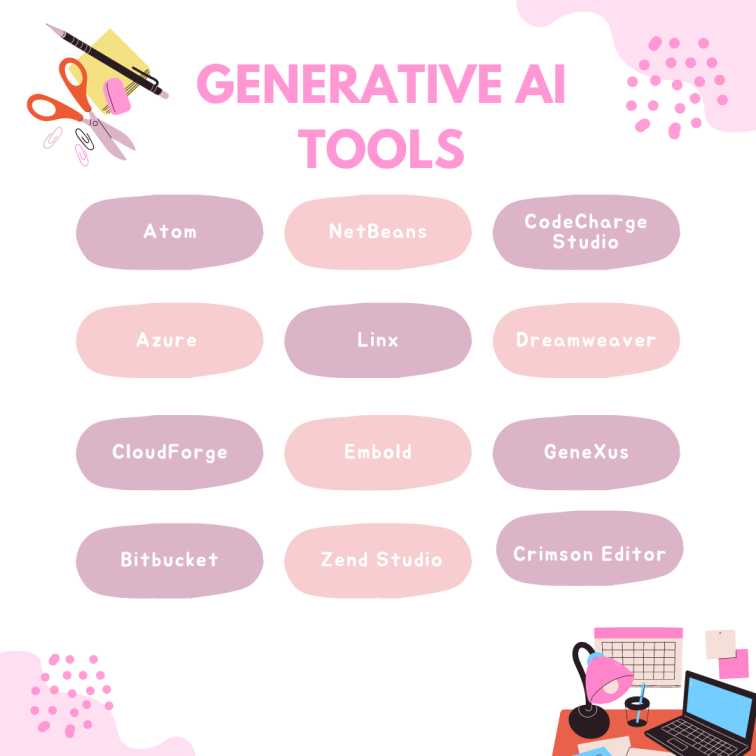
To successfully reflect upon ‘what is generative AI’, we must understand the different generative AI tools and languages that pave the way for a futuristic world of artificial intelligence.

The different generative AI tools or programming tools and software development tools are as follows – 

  • Atom 

It is a free, open-source desktop and code editor that works on Windows, Linux and OS X. It performs cross-function editing and is capable of smart auto-completion.

  • NetBeans 

It is a Java-based open-source tool capable of quickly developing mobile and desktop apps. It performs static analysis and visual debugger functions.

  • CodeCharge Studio 

It is a pre-built rapid application development (RAD) tool meant for data-driven web functions using the internet or intranet with limited coding. It has the feature of a visual integrated development environment (IDE) and code generation.

  • Azure 

Azure is a cloud-based MS tool that can deploy AI models as APIs. It performs several important desktop functions, such as storage services, data management, virtual networking, caching, etc.

  • Linx 

It is a low-code tool for data centre backend automation. This tool makes web services easier to design and develop.

  • Dreamweaver 

It is an Adobe-owned software programming editor tool for developing complex and responsive websites. It supports fast and flexible coding with multi-monitor support.      

  • CloudForge 

It is a SaaS platform for cloud-based collaborative application development. It can manage and integrate different development tools and support file sharing and document management. Its visibility and reporting functions are worth mentioning.

  • Embold 

It helps to locate the bugs that disturb software’s robustness and maintainability. It generates code problems and security flaws. It is often used in mobile development.

  • GeneXus

It is a customer-based platform with digital analytics that creates, automates, and maintains databases and applications in various languages.

  • Bitbucket 

It is a browser revision control tool for the software development team to create and review codes. It is also capable of storing large files in Git. 

  • Zend Studio 

It is a cloud-based IDE tool for creating, debugging, prototyping and testing mobile and web applications.  

  • Crimson Editor   

It is a free MS compact HTML text and code editing tool with syntax highlighting and auto-indentation properties.

All the above-mentioned tools will help the prospective candidate to get an idea about what is generative AI

Conclusion

To be a master of generative AI tools, one needs to be a master of programming languages. Some of the top software languages for AI are Python, Java, SQL, C#, C or C++, and R. For a beginner to get a guideline regarding what is generative AI and which language to start with, they need to enrol in good generative AI courses with reputed institutions. 

The Advanced Certificate Programme in Generative AI in Association with E&ICT Academy, IIT Guwahati by Imarticus, will give prospective candidates a massive head start in their careers. The course is 6 months long and includes 140 extra hours. 

Visit the official website of Imarticus for more details. 

FAQs

  • How are generative AI tools applied in daily life? 

Productivity and information availability become faster and hassle-free when generative AI is used.

  • What is Azure?

Azure is a cloud-based MS tool with the capability of deployment of AI models as APIs.

  • What is PyTorch?

It is a framework from an open source ML library on Facebook. 

  • What is the full form of  NLP?

NLP stands for Natural Language Processing.

How This CEO Earns More in a Month Than You Do in a Year – And What They Really Do to Deserve It

Ever wondered how some CEOs make millions while the rest of us make ends meet? Take Julie Sweet, CEO of Accenture, who makes more in a month than most people make in a year. Is it just dumb luck, or is there more to it? 

This post digs into CEO salary, the factors that contribute to their big paychecks and what they do to deserve such big bucks. For instance, did you know that the Airasia CEO salary provided enough for Tony Fernandes to have a total net worth of $335 million by the end of 2020?

Sit back and get ready to separate myth from reality. Is a CEO’s job worth millions a month? Keep reading to find out!

What actually contributes to the big CEO salaries?

The CEO salary is debatable, given the many responsibilities associated with the role.

Julia Sweet is a C-suite executive at the tech giant Accenture, where she helps businesses with strategy, consulting, digital transformation, and more. She has been in the spotlight for her leadership, but it’s not just her impressive CEO career path that gets attention.

In 2023, her CEO salary was a whopping $34 million. But the question is, what is the salary figure, just the base salary, or are there other components?

CEO salary isn’t a single number. It’s a package deal that includes:

  • Salary: The base pay is high but usually not the biggest chunk. For example, Tim Cook, CEO of Apple, got a base salary of $3 million in 2023, but his total CEO salary package was a whopping $63.2 million.
  • Bonuses: Tied to company performance, bonuses can be big motivators. The bonuses can vary greatly depending on hitting specific targets, contributing significantly to the company’s ROI. The total compensation a CEO earns is heavily influenced by bonuses and can run in hundreds of millions per year.
  • Stock options: CEO salary often depends on their investment in their company, too. CEOs often get to buy company stock at a discounted price and can reap huge rewards if the stock price goes up. 

Factors Affecting a CEO’s Paycheck: Company, Performance, Industry and More

When it comes to CEO salary, what you earn goes beyond your job title. Here are some key factors that affect the CEO salary:

  • Company size: Bigger companies have more resources to offer competitive salaries and benefits packages. Think about it —a tech startup can’t compete with a tech giant on salary alone.
  • Performance: The CEO salary is a big deal. Companies reward top performers with raises, bonuses, and promotions, which can add up to a big chunk of your total pay.
  • Industry: Some industries just offer more CEO salary. For example, someone in finance or tech might get a higher base salary than someone in education or social work for the same level of experience. This is because of the supply and demand for skilled workers in each industry.

Beyond these two, there’s a whole other world of factors:

  • Cost of living: A company in a high-cost-of-living city like San Francisco will pay more to compensate for housing and other expenses. For example, in the case of AirAsia CEO salary, it is significantly higher given the operational base of the CEO is Kuala Lumpur, an expensive city.
  • Education and experience: The more academic and professional experiences a candidate can show on a resume, the better the CEO career path will be. The more you bring to the table, the more you’ll earn.
  • Labor market: If there’s a high demand for your skills and a low supply of qualified workers, you’ve got leverage to negotiate a good salary.

Who do CEO decisions affect mainly? 

Among CEO training courses, IIM Raipur’s Executive Certificate Program helps CEOs tackle tough challenges and make smart decisions to grow their businesses in the long run. After all, CEO decisions have a ripple effect and impact various stakeholders within the company’s ecosystem. 

  • For Employees

Let’s take employees, for example. A CEO salary depends upon the decision to enter a new market or expand product lines, which can be a big opportunity for employee growth. On the other hand, decisions like restructuring or downsizing can lead to job insecurity and a demoralised workforce. 

Julia Sweet is known for putting employee well-being first. Her CEO career path focusing on creating a positive work environment and gender equality is an example of how strong leadership can empower employees.

  • Shareholders

Shareholders, the lifeblood of any public company, are all about financial performance. Any company, including the Google CEO salary depends on the efficacy of decisions made. These decisions cover everything from product development to risk management, impacting profits, stock price, and, ultimately shareholder returns. Julia Sweet gets this. 

At Accenture, her focus on long-term sustainability means the company’s growth path benefits shareholders for years to come. However, prioritising short-term gains over long-term vision can be disastrous. Finding the balance is key.

  • CX

Finally, a CEO’s decisions can impact the customer experience. Product quality, innovation, and pricing strategy all play a big role in customer satisfaction and brand loyalty. Being a strong advocate for ethical business practices prioritises responsible sourcing and environmentally friendly practices. 

High Pay: Contribution V. Income Inequality

CEO salary is a trending topic at all times. Some argue that exceptional CEOs like Julia Sweet of Accenture are strategic geniuses who grow the company, attract top talent, and create significant shareholder value.

They say their skills are worth a premium salary, just like top athletes. Performance-based pay structures would mean that CEOs make decisions that benefit the company in the long term, aligning their interests with shareholders.

However, critics say the gap between CEO salary and average worker pay is just not sustainable. In 1990, CEOs made 40-50 times the average worker’s pay; today, CEOs make 196 times what their median employee earns. 

The widening income gap means social immobility and economic injustice, even for Google employees. The emphasis on stock options means short-term gains over long-term thinking, leading to decisions that boost stock prices at the expense of employee well-being or sustainable business practices.

CEO Course

High Earners and Low Earners: The CEO Pay Spectrum

Julia Sweet’s case is an example of the high-end. CEO salaries vary greatly depending on the industry, company size, and performance. Some industries consistently pay the CEO salary equivalent to the highest wage. Here are a few:

  • Technology: Tech companies like Apple, Alphabet (Google), and Microsoft are known for massive CEO packages. The Google CEO salary stood at $226 million in 2022. The industry’s fast pace and high growth and the impact a CEO can have on a company’s success drive these big salaries. The estimates run to tens and hundreds of millions annually, heavily influenced by stock options.
  • Pharmaceuticals: Pharmaceuticals is another high-paying industry for CEOs. The highest-paid pharma CEO in 2023 was Joaquin Duato of Johnson & Johnson, with a total compensation package of $28.42 million, after a pay leap of 116% from the previous year.
  • Financial services: Wall Street giants like investment banks and hedge funds are known for their big CEO salary packages. CEOs in this industry can make millions, with bonuses and stock options adding to their total pay.

The Bottom Line

CEO salary is a complex issue with debatable points on both sides. While Julia Sweet’s stint at Accenture shows what CEOs can do for a company, the massive gap between high and low CEO salaries implies toeing the line of fairness and income equality.

Ultimately, it’s a matter of perspective whether a CEO salary is justified. However, one thing is for sure: the role of a CEO is demanding and requires a special skill set. If you want to lead a company to new heights, consider developing the necessary capabilities with an Executive Certificate Programme for Strategic Chief Executive Officers

This programme will equip you with strategic thinking, leadership skills, and financial acumen to succeed as a CEO. So, what do you think?

Frequently Asked Questions

  • Do CEOs deserve their pay?

CEO salary can be controversial, with some arguing their leadership drives company success, justifying high salaries. However, critics point out that large pay gaps between CEOs and workers affect social mobility and employee well-being.

  • How do CEOs get so much money?

CEO salary is influenced by company size, industry, and performance. Many CEOs get bonuses and stock options on top of their base salary, which adds to their total compensation.

  • What is the Google CEO salary?

Google CEO salary can vary depending on bonuses and stock options, but it’s always among the highest in the market. Sundar Pichai, the CEO of Google-owning Alphabet, reportedly received $226 million in 2022

  • Which CEO makes the most per year?

It’s hard to say who the highest-paid CEO is globally, as total compensation can vary. However, big and successful tech and finance company CEOs are usually at the top. Currently, Sundar Pichai of Alphabet, Tim Cook of Apple, and Barry McCarthy of Deluxe Corporation are the top-most paid in the CEO salary list.

Leveraging Big Data in Supply Chains: Techniques and Tools

The global supply chain is no longer a linear process shrouded in obscurity. It is morphing into a dynamic, data-driven ecosystem where the role of IT in supply chain management is enormous. Fueling this transformation is the big data revolution. Sensor data, customer behaviour and a constant stream of transactions are generating an unprecedented volume of information. While this data offers a treasure trove of insights, traditional methods and legacy systems struggle to handle its complexity.

We can use big data analytics with sophisticated supply chain management tools to unlock the hidden potential within this data. By harnessing these insights, businesses can optimise efficiency, gain real-time visibility, and reshape their supply chain management techniques and strategies for a competitive edge.

In this article, we will discuss the big data revolution in supply chains in detail. We will also explore how the sheer volume, variety, and velocity of data challenges traditional systems. Let us learn more.

The Big Data Revolution in Supply Chains

The modern supply chain is a symphony of information. Every click, every sensor reading, every transaction generates data and a staggering amount of it. Sensor data from connected devices tracks inventory movement in real time. Customer behaviour online paints a vivid picture of demand trends. Transaction records offer a detailed history of every step a product takes, from raw materials to your doorstep.

This data explosion presents a challenge. Traditional data management systems, designed for a bygone era, struggle to keep pace. Think about filing cabinets overflowing with unlabeled documents, that is the predicament many companies face with their legacy systems. They simply cannot handle the volume, variety, and velocity of data generated in today’s hyper-connected supply chains.

Here is where the concept of big data analytics enters the scene. It is not just about storing massive datasets, it is about unlocking their potential. Big data analytics employs sophisticated tools and techniques to extract meaningful insights from this vast ocean of information. These insights empower businesses to make informed decisions that can revolutionise their supply chain operations. 

From all of this, companies involved in supply chains are understanding how important the role of IT in supply chain management is. The tides are changing and most modern supply chain techniques now involve the use of big data tools and technologies.

The Benefits of Big Data in Supply Chains

Gone are the days of relying on gut instinct for demand forecasting. Big data analytics empowers supply chains with the power of predictive intelligence. By analysing vast datasets encompassing everything from historical sales figures to social media sentiment analysis, businesses can forecast future demand with unparalleled accuracy.

We can think of a retailer leveraging big data to predict the next seasonal must-have. They can analyse social media buzz, identify trending keywords, and combine this with historical sales data to pinpoint the exact quantity of that perfect summer hat. This not only prevents stockouts and frustrated customers but also reduces the risk of excess inventory clogging up valuable warehouse space.

Beyond demand, big data transforms the very essence of transportation and logistics. Real-time data from GPS tracking and connected vehicles paints a dynamic picture of your entire fleet. Imagine a logistics company using this data to predict traffic congestion before it happens. By rerouting shipments dynamically, they can minimise delays, ensure on-time deliveries, and keep customers happy.

A real-world example: A major logistics company used big data to predict traffic jams and reroute trucks, saving millions in fuel costs and delivery delays.

Finally, big data brings a new level of control to inventory management. By analysing historical stock levels, product lifecycles, and even customer preferences gleaned from social media, businesses can identify patterns and optimise inventory like never before. Imagine a manufacturer using big data to predict equipment failures that could disrupt production. Proactive maintenance, fueled by data insights, minimises downtime and ensures a smooth flow of goods.

Big data is not just about collecting information, it is about harnessing its power to transform every aspect of your supply chain. From forecasting demand with pinpoint accuracy to optimising logistics and streamlining inventory, big data equips you with the tools to navigate the complexities of the modern supply chain and emerge as a leader.

Essential Big Data Supply Chain Management Techniques

Big data may be vast, but it is useless without the proper tools for navigating it. We are now aware that the role of IT in supply chain management is extremely crucial. Here, we delve into the essential big data practices that empower supply chain management techniques to transform information overload into actionable insights.

Data Warehousing and Integration

Traditional data management in supply chains is fragmented and inefficient. Data warehouses come to the rescue, acting as central repositories that consolidate information from diverse sources like sales figures, sensor data, and customer transactions. This unified platform allows for comprehensive analysis, enabling you to see the bigger picture and identify hidden patterns.

However, data quality is paramount. Dirty data, riddled with inconsistencies and errors, leads to misleading insights. Data cleansing removes inaccuracies and ensures data standardisation across all sources. Think of it as organising those scattered clues into a cohesive timeline so that accurate conclusions can be drawn from the collection.

Data Visualisation

Data visualisation is the art of transforming complex datasets into clear and compelling visuals such as charts, graphs and dashboards. These tools bring data to life, allowing you to identify trends, track key performance indicators (KPIs) like delivery times or inventory levels, and pinpoint bottlenecks in your supply chain. We can imagine a real-time dashboard monitoring shipment locations, a visual representation that empowers us to proactively address delays and ensure smooth deliveries.

Machine Learning and Predictive Analytics

Big data is not just about the past, it is about predicting the future. Machine learning algorithms are intelligent systems that can learn from historical data and identify patterns. These patterns can then be used to forecast future events or trends, such as product demand surges or potential equipment failures. Think of a manufacturing company using machine learning to analyse sensor data from machines and predict maintenance needs before breakdowns occur. This proactive approach minimises downtime and keeps production lines running smoothly.

Cloud Computing: A Scalable Solution for Big Data

Traditional data storage solutions often buckle under the weight of massive datasets. Cloud computing emerges as a hero, offering scalable and cost-effective storage and processing power. Think of a company storing vast amounts of sensor data without the burden of maintaining expensive on-site infrastructure. Cloud platforms provide a flexible and secure solution, allowing businesses to scale their data storage and analytics capabilities based on their needs.

Big Data Analytics Platforms

Extracting meaningful insights from big data requires sophisticated tools. Popular big data analytics platforms like Hadoop and Spark offer powerful frameworks for data processing, analysis, and visualisation. Additionally, major cloud providers like Amazon Web Services (AWS), Microsoft Azure, and Google Cloud Platform offer robust big data solutions that leverage the power of the cloud. These platforms provide a user-friendly interface and pre-built tools, making big data analytics accessible to a wider range of users within your organisation.

Internet of Things (IoT) Integration

The Internet of Things (IoT) is a network of interconnected devices that collect and transmit data. Sensors embedded in everything from warehouses to trucks and even products themselves are generating a real-time stream of information. Let us imagine a warehouse equipped with IoT sensors tracking inventory movement, providing real-time visibility into stock levels and optimising picking and packing operations. Integrating this sensor data with your big data analytics platform unlocks a treasure trove of insights for optimising every step of your supply chain.

By harnessing the power of these tools and technologies, businesses can transform their supply chains into data-driven powerhouses. Imagine a future where:

  • Demand forecasting has become an art form, with pinpoint accuracy fueled by real-time data and machine learning.
  • Logistics networks operate with laser focus, optimising routes, minimising delays, and ensuring on-time deliveries.
  • Inventory management reaches new heights, with real-time data guiding stock levels, preventing stockouts, and reducing waste.

The big data revolution in supply chains is here, and it is poised to transform the way we manage the flow of goods around the world. Are you ready to embrace the future? You can enrol in Imarticus Learning and IIT Roorkee’s Advanced Certificate In Supply Chain Management And Analytics. This Supply Chain Management course is offered by Imarticus in collaboration with the CEC Department, IIT Roorkee and will teach you all essential supply chain management tools and techniques.

Supply Chain Management Certification Course

Implementing Big Data in Your Supply Chain

The big data revolution is exciting, but translating potential into reality requires a strategic approach. We already know that the role of IT in supply chain management is of great importance. Here is a step-by-step guide to help you implement big data solutions and unlock their power within your supply chain:

1. Define Your Goals and Challenges: Charting Your Course

Before diving headfirst into big data, take a moment to map your course. What are your specific goals? Do you aim to improve demand forecasting accuracy by 15%? Reduce transportation costs by 10%? Clearly defining your objectives ensures your big data strategy is laser-focused on achieving tangible results.

2. Assess Your Data Landscape: Taking Stock of Your Resources

Building a strong house requires a solid foundation. Similarly, successful big data implementation hinges on understanding your current data landscape. Evaluate your existing data infrastructure – what data are you currently collecting, and how is it stored? Identify potential data sources within your organisation, from sales records and inventory data to sensor readings from connected devices. This comprehensive analysis will guide you in determining the data you need to harness the power of big data.

3. Develop a Data Management Strategy: Building a Clean and Accessible Foundation

Try to think of a chef trying to cook a masterpiece with a disorganised pantry. That is akin to building big data analytics on messy, inconsistent data. Develop a data management strategy that outlines data collection procedures, storage solutions, and most importantly, data cleaning processes. This ensures data quality and accessibility, allowing you to extract reliable insights for informed decision-making.

4. Choose the Right Tools and Technologies: Selecting the Perfect Fit

The big data landscape offers a vast array of tools and technologies. Do not get overwhelmed! By clearly defining your goals and assessing your data needs, you can select the right tools for the job. Consider factors like budget constraints, scalability requirements, and your existing IT infrastructure.

5. Build Your Team and Upskill Your Workforce: Investing in People Power

Big data is powerful, but it is only as effective as the people who use it. Building a team with data analytics expertise is crucial for successful implementation. Invest in training your existing workforce in data-driven decision-making and data analysis fundamentals. This empowers them to leverage the insights generated from big data and translate them into actionable strategies.

Remember, implementing big data is a journey, not a destination. Embrace a continuous learning mindset, stay updated on emerging technologies, and adapt your approach as needed. It is extremely important to remember how big the role of IT in supply chain management is. By following these steps and fostering a data-driven culture within your organisation, you can harness the power of big data to transform your supply chain into a competitive powerhouse.

The Future of Big Data in Supply Chains

The big data revolution in supply chains is just getting started and the role of IT in supply chain management is already immense in modern times. As we hurtle towards the future, emerging trends like artificial intelligence (AI), blockchain, and edge computing promise to further revolutionise how we manage the flow of goods around the world.

AI: The Power of Intelligent Automation

Imagine a future where AI algorithms analyse real-time data from sensors and cameras, autonomously optimising warehouse layouts and picking routes. This is the power of AI in supply chains. AI can automate complex tasks like demand forecasting, anomaly detection in sensor data, and even predictive maintenance, ensuring equipment operates at peak efficiency.

Blockchain: Building a Secure and Transparent Ecosystem

The current supply chain can be riddled with inefficiencies and a lack of transparency. Blockchain, a secure and decentralised ledger technology, has the potential to transform this landscape. Imagine a system where every step of a product’s journey, from raw materials to your doorstep, is recorded on a tamper-proof blockchain. This fosters trust, improves traceability, and streamlines communication between all stakeholders in the supply chain.

Edge Computing: Real-Time Insights at the Source

Big data often relies on centralised processing, which can create latency issues. Edge computing brings processing power closer to the source of the data, enabling real-time analysis and decision-making. Imagine a network of connected devices in warehouses and on trucks processing sensor data in real time, allowing for immediate adjustments to optimise operations and address potential issues before they snowball.

A Connected, Intelligent, and Data-Driven Future

The convergence of these trends paints a picture of a future supply chain ecosystem that is:

  • Hyper-connected: Every device, from sensors to machines, is seamlessly integrated, generating a real-time data stream that fuels intelligent decision-making.
  • Incredibly intelligent: AI algorithms analyse vast datasets, automating tasks, optimising processes, and predicting potential disruptions.
  • Utterly transparent: Blockchain ensures secure and verifiable data exchange, fostering trust and collaboration across the entire supply chain.

This future holds immense potential for businesses to achieve unprecedented levels of efficiency, agility, and responsiveness. By embracing big data and the role of IT in supply chain management, supply chain leaders can navigate the complexities of an interconnected world and ensure their organisations are well-positioned for success in the years to come.

Wrapping Up

By leveraging big data, supply chain leaders can unlock a competitive edge in today’s dynamic and data-driven world. Remember, successful implementation requires a strategic approach and continuous learning. Finally, as a modern supply chain professional, we should always remember that the role of IT in supply chain management is immense.

Stay updated on the latest advancements in big data technologies and best practices. Most importantly, cultivate a data-driven culture within your organisation to empower your team to leverage data for informed decision-making at all levels.

Interested in a career in supply chain management? Enrol in Imarticus Learning’s Advanced Certificate Supply Chain Management and Analytics to learn all the essential supply chain management techniques and skills you will need.

Frequently Asked Questions

  • Can big data be used effectively for supply chains?

Yes. It helps predict demand, track shipments in real time and optimise logistics for a competitive edge.

  • What are the challenges with big data in supply chains?

Data access, talent shortage, and choosing the right tools can be hurdles, but planning and clear goals can help overcome them.

  • What are the benefits of big data beyond saving money in supply chains?

Big data lets businesses be more sustainable (e.g., optimising routes) and build stronger partnerships with suppliers through data-driven insights.

  • What is the future of supply chain data?

Emerging techniques like AI and real-time analytics promise to transform how businesses manage and optimise their supply chains.

Industry Insights and Case Studies: Learning from Real-World Business Challenges

The weight of expectation sits heavy on the shoulders of any leader. Today’s business environment is highly dynamic, demanding agility, foresight and strategic decisions. New technologies emerge seemingly overnight, customer expectations are constantly evolving, and the pressure to stay ahead of the competition is relentless.

In this ever-changing landscape, what does it take to be a successful leader? In this article, we will discuss important business challenges with real-world examples and case studies. Studying and analysing any solid business case study for a specific industry or business challenge can help you become a more holistic leader. This article will also provide you with the right tips, tools and insights for effective leadership development.

Leading in the Evolving Landscape of Business Challenges

Leaders today are constantly bombarded with change. The business world is a complex landscape shaped by several key trends. Let us first discuss the essential four trends in today’s time.

Technological Advancements (AI, Automation)

Artificial intelligence (AI) and automation are transforming industries at an unprecedented pace. From streamlining manufacturing processes to personalising customer experiences, AI is impacting every aspect of business. To thrive in this new environment, leaders need to embrace lifelong leadership development and stay updated on emerging technologies.

Actionable Tip for Leaders: Encourage leaders to attend industry conferences, participate in online courses, and create a culture of knowledge sharing within their teams.

Disruptive Innovation

Disruptive innovation can reshape entire industries overnight. Think about how ride-sharing companies revolutionised the transportation sector. Leaders must foster a culture of innovation within their teams, encouraging experimentation and a willingness to take calculated risks.

Actionable Tip for Leaders: Implement innovation programs that reward creative thinking and support teams in testing and iterating on new ideas.

Evolving Customer Expectations

Today’s customers are more empowered than ever before. They have access to a wealth of information and expect personalised experiences. Leaders need to adapt their strategies to meet these ever-changing customer demands.

Actionable Tip for Leaders: Prioritise customer-centricity by gathering customer feedback regularly and using data analytics to understand their needs and preferences.

Global Competition

The global marketplace presents both challenges and opportunities. Leaders need to cultivate a global mindset and build strong partnerships across borders to succeed on a worldwide scale.

Actionable Tip for Leaders: Encourage leaders to develop a diverse workforce with a global perspective and explore opportunities for international collaboration.

Common Real-World Business Challenges Leaders Face

Every leader, regardless of industry, faces a common set of challenges on the battlefield of business. By addressing these common challenges head-on, leaders can build resilient and successful organisations. Here are some of the most prominent challenges:

Talent Acquisition and Retention

The war for talent is real. Attracting and keeping top performers is crucial for success.

Actionable Tips:

  • Develop a strong employer brand that highlights your company culture and values.
  • Offer competitive salaries and benefits packages.
  • Invest in employee development and training programs.
  • Foster a culture of recognition and appreciation.

Ethical Challenges in Business

Ethical challenges in business are quite common as business decisions can have a significant impact on society and the environment. Leaders need to be mindful of ethical considerations when making choices.

Actionable Tips:

  • Develop a strong code of ethics for your organisation.
  • Foster a culture of integrity and transparency.
  • Train your employees on ethical decision-making.
  • Consider the potential impact of your business decisions on all stakeholders.

Data-Driven Decision Making

In today’s information age, data is king. Leaders need to be able to extract insights from data to inform their strategic decision-making.

Actionable Tips:

  • Invest in data analytics tools and training for your team.
  • Learn to ask the right questions of your data.
  • Communicate data-driven insights effectively to stakeholders.
  • Use data to measure progress and track key performance indicators (KPIs).

Change Management

Change is inevitable in business, but navigating it effectively can be a challenge. Leaders need to be able to lead their teams through periods of transformation.

Actionable Tips:

  • Clearly communicate the rationale for change and involve your team in the process.
  • Provide support and resources to help employees adapt to change.
  • Celebrate successes along the way and acknowledge challenges.
  • Be transparent and open to feedback.

Innovation and Adaptability

The business landscape is constantly evolving. Leaders need to be innovative and adaptable to stay ahead of the curve.

Actionable Tips:

  • Encourage a culture of creativity and experimentation.
  • Allocate resources for research and development.
  • Be open to new ideas and willing to take calculated risks.
  • Monitor industry trends and competitor activity.

A solid leadership development program can help you deal with all the above challenges. A holistic senior leadership program will accelerate your leadership development and enhance your strategic decision-making skills.

Industry-Specific Case Studies

business case study 

Learning from the successes and failures of others through an in-detail business case study is invaluable in leadership development. Here, we delve into real-world challenges tackled by leaders across different industries:

Case Study 1: Retail (Company: Acme Retail)

Challenge: In a crowded retail landscape, Acme Retail struggled to differentiate itself and connect with customers on a personal level.

Leader’s Approach: The CEO implemented a data-driven strategy, analysing customer purchase history and demographics. This allowed them to personalise marketing campaigns, product recommendations, and in-store experiences.

Key Takeaways: By leveraging data analytics, Acme Retail was able to create a more customer-centric experience, boosting customer satisfaction and loyalty.

Case Study 2: Manufacturing (Company: Global Gears)

Challenge: Global Gears, a manufacturer of industrial parts, faced declining profits due to production inefficiencies.

Leader’s Approach: The COO adopted lean manufacturing principles, focusing on eliminating waste and streamlining processes. This involved optimising workflows, reducing inventory levels, and empowering employees to identify and address inefficiencies.

Key Takeaways: By embracing lean methodologies, Global Gears significantly improved production efficiency, reduced costs, and increased profitability.

Case Study 3: Healthcare (Company: Wellspring Health)

Challenge: Wellspring Health, a large healthcare provider, faced administrative burdens and delays in patient care due to outdated processes.

Leader’s Approach: The CEO invested in innovative technologies like electronic health records (EHR) and telehealth platforms. These solutions streamlined administrative tasks, improved data access, and enabled remote consultations, enhancing patient care.

Key Takeaways: Wellspring Health’s embrace of technology resulted in improved operational efficiency, better communication with patients, and ultimately, higher quality care.

These types of real-world examples are useful for leadership development as leaders can gain valuable insights and inspiration to address their own challenges and drive success in their respective industries.

Analyse the above three case studies through the lens of your own leadership challenges. Consider:

  1. Can you identify similar challenges within your organisation?
  2. What elements of these leaders’ approaches could be adapted to your context?
  3. How can you leverage these learnings to develop your own strategic solutions?

XLRI Senior Leadership course

Building Your Leadership Development Toolkit

The most effective leaders are lifelong learners. By actively going through leadership development and developing your leadership toolkit, you’ll be well-equipped to deal with any challenge and lead your team to success. Here, we explore resources and strategies to help you with leadership development to conquer any business challenge:

Building Your Resource Arsenal

  • Articles: Stay informed on the latest leadership trends with articles from reputable publications like Harvard Business Review or Forbes. 
  • Books: Delve deeper with leadership development classics like “Good to Great” by Jim Collins or “Crucial Conversations” by Kerry Patterson et al. 
  • Online Courses & Workshops: Enhance your skillset with online courses or in-person workshops on specific leadership topics like communication or conflict resolution.

Actionable Strategies

Put theory into practice with these key strategies for leadership development:

  • Communication Mastery: Effective communication is the cornerstone of leadership. Hone your skills in active listening, clear and concise communication, and tailoring messages to your audience.

Action Tip: Practice active listening by summarising key points and asking clarifying questions.

  • Building a Strong Team Culture: A team is only as strong as its culture. Foster a culture of trust, collaboration, and open communication.

Action Tip: Recognise and reward team achievements and encourage open communication by holding regular team meetings.

Embrace the Growth Mindset

Leaders who believe in their ability to learn and grow will inspire the same in their teams. Embrace challenges as opportunities to learn and continuously seek out new knowledge for effective leadership development.

Action Tip: Step outside your comfort zone by taking on new projects or learning a new skill.

Final Tips

The business landscape is constantly evolving, presenting leaders with a unique set of challenges. From dealing with technological disruptions to fostering a culture of innovation, leaders need to be adaptable, data-driven, and ethical.

Leaders must be agile and adaptable to thrive in a constantly changing environment. Also, in this evolving landscape, data-driven decision-making is crucial for effective strategy development. Finally, ethical considerations should be at the forefront of all business decisions.

Fostering a culture of innovation and continuous learning is key to staying ahead of the curve. If you are interested in advanced leadership development, you can enrol in Imarticus Learning’s Postgraduate Certificate in Senior Leadership. This leadership development program is offered in collaboration with XLRI and will open up many more opportunities for you as a senior leader.

Frequently Asked Questions

  • What can I learn from case studies?

Case studies provide real-world examples of how businesses tackled challenges and achieved success. They offer insights into specific strategies, tools, and decision-making processes.

  • How can industry insights benefit my business?

By understanding trends and challenges within your industry, you can identify opportunities for improvement, learn from the experiences of others, and stay ahead of the curve.

  • Are case studies relevant to my specific role?

Case studies can be a goldmine of practical knowledge, regardless of your position. They showcase problem-solving approaches, communication strategies, and successful decision-making processes that can be applied across different roles within a company.

  • Where can I find industry insights and case studies?

Many resources offer valuable industry insights and case studies. Trade publications, industry association websites, and even competitor blogs can be excellent sources of information. Additionally, some consulting firms and research organisations publish industry reports that provide in-depth analysis of specific sectors.

Developing a Global Mindset: Becoming Leaders for the International Business Environment

In this dynamic and complex landscape, businesses need leaders with a global mindset to bridge the cultural divides, seize opportunities, and thrive. These leaders must possess a unique set of leadership principles that transcend cultural boundaries and foster effective collaboration in a diverse environment.

This guide will equip you with the right tools and frameworks to develop these essential leadership principles and become a leader who can navigate the complexities of the interconnected world. Let us dive in and learn about these crucial leadership skills you need to become a global leader.

What is a Global Mindset and Why Does it Matter?

A global mindset is one of the key leadership principles out there. If you are wondering about how to become a leader in the global market, you have to first learn about the global mindset. Many mistakenly believe a global mindset simply requires travelling the world or possessing fluency in multiple languages.

While these experiences can be valuable assets, a global mindset goes far deeper. It is a comprehensive and holistic approach to leadership that prepares you to thrive in today’s interconnected business environment. Thus, it is one of the most important leadership skills for senior management right now and it is truly very important to adopt a global mindset.

Here is what defines a truly global mindset:

  • Intellectual Curiosity: A global leader is a lifelong learner with an insatiable appetite for understanding different cultures, perspectives, and global trends. They actively seek out knowledge beyond their immediate field, immersing themselves in diverse viewpoints and experiences.
  • Adaptability: The ability to adjust strategies, communication styles, and even leadership approaches based on the cultural context is crucial. A global leader can shift gears seamlessly, embracing change and finding innovative solutions within different environments.
  • Cultural Intelligence: This goes beyond mere awareness. It is the ability to effectively navigate cultural nuances, decode nonverbal communication, and build trust with people from diverse backgrounds. A global leader understands how cultural differences impact business practices, decision-making, and team dynamics.

So, why is a global mindset essential for effective leadership in international business? Consider this:

  • Effective Communication: Global leaders can bridge communication gaps, fostering collaboration and understanding across cultures.
  • Building Diverse Teams: They excel at attracting and motivating talent from diverse backgrounds, creating high-performing teams that leverage a wealth of perspectives.
  • Strategic Decision-Making: With a global lens, they can analyse international markets, identify emerging trends, and make informed decisions that drive growth.
  • Building Trust and Relationships: Global leaders foster trust and rapport with international partners, clients, and stakeholders, creating a foundation for successful collaborations.

In short, a global mindset equips you with strong leadership principles that you can apply in the global landscape, thus allowing you to be a culturally competent leader. If you are wondering how to become a leader who is effective in both the local and global markets, you can enrol in the IIM Senior Management Program offered by Imarticus Learning.

The Evolving Landscape of Global Business: Opportunities and Challenges

The global business landscape is undergoing a massive shift. Driven by powerful forces, companies are increasingly operating in a world that is:

  1. Interconnected: The rise of global supply chains has blurred geographical boundaries. Let us take the example of a smartphone assembled in China with parts from Korea, shipped through the Panama Canal, and sold to a customer in Brazil, this interconnectedness is the norm. The dominance of e-commerce further fuels this trend, allowing businesses to reach customers across the globe with a single click. The mobility of talent is also on the rise, with skilled professionals seeking opportunities across borders.
  2. Reshaped by Emerging Markets: The economic landscape is no longer dominated by a few developed nations. The rise of emerging markets like India, China and Brazil is creating a new wave of economic powerhouses. These markets boast diverse customer bases with unique needs and preferences. For businesses, this presents a lot of challenges when trying to understand cultural nuances for adapting offerings and tremendous opportunities or trying to access new consumer segments and foster growth.
  3. Complex and Demanding: This interconnected world brings its own set of challenges. Cultural differences can lead to misunderstandings in communication and business practices. Communication barriers, including language and technological limitations, can hinder smooth operations. Geopolitical risks like trade wars and political instability can disrupt supply chains and market access. Ethical considerations in areas such as labour practices and environmental sustainability become even more critical in a globalised environment.

Senior Management Program

Core Skills of the Global Leader in International Business

Leading in today’s globalised environment requires a unique set of leadership skills that transcend traditional leadership approaches. Here, we explore the core competencies that define a truly global leader:

1. Bridging the Gap With Cultural Fluency

To easily navigate various business situations, you must become culturally sensitive and become a master of global communication. 

  • Understanding Cultural Norms, Values, and Communication Styles: Global leaders possess a deep understanding of how cultural differences influence business practices, decision-making, and communication. They can decipher non-verbal cues, interpret gestures, and navigate etiquette variations across cultures.
  • Developing Intercultural Communication Skills for Negotiation and Collaboration: Effective communication is paramount for success in international business. Global leaders excel at tailoring communication styles to resonate with diverse audiences. They actively listen, practice clear and concise language, and leverage storytelling to build rapport and understanding.

2. Adapting to a Dynamic World With Strategic Agility

By mastering core leadership skills such as analytical and strategic thinking, you can become a truly global leader. 

  • Analysing Global Market Trends and Identifying Emerging Opportunities: Global leaders are constantly scanning the horizon, analysing economic, political, and social trends across international markets. They possess a keen eye for identifying emerging opportunities and possess the foresight to adapt business strategies to capitalise on these trends.

3. Global Teamwork: Building Bridges, Leading Together

By adopting teamwork as one of your core leadership principles in the international business landscape, you will be easily able to lead your team to success on a global stage.

  • Building and Leading Diverse Teams: Global leaders excel at attracting and motivating talent from diverse backgrounds and cultural perspectives. They understand the power of a diverse team and foster an inclusive environment where everyone feels valued and empowered to contribute.

How to Become a Leader in The Global Business Environment

Developing a global mindset is a continuous journey of self-discovery, learning, and growth. Here, we explore the key steps you can take to adopt the key leadership principles we discussed:

1. Self-Assessment

The first step towards becoming a global leader is to understand your current state. This includes using quizzes and simulations. Testing yourself will help you identify your strengths in areas like cultural awareness, adaptability, and intercultural communication. It will also reveal areas for improvement, allowing you to tailor your development plan.

2. Continuous Learning

A global leader is a lifelong learner. Here is how you can continuously expand your knowledge and refine your leadership skills:

  • Seek Out Educational Opportunities: Explore online courses, international business conferences, and workshops focused on global leadership and intercultural communication.
  • Build a Network of Global Contacts and Mentors: Connect with professionals from diverse backgrounds and cultures. Seek mentorship from experienced global leaders who can offer guidance and share their insights.

3. Immersive Experiences

There is no substitute for firsthand experience. Consider these opportunities to immerse yourself in different cultures:

  • Participate in International Business Trips, Conferences, or Exchange Programs: These experiences provide a window into different business practices, communication styles, and cultural nuances.
  • Volunteer or Work Abroad: This offers a powerful opportunity to gain practical experience while contributing to a meaningful cause.

If you wish to learn essential leadership principles in more depth, you can enrol in Imarticus Learning’s Senior Management Program which is offered in collaboration with IIM Lucknow.

Putting Your Global Leadership Principles into Action and Leading on the World Stage

Having cultivated a strong global mindset, it is time to translate theory into practice. Here is how you can leverage your newfound skills to excel as a leader in the international business arena:

1. Leading Cross-Cultural Teams: Building Bridges, Fostering Collaboration

Leading diverse teams is a hallmark of a global leader. Here is how to create a thriving environment that fosters inclusion and maximises the potential of your team:

  • Build a Culture of Inclusion and Respect for Diverse Perspectives: Recognise the value that each team member brings, regardless of their background. Encourage open communication, active listening, etc. and celebrate the unique strengths of each individual.
  • Manage Conflict Constructively and Foster Effective Teamwork: Cultural differences can sometimes lead to misunderstandings and conflict. Equip yourself with the skills to mediate these conflicts effectively, fostering solutions that address everyone’s concerns. Utilise your cultural intelligence to identify potential areas of friction in advance and proactively address them.

2. Adapting Leadership Styles: A Flexible Approach for a Diverse World

Leadership styles are not one-size-fits-all. What works in one culture may not resonate in another. As a global leader, you need to be adaptable:

  • Recognise that Leadership Styles Can Vary Across Cultures: Some cultures may value a more directive approach, while others prefer a more collaborative style. Understanding these differences is crucial for effective communication and team motivation.
  • Adjust Your Approach to Match the Needs and Expectations of Your Team: Be prepared to adapt your leadership style based on the cultural context. This may involve adjusting communication styles, delegation practices, or even feedback mechanisms.

3. Ethical Considerations in Global Business: Leading with Integrity

Operating in a globalised environment comes with a heightened responsibility to conduct business ethically. As a global leader, you set the tone for your entire team:

  • Understand and Adhere to International Legal and Ethical Standards: Stay informed about international trade regulations, labour laws, and environmental compliance standards.
  • Making Responsible Decisions that Consider the Impact on All Stakeholders: Consider the impact of your business decisions on all stakeholders, including employees, customers, communities, and the environment.

Wrapping Up

The journey to becoming a global leader is both challenging and rewarding. By cultivating a global mindset, you unlock a treasure trove of benefits for yourself and your organisation. Global leaders are in high demand. Developing a global mindset positions you for success in a competitive job market and opens doors to exciting international opportunities.

Global leadership principles also foster innovation, build stronger relationships with international partners, and navigate the complexities of the global landscape, propelling their organisations towards sustainable growth. A global mindset fosters a broader understanding of cultures, perspectives, and the interconnectedness of our world. This enriches your personal and professional life, fostering empathy and a sense of global citizenship.

The future of successful business belongs to those who can navigate the complexities of a globalised world. Imagine a world where businesses operate seamlessly across borders, leveraging diverse talent pools, and creating solutions that address global challenges. This is the future that global leaders can help shape.

Are you ready to start your global leadership journey? Join the IIM Senior Management Program to take the first step today and become the global leader of tomorrow. The world awaits leaders who can bridge cultures, foster collaboration, and navigate the complexities of the global landscape.

Frequently Asked Questions

  • What exactly is a global mindset, and why is it important in business today?

A global mindset goes beyond just geographical awareness. It is a perspective that embraces cultural differences, understands the interconnectedness of the global market, and fosters effective communication and collaboration across borders. In today’s international business environment, it is crucial for leaders to navigate diverse markets and build strong relationships with global partners.

  • I travel occasionally for work, does that mean I have a global mindset?

Travelling can expose you to different cultures, but it is just one piece of the puzzle. A global mindset involves a deeper understanding and appreciation for cultural nuances, respect for different work styles, and the ability to adapt your approach to different business environments.

  • How can I develop a more global mindset if I have not had much international experience?

There are many ways to cultivate a global perspective! Actively seek out information about different cultures, read international news, and watch foreign films. Look for opportunities to connect with people from diverse backgrounds, and engage in discussions about global issues. Online courses and resources can also provide valuable insights.

  • What are some benefits of having a global mindset as a business leader?

Leaders with a global mindset are better equipped to identify opportunities in new markets, build trust with international partners, and navigate complex cross-cultural negotiations. They can foster a more inclusive and diverse work environment, attracting top talent from around the world. This ultimately leads to stronger decision-making and a competitive advantage in the global marketplace.

The Complete Guide to ACCA Salaries and Career Prospects

Are you planning a career in finance with lucrative opportunities and global recognition? Then the ACCA qualification is the right path for you! ACCA is a well-known designation that stands as a symbol of excellence in finance and accounting. The top companies in the world hire these professionals due to their exceptional knowledge and skills. 

Becoming a part of the association is a matter of pride and takes utmost dedication. However, ACCA careers are extremely rewarding. Candidates are offered high-paying salaries working in the top positions of an organisation. 

Let’s take a look at the career prospects of an ACCA member. In this guide, we will also discuss the ACCA salary in India for different job roles. 

What is ACCA? 

ACCA (Association of Chartered Certified Accountants) has a presence in over 180 countries of the world. ACCA has etched its marks in finance, fostering a community of highly skilled professionals. 

Employers worldwide are actively searching for ACCA-qualified individuals to lead the financial teams of the company. These professionals are not just good with numbers. They are well-rounded finance professionals, equipped with comprehensive skills. The ACCA salary is very lucrative, which makes candidates work towards completing the course. 

Why are people choosing ACCA? 

Being ACCA-qualified has several perks. Let’s look at some of the reasons why people in finance are striving towards an ACCA qualification. 

  • International recognition: ACCA members are sought after and respected globally. This qualification allows you to explore careers in banking or leadership roles such as CFO. The ACCA course has a worldwide network allowing you to explore international career opportunities. 
  • Strong foundation: ACCA is the best path to choose if you want to enter the world of finance and accounting. The course is open to school graduates, college graduates, as well as experienced professionals looking to make an advancement in their careers. ACCA will teach you fundamental financing and accounting skills, communication expertise, managerial abilities, and technical aspects. 
  • Immune to change: The finance industry is constantly evolving, including changing regulations, shifting economic conditions, and booming of new technology. ACCA-qualified candidates have the upper hand in this situation. These professionals are the top-tier professionals in the industry, which keeps them always in demand. 
  • Leadership roles: ACCA focuses on building its members’ business thinking, ethics, and technical skills. This pushes these individuals to leadership roles, offering them a strategic advantage in the industry. These professionals are considered for managerial positions that need a strong understanding of finance. 

If you want to strengthen your candidature and explore beyond finance and accounting check out the Profession Certificate in Product Management with CEC course offered by Imarticus. This programme has been built in association with IIT Roorkee and is taught by the best in the industry. 

Career prospects for ACCA professionals 

ACCA graduates are needed in almost every sector to help balance the finances of an organisation. There are several ACCA careers that you can explore and choose from. Here is a list of different job roles for these professionals and the associated ACCA salary

  • Public practice sector jobs: As an ACCA graduate, there are several public sector practising jobs that you can explore. 
  • Tax consultant: These professionals are hired to guide and advise their clients on tax-related matters. Tax consultants work with organisations to ensure that they are compiling with tax laws. They also help minimise potential tax liability. 

These professionals prepare and submit tax returns, research tax laws, advise on tax planning, and represent clients in tax disputes. Tax consultants also determine any possible deductions that their clients might be eligible for. Here is a list of tax consultant ACCA salary in India: 

Experience level  Salary (per annum) 
Entry-level salary INR 6,00,000 
Intermediary-level salary INR 10,00,000 
Senior-level salary INR 24,00,000 


  • Forensic accountants: These professionals are hired to analyse and examine accounting procedures and systems related to legal and criminal enquiries. Financial accountants play a big role when it comes to the well-being and financial stability of a firm. 

They gather financial evidence, analyse the collected data, and explain their observations using reports and presentations. Financial accountants also help their clients discover potential financial threats, and prevent any loss of funds. 

Here is a list of forensic accountants salary in India: 

Experience level  Salary (per annum) 
Entry-level salary INR 3,00,000
Intermediary-level salary INR 9,90,000
Senior-level salary INR 13,00,000


  • Business advisor: These professionals help entrepreneurs in planning and executing business strategies. This improves the business reach and helps accomplish goals. Business advisors research market trends and customer reviews to create useful strategies to achieve set targets. 

These professionals help companies induce long-term growth. They improve on current business strategies, prepare budgets for the company, and identify expansion opportunities. They suggest changes that can be made within the company to improve the result. The ACCA salary of a business advisor ranges between: 

Experience level  Salary (per annum) 
Entry-level salary INR 2,90,000
Intermediary-level salary INR 4,90,000
Senior-level salary INR 9,10,000


  • Financial analyst: These professionals help companies make investment or business decisions based on their market understanding. They study industry trends, business news, and the company’s financial position to make informed decisions. 

Financial analysts create business models to perform financial forecasts, predict future scenarios, and provide other data to business owners. These professionals also suggest budgeting efforts for the organisation. Here is a list of the ACCA salary of financial analysts. 

Experience level  Salary (per annum) 
Entry-level salary INR 4,60,000
Intermediary-level salary INR 5,70,000
Senior-level salary INR 7,70,000


  • Financial sector jobs: The ACCA course prepares you to work with numbers and money. As a member of this association, there are several job roles that you can explore in the financial industry. 
  • Risk manager: As the name suggests, these professionals identify, evaluate, and manage the risks that a company might encounter. Risk managers must conduct research and assessments to gauge potential risks to the company. They need excellent analytical skills to identify potential threats. 

Risk managers also make changes to pre-existing risk management processes, allowing the company to achieve maximum risk control. They create reports and documentation to communicate their findings to the stakeholders. They also have to monitor and estimate the effectiveness of their plans and make any necessary changes. 

Here is a comparison of the salary of a risk manager changes according to their experience. 

Experience level  Salary (per annum) 
Entry-level salary INR 9,20,000
Intermediary-level salary INR 12,20,000
Senior-level salary INR 15,20,000


  • Anti-money laundering officer: Every financial institution is always at risk of money laundering and financial crimes. These professionals oversee the pre-existing norms and procedures. This helps them detect, report, and prevent any suspicious financial activity. 

An AML officer is responsible for ensuring that their organisation is meeting all the local, international, and federal anti-money laundering regulations. They should also ensure anti-money laundering policies that abide by the national and international norms. They also periodically review customer transactions to spot any suspicious activity. 

It is one of the most rewarding ACCA careers. Here is a list of the salaries offered to anti-money laundering officers in India: 

Experience level  Salary (per annum) 
Entry-level salary INR 2,20,000
Intermediary-level salary INR 5,00,000
Senior-level salary INR 12,80,000


  • Fund accountant: These professionals specialise in accounting and reporting of funds like hedge funds, mutual funds, equity funds, etc. They are also responsible for managing and reconciling financial transactions done in investment funds. This includes tracking assets, calculating asset value, creating financial statements, and ensuring compliance with regulations. 

Fund accountants play an important role in maintaining proper financial records of investment funds. They communicate their findings with the company regulators, investors, and stakeholders. This helps the fund stakeholders to make accurate and timely decisions. 

Here is a list of the ACCA salary offered to fund accountants in India: 

Experience level  Salary (per annum) 
Entry-level salary INR 5,20,000
Intermediary-level salary INR 5,60,000
Senior-level salary INR 6,00,000


  • Public sector jobs: As an ACCA graduate, you will be offered high-ranking job roles in the public sector. Here is a list of the public sector jobs that you can explore: 
  • Finance manager: These professionals are responsible for overseeing the financial health of an organisation. They create financial resorts, develop and implement financial strategies, and manage investments. A financial manager’s primary goal is to maximise the investments of an organisation. 

These professionals also ensure that the financial resources of the company are being managed properly. Financial managers work closely with other leading members of the company to ensure that the financial goals are aligned with the overall company objectives. 

The salary offered to finance managers in India according to their experience is as follows: 

Experience level  Salary (per annum) 
Entry-level salary INR 9,60,000
Intermediary-level salary INR 13,60,000
Senior-level salary INR 16,90,000


  • Management accountant: These professionals are hired to plan and analyse the performance and risk of an organisation. Management accountants gather financial data from financial documents including transactions, sales records, ledgers, and inventory records. 

Management accountants evaluate the performance of a company by comparing factors like profitability, solvency, liquidity, and efficiency. They also compare the actual financial results against the expected financial results of the company. The salaries offered to these professionals at different stages of their careers are as follows: 

Experience level  Salary (per annum) 
Entry-level salary INR 6,90,000
Intermediary-level salary INR 10,60,000
Senior-level salary INR 12,30,000


Management accounting plays a crucial role in the strategic decision-making process of an organisation. 

Internal auditors are hired by organisations to audit their company expenses. These individuals find potential areas of financial and legal risk. They communicate their findings to the stakeholders of the company. 

The salary of internal auditors varies depending on their experience level. Let’s draw a comparison:

Experience level  Salary (per annum) 
Entry-level salary INR 4,00,000
Intermediary-level salary INR 5,80,000
Senior-level salary INR 8,90,000


  • Corporate sector jobs: Corporate sector jobs are booming in today’s day and age. Here are the various corporate sector jobs for ACCA graduates:
  • Business analyst: These professionals are responsible for driving change in an organisation. They analyse the business by documenting the processes, assessing the business model, identifying vulnerabilities, and devising solutions. 

Business analysts also work towards identifying issues in the IT process, organisational structure, or staff management. They plan the structure of the business using forecasting and budgeting tools. The salary offered to business analysts based on their experience level has been discussed below:

Experience level  Salary (per annum) 
Entry-level salary INR 6,90,000
Intermediary-level salary INR 9,40,000
Senior-level salary INR 13,30,000


  • Chief financial officer: These professionals are senior executives of a company responsible for managing the financial actions of a company. They track the cash flow and carry out financial planning for the organisations. The CFO of an organisation plays a vital role in the strategic planning of the company. 

However, you cannot directly become the CFO of a company. You must have prior work experience or higher education to be selected for this top-level managerial role. Being a part of the ACCA course is going to be of great advantage to you. Let us see how the salary of a CFO varies with experience. 

Experience level  Salary (per annum) 
Entry-level salary INR 21,70,000
Intermediary-level salary INR 33,20,000
Senior-level salary INR 52,10,000

ACCA Certificate

Conclusion 

As the finance industry worldwide continues to evolve, the demand for ACCA graduates is going to rise. The ACCA course is your one-way ticket to a world of opportunities. It will allow to to explore several successful career paths in finance, both nationally and internationally. 

Get a headstart in your career with Imarticus!

Frequently Asked Questions 

  • Which sectors are hiring ACCA professionals? 

ACCA professionals are sought after in many sectors of the world. They are mainly hired by financial organisations like banks, investment firms, and insurance companies. They are also in demand in the IT sector.

  • Will the ACCA salary in India increase? 

The ACCA salary in India is going to increase in the upcoming years. This is because the financial landscape of India is becoming more complex. For this, the demand for professionals who can operate in multifaceted environments and have a strong understanding of finances is going to boom. 

  • What skills does the ACCA course teach? 

The ACCA course is a well-rounded programme that teaches its members various skills that allow them to excel in various industries. Some of these skills are financial reporting and analysis, management and accounting, financial management, taxation, etc. 

  • Why is ACCA considered prestigious? 

The ACCA certification is globally accepted and valued in almost 180 countries. The course certification acts as a foundation for a global career in international financial companies. It is the most widely acknowledged accountancy qualification.

Unconventional Paths to Landing Lucrative Data Science Jobs

The latest developments and trends in the field of big data technologies, focuses on gathering and analysing data for decision-making, and an increased dependence on machine learning (ML) are propelling the global market for Data Science platforms. As technology progresses and data becomes more available, the future prospects of the data science field appear promising. 

According to the Analytics Insight report, by mid-2025, India will experience a massive employment growth in the realm of data science. It is predicted that there would be around 1,37,630 data science jobs in India at that time. In the first half of 2021, the Indian job market saw a surge in demand for data scientists. Data science jobs for freshers in this industry can be extremely rewarding, which can provide an intellectually challenging and stimulating environment.

So, with a focus on providing applicants with an integrated learning experience, Imarticus Learning, the leading professional education provider for new-age leaders, is offering a postgraduate program in Data Science and Data Analytics. With its distinctive career support services, it continues to assist students as they take a new approach towards data science jobs. You may have access to over 500 elite placement partners and uncover numerous possibilities for yourself.

What are the Latest Trends in Data Science?

Professionals in this sector must remain up to date on the newest trends because it is an ever-changing field. Some of the prominent trends are:

  • Automated Machine Learning tools 
  • Artificial Intelligence (AI) and Machine Learning (ML) integration
  • Natural Language Processing or NLP
  • Explainable AI and interpretability
  • Ethical considerations in data science
  • IoT analytics and edge computing 
  • Cloud-based data science platforms
  • Big data processing and analytics

Most Aspiring and Lucrative Jobs in the Data Science Domain

To find the right job, you must target your job title and check the job descriptions before applying, so that the job profile aligns with your goals. Here is an assorted list of the most qualified job profiles in the Data Science field:

  • Data Analyst 
  • Data Scientist
  • ML Engineer
  • ML Scientist
  • Data Engineer
  • AI Engineer
  • Marketing Data Analyst
  • Quantitative Analyst
  • Database Manager
  • Database Administrator
  • Data Architect
  • Data Warehouse Manager
  • Database Developers
  • Applications Architect
  • Infrastructure Architect
  • Enterprise Architect 
  • Statistician
  • Business Intelligence Analyst

Data Science Course

Strategy to Secure a Job in Data Science

Ensuring a secure position in data science requires an excellent foundation of education, skill development, and hands-on experience. Here are a few ways to get started:

  • Getting a degree in respective discipline such as data science, statistics or computer science.
  • Learning the concepts of statistics, maths machine learning, coding, databases and big data in depth. 
  • Acquiring proficiency in important programming languages such as Python and R.
  • Practising data analysis and visualisation using tools such as Excel, SQL and Tableau.
  • Creating a portfolio of data science projects to demonstrate the expertise.
  • Pursuing certifications or advanced degrees to enhance the knowledge and credibility in the field.
  • Staying updated with fast-paced industry trends and continuously learning new techniques.
  • Engaging with the community and meeting fellow data scientists.

Final Words

A data science and analytics course will not only teach participants the skills they need to become modern-day data analysts, but it will also help land data science jobs for freshers as a Data Scientist, Data Engineer, Business Analyst, Machine Learning Engineer, Tableau Developer, Business Intelligence Specialist and other positions.

This six-month Data Science course from Imarticus offers an innovative educational curriculum that covers both fundamental and advanced Data Science and Analytics disciplines. Aspirants may learn how to use the practical applications of Data Science, Data Analytics, Power BI, Python, SQL and Tableau while developing competence in these areas.

Navigating Generational Dynamics: The Role of Senior Management Programme in Bridging Leadership Gaps

In the dynamic and extremely competitive corporate world of today, effectively transitioning from junior to senior leadership roles is extremely important for the sustainability and growth of the business organisation. This change is often difficult and can prove challenging as a senior management role requires a broader scope of knowledge, refined leadership skills, and increased responsibility.

This is why understanding and learning the strategies through leadership program is essential as they can bridge this gap in knowledge and skills, necessary for both individuals aspiring to advance their careers and organisations aiming to cultivate a strong leadership pipeline. 

Meaning of Leadership Skills Gap

The leadership skills gap can be explained as the lack of skills that are required by a leader to be effective in their roles. This kind of gap and lack of knowledge is an ongoing challenge for organisations regardless of size and industry. Lack of leadership skills in senior management roles can be detrimental to the success of a business, because without an effective leader even the everyday operations suffer, which in turn result in a decrease in employee productivity and engagement. This is where the senior management programme can play as a guiding force in helping to bridge this gap.

Reason Behind Leadership Skills Gap in Senior Management

Most senior management personnel are required to guide their teams through digital transformations and also manage a multigenerational workforce. However, without the right leadership training program, a lot of them struggle to manage as they do not have the necessary skills to do so. The reasons behind this leadership skills gap are:

  • Demographic shifts: When members of the senior management team who possess valuable knowledge and skills either leave the organisation or retire, it usually leads to a shortage of experienced leaders. This is where organisations need to identify and then develop new leaders and equip them with the right knowledge and skills through leadership programs, to fill these critical roles.
  • Technological Advancements: We live in a very tech-savvy world and these new business models have transformed the workplace. The senior management needs to navigate through this new world with the right hard and soft skills to operate effectively in this new environment. 
  • Not Investing in Leadership Development: Companies often overlook the importance of senior management programmes and fail to prioritise leadership development. Without the right leadership training program, an organisation usually struggles to cultivate skilled leaders. 

Senior Management Program

Benefits of the Leadership Program

Investing in a leadership program yields numerous benefits for organisations: 

  • Increased productivity: A senior manager who is trained properly has improved skills leading to better organised teams, and can set clear expectations to remove any obstacles in productivity which in turn leads to increased overall performance. 
  • Reduced turnover: An all encompassing leadership training program helps managers build stronger relationships with their team members which in turn reduces employee turnover. This leads to cost savings and a more stable workforce. 
  • Improved decision-making: This is a given as a well-trained senior manager makes better decisions that can directly impact the bottom line of an organisation, resulting in increased profitability and efficiency. 
  • Stronger leadership pipeline: Leadership training does not stop with new managers, it creates a continuous pipeline for skilled leaders who are strong enough to guide their company through future challenges and growth. 

Conclusion

A leadership program for senior management is not a luxury. It is a necessity in today’s cutthroat business world. A well-designed leadership program like the IIM Senior Management Programme offered by Imarticus Learning focuses on establishing a robust business foundation, encompassing the dynamics of the new economics and honing skills in marketing, digital transformation, and strategic decision-making.

Sustainability in Motion: Integrating Green Practices into Supply Chain Management Processes

Integrating green supply chain (GSC) practices into the traditional supply chain management processes includes sustainability notions. It aims to help organisations decrease their carbon emissions and reduce waste while increasing profit. Every area of the supply chain offers green improvements, from manufacturing and buying to circulation, warehousing and transportation. So, in this blog, we will delve into the supply chain management meaning, details of green supply chain management processes and the benefits of integrating green practices into supply chain management processes

Understanding the Supply Chain Management Meaning

Supply chain management (SCM) is the process of organising the movement of goods and services to and from a business. The SCM aims to operate all the supply chain activities of a company effectively to reduce waste, increase customer value and improve a competitive benefit in the market. Right from product development to production and logistics, it covers everything.

Supply Chain Management Certification Course

What is Green Supply Chain Management?

Green supply chain management means integrating environmental practices into the supply chain management processes, from obtaining and manufacturing to distribution and removal. By adopting green practices, industries can minimise their environmental impact, improve their brand image and attain long-term benefits. 

Now that you know about green supply management, let’s explore how it is beneficial for your organisation.

Benefits of Green Supply Chain Management Processes

Here is a list of key benefits of green supply chain management processes:

  • Cost Savings:
  • Energy Efficiency: One of the main benefits of the green supply chain (GSC) is the saving in energy consumption through implementing energy-efficient transportation and facilities. 
  • Waste Reduction: Implementing green practices includes reducing waste through recycling and reusing materials. This not only provides environmental sustainability but also decreases disposal costs.


  • Boost Corporate Image:
  • Consumer Appeal: A GSC aligns with the increasing environmental awareness among customers. Organisations that promise sustainability frequently have enhanced consumer appeal, thus boosting their overall corporate image.
  • Shareholder Trust: Investors and shareholders value organisations that prioritise environmental responsibility. A GSC promotes trust and loyalty among shareholders, providing the long-term accomplishment of the organisation.


  • Regulatory Compliance:
  • Adherence to Laws: Instigating green practices into supply chain management processes ensures compliance with environmental guidelines, protecting the organisation from legal issues and related penalties.
  • Future-proofing: Adapting to growing environmental regulations puts an organisation to succeed in a fluctuating governing landscape, guaranteeing long-term sustainability.


  • Risk Moderation:
  • Resource Scarcity: Green supply chain management includes modifying sources and dropping dependency on rare resources, reducing risks related to resource shortages.
  • Climate Resilience: With environmental sustainability practices, organisations are better positioned to resist the effect of climate transformation, shielding their supply chains from interruptions.


  • Innovation and Competitiveness:
  • Market Differentiation: If a company adopts green supply chain management processes, then it would be away from competitors, attracting environmentally sensible consumers and improving market affordability.
  • Innovation Incentives: Sustainability often manages innovation, inspiring the development of new technologies and processes that can boost efficiency and decrease the environmental effects.

Final Words

In conclusion, it is essential to understand the green supply chain management processes for organisations aiming for sustainable development. By integrating green practices into supply chain management processes, companies highlight the significance of environmental management and social responsibility. 

As there are numerous supply chain management courses available, it is crucial for you to choose one that helps you boost your career in the field of supply chain management. 

For a successful supply chain and analytics career, enhance your knowledge and skills with the Advanced Certificate in Supply Chain Management and Analytics offered by CEC, IIT Roorkee in partnership with Imarticus Learning. Under the guidance of IIT Roorkee’s expert faculty, this 6-month long program helps you learn the skills that industry demands today, along with hands-on projects. Also, this program enables you to attain knowledge in data-driven decision-making and prepare for posts, like demand planner, data scientist, and supply and operations planner.