Can a CFO Programme Fast-track Your Journey to the C-Suite?

Have you ever felt stuck in finance roles that don’t lead anywhere? 

You’ve delivered reports, budgets, and forecasts, but struggle to break into the executive tier. You yearn for strategic impact, but lack that leadership edge that no school taught. It equips you with CFO leadership training, strategic finance skills, and a real network. 

Let’s uncover why this path can elevate your career, with purpose, credibility, and results.

Understanding Why the CFO Programme Matters in India’s Finance Landscape

You know the finance world has changed. India’s corporate environment demands more than technical finance knowledge. Now leaders need strategy, communication skills, team building, and purpose. A CFO programme gives that depth. It teaches how to lead growth, manage teams, and think ethically. 

A chief financial officer (CFO) is responsible for making key decisions related to a company’s projects and finances. They addressed challenges like team alignment, transformational strategy, and stakeholder management. Thus, career advancement in finance flows from mastering those strategic demands.

How the CFO Leadership Training Shapes Strategic Finance Skills

ISB’s Chief Financial Officer Programme centres on strategic CFO skills. It spans blended learning and sessions with seasoned CXOs. You engage in experiential exercises covering business strategy, financial decision‑making, and integrity‑led leadership. 

The programme builds capable finance leaders, able to guide enterprises through uncertainty. Faculty members bring real case studies from policy and corporate sectors. They teach you decisions rather than just accounting. You refine your finance mindset toward transformation. This CFO leadership training also helps transition to the C‑Suite with authority.

You might wonder what actual benefits arrive from such an executive finance programme:

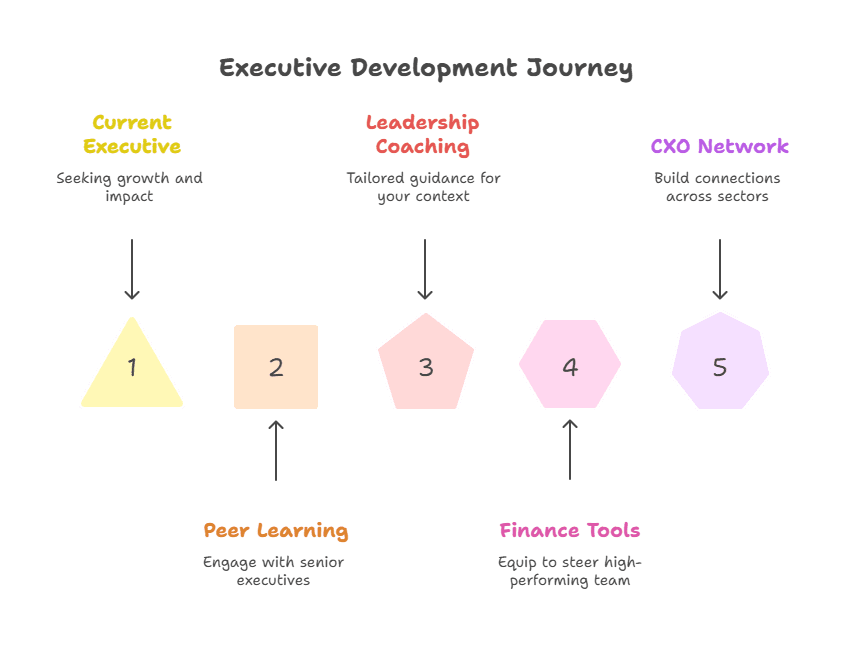
  • Learn from a cohort of senior executives that raises discourse and peer learning. 
  • Gain leadership coaching that is for your professional context.
  • Receive tools to steer a high‑performing finance team. 
  • Network with CXOs across sectors, building your social net worth. 
  • You emerge with a globally recognised certificate, boosting credibility. 
CFO Program Journey

Above all, you immerse in strategy, change management and ethical leadership. That propels finance career advancement through both visibility and capability.

Course Features and Outcomes at a Glance

This programme blends multiple features to deliver results. In India, CFO compensation rise steadily, reaching an average of ₹2.3 crore in 2025, a 1.7 times increase since 2015, according to Business Standard.

Here is a table that captures its structure and potential outcomes.

FeatureDescriptionImpact on Career
Blended LearningSelf‑paced videos, masterclasses, office hoursFlexible yet rigorous learning pace
Leadership CoachingPersonalised coaching from expertsHelps transition into C‑Suite roles confidently
Experiential Strategy TrainingCase work guided by CXOsBuilds strategic decision-making ability
Network with Senior ExecutivesPeers from various sectors and geographiesExpands leadership circle and opportunities
ISB Brand RecognitionGlobal recognition and executive education rankingAdds credibility and trust in the finance domain

That lack creates friction, especially when your peers rise and move into the C‑Suite. You ask: Why is strategic thinking reserved for others? 

That gap raises the question of what separates finance experts from CFOs. This CFO programme empathises with that struggle and gives you tools to understand it so your skills match your ambition.

How Strategic CFO Skills Influence Business Growth

Leaders who think strategically unlock revenue opportunities. They guide finance teams to drive performance, not just report numbers. They collaborate with operations, marketing, and sales to align finance strategy with business direction. 

The programme teaches how to evaluate enterprise value and lead transformations. With that training, you shift from reactive finance duties into proactive business stewardship. It reshapes your mindset. Employers don’t just see technical ability, they see strategic leadership potential. That makes you stand out.

How the ISB Chief Financial Officer Programme Transforms You into a Strategic CFO

ISB holds leadership in Indian executive education. Their alumni shape policy and business across sectors. Imarticus Learning delivers this programme using ISB faculty and industry mentors. 

We backed training with a rigorous structure, 8‑month blended learning, leadership coaching, and real‑world strategy application. This solid background ensures you get polished, career‑fit learning. You don’t just absorb theory. You embody practical, strategic decision‑making that executives expect.

Joining this CFO programme gives clear advantages. 

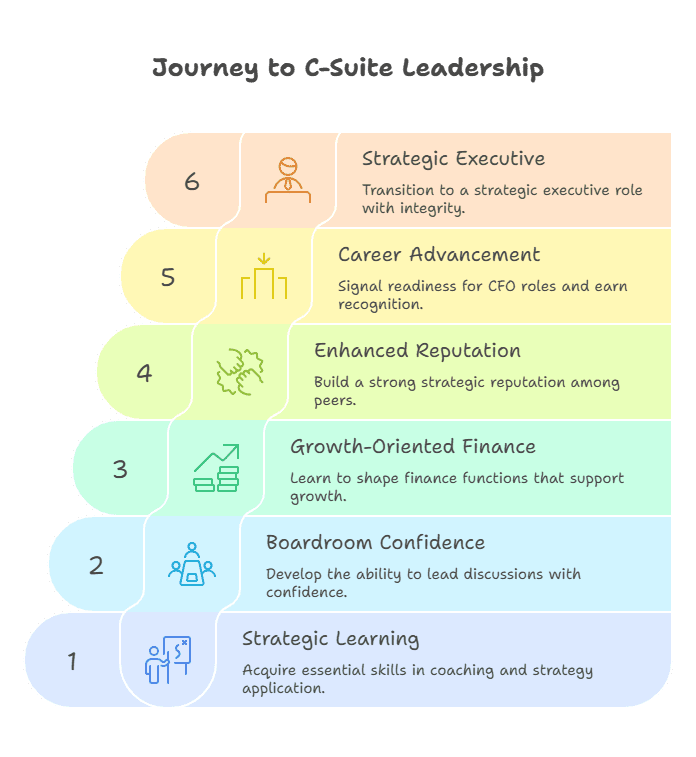
  • Lead with confidence in board meetings and investor discussions. 
  • Shape a finance function that supports growth rather than just controlling costs. 
  • Boost your strategic reputation among peers and companies alike. 
  • Uplift your finance career advancement by signalling readiness for CFO roles. You earn a certificate that people recognise. 
CFO C-Suite Leadership

Additionally, structured coaching offers a mirror to refine weaknesses and affirm strengths together that helps you transition from functional leader to strategic executive voice.

Above all, use this learning to lead in your organisation with integrity and purpose. Then your path to becoming a CFO is clear.

You’ve learned how this CFO programme can accelerate your strategic leadership, prepare you for the C‑Suite, and lift your finance career advancement. Enrol today. Start your journey to become a confident, strategic CFO. Take charge of your financial future now!

Know Chetan Purohit’s review on the ISB CFO Program from Imarticus Learning in this video and how it transformed his career journey. 

FAQ

1. What is a CFO Programme and how does it relate to strategic CFO skills?
A CFO programme offers leadership training and strategic finance skills. You will learn more than accounting. You learn how to guide growth, manage teams, and act with integrity.

2. Can CFO leadership training really boost finance career advancement?
Yes. This executive finance programme teaches how to transition into C‑Suite positions. You will also get credibility, a network of peers, and better strategic thinking skills.

3. What outcomes can I expect from participating in the programme?
You acquire the skills of being a strategic CFO, you work with the experienced executives, you have a leadership coaching and get recognition all over the globe.

4. Who should consider enrolling in this Chief Financial Officer Programme?
Mid- to senior‑level finance professionals aiming for C‑Suite roles. Particularly those seeking executive finance programmes to develop leadership and strategic impact.

5. How does Imarticus Learning support this path to becoming a CFO?
They partner with ISB faculty and offer blended learning, leadership coaching, peer networks, and structured strategy training to help you transition effectively.

6. What is so good about this as one of the best executive finance programmes in India?

It integrates knowledge-enriched learning, leadership coaching, and practice of strategy in an actual circumstance and provides you with the network and skills to move into a C-level position.

7. Does this programme hold such promise of strategic CFO skills?

In fact, yes, the curriculum is set up to assist you to be a leader to drive improvement, develop top performing teams, and find your way through the challenges of financial scenarios with self-esteem and honesty.

The Final Words

You now understand why the CFO Programme from Imarticus Learning and ISB stands out. It focuses on strategic CFO skills, experiential learning, leadership coaching, and finance career advancement. 

It addresses the challenge of moving beyond tactical finance into leadership. With real peer learning and expert faculty, you grow your social net worth and strategic strength. If you’ve felt stalled, this is the path to purposeful leadership.

Understanding the Crisis Lifecycle: Key Phases for Effective Management

A crisis is an inherent characteristic of the contemporary business environment, as organisations can face unpredictable challenges. However, managing crises is possible by comprehending the lifecycle and applying appropriate tactics at various stages. 

This article explores all crisis management phases to help you understand the process and potential recovery tactics. You will also learn about potential crisis response strategies from the perspective of a chief financial officer (CFO) and how this expertise can reshape crisis management tactics overall.

What is the Crisis Management Lifecycle?

Crisis management lifecycle is defined as the process through which organisations prepare for, respond to and renew themselves after experiencing a disruption. It highlights the significance of rigorous planning for several phases to avoid losses, maintain operational capabilities and restore confidence in the firm. 

The structured development of these activities ensures that crisis management is more likely to be pre-emptive rather than reactive to these disruptive events, giving back control to the business whenever it is lost.

The Four Phases of Crisis Management Lifecycle

Every day, something poses huge challenges to companies’ operations, but to counteract these events, it is necessary to master the phases of managing crises. Here’s an in-depth look at the key phases that form the foundation for effective crisis management:

1. Mitigation and Prevention

In essence, this phase minimises the chances of risk occurrence by providing methods for managing the risk in question. Some organisations analyse risks, while others design alarm systems to prevent possible future issues from escalating into crises.

Key Activities:

  • Identifying and assessing potential vulnerabilities
  • Developing risk mitigation strategies
  • Implementing internal controls and safety protocols

This crisis management stage aims to reduce the probability of crises and protect precious resources for supportive stability. 

2. Preparedness

Once potential risks are identified, the next phase involves setting up response strategies. This phase ensures that all teams are trained, policies are in place, and tools are ready for swift action as and when needed.

Key Activities:

  • Developing crisis management plans
  • Training employees and conducting simulations
  • Setting up communication channels for rapid alerts

Crisis preparedness reduces uncertainty and fosters confidence, both essential for an agile response. 

3. Crisis Response

This phase involves executing planned strategies to contain the crisis and mitigate its impact. Swift decision-making, effective communication, and resource mobilisation are crucial for a successful response.

Key Activities:

  • Activating crisis management teams
  • Implementing communication strategies with internal and external stakeholders
  • Making real-time decisions to control the situation

Strong crisis response strategies help minimise damage, control the narrative, and reassure stakeholders. 

4. Recovery and Learning

The final phase focuses on restoring normalcy and evaluating what worked and what didn’t. This experience can be used to improve future crisis planning. Recovery also involves re-establishing trust with stakeholders and taking corrective actions.

Key Activities:

  • Conducting post-crisis assessments
  • Refining the crisis management framework based on lessons learned
  • Rebuilding public trust and ensuring employee well-being

The recovery phase also includes assessing the financial impact after a crisis. This helps implement recovery plans that align with the company’s strategic goals. 

The Role of CFOs in Crisis Management

During an economic crisis, chief finance officers are more than just managing the company’s funds and resources. They act as integral players and decision-makers who help organisations overcome the uncertainties that stem from crises by providing liquidity, working capital, and risk management options. 

When managing potential disruptions that threaten operations, CFOs are the leading figures who drive an organisation towards financial stability and long-term success. If you, too, are hoping to acquire the prestigious responsibilities of chief financial officer, the CFO course at ISB can be an excellent starting point. 

This course offers guidance on risk management, scenario analysis and strategic leadership to prepare future CFOs for any crisis. Connect with Imarticus Learning to learn more about the CFO programme!

Best Practices for Effective Crisis Management

Implementing the following best practices can help an organisation handle crises more effectively:

  1. Create a Dedicated Crisis Management Team: Assign clear roles and responsibilities.
  2. Establish a Communication Plan: Ensure smooth information flow amongst all stakeholders.
  3. Use Technology to Monitor Risks: Adopt AI-powered tools to detect early warnings.
  4. Document and Analyse Each Crisis: Use every crisis as a learning opportunity to improve future responses.
  5. Invest in Professional Development: Through targeted programmes, equip leaders, including CFOs, with the skills needed for strategic decision-making.

These practices contribute to building a resilient organisation capable of surviving and thriving through crises.

Conclusion

Understanding the crisis management lifecycle and the phases involved is important to manage uncertainty. Moving from the mitigation phase through response to recovery, each phase has its own set of probable threats and chances which must be anticipated, addressed, and managed. These responsibilities are even more essential for aspiring CFOs to understand as they help get in sync with new change-oriented duties and design financial plans. 

Enrolling in the CFO course at ISB will open the relevant doors for professionals eager to upskill, as this programme introduces aspirants to confident leadership, risk management, and crisis-free strategies.

Role of Investor Relations Communication: Best Practices for Success

In the past few years, competition between companies has increased greatly. Therefore, it is quite difficult for a company to receive investment from investors. Hence, effective and transparent communication is one of the best practices for investor relations.

Investor relations communication helps a company create an authentic and trustable relationship with its investors by sharing information and being transparent. The role of investors and communication is crucial for a company; we will learn more about it in this article.

Keep on reading to learn more about investor relations, its significance, and investor relations communication strategies! You can take the help of Imarticus Learning’s CFO course offered in collaboration with ISB to learn how to use communication and various communication tools.

What is Investor Relations?

Investor Relations, or IR, is a crucial department of a public company that falls under the Public Relations (PR) department. Most companies create an IR department before going public before launching their IPO.

The IR department directly communicates with investors regarding the company’s sensitive information, which helps investors decide whether to invest in the company. Investor relations involve shareholders, the financial department, and various government organisations.

Significance of Investor Relations Communication

Building strong investor relations communication is one of the most important aspects of a public company. This helps a company to grow further and provides various advantages. Here are some important aspects of having efficient investor relations communication:

Creates Better Understanding

Investor relations communication is crucial to better understanding a company and its investors. Daily communication helps the investors understand the main object of the business, its potential, and its future progression. Regular communication allows the investors to determine if the company’s growth is fulfilling their expectations and whether they will invest in it or not.

Managing Expectations 

Transparency makes it easier to establish genuine statistics with the investors. Investors expect different growth rates, while the real scenario might differ. Hence, investor relations communication is important to manage unrealistic expectations by providing investors with daily updates and insights.

Enhancing Trust

Vivid investor relations communication improves trust between a company and its investors. This helps the investors grow more confident in the company’s strategies, financial position, and management team. Building a strong, trusted foundation will help a company receive more investments from its investors.

Encourages Transparency

Investors often seek transparency from companies so that they can detect any suspicious activities. Investor relations communication can build a transparent relationship between the company and its investors. This can also disclose sensitive information about the company that might hamper the reputation of the investors and their investments.

Therefore, investors often opt for companies encourage transparency and have well-defined disclosures to avoid potential risks.

Crisis Management

Investor relations communication can save a company during a crisis. The IR department directly communicates with the company’s investors to explain all the steps and actions the company is taking to manage the crisis. This transparent communication increases the investors’ confidence in the company’s crisis management strategies.

What are the Various Effective Communication Strategies in Investor Relations?

Numerous effective communication strategies in investor relations can help a company to raise more investments. Here are a few best practices for investor relations that a company can follow:

Daily Updates with Reports

Updating investors with the company’s daily reports and actions is the best practice for investor relations. This helps a company communicate clearly with its investors. To establish transparent communication, the IR department often shares the company’s financial achievements, management strategies, etc.

Qualitative and Quantitative Information

Companies should update investors with both qualitative and quantitative information. Investors are also interested in aspects of the company other than the financial factor.

Enhancing Engagement with Investors

Increasing engagement with investors via conferences or other methods is one of the most effective communication strategies in investor relations. This helps the investors clarify all their questions by discussing various aspects of the company, such as its financial growth, future strategies, crisis management plans, etc. This creates a stronger bond between a company and its investors.

Usage of Digital and Visual Aids

Using digital and visual Aida can help a company create simple charts or insights from its complex information. This helps investors comprehend the information easily.

Conclusion

Companies are trying to create strong investor relations communication in this competitive market to attract huge investor investments. Hence, they are hiring CFOs who are well-versed in investor relations communication. This creates many job vacancies for freshers with adequate knowledge of investor relations communication and various related strategies.

Imarticus Learning has launched its new Chief Financial Officer programme in collaboration with the Indian School of Business for those willing to learn more about investor relations communication. This 8-month remote programme will help inculcate the necessary skills and knowledge. Enrol in this course to grab more opportunities.

Frequently Asked Questions

What are the various investor relations engagement techniques?

Various investor relations engagement techniques include digital engagement, in-person engagement, communication strategies, targeting investors, and communication.

What is the actual role of investor relations communication?

The main role of investor relations communication is to inform the investors regarding a company’s various information and actions.

How do you organise investor communication in real life?

In real life, a company can organise a seminar or webinar to which all its investors and potential investors will be invited. Then, the investors can ask the company various questions regarding its policies, strategies, potential risks, financial growth, etc.

What are the different types of communication methods?

There are four main communication methods: verbal communication, written communication, nonverbal communication, and visual communication.

How to Achieve Unbelievable Cost Control and Cost Reduction in 30-Day

Cost control and cost reduction in business require serious thought as well as an organised approach. This whole process if planned and carried out correctly can help reduce waste without impacting the quality of services and products that your organisation is into. 

However, this whole concept of cost control and cost reduction is not as simple as it sounds as a lot of businesses start focusing on the wrong strategies to save money which costs them way more in the future. Cost control is not just about reducing expenses, instead, it also involves making the right investments that will save them way more. 

If you want to get a clearer picture of the concept of cost control and cost reduction, then you are at the right place. Keep on reading, to understand what they mean, the tips for cost control and cost reduction. 

What is Cost Control?

Cost control is defined as a systematic process that includes managing, regulating as well as restraining expenses within an organisation. The approach to cost control is proactive which is aimed at making sure that the resources of a company or business are used in the right manner while cutting down the unnecessary costs. In a nutshell, cost control is an approach that must strike the right balance of expenses and revenue so that the profitability of a business is increased. 

What is Cost Reduction?

Cost reduction is defined as a process or business approach that is focused on reducing the unit price of a factory-made product or service. However, this must be done without compromising on the quality of the products or services and by using new and better technologies. The process of cost reduction concentrates on eliminating unnecessary expenses during production, storage, sale, and distribution. 

Now that you understand what cost control and cost reduction are, learn about the major difference between cost control and cost reduction

Difference Between Cost Control and Cost Reduction

Below given is a list of major differences between cost control and cost reduction

  • Cost control is defined as the process that is focused on keeping all costs within prearranged limits while cost reduction focuses on decreasing per unit cost of product without compromising on product or service quality.
  • Cost control is a temporary process that is applied when needed while cost reduction is a permanent process. 
  • The process of cost control is closed when the specified target of a company is achieved while the cost reduction process is continuous and has no visible end as it is implemented to eliminate profligate expenses.
  • The process of cost control does not work on the principle of quality maintenance of products while the approach taken for cost reduction works to ensure 100% quality maintenance.
  • Cost control is a preventive action as it determines the cost before it occurs while cost-cutting is a corrective action. 

Tips to Achieve Cost Control and Cost Reduction in 30 Days

  • Fix Realistic Goals: Before you start planning on how to reduce your costs, you must establish realistic goals. By taking this approach you can easily see if your initiatives are going to be successful. Ensure that your goals are detailed and specific with set milestones to measure success. 
  • Get Staff Buy-In: To achieve your cost reduction goals it is imperative to change the mindset of your organisation. Meet up with your staff and share the benefits of reducing waste from the company. You need to meet the leaders as well to emphasise their role in helping the business reduce costs.
  • Re-evaluate Business Expenses: For your cost control and cost reduction approach to be successful, you need to evaluate the business expenses minutely. Pull up all the data for expenses and then come up with an itemised list of expenses. Doing this exercise will help you understand where your money is going and this is a quick way to identify waste. 
  • Hire Remote Workers and Freelancers: Since the pandemic, working remotely has become the norm and this can help you save a lot of money on office space. Certain freelancers and contractors may indeed have higher hourly rates but they do not need benefits, which can help you bring down your expenses. 
  • Outsource: Outsourcing often receives a lot of flak but there is no doubt in the fact that it can also give you high-quality products and services at a reduced cost. 
  • Go for Bundle/Combine Purchasing: This is one approach that can help you in cost-cutting efficiently. Instead of ordering separately for each department, you can combine orders and get bulk discounts. 
  • Rexamine Your Existing Products/ Services: You must regularly reassess the types of services and products you provide and ask yourself, “Do our customers want this?” What are our competitors doing? Is there a cheaper and more efficient way to deliver the same or better level of service?
  • Go Green: This is an extremely important investment. Replace or change your dated appliances, lights as well as fixtures with energy-efficient alternatives. You can also reduce the use of paper by going paperless. 

Conclusion

The concept of cost control and cost reduction if applied with proper planning can help your organisation achieve the set financial goals. This whole process requires the right leadership qualities along with the right skills required to do the job.The CFO course offered by Imarticus Learning in association with the Indian School of Business is the perfect path to take your financial leadership skills to the next level. Through this chief financial officer course you will also learn to lead with integrity and purpose.

Budgeting and Forecasting: Learn the Key Differences!

For any business, budgeting and forecasting are crucial for financial planning and analysis. These two activities not only help make decisions and allocate resources, but also ensure an organisation’s long-term financial stability. Read on to know more about these concepts, including the difference between budget and forecast.

Understanding Budgeting 

Budgeting involves planning and allocating resources for a specific period of time. Also, it includes tasks like setting revenue and expense targets, managing cash flow and determining resource needs. 

Forming the basis of any business operations, a budget represents how a company will do business in the year ahead. Further, it dictates decisions associated with investments, cost cutting and where to focus specific efforts. 

Understanding Forecasting

Offering an estimate of what the business will achieve if it continues to perform the same way, a forecast helps to quantify and manage the gap between the original budget and the reality. In short, it shows where the company is genuinely headed.

Difference Between Budgeting and Forecasting

After setting up the budget, businesses must reflect on what actually happened versus the budget, every quarter. As everything doesn’t go according to the plan, financial forecasting becomes important to manage the lag. Let’s delve deeper to learn the differences between budgeting and forecasting.

ParameterBudgetingForecasting
AccuracyThough based on well-researched assumptions and estimates, there may be significant deviations from actual resultsAffected by unpredictable events and market changes
Basis of ComparisonHelps compare actual performance against planned resultsHelps evaluate potential risks and predict future results
Complexity of Financial ModelsMay involve less complex financial modelsOften utilises models and algorithms to predict future outcomes
ComplianceSometimes, it is associated with regulatory requirements and financial reporting standardsNot necessarily involve the same level of compliance
Continuous ProcessTypically done annually or semi-annuallyA continuous process that is updated when needed as per changes in market conditions
Decision MakingA key decision-making tool that helps in allocating resources and prioritising initiativesInform and support decision making by offering a view of potential future outcomes
Dynamic vs StaticA process that is set for a certain period A process that changes over time
EmphasisControlling costs and managing resourcesAnticipating future financial outcomes
FlexibilityStatic and sometimes difficult to changeCan be updated as new information becomes available
InputsBegin with setting financial goals and allocating resources to achieve themUtilises past financial data and market trends to make predictions
Input from Other DepartmentsMay require inputs from other departments like marketing and salesInvolves fewer inputs and may be primarily done by finance and data analytics teams
Iterative ProcessMay involve an iterative process with many rounds of revisions and updatesFeatures a more dynamic and ongoing process
Level of DetailUsually more detailedLess granular
PurposeCreating a financial plan for a defined period Predicting future financial outcomes
PrecisionOften detailed and preciseLess precise owing to the uncertainty of future events
Role of ManagementOften requires input and approval from managementMay be done by finance teams
RelevancePlan and manage moneyKnow and prepare for future market conditions
Real-time vs Historical DataInvolves historical data and assumptionsTypically uses real-time data and market trends
Time HorizonA long-term planning tool covering a fiscal year or moreCan be done for any period of time, from the next month, quarter, 1 year, etc.
UseGuides financial decision making and measures performance against goalsAnticipates future events to adjust plans accordingly

Conclusion

Notably, budgeting and forecasting are connected but have different purposes. While budgets play a vital role in decision making and resource planning, forecasts are important to manage gaps between the budget and the reality. If you want to make a career in finance, then enrol in a reputable course like ISB Chief Financial Officer Programme. Connect with Imarticus Learning to know more!

What Are the Roles and Responsibilities of a Modern CFO?

In today’s rapidly evolving business landscape, the role of CFO, or Chief Financial Officer, has transcended its traditional boundaries. Beyond managing financial transactions and safeguarding the company’s assets, modern CFOs are now strategic leaders, crucial in planning, risk management, and driving digital transformation. 

This blog explores the comprehensive roles and responsibilities of a modern CFO, providing a detailed look into their multifaceted position through a comprehensive CFO job description.

Strategic Leadership and Vision

The role and responsibilities of CFO of a company, which started out in the 1950s as a purely tactical position overseeing budgeting and reporting, has evolved significantly. The modern CFO has become a cross-functional leader working closely with other C-suite leaders, like the CEO and CMO, and investors, line managers and boards. They have morphed into a strategic leader responsible for driving the growth of an organisation.

Recognising their importance in both financial and non-financial businesses, institutes have launched chief financial officer courses aimed at professionals eyeing this top-tier role. These courses emphasise equipping individuals with technical and managerial skills and adeptness at using modern-day financial instruments and practices. The ISB course for chief financial officers offered in partnership with Imarticus is one such programme.

Shaping Financial Strategy

Modern CFOs are not just figures in the finance department; they are instrumental in shaping and executing the company’s financial strategy. They align financial goals with the organisation’s overall objectives, ensuring sustainable growth and profitability. This strategic role involves analysing financial performance, identifying growth opportunities, and advising the executive team on financial planning. These duties are essential elements of a CFO job description.

Partnering with the CEO

Today’s CFOs act as strategic partners to the CEO, contributing to key business decisions. They provide insights on financial implications and collaborate on setting the strategic direction of the company. This partnership is crucial for aligning the company’s financial health with its strategic vision, forming a critical part of the CFO job description.

The CFOs are taking a prominent role in shaping their company’s portfolio strategies, taking up the mantle in major financing and investment decisions, and communicating with key stakeholders, all while managing the finance teams. 

Strategic financial leadership is not the only expectation CEOs have from the modern CFO. The role of CFO now encompasses shaping risk management and compliance policies, guiding cost control and efficiency programmes, making decisions related to talent development and retention and more. The CFO job description also includes continuous learning and development to keep at par with changing economic conditions.

The role of CFO in India or, for that matter, anywhere in the world has moved to maximising value creation within their organisations. One way they achieve this is by actively working with HR departments to spot the right talent, identify skill gaps and fill them with the correct allocation of human resources.

Financial Management and Reporting

Now, let us discuss financial management and reporting responsibilities for CFOs.

Cash Flow Management

One of the core responsibilities highlighted in a CFO job description is managing the company’s cash flow. This involves overseeing cash inflows and outflows, ensuring liquidity, and optimising working capital. Effective cash flow management is essential for maintaining the financial stability of the organisation. 

Financial Reporting and Compliance

CFOs are responsible for accurate and timely financial reporting. They ensure compliance with accounting standards, regulatory requirements, and corporate governance. This role involves preparing financial statements, managing audits, and communicating financial results to stakeholders. These responsibilities are fundamental aspects of a CFO job description.

Risk Management

Aspiring individuals looking to slip into the role of CFO in India must take special care to brush up on their risk management skills. A chief financial officer course can help them learn the ropes of corporate risk management by teaching them tools to measure and manage risks. These courses equip candidates with every form of risk assessment, from liquidity and market risk to information security and threat assessment.

Identifying and Mitigating Risks

Risk management is a critical function of the modern CFO and an integral part of any CFO job description. They identify potential financial risks, such as market fluctuations, credit risks, and operational risks, and develop strategies to mitigate them. This proactive approach helps protect the company’s assets and ensures long-term stability.

Ensuring Regulatory Compliance

In an increasingly complex regulatory environment, CFOs ensure the company adheres to all relevant laws and regulations. This involves staying updated on changes in financial regulations, implementing compliance programs, and managing relationships with regulatory bodies, which are key components of a CFO job description.

Driving Digital Transformation

Another root cause for the difference between the traditional and modern role of CFO is the technological disruption brought about by digital transformation. It has become essential for businesses to adopt and adapt to modern technology. As a result, CFOs must capture long-term value by investing in technology. 

Investing in technologies like AI and cloud computing to automate tasks frees up strategic analysis resources. Automation allows staff to take on more analytical roles, adding greater value. Cloud systems offer flexible resource management, aligning costs with demand. 

Digitalisation impacts various business areas, providing real-time insights and strategic analysis. CFOs are also using advanced technology for internal controls to mitigate risks and ensure scalability, working with IT and risk teams to optimise processes and integrate automation.

Leveraging Technology and Automation

The modern CFO is at the forefront of digital transformation within the finance function. They leverage technology to automate routine processes, enhance data analytics capabilities, and improve decision-making. Embracing automation not only increases efficiency but also provides deeper insights into financial performance, reflecting a forward-thinking CFO job description

According to PwC’s Pulse Survey, 56% of CFOs have significantly increased investments in digital transformation initiatives, reflecting their commitment to leveraging technology for operational efficiency and strategic advantage.

Data-Driven Decision Making

Data analytics is a powerful tool for modern CFOs. By harnessing the power of big data, CFOs can gain valuable insights into market trends, customer behaviour, and operational efficiency. PwC’s survey highlights that 69% of CFOs prioritise enhancing their data analytics capabilities to inform strategic decisions. These insights are crucial for driving business growth and improving overall financial health, emphasising the analytical aspect of the CFO job description.

Understanding and Preventing Technological Threats

As technology accelerates business operations, it also brings cyber security and data privacy risks that companies must address. The CFO job description thus includes understanding these threats and implementing measures to protect networks, devices, and data from malicious activities. Cybercriminals pose significant financial and reputational risks, making cybersecurity a priority for CFOs.

Rapid technological advancements outpace legacy processes, so CFOs must integrate new technology while maintaining core capabilities. Staying informed about developments in finance and technology is crucial as the two areas are closely linked. 

The CFO job description now includes ensuring that finance teams leverage technology, reskill staff, and adopt a cloud- and data-first mentality to drive growth and improve forecasting. This evolving role is especially relevant for the role of CFO in India, where courses like the ISB course can provide valuable insights.

Organisational Leadership

In cognisance of the changing role and responsibilities of CFO of a company, chief financial officer courses are incorporating leadership training in their courses. This is to help companies induct talented individuals in top positions who are not only well-versed in the nitty-gritty of financial management but are also good leaders. 

Building and Leading Finance Teams

The responsibilities of CFO of a company are crucial in building and leading high-performing finance teams. They foster a culture of continuous improvement, encourage professional development, and ensure the team is equipped with the necessary skills and tools to succeed. Effective leadership in the finance function drives overall business success, which is a significant part of a CFO job description

CFO Course

Influencing Company Culture

Beyond the finance department, modern CFOs influence the broader company culture. They advocate for ethical business practices, promote transparency, and contribute to a culture of innovation and agility. As highlighted in a comprehensive CFO job description, their leadership extends across the organisation, impacting overall business performance.

Summarising

The CFO job description, in essence, has evolved from being a financial guardian to a strategic leader. Modern CFOs must grow in their roles to fulfil stakeholder expectations by contributing to innovation, organisational leadership, risk management and digital transformation. Additionally, they must master a broad spectrum of skills like commercial fluency and enterprise-wide project management as well as commit to bringing diversity and inclusion within their organisations.

Imarticus has partnered with ISB to offer the Chief Financial Officer Programme dedicated to moulding aspiring individuals into future leaders skilled to perfection to handle the emerging CFO job description

Check out this chief financial officer course to take yourself to the pinnacle of financial leadership.

Frequently Asked Questions

  • What does a CFO do on a daily basis?

A CFO builds financial models, appoints and manages the financial team, analyses and prepares financial statements and reconciles income and expenses.

  • What are the 4 aspects of the role of CFO?

A CFO job description has 4 facets, namely, catalyst, operator, strategist, and steward.

  • What are the functions of a modern CFO?

A modern CFO has a C-suite role that involves strategising the company’s finances, steering them towards a better future, managing risks, investing in modern technology to automate routine tasks, and more.

  • Which position comes directly below CFO?

The Controller or Chief Accounting Officer comes directly under the CFO.

Costing Methods: Standard Costing, Direct Costing, Activity-Based Costing and More!

Costing methods are crucial for businesses to understand and control expenses. These methods of cost accounting help organisations allocate costs accurately, enabling them to make informed financial decisions. This blog will delve into various methods of costing, including standard costing, direct costing, and activity-based costing, providing a comprehensive understanding of ‘what is cost accounting?’.

What is Cost Accounting?

Before diving into specific costing methods, it is essential to understand ‘what is cost accounting’. Costing is the process of determining the costs associated with a product, service, or operation. Understanding what is cost accounting helps businesses manage expenses and set competitive prices. Costing methods may vary, but they all aim to provide accurate cost information for better financial management.

Below, we have discussed each type of costing to offer an idea of what each deals with.

Standard Costing

Standard costing is one of the most widely used methods of cost accounting. It involves assigning expected costs to products or services, which are then compared to actual costs incurred. The differences, known as variances, are analysed to improve efficiency and cost control. Standard costing helps businesses maintain budgetary control. 

To gain an exhaustive understanding of standard costing along with in-depth knowledge of cost management join a CFO course. The ISB course for chief financial officers offered in collaboration with Imarticus is an excellent programme encompassing various aspects of financial management.

Direct Costing

Direct costing, also known as variable costing, focuses on assigning costs that can be directly traced to a product or service. These include raw materials, labour, and direct expenses. Unlike other methods of costing, direct costing excludes fixed overhead costs, making it simpler and more straightforward. Understanding direct costing is vital for businesses looking to streamline their costing methods and improve profitability. 

Activity-Based Costing (ABC)

Activity-based costing (ABC) is a more advanced method of cost accounting that allocates costs based on activities required to produce a product or service. ABC identifies specific activities in the production process and assigns costs to each activity based on resource usage. This method provides a more accurate picture of ‘what is cost accounting’ for each activity, helping businesses identify inefficiencies and optimise processes. Activity-based costing is especially useful for complex operations and is a key topic in many CFO courses.

Other Methods of Costing

In addition to standard costing, direct costing, and activity-based costing, there are several other costing methods businesses can use:

  1. Job Costing: Job costing assigns costs to specific jobs or batches, making it ideal for custom orders or unique projects. Each job is treated as a separate cost unit, allowing for precise tracking of expenses associated with that particular job. This method is highly effective in industries where products are made to order, such as construction, printing, or specialised manufacturing. By using job costing, businesses can ensure accurate pricing and profitability analysis for each project.
  2. Process Costing: Process costing is used for the mass production of homogeneous products. This method averages costs over a large number of identical units, simplifying cost allocation. Costs are accumulated for each process or department over a specific period and then divided by the number of units produced. Process costing is commonly applied in industries such as chemicals, textiles, and food processing, where continuous production processes are used.
  3. Marginal Costing: Marginal costing, also known as variable costing, focuses on the cost of producing one additional unit. This method separates costs into fixed and variable categories, considering only variable costs when calculating the cost per unit. Marginal costing helps businesses make pricing decisions, assess profitability, and determine the impact of production changes on overall costs. It is particularly useful for short-term decision-making and managing variable costs.
  4. Absorption Costing: Absorption costing allocates all manufacturing costs, both fixed and variable, to products, providing a comprehensive view of production expenses. This method ensures that all costs are included in the valuation of inventory and cost of goods sold. Absorption costing is required for external financial reporting and helps businesses understand the full cost of production, leading to more accurate pricing and profitability analysis.

Importance of Understanding the Various Methods of Costing

Knowing ‘what is cost accounting’ and the various costing methods is crucial for any business. It allows for better financial planning, cost control, and pricing strategies. Whether you’re taking a CFO course, an ISB course, or simply seeking to improve your financial management skills, understanding these methods of cost accounting is essential. 

It is especially significant for CFOs to master costing methods due to their pronounced impact on strategic decision-making and overall business functionality. Here are the key reasons highlighting its necessity:

1. Accurate Cost Control and Management

Cost accounting helps CFOs monitor and control costs by providing detailed insights into direct and indirect expenses associated with production. By understanding these costs, CFOs can identify areas for cost reduction and efficiency improvements, leading to better financial health for the company.

2. Informed Decision Making

Cost accounting provides essential data for making informed decisions about pricing, budgeting, and financial planning. CFOs can use cost data to evaluate the profitability of different products or services and determine the optimal pricing strategies to maximise profits.

3. Enhanced Profitability Analysis

By determining the total per-unit cost of products or services, cost accounting helps CFOs assess the profitability of each product line. This analysis is critical for strategic decisions such as product discontinuation, resource allocation, and investment in new product development.

4. Efficient Budgeting and Forecasting

Cost accounting aids in accurate budgeting and forecasting by providing a clear picture of fixed and variable costs. CFOs can use this information to prepare realistic budgets, forecast future financial performance, and set achievable financial goals for the organisation.

5. Compliance and Reporting

CFOs are responsible for ensuring that financial reports comply with accounting standards and regulations. Cost accounting helps in the preparation of financial statements that accurately reflect the company’s financial position, ensuring transparency and compliance with regulatory requirements.

6. Resource Allocation

Effective resource allocation is another critical area where cost accounting plays a pivotal role. By analysing cost data, CFOs can determine where to allocate resources to achieve the best return on investment. This involves decisions related to production processes, staffing, and capital expenditures.

7. Competitive Advantage

A thorough understanding of cost accounting allows CFOs to benchmark the company’s performance against industry standards and competitors. This benchmarking helps identify areas where the company can improve its cost structure and gain a competitive advantage in the market.

Conclusion

Costing methods play a vital role in business financial management. From standard costing to activity-based costing, each method offers unique advantages and insights into ‘what is cost accounting?’. By mastering these methods, businesses and CFOs can enhance efficiency, control expenses, and improve profitability. 

For those looking to delve deeper, pursuing a CFO course or ISB course can provide valuable knowledge and skills in cost accounting. Imarticus’s Chief Financial Officer Programme, offered in partnership with the Indian School of Business, is a great way for ambitious finance professionals to redefine their careers and reach the zenith of financial management. The course will equip them to master skills to shape a high-performing finance team and strategise the growth of their companies effectively.

For detailed information, visit Imarticus today!

Frequently Asked Questions

  • Name the 4 main types of cost.

Cost can be broadly classified into 4 prominent categories namely, direct cost, indirect cost, fixed cost and variable cost.

  • How can you calculate the total cost?

The formula for calculating total cost (TC) is as follows:

Total Cost (TC) = Total Fixed Cost (TFC)+Total Variable Cost (TVC)

  • Give some examples of direct cost.

Salary, expenses incurred due to raw materials, transportation of raw materials and finished products, fuel, utilities, and equipment are some examples of direct costs.

  • Define cost sheet.

A cost sheet is a detailed financial document that outlines the various costs incurred by a business in the production of goods or services over a specific period.

Chief Financial Officer Salary in India: How Much do CFOs Make?

Whether it is a small start-up or a large established organisation, the demand for Chief Financial Officers (CFOs) is high in India. CFOs help industries identify investment opportunities, cost-cutting measures, and acquisition strategies, adding significant value to their organisations. The Chief Financial Officer is a key member of the C-suite, which includes top executives like the Chief Executive Officer (CEO), Chief Operating Officer (COO), and Chief Information Officer (CIO). Being a senior executive, the CFO salary in India can be substantial, depending on the size of the company. Let us examine the details of CFO salary in India and understand their earnings.

What is a Chief Financial Officer (CFO)?

A Chief Financial Officer (CFO) is a senior professional in an organisation who oversees everything from financial matters to taxation issues. The CFO holds the highest position in the financial department and is often the third-highest-ranking executive in an organisation. The roles and responsibilities of a CFO include managing cash flow, building a strong finance and accounting team, overseeing financial planning, analysing financial strengths and weaknesses, ensuring revenues and expenditures are on track, and recommending corrective actions.

Now that we understand the role of a Chief Financial Officer (CFO), let us review the Chief Financial Officer salary, specifically focusing on CFO India.

Average CFO Salary in India

After the CEO, the Chief Financial Officer is typically the second-highest-paid executive in most organisations. The average CFO salary in India is Rs. 74,273 per month. However, the CFO salary in India range varies based on several factors, such as:

  • Company size
  • Company location
  • CFO qualifications
  • Years of experience

In larger organisations, CFO salary in India is around Rs. 4-6 crore. The overall compensation package, including bonuses, can reach up to Rs. 12-16 crore, depending on the company’s size. While CFOs can earn substantial salaries throughout their careers, possessing certifications in accounting and finance, such as CMA or CPA, combined with extensive work experience, can significantly enhance earning potential in the CFO India role.

CFO Course

Chief Financial Officer Salary: Additional CFO Compensation

In addition to the CFO salary in India, CFOs receive various forms of additional compensation. Here is a list of some supplementary benefits that can contribute to the average CFO salary in India, although they may vary from company to company:

  • Incentive compensation
  • Long-term incentives (pay packages)
  • Incentive stock plans
  • Supplementary life insurance
  • Supplementary disability insurance
  • Long-term care insurance
  • Supplementary medical insurance
  • Vacation allowances
  • Leave of absence allowances
  • No additional cost services
  • Employee discounts
  • Retirement plans

Required Skills to be a Successful CFO

To succeed as a Chief Financial Officer, you need the following skills:

Conclusion

The Chief Financial Officer is a high-level executive responsible for managing a company’s cash flows, financial planning, and taxation issues. Additionally, a CFO plays a vital role in an organisation’s strategic initiatives which is seen as we looked into CFO salary in India. As the highest-ranking financial position, the CFO ensures accurate and timely financial reporting. This role is not only one of the top-level positions but also among the highest-paid jobs in an organisation.

Now that you understand the CFO salary in India, it is essential to enhance your leadership and management skills to succeed as a CFO. Enrol in the CFO course by the Indian School of Business (ISB) in collaboration with Imarticus Learning. This 8-month programme will teach you to think strategically, build an efficient team, and drive growth effectively.

The CFO’s Role in Risk Management: Why Strategic Thinking is Key

Today’s CFOs do not just crunch numbers, they deal with a veritable threat matrix and are in charge of complex financial risk management that can make even the most seasoned financial leader have a hard time.

Financial risk management has always been about predicting and forecasting in the olden days but now in modern times, it is also a lot of strategic thinking. Why? The constant economic fluctuations, regulatory shifts, geopolitical turmoil and the ever-present cyber threats, continue to cause issues for the financial health of an organisation.

The financial risk management landscape has changed a lot now. A new breed of risk has emerged, demanding the CFO’s attention, the Environmental, Social, and Governance (ESG) factors. The CFO’s role in risk management has become imperative for organisational resilience, especially where strategic thinking is required to get your organisation out of a dire financial situation.

Why Consider ESG Factors?

ESG factors are no longer fringe considerations but core financial risks. Climate change, social unrest, and lax corporate governance can have a significant impact on a company’s bottom line. 

Let us imagine a manufacturing plant facing skyrocketing carbon emission taxes due to lax environmental practices. Or a company embroiled in a labour rights scandal, damaging its brand reputation and consumer loyalty. The financial repercussions of these scenarios are undeniable. 

Forward-thinking strategic CFOs are integrating ESG considerations into their financial risk management strategies, not just for ethical reasons, but for the sake of financial sustainability.

The CFO’s Role in Risk Management

The role of CFO as a financial guardian is well-established. But in today’s risk-laden environment, the CFO’s role in risk management is enormous and extremely important. The role of CFO goes beyond simply identifying risks. It is about fostering a culture of resilience throughout the organisation, a shared commitment to anticipating, mitigating, and seizing opportunities amidst uncertainty.

Collaboration is the key to unlocking this potential. A strategic CFO, in partnership with the CEO and the board, can create a powerful synergy. The CFO brings their financial acumen and risk assessment expertise to the table, while the CEO provides strategic direction and leadership. The board, with its oversight role, ensures financial risk management is embedded into the organisation’s DNA, not a siloed function. Through open communication and a shared risk appetite framework, this triumvirate can translate financial risk management from a reactive exercise to a proactive strategic pillar.

For example, let us assume that a CFO identified a potential disruption in the supply chain due to geopolitical tensions. By collaborating with the CEO and the board, the CFO can develop contingency plans, explore alternative sourcing options, and potentially even turn this risk into a competitive advantage by securing new partnerships. This proactive approach, driven by a collaborative leadership team, empowers the organisation to navigate turbulent waters with greater agility and confidence.
CFO Course

Integrating Strategic Risk Management into Financial Planning

Financial planning used to be a relatively static exercise, a snapshot of projected numbers. But the CFO who relies solely on point estimates is like a sailor navigating with a one-dimensional map. The key to navigating uncertainty lies in integrating strategic risk management into the financial planning and forecasting processes.

This means moving beyond single-point forecasts and embracing a more dynamic approach. CFOs can start by identifying potential risks relevant to their industry and the organisation’s specific financial goals. This could involve anything from a potential economic downturn to a cyberattack disrupting critical operations.

Once identified, the next step is to assess the financial impact of these risks. How would a recession affect revenue streams? What would be the cost of a data breach? Quantifying these potential impacts allows for a more realistic picture of the financial future.

But financial planning shouldn’t stop at identifying risks. The key is to develop contingency plans and test the organisation’s resilience under different scenarios. Here’s where two powerful tools come into play:

  1. Scenario planning: This involves creating multiple financial forecasts based on different risk eventualities. Imagine building a financial model that factors in a mild recession, a severe economic downturn, and even a black swan event. By visualising these different scenarios, the CFO can identify potential weaknesses in the financial plan and develop mitigation strategies in advance.
  2. Stress testing: This technique involves pushing the financial model to its limits by introducing extreme but plausible risk events. For example, a stress test might simulate a sharp interest rate hike or a significant drop in key commodity prices. By seeing how the financial plan reacts under stress, the CFO can identify areas where the organisation might be overly exposed and take corrective action.

If you wish to learn how to integrate strategic thinking and effective risk management into financial planning, you can check out a solid CFO course such as the Chief Financial Officer Programme by Imarticus and ISB.

Beyond Financial Risks as a CFO

By adopting a holistic financial risk management approach, CFOs can create a comprehensive shield for their organisations. This involves not only identifying and mitigating these diverse risks but also tailoring strategies to address industry-specific concerns. Through a multi-pronged approach, CFOs can ensure their organisations are not just financially secure, but also operationally resilient, reputationally sound, legally compliant, and strategically adaptable in an ever-changing world.

Let us consider these:

  • Operational risks such as disruptions to core business processes, can have a significant financial impact. Imagine a manufacturing plant experiencing a cyberattack that cripples production lines. This scenario not only disrupts operations but also leads to lost revenue and potential customer dissatisfaction.
  • Reputational risks can be equally damaging. A product safety scandal or a data breach erodes consumer trust, leading to a decline in sales and brand value. Consider a company facing a social media firestorm due to unethical labour practices. The financial repercussions of such a crisis can be severe.
  • Legal risks such as non-compliance with regulations or contractual obligations, can also pose significant threats. Imagine a company facing hefty fines due to environmental regulation violations. These legal entanglements can drain financial resources and hinder growth.
  • Strategic risks impact the organisation’s long-term goals and competitive advantage. Imagine a company failing to adapt to a disruptive technology that renders its products obsolete. This scenario can lead to market share loss and ultimately, financial decline.
  • Industry-specific risks further complicate the picture. A healthcare CFO might prioritise data privacy risks related to patient information, while a retail CFO might focus on managing inventory risks in the face of fluctuating consumer demand.

Building a Culture of Risk Awareness as a CFO

Risk management can feel like a bureaucratic burden for employees, a mountain of paperwork and a culture of blame. However, a forward-thinking CFO can transform it into a collaborative effort by fostering a culture of risk awareness. This goes beyond simply issuing directives, it is about creating an environment where employees feel empowered to identify, report, and mitigate risks.

Open communication channels are the foundation of this culture. Regular town halls, dedicated risk reporting hotlines, and anonymous feedback mechanisms encourage employees to voice their concerns without fear of retribution. Imagine a frontline employee noticing a potential safety hazard in a production facility. An open communication culture empowers them to report the issue, allowing for prompt corrective action and preventing a potential accident.

Encouraging employees to report risks requires more than just open channels, it requires an incentive. CFOs can create recognition programs that celebrate employees who proactively identify and report risks. Imagine a company rewarding an employee for suggesting a new cybersecurity protocol that prevents a potential data breach. Such recognition not only motivates responsible behaviour but also sets a positive example for others.

Training plays a crucial role in empowering employees to become active participants in financial risk management. However, traditional training sessions can be dry and uninspiring. CFOs can leverage innovative techniques like gamification to make financial risk management training more engaging and interactive. Imagine an online platform where employees participate in simulated scenarios, learning to identify and mitigate risks in a gamified environment. This not only improves knowledge retention but also fosters a sense of ownership and responsibility for risk management.

By building a culture of risk awareness, CFOs can turn every employee into a risk-aware sentinel. This vigilant workforce becomes the organisation’s first line of defence, identifying and reporting potential issues before they escalate into major problems. This collaborative approach fosters a sense of shared responsibility, transforming financial risk management from a top-down directive to a collective effort that safeguards the organisation’s future.

Leveraging Data and Analytics for Proactive Risk Management

Data analytics empowers modern CFOs with a powerful tool for proactive risk management. No longer confined to reacting to past events, CFOs can leverage data to anticipate, assess, and mitigate risks before they disrupt the organisation’s financial health.

This data-driven approach starts with building risk models. By analysing historical data on past risks, financial performance, and industry trends, CFOs can identify patterns and create models that predict the likelihood and potential impact of future risks. We can imagine how useful a model would be that analyses sales data and economic indicators to forecast the probability of a recession and its potential impact on revenue streams. Armed with this information, the CFO can develop contingency plans to mitigate the financial repercussions.

Tracking risk trends is another crucial aspect of data-driven financial risk management. By continuously monitoring internal and external data sources, CFOs can identify emerging risks before they escalate into major threats. For example, a system could be made that tracks social media sentiment and news articles, allowing a CFO to detect potential reputational risks early on and take steps to address them before they damage the brand. But data analytics goes beyond just historical analysis. Artificial Intelligence (AI) and Machine Learning (ML) algorithms can unlock even greater predictive power. These advanced tools can analyse vast amounts of data from diverse sources, identifying complex relationships and patterns that might escape human observation.

Imagine an AI system that analyses global weather patterns, commodity prices, and geopolitical tensions to predict potential disruptions in the supply chain. By identifying these emerging risks early, the CFO can proactively explore alternative sourcing options or hedge against potential price fluctuations. Data analytics, coupled with AI and ML, empowers CFOs to shift from hindsight to foresight.

This proactive financial risk management approach allows strategic CFOs to not only anticipate traditional risks but also identify and mitigate emerging threats that may not be apparent through traditional methods. By embracing a data-driven financial risk management strategy, CFOs can become strategic risk navigators along with being already being financial guardians to steer their organisations towards a more resilient and prosperous future.

The CFO’s Role in Crisis Management and Communication

A crisis can throw an organisation into a whirlwind of confusion and uncertainty. In these turbulent times, the CFO emerges not just as a financial steward, but as a crisis management lynchpin. Their leadership is crucial in navigating the financial fallout, communicating effectively, and safeguarding the organisation’s reputation.

Developing crisis management plans is the first line of defence when it comes to financial risk management. The CFO, in collaboration with the CEO and other key stakeholders, should create a comprehensive plan outlining communication protocols, resource allocation strategies, and financial contingency measures. Imagine a data breach scenario – the plan would outline steps to contain the damage, notify affected individuals, and minimise potential financial losses. Having a well-defined plan ensures a swift and coordinated response when a crisis hits.

Effective communication with stakeholders during a crisis is paramount. The CFO, often seen as a voice of reason and stability, plays a key role in delivering transparent and timely information. This extends beyond traditional press releases. In today’s digital age, social media has become a critical communication channel. For instance, let us take a product safety recall as an example, the CFO can leverage social media platforms to keep customers informed about the issue, corrective actions being taken, and steps consumers can take to mitigate any risks. Transparency through social media fosters trust and helps maintain the organisation’s reputation during a crisis.

Ensuring the financial stability of the organisation is another crucial aspect of the CFO’s role. The financial impact of a crisis can be significant, and the CFO must take decisive action to minimise the damage. This may involve cost-cutting measures, securing emergency funding, or renegotiating loan terms. Imagine a natural disaster disrupting operations – the CFO would assess the financial repercussions, implement cost-saving measures, and explore options to secure emergency funding to ensure the organisation can weather the storm and resume normal operations.

By leading the development of crisis management plans, fostering transparent communication through social media and other channels, and safeguarding financial stability, the CFO becomes the champion of calm amidst the crisis. This decisive leadership not only mitigates the financial impact of a crisis but also helps rebuild trust and maintain the organisation’s reputation in the face of adversity.

Future-Proofing Your Financial Risk Management Strategy

The world is in flux, and the risks of tomorrow may be unlike anything we’ve faced before. So, how can CFOs craft financial risk management strategies that remain adaptable and resilient in the face of constant change? The answer lies in future-proofing their approach.

This future-proof strategy hinges on continuous monitoring of the risk landscape. The CFO must become a vigilant observer, scanning for emerging threats, from technological disruptions to geopolitical shifts to unforeseen environmental challenges. Industry reports, social media trends, and even science fiction (to identify potential future technologies) can all be valuable sources of insight when it comes to financial risk management. Imagine a CFO closely monitoring advancements in artificial intelligence, not just for its potential benefits but also for the risks it may pose to cybersecurity and the job market.

Regular review and update of financial risk management plans is essential. The strategies that work today may not be effective tomorrow. The CFO should schedule periodic reviews and adapt the risk management framework to address newly identified threats and adjust mitigation strategies as needed. Let us think about a global pandemic scenario, the initial risk management plan might have focused on supply chain disruptions. As the pandemic evolves, the plan might need to be updated to address public health concerns and potential economic downturns.

Investing in new technologies and capabilities empowers the CFO to stay ahead of the curve when it comes to financial risk management. Advanced data analytics tools, for example, can help identify complex risk patterns and predict emerging threats. Imagine using AI to analyse vast sets of climate data to assess the financial risks associated with extreme weather events. Investing in these capabilities allows the CFO to not only manage known risks but also anticipate and prepare for unforeseen ones.

Wrapping Up

The CFO is no longer simply a financial watchdog, but a skilled navigator, steering the company through choppy waters. By embracing strategic financial risk management, CFOs can not only safeguard the company from known threats but also anticipate emerging ones. This proactive approach, fueled by data, collaboration, and a culture of risk awareness, is the ultimate weapon in the CFO’s arsenal. As the business landscape continues to shift, CFOs who embrace this strategic outlook will be the ones guiding their organisations towards a secure and prosperous future.A holistic CFO course that also teaches you financial risk management can help you out if you wish to become an effective strategic CFO. You can enrol in Imarticus and ISB’s Chief Financial Officer Programme if you wish to become a strategic CFO who can steer an organisation in the right direction.

The Evolving Role of the CFO in the Age of Digital Transformation

In the rapidly changing landscape of the corporate world, the role of CFO (Chief Financial Officer) has undergone a significant transformation. Traditionally viewed as the guardian of a company’s financial health, the modern CFO now plays a crucial role in steering the organisation through the complexities of digital transformation. This shift has expanded the CFO roles and responsibilities, making them central to the strategic decision-making process. 

The Traditional Role of the CFO

Historically, the role of CFO was primarily focused on managing the company’s finances, including budgeting, forecasting, and ensuring regulatory compliance. CFOs were tasked with maintaining accurate financial records, preparing reports for stakeholders, and managing risks associated with financial operations. Their role was predominantly reactive, dealing with past and present financial data to inform business decisions.

Key Responsibilities:

  • Financial Reporting
  • Budgeting and Forecasting
  • Compliance and Risk Management
  • Financial Planning and Analysis
  • Treasury Management

The Impact of Digital Transformation

Digital transformation has revolutionised the business environment, introducing new technologies and business models that have significantly altered the role of CFO in a company. The modern CFO must now be adept at leveraging digital tools to drive efficiency, enhance decision-making, and foster innovation.

Key Drivers of Change:

  • Big Data and Analytics: CFOs now use advanced analytics to derive insights from vast amounts of data, enabling more informed strategic decisions.
  • Automation: Automating routine financial tasks allows CFOs to focus on strategic initiatives.
  • Cloud Computing: Cloud-based financial systems provide real-time data access, improving agility and collaboration.
  • Cybersecurity: With increased digitalisation comes the responsibility of protecting sensitive financial data from cyber threats.

CFO Course

New CFO Roles and Responsibilities

The digital age has expanded the CFO roles and responsibilities beyond traditional financial management. Modern CFOs are expected to be strategic partners to the CEO, driving growth and innovation while ensuring financial stability.

  • Strategic Advisor: CFOs are now key contributors to the company’s strategic planning. They provide insights into market trends, competitor analysis, and financial projections to guide long-term strategy.
  • Technology Integrator: Understanding and implementing new technologies is crucial. CFOs must collaborate with the IT department to integrate systems that improve financial processes and data management.
  • Risk Manager: In addition to financial risks, CFOs now oversee risks related to cybersecurity, regulatory changes, and market volatility. They develop comprehensive risk management frameworks to safeguard the organisation.
  • Change Agent: CFOs lead change management initiatives, ensuring that the company adapts to digital transformation smoothly. They champion new ways of working and cultivate a culture of innovation.
  • Sustainability Advocate: With increasing focus on Environmental, Social, and Governance (ESG) criteria, CFOs are responsible for integrating sustainability into financial planning and reporting.

The Role of CFO in Driving Digital Transformation

The role of CFO in a company is critical in navigating the digital transformation journey. CFOs must ensure that investments in technology align with the overall business strategy and deliver tangible value. They play a pivotal role in selecting the right technologies, managing the implementation process, and measuring the Return on Investment (ROI).

Steps to Drive Digital Transformation

  • Assess Current Capabilities: Evaluate the existing financial systems and identify areas for improvement.
  • Develop a Digital Strategy: Align digital initiatives with business goals, focusing on enhancing efficiency and innovation.
  • Invest in Technology: Allocate resources to technologies that offer the most significant impact on financial operations.
  • Foster Collaboration: Work closely with other C-suite executives to ensure cohesive digital transformation efforts.
  • Monitor Progress: Establish metrics to track the success of digital initiatives and make adjustments as necessary.

Upskilling for the Modern CFO

Given the expanded CFO roles and responsibilities, continuous learning and upskilling are essential. Programs like the Chief Financial Officer Programme offered by ISB Course provide CFOs with the knowledge and skills needed to excel in this dynamic role.

Benefits of the Chief Financial Officer Programme

  • Comprehensive Curriculum: Covers advanced financial management, digital transformation, strategic leadership, and more.
  • Expert Faculty: Learn from industry leaders and experienced professionals.
  • Practical Insights: Gain hands-on experience through case studies and real-world projects.
  • Networking Opportunities: Connect with peers and industry experts to exchange ideas and best practices.
  • Flexible Learning: Designed to accommodate the busy schedules of working professionals.

Conclusion

The role of CFO has evolved significantly in the age of digital transformation. Modern CFOs are no longer just financial gatekeepers; they are strategic leaders, technology integrators, and change agents. To thrive in this new environment, CFOs must embrace continuous learning and stay abreast of emerging trends and technologies.

For those looking to enhance their skills and advance their careers, programs like the Chief Financial Officer Programme by Imarticus Learning and the ISB Course offer valuable opportunities to gain the necessary expertise. As businesses continue to navigate the complexities of the digital age, the evolved role of CFO in a company will be more critical than ever, driving innovation, growth, and sustainability.

Ready to elevate your career and master the complexities of modern financial leadership? Equip yourself with the skills and knowledge to navigate the digital transformation and become an indispensable strategic leader in your organisation.