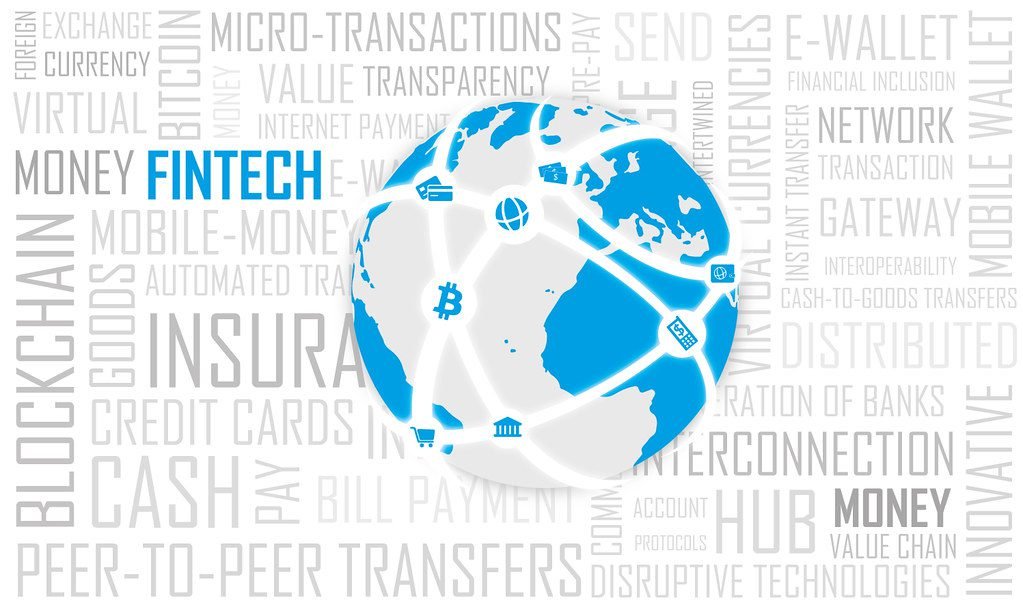
Fintech: Combination That Has Changed The World

One can say that today’s society, which is highly capitalistic in nature, revolves around two important areas: Finance and Technology. In the increasingly digitalised world of today, no one can escape technology. In a completely capitalistic society, no one can ignore the impact that money has on every aspect of our lives. An astute combination of finance and technology in today’s time can positively equip anyone to excel at life in an urban environment.

Many individuals and industries have over the years realised the powerful impact that the combination of finance and technology can have and have since tried to develop these two things simultaneously and in a way that compliments each other. Whenever these things have been developed alongside, marvellous things have happened such as net banking and continuous efforts are being made around the world to keep this combination or interdisciplinary of fields further developed.

What is FinTech?

In simple words, FinTech is made up of two words: Finance and Technology. Together these two words make FinTech. This stands for an aspirational innovation that aims to use the emerging technologies around the world and merge them with finance. Fin-Tech aims to challenge traditional financial ways and practices in a way that improves and elevates the quality of service. Over the years, FinTech has been used in fields such as banking, risk management, accounts, data mining, and software building.

A new area of study called Fintech Course has emerged that streamlines the aspirations and methodology that surrounds Fintech. Fintech Course is as much based on user experience as much as it is based on innovation. One of the main aims of the FinTech Course is to ease the way of conducting financial activities in a manner that is all-inclusive, easy, and non-intimidating so that more and more people are included in financial practices which will ultimately expand the market.

What are Some of the Examples of FinTech?

Some of the earliest examples of FinTech Course innovation are Net Banking and Mobile Banking. The brilliant combination of finance and internet technology has played smoothly on the phone. Mobile Banking has not only made the banking experience easy and accessible, but it has also led to more people who have opened bank accounts.

Once upon a time, making a simple transaction or something as basic as checking your current bank statement would mean spending hours in bank lines. Still, with net banking, people can check all details related to their finances and make transactions within a few clicks. This has increased the frequency with which people perform baking functions. The ease of doing business has increased with net banking and additionally, the overall consumer awareness levels have also improved, particularly amongst the youth.

Cryptocurrencies or digital currencies are other subjects that come under the FinTech Course. Cryptocurrency has in the last 10 years completely revolutionised how banking and global transactions work. Bitcoin ever since its launch in 2009 showed if money is mixed with internet technology then even the completely consolidated world of paper currency can be changed. By providing a legitimate alternative of paper currency through Bitcoin and other digital currencies, the FinTech industry proved that everything is possible with innovation. While cryptocurrencies were once treated as a fad and dismissed by officials, today transactions worth millions are held in Bitcoin and Altcoins.

Today digital currencies are an industry in themselves that has prompted governments to treat digital currency seriously. Many nations like Japan, the USA, and Russia are even considering of creating their own state-run cryptocurrency to counter the influence of privately owned digital currencies. These developments represent the world-changing power of FinTech and its many innovations which make the impossible seem possible.

Conclusion

Despite its noble intentions, common people are uncomfortable or intimidated by the notion of FinTech. The reason for this can be the hard language and terminology that surrounds this field. Most people use products and services that are a direct result of FinTech innovation, but they still maintain a distance from the technicalities of it. People and specifically students need to be informed about FinTech so that they join the field in the future. There is no doubt that FinTech has revolutionized the way this world works.


What is Blockchain

We are living in an era where any imagination can be brought to life with the help of technology. One of the most ingenious inventions of modern history stands in the form of blockchain technology.

Many of us have heard of the blockchain word through its application in the field of cryptocurrency but are unaware of other prominent aspects of this revolutionary technology.

There are Blockchain courses specially designed to help people comprehend this progressive technology. Let’s understand what it really is and how does it function.

Understanding the Blockchain Technology

If we go by the definition, the blockchain is a decentralized digital ledger that is spread among a network of people where everyone in the network has a copy of the ledger.

Cryptography is used to link the blocks and every block contains a hash that is cryptographic in nature of the previous block, a recording of the time and data of the transaction made.

The transactions recorded here is verifiable and permanent in nature, it can’t be altered later.

To simplify, the blockchain can be understood as digital information sets stored in public databases available to people in a given network. The blockchain stores transactions of value; it could be monetary or other economic transactions of high significance.

Digitalization, transparency and Immutability are the three pillars of this technology that together makes it revolutionary in nature, eliminating the flaws of the traditional ledgers that used to contain valuable information.

Every block stores information regarding the transactions like date, time, value or amount, information about parties relevant to the transaction.

Every block contains unique information and is given a unique code to distinguish them from other blocks in the chain. This unique code is termed as “Hash”.

How Does Blockchain Function

We have already established what blockchain is, all the new data recorded in a block is added to the existing chain of blocks.

Since we know that the blockchain records transaction of value, let’s take an example of an e-commerce purchase to understand the functioning in context.

So let’s say you saw a discount on your favorite smartphone and you rushed on to the e-commerce store for the purchase. The transaction that happened is verified in public records in order to check later if things don’t fall into place or even for general proof.

This process needs someone who can vet the entries from the new transaction. In the blockchain technology, this process of verification is left to the network of computers who vet the transaction and then record this entry into the digital ledger.

Information regarding the amount of transaction, the time of the transaction, digital signatures of parties involved, etc. are recorded in the block.

The block contains other transactions during the same time, after successful verification of all the transactions in a block; it is given the unique hash code for identification.

Applications of Blockchain

One of the most significant applications of Blockchain technology continues to be in the form of cryptocurrencies that are transforming the financial industry and changing the way people transact and exchange things of value.

It is also used in the field of asset management to process and settle the trade. Another application of the Blockchain technology that is very close to the finance industry is in the form of insurance claims processing, the insurance industry is using this technology to identify fraudulent claims and process the genuine claims faster.

Smart property has opened a new venue for Blockchain application. Reducing the chances of theft of smart property Blockchain will play a crucial role in protecting the ownership of tangible goods of value.

The supply chain industry is also the one that is benefitting from the use of Blockchain technology, the technology adds value in this aspect through sensors that give an end to end visibility of the items in supply by providing information related to live location and the state of goods being supplied.

Other than this Blockchain has also found its way to the healthcare industry that uses smart contracts to store and secure personal health records. The health records can be stored on Blockchain with a private key that would limit the access of this information to a particular individual who has the key.

Conclusion

The blockchain technology is the future, it helps to remove the middlemen in the process who don’t add much value but are prone to corrupt the system. In the most basic sense, it’s a decentralized digital ledger that records information which can’t be altered at a later date.

Blockchain has also opened a plethora of opportunities for people as it is being frequently adopted by organizations and has found its way in various industries including finance, healthcare, insurance, etc.

Blockchain courses are designed to train professionals in this field. The blockchain courses help to build an in-depth understanding about the technology and its applications.

How A Blockchain can boost HR hiring in the Gig economy?


If you are not very familiar with the functioning of the blockchain technology then you’re in for a treat. The functioning of blockchain technology involves using a distributed ledger to record transactions of value removing the middlemen in the process and establishing accountability and authenticity in the recording of data.

In the nascent stage of the technology, the major implications were recognized in the field of finance and related sectors.  Forming the backbone of the cryptocurrencies, the blockchain technology has unraveled a plethora of opportunities for a new economic structure.

Capitalism has evolved to shape a new form of capitalist-proletariat relationship, the new era has a lot in stores for those who don’t want anyone else bossing around. The Gig Economy has been a boon for those who choose to be their own boss. It’s different from a contract and far away from the permanent role of an employee.

The gig is a slang used in the English language for short term work usually a contract with a company, where independent workers offer their services for the said duration or for the completion of the project.

The Gig Economy has been flourishing in the times of the digital buzz, in the digital age location is no longer a factor taken into consideration for employment, making a large population of workers available for independent contracts to earn their livelihood.

The Gig economy puts the free forces of capitalism into an effective state, filing up the demand and supply gaps with independent workers. This version of the economy prioritizes a skill-based approach for work rather than the traditional method of educational qualification.

The gig economy also factors for the frequent job change by the millennials creating a better version of employment that suits their needs. The rise of freelance workers has been drastically high creating room for more autonomy and work-life balance.

The digitized version of money in form of cryptocurrencies and the digital workforce puts blockchain and the gig economy in a contextual frame. The gig economy is bringing a cultural and occupational change in the digitalized world! The gig economy is cultivating the entrepreneurship instinct among individuals.

Blockchain in Human Resouce

On a more thought-full note, the implications have also been recognized in the Human Resource sector. Hiring a candidate fit for the role with optimum skillsets is a bigger challenge than it seems, people might think that there are millions of job seekers who are looking for employment but how they fare on the criteria of the company is a different story altogether.

To judge a candidate on the basis of the skills they possess the people in the hiring department need a piece of evidence in the form of degree and certifications verifying the stand of the candidates. Job seekers carry the physical copies of certifications and degrees with them every time they go for an interview.

Blockchain courses aim to address the above-mentioned problem by creating single digital storage of all educational and professional qualification spread across different databases so that the only thing the recruiters need will be that single digital identity. This will also help to address the problem of fake qualifications mentioned on the resume, which candidate often attempt to do in order to gain better employment.

Background screening & payroll are the two scenarios where the use of Blockchain seems very possible and it will also aim to address all the loopholes that the present system has inherited. Blockchain will help to keep a record of the education and skills and workplace performance of employees securely.

Most gigs are typically a short term contract, to hire people for a contract bug companies use intermediaries to do the job on their behalf of finding gig workers, Blockchain steps in to remove the intermediaries from the picture. Gig workers can be employed for projects without complex verifications as most gigs are skill-based instead of prioritizing educational requirements.

The gig workers have their own set of problems when it comes to being paid for their services, they have to wait for a longer period to earn their much-deserved paychecks, blockchain can efficiently solve all these issues and help cultivate the gig economy to larger scale.

Conclusion

With the numerous implications of the revolutionary Blockchain technology based on the concept of distributed ledger, the HR segment has many benefits to avail. From impeccable background verification to holding records of employees to removing the intermediaries required to hire gig workers blockchain brings a whole lot to the table.

How A Blockchain Can Be Used In P2P Network?

How A Blockchain Can Be Used In P2P Network?

Making the blockchain technology decentralized is dependent on the peer to peer networks that are also known as crypto circles and their laying out and propagation as the base foundational layer. They are smaller networks popularly also called P2P networks that last forever and are the “censorship-resistant” factor of the blockchain itself.

P2P networks are no new concept with Napster the first popular network with over 80 million global users having to be shut down in 2001 because it allowed illegal music downloads. And from the remnants emerged BitTorrent the file-sharing system that is an active P2P network very popular today.

The Bitcoin network used both the secure transactions feature of the blockchains and the decentralized feature of the peer to peer networks. The network thus provided a zero-fee alternative financial system wherein the digital value was traded in as cryptocurrencies or virtual money. Bitcoin’s infrastructure layer and its subsequent success regenerated the importance of P2P networks as a viable method for the functional and technical protocols. This was quickly lapped up by many Fintech startups and enterprises that emerged using the success of the P2P networks.

Peer-to-peer blockchain networks are akin to social living organisms. They form an important of the infrastructure and consensual technology that they are dependent on. Transacting humans have to reach an agreement and publish the issue across the node-containing network for validation by providing the right solution to the poser. A large number of nodes ensures that the cooperation-based transactions of all participants generate the blockchain training resources that contribute to the evolution of the P2P network and is the key factor for authentication and validation of the transaction and users transacting.

The important benefits of the P2P network are:  

  • The permissionless number of nodes continues to be self-feeding and continuously growing.
  • The nodes are self-rewarding.
  • The self-governing progression promotes survivability and resiliency.
  • A degree of anonymity ensures the origin of work is hard to pinpoint.

The legal implications of the search function:

There will shortly come a time when the data on alternative P2P networks like the traditional searches on Google or Googling will be large enough and revealing or trading in decentralized content will be a fact. Unless Google updates their security, such content will find its way into the hands of crawlers who will make the discovery of decentralized content easy to achieve.

We also need to be aware of the consequences of the ethical, moral, and lawfulness aspects of decentralization of blockchain training in P2P networks. What would happen if the unstoppable P2P networks get used for the wrong and illegal? Has anyone found a viable solution for clearing the stable of offensive and illegal content and punishing the creators or originators of such wrongful use of the P2P networks? At some point in the recent past, this was the issue with the Internet being used for immoral and illegal uses.

Yes, there will always be the few rotten apples who will use any means to achieve their goals be it the internet, blockchains or satellite P2P networks. But let us not forget the example of Napster which was forced to shut down for infringing on the rights of musicians by allowing illegal downloads. Or the Craigslist was forced to take down their Personal section after the US Congress Bill held them responsible for facilitating and promoting the prostitution of other persons and sought to levy 10 years imprisonment, fines, and such enal action if it was not closed out. Someone clearly let Google get away with the exact same behaviour!

The future of the unstoppable and viable P2P networks can’t be compromised as they are the building blocks for the next-gen functional blockchain training capabilities, decentralized protocols, and P2P applications. The time is not far away when multiple P2P networks will use blockchains for validation, decentralized identity-linked networks for security, and another P2P network for storage.

Conclusions:

Important questions persist regarding whether the P2P unstoppable networks will be used as a tool for good reasons and benefits or as a weapon in the hands of the bad for illegal, corrupt promotion of causes. It is hoped that most of the applications will emerge on the just and right side as the new and powerful tools of the future. If you want to learn more about the way P2P networks and blockchains function you could do a blockchain training course at the reputed Imarticus Learning Academy. Why not start now?

What Are Some Useful Fintech Applications For Small Businesses?

What Are Some Useful Fintech Applications For Small Businesses?

Modern times have seen the influx of digitalization and NBFCs and banks alike are scrambling their way to adopting modern technology to retain their profit margins and competitive business edge. India’s Digibank or the Kazakh B1NK offer purely digital services and are yet able to give the others a run for their monies.

Blockchain technology and fintech startups have lowered the revenue from traditional banking fees and ease of banking. Thanks to the innovative apps, many mobile-based and usable on the move, banking is slowly transforming into a very competitive field. New-age banking, boutique banks, and Fintech courses are such moves to personalize banking services.

Fintech courses teach you about app-building technologies, programming languages and integration of web, desktop or mobile platforms. Since these technologies are relatively new and have been developed just a decade or so ago there is no dearth of training institutes like the reputed Imarticus Learning to hone your skills. These do a great job of providing trained personnel for these skill-based and in-demand professions while even encouraging startups and entrepreneurship.

Let’s explore very briefly some of the many fintech apps in their respective segments that have revolutionized their niche sectors.

Apps for processing of payments:

The global leader is Paypal where the mobile app clients can use their phones for fund transfers to any global Paypal account using the recipient’s email address or mobile phone number. Due.com  is specifically for small businesses and comes with invoicing services, encrypted safe transactions, digital wallet, and fast operations. iZettle another fintech innovation in apps allow payments through credit cards and wallets from smartphones and can even issue online receipts for them. Mobikwik which is also popular is a user-friendly digital wallet to pay bills, recharges, insurance premiums etc straight from the bank accounts.

Apps for personal loans:

LendUp is a select US areas mobile app for 24/7 short-term personal and instant loans with both mobile and web versions. The users earn points for being active and these are redeemable as an instant loan on the app. Sofi another web app provides wider service with mortgages, personal loans, refinancing loans, student loans, free investments, and online financial products with rates being based on the user profile.

Investment apps:

In wealth management apps like Wealthfront and Betterment are playing the digital financial advisor on the web and mobiles both Android and iOS. You can access various account types linked to specific goals like Fintech courses, retirement, college funds or financial planning, portfolio management and other tax harvesting plans.

Cryptos related apps:

Digitalization and the need for secure and private immutable financial transactions have given way to cryptocurrencies by exploiting the blockchain technology. Bitcoin Checker is a free Android app with real-time prices of all global cryptocurrencies on exchanges like McxNOW, Gdax, Kraken, Gemini, OKCoin, and many others. The Blockchain Bitcoin Wallet leads in popularity and uses a QR scanner to facilitate iOS smartphones and iPhone camera app users to easily send, buy or trade-in bitcoins.

Coinbase’s free Android app or Bitcoin Wallet is very useful in trading, storing, selling or buying of various cryptos like ethereum, bitcoins, litecoins, dash, monero and more. It also provides secure operations, cryptocurrency management and as a Paypal transaction enabler on-the-go.

Customer-friendly mobile banking apps:

Mobile banking apps are a rage and many fintech startups have used this niche to help banks adopt progressive cutting-edge technologies to ensure the best customer service by making their banking operations secure, personalized and effortless.

Citibank’s Citi Mobile is an Android and iOS mobile app that is very popular since it provides the FICO score, allows TouchID access to user accounts, allows for an account glance sans signing in, activation of cards, providing snapshots of Citi Mobile and more. Similarly, JPMorgan Chase’s Chase Mobile and mobile apps of Bank of America and Wells Fargo all personalize their application for optimum use of their customers.

Parting notes:

The applications of fintech which is relatively new are many and can cater to the entire gamut of enterprises small, big, startups and every size in between across literally every sector an app designer could dream of. If you want to keep abreast of the latest technologies and learn more about the blockchain technology then try the Imarticus Learning Fintech courses. They can help make you career-ready and adept at the requisite fintech skills. Why wait?

For more details in brief and further career counseling, you can also contact us through the Live Chat Support system or can even visit one of our training centers based in – Mumbai, Thane, Pune, Chennai, Banglore, Hyderabad, Delhi, Gurgaon, and Ahmedabad.

Is India The Best Fintech Destination?

The Indian Fintech industry witnessed a boom in the early 2000s, and it has shown no signs of slowing down. We take a deeper look at India’s Fintech industry

Since the beginning of 2010, India saw the dawn of the financial era. Banking institutions began seeing the advantages of technology and invested heavily in emerging technologies. This gave rise to a number of financial technology or Fintech courses start-ups in India. Technologies such as AI, Blockchain and cloud computing began to seep the financial market making it easy for transactions to be carried out easily with minimum human intervention. This resulted in e-commerce blossoming where consumers could make financial transactions such as online payments, shopping and paying bills without any worry.

There are six basic benefits that were highlighted during the Singapore Fintech Festival 2018 and these included access, inclusion, ease of living, connectivity and growth of opportunity and accountability by individuals and banks. Technology has now entered the mainstream and is creating opportunities like never before and has impacted the economy tremendously.

Prime Minister Narendra Modi spoke at length about the fintech industry at the Singapore Fintech Festival 2018. He spoke about the growth of fintech startups in the country, the impact of demonetization. He said that there is an eruption of fintech innovation and enterprise in India. The future of fintech and Industry 4.0 is emerging in India according to the Prime Minister.

In this article, we want to list down the top reasons why India is emerging as the IT capital of the world. Prime Minister Narendra Modi’s Digital India has seen success with many industries adopting technology at a rapid rate.

Combating Crime
When you deploy technologies such as blockchain and AI, it makes it easier for banking and financial institutions to address frauds and crime. Since all the data and transactions are well protected and human intervention is minimum, crimes are drastically reduced thereby decreasing costs. It also prevents money laundering to a great degree.

Aadhaar Card
The introduction of the Aaadhaar card in India has made it possible for marginalised parts of the society to open bank accounts with ease. It has ensured connectivity and ease of living with opportunities for 1.3 billion Indians. The Jan Dhan Yojana has enabled the opening of 330 million new bank accounts in the past three years.

Ease of Payments
Online payments and its accessibility have opened a gateway of possibilities thereby ensuring that there is high levels of productivity in the country and had a good impact on the economy.

Demonetization

It has been two years since the occurrence of demonetization in India, and the fintech industry has only grown at a rapid pace with the rise of digital payments and transactions. There is a 207% increase in the volume of transactions carried from 79.67 Cr transactions as recorded in October 2016.

Conclusion
The fintech revolution has only begun, and with banking institutions adopting newer technologies, it will give rise to more start-ups, making India a sought-after destination for financial innovation.

How Is Blockchain Technology Helpful In A Banking Career?

How Is Blockchain Technology Helpful In A Banking Career?

The Blockchain ecosystem has the potential to transform disruptively and every industry. The Blockchain career and a banking career with blockchains is the place to be because of the immense scope and demand for trained personnel.

What benefits does blockchain technology bring?

Let us look into the many advantages and terminology of blockchains. A Blockchain career is today popular across verticals and industries like banking, agriculture, healthcare, e-commerce, education, mining, property recording, retail, entertainment, media, automobiles, logistics, transport and many more.

Blockchain technology brings in the important four attributes of immutability, decentralization, transparency, and security. The benefits offered by blockchain technology are:

  • The blockchain data structure is contained in the app-end and causes the data to be immutable, and impossible to delete or alter making its algorithm unhackable at the present time.
  • The data ledgers are cryptography protected and contain hashtag functions from the previous block. This information is verified to complete the cryptography transactional process through crypto mining.
  • The peer mining network has all transactions on the blockchain over all the interconnected computers thus decentralizing the system.
  • User authentication and verification using blockchain technology sans third-party interference.
  • Ledger consensus and record-keeping are enhanced as all data of transactions are contained in the block and are duly verified for maximum trust by the peer network users.
  • The ledger is distributed over all blockchain nodes in real-time.
  • Data is always retrievable and never lost.
  • Transparent transactions ensure the viewing parties are verified authenticated users and reduce transactional ambiguities.
  • Blockchain time-stamping ensures a recorded chronological order.
  • The source of the ledger can be tracked at every block of the chain.
  • Consensus between the parties ensures duplicity and fraud are removed.
  • Smart contracts enable presetting criteria and conditions for automatic recording of transactions.

How do the banks benefit?

According to the experts, bankers, analysts, consultants, etc that spoke to The Financial Times, the top 5 areas that have the potential to be successfully transformed by blockchains are

Settlement and Clearing:

The bank network is a tangled network of securities, investments, and loans that need to be recorded, settled and cleared on a daily basis. And, this costs billions of dollars annually to run. Accenture says that this area of settlement and clearing could save investment banks up to USD 10bn who use blockchain technology for efficient settlement and clearing operations.

Payments:

Payments systems from the central banks globally are moving to explore blockchain technology and shifting payments system processes to blockchains and issue digital tokens that can be used on the stock markets and cashed in at the central banks. Commercial banks to have pushed forward with their own projects instead. Ex: Switzerland’s UBS’ ‘utility-settlement-coin’ akin to the crypto coin issued by the bank. Swift payments, the cross-border payments solution of the banks is fighting off Ripple a San Francisco fintech startup in cross-border payments solutions.

Trade finance:

LCs, trade finance, bills of lading, etc are still paper-transactions sent through post or fax globally. According to the R3 MD, Charley Cooper, this is an obvious area where banks can benefit from blockchains. HSBC’s Head of innovation in commercial banking, Vivek Ramachandran agrees that doing away with physical stamping through use of blockchain transactions could deal effectively with problems like his example of a ship delivery to Malaysia from Singapore taking a day versus the paperwork taking a week!

Customer Identity Verification:

Lenders are in reality trusted custodians of investor’s money and regulators will hold the banking agents responsible for authentication of records and checking the customer’s identity. This area is a vital banking-risk that blockchain-processing can easily overcome. It is an era of start-ups in the KYC blockchain-enabled systems. Some of them are Blockstack, Cambridge Blockchain, Credits, and Tradle.

Syndicated loans:

It takes a long 19 days for US companies to raise syndicated funds from banks. Early repayments and foreclosures are still done on paper. To address the efficiency of this area Credit Suisse and 19 similar-minded financial institutions formed a work-consortium with the blockchain enablers to put the syndicated loans Synaps on a blockchain framework.

Conclusions:

Looking at the benefits of blockchains, one wonders why banks are lethargic in the adoption of the superbly beneficial blockchain technology in banking and its related processes. However, it is also to be noted that the number of fintech startups has gone up in leaps and bounds making a Blockchain career highly lucrative and getting in ahead of the curve.

Make your Blockchain career at Imarticus Learning which is the literal one-stop solution for Blockchain training. For more detailed information regarding this and for further career counseling, you can also contact us through the Live Chat Support system or can even visit one of our training centers based in – Mumbai, Thane, Pune, Chennai, Bangalore, Hyderabad, Delhi, Gurgaon, and Ahmedabad.

How Could Blockchain Disrupt The ‘Big Data’ Industry And Its Analytics?

How Could Blockchain Disrupt The ‘Big Data’ Industry And Its Analytics?

According to Glassdoor reports, the annual jump in recruitments for blockchain jobs for August 17-18 was 300% and median salaries paid in India for professionals with blockchain training were above the national average salary by a considerable amount!. The potential of blockchain technology to transform and disrupt any vertical using big data analytics has thrown up burgeoning demand for professionally trained personnel to man the growth.

The demand has outstripped the supply of Blockchain training-equipped professionalsEssentially, this means there are well-paying jobs with ample scope and growth, across verticals that make this an excellent and exciting career choice for young career makers and professionals alike. The increase in demand for professionals is expected to last over the next two decades.

Sectors that benefit:

Let us explore how some fields dependent on big-data analytics can benefit from blockchain technology.

Data Backup: The blockchain is very effective in storing data in every block of the chain enabling tracing its source block possible. Data can never be deleted or altered without more than half the community agreeing to the changes.

Payment Processing: An infrastructure which is blockchain-based enables cross-border payments at remote locations instantly with immutable consensual digital records of time-stamped secure transactions.

Hiring, Logistics, Payroll, Marketing, and Supply-chain Processes: Switching to blockchains makes organizational processes verifiable and almost error-free and requires no intermediaries. Thus monitoring instantly and stock-taking is more accurate human-error free and consumes less time resulting in huge savings in terms of personnel required to man operations, costs, effort and time.

Election Processes: The adoption of blockchain-tech can resolve issues of privacy, royalty, and rights in this and areas like media, entertainment, etc, making the authentication and reward for creativity process transparent and sans intermediaries.

Smart Contracts in real estate: This segment depends on records primarily and because blockchain technology is consensual between parties and verified across all nodes on the network a fraudulent or altered property deal is an impossibility. The digitization of land-records and the permanent storage and traceability of transactions makes the adoption to blockchains the next logical step in fast-tracking digitized smart contracts.

The Banking and Financial Processes: Blockchains offer safe, transparent and instant digital transactions with low fees as against traditional transactional methods.

Sports, insurance, and healthcare: These sectors will switch to blockchains to provide solutions to reducing confidential record-keeping hassles and using the instantaneous accuracy and immutability of the records of medical histories as a plus point.

Other verticals—âWith similar trends across other verticals like law, crowd-funding, retail, e-commerce, investment platforms, cryptos and more integrating blockchains into their operations.

Skills required:

Most applications in Blockchain training today are Python, Golang and JavaScript based. The trending tools, languages and technological suites required for a career in the blockchain technology field today are:

  • C Suite languages like C and C#
  • Python suite languages
  • Java Suite languages including Java, JavaScript ES6, JSON, js and Javascript.
  • Simplicity, Serpent, Solidity, Go, Rust and such languages.
  • SQL and NoSQL
  • HyperLedger Fabric

Top jobs:

Among the career choices available specifically in blockchains are those of the 

  • Developer
  • Architects
  • Consultants
  • Blockchain Engineers
  • Certified educators

Blockchain tech is lucrative:

Technologies like Quantum Computing, Virtual Reality, Neural Networks, data analytics, AI, Augmented Reality, driver-less vehicles, smartphones, cryptos and many more have digitized the modern world and have come to prominence over the last decade. Blockchains have immense benefits for the industries adopting its technology as they reduce costs, increase process efficiency, improve productivity and ease-of-operation. Blockchain training is the way to go, to land a career in the evolving and emerging field of blockchain applications across all verticals.

Key Takeaways:

Blockchain career aspirants do not need any mandatory qualification like a degree. The beauty of blockchains lies in the fact that at Imarticus Learning you can quickly and easily pick up the practical skills required.

Many sectors like healthcare, real estate, education, insurance, and the traditional banking system have already benefitted from it. Blockchain technology is booming and it has the potential to disrupt the big-data analytics fields and verticals involved. The high demand for professionals with professional Blockchain training certifications makes blockchains an excellent career choice because the industry needs professional accountants, managers, analysts, developers, programmers and such to grow and realize its potential.

At Imarticus Learning, this promising technology can disrupt your career and land you a well-paying job with growth and good pay packages. Start your Imarticus Blockchain training today!

For more details in brief and for further career counselling, you can also contact us through the Live Chat Support system or can even visit one of our training centres based in – Mumbai, Thane, Pune, Chennai, Banglore, Hyderabad, Delhi and Gurgaon.

How Can Blockchain Be Used In Healthcare?

How Can Blockchain Be Used In Healthcare?

Blockchain is a futuristic and effective technology, especially for the healthcare segment where it can work wonders with the data. It is a reliable and secure method of storing, sharing, and recording sensitive healthcare record-keeping and data stored permanently. Blockchains are immutable, decentralized, transparent and verifiable means of using data through smart contracts. The digital protection is HIPAA compliant and trustworthy for caregivers.

Advantages of Blockchain for Health Data

The blockchains bring in huge benefits to the healthcare segment. The age of blockchains has arrived and let us sees how they can make a difference.

Citing a survey by Hyperledger 42.9 percent agree that the interoperability of health records electronically will see quick blockchain implementation. About 28.6 percent were open to adopting the blockchain technology immediately. Making a Blockchain career currently does make logical sense since the demand for professionals is there and the payouts are wickedly handsome.

A. Data Provenance and Integrity

Data is increasing and so are the numbers for patients. Maintaining their records is a must for healthcare providers and the process needs to be secure and confidential in spite of the increasing volumes which makes it an uphill task for clinics, hospitals and healthcare professionals.

Such high integrity and provenance data are

· PHI or health information of patients.

· Health records and electronic reports.

· IoT devices data and monitoring systems information.

· Claims for medical insurance.

Sharing of verifiable untampered documentation can reduce the costs to patients in healthcare while ensuring that medical professionals verify and time stamp such documents.

The blockchain technology finds use in: 

  • Verification of PHI records and its integrity;
  • Executing unchangeable reduced-cost audits both medical and pharmaceutical.
  • Validating the integrity of tests and clinical research·
  • Helping with stocks, inventories and record-keeping transparency.
  • Ensuring compliance and HIPAA regulatory compliance.
  • Providing permanent data storage and data safety.

B. More Secure Standards:

Besides encryption blockchains provide data security and permanent storage. The technology allows for the state-of-the-art implementation of highly standardized techniques in record-keeping, maintaining inventories, handling test and investigative records, managing insurance claims and more.

It excludes any intermediary in data sharing, has a transparent open, shareable, and distributed ledger, uses time-stamped, verified hashtag-crypto-encryption and maintains the data on an immutable data block on the blockchain.

when using blockchain. Such consortiums as help increase awareness of the advantages of cryptography and further explain how to use blockchain in healthcare.

Citing the Hyperledger survey medical organizations hesitate to use blockchain technology because of lack of awareness and proper Blockchain career training.

Their assumptions are reflected in where they think blockchains have proof-hurdles to implementation.

·65.4 percent felt PoC issues were needed with technical proof.

·38.5 percent claimed security proof was needed.

·55.2 percent felt the proof of transparency was crucial.

·34.6 percent felt more privacy proof was required.

·23.1 percent claimed it needed regulatory approval.

C. Data Transparency:

Blockchains by design provide the fastest, most secure and transparent way of maintaining data permanently. Besides they do offer provenance, data integrity, lack of intermediaries, are totally decentralized and have a public single distributed ledger that is untameable currently.

Usages of blockchain technology in healthcare: 

Quoting Hyperledger’s data, 377.9 per cent of the health professionals felt blockchains will be implemented in the next five years. Blockchains in healthcare will see usage in the areas of

  • Healthcare Collaboration.
  • Tracing counterfeit drugs.
  • Clinical trials data security.
  • Efficient management of records and patient data management.
  • Reducing unnecessary investigative procedures through time-stamped test results.
  • Blockchain career training for paramedics and medical professionals.
  • Maintaining large databases of patient-records permanently.

Conclusions:

Blockchains are popular in almost all verticals inclusive of the healthcare segment. Medical firms and organizations are slow and hesitant to venture into scaling their IT systems. But many startups are mushrooming and here’s a short list of them.

Blockchain startups in the healthcare sector:

·Guardtime keeps healthcare records and secures patient records.

·Gem Health promotes healthcare collaboration.

·Cyph builds digital identities that are secure for protected communications in healthcare.

·MedRec helps secure medical records.

·Blockchain Health is being used for medical management research.

In parting, if you wish to learn more about blockchains in the health segment try the Data Analytics or Blockchain training at Imarticus Learning Institute. The field is lucrative and the demand for professionals is very high. Start today!

For more details in brief and for further career counselling, you can also contact us through the Live Chat Support system or can even visit one of our training centres based in – Mumbai, Thane, Pune, Chennai, Bangalore, Hyderabad, Delhi, Gurgaon, and Ahmedabad.

How To Learn Blockchain Programming In Tandem With Game Development?


People have started connecting blockchains with financial transactions, cryptocurrencies and now the era of game development. Let us explore how you can benefit from a Learn Blockchain program.

What are the Blockchain Games?

A Learn Blockchain program is essential to understanding the gaming platforms working. Gaming platforms run on closed loops of data and development since no one else should create newer versions of it. Blockchains are innately made for this very purpose of reusing the data assets through smart contracts thereby providing for reuse and analysis of the data stored on them.

Blockchain games are distributed among ‘players’ and are digital goods that are decentralized. Depending on the platform used they use their own tokens or the tokens of the hosting platform. Ex: ‘ether’ on the Etheruem platform.

Key Concepts:

The terms make use of the blockchain features as applied to the gaming field.

Game theory: Blockchains run on network design and game theory. The game theory according to Wikipedia, studies the math models of interactions between sets of decision-makers who are rational. It was used for zero-sum games meaning one person’s win is the loss of the other players. It is widely used in CS, social science and logic applications. A good example of the zero-sum game is Fomo3D.

Tokenomics: Tokenomics makes sets of different groups with a common interest on a platform or network governed by various features of game theory. The tokens are used to incentivize and create new digital assets in a blockchain game. Tokenomics is exclusive to blockchain platforms and is not used on other platforms for gaming.

Decentralization: Since the coding on blockchain games can be studied and analyzed easily a lot of transparency is brought in. Further, the outcome of the game is not controlled. When developers update or try to alter the game which is not endorsed by the community of players, a forked version can be built from the game.

Potential benefits:

Blockchain games can have many potential applications in the gaming industry as proven by the number of successful ones.

The major benefits of blockchains are that they enable

1- Reusable Assets:

PUBG and such game-collectibles and accessories cannot be used outside the game as on desktops, mobile, and other games. However, the blockchain ecosystem is an open distributed platform using tokens. Marketplaces like Opensea and Rarebits now allow you to trade, buy or sell these collectibles of gaming. Thus a whole new field of economics opens up.

2- Transparent incentives:

Blockchains incentives are verifiable open and involve real-world incentives. The network verifies the game and hence no scams and Ponzi’s can flourish. Today you can play and earn money because of this inbuilt incentive feature and this has spawned many more blockchain games.

3-Aligned interests:

The players and developers interests are on the same team. Since developers cannot change the game without community approval, it is trust-based and difficult to make money by exploiting users unfairly.

4- Unstoppable Games:

Games that run on centralized servers can easily be closed down citing various problems. This problem is effectively prevented in Blockchain games since the community of players can fork versions of the game from the change on the blockchain.

5-Low-cost Migration:

A smart contract allows for low-cost migration. When the game rules are to be updated, a sub-contract can be used. Data is stored on a different contract and hence the parameters and behavior need not be changed.

Limitations to Blockchain games:

UX and Scaling:

The multiplayer Ethereum game has significant 15 tx/sec limit. Projects like Loom Network and POA Network are trying to resolve the scaling issues. Hybrids like Gods Unchained are also affected by scalability issues. The first UX game Cryptokitties cashed in on its best feature namely UX. One will have to Learn Blockchain to better the integration, competition and UX with other game-platforms.

Talent shortage:

The ecosystem lacks professional developers, gamers and standardized training to meet the shortage. Currently, ethereum’s community is the largest. The demand for professionals is high and very obviously the payouts can be fantastic!

Concluding notes:

Learn Blockchain games before they get mass adopted. As scaling improves developers are building blockchain games like TRON, EOS, etc. Decentraland shortly plans to build a virtual world of blockchain assets offering better reusable assets, incentives and transaction rates.

Start your Learn Blockchain Course today at Imarticus Learning Academy to make a bright future in gaming-related blockchains.