The career outlook for data scientists with a Postgraduate degree in Data Analytics

Data science is one of the most buoyant fields with myriad career opportunities and lucrative pay now. As the world is progressing towards big data and metaverse, the role of data and artificial intelligence will impact our lives more than ever before.

However, individuals must note that the role of data science includes a legion of disciplines and include multiple job titles such as data analyst, data engineer, program analyst engineer, and machine learning specialist. Therefore, to stay ahead of the pandemonium concerning job seekers, a PG in data science in India can significantly boost the chances of employment.  
big data analytics courseFuture of Data Science Jobs

Businesses and other allied sectors have now realized the importance of big data; thus, the demand for data scientists is soaring. As per a report by the Times of India, the volume of global data is projected to touch 180 zettabytes by 2025. To manage this enormous volume of data, the skilled workforce is bound to surge more in the upcoming years. 

LinkedIn’s Emerging Job Report has ranked data science as the fastest-growing field in the world and has estimated the market to reach USD 230.80 billion by 2026. Also, ‘The Humans of Data Science’ reports that data science will create around 11.5 million jobs by 2026. So, a data scientist career will reach new heights soon, and for new professionals, this might be the correct time to step into this booming field. 

Data Scientist Salary in India

India currently holds the second position as the most prominent recruiter in the field of data analytics and data science, next to the United States. In India, the average salary of a data scientist is approximately INR 698,412 per annum. But, for freshers, the salary hovers around the INR 500,000 mark per year. Also, an early-level data scientist can earn around INR 610,811 per annum with around 1 to 4 years of experience. Additionally, with experience and expertise, the salary increases significantly and might reach around INR 1,700,000 per year.   

Responsibilities of a Data Scientist 

Although the job responsibility might vary with the sector, in general, the responsibility of a data scientist remains the same. A few of these are: 

  • Analyzing large amounts of information and data to discover underlying patterns and trends 
  • Pre-processing unstructured or structured data
  • Building predictive models and ML algorithms 
  • Identifying valuable data sources for automating the collection process 
  • Provide impactful solutions for business challenges
  • To form an ensemble modeling by combining models

Skills Required for Data Scientists 

Individuals looking to learn data science online must understand that the job role of data scientist demands specific skills. So, they must enroll in a course that will provide adequate knowledge and skills that will allow them to sustain themselves in this field. Nevertheless, a few of the most demanding skills are: 

  • Knowledge in data mining
  • Skills in Python, SQL, and R 
  • Familiarity with Java, Scala, or C++
  • Understanding operation research and machine learning 
  • Strong mathematical skills
  • Problem-solving attitude
  • Strong communication skills 

In case individuals are looking to pursue a career in data science, it is always important to know the employer’s perspective. A master’s or diploma degree with prerequisites skills is often demanded. Hence, a postgraduate degree in data science in India might help secure a job.

And, to proceed with this career, individuals need to acquire skills with time. Also, as more and more businesses incorporate machine learning and artificial intelligence into their systems for better productivity, the jobs will soon expand to new horizons. Hence, this is clearly the most suitable time to jump into data science.


Python Training: Eliminate the skill gap in the modern workforce

There is a well-known skill gap in the present-day workforce. Many job roles remain unfilled because employers can’t find workers with the necessary skills. However, one skill can bridge this gap by 2022: Python training. 

Python is a universal language that you can use for various purposes, from data science to web development. This blog post will discuss why Python is so popular and how you can get started with Python training today! 

Python’s popularity in the tech industry

Python is becoming the third most-requested language on Stack Overflow and LinkedIn. Due to its versatility, ease of use, and popularity among data scientists for machine learning tasks. Many people who are just starting with programming languages choose Python because it has a simple syntax and is easy to learn. 

There are several reasons for Python’s popularity in the tech industry.

  • Python is easy to learn.

One of the main reasons Python has become so popular in recent years is that it’s relatively easy for beginners. It has a simple syntax and fewer lines than other languages such as Java or C++, making learning how to code more accessible for new programmers who want to get started coding quickly without having too much experience.

  • Python is versatile.

Python has many different uses, and you can use it for web development to machine learning. You’ll find that most people know how to code using this language because it allows them the flexibility they need when working on projects in any industry.

  • Python is open-source

One of the best things about using an open-source language like Python is that anyone can contribute to it or make changes if they see something wrong with how something works. It means there’s always a community willing to help each other out when needed, making coding less intimidating than ever before! 

The benefits of learning Python for both personal and professional development

 Python continued to be one of the most popular programming languages in 2021. The demand for Python developers is to grow exponentially in the next few years, with an Increase market share that will only widen further.

Many enterprises utilize Machine Learning (ML) and Artificial Intelligence (AI), which require vast amounts of data to be processed. Python has emerged as the leading language for data science and machine learning projects mainly because of its readability, comprehensibility, and ease of use. 

Professionals and students alike must learn this powerful programming language to bridge the skill gap in the modern workforce. There has never been a good time to start learning Python with its growing popularity than now. Don’t miss out on this opportunity!

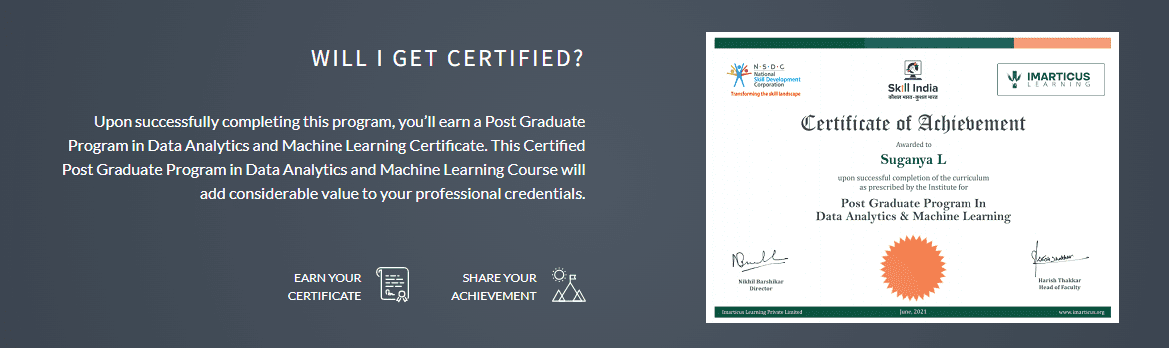
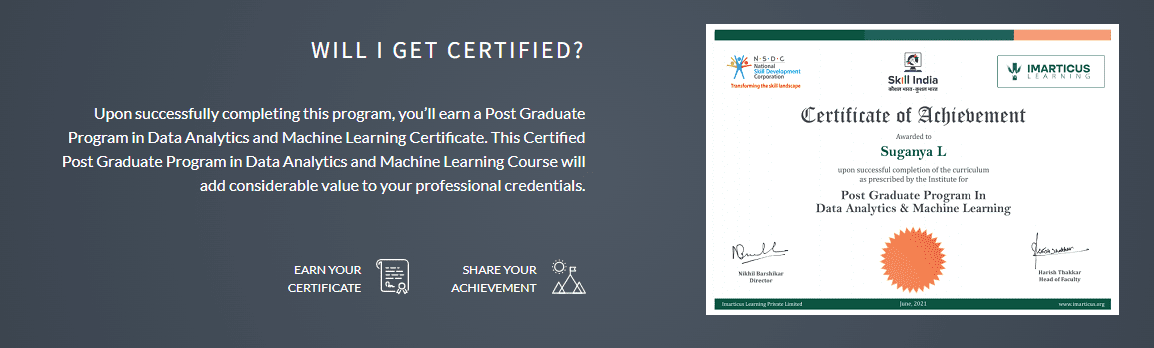
Discover Post Graduate program in Data Analytics with Imarticus Learning

This data visualization program is by industry specialists to help students master real-world Data Science applications from the ground up and construct challenging models to deliver relevant business insights and forecasts. 

Course Benefits For learners:

Data analysis with Tableau: Things you need to know

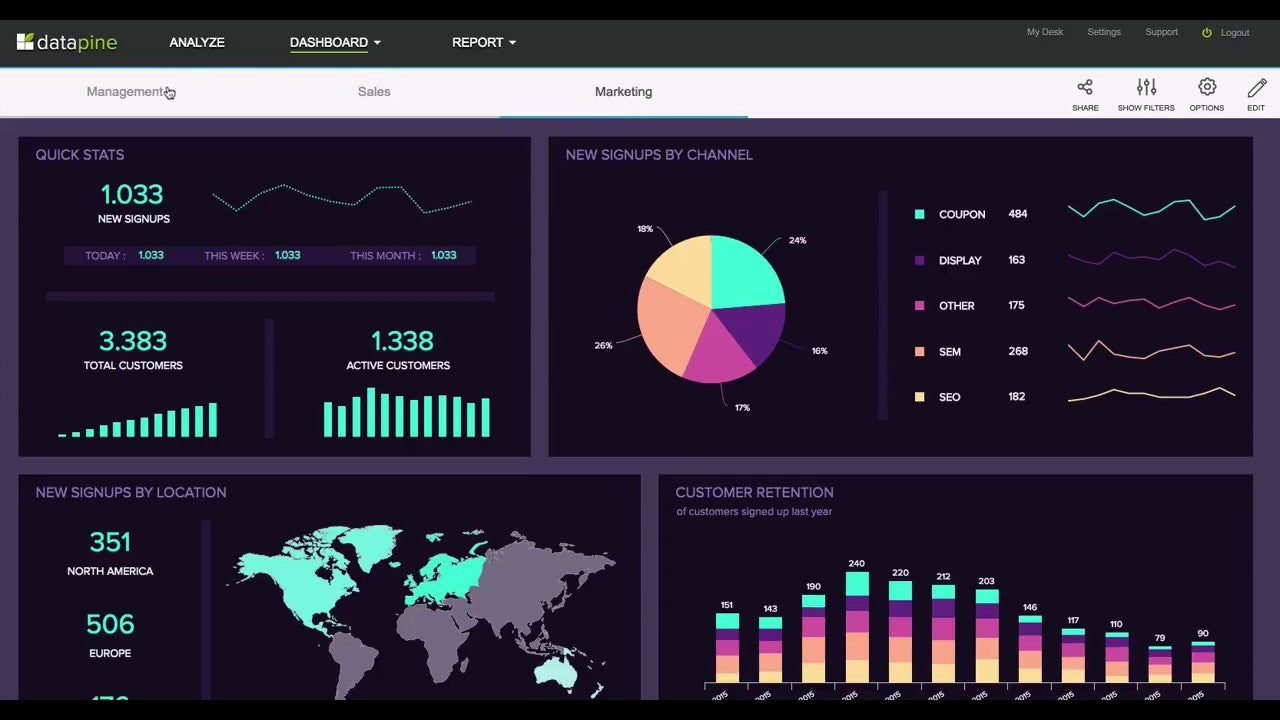
Tableau is one of the best tools for data analysis, data visualization, and business intelligence. The dynamic visualizations and the interactive dashboards in Tableau help companies gain crucial insights as quickly as possible. One of the main aspects of data analysis is to analyze trends and patterns. Tableau’s great visualizations, graphs, charts, plots, etc. make it easier to identify relationships from data. 

The point of data analysis is to help in gaining business intelligence and then tell stories in a cognizable format. Reports, dashboards, and visualizations created by Tableau do just that. More than anything, there are a vast number of visualizations, designs, functions, formats, and customizations that you can choose from. 

Working in Tableau is as simple as choosing the data source, choosing the visualization, customizing the specifications, and in the very next minute your visualization is ready. Tableau uses a drag-and-drop style of user interface and this makes working with this great data analysis tool faster and simpler. 

Why Tableau?

If not the best, Tableau is currently one of the best software for business intelligence and data analytics. It is a trusted software in this domain and it is easy to shift to for people who are using Microsoft Excel. Like Microsoft Office, now Tableau too has an ecosystem or a suite of products. Tableau is acquired by Salesforce now, making the software highly compatible with other products offered by Salesforce such as their cloud computing solutions and CRM software. Tableau also has all the important functions that you can carry out in Excel. As a matter of fact, Tableau can do so much more. 

Here is why you should definitely choose Tableau over most other data analysis or analytics software:

  • Tableau is a leading product with many other complimentary Tableau products such as Tableau Online, Tableau Mobile, Tableau Server, and Tableau Reader.
  • Frequent upgrades and a fast-evolving business intelligence tool.
  • Easy to learn with a proper learning path.
  • Analyze data for making data-driven business decisions.

Important Things You Should About Tableau

The first thing that we all should be aware of is the fact that there are many Tableau products we can choose from for data visualization or analysis. If you wish to use Tableau for your personal or individual use, you can use Tableau Desktop while Tableau Server is recommended for organizations and for collaboration, in general. 

Tableau Online is also another light tool for business intelligence while Tableau Readers allows users to read files saved with the help of Tableau Desktop. Tableau Public is another free option for users who wish to publish or upload data, feedback, and visualizations online.

There are many features in Tableau that you should definitely know about. Here are some:

  • With Tableau, you can use different datasets in formats such as. TXT, .CSV, and many more. You also get the opportunity to connect databases and big data queries as well. Tableau supports data from various different sources and platforms, which makes this tool very compatible and easy to work with.

  • Tableau is capable of functions such as custom SQL, data blending, and working with Google Analytics as well. Tableau also additionally infers the data type through symbols next to variables.
  • Tableau is capable of representing data with various formatting, views, and drill-downs. You can also apply various filters, create sets or groups and generate forecasts or trend lines.

  • This tool also automatically adjusts the most optimized format for the selected measures and dimensions by activating the most compatible views for the worksheet. It is very easy to simply drag variables to these views for them to show in the main visualization.

Conclusion

If you wish to learn data analysis with Tableau, a solid post-graduate program in data analytics will definitely help you out. Additionally, in order to prepare yourself for being industry-ready, you can choose a reputed data analytics course with placement.

Using machine learning to scale data analytics at Airbnb

Airbnb was a revolution in the hospitality industry. It allowed their hosts associated with them to set their prices for the rent from their customers.

With the help of large data resources, Airbnb uses Artificial intelligence and Machine Learning to improve its online services. The company is one of the top targets for those pursuing their Machine Learning course with placement opportunities. 

One of the major improvements made by the company is in its price settings. Earlier it was the host who set the price and now, it is still the host who decides but AI directs them towards the price that will be beneficial for both sides.

Airbnb uses the vast amount of data they gather and analytics to come up with this guidance. What changes did they do to achieve this progress? Let’s find out!

  • Price tips

Price tips are the primary feature that ‘nudges’ the host towards the desired price. This AI-powered feature constantly updates the various price ranges for each day of every month of the year. At a glance, the hosts will be able to see if their set price is suitable to garner any profits if it is enough to get the attention of the customers, or which range is most likely to get bookings, etc. If the price is shown in green, then they are good to go.

If it shows in red, then the host needs to make some changes to make it green. Prices in green will be the most suitable for clicks.

This price range depends on the days of the week, time of the year, specific neighborhood, locality, etc. Even the latitude and longitude matter. This is a result of the algorithms set by Airbnb through the available data.  

  • Aerosolve

The machine learning package that helps with the pricing is the other analytical feature of Airbnb. It handles the behind-the-scenes factors and patterns that lead to the pricing shown in the Price Tips. It helps the user to interpret the words having entirely two meanings in two localities in the right context. 

Such developments are a result of a bunch of data analysts and scientists having such a useful model. It is such usage of data analytics that people are looking for a quality Data analytics course with placement offers. 

  • big data analytics certification coursesIn-app message intent

The third important feature of Airbnb analytics is their in-app message system. Here, the queries of customers will be automatically answered appropriately by classifying the message intent. The machine ‘learns’ to understand what the customer is looking for and respond to them as needed.

It is useful for hosts and customers in different time zones. This way, there is no delay in getting the answers and the customers feel valued. The AI system can identify the queries and even give suggestions such as a link, map, or picture, to the various queries. 

Bottom Line

Airbnb achieves all of these with a few data analysts. They are also empowering their hosts so that they can make their own decisions with the help of the already set analytics. The existing hosts can find effective bookings and the company will be able to find more listings and hosts. 

If you are fascinated with these developments in technology, enroll for the Post Graduate Program in Data Analytics here at Imarticus to understand more about data analysis.

The classes are conducted by industry experts. There will be proper mentorship throughout and beyond the period of the course. You will be prepared for interviews and get assistance with placements as well. 

Create a Facebook Bot using NLP

Chatbot, the computer program made using artificial intelligence, mimics human conversation and can reply automatically to queries. The key player inside this program is Natural Language Processing (NLP) which helps with the ‘translation’ of the human queries into a form that the machine can understand. 

It involves data analysis and giving the right input to make the machine capable of doing what it is expected to. When you have the resources, it is now easier to build a bot with the right NLP tools and platforms.

When do you need a Facebook bot?

The Facebook bot is used for the FB pages to improve customer service, to make communication easier for the transactions in e-commerce, etc. It is a way of optimizing the overall customer satisfaction and taking the business forward. 

Facebook has its own user interface called Wit.ai that helps with the creation of intents, agents, and entities. It is completely free, comes with a manual, and integrates well with NLP. Most importantly, it works well with Python, Nodje.js, and Ruby. For those who are familiar with the codes and are willing to spend some time, a Facebook bot building is possible for anyone. 

How to create a Facebook bot?

  • Create a Facebook account and have a page dedicated to your business or brand.
  • Connect the business account or the page with the Bot builder of Facebook. 
  • After going through the manual carefully, start by creating a welcoming reply which will be the default for all customers. 
  • Now comes the most important conversation structure that helps with the navigation of the conversations. It includes pictures, URLs, audio, video, or any kind of media, etc., depending upon the expectations from this chatbot.
  • Once the structure is done, provide the necessary inputs for the dialogues while making sure that they are brief, clear, and relevant. 
  • The next step is creating the ‘brain’ or AI that works with the structure to perform specific tasks according to the commands recognized and received.  
  • Test the new bot for any errors and malfunctions. Go through every aspect and structure of the bot. 
  • The final step is to launch the chatbot by providing the link to your Facebook page. 

Is it as easy as it looks?

In simple terms, yes, it is as easy as it sounds. But the catch here is to have someone who knows about the technology and is familiar with data analysis and machine learning. Those who have completed courses such as the Post Graduate Program in Data Analytics will be a good contender for this task. 

The reason is, the Facebook UI has a steeper learning curve and can take some time to complete. The UI does not offer any visual aspect for the whole programming. So it needs some coding to do and a few other technical nuances to ace the process. So a professional, experienced or a beginner would be requisite. When all these necessities are fulfilled, then yes, creating a Facebook bot will be easy. 

Conclusion

Regardless of the difficulty level of creating one, the Facebook bot has become one of the most efficient ways of connecting with customers. There are several other platforms such as Dialogflow to help with this creation. If you are interested in building such fascinating tools and technologies do enroll in the data analytics course.

The best Data Analytics course with placement will give you the necessary boost to help you land the job, as early as possible. 

6 beginner-friendly steps to learn machine learning with Python

Programing languages are vital for computer programming, and Python is one such language, but it is a scripting language that is high-level, interactive, easy to interpret, and object-oriented. This language has a built-in data structure that is high level, and it is combined with dynamic typing to make it worthwhile for Rapid Application Development.

Phyton encourages modularity and code as it supports modulus and packages, and today many networking websites are written in Python. You can learn Python online through the PGA program at Imarticus.

Some of the features of Python are:

  • Simple structure and easy to learn
  • It is a beginner’s language
  • Readily available and at zero cost on the official website
  • Easily integrated, interpreted, and object-oriented
  • Portable and can run on different platforms
  • You can develop a graphical users interface using Python

Steps To Learn Machine Learning With Python

In the PGA program at Imarticus, we teach specific basic steps to learn machine learning through Python:

  • The first step is learning Python because you have to know Python basics to implement machine language.
  • To understand machine learning and its algorithm, you should know the basis of specific mathematical topics such as probability, linear algebra, calculus, statistics, and matrix.
  • The third step is to learn the concepts of the machine learning algorithm.
  • In the fourth step, acquire knowledge about data science tools.
  • Become familiar with Python tools such as pandas, Numpy and Matplotlib.
  • Gain deep learning skills and build your machine learning model.

Machine Learning Course With Placement

Machine learning focuses on data and algorithms to imitate the way humans learn. It relates to artificial intelligence and computer science. Machine learning is a crucial part of the rapidly expanding discipline of data science.

Algorithms are trained to generate classifications or predictions using statistical approaches, revealing vital insights in data mining initiatives. These insights drive decision-making within applications and enterprises, intending to influence significant growth KPIs.

Labeled datasets or supervised learning give insight into “deep” machine learning algorithms, but these insights are not always needed. It consumes unstructured data in its raw form and determines the group of features that separates one category of data from another automatically.

The PGA program at Imarticus also helps to understand the difference between various data inputs.

Post Graduate Program in Data Analytics

What is Data Analytics? It is the science of studying raw data, and numerous data analytics approaches and processes have been mechanized into mechanical techniques and algorithms that deal with raw data intended for human consumption.

Data analytics is a broad word that refers to a wide range of data analysis techniques. You can apply Data analytics techniques to any data to obtain insights utilized to improve things. Trends and indicators that might otherwise be lost in a sea of data can be revealed using data analytics techniques. This data can then improve procedures and boost a company’s or system’s overall efficiency.

Further, a few of the elements of the data analytics process can aid a range of endeavors. A good data analytics program will present a clear picture of where you are, where you have been, and where you should go by merging these components.

Types of projects to do in a Machine learning course

Machine learning, as the name suggests, revolves around technology. It is a set of programs designed by the coders to analyze the data. It is an algorithm where we put the data as input to get predictions. 

AIML is the future and today we are dependent on it for our day-to-day activities. Have you ever thought about how you can track the exact location and date of your online order? Or how does Google voice assistant answer your every query? It is possible through a machine learning program. Siri and Alexa are some examples of machine learning.

Machine Learning Course at Imarticus

As machine learning becomes increasingly prevalent, an increasing number of people are pursuing employment in machine learning analytics. At Imarticus, we recognize the need of this era, and therefore, we have designed post-graduation in machine learning whereby you will learn the real-world application of data science. We also teach you to prepare models to generate insight and make predictions.

Our data analytics course is known for job interviews and placement chances. We teach you Python, SQL, data analytics, machine learning, and data visualization with Tableau. We provide our students with focused sessions with hands-on exercises for easy and effective learning. Our classroom exercises, real-world projects, and case studies help our students in their careers.

Machine Learning Projects

The AIML projects make you familiar with the real-world workflow. They help you to decipher your area of interest and let you focus on the specific career path. 

Here is the list of top 5 projects which at Imarticus, we give to our students:

  1. Loan prediction– Nowadays, many lending and banking apps require a loan eligibility model. For this project, you will need certain financial data such as earning and spending trends. You will learn how to train your model to understand patterns and forecast loan eligibility after receiving new information.
  2. Sentiment Analysis– This project is for those who have a talent for writing. You will categorize or group texts into positive or negative impressions. You will start with text mining to investigate the patterns of the texts in question and then proceed to determine the major characteristics throughout your dataset. This project will introduce you to the fundamentals of text manipulation and how spam detection works.
  1. Logistic Regression Model– It is a simple classification model, ideal for beginners. . It calculates the likelihood of discrete occurrences. You will start with a database that has discreet values like, “Yes” and “No,” or “Good” and “Bad”. If you wish to forecast more than two outcomes, you can look at multinomial logistic regression.
  2. Image Recognition– This project is for facial recognition and fake image detection technologies. For this, you require a basic understanding of Artificial Neural Networks (ANN). This project may appear difficult but it is an easy one. It will give you a good knowledge of deep learning ideas.
  3. Classification and Prediction of Cancer-This project will teach you to apply your machine learning knowledge to medical fields. You can create a model to classify new cancer cases into appropriate surgery categories. You may also create a model to detect cancer.

At Imarticus, we teach our students to become successful data analysts. We want them to excel in their career and desire a successful life for them.

Data analysis using SQL – All you need to know

SQL, the programming language, is the best companion for data analysts. SQL means Structured Query Language, which helps companies to build tools that can easily garner data from their databases. 

This is a valuable tool to analyze the data and make appropriate decisions based on them. Since data analysis is crucial for finding the trends and predicting them for the long-term benefits of the institutions. So data analysis using SQL is significant to get quality data from the database. 

What is SQL for Data Analysis?

A data analyst can easily access the data using SQL and read or manipulate them as needed. It is further used for analyzing the selected and stored data to get the right insights that will be beneficial for the business. 

SQL uses some basic techniques involved with it for achieving these said tasks. It also has a set of five commands to control, manipulate and analyze the data. 

Those having a basic degree or certificate such as the Post Graduate Program in Data Analytics can easily follow the instructions or handle this program comfortably. 

  • SQL is used for scripting Data Integration Scripts and is a widely used tool by Database Administrators. 
  •  It is used for handling analytical queries to get insights.  
  •  It is useful for the modification of data like deletion, insertion, or updating of the databases.  

How beneficial is SQL for Data Analysis?

SQL is a data management language that stores data in a table format. It is easy to find data and build custom models for the business. The data management here is precise and shows optimum results. 

SQL is ideal not only for data storage, it can also process, retrieve, and analyze the data as well as get insights from it, no matter how complex it is. The main reasons why SQL is beneficial for data analysis are,

  • SQL for data analysis is a user-friendly language and is quite easy to learn or understand.
  • It can efficiently process and retrieve from any of the various databases associated with it. 
  • SQL follows the standard documentation so that users can handle it well.
  • It is a widely used tool.
  • It’s useful for testing and manipulation of the data as well.
  • You don’t need any coding experience to handle SQL
  • It is completely portable and usable across all devices. 

Limitations of SQL for Data Analysis

SQL is not without errors, it has its own set of limitations.

  • The lack of a user interface often makes it challenging when dealing with larger size of databases.
  • It is difficult to do complex statistical analysis.
  • SQL will be inadequate for handling unstructured data as it requires the data to be in table format and that from the column format will not be compatible.
  • There are certain versions of SQL that are inaccessible for many users as they are expensive. 

Where to learn SQL Programming?

There are several online courses available for both freshers and working professionals to excel at this programming language. One of the best courses is the Post Graduate Program in Data Analytics & Machine Learning at Imarticus. This course is available separately for freshers and professionals to suit their schedules. The classes will be conducted on weekdays or weekends as per choice. 

The curriculum will be different according to the chosen program. The learning process includes multiple in-class projects from the real world so that the candidates are industry ready for the jobs. There will also be preparation workshops, personalized mentoring, and mock interviews. 

7 simple hacks to speed up your data analysis in Python

Python is a high-level programming language with a built-in data structure with dynamic typing and data binding. It is general-purpose and straightforward to use the language used to create various computer programs. At Imarticus, we help you learn Python online through the PGA program.

Python creates various programs like developing websites, task automation, software, data analysis, and data visualization. Python is an easy-to-learn language; it is shared between accountants and scientists. It is also used to organize finance and numerous other day-to-day chores.

Python and data science go hand in hand with each other. The data analysts use this language to conduct complex statistical calculations, create data visualization, manipulate and analyze data. Python in web development is pervasive; it includes sending and receiving data processing data while communicating with the database. It also helps in the routing of URLs and ensuring security. 

Python is a dynamic language supporting structured and object-oriented programming. It is the language that focuses on readability, and it is the most accessible language that is why it attracts developers and thereby has a large developer community. 

Python helps in data analysis through the following steps:

  • Python helps to efficiently perform high computational tasks with libraries like Pandas and Numpy.
  • Libraries like beautiful soup and scraps help extract data from the net.
  • Python libraries like Matplotlib and Seaborn help in the analysis of pictographic representation and visualization of data.
  • The Scikit-learn library in Python makes complex mathematical calculations efficient and straightforward.
  • Python library such as OpenCV handles the operations on the image. 

Data Analysis With Tableau

With the PGA course at Imarticus, we help you learn Tableau, data visualization, and data analytics. This course will help you build interactive dashboards and publish them on online Tableau. 

Data analytics is the presentation of data with a blend of colors, dimensions, and labels to create a visualization for providing insight into business and making informed decisions. It is an unavoidable aspect of business analytics as it helps enterprises analyze trends and make decisions quickly and visually. For this visualization and data discovery, you need the Tableau tool.

For business intelligence and data visualization, you need Tableau as it is easy to learn, fast to use, and intuitive for consumer use. 

Data Analysis Using SQL

SQL is the database querying language that helps simultaneously interact with multiple people’s databases. One of the most flexible languages combines a learning curve with a complex depth to help users create tools and dashboards for data analytics.

SQL is famous for quick creation and interaction with the database, and it is also a simple language performing complex data analysis. This language uses many valuable tools such as excel popular python libraries like pandas combined with its internal logic to interact with the data sets. 

So, what are the ways to use SQL for data analytics? SQL uses its base infrastructure and easy-to-use dashboards and reporting tools for communication with complex instructions and fast manipulation of data. One of the other interesting properties of SQL is simple accessibility, strategic organization, and simple, manageable, and understandable interaction. 

Through the PGA program at Imarticus, we help you unfold many uses of SQL in data analytics, such as direct integration into other frameworks, additional functionality, and the ability to communicate effectively. SQL is the tool that acts as an intermediary between the usage and storage of complex data and the end-users, and for using this tool, you need to know Python.

Why Should You Learn Python For Data Analytics and Artificial Intelligence?

2022 has seen a huge increase in both the number of data science applicants and also future aspirants all around the world. In India alone, LinkedIn, the global job search leader, announced a 25% spike in data science professionals as compared to 2021, and that is a huge number by a number of standards.

But one of the most common questions that ponders the mind of data science aspirants most often is why they should learn Python to get an edge in this profession?

Thus if you are planning for a career in data analytics and artificial intelligence in the future, and too have this question in your mind, in this article, we will answer exactly that.

Let’s get started.

Why Is Python Important for Data Science?

At the present moment, there are more than 35 different programming languages that are actively used by developers and coders all around the world. But among all of these, Python is undeniably one of the most versatile and well equipped, especially in the field of data science.

The reason behind this is simple; if you take a look at some of the most common tasks that are executed by a data scientist on an everyday basis, starting from data extraction and ELT (Extraction, Loading, and Transformation) all of them require a solid knowledge of Python coding and operation.

Along with this, another important reason why Python is so often relied upon as the go-to programming language for data science professionals is the fact that it comes with a suite of different packages, starting from SciPy, NumPy and pandas, which make complicated and time-consuming tasks easier, more efficient and effortless.

For instance, Matplotlib, which is one of the leading Python packages, is often used by data science professionals when they want to include visualizations or any sort of graphics in their simulations.

If all of this is not enough good reason, as to why you should learn Python

Learn Python ProgrammingTo get an edge for your career in artificial intelligence, here are some of the biggest advantages of the standalone programming language in itself.

Advantages of Python

Easy to Learn

If you are a beginner at coding and you are looking for a programming language that is easy and fast to learn, then Python should be your choice.

The programming language has been around since the late 1980s and has thus undergone several developments and improvements in the last couple of years, which has made the current version extremely user and beginner friendly to learn and execute.

Since data science is such a fast-paced career, where developments are literally happening overnight, the need for a language that is easy and fast to learn is a no-brainer, thus making Python one of the most obvious choices.

Scalable

When you would have spent a considerable amount of time coding, one of the first things you will realize is the fact that Python as a programming language is immensely scalable. Compared to programming languages like Matlab and Stata, which are industry leaders in their own might, Python makes it very simple and straightforward for anyone to scale. The language comes inbuilt with a suite of features that allows you to have multiple approaches and perspectives to solve the same problem, along with having a wide range of flexibility to try out new things as and when they are developed.

Learn Python ProgrammingThe scalability aspect of Python is the second reason why companies prefer their data science professionals to know Python. Scalability is immensely important in both data science and artificial intelligence, mainly because of the fact that new discoveries are being made on the regular.

Conclusion

Thus, if you want to give your career in data science an edge, now is the time to start enrolling for an Artificial Intelligence Training that comes packed with a course in Python.

We offer analytics and artificial intelligence courses at our centers in Mumbai, Thane, Pune, Jaipur, Delhi, Gurgaon and Bangalore.