A Comprehensive Guide to Understand Bull & Bear Markets

When you start your investment journey, you definitely come across terms like “bull market” and “bear market”. In investment, the terms “bull” and “bear” are often used to describe the market conditions if they are increasing or decreasing in value. As an investor, it is important to learn investment banking to understand the market value as it may have major impacts on your investments.

What is a bull market?

A bull market is when the market is on the rise or expected to rise over a period of time. It also denotes high prices in the company’s shares, which makes the investors gain more confidence in the market. When the market is “bullish”, it indicates that there is a rise in the GDP and there should be positive results for weeks and months to come. The typical indicators of a bullish market are increased prices in stocks, bonds, real estate, and more.

What is a bear market?

A bear market is the opposite of a bull market. A bear market is usually indicated by almost a 20% fall in the stock market prices throughout a minimum of two months. It creates a sense of negativity amongst the investors, and they hesitate to make any kind of investment. A bearish market leads investors to sell out their stocks so that they can minimize their losses.

A bear market can have an adverse impact on the GDP of the country and could cause a lot of unemployment. An average bear market can last for up to 1.4 years or even longer.

Bull vs Bear markets and their impact on investment strategies

Bull and bear market and your investment strategies are inter-related. Your strategy highly depends on the current market conditions. However, the market does not always have to be in either condition; it can remain stagnant for a long time and can increase or decrease very gradually.

It is generally advised to invest in both markets while keeping your portfolio in mind. During a bullish market, you should consider investing at a very early stage so that when the stock prices are at an all-time high, you can sell them and earn great profits. While in a bearish market, the prices usually drop and stocks tend to lose their value, therefore, you should check your investment profile and make adjustments in your strategy accordingly.

It is also advisable to buy large stocks of blue-chip companies during this time because that will ultimately get your profile back on track in the long run and help you recover your profits. Several capital market courses will guide you through the details of both markets and how you can create an investment strategy.

Conclusion

The bull and bear market can influence your investment strategies in a great way that is why it is wise to continuously keep a track of where the market is going from day 1 of your investment. You must have a risk tolerance when you start investing and should always stick to your strategies no matter how the market at the moment is.

Always remember that whatever the condition is, you can reap the benefits of the stock market in the long term. To understand further, you can look into the investment banking courses with placements and have an idea of how the market works.


How new banking strategies make managing finances easy for millennials and Gen-Z

Millennials and Gen-Z together share a larger segment of world demographics. With this shift, millennials and Gen-Z have become the largest driver to bring in the shift in consumer behavior and hence the technology. The financial service providers with digital setup need to undergo a transformation in order to remain up to date.

To drive the transformation, the financial institutions to come up with innovative approaches with the focus on transforming the traditional banking system. In order to be at par with the startup standards, there is a need for traditional banking systems to take up the new growth opportunities considering the consumer habits and expectations of Gen-Z and millennials. This shift in banking financial needs is going to open up new career dimensions for students.

To build a successful career in banking and finance-related services you can learn how to innovate and adapt the strategies by enrolling yourself to build a successful career in banking and finance-related services you can learn how to innovate and adapt the strategies by enrolling yourself in a postgraduate diploma in banking and finance or various certificate courses in banking and finance. Postgraduate diploma in banking and finance or various certificate courses in banking and finance.

The diploma and certification courses in banking and finance help the students to understand the market needs and learn how to strategize the solutions to the existing problems. This article will help you understand how postgraduate diploma or certificate courses in banking and finance can help you to upskill and grow with the increasing financial needs of Millennials and Gen-Z.

Consider consumer’s emotional needs as the core of transformation

An ever-increasing number of fintech is not only focusing on digitization of the regular services but also aiming to give the real experience to the customers. For this touch screen generation, having mere services is not sufficient, the entire experience is based on what is the need of the hour. With the shift in mindset, Gen-Z demonstrates a deep desire to understand the financial services and tools to manage monetary growth.

Even for high school students, managing finances has become their need and they look for multiple ways to manage their money as compared to their previous generation. The startup culture has very well understood this need and the market is flooded with many such solutions, but the most innovative ones are the most successful ones.

Adapt for a human-like approach instead of the traditional bank like approach

To cater to human needs, it’s very important for financial institutions to produce personalized consumer-friendly content. The banking programs should be designed to give a unique experience to the customers. The use of a specific language like, ‘free’, ‘relationship’ etc. in communication adds more to the offerings. Identifying the struggle points of the customers and educating them digitally using guides and tutorials has become the dire need of the fintech

Compliances should facilitate the processes instead of blocking

Gaining the trust of the customers is one of the success metrics of financial institutions. Compliances help in building the trust of the customers. The more regulated you are, the more transparent you will be and that helps in gaining the trust of the customers. For startups, building that trust is not an easy task. If the traditional banking system is merged with the startup culture and technical advancement, the manifold growth is certain.

For many of the startups, coming up with the innovative idea becomes difficult with many compliances and that can be a roadblock. Instead of taking the compliances as a blocker and losing out on the consumer-friendly content, the institutions should take the compliances as friendly and add innovative content above them.

Close the diversity gap with this Financial Analysis course

The finance industry is on the rise with the boom in new technologies and innovations. This has led to a demand for talented professionals who can analyze financial transactions, forecast trends, and make sound decisions about investments. If you have been thinking of embarking on your own journey as a professional in this field of work, then now is the time to take financial analyst courses.

In this blog post, we will talk more about why it’s important to learn these courses so that you can close the diversity gap in finance.

Understanding the diversity gap in the financial industry

The finance industry has grown by leaps and bounds in the last few decades. With an increase of almost 50% in job opportunities, it is no surprise that more people are looking to break into this growing field. However, studies have shown that there is a major gap between the number of minorities in the finance industry and those looking to break into it.

The reasons behind such a gap are often varied, but there is one that stands out from the rest: lack of courses for financial analysts. However, there are certain institutes offering financial analyst courses to help close this diversity gap by offering courses targeted towards underrepresented groups.

You need to show potential employers what skills you have acquired during your coursework. This will help you learn more about what a career as a financial analyst entails while learning the necessary skills needed to excel at their job search or current position.

What does a Financial Analyst do?

A financial analyst course helps a business make informed decisions about investments, spending, and budgets. Financial analysts review the performance of companies in order to give advice on how they can improve their operations or find new ways for growth. They often work with investment bankers when deciding whether to take the company public through an initial public offering (IPO) or other methods.

Financial analysts typically work in an office and spend most of their time researching information for reports, analyzing financial statements, or making recommendations to managers on courses of action. They may also prepare presentations that address specific investment-related topics.

Why should you take up financial analyst courses?

Financial Analyst courses are a perfect fit for those who want to gain insight into how businesses operate and contribute their part in the industry. With an increase in demand for finance professionals, it is time you take up courses that can help you close this diversity gap and set yourself apart from other candidates.

While some companies may prefer to hire someone who has experience in the field, courses for financial analysts are now offered online. You can enroll anytime and anywhere with ease without having to quit your current job or relocate.

Learn and Grow as a Financial Analyst with Imarticus Learning

Imarticus Learning offers courses for the finance industry to help you learn and grow as a financial analyst. The courses are well-designed, engaging, practical learning courses that cover the latest trends in the industry. The courses are designed by industry experts and offer you a deep understanding of important concepts.

Some course USPs:

  • Comprehensive 360-degree learning of the banking and finance industry
  • Tech-enabled learning
  • Industry-oriented curriculum designed/delivered in collaboration with industry veterans and leading firms.

Plastic money to Internet Banking to UPI: Dissecting India’s Digital Banking landscape

With the reach of the internet extending to almost every corner of the country, people have started using digital banking more and more. From your nearest alley shop to malls to ticket and hotel bookings and bill payments, you can use it everywhere.

It saves time and also lessens the risk and hassle that comes with carrying large amounts of cash a lot. There are three main types of cashless payments that have taken over the country. Such as plastic money, internet banking, and UPI.

Banking and finance courses after graduation have been popular in this country for a long time. A lot of good institutions in India provide a good certificate course in banking and finance. Imarticus Learnings too has a compact certificate program that can give you all the leverage you need for a career in new-age banking.

What is digital banking? 

Digital banking basically refers to the process of cashless payments. Either through debit/credit cards or internet banking and UPI.

A story of constant growth

Although the massive transformation to cashless modes of payment came to a head during the demonetization campaign, the actual evolution began a long time ago. First with plastic money, then gradually with e-banking, and later as a modified result with UPI. Here, we are going to talk a little about how it started in the beginning, and where it is now.

Plastic money: Debit/credit cards have been in the market for the longest time. The major change started happening in 2001-2002 when the number of card transactions rose consecutively with a whopping $2.277 billion and $4.201 billion respectively. Which is about 69% and 103%. In the beginning, the main chunk of transactions happened to purchase jewelry, which later with the changing habits of Indian households turned to ticket purchasing and bill payments. 

Internet banking: E-banking first came into play with the RBI constituted Saraf Committee’s proposal of using EFT in 1994. ICICI Bank became the pioneer of e-banking by first using it in 1996. Citibank, IndusInd, and HDFC bank followed them in 1999. From the arrival of card-based transactions in the late 1980s to the early 1990s to the later evolution of CTS in 2008 to the present day mobile banking where you can do most of your work with a click on your phone, it has come a long way.

UPI: UPI has proven to be the best mode of true cashless payments in these covid ravaged times. It too came a long way from 2016 when it was introduced and only 21 banks agreed to go live and today in 2021 when 216 banks are live on this platform. The main players PhonePe, and Google Pay have topped the charts with about 43.9% and 35% of total transaction volume. Paytm made a close third with about 401.16 million transactions.

Conclusion

Banking has evolved a lot in the last few years with the introduction of these new and faster methods. Banking as a career has always been popular, which is why a lot of people opt for banking and finance courses after graduation. Check out Imarticus Learnings’ certificate course in banking and finance if you are thinking about a career in new-age banking.

Assessing a knowledge-based approach to commercial loan underwriting

The AI-based transformation is slowly taking over the major business sectors. For finance especially, it has proven to be an excellent support tool. From accounts to credit risk underwriting, the benefits of AI tools have been immensely profitable. The same goes for commercial loan lending and underwriting. As this is a highly data-driven process, AI tools can provide immense support in the process.

Credit risk analyst is a highly demanding career these days, and this could be a terrific option for students thinking about their careers. Many institutions provide compact credit risk underwriting courses. You can check out Imarticus Learnings’ credit risk analyst course to enhance your skills to the next level.

Here, we are going to explain what commercial loan underwriting is, how a knowledge-based approach or how AI tools can benefit the process, and some other things that should be kept in mind.

What is commercial loan underwriting?

From the start-up stage to asset acquisition to ongoing expenses, there are a lot of reasons a business needs loans for. A bank or financer usually wants to analyze the reasons for a business borrowing loans along with its financial condition. This process is called commercial loan underwriting.

This process examines whether a business would be able to pay back the borrowed amount along with the interests. Credit risk management courses basically teach you how to analyze the chances of a successful repayment or the failure of the same.

Benefits of a knowledge-based approach

As this is a completely data-driven process, AI tools can provide significant support which in turn results in better time management, swift decision making as well a lesser chance of human errors occurring. The major benefits of a knowledge-based approach to the whole loan underwriting process are as follows:

  • It helps in merging traditional, social, and online data sources. Which results in a bigger amount of data flow that helps in swift decision making.
  • Misperceptions can be corrected in due time with the help of AI-delivered information.
  • The structured internal big data makes up only about 20% of the decision-making process. So by adding the rest of the unstructured data into the process, the decisions made are a lot more beneficial to both parties.

Key things to keep in mind

To make sure that this process works as efficiently as possible, there are a few key things that should be kept in mind. Such as:

  • Customer experience should be the focus of the process. And it should be done by combining all aspects of the knowledge-based approach together.
  • Some companies use cognitive stimulation, some use natural language processing while others use computer vision to help the process. The ideal structure would be to combine all these factors into building a giant machine that works smoothly and efficiently.
  • The end result of the customer experience-oriented process is to provide the customers with their needs before they have a chance to ask.

Conclusion

AI has been causing a steady change in the last few years. And it is going to grow more and more in the coming years. This is the prime time to associate yourself with data-affiliated courses if you are thinking about good career prospects for your future. The question is where to enroll for good credit risk underwriting courses and credit risk management courses. Check out Imarticus Learnings’ credit risk analyst course to sharpen your skills to the max.

Global trends to dictate equity-markets in 2021?

The equity market has been on an upward trajectory in the past decade, with many analysts predicting that this will not end anytime soon. The demand for equity research analysts courses will also increase in the next few years as they are tasked with understanding global trends and predicting how these trends will impact the financial markets.

equity research analyst courseIn order to meet this increased need, a number of universities have begun offering courses in finance and equities research analysis. Read on to see the global trends dictating the equity markets in 2021.

Here are the global trends of equity markets in 2021

– The demand for analysis and equity research is projected to increase in 2021. This could be attributed to the increasing need for financial information investors from various sectors due to changing market dynamics. This trend is also reflected in the increasing need for equity-research analysts as companies seek more detailed information before investing in a new project or making an acquisition.

– In 2021, it is estimated that the demand for equity research analysts will be fueled by an increase in mergers and acquisitions. With higher spending on technology, companies are expected to pursue bolder growth strategies through mergers and acquisitions. This trend suggests a strong need for a financial analysis before these transactions can take place.

– The global equity markets in 2021 will see a shift in focus from developed countries to emerging economies. This trend is supported by investors’ growing interest in companies that are more capable of generating higher returns on investments and less vulnerable to economic recessions.

– The equity markets in 2021 will be characterized by more risks due to the continued existence of high volatility. This trend is supported by increased demand for passive investment strategies as investors are seeking low-cost alternatives with greater stability.

– In 2021, it is projected that companies will continue focusing on talent management through effective succession planning and developing their top-performing employees. This trend will positively impact the demand for experienced equity analysts who can help identify and retain talented individuals within their organization.

– In 2021, it is estimated that global investors will continue to embrace passive investment strategies as they are usually lower risk with low volatility compared to active management approaches, which tend to be more expensive and more exposed to market risk.

– The demand for equity research analysts is expected to be driven by the growth of technology companies in 2021. This trend can be attributed to their increasing investment in innovation and development, especially in artificial intelligence (AI).

– In 2021, it is estimated that millennials will continue leading active management strategies as they seek more personalized and active management of their investments. This trend is supported by the increasing popularity and usage of Robo-advisors which provide more personalized financial advice to investors in an automated fashion.

Learn and grow as an equity research analyst with Imarticus Learning

Imarticus has been at the forefront of equipping students with the skills and knowledge required to be a successful equity research analyst. Imarticus offers certification courses in equity research, investment banking & capital markets. Imarticus offers best-in-class training by industry experts through online training and classroom coaching programs for students across India.

Some course USPs:

  • Comprehensive 360-degree learning of the finance industry
  • Tech-enabled learning
  • Industry-oriented curriculum designed/delivered in collaboration with industry veterans and leading firms.

For more insights, contact us through the Live Chat Support system or visit our training centers in Mumbai, Thane, Pune, Chennai, Bengaluru, Hyderabad, Delhi, and Gurgaon.

Give your career a head start with BBA in Banking and Finance

Banking and finance is a vast industry that employs more than 2 million people in the United States. It encompasses a wide range of jobs, from loan officers to accountants. Banking and finance professionals have an average starting salary of $62,000 annually.

How Vast is the banking and finance industry?

There are many benefits to making banking and financial services your career choice after obtaining a BBA degree in banking and finance. For one thing, it’s one of the industries with the best job prospects for new graduates-the Bureau of Labor Statistics predicts employment will grow by 17% over ten years–and if you’re lucky enough to land a position at a top bank like Goldman Sachs or JP Morgan Chase, you’ll be surrounded by intelligent, driven colleagues and managers who will push you to excel.

Scope of Career in Banking and Finance

The variety of career opportunities available for a person with a banking and finance background depends on their personality, interests, skillset, qualifications, work experience, etc. The banking sector is growing exponentially due to the increased usage of digital technology, which has led to an increase in customer base and transactions per second.

Benefits of making a career in banking and finance?

  • It provides you with the right platform to launch your career within the shortest time. The banking sector has been growing exponentially, which means there will always be ample opportunities for everyone.
  • The banking & finance industry provides job stability along with a good amount of salary packages on offer even during recessionary phases.
  • With the increasing demand for banking professionals, you will have a wide range of prospects to choose from and excellent career possibilities within multinational financial institutions.
  • A degree in finance opens up job opportunities across many industries, including insurance, brokerage firms, retail banks, etc.
  • The scope after BBA in Banking and Finance courses can be anything from being a banker or financial advisor to doing research or teaching at the university level, there are many options!

Career Scope after BBA in Banking and Finance?

The banking and finance industry is one of the most trusted fields. Being a part of this industry means providing financial assistance to people who need it the most, be it entrepreneurs or individuals in distress. It’s an excellent way to contribute to your nation’s growth too.

Banking and finance are some of the most rapidly growing industries in India. Career opportunities are tremendous after the BBA Banking course. Wonder what jobs a BBA graduate can get? Some job profiles are Financial Analyst, Financial Advisor, Loan Officer, Private Banker, Bank Teller Supervisor, Tax Assistant, etc.

bba online coursesWhile making a career in banking and finance, it is important to focus on your education quality. A degree from an institution that has established itself as one of excellence will benefit your future.

Learn and Grow with Imarticus Learning!

Imarticus Learning collaborates with the prestigious university to add value to their one-of-a-kind BBA In Banking & Finance Program. This unique program teaches students all they need to know about the practical applications of New Age Finance solutions, with an extensive tech-enabled curriculum designed to enhance industrial knowledge of critical Banking & Finance aspects.

This BBA in Banking and Finance program explores new-age solutions via hands-on training with cutting-edge technologies like API, Blockchain, Cloud Computing, AI, Machine Learning, RPA, IoT, and Big Data.

What’s Unique about this BBA Course?

  • Transformative cutting-edge solutions
  • Comprehensive curriculum covering in-demand New Age Banking and Finance skills
  • In-depth learning about Financial Modelling, Equity Research & FinTech.
  • Exposure to real-business projects, simulations & assignments.

For further details, contact us through the Live Chat Support system or visit our training centers in Mumbai, Thane, Pune, Chennai, Bengaluru, Hyderabad, Delhi, and Gurgaon.

Understanding buy-side and sell-side equity research in Financial Analysis

Financial analysis is the way of assessing the performance and suitability of firms, projects, budgets, and other financial operations. Financial analysis is commonly used to determine whether an entity is stable, solvent, liquid, or profitable enough to merit monetary investment.

Financial analysis is used to assess economic trends, formulate financial policy, create long-term business goals, and select projects or firms for investment. This is accomplished by combining financial numbers and data. A financial expert/analyst will carefully evaluate a company’s financial accounts, which include the income statement, balance sheet, and cash flow statement.

Financial analysis can be carried out in both corporate finance and investment finance contexts. There are multiple financial analyst courses available for students willing to step into the world of financial analysis.

 Who is a buy-side analyst?

Buy-side experts will assess how promising an investment looks like, and how well it aligns with the fund’s investment plan before making recommendations based on this data. This advice, which is produced solely for the advantage of the person that pays for them, is not available to anyone other than the person.

 Who is a Sell-side Analyst? 

Sell-side refers to companies that help people make financial decisions. Investment bankers, stockbrokers, and analysts are the primary organizations active on the sell-side. Analysts conduct the research for purchasing decisions, and stockbrokers use this knowledge to advise their customers on which assets to buy. Investment bankers provide advice to issuers on the structure and marketing of securities products. All these areas are covered by financial modeling courses.

 Understanding the difference between the two sides:

  • A sell-side firm is a bank or other similar entity that sells some form of financial instrument, whereas a buy-side firm deploys capital that it controls, which might include purchasing the instruments offered by the sell-side.
  • A sell-side firm’s research is vigorously commercialized to the investing public. A buy-side firm, on the other hand, keeps its research in-house so that the company can be the exclusive benefactor of the knowledge.

  • Buy-side firms profit from trade activities that involve purchasing low and selling high. They must provide value by finding and purchasing undervalued stocks. For example, a buy-side analyst tracking the price of a technology stock may see a reduction in price when compared to other equities, but the tech company’s performance remains strong.

    The analyst might make the presumption that the price of the tech stock will rise in the near future. The buy-side firm will give a purchase recommendation to its clients based on the analyst’s research.

 Buy-side firms profit from trade activities that involve purchasing low and selling high. They must provide value by finding and purchasing undervalued stocks.

For example, a buy-side analyst tracking the price of a technology stock may see a reduction in price when compared to other equities, but the tech company’s performance remains strong. The analyst might make the presumption that the price of the tech stock will rise in the near future. The buy-side firm will give a purchase recommendation to its clients based on the analyst’s research.

  • People operating on the sell-side can earn good money, but the actual wealth can be earned on the buy side, where they can earn a lot of money depending on their investment performance.

 Conclusion:

Goldman Sachs, as one of the largest investment banks, focuses primarily on the sell side of the market, providing liquidity and implementation to institutional investors. Financial modeling courses help students delve deeper into the subject. A financial analyst course can give you a comprehensive understanding of financial analysis and ensure lucrative career opportunities. 

Understanding the Trends in the Use of Models and Data for Credit Risk Management

Now in the information age, data and information are getting a more important role everywhere, especially for decision-making tasks, classification, and recommender systems. With the use of technologies driven by artificial intelligence, machine learning, big data, and others, we have the duty to understand how we can use these technologies and the vast amount of information for the study and management of credit risk.

As a specialist, you must understand the trends and the different models used by large financial companies and know how to use the different tools available to minimize risks.

If all this sounds interesting to you, then read on, because at Imarticus we offer the CRU-PRO degree program where you can learn more about these topics and get certified so you can take your career to the next level.

 How to Use Data?

Thanks to the information and analysis of the millions of data that is collected every day, it is possible to detect trends and patterns that can be used to predict or make decisions. Data analysis is widely used today due to the rapid advancement of artificial intelligence and can be used in any field such as medicine, finance, meteorology, and content creation.

For financial and credit risk analysis, it can be used to detect patterns of risky behavior given the known history of some businesses. At Imarticus, we know the importance of technological advances and the experience of other financial institutions, which is why in our CRU-PRO degree, we offer you the possibility to learn together with Moody’s Analytics, one of our industrial partners. Moody’s Analytics is a subsidiary of Moody’s Corporation that specializes in the area of financial risk.

 How Will You Learn?

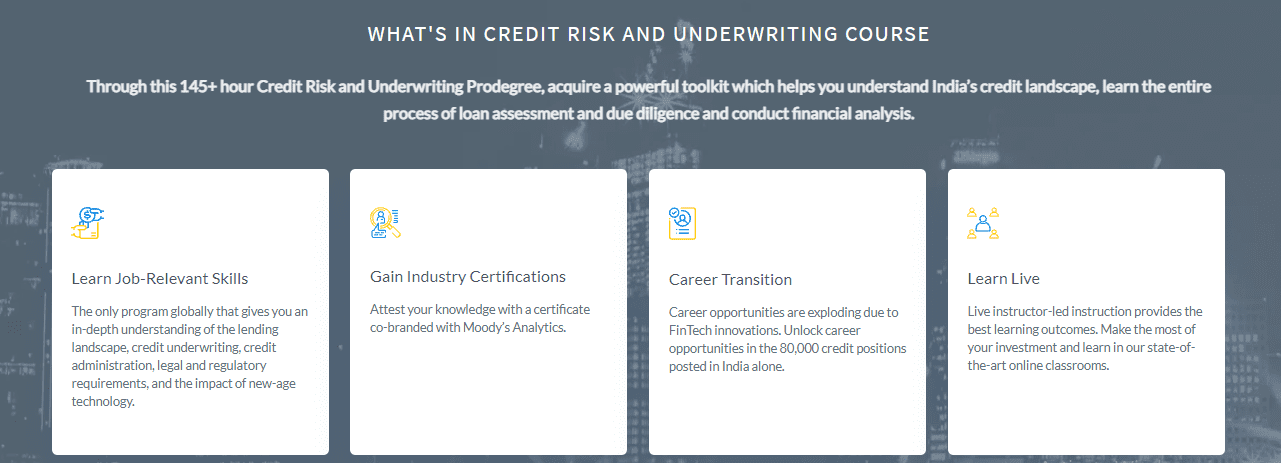
The CRU-PRO degree we offer enables you to acquire the theoretical and technical knowledge to enable you to perform as a specialist in any scenario. When you enroll, you will have to take a series of courses such as credit risk management courses, credit analyst courses, credit risk modeling courses, and more with the most qualified teachers during 14 weeks. You will also have to complete 5 case studies to check that you have acquired all the knowledge and skills you have learned during the program.

credit risk analyst course What Else do I Get When I Take a CRU-PRO Degree?

With our CRU-PRO degree, you also have access to our career service, which will accompany you all the time to improve all kinds of skills so that you have a complete education at the end of the program. This service will help you build a professional profile that corresponds to what is sought in any job offer. As well, we will also help you prepare for the different types of job interviews. We can assure you that by the end of the program, you will have the knowledge and confidence to become a financial risk specialist.

 What Can You Become?

Some of the different positions you can aspire to after completing the program are Operational Risk Manager or Credit Risk Manager. You may also have the experience to become an Investor or start in a Credit Financing Manager position.

 Conclusion

With this program, you can add great value to your professional profile as you will have theoretical and technical knowledge about risk management.

In addition, you will be aware of all the current most efficient methods using the latest technology to detect credit risks. Upon completion of the credit risk management course, you will have an industry-approved certification that will allow you to showcase the knowledge you have acquired and will open many doors to all kinds of job offers.

Equity Research Analyst: Enhance Your Career Portfolio with This Most Sought-after Profession

In today’s era, financial decisions by businesses and investors are taken only after conducting proper research. Financial decisions can include investing in a company or opting out of a share/stock. There is no limit to financial decisions that can be encountered by businesses and investors.

To decide whether a financial decision is beneficial or not, equity research is performed. You can also build your career as an equity research analyst and work with the top organizations. Read on to know more about making a career as an equity research analyst.

best equity research analyst courseUnderstanding the role of an equity researcher 
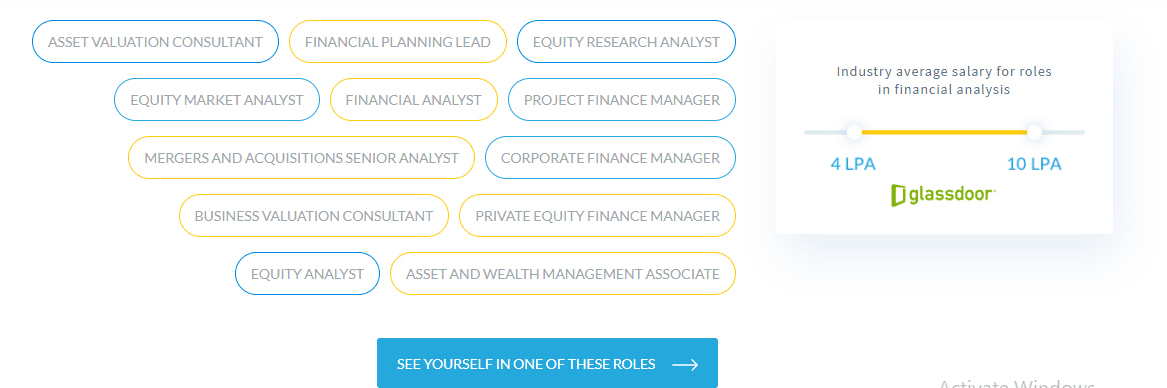
An equity researcher is responsible for carrying out an analysis of a firm, stock, or any other type of financial entity. The information produced by equity researchers is then used by investment banks, shareholders, and companies to make better financial decisions.

For example, investors perform equity research to know which investment ventures will provide a huge return in the future. Companies value a project with the aid of equity research to make sure it is beneficial. In short, equity research is the valuation of a company or a venture/project.

An equity research analyst performs the following tasks for its organization/client:

  • An equity researcher has to develop a company portfolio that will be used to generate capital from investors. Company portfolio will be the ideal documents used in investment meetings and IPOs.
  • An equity researcher develops financial models and calculates the estimated income, cash flow, revenue, and returns of capital.
  • An equity researcher monitors the market situation continuously and provides updated reports to investors. Based on the generated reports, investors can then make better decisions.
  • An equity researcher evaluates the financial position of the firm in comparison to its competitors. This also predicts the growth of a company based on current performance and trends.

How to become an equity researcher?

You will have to learn the basic skills of financial analysis and modeling to become a successful equity researcher. Colleges in India do not offer a designated course for equity research. It can be included as a subject/topic in a traditional college course. For learning financial analysis, you may have to opt for the complete degree program. Also, the recent COVID pandemic has made it tough for colleges in India to conduct classes.

Nowadays, students are leaning towards EdTech platforms for financial analysis courses. You need to select an industry-oriented financial analysis course that could make you job-ready. Imarticus Learning is a reliable source that can help you in building a successful career as an equity researcher.

Why choose the financial analysis course from Imarticus?

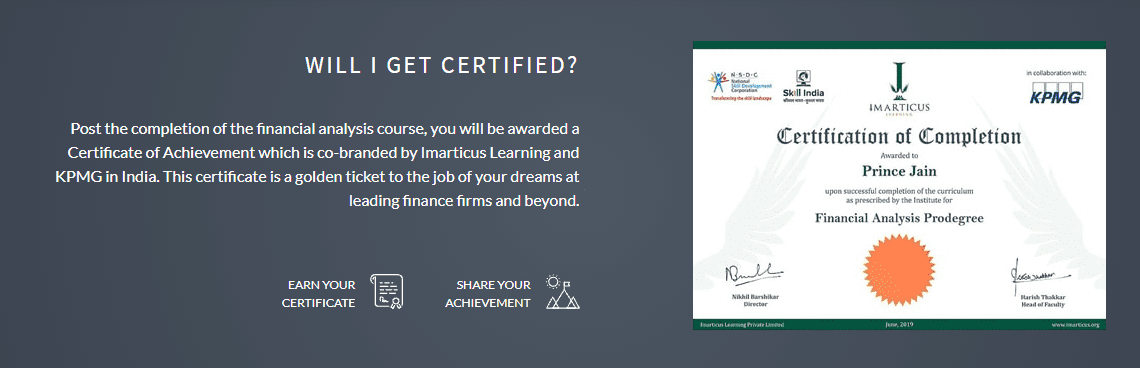
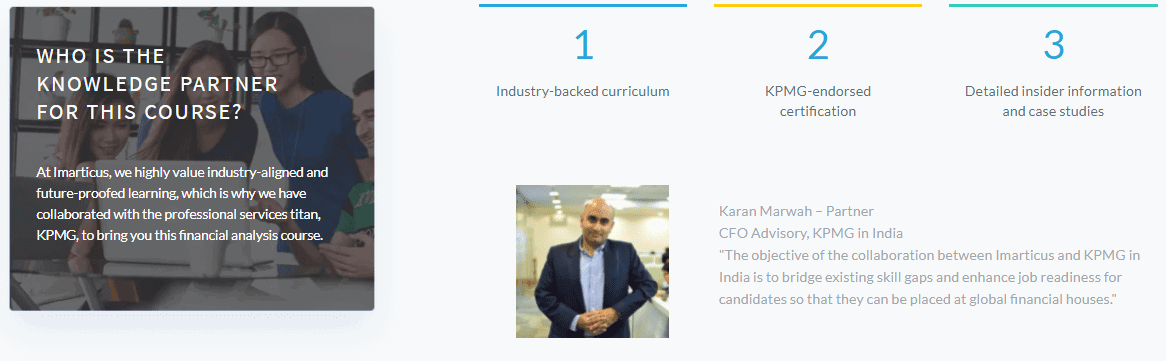
 The Financial Analysis Prodegree offered by Imarticus is endorsed by KPMG, a leading accounting firm in the country. The pros of choosing the financial analysis course of Imarticus are listed below:

financial analyst course

  • This course will help you in an easy career transition and will make you job-ready. Imarticus has successfully transformed the career of more than 2400 enthusiasts.
  • Six real-world projects offered by this course to students make it one of the best financial modeling courses in India.
  • A KPMG-endorsed curriculum will ensure that you learn the job-relevant skills and common practices in the industry.
  • Most of the financial modeling courses do not provide tech-enabled learning. This course will also introduce you to the tools and technologies used by equity researchers in the industry.

Conclusion 

financial analysis prodegree courseImarticus will help you in learning the concepts of equity research from industry experts. With a practical learning approach, you will learn equity research techniques by performing them in real life. You will obtain industry certifications during this course that will enhance your credibility as an equity researcher.