How Blockchain is Changing Banking Industry?

Understanding Blockchain

In simplest, blockchain can be understood as a digital ledger that keeps a record of transactions of high economic significance and it cannot be manipulated or corrupted.

So how’s that possible? Well, the construct of blockchain is such that any data is store on thousands of serves and everybody who has access to that blockchain can find out about any changes made to the document. Firstly, it doesn’t allow changes on a later date and secondly, it keeps track of all the activities carried out on that digital ledger.

Blockchain trainingBlockchain courses in banking uses a distributed ledger system that is highly decentralized and shows all information and updates in real-time to all the users that have access to a particular block.

Each block in the blockchain carries the number of transactions and a new record is formed when new transactions are recorded.

One of the most prominent and oldest uses of the blockchain application was evident in Bitcoin that is a cryptocurrency using blockchain technology to facilitate transactions. Since then, there have been many new applications of blockchain technology.

 Blockchain in Banking

The blockchain technology is still in its nascent stage and there is much to be discovered about this technology. Bitcoin introduced the blockchain technology to the world but its tremendous potential led to new applications of this technology and opened new avenues for growth using blockchain.

Businesses in multiple industries are using the blockchain technology to reach new markets and boost profitability. One of the industries that have drastically transformed with the advent of this powerful technology is the banking sector.

Let’s delve deeper into how blockchain is helping the banking industry to overcome the challenges.

  1. Quicker Transactions

In the contemporary digital era, customers are used to faster services that don’t take more than a few minutes to materialize.

Blockchain Training in BankingNow one of the major challenges faced by the traditional banking systems is that it takes more than the necessary time to settle financial transactions carried out between two parties. The average time taken earlier was between 1to 3 days.

This processing time will not be entertained by customers in the present. Blockchain is a highly decentralized technology that eliminates mediators to verify and process the transactions. Banks can effectively use blockchain to reduce their processing time and enable faster transactions.

  1. Fraud Detection & Enhanced Security

The traditional banking system is full of loop-holes that are used by cybercriminals to leak vital information, hack bank accounts and carry out fraudulent transactions.

blockchain Training in BankingIdentity theft is also a common problem in the modern digital age. Banks need better protection against these cybercriminals to detect fraud and eliminate the chances of data leakage.

Blockchain solves this problem to a great extent as it uses cryptography and decentralized system to record financial data.

This minimizes the probability of data leakage and manipulation to a great extent. This makes blockchain indispensable for the banking system when it comes to securing financial transactions and vital data.

  1. Better Data Quality

Data quality improvement is certainly one of the most important benefits of using blockchain technology in banking. Traditionally the banking related data was stored by banks in multiple locations with different parties having access to each.

Blockchain Training in BankingThis allows easy data manipulation without any repercussions but given the blockchain highly decentralized structure it is almost impossible to manipulate data without being caught.

Systematic storage of data without any user-bias makes it more authentic and helps banks to better target customers and increase their profitability. It also instils more accountability in the whole banking process.

  1. Cost minimization

Yet another important benefit of blockchain that has been changing the banking industry drastically is its cost minimization benefit. The traditional banking system involves a lot of intermediaries to process and facilitate financial transactions.

Blockchain Training in Banking

Blockchain helps to remove all these unnecessary financial intermediaries and reduces the cost drastically which resulted due to increase involvement of middlemen. Smart Contracts are being used by banks to reduce administrative charges and enforcing contracts.

A smart contract automatically executes and enforces legal actions as per the terms and conditions of the contract.

  1. Better Financial Inclusion

Financial inclusion has been a major challenge, especially in developing countries where there is a high population living below the poverty line. These people fail to open a bank account or avail other financial services due to high fee and associated costs. Blockchain technology eliminates all irrelevant mediators and helps to drastically reduce the cost associated with carrying out financial transactions.

This will help more people to avail banking-related facilities and help bring more financial inclusion. In addition to this, it also helps small players in the industry to compete against the big banks and gain a fair share of the market. Blockchain in the digital age will surely boost financial inclusion.

Banking has always been a preferred career option for the majority of people who want to build a long-term successful career with rewarding perks. A career in banking today requires more than just traditional banking skills.

One can opt for the Imarticus banking course to obtain knowledge and skills relevant in the contemporary banking sector.

It will help to boost your job prospects and give you an edge over the competition. Imarticus banking training also guarantees job assurance with the most reputed players in the banking industry.


Best Practices For Personal Financial Management At Different Stages In Your Career!

Managing finances is something no person would ever be able to avoid. Technically, you may think that money management is for late adulthood. However, it is essential to instill good money management habits from the get-go.

An important thing about financial management is that its importance scales up as you age. This means that the ways in which you were to save up on your spending would differ drastically if you are in your early twenties or in your late sixties. Managing your personal finances becomes crucial and a Finance Career can help develop this managerial skill.

A New Age Banking Course provides all the education on self-financing. That’s why we have carefully curated these best financial practices for every stage in your career.

Money Management in your career:

Early-stage in your career:

The early stage in your career helps you lay the foundation of your life. It is seen that money management usually takes the back seat in this stage as people are driven by their wants. A good financial management practice would instigate you being driven by your needs instead of your wants.

New Age Banking CourseInstilling the habit of saving up funds for emergencies or for the future while curbing on your ‘wants’ has proven to be a tried and tested strategy for financial management. If you are deciding on buying something expensive, try to think if you would use that product even 3-5 years from that time to check if it is a necessity or a luxury.
Reaching the happy middle point:

You typically would be in your late thirties when you would reach the midpoint in your career, and chances are you would be making a lot more money than when you had just started earning. However, your liabilities would also most certainly grow. You probably would be married and would have children to look after, marking the end of your carefree days. In such times finding yourself in financial peril is not uncommon.

We believe with rigorous routines and disciplined spending, you would be able to avoid all the hardships that life would throw at you. You should maybe expand your savings to cover a good chunk of time in case anything happens with your source of income. You should also try to have no mortgages, loans, etc., by the end of your forties. Along with your income from job, you should have a side investment pool like passive incomes that can help you sustain.

Also, starting a retirement fund would be a great decision at this stage.

Late career:

Typically, you would be in your fifties and considering your future options during the late-career stage, you could choose early retirement, or you could work even after retirement. You would probably be undecided at this stage. However, one certainty should be that you should have a surplus amount saved by now.

You should also have life insurance and other things in place to help your future generations as much as possible. At this point, one should also strive for financial independence. Even when you retire, you should have enough funds to see you comfortably to the end.


Conclusion:

Life is very uncertain. There will be some really amazing days and some not so good ones. While it is important to have fun, it is equally important to have monetary discipline. Ask someone with a Finance Career for help or check out a New Age Banking Course for personal financial development.

Hands-on Linear Regression Using Sklearn!

Linear regression in Machine Learning is a kind of analysis where there are both dependent and independent variables. Their relationship is depicted here by a linear line from the provided data. This technique is mainly used for predicting the results.

The data and the values from the linear regression are used to find the Mean Squared Error (MSE) to change the values of the variables so that they have the least value possible and get the most accurate results.

While there are several tools that are usually used for linear regression Sklearn is one of the popular tools.

What is Sklearn?

Sklearn is the short form for Scikit Learn which in Python Language, an open-source ML library to help unify the various tools of algorithms in machine learning.

Linear Regression trainingSklearn precisely works as a one-stop solution that helps with importing, preprocessing, plotting, and predicting data.



Its versatility, powerful nature, ample documentation, and active nature make it one of the popular toolkits in ML.

Linear Regression in machine learning

Linear regression comes at the last stage of the ML processing. Though there are several tools for the same, Sklearn is used more because of its versatility. When there is a log of consistent data it is easier to predict future patterns. The various steps towards the implementation of linear regression are,

  • Loading the data or object from its source
  • Training the model results in dividing the data into dependent and independent variables.
  • Later it is split the data into train and test sets.
  • It is the test set that will be used for the predictions.
  • Explore the results to find the suitability of the data for linear regression. A low accuracy data shows the non-compatibility of data to this.
  • Narrow down the data to a smaller portion and repeat the same steps above.
  • Now the data should be able to show the MSE which can be used for better predictions.

Importance of Linear regression 

Linear regression is important as it determines the accuracy of the prediction from the data given and also finds out the predictors that are significant for better results.

Linear Regression Training in Machine Learning

It is useful in determining the power between the dependent and independent variables such as sales and expenditure, or in the case of health care dose and its effects on the body, etc.

Analyzing the regression model explains how much the variables do change with respect to each other. Forecasting weather or its impact and changes is a fine example of this application. In the case of sales and marketing, it explains how much increase is possible in income with a specific amount of expenditure.

Finally, it is one of the main tools for predicting future trends and possibilities. It can be used for a future prediction of any time span. Linear regression using Sklearn provides a near-accurate prediction of the values.

In addition, there are different types of linear regression – simple or multiple linear regression. Each type is suitable for a different purpose or type of data available.

Conclusion

Its possibility is too vast that it requires proper Linear Regression Training to use the best data for getting the most accurate output. Once learned it is easier to predict data and values in the fields of sales, marketing, financial assessments, insights into consumer behavior, risks in finance or loans, etc.

As already mentioned, the accuracy of the prediction highly depends on how compatible the data is for the linear regression model. The Sklearn method is a far better option to determine the same and can provide the closest values to help with a better prediction model for the business.

How Can I Start Learning Finance and Accounting

Understanding Finance & Accounting

Financial and accounting are the two pillars on which the banking and finance industry operates. All major financial work carried out can be grouped under these two disciplines. People are often confused about the purview of finance and accounting. It is often used interchangeably by people who are not familiar with the scope of each discipline. So what is finance and accounting and how do they differ?
If you are looking for a simple answer you can follow this approach; the finance discipline deals with the future monetary prospects whereas accounting deals with the financial transactions that have already taken place in the past. Accounting is more focused on recording and maintaining financial data whereas finance deals with raising funds and projecting future income from a business or project is undertaken.
Accounting is necessary for any business entity as it helps to maintain vital financial transaction-related data and allows introspection into the company’s finances. It helps to identify irregular and fraudulent transactional data. Moreover maintaining proper accounting records are mandatory for most of the businesses as per the laws. Finance, on the other hand, has a much broader scope and entails long term management of asset and liabilities in the business.

Learning Finance & Accounting

Now that we have a fair understanding of finance and accounting, let’s explore how we can learn finance and accounting effectively and efficiently. One of the most basic things to keep in mind before learning finance and accounting is to know the purpose of your learning. Why do you want to learn finance and accounting? This is an important question that you need to address before learning finance and accounting as it will help to guide you better on your educational journey.

The approach you take to learn finance and accounting is majorly influenced by your purpose of learning. If you just want to add some knowledge then you can pursue a different route than if you want to learn it for getting a job in the financial domain. Secondly, it depends on what stage of life or career you are at. If you are just in school then you have the advantage to build your foundation from the beginning.
If you have completed your high school and aiming for graduation then you can choose a relevant undergrad degree such as Bachelors in Commerce. This will give you a fair advantage if you want to get a job just after completing yours under graduation. You can supplement this knowledge by enrolling for finance and accounting course online, this will help to provide you with an edge over the competition and also help to clear your concepts on a deeper level.

Coming to the third scenario where someone is already doing a job and want to boost their prospects for finance or accounting job. In this case, the best thing to do is to opt for an online finance and accounting course. So why is this best option? Well, the first reason is that it allows you to learn at your own pace and convenience. Secondly, you won’t have much time to spare if you are already working at a job and this course will give you much more flexibility as it is very precise and don’t beat around the bush.

Finance and accounting course can teach you the specifics that you are unaware of, you can choose the topics that you want to learn as per your requirements and skip through the others. It has a more personalised approach to teaching the subject and focuses on individual requirements. You can also learn finance and accounting by following YouTube channels related to the field if you are looking for a quick and cost-effective solution. If you want professional qualification then you can opt for specializations like CFA, CA, FRA, etc.

Will an MBA Help You Become an Investment Banker?

Investment Banking as a Career

The investment banking industry offers one of the most lucrative and rewarding career prospects for individuals aspiring to make a mark in the finance industry. So what’s so lucrative about the job that so many people want to join it?

Well, at first glance, the remuneration certainly seems like the cherry on top and that makes it far more lucrative for those who want to make a fortune for themselves.

Most of the people who aspire to become investment bankers are unaware of the work it takes to survive in this industry, let alone thriving. If you are dedicated and hardworking with good financial acumen and social skills, you will certainly go a long way in this sector.

best Investment Banking courses with placement in IndiaThose of you who are only charmed by the high-profile deals and monetary benefits and not the work won’t survive in the long run in the investment banking sector. The role of an investment banker is very dynamic and involves overviewing a lot of things.

From networking with your clients and industry experts to researching and conducting complex financial analysis, there’s a lot that you need to do for being a successful investment banker.

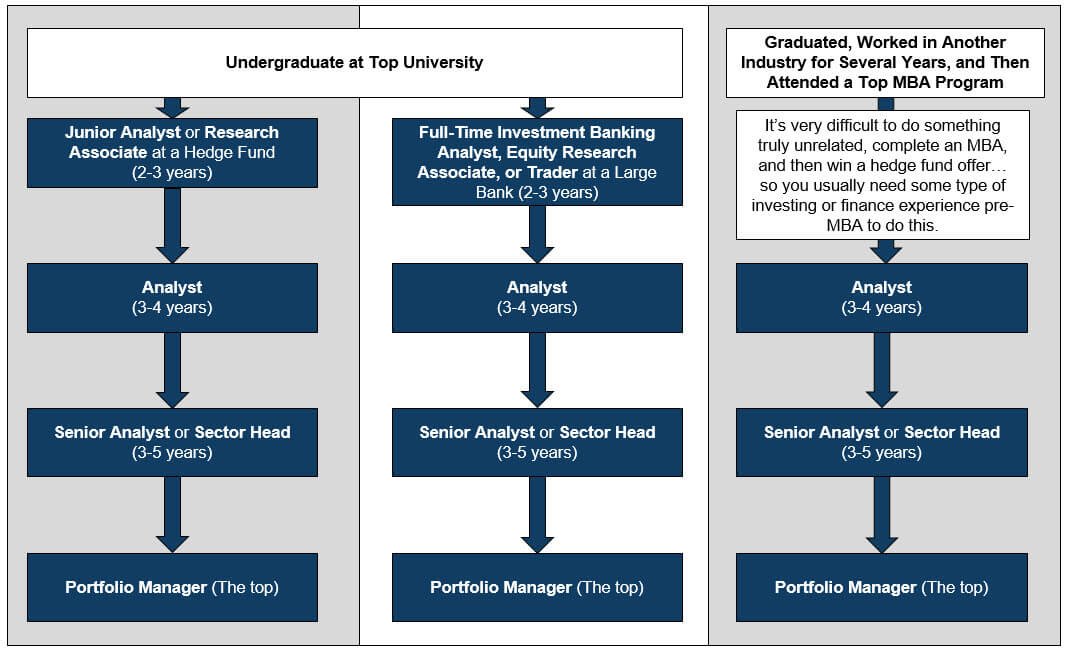
It is certainly one of the best choices if you are passionate about finance and investing and won’t mind working 60-70 hours per week. One of the most mainstream questions is how to become an investment banker and will an MBA degree help or not.

Let’s delve deeper into the subject to obtain a comprehensive understanding of the matter.

Will an MBA Degree Help?

So coming to the big question, will an MBA degree help you break into the investment banking industry? Is it worth getting an MBA in investment banking? Well, at first glance, yes, an MBA degree surely improves your chances of getting into the investment banking industry but it’s not a necessity in many cases. If we go deeper into addressing this question, the answer is very subjective and highly varies from person to person.

There are a lot of factors that count when getting into the investment banking segment. First and foremost is your educational background, it has a huge role to play as it helps to establish your foundations. So, let’s take an example, there are two people named A & B. A has always been driven towards business and commerce and has an educational background in the same domain. B, on the other hand, has a technical background and pursued engineering.

best Investment Banking courses with placement in IndiaLet’s say A pursued an undergraduate program in Business Administration or Commerce. The chances of A getting a job as an investment banker straight after completion of this under graduation program is higher as he is already aware of the basics of investment banking.

Comparing it with B who has a technical background, A will surely beat B if they both are to apply for an investment banking job in most cases.

B can now improve his/her chances of getting a job in an investment banking firm by completing an MBA degree in Finance as it will fill up the knowledge gap, A too can opt for an MBA and improve his chances further for getting a high profile investment banking job.

So, there are two aspects to this whole scenario, first, what type of job are you looking for? Is it an entry-level or a high-profile one? Secondly, what is your educational background? Have you completed any investment banking courses?

So if you are looking for an entry-level job and you have a relevant educational background then you don’t need an MBA degree to break into investment banking. However, if you are looking for a high-profile job then an MBA degree will surely help as it adds more credibility to your profile.

In case you don’t have a relevant academic background and you are looking to switch from a different industry, an MBA degree will surely help your cause. If you are short on time and monetary investment then an investment banking course will help you land a decent job in this industry.

Credit Risk In Finance

Understanding Credit Risk

Credit risk can be defined as the probability of the occurrence of loss on account of the failure of any entity to abide by the contractual obligations. If that was a little technical for your understanding let’s simplify it a bit here; to put it simply credit risk is the risk of loss that might occur if the borrower fails to pay the loan amount. The risk involved here includes lost principal and interest amount, major disruptions to the institution’s cash flows, the huge cost of collection. A borrower failing to repay the loan is just one of the many aspects of credit risks. There are different types of credit risks, such as concentration risk, country risk, etc. Let’s get some clarity into these two different types of credit risk.

Concentration Risk

Concentration risk can be understood as the risk of loss that might occur when a financial institution or business has limited its operations to some specific industries or businesses. Any economic downturn for that particular industry or business might lead to heavy losses for the financial institutions. It is advised to keep a diversified portfolio to hedge this risk by offering services to businesses across multiple industries.

Country Risk

Country risk is the risk of loss that the financial institution or the lending party might incur when they have operations in a specific country that might not have institutional stability. Country risks can be due to various macroeconomic factors specific to the nation such as political instability or feeble institutions & incompetent regulatory bodies, etc. The changes in the business environment can lead to a reduction in profits for the lending party.

How to calculate Credit risk?

Now that we have established what do we mean by credit risk and two different types of credit risks, let’s see how credit risk is actually calculated. One of the simpler calculations for credit risk is in the form of the expected loss. There are three components to the expected loss formula, the probability of default, exposure amount at default, recovery rate (one minus loss given the default). Let’s take an example to understand this calculation better.
Expected loss = probability of default* exposure at default* recovery rate (1-loss given default (percentage))

Example:

Mike borrows an amount of $100000 to start a business. In the next year of its operation due to some macroeconomic challenges, the business failed and Mike was unable to repay the bank. If the loss given default is given as 60% and the probability of default is given as 50% calculate the amount of expected loss.

Probability of default = 50%
Exposure at default = 100000
Recovery rate= 1 – .06 (loss given default) = .40Expected loss = 0.50*100000*0.40 = 20000

What is a Credit rating?

The process of credit rating can be explained as an assessment of the borrower’s profile while lending them credit to, credit rating helps in computing the ability of the borrower to pay back the debt and the probability of loss or degree of loss associated with any specific borrower. Credit ratings are provided to both individual and institutional borrowers. The credit rating agency does a thorough analysis of the borrower’s standing on the basis of the documents provided by the borrower and other relevant non-public information regarding the borrower obtained with the help of analysts.

Conclusion

Credit risk can be summed up as the loss incurred due to the borrower defaulting on his debt commitments to the lending party. There are multiple types of credit risks suck as country risk, concentration risk, etc. A simple way to calculate credit risk is through calculating expected loss which takes into account factors such as the probability of default, exposure amount and recovery rate.

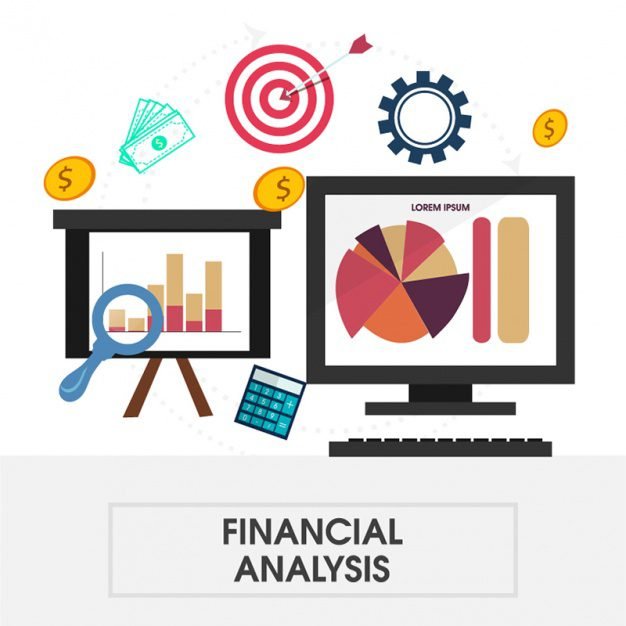
What is the Financial Analysis and Planning Process?

Companies are dynamic bodies. Companies also operate in dynamic work environments. Therefore, it is essential to keep a check on various aspects of a business, including the financial as well as the planning process. Financial analysis is an integral part of any business. It should be conducted with the utmost precision and care as it determines the viability of the company. Financial analysis, as well as planning, are considered to be fundamental tasks when it comes to running a business. You can also take up an economic analysis course to understand how the process is conducted and what things have to be taken care of. There are different steps involved in the financial analysis and planning process of a company. The planning is done to achieve both short term and long-term goals of a company. Also, profitability is the primary goal any company wants to achieve. The financial analysis and planning process is aimed at attaining the profit objective of the company.

Forecasting

It is a critical step in the financial analysis and planning process. Planning for the future is a vital element for any company. Forecasting is that tool which does planning for the future possible. A financial analysis course will help you understand how businesses forecast and make decisions. Forecasting helps in building or formulating a sales strategy which will take into consideration all the future possibilities that can arise at any point in time. Both internal and external conditions are taken into consideration while forecasting results and possible courses of action. Tools like Hyperion Planning can be used to conduct the forecasting process efficiently. Here, the past trends are also taken into consideration to come up with predictions.

Budgeting

Budgeting is a crucial step in the planning process. You need to take into consideration the planned expenditures before actually incurring those expenditures. Budgeting for fulfilling the short term and long-term objectives of a company is a fundamental process. Budgeting is done to assess what kind of spending is coming your way. Budgets are prepared after considering the past trends as well as taking future requirements into account. A yearly budget is ready, and then it is segregated to monthly charges were recurring, and one-time expenses are segregated and recorded. This is done to understand the financial requirements of the company.

Reporting

Reporting is another important aspect of the financial analysis and planning process. Recording every financial transaction is an essential step that needs to be followed by every company. Financial reporting is done keeping in mind the interests of both the internal and external shareholders. Internally, managers need to know the financial position and standing of the company. Managers also want to see the profitability of the company, and that makes reporting important. When it comes to external sources, financial reports are used for competitor analysis. Also, auditors require financial information to understand how the company is performing and even if the company has recorded every incident responsibly. Investors also want to go through the financial data of the company before investing in the company.

Analysis

The analysis of financial statements is a significant step in the economic analysis and planning process. Analysing the expenditure and investment patterns is very important for a company. If a company overspends, there is a strong need to understand why such a cost has occurred. A complete analysis of all factors is required to realise the controllable and uncontrollable elements that are driving such expenses for a company. The financial analysis also involves calculating ratios and understanding the overall position of the company

How to choose the best machine learning & AI course?

The artificial intelligence and machine learning courses are becoming extremely popular, with many of the best universities offering degree programs in this field. It is not surprising that these courses are becoming more popular as they cover a wide range of topics.

For example, artificial intelligence includes computer science, engineering, and psychology, while machine learning covers artificial intelligence algorithms like neural networks. This blog post will help you understand what the artificial intelligence & ML course entails before taking one of these courses.

What are Machine Learning and Artificial Intelligence?

Machine learning and artificial intelligence are some of the most trending topics in this decade. Machine learning is a subset of artificial intelligence that focuses on studying artificial systems that can learn from data without being explicitly programmed. On the other hand,

Artificial Intelligence is a branch of computer science that deals with making computers do things that would typically require human intelligence, for example, playing chess or driving cars. So why should you take up AI & ML courses? Let us find out!

The AI & ML courses are essential for anyone who wants to be at par with today’s world technology. There are many companies hiring people who have these certifications in their resumes. The scope for students taking artificial intelligence or machine learning courses would be high because there has been an increase in demand for these skills set by top companies worldwide! It is not surprising that students with a degree in artificial intelligence or machine learning have a bright future ahead of them!

AI & ML Courses – What to Expect?

If you are planning to take up AI & Machine Learning Certifications, then there are various things that you should know before making your decision. Short-term certification programs are available for people who want to gain expertise at the workplace but do not have time for full-length online classes. Some considerations to be made when choosing a machine learning course:

best ai and ml courses from E&ICT academy, IIT GuwahatiPerformance: The quality of the course’s results is a fundamental factor, and one must prioritize algorithms that maximize performance. Depending on the issue, different metrics can help to analyze the results of the course. Selecting an excellent metric to evaluate course performance is a crucial task.
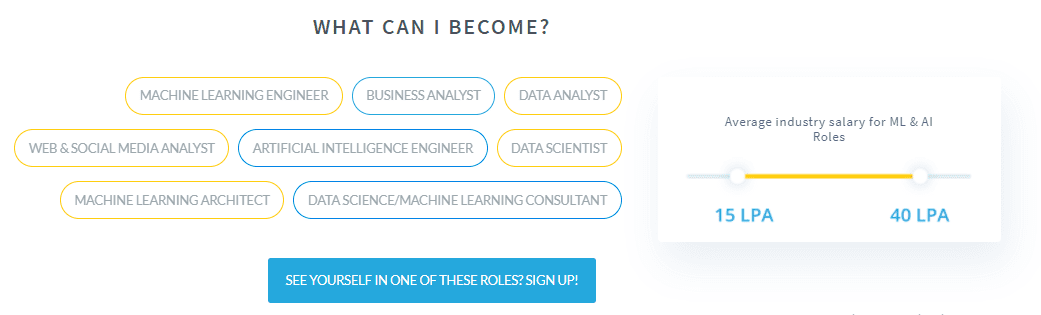
Explainability: In many scenarios, briefing the results of a course is paramount. Many algorithms work somewhat like black boxes, and the results can be hard to explain. The lack of explainability can be a breaker of situations. Understanding the level, of course, can help to interpret the result and let one choose the best!

Complexity: A challenging course or model may probably find more interesting patterns in data, but at the same time, it can be challenging to maintain. More complexity may help you better perform in specific fields. A complex setup may increase the impact on the entire learnings of the course.

Training time and cost: How long does it takes, and how much worth do you need to bear for the course? Some courses need to incorporate new knowledge in near real-time, and they can’t afford long training cycles. Balancing time, costs, and performance is crucial when designing a scalable solution.

Grow and Learn with Imarticus Learning:

Imarticus Learning offers 9-months extensive program that helps you prepare for the Data Scientist, Data Analyst, Machine Learning Engineer, & AI Engineer roles.

best artificial intelligence and machine leaning course from E&ICT academy, IIT GuwahatiThis E&ICT Academy, IIT Guwahati artificial intelligence course will bolster your foundational skills in Artificial Intelligence and goes a long way towards helping you unlock lucrative career opportunities in the coveted fields of Artificial Intelligence and Machine Learning.

best artificial intelligence and machine learning courses from E&ICT Academy, IIT GuwahatiWhat’s Unique About Our Artificial Intelligence & Machine Learning Program?


  • Cutting-Edge AIML Curriculum & Certification By E&ICT Academy, IIT Guwahati
  • The objective of this Certification Course is to prepare students for AI/ML job roles perfectly.
  • Students learn real-world ML & Deep Learning skills through multiple business projects.
  • Learn By Doing What AIML Engineers Do in Real-World Scenarios

For further details, contact us through the Live Chat Support system or visit our training centers in Mumbai, Thane, Pune, Chennai, Bengaluru, Hyderabad, Delhi, and Gurgaon.

Marketing of the Future: How Data Analytics is Changing

The corporate industry is ever-evolving, and even more so when it comes to data analytics. From standard out-of-the-box reports to a tool operated by digital mediums, it has come a long way. In the past, it was mostly a way to decipher and keep records of bygone trends, but now it has turned into a tool that helps you predict future trends.

It even helps you understand your target customer better through their online habits. And as daily life gets more and more virtual-oriented, the need for machine learning and AI-oriented data analytics will keep growing. So will grow the number of positions for good data analysts.

Here, you have a chance to learn data analytics with Imarticus Learning’s new PG program to enhance your skills to the max.

Coming back to the evolution of data analytics throughout the years, there are a few major changes that need to be addressed. Such as the shift to digital analytics from standard reports, as well as live AI reports and alerts.

Digital Analytics from standard reports

 The major difference that has gained traction in the last few years would be how virtualized the data analytics industry has become. In the past, most of the analysis process was done through tool-generated out-of-the-box reports which today are almost out of date. Now the main focus has shifted towards reading the targeted customer’s habits and needs and forming strategies to cater directly to it.

It becomes a lot less hassling on both parts as instead of guessing you’re actually finding out what your client needs and providing solutions for it. Now with the change in how data is extracted and processed the job of an analyst has also evolved. This is one of the reasons why data analytics courses in India have been getting more and more popular in recent years.

 Live AI reports and alerts

 Another system that has become immensely popular is live AI reports that alert the clients to any ups and downs in trends. This helps them to develop quick strategies to respond to the changing trends. Not just that, the sources from which data is generated have changed drastically. Not just real-time market trends, data today can be sourced from online retails, social media, intelligence tools as well as pop-ups and advertising platforms.

The bandwidth of data has increased and along with it, the variety, responsibility, and positions of a data analyst job. As this process evolves more the scopes will increase even more in numbers. This is a good time to enhance your skills if you are thinking about career prospects. There are many institutes that offer good data analytics courses in India that might suit your preference. However, there are few things you should keep in mind when it comes to data analytics:

  • Many companies are venturing into exploring open-source software, but the majority is still using business analytics tools and visual analytics.
  • Data analysis has become a part of our daily lives. As a result, new and faster ways to generate data are coming out that need higher levels of skills.
  • The industry is constantly evolving, so it is necessary to always be top of your game as a data analyst.

Conclusion

Data analytics is one of the careers that has a firm base. More and more opportunities are going to open up in the future. This might be a good time to learn data analytics with a proper PG program that will help your career bloom.

Five painless Instagram Marketing techniques to kickstart engagements

best digital marketing courses in IndiaAs a professional, it’s imperative to stay up-to-date on the latest marketing trends. One trend that has remained steady over the past few years is Instagram – it is the best social media site out there!
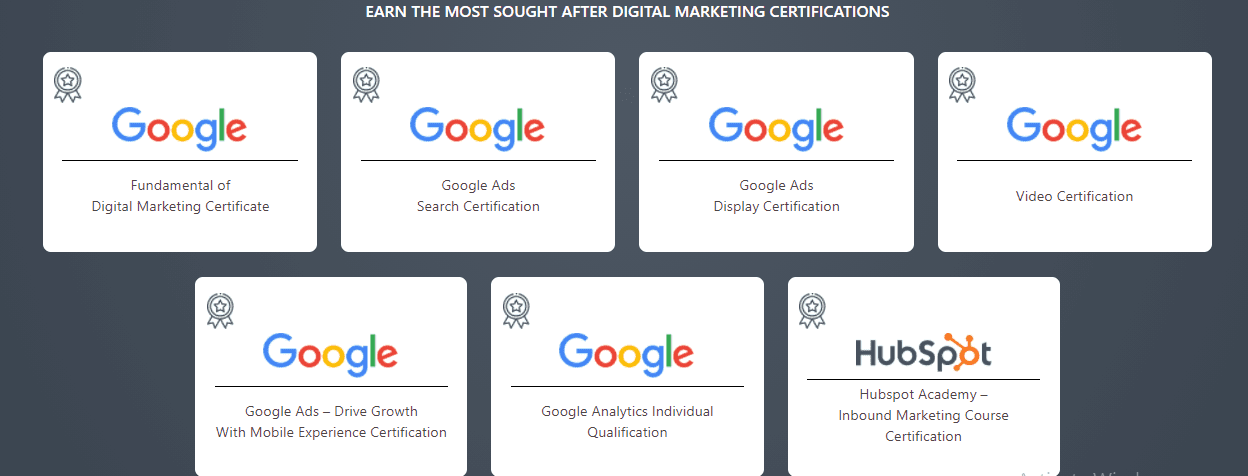
For this, students must learn SEO courses online and Social Media Marketing courses, which will enhance their skills and help them grow as the best Digital Marketer.

The site has around 1.16 billion monthly visitors. Customers spend roughly 8 minutes on the app, and 500 million people use Story every day. This blog post will explore five painless techniques marketers can implement to kickstart engagements with their target audience.

Five painless techniques to kickstart engagements

1. Post right hashtags in captions

Adding hashtags when posting about a topic on social media is vital because it gives posts more visibility and a whole new audience. Choosing the right hashtags for Instagram posts might make a big difference between being at the top of the feed or disappearing altogether.

  1. Get creative with your hashtags

If one is using the same hashtag repeatedly, people are not likely to click on it. Instead of adding the same vapid hashtags time after time, come up with something new by asking a question or posting an opinion – that’s what is trending in Social Media Marketing today.

  1. Use emoji hashtags

Instead of using the hashtag, try adding an emoji. It is a great way to give post character and stick out from the posts with only words. In addition, it’s another technique on how to get likes and comments!

  1. Schedule your posts

Yes, this won’t be very creative, but it’s an effective way to get your posts out there! Social media platforms are notorious for having a lot of clutter on their feed, so whenever you schedule your posts, you can skip the rush and have them go live at a time where they are more likely to be seen. Just make sure that if you’ve added hashtags in the caption, they don’t get cut off when you schedule your post.

  1. Cross-promote on Social Media

By cross-promoting your other Social Media Pages, you can get more views and build a larger audience for yourself, eventually leading to more engagements. For example, if you start an Instagram profile for your business but do not have any followers, go to your Facebook Page and share a link to your Instagram profile directly on your Timeline.

By following these five painless techniques to kickstart engagements, you can see your page get more attention, and it will help you get even closer to reaching your Social Media Marketing goals!

Enroll in a Digital marketing course online with Imarticus Learning

Imarticus Learning works on a simulated journey explicitly created for students and will allow them to use their theoretical knowledge in a real-world setting.

The student will get a 120-hour curriculum with practical projects and in-depth learning, making their program the most important Digital Marketing course online. SEO course online and social media marketing course also enhances student’s skills for digital marketing.

best digital marketing courses in IndiaSome course USP:

  • The course lets the students learn skills that prepare them for an exciting Digital marketing career.
  • Impress employers & showcase skills with a certification endorsed by India’s most prestigious academic collaborations.
  • World-Class Academic Professors to learn from through live online sessions and discussions. It will help students understand the practical implementation with real industry projects and assignments.

Contact us through the live chat support system or schedule a visit to training centers in Mumbai, Thane, Pune, Chennai, Bengaluru, Hyderabad, Delhi, and Gurgaon.