How Can I Become an Insurance Underwriter?

What is Insurance Underwriting?

Risk is an integral part of doing business, the higher the risk the better the returns. This is the general rule but exceptions are always there. Risk can’t be avoided altogether; it can be reduced and hedged with certain strategies that allow businesses to function smoothly. Insurance underwriting services provided by Insurance companies helps other businesses to hedge their risk and lower their overall exposure. Businesses are required to pay a premium to insurance companies as a fee to hedge their risk.
The underwriting process help insurance companies to price the risk based on multiple variables related to the business. It is calculated based on two major factors that include, coverage provided to a potential policyholder, the probability of claim made on the insurance. An insurance underwriter is responsible for evaluating how much coverage should be given to a policyholder in case of an unfavorable event. They review the application for insurance coverage and reject or accept the application based on their risk evaluation.

Responsibilities of an Insurance Underwriter

An insurance underwriter has a huge role to play in insurance companies and there’s a lot on their plate. Broadly speaking, the role of an insurance underwriter is to identify which parties are suitable for coverage and what kind of coverage can be provided based on their risk evaluation. An insurance underwriter is responsible to dig deeper into the possible risks associated with a business or industry and review the detailed information to measure the actual risk.

They are responsible for identifying the best policy coverage that could be provided to the prospective clients, the damages that are insured and the terms and conditions of the insurance policies. They also perform the task of finding solutions that will reduce and minimize the risk arising out of future insurance claims. They also work together with the broker to help find out the best insurance coverage for the clients in case the scenario is unclear.

Underwriters are highly trained professionals who know the ins and outs of the insurance sector and the policies offered by insurance companies. They specialize in the process of risk assessment and use their extensive research and knowledge to identify if they should be covering a particular risk or not in their insurance policies. The role of an insurance underwriter is very different from a broker and should not be confused with it.

Becoming an Insurance Underwriter

Underwriting is a very rewarding career opportunity in the insurance and finance industry. Insurance underwriters are generally employed by insurance organizations or independent insurance brokerage houses. How to become an insurance underwriter can be a puzzling question. There’s no one specific course of action and it is very subjective. The very first step in becoming an insurance underwriter is to finish your graduation in a relevant field.

You can choose among business, finance, accounting, economics, commerce, etc. However, some big organizations also demand an MBA degree for insurance underwriters. So, the academic requirements differ from organization to organization but an MBA degree in a relevant field will surely boost your prospects and give you’re an edge over the competition. Insurance underwriting professionals are also required to have decent computer knowledge since all the activities are carried out on the system in the contemporary scenario.
Underwriting course is strongly recommended for individuals who want to obtain a holistic understanding of how the industry works and want to gain practical exposure to the work. You also need to work on your commination and interpersonal skills in addition to learning all about the insurance, finance and business sector. You are also required to have strong analytical skills to excel in this job. Honing your soft and technical skills will help you land up your dream job easily.

Also Read: Role of an Underwriter

Guide On How to Become Scrum Master

In an Agile organization, Scrum master is the one who holds together the process of product delivery while maintaining an easy to approach way to solve problems and facilitating for the organization, scrum team and product itself. In this process, most agile teams have a scrum master to lead the process of daily scrum meetings, in theory, practice and values. The scrum master not only leads the team but also helps out the team members in practice and manages the sprint board, retrospective meetings and the overall functioning of the team by acting like a “servant leader”.

A scrum master might have to use several tools to keep track of progress as well as the backlogs of the team from the previous sprint and priority of each of these items in the next one. There are several tools available in the market for the same, as well as scrum master certifications to help one be more confident in the role, and appear more suited for the same role in an agile organization’s scrum team.

Steps to take if you want to facilitate your scrum team’s progress by removing roadblocks

  1. Have basic knowledge of Scrum and the agile framework: As a scrum master, it is important to know the basic terminology of a scrum as well as the agile framework and the various tools that could help track the daily progress of the team smoothly. Besides the scrum master, the technical lead, consultant or product manager are some of the other functions who need to be fluent in the workings of a scrum team, ensuring that there is no communication gap within the team. Also, the knowledge of stakeholders, mediating conflicts and adaptability to change according to requirements are very big assets in positions such as these. A scrum master certification will be of a great use to you.
  2. Choose a recognized scrum certification program: While there are a plethora of resources online to get a certification done on scrum or on how to become a scrum master, you must choose one which is valuable to the organization you are planning to join. The syllabus covered for the certification and training provided, if any, are the primary things that you should check while signing up for certification in this domain. Starter certifications mostly comprise MCQ questions and cover all the basics that a scrum master would need to know for handling the responsibility of an Agile team well. Also, this becomes a third-party verification that an individual possesses the requisite skills to be a scrum master, so it is easier for organizations to judge the same while hiring.
  3. Attending a course for knowhow of the course content: Most certifications for scrum master require you to go through a training which prepares you for the examination. This requires around two days of effort along with extra reading if anyone is interested in the same. Some of the important topics are the history of a scrum, building a successful scrum team, managing backlog for your team, scrum scalability, how to build and manage teams etc. This helps scrum master tackle the challenges of implementing scrum methodology, preparing reports and to overcome any hurdles that they face as a team. Following this, you appear for the examination and get certified for securing a minimum score overall of sixty to eighty-five per cent and receive a certificate stating you are a scrum-master.
  4. Certificate renewal every two years: Since scrum is a part of agile which is an ever-evolving process, the scrum master certification expires every two years and renewal is necessary by citing your education hours and a minimal fee.

Also Read: Role & Responsibilities of Scrum Master

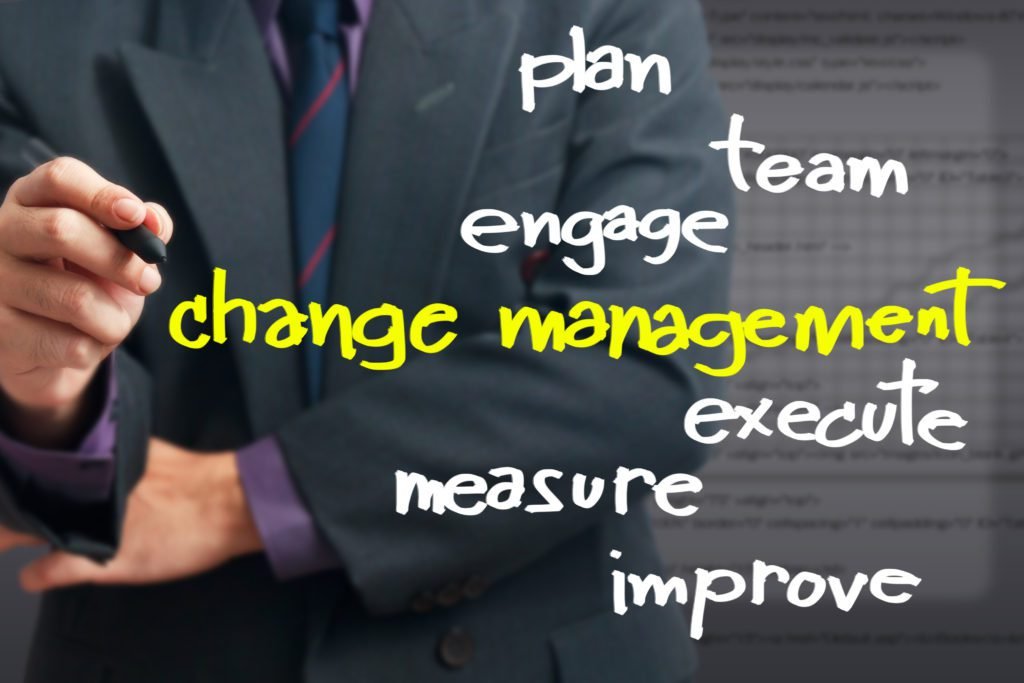
What are the Benefits of Change Management?

In today’s fast-changing world everyone wants to drive positive change in their organizations and other structures, and rightly so. Change brings in disruption in one form or the other, while that surely cleans up messy tangles and gives you better manageability, it can be tricky to keep track without being careful at every step. You might even want to consider a change management course that makes you better informed about the step you’re about to take. But why would you go through such an elaborate process if you can’t see the benefits it brings?

Benefits of Change Management

  1. Measure the impact of change and the need for it: Change is a process that requires consistent effort from everyone involved and sticking to the concept of change management for a long time. So, make sure that the change is needed for your organization and the extent to which it can affect you or other members in the direct or indirect ways.
  2. Cost management and resource allocation for change: Since you have decided to go for change, it is necessary to verify that you have access to all the resources that will be a must for effecting change successfully. The costs involved should also be clear to related departments so that the already demanding process does not get tougher for people trying to cope with the same. A change management course will give you better insights.
  3. Arrange necessary training and help for everyone: When you have figured out the change plan, the process requires people to adjust to the plan by figuring out what is required of them individually as well as on the collective front. The best way to do the same is to provide training for gaps in skill and knowledge and evaluate the progress for each of them.
  4. Ensure effective collaboration and cooperation: Even when individuals are performing at their best capacity, the total effort counts better when there is better collaboration between teams. Ensuring that the passage of information is smooth and timely is of prime importance while making sure that related teams have access to shared resources and cooperate through and through.
  5. Maintaining smooth communication: It is very obvious that without efficient communication, it will become increasingly difficult for managers to ensure that the planned change is being implemented across teams. The majority of change management courses propagate the utmost need for tools and tactics that ought to be in place for a communication strategy that works seamlessly. Moreover, it is important to know how different people are tackling change and send feedback on how they can do better or just keep doing what they are in case they have found the best measures already.
  6. Mitigate stress associated with change: When you are a manager or someone who can affect in any way how the people under you or surrounding you perform, it is necessary that you learn the areas which might trigger anxiety in people, and how you can reduce the same to an optimum level. Motivational talks, frequent gatherings to check up on people, all are ways to make sure people feel supported and ready for the challenge change management poses.
  7. Align practices with organisational values: Since people are the greatest asset even in the process of change, they must understand the values behind the change and incorporate that into their practices. This will create an environment of solidarity without trying, and push the organisation towards a more agile future for stable growth.

Also Read: What are the Types of Change Management

How Fintech Moved Successfully from Normal to Pandemic New Normal?

Fintech was expected to earn great profits in the year 2020. Unexpectedly, due to global pandemic, a paradigm shift could be seen in the functioning of fintech all over the globe.

Although it hasn’t been an easy task for many companies to survive in these testing times, the brighter side shows that for some industries, this scenario has proven to be a bit beneficial.

Unlike other sectors or industries where daily operations used to take place manually, fintech is web-based and does not require any physical interaction. This has been the sole reason that has worked in the favour of fintech in such challenging times.

The successful shift of fintech during the new normal

There are specifically some sectors where fintech operations have accelerated. Some of the positives are discussed below:

  • Continual functioning of Banking Sector

Out of all the industries, banking has been the only one that functioned without any disruption. However tough the times were, banks functioned and transactions took place.

Banking and FinanceIt has widely been seen that people have very positively accepted fintech as their new normal. Unlike the usual times where people used to visit banks for even their balance inquiries, people nowadays have gained trust in the applications and portals under fintech.

Some companies worked without involving cash transactions and only accepted digital money. Usage of portals like PayPal gained popularity during the pandemic.

  • Ease in Regulations

This time has proven somewhat beneficial for fintech as there are many organizations which have adopted the policy of cashless transactions. Considering this, the government and the authorities may lower the regulations that are imposed on the fintech companies for their collaboration with these aspiring organizations.

By working hand in hand, directly or indirectly there is going to be a surge in the usage of fintech tools.

  • Retaining Cash

Considering the current scenario, people have nurtured the habit of keeping cash reserves with them. In such a situation, they tend to make use of fintech companies whether they are in favour of it or not.

banking and FinanceTo illustrate, earlier many amazon orders were booked with cash on delivery but people want to have their limited cash reserves with them and hence are paying online.

  • Dip in the number of lenders

Owing to coronavirus widespread, many money lending companies have restricted the lending capacity considering the current scenario of non-payment by the existing borrowers. They claim to restart lending activities with the uplifting of the coronavirus restrictions. In such a situation, fintech corporations are still operating widely in the market and people can borrow some money using fintech.

Not only the money, but fintech has also collaborated with various big and small companies for providing emergency and necessity items to the people. People, on the other hand, have accepted the involvement of fintech corporations in their day to day operations and they are satisfied by that to a great extent too.

Conclusion 

With a great demand for fintech in the present world, a stable and rewarding fintech career can be planned by gaining professional knowledge and fintech training through renowned institutions like Imarticus. One must always grab the opportunity as it comes your way.