


Investment banks also use technologists and place them in various roles. It is definitely not the regular technologist’s job role where you get to coding and developing the environment. So let’s explore what the job roles in asset management, investment banking or trading and securities sales actually imply for the technologist. Don’t be surprised that though you are in IB the role of the technologist is highly reduced, close to shamming being busy and definitely does not offer learning experiences in most areas. One of the best ways to understand and blend your technological degree with IB techniques and roles is to do an investment banking course at a reputed institute like Imarticus Learning.
1. Role of front-end technologist:
It appears most technologists prefer working in the front-office end of investment banking jobs. This means they are tied into the business and need to think of working with the banking team, commodities, rates, equity derivatives, asset management and portfolio management. As the technologist at the front-end one would expect to be developing quantitative tools like pricing engines, position blotters, tools for banking, research platforms, feeds to back and middle offices, market-research for the data teams, and booking services amid other challenges. You may be disappointed but that is not what happens. Most banks have large support routines, lack of funds for improving frameworks and work in very lean teams where the most prioritized and high-security routines are given to only trust-worthy individuals only.
2. Role of core technologist:
If you love interacting with other developers in the same industry and keeping pace with the trends then these are the ideal investment banking jobs for you. The core technologist’s role does not impact day-to-day activities of the bank and hence it is a matter of interacting with the teams for long term strategic development that may never materialize and keeps getting iterated to keep the technologist feeling important and busy.
3. Role of back or middle-end technologist:
The compliance and Regtech teams work at the middle and rear-ends. You can expect to rush to meet deadlines that are mandatory, marketing risks, pitching settlements, ensuring payments, monitoring and creating valuation controls and raising and monitoring the capital management.
4. Role of IB technology infrastructure job:
Banks are moving to cloud technologies and this is definitely a thrust area for all banks. As the technologist, you can expect to work both on captive and external cloud databases and hence you can make use of your repository of tools in building tools. The teams here are highly specialized and distinguished. This also puts cybersecurity up in front. Either of these areas is very desirable and fulfilling as a technologist.
5. Role of IB business analysis technologist:
As a technologist in business analysis, you could work at any end of the bank. Front, middle or rear-ends. The BA technologist’s role is the bridge between the developers and the business itself. However, the scope is limited since at most banks the technologists are expected to be cheaper forms of business management and monitoring and in all probability will be having developers interacting with the business analysis functions without interactions cutting across the various IB areas and its inert dependence and complexities.
6. Role of IB PM Technologist:
On the project management team, you can expect to have a full calendar of meetings with the bossy project manager, developer teams, delivery milestones, late and unmet deadlines. The technologist role is basically of a go-between for various cross-functional and multi-area teams working on complex banking technology products.
Conclusion:
Working as a technologist in IB can be quite challenging and definitely not the traditional role of developer or analyst among the investment banking jobs. The technologist is however considered special to the banking team and is paid-well, works fixed hours and can rise quickly if personal communication and lack of fixed job functions or roles are imbibed.
Do your investment banking course at Imarticus Learning to understand what exactly happens behind the scenes at IB jobs. They help you get IB certification, find good jobs through assured placements and ensure you are job-ready from day one. All the best in your new role as a technologist in IB!
Day: 15 July 2019
What Qualification Does One Need To Go For Capital Market Training?

If you are passionate about the Finance industry and have a fine knowledge and interest in the Sensex and nifty, why not make a career in the Capital Market and become a Capital Market Analyst?
A Capital Market Analyst is the one who combines sales, consultation, trade, and banking and balances these to work for the cause. With the market growing vast, there is a rewarding career in the Capital Market Analysis. Today we have professional training in Capital Market that produces highly skilled analysts.
What does a Capital Market Analyst do?
The Analyst can be found working in a various established organization such as Hedge Funds, consulting firms, the investment banking group, and other related firms.
They have a key role in facilitating communication between the company, investment firms, and research organizations. Companies count on them to bring the best possible deal for the clients and investors both. Capital Market Analyst is the supporter of the business that seeks capital investment in their company or the other way around.
The responsibilities of a Capital Market Analyst are:
- Communicating with the investors: They are the first ones who start the communication with the investors and are also responsible to research about them in details.
- Setting or negotiating price: It is the responsibility of the analyst to deal with the pricing and thus they need to be highly persuasive and also adjusting in nature.
- Organizing events: These analyst act as the middleman between the firms and the companies and thus will make efforts and organize events for the frequent meetings.
- Pitching documents: They prepare the pitching documents that contain clear messages with all the details and helps to put forward the case.
- Closing the deals: Last but not least, the analyst’s seals and finalizes the deal and ensures satisfaction on both sides.
Qualifications and Skill required to become a Capital Analyst
It is a field which requires all-round varying knowledge and different skills to be put together to create huge profit for the employers. In today’s contemporary times, a specialist is preferred who have a specific area of focus but some key qualities need to be present in common.
They require prominent knowledge in :
- Trading
- Settlements
- Custody
- Compliance
- Risk
- OTC derivatives
- Finance
- Prime Brokerage
- Knowledge of IT Softwares
To become a Capital Analyst, one will need at least a Bachelor’s Degree in Finance, Business, Statistics or related field. Though there are no hard and fast qualification requirements to train in Capital Analysis, having strong communication skills, negotiation skills, analytical and research skills will surely give an upper hand. Also, if you intend to become a specialist in certain fields such as Healthcare, Tech, Media and Communication, you need to have deep knowledge about the sector.
There are several pioneer institutes in the country that run Capital Market Courses and provide top-notch training in the making of Analyst experts. The capital market tutorial is an easy way to gain basics in this field that will boost up your start. These tutorials are easily available, highly simplified that ensures the technicalities of this field are easily understood.
Share and Derivatives Analysis
Derivatives are among the most powerful financial tools which mainly represents contracts between two parties and derives its value from an underlying asset. The most common types of derivatives are stocks, commodities, market indexes or interest rates.
With shares and derivatives as a fast-growing financial instrument category, it becomes of utmost importance that a company dealing with finance takes measures for Share and Derivative Analysis. Derivative Analysis plays a pivot role in eliminating risks and helps in making successful predictions about the company and its future performances. This analysis indicates how well a firm is doing in the market in comparison to its competitors.
Share and Derivative analysis manifest complete details about the company’s strengths and weaknesses, its business relations, financial performances and all those factors that affect its earnings, dividends and future growth prospects. This analysis tool is being used worldwide to initiate successful trades. The purpose of the analysis is to help make more financially sound investment-related decisions by the investors.
Ways to learn Share and Derivative Analysis
Today, we have access to multiple sources of education that are easily accessible and highly reliable. To learn about Share and Derivative Analysis, a beginner needs to focus on fundamentals and basics of derivatives. There are so many resources and different platforms that can help gain a strong and sound knowledge about how derivative analysis works. Few of the ways we can approach are,
- Read books
- Tutorial videos
- Certified courses
- Resources and guidelines available online and offline
- Blogs and Articles
- Online and Offline Seminars
All the above-mentioned categories are helpful for a beginner to gain knowledge in this field. A word of advice is to make sure the resources are reliable and credible. For more details, you can also contact us through the Live Chat Support system or can even visit one of our training centers based in – Mumbai, Thane, Pune, Chennai, Hyderabad, Delhi, Gurgaon, and Ahmedabad.
What are the Some of the Latest Web Development Trends

Web development, AI devices, ML and data have impacted our daily lives. They have also been the reason for generating jobs and the demand for such jobs has outstripped the supply positions. This has meant the mushrooming of institutes for Web development training, ML and the other trending courses to generate more trained professionals and well-rounded career aspirants.
Various Web Development Trends in 2019.
Voice search:
The trend set by assistants who can do voice searches on devices like smartphones and other devices has made this the most outstanding trend in web development. Usefulness in e-commerce platforms and developing your own apps makes voice searches the trend for 2019. 50 per cent of all searches is expected to be via such searches by 2020.
Smart speakers and voice searches are popular because
• Communicative ease of use means shallow learning curves and interactions across all ages, languages and groups of people.
• The affordability factor of voice search features and the interconnectivity of devices through Bluetooth, via assistants and bots make it the pick of the season for expanding capabilities.
WebAssembly
Languages like JavaScript are popular in Web development training. However, they slow down your apps when gaming, making heavy calculations or tasks where speed is important. The WebAssembly format uses NLP and is compatible with most languages making native apps easily run-able without compromising speed. The future holds great promise to integrate WebAssembly in all devices to save costs means having better and faster performance even when using JavaScript or Python.
Machine learning
ML is being increasingly used in web analytics and improving traffic and customer satisfaction. In 2019 ML algorithms will consolidate their position on the web.
Data security
Web security will be a top priority in 2019. The more the data, the more the breaches and cybercriminal activities. 2019 will be the year of developments in data security.
Blockchains:
Blockchain will turn to the web for expansion in 2019. Wallets, Dapps based storage, and other uses of blockchains will evolve. Ethereum’s JavaScript library web3.js helps with Web development training of smart contracts and can be used with almost all languages on the Ethereum blockchain.
PWA and AMP.
Most platforms prefer fast loading apps. That’s why you need a progressive web app and an accelerated mobile page which will peak in 2019. Adaptations can be need-based but will improve the rankings.
IoT
Uses of the internet have been limited to smartphones and laptops. In 2019 even small screens like smart watches, smart speaker screens etc will be internet ready.
Motion UI
Motion design is a trend that will be adapted in 2019 to make your web-ranking better. For this, you may have background animations, animated charts, modular scrolling and even header page transitions.
Technology stack for web application development
The latest proven updateable technologies are used across the system to make sure it is compatible with industry needs and that it lasts for several years. The 2019 popular stacks are
Front-end technologies
AngularJS:
The Angular V7 version is popular as an MVC framework. It uses Typescript and runs with Javascript so hiring developers is never a problem.
The MEAN stack
MEAN stack is hugely popular and comes with the benefit of being full-stack in JavaScript. It includes:
• MongoDB for its databases
• Express.js as a web framework
• Angular at the front-end
• Node.js at the backend
ReactJS
React JS is used to replace Angular and is part of the Javascript library. The associated MERN stack is also popular though young.
Vue JS
The Vue.js is the youngest JS-framework. It is immensely popular since it is lightweight and does not processing of redundant code, unlike Angular.
Back-end technologies:
The most popular backend languages with a high popularity rating are as follows.
• Node.js using Javascript on the server side.
• Django running on the Python framework can also be used frontend.
• Laravel framework uses PHP works well with Vue.js at the backend.
Conclusion
The best way to have happy customers who get a world-class experience is to improve your own web-ranking, open new service markets, and catch the web trends on a real-time basis. Every 2019 forecast and trend is worth studying and cashing in on!
If this sounds interesting, do your Web development training course at Imarticus Learning where career aspirants are honed to be job-ready from day one. Their assured placements, soft skill development modules and resume building exercises ensure you develop skills like communicating with clients, making presentations and more. Become a master of the web and stay atop the trends of 2019. Good luck!
4 Trends That Will Rewire The Inner Workings Of The Fintech Industry

Fintech has become the umbrella term for technological infrastructure in the liquidation of fund assets in the capital markets, payment processing, modern digital payment lanes, and such applications of hardware and software. The last two decades especially have seen many fintech entrepreneurs innovate and fill the gap for effective, fast and cheap solutions in wealth and financial transaction processing.
Agile entrepreneurs now find they can create space for greater innovation based on blockchains which itself is one of the biggest trends in the financial and technological developments of the last decade discovered through the emergence of cryptocurrencies. Here are the top four trends that can create space for greater innovation directed at rewiring the Fintech industry’s innards. No particular order of importance is present in evaluating these trends which are all equal and depend on how each one is exploited for maximum gains.
1. Quantum computing
The binary code based of modern computers interprets as zeros and ones where the binary digit is reflective of a deactivated or activated binary state. Quantum computers use this as a basis which takes advantage of quantum-phenomena such as superposition and quantum entanglement to turn performance levels into super- or quantum computing thus transforming costs, performance and lower energy utilization costs.
Modern times and developments are using quantum computing to help with risk and performance modeling, processing and settlement of transactions, better security and faster data processing. IBM’s quantum computing tools are being used by Barclays and JP Morgan according to Cabling.
2. Artificial intelligence.
Robotics and AI are doing repeatable tasks better than the humans with technological advancements resulting in faster processing, better user experience and lower overall costs. AI and advanced quantum computing technologies have the potential to minimize the costs of advisors and vendors in the financial industry. Technology will develop and continue to optimize information access while reducing costs and providing better returns and more effective programs.
Pacific Wealth Solutions uses AI and quantitative computing to monitor and analyze investments in wealth management, insurance, etc with excellent ROIs and solid returns. AI also offers a very practical Regtech tool to manage risks in the portfolio while taking care of regulatory compliance. AI has tremendous scope for improvement in the fintech industry where recent developments like blockchains are being used in tandem for faster, more transparent, decentralized financial transactions at little or no fees.
3. Cryptocurrency, blockchains and decentralized financing.
DeFi-Decentralized financing was ushered in by the blockchains and cryptocurrency entry. The open protocols worked well for MakerDAO on an Ethereum platform, when selling the Dai decentralized loans and the Nexus Mutual insurance product as an alternative to slow traditional banking and dealing with financial institutions.
Consensys, Chargezoom, TomoChain, and Stably are exceptional performers who have been successful in using applications that are decentralized, zero-fee, blockchain-enabled and transparent alternatives to traditional finance technology. Stablecoins akin to cryptocurrency are not volatile and are smart answers to everything between the margin loans and smart custody. Even Facebook intends to introduce its own stablecoin that can be used for trading for goods on e-commerce platforms and brick-mortar establishments too.
4. Payments platforms:
Fintech trends prove that the platforms of payments processing are the buzzing trend of their foray into the financial sector. We have smartphone users preferring one-click payments on Google Pay, Apple Pay, and Samsung Pay. States The New York Times, Facebook is planning to come out with a coin. Integrate this with the e-commerce stores like Alibaba, Flipkart, and such and the Shop in Instagram feature and there can be no doubt that such platforms are here to stay. The banks are not taking things lying down and are looking to upgrade at the earliest to derail the foray of private players in the banking sector which has held control over this field for long.
Conclusion:
Whether you are an entrepreneur or a career seeker, Fintech is the answer to being technologically abreast of developments in an evolving and financially satisfactory career. If you want to exploit the advantages of open finance, quantum computing, AI tools, then the fintech industry is at disrupting. Do a Fintech Course and blockchain technology at the Imartcus Learning Institute to emerge career ready. Start your dream career today!
What Makes Blockchain The Most Disruptive Career Option?
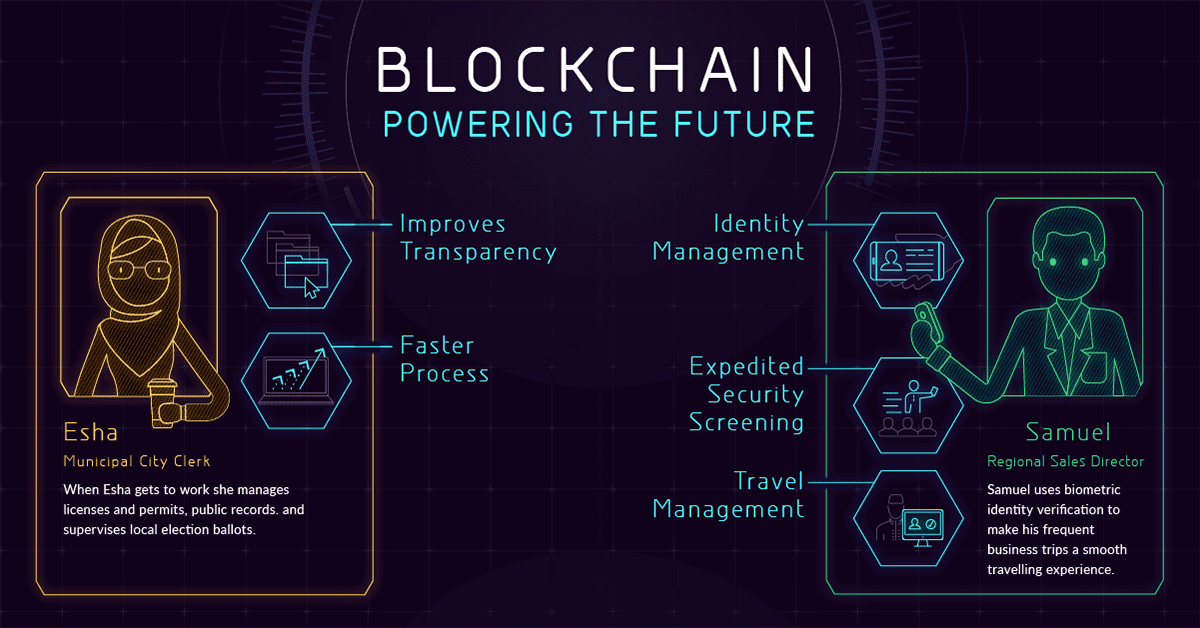
The potential of blockchain technology to transform and disrupt any vertical it is used in has thrown up burgeoning demand for professionally trained personnel to man the growth. The demand has outstripped supply of blockchain-knowledgeable professionals.
Essentially, this means there are well-paying jobs with ample scope and growth, across verticals that make this an excellent and exciting career choice for young career makers and professionals alike.
Blockchain technology is the emerging darling of 2018 with hopeful industries incorporating it willingly. It has the potential to transform disruptively every industry.
According to Glassdoor reports, the annual jump in recruitments for this field for August 17-18 was 300% and median salaries paid in India for professionals with Blockchain Training were above the national average salary by a considerable amount!.
Why blockchain technology?
The increase in demand for professionals to man the jobs generated is tremendous and offer excellent job scope and demand that is expected to last over the next two decades.
Blockchain Training provides the quickest way to land one of the well-paying jobs spawned across many industrial sectors.
Let us explore how some of these benefits them.
The Banking segment—Blockchains offer safe, transparent and instant digital transactions with low fees as against traditional transactional methods. The banking segment has embraced technology and stands poised to reap the many benefits of adopting such technologies. An infrastructure which is blockchain-based enables the cross-border payments at remote locations instantly with immutable consensual digital records of time-stamped secure transactions.
Logistics, marketing, and supply chains—Witching to blockchains makes marketing, logistics, and supply chain segments and verticals almost error-free and require no intermediaries. Thus monitoring instantly and stock-taking is more accurate human-error free and consumes less time resulting in huge savings in terms of personnel required to man operations, costs, effort and time.
Real Estate – This segment depends on records primarily and because blockchain technology is consensual between parties and verified across all nodes on the network a fraudulent or altered property deal is an impossibility. The digitization of land-records and the permanent storage and traceability of transactions makes the adoption to blockchains the next logical step in fast-tracking digitized smart contracts.
Sports, insurance, and healthcare— These sectors will switch to blockchains to provide solutions to reducing confidential record-keeping hassles and using the instantaneous accuracy and immutability of the records of medical histories as a plus point.
Entertainment and media—The adoption of blockchain-tech can resolve issues of privacy, royalty, and rights in these areas making the authentication and reward for creativity process transparent and sans intermediaries.
Other verticals—With similar trends across other verticals like law, crowd-funding, retail, eCommerce, investment platforms, cryptos and more integrating blockchains into their operations.
Skills required:
Most Blockchain Trainingapplications today are Python, Golang and JavaScript based. The trending tools, languages and technological suites required for a career in Blockchain today are:
- C Suite languages like C and C#
- Python suite languages
- Java Suite languages including Java, JavaScript ES6, JSON, js and Javascript.
- Simplicity, Serpent, Solidity, Go, Rust and such languages.
- SQL and NoSQL
- HyperLedger Fabric
Top jobs:
Among the career choices available specifically in blockchains are those of the
- Developer
- Architects
- Consultants
- Blockchain Engineers
- Certified educators
Blockchain tech is lucrative:
Technologies like Quantum Computing, Virtual Reality, Neural Networks, data analytics, AI, Augmented Reality, driver-less vehicles, smartphones, cryptos and many more have digitized the modern world and have come to prominence over the last decade. Blockchains have immense benefits for the industries adopting its technology as they reduce costs, increase process efficiency, improve productivity and ease-of-operation. Blockchain Course is the way to go, to land a career in the evolving and emerging field of blockchain applications across all verticals.
Key Takeaways:
Blockchain technology is truly the most disruptive career option. Many sectors like healthcare, real estate, education, insurance, and the traditional banking system have already benefitted from it. Blockchain technology is booming and it has the potential to disrupt any industry it is used in.
High demand for professionals with professional certifications and Blockchain Training makes blockchains an excellent career choice because the industry needs professional accountants, managers, analysts, developers, programmers and such to grow and realize its potential.
Blockchain career aspirants do not need any mandatory qualification like a degree. The beauty of blockchains lies in the fact that at Imarticus Learning you can quickly and easily pick up the practical skills required.
Coupled with assured placements and certification this promising technology can disrupt your career and land you a well-paying job with growth and good pay packages. Start your Imarticus Blockchain Course today! For more details, you can also contact us through the Live Chat Support system or can even visit one of our training centers based in – Mumbai, Thane, Pune, Chennai, Hyderabad, Delhi, Gurgaon, and Ahmedabad.