Here’s how to create your own plagiarism checker with the help of python and machine learning

Although plagiarism is not a legal concept, the general idea behind it is rather simple. It is about unethically taking credit for someone else’s work. However, plagiarism is considered dishonest and might lead to a penalty. 

It is possible for coders to build their plagiarism checker in Python with the help of Machine Learning. Thus, it is advisable to undertake a python course to get a comprehensive idea about this programming language. 

Here, you will get an idea of creating your own plagiarism checker. Once finished, individuals can check students’ assessments to compare them with each other.  

Python Is Perfect for AI and Machine Learning

Pre-requisites

To develop this plagiarism checker, individuals will need knowledge in python and machine learning techniques like cosine similarity and word2vec.

Apart from these, developers must have sci-kit-learn installed on their devices. Hence, if anyone is not comfortable with these concepts, then they can opt for an artificial intelligence and machine learning course

Installation    

How to Analyse Text 

It is not unknown that computers only understand binary codes. So, before computation on textual data, converting text to numbers is mandatory. 

Embedding Words  

Word embedding is the process of converting texts into an array of numerical. Here, the in-built feature of sci-kit-learn will come into play. The conversion of textual data into an array of numbers follows algorithms, representing words as a position in space. 

How to recognize the similarities between the two documents? 

Here, the basic concept of dot product can be used to check the similarity between two texts by computing the cosine similarity between two vectors. 

Now, individuals need to use two sample text files to check the model. Make sure to keep these files in the same directory with the extension of .txt.

Here is a look at the project directory – 

Now, here is a look at how to build the plagiarism checker 

  • Firstly, import all necessary modules. 

Firstly, use OS Module for text files, in loading paths, and then use TfidfVectorizer for word embedding and cosine similarity to check plagiarism. 

  • Use List Comprehension for reading files. 

Here, use the idea of list comprehension for loading all path text files of the project directory as shown –

  • Use the Lambda function to compute stability and to vectorize. 

In this case, use two lambda functions, one for converting to array from text and the next one to compute the similarity between two texts. 

  • Now, vectorize textual data. 

Add this below line to vectorize files.

  • Create a function to compute similarity 

Below is the primary function to compute the similarities between two texts.

  • Final code

During compilations of the above concept, an individual will get this below script to detect plagiarism.

  • Output 

After running the above in app.py, the outcome will look as – 

But, before you create this plagiarism checker, you might need to enroll for a python course or an artificial intelligence and machine learning course, as this programming needs concepts from python and machine learning. 

But, if you are willing to take programming as a career, a machine learning certification might be ideal for you. Nevertheless, to create a plagiarism checker of your own, make sure to use the steps mentioned above to detect similarities between the two files. 

Level 1
Copyscape Premium Verification 100% passed
Grammarly Premium Score 95
Readability Score 41.5
Primary Keyword Usage Done
Secondary Keyword Usage Done
Highest Word Density  To – 5.17%
Data/Statistics Validation Date 15/12/21
Level 2
YOAST SEO Plugin Analysis 5 Green, 2 Red
Call-to-action Tone Integration NA
LSI Keyword Usage NA
Level 3
Google Featured Snippet Optimization NA
Content Camouflaging NA
Voice Search Optimization NA
Generic Text Filtration Done
Content Shelf-life NA

5 steps to master python for artificial intelligence

Python is among the most-used programming languages on the globe. Developed in 1991, Python has been useful for new-age technologies also. Python is helpful for new-age technologies like AI (Artificial Intelligence) and machine learning. AI algorithms can be developed easily with Python as compared to other programming languages.

Most of the companies and AI experts find Python easy than other programming languages. Python has left behind some popular programming languages like C and Java when it comes to AI. Read on to know five steps to master Python for AI.


  • Learn the basic concepts of AI


Before you start making AI algorithms with Python, you should know basic AI terminologies. You should know different types of learning methods for AI algorithms, agents, environment, and other basic things about AI. You do not need to know everything about AI initially. Learning AI with Python is the perfect way to become an expert. However, you need to know the basic AI terminologies beforehand.

Getting your concepts cleared is of utmost importance. You cannot become an AI expert if you don’t know much about the basics. Knowing the basic concepts of AI and its importance is as important as knowing the complex concepts.


  • Learn the syntax of Python


For every programming language, you first learn its syntax. The syntax can be referred to as the code writing style which is different for each language. Python is chosen by AI experts because it has a simple syntax and involves less coding. You need a way of writing code in Python first to master it in the future. It won’t take much time to learn the syntax of Python. You can join an online Python course to learn quickly.


  • Join an online course for AI with Python


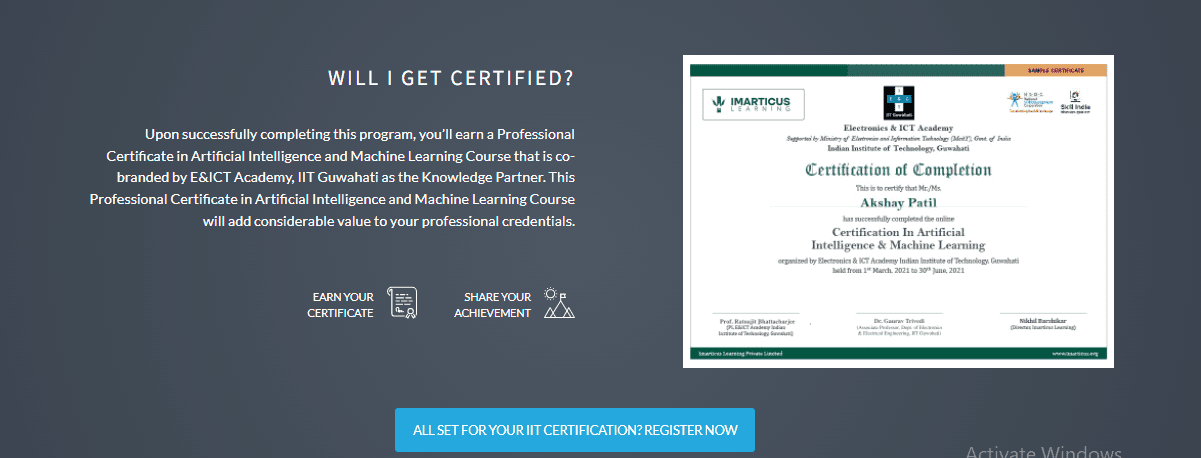
You need to go for an online course for AI with Python to master it quickly. An industry-oriented course can help you in learning Python for building smart AI algorithms. Imarticus Learning is a reliable source that can provide you with artificial intelligence and machine learning certification. With a globally-recognized artificial intelligence and machine learning certification, you can also get a job as an AI expert. 

Best Python programming course for Artificial IntelligenceImarticus provides an artificial intelligence course that helps you earn a job. The Certification in AI & ML gives you a chance to learn according to the curriculum of IIT Guwahati. You can learn from a premier institute of the nation from your couch with Imarticus Learning.


  • Know about Python libraries for AI


Python has many built-in libraries for AI which makes the task easy. A python library is a pre-existing chunk of code that can be used time and again for your AI projects. Python libraries save your time when working on AI projects. Some of the Python libraries used by AI professionals are NumPy, SimpleAI, SciPy, Matplotlib, etc. Make sure about the function and capability of each Python library for AI. It can save you time when designing AI algorithms.


  • Work on some AI projects with Python


Choose a Python course that allows you to work on AI projects. Working on AI projects can help you learn Python more quickly. You would not want to make mistakes as an AI employee. It is better to make mistakes beforehand and learn from them by working on AI projects. The AI course offered by Imarticus lets you work on around 25 industry-related projects.

Conclusion

Python is a simple programming language that is easy to use and learn. It is why many AI experts choose Python for boosting their productivity. You can learn about the role of Python in AI via the online course offered by Imarticus. Start your artificial intelligence course right away!

How long term modeling of our future energy system can be mapped with artificial intelligence and machine learning

Today, technology and sustainability are the main axes of development. To secure the planet and continue the growth of industry, we are engaged in a global energy transition. Most countries have become aware that measures must be taken to address a problem that, if not curbed, will have catastrophic consequences for the environment and, of course, for human beings themselves.

However, such a transformation requires the support of technology and, because of the enormous amount of data, artificial intelligence and machine learning courses are the basis to ensure the advancement of the energy sector. At Imarticus you can join the postgraduate program in data analytics & machine learning (AIML).

Technology as a tool

Changing the energy paradigm of the last century will be an arduous and complicated task. That is why new technologies have a lot to say as tools to facilitate evolution. The Internet of Things, machine learning, artificial intelligence, and Big Data will be key to making the processes of change as effective as possible. Massive data analysis must become a fundamental pillar for transforming how energy is generated, transmitted, and distributed.

Artificial Intelligence allows us to handle enormous quantities and analyze them logically and reasonably. About energy, in particular, we have data on meteorology, health, or the behavior of the people involved in the system: who generates electricity, who transports and distributes it, and who consumes it.

Data that, when properly analyzed, can provide a tailor-made understanding of the sector. The development and implementation of intelligent systems must not only facilitate the massive introduction of alternative energy sources but will also have the task of achieving rationalized storage of this energy, as well as providing greater flexibility for the demand, i.e. the people who use it.

Three levels of analytics can be applied: descriptive, to know what information is available and where to apply intelligence, predictive analytics, to anticipate production or demand, and prescriptive analytics. With the data, we work on predicting production, including renewable energies and demand, with the implementation of smart meters. In addition, technical and non-technical incidents, such as energy fraud, are detected. All of this is aimed at optimising the energy model, with the resulting economic and environmental benefits. We will see a huge take-off in the number of professionals who will choose to pursue a machine learning career.

Tools for the consumer

In this scenario, smart meters and internet-enabled sensors will be commonplace, which will improve our energy use while at the same time making it possible to bring costs in line with what each individual actually consumes.

Thus, machine learning will automate processes, while artificial intelligence will make it possible for devices to work automatically and learn from consumers’ habits. This will also be possible on a large scale, so that the operation of future solar or wind power plants, to give just two examples, will be more effective in a shorter space of time.

In this respect, we should note that although everyone is involved in the energy transition and awareness must start in every household, the technology will be geared towards people having little to do in terms of reducing consumption and costs.

Artificial intelligence-based models and predictions facilitate and will continue to be a major advantage in mapping energy systems. What is most surprising is that this is just one of the many applications of these technologies. If you want to contribute to the change, you can sign up for AI and ML courses by E&ICT Academy, IIT Guwahati.

Artificial Intelligence skilling has to start from a young age! How? Explore…

The chasm between machines and living things is shrinking. Artificial intelligence (AI) is deeply rooted in all aspects of technology, from robots to social networks. India has the potential to skyrocket in the domain of Artificial Intelligence and surpass USA and China, largely owing to:

  • It’s deep-rooted IT &ITeS infrastructure
  • Innovation ( India ranked among the top 50 countries in the Global Innovations Index 2020)
  • Accessibility to large datasets

These have pioneered more than a handful of start-ups and private investments in this sector. For AI to flourish further, there needs to be a nationwide upskilling of the younger generation in Artificial Intelligence Training. The GenZ needs to be acquainted with the theoretical and practical aspects of AI application to increase its scope of innovation and entrepreneurship.

Artificial Intelligence CareerIn the future, the interaction between humans and AI will define in a lot of ways the structure and functioning of a modern-tech society.

Thus it becomes imperative to lay down the basis of friendship for the years to come by exposing the young ones to AI.

While a lot of minds will wander to an Artificial Intelligence Career it is also important that others are no less familiar with the upsides and downsides of such a powerful technology.

Here is how we can ensure the frontiers of the same:

  • Introduce young people to the concepts of AI and machine learning through education curriculum. In India, the Central Board of Secondary Education (CBSE) announced the integration of AI in partnership with IBM for the academic year 2020-21
  • Encourage learning through hands-on projects so that student can make better, informed and critical use of these technologies
  • Enrolling young minds on various Edu-tech platforms specializing in the field of Machine Learning and AI which help them gauge interest and real-life applications of such technologies using intuitive software

Some of these websites include- Scratch, App Inventor, Cognimates etc

  • Experiments with Google is an easy-access, affordable, and user-friendly tool to explore artificial intelligence training at a young age with exciting experiments on AI, VR, AR, Chrome, Voice, Android etc to apply creativity and technological dexterity at the same place. One of these fun-filled learnings includes MixLab that uses voice commands to create music
  • Engage in the practice of cultural inquiry – like what is the goal of You tube’s recommendations or how do my Amazon purchases reflect on my Instagram feed
  • Lastly, before introducing your children to the world of AI and machine learnings, self-education of the same is very crucial

Apart from exploring the possibilities of AI, these junior minds also need to know the limitations of AI to have a balanced approached. That is to say, AI is not the ultimate machine as it is created by humans and will improve along the way by errors made and rectified by humans.

Artificial Intelligence CareerIn recent studies, a scientist is experimenting to teach AI to learn like a kid. They want to inoculate the eager learning attitude and swift skills of young people into the algorithms of machines.



And, AI does not create everything. It is the innovation and vision of responsible human beings that will introduce, implement, and maintain the technological structure in human society.

How Machine Learning Systems Can Streamline Healthcare Disbursement Setups?

The ripple effects of the COVID19 pandemic have been felt across industries at several levels. The healthcare industry wasn’t spared either, with essential healthcare workers moving to the frontlines to deal with the emergency. As a result, many organizations saw their back-end operations, such as appointment bookings and disbursement trackers, floundering.

However, there is a silver lining in this situation– it’s that technology has speedily been integrated into systems. Telehealth software has seen a surge in demand so as to prevent risks of exposure; healthcare disbursements are next on the list to be made easier.

Healthcare disbursements are traditionally tricky and convoluted processes; the pandemic has put further amounts of strain on the system and caused frustration, delays, and errors. However, machine learning in healthcare is a step forward in fixing disbursement delays.

Here’s how:

  • Moving from Checks to Digital Disbursements

A majority of disbursement systems around the world rely heavily on cheques and other outdated methods. However, this has become a point of friction at this time considering courier services have shut down and deliveries are very delayed. In such a scenario, the use of digital reimbursement options, bolstered by machine learning, is tempting.

Providers can facilitate faster payouts through DTC (direct-to-consumer) payments. By shifting the process online, providers will also be able to keep track of all patient and consumer data on one server. Machine learning can be used to pull up the relevant information, create automated disbursement setups, and ensure the consumer receives their disbursement digitally. The reduced reliance on paper payment processes will lessen the load on healthcare finance systems as well as get disbursements out to the right people in a flash.

  • Addressing Glitches in Systems

Several reports talk of misplaced cheques, incorrect deposit information, and several such kinks in telehealth and digital healthcare solutions being used today. Machine learning can be leveraged to iron out these kinks because, especially during a healthcare crisis, such errors can have a snowball effect on consumers and providers alike.

Providers who use machine learning systems to manage delays will be able to maintain strict records of past and future payouts. The system can be trained to collect the right deposit information as well as cross-verify with other records if required. The reliance on an automated system, in this case, equals to a lesser reliance on outdated methods of payout tracking.

  • Simplify User Experience

Claiming payouts and processing them can become a nightmarish experience for both patients and healthcare providers alike. Machine learning systems effectively reduce quite a number of manual steps which, in turn, saves time, money, and efforts. Machine learning can be leveraged to extract critical information from healthcare contracts, estimate how much is owed, and prepare the right documentation in time for a payout.

For patients, too, the process of claiming payouts become simpler. They will no longer have to fill out a myriad of forms and move from office to counter over days. Instead, by automating certain processes from the providers’ ends, patients can be called in only to verify details if necessary and to provide any other physical documentation the healthcare provider may need.

Conclusion

The healthcare industry will most likely see a surge in the adoption of machine learning and artificial intelligence. This will be across the board– from handling disbursements to automating admissions and discharges. Therefore, students who are interested in pursuing an artificial intelligence career would do well to explore this niche and develop the right skillset for it.

You can do this by enrolling in a machine learning course that focuses on the healthcare system, or take on related projects that could leverage your portfolio when it comes to it. The current strains on healthcare providers worldwide have exposed significant cracks in the system that machine learning could most likely fix.

How Is a Machine Learning Course Helping Secure Bright Careers?

Machine Learning (ML) is an emerging technology that has taken businesses by storm. Currently, more than 30% of businesses in India have already adopted machine learning technology or are planning to adopt it. Besides being termed as the ‘hottest job of the century’, ML job roles also offer lucrative salaries.

ML along with AI (Artificial Intelligence), plays a crucial role in data science operations. Young enthusiasts are looking for ML/AI courses that offer them industry-oriented learning. Read on to know how an ML course can aid in building a successful career.

Reasons to learn ML & AI

 The reasons one should look for an industry-oriented ML course are as follows:

  • The compound annual growth rate of the global ML market is more than 40%. Businesses are adopting ML/AI technologies on a large scale. There will be no shortage of ML job roles in the industry for the coming years. Also, the salaries of ML job roles in the industry are expected to increase in the coming years.
  • ML and AI are versatile technologies that are used by different sectors of the industry. ML/AI algorithms are also used for day-to-day operations in many public sectors. Sectors like healthcare, logistics, e-commerce, education, and retail use ML for their day-to-day operations.
  • Machine learning helps in building smart data analysis algorithms. You can gain meaningful insights from data analysis and understand your customers/clients better. Data analysis skills will also come in handy for making several real-life decisions.

Why go for online ML training?

Colleges in India usually do not provide a certification course in AI or ML. AI/ML is usually included in the traditional degree programs as a subject. You will have to go through the entire degree program to learn machine learning at a college. It is where online training allows you to learn machine learning without enrolling in a degree program. Also, the recent COVID pandemic made it difficult for young enthusiasts to attend classroom lectures.

artificial intelligence and machine learning coursesWorking professionals can commit to an online machine learning course depending upon their free hours. However, you will have to choose an effective machine learning course that makes you job-ready. Imarticus Learning is a reliable EdTech firm that offers industry-oriented machine learning and artificial intelligence course.

Why choose the ML course offered by Imarticus?

Imarticus Learning is a reputed EdTech platform that offers a Certification in Artificial Intelligence and Machine Learning in partnership with IIT Guwahati. This 9-months long certification program can help in preparing for numerous jobs like ML/AI engineer, data analyst, and data scientist. The reasons one should choose the AI/ML certification course are as follows:

  • ai and ml courses
    At the end of the course, you will receive a certificate endorsed by ITT Guwahati, one of the top educational institutions in India. The AI/ML certificate endorsed by IIT Guwahati will be globally recognizable. Also, you will get a 3-day campus immersion program with this course that allows you to interact with faculty members and peers of IIT Guwahati.
  • You will work on more than 100 assignments and 25 projects during the course. Real-life projects will aid in learning the ML industry practices.
  • Numerous AI/ML topics will be covered in this certification course. Some popular topics covered in this course are dimensionality reduction, unsupervised learning, deep learning, NLP, etc.
  • Towards the end of the machine learning and artificial intelligence course, you will compete in a hackathon to judge your AI/ML skills. You will also receive career support towards the end of the course from Imarticus.

In a nutshell

Imarticus has already placed many data scientists in some of the top organizations of the world. With their industry-oriented course curriculum, they will make you job-ready. Start your ML certification course now!

What’s The Quickest Way To Learn Math For Machine Learning And Deep Learning?

In modern times we have everything from developments like smartphones, robots, driver-less cars, medical instruments like CAT scans and MRI machines, smart traffic lights, and a host of animated games. Even payments have gone digital and cashless! And all this has emerged over the last decade due to AI, ML, and data analytics.

The future holds great promise for development in these fields and to make a high-paid scope-filled career in any of these fields, mathematics is the key ingredient that you must learn if you want to learn machine learning. ML runs on algorithms and the algorithm is dependent on knowledge of mathematics and coding.

Why mathematics is so important in ML:

Some of the many reasons are :

  1. Selecting the apt algorithm with a mix of parameters including accuracy, model complexity, training time, number of features, number of parameters, and such.
  2. Selecting the validation of strategies and parameter-settings.
  3. Using the tradeoff of Bias-Variance in identifying under or overfitting.
  4. Estimating uncertainty and confidence intervals.

The math components required for ML:

ML algorithms require proficiency in the three topics of Linear Algebra, Probability Theory, and Multivariate Calculus.

Let us discuss the topics you need to learn machine learning under each of these heads.

A. Linear Algebra:

The use of Linear algebra notation in ML helps describe the structure of the ML algorithm and the parameters it depends on. Thus linear algebra is important in the interconnection of neural networks and their operations.

The topics that are important are : 

  • Vectors, Tensors, Scalars, Matrices,
  • Special Vectors and Matrices
  • Norms of Matrices
  • Eigenvalues and vectors

B. Multivariate Calculus:

ML learns from its experience with the data set and to supplement this we need calculus to power learning from examples, improving performance, and updating parameters of the different models.

The important topics here are : 

  • Integrals
  • Derivatives
  • Differential Operators
  • Gradients
  • Convex-Optimization

Probability Theory:

The assumptions about data use this theory to design the AI and its deep learning capabilities. The key probability distributions are crucial to algorithms.

Study these topics well.

  • Random Variables
  • Elements of Probability
  • Distributions
  • Special Random Variables
  • Variance and Expectation

Can you learn Math for ML quickly?

To learn machine learning it is not required to be an expert. Rather understand the concepts and applications of the math to ML. Doing things like math is time-consuming and laborious.

While there may be any number of resources online, Mathematics is best learned by solving problems and doing! You must undertake homework, assignments, and regular tests of your knowledge. One way of getting there quickly and easily is to do a learn machine learning course with a bootcamp for mathematics at Imarticus Learning

This will ensure the smooth transition of math and ML applications in a reputed institute for ML where they do conduct bootcamps. At the end of this course, you can build your algorithms and experiment with them in your projects. But, the main question that remains is why do a learn Machine Learning Course at Imarticus in the first place?

The Imarticus Learning course scores because: 

  • They have sufficient assignments, tests, hands-on practice, and bootcamps to help you revise and learn machine learning.
  • They use certified instructors and mentors drawn from the industry.
  • They integrate resume writing, personality development, mock interviews, and soft-skill development modules in the course.
  • They have convenient modes and timings to learn at your own pace for professionals and classroom mode for freshers and career aspirants.

Conclusion:

Mathematics is all about practice and more practice. However, it is crucial in today’s modern world where AI, ML, VR, AR, and CS rule. These sectors are where most career aspirants are seeking to make their careers, because of the ever-increasing demand for professionals and the fact that with an increase in data and the development of these core sectors, there are plentiful opportunities to land the well-paid jobs.

At the Imarticus, you can consider the Machine Learning course, you will find a variety of courses on offer for both the newbie and tech-geek wanting to go ahead in his/her career. Start today if you want to do a course in AI, ML, or Data Analytics. For more details in brief and further career counseling, you can also contact us through the Live Chat Support system or can even visit one of our training centers based in – Mumbai, Thane, Pune, Chennai, Hyderabad, Delhi, and Gurgaon.

Hands-on Linear Regression Using Sklearn!

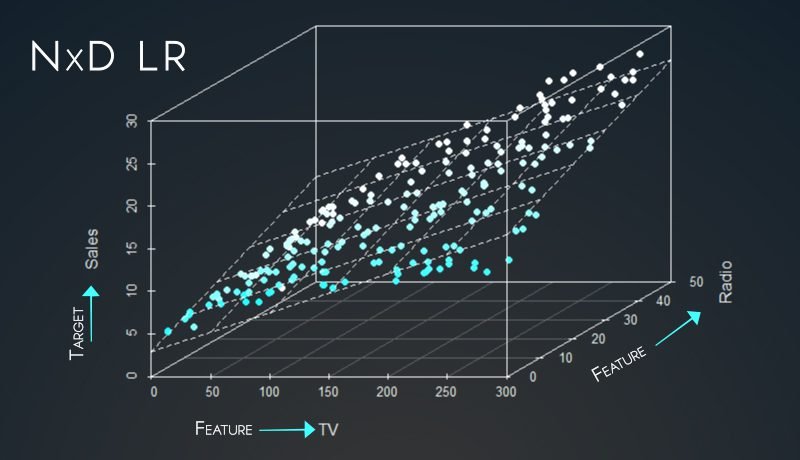
Linear regression in Machine Learning is a kind of analysis where there are both dependent and independent variables. Their relationship is depicted here by a linear line from the provided data. This technique is mainly used for predicting the results.

The data and the values from the linear regression are used to find the Mean Squared Error (MSE) to change the values of the variables so that they have the least value possible and get the most accurate results.

While there are several tools that are usually used for linear regression Sklearn is one of the popular tools.

What is Sklearn?

Sklearn is the short form for Scikit Learn which in Python Language, an open-source ML library to help unify the various tools of algorithms in machine learning.

Linear Regression trainingSklearn precisely works as a one-stop solution that helps with importing, preprocessing, plotting, and predicting data.


Its versatility, powerful nature, ample documentation, and active nature make it one of the popular toolkits in ML.

Linear Regression in machine learning

Linear regression comes at the last stage of the ML processing. Though there are several tools for the same, Sklearn is used more because of its versatility. When there is a log of consistent data it is easier to predict future patterns. The various steps towards the implementation of linear regression are,

  • Loading the data or object from its source
  • Training the model results in dividing the data into dependent and independent variables.
  • Later it is split the data into train and test sets.
  • It is the test set that will be used for the predictions.
  • Explore the results to find the suitability of the data for linear regression. A low accuracy data shows the non-compatibility of data to this.
  • Narrow down the data to a smaller portion and repeat the same steps above.
  • Now the data should be able to show the MSE which can be used for better predictions.

Importance of Linear regression 

Linear regression is important as it determines the accuracy of the prediction from the data given and also finds out the predictors that are significant for better results.

Linear Regression Training in Machine Learning

It is useful in determining the power between the dependent and independent variables such as sales and expenditure, or in the case of health care dose and its effects on the body, etc.

Analyzing the regression model explains how much the variables do change with respect to each other. Forecasting weather or its impact and changes is a fine example of this application. In the case of sales and marketing, it explains how much increase is possible in income with a specific amount of expenditure.

Finally, it is one of the main tools for predicting future trends and possibilities. It can be used for a future prediction of any time span. Linear regression using Sklearn provides a near-accurate prediction of the values.

In addition, there are different types of linear regression – simple or multiple linear regression. Each type is suitable for a different purpose or type of data available.

Conclusion

Its possibility is too vast that it requires proper Linear Regression Training to use the best data for getting the most accurate output. Once learned it is easier to predict data and values in the fields of sales, marketing, financial assessments, insights into consumer behavior, risks in finance or loans, etc.

As already mentioned, the accuracy of the prediction highly depends on how compatible the data is for the linear regression model. The Sklearn method is a far better option to determine the same and can provide the closest values to help with a better prediction model for the business.

Case Studies: Training Neural Networks to Play the Legendary Snake Game!

Video games play a critical role in developing and evaluating futuristic AI and ML models. Thanks to their performance in a variety of tests, the gaming world has been used time and again as a playground for testing AI devices.

This isn’t a new phenomenon, but one that goes back at least 50 years. The Nimrod digital computer built by Ferranti in 1951 is widely touted as the first known example of the use of AI in gaming. Mega Man 2 was used by Japanese researchers to test AI agents and the AI system Libratus was used to beat pro players of Texas Hold ‘Em Poker to make technological and gaming history.

The Snake game is quite a familiar feature of many childhoods because of its simple objective and playing process. The player controls the snake by eating apples which are spawned at random locations to optimize the game. For every time the snake consumes an apple, the snake must begin to expand one grid. And the one rule? Don’t let the snake collide with anything.

To take things one step further, global researchers and have been applying neural networks and machine learning algorithms to this legendary game.

Machine Learning Course If you’re a student in a neural network course or a machine learning course, this is fertile ground for experiments of your own! Here are some case studies born of such experiments:
Creating the Snake Game Using Deep Reinforcement Learning

In this experiment, the researchers used a Convolutional Neural Network (CNN) that had been trained with a Q-learning variant. The aim of the experiment was to use a Deep Reinforcement Learning model in enabling a self-ruling agent to play the game with the constraints getting stricter as time passes.

A reward mechanism was also designed to train the network, make use of a training gap strategy to circumvent training during target changes and categories a variety of experiences for better training.

The final results of the experiment showed that the agent outshone the ground-level DQN model. It even surpassed human-level performances in terms of high scores and duration of survival.

Playing the Snake Game Using Genetic Algorithms and Neural Networks

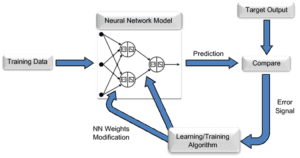
Researchers at a Polish university used a framework of a neural network that essentially determined what action to take from any given data at the time. The researchers referred to the neural network as “DNA”– it functioned as the “brain” of the snake, so to speak, due to its role in influencing decisions.

The class has patterns with weights as well as other patterns with biases, reflecting each neural network layer. Next, a function is created that allows the calculation of performance. In this case, the performance included the number of moves that the snake executed without dying as well as the scores.

Neural Network TrainingThe neural networks training that were used had one inconspicuous layer with six neurons as well as a genetic algorithm to identify the best possible methods and parameters. The population of snakes was first generated and allowed to play so that researchers could identify the number of steps and the count of apples that were consumed.

Based on this, the researchers identified which snakes performed best and would be selected for breeding. The “parents” were chosen and the DNA– weights and biases– transferred to the new snake produced.

The selection stage was followed by a mutation, where every new snake ended up inheriting a neural network from its “parents”. This was repeated time and time again until the best results were achieved.

Conclusion
The video gaming world has played pivotal roles in enhancing the quality and complexity of AI and ML over the past few decades. It remains to be seen what future advances come of this surprising yet clever collaboration.

How Artificial Intelligence Training Can Be Helpful For Any Voice Content Purpose?

Introduction

The technological change and digitization that is taking place across the globe are being accelerated by the day. Growth in Innovations and Inventions in all the major domains is Multi-fold. This major chunk of this growth can be attributed to the advances that are being taken in Artificial Intelligence. Artificial Intelligence had contributed to almost all the major domains in some or another way.

Artificial Intelligence as a domain is very comprehensive in both depth and breadth. Some of the major domains that comprise artificial intelligence are Neural Networks, Fuzzy Logic, Expert Systems, Natural Language Processing, Robotics, etc., In these domains, one of the fastest-growing domains is Natural Language Processing.

Natural Language Processing

The ability to understand and read human language through artificial intelligence is Natural language processing (NLP). NLP can be classified in terms of Text, Voice, and Audio. In all three, voice recognition is the fastest growing and widely known through various voice assistants in our smartphones.

Not only on the consumer side but also there are many applications on the enterprise and industry domains. Voice recognition/speech recognition is used for many purposes such as customer insights, in meetings, Security features, etc.,

Speech Recognition and its multiple applications:

Speech recognition is the Comprehension of the voice by the Computer to perform a task. It involves various modules such as speech to text, text to speech, Speech processing, and many more. Speech recognition can be found in many applications such as

  • Car Navigation
  • Navigation and Control such as GPS
  • Voice Assistants

Considering the advantages let’s consider how Artificial Intelligence Training in Speech Recognition/Voice recognition will help us to pursue a career in Artificial Intelligence.

 Artificial Intelligence Training

To Pursue natural language processing, there must be a holistic knowledge of Artificial Intelligence. Artificial Intelligence is one of the most important skills for any high-paying job. To have a holistic knowledge of artificial intelligence some key topics are to be concentrated upon such as

  • Python and Statistics
  • Data Analysis and Python
  • Machine Learning
  • Deep learning
  • Natural Language Processing
  • Computer Vision

To have a successful career in Artificial Intelligence there should be a basic understanding of python, TensorFlow, and other similar technologies. Though not all the domains are equally important, if an individual prefers to have a career in natural language processing then knowing other domains listed above will complement.

Skills Required to become an NLP Expert

Skills like Fundamentals in Machine Learning such as regression, probability estimation, data integration can be learned through training in Artificial Intelligence. In addition to this, there are additional skills that help an individual to become an NLP Expert. Skills such as parts of speech, Sentence Fragmentation, Information Extraction are needed from the linguistics point of view.

When seen from the programming side, NLP research scientists should be well equipped with at least one of python, java, ruby as a known language. Also, knowledge of probability & statistics and Recursive Neural Networking are essential for NLP. Artificial Intelligence Training will develop all these necessary skills

Prospects of Artificial Intelligence and Natural language processing

Rapid Growth in the technology space had made way for many new opportunities. Artificial Intelligence is one such field where there are umpteen opportunities in multiple domains. There are many High paying, exciting jobs that are available when Artificial Intelligence skills are possessed. Especially in Natural Language processing, the job prospects are surging. The job profiles that are offered for a career in Artificial Intelligence and Natural Language Processing are

  • Machine Learning Engineer
  • Natural Language Processing- machine learning Developer
  • Data Scientist
  • Software Engineer
  • Research Scientist
  • ML Specialist

Conclusion

Artificial Intelligence is a growing field and the opportunities that it offers are ever-increasing. In artificial intelligence, Natural Language Processing (NLP) is an essential part of high job prospects. A wholistic Artificial Intelligence Training and NLP will help an individual in pursuing a great career in Artificial Intelligence.