The Current State of Indian Investment Banking

Investment banking in India has always been a career choice for most aspirants with a head for numbers and financial skills. The pay packets are handsome and work hours grueling and challenging. Besides, IB offers a range of services like asset management, restructuring, acquisition and merger deals, securities trading, custodian services, syndication, corporate finance, and capital markets services.
The presence of many multinationals like JP Morgan, JM Financial, Morgan Stanley, Merrill Lynch, Citigroup, BNP Paribas, Credit Suisse, Lehman Brothers and Goldman Sachs among the foreign-based firms and local domestic players like Veda Corp, Ripple Wave, MAPE, Cogence Advisors, Equirius Capital, and P2P are giving the big banks a run for their money in the boutique banking sector. The demand for personnel is way higher than the supply of trained personnel with training institutes like Imarticus Learning ably contributing to the producing wholesome and trained investment bankers.

Investment banking in India has come of age and faces several challenges in the current Indian scenario. Let us take a quick peek into these top challenges and factors.

  1. Financial Regulations: Banks trying to meet the IFRS 9 requirements are driving business behavior and changing financial models. The technologies linked to leveraging data and appropriate models add to the pressures of the Basel III norms where the foci are core liquidity in balance sheets, raising wholesale long-term funding, reducing short-term lending and leveraging the complex financial models.
  2. Scare capital: Product profitability and ROE have been transformed by the Basel-3 requirements. Many non-productive long-dated transactions, structured derivatives, and portfolios are being shunted to non-core business areas. The focus is on the exchanged and commoditized OTC products redefining the management of capital and profit margins.
  3. Transformation costs and suboptimal ROE: Investment banks being asked to update their technologies face huge “transformational” costs and perhaps a mere 5-6 banks may survive the regulations, governmental policy and infrastructure changes due to compliance and regulation measures.
  4. Cross-selling in boutique banks: Capital returns are now more dependent on effectively growing the customer base with such products in a bid to stay in the race for returns and edge in the market. Banks now focus on customer service leveraging their database and retaining customers through effective product upselling.
  5. Competition from Fintech companies:  The new startups which are effectively low-personnel firms have created a disrupt. Blockchains are being effective in cross-border lending activity and the African financial services market is being receptive to FinTech and financial inclusion opening the flood gates for the disruption of end-to-end services or new-age banking.
  6. Legacy systems challenged: Most of the physical infrastructure of banks are outdated and inflexible in a rapidly transitioning digital age threatening the survival chances of the smaller banks.
  7. Data optimization: The complex reporting standards and regulations demand better compliance in reporting, risk granularity, timeliness and accuracy in financial reports and predictions.
  8. Norms for client on-boarding: The unique issues in practicing adherence to KYC and AML procedures include rising compliance costs, higher capital requirements, changes in the business model, and retaining clients across geographical frontiers.
  9. Disruption:  A sharp decrease in margins, decreased market share, decreasing foreign exchange, changes in banking services and challenges to traditional business practices are all good reasons for a disrupt of the financial markets.
  10. Lenders in the market place: To prevent newer financial bubbles in an environment beleaguered with low-interest rates the consumer debt securitization of institutional investors looking to match the challenges in fundraising will undergo greater disclosure and transparency measures, as 90 percent of their fees earned is being invested in the new-loans segment.
  11. Cyber Security: To counter digital theft and the hacker vulnerability of banks the EBA to stress test and “two-factor” authentication in Swift transactions will be implemented for over 11,000 members and 6trillion USD daily transactions.
  12. Regtech:  Adherence to the BCBS 239 will soon be mandatory and involves a huge investment cost in comparison to just changing the ‘principal’ set.

Conclusions:
While the challenges are many and the IB sector is fast evolving one can hardly ignore a large number of very lucrative careers it opens up. Doing an investment banking course at Imarticus Learning is an excellent way of getting familiar with such changes and ensuring rapid career progression. Why not start today with any of the large numbers of courses Imarticus offers?

Also Read: Overview of Investment Banking

The Investment Banking Course That Will Get You Hired

Prateek shares his experience and the journey that led to an investment banking job at Goldman Sachs
Investment Banking is an industry that’s hard to break into, even with a master’s degree in finance. Prateek, a postgraduate in banking & finance, talks about how Imarticus Learning’s Investment Banking Training program helped him land his dream job.
What’s your background, and why did you enroll in the Investment Banking course?
My name is Prateek Dhar, and I have a bachelor’s degree in accounts and auditing from NM college. After attaining my bachelor’s degree, I went on to graduate with a master’s degree in banking and finance. After my post-graduation, I was looking for more learning and career opportunities and stumbled upon Imarticus and the Investment Banking courses. I was interested in and enquired about the course. I also looked through Imarticus Learning reviews to gauge public opinion. On visiting the center, the career counselors helped guide me on the path to an investment banking career, and I decided to enroll for the course.
Investment Banking Course
Tell us about your experience during the course.
My entire journey with Imarticus has been incredible. The course content is comprehensive, in-depth, and aligned to the requirements of the industry. The best part of the course is, without a doubt, the trainers. They have experienced professionals and have a good grip on the finance domain and on the concepts they teach. Moreover, the course isn’t restricted to just theoretical knowledge. The trainers ensure that practical learning is incorporated into every concept that you learn.
Imarticus has helped me gain a lot of knowledge, and I’m thankful for the experience.
Why would you recommend this Investment Banking course?
Well, in my opinion, the most important aspect of any course is the trainers. This is the reason I would recommend the course at Imarticus. Not only are the trainers knowledgeable and extremely skilled, but they also are approachable, helpful and are ready to assist with any queries that you may have. The classroom lectures are interactive, and this helps keep up with the learning curve.
What are your thoughts about Imarticus Learning’s placement services?
Fantastic! I was placed at Goldman Sachs through Imarticus and couldn’t have asked for more. Many of the major investment banks – BNP Paribas, Morgan Stanley, Goldman Sachs, GlobeOp and more – recruit from Imarticus and this is an excellent opportunity for freshers to make their mark in the industry. Imarticus will help you crack better opportunities in the market by helping you refine your resume along with your communication and interview skills.
While the course is a short-term journey, it has given me long-term prospects within the investment banking industry. Anyone looking for an investment banking career should come to Imarticus.
Are you looking to launch your investment banking career? Click here to inquire about the program.

Can Chartered Accountants become Investment Bankers? How?

Investment banking is a challenging and exciting career opportunity that many can pursue. Grit, determination and a smart attitude are what it takes to become an investment banker.
Many chartered accountants look at pivoting their career to investment banking due to the myriad of opportunities available in the field. While chartered accountancy is challenging, investment banking opens a new world of functions and risk aspects that one can learn and grow in. Individuals who are dynamic, hardworking and dedicated have a chance to pursue an investment banking course and move into the field naturally.
A career in investment banking is highly risky, exciting and dynamic and they are always on the lookout for individuals who are ambitious and charismatic. There are many different types of functions that one performs in investment banking predominantly revolving around raising funds, auditing, client relationship, and mergers.  The biggest function though is to raise equity for your clients and project a growth trajectory.
Hence investment bankers need to make decisions keeping in mind the future of the client and do so in a qualitative fashion. The job also has long hours and involves strategic thinking at every step of the way.

Here are the top ways that one can switch into investment banking from accounting.  
Understand the Functions 
As mentioned earlier in the article, investment banking requires a lot of strategic thinking and making smart choices for your clients. This can be high risk as the company’s future depends on raising funds and taking off. Before looking at switching from chartered accounting, one must evaluate and scope out the work portfolio of investment banking. Individuals who have completed an investment banking training will have a basic understanding of what does it take to raise capital for a company and this is an area of expertise that one must master.
Country Specific Rules 
Before shifting to investment banking, one must understand the specific set of rules and regulations defined in each country for the field of banking. For instance, in India, it is a natural progression for many accountants to switch from chartered accounting to banking and then financial advisors. Some countries may also require an exam to be given in order to pursue investment banking as a career. Understanding this is the key to moving successfully into the investment banking space.
Ability to work with clients
One of the top things that banking and accounting have in common is the option to learn how to build relationships. In investment banking, long term relationships and the ability to upsell and understand your client goes a long way.  If you have good communication skills, are proficient in math and are hard working you already have the foundation for a career in investment banking.
Conclusion
A lucrative career path, investment banking may demand long working hours, quick thinking in a stressful situation and more. However, the results can be deeply rewarding to individuals who pursue the same.

Also Read: How to Become Investment Banker

The Investment Banking Career Path

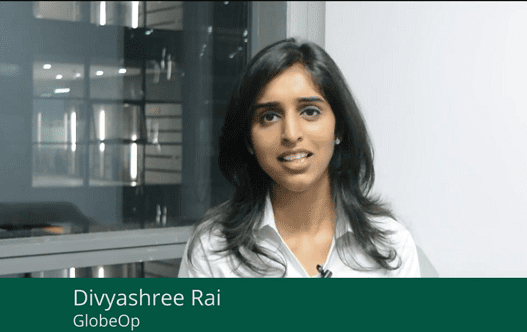
Divyashree shares her experience, and the path that led to an investment banking job at SS&C GlobeOp
Divyashree recently graduated from the Certification Course in Investment Banking at Imarticus and here is her take on the program and on how it helped her achieve her investment banking aspirations.
Tell us a little about yourself.
Hello, my name is Divyashree Rai, and I have completed my graduation in commerce and interned at a forex company. That’s when my interest in finance grew. I wanted to explore the finance industry, especially investment banking, and I believe the investment banking course at Imarticus was the perfect fit for me.
After joining the course, I realized that finance is a massive industry, and I learned a lot through classroom training sessions, presentations, and many hands-on simulations.
How was your experience at Imarticus?
The Investment Banking course at Imarticus is the perfect blend of theoretical learning and practical knowledge. There’s a significant gap in terms of practical learning while studying at school and college because you don’t really know the relevance of what you’re learning and how it can be applied to real-world situations. Imarticus bridges this gap by relating every module with case studies, simulations, and hands-on learning. Imarticus Learning’s placement services, resume review sessions, and mock interviews also are invaluable. The course culminated in a job at SS&C GlobeOp, and this would have been impossible without Imarticus.
Moreover, the faculty at Imarticus Learning is friendly and approachable. The classroom training and presentations helped me develop as a professional and amplified my domain knowledge.

Why would you recommend the investment banking training course?
Imarticus trained me on the complexities of finance in a simple, concise format. I’d recommend this course because it’s suitable for both finance professionals and individuals with no background in finance because the course starts with the basics and moves on to more complex investment banking concepts and strategies. The course has boosted my confidence and has transformed me into a job-ready individual.
What do you like most about Imarticus?
When you have the right knowledge, there’s nothing that can stop you. I realized this when I was asked a lot of domain questions during my interviews, and I could answer every question confidently thanks to the faculty and training at Imarticus. The support staff also are really accommodating and were available to help out any time I faced challenges.
I want to thank Imarticus for helping me start my investment banking career at SS&C GlobeOp and would encourage aspiring investment bankers to take up this course.
Become an investment banker in 3 months. Click here to inquire about the investment banking operations program.

Round up of Indian PE Jan – March 2019

From an investment perspective, the first quarter of 2019 witnessed a double value jump to USD 7B from Private equity and Venture capitals as compared to USD 3B last year here in India. In January 2019, the big US deal was from SoftBank who are the majority shareholders in Yahoo. Then Japan invested in India’s leading e-commerce giant in the field of kids and baby products, Firstcry. This deal amounted to $397M. However, in Feb 2019, India witnessed a rebound coming from the PIPE investments at a massive $431M. The debt funding for ReNew Power from the US Government was to the tune of nearly $350M, making credit investments reach an all-time high.
All of these deals proved that March 2019 was the flourishing phase of PE, which was 30% higher than the previously recorded high in August 2017, which stood at USD 5.4B. The number of PE/VC deals in March 2019 witnessed a rise of nearly 44% as compared to March 2018.
The remarkable deal of RIL boosting PE investments in 1Q
The leading global infrastructure and finance equity investors, Brookfield Asset Management, has acquired a controlling share in Reliance Jio’s telecom tower and fibre assets to become the largest ever deal in the infrastructure sector and M&A. It is evident that the first quarter of 2019 has had massive PE investments amounting to USD 11B which is more than 35% that was recorded in the first quarter of 2018, making it the best ever quarter for PE investments in India.
The largest ever deal in PE investment was among the top five deals that happened in Q1 2019. The banking, financial service and insurance BSFI sector was another favored sector for PE/VC investments. Amongst which, an 11% stake in SBI life insurance from Carlyle and CPBI amounts to nearly USD 817M with Bharti Airtel having an inflow of USD 726M investment from GIC.  All these types of investments were significantly large ones which ultimately led to an exponential high in PE investments in the first quarter of 2019.
Amidst other sectors, the deal between Brookfield and Reliance Industries Limited tops the chart with USD 6B investments in March 2019.
Finance, infrastructure and e-commerce sectors fared well compared to credit investments
On a year-over-year basis, the profits from the first quarter of 2019 had increased by nearly 37% to the $11.4B increase in PE investments as compared to $8.3B in Q1 of 2018. The number of PE investment deals over the same time frame in 2019 was 239, which was again, way more than the meagre 183 deals made in 2018.
The exponential increase of PE investments in Q1 2019 is largely attributed to the bumper agreements that happened during that period. Among 26 large deals in Q1 2019, the infrastructure deal between Brookfield and RIL was the largest. While analyzing the type of investments all the fields have fared relatively well except the credit investments.
The financial sector which saw a decline of 8% in Q1 2018 has received $2.9B in Q1 2019, which is a commendable performance. The impact of the liquidity crisis of the NBFCs made the financial sector see red in Q4 2018. One of the more notable investments in Q1 2019, is the one made by Softbank into e-commerce centric logistic firm Delhivery, and e-commerce retailer FirstCry.
E-commerce being the talk of the town of-late is set to reach a $200B by 2026 according to a report. In such a backdrop, e-commerce gets a whopping $785M PE investments in Q1 2019. In 2018 India witnessed strong PE investments back out from major firms. In Q1 2019, there was a 30% decline in exits as compared to 2018, which served as good news to the industry. From an overall perspective, however, the technology sector faced major exits of 7 deals amounting to losses to the tune of nearly $511M in 2019.
Bottom Line
With the fading volatility in the market, these open market exits have performed better with an increase of nearly 50% in open market values and volumes. With the phase of average PE-VC value being sharply high, the lower number of investments embarks on the selectivity aspect. Seizing the opportunities to overcome the hurdles should be the motto of private equity investors to reach par excellence.
To know more interesting about this, you can consider our Investment Banking Training

How Can Freshers Build a Career in Investment Banking?

Competition within the investment banking industry has risen significantly, and as such, freshers often find it challenging to gain a foothold in the industry. We spoke to Anmol, a student of the investment banking training course to get his take on the course and understand how this course could help freshers become investment bankers.
Hey, my name is Anmol Indurkhya, and I am a B. Com graduate and an aspiring investment banker.
Finance has been a part of my life ever since I could read numbers. It has always fascinated me because I enjoy working with the share market, derivatives, fund accounting, equity derivatives and the like. After graduating, I began looking for an avenue into the investment banking industry and came across Imarticus Learning.
Based on your experience, what’s your opinion of the Investment Banking course?
The investment banking operations program at Imarticus is a short-term course but has long-term prospects. The course transforms freshers into job-ready investment banking professionals through the comprehensive curriculum, hands-on learning, and mentorship. Moreover, the course offers placements at leading banks, and this is one of the most essential aspects of the program according to me.
How has your personality changed since you joined Imarticus?
Before I joined Imarticus Learning, I was an introvert and couldn’t interact confidently with my peers and colleagues. This drawback was a challenge to overcome, however, during the course, the many presentations I gave, and the interactive sessions helped me open up. My communication skills have also improved because of soft skills training and mock interviews. Overall, my experience has been a great one.
Would you recommend the Investment banking course at Imarticus Learning?
Well, I already have recommended the course to two of my friends who want to enter investment banking! So yes, I definitely would recommend the course and would give 5-star to Imarticus Learning review
investment banking courses
What, according to you, is the best part of the course?
First – I have been placed at BNP Paribas through Imarticus Learning. So yes, the placement services are one of the best things about the course.
Second – the trainers at Imarticus are exceptional, knowledgeable, and incorporate practical learning to a great extent. Kalpesh Sir and Lourdes Ma’am deserve special mention because they have been approachable and immensely supportive throughout the course.
Do you want to kick-start your investment banking career? Enquire now and find out how our investment banking courses will help you achieve your career objectives.

Become an Investment Banker in 3 Months. Here’s How?

Shubhadeep’s transition from engineering to an investment banking job in three months truly is inspirational.
Career transitions are hard. Really hard.
Don’t we all occasionally have days when we step back from the daily grind of work and think – “If only I could be paid to do what I’m passionate about”?
Shubhadeep was having one of those days.
An engineering graduate, Shubhadeep was disappointed with the career opportunities that were presented to him after four years of college. He wanted to enter the world of finance, more specifically, he wanted to be an investment banker. The thing is, transitioning from engineering to investment banking is no piece of cake and he realized that.
Over a period of more than a week, Shubhadeep dived into researching the most effective means to achieve his ambitions. His brother, also an investment banker, gave positive reactions on Imarticus review glassdoor and pointed him toward the investment banking certifications. A face-to-face counseling session was the turning point and he decided to enroll for the investment banking course.
Investment Banking Course
“The course is crisp and clear and the lectures are in-depth. It’s very easy to co-relate everything I study in class to the investment banking industry,” he says.
Three months after enrolling for the course, Shubhadeep has landed a job with SS&C GlobeOp and now works as an associate within the investor services division.
Isn’t that great? We think so.
Do you want to be three months away from an investment banking job? Click here and speak to our career experts today.

Imarticus Learning’s Investment Banking Course Powers Career Transitions – Here’s Sanjita’s Story


Transitioning from consumer banking to investment banking, while improbable, is absolutely possible. We had a chat with Sanjita, a retail banking professional and student of the Certified Investment Banking training program at Imarticus Learning.

Here’s her story.

My name is Sanjita Pednekar. I have a master’s degree in commerce and graduated in management studies back in 2014. I am currently a part of batch 84 of the Certified Investment Operations course at Imarticus.

I heard about Imarticus on the internet. I was working in the retail banking industry but have always wanted to enter the investment banking division. I began looking for courses that would teach me the requisite knowledge and help me become an investment banker. I first did a bit of research into the skills an investment banker needs to learn and then went through the program webpage and curriculum. I found that the program has an overall view of investment banking and would build the skills that the industry needs. Moreover, Imarticus Learning reviews were very positive, and these were the factors that convinced me to enroll.

I would rate the course 5/5 

The best thing about the course is the comprehensive curriculum that’s precise and practically oriented. Each lesson is co-related to hands-on case studies and projects, and that’s what helped me through my learning journey. The learning management system – Learntron, also is an excellent resource and was accessible 24/7.

Guest lectures were conducted periodically by industry experts, and they were invaluable 

The lectures gave me a perspective of investment banking from an industry point of view. One of the sessions that I clearly remember and can relate to was on an options strategy. It helped me understand how the options strategy works in the market and how it can impact the derivatives market.

The resume building process was a key highlight of the program

When I compare my old resume with the post-Imarticus one, there certainly is a drastic change. I’ve been able to present myself effectively through my resume because of the prompt guidance from the faculty.

The faculty get a superstar rating from me, especially Lourdes Maam

The entire faculty was approachable and friendly and would take extra care to clear all my doubts and questions.

I’d recommend the course to everyone looking for a career in investment banking; it will give you an edge over the competition – guaranteed!

Are you interested in an investment banking career? Click here and speak to a career specialist now.

How Do You Define Financial Risk?


Synopsis

Investment banking is one of the most sought after career paths today. Learning how to help companies deal with financial risk is at the heart of investment banking. 

Investment banking jobs are prestigious, lucrative and come with significant risk as well. The financial sector hires individuals who have not only undergone investment banking training but also are smart, hardworking and driven. Investment bankers work primarily revolves around helping big corporates who are their clients make informed financial decisions by taking stock of the various pros and cons. A key aspect of this job also involves assessing the various types of risks when it comes to running a business.

Financial risk is one of the most important things businesses consider while looking at expanding or simple day to day operations. It is one of the top concerns when it comes to finding capital to run the business, prepare contingency plans and also to forecast the growth trajectory of the business. For those wanting to pursue the certification courses in investment banking, this is the biggest lesson to learn.

When it comes to investing, one of the first things that individuals learn about in investment banking courses, is risk management. Here are the different types of risks and how to manage it.


Financial Risk

One of the high priority risks for business is a financial risk and it can be categorized into various types such as market risk, credit risk, liquidity risk, operational risk, and legal risk. Market risk is the risk associated with stocks, the interest rate in the stock market which is not in the control of the organization. Liquidity risk, on the other hand, can be further classified as asset liquidity risk and funding liquidity risk. Funding liquidity risk arises when there are not enough buyers for the product or service. External threats for a business include the legal risk that is the potential of getting lawsuits. If a company has to face financial losses or legal issues then it can be considered as legal risk.

Operational Risk

One of the biggest risks associated with a business is an operational risk and it predominantly revolves around mismanagement or any other technical failures.  It can also mean fraudulent activities or risk of fraudulent activities that every business must think about.  Operating a business also involves a risk of losing employees due to bad management which also comes under this type of risk.

Business Risk

Sometimes the very nature of the business may involve risks such as risk the type of jobs carried out by individuals, diseases associated with carrying out the job and political scenarios, etc. This means that the investment for this type of business from the very beginning will be very high as it will need to account for the type of job itself.

Conclusion

Learning how to manage financial risk for the clients is an important attribute that investment bankers must learn in order to succeed in their career.

Danish Azam’s transition from engineering to an Investment Banking Career!

You don’t need a degree or background in finance to become an investment banker. Find that hard to believe? Well, we don’t blame you.

The mainstream ideology is that the traditional starting point for every investment banker is a bachelor’s degree in economics or finance with a master’s or Ph.D. in rocket science. So I exaggerated a little – but the fact remains – anybody aspiring to be an investment banker without a conventional degree in finance will, in all likelihood, give up!

Danish Azam’s transition from a civil engineering graduate to the investment banking division at SS&C GlobeOp challenges the status quo and is an inspiration for everyone wanting to start a career in investment banking. Read his story here.

Q: Tell us a little about yourself.
I’m a Danish Azam, and I have a bachelor’s degree in civil engineering. I recently graduated from the Certified Investment Banking Operations course at Imarticus and have been placed at SS&C GlobeOp.

Q: What convinced you to enroll with Imarticus?
I heard about Imarticus through a friend who recommended the course to me. At first, I was hesitant because I had absolutely no background in finance, but I spoke to a counselor at Imarticus who charted an investment banking career path for me and assured me that the transition from engineering to finance was possible. I was convinced and decided to enroll in the course.

Q: Was the transition from engineering to finance challenging?
Quite honestly, it wasn’t as difficult as I had anticipated. Considering the fact that I am from an engineering background and the course is in Finance, I have not faced any challenges and could keep up because of the knowledgeable faculty and the detailed curriculum.

Q: Were the guest lectures helpful?
The guest lectures were beneficial. I was able to co-relate the topics I was taught in class with the practical projects and assignments, and this has helped me grasp particularly challenging concepts like options strategies and derivatives.

Q: What did you like most about the program?
I’d have to say the faculty and the learning facilities. The faculty were extremely helpful and made every concept clear with a focus on real-world simulations and hands-on experience to make the training sessions interactive. The learning infrastructure at Imarticus is exceptional.

The online learning management system – LearnTron – is available to students 24/7. If ever I had a doubt or couldn’t remember a specific concept taught in class, I would go back home and go through the lecture to enhance my knowledge in a better manner.

Q: Tell us a little about the career and placement services.
In addition to technical sessions, soft skill sessions are also conducted and saying these sessions were beneficial would be an understatement. The resume building workshop helped me craft my resume into an effective and efficient one with the help of the experts at Imarticus.

I was pleasantly surprised because the placement services were much better than I had anticipated. Even before completing the course, the placements team brought me a couple of interview opportunities. They didn’t stop there; through mock interviews and interview prep, the trainers helped me hone my communication skills. In all, I appeared for two interviews and cracked one of them. I now work at SS&C Globe Op; my job involves much of what I learned at Imarticus, and I couldn’t be happier.

It’s not too late to begin. Click Here to speak to a career counselor and start your investment banking career.