Tips and tricks in AI/ML with python to avoid data leakage

Data science has emerged as an essential field of work and study in recent times. Thus, a machine learning course can help interested candidates learn more and land lucrative jobs. However, it is also essential to protect data to ensure proper automation.

Now, beginner courses in machine learning and artificial intelligence only teach students to split data or feed the relevant training data to the classifier. But Imarticus Learning’s AI/ML program helps gain the necessary in-depth knowledge. 

Best Ways to Avoid Data Leakage when Using AI/ML with Python

A Python certification from a reputable institute can help one gain proper insight and learn the tricks of using AI or ML with Python. This will enable interested candidates to know about real-world data processing and help them prevent data leakage.

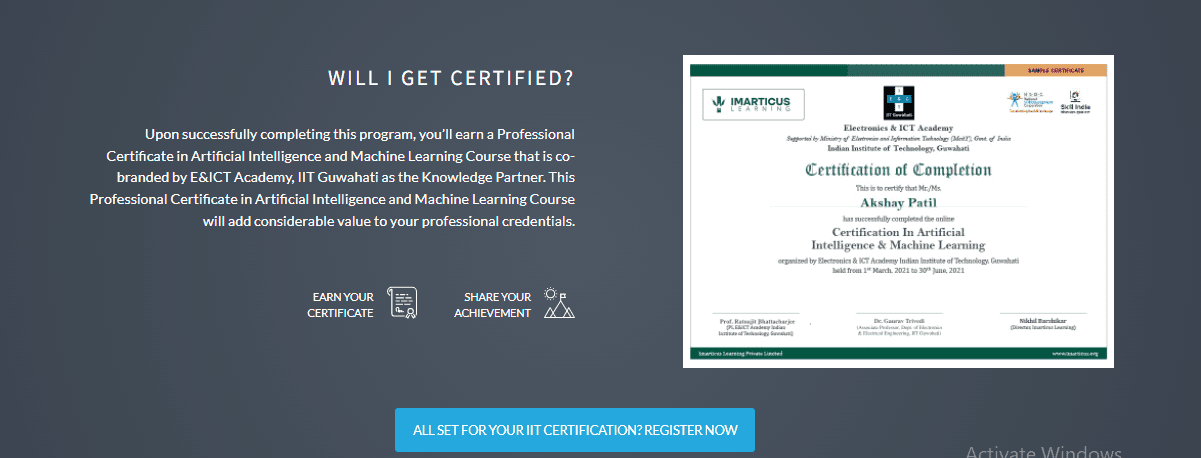
Following are some tips that advanced courses like an artificial intelligence course by E&ICT Academy, IIT Guwahati will teach students. 

  • No Data Preprocessing Before Train-Test Split

There will be a preprocessing method fitted on the complete dataset at times. But one should not use it before the train-test split. If this method transforms the train or test data, it can cause some problems. This will happen because the information obtained from the train set will move on to the test set after data preprocessing. 

  • Use Transform on Train and Test Sets

It is essential to understand where one can use Transform and where one needs to use fit_transform. While one can use Transform on both the train set and the test set, fit_transform cannot be used for a test set. Therefore, it is wise to choose to Transform for a test set and fit_transform for a train set. 

  • Use Pickle and Joblib Methods

The Python Pickle module serializes and deserializes an object structure. However, the Pickle module may not work if the structure is extensive with several numpy arrays. This is when one needs to use the Joblib method. The Joblib tools help to implement lightweight pipelining and transparent disk-caching. 

Following are a few more tricks that help in automation and accurate data analytics when using AI/ML with Python.

  • Utilize MAE score when working on any categorical data. It will help determine the algorithms’ efficiency as the most efficient one will have the lowest case score. 
  • Utilize available heat maps to understand which features can lead to leakage. 
  • When using a Support Vector Machine (SVM), it is crucial to scale the data and ensure that the kernel cache size is adequate. One can regularise and use shrinking parameters to avoid extended training times. 
  • With K-Means and K-Nearest Neighbour algorithms, one should use a good search engine and base all data points on similarities. The K-value should be chosen through the Elbow method, and it should be relevant. 

Learn AI/ML with Python 

A Python certification will be beneficial for those who wish to pursue a career in data science and analytics. However, it is best to choose a course that will offer advanced training. Imarticus Learning’s Certification in Artificial Intelligence & Machine Learning includes various recent and relevant topics. Apart from using AI/ML with Python, students will also get to work on business projects and use AI Deep Learning methods.

The course curriculum is industry-oriented and developed by IIT Guwahati and the E&ICT Academy. Students can interact with industry leaders, build their skills in AI and Ml through this machine learning course. This course is ideal for understanding the real-world challenges in data science and how AI/ML with Python can help provide solutions. 

The IIT artificial intelligence course from Imarticus Learning helps students become data scientists who excel in their fields of interest. The course offers holistic education in data science through live lectures and real business projects. It is therefore crucial for a rewarding job in the industry. 
5 steps to master python for artificial intelligence

Python is among the most-used programming languages on the globe. Developed in 1991, Python has been useful for new-age technologies also. Python is helpful for new-age technologies like AI (Artificial Intelligence) and machine learning. AI algorithms can be developed easily with Python as compared to other programming languages.

Most of the companies and AI experts find Python easy than other programming languages. Python has left behind some popular programming languages like C and Java when it comes to AI. Read on to know five steps to master Python for AI.


  • Learn the basic concepts of AI


Before you start making AI algorithms with Python, you should know basic AI terminologies. You should know different types of learning methods for AI algorithms, agents, environment, and other basic things about AI. You do not need to know everything about AI initially. Learning AI with Python is the perfect way to become an expert. However, you need to know the basic AI terminologies beforehand.

Getting your concepts cleared is of utmost importance. You cannot become an AI expert if you don’t know much about the basics. Knowing the basic concepts of AI and its importance is as important as knowing the complex concepts.


  • Learn the syntax of Python


For every programming language, you first learn its syntax. The syntax can be referred to as the code writing style which is different for each language. Python is chosen by AI experts because it has a simple syntax and involves less coding. You need a way of writing code in Python first to master it in the future. It won’t take much time to learn the syntax of Python. You can join an online Python course to learn quickly.


  • Join an online course for AI with Python


You need to go for an online course for AI with Python to master it quickly. An industry-oriented course can help you in learning Python for building smart AI algorithms. Imarticus Learning is a reliable source that can provide you with artificial intelligence and machine learning certification. With a globally-recognized artificial intelligence and machine learning certification, you can also get a job as an AI expert. 

Best Python programming course for Artificial IntelligenceImarticus provides an artificial intelligence course that helps you earn a job. The Certification in AI & ML gives you a chance to learn according to the curriculum of IIT Guwahati. You can learn from a premier institute of the nation from your couch with Imarticus Learning.


  • Know about Python libraries for AI


Python has many built-in libraries for AI which makes the task easy. A python library is a pre-existing chunk of code that can be used time and again for your AI projects. Python libraries save your time when working on AI projects. Some of the Python libraries used by AI professionals are NumPy, SimpleAI, SciPy, Matplotlib, etc. Make sure about the function and capability of each Python library for AI. It can save you time when designing AI algorithms.


  • Work on some AI projects with Python


Choose a Python course that allows you to work on AI projects. Working on AI projects can help you learn Python more quickly. You would not want to make mistakes as an AI employee. It is better to make mistakes beforehand and learn from them by working on AI projects. The AI course offered by Imarticus lets you work on around 25 industry-related projects.

Conclusion

Python is a simple programming language that is easy to use and learn. It is why many AI experts choose Python for boosting their productivity. You can learn about the role of Python in AI via the online course offered by Imarticus. Start your artificial intelligence course right away!

5 Reasons Why Is Cloud Computing Misunderstood

Companies are adopting Cloud computing as they shift from on-premise platforms. However, it is essential to have a comprehensive understanding of Cloud computing before starting the migration process. Imarticus Learning’s SCBI can help you gain the necessary expertise. The software engineer course is industry-oriented and helps students focus on specialized fields. 

Top 5 Reasons Why People Misunderstand Cloud Computing

While Cloud computing is essential for companies that wish to optimize and automate various processes, it can often be misunderstood. Cloud computing is one aspect of the technological developments that assist in securing and reducing errors in business. Therefore, you cannot wholly depend on the Cloud without using any external solutions.

If you have a professional Cloud DevOps engineer certification, you will identify the issues and provide the necessary software solutions. However, people expect a lot from cloud computing. Following are some of the reasons why these unrealistic expectations occur.  

  • Trying to Use Cloud Computing for Multiple Purposes

Cloud computing may not be ideal for all purposes. Before using it to replace on-premise platforms completely, companies should invest in a few trials runs to ensure the Cloud migration is the best option before using it to replace on-premise platforms completely.

Even then, you cannot migrate all applications. For example, you might have legacy applications or specific workloads which are not suitable for the Cloud. It would be best if you considered these aspects before depending on Cloud to solve all issues. 

  • Focusing on Cost Reduction

Companies often migrate from on-premise architecture to Cloud infrastructure to reduce the cost of business. However, cost reduction is not always a given when it comes to Cloud computing. It depends on what the business processes are and the total cost of ownership. So if cost is an issue, you will have to check the business model. Apart from this, Cloud computing improves agility which boosts businesses. So that is more important than reducing the cost for specific processes. 

  • Using Only One Cloud Strategy

Most companies use Cloud computing to simplify business procedures, and in doing so, they try to use one strategy for everything. But as a Cloud DevOps engineer, you will see that Cloud computing works differently for different workloads. Therefore, you need to analyze available processes and come up with strategies specific to those processes. Cloud strategies also need to work for various Cloud services. So, a strategy cannot be too simple. 

  • Assuming that Cloud is Always Secure

Cloud does offer enhanced security, but people often depend on that and do not use any other measures. Third-party hackers have attacked the public Cloud in the past few years. But people continue to misunderstand Cloud security. It is not something that is automatically enabled. Instead, Cloud security is your and the provider’s responsibility. Additional cybersecurity solutions need to be used to enhance security. 

  • No Monitoring After Cloud Migration

After the migration to Cloud is complete, people assume that there is nothing more to do. However, constant monitoring is essential. You need to monitor every operation to ensure that the company’s performance is precisely what it needs to be. Lack of post-migration management can lead to various issues and affect performance. 

How Can You Learn Cloud Computing? 

If you wish to learn Cloud computing, you will need to enrol in a software engineer course. Imarticus Learning offers Certification in Software Engineering for Cloud, Blockchain, and IoT. This course is in collaboration with IIT Guwahati and E&ICT Academy. Therefore, you can easily interact with professionals in the field and learn more about the practical applications of Cloud computing. You will receive professional Cloud DevOps engineer certification, and you can land a successful job in your field of interest. 

Imarticus Learning will ensure that you become a successful Cloud DevOps engineer. You can also explore careers in data science or computer vision or develop skills in machine learning, deep learning, and NLP.

How long term modeling of our future energy system can be mapped with artificial intelligence and machine learning

Today, technology and sustainability are the main axes of development. To secure the planet and continue the growth of industry, we are engaged in a global energy transition. Most countries have become aware that measures must be taken to address a problem that, if not curbed, will have catastrophic consequences for the environment and, of course, for human beings themselves.

However, such a transformation requires the support of technology and, because of the enormous amount of data, artificial intelligence and machine learning courses are the basis to ensure the advancement of the energy sector. At Imarticus you can join the postgraduate program in data analytics & machine learning (AIML).

Technology as a tool

Changing the energy paradigm of the last century will be an arduous and complicated task. That is why new technologies have a lot to say as tools to facilitate evolution. The Internet of Things, machine learning, artificial intelligence, and Big Data will be key to making the processes of change as effective as possible. Massive data analysis must become a fundamental pillar for transforming how energy is generated, transmitted, and distributed.

Artificial Intelligence allows us to handle enormous quantities and analyze them logically and reasonably. About energy, in particular, we have data on meteorology, health, or the behavior of the people involved in the system: who generates electricity, who transports and distributes it, and who consumes it.

Data that, when properly analyzed, can provide a tailor-made understanding of the sector. The development and implementation of intelligent systems must not only facilitate the massive introduction of alternative energy sources but will also have the task of achieving rationalized storage of this energy, as well as providing greater flexibility for the demand, i.e. the people who use it.

Three levels of analytics can be applied: descriptive, to know what information is available and where to apply intelligence, predictive analytics, to anticipate production or demand, and prescriptive analytics. With the data, we work on predicting production, including renewable energies and demand, with the implementation of smart meters. In addition, technical and non-technical incidents, such as energy fraud, are detected. All of this is aimed at optimising the energy model, with the resulting economic and environmental benefits. We will see a huge take-off in the number of professionals who will choose to pursue a machine learning career.

Tools for the consumer

In this scenario, smart meters and internet-enabled sensors will be commonplace, which will improve our energy use while at the same time making it possible to bring costs in line with what each individual actually consumes.

Thus, machine learning will automate processes, while artificial intelligence will make it possible for devices to work automatically and learn from consumers’ habits. This will also be possible on a large scale, so that the operation of future solar or wind power plants, to give just two examples, will be more effective in a shorter space of time.

In this respect, we should note that although everyone is involved in the energy transition and awareness must start in every household, the technology will be geared towards people having little to do in terms of reducing consumption and costs.

Artificial intelligence-based models and predictions facilitate and will continue to be a major advantage in mapping energy systems. What is most surprising is that this is just one of the many applications of these technologies. If you want to contribute to the change, you can sign up for AI and ML courses by E&ICT Academy, IIT Guwahati.

Cloud Computing Decoded – 7 Reasons Why You Should Consider Software Engineering in Cloud, Blockchain & IoT

IoT and cloud computing backed by blockchain are on their way to revolutionizing the world. Software engineering in these areas has become critical to exploit the full potential of these technologies. Considering the business opportunities that are opening up and the multiple benefits that these technologies bring with them, you must be prepared to face the challenges of the industry.

Below you will find the main reasons why software engineering will take great importance in blockchain, IoT, and cloud computing and why a professional cloud  DevOps engineer certification is the best career move for you.

  1. Reduces Business Costs

For starters, one of the most important attractions of cloud computing for businesses is the reduction in costs. By using the cloud, companies are freed from spending money on the purchase and maintenance of equipment. Nowadays it is no longer necessary to invest in the construction of a data centre since everything that is needed can be obtained through the cloud.

 2. Provides Data Security

The Blockchain is coming to alleviate one of the main concerns about cloud computing, security. Security breaches can wreak havoc on any enterprise. Although cloud computing is currently very secure and one might believe that it is not as compatible with blockchain, the truth is that both technologies can be integrated, and this is where the cloud  DevOps engineer will shine.

3. Allows Total Mobility

How not to mention one of the main benefits of the cloud? Thanks to the cloud, all information can be retrieved, reviewed, or processed from any authorized device in just a few clicks. Indeed, this has completely revolutionized the way we work and thanks to the Internet of Things the impact is growing.

4. Promotes Collaboration

After mentioning how accessible information is thanks to the cloud, we must recognize that this also benefits the connectivity between people. Collaboration between people thanks to the cloud allows information to be shared in a simple, simultaneous, and above all secure way.

5. Helps Quality Control

Having a cloud system where all documents are stored in one place makes it easier to maintain data consistency. In this way, human errors can be avoided more easily, having a clear record of any update or change of information. And this also adds value vis-à-vis customers.

6. It Has Automatic Updates

By having a cloud computing service, updates, upgrades and modernization are generally paid for by the service provider. This is another excellent way to save costs and time. In reality, everything is left to the cloud  DevOps engineer.

7. Allows Loss Prevention

Storing all the information inside computers and physical hardware can lead to big problems if the equipment fails. Computers can fail on a frequent basis and this can lead to a great loss of information. Many companies rely on access to their information to work, so disruptions of this type are major setbacks. Cloud computing avoids this risk by ensuring access to information regardless of what happens to the physical hardware.

These are some of the reasons why these technologies have become relevant. These technologies are new, some relatively unknown, and their implementation, like any technological change, involves organizational risks. If this interests you and you want to go deeper into the subject, the professional cloud  DevOps engineer certification is the perfect option for you. With us, you will find the best cloud, blockchain, and IoT software engineering course (SCBI) designed by E&ICT Academy, IIT Guwahati, and Imarticus Learning for new-age software engineers.

Here’s how you can improve customer service for mid-market and enterprise businesses with artificial intelligence and machine learning

Customers are the reason for businesses to drive! Whether it’s a small, medium, or an established business, it holds equal importance for all. A customer would like to take services from a company that provides easy access to the platform, understand their needs, is quickly responsive, and resolve the queries optimally.

Technology has a way of making life easier. This is especially true for businesses, which can save time and money by utilizing machine learning and artificial intelligence to analyze customer data to provide better service.

In this blog, we’ll understand a few important ways businesses use AI and Machine Learning for improved customer service. So, let’s get started:

How AI and Machine Learning Contributes to Enhance Customer Service

AI and Machine learning is used in the following areas to enrich customer experience.

  • Customer service interaction
  • Enhancing returns
  • Troubleshooting problems
  • Uses of Website
  • Messaging
  • Customized offerings

Following are the ways used to enhance customers’ experience using AI and machine learning.

1. Chatbot – For Faster and Efficient Assistance: 

The chatbot is one of the most used AI applications by business enterprises. It understands human communication in an accurate context and provides relevant answers to the questions. With the chatbot, you can avail the following benefits:

  • Help businesses to gain insights about user’s requirement
  • Reduces customer’s wait time and get them where they want to be quicker
  • Available for 24 by 7 and provide basic customer support

2. Eliminate Language Barrier to Improve Customer Engagement 

With AI, an enterprise can overcome barriers to doing business with an audience that speaks different languages. Language analysis tool enables office associates to extract main information from the customer feedback and, based on that, adapt their communication.

Language analysis is an important asset to improve the call center experience. With it, the executive can detect if the customer they’re talking to is happy or unhappy and adjust their tone accordingly.

3. Machine Learning Algorithm – Better Understanding of Customer’s Need 

Machine learning offers businesses to get to know more about their customers. Relying on a machine learning solution helps businesses organize daily support requests, answer common inquiries, completely understand a customer’s requirement, and provide a faster solution.

4. Predictive Analytics

Analytics refers to the effort to analyze the data, and it’s crucial for marketing a product. Predictive analytics, with the help of AI tool, analyses past data and predict future outcomes.

 Take Your Career to Next Level with Imarticus Learning 

Imarticus Learning offers the certification in Artificial Intelligence course that the industry’s best leaders have designed to provide a quality learning experience.

The artificial intelligence course will take 9 months to give you a holistic learning experience. Choosing this course will unlock the lucrative creative opportunities in the coveted field of AI.

Our Artificial Intelligence and Machine Learning Course USPs:

  • Master the skills of Machine Learning and Artificial Intelligence through the most relevant curriculum designed by E&ICT Academy, IIT Guwahati, and leaders from the industry.
  • An opportunity to get educated about what new-age AI & ML engineers do by solving real-time problems in their job. Engage in a world-class education program while mastering practical application.

Here’s How Cloud, Blockchain, and IoT Architectures Provide a Robust Blueprint for a Vendor-Neutral Data Sharing and Marketing Network

It is estimated that in the coming decades, an ecosystem-based on blockchain will emerge and it is this technology that would reduce various issues such as applications, growth opportunities, identity management, supply chain province, and many more.

Taking into consideration our Blockchain certification course, it is important to note the growth that IoT is having and the importance of blockchain in emerging projects today. Especially those designed to improve the development and operation of IoT devices, which makes us assume that in the short term both technologies are positioned as the best alternative for always connected and automated systems for which the cloud will be indispensable.

Why Blockchain?

The main areas to be worked on for improvement supported by Blockchain are framed in scalability, security, interoperability, legal, compliance, and regulation. But it also seeks to bring IoT to highly secure and reliable spaces. Definitely, blockchain is a technology with many potentialities, some are still very green, but its future is promising.

Within the branch of challenges that are to be overcome in the industry, the effective management of information is an important issue to consider, so the immutability and privacy offered by the blockchain network is something that is at the forefront of the struggle in the transformation of industries.

With the use of blockchain, the data that will be sent by sensors – to speak of an example – will be hosted on the network immediately, and thus the data cannot be altered, which guarantees transparency in the data provided.

Blockchain and IoT

Combine blockchain, IoT, and cloud products to offer an end-to-end supply chain solution. For example, using IoT-enabled shipping containers and sensors that can provide real-time updates on shipping processes. The market is increasingly demanding more security, more transparency, and more genuineness in the products offered to the consumer. It is therefore essential to incorporate technology and digitization in the solutions offered to customers, to operate more securely and offer more transparency.

The combination of cloud, blockchain, and IoT allows that every time a device in the supply chain uploads information to its node of the platform it is encrypted so that it cannot be modified by the rest of the actors. It can be applied to different sectors that have value-added products, especially those that may be under the shadow of fraud. What this solution does is to put certainty and credibility in the face of those threats that may exist in the product itself or the entire sector.

The design of a digital strategy based on blockchain that allows the sustainable adoption over time of a solid plan for a supplier-neutral data exchange and marketing network is fundamental. All to achieve a transformation program that facilitates the identification of the immediate challenges in this sector and achieve greater effectiveness, efficiency, and agility of enterprises.

Certifications with Imarticus

The best certifications for software engineers focus on emerging digital fields such as cloud, IoT, and Blockchain. Software developer training aims to adopt the technology to transform business models along with a culture of continuous learning to succeed in the era of the digital economy.

Imarticus cares about your professional development so we only offer unique, cutting-edge courses that will enhance your career. The Certification in Software Engineering for Cloud, Blockchain, and IoT is a 9-month extensive program that will prepare you for the current digital era we are living in.

Here Are the Parameters To Ensure an Open and Tokenized Market Using Cloud, Blockchain and IoT

Technological advancements, such as Blockchain have the potential to transform the financial markets. This means, having financial processes carried out through faster digital transactions. This will be done through the tokenization of assets. The process of tokenization consists in having a digital representation of different physical assets, having a record of transactions in a distributed ledger. This has brought a set of different benefits to the market including a gain in efficiency and transparency.

Open Market Using Tokens

Tokenised commodities can democratize the access for the retail investor, expand the market to new players, increase the addressable market and eliminate the time-space barriers. Hence, markets could be open every single hour on any day of a year, accessible from every location on the planet. This will promote the entrance of a new set of investors able to fund asset classes that were unattainable previously. Thanks to Blockchain technologies, third parties are not needed in transactions, thus, the clearing processes and operations are performed rapidly and are encrypted to ensure confidentiality.

Technologies Breakthroughs

Blockchain has the potential to impact various sectors. New services creating synergies between edge technologies are expected to impact the market. One relevant example of this is the implementation of enhanced blockchain solutions using a software engineering course for IoTHaving an IoT tokenized asset opens the opportunity to every potential investor to receive benefits from any device. For instance, any manufacturer could control the information interchange using wireless devices.

Moreover, any manufacturer asset could also be funded using cryptocurrencies. Virtually any asset with a wireless connection can become a potential investment. The data collected from every device are then encrypted and saved in a blockchain-based cloud, enabling secured storage of information and a reliable ledger of transactions of every operation.

The Parameters To Ensure an Open Market

The main parameters in markets are related to risk. Hence, we could say volatility and price of the currency are relevant indicators. Additionally, the acceptance and adoption of these emerging markets are crucial to increasing their values.

Due to the novelty of this technology, it still lacks a regulated framework. The informality of the market wrapped up with a limited set of suspicious early adopters, the high cost related to mining, and other scalability problems, have resulted in a very volatile tokenized market. Consequently, any further development of the technology is highly uncertain.

Having synergies with different technologies, such as cloud engineering and IoT, offer real opportunities to improve the tokens’ perception and performance. On the one hand, cloud solutions, as an added layer, can help to overcome the high costs of mining, facilitating the scalability of the process. On the other hand, IoT assets can be used to retrieve information and distribute benefits easily to investors.

Learning About the Token Open Market in Imarticus

Are you thinking about getting enrolled in a software engineering course? Imarticus brings to you the Certification in Software Engineering for Cloud, Blockchain, and IoT to improve

and make your CV stand out, with quality and industry-based content. Get a certification endorsed by one of the most prestigious institutions in India, E & ICT Academy IIT Guwahati. Additionally, you can access world-class professors and get cutting-edge engineering skills and learn real-life cases. Imarticus offers a software engineering development course that will give you the tools to jump easily to the market.

Conclusion

Cutting-edge technology needs mature professionals that can create synergies to overcome the main challenges. If you are looking to boost your career, apply to our software engineering certificate course and get the tools you need to promote an open market in a tokenized world!

With rampant use of artificial intelligence and machine learning, how are financial institutions dealiing with problems related to data bias and transparency?

The public and private sectors are increasingly turning to machine learning (ML) algorithms and artificial intelligence (AI) systems to automate every decision-making process, and financial institutions are no exception.

In addition to widespread use in the capital markets, artificial intelligence and machine learning are used in financial services to make insurance decisions, monitor user behavior, recruitments, fraud detection, credit referencing, and underwriting loans.

However, while AI and ML have brought innumerable benefits to financial institutions, they also have their share of woes in the form of data biases and transparency issues. The question is, how are financial institutions dealing with these problems?

Bias and Transparency in the AI Context

AI systems are powered by algorithms that “train” by reviewing massive datasets to ultimately identify patterns and make decisions based on the observations. Hence, these systems are no better than the fed data, resulting in unconscious data biases.

On the contrary, transparency in the context of AI refers to the ability to explain AI-based decisions. Given the increasingly complex findings and algorithms, ensuring transparency to different stakeholders is vital in the financial sector, both from compliance and business value perspectives.

Biases can occur in many ways. For example, bias due to incomplete data occurs when the AI system has been trained on data that is not representative of the population.

Likewise, the dataset could be biased towards previous decision-making processes, the programmer may introduce their own bias into codes, or business policies pertaining to AI decisions could be biased themselves. The bias of any form eventually leads to unfairness and inequities in financial services.

Dealing With AI Bias and Transparency

Although the use of AI and ML give rise to data bias and transparency issues, they have become indispensable for the functioning of financial services. So, the only course of action left to financial institutions is to adopt ways to get around the problems. Some of them are listed below:

  • Financial institutions and firms can have appropriate controls and monitoring tools to ensure that new data entering the pool is reliable and of high quality. 
  • In addition, some organizations have developed tools to determine if a potential AI solution is biased. 
  • When building AI systems, it is wise to gather a team with domain expertise, model development skills, data engineering capabilities, and commercial expertise. 
  • Organizations can undertake impact assessments of the AI solutions to ensure they are transparent and explainable, as well as determine how the AI-based decision-making process will impact customers. 
  • When engaging with AI technologies, financial services can apply safeguards to ensure that business outcomes are achieved, and customers’ interests are protected. 
  • Another way to minimize data biases is to be open on the user data, match and align data with the target segment, and set up review cycles with legal and statistical experts. 
  • Tracking mechanisms that allow one to track the decision-making mechanism of algorithms can be put in place to eliminate bias and ensure transparency as much as possible. 
  • Lastly, it is pertinent for institutions to document their approach to handling bias and review it after every stage of development and use of the algorithm.

What to Look for in an Artificial Intelligence Course?

If you want to learn AI and ML, there are several online courses you can choose from. An AI and ML certification course that makes you future-ready will have a robust curriculum covering critical concepts related to data science, machine learning, NLP, deep learning, and computer vision.

In addition, the program should offer in-depth experiential learning through hands-on involvement with real-world projects.

Here Are 7 Reasons on How To Determine Software Engineering in Cloud, Blockchain, and IoT Technology Is the Right Fit

The increasing data production demands more resilient, efficient ways of collecting and managing information. The Internet and the rapid development of computing devices have enabled us to have a digital and physical world merged together. Indeed, data can be collected from pretty much any device and registered in servers instead of local data warehouses.

Information can be verified between involved parties and encrypted to ensure its transparency and safety. This new world in which technology plays a central role has its limitations that can be overcome by a new generation of IT professionals.

New-Age Software Engineer

Software development has gone into the trends, using edge-cutting technologies, pacing up to the latest inventions, and creating new business applications. As the industry grows, scalability, users’ trust, and some other technical issues arise as well. One of the main issues is the lack of qualified professionals. Getting into the new-age software poses a set of advantages that will be explained briefly in the following paragraphs.

  1. High-Demand Job Market: these cutting-edge technologies are revolutionising economies. Every industry will need to adapt, create new processes, and enable digitalisation. This means the job market will be increasing in the upcoming years.
  2. Flexibility in Career Prospects: new roles are being created around the new technological breakthroughs. Career opportunities will be diverse: developers, architects, designers, managers, quality and assurance engineers, business developers, brokers, marketers, advisors, consultants, etc.
  3. Applications in Every Industry: apart from being trendy technologies, they also have applications in every kind of industrial sector. This flexibility allows you to focus your career on any economic activity. You can also work for governments and intergovernmental organisations.
  4. Have a Real Impact on the Industry: becoming an expert in this new industry, gives power to your opinion. Start a career in which you can collaborate to shape solutions and see a tangible impact on digital products.
  5. Improve Your Salary: an emerging complicated, yet fascinating domain brings better remuneration. Blockchain, IoT, and computing engineering have very attractive salaries for software developers.
  6. Be in an Emerging, Innovative Sector: an interesting, innovation-driven industry. Be part of this new domain, construct, prototype, and code in an advanced scientific environment.
  7. An Industry Full of Challenges To Overcome: the lack of maturity of the technology poses huge challenges in its future development. However, this allows new professionals to challenge themselves and push limits forward.
  8. Learn How To Adapt Your Skills to Incoming Trends: as part of the new-age employee force, you will be in touch with the last trends on the market, being able to upgrade constantly your skills and upskill your profile to the uncertain future.

Imarticus As Your Career Developer

Are you willing to be a part of the innovative new generation of tech professionals? With the Imarticus 9-months extensive course in Cloud, Blockchain, and IoT Software Engineering course, you can take off a future-proof career.

Adapt to the upcoming trends learning in-demand skills, from industry experts, develop an impressive GitHub portfolio and get a software engineer certification from one of the most prestigious institutions in India. Our Certification in Software Engineering for Cloud, Blockchain, and IoT program enhances the job opportunities of students as we offer an advanced career assistance service with access to industry and private networks.

Conclusion 

New-Age software development is a trendy, emerging field that is creating new job opportunities. New-age professionals will benefit from a promising sector, developing a unique career path. Are you interested in new technologies? Immarticus offers you a Software development certificate online course that will give you the tools to skyrocket your career. Apply now and get the benefits from being on an innovative tech path!