How Data Visualization Helps Data Analysts Make Effective Decisions Faster

In most organizations, the challenge is not the lack of data, but the excess of data. Companies have such a large quantity of data that it is difficult for them to organize and use it as a tool to prioritize activities. A large amount of data is often spread across different departments, including marketing, and sales.

Proper data visualization through algorithms can help a company reason through chaos. It can filter the data and digest it in a way that detects the right prospect at the right time. It also provides the rich context needed to greatly improve the efficiency of a company or a segment of it, like for example the sales team. 

Data Analysis for Effective Decision Making

Data visualization helps data analysts give an explanation and rationale as to why a recommendation is made, as well as contextual data from relevant applications, such as customer relationship management, which allows an individual to act on the recommendation more intelligently and effectively. 

Intelligent data analysis throughout proper data visualization allows the breakdown of information based on specific criteria. When a proper data analysis is carried out, not only is time saved but also, companies are able to support their decisions on facts and can be confident that they are making the most effective strategy.

Role of data analysts

Data analysts are in charge of examining a set of data with the objective of deriving conclusions in order to make decisions or simply to expand knowledge on a specific topic for which they contain information. Almost any industry or company can profit from proper data analysis if they have the required means of data visualization.

Data analytics is a key tool that helps recommend products, services, actions, or decisions that address a specific demand. Data analysts also extract value from data thanks to visualization tools. Today many universities worldwide offer data analytics courses and data visualization courses that help people become experts in delivering commercial strategies for many industries.

Why Imarticus for data analysis online course?

Becoming a data analyst will open many doors to an enormous number of possibilities in many industries. It will give you professional analyst skills, new ways to make key data-driven decisions on aspects like how, when, or where to deploy resources, or how to engage prospects and leads more effectively.

You will become of value to the industry, as you will be key in eliminating their reliance on guessing outcomes and relying on gut instincts to make critical decisions. You can subscribe to a data analytics course offered by us at Imarticus and become a well-profiled professional in this new and demanded field!  

best data analytics certification courses in IndiaAt Imarticus we offer a Program in Data Analytics and Machine Learning that has been designed for fresh graduates and early career professionals that are seeking to pursue a career in Data visualization and Analytics.

This industry-designed curriculum is offered in partnership with many industry leaders, which will be key in providing you with real-life case studies, via our data analytics courses, that will train you for the real world during your formative years. Once you have received your data analytics certification, we will guide you through interview opportunities. Come and join our Imarticus team today! 

Conclusion

The value of data visualization for data analysts is increasingly obvious when compared to the past when there were no systematic methods to determine the next action on any given customer or even of a company. Thanks to professionals with data analytics certification, today companies are able to gauge the true impact of the data, by tracking metrics against previous practices and environment, in order to make effective decisions faster.


How Data Science is Making Personalization of Customers Feasible?

How Data Science is Making Personalization of Customers Feasible?

Data science opens the door to an enormous number of possibilities in customer experience management. It plays an increasingly important role in all areas of the customer relationship management lifecycle, but countless companies have yet to make this advanced technology part of their marketing tools.

One of the main reasons is the lack of full visibility of what can help them engage better with customers and the inability to quantify potential improvements. Nowadays, with the amount of information available to both consumers and businesses, the key to success is knowing how to offer personalized offers that appeal to each consumer. 

Data Science for the Hypersonalization of Customers

To better understand how data science can make sales and marketing actions more effective, it helps to think about one of the main responsibilities of these groups: acquiring new customers. To optimize commercial strategies in a highly competitive market, working around qualified leads is the basis for success. In that sense, data science can greatly improve projections and help a company increase sales by effectively identifying those who represent real business opportunities. 

Intelligent data analysis allows the segmentation of leads based on their specific criteria, such as needs, purchasing power, geographic location, and other exclusionary criteria. In this way, it is possible to optimize prospecting efforts, allowing companies to increase their closing rates and, ultimately, business profitability. 

Role of Data Science

Data science extracts value from data through the combination of multiple fields, such as statistics, artificial intelligence, and data analytics. Data science involves the preparation of data for analysis, including steps such as data gathering, scrubbing, presentation, and manipulation. Data scientists can pursuit analytical operations and are able to review results to reveal patterns and enable businesses from different fields to gain informed insights.

To optimize commercial strategies in a highly competitive market, working around qualified leads is the basis for success. In that sense, data science can greatly improve projections and help you increase sales by effectively identifying those who represent real business opportunities. Today, more and more people are opting for a Data Scientist Career, as it is in increasing demand in many industries.

Why Imarticus for data science online course?

Not only is data science being key for market forecasting and finding good investment opportunities but also for smart marketing. As competition in the market increases, it is becoming more and more necessary to shape the business according to the demands of end-users. Data science makes it possible to offer products/services that address the needs of each user. 

Here at Imarticus, we offer an industry-designed curriculum on DSP Data Science Prodegree. In partnership with many industry leaders, we will introduce you to real business projects and case studies, throughout high-quality tech-enabled education. With one of our courses at Imarticus, not only will you learn data science, but also, we will provide you full placement upon completion of the program.

Conclusion

Data science opens a door to an enormous number of possibilities in customer experience management. It gives sales and marketing professionals a new way to make key data-driven decisions on how to deploy resources and engage prospects and leads more effectively, eliminating the reliance on guessing answers and relying on gut instincts in making critical decisions. You can subscribe to a data analytics course in India offered by Imarticus and become a well-profiled professional in this field! 

The Changing Face of the Retail Industry with the Emergence of Data Analytics

The introduction of new technologies like data analytics has revolutionized the way we think about retail. Even the figure of the retail professional is changing and evolving. Companies are in a phase of change and are looking for new professionals who understand the difficulties, issues, and challenges of the sector.

Read on if you want to know how data analytics drives the retail business, and to find out more about the roles of data science and retail banking in this industry.

Data Analytics in the Retail Industry 

Today, companies operating in the retail sector leverage the power of data analytics more than anything to ensure business continuity and growth. Retail employees have traditionally had relatively little training in their area of work. This trend is changing and must change if retailers are to improve the shopping experience and be able to adapt to new customer demands.

In today’s world, customers are becoming more and more dependent on e-commerce and no longer depend on going to a store to get information and rely on what the salesperson tells them; rather, customers rely today on store personnel to get information or resolve doubts that they themselves have not been able to find or resolve online. This requires greater professionalization of employees to meet the customer’s demands at the point of sale.

Role of Data Analysts

Data analysis is the science of examining a set of data for the purpose of drawing conclusions about the information in order to make decisions or simply to expand knowledge on various topics, it is an indispensable tool for market forecasting and identifying good investment opportunities.

Many industries, like investment banks and retailers, are already using data analytics. With increasing competition in these markets, businesses are being shaped according to the demands of end-users. Data analytics is a key tool in helping them offer products and/or services that address these demands. 

Data Analytics for the Retail Industry

The retail sector is therefore increasingly demanding professionals with data analytics certification and marketing expertise, as analytical and creative skills are positively valued to find solutions in a changing environment. 

Many aspects of this type of company, from distribution to warehouse logistics, are changing and continue to change drastically in the coming years. Stores are and will be an important factor in a retailer’s sales, as the physical point of sale allows interaction with the customer that is impossible for now in online commerce.

Online sales are going to coexist with physical stores and therefore, new professionals with expertise in the omnichannel world who can relate to both worlds are required. Therefore, having trained staff capable of analyzing data, identifying weaknesses and strengths, and implementing the necessary changes in time will be indispensable for the retail industry to survive the technological revolution. 

Individuals with business analytics skills are being highly valued in these industries. At Imarticus, you can access data analytics courses online to learn how data analytics affects the retail industry. 

Why Imarticus for Data Analytics Online Course?

At Imarticus we offer a PGA Program in Data Analytics and Machine Learning design specifically for fresh graduates and early career professionals that want to pursue a career in Data Science and Analytics. We offer this industry-designed curriculum in partnership with many industry leaders.

During your formative years, we will provide you with real-life case studies via its data analytics courses that will train you for the real world. On completion of the data analytics program, our Imarticus team will guarantee you interview opportunities. Enroll today and begin our data analytics program!

How are Business Risks Predicted using Logistic Regression?

Logistic regression is a mathematical technique that estimates the probability of an event occurring. Using historical data to create a predictive model, you can use regression to predict business, investment, operational, and strategic risks. By understanding how these risks get indicated, you can better assess your company’s vulnerabilities and protect them from future losses.

This blog post will provide examples of how you might use regression in your workplace and explain what this technique does in more detail.

Why is Logistic Regression critical?

It is a statistical technique that tries to understand how the probability of an event occurring changes when one or more variables get altered. The method builds predictive models using data about previous incidents to use for proactively predicting future events. For instance, you could use regression to guess which customers are most likely to stop using your products and services.

Logistic regression can use to predict business risks in many ways, including:

  • Identifying the likelihood of a bad debt written off.
  • Assessing the probability that an IT system will cause downtime.
  • Estimating the risk that a new product or service will flop.

For example, suppose you are assessing the risk that a customer will default on their repayments. In that case, your model might include variables such as the loan amount and the borrower’s age. If you are trying to assess IT downtime risk, some variables might be how old a system is and its many users.

  • Assessing internal risk levels by quantifying how much staff turnover there has been over the past year. By using information about the average time, it takes for employees to complete their tasks.

For example, suppose you are trying to determine which product is most profitable. If you are trying to assess how quickly tasks are completed, some variables might be how long a study takes to complete and how many times it has met before.

  • You can use it to quantify the risk that you will not receive payment for goods or services supplied.
  • Assessing the likelihood of a customer is likely to leave your company’s favor based on variables. Such as their tenure, monthly spending, and how many requests they have made for support.
  • Predicting the probability of a new product being successful.
  • It determines the likelihood of a new employee bringing in a valuable new business.

Explore and learn with Imarticus Learning

This PG program is for industry professionals to help students master real-world applications from the ground up. Therefore students can construct strong models to provide meaningful business insights and forecasts.

This program is for recent graduates and early-career professionals who want to further their careers in Analytics, the most in-demand job skill. With this program’s job assurance guarantee, students may take a significant step forward in their careers.

Some course USP:

  • Risk management courses aid the students in learning job-relevant skills that prepare them for an exciting financial market career.
  • Impress employers & showcase skills with a certification endorsed by India’s most prestigious academic collaborations.
  • World-Class Academic Professors to learn from through live online sessions and discussions. It will help students understand the 360-degree practical learning implementation with assignments.

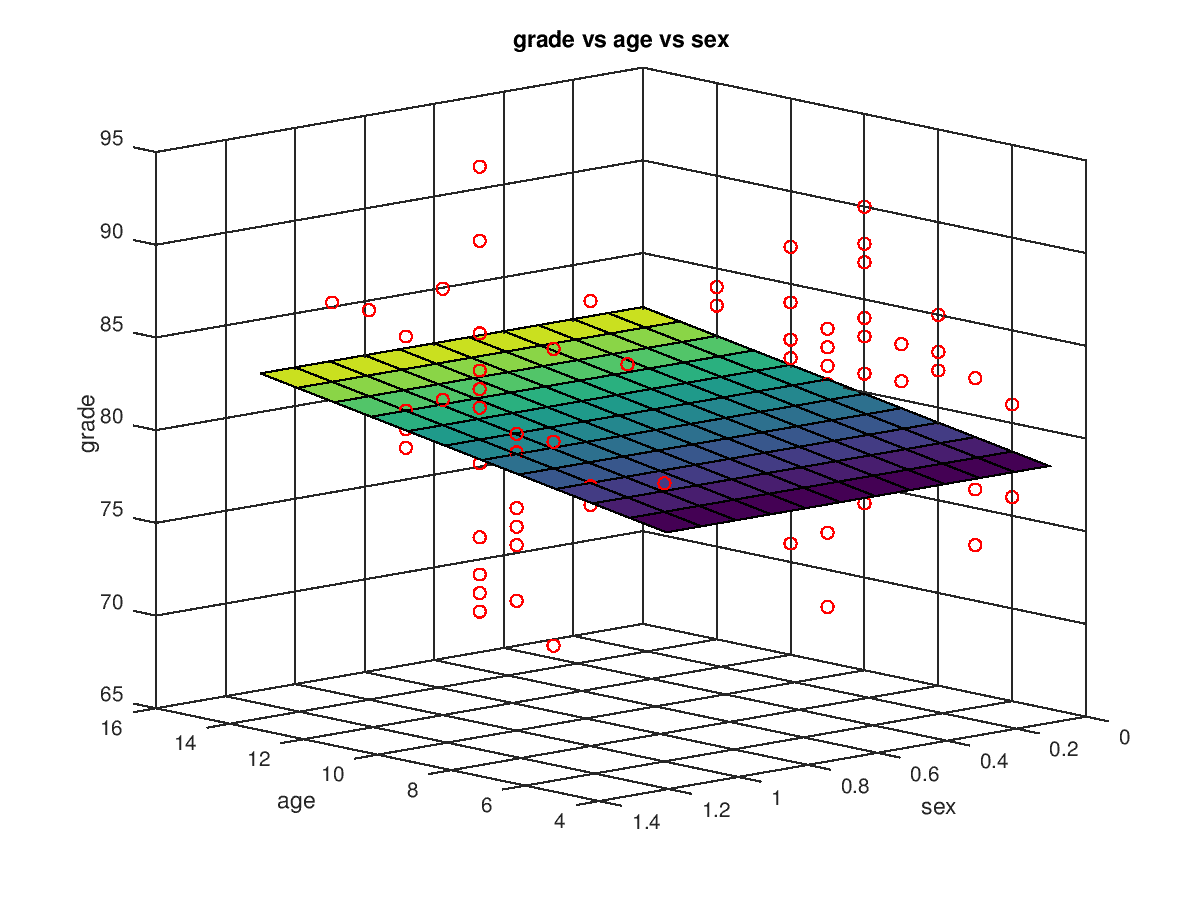
Understanding the Differences between Linear & Logistic Regression

Linear regression is one of the most common types of statistical models used in data prediction. It’s easy to use, and it assumes that a straight line can express a relationship between two variables. Logistic is another type of statistical model that also makes predictions.

Still, it does so using a logarithmic function rather than a linear function. This post will explain how these two methods differ and give you some practical applications for them both.

What is Linear Regression?

The linear discriminant analysis uses when predicting one variable based on another. This model assumes that if the slope of the line changes, so does the value of the predictions. It fits a straight line to your statistics using an ordinary least squares method. If you have more than two variables, consider using multivariate instead.

What is Logistic Regression?

Suppose you have an extensive collection of data that includes three different variables, one of which is the outcome you’re trying to predict (label). Using Linear might not make sense if your result isn’t directly related to the other two variables (independent variables or features).

Logistics can easily handle non-linear relationships between the label and the elements. For example, if you’re trying to predict if an email is a spam or not. The probabilities generated by logistics can work even if your features are unrelated to each other.

The Differences between Linear & Logistic Regression

LINEAR REGRESSION LOGISTIC REGRESSION
It is a simple and robust method based on linear algebra. It is one of the most well-known machine learning algorithms.
It assumes that the relationship between features and the outcome is linear, making it ideal for modeling or analyzing existing relationships in data. It is for binary classification problems, but you can also use it to solve multi-class classification problems by using an approach called “one versus all.”
You can, however, add interactions between variables to create non-linear models such as quadratic functions. You can not add interactions between variables to create non-linear models.
Unlike logistic, linear doesn’t require the outcome to be known beforehand.


Logistic gets considered a supervised algorithm because you must provide the predicted (outcome) label beforehand.
 It is excellent at handling these events because it only cares about the relationship between features and outcomes. Logistic, on the other hand, is designed for discrete data (categorical or binary). It can’t handle these cases effectively because of how the sigmoid function works.


The table summarizes some of the critical differences between linear and logistic. Notice that, like all machine learning models, both algorithms are affected by outliers or data points outside the normal range (tails) that generate significant errors.

Explore and learn with Imarticus Learning

Learn the fundamentals of data analytics and machine learning and the most in-demand data science tools and methods to become job-ready. With Tableau, a student can learn Python,  SQL, Data Analytics, Machine Learning, and data visualization. The curriculum includes Capstone Projects, real-world projects, relevant case studies, and mentoring to assist students in becoming a master in their fields.

Some course USP:

  • Data science courses in India aid the students in learning job-relevant skills that prepare them for an exciting data scientist career.
  • Impress employers & showcase skills with a certification endorsed by India’s most prestigious academic collaborations.

World-Class Academic Professors to learn from through live online sessions and discussions. It will help students understand the 360-degree practical learning implementation with assignments.

Contact us through the live chat support system or schedule a visit to Mumbai, Thane, Pune, Chennai, Bengaluru, Delhi, and Gurgaon training centers.

Different Ways Data Mining Helps Marketers

What is Data Mining?

Everything that we do leaves data behind. That data is ultimately used to extract useful information. Data mining is a technique of analyzing that large amount of data and making use of it in marketing strategies by determining the correlations and patterns among them. Budding industries tend to use data mining at a great advantage by using the information uncovered to target audiences accordingly.

It is highly advisable to have a data analytics certification through a data mining course to become a professional in this field.

Steps of data mining –

  1.     Extract and transform the information collected
  2.     Digitally store and manage the data
  3.     Analyze the data by using different data mining techniques
  4.     Display the data in a useful way, like in a graph or number chart

Frequently used data mining techniques

Data mining can turn out to be a highly effective technique if done correctly. Here are some basic techniques that are quite common:

  • Observe a pattern – Simple line graphs and bar charts can be used to represent the data collected so it becomes easier to recognize certain patterns and intervals in them.

  • Classification – Classification is a more detailed data analysis technique. It helps in classifying data further into groups or clusters for better analysis.

  • Association – This helps in finding a hidden pattern. This technique helps you unfold links between two different types of variables.

  • Regression – This technique is used to spot the relationship between different variables depending on the presence of another factor. It is a form of planning and modeling.

  • Outer detection – This technique is also known as an outlier technique or analysis that helps in finding variables in a data set or group that do not match the pattern.

  • Prediction – As its name suggests, this technique helps in analyzing past or similar data to predict future patterns or events.

Benefits of data mining

Data mining can add great value to a business that is why marketers interested in growing a business must understand its benefits.

  • Marketing campaigns are more optimized –. Data mining is a great way to analyze marketing campaigns and which methods will help in generating more engagement and leads.

  • Helps in making better business decisions – The information and insights gathered from data mining can help you make better decisions for your business.

  • It will help you detect any kind of fraud – Data mining in business can help in detecting any kind of fraud or potential fraud like fake money transactions.

  • Improves external market performance – It helps to understand and predict employee behavior which in turn helps in improving external market performances.

Data mining is the future

Data analysis and management is a huge source of employment even today. Data mining professionals can work individually or as employees of a company to evaluate important information and discard the ones that are not reliable.

This requires detailed knowledge of understanding data. This knowledge can be acquired through data mining courses in India that are available online. Since every company is going digital now, reliable data analysts will be in a lot of demand so it is better to start now.

How Do Business Analytics & Data Analytics Differ? What Are Their Applications?

Both business and data analytics is about processing data and gaining insights from data.

The terms business analytics and data analytics might be used interchangeably in organizations on a small scale. On the other hand, big firms hire both business analysts and data analysts to perform well-defined functions, thus making it very necessary to understand the difference between the two.

With Imarticus’s, you can choose between the best data analytics courses and business analytics courses in India. Read on to have a deep insight into the two important career paths and their respective applications.

best data analytics courses in IndiaBusiness Analytics

Business analytics course focuses on business impact when analyzing data and the actions that should result from the insights. For example, it provides answers to the following questions, “Should a company develop a new product line?” Or, “Should it prioritize one particular project over another?”

Business analytics combines various capabilities, tools, and applications to measure and improve the effectiveness of core business functions such as marketing, customer service, sales, or IT.

Business analysis (also Business Analytics) is the iterative exploration of a company’s data. There is a statistical analysis method used to bring information to light that can help to stimulate innovation and business results. Companies that rely on analysis consider big data to be a valuable asset of the company: data helps to advance business planning and forms the basis for future strategies. Business analysis helps these companies get the maximum value from this gold mine of insights.

Sufficiently large volumes of high-quality data are required for business analysis. Companies that want to achieve the most accurate results possible have to integrate and compare the data from different systems. A decision is then made as to which subsets will be made available to the business.

Data Analytics

A Data analytics career involves combing through massive data sets to identify patterns and trends, create hypotheses, and support business decisions with data-based insights.

For example, data analytics seeks to answer questions such as, “What impact do geographic factors or time of year have on customer preferences?” Or, “What is the likelihood that a customer will defect to a competitor?” In practice, data analytics encompasses many different techniques and approaches. It is also known as data science, data mining, data modeling, and big data analysis.

In data analysis, raw data is collected and examined to conclude it. Every company collects huge amounts of data, such as sales figures, market research, logistics, and transaction data. The real benefit of data analysis is in identifying patterns in a data set that can indicate trends, risks, and opportunities.

Data analysis enables companies to use this knowledge to change their processes to make better decisions. In practice, data analysis can help, for example, to decide about the next product developments, to develop customer loyalty strategies, or to evaluate the effectiveness of new medical treatments.

Applications of Business Analytics and Data Analytics

Since Business Analytics and data analytics are both based on big data tools, they have several applications in various industries across the globe. Some of them are mentioned below:

  1. Digital Advertising
  2. Energy Management
  3. Medical Applications
  4. City planning and mapping
  5. GPS tracking
  6. Transportation
  7. Risk detection and management
  8. Security
  9. Transportation
  10. Traveling
  11. Customer interaction
  12. Internet Browsing
  13. Expenditure Management

Conclusion

Business and Data analytics share the same overarching goal: use technology and data to drive business success. We live in a data-driven world where the amount of information available to businesses is growing exponentially. Both functions in combination can help companies achieve maximum efficiency and gain some useful insights.

Here’s How Creating a Data Analytics Culture Can Start Changing the Conversation About Data

A data analytics culture is beneficial in the current times. Data is generated in every business and when rightly used, it can benefit the entire company. The change in the conversation around data can start from PGA programs. A well-rounded data analytics course with placement ensures that students are able to make data-driven decisions. It also encourages a data analytics culture from a very early stage.

How to Create a Data Analytics Culture

Candidates with data analytics certification can use their expertise to introduce this in companies that are yet to embrace data analytics. To create a data analytics culture, one can use the following points.

  • Ask Team Leaders to Use and Promote the Data Analytics Culture

Team leaders need to understand the use of data analytics and promote the culture among their team members. The stakeholders of a company also need to assess how a data analytics culture will enable business development based on data-driven decisions. Once the employees see the leaders promoting this culture, they will be more inclined towards following the same.

  • Introduce Data Democratization

Data democratization enables inexperienced employees to analyze data for their own use. It makes data more accessible and when introduced, it can help employees become more productive.

  • Set Achievable Goals

When the data analytics culture is set up in a company, it should focus on showing what usable and available data looks like and how the company can benefit from the analysis of that data. These are the basic goals that should be set. As stakeholders and employees start understanding the culture, other goals can be set that is based on the utilization of data analytics in different departments.

  • Organize Data Literacy Workshops for All Team Members

Data literacy involves teaching teams to utilize and analyze data for the benefit of the business. Companies can conduct sessions or hands-on workshops so that employees become more comfortable in applying the available insights for the overall improvement of the company. Data scientists can be asked to conduct these sessions and help departments benefit from the use of data analytics.

  • Obtain Constructive Criticism and Positive Feedbacks

Positive responses to a new culture can make it easier for employees to transition, especially if there has been a pre-established method of working. Constructive criticism can also help to build the culture and optimize business processes that benefit from data analytics.

  • Boost Employee Morale and Get More Benefits

While data analytics can help with business development, it needs to focus on the employee community as well. Employee performances can be analyzed. The insights generated can be used to improve interactions and optimize their daily tasks. This will boost morale and encourage them to work better.

Bringing Change in Conversation About Data

To introduce the use and analysis of data in every sector, the conversation needs to change. The best way to ensure that more people are aware of the impact of data analytics, one can encourage students to engage in the study of data science and analytics.

Imarticus Learning offers data analytics certification for graduate students who wish to learn about the implementation of analytics. The curriculum of the postgraduate program in Data Analytics and Machine Learning is created and monitored by industry experts. Therefore, students can work on several industry case studies that allow them to understand the practical uses of data analytics.

Imarticus Learning’s data analytics course with placement is a great way to start one’s career and open up the conversation around data. It is ideal for freshers as well as professionals who wish to advance their careers.

How Data Analytics is Reviving Up the Digital Economy

Today, data analytics is a booming industry. It has been estimated that the data analytics market will grow to $187 billion by 2025. These numbers are staggering and they just show how much potential this industry holds for those willing to take on it as a career.

Data analysts have an essential role in our digital economy because they dig out insights from raw data to help companies make better decisions. To succeed as a data analyst, one must be adept with programming languages such as Python, R, SAS, or SQL, among others, and know statistical analysis techniques.

Data analytics course is used to make decisions about important marketing campaigns, product development, and customer service. Data analysis techniques include descriptive statistics, inferential statistics, hypothesis testing, cluster analysis, exploratory data analysis (EDA), causal modeling, and regression modeling.

Use of Big Data and Analytics

The definition of “digital economy” has been blurred by its widespread use but in general, let’s understand what it means. The digital economy uses technology to create, capture, store, manage, transmit and exchange information. One example of this includes using a cell phone app to order food online.

Here, the companies have created an online interface for customers to easily find restaurants that deliver in their area and then order by clicking on what they want. This eliminates the need for human intervention because all orders are taken or placed through the device. This means that the entire process has become hassle-free.

Another most common example where big data is used is retail stores. They use it to analyze their customers’ shopping habits, so they know what products to put out on display during a particular time frame throughout the day. This helps them in maximizing profits while also making sure that every customer gets a personalized experience when they visit the store.

In the same way, most companies use big data to analyze and find patterns in the available data. They leverage this data to derive insights that offer a unique experience to their target group. Companies dig deeper into these insights to identify untapped business opportunities that they can explore. Companies can identify a niche and expand into that area to fill the need gap.

They also have many other options for growth, such as partnerships, joint ventures or acquisitions within their target industry verticals; these strategies allow them to survive and thrive in changing markets while often expanding business operations. While exploring new business areas, companies always study the data available to forecast the project’s profitability.

Use Case of Big Data and Data Analytics

Data analytics is an essential tool when it comes to modern marketing & growing the digital economy. Without it, a company’s decisions would be made without any data to back them up, and you could miss out on some excellent growth opportunities!

best data analytics courses in IndiaThe good news is that there are many different types of data analysis techniques available, so you can find one that works best with the kind of information you have at hand.

If this sounds like something worth investing in, you can consider enrolling for several online courses on Data Analytics from Imarticus Learning. You will learn how to analyze data yourself and come up with insights or use a computer program such as Microsoft Excel and several other data science tools to analyze data.

Conclusion

The digital economy is expanding day by day, and it might replace traditional economies in the future. Artificial intelligence (AI) powered tools manage data in this new environment, while manual tasks remain essential for understanding the numbers.

However, businesses rely heavily on consumer insights obtained through machine learning algorithms. These algorithms are decoded with the help of analysts who provide valuable input during the decision-making processes.

Data Analytics, Productivity, and Well-being: Are they interrelated?

Forms and benefits of data analytics have shifted majorly in the last few years. Major firms have also been using it as a way to decipher the habit patterns of their employees to take care of their well-being. Needless to say, their wellbeing directly relates to their workplace productivity. However, with the evolution of data analytics, data analysts also have to be able to evolve constantly.

And that is only possible when they have the proper training to adapt to situations, and that can only happen if they learn data analytics from a proper institution. Imarticus Learning has come forth with a great opportunity for people who would like to polish their skills with their new PG program with data analytics and machine learning certification.

Coming back to the impact of the well-being of employees on company productivity, studies have found that being comfortable in their workplace can make the workers about 12% more productive.

Data analysis as a tool to ensure happiness

Major firms have been trying to gather and decipher the patterns of their employees’ behavior to provide a personalized experience to them for some time now. There are a lot of ways companies have decided to approach it. Some offered wearables to their employees that will teach how much time they spend, sitting, talking, writing, or moving about. Some have chosen the company intranet to trace their online tracks.

Now it falls to the data analytics team to extract, and decipher these patterns. It is fruitful in the sense that these patterns always give indications of not only their physical health but also their mental ones. This is also a way where companies can provide personalized suggestions for their well-being. And the employees get benefitted from it in a way that impacts their daily life. As a result, they feel more loyalty towards the company.

Hurdles to jump over

There are some evident advantages of exchanging data for the betterment of the employees’ wellbeing, and in turn, increase their productivity. However, it is also a possibility that when it comes to data gathering and analysis, the employees might have some privacy concerns about them.

Which in turn, might make them unwilling to participate actively in the bandwagon. This is why, there are a few things that should be kept in mind when it comes to the interrelation of wellbeing and productivity of the workers, such as:

  • The first and most important thing is to make sure the workers consent to the exchange of data for the company’s use, as many might have privacy concerns relating to that.
  • Companies will need to have experts in the analytics team to properly extract and use the data and make it a priority for both the main wing of the business and the analytics team to prioritize the employees well being.They need to communicate properly to the workers how it benefits them and the company both at once.
  • The key is to recognize what the employees want and be able to cater to it. Otherwise, even after using data analytics to define the workers’ needs, it will be utterly irrelevant.

Conclusion

Using data analytics as a mode of communication between the employer and employee needs time and expert skills. And it can only come if you learn data analytics from a good place. Many institutes in India offer a data analytics certificate course. Imarticus Learning is one of the topmost among them, so do check out their PG program of data analytics and machine learning.