What technical skills are needed to become a Blockchain developer?

Blockchain technology has drawn much interest and is being adapted into every vertical like banking, Fintech, accounting, cryptocurrencies, the stock market, and real-estate segment, because of its efficient record keeping in distributed ledgers with transactions that are safe, secure and efficient.

There is no third-party involvement anywhere in the process and records can be viewed by the public, building a trustworthy secure payment system.

Opportunities abound, and many Fortune-500 companies like Capgemini, IBM, Accenture, etc. are headhunting. Indian salaries range according to Glassdoor in the range of Rs19 to 21K in India for fresh candidates and Rs 288 to 313K for the experienced at higher levels.

Technical skills required:
Code:
Blockchains run on code and is essential for logical interpretations and quantification.
Programming languages:
Blockchain technology uses languages like OOPs, flat and relational database and procedural language. Also required would be programming languages like C, JavaScript, and C.
The architecture of blockchains: 
Essential knowledge here would be the Bitcoin whitepaper, consensus, cryptographic hash functions, and distributed ledgers in blockchain fundamentals, its architecture and working. Decentralized architecture also means inexpensive perfect coding, MVC, Document-view, MVVM, fundamental communication architecture, G and bus architecture, and convention theory used for decentralizing the architecture and a fair understanding of fundamentals of distributed and centralized networks.
Structures of Data: 
Knowledge is required of data structure like Stack, Merkle trees, Patricia trees, advanced cryptography and a large number of data structures, Queues,  LinkedList, Tree, Hedera HashMaps, etc. is essential to understand how the language, technology, and data structure works.
Cryptography:
Methods of advanced cryptography like the hash functions ( KECCAK256, SHA256, etc.), sound knowledge of data structures, and a digital signature generating asynchronous cryptography are a must.
Development of Smart Contracts:
Functionalities of smart contracts to enable the business logic application of the blockchain, and specific network languages like Ethereum’s Solidity, Chaincode, Viper, etc.
Platforms and frameworks:
Coding for platforms like HashGraph, Hyper Ledge, Ethereum, EOS, etc.

fintech certification

Web-Development:

To develop applications that are de-centralized, both front and back application development including handling APIs, Dapps based interactive GU interfaces, handling requests, etc.
Smart Contract enablers:
Truffle suite installation and working on Mac, Windows, and Ubuntu.
Passion and technical skills will need to be combined. Read and learn about the history besides making a portfolio of small projects using the blockchain technology. You could also hone your skills at a reputed institute which is quite advantageous to you. A good blockchain training course will necessarily focus on a global curriculum; hands-on practical and project work which will help you build your industry and vertical relevant portfolio. Follow the protocol, do your fintech course at a reputed institute like Imarticus, learn at your convenience and get set to be career ready as a blockchain developer. The more you research, the better you learn. Continue enhancing your GitHub profile, attend the hackathons, and never quit.

Python makes an excellent language for a blockchain training project and here is why:

It is advanced and easy to learn
Python’s position in the tech scenario is growing stronger every day, and it has been around for a while now. Python has evolved over the years, and it is constantly supported by a passionate and growing community of developers. It is at an advanced stage which guarantees reliability and stability. It has come a long way and has a long way to go, and one can rest assured that one’s project won’t be based on a language that is on its way to becoming obsolete. Python is equipped with a gentle learning curve making it possible for developers to master it within a short span of time.
Python is minimal and simple 
At the core of Python’s philosophy are two major things – it is minimal and hence simple. These core aspects of Python are derived from many different features like for example, white spaces in Python, signify code blocks. Developers need not worry about adding keywords or curly brackets. Python can be used to code a blockchain without having the need to write a lot of code.
Python is popular 
Over the past few years, Python is becoming increasingly popular which makes it an excellent choice for a Blockchain-based project. According to this year’s TIOBE index, Python is ranked third amongst all programming languages, and according to the index, its popularity is only growing steadily. In practical terms, this means that one will have a comparatively easier time building one’s project as there are many developers who specialize in Python including professionals with a scientific or academic background. Pythons’ popularity also means that a team has access to its ever-growing community which shares useful knowledge and builds libraries. Most online courses in blockchain offer a Fintech course which strongly suggests the use of Python over other programming languages.
Python can be run compiled or uncompiled
Unlike other programming languages like C, Python is a scripted language that requires no compilation to be readable by machines, which makes it easier for developers. For example, if someone runs an application and notices a bug – if one is using a compiled language to fix it, one has to stop the application, return to the source code, fix the bug, recompile the code and restart the application. In Python, all one has to do is fix the bug and then reload the application. It is that simple. One does not have to recompile the code, making massive headway in building blockchains.
Python offers free packages for Blockchain
A big plus of using Python in a blockchain project is that it gives developers a collection of free packages to assist them to write code more efficiently. Here is a page with a complete list of these libraries.
Python for Blockchain
Blockchain has some very specific requirements when it comes to code and language. When one chooses a programming language for a Blockchain project, one has to be very sure that the language is secure, well functioning and scalable. An advanced, reliable language is a must to make the blockchains as safe as possible, and Python can be of great help.
Blockchain implementation
With Python, a simple Blockchain can be created in less than 50 lines of code. First, one needs to define what the block will look like. Each block in the blockchain is stored with an index and a timestamp. The key is blockchain integrity, so it should be ensured with a cryptographic hash of the index of the block, timestamp, data and a genesis block at the start.
Python is recommended for blockchain if one is trying to address a case of Internet of Things. One can easily perform many tasks with a single command with Python which makes the work of building blocks with the necessary information and linking them a much easier one to do.

Which business models work within the Blockchain/ Bitcoin sector?

Blockchain technology has certainly caught the attention of different industry sectors especially the bitcoin sector. It is a game changer in the functioning of business and also aids in enabling innovation to evolve at a rapid pace. Which is why most companies are now adopting blockchain technology.

With the use of technology at the forefront, industries across are seeing a rise in the use of blockchain business models. Companies are now looking at decentralizing problems, the way they are perceived and the unique ways to solve them. Organizations are now trying to get the Blockchain technology to adapt to their mainstream implementations.

What is the need for a blockchain business model
Blockchain in itself is a business model with which businesses can turn their processes into a decentralization platform to alter the way their system works. Implementing a blockchain business model in an organization could change the entity, flow of transactions, profits, turnovers and ensures growth in the right direction.

From the advent of Bitcoin, blockchain based business models have been constantly used, modified and improved to suit the needs of the business. Blockchain business ideas must work at both macro and micro levels that will benefit the end users and the employees of the company.

With the blockchain business model, there is no need for a centralized authority. So the business model becomes a lucrative one with no stakeholders involved. Anyone helping and inputting in the blockchain gets rewarded for their contribution, depending on the contribution.

Bitcoin helps the miners to earn a profit by making their contribution to decoding the algorithm at any stage. This kind of model helps every person or institution contributing to the model to make some profit. Now that we have gained a basic understanding of how the blockchain business model works, let’s see some popular ones that function in the sectors:

  1. Token Economy – Utility Token Business Models

Loads of startups, e-commerce sites and business use this model where the businesses hold some of the utility tokens and release the remaining for the functioning of networks. The profit is made when the value of the utility token changes. The utility tokens have got variables assigned to them and examples are BANKEX tokens, EDU token, and even Ripple.
     2. Blockchain as a service business model ( BaaS)
This model aims at providing an ecosystem for other businesses to manage their existing blockchain system. Within this system, companies can test, research and experiment to decentralize their functions. Microsoft (Azure), Amazon (AWS) are examples that use this system and the startups, companies don’t have to worry about how their blockchain works and focus on their core business. This model also eliminates the need for hardware.

3. Block-based Software Products
Since its inception in 2009, older conglomerates also have the need to adapt their businesses to the blockchain technology. The easiest way for corporates to do this is to buy a blockchain solution and collaborate it with their existing system. This gives a chance to blockchain companies to create solutions and sell them to bigger giants. This is a lucrative option as it will give a profit up front and also a chance to develop solutions for support after implementation. Lack of talent in the market could also be a reason to buy a blockchain based software product that fits the requirement and saves the hassle of recruiting and training staff.

Since its inception, blockchain technology has been creating waves with almost every industry trying to implement it. Studies and surveys reveal that most companies would have adopted technology in a couple of years. Participants enrolling in the Fintech course will benefit from the knowledge given during the sessions about the functioning of these business model.

Why is blockchain technology revolutionary?

The rise in value from pennies to nearly 450$ did catch the imagination of nearly the whole world and suddenly industries were talking of the revolutionary Bitcoin, its blockchain technology and whether this would actually lead to disrupts or be the enabling technology of the future in all financial transactions.

In the US companies like the conservative IBM, groups like the R3 Consortium and newbies like Blog and several others were responsible for viewing and transforming the interest in Bitcoins to the revolution of Blockchain technology.

Today the world of Fintech, banking, and sectors like the real-estate, stock-markets and recording of financial transactions have more or less integrated the blockchain technology into their systems.

What is revolutionary in blockchains?

At present, there are two segments namely those using the blockchain adapted to their own systems and processes to increase efficiency, provide transparency and make financial transactions secure and immutable and the Bitcoin open network operating globally for cryptocurrencies.

Blockchains were termed revolutionary for the following scoring features.

  • Cryptocurrencies became tradable assets.
  • Code rules all transactions: The blockchain is based and governed by its coding. Once recorded it cannot be changed or tampered with. Also, the digital records are available to the public and thus ensures a safe, immutable, recorded transaction.
  • No governmental, legal or regulatory involvement as a third-party exists.
  • Trust and records between transacting parties without the involvement of institutions and banks were welcomed.
  • Data is permanently stored.
  • Blockchain verification and public record verification were used to track and verify every transaction.
  • Access is only through your private key.
  • Use of a reliable currency exchange platform prevents hackers and ensures safe transactions.
  • The receiver address is very important: In a digital and decentralized system once you transfer to a wrong party there can be no charge-backs or support interventions.
  • The possibilities of using tokens to make purchases, trade, sell or buy anything in virtual currency.
  • The accompanying digital wallet has enhanced security and can be password protected.Whether the technology will actually be adapted and change the banking industry, whether the blockchain is an enabler or will cause a disrupt and whether Fintech will really take off is a matter of speculation.

To learn all about blockchain technology or avail blockchain training one can do a fintech course. Such courses have several advantages and can give you a headstart if you are interested in pursuing a career as a blockchain developer. It is recommended you do a certified course from a reliable institute like Imarticus.

This ensures you get both the theoretical knowledge, technical skills to adapt the learning into solutions, and the practical knowledge of trends and industry-relevant knowledge to further your career. While certification does help in this evolving field, it is best to remember that opportunities will grow exponentially and will depend entirely on your skills.

What are other uses of a blockchain apart from cryptocurrencies?


Blockchain has been the primary technology behind the rising popularity of cryptocurrencies, especially in 2017. It is the concept of having a transaction system without the involvement of any financial intermediaries, which has been revolutionary in its time. It completely obliterated the need for banks and transaction fees, and time required for long distance transactions.

Blockchain technology is not just meant for the cryptocurrency. Here are some of the potential ways in which it can be used in the modern world.

Processing payments and transferring of money: Banking transactions can become much simpler when blockchain is involved. Transfer of funds from one party to another can be facilitated 24 x 7. Banks are not involved in the process, and therefore, the transaction can be completed within seconds.

Supply chain management: There is no need for records or physical bookkeeping when it comes to maintaining supply chains. Blockchain would help business owners figure out the issues in the supply chain much easily, and then locate the issues in real time. The technology would help perform quality control checks in the supply process from the place of origin to the retailer.

Rewards programmes in retail transactions: Loyalty rewards are an effective process to keep customers and maintain revenue for many retail businesses. Including blockchain in this system would completely eliminate the need for paper and card bases loyalty reward points. The token-based system would reward customers in a fast and effective way. Fraud and other issues would also not arise which is common in the current systems. Customers would find this system more reliable and would come back to shop from the same retail chain.

Digital IDs: Digital identification has become an increasingly important concept. It eliminates the need to carry your identification document around. It will also help people in remote areas get access to resources or banking services. Microsoft is currently working on digital IDs through its Authenticator app. It is currently used by many people and gives them control of their digital identities. Blockchain technology is instrumental to facilitate the process. The company is also working on decentralized digital IDs as well.

Sharing of data:  Blockchain can be used to share or sell unused data. The cryptocurrency IOTA has recently launched a beta version of the Data Marketplace. Involving blockchain can help unused enterprise data be used in a number of industries. Currently, IOTA has more than 35 brand-name products currently, with Microsoft being one of them.

Protection of copyrights and loyalties: Copyrights and loyalties for music and other shareable creations have become unclear, with digital and other platforms are involved. Involving blockchain in the process would help secure the transactions which take place for such products. Loyalties and copyrights would also be maintained properly as a  part of the process. Blockchain training offers a real-time distribution of data, which can be especially helpful when it comes to profit-sharing.

Online voting: Blockchain offers transparency in the system which can be very useful when it comes to voting. It can help you put votes digitally, and all regulators can clearly keep a track on the votes, making your vote really matter.

What are The Best Books To Understand Cryptocurrency and Blockchain?

Blockchain and cryptocurrency had taken the world by storm in 2017. The idea of digital currency has revolutionized the concept of sale and purchase of goods on the internet. Recently, cryptocurrency has become unpopular due to the lack of institutional controls behind it. There is no denying that it is the way to the future, though. This is the best time to read up on the concepts and brush up your knowledge. With the potential it holds in the future, being aware of the basics will put you ahead of many others.
There are many books out there which will support your Blockchain training. Here is a selection of books which are best suited to develop an understanding of the blockchain technology and bitcoins.
Digital Gold: Focusing on the first cryptocurrency which was developed. The book goes into the history of the evolution of Bitcoins. It walks you through the ideation and the creation of the blockchain revolution. The book, written by Nathaniel Popper, is a New York Times bestseller. It will definitely help you appreciate the efforts that went into making the technology, and clearly understand how the technology started, and what it is poised to be.
Blockchain Revolution: This is a great book to understand the fundamentals of blockchain technology. If there was a technical guidebook on the technology, this is it. The book is written by the famous business and management strategist, Don Tapscott, along with his son Alex. There are technical illustrations and examples clearly explaining the basics. It also shows how technology has changed the future of how we make transactions. You will also find real-time examples of various projects which are under development, along with the results.
The Bitcoin Standard: If you are interested in the economics of Bitcoin, this is the perfect book for you. The book explores the history of money and how transactions have been done. The author then discusses the challenges that Bitcoin poses to the current financial system. It also discusses the impact Bitcoin can have on the future as well.
Blockchain Basics: This book goes into the technical details of how blockchain works. However, it is extremely easy to understand from a non-technical point of view as well. There are illustrations, analogies, pictures, which make the book easily understandable. If you are looking for a Fintech Courses focusing on blockchain and cryptocurrency, then this is a great book.
The Truth Machine: This speaks about the larger concept of what blockchain stands for. From privacy-related issues to the control of data, a number of complex topics are explained from the perspective of blockchain and cryptocurrency.
Cryptoassets: Investors in cryptocurrencies will find this book extremely useful. The book clears the fundamentals of cryptocurrencies and is extremely useful if you are interested in investing in the future. Concepts, such as dollar-cost averaging are also explained with ease in this book.
Mastering Bitcoin: This book focuses on the software aspect of the book. Programmers and developers will find this book extremely useful because it goes into the technical details of the programming that goes into blockchain. Newer developments in the field, such as the Lightning Network, are also given in great detail in the book.

The Hidden Agenda of Fintech

Fintech is the digital revolution which has redefined the way financial business took place in the past. India has adopted fintech at a very rapid pace. Many start-ups have emerged which are embracing fintech and many banks have also adopted fintech. The purpose of these new fintech start-ups is to utilize technology such as artificial intelligence in payments applications.
So what is fintech in the laymen terminology? Fintech is basically driven from the term financial technology which means that using technology is changing the financial services industry. This has been adopted globally. While fintech India is still quite a new concept in the country, but it is progressing.
Financial technology has its own agenda, in the way that it is customer driven. Fintech is a customer-driven approach. It is a way to spread awareness amongst its customers about the digital payments possibilities. From the financial industry aspect, another motive of fintech set-up is to make lending and borrowing available for all types of people who need capital. Since the current banking and finance industry uses credit history as a method of lending decisions, many individual borrowers along with small and medium enterprises end up suffering. This is because although their credit history might be tainted but possess good cash flow in present and future outlook could be promising with an intent to pay back the loan, banks and financial institutions still reject such applications.
How the fintech course can help in this situation? The answer is that since it makes use of artificial intelligence and machine learning it can help to create a lending score through a complete analysis using advanced data-driven and behavioral management models. Blockchain technology is the most amazing innovation of fintech. It is a digital ledger which stores all such data of customer which can be used whenever needed. Not only this, but it can also create a digital profile of customers who are not using banks for financial needs.
Another important reason why fintech is the next big thing is because of the online payments transactions which have become the norm. It wants to provide payments solutions to all individuals belonging to any sector in the economy. Fintech India aims to transform the country into digital India.
However, the biggest challenge is to convince and familiarize the small and medium enterprises to adopt fintech payments solutions as it will help them in the long-run to make and accept secure payments online. The biggest apprehension of the small and medium enterprises sector is the cost of adopting fintech. But what they need to understand is that this will not only help them to scale up their existing businesses but also increase the profitability of the business.
Through the use of smartphones, fintech is changing the customers of businesses as well. It makes it easier for customers to access information and data based on their previous history. Fintech can also keep a track of physical location as well as text messages. This way they can tailor the customer needs and provide a better way to address the financial needs efficiently.
Although all this sound promising the actual challenge which fintech is facing is the lack of awareness amongst the financial sector. There is an utmost need to address this issue and make fintech adoption easier and smooth. Since many people do not want to learn about the advanced banking products, while many do not want any disturbance in the current routine thus resisting the change. This can be resolved through aggressive marketing which can be done by making the marketers understand this concept completely.
Fintech is not a bad revolution which cannot be adopted rather it should be considered a positive sign for the economy. It will really change the financial industry for the better. Apart from this, it is also beneficial for customers to become financially sound.

All you Need to Know About Learning Bitcoin Blockchain Programming?


Bitcoin Blockchain is a crucial blockchain that was intended for the only reason to note the transactions as a fixed permanent record. Therefore it accompanies stack based scripting language with a few commands only and not the top-level programming capabilities.

Blockchain training is intended for people who need to make a profession in the blockchain technology and remunerating field of digital currency. The blockchain learning comprises of the fundamental knowledge of cash, blockchain and bitcoin, wallet security, local and worldwide organizations and foundations that are right now utilizing this blockchain technology.

In this guide, you will learn that the bitcoin and blockchain technology is the most important topic running around the globe.

What is Bitcoin?

Bitcoin is digital money analysed in 2009 by Satoshi Nakamoto. This currency works in a shared framework, using the blockchain technology. Bitcoin manages transactions, and no one claims to controls Bitcoin.

What is Blockchain?

The blockchain is an anti-corruption digital record of monetary transactions that is programmed to account monetary transactions as well as everything related to finance. It is a chain of blocks, and every block consists of the information of digital ledger of records that are connected with each other via cryptographically secure and permanent frameworks.

Learning Bitcoin Blockchain Programming

You must be wondering, what you ought to do to learn blockchain and enter into the blockchain space. It is really easy. All you need to do is to have some basic knowledge about the Bitcoin, Blockchain, Blockchain technology and programming, Cryptocurrency and the basic software engineering fields that brought forth the blockchain technology. These terms were solitarily studied for a considerable length of time; however, when Satoshi Nakamoto united them, it made a brand new revolution.

There are many sources you can learn from like over the internet, some blogs related to them, e-books; also there is a community named “incodewetrust” where there are more than 200 developers present to share their knowledge regarding the same topic. And also there are many courses available online and offline to have a full study of Bitcoin Blockchain Programming.

This course trains the learner to program the blockchain. This helps the learner to: 

–    Understand and learn primary blockchain concepts.

–    Strategies for creating applications on the blockchain

–    Data about the progressing explicit industry-wide blockchain systems.

It is perfect for software engineers and designers engaged with creating and actualizing blockchain applications.

Also, one can take blockchain training in Hyderabad as well.

Blockchain training in Hyderabad is provided by the Open Source Technologies which is famous for it’s propelled preparing educational programs and giving complete methodology oriented learning which will undoubtedly give the absolute subject information.

A certificate is also given to the student which is an additional preferred standpoint that enables you to get the best job for your skills. These courses will likewise clarify the present cases of bitcoin and blockchain innovation that comprises of payment rails, secure ledgers, smart contract, and verification of possession, settlements and small scale transactions.

Objectives of Bitcoin Blockchain Programming course

–    Basic knowledge about the Bitcoin, wallet and transactions

–    Agree to receive Bitcoins as payment

–    Wallet Management

–    Basic knowledge about the Blockchain

–    Investing Bitcoin

–    Cryptocurrencies

–    Complete job training.

–    Best lab framework.

–    Reasonable course expense.

People who can opt for Bitcoin Blockchain Programming course

–    Business Employees

–    IT Professionals

–    A person who is looking for a job

–    Graduates and postgraduates

–    Administrators

Final words

No doubt that learning blockchain is very important today. And it is made easy as there are courses available online and offline from where one can learn but be careful with courses that request you to pay a good amount of money and will make you learn the theory only. If you are paying for such courses, please ensure you take in its practical knowledge too.

What is Blockchain Training?

The technological advancements contributed by blockchains has led from the front to ensure swift changes in coding, cryptography and programming languages. Today’s industries need to keep up with the rapid strides, trends, and pace of technology.

This drives the demand for fast-adapting global business employees, experts, and professionals who need to equip themselves with state-of-art advanced courses and training to be more marketable, competitive and eligible.

The blockchain technology over the last decade has left a massive impact on all secure and transparent financial transactions and secure record-keeping including healthcare, public sector, real estate, and financial services to name just a few.

What is blockchain technology? 

A blockchain comprises of a chained block listing connected to each other through cryptography codes. The demand for blockchain experts is already at a high and is growing drastically by the moment as this technology has the potential and is widely believed to be reliable, secure and unbiased. Thus many blockchain training institutes and academies have mushroomed over the last few years.

The incessantly increasing demand for blockchain professionals guarantees great salary packages and quick career advancement for blockchain developers in the IT industry.

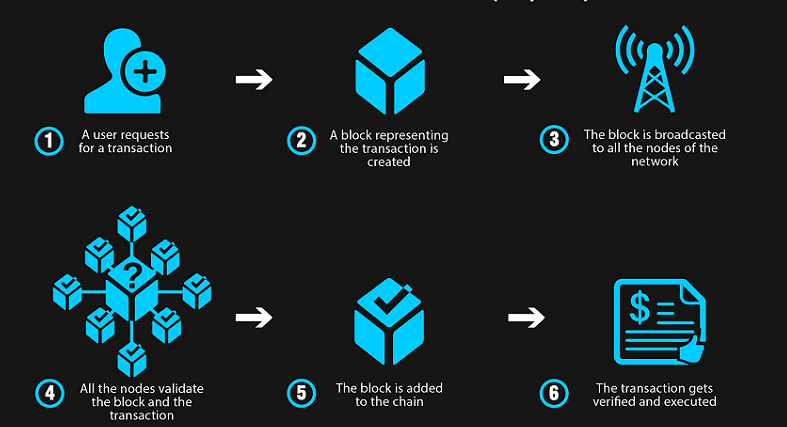
Cryptocurrency based blockchain technology evolving from the BitCoin technology uses hashtags and math problems encoded in every block of the blockchain. By embedding a part of the previous block’s code in every new block every transaction and block addition is verified across several interconnected nodes of PC’s which form a vigilant distributed network.

Every node verifies the transaction by providing the right solution to the query raised and hence such transactions are irrefutable, immutable and absolutely secure with time-tags and encryption too.

Blockchains eliminate the intervention of mediators in the transaction like large institutions, Governments, etc thereby, making it an open-source network which is easy to access.

The Bitcoin is the earliest form of digital cryptocurrency or virtual cash that is most widely accepted and traded in with a uniform global value unlike the various paper and fiat currencies which depend on different prices as per different geographic locations.

The Ethereum is the second most well-known cryptocurrency using blockchain technology which allows its users to build their own wallets and smart contracts by making use of its network to avoid complex coding processes needed to enable the building of smart contracts.

Features of Blockchains:

Bitcoin currency has been traded in Forex markets in many countries for over a decade. Just as the paper currency system is managed by the reserve and federal banks in the country, the blockchain manages cryptocurrencies. The explorer of blockchains records and maintains all Bitcoin transactions in a digital ledger of transactions connected in the chain to a secure sequence of hashtags.

Here are the important protocol and rules of the Bitcoin method, network, and blockchain.

  • Data is permanently stored: The software-based cryptocurrency is stored digitally and recorded making it difficult to dispute transactions in the wallet or account. Thus no unaccounted transactions and currency are present in the system.
  • Code rules all transactions: The blockchain is based and governed by its coding. Once recorded it cannot be changed or tampered with. Also, the digital records are available to the public and thus ensure a safe, immutable, recorded transaction.
  • No governmental, legal or regulatory involvement exists: The Bitcoin is devoid of third-party interference. It is a decentralized platform to ensure secure transactions digitally. When using the Bitcoin platform, currency or transactions ensure you get legal guidance.
  • The digital wallet has enhanced security and can be password protected: The wallet can store your keys and currencies securely and with encryption on hard drives, computer etc. It is best stored on a separate device to continue access even when your computer fails.
  • Access is only through your private key: The encrypted key is the only way to log in. Keep a backup of it safe and never lose it. If you do lose the key nothing helps as the blockchain recognizes only the key. You could lose your currency if you lose your key. Beware!
  • Use a reliable currency exchange platform: This protocol is essential to prevent hackers from gaining control to your information, currency and account. Though the system is encrypted and secure transactions are ensured, be careful to use a reliable platform for currency exchange, buying or selling Bitcoins.
  • Double check receiver address: Ensure receiver address as in a digital and decentralized system once you transfer to a wrong party there can be no charge-backs or support interventions.

Skills that can be acquired:

Blockchain training covers various topics embracing the core concepts in blockchain technology. The top-performing cryptocurrencies like Ethereum, Bitcoin and multichain scenarios are envisaged and explained.

The core meaning of blockchain and its associated concepts are well-explained in blockchain training. Proper blockchain training provides an in-depth grasp about what the Bitcoin is about and how it works while connecting its users. It also enlightens one about the knowledge of how Etehreum’s platform is used for building smart contracts easily. Real-world blockchain scenarios are used to throw light on the concepts and future applications based on such concepts.

A comprehensive understanding of blockchain and the technologies involved therein can only be achieved by doing a course from bankable institutes like Imarticus. Undertaking a Blockchain Training program has become quintessential for freshers, software professionals like team leads, project managers, technology architects, and business analysts.

Considering the opportunities that await a person well-versed in blockchain technology, it is always a good choice to take up such courses at a reputed institute like Imarticus Learning and add the feather of blockchain certification to your career cap.

Conclusion:
The growth of Blockchain training online and its impact on various industries has led to an estimated 18% of world GDP through blockchain technologies. Once you master the fundamentals you will learn all about the hyper ledger, blockchain multi-chains, coding, cryptography, and smart contracts.

Easy understanding of the mechanism behind the top performing cryptocurrencies like Bitcoin and Ethreum is also interpreted well in the blockchain training. As part of futuristic and new-age tech courses, the Blockchain technology training at Imarticus Learning also called the Fintech pro degree and blockchain training is sure to be profitable and a good career choice.

Entrepreneurial Opportunities for Blockchains Outside Fintech

Entrepreneurial Opportunities for Blockchains Outside Fintech

Blockchain technology revolutionized the banking world and financial transactions. It is rightly the buzzword in modern technology and touted as the backbone of the evolving fintech industry. However, blockchain technology was quickly adopted by banking, financial institutions etc. We shall look for the not-so-commonly known applications that the technology is being used for and is sure to transform. Such potential for transparency, security, and innovative access and storage has made it the brightest star in the technological world. And this throws up some very interesting entrepreneurial opportunities that are worth exploring and adopting.

Business Opportunities

The blockchain adaptations to technology are rising by the minute! Some of them are

Banking Sector

Now that the field is cleared of doubts with Wall Street and major banks cashing in on blockchain technology, there is tremendous potential for financial solutions offered to banks, financial and NBFCs, as well as individual clients.

Smart Contracts:

Some areas where smart contracts are secure, scalable and flexibly used are

  • Automation of distributions of Royalty in the movies, publishing and entertainment industry.
  • Maintaining and accessing medical records through smart contracts.
  • Scheduling and running of public transportation based on rules which are pre-programmed.
  • Transfer and management of property records.
  • Loan processing can be automated.

Connected Car

  • Task automation in supply-chain management
  • The facilitating, transport, encryption, distribution, storage and more of the Big Data of connected cars
  • Cloud servers, hosting, OEM services, and service providers of these services
  • Location tracking, maintenance, vehicle location, and automated operation of vehicles
  • Cybersecurity for V2I and V2V data

Food Safety

Blockchain business opportunities in the food industry are many for predicting and detecting failures in compliance, risk management, and reporting applications

Healthcare

Record maintenance, surgical records, and results, security of health records are some areas that have scope.

Internet of Things (IoT)

The Internet of Things technology has taken over nearly all fields. Blockchain technology can make the service of IoT more secure, safe and fast. Ex: Solar energy cooperatives, trust and verification services, smart city IoT processes, law enforcement tracking solutions and many more.

Passports and Visas

The advantages of a blockchain-based passport or visa can reduce wait times, implement alerts immediately, reduce check-in formalities and verification, and track information across a very large database. Opportunities exist in the digitization of passports and visas.

Wills and Marriage Certificates

Issue and recording of marriages, wills, property documents and the issue of documentation will present opportunities here.

Insurance Sector:

Opportunities will be in

  • Simple processing.
  • Time efficiency.
  • Improved efficiency and risk management mean reduced premiums.
  • Detection of Fraud
  • Records and disbursements with a record of history.

Food Safety

Blockchain business opportunities in the food industry are many for predicting and detecting failures in compliance, risk management, and reporting applications.
Fintech courses India-based consultancy and learning can help you encase the entrepreneur in you. These courses offer a good grasp of fundamentals, concepts, theoretical knowledge, practical skills and certifications that could help enhance your resume and career. They also offer boot camps, short-term workshops, and basic knowledge of technical skills oriented for Fintech industries placements. Certification helps. But, you need to be an excellent communicator and work diligently to acquire the best analytical, technical and business skills crucial to your job role. Another advantage of such courses is of mentoring by certified and experienced industry aces that helps garner the latest best practices, techniques, skills, and practice on the latest trending technologies in the field of investment banking, financial courses and more.