What Full Stack Developers Do?

What Full Stack Developers Do?

So you’ve decided to take the plunge and begin the long journey of becoming a full stack developer. You will have to have some level of expertise on the front-end and back-end development of an application in order to be called a full stack developer. You will have to build a formidable skill set that might take years to master. Full stack developers have a passion for learning, and this cannot be taught in any full stack developer course.

We suggest that you start to pad your skill set as soon as you decide to get into full stack development as it can take several years before you have the right experience. While there are many full stack developer tutorials available online, we suggest that you continue working on these skills even after the course.

Since a full stack developer’s skill set grows horizontally, you can get started on several different skills at once.  However, we suggest you focus on the foundations first as it will have to be the strongest skills you have. Since you do not have to be an expert at the other skills, spend around a month on each of them before you move on to the next all the while continuing to explore what you have already learned.

As a basic path for web design stacks, we would suggest that you focus on HTML, CSS, Python, JavaScript, Node.js, Django, Veu.js, and Git in that order. Learning all these skills will increase your value as an employee while also allowing you to steer projects.

One of the most effective ways of learning all these skills is to learn by doing. While there is a wealth of knowledge to be learned in a full stack developer tutorial, there is nothing like learning when you are actually trying to execute a project. You will come across bugs and problems that you will have to figure out and in the process, you will learn the capabilities and tools of the different facets of full stack development. Take on small jobs, like developing a small website, in order to understand the depth and breadth of the project. Employers are looking for people who already know how to solve a problem, and having your own set of projects can showcase your abilities as no certificate can.

Another crucial element of becoming a full stack developer is to learn each part of the stack. Knowing three languages might sound great, but when those are all your skills, you will not be a valuable employee. Once you acquire knowledge on each part of the stack, continue to build your skills by exploring other options within the stack. This will give you flexibility when working on varied projects and will allow you to adapt to a new team or project quickly.

Becoming a full-stack developer is a matter of time, perseverance and passion. None of these qualities can be removed or substituted. You must also be prepared for a lifetime of learning as the landscape of technology keeps changing.

What Should A Real Full Stack Developer Know In 2022?

What Should A Real Full Stack Developer Know In 2022?

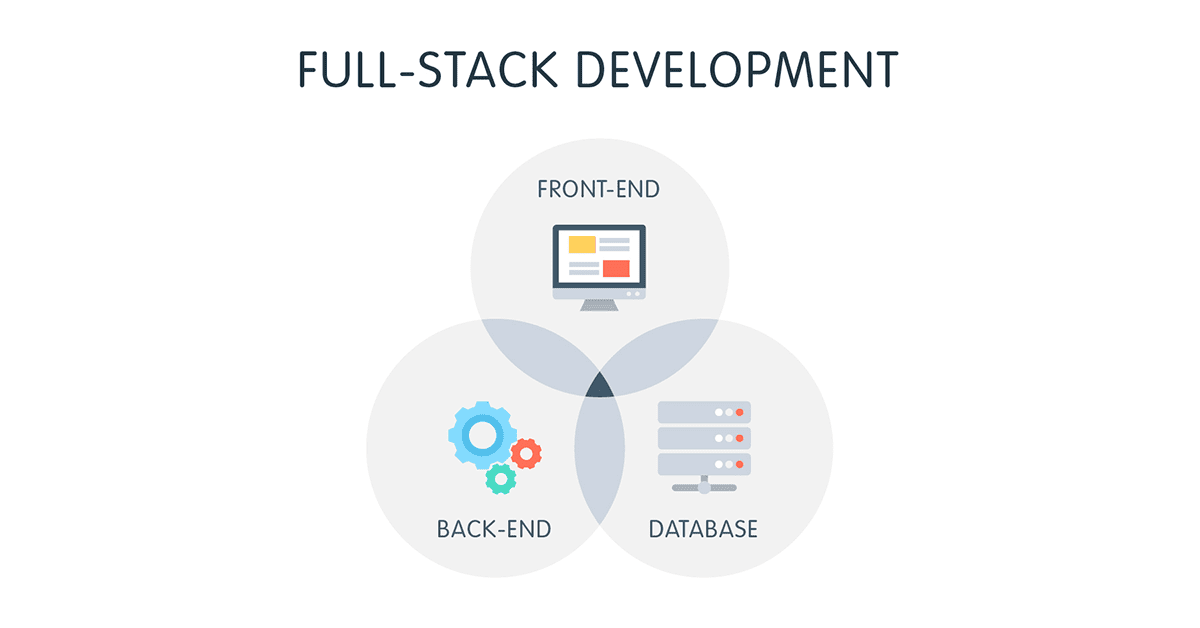
Becoming a full stack developer implies that you have to be well versed in both the front-end and back-end of an application. The front-end usually refers to the portion of an application that a user will come in contact with the back-end portion deals with the logic, server configurations, database interactions, and user authentications amongst others.

While you do not have to be an expert in all of these facets, it is important that you know enough to be able to work with both sides and have an understanding of what is going on. With so many changes happening across the tech world and many tools becoming redundant, it is important that you stay up to date with your skill set, especially in 2019. A good full-stack developer tutorial will help you incorporate a range of skills into your arsenal.

Most developers find identifying the right path to becoming a full stack developer to be a daunting task. With so many skills to be learned, it is understandable that you may find this overwhelming. At a very basic level, there are foundation skills and programming skills that you must learn. With more time you can expand upon these skills.

For the foundation, we recommend that you learn HTML and CSS which is the basis for all web development. Once you are comfortable with these, move onto learning programming software such as JavaScript, TypeScript, and Python. After you are comfortable with these facets you can then start to concentrate on the different frameworks.

Frameworks will help you develop common functionalities easier and faster and will cut out extra work. For the front-end frameworks, you can focus on Vue.js, Angular, and React.  Vue.js is one of the latest entrants into the field and is ideal for small projects. It is easy to learn and you can expect to see exciting results soon.

With major frameworks upgrades, Angular is seeing a lot more popularity and has been widely used for single-page web applications. It is a JavaScript-based framework and will bolster your skill set. React is a JavaScript library that makes developing user-interactive UIs painless.

When it comes to back-end frameworks, there are many options available. However, in the beginning, you can stick to learning one each for JavaScript and Python. Node.js requires that you have a good knowledge of JS to understand its different concepts. Django is written entirely in Python and is a powerful framework with a whole bunch of tools allowing you to use it in a wide range of cases.

Python has quickly become one of the most popular languages in development and learning frameworks based on it will definitely come in handy not to mention boost your portfolio.

There are other skills you can develop such as learning Git. It is one of the most reliable version control systems and is used widely for practically any type of source code. Most companies have already started to work with Git and it is important that you learn the basics in order to be an effective developer. One of the hottest new developments has been the proliferation of Machine Learning at almost every platform. Adding Machine Learning to your skill set will only increase your value as a developer.

When you are looking for a full stack developer course, you should keep in mind that these basic skill sets are properly taught and explored.

Everything – A Full-Stack Web Developer Should Know

Everything – A Full-Stack Web Developer Should Know

How difficult our lives would have been without the Internet! Within a fraction of seconds, we get the answers to our most difficult questions. The rapid advancement of technology has made it possible to access the internet anywhere through a plethora of means. The websites that we use in our day-to-day life are built by web developers and website designers. It is through the hard work of these dedicated, talented professionals that we are able to access various websites and extract desired information. They indeed are the ‘lifeblood’ of the internet.

The job of a web developer is vital, thus they possess multitudinous skills depending upon what needs to be developed. There are different types of developers like a mobile developers, and game developers. The core developers are the front end and the back end, developers. All these developers possess certain special skill sets.

The summation of both front end and back end is a full stack web developer. To know more about them, read on.

Who is a Full-Stack Web Developer?

As wisely quoted by ‘Eric An’ in his blog in ‘Career Foundry’, “ A full stack web developer has all the keys to the house, there is no door that you cannot open.” A full-stack web developer is someone who is able to work on both the front-end and back-end sections of an application. Front-end generally refers to the portion of an application the user will interact with, and the back-end handles the logic, database interactions, server configuration, etc.

What should a good Full-Stack Web Developer know?

There are few skills a full-stack developer should possess:

Front End skills :

  • HTML (Hypertext Markup Language) – This is the skeleton of a website.
  • CSS(Cascading Style Sheets) – This language is used for describing the presentation of a document written in HTML.
  • Javascript – The programming language of HTML and web.

Back End skills:

  • Php (Hypertext Preprocessor): A widely used server-side scripting language
  • Python: A general – purpose versatile programming language.
  • Node.js – This programming language runs on various platforms (Windows, Linux, Unix, Mac OS X, etc.)
  • MySQL (Structured Query Language) – It is an open source relational database management system.

It’s also good to know how to work directly with a Linux server. In addition, a full stack web developer should also learn to use some additional tools such as:

  • Git Version Control- It is an open source version control system.
  • GulpJS – It is a streaming build system, by using node’s streams file manipulation is all done in memory, and a file isn’t written until you tell it to do so.

It takes years of rich practical experience to earn their laurels as good full stack developers.

Looks like your cup of tea? If not, you may like to change your mind and enlighten yourself by being a part of Full Stack Developer courses. In addition to this, you can also watch the Full Stack Developer tutorials.

What is The Market Size For Agile Software Development?

Agility means effective (rapid and adaptive) response to change, effective communication among all stockholder. In layman terms though, agility or Agile Development in software engineering means ensuring agility, flexibility, and adaptability in the agile development, maintenance, and working of a model, i.e. prototype. All these things are equally important while trying to build software.

Before diving into how the Agile Development method works, let’s discuss a step by step approach to how software is built. This method uses the assembly of a cross-functional team, i.e. not just developers but different parties that look after various segments in the process. This not only ensures efficiency but also ensures that the customers get what they want and have more say in the making of the software.

Some facts regarding the market expanse for Agile development.

  • Large enterprises are the likeliest to adopt a business analyst certification and techniques.
  • The presumption that agile is ideal for “edge” projects but not for large, mission-critical projects does not hold true anymore.
  • The criticism that Agile’s limitations for teams spread across disparate time zones can potentially be addressed by different agile methods.

For industry breakdowns, the leading agile adopters as of 2018 are:

  • High tech – 74 percent
  • Discrete manufacturing – 74 percent
  • Banking and finance – 65 percent
  • Retail – 63 percent

Many reports suggest that while agile is maturing, there are companies that are still not ready for this approach to software development. Agile is really about iterative cycles. When you put together agile with a minimum viable product approach, you have a considerable edge building relevant software that customers/users prefer to use.

The logic of involving the stakeholders in development early and often is something that is difficult to argue against.
Many companies though are not culturally prepared for such a vicious cycle of revision. It’s not the agile methodology that lets them down, but the unwillingness to uproot stale processes.

The unwillingness to drop traditional methods of software development are what holds back agile from taking over the market speedily.

Companies adopting Agile Development method
Bosch, a leading supplier of technology and services globally with more than 400,000 associates and operations in 60-plus countries, adopted this approach. At companies like Bosch and other agile enterprises, the visions and aims are ambitious, to say the least.

The leadership teams, however, fail to look at every single detail in advance. Leaders recognize and admit that they are often clueless about how many agile teams they will require, at what pace they should add them, and how they can address bureaucratic limitations without throwing the organization into complete chaos.

So they usually bring forth an initial wave of agile teams, gather data on the value those teams create and the constraints they face, and then decide if they should take the next step and how they will go about it. This lets them weigh their options, i.e. the value of accelerating lightsomeness (in terms of economic results, client outcomes, and worker performance) against its prices (in terms of each money investments and structure challenges).

If the upsides outweigh the costs, managers continue to scale up agile—deploying yet another wave of teams, unblocking constraints in less agile parts of the organization, and this is how the cycle is repeated.

If not this though, they can pause for a while to monitor the market atmosphere and also explore ways to increase the value of the agile teams already in the works (for example, by improvement of the priority level of work or upgrading capabilities to prototype) and bring down the costs of change (by publicizing agile successes or hiring experienced agile enthusiasts).

Refine Your Product Backlog Continuously to Improve Flow


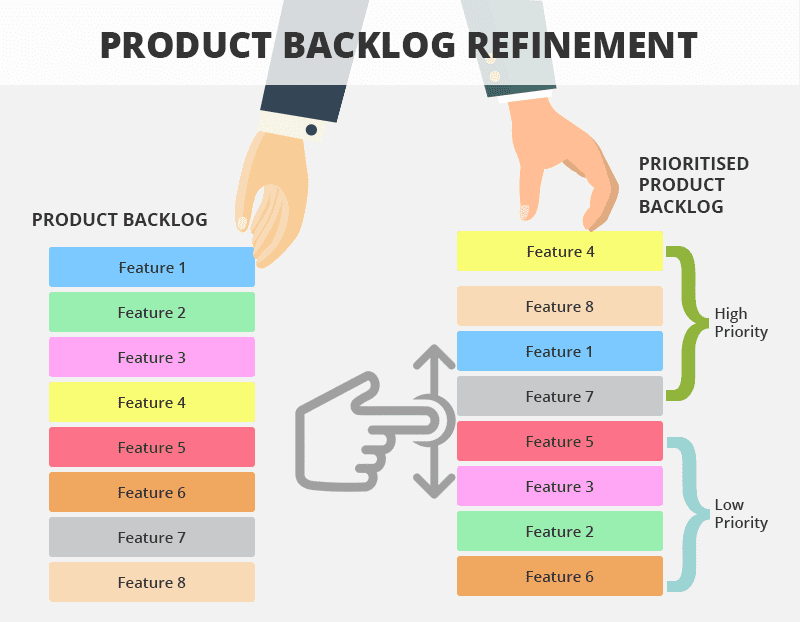
As you might already know, product Backlog is simply a list of everything you have to do to complete your project. It helps you find all your requirements for the product at a single source. This article discusses how we can improve the product flow by continuously refining your product backlog.

The Refinement Process

We can improve our product flow by merely comparing the estimates using time-dependent sizing. But, most of the product backlog items (PBI) won’t be clear enough for such an analysis.

One strategy to approach this issue of poorly PBIs is to spend more time on it and refine them as you go. This process will take time, but the total time taken for the project will be significantly reduced. It also leads you towards better reliability and velocity.

In the early days of Scrum, the sprint begins with a time-boxed planning meeting. Such planning meetings would usually go long and frustrate the team members attempting to estimate PBIs. The results were overly vague product backlogs. To eliminate this issue, the Scrum guide now specifies that along with the planning meeting, a continuous refinement process should take place. 

Benefits of Continuous Refinement

This refinement process involves estimation and addition of details to the PBI. By doing it continuously, the team will be able to deliver more consistent and improve the quality of their job. It can also reduce the duration of the planning meeting at the start of the sprint. The regular refinement process allows the team to deal with the estimation process in small pieces.  By improving the productivity of the team, the refinement improves the product flow. 

However, the refinement process will not solve all the difficulties. You still have to discover alternatives and problems during the implementation. But with the Refinement process, the questions will be smaller and much easier to find an answer. 

How to Carry Out Refinement?

The major challenge in implementing this practice is to have a refinement process that doesn’t tie up the whole team in meetings. The solution suggested by the Scrum Guide is to limit the refinement to 10 percent of the team capacity. In that way, we can complete the refinement of a 4-week sprint in 2 days. The refinement meetings should be short and time-boxed, and the number of backlog items covered in each session shouldn’t be the main focus. In most scenarios, the longer refinement process will result in a shorter planning meeting. 

In ideal cases, all team members are supposed to be a part of the refinement conversations. Dividing the team excessively will result in missing out important questions and insights. Also, be sure to have an estimation of every backlog item you cover at the end of each session.

Agile planning is all about striking a perfect balance between precision and accuracy. So, your backlog doesn’t need to be consisting of the full specification of every item. Although, it is important to have in-depth knowledge about each of them. Spending little more time of ensuring that everyone in your team really understands the backlog will help you deliver more value in a shorter time period.

Management Theory: Managing Organizational Design and Change

Design and change are highly interchangeable when it concerns the daily processes of any organization, and the process can be elaborated by looking at the inherent methodologies that concern both these subjects. Change is continual; it does not stop, and business processes change the condition and equilibrium of a particular organization status in the market even to the slightest extent. Designing begets change, which upon further consideration can be stated like this: “Warranted change can only happen after a particular organizational design is consolidated, implemented and upgraded as time passes on.” In this article, we shall take an in-depth look at both of these phenomena and shall discuss in detail appropriate strategic management as well as change management.

Organizational design

Design is actually a step-by-step methodology whereby any accomplished business analyst can recognize and take stock about the certain dysfunctional elements within an organization like workflow, structure, system, and procedure, is redesigned and re-implemented so as to perfectly fit with the current goals of the organization in order to develop new strategies that can implement change in an appropriate and effective fashion. This initiation, deployment and developing new strategies often take place on the two key aspects of any business: technical and people.
Perfect strategy management would intrinsically link the two in a common thread resulting in an unparalleled success and prosperity for the business in question whilst also touching and improving every other aspect that has an effect on the well-being and state of the organization, including increased profitability, reduced costs, improved efficiency and cycle time amongst many other miscellaneous factors. The end goal of any business should, however, be to potentially increase the scope and growth of the business in question. In effect, businesses generally look to incorporate people to the individual sections of the core business processes, systems, and technology. This is a key concept of proper strategic management as without the workforce there wouldn’t be any chance to make the company work under any number of possible conditions whatsoever.
However, business designs are subjected to change on a much more frequent basis than anyone might presume under normal circumstances. As the status, scale and scope of a particular business grow over time, there are a plethora of challenges, which would have to be determined and resolved in an effective way so that the digression of the business is avoided under any possible circumstance. Amongst such a state of affairs, it would become extremely hard for any company to effectively make use of the basic tenets or steps that effectively teaches how to properly design the current state of the organization properly. This methodology is uniformly taught across all forms of business analyst course, and its steps have been enlisted below:

  • Chartering the design process
  • Assessing the current state of the business
  • Designing the new organization
  • Implementing the design effectivelyAgile Business Analysis Course

Organizational change

On the other side of the spectrum, there is change management, which effectively takes stock about the state of the company from a wide variety of aspects and divisions, and manipulating them in some fashion or other in order to intrinsically favor the interests of the organization in question. For business analysts, this application and determination process might seem a little bit tricky, but the main cornerstone of any change management strategy is based on the intrinsic human nature includes the process and preparedness of human beings to adapt to the changes happening around them. Strategies can be developed either for the purpose or because of implementing a certain instance of change in the organization.
This organizational change is important for the interests of a particular business, especially in the long run. As such, such implementation of change often runs with a veritable target in achieving the most optimum state one may effectively get through the correct implementation of the change in the context of the organization itself.
Change management, in this particular case, is actually ideal for application, especially in a variable business environment, such as a response to a disaster level problem with respect to the state of the organization in question, or is actively brought about by a wrinkle happening in the environmental factors around the organization itself. Essentially, successful organizational change is not just a fluke incident, but it requires very advanced and complex understanding of management techniques and models, most of which are generally covered in business analyst courses. As many management experts will proclaim, a change in guard within the management of a particular company also invokes a significant amount and extent of change in and of itself.
Management studies often describe this phenomenon as being a state of transition between the current and future one, to which the state of the company is being directed effectively. It has been observed quite distinctly through many change management instances and studies that the aforementioned “transition” may take place if there happens to be any kind of shift both in the internal and external contexts of the organization in question. As such, change is always happening and continuing because every other aspect that might influence a particular business entity always are subjected to transformation in some shape or form.
Business analysts often debate and discuss about these factors that may influence a particular industry or organization; their job is to essentially understand the state of the market at large as well as the internal state of the organization in order to keep proper track of a change that is just beyond the horizon of occurrence, and develop an abstract design in order for the same business to effectively counter and adapt against.

The Tester’s Role in Requirement Exploration


An exploratory tester is an important individual in every modern agile team. This testing process varies from traditional testing with personal freedom and responsibility given to the individual tester. It is simply defined as a type of testing where the test scenarios are created by the testers on the go rather than creating in advance. This article discusses the role of these testers in requirement exploration.

Need for Exploratory Testers

The secret for predictable and frequent business delivery is the clear and shared understanding of desired and undesired functions for each new product feature. If we ignore this fact, the programmers, testers and the business, each will have their own concept of what the final product should look like. Obviously, the final product will disappoint everyone.

Unfortunately, this problem has been persisting in our industry for a very long time. It is observed that more interventions often result in more dysfunctions. Agile is expected to solve this problem by enabling real-time communication between people. However, most teams are yet to possess this kind of communication and a shared understanding of what they are about to build, even when they start coding.

How Does Testers Contribute?

The testers can explore the feature specification in the early stages of production and contribute towards successful and timely deliveries. It can be done by reading and challenging what is written in phased and gated deliveries. But, the documentation available with the agile teams is very limited. So, the testers will have to rely on their critical thinking skills to explore the feature specification.

With their testing mindset, testers can raise questions, as many as it takes to make the team feel confident about their shared understanding. Drawing pictures is also an important method used by testers. Numerous examples are obtained from the product owners and other stakeholders as a part of the process. These examples will be used as guides in the test cases to lead the development in the right direction.

These examples acquired from the stakeholders and product owner are primarily focused on the expected behaviors and misbehaviors of the product. They will be later studied to frame a high-level acceptance test to show the actual intent of each story. It changes into the requirements that define the scope and purpose.

The role of a tester never ends, it expands and changes according to the situation. The job of a tester is not just finding defects or breaking illusions about the product. It involves supporting the team to prevent defects in the first place or finding them so early in the process to eliminate the risks produced by misunderstanding.

In software engineering, testing is an important part of the development process. It is this testing process that defines the quality of a software. Increased reliability and security are the major benefits of the testing. With the exploratory testing method, it is found that the testers can contribute more to the development process. By obtaining examples and raising questions, the testers now help the team to explore the requirements and possess a shared understanding of every features and product.

Is The Role Of a Full Stack Developer in Demand?

Is The Role Of a Full Stack Developer in Demand?

Developers are available in various process streams like Backend, Frontend, Database, Testing and Mobile Apps.
Older practices were that as you gain experience and expertise you would pursue specialization and grow your career in the field. Modern best practices have changed the trend. Seamless technology suites make it possible to learn at a Full stack development course like the one at Imarticus.

Let us explore why full stack course is so famous?

Insatiable demand exists:

Startups, Tech businesses and organizations look to one well-versed Full Stack Developer’s coding skills compared to hiring more personnel to do partial jobs. Full Stack Developers are assets in the organization.

Remuneration is excellent:

The total income per annum for a Full Stack Developer in the US is  $62.1K beginning and $105K. In India, this figure ranges from Rs 351,000-1,000,000 for a fairly experienced developer according to Glassdoor.com.

Prospects for growth:

According to the Labor-Statistics-U.S. Bureau reports Full Stack Developer jobs will by 2024 exceed 853,000. The Indeed reports claim Full Stack Developers earn the second highest payouts. With economies seeking and encouraging startups worldwide the scope and demand will never subside.

Job Opportunities are aplenty:

Developers who are full stack skilled seamlessly integrate the software layers and mean hiring more broad-based developers who function in cross-functional environments. Growing digital assets is now part of the developer’s job role. With companies switching to Agile and Scrum methodologies for rapid high-velocity productivity the jobs just keep growing.

Continuous learning:

Market-relevant world-class Full-Stack Web courses with huge reputations and backed by reputed organizations make learning easy and the aspirants job-ready. Continuous learning and online resources age the good wine of developers.
Certifications:
Certifications are added benefits that speak volumes regarding the developer’s practical skills, adaptability to industry-relevant situations and measurability of performance and returns. Skills count and the wider your knowledge the better you become. Aspirants adept in JavaScript, CouchDB, HTML5, JQuery, MySQL, Node.js, MongoDB and such suites among others are highly valued.

Work Flexibility:

By 2030 it is predicted that data connectivity will be super-fast, and working from home will be in fashion and a norm. This is set to impact both the organization and employees. Developers can now stay 24×7 connected to their jobs anywhere anytime.

Best Employers are hiring:

Those who look at job portals like Glassdoor, Indeed, Linkedin, Payscale and such will find large corporates are hiring Full Stack Developers. Here’s an indicative payout-listed list. ($128K) General Assembly, ($193K) Apple, ($81K)When I Work, ($87K) Coding Dojo, among others, are head-hunting.

The bottom line:

Full Stack Development is the best career prospect today with unlimited growth and scope. All you need to do is get cracking on your skill set by doing a good full stack course, earn your certification and learn through your job experience and continued experiential learning to keep pace with newer iterations in technology.

Why Is Agile Marketing A Separate Thing from Agile Development?

Agile marketing is a term that is often confused with Agile Development, and both are used synonymous for each other, but the concepts are very different in the way that they are executed in a practical business scenario.

Most people think that just using the concepts of development in agile marketing will make it successful and productive, but they need to understand that agile marketing will only be effective when the appropriate updates and changes are being done to the concepts of development.

These two concepts are fundamentally related, but there are some significant differences in the way they are executed. To have a firm grip on the Agile marketing, the knowledge about Agile Development can prove beneficial, but it can also be disadvantageous in a particular manner.

The points of differentiation between these two concepts are as follows:

  • Agile marketing is all about changing the mindset of consumers about a product or service and enhancing the customer’s behaviour whereas agile development is only concerned with delivering of features.For a developer, the point of being satisfied in his job comes when he is successfully able to deliver the features or a product in the market. The common terms used in the development teams are backlogs and sprints; where at the end of the sprint, the success is measured by the increment in the number of products shipped.

But, in the marketing team, the success is measured by the change in the behaviour of a consumer. For agile marketers, only the delivery of features or products is not sufficient but all they are concerned with is the increase in results regarding the business.

  • While Agile marketing is a goal-oriented process, agile development focuses only on the tasks. Where the former one focuses on the results that they get through their activities, the latter one solely focuses on performing the activity or completing a job and are not concerned with the results.For e.g. Developing a social media campaign is a task whereas measuring the success of the campaign and increasing the reach of Social media through that campaign is the goal that the marketer focuses upon. You learn all about these differences when you pursue agile business analysis courses, to understand business thoroughly.
  • Agile marketers put their focus on Why a business task is supposed to be performed, where agile developers directionless perform tasks without having any aim or motive. They just focus on completing the list of jobs assigned to them without knowing what they would lead to. Agile marketing is not just about completing the tasks faster but is more about fast completion of tasks with having, significant goals in mind.
  • Agile marketing also focuses upon measuring the response of consumer and quickly adapting to the changes happening in the market and mend the operations accordingly. Since it is a result-oriented process, it doesn’t only focus on doing things speedily but also keeps a check on whether the speed is not compromising with the consumer behaviour.
  • Working as an Agile marketer is all about working in the team of Agile developers but with potential consumers and targeted audience. It’s all about collaborating with them, and that’s what you learn when you pursue agile business analysis courses. These courses will teach you the effective ways of measuring the goals and also teach you the collaborative work-culture.

These were the major differences which make agile marketing altogether a different activity then agile development and separates the way of execution of both the concepts. Through this, we can easily comprehend how both the concepts are different despite being similar to each other.

What Programming Languages Do You Need To Know To Be A Full Stack Developer?

What Programming Languages Do You Need To Know To Be A Full Stack Developer?

Modern businesses need and hire full-stack developers. The requirements in any full stack developer advertisement appear to have a vast range of technical requirements.

With the requirements spelt out are many languages, database systems, JS frameworks, iOS and Android platforms, deployment techniques, Big Data and Machine Learning and more. Yes, you will have to learn a lot. But let’s start with the web software stack and then learn more stacks.

Build proficiency in:

  • CSS
  • HTML
  • Javascript
  • Ruby, PHP, or Python which are all-purpose languages
  • Postgres, Oracle, or MySQL, relational-database systems
  • Any web-server like Apache or Nginx
  • Ubuntu, FreeBSD, or CentOS deployment OS
  • Any system like git. for version-control

By learning one software technology needed for every stack-part you will be in a position to build your own software and use it to add business value at your job. Just ensure it is popular and covers the stack. The sequence of learning will not impact your decision. It may help you learn the alternatives to each part of the stack you are not aware of and then you can optimize your learning.

Experiential learning:

It is always best to do a ‘learn full stack development course’ since employers are looking to you to solve their software problems. You get hands-on experience writing software and the full stack development course covers the in-demand stack languages. Your interest in the latest technology can be honed through passive-learning, blogs, screencasts, and podcasts. Hone your techniques, tools, documentation, and error-message capabilities at the course.

Continuous learning:

Broad-based full stack learning helps you more than knowing three languages in one part of the stack. Learning more languages over and above your first choices in that part is easier.

You have the best choices when you are proficient in all parts of the stack. With CSS, HTML and Javascript you can be a programmer. With Oracle, Postgres and MySQL you can function as a database analyst. With FreeBSD, Ubuntu and CentOS you are good to go as a System Administrator.

Multi-skills will help you identify the futuristic languages for continuous advancement and helps you get issues resolved quickly. That’s prime skills for any employer!

An effective action-plan:

Here’s an optimized plan of action to put on GitHub to show employers.

  • Learn HTML links, pages etc.
  • Deploy to production with Heroku, a host-provider etc.
  • Integrate a back-end language into HTML.
  • Use a deployment virtual server like Linode, AWS, or digital ocean
  • Deploy to production- the dynamic application
  • Integrate your app with a system for relational databases
  • Get proficient in CSS
  • Learn behaviour on client-side with Javascript

Now you have the basic essential skills for a full-stack developer.