A Cyber Security Course With Assured Placement Was Unheard Of. Until 2022.

A Cyber Security Course With Assured Placement Was Unheard Of. Until 2022.

The field of computer science has witnessed huge progress in recent years, owing to technological and scientific advancements. The IT sphere is indeed a vast one where one can learn about graphics, website designing, UI/UX design, web services, and most importantly, cyber security. As most daily functions have become computerized and online, cyber security has gained an important spot.

Cyber Security courses are becoming extremely popular, mainly because of the demand in this field. Let us look at an amazing Cyber Security Course with Assured Placement!

Postgraduate Program in Cyber Security 

About the course

Cyber Security or Internet Security is defined as protecting personal information from theft or release. This field has been gaining a lot of learners nowadays. The Cyber Security Course by Imarticus Learning is a postgraduate course that aims at providing the best learning outcomes to aspiring cyber security professionals. The course also offers hands-on learning concerning tools, techniques, and software related to certified ethical hacker certification training. 


Highlights of the program

  • Get individual attention from industry experts.
  • Explore a vast range of curriculum
  • Get assured placements
  • Get assistance with career-related queries

Eligibility criteria

The Cyber Security Course by Imarticus Learning is a postgraduate course. Students with a bachelor’s degree in IT or Computer Science can apply for this course. The student must have passed the degree with at least 50% marks.

Course Duration

This six-month certified ethical hacker course aims at extensive learning about the problems faced by the IT industry in cyber security and related solutions. 

Mode of teaching

The modes of training in the Cyber Security Course are both Classroom and  Live Online Training. The institute ensures personal attention and detailed doubt-solving sessions. 

Why is the Cyber Security Program unique?

The Cyber Security Program by Imarticus Learning is a course trusted by thousands of students worldwide. Here are some of the things that make this course unique:

  • This course comes with detailed career assistance and placement training.
  • The course is focused on the job requirements in the current market.
  • The mentors believe in project-based real-time learning.
  • The institute has partnered with EC-Council to integrate their Certified Ethical Hacker Practical certification with this program.
  • Extensive doubt-solving sessions.

Learn more about the course curriculum

The course curriculum has been thoughtfully designed, considering the vast exposure each Cyber Security aspirant needs. The coursework consists of classes and rigorous lab work, assignments, discussions, and project work. Some of the course curriculum highlights are:

  • Fundamentals of Networking  
  • Fundamentals of Operating Systems 
  • Fundamentals of Information Security 
  • Fundamentals of Cloud Security  
  • Ethical Hacking 
  • Incident Handling 
  • New technologies – IoT, Big Data, AI, DevOps 
  • Elective 1: Penetration Tester 
  • Elective 2: SOC Expert  
  • Placement Prep & CTF

Placements

The Cyber Security Course by Imarticus Learning assures its students of placements after the course. As per the records, many students have been already placed at companies like Tata Consultancy Services, Dell, Microsoft, IBM, and Amazon.

Job options after the Cyber Security course

This cyber security course offers a bright future to its students. Cyber Security Professionals are fit for the following job roles:

  • Cyber Security Analyst
  • Incident Handler
  • Penetration Tester
  • Security Consultant
  • IT Security Consultant
  • Security Engineer
  • SOC Analyst

Fee structure

One can pay the course fee in three easy ways:

  • Pay the full sum of Rs. 225,000 and get a flat 10% fee waiver.
  • Pay Rs. 12072 for twelve months with zero percent no cost EMI.
  • Pay Rs. 67650 in three installments each.

How to apply?

The application process for applying to the course Cyber Security is very easy and smooth. For applying, click on https://imarticus.org/post-graduate-program-in-cybersecurity/.

  • Will I be mentored?

Imarticus Learning ensures one-on-one interaction during the course so that each student can utilize the time and resources to the fullest. The mentors provide great tips and encourage you to excel at projects and interactive sessions. 

Frequently Asked Questions (FAQs):

Q1. How do I contact Imarticus Learning for more information on the Cyber Security course?

Ans. One can either visit their website to interact with the centre or mail your query to info@imarticus.com

Q2. Will I get study material too?

Ans. Yes, the course provides access to quizzes, test papers, notes, and practice projects. These are necessary to get a detailed learning experience in Cyber Security. 

Q3. Where is Imarticus Learning located?

Ans.  Imarticus Learning is located in many parts of India like Chandigarh, Mumbai, Kolkata, Delhi, Pune, Thane, Dehradun, Bangalore, Lucknow, and Patna, to name a few.


Here’s what you need to know about ethical hacking

Here’s what you need to know about ethical hacking

Becoming a certified ethical hacker is a dream for many. A career in ethical hacking provides ample opportunities for growth for young professionals. With the rise of internet users in India, the threat of security breaches also increases. And, no matter how big or small the enterprise is, there is always a chance of getting hacked. One of the estimates states that there is one attack every 11 to 14 seconds. Hence, in the post-COVID world, it is more likely that the digital revolution will continue to rise and the demand for ethical hackers will fly. 

What is ethical hacking?

Ethical hacking is a type of white-hat hacking where an individual or group of people is responsible for finding loopholes within the business network’s security. Companies provide ethical hackers with all information so that they can break into their systems to find the flaws and threats to tighten up the security. 

Is ethical hacking a good career choice?

As an ethical hacker, you might be working with a major company that will give you all the details to break into the system to find the loopholes with the security system, and you have to keep the security intact. Or, you might be working with a giant database of information about a school or military, and you have to keep the safety of the information intact. The job responsibility depends on expertise and interest in pursuance. 

However, no matter in which domain or enterprise you are working, the job has its challenges. One way to pursue a career is by joining a company where you will work as a core team member. But, apart from it, you can also work as a freelancer. Smaller companies hire freelancers for short-term projects. But, it is essential to understand that like most careers, the demand for ethical hackers comes with experience; the more you gain experience, the more you will be able to get opportunities. 

Recently, the Government of India said that cyberattacks in India rose by 300% in 2020. This shows the advent of cybercrimes in India with the virtualization of most operations. Also, recently data of 2 crore Bigbasket users was leaked. And, a popular snacks company in India, Haldiram, also witnessed a cyberattack. Thus, most companies are now increasing their spending to protect their information. According to an estimate, global spending on cybersecurity will exceed $1 trillion by 2022.   

Salary of an ethical hacker 

A certified ethical hacker can earn around Rs 1.7 lakh per annum and with the proper expertise, this earning can reach the Rs 40 lakh mark. However, this salary might vary with location and job roles. Some of the factors that affect the salary of ethical hackers are: 

  1. Experience
  2. Location
  3. Skills
  4. Job role
  5. Employer 

To succeed as an ethical hacker, you will need specific top-notch skills. A few of the skills that are in demand are: 

  1. Problem-solving skills
  2. Database skills
  3. Cryptography skills
  4. Computer networking skills 
  5. Reverse engineering 
  6. Programming skills 
  7. Computer skills 
  8. Basic hardware knowledge 

A modern cyber security course offers all details of ethical hacking and prepares a candidate to become a successful professional. Most of the common programs that ethical hackers need include:

  1. SQL
  2. PHP
  3. Python
  4. JavaScript
  5. Perl
  6. Ruby
  7. C
  8. Java
  9. C++ 

Thus, candidates who have an introductory knowledge of data science can opt for an advanced cyber security course to have a deeper understanding of the subject. Otherwise, opting for a beginner’s course will be beneficial. 

Incident Management In Cybersecurity: All The Stats, Facts, And Data You’ll Ever Need To Know

Incident Management In Cybersecurity: All The Stats, Facts, And Data You’ll Ever Need To Know

Incident management is the process of managing security incidents. It’s essential in several industries, including government, financial services, and health care. At its core, it’s a continuous process that involves many people, tools and techniques, and roles for those working within it.

How Do You Manage Incidents?

Incident management is a complex process. It can be overwhelming for some, so here is a quick breakdown of how to manage incidents:

  • In business: Incident management is for any company that has an online presence, including e-commerce stores, real estate agencies, and more.

  • At home: If you have children or pets at home and have access to the internet through their devices (smartphones and tablets), it’s essential to practice good digital security habits like regular password changes and downloading software updates when prompted by your device manufacturer. 

Stat: Costs Related To A Data Breach

Data breach costs can be high. Depending on your business type, a data breach could cost $300 per compromised record or even more than $1 million in some instances. Data breaches are also notoriously difficult to predict, so it may take some time before someone realize that one has occurred. 

Facts of Incident management

  • Incident management responds to cybersecurity incidents in a manner that reduces their impact on your business.
  • Incident response plans are documents that outline how you will respond to a cybersecurity incident and provide guidance for your team members on how they should react in different situations.

An incident response plan should include:

  • A list of the people who can access it, including relevant contact information
  • An overview of what an incident may look like and how often it could occur, i.e., what could go wrong?
  • What steps should you take when an incident occurs (i.e., who will do what)?
  • How often you’ll update the plan based on new types of attacks or changes in regulations

Data of Incident management

  • How many incidents do organizations experience each year?
  • What is the average time between a breach being discovered and made public? 
  • How long does it take someone out there to learn about your incident?
  • Which industries and countries experience more breaches than others?

Managing incidents is essential in cybersecurity

Incident management is a critical component of cybersecurity. The process is the same and can apply to all organizations. It’s an important tool that helps you respond more quickly when an incident occurs, minimize damage to your network and organization, reduce recovery time, and save money on security operations and staff costs. 

Incident management consists of a few basic steps:

  • Identify the scope of the incident
  • Respond with resources such as personnel or equipment
  • Recover from or mitigate adverse effects caused by the incident
  • Assess the damage done by an attack(s)
  • Restore normal operations

Explore a cybersecurity career with Imarticus Learning

This cybersecurity online training collaborates with industry professionals to provide students with the most significant possible learning experience. These professional cybersecurity courses will educate students for careers as Cybersecurity Analysts, Penetration Testers, Incident Handlers, and members of SOC Teams.

 Course Benefits For Learners:

  • Students will learn about ethical hacking, penetration testing, and real-world examples throughout the information security programs.

  • Learners will also be instructed to handle challenges and undergo intense training as SOC team specialists.

  • Our skilled professors will deliver online cyber security training that will cover the essentials of security processes, tools, software, and tactics.

Contact us through chat support, or drive to our training centers in Mumbai, Thane, Pune, Chennai, Bengaluru, Delhi, and Gurgaon. 

How Cyber Security Courses Can Help You With Job Assurance

How Cyber Security Courses Can Help You With Job Assurance

Cybersecurity is a subject that equips cybersecurity professionals with the methodologies through which platforms, hardware, servers, firmware, and networks are protected from cyberattacks like ransomware, SQL injections, phishing, and DDoS (Denial of Service). Notably, information security is an important aspect of cybersecurity that involves ensuring the confidentiality and accessibility of sensitive data.

A career in cybersecurity is one of the most promising career options out there as every domain relies on digitalized data nowadays which needs protection. Even a layman out there using a social media website, for example, uses cybersecurity measures, hashing to be exact. This is the sole reason why Cybersecurity courses with placement are so much in demand nowadays. Companies would always require cybersecurity professionals to look after the security of the millions of bytes of data transferred every day via the Internet.

Black hat hackers utilize attack vectors to acquire unauthorized entry to a company’s or a user’s information technology infrastructure, with the ability to cause considerable harm to the target through stolen data, shutting down of systems, and even extortion through ransomware.

How does a cybersecurity course improve you as a possible candidate for a job role?

Students are raised in such a way that they are solely taught to pass tests starting in early childhood. When they leave their educational institution, they are confronted with the real world for the first time and are expected to deal with it. Students are taught how to deal with the outside world through training courses such as the program in cybersecurity by Imarticus. A well-defined cybersecurity course with placements will allow candidates to learn about the relevant skills required to get placed in the domain of cybersecurity.  

The most important aspect of facing an interview is to instill confidence in the candidate’s ability to complete it. Many students miss out on possibilities because they lack confidence. Training sessions are created to help candidates overcome their fears and uncertainty while also boosting their morale. They are ready to go once they are given the much-needed confidence.

How a cybersecurity course can help you with placement?

A 6-month course guarantees that all applicants have a solid foundation in the fundamental disciplines of cybersecurity, as well as provides them with the flexibility and time to do the same. The comprehensive curriculum trains candidates to choose from a wide variety of job roles starting from being a penetration tester and cybersecurity analyst to an incident handler after course completion. Further, cybersecurity courses cover the fundamentals of networking, operating systems, information security, and cloud security. They also focus on ethical hacking and incident handling. 

Cybersecurity is not only confined to the protection of data but also physical devices operating on that data, IoT (Internet of Things) for example. The cybersecurity course by Imarticus Learning also covers new technologies such as IoT, DevOps, big data, and AI so that you can build more protective systems. Besides, candidates also have an option to choose from two electives, i.e. penetration testing and SOC expert. 

This cybersecurity course uses an ‘industrial training’ paradigm to guarantee that applicants perform effectively in the business as soon as they start as freshers. Throughout the course, candidates are put in scenarios that are comparable to those experienced by genuine experts in this field. The course also includes detailed project-based assignments that help applicants analyze their strengths and weaknesses, allowing them to improve their weaknesses while maintaining their strengths. 

Candidates are taught by experts in the industry of cybersecurity and will also be given access to iLabs, which is an exclusive service provided by the EC Council to solve hundreds of problems in cybersecurity. Most cybersecurity professionals out there have major industry certifications and this course has enough material to allow you to prepare for many such as CEH and CompTia+.

With the aid of an insider, all the applicants are supported in building or revising their existing CVs, ensuring that their resume stands out from the crowd. Once the technical training is over, candidates are prepared for interviews to ensure that they have a job by the end of the course. 

Conclusion

Cybersecurity courses can help you with your placement from a wide variety of perspectives as discussed above. A cybersecurity career is guaranteed with this postgraduate program in cybersecurity by Imarticus and the EC-Council. This cybersecurity course puts an end to your hunt for cybersecurity online training.

11 Ways To Completely Revamp Your Ethical Hacking Career With This Certification

11 Ways To Completely Revamp Your Ethical Hacking Career With This Certification

Ethical hacking is the process of recognizing problems, or more simply, loopholes in a system, application, or even a company’s architecture through which hackers can enter through and exploit the user/system/company for their own financial gains.

Further, ethical hacking allows users and companies to protect their data by recognizing these problems and coming up with countermeasures in case a similar situation were to arise in the future. If you are deciding to shift or are in the ongoing process of shifting to the domain of ethical hacking and cybersecurity, then a good ethical hacking certification course might just be the extra push you need.

Cybersecurity and ethical hacking have become common words in technology, finance, and even in small businesses. Every user wants privacy over the considerable amount of data transferred over the internet every day. The domain of cybersecurity also deals with the recovery of a network, server/servers, applications, and systems after an attack by malicious hackers via the internet.

Besides, cybersecurity employs a growing number of technologies, tactics, and resources that can help businesses and individuals improve their security, which is basically described as the capacity to prevent or withstand any type of security crisis.

How Can a Certification in Ethical Hacking Help You Revamp Your Career?

The ethical hacker certification from the EC Council is probably the one you need as it equips you with various methodologies that will not only help you as an ethical hacker but also as a proficient professional in the workplace. Below are a few reasons why this certification course will allow you to completely revamp your career in ethical hacking:

The program runs over a time period of six months. Ethical hacking is a vast topic similar to other technological and engineering subjects that takes a decent amount of time to grasp and requires even more time to master. This course runs for 6 months and ensures that all candidates get a good foundation in the core subjects related to ethical hacking and cybersecurity and even provides candidates with the ease and time to do so.

The program will allow you to prepare for interviews correlated to different job roles in cybersecurity: This program provides candidates with a vast course curriculum that allows them to eventually choose whichever job role they want to apply for in the domain of cybersecurity and ethical hacking. Be it penetration testing, cybersecurity analysis, or handling incidents, this course will equip candidates with sufficient knowledge in every domain to nail a job in the same domain.

Cloud technology is also included in this program. Almost all data is present on the cloud these days as carrying USBs has turned out to be extinct. This course will also teach you enough to secure your application, the network, and even the cloud.

Assurance of placement: On the completion of this course, candidates are provided with opportunities to participate in placement drives and bag a job at the biggest companies or startups.

Industrial learning: This program ensures that candidates perform well in the industry as soon as they join as a fresher which is why an ‘industrial training’ model is included in this course. Candidates will be given similar situations that are faced by actual professionals in this domain during the duration of this course.

Industrial experts as faculty members: Get trained by the experts in the ethical hacking and the cybersecurity industry.

Project-based learning approach: This certification course in ethical hacking proceeds with extensive project-based assessments that help candidates analyze their strong and weak points allowing them to work on their negatives whilst consistently improving their strengths.

The program is designed for multiple certification tests: The curriculum is aimed to assist applicants in preparing for a variety of security certification tests, including CompTia Security+.

Get exclusive access to iLabs: Candidates will receive access to iLabs, allowing them to strengthen their problem-solving skills by finding a resolution to a variety of cybersecurity problems available on the platform.

Resume Building: All candidates will be assisted with designing or updating their existing CV which will surely make their resume stand out from the rest.

Mock Interviews: All candidates are prepared for real interviews through the conduction of mock interviews ensuring that they have the best experience in real-world interviews.

Conclusion

Cybersecurity and ethical hacking are amongst the most sought careers in the present and will continue to be in the future as all information is digitalized and the exchange of data is one of the primary means of communication in this decade.

With this postgraduate program in cybersecurity by Imarticus Learning and the EC Council, a complete revamp in your ethical hacking career is promised. The search for ethical hacking online training comes to an end with this certification.

The History Of Ethical Hacking: A Quick Recap

The History Of Ethical Hacking: A Quick Recap

Hacking has come a long way from its inception. Nowadays, tons of companies hire ethical hackers to find vulnerabilities in their systems so they can fix them before someone else does. 

The field of computer security and hacking has evolved dramatically over the years. An unorganized group of hackers, who used to “hack” at random targets with zero purposes or mindset, are now changing into a more technologically advanced team.  

In this post, we will take a quick trip through several different periods of history (going back centuries!), so you can get an idea of what’s come before us and see how far we’ve come. But. Let us first discuss the role of ethical hackers.

Who are ethical hackers, and why are they needed?

Ethical hacking is a practice that involves testing the security of an information system by replicating an attack. The goal is to try if there are any vulnerabilities in the design and find ways to fix them before attackers exploit them.

Ethical hackers, also known as white-hat hackers, are professionals who use their skills in ethical hacking for good purposes. They use their knowledge about network security to help improve it for everyone’s benefit. For example, you could hire an ethical hacker to test your company’s network for vulnerabilities before going online or employing. This way, you can ensure your data is secure before those new people come on board!

The history of ethical hacking

IBM Vice President John Patrick coined the term “ethical hacking” in 1995. However, the idea has been around for much longer. Throughout the 1960s, engineering students used the word “hacking” to refer to various methods of optimizing systems and machinery to make them function more effectively.

In the 1980s, however, the term took on an entirely different meaning when it became associated with computer crime. This association ultimately led to the creation of laws like the Computer Fraud and Abuse Act (CFAA) in 1986 and other legislation to prevent cybercrime. Ethical hacking now refers to using specific techniques and tools to find security vulnerabilities in systems. 

What’s next for the profession?

The profession is looking good. While ethical hacking has been around for years, there’s no reason to think it will disappear soon. It seems like the world needs more ethical hackers than ever before. As technology advances and becomes more sophisticated, so will the need for security professionals who can keep up with its evolution and ensure that users are safe from malicious attacks on their personal information or devices.

Ethical hackers have always been important to society; now, they’re just getting even more recognition for their work!

Explore cyber ethical hacking course with Imarticus Learning

This certified hacker certification collaborates with industry professionals to provide students with the most significant possible learning experience. This certified professional ethical hacker course will educate students for careers as Cybersecurity Analysts, Penetration Testers, Incident Handlers, and members of SOC Teams.

 Course Benefits For Learners:

  • Students will learn about ethical hacking, penetration testing, and real-world examples throughout the information security programs.
  • Learners will also be instructed to handle challenges and undergo intense training as SOC team specialists.
  • Our skilled professors will deliver online cyber security training that will cover the essentials of security processes, tools, software, and tactics.

13 Things About Incident Management In Cyber Security You May Not Have Known

13 Things About Incident Management In Cyber Security You May Not Have Known

Cyber security attacks have become increasingly common in the modern digital world. As a result, an organization’s ability to manage and react to computer security events cannot be overstated. It is impossible to ensure that even the most advanced security systems will be able to prevent invasions or other hostile activities. 

Incidents may be contained and the cost of recovery reduced if a company is quick to hire a cyber security expert. Cyber security incident management can help prevent such hostile invasions. There are various courses and programs available that can help you become a cyber security expert

For example, beginner cyber security certifications help individuals acquire the skills they require to become top-level cyber security experts.

cybersecurity courseNot only this, but other cyber security courses like certificate courses in ethical hacking and cyber security also help individuals gain extensive knowledge and skills required to become a top-notch cyber security experts.
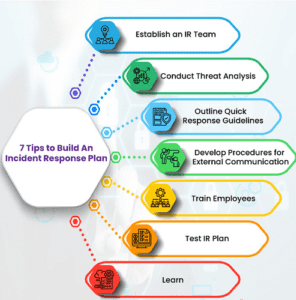
With that said, here are 13 things you may not have known regarding cyber security incident management. 

  1. The goal of cyber security incident management

One of the primary functions of real-time cyber security incident management is to detect threats and occurrences and respond to them in real-time. Its goal is to provide a clear and complete picture of any IT security threat. 

  1. Benefits of cyber security incident management 

In the case of a cyber-attack, good incident management may minimize the damage and possibly prevent it from occurring. It can prevent a huge number of data leaks. 

  1. Risk mitigation 

An organization that does not have a robust incident response strategy is vulnerable to a cyber-attack in which all of the company’s data is compromised. Knowledge and experience are both important to mitigate the risk. 

  1. Types of security breaches 

Security incidents may range from an active threat or an attempted attack to a successful data breach. Security events include policy breaches and illegal access to sensitive information, such as health, fiscal, personal data, and protected information records.

  1. How companies deal with cyber security threats 

Cybersecurity threats continue to rise in quantity and complexity, so companies implement procedures that enable them to quickly detect these sorts of events, react to them, and mitigate them while also becoming more resilient and defending themselves against future attacks.

  1. Functions of an incident response team 

As soon as an event occurs, the incident response team is called in to investigate and respond to it. The incident response team uses equipment, software, and human investigation and analysis to handle security incidents. The incident responders determine the scope of the event, the extent of the damages, and the development of a mitigation strategy.

  1. How security incident management works 

As a starting point, a thorough analysis of an abnormal system or irregularity in system or data behavior, or user behavior may be conducted. Members of the law enforcement community are called in. Executive management and a public relations team may be involved in making a public statement if the event includes the disclosure or theft of sensitive customer information.

  1. Why the incident management approach is top-notch

An incident management approach is critical to limit recovery costs and possible liability and, most importantly, to minimize the harm to victims (both at the personal level and the organizational level).

  1. Evidence gathering

It is essential to always gather evidence and assess forensics as part of incident response. The incident management approach relies on an established procedure for gathering evidence and ensuring its accuracy and sufficiency so that it may be used as evidence in a court of law.

  1. Cyber Forensic and IRT

The capacity to use forensics for analysis, reporting, and inquiry is also critical. The members of the IRT must be well-versed in cyber forensics, functional methodologies, and the legal and governance aspects of cybercrime investigation. Well-developed security incident management process is essential to creating an effective security incident management strategy.

  1. Importance of incident management strategy

Security incident management strategy that includes rules and procedures for detecting, reporting, assessing, and responding to occurrences must be implemented. It should be prepared with a checklist. The security incident management strategy must be updated regularly to include lessons gained from previous occurrences.

  1. Clear defined roles for IRT

Incident Response Teams (IRT) are given clearly defined roles and duties. Functional responsibilities in the IRT include those in the areas of finance, legality, communication, and operations.

Security incident management procedures must be regularly practiced and rehearsed. This enhances the team’s capabilities and keeps them on their toes.

  1. Post-incident analysis

Post-incident analysis should be performed after every security event to learn from any successes or failures and adapt the program and incident management procedures.

Conclusion 

Incident management professionals are starting to recognize that their interactions lead to stronger defenses for preventing or defeating harmful or unauthorized behavior and threats. If you are interested in becoming a cyber security expert, sign in for Imarticus Learning Programs. It is one of the best platforms for future data science experts. 

You can also contact us through our chat support or meet us at our training centers in Mumbai, Thane, Pune, Chennai, Bengaluru, Delhi, and Gurgaon

Incident Management In Cyber Security: The Basics

Incident Management In Cyber Security: The Basics

Incident management, which comes under cyber security, is a crucial skill in today’s world. More and more companies are looking for people adept at identifying, managing, recording, and analyzing cyber security threats. In case of an attack, cyber security analysts must act quickly to prevent severe damage.

Needless to say, the skill is in high demand in the job market. In case you are looking to forge a career in the field, we have you covered. Here is a ready reckoner on incident management, its need, and importance, as well as information on online cyber security courses that can help you not just learn the skills, but also land a job. 

What is Incident Management In Cyber Security?

Incident management refers to identifying and managing a cyberattack, recording and analyzing the security threats because of the attack, and controlling such incidents in real-time. A company needs to act immediately in case of an attack to minimize the damage. The process involves extensive knowledge and experience in the field. Good incident management can prevent or reduce the adverse impact of a cyber attack. It can even prevent such an attack in the first place. 

Why is Incident Management so important today?

Cyber attacks can have long-term consequences for a company. More so, we live in a fully digitized world now, and it has become much easier for criminals to strike. With many people working from home, things like firewalls and antivirus protection have also been compromised. All this has led to companies looking actively for skilled professionals who can join their incident management teams. This has, in turn, led to increased job opportunities for everyone. However, before becoming a cyber security analyst, it’s imperative that you pursue a good cyber security course online first.

Imarticus Learning has designed the most extensive, industry-approved experiential learning program, called Cyber Security Training Online, especially for graduates. It provides guaranteed interview opportunities for students who complete the course. The requirement is a minimum of 50% marks in graduation in Computer Science/IT. To know more about the course, you can visit https://imarticus.org/post-graduate-program-in-cybersecurity/

Why do cyberattacks need to be resolved immediately, and what is the process?

A cyberattack could come in the form of an active threat or even a successful data breach. There could be policy violations and unauthorized access to data such as social security numbers, financial reports, health records, and personally identifiable data. So it becomes crucial to immediately take action and stop the attack. To counter the attack, a plan is made in which all the responsibilities and tasks are defined. The plan isolates the malware and the affected system, ensures a deeper analysis to identify the attack’s origin, and investigates the reason for the attack.

Components of an Incident Management team

The Incident Management Response team should have the following parts:

Technical team: It comprises the incident management security and IT teams.

Incident response coordinator: This is the person responsible for the management and implication of the plan with the team

Executive sponsor: The executive in charge of overseeing the protection of information and security.

Forensic analyst: A forensics expert advisor for the company

Legal counsel: An attorney representing the organization when needed for incidents and breaches.

The incident response team requires a lot of skills. The core team consists of technical staff who respond to incidents and defend the organization from cyber threats. These members execute tasks such as monitoring the network for security breaches and vulnerabilities and taking necessary measures.

In terms of team-building, companies seek out those in the organization who are knowledgeable about this critical aspect of security. 

If you are interested in learning about cyber security, Imarticus can help through its Cyber Security Course Online in which security experts work with you to analyze the different IT security processes and help you develop appropriate solutions. The course also ensures placements for students who complete the program successfully. 

You can contact Imarticus Learning through our chat support or even visit our training centers in Mumbai, Thane, Pune, Chennai, Bengaluru, Delhi, and Gurugram. 

Conclusion

Incident management is a crucial skill when it comes to cyber security. It can minimize the adverse impact of cyber attacks and even prevent them from happening. Training is imperative before one becomes a cyber security expert. It is designed by industry leaders to provide the best learning outcome to aspiring cybersecurity professionals. It also provides guaranteed interview opportunities and extensive placement preparation. 

Data breach in 2022: Introduction to incident management in cybersecurity

Data breach in 2022: Introduction to incident management in cybersecurity

To put it simply, a data breach refers to any incident involving the theft of information from a system without the knowledge or authorization of the system’s owner. In recent years, cybersecurity breaches have multiplied like never before! Be it large or small companies, there’s hardly any sector that is not vulnerable to cybercrime. 

The latest incidents of high-profile attacks targeting a wide spectrum of sectors, including healthcare, finance, retail, government, manufacturing, and energy, have compelled industry insiders to sit up and take notice of the threat landscape. Going by expert projections, cybercrime is expected to cost the global economy $10.5 trillion by 2025, alarming to even mammoth businesses.

best cybersecurity courseIncident management in cybersecurity implies the process of identifying, managing, recording, and analyzing the security, threats, and incidents associated with cybersecurity.

It is a crucial step that immediately follows or precedes a cyber disaster in an IT infrastructure. Incident management in cybersecurity requires a significant degree of knowledge and experience. 

With efficient incident management in place, you can considerably minimize the adverse impact of cyber destruction, besides keeping cyber-attacks at bay.

What’s more, it also prevents data leaks. An organization without a good incident response plan might fall prey to cyberattacks, which can lead to major compromises with the data of the organization.

The following steps are involved in incident management in cybersecurity:

  1.     The first step involves an alert that reports an incident that has occurred. This is followed by the engagement of the incident response team, which prepares itself to tackle the incident.
  2.     Next comes identifying potential security incidents by monitoring and reporting all incidents.
  3.     Based on the outcome of the previous step, the next step is responding to the incident by containing, investigating, and resolving it.
  4. Finally, every incident should be documented with its learnings and key takeaways.

Also, check out the following tips for security incident management:

  1.  It is imperative for every organization to ensure a mature and fool-proof incident management process that implements the best practices for a comprehensive plan.
  2.   Make sure your incident management plan is equipped with supporting policies that include well-laid-out guidance on the detection, reporting, assessment, and response of the incidents. A checklist should be prepared, putting down the actions based on the threat. The incident management plan should also be continuously updated as per requirement, especially with regard to lessons learned from previous incidents.
  3.  Creating an Incident Response Team (IRT) plays an instrumental role in working on clearly defined goals and responsibilities. It will also be entrusted with functional roles such as finance, legal, communication, and operations.
  4.  Incident management procedures can go quite a few notches higher with regular information security training and mock drills. These go a long way in boosting the IRT’s functionality and keeping them on their toes.
  5.   A post-incident analysis after any security incident can make a considerable difference in teaching you a thing or two about successes and failures. This helps a lot in making necessary adjustments to the program and incident management processes as and when required.

What More You Need

In incident management in cybersecurity, collecting evidence and analyzing forensics is always highly recommended, which is an integral part of incident response. You need the following things for the same:

  • A well-defined policy can effectively assimilate evidence while ensuring its accuracy and sufficiency to be admissible in a court of law.
  • The incident response should be such that it can employ forensics as required for analysis, reporting, and investigation.
  • The IRT personnel must be well-trained in cyber forensics and functional techniques. They should also have some knowledge of legal and governance issues. You can visit our training centers in Mumbai, Thane, Pune, Chennai, Bengaluru, Delhi, and Gurgaon for cybersecurity training online

In a nutshell, a robust incident management process can reduce your recovery costs and potential liabilities and, above all, minimize the damage to the victim, not only at a personal level but also at the organizational level. 

If you’re looking for cyber security training online, contact us through chat support. 

Why cybersecurity is more important than ever

Why cybersecurity is more important than ever

Cybersecurity can be understood as the practice of protecting computers, mobiles, and other devices from digital attacks. Also referred to as Information Security and Electronic Information Security, it deals with several contexts such as business and mobile computing. It mostly prevents attacks such as extortion and the destruction of sensitive information. This is why the implementation of security procedures goes through several challenges.

The domain can only acquire success if multiple layers of protection are provided across all technological devices. The defense can be created only if people, technology, and systems are strong and well-connected. 

New vulnerabilities are emerging day by day, according to researchers. A society can only function if cyber security training is provided to the professionals, resulting in the prevention of digital assaults.

Here are some of the reasons why cybersecurity is essential:

IoT and Cybersecurity

We are quickly moving to a Smart world where the Internet of Things or IoT is growing. Since IoT works by collecting data and predictive analysis, it has created a world where personal data is kept in the cloud and used to monitor daily activities. If hackers gain entry to these data, they can easily gain access to monitoring records of individuals and breach privacy.

Cloud Storage

Cloud storage is no longer a thing of the future — we have completely integrated cloud storage into our lives. From storing passwords to useful documents and even images, it has become really important to secure specific cloud accounts from breaches. The targeted Apple iCloud hack on celebrity accounts back in 2014 is proof of how important it is for cybersecurity to protect cloud data.

 Computer Illiteracy

Technology is evolving every day and at this current, it has outpaced the level of computer literacy that every person has. If compared with the growth of technology, a majority of the Earth’s population is currently computer-illiterate. Hence, they are more susceptible to cybersecurity attacks. That’s why it has become more important for cybersecurity experts to create a protective cushion to prevent any security breaches.

Tighter Regulations

Nowadays, businesses store a lot of essential customer information that can track customer activity and even draw up a personality profile. Plus, businesses need to keep their security features updated to protect against new forms of cybersecurity attacks. Now, with the General Data Protection Regulation (GDPR) in the EU, which focuses on the protection of data and enforces organizations to put security measures in place, it is quite possible that eventually tighter regulations will be placed on organizations all across the globe.

What Makes Cybersecurity Essential?

Information, both public and private, must be safeguarded by all of us. Cybersecurity enhances that safety for all of us by removing external attacks from digital hackers. Technology in the COVID times is something that is used in every household. Unprotected devices are always noticed by hackers and due to such a lack of attention from our side, it provides them with an easy space to fetch all our information. These include usernames, bank credentials, social security numbers as well as pin codes. 

At a broader level, private businesses, as well as government organizations, face such turmoil. Hacking methods such as Powershell detect files and programs via in-memory exploits. Cybercrime is currently a fight that everyone is present in and cases are increasing day by day. 

This is why cybersecurity is essential because it is used in our everyday work. Its main objective is to prevent unauthorized access and modify necessary data and programs. Hence, you can spot several cybersecurity courses online which suggest the importance of cybersecurity in today’s world.

Conclusion:

Cybersecurity training programs are abundant on digital platforms. However, Imarticus PG Cybersecurity Program will provide you with the best possible teachings from a range of experts. Along with cybersecurity certifications, it will provide you with interview opportunities, extensive preparation with placements as well as an industrial curriculum framework. This course will clear out all your doubts regarding cybersecurity and provide you with irresistible job offers.

Contact us today to enroll in the program!