Digital Marketing Course With Placement: Learn The Best Facebook Terminologies in 2022

Introduction

Every industry in the world has shifted to digital, and digital is the future. Due to this, digital marketing courses have mushroomed at an alarming rate, and most of the courses boast of turning students into millionaires overnight. So, enroling in an institute that offers digital marketing courses with placement is critical.

Still, like any other profession, it is crucial to be highly skilled and updated with the latest nuances of digital marketing to be successful. A few courses designed to teach the latest digital marketing technologies overlook fundamental knowledge required for non-specialists. 

Specifically, other widely advertised digital marketing courses with placement are fundamentally flawed. They tend to focus on computer skills and digital tools but lay little or no emphasis on strategic business proficiencies, including consumer behavior and general branding management. They have a disconnect with real-time marketing problems. And most importantly, the gap between digital marketing classes which claim to make you job-ready and digital marketing courses that guarantee jobs has only widened.

The right digital marketing course In India will give you job security and accelerate your digital marketing career. A digital marketing course in India has immense potential. Even Digital India, the flagship program of the Government of India, aims to transform India into a digitally empowered economy. Therefore, while choosing the right course, consider the following indicators:

  • The course must offer a detailed curriculum that encompasses the fundamentals of digital marketing and its latest facets, like the Facebook terminologies in 2022.
  • The digital marketing course must not only impart theoretical knowledge but must mandatorily let you get hands-on experience with digital marketing tools, including search engine optimization, online reputation management, social media, and paid media.
  • The real issues with real businesses are constantly changing. Digital marketing education must make you future-proof. It must allow you to work with reputed brands to understand what goes behind deciding their marketing strategies and how these strategies impact the brand.
  • Most online digital marketing courses only have self-paced video lectures. While the video lectures help, nothing compares to what you learn from the industry stalwarts in live interactions. The right digital marketing classes blend both online and classroom modes of instruction.
  • Many digital marketing courses are ferociously advertised on every platform, so students do not cross-verify their genuineness. Do not fall into the trap and select only an industry-approved digital market course.
  • Almost all courses claim to make you job-ready in a stipulated time, but very few come with a job guarantee. Choose a digital marketing course with a promising placement portfolio, as it is crucial in these uncertain times.

The demand for digital marketing professionals with advanced skills has soared in the past two years. This demand will only increase in the future—the average industry salary for roles in digital marketing range from 3.5 LPA to 20 LPA. Additionally, according to a report, the digital economy in India could create 60 million to 65 million jobs by 2025, and many of them would require functional digital skills

If you are looking for a course that makes you future-ready, check out the Postgraduate Program in Digital Marketing offered by Imarticus Learning. The industry council approves this course, and you will learn the latest tools and technologies like the best Facebook terminologies In 2022.

The highlights of this program are the capstone projects for four live websites and its 100% job assurance. For any queries, you can contact us through our chat support, or you could even drive to one of our training centers in Mumbai, Thane, Pune, Chennai, Bengaluru, Delhi, and Gurgaon. 

9 trends in the data visualization job market

Do you love to solve problems by going through huge amounts of data? Do you dream of coming up with strategies and tactics that could take businesses and companies to new heights? If the answer to these questions is yes, then a data analytics course is rightfully suited for you.

When you enroll for a data analytics certification you will oftentimes come across the term data visualization. Before we understand data visualization and what some of the hottest topics trending are, let us quickly browse through the basic idea of data analytics. 

business analytics certification courseWhat is Data Analytics?

Data analytics is the process by which one analysis raw data to draw conclusions about the acquired data. Most of the processes and methods that go into the science of data analytics have been automated into algorithms that analyze data quickly and efficiently for ready human consumption.

The word data analytics is an all-encompassing term that includes diverse data types. The technique of data analytics is useful to reveal metrics and ongoing trends that would at other times be lost in the vast ocean of existing information. The ocean accumulated can aid in optimizing processes for greater efficiency and productivity.

There are 4 types of data analytics explained briefly for your better understanding:

  1. Descriptive Analytics:

Evaluates and describe what has occurred over a fixed time

  1. Diagnostic Analytics:

Focuses on the why with greater emphasis on the diversity of data inputs

  1. Predictive Analytics:

As the name suggests, it tries to predict what is going to happen in the coming term

  1. Prescriptive Analytics:

Makes a suggestion about the possible course of action

9 Trends in Data Visualization Currently

Once you have acquired and analyzed your data, you need to be able to graphically and pictorially represent it in a way that is easily understandable. Data visualization presents you with the technologies and tools required to analyze a massive corpus of data. Here are a few ongoing trends in the field of data visualization that can help you get greater clarity on things:

  1. Big Data

This kind of data visualization will need high-performing devices that will be able to gather data, process it, and transform it into graphical representations that people can quickly draw insights from.

  1. DataOps and Self-Service BI

The term coined by Gartner enhances the quality and reduces the cycle time that goes into the operational aspect of data management. Together, these two tools aid in the smooth flow of information/data across pipelines over the entire supply chain system.

  1. Hybrid Enterprises

After the pandemic hit the world, more and more businesses are opting for cloud-based computing which signals the fact that there is an emergence and rise of product features that is hybrid in nature.

  1. Data Storytelling

This is a crucial angle of business intelligence wherein data analytics helps to revolutionize the art of data storytelling. As organizations strive to build a thriving culture, data storytelling methods enable conversations to be nurtured around data.

  1. Adaptable BI Ecosystem

Developers have made it easy to personalize experiences with respect to a company’s flow of data. Analytic apps have enriched the system reducing the time required for data-based actions over BI loops. With the help of the BI ecosystem, the workflow would run more smoothly making it feel as if it were a unified system.

  1. Agile Strategies

As data is moving at a break-neck speed, firms and organizations would need to re-evaluate how they can strategize data to make it more agile and flexible. Cloud computing can be highly useful in this regard.

  1. Non-Technical Professionals

Non-Technical Professionals also referred to as Citizen Data Communicators, are scientists who can communicate with data effectively and easily. Post-2021 will see an epic rise in data scientists as data visualization becomes the norm and the universal language across business ventures.

  1. Operationalized Data Lake

Data Lake is a popular concept that acts as a storage area for enterprises. A data lake is highly preferred because it offers an economical way of storing a massive amount of data similar, yet, different from the cloud.

  1. Personalized Conversations

Updated NLP systems help data owners to engage with data in a more economical and direct manner.

Benefits of Data Analytics Course

Now that we have gone over in a concise manner what is data visualization, data analytics, and the various trends of data visualization, let us see how a business analytics course can be helpful in the current job market:

  •         It is highly in-demand
  •         The job opportunities are immense
  •         Big data analytics is very important these days
  •         You can explore new revenue streams
  •         Opens up wider freelancing opportunities

These are the various ways data analytics certification can help you in your professional life.

Outlook 2022: Various executive programs in investment management

Investment management as an industry is constantly evolving, and new programs are being created all the time to keep up with the latest trends. So, what can we expect to see in the next few years?

With the growing popularity of investment management, it is expected that there will be career growth in this field. More and more people will move toward this exciting and rewarding field. So, in this post, we will cover the need for investment banking in 2022 as well as various executive programs in investment management which will help you get ahead in your career.

What is the need for investment banking in 2022?

Investment bankers play a vital role in ensuring that these products are appropriately managed and monitored. They also work closely with clients to ensure that they are getting the best possible return on their investment. All of this is expected to continue in the next few years, and the demand for investment bankers is only going to increase. So, if you are looking for a challenging and rewarding career, investment banking is definitely the way to go!

Various Executive programs in Investment management:

Executive programs in Investment management are created for working professionals with experience. It is meant for those who want to get ahead in their careers and achieve new goals in investment management. There are many different types of executive programs in investment management, but some of the most popular ones include:

Financial management: This program will teach you how to manage a company’s finances, including budgeting, forecasting, and investment strategy.

Equity capital markets: This program will teach you about the different types of equity securities and how to trade them.

Financial accounting: This program will teach you the basics of financial accounting and how to prepare financial statements.

Investment banking: This program will teach you about the different types of investment banking products and services.

So, if you are interested in a career in investment management, be sure to check out these programs. They will give you the skills and knowledge you need to succeed in this ever-changing industry.

Explore Executive programs in Investment banking with Imarticus Learning.

IIM Calcutta’s investment banking curriculum is highly popular. This program focuses on many aspects of the finance industry. This curriculum aims to educate students about debt and equity capital markets, investment banking, financial management, and portfolio management.

Course Benefits for Learners:

  • It provides learners with a solid foundation in financial accounting and financial analysis basics.
  • IIM Calcutta’s investment banking program is ideal for those who wish to make a career in investment banking and want to learn about the various aspects of this field.
  • The course curriculum is designed to cover all the essential topics and provide students with an opportunity to gain practical experience through live projects.

Key Finance Valuation Ratios and when to use which one

Valuation ratios are any of various computations that assess whether a certain investment is cheap or costly when compared to a given metric, such as profitability or enterprise value. This means that the valuation ratio aids an investor in determining the cost of an investment in relation to the value or advantages of holding that investment.

An organization’s capital and profits are in danger if it doesn’t have a strategy for detecting, analyzing, and managing the many threats to its capital and earnings. A broad range of factors, such as financial uncertainties, legal obligations, strategic management failures, and accidents and natural catastrophes, might contribute to these threats or hazards.

There must be a focus on minimizing, monitoring and controlling unfavorable occurrences while enhancing good ones in order to mitigate risk. Consistent, systemic risk management may assist in finding the best way to manage and reduce severe risks. This process of handling risks through different strategies in order to align a company’s objectives with its values and risks is called risk management.

What are the different types of valuation ratios?


  • Price-to-earnings (PE) Ratio 


Many valuation measures exist, but the price-to-earnings (PE) ratio is one of the most often utilized for publicly traded corporations. Shareholders’ per-share earnings are calculated using the PE ratio. The investor may see the value of his or her investment by comparing the costs and returns. There are a variety of ways to compute the PE ratio, including using the company’s adjusted profits or diluted earnings to see whether the cost and return are comparable. The PE can be computed over a period of one year or more. 

When should you use the price-to-earnings ratio: You should use the price-to-earnings ratio evaluation as an essential starting point for evaluating almost all businesses or when you need a simple way to compare a large number of listed companies.

  1. EBITDA

EBITDA is another frequent valuation statistic that compares the share price to the company’s profitability. Non-cash charges such as interest, tax, depreciation, and amortization are taken into account to arrive at the company’s real earnings.

When should you use EBITDA: When you want to assess capital-intensive enterprises whose balance sheets conceal a significant amount of money. An example of a capital-intensive enterprise is an airline.

  1. Price-to-book ratio 

Another type of valuation ratio is called the price-to-book ratio. When calculating the price-to-book ratio, one looks at the difference between the market value and the book value of a corporation. Share price times outstanding shares equals a company’s market value. The worth of a company’s net assets is known as its book value.

When should you use the price-to-book ratio: When you want to assess financial institutions. Book value is less volatile than profits, which may lead to large fluctuations in ratios.

Why this course?

As part of Imarticus’ joint program with the Indian Institute of Management (IIM) Lucknow, students learn about the fundamentals of the corporate finance field. Looking for a financial risk management course for a mid-level financial services or capital market professional? This is the course for you. In addition, you’ll get a diploma in risk management and will be able to improve your knowledge and experience in the financial sector and discover new avenues for rejuvenating your career.

Conclusion

Imarticus’ Advanced Management Program in Financial Services and Capital Markets is the best option if you want to further your career as a financial risk management professional or get a financial risk management certification. The application date for this chance is March 26th, 2022, so don’t delay.

Transitioning from engineering to financial technology courses?

As the fintech domain continues to gain prominence among people globally with its efficient functionality to simplify diverse aspects of life, people seek career opportunities on the same path to be future-ready. Brands are taking all possible steps toward digital transformation, from acquiring fintech-approved plans of action to partnering with fintech startups. In order to keep up with the revolution and attain a lead in the competing tech world, organizations are also in search of qualified candidates for the role, creating growth in fintech job roles.

With the global fintech market expected to reach $698.48 billion by 2030, with a CAGR of 20.3% from 2021 to 2030, fintech is experiencing immense growth and is bound to create exciting opportunities for certified candidates. Two of the most lucrative career options, finance and technology, can seek a suitable position in the converging realm called fintech. 

Aspirants transitioning from engineering to financial technology courses need a thorough insight into what awaits them and the right financial technology courses to choose for a smooth transition in the fintech domain. But, why should you care about the fintech sphere when technology is an evolving, lucrative space? Let’s find out what fintech has in store for engineers and where a fintech course can take them!

Benefits of a Tech Background

Transitioning to fintech from the engineering or finance space can be bothersome but not much for techies. Various fintech roles entirely work around the technical aspects of the job. Regardless, fundamental bases of finance must be covered by techies going to fintech domains. Besides finance, the most important aspect of fintech is the knowledge of technical skills, which are already imbibed in techies. So, what’s next? 

Non-technical collaborative skills, most effective in finance domains, are essential for techies to excel in fintech. Adaptability, communication skills, financial knowledge, customer service, and collaborative intricacies are significant to making it into this realm.

Booming Cryptocurrency Space

One of the leading fintech spaces taking over the industry is cryptocurrency. The space combines the best of both worlds, a decentralized, digitally-driven form of currency. The blockchain space is booming with demand for talent, extending lucrative job opportunities. The cryptocurrency sphere holds excellent potential in current and future times, with evolving technology setting it up as a common name for future generations.

Engineers seeking the opportunity to step into the fintech world can gain proficiency with crypto-related skills to bag the role and be future-ready. Trading, application development, and banking are a few other sectors rapidly seeking fintech measures.

Certifications to Upgrade

Engineers looking for opportunities in fintech spaces require nothing more than professional certifications to strengthen their resumes and skill set. A strong foundation and experienced resume provide an edge over other candidates. Hence, obtaining a fintech certification is the best way to kickstart your fintech journey. Online education portals extend the countless certification and degree courses for finance and engineering professionals transitioning to or aiming to transition to the fintech domain. 

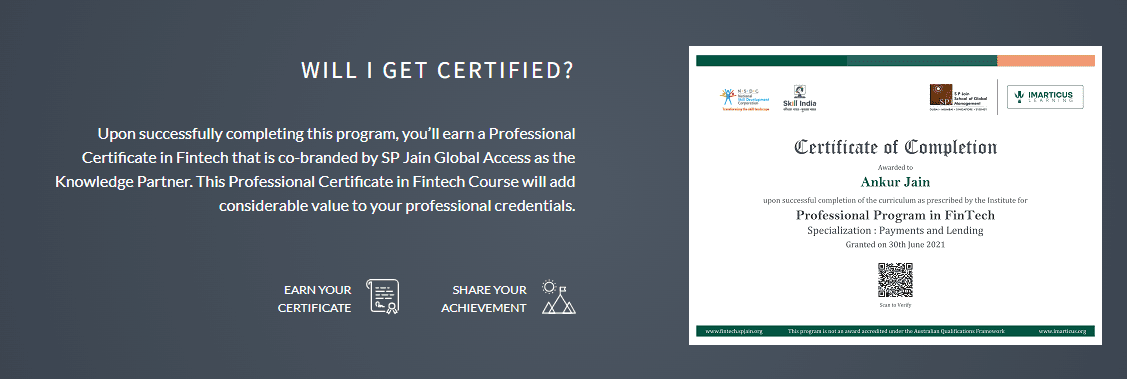
best Fintech courses in IndiaThe Final Word

Transitioning from the tech domain to the one containing intricacies of finances can be frightening for candidates, but choosing the right certification course can prevent any learning curve mishaps. As fintech continues growing day by day, stepping into the field is not a bad option. 

Technology growth is also leading to a change in the ways financial services were handled back in the olden days. But, evolving technology gives room for improvement, which is now being used in the shape of fintech startups topping the market with their innovation and fresh attempt. The fintech industry is close to becoming the market leader. And, we are here for it!

Why an IIM Calcutta executive program may be the right fit for your career

An IIM Calcutta executive program may be the perfect fit for your career if you want to gain new skills and knowledge. These programs offer a flexible format that allows you to continue working while you learn. They also provide an opportunity to network with other business professionals. If you are willing to learn more about IIM Calcutta executive programs, keep reading!

An IIM Calcutta executive program is a specialized management education program for experienced professionals. 

The benefits of enrolling in an IIM Calcutta executive program include:

  • Improved skills and knowledge in management and leadership
  • A greater understanding of the latest trends and best practices in business and management
  • Networking opportunities with experienced professionals from around the world
  • Opportunity to apply what you learn in a practical setting through case studies and projects
  • A flexible schedule that allows you to continue working while you study

If you are looking for a specialized management education program that will help you take your career to the next level, an IIM Calcutta executive program may be the right option for you. 

Here are the reasons why IIM Calcutta Executive program may be the right fit for your career:

  • The IIM Calcutta executive program is for experienced professionals who want to enhance their skills and knowledge.
  • The program offers a variety of learning opportunities, including case studies, workshops, and guest lectures from industry experts.
  • The faculty is highly experienced and knowledgeable.
  • The course is flexible, allowing participants to continue working while they study.
  • The program has a strong alumni network, which can help participants connect with industry leaders.

What kind of jobs can you expect with an IIM Calcutta executive certificate?

The jobs opportunity you can expect to get with an IIM Calcutta executive certificate is varied and lucrative. You can expect to work in marketing manager, financial analyst, or human resources director positions. With an IIM Calcutta executive certificate, you will qualify for many high-level jobs in the business world. Earning this certificate will help you move up in your career and achieve your desired success.

An IIM Calcutta executive program can help you take your career to new heights. If you are looking to move up in your career, this may be the right program.

Discover IIM Calcutta investment banking course with Imarticus Learning

The IIM Calcutta is one of the world’s top institutions for educating finance professionals. The IIM Calcutta investment banking and capital market certification will emphasize the fundamentals and more complicated debt, equity, and investment banking principles. 

Course Benefits For Learners:

Data Analytics, Productivity and Well-being: Are they inter-related?

Forms and benefits of data analytics have shifted majorly in the last few years. Major firms have also been using it as a way to decipher the habit patterns of their employees to take care of their well-being. Needless to say, their well-being directly relates to their workplace productivity. However, with the evolution of data analytics, data analysts also have to be able to evolve constantly.

And that is only possible when they have the proper training to adapt to situations, and that can only happen if they learn data analytics from a proper institution. Imarticus Learning has come forth with a great opportunity for people who would like to polish their skills with their new PG program with data analytics certification

Coming back to the impact of the well-being of employees on company productivity, studies have found that being comfortable in their workplace can make the workers about 12% more productive.

Data analysis as a tool to ensure happiness

Major firms have been trying to gather and decipher the patterns of their employees’ behavior to provide a personalized experience to them for some time now. There are a lot of ways companies have decided to approach it. Some offered wearables to their employees that will teach how much time they spend, sitting, talking, writing, or moving about. Some have chosen the company intranet to trace their online tracks.

Now it falls to the data analytics team to extract, and decipher these patterns. It is fruitful in the sense that these patterns always give indications of not only their physical health but also their mental ones. This is also a way where companies can provide personalized suggestions for their well-being. And the employees get benefitted from it in a way that impacts their daily life. As a result, they feel more loyalty to the company.

Hurdles to jump over

There are some evident advantages of exchanging data for the betterment of the employees’ well-being, and in turn, increase their productivity. However, it is also a possibility that when it comes to data gathering and analysis, the employees might have some privacy concerns about them. Which in turn, might make them unwilling to participate actively in the bandwagon.

This is why, there are a few things that should be kept in mind when it comes to the interrelation of well-being and productivity of the workers, such as:

  • The first and most important thing is to make sure the workers consent to the exchange of data for the company’s use, as many might have privacy concerns relating to that.

  • Companies will need to have experts in the analytics team to properly extract and use the data and make it a priority for both the main wing of the business and the analytics team to prioritize the employees well being.
    They need to communicate properly to the workers how it benefits them and the company both at once.

  • The key is to recognize what the employees want and be able to cater to it. Otherwise, even after using data analytics to define the workers’ needs, it will be utterly irrelevant.

Conclusion

Using data analytics as a mode of communication between the employer and employee needs time and expert skills. And it can only come if you learn data analytics from a good place.

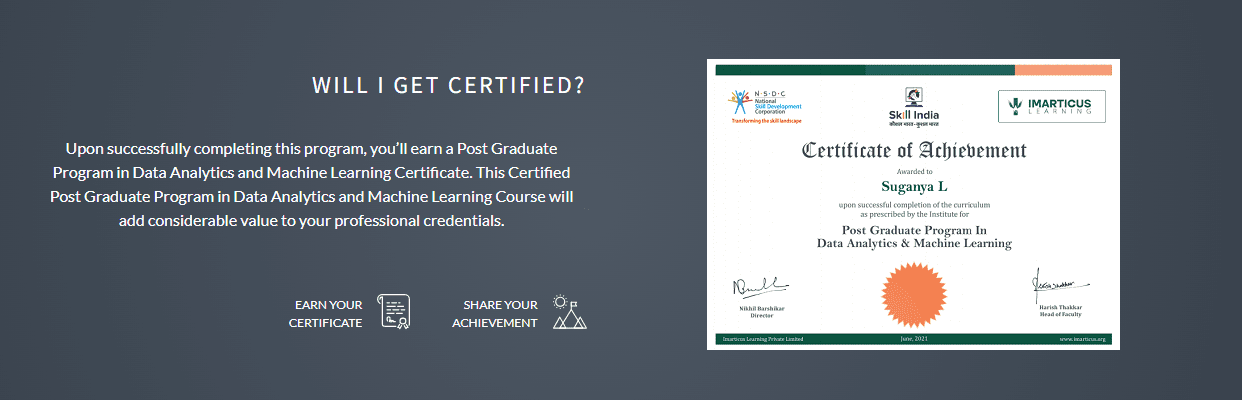
Many institutes in India offer a data analytics certificate course. Imarticus Learning is one of the topmost among them, so do check out their PG program in data analytics and machine learning.

Understanding the basics of Investment Banking with an IIM Calcutta course

An investment banker is a professional who helps companies and governments raise money by underwriting and selling securities. If you are interested in pursuing a career in investment banking, it’s essential to understand the basics of the industry. That’s where an IIM Calcutta course comes in handy!

 What is investment banking, and what do investment bankers do?

Investment banking is the process of helping businesses and governments raise money by issuing and selling securities. Investment bankers are the people who help companies and governments do this by coming up with new investment ideas, negotiating loans, and helping to get the best terms for their products. They also work with stock exchanges and ensure that everything goes as smoothly as possible.

There are three main areas of investment banking: corporate finance, capital markets, and wealth management. 

  • Corporate finance is the process of helping companies with things like issuing new shares, issuing debt, and advising on mergers and acquisitions. 
  • Capital markets are buying and selling securities, including stocks and bonds. 
  • Wealth management is the process of helping wealthy people invest their money and plan for the future.

An investment banker typically works for a bank or a financial services company. They usually have a college degree in business or economics, but some programs train you to be an investment banker. 

 The necessary skills you need to be successful in investment banking.

An investment banker is a professional who helps companies and governments raise money by underwriting and selling securities. 

  • Strong accounting, finance, and economics skills
  • The ability to analyze financial data and make sound investment decisions
  • The ability to work hard and handle stress well
  • The ability to think strategically and creatively
  • The desire to work in a fast-paced, challenging environment
  • The ability to communicate effectively with clients and colleagues
  • The willingness to learn and keep up with the latest trends in the industry

IIM Calcutta offers a course in investment banking to help you develop your skills to succeed in this field. The course covers all aspects of investment banking, from the basics to more advanced topics. You will learn about the different types of securities, how to price and sell them, and how to make sound investment decisions.

Discover IIM Calcutta investment banking Course with Imarticus Learning

The IIM Calcutta is one of the world’s top institutions for educating finance experts. IIM Calcutta Capital market certification will focus on the basics and more complex debt, equity, and investment banking principles.

Course Benefits For Learners:

Structured Finance Training and Securitization

Securitization is taking an illiquid asset and converting it into security. This is done through financial engineering techniques, and it is a key part of structured finance training. By securitizing assets, investors can gain access to a broader range of investments, and this helps to improve liquidity in the marketplace. In addition, securitization can offer investors several benefits, including higher returns and reduced risk.

In a more straightforward form, it is pooling together similar assets and selling them off as securities. The purpose of securitizing assets is to spread the risk associated with them.

The process of securitization involves the following steps:

-Identification of assets: The first step is to identify the assets to be securitized. These could be loans, credit card receivables, leases, etc.

-Pooling of assets: The next step is to pool these assets together. This is done to diversify the risk associated with each asset.

-Creation of securities: Once the assets have been pooled together, they are then sold off as securities. The most common securities created through securitization are mortgage-backed securities and asset-backed securities.

Advantages of Structured Finance Training and Securitization:

The benefits of structured finance training and securitization are many. 

  • For one, it helps to spread the risk associated with specific assets. Additionally, it also allows for a more efficient allocation of capital.
  • By pooling together assets and selling them off as securities, investors can get exposure to a broader range of investments than possible otherwise. This, in turn, leads to higher returns for investors. 
  • Finally, structured finance training and securitization also help create a more liquid market for certain assets. This is because securities can be traded on secondary markets, which allows for a greater degree of price discovery.

Overall, structured finance training and securitization are two important concepts that you need to understand if you want to stay ahead in finance. By understanding how these two concepts work, you will be able to make more informed investment decisions and achieve higher returns as a finance professional.

Explore more with Imarticus Learning:

Get prepared for leadership roles in Financial Services and Capital Markets and reignite your finance career with IIM Lucknow.

The Advanced Management Program in Financial Services and Capital Markets provides a comprehensive understanding of the capital markets and risks, investment banking, and fintech domains. This 6-month intensive program offers the best-in-class education for high-performing middle management experienced professionals. 

The course comprises a highly engaging mix of learning methodologies, including masterclasses by industry speakers, live lectures, capstone projects, and simulations that accelerate learning.

Why opt for Diploma in Finance Management?

This advanced management program features a leading-edge curriculum that teaches fundamentals of corporate finance, fintech, risk management and compliance, capital markets, valuation, and equity research. 

It is the best course for mid-level professionals who have basic financial knowledge and skills and wish to gain a strong foothold in the industry. The course enables you to acquire vital skills and knowledge and open up avenues for reinitiating your career in finance through:

  • Peer networking through Campus immersion
  • Executive Alumni status of IIM Lucknow
  • Capstone projects and Simulations
  • Unique AMP curriculum in Financial Services and Capital Markets

Is omnitude the solution to supply chain planning?

Omnitude is a blockchain platform that improves supply chain planning. It allows businesses to connect with their suppliers and customers securely and transparently. Omnitude has the potential to revolutionize the way companies operate, and it could be the solution to supply chain planning in 2022. This blog will discuss the benefits of using Omnitude for supply chain planning and how it can help your business grow. 

Omnitude is a blockchain platform that enables businesses to solve problems in the supply chain. It provides a transparent and secure way of recording data, which you can use to verify the authenticity of products and track them through the supply chain. 

Why is Omnitude a good solution for supply chain planning?

Omnitude is a good solution for supply chain planning because it offers a blockchain platform that you can use to connect various parties in the supply chain. It allows for greater transparency and trust between all parties involved.

Omnitude also offers smart contracts, which can help automate the entire supply chain planning process. It helps speed up the process and reduce the risk of human error.

Omnitude is also a secure platform that offers encryption and authentication features. It helps ensure that all data transmitted on the network is safe and confidential.

Finally, Omnitude is an open platform that anyone can use. It means that businesses can benefit from its features.

How to get started with omnitude?

There is a lot of excitement around omnitude and its potential to revolutionize supply chain planning. However, many businesses are unsure how to get started with the platform. Here are three steps to help you get started:

Step One: Identify Your Needs

The initial step is to identify your needs and requirements. What challenges are you facing in your supply chain? What areas would you like to improve? Omnitude can help with various issues, such as inventory management, tracking deliveries, and reducing waste.

Step Two: Choosing the Right Implementation Strategy

The second step is to choose the right implementation strategy. There are two main options: self-hosting or cloud-based. Self-hosting allows you to install and manage the omnitude platform yourself, while Omnitude provides cloud-based solutions. 

Step Three: Getting Started

The final step is to get started! Once you have identified your needs and chosen an implementation strategy, it’s time to start using Omnitude. There are a variety of tutorials and resources available online to help you get started. Don’t be afraid to ask for help if you need it.

By following these three steps, you can get started with Omnitude and begin experiencing the platform’s benefits.

Explore Supply Chain Management Course with Imarticus Learning

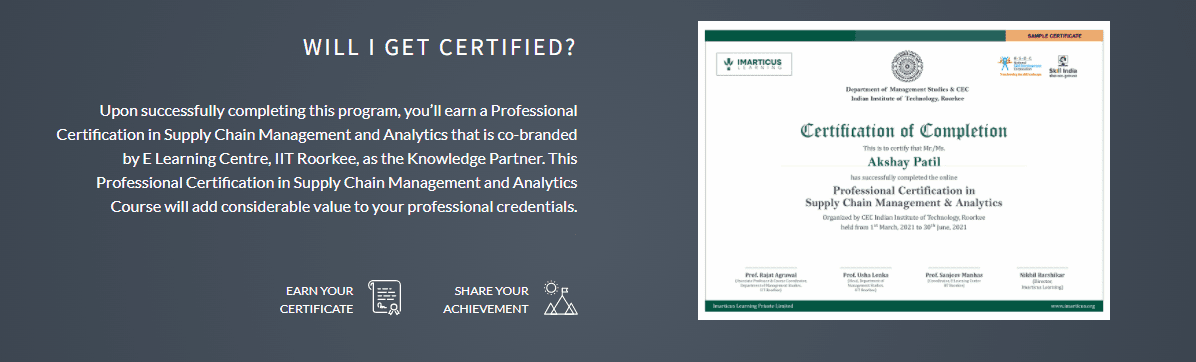
The supply chain certification provides cutting-edge expertise to those interested in entering the operations or supply chain analytics course. Across industries, there has been a dramatic growth in the number of SCM jobs. A career in SCM can be enriching, both financially and professionally. 

best supply chain management and analytics coursesCourse Benefits For Learners:

  • We immerse students in in-demand technologies and projects, including six real-world projects that will give them a complete grasp of the industry to prepare them for a satisfying future in Supply Chain Management and Analytics.
  • Students who complete a supply chain management online course will prepare for competitive careers such as Demand Planner or Data Scientist, which are in great demand among companies today! 
  • This supply chain management career will help students become more data-centric and improve Supply Chain decision-making by harnessing the power of Python.