How to build a successful career in capital markets in 2023

Introduction

As the digital age continues to reshape our world, understanding the ins and outs of capital markets has become more crucial than ever before. For job seekers, excelling in this field is vital to remain competitive in the job market. With the demand for professionals with knowledge and expertise in capital markets continuing to grow, it’s clear that this field will remain a valuable career path.

Capital Market

In this blog post, we’ll provide you with a comprehensive guide to achieving success in capital markets in 2023. We’ll break down the key components and share strategies and techniques to help you soar to the top.

To succeed in a career in capital markets, you need to focus on several key areas. Here are the six essential points to consider:

1. Gain the right education and certification:

The first step towards a successful career in capital markets is to acquire the right education and certification. A Financial Services And Capital Markets Course or an IIM Lucknow Certificate Course will provide you with the knowledge and skills required to excel in this industry.

These courses cover a wide range of topics, including financial analysis, market trends, risk management, and investment strategies. By enrolling in one of these courses, you’ll gain a strong foundation in the principles of finance and economics, and you’ll be well-equipped to tackle the challenges of the industry.

2. Develop a strong network:

Building a strong network is crucial to succeed in the capital markets industry. Connect with professionals in the industry through networking events, social media platforms, and professional organizations.

Attend conferences and seminars to meet industry experts and learn about the latest trends and technologies. By building a strong network of contacts, you’ll gain valuable insights into the industry, and you’ll be better positioned to take advantage of opportunities as they arise.

3. Keep up-to-date with the latest trends and technologies:

Capital markets are constantly evolving, and staying up-to-date with the latest trends and technologies is crucial for success. Keep yourself updated with the latest developments in the industry through industry conferences, webinars, and trade publications.

Learn about the latest financial instruments and investment strategies, and stay abreast of regulatory changes that could impact your work. By staying informed, you’ll be able to make informed decisions and position yourself as a valuable asset to your organization.

4. Hone your analytical skills:

The ability to analyze data and make informed decisions is essential in the capital markets industry. You’ll need to be able to analyze market trends, evaluate investment opportunities, and identify potential risks. To hone your analytical skills, consider taking courses in data analysis, financial modeling, and statistics.

These courses will teach you how to use data to make informed decisions and how to develop predictive models that can help you anticipate market trends. By developing your analytical skills, you’ll be better equipped to make smart investment decisions and add value to your organization.

5. Cultivate a strong work ethic:

Cultivating a strong work ethic is essential for success in the capital markets industry. This industry is fast-paced and highly competitive, and you’ll need to be able to work long hours and deliver high-quality work under tight deadlines.

To succeed, you’ll need to be reliable, hardworking, and committed to excellence. You’ll also need to be able to work collaboratively with others and communicate effectively with colleagues, clients, and stakeholders.

6. Embrace a growth mindset:

Finally, to succeed in the capital markets industry, you need to embrace a growth mindset. This means being open to new challenges and opportunities and being willing to learn from your mistakes.

It also means being willing to take risks and pursue your goals with passion and dedication. By adopting a growth mindset, you’ll be better equipped to overcome obstacles, adapt to changing circumstances, and achieve success in this dynamic and rewarding industry.

Final Words

In summary, capital markets offer lucrative career opportunities for young professionals seeking growth and success. With the right skills, strategies, and techniques, you can develop a successful career in this field and achieve your career goals.

So whether you’re just starting or looking to take your career to the next level by enrolling in the Financial Courses offered by Imarticus Learning, you’ll gain the knowledge and expertise needed to excel in this dynamic field.

Take the first step towards your career goals today and visit Imarticus Learning to learn more about our leading learning programs for young professionals.


8 email marketing tools you can use to save your time

Digital marketing online training has grown in popularity. It has now become a means of learning new skills and advancing one’s profession in the current digital era. Many companies are focusing on email marketing as it is a successful way to connect with clients and promote their services. A successful digital marketing certification course will increase the value of email marketing campaigns.

Learn Email Marketing: 8 Time-saving Tools You Need to Know

best digital marketing course

Email marketing tools help you organise your workflow and save time. These tools range from automation to analytics. They can improve your email marketing efforts and increase ROI. Below is the list of tools you will need to learn email marketing.

1. Sendinblue

Sendinblue is a well-known, reliable and easy-to-use email marketing platform. It provides tools to assist companies in creating, sending and tracking email campaigns. It allows companies to develop automated processes. These processes send emails in response to particular triggers, such as a subscriber’s actions and location.

The key features of Sendinblue are:

Email campaign builder

Automation

Analytics

Contact management

Integrations

2. Mailchimp

Sending clickable emails is simple with Mailchimp’s adaptable email marketing templates. The simplicity of use is the main advantage of Mailchimp’s email builder. Emails can appear by loading your brand’s colour scheme and typeface.

3. HubSpot

HubSpot is a well-known email marketing solution. It assists companies to develop and send interesting emails to their target audience. This all-in-one marketing platform helps firms to build a strong clientele.

HubSpot’s email marketing tool is best for companies developing successful email campaigns. Businesses of all sizes and in all sectors will find it to be a fantastic fit.

Its key features include:

Simple drag-and-drop email builder

Sophisticated personalisation options

Strong analytics capabilities

4. MailerLite

MailerLite is a cloud-based email marketing solution. It allows companies and individuals to design and control email marketing. It assists businesses in expanding their email lists and engaging with their subscribers. It also provides features like landing pages, pop-ups and surveys.

Some of its key features include:

Email list management

Campaign analytics

A/B testing

Interfaces with other marketing tools like social content and eCommerce platforms

Several email marketing providers now offer automation and landing pages. But MailerLite stands out for its straightforward, appealing user interface and excellent customer support. Also, other web apps can be linked to MailerLite.

5. Sender

Sender provides email automation tools that let you create trigger-based email sequences, such as welcome emails, abandoned cart reminders or post-purchase follow-ups. Also, you may A/B test your emails to make sure that your campaigns are optimised for higher open and click-through rates.

With Sender, you can make email campaigns with easily adjustable themes, include pictures and videos and incorporate material that is tailored to the interests and behaviour of your subscribers.

6. Constant Contact

Constant Contact designs efficient email campaigns, automates emails and handles the subscriber list. To assist you in tracking your results, it provides comprehensive analytics and statistics.

Here are some of the benefits of using Constant Contact:

User-friendly interface

Email templates

Integration with other tools

Provide detailed analysis

Structured management

7. Mailjet

Mailjet is a rich email marketing solution. It gives resources that companies need for successful marketing campaigns. It is a popular option for companies trying to boost their email marketing efforts. Its user-friendly design, sophisticated automation options, and in-depth statistics are its key features.

Mailjet offers SMS marketing options besides its email marketing capabilities. This enables firms to text their subscribers. This feature is helpful for sending alerts, like delivery notifications or appointment reminders.

8. Omnisend

Omnisend is a marketing automation platform. It can help eCommerce companies to design and distribute targeted marketing campaigns. This process involves various media, such as email, SMS, push notifications and social media. To increase sales and engagement, businesses may use this platform to automate workflows. It also helps in segmenting their client base and tailoring their messaging.

Some of its main features are:

Audience segmentation

Dynamic

Product recommendations

Customisable email templates

Summing Up

Mastering email marketing tools is essential. It is a must for companies or digital marketers looking to improve their online presence and marketing efforts. You may learn email marketing using the tools discussed in this article. Tools such as Mailchimp, HubSpot and Sender will help you create more effective email campaigns.

Imarticus Learning is one of the best platforms in the industry that offers a range of courses. It also offers email marketing and digital marketing online training and services. Enrol in a digital marketing certification course. Advance your knowledge of digital marketing and stay updated with current trends and best practices.

Which languages are used in python programming?

Which Languages Are Used In Python Programming?

Python is a high-level programming language that has gained immense popularity in recent years. It is used in a wide range of applications, from web development to scientific computing. One of the reasons for its popularity is its simplicity and ease of use, making it an ideal language for beginners. Python is also open-source, meaning that it is free to use, distribute, and modify. But what are the languages used in Python programming? Let’s dive in and find out.

In this article, we will explore the various languages which are used in Python programming and methods in which Python is used for data visualisation.

Basic Language Used In Python

Python itself is written in C, a low-level programming language that is used to create operating systems, drivers, and other system-level software. C provides Python with the necessary speed and efficiency, making it a powerful language for various applications. Most of Python’s standard library is also written in C.

Other Languages Python Can Interface With

One of the benefits of Python is its ability to interface with other programming languages. This is made possible through language bindings, which are essentially a bridge between Python and another language. Some popular language bindings for Python include:

C/C++: Python can interface with C and C++ using the Python/C API, making it possible to write Python modules in C/C++.

Java: Jython is an implementation of Python that runs on the Java Virtual Machine (JVM).

NET: IronPython is an implementation of Python that runs on the NET Framework.

Rust: RustPython is a project that aims to implement Python in Rust, a systems programming language.

Python For Data visualisation And Data Analytics

data analytics courses

Data analytics is a field that involves using data to make informed decisions. Python is a popular language for data visualisation, but it is often used in conjunction with other languages, such as:

SQL: SQL is used to query and manipulate data stored in relational databases. Python can interface with SQL databases using libraries such as SQLAlchemy and PyODBC.

R: R is a language specifically designed for data analysis and statistics. Python can interface with R using the rpy2 library.

MATLAB: MATLAB is a language commonly used in scientific computing. Python can interface with MATLAB using the MATLAB Engine API for Python.

There are many resources available for learning Python online like the Postgraduate Program in Data Analytics and Machine Learning. If you are interested in pursuing a career in data analytics, then enrolling in a data analytics course with placement is among the best ways.

Postgraduate Program in Data Analytics and Machine Learning

Young professionals may learn Python online and other new skills with the aid of Imarticus, a top learning platform that offers courses that are focused on the workplace. Students can enrol in the 6-month Postgraduate Program in Data Analytics and Machine Learning, a job-focused certification programme, to master machine learning and learn Python for data visualisation.

Students learn to create analytical models to solve practical issues and enhance corporate decisions. Together with a job interview guarantee, the Postgraduate Program in Data Analytics and Machine Learning enables students to work with organisations like Cognizant, IBM, Goldman Sachs, Standard Chartered, and others. The following are some advantages of completing Imarticus’ Postgraduate Program in Data Analytics and Machine Learning:

KPMG provides students with a completion certificate to add to their resumes.

Additionally, the course provides career services including profile development, interview training, mentorship, skill development workshops, placement opportunities and more.

The data analytics course follows a job-oriented curriculum which ensures that professionals learn what is necessary for their job. This also makes them ready for top management roles in organisations.

Students who enrol in the Postgraduate Program in Data Analytics and Machine Learning have the opportunity to compete in national-level events like hackathons hosted by KPMG India.

Final Thoughts

Python is a versatile language that can be used in a wide range of applications, from web development to data analytics. Its simplicity and ease of use make it an ideal language for beginners, while its power and flexibility make it a favourite among professionals. Python can interface with other languages, which allows it to be used in conjunction with other tools and techniques. If you’re interested in learning Python online, there are many resources available, including courses by KPMG and Imarticus.

Whether you’re a beginner or an experienced programmer, Python is a language that is worth exploring. If you want to advance your learnings, enrol for the Postgraduate Program in Data Analytics and Machine Learning. It helps you learn Python for data visualisation and data analytics.

What is the importance of logistics in supply chain management?

Why is logistics important in supply chain management?

Supply chain management is the management of all the processes involved in producing goods and services. The larger the chain is, the more complex all this gets. And this is where logistics comes into the picture. It’s the glue that holds it all together—making sure everything is delivered to the proper place at the proper time and in the proper condition.

But what exactly is logistics?

global suupply chain analytics and operation officers course

Logistics is everything involved in managing the resources of a project. A logistics manager ensures that each step of the way is complete and efficient. They ensure that resources are being used properly and play an active role in improving the production cycle.

Let’s explore some of their functions a bit more closely:

1. Customer satisfaction

Meeting client requests and ensuring the timely delivery of high-quality products are key logistics functions. This is especially important for companies where late delivery is a dealbreaker. Logistics managers can often act as the bridge to ensure everything is on track and customers are happy.

2. Cost savings

Lowering overall costs is also a really important logistics function. Streamlining supply chains, decreasing inventory costs, and improving transportation routes are great ways to cut costs. Another popular strategy is using technology and data analytics to improve the production process. This also helps the company increase its profit margin!

3. Inventory management

Inventory management involves the logistics of transporting products and raw materials from suppliers to producers and distributors. With effective supply chain management, you can improve your stock management processes and reduce inventory holding expenses.

4. Risk management

Logistics managers also recognize potential issues in the supply chain and put mitigation plans in place. This includes evaluating risks involved in handling, storing, and transporting commodities. It also means taking necessary action to reduce the effects of any supply chain disruptions.

Why logistics matters in today’s business

If you want your business to thrive in the global economy, you must pay attention to logistics. Investing in logistics gives your business a competitive edge and puts you on a path to success. Here’s why it matters for today’s global business:

1. You can scale up and expand

It paves the way for you to scale up your company’s operations across countries and regions. A robust logistics model will help you effectively manage the difficulties of cross-border trade, including customs rules, import/export procedures, compliance challenges, and other aspects of international trade.

2. Your business can be more sustainable

Logistics can also help your company be more sustainable. This can be done by setting up sustainable processes that lessen environmental impacts. Using energy-efficient transportation, cutting waste, and recycling products are all examples of sustainable logistics techniques.

Recent trends in supply chain management

As the business landscape becomes more global and technology continues to evolve, supply chain management grows as well. The field is actively responding to the world around it, and this trend-driven transformation will only continue.

Here are some recent trends in the supply chain management world:

1. Automation and digitalisation

Digital technologies like blockchain, artificial intelligence (AI), and the Internet of Things (IoT) are game changers in supply chain management. These tools offer real-time visibility and insights into operations, meaning you can quickly intervene and improve processes.

2. Sustainability

More and more companies are realizing the importance of sustainability and social responsibility. Through logistics, they take active steps to reduce their carbon footprint, recycle waste, and find ethical sourcing methods. These steps play an important role in improving the overall production process.

3. Risk management and resilience

Calamities like the COVID-19 pandemic and climate change highlight the need for supply networks that are flexible yet robust. In this new world, logistics managers have to design systems that account for business challenges, disasters, societal tensions, and other such circumstances.

Businesses that embrace innovation and adapt to these changes are more likely to prosper in a global market that is becoming more complex and competitive.

Sort out your logistics, keep learning, and transform your business

Setting up a logistics model is just the beginning. Many curveballs are coming your way as you set up processes that are perfect for you.

Here’s how you stay on top: constantly educate yourself. Keep up with trends in the industry and assess competitors’ logistics models.

For more in-depth knowledge, also consider taking an academic route and enrolling yourself in some courses. A great option is Imarticus Learning and IIM Raipur’s Supply Chain Management Course. It is a fantastic balance of academic instruction and hands-on activities.

We hope this short introduction has given you a headstart on starting your career in supply chain analytics and management. Follow Imarticus Learning for more insights on developing your professional skills.

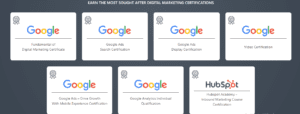
Take a top digital marketing course that includes a hubspot certification

Today, a growing number of brands are using content as a marketing tool. They want to build trust, connection and visibility amongst consumers. Businesses want to make money with this trend. Hence, they put lots of content on social media apps, messaging apps and other digital platforms. There is a lot of competition in the market. Thus, it is challenging for digital marketers to build strategies that stand out from the clutter.

best digital marketing courses in India

Pursuing a Hubspot certification course can help digital marketing professionals build skills and deliver excellent results. Let us understand the significance of a Hubspot certification course and its role in helping you pursue a career in digital marketing.

Why a Hubspot certification matters 

The foundation of modern-day digital marketing was established in 2006. Hubspot was launched the same year. Most companies were spamming and hard-selling products to consumers. But their efforts were not translating into leads.

Hubspot’s philosophy was unique. It urged marketers to create useful content that would serve the needs of customers. The company positioned itself as an inbound marketing solution. It helped businesses to focus more on customers in their marketing efforts. Hubspot’s approach started the growth of inbound marketing. This means that consumers reach out to businesses, not the other way.

Since those early days, Hubspot has emerged as a market leader in this domain. It has developed tools that help businesses transform their marketing efforts. This is why a Hubspot certification course is considered the gold standard in digital marketing. It equips you with the required skills and knowledge. Recruiters instantly take notice of this certification on your resume.

In-demand digital marketing jobs 

Today, there are lots of career opportunities for digital marketers. This is because every company is focused on growing its digital footprint. They want their efforts to translate into leads.

Digital marketers can pursue a wide range of opportunities in the field. They can work at:

corporations

digital marketing agencies

advertising agencies

media companies

the art industry

social media platforms

non-profits

government agencies

Some job roles in digital marketing include:

Performance marketing manager

Content planner

Campaign specialist

Search engine optimisation specialist

Social media manager

Community expert

Email marketing specialist

Content strategist

Digital marketing executive

Affiliate marketing manager

Get the digital marketing edge

Successful digital marketers share some common traits:

They function with a strategic mindset.

They are careful about creating budgets for marketing campaigns.

They possess excellent analytical skills.

They know the right tools, strategies and marketing channels to work with.

Investing in a period of training is a valuable experience. However, the curriculum of traditional MBAs is not equipped for this challenge. Hence, it is advisable to pursue an online postgraduate course in digital marketing with placement support that is backed by a Hubspot certification.

Ace these topics  

The curriculum of the course must cover all topics that enable organisations to strengthen inbound marketing strategies. Below is a list of key digital marketing topics to be covered:

Search engine optimisation

Content marketing

Social media marketing

Paid media marketing

Media planning and buying

eCommerce

Email marketing

Affiliate marketing

Analytics and measurability

Online reputation management

Get hands-on training

Digital marketing is one of the fastest-evolving fields. But, this field is unpredictable too. A good digital marketing course features Capstone projects as part of the curriculum. A Capstone project is a live simulation that provides you with a platform to experiment and innovate. You get to be more creative and strategic through live training.

It helps you put theoretical understanding into practice. You may get to work on different types of projects, such as –

Helping a FinTech company reach more consumers.

Increasing digital visibility and engagement for a niche travel property.

The challenges and outcomes can vary. A hands-on learning experience is invaluable if you wish to pursue a sustainable career in digital marketing.

Conclusion

When shortlisting a training programme, we recommend pursuing a postgraduate course in digital marketing that comes with job assurance guarantee. Such a programme will include live project training, in addition to theoretical concepts. A comprehensive program is a combination of two elements –

It must cover key digital marketing subjects.

It must offer hands-on experience from live training.

Collectively, these experiences prepare you for a successful career in digital marketing.

To know about Imarticus’ Post Graduate Program in Digital Marketing, you can contact us through chat support. You can also visit our training centres in Mumbai, Thane, Pune, Chennai, Bengaluru, Delhi, Gurgaon or Ahmedabad.

8 interesting facts about cloud computing

Do you know, by 2025, data stored in the cloud will reach 200 zettabytes? Well, for a better perspective, one trillion gigabytes or one billion terabytes make one zettabyte! Yes, the ‘cloud’ that was a trendy-sounding buzzword a few years back has suddenly become an inseparable part of our professional and personal lives.

Scroll on to read more about cloud computing, its interesting facts and why you must learn cloud computing. This article will also tell you why MBA in Fintech Training Programme is gaining traction.

What is cloud computing?

MBA in Fintech course

Cloud computing is the act of on-demand delivery of an interconnected network. This network is hosted by the internet and enables remote (or distant) servers to store, manage, access and process the data. Cloud computing allows one to locate and access data through the internet. Thus, it puts an end to the otherwise menacing computer’s hard drive failure issues. And because cloud computing gives data access to multiple users and computers simultaneously, it has become the go-to choice of several companies of various sizes and staffing levels.

8 interesting facts about cloud computing

1. Cloud computing is creating jobs

Technology advancements equal the creation of new jobs. The tech departments of big firms already have ‘cloud specialists’ roles. Some of the top job positions are cloud engineers, cloud consultants, cloud software engineers and cloud software architects.

Several MBAs in Fintech Training Programmes make young people learn cloud computing and bag jobs with six-figure payments. KL MBA in Fintech course offers similar benefits for its course takers!

2. The cloud is more popular than you realise

An average IT employee is already using about 30 cloud-based programmes! Yes, that’s right! Several services for enterprise relationship management, customer relationship management, project management and human resource management are all based online. In simple words, if you are using any service that assists in leaving a message or note online for your colleague to check and work on, then you are using a cloud service. Some of the popular cloud-based programmes include Carbonite, Datadog, Slack, Dropbox, Zoom, Vimeo, Hiroku and Collibra.

3. Cloud offers services with storage

Along with storing global data, the cloud offers 3 services for business. Here’s a brief about them:

Platform as a Service (PaaS): Given the robust development, Paas allows building apps without involving huge finances.

Infrastructure as a Service (IaaS): Assists in developing an internet business and scaling it up.

Software as a Service (SaaS): The best of all cloud technologies, SaaS shares the cloud software architecture with the vending machines. The vendors have to bear minimum maintenance costs.

4. Hassle-free upgrades

Irrespective of the device you use, the upgrades will always remain simple. If your cloud provider implements an update, you will never be asked to upgrade your hardware, software or old IT infrastructure. Updates happen automatically in real time so that you keep working, having fun and staying up to date!

5. Human error accounts for maximum cloud data and security breaches

Though there are several cloud security concerns, the majority of security breaches happen due to human error. The cyberattacks are caused by the employees themselves and not the cloud providers. These risks can be prevented by educating the employees and carving out better and strict security guidelines.

6. The rising worth of the cloud gaming market

With high-end games streaming on portable devices, coupled with fast network connectivity, cloud gaming is the new normal. A few top cloud gaming services include Xbox Cloud Gaming, GeForce Now, PlayStation Now and Amazon Luna. This gaming market which had a market value of $1.5 billion in 2021 is set to touch $6 billion by 2024!

7. The wonders of cloud automation

Amongst the prominent technologies set to change our world is automation. While cloud and automation are not mutually exclusive, they can work together. The process of Robotic Process Automation (RPA) teaches robots to manage the most menial tasks. This allows the others workers to focus on the skilful aspects of jobs. RPA, therefore, becomes easier when used with the cloud. The information received by the clients can be sorted automatically and reviewed by the robotic processes.

8. Total market worth

The cloud computing market was worth $371.4 billion in 2020. It is projected to amount to approximately $832.1 billion by 2025!

Key Takeaway

The importance of cloud computing cannot be underestimated. Moreover, the types and models of cloud computing will only become bigger, better and more essential in the coming years. All of these factors make learning cloud computing an imperative factor in bagging a high-paying role in the demanding fintech sector.

Imarticus Learning hosts a KL MBA in Fintech programme which is an ideal course for candidates looking for cutting-edge knowledge of cloud computing. The course can enable students in becoming leaders of tomorrow.

So, learn cloud computing and join the bandwagon now!

A detailed overview of server-side programming

The world of programming is vast and growing every day. New languages are being created. New technologies are being invented, and new ways to make money as a programmer are being developed.

But, there are still some basic things that every programmer needs to know. One of these is server-side programming. Many people think you must do all programming on the client side—the browser—but this isn’t true.

In this article, we will cover what server side programming is and why it’s important for developers; then, we will go over some tips for setting up your environment before writing code using various languages such as PHP. Hopefully, you’ll feel confident about tackling these tasks by the end!  

Understanding Server-Side Programming 

Sessions, essentially a mechanism that enables a server to store data on the current user of a site and send various responses based on that information, allow developers to use server-side programming.

Server-side languages are generally more powerful than client-side languages because they don’t rely on the browser for processing. As such, you can use them to create databases or integrate them with other software.

Setting Up Your Environment

Setting up your local server environment is the first step to learning server-side programming. This will involve installing and configuring a piece of software called XAMPP, the backbone of your local development environment.

  • What is a Server?

Many of the functions that servers can offer are called “services,” such as performing computation for a client or sharing data or resources among many clients. Both a single client and a single server can accommodate multiple clients. 

A client process can run on a single device or connect to a server running on a different device over a network. Examples of common servers are database servers, web servers, game servers, file servers, mail servers, print servers, and application servers. 

The request-response model is typically used to implement (and is frequently associated with) client-server systems: a client also sends a request to the server, which acts upon it, and sends a response back to the client, typically along with a result or acknowledgment. 

When a computer is referred to as “server-class hardware,” it implies that it is optimized for hosting servers. This frequently implies that it is more capable and dependable than typical personal computers. Still, large computing clusters may instead be made up of a large number of interchangeable, relatively simple server components.

  • What Is A Local Server Environment?

For most developers, a local server is essential. It also permits local machine testing and development without worrying about losing an Internet connection, unintentionally opening up temporary security gaps, or continuously uploading files.

The options for setting up a local server are listed below. They can be divided into configured for a virtualized environment and those natively running installations for a particular OS (Linux, macOS, or Windows) (for example, Virtualbox or Docker). In either case, you must have a PHP server, a database server (such as MySQL, MariaDB, or PostgreSQL), and a web server (such as Apache or Nginx).

Building Server-Side Applications

Server-side applications are often more complex than client-side applications. Building a server-side application from scratch can be complicated and require understanding multiple technologies. 

The most common languages used in server-side programming include Java, PHP, Python, and Ruby. Each has pros and cons that make them suitable for different tasks. 

Data handling is a crucial component of server-side programming. Working with databases, which are used to store and organize massive amounts of information, is required for this. APIs (application programming interfaces) are common for server-side applications to exchange data with other servers or services.

Server side programming also entails creating and putting into place security protocols to safeguard the server and the data kept on it. This entails implementing user authentication and access control, using encryption to secure data transmissions, and keeping the server updated with security patches.

Explore a Career in full stack development with Imarticus Learning.

Our Full Stack Web Development certification course will teach students database architecture and algorithms. During this six-month full-stack developer online course, students will learn data structure algorithms and the technical facets of front-end and back-end programming. 

Course Benefits for Learners:

  • As part of our career services, we offer resume writing, profile improvement, workshops to help students prepare for interviews, and one-on-one career counseling.
  • While learning well-known tools like Java, Spring, MongoDB, JavaScript, React, Docker, and Jenkins, lay a strong foundation in data structures.
  • With the help of our community project Skillenza, students can now compete in coding challenges to solve complex business problems and stand out on resumes.

Learning guide for data mining: 2023 guide

Data mining is the process of discovering patterns and relationships in large datasets. It involves analysing data to find useful insights that can be used to improve business operations, predict future trends and make informed decisions. If you are new to data mining, here is your help learn what data mining is, how it works and its applications in various industries.

What is Data Mining?

Data mining is a process that involves analysing large datasets to discover patterns and relationships. It is a type of statistical analysis that is used to uncover hidden patterns in data that can help businesses make better decisions. The main goal of data mining is to identify patterns that are not immediately apparent by simply looking at the data. Data mining uses various techniques such as machine learning, clustering, classification, regression and association rule mining.

How does Data Mining work?

The process of data mining typically involves several stages:

Data collection

It is the first stage where data is gathered from various sources, such as databases, social media and customer feedback forms. Once the data is collected, it is stored in a data warehouse, where it can be easily accessed and analysed.

Data preprocessing

This is the second stage where the raw data is cleaned, transformed and formatted so that it can be used for analysis. This stage involves removing duplicates, handling missing data and ensuring that the data is in a consistent format.

Data modelling

This is the third stage where various algorithms are applied to the data to uncover patterns and relationships. This stage involves using techniques such as clustering, classification, regression and association rule mining.

Interpretation and evaluation

In the final stage, the insights gained from the analysis are interpreted and evaluated to determine their usefulness and relevance. This stage involves visualising the data in meaningful ways, such as graphs, charts and tables and using these visualizations to communicate the insights to the audience.

Applications of Data Mining

Data mining has many applications across different industries. In finance, data mining is used to detect fraud, predict customer behaviour and optimise investment strategies. In healthcare, data mining is used to analyse patient records, identify disease patterns and develop new treatments. In retail, data mining is used to analyse sales data, predict customer preferences and optimise pricing strategies. In marketing, data mining is used to analyse customer data, segment customers and personalise marketing campaigns.

Tools and technologies used in Data Mining

There are several tools and technologies used in data mining, including machine learning algorithms, data visualization software and big data analytics platforms. Machine learning algorithms are used to identify patterns and relationships in the data, while data visualisation software is used to create visualisations that can be used to communicate insights to decision makers. Big data analytics platforms are used to handle large datasets and perform complex analysis tasks.

A career in Data Mining

Data Science Course

A career in data mining can be both challenging and rewarding. The role of a data mining professional can vary depending on the industry, but typically involves working with large amounts of data to identify patterns and trends and using this information to inform business decisions. This requires a strong background in statistics, mathematics and computer science, as well as proficiency in data analysis tools. With the increasing amount of data being generated by organisations across industries, there is a growing demand for skilled data mining professionals.

In terms of job opportunities, there are many companies that hire data mining professionals, including tech companies, financial institutions and consulting firms. Some job titles we believe young professionals may be interested in pursuing include data analyst, data scientist or machine learning engineer.

Learn Data Mining

You can learn Data Mining by taking programmes that can help give your career a boost. Several Institutes and learning platforms provide certification in data mining and machine learning. Young professionals can opt for IIT Roorkee Data Science Certification. We also suggest checking Imarticus Learning’s Machine Learning Certification Course.

Imarticus Learning is a leading platform for learning programmes for young professionals. Our Machine Learning Certification Course will definitely help you if you are interested in learning data mining. To launch your Data Mining Career, we suggest you enrol today!

Takeaway

To conclude, Data Mining is a rapidly growing field. With the right skills and training, we believe you can find excellent career opportunities. Pursuing a course in data mining can help one acquire the necessary skills and knowledge to succeed in this field. We suggest keeping up with the latest trends and technologies in data mining to remain competitive in the job market.

What is the process of sales and operation planning?

Introduction

Sales and Operations Planning (S&OP) is a process to align the sales and operations activities of the organization to achieve strategic objectives. Operation planning in the supply chain involves a joint effort between sales, marketing, production and supply chain teams. This helps develop a unified plan to balance demand and supply.

best supply chain management and analytics training

For instance, a mobile phone-making company can use operation planning in the supply chain. It can, thereby, plan its production and sales activities. Here, the sales team provides a sales forecast based on historical data, market trends and customer demand. The production team uses this forecast to plan the production capacity, inventory levels and raw material needs. The supply chain team ensures that the required components and raw materials are available in time for production.

Benefits of Sales and Operations Planning

Sales and operations planning is a necessary process. Operation planning in the supply chain helps organisations to improve their performance. It also helps them to stay competitive in the market. Some of the benefits of S&OP are:

It allows organisations to develop a unified plan that balances demand and supply.

It involves different teams in the process. This helps improve forecast accuracy and reduce the risks due to demand and supply mismatches.

It helps to reduce lead times by aligning operations. It also enhances production and delivery times. This further helps in better customer service and customer satisfaction.

It helps to optimize inventory levels. It balances the demand and supply and reduces the risks of excess or shortage.

Stages of Sales and Operations Planning

Let’s take an example of a manufacturing company to understand the operation planning in the supply chain. Consider that a company produces bicycles. The different stages of the S&OP process here will be:

Data Gathering

The company gathers data on sales, production, inventory and supply chain activities for the last year.

Demand Planning

The company predicts the demand for bicycles for the upcoming year. This prediction is based on historical sales data and market trends.

Supply Planning

The company then plans its production capacity. This includes planning inventory levels and raw material requirements to meet the expected demand.

Pre-S&OP

Once the plan is ready, the company reviews the demand and supply plans. This is vital to make adjustments as per market changes and the company’s strategic objectives.

Executive S&OP

Once the plan is reviewed, the senior management further reviews the demand and supply plans. They make decisions on the production capacity to meet the expected demand.

Supply Chain S&OP

Finally, the supply chain team reviews the demand and supply plans. The team ensures that the required items and raw materials are available in time for production.

This is how the bicycle manufacturing company can optimise production to match the anticipated demand. This can help the company to:

Reduce inventory costs

Meet customer demands on time

Improve its financial performance

Implementing Sales and Operations Planning

The implementation of operation planning in the supply chain requires a standard approach. This involves planning, communication and collaboration across the organisation. Here are the critical steps in implementing S&OP:

S&OP requires the active support of senior management. This is to ensure that it is implemented effectively.

The implementation team should include members from different departments. They can be from sales, operations, finance and supply chain. This ensures easy and smooth functioning across departments.

Before execution, the scope of the S&OP process should be defined. It includes the time horizon, frequency and other relevant detail.

Accurate data is critical to the success of S&OP. Hence, the organisation needs to establish reliable data sources.

The process should focus on aligning sales and operations activities. This helps an organisation to achieve its strategic objectives.

Before implementing, it is ideal to train the team on the S&OP process along with the tools and techniques.

The S&OP process should be piloted. It is crucial to monitor and evaluate the process. This helps to test its potency and identify areas for improvement.

It is worth noting that S&OP is an ongoing process. Therefore, it needs to be evaluated regularly. After all, successful implementation of S&OP results in:

Improved forecast accuracy,

Reduced lead times,

Improved customer service levels,

Reduced inventory levels and

Enhanced financial execution.

Learn Supply Chain Management Course With Analytics

Whether you are a graduate or a working professional, you can learn supply chain management. From designing to managing supply chains, the Certified IIT Roorkee Supply Chain Management Course through Imarticus Learning, a learning platform for professionals, covers everything. Enrol today and create a better future.

Define financial accounting and the purpose it holds

Fiscal accounting is a method of reporting the company’s value. It also provides information on its budgetary health. The statement is a comprehensive assessment of four main verticals for the stakeholders. These are the institutes’ expenses, revenue, profits and liabilities.

Investors and owners use financial statements to convey organisational performance. These statements are significant in helping firms raise capital. They also shed light on the organisation’s industrial ranking. In this article, we will discuss the definition and purpose of financial accounting.

What is Financial Accounting

Financial accounting deals with keeping records and summaries of business transactions. These transactions from business operations get reported over a period. Financial statements comprise four essentials –

Income statement,

Cash flow statement,

Balance sheet and

statement of retained earnings.

These statements follow strict legal, fiscal, statutory and regulatory guidelines. The accurate statements allow stakeholders to understand companies’ activities. Now, let us understand the purpose of financial accounting in detail.

Purpose of Financial Accounting

The most significant purpose of financial accounting is to report the firm’s fiscal health. The regulatory statements shed light on the valuation of companies. This allows stakeholders to make informed choices about the company’s future. Some other purposes of financial accounting are given below.

Financial accounting creates a standardised recording of business transactions. The systematic compilation method makes the collection and sorting of information easier. This information is further summarised and analysed. Standardised data then helps end user draw actionable insights.

It reflects the profitability of the company. The comparison of the profit and loss statements allows stakeholders to make decisions. It also helps management to make decisions – such as those helping to achieve positive results.

As the representative of financial health, financial accounting shows assets and liabilities. This can help shareholders analyse whether a company has more assets or liabilities.

The statements also show the solvency or liquidity state of the organisation. This helps stakeholders find out if the organisation is meeting its debt obligations.

The purpose of financial accounting is to help in decision-making. Based on the financial value and health, investors can make rational decisions. It also helps creditors assess the prospects of the company.

For the owner and management, it provides insight. Financial statements help consider investment decisions and strategic concepts. For example, the decision for expansion of products or market.

Financial accounting acts as a tool for promoting trust. The governing bodies that manage the rules for reporting are independent. Thus, the source of reported information should be accurate.

The statements also encourage organisations to maintain transparency. The rules of reporting force organisations to disclose important information. Such as how well is the company performing. This informs stakeholders of the risks faced by the company. It also discloses how poor or well is the company at present.

Users of Financial Accounting

Primary users of financial accounting are:

Auditors

Financial accounting allows auditors to analyse statements of financial position. They ensure there are no misstatements under accounting guidance.

Investors

The financial report allows them to understand if the company is an attractive investment. It also helps in setting up an expectation for the future.

Agencies for regulations

It helps to govern bodies by keeping companies in legal reporting requirements. In case the firms do not comply, they face a heavy fine and the risk of delisting from the exchange.

Suppliers

Financial statements allow vendors to decide on their relationship with the firm. One of the basis is the credit history of the company.

Banks

In case the company needs to raise capital, financial statements are a must. It allows banks to understand the company’s repayment capabilities.

Final Thoughts

Financial accountings are imperative for any company. It dictates the framework governing the preparation of the four financial statements. It also helps in keeping the organisation’s accounts. The guidelines oversee the information arising from business transactions. They ensure setting up in a widely accepted form. It further helps managers assure business transparency. Thus, those looking for a career in financial accounting must be well-versed in the concept.

The executive programme course by IIM Calcutta builds your knowledge of similar concepts. The course will prepare you to launch a career. Specifically, a career in the field of investment banking and global capital markets. The course provides cutting-edge training. The forward-looking curriculum designs are woven around real-life and capstone projects. This will open up opportunities for candidates to network with business leaders.

At Imarticus Learning, we offer partnered IIM Calcutta investment banking and capital markets courses. The course will help you build a robust career and attain your aspirations. As a professional in finance, here is what you would need. Preferably have a minimum Graduate Degree. Minimum 2 yrs of work experience. Select candidates with a diploma and significant work experience can also apply.