


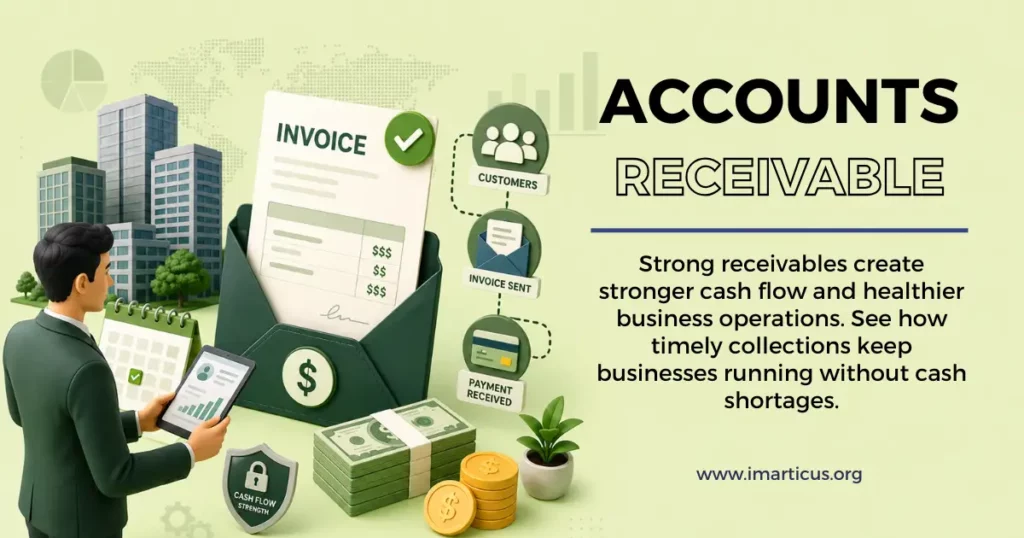
Every thriving business runs on a simple rhythm: delivering great products or services, sending out invoices, and converting those credit sales into real bank cash. When you look closely at how modern trade works, cash in accounts receivable rarely changes hands the moment a contract is signed. Companies extend short-term credit terms every single day to build trust, close larger deals, and keep commercial supply chains moving smoothly.
How do top finance teams manage millions in pending customer bills while keeping cash flow perfectly predictable?
It comes down to mastering the end-to-end credit-to-cash pipeline. Managing unpaid customer balances is a foundational skill across corporate accounting, treasury operations, and strategic financial planning. Whether you are aiming to lead corporate finance teams, optimise working capital, or upskill through specialised finance courses, understanding how trade credit converts into liquid cash gives you a clear edge in modern business.
In this comprehensive guide, I will break down the entire ecosystem, from core definitions and clear ledger mechanics to performance ratios, automated collection strategies, and rewarding career paths, without the dry textbook jargon.
Don’t Let Our Best Advice Get Buried
Add Imarticus as a Preferred Source — see more of what we publish, every time you search.

The Role of Accounts Receivable in Everyday Accounting Systems
Before diving deep into credit sales and invoices, it helps to step back and look at the foundation holding everything together. So, what is accounting at its core? It is the systematic process of recording, summarising, analysing, and reporting financial transactions.
Think of it as the language of business; it turns daily activity into organised data that managers, investors, and banks use to make smart decisions. Accounting breaks down into a few core branches, each serving a specific goal:
- Financial Accounting: Focuses on tracking past transactions to create formal reports like balance sheets and income statements for external stakeholders.
- Management Accounting: Uses internal data to help leaders budget, make cash flow analysis, and make day-to-day operational choices.
- Cost Accounting: Tracks the exact expenses behind producing goods or services to control spending and set profitable prices.
Trade credit connects directly to financial and management accounting. When a business sells something on credit, that transaction immediately touches the primary building blocks of the balance sheet and income statement:
| Accounting Element | How It Functions | Where Accounts Receivable Belongs |
| Assets | Resources a company owns that bring future economic value | Accounts receivable sits here as a short-term current asset |
| Liabilities | Debts or obligations a company owes to outside parties | Represents vendor debts (accounts payable) rather than receivables |
| Equity | The owner’s remaining stake after subtracting liabilities | Grows as collected credit sales convert into real net income |
| Revenue | Total income earned from selling goods or delivering services | Recognised instantly when the invoice is issued, not when cash arrives |
| Expenses | Costs incurred to run operations and generate sales | Includes items like bad debt expenses when customer bills go unpaid |
Understanding what is accounting gives you the structural blueprint for tracking every dollar. When you grasp how revenue recognition and double-entry rules work across these core elements, managing accounts receivable becomes a clear, logical extension of keeping a business healthy.
A commerce and BCom degree gives you the basics. Adding global certifications is how you secure top-tier multinational roles, command higher starting pay, and fast-track your finance career.
The Core Basics Of Accounts Receivable at a Glance
When you look at how money moves in business, cash does not always change hands on the spot. Think of your local coffee shop letting a regular customer run a monthly tab. The shop hands over coffee every morning, but the customer clears the bill at the end of the month. I call this unpaid balance a trade credit, which acts as a short-term asset for the business. Learning what is accounts receivable comes down to tracking these pending client IOUs so a business stays liquid and healthy.
The formal accounts receivable definition classifies these unpaid customer bills as current assets on the balance sheet. They keep current asset status because accountants expect to turn them into real bank cash within one year. A clear view of the accounts receivable meaning helps finance teams forecast cash flow without guessing about future income. Tracking these balances lets managers see what money is coming in, when it will arrive, and how much cash remains to cover wages, inventory, and monthly rent.
Managing credit sales requires an organised routine from the moment a customer places an order to the final bank deposit. Here is how a trade credit sale moves through core administrative steps:
- Finance teams set clear credit limits for new clients before sales reps confirm purchase orders or ship products.
- Billing teams send accurate digital invoices right after product delivery so buyers know their exact payment due dates.
- Financial Accounting departments log open invoice balances under current assets to track expected cash inflows in real time.
- Receivables specialists check ageing reports weekly to spot slow-paying clients before bills become severely past due.
- Bookkeepers record incoming bank transfers and mark open customer invoices as fully settled in the accounting software.
Setting up a disciplined invoice tracking workflow prevents minor payment delays from turning into severe corporate cash crunches.
Comparing Accounts Payable and Accounts Receivable
Every credit sale creates matching entries on opposite sides of the trade ledger between two business partners. Think of ordering a pizza where you pay upon arrival. From your perspective as the buyer, you owe money for the food, which acts as a short-term debt. From the restaurant perspective as the seller, you owe them money for the meal, which acts as an incoming payment asset. We must separate accounts payable and accounts receivable to track how cash flows across trade relationships.
Balancing incoming customer collections against outgoing vendor bills keeps daily business operations stable and solvent. The table below shows how these two matching accounting principles and functions operate in day-to-day financial management.
| Financial Dimension | Accounts Receivable Focus | Accounts Payable Focus |
| Balance Sheet Category | Current Asset Classification | Current Liability Classification |
| Direction of Cash | Incoming Cash Inflow | Outgoing Cash Outflow |
| Primary Operational Goal | Collect Outstanding Cash Fast | Settle Vendor Bills On Time |
| Corporate Business Role | Enterprise Functions As Seller | Enterprise Functions As Buyer |
| Primary Financial Risk | Customer Default On Invoices | Late Fees and Damaged Credit |
Managing both sides of the balance sheet gives finance teams total visibility over short-term liquid cash. Proper coordination stops cash shortages while preserving strong relationships with key material suppliers and enterprise clients. Knowing how accounts payable and receivable interact helps analysts evaluate business health during changing market conditions. Tracking accounts payable and accounts receivable together guarantees that outgoing supplier payments never exceed incoming customer collections.
Also Read: How the Key Types of Accounting Work: Real-World Examples and Functions.
Executing the Accounts Receivable Process Cycle
A structured accounts receivable process protects cash flow efficiency from the minute a contract closes until the bank confirms cash settlement. Effective accounts receivable management starts long before a billing department emails an invoice to a buyer. I always recommend setting strict credit evaluation rules to stop companies from taking on risky debt with unreliable buyers.
To build an efficient collection workflow, accounting departments run five essential operational steps every single month:
- Credit specialists review applicant financial reports to set safe spending limits before sales teams sign major contracts.
- Invoicing teams email clean digital bills right after product delivery to eliminate payment processing delays for buyers.
- Collection managers analyse open ageing reports every week to spot overdue balances and assign specific follow-up tasks.
- Automated systems send courtesy billing reminders to customer accounts payable teams before invoice maturity dates arrive.
- Cash application staff match incoming electronic bank deposits with open customer accounts to keep ledger balances accurate.
Running these standard administrative steps consistently maintains steady operational cash flow and minimises bad debt write-offs. Continuous accounts receivable management relies on steady monitoring of unpaid balances across all client segments.
Recording Accounts Receivable Journal Entries and Ledger Workflows
Accurate double-entry bookkeeping keeps corporate financial statements balanced during monthly reporting cycles. Writing a standard accounts receivable journal entry requires matching debit and credit values so total assets stay equal to liabilities and equity.
When recording trade credit transactions in the general ledger, accounting teams execute specific double-entry steps:
- Recording a standard credit sale requires debiting the accounts receivable asset account and crediting the sales revenue account.
- Increasing the receivable asset on the balance sheet aligns directly with earned revenue recorded on the income statement.
- Logging customer invoice collections requires debiting the cash bank account and crediting the open trade receivable account.
- Accounting for early settlement cash discounts involves debiting a sales discount account to reflect lower realised cash revenue.
- Writing off uncollectible customer debts requires debiting the allowance for doubtful accounts and crediting the receivable asset.
These core entries form the baseline for clean financial reporting across all commercial industries. Understanding how an accounts receivable journal entry flows through the ledger prevents costly bookkeeping errors during month-end closes.
To see how double-entry rules function in standard business, look at how different commercial sectors handle credit transactions. Think of selling a laptop on instalment, leasing an apartment, or getting a lawn mowed on monthly billing terms. The table below details five practical accounts receivable examples and their impact on corporate books.
| Commercial Context | Transaction Details | Accounting Entry Required |
| Commercial Manufacturing | Delivering industrial goods to a store on 30-day credit terms | Debit Receivables and Credit Sales Revenue |
| Enterprise Software | Invoicing a customer for an annual online software subscription | Debit Receivables and Credit Deferred Revenue |
| Wholesale Distribution | Buyer clears an invoice early to claim an approved cash discount | Debit Cash and Discounts, then Credit Receivables |
| Business Consulting | A client clears a monthly service retainer bill via bank transfer | Debit Cash and Credit Receivables |
| Credit Risk Management | Writing off an uncollectible bill following formal customer bankruptcy | Debit Allowance and Credit Receivables |
Reviewing standard accounts receivable examples helps financial analysts process routine commercial sales with complete accuracy. Keeping clean accounting records guarantees that internal management reports match actual operational performance during corporate audits.
Also Read: The Profit and Loss Account Breakdown: What It Is and How It Works.
Calculating the Accounts Receivable Turnover Ratio and Metrics
Evaluating collection management efficiency requires simple quantitative tools. Calculating the accounts receivable turnover ratio shows how fast a business converts credit sales into liquid cash across the financial year.
Accounts Receivable Turnover Ratio = Net Credit Sales ÷ Average Accounts Receivable
This equation reveals how many times a company collects its average receivable balance during a given period. A high ratio proves that a collection team works fast, while a low ratio flags collection problems or loose credit terms. Financial managers track several essential metrics to evaluate the overall health of their credit portfolio:
- High turnover numbers confirm efficient collection workflows and dependable payment behaviour from commercial clients.
- Low turnover scores warn management that credit limits need tightening or that collection efforts require aggressive escalation.
- Days Sales Outstanding measures the average number of days a business takes to turn credit sales into cash.
- The Collection Effectiveness Index compares total cash collected against total open credit balances over a set timeframe.
- Receivables ageing schedules divide unpaid bills into thirty-day windows to spot past-due accounts before they turn into losses.
Checking the accounts receivable turnover ratio every month helps accounting teams fix payment delays before they hurt corporate cash reserves.
Modernising Accounts Receivable Management with Automation
Managing customer balances manually becomes hard as transaction volume grows. Think of a gym trying to collect monthly membership fees by mailing paper letters instead of using auto-pay. Modern finance teams use specialised software to automate billing, speed up collections, and cut administrative work. Setting up digital workflows lets accounting specialists focus on strategic cash analysis instead of manual data entry. To modernise credit operations, finance departments implement five crucial automation tactics:
- Software creates and sends electronic invoices automatically the moment product shipments clear warehouse loading docks.
- Automated scheduling tools send polite payment notifications to client accounts payable teams before bills mature.
- Embedded payment links on digital invoices let customers settle outstanding bills instantly through secure online transfers.
- System algorithms monitor client payment patterns constantly to flag emerging credit risks before major defaults happen.
- Automated cash application tools match incoming electronic bank deposits with open ledger accounts without manual effort.
Adopting digital collection tools protects corporate liquidity and lowers operational expenses across financial departments.
Also Read: How To Apply Core Accounting Concepts: From Books to Balance Sheets.
Pursuing Accounts Receivable Jobs and Interview Preparation
Developing expertise in trade credit management offers a practical gateway into corporate accounting and finance careers. Securing entry-level accounts receivable jobs builds core competencies in working capital management, ledger reconciliation, and cash flow analysis that prepare professionals for advanced corporate roles.
The table below outlines common job titles in credit administration, detailing daily duties and long-term career growth paths.
| Job Title | Primary Daily Responsibilities | Long-Term Career Growth |
| Receivables Clerk | Record billing entries and process daily customer bank payments | Senior Accounting Specialist |
| Collections Specialist | Contact past-due clients to negotiate structured payment schedules | Credit and Collections Manager |
| Credit Risk Analyst | Review customer financial reports to determine safe credit limits | Corporate Treasury Manager |
| Receivables Manager | Lead collection staff and optimise working capital workflows | Finance Director Role |
| Billing Coordinator | Prepare detailed customer statements and resolve invoice errors | Financial Operations Lead |
Preparing answers for common accounts receivable interview questions helps job candidates prove technical skills during hiring assessments:
- How do you handle a situation where a client disputes a billing charge on their invoice?
- What exact journal entry do you record when writing off an uncollectible account balance?
- How do you organise your daily workflow when managing hundreds of overdue customer bills?
- Which specific financial ratios do you monitor weekly to evaluate collection health?
- How do you reconcile monthly electronic bank deposits against open ledger records inside an ERP system?
Mastering these practical accounts receivable interview questions proves your technical readiness for demanding corporate roles. Working in entry-level accounts receivable jobs provides the practical foundation needed to build a successful career in corporate accounting.
Pursuing finance designations after graduation creates direct pathways toward a top-tier career trajectory, elevated earning potential, and high-stakes leadership roles across investment management, risk analysis, and international accounting.
Why Choose Imarticus Learning For Your Finance Courses?
Breaking into core finance isn’t about memorising balance sheet rules; it is about performing under real-market conditions from day one. The finance courses offered by Imarticus Learning stand out as India’s top finance education platform because they cut out purely academic fluff and focus directly on practical skill-building, global accreditations, and verifiable career outcomes.
- India’s Only 4-in-1 Approved Global Prep Partner: Imarticus is the first and only institute approved to prepare candidates for four top global accounting and finance credentials (ACCA, CMA, CFA, and CPA), giving your profile instant international credibility.
- Track Record of Over 40,000 Successful Placements: With a network of over 1,500 active hiring partners, including top-tier global banks, Big 4 accounting firms, and financial institutions, learners see real career movement, averaging a 60% salary hike and securing packages up to ₹22 LPA.
- Flagship CIBOP Investment Banking Standard: Their decade-long flagship Certified Investment Banking Operations Professional (CIBOP) program delivers deep, hands-on training in trade lifecycles, securities operations, asset management, and AML compliance.
- Prestige Academic & Industry Collaboration: Programs are designed and delivered alongside elite institutions like IIM Calcutta and IIM Lucknow, as well as global industry leaders like PwC, ensuring your learning matches exact current desk requirements.
- End-to-End Interview Readiness and Support: From profile development and domain-specific aptitude prep to live mock interviews with seasoned industry practitioners, the career services team prepares you to clear rigorous multi-round hiring assessments.
FAQs About Accounts Receivable
Doubts about accounts receivable come up all the time when you are learning how money flows through a business. I put together these quick answers to clear up frequently asked questions, explain basic rules, and help you handle real-world credit questions with complete confidence.
What is meant by accounts receivable?
It refers to the total balance of money owed to a business by customers for goods or services delivered on credit terms. Studying how to manage receivable balances forms a core unit in practical finance courses, where students learn real-world cash management skills.
What is accounts receivable vs payable?
Accounts receivable are current assets representing incoming cash owed by buyers, while accounts payable are current liabilities representing outgoing cash owed to suppliers. Specialised finance programs at Imarticus Learning cover both ledger areas to prepare students for corporate roles.
Is accounts receivable a hard job?
Working in receivables requires strong organisational skills, clear communication, and attention to detail, but remains straightforward once you learn standard accounting software. Comprehensive training modules at Imarticus Learning teach students how to manage daily billing workflows with confidence.
What is accounts receivable in a receipt?
On a sales receipt, accounts receivable indicates that the transaction occurred on credit terms rather than through immediate cash or credit card payment. Practical accounting courses at Imarticus Learning show how credit transactions move through company books from initial invoicing to final settlement.
What is the 10 rule for accounts receivable?
This financial guideline states that no single customer account should make up more than 10% of a firm’s total receivables balance to avoid credit risk concentration. Professional courses at Imarticus Learning teach credit management strategies that shield company balance sheets from major client defaults.
What is the journal entry for AR?
You log a credit sale by debiting the accounts receivable asset account and crediting the sales revenue account for the full invoice value. Mastering these fundamental double-entry records is a major focus across accounting programs at Imarticus Learning.
Who pays accounts receivable?
The commercial client or individual buyer who received products or services on credit terms pays the open balance to clear their invoice. Analysing customer payment cycles and credit behaviour is a key topic covered in financial management courses at Imarticus Learning.
What are the two main types of accounts receivable?
The two main categories are trade receivables from primary customer sales and non-trade receivables from secondary transactions like employee loans or tax refunds. Industry-focused courses at Imarticus Learning teach students how to track both asset types accurately on formal balance sheets.
Putting Your Accounts Receivable Knowledge into Practice
Understanding trade credit, double-entry journal entries, and collection ratios gives you a clear view of how money moves through any business. When you know how to turn uncollected invoices into steady bank cash, you hold the key to managing working capital and keeping operations healthy.
While learning the core rules is a great starting point, applying them in real-world scenarios is what sets you apart in the job market. If you are ready to build hands-on expertise in financial operations, corporate treasury, and modern accounting standards, taking structured finance courses at Imarticus Learning can help you sharpen your skills and step into high-growth finance roles with confidence.
Liked This? Follow Us Where You Already Search.
Preferred Sources is Google’s built-in follow button — no app, no login, just more Imarticus in your results.