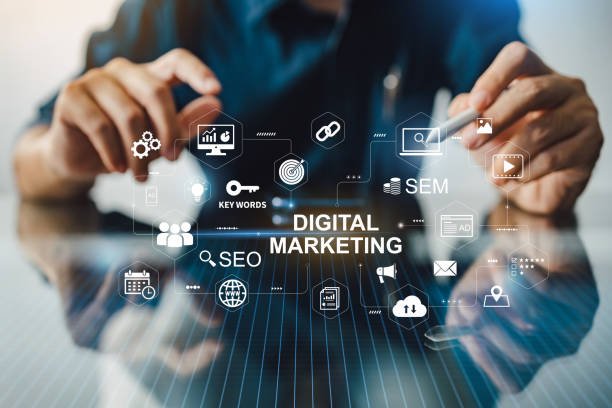
Digital Marketing: The Biggest Growth Driver for Businesses!

Reading Time: 3 minutes

Introduction

We have all heard the statement that digital marketing is the future. Some have even said that a majority of marketing strategies would be based on digital marketing soon. Yet, what is the hype around digital marketing, and why do many consider it the most significant growth driver for businesses? Let’s find out.

To put it simply, digital marketing is the use of digital media to advertise, promote and endorse products and services. Such digital channels include social media, emails, search engines, mobile apps, and websites. This leads us to why digital marketing is required in today’s day and age, and why people are pursuing a career in digital marketing.

The Need for Digital Marketing

In short, with physical shops closing down and personal meets reducing exponentially, digital marketing was the go-to tool for businesses during the first phase of the Covid-19 pandemic. And, it still is. Even before the pandemic, companies that embraced digital marketing had a higher chance of boosting their sales and revenue than those that did not. Here’s why:

  • Almost half the world’s population uses emails. This provides businesses with the unique opportunity to reach out to many people through digital marketing campaigns. This wouldn’t have been possible with traditional marketing techniques.

Affordable smartphones have taken the world by storm, and the testament to this is that there are around 6.3 billion smartphone users in the world. Digital marketing allows a brand to penetrate the digital space of all these users

  • As a result of the reach, digital marketing has led to greater engagement between the customer and the business owner. This can boost sales in the long run by establishing a loyal customer base.
  • Digital marketing also allows people to have more control over their campaigns than in traditional marketing. For example, traditional campaigns have many contractual red-tapes that don’t allow you to change the course of your campaign based on feedback from the target audience.

The Impact of Digital Marketing

There are plenty of business owners who have realized the potential of digital marketing and enrolled in various digital marketing courses online, like the Hubspot Digital Marketing Certification. Yet, what are the impacts that are making businesses switch to digital marketing?


  • A Terrific ROI: Digital marketing provides an unbelievable return on investment or ROI. Emails can give a return of $42 on an investment of a mere $1!
  • Converting Leads: With the help of digital marketing, businesses and brands have a higher chance of converting potential customers into purchasing clients!
  • Affordability: Digital marketing is generally very cost-effective. This is in stark contrast to traditional marketing ways, where running ads could sometimes be costly.
  • Hitting The Bull’s Eye: Digital marketing allows you to target customers who are more likely to buy certain products and services. Thus, instead of running mass adverts, you could single out your target audience resulting in more sales and revenue.
  • The Personal Touch: Digital marketing tools have given brands a personal touch. Interactions with the client have increased, and as a result, it has led to a loyal consumer base. This only helps in the long-run growth of the company!

Conclusion

With the world in a digital age, there is an increased number of people using digital media platforms to stay connected. Thus, in order to maximize a company’s reach, it is imperative for brands and companies to realize that digital marketing is the best way forward for promoting products and services and building brand awareness!

best digital marketing courses in IndiaIf a professional or a small business owner wants to learn more about digital marketing, then there are plenty of digital marketing courses online.

Hubspot Digital Marketing Certification and other such courses definitely help in having a career in digital marketing.


5 Ways IT Industry Changed How Banking Looks !

Reading Time: 3 minutes

In the modern world of technology and finance, it is hard to imagine how a banking system would function without computers. As far back as 1982, banks were using ATMs for customers to withdraw money from their accounts. These days, they are also using credit cards with smart chips that contain information about the cardholder stored on them, making transactions easier.

Computers have made other aspects of banking more efficient, such as wire transfers between countries to make payments and international trade easier. The evolution of IT in the industry has changed how banking looks in many ways over time – here are five fundamental changes you should know about!

  1. Banks are starting to offer more digital-only services because of the rise in mobile banking

In mobile banking, mobile devices are used to transfer money and keep track of financials. Mobile banking has allowed people to save time and do their transactions on the go instead of waiting in long queues at a bank or ATM. Digital mobile transactions can be traced more accurately and taken care of with ease because it is calculative and displayed in an accessible format.

  1. Cashiers don’t have to work as much and can focus on other tasks like customer service.

Due to the digital transformation in banking, cashiers at the bank who used to spend long hours calculating transactions may now devote more attention to customers.

  1. Online banking is becoming increasingly popular, with many consumers using it instead of going into a bank branch.

At the pandemic, where the importance is to focus on the safety of individuals more, online banking sees a surge. Online banking avoids the unnecessary crowd in the bank and makes life easy for the customer and bankers. After digital transformation, it notices to drop footfall in the banks. Consumers prefer online banking for daily baking like money transfer, checkbook issue, KYC update, opening an account, etc.

  1. ATMs are now commonplace at most major retailers, making them an easy way for customers to access their money without having to go inside a bank

No longer do customers need to go inside a bank and access their money through an ATM. These ATMs have become commonplace at major retailers, making it easy for us to get our hands on cash whenever we want!

  1. Mobile apps that allow you to deposit checks or pay bills electronically are becoming increasingly popular among customers who want all the convenience they can get without ever leaving their couch!

Mobile banking applications are a great way to do your financial transactions from the comfort of home. They allow you to deposit checks and pay bills electronically while saving time!

The banking and finance industry has transformed drastically, and it keeps changing. If you want to make your career in banking and finance, you should have a professional degree to pursue a successful career in the banking industry.

Imarticus learning offers PGDM in banking and finance. You can explore the details of the course by visiting their website.

Conclusion: The IT industry is changing fast, and banks are adapting to these changes. Banks can offer more services with less staff by leveraging technology.

post graduate diploma program in banking and financeBut they still need banking professionals who understand the complexities of financial transactions and regulations that govern them-thus; you should consider a career in banking or finance if you want to stay on top of this ever-changing field.



If you’re looking for an education type that will equip you with both technical skills and practical knowledge, then PGDM in Banking & Finance might be right up your alley! Apply now and be a banking professional.

Emerging Worldwide Market Trends and Events with in-depth Financial Analysis in Investment Banking Operations!

Reading Time: 3 minutes

Financial analytics is an operational function of financial services and financial markets that uses various mathematical, statistical, economic, and financial models to forecast the financial position of individuals and corporations.

Financial analytics professionals provide clients with financial forecasts for multiple purposes, such as investment banking operations. For those wondering “why investment banking,” this blog explores the latest global trends in Investment Banking Operations, making the field apt to explore opportunities.

The global investment banking market is segmented:

  • By Type: Financial Sponsor/Syndicated Loans, Mergers & Acquisitions Advisory, Debt Capital Markets Underwriting, Equity Capital Markets Underwriting
  • By Enterprise Size: Small, Medium and Large Enterprises
  • By End-Use Industry: Financial Services, Retail & Wholesale, Information Technology, Manufacturing, Healthcare, Construction, Others

Emerging global market trends in Investment Banking Operations:

High-frequency trading

Research indicates that the global high-frequency trading market will nail a bullish growth from 2020-2026. HFT platforms use complex algorithms, analyze needs, and spot emerging trends in a fraction of a second. The investment firms implementing HFT can expect high favorable returns on trades, giving a more systematic approach to active trading.

Virtual IPOs

Lockdowns accelerated the demand for remote connections & transactions. The pandemic has forced companies to opt for virtual IPO. Automation of the process during pandemic decreased the time to 50 percent.

Digital technologies

The COVID-19 pandemic pressed for digital transformation, i.e., consolidation & automation of mid-and back-offices. Some digital technologies redefined recently include:

  • Robotic Process Automation (RPA) for budgeted operations
  • Mobile payment methods
  • Cyber hygiene
  • Use of AI & smart technologies
  • Investments in the hybrid cloud from popular service providers
  • Confidential computing for data & communication privacy
  • Automation of data distribution with big data analytics & real-time reporting
  • Monitoring & tracking compliance & regulations
  • Increased security with blockchain technology

Scope of Career in Investment banking with the shifting trends

With the advancement of investment banking with recent financial analysis trends, job redesign is the next step. Organizations ensure that they build a talent pipeline that understands regulations, new technologies, risks, and new changes. Since this job profile demands face-to-face client servicing, the nature of jobs is also changing.

IB professionals need to upskill & augment their understanding of technology. It is crucial to keep yourself updated in the domain through recent investment banking certifications and primary courses in trending technologies and explore financial, technical, & interpersonal skills to stay above the mark.

Grow and Explore with Imarticus Learning:

The Certified Investment Banking Operations Professional course fully equips you with the skill-sets required to begin a career in investment banking operations, treasury & clearing services.

Upon completing the CIBOP course and related assignments, students receive an industry-recognized, internationally accredited Certificate of Excellence. Additionally, they can also take up the CISI certification (CISI IOC) exam.

Apart from access to the placement portal, all available leads & references from networks, students also get up to five assured interviews with leading firms in the banking & finance sector with the Imarticus Learning placement assurance program.

best investment banking courses with placement in India

The CIBOP program stands out in expertise with relevance to the investment banking industry.

It is a valuable pathway to gain industry-relevant domain knowledge and get placed in a leading global bank.

Contact us through the Live Chat Support system or visit training centers in Mumbai, Thane, Pune, Chennai, Bengaluru, Hyderabad, Delhi, and Gurgaon.

Social, Economic And Attitudinal Changes In Organizations Running Various Business Models Over The Past Decade

Reading Time: 3 minutes

Keeping up with time is an important aspect of any business model. This change becomes significantly more important during this current age of connectivity and digitalization that has come along with the internet. Over the past decade or so, many changes have affected companies and brands and made them restructure specific processes within their organizations.

So, how have businesses adapted to changes in the social, economic, and attitudinal spheres within their organizational structures and business models? Let us find out!

Social Changes

Of course, in the last decade, many social issues have plagued different brands and companies. However, one of the most critical aspects of such issues has been the debate about climate change. Despite being a topic kept on the back burner for the first decade of the 21st century, climate change has been at the forefront of social issues in the last decade.

Companies have adopted policies that are beneficial to the environment. One such instance could be Apple deciding not to add chargers in their iPhone packaging in a bid to reduce the carbon footprint. Many corporations have also focused on sustainability and reusability of resources. For example, companies like ITC have taken major strides by planting trees and using eco-friendly methods of production in recent years.

More importance has also been given to issues like providing healthcare and insurance for employees.

Economic Changes

The distribution of wealth has been a significant issue for companies around the world. Equal pay has been prioritized in many places, while the concept of universal basic wages has also been floated. While some companies have complied with the idea of equal pay for equal work, there is still a long way to go.

The economic front has been quite treacherous for organizations. Many have pointed out that the companies are still taking advantage of the free market mechanism to rob the poor. This had led to an increased call for heavier taxation on the wealthiest members of our society. However, on the brighter side, countries like India have given many tax exemptions to start-ups and small businesses so that they can grow into something bigger.

Business models have also changed based on the economic needs in the last decade. Online marketplaces are slowly replacing physical stores, with many companies focusing on selling their products exclusively on e-commerce websites.

Attitudinal Changes

Overall, there has been a shift in the attitude of organizations, and this has been reflected in their business models. New start-ups are thriving when they collaborate with other companies. Even the biggest organizations have started to interact socially and work together.

The COVID-19 pandemic saw an unprecedented number of companies cooperating in order to sail through rough waters. An example of this would be the Twitter handle of Burger King (United Kingdom) asking its followers to also buy from McDonald’s, KFC, and other places. This was an appeal to save the jobs of the people working at these places. Such gestures go a long way with the general public.

Companies have also implemented policies of humanizing their customer services. Clients can easily interact with representatives of organizations on social media if they have any problems.

Diversity, inclusion, and safety following certain racial issues and the #metoo movement have shaped the business and workplace model of many corporations and institutions. Changes are part of evolution, and organizations and businesses are no exception. Thus, it is safe to say that more such changes will occur in the coming years.

best online BBA CoursesIf you are interested in learning more about effective business models, you can take BBA online courses. These BBA online courses let you take BBA online classes.

Once you have successfully completed BBA online classes, and online BBA certification is conferred on you.

For professionals, taking online BBA certifications is the best way to learn more about the changes in the business models around the world.

The Omnipresent Data Science & its Importance as a Career!

Reading Time: 3 minutes

Data science is a newly emerging field, which has been gaining momentum in recent years. It can be defined as data exploration and data modeling to extract insights from data to help people make decisions. Data science overcomes data analysts’ many challenges, such as data scarcity, data sparsity, and model uncertainty.

Importance of Data Science in Today’s Era:

The importance of data science in today’s world cannot be overemphasized because it provides solutions for complex problems faced by organizations. Data Science is a recent field, which also has been the subject of study for data experts. Data Science captures data in various formats from different sources such as sensors, social media networks, or video games. In data science, data is analyzed to extract hidden patterns and generate insights.

Data science applies statistical thinking, data analysis, machine learning, data mining, and pattern recognition techniques to identify patterns in data that can inform decisions or solve problems.

Why build a career in Data Science:

Data is the fuel for all businesses.

All business strategies & decisions are data-driven due to the availability of massive data. We use lots of apps which in turn generate loads of data. There is a different kind of data-generating to varying speeds from multiple sources, increasing the data volume.

Data Science skills are high in demand with excellent salaries 

Data Science is an in-demand skill in almost every industry. The number of entry-level jobs is increasing & freshers are being hired in huge numbers. Professionals from the sector are actively looking to transition to Data Science with a bright future as employers prioritize hiring skilled and experienced candidates.

Anyone can acquire Data Science expertise.

best data science courses with placement in IndiaData Scientists can emerge from any field and build Data Science expertise regardless of their backgrounds. Students from any field of educational experience can also build a career in Data Science.

Wide range of Opportunities

Skilled professionals have a wide variety of opportunities waiting for them in Data Science.

Data Science is multidisciplinary, with disciplines like Data Mining, Databases, Machine Learning, Visualizations & Neurocomputing. Apart from the technical skills, there are broader opportunities in the many business domains.

Become Data Scientist with Data Science Courses from Imarticus Learning:

You need to have a few essential expertise to start building a career in Data Science. Good knowledge of technology & programming languages is an additional prerequisite. The most in-demand technologies for Data Science are R, Python, SQL, Hadoop, Java, Spark, Tableau, AWS, C++, SAS, Scala, Hive, Excel, and Azure.

The Data Science Prodegree offered by Imarticus Learning has been designed to develop an understanding of Data Science concepts & build robust models to generate valuable business insights. It is a knowledge-packed professional learning experience that includes a cutting-edge curriculum, real business projects and case studies, and tech-enabled education.

Once you begin the Data Science Prodegree course, Imarticus Learning’s Career Assistance Service module is at your disposal. They conduct detailed career development sessions that help you improve your job profile and ace technical interviews.

Their extensive network of private job openings through our 400+ partnerships pan-India provides students with unfettered access to career opportunities within the Data Science & Analytics domain.

This Prodegree course goes a long way towards helping you unlock lucrative career opportunities in the coveted fields of Data Science and Business Analytics.


Related Articles:

Why Is Data Science A Good Career In 2021
How Data Science Training will ensure business continuity in the post covid world
How an Artificial intelligence and Data Science work for an online conference


Augmented Analytics: The Future of Data & Analytics!

Reading Time: 2 minutes

Augmented analysis simplifies data analysis and helps in getting insights. It is used by firms/companies to forecast better and to automate data analysis processes. Augmented analyses use enabling technologies like AI and machine learning to help speed up and automate data analysis processes.

You can manage your business data up to an extent when the data generated is large one needs augmented analysis to manage big data sets and extract insights. Less time will be spent on understanding the data with the help of augmented analysis. Let us see how augmented analysis is the future of data & analytics.

Benefits of Augmented Analysis

The pros of augmented analysis are as follows:

  • You can automate data analysis processes like data cleaning, forecasting, data management, etc. with the help of augmented analysis.
  • Expert developers can build better business models with the help of insights via augmented analysis. The accuracy of predicting trends and business opportunities increases.
  • Data preparation under which the data is classified and arranged in a structured manner is a very tedious chore. This process can be automated via augmented analysis.
  • The augmented analysis will help you in cost optimization as it will help you in using less human labor and more automation. Your developers can provide you with more insights with the help of augmented analysis.
  • Risk identification and management can be done properly with the help of augmented analysis.
  • Data insights can be represented in natural language statements to people who are not into data analysis. In organizations, augmented analysis helps in conveying business insights and forecasting results to all employees.
  • Data security and privacy can be managed better via augmented analysis. Any anomaly in the data set can be identified immediately and can be managed. It also helps in adhering to data regulations laid by the regulatory authorities.

 Why Big Data Management is Necessary?

The augmented analysis helps in big data management as such a large amount of data cannot be managed manually. Big data management is done by firms to know about market trends, opportunities, market volatility, etc. It also helps in knowing about the buying habits of customers/clients. You can target an audience of any particular age group, locality, gender, by using data insights. You will stay ahead of your competitors and grab potential opportunities.

big data analytics courses One can learn big data management via Big Data Analytics Course from a trusted source like Imarticus Learning.

Data Analytics Future

The latest technologies like machine learning, deep learning, AI, etc. are shaping the way the data analytics industry worked.

Companies and firms are producing more data every day and a lot of businesses are shifting online, to manage this data augmented analysis is being adopted by firms. Developers can boast a more successful Big Data Analytics Career via augmented analysis as it will increase their analytics ability.

Conclusion

Data analytics is one of the fastest-growing sectors recently. Companies and firms are investing in data analytics to gain profits in the long run. One can learn from Big Data Analytics Courses available on the internet to build a successful Big Data Analytics Career. Grab your online course now!