Why Bookkeeping Bots Are An Important Part Of Fintech Business World?

Bots can keep your records in various areas of your business and the bookkeeper can integrate the books of the various departments to help you get a complete overview to base your crucial budgeting decisions. No wonder then that the fintech startups focus on bots in record keeping and accounting.

Bookkeeping may be the most boring part of running a business. However, it is the very lifeblood of the startup or business and financial record keeping should never be neglected. Not just from the point of view of compliance or regulations but because it is advantageous in many ways that we are shortly going to look into.

Accurate records of financial transactions are the very same data culled for your forecasts and analysis, budgeting and management. When this is error-free it saves you a lot of time, effort and money in the long run. And in modern times, Fintech courses and data analysis techniques have evolved to a point where bookkeeping can be your best aid in a financial crisis or upheaval. Bookkeeping is progressive, helpful and is a must-do for growth.

Bookkeeping for business analysis:

Let us see how your bookkeeping affects your sense of analysis and business growth. Your daily bookkeeping is the essential data that is being generated 24/7for analysis. It is an effective tool in the hands of decision-makers and guides management decisions.

No matter if you are a startup or small business, remember that your financial statements and records are the basis of assessing your financial health and are the first record verified when seeking funds for growth. That can only happen when financial discipline allows you to check at any moment your outflows and inflows of cash, where the returns on your investment have not been productive, or when you need additional funds to spur growth.

The fintech industry has come up with very many Fintech courses and applications to integrate the accounting system into all parts of the business and modern times require even a Botkeeper to man these bots that automatically take care of your bookkeeping, accounting, expenses, loan repayments, schedules of payments and a lot more.

Hence employing bots is not just to technologically innovate your accounting procedures but to give you an integrated real-time view of all areas of your business. Without doubts, the bots who are here to stay can spur you to success and leapfrog your enterprise to the next level.

Bookkeeping and budgeting:

Budgeting in firms and enterprises is not just about reviewing the past and setting aside finances for the future. The integrated process of budgeting with bots allows the analysis of they’re working the data into forecasts, ROI, comparative studies of investment patterns, and even provide clues as to potential risks and areas for improvement.

Effective managements rely on taking timely decisions and ensuring that timely funding is available. This means monitoring your expenses, being able to foresee the risks involved, creating a road-map for projects and leveraging bookkeeping for growth. Fintech courses also teach you about vital developments like blockchains. The immutable single ledger system maintained by bots gives you the upper hand when budgeting or reviewing managemental decisions.

Bookkeeping and tax preparation:

Keeping track of your taxes, compliance and ensuring adherence to all regulations is another repetitive task that can become very complex and have disastrous implications when neglected. Since bots excel at doing such repetitive tasks, many a fintech startup focuses on applications meant to ease the pain in the area of tax preparation, reporting, and compliance. They are also exploring areas like RegTech which again is dependant on the tasks of effective bookkeeping.

Tax preparation when done manually requires careful scrutiny because of the errors that may creep in when financial records are unavailable, or when the view is too myopic. Fintech courses are essential for those who keep the books and records because they not only allow you to paint and record the right picture but because they interact technologically with the other parts of your business and affect parameters like productivity, management decisions, growth, and efficiency. Well, that’s why bots take over repetitive daily tasks in business and are so essential for all businesses.

Parting notes:

It is clear that bookkeeping is a must for efficient tax preparation, budgeting, and business analysis. This is what the Imarticus Learning Academy excels in teaching its aspirants making a career in the financial markets. Fintech courses can get you career-ready and set for a unique assured placement. Join the Imarticus course today if you want to gain skills in these crucial areas. 
New Basic Training Course On Fintech Launched!

Both the technological apps for financial applications and the very process of financial transactions have undergone a sea-change from manual to cutting-edge since the Fintech revolution took off globally. Closer to home, India has been promoting the fintech industry in several ways and has openly declared that it proposes to encourage the sector to develop to its full potential.

Singapore’s Latest Course on Fintech:
The latest fintech training course in Singapore started with 20 students to offer affordable quality Fintech training to bankers, executives and career-oriented individuals. The course is proposed to run monthly with a batch size of 30 participants. NTUC and SFA saw more than 100 participants and job hopefuls take part in the fintech career fair organized by the Institute for Employability and Employment at Singapore’s M-Hotel.

The course has developed with the help of multiple partners like Ngee Polytechnic, NTUC, BFS Union and the Singapore Association for Fintech-SFA. Since most quality Fintech courses are paid courses and need to provide the latest technical and industry-relevant training, the proposed fee is between 71 SGD to 321 SGD after subsidies. They are sponsored by the government for individuals below 40 yrs of age which brings the cost down significantly against the total 1070 SGD (Singaporean Dollars).

The Fintech Course benefits:
·The foundation level program will train new workers and young-career participants to be able to function in the fintech environment and will also help acclimatize them to the fintech environment.

  • The fee is affordable, and participants could take loans from the credit agency SkillsFuture to finance the course.
  • Singapore is expected to see a plethora of jobs and an anticipated sizeable demand-supply gap for personnel.
  • Artificial Intelligence, blockchain, and Big-Data courses can be specialized in after doing the foundational level course on Fintech concepts and fundamentals.

The Indian Scenario:
The governmental curbs to end black-money, the demonetization, the introduction of cheap 4G services by Jio, the mushrooming of Fintech courses, the simplified GST norms, and the government setting aside budgeted funds to develop this sector have been a boost in the arm. QR scanning and app-based banking solutions are currently the norms. The Digital India movement just three years ago in 2016 saw a majority switch to the ease of the UPI platform payments.
India is today the startup leader with Mumbai, Delhi, and Bangalore being the mainstay fintech hubs. There are about 2700 startups and a72 percent adoption rate for solutions for payments with many fintech startups being incubated at Bangalore, the Vizag Valley for Fintech, the T-hub of YES bank and Star Tank by Paypal.
The measures put in place:
Some of the time-boxed initiatives on setting up the Mumbai Fintech hub recently are:

  • Setting up a base for startups and a nation-wide live fintech registry to provide able mentors, best practices and a collaborative environment
  • Setting up accelerators and incubators similar to the corporate accelerators with multi-partner collaborations from reputed agencies NPCI, PayU, Fino Payments Bank, Zone Startups, Kotak, ICICI and Barclay Bank
  • On-boarding of global investors will be showcased at road-shows where small players can interact, tie-up and collaborate in a safe and moderated environment
  • The proposed platform for investors will see buy-side investors and sell-side startups
  • A 3-year scheme of grants has been proposed for fund-creation for such startups, and the fintech industry, where the fund created will be agile and jointly self-managed
  • To ease rental burdens, rental reimbursements to the tune of 4 lac Rs for three years have been offered to 50 such firms already.
  • Fintech education, polishing innovative ideas and talent, and developing excellent coding skills are being focused upon as the verticals of thrust and promotion in a bid to suit the demand for personnel.
  • Innovative Fintech courses are the need of the hour.

Conclusion:
In parting, the fintech industry is rightly at an inflection point. If you wish to have a career in the fintech industry, check out the excellent course on Fintech at Imarticus Learning. It is on-par and way ahead in terms of benefits offered. Certification, assured placements, soft-skill training, and skill-oriented practical syllabi are just some of the key takeaways. Act today!

For more details in brief and further career counseling, you can also contact us through the Live Chat Support system or can even visit one of our training centers based in – Mumbai, Thane, Pune, Chennai, Banglore, Hyderabad, Delhi, Gurgaon, and Ahmedabad.

Seven Latest Developments In Fintech

Fintech is everywhere in today’s world that aims at robust development from the way we make purchases to the way we borrow loans. Fintech is a short form of finance and technology clubbed together. Traditional financial services are given a chance by inducing technology into finance leveraging more scope for advanced financial services. Since consumers are adopting fintech at a faster pace, businesses or companies are investing more on fintech.

Nevertheless, fintech, as we observe, has reached the culmination like the other technologies such as blockchain, artificial intelligence, machine learning, virtual reality, and the cloud. Therefore, managing various financial aspects of a firm by outperforming the competition is possible only for a fintech professional who is well-versed in Fintech Courses.

Have a look at some of the key developments in the miracle world of fintech where disruptive technology meets finance:

Investing in digital transformation 

The experience of the customers with non-banking industries, retail and telecommunications have led to increased expectations from banks and credit unions. Access to the digital world has made the customers want for tech-savvy options in financial services. This strains the traditional working model of the financial institutions as more efforts need to be put in to cope with the competitive pressure. Hence, financial industries are investing a lump sum in digital transformation projects to satisfy the expectations of the consumers and to be on a digital upfront.

Application of Blockchain in fintech

Cryptocurrencies like Bitcoin and Ethereum took the world by storm which uses blockchain technology for peer-to-peer transactions and records it in a digital ledger thus eliminates the needs for prominent financial institutions. Blockchain is a transformative technology which poses huge potential grabbing the interest of the fintech industries. Recently, a successful pilot test for cross-border fund transfer from Thailand to Singapore was carried out using blockchain technology from the bank of Ayudhya to Standard Chartered Bank in Singapore. The use of blockchain by financial institutions will help its crowd of subsidiaries have efficient and flexible financial liquidity.

Inducing Artificial Intelligence in fintech

Artificial Intelligence (AI) can process the large sum of consumer data in seconds thereby, AI is leveraged more into the financial service industry more than using it as a cognitive for sales, marketing, wealth management, and investments. Artificial Intelligence is therefore used to work in close contact with many organizations to process and analyze its data using the latest algorithms and arrive at a promising solution for each customer. Its predictive analysis, automated chatbots and accurate decision making have advanced the position of AI from Machine Learning to robot-advisors.

Emerging Digital-only banks

The developments of fintech racing the market have posed a threat to the traditional banks with the dominance of digital-only banks. Thanks to the digital-savvy customers who were the ground reason behind the emergence of numerous digital products from these new players in town. Digital-only players focus on appealing to the masses with their innovative and efficient ideas. Thereby, pressurizing on the traditional banks to offer better and innovative digital solutions for its customers to protect themselves from these disrupters.

Design thinking

Fintech experts suggest that customer-first design should be the ideal key for the businesses who anticipate a positive outcome of UX vision. Clubbing their thoughts and creative engineering leads to an innovative mindset rather than just managing. The immersive UX vision which aims at satisfying the customer experience also benefits other aspects of technology like augmented reality(AR) and virtual reality(VR). A better consumer experience consolidating interactive and gamified experience is provided by using UX design for fintech.

Massive adoption of Cloud 

Cloud adoption in fintech is set to be predominant as more and more cloud in the banking sector is evident. The adoption of cloud in banking is mainly due to its acceleration in time frame enabling increased innovation and responsiveness to the fast-paced changes in the financial service sector. However, the security or user data protection where the earlier barriers for large scale adoption of cloud platform which is not a concern with the present-day highly protective systems.

The merger of physical and digital

Generally, fintech reaches people with access to data more than the ones who do not have access to the internet. To remove such barriers effectively by consolidating physical and digital experience, especially in a country like ours where many people still do not have a reach to the internet, this development in fintech appeals to the masses. Like Canara banks digital banking branch which invariably allows its customers to walk into the branch and use its end-to-end digital experience seamlessly.

Conclusion

The revolutionary developments in fintech have changed the phase of financial services in a robust and efficient way. Thereby, creating more demand for fintech professionals for evolving businesses. Transforming your knowledge by getting insights into Fintech Courses will be an ideal option to flourish in this rapidly moving world of development.

For more details, you can contact us through the Live Chat Support system or can even visit one of our training centers based in – Mumbai, Thane, Pune, Chennai, Banglore, Hyderabad, Delhi, Gurgaon, and Ahmedabad.

4 Trends That Will Rewire The Inner Workings Of The Fintech Industry


Fintech has become the umbrella term for technological infrastructure in the liquidation of fund assets in the capital markets, payment processing, modern digital payment lanes, and such applications of hardware and software. The last two decades especially have seen many fintech entrepreneurs innovate and fill the gap for effective, fast and cheap solutions in wealth and financial transaction processing.

Agile entrepreneurs now find they can create space for greater innovation based on blockchains which itself is one of the biggest trends in the financial and technological developments of the last decade discovered through the emergence of cryptocurrencies. Here are the top four trends that can create space for greater innovation directed at rewiring the Fintech industry’s innards. No particular order of importance is present in evaluating these trends which are all equal and depend on how each one is exploited for maximum gains.

1. Quantum computing

The binary code based of modern computers interprets as zeros and ones where the binary digit is reflective of a deactivated or activated binary state. Quantum computers use this as a basis which takes advantage of quantum-phenomena such as superposition and quantum entanglement to turn performance levels into super- or quantum computing thus transforming costs, performance and lower energy utilization costs.

Modern times and developments are using quantum computing to help with risk and performance modeling, processing and settlement of transactions, better security and faster data processing. IBM’s quantum computing tools are being used by Barclays and JP Morgan according to Cabling.

2. Artificial intelligence.

Robotics and AI are doing repeatable tasks better than the humans with technological advancements resulting in faster processing, better user experience and lower overall costs. AI and advanced quantum computing technologies have the potential to minimize the costs of advisors and vendors in the financial industry. Technology will develop and continue to optimize information access while reducing costs and providing better returns and more effective programs.

Pacific Wealth Solutions uses AI and quantitative computing to monitor and analyze investments in wealth management, insurance, etc with excellent ROIs and solid returns. AI also offers a very practical Regtech tool to manage risks in the portfolio while taking care of regulatory compliance. AI has tremendous scope for improvement in the fintech industry where recent developments like blockchains are being used in tandem for faster, more transparent, decentralized financial transactions at little or no fees.

3. Cryptocurrency, blockchains and decentralized financing.

DeFi-Decentralized financing was ushered in by the blockchains and cryptocurrency entry. The open protocols worked well for MakerDAO on an Ethereum platform, when selling the Dai decentralized loans and the Nexus Mutual insurance product as an alternative to slow traditional banking and dealing with financial institutions.

ConsensysChargezoom, TomoChain, and Stably are exceptional performers who have been successful in using applications that are decentralized, zero-fee, blockchain-enabled and transparent alternatives to traditional finance technology. Stablecoins akin to cryptocurrency are not volatile and are smart answers to everything between the margin loans and smart custody. Even Facebook intends to introduce its own stablecoin that can be used for trading for goods on e-commerce platforms and brick-mortar establishments too.

4. Payments platforms:

Fintech trends prove that the platforms of payments processing are the buzzing trend of their foray into the financial sector. We have smartphone users preferring one-click payments on Google Pay, Apple Pay, and Samsung Pay. States The New York Times, Facebook is planning to come out with a coin. Integrate this with the e-commerce stores like Alibaba, Flipkart, and such and the Shop in Instagram feature and there can be no doubt that such platforms are here to stay. The banks are not taking things lying down and are looking to upgrade at the earliest to derail the foray of private players in the banking sector which has held control over this field for long.

Conclusion:

Whether you are an entrepreneur or a career seeker, Fintech is the answer to being technologically abreast of developments in an evolving and financially satisfactory career. If you want to exploit the advantages of open finance, quantum computing, AI tools, then the fintech industry is at disrupting. Do a Fintech Course and blockchain technology at the Imartcus Learning Institute to emerge career ready. Start your dream career today!

What Kind of Jobs Should Young Business People Look For Blockchain Startups?

Blockchain technology is the emerging darling of 2018 with hopeful industries incorporating it willingly. It has the potential to transform disruptively and every industry. However, the cryptocurrency markets shed almost 79 percent of their capital and the field is dogged by regulations and legal hurdles as of now.

The present fintech job market:

For terrible market and economic conditions, youngsters still love the fintech career in the blockchain field because of its potential and the emerging thrust for fintech industries. The crypto market from where it originated seemingly has had no impact on the hiring process and scope for the blockchain segment.

According to Glassdoor reports, the annual jump in recruitments for this field for August 17-18 was 300% and median salaries paid in India were above the national average salary by a considerable amount! Upwork states that for employers the most sought-after skill was blockchain technology.

Even venture capitalists in 2018 have boosted their investments 280% in blockchain industries. All these statistics are excellent for those who are interested in making their fintech career. Of course, finding the right stable job involves doing a course to develop your skills, researching jobs and the job market, training for interviews and much, much more. It is still worth it at the moment.

So, let us quickly look at what jobs are being the leaders for recruitments.

The required skills:

The trending tools, languages and technological suites required for a fintech career today are: 

  • C Suite languages like C and C#
  • Python suite languages
  • Java Suite languages including Java, JavaScript ES6, JSON, js and Javascript.
  • Simplicity, Serpent, Solidity, Go, Rust and such languages.
  • SQL and NoSQL
  • HyperLedger Fabric

Among the soft attributes required you must include

  • Innovation and creative thinking: These attributes are important in every evolving field where standard practices and technologies may not always be available. Remember to simplify attitudes and think afresh.
  • Intent, dedication, and passion: Understanding the intent of technology helps achieve the results for a better experience for clients who have a passion for new technologies. These attributes are a must with dollops of dedication thrown in.
  • The will to learn and humility: Emerging technologies and companies may be unstable. The will to learn helps build humility and the ability to take things in your stride in spite of hurdles.
  • Team spirit and communication skills: These attributes are non-negotiable for lean teams who are cross-functional and use Agile practices.

Basically, one must believe in the job and contribute to the company’s growth using the jumble-box of attributes and all skill sets mentioned above.

The top draws:

According to Glassdoor reports, youngsters will find the top US Fintech career jobs in Blockchain firms are:

1. Software Engineer: The payouts are in the range of 90,000-145,000 USD and in the US Blockstack, Chronicled and Axuall is recruiting.

2. Technology Architect: Companies like Bank of America, Amazon/AWS and the State of Colorado are hiring with payouts ranging from 100,000-160,000 USD

3. Product Manager: The salaries can run from 85,000-130,000 USD at companies like JP Morgan Chase, Cynet Corp, and Mediaocean.

4. Risk Analyst: These can get paid salaries from 85,000-105,000 USD and can find recruitments in Bank of America, Electric Power Research Institute, Veem, and such companies.

5. Analyst Relations Manager: The job fetches a median salary of 50,000-125,000 USD at companies like IBM, R3 or Accenture.

6. Front End Engineer: These can get paid between 70,000-125,000USD at companies like Binance, Gem, and Ford Motor Co.

7. Legal Counsel: These jobs pay 100,000-190,000 USD at recruiting companies like Consensys, Figure, and BitGo.

8. Business Analyst: The payouts here are 80,000-105,000 USD at hiring firms like NuArca, Bittrex, and IBM.

9. Cryptocurrency Community Manager: The job has a median payout of 35,000-95,000 USD at companies like Zeus Protocol, Dolare and Crowdcreate.

Parting notes:

In spite of a bad start, the blockchain industries are hiring and investing in the capital of human nature. Training in blockchain technology and certifications are popular with reputed institutes like Imarticus Learning.

Whether you love coding or are just looking for jobs in the next big sector try doing a Fintech course on Blockchain technology to launch your fintech career. Put your best foot forward with them for a successful career. All the best!

What Are Evolution of Fintech or Financial Technology?


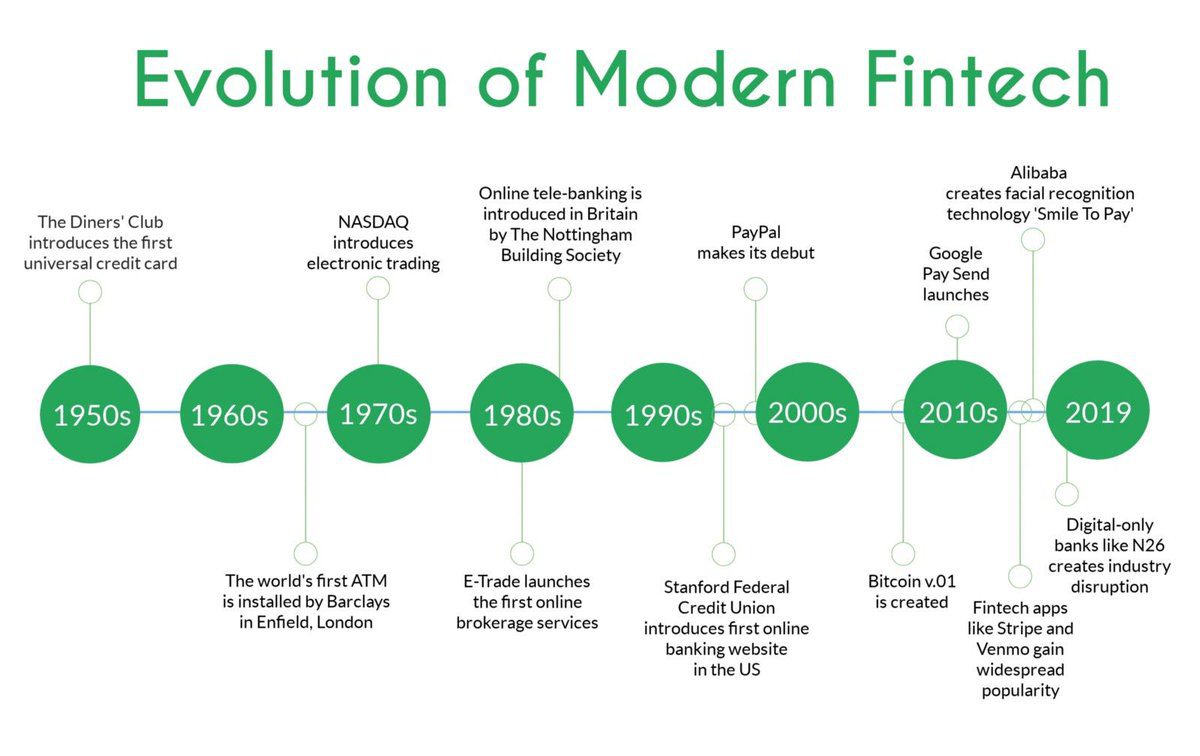
Technology and Finance have gone together for time immemorial. Initially, it was about making and maintaining records of financial transactions and later the introduction of coins, paper currency and promissory notes in the early 19th century. In modern times and about a decade ago Fin and Tech have got amalgamated into the era of fintech.

The early internet age:

Did you know that Fintech Courses teach you that the past 5 years cable under the seas far exceeds the cable network over the last 150 years since data and volumes of traffic have increased immensely? The first under-sea trans-Atlantic telegraphic cable fondly called Victorian internet-connected North America to West Europe and was in use since 1867. Financial markets at New York could connect to London, Asian markets, Europe, etc with its expansion. Forex references to GBPUSD also call this the cable-pair as most transactions were between the USD and GBP.

The laying of cabling infrastructure helped globalization and financial interactions between the period from inception in 1867 to 1914. The outbreak of WWI, the 1929 stock market crash and the Great Depression led to the slowing of the markets for over 25 years. During WWII codes and code-breakers were developed by the Germans and Britishers respectively. Communications in those days were through codes and set the initial foundation stone for coding. Just look at the German encoder shown below! It was the ability to build the decoders that leaked the German communications that led to an inversion of fates and an early end to WWII.

The ATM and calculator era:

The second phase of fintech began in 1967 with the digitization of analog to digital systems. It was also the beginning of RegTEch and early use of Fintech in development. The first ATM machine placed in the UK in Barclay’s Bank was the introduction and initiation of fintech. With more machines being made available the way people transacted and their relations with technology and finance changes irreversibly. Soon we saw the introduction of computing power in the TT 2500 DataMath hand-held calculator from Texas Instruments. This slowly evolved into today’s smartphones.

The electronic age:

The period between1970-80 saw the introduction of banking SWIFT codes and payment systems both international and domestic in 1973. SWIFT-(Society For Worldwide Interbank Financial Telecommunications) with its HQ in Belgium covered over 15 major countries and 239 banks. Today it is a portal for financial communication with 11,000 institutions and is the global payment system portal for financial communications. Between the ’70s and ’80s emerged NASDAQ the stock exchange with almost no human interference. The launch of the internet in the late ’80s saw internet banking and brought smart mobile phones into the hands of the common man.

Stock markets and payment systems: 

1999 saw .coms start and soon end. The 2008 financial crash brought into the limelight the distrust of customers and the start of the blockchain technology and cryptocurrencies. It also saw Siri, Google, Amazon, etc enter the digital assistant and payments platforms to revolutionize the financial scenario. Alongside e-commerce platforms emerged like TenCents, Alibaba and many others who all cashed in on the immense benefits of being early fintech players who have nearly replaced the way we shop, transact and buy things.

The present scenario: 

With the advent of smartphones, data analytics and the startup revolution Fintech post the 2008 financial meltdown emerged with blockchain technology being touted as the next big technological breakthrough. Blockchains have the potential to transform and disrupt the industrial scenario with cryptos, eCommerce platforms and digital currencies taking over. P2P lending, crowd-funding, angel investors and a complete transparent digital financial world is where we definitely are headed to.

Conclusion:

The evolution of fintech has been gradual and over the last decade, fintech is set to transform and disrupt many an industry. This makes the demand for personnel high and scope for jobs huge. Payments are also good and it makes a wise choice as a career. The fintech industry needs a large number of qualified personnel and is set to grow rapidly with even governmental policies promoting its growth. Incubators, startup hubs and integration of technology into all streams of life is the new mantra.

Do your Fintech courses at Imarticus Learning to get the ideal launch with assured placements. For more details, you can also contact us through the Live Chat Support system or can even visit one of our training centers based in – Mumbai, Thane, Pune, Chennai, Hyderabad, Delhi, Banglore, Gurgaon, and Ahmedabad.

Why Does Fintech Business Increasingly Prefer Python As a Primary Programming Language?

The last decade has been all about FinTech which has played a crucial role in many areas of financial transactions through smart use of technology. And Python definitely scores as the most popular language to use.

Here is why.
As taught in most fintech course financial services need the most-apt application to optimize costs, planning and the amalgamation of financial services. A HackerRank investigative report suggests that Python is the most popular language in use for FinTech firms in the US.

The report by e-Financial Careers ranks Python among the top 6 machine codes for the banking sector. Thus, doing a Fintech Course at a reputed institute like Imarticus can help you with certification and giving you the ideal launch into the technological world of fintech where well-paying jobs abound and demand for personnel is fast becoming a rage.

The fintech data science advantages of Python:

The fintech startups work with financial transactions that need records to be unchangeable, immutable and hard to tamper with. Decisions cost money and setbacks when they go wrong. The industry thus needs a ready-to-use programming language with ample libraries, components and high-performance maturity such as Python.

The Hacker Rank  2016 Study across the famous six of health care, media, and gaming, social media, security, fintech, and finance industries searched for the best popular programming knowledge.

Python, especially for fintech industries and as taught in Fintech courses, outstripped the rest by a huge margin in the performance testing on coding challenges. It also proved to be very popular in the financial sector.

The Python benefits:

Some outstanding features that set Python apart are

  • Simplicity and accuracy: Python has low bug-rates and error rates than the other programming languages.
  • Speed: Though not the fastest it scored in the time-to-market optimization tests.
  • Syntax: The collaborative syntax is straightforward in Python and is easy for interconnecting the C-suite, developer and technical-expert languages.
  • Libraries: The huge repository of free open-source libraries can be used for ready-made solutions in the financial and fintech sectors and are popular for training purposes in fintech courses. 

Use of python in industries:

Python is being widely used today in banking and is widespread among the hedge, investment and corporate finance bankers. This is because of Python scores in handling quantitative challenges in trade management, risk management, and pricing. It also makes use of its large number of libraries to handle issues related to analytics, compliance, data, and regulation.

Bootstrapped fintech startups may use various back-end programming languages. But from the point of view of time, efficiency and effort spent, Python outdoes the rest for fintech use. It is growing very quickly and has the potential to be supportive in almost any industry it is used in. No wonder Python is so popular, reliable and accurate!

Python can hence be effectively used in software for the following sectors and is great at multitasking especially as a back-end server.

  • Financial analysis
  • Insurance
  • Fintech
  • Banking
  • Stock markets
  • Data analytics
  • Cryptocurrency transactions.

Python Projects in Fintech:

Success and Python implementation are synonymous when blended with FinTech ideas.  Look at the P2P lending platform Zopa which uses a mix of Java, C#, and Python. Zopa helps the borrowers and creditors transact free of intermediaries. And Python has helped the algorithmic models of Zopa execute complex transactions on blockchain enabled platforms.

Even the payments system like Stripe, Braintree, Paypal, and other receiving and processing systems use Python-based applications for the authentication of users and transactions mainly due to its wide array of ready-to-use libraries.

Conclusion:

Many fintech startups use C, R, Java, etc. But, Python is ideal for the challenges of the fintech industry. It has scored over many languages in its popularity over Java, C, R, SQL and others in the HackerRank challenges over the top 6 industries. Python emerged the ideal language for programming in the financial and fintech sectors. Obviously one would do well to learn Python because the top 6 industrial sectors are recruiting.

The jobs in the top industries prefer expertise in Python and are high-paying and have well-defined scope for progress and grow your career. If you want to learn the latest applications of Python in the fintech sector just check out the Fintech Training at Imarticus. Hurry as opportunities may be limited!

For more details, in brief, you can also contact us through the Live Chat Support and can even visit one of our training centers based in – Mumbai, Thane, Pune, Chennai, Hyderabad, Bangalore, Delhi, Gurgaon.

How Fintech Companies Are Impacting Millions of Lives In Tier II and III India


Fintech companies are pushing the boundaries of what’s possible in Tier II and Tier III markets in India. This is a huge opportunity that comes with financial inclusion to touch the lives of the unbanked rural customers, who with fintech’s technological innovation are personalizing and expanding their businesses to serve and impact millions of lives. Rural areas are yet to see better accessibility and proper social and financial inclusion.

But the scenario has improved because of three events that have allowed fintech to actually impact rural cash-driven customers in India. These are: 

  • The 2016 demonetization movement.
  • The wave promoting e-commerce.
  • Penetration of smartphones.

This promoted the proliferation of fintech industries catering to the rural sector by bringing new payments processing platforms, online transactions, and smartphone internet banking to the rural customers who far outnumber the urban clients. Let us quickly explore how the fintech industry has actually touched the lives of these people.

The watershed moment:

Rural customers in Tier II and III cities are dropping their mistrust of the online movement. The demonetization drive of 2016 meant to root out black-money saw India as whole embrace digitization of financial transactions. Coupled with the thrust of the government to boost the fintech sector and the push for financial inclusion, the watershed moment came with better penetration of the rural segment where banking transactions were yet to make a mark.

And yes, the smartphones were also instrumental in rural people trying and finding digitized transactions more transparent, safe and easy. Banking will never revert to the same again after this wave of digitization and technology impacting the rural customers.

According to NASSCOM reports the 2020 forecast of the fintech software market in India is expected to be USD 2.4 billion.No wonder then the figures reflect the changes in the pulse of digitizing the fintech way the tier 2 and 3 cities of rural India.

Reading the rural pulse of India:

Rural India contributes in big ways to the GDP and industrial development, as it is an untapped market and home to many businesses of the small-scale variety, which when cumulatively looked at, do contribute substantial millions to those GDP figures. Empowering the rural people with financial inclusion can not only improve these figures but provides a huge exploration area for entrepreneurs with a rural background.

The internet and online payment platforms are today making everyday life simpler and easier for the rural client who has to travel to far-off locations just for bill payments and banking. The unbanked rural segment is also seeing an improvement in billing and supply of water, electricity, gas, daily commodities procurement, etc.

Many e-commerce platforms, online banking, financial services like insurance, recharge for phones, small loans, shopping online has changed the face of rural India and the way they access and spend their money. This is the right ambiance for fintech industries to take their business up a notch and cash in on the largely untapped rural markets and thus improve the lives of millions living in those areas. Just stop for a moment and imagine the micro-enterprises getting instant loans and contributing collaboratively to the fintech sector.

Role of education:

Education is the key factor that can bring about financial inclusion. To change and impact more lives raising awareness and education is the only way to go. And the fintech industries are doing a good job through training camps and awareness sessions of their products and services in the rural markets.

To take it up a notch, regional language-based apps are being introduced to ease the rural customer onto the online platforms. These two measures are not only profitable for the enterprises undertaking them, but also impact the millions of rural persons living in the unbanked locations and geographies across India. Bringing the rural people into seamlessly using the fintech platforms, has been and continues to be, an area of prime interest to the fintech sector in its thrust aimed at taking the benefits of technology to these locations.

Conclusion:

Over the next decade, we can expect to see the fintech contributing to improving a lot of the unbanked rural sectors. This move will improve the industrial growth, the GDP and also impact positively the rural millions who are yet to see the major benefits of financial and social inclusion on all fronts. Fintech industries need to stay ahead of the curve and focus on products and services meant for rural clients. Do you want to learn how you can be a part of this revolution?

Do a Fintech course from Imarticus Learning and emerge career-ready with assured placements. Go ahead and impact the lives of your rural brethren.

How is Fintech Changing Business Models Across the World?

How is Fintech Changing Business Models Across the World?

Meet the darling of the 20th century. Fintech! Using technology innovatively in the financial sector to increase efficiency embodies the definition of the two worlds of technology and finance married forever by Blockchain technology!
Apparently, the term has been around for long. However, since 2015 it has emerged the thrust area affecting banking and any industry which is financial transaction based. Most early startups in the sector will be mature by 2020 and the trend is worth watching out for. We are going to view how the business models have changed and in what areas we can expect newer startups to emerge.
Importantly, fintech training is also an area that has seen much growth and even certification of skills. Any emerging sector brings with it the well-paid jobs due to the demand for personnel. And this will continue to grow over the next decade making it a wonderful career to start off with. Of the many institutes and academies available, Imarticus Learning has been the forerunner with a reputation for reputed and certified practical training that has been consistently providing personnel for the fintech areas.

Banking business model changes:

Banking has been the one industry that guardingly embraced blockchain technology, Fintech Courses, etc and has emerged the better for it. Let us study the impact of fintech on this business area. What impacts this area will also touch the way we deal with money and is good for a host of industries like

In the processing of payments:

Payfirma – The early runner started in 2011 introduced mobile-phone card readers to Canada and has since expanded into merchant accounts processing.
Stripe – The partnership with the famous Apple Pay mobile payments on the Apple Pay app the firm innovated mobile and app-based check-outs using tech that is biometric thumbprint triggered and secure and works through the iOS digital wallets.
Square – introduced the card-swipe technology for mobile-payments and has emerged the most popular blue-eyed startup in the sector.

Alternatives to lending:

Rather than lengthy loan applications and processing today fast, insta-loans are available online alternatives today for the traditional banking sector.
Lending Club – the 2006 peer-to-peer marketplace for lending marketplace had a rough time but is immensely popular even today.
Prosper – The earliest innovator this fintech startup of 2005 is also similar to Lending Club and had to wade through industry regulations and changes b, Prosper is the first FinTech company of this generation as well as the first peer-to-peer growing up to its present stature.
UpStart – really changed the unsecured personal loan segment. Started by Googlers it makes your credit history, educational background, and work experience into creating loan opportunities with better rates of interest and repayment.

Wealth and investment management advisories:

Chatbots and robot-advisors revolutionized the accurate and timely customer service and advisory areas using ML to match and sift through large data volumes while advising or serving customers.
Wealthfront – targeting the novice and first-time investors do have an investment amount of 500 USD and do not charge any fee for managing investments up to 10,000 USD.
Betterment – the path-breaker for automated investments has an easy-to-invest process for beginners and investors guided through a transparent and full-automated online process. The fee is a bare minimum and it does not have any minimum investment limits.

Other areas:

In the beginning, IT meant the server-room and Fintech Training today has become anything to do with financial transactions and technological innovations for it. Cybersecurity, Regtech, risk, and compliance management have all been touched with fintech innovations making the processes involved data accountable and accurate. Storage has shifted to cloud-based servers and online banking the norm of digital payments. Mobile phones and the common man popularly use UPI, Paypal, QR scanners like Paytm today.

Pay packages:

The fintech sector is similar to the banking sector we can take IB salaries as the benchmark for scope and payouts. In the US the financial analyst in fintech and IB had an average salary of 84,300 USD as reported in 2017 by the BLS. The BLS predicts 11 percent growth in FA positions between the decade starting 2016.
Payscale reports the IB and fintech FA salary is an average salary of 508, 855 Rs for a fresher. The salary components can vary between 177,560 to 1,545, 630 Rs while the bonuses can vary with contract negotiation from 2,517 to 524, 023 Rs depending on your skills and performance.

Conclusions:

Fintech offers many opportunities such as advisors, accountants, account managers, treasurers, analysts, business analysts, etc. If you wish to take on fintech training, consider Imarticus Learning for their super certification and assured placements when starting your career. Hurry! The early birds to find the worms. For more details regarding this, you can contact us through the Live Chat Support system or can even visit one of our training centers based in – Mumbai, Thane, Pune, Chennai, Hyderabad, Delhi, Gurgaon, Delhi, Gurgaon, and Ahmedabad.

How To Prepare For a Fintech Interview?

If you are wondering how to prepare for the FinTech job interview, don’t worry! Everyone is nervous when they have to attend interviews. Firstly, start with your revision and preparedness for the job.

One of the swiftest ways to be well-prepared, if you are a senior professional is to enroll for a Professional Fintech Certification or if you are just entering the world of management then enroll for MBA in Fintech

One of the swiftest ways to be well-prepared is to do a fintech course at Imarticus Learning. They include a curriculum that is well-designed and covers all topics needed while providing you additional training for soft skill development, resume writing, mock interviews, and assured placements. One can’t ask for more. Right?

Let’s peek into the broad areas required to conquer those butterflies in your stomach. Preparing answers under the following subheads will help give you a good start.

A. Questions on your background in technology.

Expect questions like 

  1. What technical experience do you have in the fintech industry?
    2. What is your favorite app and why?
    3. What are your negatives in the IT field?

These general questions are aimed at checking out your skillset, background, IT experience, and relevance of your experience to the scope of fintech in the recruiting organization. Your answers should be what is in your resume, straight forward, and highlight any specialization or work experience that is of value to the organization.

The weaknesses and knowledge gaps are meant to be justified and not lied about. Remember that when you claim to have the experience, they will definitely revert to it in subtle questions that follow.

B. What are your motivators and interests?

Here you can expect questions like

  1. What fintech technologies interest you and how would you apply them?
    2. How will you use the smartphone to improve your business?
    3. Explain how you can be the game-changer in our technology development and how it would improve our business.

The interviewer here is probing the financial knowledge and its linkages to your technical knowledge, experience, and interests. Link your answers to areas of interest to the recruiting company, your tech- passions and attempt to put a figure on the value added to sweeten the answer.

A good understanding of the technology used, business use of IT, and sound financial skills make you a desirable potential recruit. Be innovative and include some research for fresh ideas in the recruiting company’s areas of interest.

C. Your last job:

You will be probed with questions like: 

  1. What project were you recently working on?
    2.Which of your projects are you proud of and why?
    3. Tell us how you applied your knowledge to the project and what was your contribution to it?

This is not the time to wax eloquent about all your projects. This is your chance to show you can use your skills innovatively and bring fresh ideas to the table. The purpose of your work, its practical implementation value, your contributions, and how you enhanced project value is what they are looking for. Rather than technical jargon try to show you understand the purpose and end-user impacts.

D. Your fintech awareness:

It’s time for questions like:

  1. What’s do you think of the government’s policy on fintech?
    2. What would you do to improve our website or IT?
    3. How would you tackle the competition in the market for our product?

Recent developments and staying up to date is are what most employers desire of you. Stay abreast of the latest fintech developments, projects, and news. Don’t repeat facts and figures. Rather add value by giving your insights.

E. Your ability to solve problems innovatively:

The questions here are real tests and can be perplexing at times.

  1. Is 3,599 a prime number?
    2. What will you do if you were asked to overhaul our customer support division?
    3. What is your take on using Agile in our organization?

There will be some questions that may not actually seem relevant and are like brain-teasers. It is your approach and justification that matters. There may not even be the right answer to all questions asked. Don’t panic and think of a reasonable way to solve the question posed.

Conclusion:
A fintech career is literal jugglery of multiple domains within the scope of fintech like finance and technology, soft skills, intent, dedication, and a good personality. Especially for first-timers, the fintech interviews are stressful. Don’t worry about failure. But, do think of Plan-B in case that happens.

At Imarticus Learning, the methodology is to practically train you as a generalist on all the above tasks and includes resume-writing, personality development, and interview-training modules leading to assured placements.

Their Fintech courses are widely accepted in industry circles as a skill-endorsement and being job-ready. So, why wait? Enroll today.