Learner’s checklist to financial modelling training best practices’

Financial modeling is essential when building and running a company or any type of business. Financial management in many businesses relies heavily on the results obtained during this process, as analyzing the impact of different assumptions and assumptions allows critical decisions to be made about the strategy, growth, and capital management.

Using spreadsheets or similar tools allows us to detail historical performance, make forecasts, and analyze risks and returns under different sensitivity scenarios. 

That is why in this article, we will give you a series of tips on financial modeling that may be useful if you are interested in the topic of financial modeling. We will give you tips on what we at Imarticus have identified as some of the best practices in financial modeling. These best practices are the basis on which we build our financial modeling courses in the FINANCIAL ANALYSIS PRODEGREE. We hope you find them useful.

  • The first best practice is to use the right structure for the model. This is because it is always important to keep in mind that the model is a tool to achieve a goal and therefore the first decision before you start modeling is to determine which model structure will allow you to achieve that goal in the most efficient way. 
  • A general rule of thumb when deciding on the structure of the model is to keep it as simple as possible as long as it achieves the stated objective. As long as the model works well, it is always better to look for more simplicity. Simplicity is a recurring theme that we keep coming back to during the courses on financial modeling. 
  • Another rule of thumb is that the model should be modular. This means that it should have clearly defined modules or sections that flow in an organized way. It is important to keep in mind that a financial model tends to grow very quickly, and if it does not have a proper modular structure, it will be much more difficult to adapt and expand it.

Our recommendation then is to follow the steps described above to start structuring the model. Regarding the decision on how to organize it, we recommend using single-sheet models for simple and small models, and multi-sheet models for medium and large models.

If the model is very large, for example in the case of a multi-business company model, we recommend using a hybrid structure where a multi-sheet Excel file is used, but where each sheet is a one-sheet model in itself. The multi-ledger structure should be avoided as much as possible and only used in cases of extreme necessity.

Remember that working on a proper structure from the start saves time and avoids introducing errors when trying to restructure the model halfway through. We hope you find these best practices useful. 

If you are interested in learning not only other financial modeling best practices but also how to become an expert in financial modeling. We suggest you take this financial analyst course. In addition to being industry-focused courses that will prepare you to be competitive in the working world, you will also be able to learn alongside experts in the field.

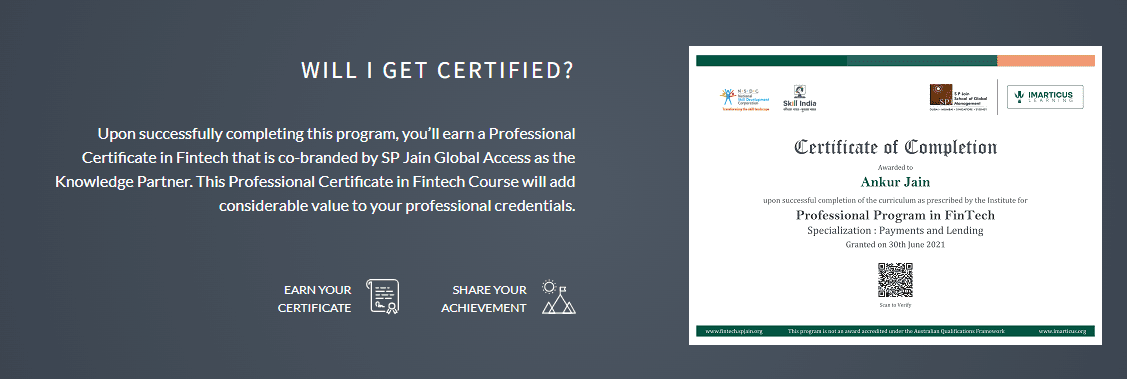
At the end of the course, you will be able to obtain a financial modeling certification endorsed by KPGM India and Imarticus. Having a certification with these prestigious names will surely make your career as a financial analyst take off. Stop hesitating, visit our Imarticus page to explore the Financial analysis Prodegree program, and let us know if you have any questions.


Why fintech certification courses are thriving right now

The fintech revolution is nowhere, and it is here to stay. Several fintech certification programs are now gaining popularity as fintech is becoming a prevalent industry among the people who aspire to make a career in finance. If you want to build a career in fintech, you will have to have a degree or certification. A degree will give a professional standing that you are equipped enough to work in the industry.

India is known to be one of the fastest-growing economies. Therefore, the traditional financial space is getting smaller, and technology is taking precedence over everything else in the finance space. A fintech course will help you be a part of this growth where you can drive the industry by being at the helm of affairs.

Benefits of Doing a Fintech course

There are several benefits of doing a fintech course. Some of these benefits are listed below:

  • It gives you an edge.

While all the traditional banking professionals are figuring out their way around technology, you will have an edge if you are opt-in for a fintech course. You will have a better understanding of the implementation of technology in space, which will give you a competitive advantage over all of your colleagues. It will also open up a world of new possibilities for you.

  • Technological Awareness

Every day, there is an innovation in technology that can impact the fintech space. A course will keep you abreast of these upcoming innovations in space. Technological awareness will also help you in understanding the area better. You do not need any expertise in understanding these technological innovations. However, you will get a massive edge over others once you know them.

  • A big career move

A course in fintech can change the entire career ballgame for you. Only a few people in the market currently understand the industry pretty well. This is because the industry is relatively new, and many professionals do not have the technical know-how to manage the industry. A degree or a certification in fintech will help you in upskilling yourself, and it will also prepare you for the industry. You can explore all kinds of roles in the fintech space with the help of a degree.

  • Decentralization

The primary aim of any industry is to minimize the involvement of third-party vendors. Fintech is one space that is growing exponentially. Therefore, the use of third-party vendors inhibits the speed of this growth. Fintech aims at making companies self-reliant where they can manage everything at their end.

With fintech, the space of third-part vendors is now dwindling as it wants to make all the transactions smoother and better. This has also helped save money for the consumers who earlier used to pay an additional amount as all the transactions were processed using a mediator.

There are several benefits of doing a fintech course. It not only makes you ready for the industry but also helps build an understanding of how the economy is going to work from here on.

Conclusion

We at Imarticus are known for some of the best fintech courses in India. We have a professional certificate in fintech program for working professionals who aspire to make a career in fintech. We also have a Master of Business Administration (MBA) Specialisation in fintech for students and professionals who want to have a master’s in fintech.

The curriculum of these courses is designed by some best fintech experts in the country who know how the world of fintech is shaping. These courses will give you an in-depth understanding of how the fintech space works and the growth possibilities in the world of fintech.

Re-Architecting Financial Technology courses in 2022

FinTech is becoming an industry that is booming and flourishing. There are several career opportunities in the space of FinTech. If you want a career in fintech, you can go for a professional certificate in fintech. We at Imarticus are building fintech professionals by reimagining the world of financial technology. 

best Fintech courses in IndiaYou must enroll in our financial technology courses if you want to have a slice of this big cake. The courses are designed to give you a better understanding of the financial technology space. This will help you build a great and successful career in the field of financial technology.

What is Financial Technology?

The delivery of financial services with the integration of technology is called financial technology or fintech. The industry is growing pretty rapidly, and all the traditional financial institutions are jumping on the bandwagon to integrate all of their processes with technology.

The industry is growing rapidly, and all the major banks are now becoming fintech companies. With the evolution of fintech, several payment banks have come into the picture to make financial services easy for businesses. 

A fintech company uses technologies like artificial intelligence, machine learning, etc., to make financial services more efficient. Fintech also uses massive consumer data to understand the customers better and serve them with personalized service.

How does fintech work?

Technology has now become an essential part of the financial world. Ever since the instruments like credit cards were introduced, technology was coming into the picture in finance. Different fintech principles drive various kinds of projects. Companies are now using advanced technologies like blockchain, AI-ML, etc., to deliver financial services to their customers.

Companies are also constantly building a fintech infrastructure to support this growth. If you want to be a part of this growth, you can enroll yourself in a fintech certification course. The course will help you in understanding the intricacies of the topic.

The inclusions of the reimagined financial technology courses

The fintech space has brought about some transformational changes in how the finance industry works. A course on fintech will cover everything going on in the world of financial technology. You will understand how big data can be used in the field of insurance and finance.

You will also study various regulations that drive the fintech space. The modules will cover the essentials of financial technology. You will be taught everything about digital banking and the payments system. You will also get hands-on experience in programming and the use of Python in Fintech.

The courses will also cover the importance of different financial markets and institutions that pioneer financial technology. You will also learn how the onset of financial technology has impacted the securities and the investment markets.

The courses will help you analyze all the effects of fintech in the space of finance and also the economy. Along with this, you will also get to understand the application of big data and machine learning in the world of fintech. You can also make a career in blockchain technologies if you get a fair understanding of how fintech works.

Conclusion

We at Imarticus are known for providing the best fintech courses in India. The two main courses that focus on fintech are a professional certificate in fintech and a Master of Business Administration (MBA) specialization in fintech. These courses have been designed to provide holistic knowledge of how financial technology works.

These courses cover everything that is there to study in fintech. Once you complete any of these courses, you will get a degree and a certification from Imarticus itself. You can use this to upskill yourself and get a job in this highly competitive domain of fintech.

The next generation of fintech certification courses

People are no more bound to visit a physical bank for any financial service. Fintech platforms have displaced the services of traditional banks. People can now make a transaction with ease via their smartphone while sitting on the couch. Due to the rise of fintech, professional learning courses have now changed their curriculum. Banking and finance courses are now including fintech concepts as it is in demand.

Most of the banks are now going digital and adopting fintech services. There is a huge demand in the market for fintech employees. In such a scenario, young aspirants must be taught about fintech concepts. Read on to know the next generation of fintech certification programs

best Fintech courses in IndiaUnderstanding the fintech industry

Why is there a need to change the curriculum of financial/banking courses? It is because bank officials are no longer involved in traditional activities only. New-age banks hire professionals that are skilled in technology besides traditional financial activities.

For example, consider a bank that has just launched its fintech platform. Besides cashiers and managers, the bank will also hire fintech experts to monitor the performance of the fintech platform.

Technology has changed a lot in the banking and finance sector. Age-old courses do not contain much information about the new-age technologies that are displacing traditional financial services. It is why young aspirants are demanding industry-oriented courses that could cover the recent innovations in the finance sector.

There are many fintech courses online but, not all follow an industry-oriented curriculum. By knowing about the recent innovation, it does not mean that one should ignore the core concepts of finance and banking. An effective online course will cover core concepts of banking/finance along with fintech innovations in recent times.

What should a new-age fintech course cover?

You should choose an online fintech course wisely. Choose a course that focuses less on outdated technologies and more on the latest innovations. The goal of an effective fintech course should be to teach students job-relevant skills. Some concepts that should be covered by a new-age fintech course in 2022 are as follows:

  • Robotic Process Automation (RPA): RPA is widely used for automating several processes in the fintech industry. For example, RPA is used for client onboarding, loan processing, compliance management, claims processing, and many other tasks. With RPA, the burden of manual labour on fintech employees has been reduced. A new-age fintech course should cover RPA and its applications in the industry. 
  • Artificial Intelligence (AI): AI is widely used by fintech professionals for data analytics and forecasting. Smart AI algorithms can also detect frauds and money laundering activities with minimal human support. If you want to build a career in fintech, you should be fluent in new-age technologies like AI and RPA. 
  • Blockchain: The fintech industry also consists of cryptocurrency services and blockchain is the backbone of digital currency. Fintech professionals also use blockchain to store and manage transactional data securely. 
  • Cloud computing: Cloud computing is widely used by fintech professionals to store data. Fintech firms usually prefer cloud platforms for storing sensitive data as physical data centers are prone to cyberattacks.

Besides the above technologies, there are many other new-age technologies used in the fintech sector. If you want to build a successful career in fintech, look for new-age courses that cover the latest innovations. We at Imarticus Learning offer an MBA program, a PGDM course, and a certification program in fintech for young aspirants.

Our Fintech online training covers all the latest technologies and tools used by fintech professionals. You will learn from industry experts and become ready to work in the fintech industry. Start your new-age fintech course right away!

Women in Finance: A future outlook

Women in the finance sector have a long and hard road to follow. Women have been fighting for equal rights since the beginning of time, but they’ve never been more potent than they are today. Financial institutions were no exception to this rule, all but completely disregarding women as potential employees until the 1970s. 

Even then, the demands of childcare frequently made it difficult for mothers to commit themselves fully. In this blog post, we’ll explore their history, how far they’ve come, what’s on the horizon for them, and some advice from women who work in finance about what you should know if you’re considering a career in fintech.

What is the future outlook for women in finance?

The future outlook for women in finance is a very bright one. While, unfortunately, there’s still a long way to go until women are treated equally at all stages of employment and within the workplace, things have advanced a great deal since then. For the first time in history, women hold an equal number of seats at universities as men.

 It is significant because it means that more young people than ever before are entering the world of finance with qualifications on their CVs, making them highly desirable candidates to employers. And they’re using these qualifications, too – statistics tell us that over half of all graduates working in finance are female. 

Why is this a problem, and what can we do about it?

There’s an assumption amongst many that women cannot work in finance. It comes mainly from the nature of the industry itself. The financial world is, after all, an incredibly competitive one and requires employees to be hardworking and determined. It’s only natural that employers might assume that women could never survive in such a dog-eat-dog environment with their supposed frailties regarding commitment and dedication.

The problem here is that, quite simply, this isn’t true. Women have several qualities that make them great employees – they’re highly intuitive and empathetic, allowing many women to excel in managerial roles. They also respond particularly well to communication from their managers – a benefit for both sides as communication is essential for a team’s day-to-day running.

There are many things that you only have to look at the statistics to realize – women are becoming better educated, they’re entering the world of finance in higher numbers than ever before, and they’re rising through the ranks at a staggering pace. If you want to work in finance, then now is an excellent time to do so.

Explore and Learn with Imarticus Learning

This ONLY FinTech MBA program covers every vital component of the industry while also providing hands-on experience with cutting-edge technologies like APIs, Blockchain, Cloud Computing, AI, Machine Learning, RPA, IoT, and Big Data. The widespread use of financial technology has dramatically transformed the global economy’s dynamics, leading to a surge in the need for qualified FinTech specialists.

Some course USP:

  • These financial technology courses are for students with placement assurance to aid the students in learning job-relevant skills.

  • Impress employers & showcase skills with fintech courses endorsed by India’s most prestigious academic collaborations.

  • World-Class Academic Professors to learn from through live online sessions and discussions.

How to maintain financial stability in your 20’s

Money is a touchy subject for almost everyone. Many people are afraid to talk about it because they don’t want others to judge them based on their financial situation. It leads to many misconceptions about the lives of those who are struggling financially. Many people assume that if someone is poor, they must be lazy and irresponsible with their money—but this isn’t true!

There are many reasons for having trouble with money—a difficult upbringing, a divorce, unemployment, overspending, and even medical emergencies. It can happen to anyone at any age! Therefore, here is a quick guide on how to maintain financial stability in your 20’s.

1. Live within your means

  • Many people believe that to be wealthy. They must spend dramatically more than they earn. It is a terrible way to think! 
  • Living above your means will inevitably lead to financial hardship and stress. Living below your means can teach you how to save and realistically prosper in the future.

2. Create a budget

  • Creating a budget is a crucial part of maintaining financial stability!
  • First, you need to determine how much money you make after taxes.
  • Next, subtract any fixed expenses necessary for everyday life—these might include your rent or mortgage payments, car loan payments, and utilities.
  • Lastly, subtract any additional expenses that are not essential but will still help you live comfortably—such as cable TV and Internet bills, concert and movie tickets, and gym membership.

It is how to maintain financial stability in your 20’s!

3. Plan for the future

  • One of the best ways you can do it as a young adult is to plan for retirement or other significant expenses such as buying a house or having children.
  • It makes it seem like those things are a long way away, but you cannot afford to put them off!
  • You want to make sure that your savings account can grow as much as possible each month.

4. Pay off your debt

  • It might seem impossible to pay off your debt when you’re still living with student loans, credit card bills, and car payments.
  • However, there are always ways that you can cut back on unnecessary expenses.
  • You can even look into refinancing any high-interest rate debts! 
  • Remember—the sooner you reduce your debts, the sooner you can start spending what’s left over from your income as you please!

5. Invest as early as possible

  • It might seem impossible to invest as a young adult because you’re still struggling with student loans and other debts!
  • However, investing is one of the best means to ensure that you can maintain financial stability in your 20’s and beyond.
  • Investing can make a huge difference! Start today to make investing part of your future.

Explore and Learn with Imarticus Learning

This FinTech course combines hands-on instruction with cutting-edge technologies like APIs, Blockchain, Cloud Computing, AI, Machine Learning, RPA, IoT, and Big Data to cover every key area of FinTech.

Some course USP:

  • These financial technology courses are for students with placement assurance to aid the students in learning job-relevant skills.
  • Impress employers & showcase skills with fintech certification programs endorsed by India’s most prestigious academic collaborations.
  • World-Class Academic Professors to learn from through live online sessions and discussions.

Understanding securitization from scratch

Securitization is a complex topic that can be intimidating for those who are new to it. We’ll walk through the different types of securities and how they work together to create one entity (i.e., a pool) that holds all these pieces together under one umbrella. For a more in-depth explanation of this post, read on here.

What is security?

The first thing to understand about securitization is the concept of “security.” A security is any contract or instrument that represents financial value. Securities can get divided into several types of categories: debt, equity, and derivatives. Debt instruments are the most common types of securities that we’ll discuss in this article.

Debt

A debt instrument is a contract between two parties. The first party (the borrower) agrees to engage in some financial transaction with the second party (the lender). In return for engaging in the transaction, the borrower pays back a sum of money to the lender. The borrower’s promise of payment is a debt instrument because it represents a financial obligation to the lender.

Types of Debt Instruments:

  1. Loans: Loans are one of the most common types of debt instruments. When an individual or business takes out a loan, they are borrowing money from a lender. The person or company agrees to repay the loan amount, plus interest, by a specific date.
  2. Debentures: A debenture is a debt instrument that represents ownership in a corporation. A debenture issuer (the borrower) borrows money from an investor (the lender). In return for the money, debenture holders (the debenture holders) receive a contract representing their ownership in the issuer.
  3. Bonds: Bonds are debentures that an organization has issued (i.e., a corporation or government) instead of by an individual or business.
  4. Preferred Stock: This type of security represents ownership in a corporation and does not include any obligation for dividend payments, unlike common stock.
  5. Mortgages: When you take out a mortgage, you borrow money from a bank to purchase a house. In return for the loan, you agree to repay the bank. 

Types of Equity Securities

  1. Common Stock: This security represents ownership in a corporation and includes the right to vote on major company decisions.
  2. Preferred Stock: It is similar to common stock. However, preferred stock includes the right to receive dividend payments, in addition to voting rights.
  3. Warrants: It is a security that gives the holder the right, not the obligation, to purchase another security (like common stock or preferred stock) at a pre-determined price.
  4. Stock Options: It is a contract between two parties where one party has the right to buy another security at a pre-determined price.
  5. Convertibles: Convertible security, the holder has the right to convert the contract into another type of security, usually common stock in another company.

Explore and Learn with Imarticus Learning

This one-of-a-kind FinTech MBA program combines hands-on instruction with cutting-edge technologies like APIs, Blockchain, Cloud Computing, AI, Machine Learning, RPA, IoT, and Big Data to cover every key area of FinTech. The interactive FinTech certification in India allows students to apply what they have learned to real-world business challenges and circumstances.

Some course USP:

  • These financial technology courses aid the students in learning job-relevant skills.
  • Impress employers & showcase skills with fintech certification programs endorsed by India’s most prestigious academic collaborations.
  • World-Class Academic Professors to learn from through live online sessions and discussions.

 Contact us through the chat support system or visit Mumbai, Thane, Pune, Chennai, Bengaluru, Delhi, and Gurgaon training centers.

All about Digital Lending Models: Driving factors and benefits

Digital Lending business models have taken over the globe. These business models have increased the profitability of lending activities while making applying for loans easier for consumers. It has been estimated that the market size of the digital lending market will reach $12.1 billion by 2023. This is a huge CAGR (Compound Annual Growth Rate) of 18.7% as compared to 2018. Digital lending is faster, more efficient, and cuts down costs for both lenders and consumers.

Digital lending models also help financial firms expand exponentially without the need to physically be present in various cities. With new technologies to support digital lending, taking a loan has never been easier. Similarly, for companies, lending money has never been faster.

Onboarding new users have become easier due to this. Credit risk management courses and credit risk modeling courses also place a lot of importance on digital lending business models. Now, let us check what is a digital lending and why it is so popular in modern times.

What is Digital Lending?

Digital Lending is a method of disbursing loans through applications or other electronic mediums. Compared to traditional lending, digital lending is faster, efficient, and more convenient. Through automation and analytics, most of the pre-lending requirements are taken care of, thus, helping companies determine which users are eligible for loans.

This also helps decide upon the credit limit for users based on their credit history or payment history. With the incorporation of technologies such as blockchain and encrypted applications, digital lending applications or portals have never been safer.

Here are the 2 main types of Digital Lending Business Models for common consumers:

  • Third-Party Loan Market: This digital lending model is based on showcasing loans from various banks and financial institutions through a specific portal. Peer to Peer lending is also another variation of this business model. Peer to Peer model helps match borrowers and lenders through a common platform.

  • Lending Applications and Online Lending portals: This model is based on lending loans or credit through mobile apps or online portals directly to users. The Line of Credit model is another approach to this and many lenders are using this model for disbursing funds that are available as credit.

There are also 3 other digital lending business models for working with other businesses and organizations:

  • SME Lending: Digitally lending funds to small and medium-sized enterprises
  • Supply Chain Financing: Financing products or resources directly from wholesale sellers or marketplaces.
  • Invoice Financing: Providing working capital based on customer invoices that are unpaid. This helps in meeting liquidity requirements that are short-term.

Driving Factors of Digital Lending Models 

Here are the main driving factors for digital lending:

  • There are fewer regulations, rules, and compliance requirements.
  • Most consumers have access to the internet, this makes it easy for Fintech companies to reach out to their borrowers.
  • Millennials are huge fans of convenient methods. Since applying for loans online or digitally is faster and easier, they are more likely to use digital lending apps.

Conclusion

The key benefits of digital lending models are faster loans with quick disbursements and the need for minimal documentation. Having a credit history is also not a necessity for digital lending models and companies are open to lending funds to first-time borrowers as well. Especially for millennials, there is nothing better than digitally borrowing money.

Good Credit risk management courses and credit risk modeling courses  such as the Credit Risk and Underwriting Prodegree from Imarticus can help professionals understand more about analyzing the risk involved with digital and traditional lending models

5 Fintech trends that will completely change banking

The banking industry is changing, and the change is happening fast. Technology has changed many aspects of our lives, and now it’s changing how we manage money. Trends are emerging that will completely transform the way people use a bank. The following five trends are just a few examples of what you need to know about to stay ahead in this competitive world!

1. The increasing popularity of mobile payments

As many people are now using their phones for everyday transactions, the demand for mobile-friendly banking services will continue to grow. 

Already, several fintech startups are offering innovative mobile payment solutions. Some of these include:

  • Apple Pay
  • Samsung Pay
  • Google Wallet
  • Venmo
  • Zelle

These services allow users to make payments using their phones by simply scanning a QR code or tapping their phone against a contactless reader.

2. The rise of peer-to-peer payments

Peer-to-peer (PTP) payments are transactions between two individuals without the involvement of a financial institution.

PTP payments have surged in popularity in recent years, as people have become increasingly comfortable with the idea of transferring money electronically. Services like Venmo and Zelle have made PTP payments faster, easier, and more convenient than ever before.

Shortly, we can expect to see even more widespread adoption of PTP payments as people look for ways to avoid paying high transaction fees.

3. The growth of blockchain technology

Blockchain is a distributed ledger technology that allows secure, transparent, and tamper-proof transactions. It can revolutionize the financial sector by making it easier and faster to transfer money worldwide.

Already, several startups are using blockchain technology to create innovative banking solutions. Some examples include:

  • Ripple
  • Marquise Technologies
  • BitPesa

We can expect to see even more blockchain-based banking solutions in the years ahead.

4. The rise of Robo-advisors

Robo-advisors are automated investment services that provide users with low-cost, algorithmically determined portfolio management advice. Instead of relying on human brokers and financial advisers to make decisions for them, Robo-advisors invest their clients’ money using a predetermined set of rules. 

Robo-advisors have been growing in popularity in recent years as more and more people become aware of their benefits. We can expect to see even more Robo-advisors enter the market soon.

05 . The increasing demand for financial literacy

In the past, most people relied on their financial institutions to teach them about personal finance. Financial institutions have realized that they need to educate their customers about money matters and turn to fintech startups for help.

Discover More With Fintech Programs Online with Imarticus Learning

The ONLY Financial technology course covers every vital industry component. At the same time, it also provides hands-on experience with popular technologies, including APIs, Blockchain, Cloud Computing, AI, Machine Learning, RPA, IoT, and Big Data. This course will improve your Fintech certification expertise by providing students with hands-on training from industry professionals, real-world case studies, technology projects, and meaningful interactions with FinTech industry leaders and entrepreneurs.

Course Benefits for Learners:

  • Every participant needs to work on a forward-thinking FinTech initiative, which can signify a paradigm change in corporate processes.
  • The course’s dynamic, real-world application of what students have learned will immerse them in the FinTech world while giving a unique insight into today’s business issues.
  • Impress employers & showcase skills with Financial Technology courses recognized by India’s prestigious academic collaborations.

Everything in fintech and cloud computing you need to know

Cloud computing and analysis are the buzzwords these days. Businesses have seen its appeal and are moving to this side pretty fast. Another sector that has readily adapted to the changes made by cloud computing is fintech. It helps to store and process data quickly and more easily. Not just this, using and analyzing data has also become easier due to its in-memory computing. 

Notably, fintech is a sector that has amazing job opportunities for people who are looking to stabilize their careers properly. The jobs can be demanding and there is little leeway to err. But, they are high-paying and as long as you have good training, you will ace your career in no time. This is why it is an excellent time to do a fintech training course for students all around. 

Lots of institutions provide a good course with fintech certification in India. And, Imarticus Learnings is one among them that you should definitely check out. The Imarticus cloud computing course along with fintech training courses will give you the required boost needed for career growth. Here, we are going to talk about how cloud computing is reinventing the fintech sector and how it affects everyone wanting to land a job in the domain later on. Please go through the whole article to learn more.

Impact of Cloud Computing in Fintech

Cloud computing uses remote servers on the internet to store, manage and process data instead of using a local one. Lots of cloud services (storage, networking, database, and servers) are used during this process. There are numerous benefits of cloud computing, and finance companies, as well as banks, are taking full advantage of it. It helps with the interoperability, 24×7 upkeep, and secure storage all without any extra investment. It also helps finance companies to lessen their compliance and operational costs. As the process is pretty fast, it makes it easier to process and cater to the customers’ demands.

Benefits of Cloud Computing

As we have already stated, there are numerous benefits of cloud computing in the fintech sector. Here is a detailed list of the major factors behind its increasing popularity:


  • Faster data processing: As fintech is a sector that has to deal with a vast amount of data regularly, the impact of cloud computing here is the most effective. The process gets securer and also helps businesses to approach lending, frauds, and even payments in a better way.


  • Lower operational cost: On-site data storage is an expensive process. Thanks to cloud computing, businesses now can store data more safely without any extra cost.


  • Automated analysis: With advanced ML, data science, and AI, nowadays analyzing, fraud detection, credit scoring, and other banking processes get done smoothly and without the risk of human error.


  • It also helps businesses maintain continuity for longer terms without the threats of hacking. And, along with business continuity comes higher levels of business efficiency, resulting in better client satisfaction. 


Fintech training courses can help you land your dream job in a short time. Imarticus Learnings is one of the leading institutions offering a solid cloud computing course and fintech training course. So, do check them out and gear up for an excellent journey ahead.