
Breaking the Data Science Myths For a Better Career!

Data Science is a scientific discipline that employs algorithms, statistics, processes, and analysis to gain insights and understand in-depth unstructured data. Data Science is a very useful branch of science which is becoming widely popular among organizations.

It helps predict results and makes decisions in a variety of tasks. Data Science involves machine learning principles and analytics to understand patterns and find information.

Data Science Career

Data Science, as a field, evolved after the 90s. Today, it is a widely adopted and used AI platform. Data Science career is becoming a hugely in-demand profession globally.

And as with many other popular jobs, the job of a data scientist is also associated with a lot of myths. But myths are natural. Any attractive thing induce thoughts and beliefs in people’s minds and these can result in myths.

If you are looking to build a career in Data Science, you need to uncover the myths related to this profession as myths can impact your career choices. In this article, we will burst the common myths of Data Science.

No compulsory Ph.D. required
Yes, you read that right! A doctorate is not mandatory for the role of a data scientist. The data scientist profession is divided into two parts – Research and Applied data science. If you are looking to pursue a career as an applied data scientist, then all it requires is the knowledge of basic applications of techniques, the functioning of algorithms, and an in-depth understanding of this field.

However, if you want a research role, then it is good to have a Ph.D. as it will involve working on research papers, creating new algorithms, etc.

Online courses or Part-time degree are acceptable
Contrary to the popular belief, a person need not have a full-time data science degree to pursue a career in data science. There are many online data science courses, part-time or correspondence degrees available that equip you with the knowledge required to pursue this career. All you need is the right skill-set and passion for the field of data science.

Background in Specialized Subjects is not necessary
Data Science is a combination of different subjects like Programming, Communication, Computer Science, and Mathematics. It is important for data scientists to possess knowledge of all these subjects, as each of them plays a major role in a successful data scientist career. Programming is needed to understand data hierarchies and develop algorithms.

Communication is needed to reach out to people and convey them useful information in an easy-to-comprehend manner. Mathematics is needed to deal with structures, models, and designs. Computer Science is needed to incorporate different strategies and plans in the projects. However, one need not have a background in any of these subjects to become a data scientist. A good understanding of all these sectors is enough for a fruitful data science career.

Related Previous Work Experience is not required
Anyone with work experience in any technology related to the field of data science is enough to build a career as a data scientist. One can also step into this field without any relevant technological experience. However, in that case, you will start with the beginner level.

One must equip themselves with the domain knowledge and skills required for this role to become a successful data scientist.

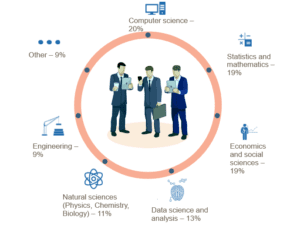
Stay Competent with most In-Demand Data Science Skills!

What is Data Science?

The Science of combining capital processes, algorithms, and many such best tools to collect, manage and analyze the most important data to make business decisions is Data Science.

Who is a Data Scientist? 

A computing professional beholding the skill of data collection, data storage and management, and data analysis enabling the organization to make data-driven decisions quickly are Data Scientists.

 In-Demand Data Science Skills

Some of the most In-Demand Data Science Skills are:

Understanding of Math & Statistics 

Online Data Science course in India is all about extracting the required information from the data. A depth understanding of mathematical probabilities and statistical methodologies helps in data analysis.

Data Science SkillsThe majority of the data science models are built using one or more, known or unknown variables. Thus, the in-depth understanding of multivariate calculus is the key requirement to develop Machine Learning models.

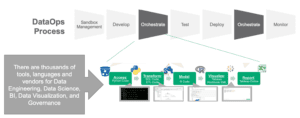
A detailed understanding of functions such as Logit, Cost, rectified Linear unit, Step, Sigmoid, etc. is very much required to deal with the large data. Apart from these functions, the detailed understanding of Matrix algebra.

vector Algebra and Differential and Integral calculus help the Data Scientists to develop and understand the systems at a faster pace.

 Programming Skills for Data Science

In order to achieve the objective to transform the raw data into business insights, Programming skills plays a crucial role. Among all the programming languages, the go-to languages are Python and R, Python being the lingua franca in the data science field.

Skill to wrangle the Data

The process of removing imperfections from the raw data to get the data that can be easily analyzed is known as Data Wrangling. The entire process includes acquiring the data, combining the data with relevant fields, and cleansing the data. In short mapping the raw data from one form to the other to set up the data to get business insights.

Management Skills

Database management is a prerequisite of Data analysis. The basic requirements for a Database Management System is the family of programs to edit and manipulate the data and the operating system to provide the specific data.

Data Science Career 

The special skills set will definitely make you stand out from the crowd when the field and hence the number of jobs in the market are increasing at a faster pace.

Data Science Career Job Requirements Average salary
Data Scientist ·      Data collection and organization

·      Find the pattern in the data to help the strategic business
decision


$139,840

Data Engineer ·      Batch Processing of the database

·      Build and maintain data pipelines

·      Make the information available to the Data Scientists

$102,864
Machine Learning Scientist Research for the new data approaches and deep learning techniques. $114,121
Machine Learning Engineer ·      Create data funnels

·      In-depth understanding of statistics and programming

·      Designing and developing machine learning systems

$114,826
Data Analyst ·      Transform the large Database to meet the purpose.

·      Prepare the reports to facilitate the decision-making process by communicating trends and insights from the data.

$62,453
Business Intelligence Developer ·      Design and develop the strategies to make the specific information accessible for business decisions in lesser time.

·      Facilitate the system understanding to the end-users to use the data effectively

$81,514
Statistician ·      Facilitate the Data Collection process.

·      In-depth Data analysis

·      Data interpretation

·      Identify the relevant trends from the data

·      Design data collection processes

·      Advise the overall organizational strategy

$76,884
Applications Developer ·   Keeping track of the applications used in the business and internal interaction

·   Design the overall process flow of applications with the inclusion of development of user interface components etc.

$113,757


 Average Salary data is taken from https://www.glassdoor.co.in/Salaries/data-scientist-salary

Why Does Data Ops For Data Science Project Matter?

What is Data Science?

Data plays a major role in every organization as it helps in making decisions based on facts, statistics, and trends. Data science helps to trace insights from the raw data generated, which in turn is used to make major business decisions. Implementing Data Science in business has several advantages.

  • It helps in reducing risks and identifying fraud models. Data scientists are trained to identify data that stands out in some way and they use methodologies to predict fraud models along with creating alerts every time unusual data is identified.
  • It helps organizations in identifying when and where the products best sell. This helps the organization to deliver the right products at the right time as per the customers’ needs.
  • It helps the sales and marketing teams to understand their audience well and helps with providing personalized customer experiences.

Why Data Science Needs DataOps?

Data scientists deal with searching for data, labeling, cleaning, and performing other tasks that consume a lot of time. Especially if the business has to maintain a backlog legacy, then the amount of data keeps multiplying every year. This is where the need for DataOps rises.

DataOps involves collaboration, automation, and continuous innovation to data within a data-driven environment. Just like software can not be expected to provide exact results outside its live environment, data projects may also tend to behave similarly and may have to be reworked completely to make it work in a production environment. It also has to be continuously monitored even after deployment. Which makes it even more necessary to implement DataOps in a Data Science project.

Data Ops for Data ScienceDataOps plays a major role in building best practices throughout a function. Through continuous production, DataOps helps organizations to deliver value to a range of stakeholders.


Another significance of using DataOps in Data Science is Automation. Data moves through a particular process within an organization. While Data is entered in one form, it does not exist in the same form. Data scientists have to build data pipelines, test, and change them before data is deployed.

Making use of DataOps best practices, you can get a constant stream of data flowing through the pipelines. Which in turn, helps to attain real-time insights from the data. This ensures to reduce the time taken in converting raw data into Valuable information.

Combining Machine Learning with DataOps helps in maintaining a continuous workflow through internal communication. With this, the data quality can be controlled through version control, constant development, and integration. Combining ML also improves the insights and has a great potential for extracting value from DataOps.

Introducing DataOps in the organization also means changes in the work process. It builds a new ecosystem with consistent communication between the departments. Employees of each department work together, in real-time, sharing a common goal.

Therefore, using DataOps in Data Science ensures to develop projects keeping in mind the business impact along with delivering it in a way that the management can understand.

Why Data Science Course?

The Data Science course covers a mix of topics like mathematics, Tools, Machine Learning techniques, Business Acumen, and several algorithms. The main principle behind Data Science is finding patterns from gigabytes of raw data collected.

In today’s competitive world, more and more organizations are opening up to big data, and the need for data scientists is also on the rise. They get exciting opportunities to work on and also get to come up with solutions for businesses.

10 Data Science Careers That Are Shaping the Future!

Data is wealth in modern days and data scientists will be in huge demand in the coming years. Firms require skilled professionals to analyze the generated data. Data analysis is also predicted to surge with the rise of new-age technologies like machine learning, artificial intelligence, etc.

According to reports, there is a shortage of expert data scientists in the market. One can opt for a post-graduate program in machine learning to gain the skills needed in the data science industry.

Let us see about ten data science careers that are shaping the future.

Data Scientist

Data Scientists have to organize the raw data and then analyze it to create better business strategies. Data is analyzed for predicting trends, forecasting, etc.

Data science careerData scientists are technical personals who are fluent in data analysis software and use them to predict market patterns. Firms will require more skilled data scientists in the future due to the need to process & analyze big data.

Business Intelligence Analyst

Business Intelligence (BI) analysts & developers are required to create better business models. They also help in making better business decisions. Policy formation and strategy development are key responsibilities of a BI analyst. Firms have to face market disruptions and need good business models/strategies to tackle them. BI analyst/developer will be in demand in the coming days.

Machine learning Engineer

Machine Learning (ML) Engineers are required for creating better data analysis algorithms. They have research about new data approaches that can be used in adaptive systems. ML engineers often use other technologies like deep learning, artificial intelligence, etc. to create automation in data analysis.

Applications Architect

Firms require good applications and user interfaces to run business processes smoothly. Applications architects choose or create the right application for their firms. Due to the rise in the complexity of data, firms will require better applications to manage it.

Statistics Analyst

A Statistics analyst or statistician is required to interpret the data and present it in an understandable way to non-technicians. They have to highlight the key insights in big data to stakeholders/fellow employees. Data analysis results are also used to make predictions and identify potential opportunities. You need to be good with numerology if you are thinking to become a statistician.

Data Analyst

They have to convert large data sets into a suitable format for data analysis. They also help in finding the data outliers which can affect the business. There is a lot of data generated every day as humans analyze less than 0.5 percent of data produced! Data analysts are already in huge demand in the data science industry.

Infrastructure Architect

Infrastructure architect in a firm makes sure that the applications, software(s), databases used by the firm are efficient. Infrastructure architects also help in cost optimization. They make sure that their firm has the necessary tools for analyzing big data.

Data Architect

Data architects mainly focus on maintaining databases.

Data Science CareerThey attempt to make the database framework better. With the rise of automation in data science, data architects are in huge demand to provide better solutions.

Enterprise Architect

Enterprise architects are IT experts and provide firms with better IT architecture models. They suggest stakeholders & senior managers in choosing the right IT applications for data analysis. Top companies like Microsoft, Cisco, etc. hire enterprise architects for maintaining their IT framework.

Data Engineer

Data engineers are required to create a good data ecosystem for their firms where the data pipelines are maintained. Data Engineers are required to choose better data analysis applications to provide real-time processing. They also help in making the data available to data scientists.

Conclusion

Data science is a growing field and there are a lot of job opportunities. You can learn Data Science Courses in India from a reliable source like Imarticus learning. One can also target any particular job role in the data science industry and should learn the necessary skills. Start your post-graduate program in machine learning now!

Data Science Job Opportunities Continue to Surge in 2022!

Data science has revolutionized the functioning of almost all industries in the world today. The creation of data is the highest at the moment due to the widespread process of digitisation. Therefore data science tools and technological advancements are being deployed in order to push further productivity amidst all organizations.

With this, there is the provision of Big Data, Machine Learning, Data Analytics, Data Mining and Data Analysis thus creating large importance for this technological field.

All businesses and organizations require efficient and quick problem-solving methods. This is offered by data technology, having the ability to analyze and comprehend large sets of data in order to resolve a variety of problems in a fast-paced and accurate manner. This is a much more sought after a method as compared to the completely engineered solution.

The development of proficient machine language algorithms and a change of direction from analytics that were descriptive has resulted in driving progress. Predictive analytics and maintenance have slowly been gaining popularity amongst industries and this popularity only seems to be growing.

Data Science JobsThe demands for various data science services have been seeing a large surge all over the world as researchers for the market predict its magnification in the near future. Due to this increased demand, the path for various other talents and job aspirants is clearing. This would allow them to try their hand and work hard while in this genre of work. The vast number of technologies in relation to data are creating large opportunities for up and coming data professionals to seize.



With an estimated increase of over 1 lakh new job openings in the present year of 2020, which is a little more than a 60% increase from the previous year (2020), aspirants have a large number of openings to prove themselves with a data science career. Almost 70% out of these job opportunities are for budding professionals with experience less than or up to five years.

In a bid to remain in the fast-paced competition of today’s market and maintain relevancy, organizations, businesses and various other companies are taking up newly emerging technology. Due to a large amount of data that is being created, data technology and science is the answer to mining insights that are actionable for businesses.

There is thus a very large scope in this field for data science professionals set in the present year, 2022. This year has been the best year for Data science and furthering its opportunities.

Industries of energy, pharmacology, healthcare, media, retail, e-commerce, etc. are creating a large number of job opportunities in the field with average potential salaries going from 10 lakhs to even 14 lakhs per year.

The industry of data science had been previously (2022) facing a large shortage of skilled professionals which have increased in large numbers this year (2023).

By taking a data science course aspirants will be well equipped with all the necessary information in order to succeed in their future data science career.

Imarticus Launched The Campaign – A Paid Scholarship!

Times are highly unprecedented in the pandemic. But many of us have bravely fought the COVID war.


Our frontline workers have put their lives on the line and made countless personal sacrifices for dealing with this situation. At Imarticus Learning, we salute all these warriors.

We are honored to launch our new campaign – ‘The Joy of Giving’ For Providing 100% A Paid Scholarship” to professional tech-based training courses to COVID warriors and their dependents.

The scholarship is aimed at motivating the learner in you.

There are various ProDegrees available on the scholarship covering different disciplines.

You can choose from:

Data Science Prodegree – Knowledge partner KMPG

Financial Analysis Prodegree – In collaboration with KMPG in India

Digital Marketing Prodegree – Industry knowledge partner Digitas

Credit Risk and Underwriting Prodegree – In collaboration with MOODY’S Analytics

All the programs are for in-demand professional careers and will provide you with the necessary skills and knowledge to break into them and secure a bright future for yourself.

Data Science Course

Data Science course is one of its kind program in India that provides data science online training with a cutting-edge curriculum, case studies, and real business projects.

It will equip you with practical knowledge of working with data analytics tools like Python, R, SQL, etc. This course can open doors for a variety of data science careers like Data Analyst, Data Scientist, Machine Learning Engineer, Data Visualization Specialist, etc.

Financial Analyst CourseThe Financial Analyst course is a skill-building program that covers various core concepts within the financial analysis domain such as Accounting and Financial Modelling, Equity Research, M&A, Job Readiness, Valuation and Corporate Strategy, etc.

After finishing this course, students can build a career as a Financial Analyst, Corporate Finance Manager, Asset and Wealth Management Associate, etc.

Digital Marketing CourseThe Digital Marketing course offers hands-on knowledge and experience of working in the digital marketing domain through its industry-specific projects.

The curriculum includes brand case studies, simulated projects, real website capstone projects, and industry mentorship, to name a few. The Digital Marketing Training will help you in getting job roles like Performance Marketing Manager, SEO Specialist, Content Strategist, Social Media Manager, etc.

The Credit Risk Underwriting course is focused on providing an in-depth understanding of credit underwriting, lending landscape, credit administration, legal and regulatory requirements, etc.

Credit Risk Underwriting CourseThe program not only prepares you for a future career in credit risk underwriting but also provides placement services to help you build a substantial career in this field.

After the end of this course, you will be eligible for many careers including Operational Risk Manager, Risk Analysis Researcher, Credit Financing Manager, Credit Analysis Associate, etc.

Anyone who fulfills the eligibility criteria for the COVID Warrior scholarship can nominate themselves or anyone they know for a paid scholarship for these programs. The nomination process is quite simple.

All you have to do is follow us on Social Media –

Imarticus Scholarship       Imarticus Scholarship      Imarticus Scholarship        Imarticus Scholarship

And tag yourself or someone you want to nominate using the #ImarticusScholarships. There is no limit on nominations. You can nominate as many people as you want. The team of Imarticus will reach out to you with the next step of the selection process.

All the nominees will be required to submit an essay on the experiences of their fight against coronavirus. The Imarticus selection panel will choose the best 25 essays among them. They will be asked to provide attestations of their Supervisors/Reporting Managers/Head of Department certifying their societal contributions during the pandemic.

Imarticus ScholarshipAfterward, the shortlisted 25 essays will be featured on Imarticus Learning’s social media handles. The top 4 essays that will generate the maximum engagements from audiences will be offered 100% paid scholarships for the Prodegree programs.


The last day of filing your nominations is Sunday, 29 November 2020. So hurry up!

Don’t miss this great chance of learning with #ImarticusScholarships

How Freshers Can Get Real-World Job Experience In Data Science

Introduction

For most freshers, landing a Data Science job seems like a chicken-or-egg situation. You need to have hands-on work experience to get selected for such a job, but how do you get any work experience without first being hired?

By now, you must have heard, read or seen a lot about the scope for immense growth that a Data Science career can offer. However, for many aspiring Data Scientists, the reality appears to be hard-hitting.

The career potential of a Data Scientist is undoubtedly very rewarding once an individual gets the job, but getting the job without prior work experience is the main obstacle they face.  Below, we examine some practical solutions to this dilemma:

 Work on personal Data Science projects

Data ScienceThis is an interesting and highly practical way to gain real-life Data Science experience. Once you finish a project, you can showcase your work on a platform like GitHub. Focus on small projects, and try to demonstrate important Data Science skills in your efforts.

The advantages of working on your own project are that you gain hands-on experience in generating ideas, collecting data, cleaning data, analysing data and building predictive models.

Therefore, you gain a comprehensive understanding of the entire process. As far as possible, try to script clean codes and develop clear visualizations that potential stakeholders can find easier to follow.

Do not attempt to display too many skills at once, as you might end up unnecessarily complicating matters for your audience. Simple and small projects will illuminate the core skills you wish to draw attention to. For example, consider obtaining a complicated datasheet and cleaning it up. This simple project will demonstrate your prowess in:

  • Scoping a data project and formulating a suitable plan
  • Gathering data using different collection methods
  • Contemplating different data cleaning methods and choosing the most suitable one
  • Handling different data formats such as XML, CSV and JSON

 Contribute to open-source projects

The best way to enhance your coding skills and get hands-on Data Science experience is to join an open-source community. Providing solutions to projects that are already in progress will help you deal with real-world problems, while giving you a taste of what working in a Data Science team would be like.

As a member of an open-source community, you need to constantly communicate with the other stakeholders when making your contributions. Open-source projects are an excellent way to access Data Science libraries, such as NumPy, Pandas, Scikit-learn, and more. Above all else, being a part of these communities will help you build a professional network with relevant people in the Data industry, and also significantly add to your existing knowledge.

 Make tutorial / educational content

If you have confidence in your Data Science skills and knowledge, you can try authoring a Data Science blog feed, or creating tutorial videos that explain the core concepts of Data Science. These are excellent ways to highlight your abilities to prospective employers.

 In-person meetups

After you complete a Data Science course, in-person meetups can present great opportunities for face-to-face interactions with industry leaders and representatives. Meetups are essentially corporate events being held in your city, such as business conferences, presentations, seminars, expos or coding competitions.

Data ScienceThese events are excellent venues for networking with like-minded professionals who work for a range of different organizations. A simple Google search with keywords like Data Science meetups, along with the name of your city, will generate information about ongoing or upcoming events near you.

 Volunteer for a good cause

Many non-profit organizations need Data Science professionals to volunteer for them. This is a good way to give back to society, while at the same time, you could get to work alongside experienced Data Scientists who can guide you and offer valuable career advice.

The tasks you perform can be showcased in your resume, and will be considered as valid work experience. Poverty, Environmental Protection, Equal Education, Public Health and Human Rights are some of the non-profit areas that you can contribute to.

 Conclusion

The career scope for a Data Scientist is tremendous, but it often proves difficult to get a Data Science job without a certain amount of relevant work experience. The key is to show recruiters that you possess the requisite expertise and skills to do justice to the job if you are given the opportunity, and the steps listed above will go a long way towards accomplishing that.

SQL For Data Science: One-Stop Solution For Beginners!

Data science has earned the reputation of being the most promising job of the times, even during this pandemic crisis. With the current changes in the global business and economic background, data science has proven to be a more relevant career opportunity. If you are following the subject and have a keen interest in making a data science career choice, you must have heard about SQL as well.

SQL online trainingSQL is used to access and manipulate data. It helps to store data, access whenever you need it, and retrieve if need be. SQL training will give you a much-required head start in the highly competitive job market.
Why is SQL Important in Data Science?

Today’s business decisions are data-driven. Data is generated all through the day, across the globe. The amount of data generated every day is simply astonishing – about 2.5 quintillion bytes. This underlines the enormity of the subject we are dealing with.

Now that data is available, what is the next thing? How are you going to make sense of this huge amount of data and use it to make a decision? Data science steps in here. You need to collect, organize, and process them to make sense of the data and to derive insights. To do this, you need tools.  This is what SQL does. It is a querying language used to store, access, and retrieve data.

What is Structured Query Language (SQL)

SQL is a language that is primarily concerned with managing relational databases. SQL is the typical API for such data tables. While using SQL, data can be accessed and managed without changing the databases. You can perform a variety of actions including updating, querying, deleting, and inserting data records. Oracle, MySQL etc. are examples of such databases which use SQL.

SQL works based on some simple commands that are associated with different data tasks. These commands can be used to create database and tables, insert, delete, or update data, to alter table and database, drop table and index.

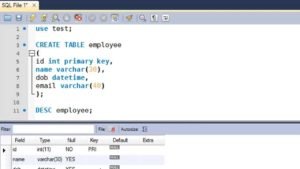
How to Create a Table Using SQL

Let’s see how to create a table using SQL commands. Remember to use UPPERCASE letters for SQL commands, and use semicolons to terminate commands.

data science careerYou may follow the steps given below to create a database.

Step #1 Creating a Database using SQL

CREATE DATABASE: Use this command to create a database “Test”.

USE: This command activates the database.

CREATE test;

USE test;

Your database named test is ready and activated.

Step #2: Creating a Data Table

It is as easy as typing a command to create a table, just like the way you created the database. All you need to do is to decide on the variables you want to include in the table.

SQL online trainingSuppose you want to create a table with the following features:


  1. Serial Number (SL)
  2. Purchase item
  3. Cost
  4. Number of pieces

You can use the command CREATE TABLE to create the table. The four features of the table are SL, purchase item, cost, and number of pieces.

Now, to create the table, use the command as given below:

CREATE TABLE cart (SL NOT NULL PRIMARY KEY AUTO_INCREMENT Purchase_item TEXT, Cost INTEGER, Number_of_pieces INTEGER);

You might have noticed that we have given the value we are going to provide for each feature. The Serial Number is a primary key, which means it represents a unique data. The purchase item will be entered as text, while cost and number of pieces will be entered as numbers.

The table is now ready with the field names and the value to be entered to each cell of the table. To see how the table is executed, type the command “DESCRIBE cart”. This will give you a display of a table with the given features.

Field Type Null Key Default Extra
SL Int(11) NO PRI NULL Auto_increment
Purchase Item Text YES NULL
Cost Int(11) YES NULL
Number of pieces Int(11) YES NULL

Step #3: Data Input

Once you create the table, you need to enter data into the respective fields. To do this. Use the SQL command “INSERT INTO”.

To insert values, follow this pattern:

INSERT INTO cart VALUES (NULL, “Rice”, 75, 10)

The “null” value is assigned to SL, as it will follow the command and auto_increment from 1.

The entered value will look like:

SL Purchase item Cost Number of pieces
1 Rice 75 10

Follow the same pattern to enter more values.

Data Science is trending these days. Getting trained in a skill that is much in demand improves your chances of getting hired manifold.

So, choose a good data science course and give your profile an extra edge while competing for career opportunities.

What Does It Take To Be A Good Data Scientist?

What does a data scientist do?

The importance and applications of data science have grown exponentially over the past decade. Data science is still in its nascent stage and there’s a whole lot to be identified about this discipline. Businesses have started implanting strategic decision-making tools that leverage data science.

Data helps businesses by providing them with hidden insights and helps them predict the future outcome of their decision. This helps organizations to make a better business decision.

Let’s delve deeper into what these data scientists do and how it helps the organizations.

  • Finding a solution to business problems

Data ScienceOne of the most basic and key responsibilities of data scientists in an organization is to identify existing challenges and problems that a business is facing and finding solutions to remedy the situation. This might seem like a generic responsibility of every important professional but the main difference here is that data scientists use tons of relevant data to find the problem.

They try to come up with solutions after properly assessing the situation using various analytical tools that provide them with useful insights. They leverage statistical analysis, data visualization and mining techniques to provide effective solutions.

  • Find out relevant data using complex research

Data Science CareerThe 21st Century businesses are complex than ever, there are various factors that determine the fate of an organization. With the number of complexities that exist, it’s very difficult to figure out what impacts your business and how it does that.

Data scientists simplify this for organizations by studying all variables affecting a business. They use complex research work to identify the variables that have a maximum impact over the business and which are highly relevant.

  • Identify patterns and trends

Another important work of a data scientist that helps businesses is to identify patterns and trends. Data scientists use sophisticated data analysis techniques to find trends and patterns from the data sets at hand. These data sets are generally historical records of the organization. It helps them to identify the existing patterns and trends which is used to make predictions regarding the future movement of the variables.

How to become a data scientist?

Data Science CourseData science is one of the most in-demand skills in the industry and given the wide range of applications that it has, the demand for a data science professional will continue to rise in the future. One of the most common questions in the minds of data science aspirants is how to become a data scientist? There is no specific answer to this particular question. It depends on what stage of your career you are at and the skillset that you have.

A data science course by reputed institutions such as Imarticus Learning guarantees placement with top-notch firms in the industry in addition to providing relevant knowledge and skills. It also helps you provide guidance from the industry experts who are highly experienced in this domain.

Let’s delve deeper into some of the most prominent skills for data scientists that you should hone if you are planning to opt for a career in this field.

Analytical skills

One of the key skills that are required in this profession and that forms the base of all your work is your analytical skills. One should have an analytical mindset and should be able to identify trends and patterns from a big chunk of data. You should be able to assess a situation from a different perspective to reach a successful conclusion. One should be trained to work with software like Python and R and should be equipped enough to handle large volumes of data.

Problem-solving skills

Another important skill that you need to work on is your problem-solving skills. You need to use data to figure out challenges that exist in the business. After you have figured out the problems you will have to provide a solution using data analytics tools that will help the business to achieve its goals and objectives.

What Are the Topics Covered in a Data Science Course

Data Science consists of six major topics. These are:

  1. Statistics
  2. Linear Algebra
  3. Machine learning
  4. Programming
  5. Data Visualisation
  6. Data Mining

Through a data science course, one can have a better understanding of these topics. These topics are discussed further in detail through the course of this article.

Statistics:
Statistics is the mathematical branch of business which includes the processes of collecting, classifying, analysing and interpreting the numbers to draw an understanding of them and thus, draw a conclusion.
Statistics is implemented in various ways in the field of data science. These are:

  1. Experimental Design: The answers to various questions are found through means of experimentation including samples size, control groups, and so on.
  2. Frequent Statistics: The user is allowed to define the value of the importance of the result of data.
  3. Modelling: Having statistical knowledge is important for the further success of a data scientist, even though it does not see daily use in their lives. Old statistical models are being slowly replaced with the new models.
  4. Linear Algebra: Linear algebra is a section of mathematics which involves the process of linear mapping between vector spaces. It sees use in data science in the following ways:
    1. Machine learning: When working with data that is dimensionally high and involves matrices, linear algebra comes in very handy. It’s component analysis, and regression techniques see the most use along with eigenvalues principals.
    2. Modelling
    3. Optimisation
    Programming

Coding is a very important part of data science and being able to code well is extremely important for any data scientist. Having a background in computer science is thus a large advantage, however, if one does not have such a background then these skills can easily be picked up through a data science course.

Automating tasks not only saves time and effort but also helps make the process of debugging, understanding and maintaining codes simpler. The practical skills involved in programming are as follows:

  1. Being comfortable with data development. Usually, people with a software development background find it easier to work on commercial projects at a higher scale.
  2. Having experience in the database area, such as knowledge of modern databases like NoSQL and cloud as well as on older databases like SQL, is important to any employer.
  3. Teamwork and collaboration are important as most work as a data scientist would be tone in groups. Thus communication with teammates and holding strong relationships would help keep productivity at a maximum.

Important practices here involve:

  1. Maintenance
  2. Avoiding the use of hard values
  3. Documentation and commenting continuously
  4. Refactor the code

Machine Learning

Machine learning is important in data science and has shown use in a large number of groundbreaking technologies like self-driving cars, drones, image classification, speech recognition, so on and so forth. This field is expanding every minute and expanding very quickly. Thus the knowledge of machine learning and its implication would be necessary for any good data scientist.

Data Mining

The process involving the exploration of data and extraction of vital information is called Data Mining. A data science course makes the understanding of such a topic much clearer. The commonly used slang in data mining are listed below.

  1. Data wrangling/Data munging
  2. Data Cleaning
  3. Data scraping

Data Visualization

Even though the term may seem self-explanatory, there is more to it than what we see. Data visualisation is the process of communication of data and its results through pictorial or graphical representation. The goal of it is to communicate the findings of the data in the simplest way for understanding.

Thus a data science course would further equip aspiring data scientists with all the tools in the toolkit necessary for optimal success in their career.