


Last Updated on 4 weeks ago by Imarticus Learning
Choosing what to do after Class 12 can feel like a big decision. For students with a commerce background interested in accounting or finance, there are several career paths to explore. One qualification that often comes up during this research is the Certified Public Accountant (CPA).
Many students begin asking questions like:
→Can I do CPA after 12th?
→Is it possible to start the CPA journey right after school?
→How to become a CPA after the 12th class?
These are important questions because CPA is not just another certification. It is one of the most respected accounting credentials globally, recognised by multinational companies, global consulting firms, and international financial institutions.
However, the path to CPA after 12th is slightly different from what many students expect. While you cannot directly appear for the CPA exam immediately after finishing school, you can absolutely start planning your journey toward the CPA right after Class 12. And planning early actually gives you an advantage to pursue the CPA Certification.
In this guide, I’ll break down everything you need to know about CPA after 12th, including eligibility requirements, course structure, graduation choices, career opportunities, and the step-by-step roadmap to becoming a CPA. Let’s begin by understanding what CPA is and why it’s considered the gold standard in accounting.
Did you know?
Students planning CPA after 12th often choose degrees such as BCom, BCom Honours, BBA Finance, or BCom Accounting & Finance because these programs build strong accounting fundamentals.
What is CPA? Understanding the Certified Public Accountant Qualification
Before committing to the idea of CPA after 12th, it helps to understand what is CPA and what the qualification actually represents. A Certified Public Accountant (CPA) is a professional accounting designation widely recognised across the world. The certification is administered by the American Institute of Certified Public Accountants (AICPA).
CPAs are experts in areas like:
- Financial reporting
- Auditing
- Taxation
- Corporate accounting
- Financial consulting
- Regulatory compliance
Because of this expertise, CPAs are highly valued in multinational corporations, consulting firms, global accounting firms, and financial institutions.
| Feature | Details |
| Certification | Certified Public Accountant |
| Governing organisation | AICPA |
| Global recognition | Widely recognised internationally |
| Number of exam sections | 4 |
| Key career areas | Accounting, auditing, taxation, consulting |
| Exam format | Computer-based |
| Passing score | 75 out of 100 |
| Exam duration | Around 4 hours per section |
| Exam availability | Multiple testing windows annually |
Understanding these CPA course details after 12th helps students plan their study timeline more effectively. Students who start exploring CPA after 12th are usually looking for a qualification that can help them build a global finance career.
Also Read: How CPA salaries grow across roles, industries, and experience levels in India.
Can I Do CPA After 12th?
I’ll start with the most common question students ask me or search on the internet: Can I do CPA after 12th? The honest answer is not immediately. To appear for the CPA exam, candidates must meet certain educational requirements. These requirements typically include completing a bachelor’s degree and earning a minimum number of academic credits.
So technically, you cannot directly enrol in CPA right after finishing Class 12. But here’s the important part: you can start preparing for CPA after 12th by choosing the right academic path. Many students who aim for CPA begin their journey by selecting a commerce or finance-related degree that helps them meet the eligibility criteria faster.
| Requirement | Details |
| Minimum qualification | Bachelor’s degree |
| Credits needed to sit for the CPA exam | Around 120 credit hours |
| Credits required for CPA license | Around 150 credit hours |
So while you cannot take the CPA exam right after Class 12, planning your CPA after 12th pathway is absolutely possible – and often recommended.
Also Read: Best CPA books and exam preparation guide for accounting aspirants.
Why Consider CPA After 12th?
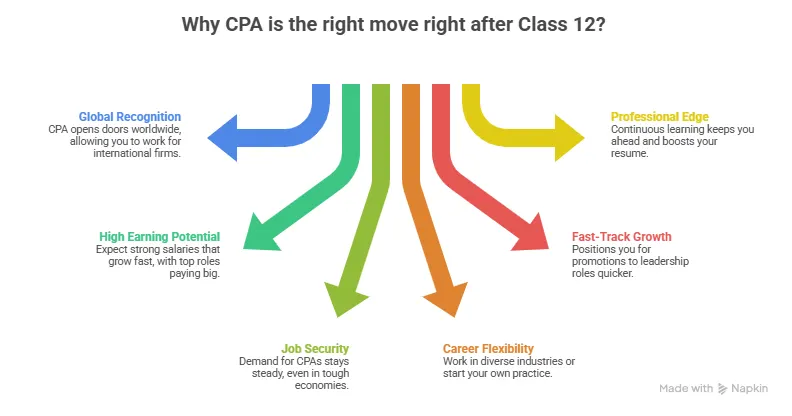
Many students begin researching CPA after 12th because they want a career that offers strong growth, global exposure, and long-term stability. Planning early allows you to make better decisions about your graduation course, internships, and professional certifications. Here are some reasons why students choose the CPA pathway.
| Advantage | Why It Matters |
| Global career opportunities | CPAs are recognised worldwide |
| Strong industry demand | Multinational companies hire CPAs |
| Competitive salaries | CPAs often earn higher salaries |
| Career flexibility | Opportunities in audit, finance, and consulting |
| International exposure | Work with global accounting standards |
Starting to plan CPA after 12th helps students build a clear academic and professional roadmap.
In this quick video, the instructor shares practical insights on how candidates can prepare effectively for the CPA exam. It covers useful strategies such as building a study plan, focusing on high-weight topics, practising exam-style questions, and managing your time during the exam.
CPA Course Details After 12th
Students exploring CPA course details after 12th often want to know the CPA subjects and how the certification is structured. The CPA syllabus is designed to test both theoretical accounting knowledge and practical financial understanding.
| Section | Focus Area |
| FAR | Financial Accounting and Reporting |
| AUD | Auditing and Attestation |
| REG | Regulation and taxation |
| Discipline section | Advanced accounting specialisation |
Each section typically takes about four hours to complete and is conducted through a computer-based exam.
One of the biggest motivations for pursuing the CPA qualification is the strong career opportunities and salary potential it offers across global markets. This video explains the different job roles available to US CPAs and how salaries grow as professionals gain experience.
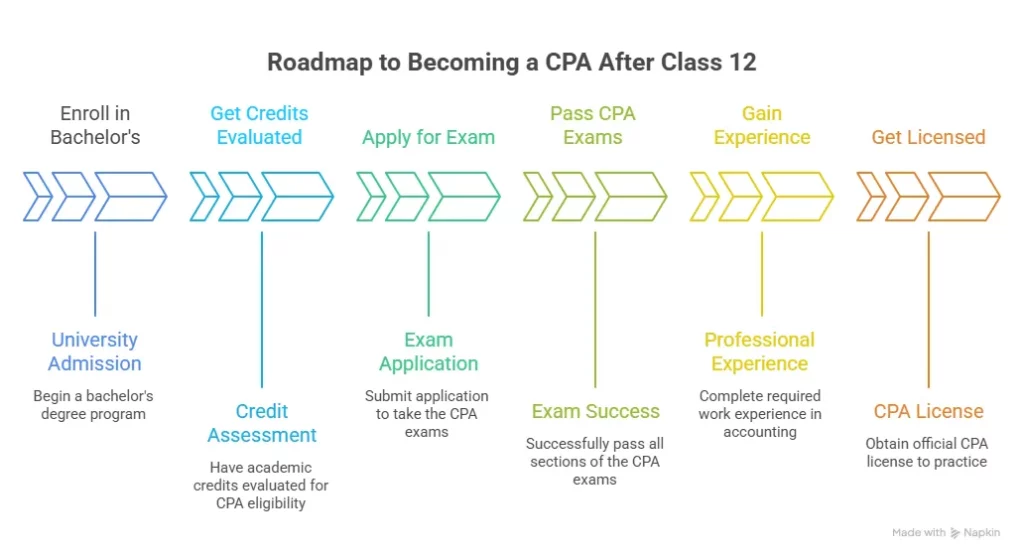
Step-by-Step Roadmap on How to Become a CPA After 12th?
If you’re wondering how to become a CPA after 12th, the journey is quite structured. While it may take a few years, starting early makes the process much smoother. Let’s break it down step by step.
Step 1: Complete Your Graduation
The first step toward CPA after 12th is completing a bachelor’s degree. Students usually choose degrees that provide strong accounting knowledge.
Common options include:
- BCom
- BCom (Honours)
- BBA Finance
- BCom (Accounting and Finance)
These programs build the foundation required for CPA exam preparation.
Step 2: Meet CPA Credit Requirements
CPA eligibility is based on academic credit hours rather than just degrees.
| Requirement | Credit Hours |
| Eligibility to sit for the CPA exam | Around 120 credits |
| Requirement for CPA license | Around 150 credits |
Most Indian undergraduate programs provide approximately 120 credits, which is often enough to sit for the CPA exam. However, additional education may be required to meet the 150-credit requirement for licensing.
Step 3: Apply for CPA Exam Eligibility
- After meeting the academic credit requirements, candidates can apply to a US State Board of Accountancy. The application process typically includes:
- Evaluation of educational transcripts
- Eligibility verification
- Application approval
Once approved, candidates can begin scheduling their CPA exam sections.
Step 4: Clear the CPA Exam
The CPA exam includes four sections covering different areas of accounting and finance.
| Exam Section | Focus |
| FAR | Financial reporting |
| AUD | Auditing procedures |
| REG | Taxation and regulatory frameworks |
| Discipline | Specialised accounting knowledge |
Candidates usually prepare for each exam section individually by using verified CPA study material.
Step 5: Gain Relevant Work Experience
To obtain the full CPA license, candidates must usually complete professional work experience under a licensed CPA. Experience requirements may vary slightly depending on the state board.
Also Read: Smart guide to plan your CPA course fees.
CPA Eligibility Requirements for Indian Students
Students exploring CPA after 12th often wonder whether Indian graduates are eligible for the certification. The good news is that many Indian students successfully pursue a CPA every year.
| Requirement | Details |
| Minimum education | Bachelor’s degree |
| Accounting subjects | Required for most state boards |
| Exam eligibility credits | Around 120 |
| License requirement | Around 150 credits |
| Work experience | Required for a full CPA license |
Because requirements differ across US states, students usually choose the state board that best aligns with their academic background.
CPA Course Duration After 12th
Another common question students ask while researching CPA after 12th is how long the entire journey takes. The CPA course duration depends on how quickly you complete your education and pass the CPA exams.
| Stage | Duration |
| Graduation | 3 years |
| CPA preparation | 12-18 months |
| Work experience | 1-2 years |
Overall, becoming a CPA after 12th usually takes around 4 to 6 years.
Did you know?
Students from India can pursue a CPA by applying through the US State Boards, making it accessible to candidates worldwide.
Best Graduation Courses to Pursue Before CPA
If you’re planning CPA after 12th, choosing the right graduation course is extremely important. Some degrees naturally align better with CPA eligibility and exam preparation.
| Course | Why It Helps |
| BCom | Strong accounting foundation |
| BCom (Honours) | Advanced accounting knowledge |
| BBA Finance | Exposure to business and financial management |
| BCom Accounting & Finance | Specialised accounting curriculum |
These programs provide the knowledge base needed for CPA exam preparation. Once you complete your graduation requirements, you can enrol in a CPA coaching program for structured preparation.
When students begin researching the US CPA qualification, they often hear several myths that can make the exam seem more intimidating than it actually is. The video above breaks down some of the most common misconceptions about the CPA exam and explains the reality behind them.
CPA vs CA vs ACCA – Which is Better After 12th?
Students considering a CPA after 12th often compare it with other well-known accounting qualifications. Each option serves different career goals.
| Feature | CPA | CA | ACCA |
| Recognition | Global | India-focused | Global |
| Governing body | AICPA | ICAI | ACCA |
| Total exams | 4 | Multiple levels | 13 exams |
| Focus | US accounting | Indian accounting | International accounting |
| Duration | ~12-18 months (after eligibility) | 4-5 years on average | 2-3 years |
| Career scope | Global companies | Indian firms | International roles |
Note: Duration can vary depending on preparation speed, exam attempts, and work experience requirements.
The best choice depends on where you want to work and what type of accounting career you want to pursue.
Also Read: CPA vs CFA: choose the best for your finance career?
Skills Required to Become a CPA
Becoming a CPA takes more than just crunching numbers -it’s about having the right mix of skills to thrive in a fast-paced, detail-heavy field. Preparing for CPA after 12th is not only about academic knowledge. Successful CPAs also develop strong professional skills.
| Skill | Why It’s Important |
| Analytical thinking | Understanding financial data |
| Attention to detail | Accurate financial reporting |
| Problem-solving | Handling complex financial issues |
| Communication | Explaining financial insights |
| Regulatory awareness | Ensuring compliance |
- Core Technical Skills – You need a solid grasp of accounting principles, tax laws, and financial reporting to handle tasks like preparing statements, audits, and compliance. Proficiency in tools like Excel or accounting software is key, along with staying updated on regulations like GAAP or IFRS.
- Key Soft Skills – Analytical thinking helps spot trends and solve problems in financial data, while attention to detail prevents costly errors. Strong communication is crucial too, as you’ll explain complex info to clients or teams clearly, and the organisation keeps everything on track amid deadlines.
Business acumen lets you advise on strategy and risks, and ethical professionalism builds trust with everyone you work with. Students who begin developing these skills early often perform better in professional roles.
Many students researching CPA after 12th often wonder how far the qualification can take them in their careers. This quick video explains how accounting professionals can grow from technical finance roles into strategic leadership positions.
Is CPA the Right Career Choice After 12th?
If you’re passionate about finance, accounting, and international business, planning CPA after 12th can be a great long-term career decision. The certification offers:
- Global career opportunities
- Strong earning potential
- Opportunities with multinational firms
- Expertise in international accounting standards
However, like any professional certification, a CPA requires consistent effort, discipline, and long-term commitment. Students who begin exploring the pathway right after Class 12 often find it easier to navigate the journey.
How Imarticus Helps in Pursuing CPA After 12th
Preparing for professional certifications like the CPA Course becomes easier with structured guidance and industry-focused learning. Learning partners that focus on practical training, expert mentorship, and industry exposure help students bridge the gap between academic knowledge and real-world finance skills.
The Imarticus Learning program, designed with industry collaboration, provides:
- Structured CPA preparation support
- Experienced faculty and mentors
- Case studies and real-world projects
- Career guidance and mentorship
- Industry-relevant accounting training
Such programs help aspiring professionals build the skills and confidence required to succeed in global finance careers.
FAQs About CPA After 12th
When students start researching CPA after 12th, they often have several questions about eligibility, duration, and career prospects. Below are some frequently asked questions that can help clarify the most common doubts students have about pursuing a CPA after completing Class 12.
Can I do CPA after 12th?
No, you cannot directly pursue a CPA after 12th. To become a Certified Public Accountant, you must first complete a bachelor’s degree and earn the required academic credits (typically around 120 credits). After meeting the education requirement, you can apply for the CPA exam. However, students can plan their CPA pathway after 12th by choosing a relevant graduation course such as BCom, BBA Finance, or Accounting programs.
Is it possible to do CPA after 12th?
Yes, it is possible to plan your pathway toward CPA after 12th. However, you must first complete a bachelor’s degree and meet the required credit hours before you can appear for the CPA exam.
How to become a CPA after the 12th class?
The typical pathway to becoming a CPA after 12th includes the following steps:
- Complete a bachelor’s degree in commerce, accounting, or finance.
- Ensure you meet the CPA credit requirements (usually around 120 credits).
- Apply for eligibility through a US State Board of Accountancy.
- Prepare for and pass the four CPA exam sections.
- Gain the required professional work experience to obtain the CPA license.
This structured pathway allows students to transition from graduation to global accounting careers.
What are the CPA course details after 12th?
The CPA certification includes four exam sections covering auditing, financial reporting, taxation, and specialised accounting areas in the discipline section.
Is CPA better than CA after 12th?
CPA and CA are both prestigious accounting qualifications, but they serve different career goals. CPA is ideal for students who want global accounting careers or work with multinational companies. CA is more suitable for professionals planning to build their careers primarily in India. Your choice should depend on where you want to work and the type of accounting career you want to pursue.
What is the eligibility for CPA after 12th?
Students cannot directly appear for the CPA exam after 12th grade. The minimum requirement is a bachelor’s degree and around 120 academic credits in relevant subjects such as accounting, finance, or business.
Which degree is best for a CPA after 12th?
Degrees like BCom, BCom Honours, BCom Accounting & Finance, and BBA Finance are commonly chosen by students planning to pursue CPA because they provide a strong foundation in accounting and financial management.
How many years does it take to become a CPA after 12th grade?
On average, becoming a CPA after 12th takes around 4-6 years. This includes completing a bachelor’s degree, preparing for the CPA exams, and gaining relevant work experience.
Start Your CPA Journey with the Right Guidance
Planning your career early can make a huge difference, especially in fields like accounting and finance, where professional certifications play an important role.
While you cannot directly pursue a CPA after 12th, you can absolutely begin preparing for the journey right after school. By choosing the right undergraduate degree, meeting the required academic credits, and preparing strategically for the CPA exams, students can build a clear pathway toward becoming a Certified Public Accountant.
For students interested in global finance careers, a CPA offers exciting opportunities in multinational companies, consulting firms, and international financial institutions. It not only strengthens your accounting expertise but also opens doors to roles that involve global financial reporting, auditing, and advisory services.
The key is to start planning early for the CPA Program, choose the right academic path, and stay consistent in your preparation. If you’re serious about building a future in accounting and finance, now is the right time to explore your CPA pathway and start preparing for the opportunities ahead.
