Are back-end development and databases the backbone of full-stack development?

In the world of full-stack development, there are many moving parts. But if you had to narrow it down to two essential components, they would be back-end development and databases. Back-end development is responsible for an application’s server side, including data storage and processing. Databases store and organize data so that it can be easily accessed by the front-end, or client-side, of an application.

What are back-end development and databases in full-stack development?

In full-stack development, the back-end development and databases are critical in enabling the front-end development. The back-end development manages and maintains the server, application, and database that power the website or web application. In addition, the back-end developers are responsible for ensuring that the data stored in the database is organized and accessible.


The databases in full-stack development store the data required by the website or web application. The database usually stores user accounts, product information, and other data types. Sometimes, the database may also be used to store code or files.

Are back-end development and databases the backbone of full-stack development?

Back-end development and databases are the backbones of full-stack development for several reasons. First, back-end development provides the server-side logic that powers the front-end application. This includes everything from processing user input to fetching data from a database. Without back-end development, the front-end would be a static page.

Second, databases are used to store data that is used by the application. The back-end code can access this data to populate the front-end UI. Without a database, there would be no way to store or retrieve this data.

Third, both back-end development and databases are necessary for scaling an application. The back-end code and database must handle the increased load as an application grows in users and data. The entire application will suffer if the back-end code or database is not up to par.

Fourth, both back-end development and databases are needed for security purposes. The back-end code implements security measures such as authentication and authorization. The database also plays a role in security by storing sensitive data in an encrypted format.

Lastly, back-end development and databases are essential for full-stack development. With them, an application can function appropriately and scale as needed.

How does a Full-Stack Development course help?

To become a full-stack developer, you need to know more than just how to code. You need to be able to build applications from the ground up, including the back end and database.

A Full-Stack Development course will teach you everything you need to know about back-end development and databases so that you can build complete web applications. You’ll learn how to set up a server, connect to a database, and write code to create dynamic web pages.

You’ll also learn about front-end development so that you can create beautiful user interfaces. And you’ll put everything together to deploy your web applications.

With a complete understanding of back-end development and databases, you’ll be able to build any web application you can dream up. So, if you’re interested in becoming a full-stack developer, a java full stack development course is the perfect place to start.

Grow with Full Stack Web Development Course from Imarticus Learning

Develop yourself into an A-level web developer with our Full Stack Developer Pro course! Get ready to advance your career in just six months by mastering the essential skills required for a full-stack programmer, such as data structures and algorithms. Our program stands out from competitors through its 350 hours of instruction given by distinguished faculty plus 100 extra hours dedicated to doubt resolution – that’s more training than any other similar course on offer. Take this unique opportunity today and upgrade your professional qualifications toward success. This is the ultimate way to learn data structures and algorithms!

Course USPs:

Money Back Guarantee

Resume Building

Interview Prep

Profile Enhancement

Participate in National Coding Hackathon

For more details, contact the Live Chat Support system or visit our training centers in Mumbai, Thane, Pune, Chennai, Bengaluru, Hyderabad, Delhi, Gurgaon, and Ahmedabad.


Businesses can fight cyber threats and boost revenue. See how you can help them do it.

With the growing digitalisation all around the globe, people are gaining more exposure to the virtual world. Like any other thing, it also has its own set of pros and cons. While most of the time, we focus on the pros, the cons get neglected and can turn more harmful later. 

One such popular con of digitalisation is the cyber threat that comes with it. Not only do individuals but huge businesses are also affected by cyber crimes. Thus, it is essential for a business to have a team of cyber security professionals to deal with the cyber threats that come their way. 

People who are skilled in this domain can pursue a career in cyber security.

To grab such a promising position, one must be equipped with the necessary skills and knowledge of cyber threats and ways to mitigate them. One can opt for the IIT Roorkee cybersecurity course with placement that offers ample exposure and proficiency in this field of study. 

Ways to Fight Cyber Threats

Nowadays, cyber threats are on a rise and are expected to grow more in the coming years. Thus, it becomes more important than ever for businesses to secure their database from getting breached. While advancements are made in cyber security policies, the hackers have also upgraded their techniques for attacking. In order to condemn these malpractices, big businesses look for adept cybersecurity professionals. 

It is quite evident that by fighting cyber threats, businesses get more secure, but it also helps them boost their revenue. So, let us see how you can be an asset for a business and not only safeguard it against cyber crimes but also help them enhance its revenue structure. 

  • Encryption of Data

The first and foremost thing that one can do to safeguard the sensitive data of the company is to encrypt it. This encryption of data limits its access to people with the encryption key. Here, the actual data is translated into another form or code. This basic security method is advised to every organisation in order to protect its data. The modern algorithms of encryption also provide confidentiality and authentication. This popular practice to prevent data loss has been used by companies for a long time now. 

  • Update the System

While taking care of all the huge tasks that come with a business, most of the time, the basic work of updating the software and system is forgotten. It is one of the simple tasks that they forget. However, it has a huge impact on the operating system. Keeping the system and software regularly updated not only provides new features but also fixes bugs and helps in identifying security flaws. The organisation can prevent cyber threats from harming its database.

  • Use Killswitch

Putting a killswitch to use can assist an organisation in preventing enormous cyber threats. Killswitch is a mechanism by which the information technology department disables or shuts down the systems when they detect anything suspicious. This is done in order to prevent the operating system from any malicious activity. The system gets disabled until the IT department resolves the issue. 

However, the function of a killswitch may vary, depending on the type of business and industry. It also works as per the severity of the breach. 

  • Install Firewalls

Cyber threats can attack your system brutally, which can then cost organisations a huge amount of money. One basic practice companies can undertake is installing firewalls. Firewalls are one of the necessary security features that must be installed in operating systems to protect against any kind of data breach. They will prevent brute attacks that can cause irreversible damage. 

  • Backup the Data

While taking care of all the preventive measures, it is of utmost importance to safeguard the business’ data through backup. As data is the heart and soul of a modern organisation, its protection is the biggest duty that one must keep in mind while handling cyber security.

Backing up the data means copying it from the primary source and storing it in a secondary location for safety. It will protect the data from any malicious action during the situation of data loss.

Conclusion

Making use of these simple techniques can show great results for the organization’s benefit. Along with these, regular updates of cyber security policies are quite necessary to safeguard the business’ data. It should also include clauses for data mishandling and legal steps against any such breaching. 

We already know, cyber threats harming a business’s data can be the scariest thing, as it can cost them an arm and a leg. Prevention cost and data loss both can degrade the revenue structure of a business far from imagination. Thus, fighting against cyber threats will safeguard the data and also the revenue of the organisation. 

A disaster recovery plan made beforehand for dealing with such situations always works. This is something that you will learn in the IIT Roorkee cyber security course. Further, it will strengthen your career in cybersecurity.

Related Articles 

Does Every Computer Science Degree Require Cyber Security Training?

How to make a career in cyber security in 2023

The practice of protecting computer systems, servers, electronic systems, mobile devices and data from virus attacks is known as cyber security. Cyber security aims to reduce the possibility of cyber-attacks and provides protection against the misuse of networks, systems and technologies.

Choosing a career in cyber security actually means being associated with a highly booming industry where all the available jobs are outnumbered by qualified candidates. As cyber security grows continuously in importance, the availability of specialised roles is also increasing.

Prerequisites Needed For a Career in Cyber Security

There is quite a noticeable lack of professional cyber security people who can handle daily challenges. For this reason, having a career in the field of cyber security is highly demanding and extremely rewarding as well.

AI certification course

A lot of companies are searching for skilled professionals in cyber security. Having a bachelor’s degree is important in a technical domain. However, if one does not have a proper relevant degree, one can always choose to do relevant cyber security courses and then start one’s journey in cyber security. Some other skills, for example, networking and having a knowledge of different operating systems are necessary for one’s growth of their cyber security career. 

Skills Required For Cyber Security

Before looking at all the kinds of different jobs available in the career path of cyber security, it is important to understand the crucial skills that are required for the growth of one’s career in this field.

  • For becoming an expert in cyber security, one should understand VPN, firewalls, IDS/IPS and Web proxies.
  • One needs to be quite savvy with different coding languages like Python, Java, PHP and HTML.
  • One should have a thorough knowledge of routing protocols, encryption techniques and networking.
  •  A practitioner of cyber security should understand all the best practices used for Identity and Access Management (IAM).
  • It is important for the professionals of cyber security to know Database Management Systems and SQL and acquire problem-solving skills.

Top Five Cyber Security Job Roles:

The Job Role of Network Engineer

  • Network engineers make computer networks for a company. They first install, then configure and then support the network equipment.
  • They also configure switches, routers and firewalls. This kind of entry-level job in cyber security might also help one to start one’s journey of becoming an ethical hacker.
  • According to Glassdoor, a network engineer’s annual average salary in India is around INR 510000 and in the US, the annual average salary is around $85098.

The Job Role of Information Security Analyst

  • For an information security analyst, one’s main duty is protecting sensitive information. Security analysts carry out plans for stopping cyber-attacks.
  • They ensure compliance with policies. Depending on a specific cyber threat, they decide whether it should be resolved or taken further.
  • According to Indeed, the annual salary of an information security analyst in India is INR 642000 and in the US, it is $89140.

The Job Role of Ethical Hacking

  • Ethical hackers also have another name known as penetration teasers. Their work is very similar to the network security consultants who identify the system vulnerabilities and then exploit them, exactly like a hacker.
  • Using various penetration tools and software, they test the networks. They construct new penetration tools and then record the test results.
  • An ethical hacking certification course can land jobs for this role with an annual average income of $93000 in the US and INR 500000 in India.

The Job Role of Security Architect

  • Security architects first research and then propose the elements of security for their organisations. They create robust structures of security that have the ability to prevent attacks from malware.
  • A security architect then approves the installation of VPN, firewalls and routers. They make the company guidelines, user guides and procedures.
  • According to Payscale, in the US, security architects earn around $124000 annually on average and they would earn around INR 2180000 annually on an average basis.

The Job Role of Chief Information Security Officer (CISO)

  • In an organisation, there are senior-level officers as well. Their work is to ensure the safety of the information and maintain, develop and implement information security as well as risk management programs.
  • They have interactions with stakeholders and brief them on a regular basis about all the information security concerns.
  • According to payscale, a Chief Information Security Officer earns around $165000 annually on an average basis in the US, and in India, they earn around INR 2222845 annually on an average basis.

Conclusion

By the year 2025, almost 60% of organisations will tend to use cyber security risk as a primary determinant for making business engagements and third-party transactions. Almost 80% of enterprises will take up strategies to unify web and cloud services. Hence, there is a booming career in cyber security in the recent future and the IIT Roorkee Cybersecurity course is a perfect option for getting a certificate in this field.

Developing a cybersecurity career with a top IIT: My view

In recent years, the demand for cybersecurity professionals has exploded. The world is increasingly reliant on digital technology, and with that comes a greater risk of cyberattacks. Organizations are scrambling to find qualified individuals who can help protect their networks and data. 

With the increasing popularity of Cybersecurity as a field, more and more students are interested in making a career in this domain. However, they are often not sure where to start. In this blog post, I will share my experience of developing a career in Cybersecurity with the top IIT institutes in India. So if you are interested in learning more about this field, keep reading!

Why Study Cybersecurity? 

Cybersecurity is one of the most important fields today. With the increasing reliance on technology, there has been a corresponding increase in cyber-attacks. These attacks can also have serious consequences, ranging from financial losses to loss of life. 

Therefore, there is a growing need for experts who can prevent and mitigate these attacks. This is where cybersecurity professionals come in. We play a vital role in protecting our societies from these threats.

Additionally, Cybersecurity is a very challenging field and constantly evolving. This means there are always new challenges to keep us on our toes. It is also a fascinating field, as we are often working on cutting-edge technologies. Overall, pursuing a career in Cybersecurity is an enriching experience.

IITs-The Best Place to Study Cybersecurity 

As I mentioned earlier, IITs are the best places to study Cybersecurity. This is because IIT’s cybersecurity course provides us with a strong foundation in all relevant concepts. Additionally, the faculty at IITs is excellent, and they are always willing to help us. 

The abundance of resources available is one of the best aspects of attending an IIT. Students can also benefit from the numerous online resources and some of the best libraries in the nation.

Overall, studying at an IIT is a great experience, and I would highly recommend it to anyone interested in pursuing a career in Cybersecurity. 

In conclusion, I would like to reiterate that Indian Institutes of Technology (IITs) are the best places to study Cybersecurity! The curriculum at IITs provides students with a solid foundation in all concepts related to Cybersecurity. 

Additionally, IITS faculty members are excellent and always go extra mile to assist students with anything they need help with concerning their coursework or choices for career paths after graduation.

And finally, another great perk of attending an institute like this versus other universities, students have greater access to numerous resources like state-of-the-art libraries, online courses/programs, etc., which gives them a better chance to succeed.

Discover a career in Cybersecurity with Imarticus Learning.


By teaching students the fundamentals of networking and information security, ethical hacking, cloud security, application security, and incident handling, our postgraduate program in Cybersecurity will prepare students for an exciting cybersecurity career

Course Benefits For Learners:

  • After completing this program, students will receive an Advanced Certification Program in Cyber Security co-branded by CEC and IIT Roorkee. Their professional credentials will become significantly more valuable as a result of this advanced certification in cyber security.
  • This program, developed in collaboration with CEC, and IIT Roorkee, will give you the most in-demand security tools and abilities.
  • Students will learn cyber security, cloud security, network security, and application security through challenging lab sessions on real-world issues throughout the ethical hacking course.

Contact us through the chat support system, or visit one of our training centers in Mumbai, Thane, Pune, Chennai, Bengaluru, Delhi, Gurgaon, or Ahmedabad.

How do full-stack developers navigate work-life balance

A full-stack developer is responsible for working on both front-end and back-end development processes. They are the ones who design, develop and maintain fully functioning platforms with databases. Their job has maximum flexibility. They have great knowledge about different parts of the software development process and so they can work in any area they wish for.

This allows them to control their work-life balance and further continue work where their interests align. They have broad skills in coding and programming technologies. You can pursue a full-stack developer online course in order to understand the skills you require to become one. 

Full-stack development is a great field for people who want to enter the web and software development industry. You can enjoy positive growth and multiple career options.

Best Ways to Achieve Work-Life Balance as a Full-Stack Developer

Here are some of the strategies that a full-stack developer must follow to achieve work-life balance:

  • Set boundaries for yourself

To maintain a work-life balance it is essential to set boundaries for oneself. As a full-stack developer, you should customise your work schedule as it will reduce the level of stress and anxiety. This will also improve productivity and efficiency among people. 

  • Delegate tasks where possible 

When you feel that you are overloaded with work, try to distribute some of the tasks to other teammates. This will help you to reduce your work pressure and at the same time, you can focus on the tasks which are more important to you.

  • Take care of your health

A full-stack developer tends to work late hours and does not get adequate sleep. This can affect an individual’s both physical and mental health. Therefore, you must ensure to eat only healthy food and should exercise on a daily basis to stay fit. 

  • Use project management tools 

Tools like project management will help you to keep track of your work which are yet to complete. This tool will also guide you through the time it will require to complete a project. Hence, the tool helps you to plan your time more efficiently so that you can manage your work-life balance.

Top 5 Responsibilities of a Full-Stack Developer 

Full-stack developers are versatile in software development and technologies. They have numerous duties and responsibilities. Some of them are listed below:

  • Managing Databases

Database management is one of the most important skills of a full-stack developer. They have knowledge of database software like Oracle, MySQL and NoSQL which is one of their core skills. Their duty is to maintain the website’s functionality which requires them to store and organise the information. 

  • Debugging Websites 

A full-stack developer has the crucial responsibility of maintaining a website that is error-free. They are the ones who have the duty of finding and fixing any errors that may arise. They ensure that the visitors have worthwhile experiences. 

  • Designing Websites 

One of the duties of a full-stack developer is to create websites that are both interesting and engaging to visitors. They are responsible for designing the layout of a website that further includes a selection of fonts and colours in order to make them look creative and beautiful. 

  • Coding Websites   

As a full-stack developer, you are responsible for creating code that makes websites function. This includes writing codes in HTML and other languages such as JavaScript, PHP, CSS and Python. 

 Conclusion

We see that full-stack developers not only enjoy high job satisfaction but also various opportunities to grow and succeed in the industry. But at the same time, they have plenty of responsibilities and work pressure. This industry is ever-changing and keeping up with the latest trends results in working long hours.  As a full stack developer, it is essential to have a balanced work-life which will prevent them from stress and anxiety.

So if you are interested in becoming a full-stack developer, you should keep these tips in mind to maintain a healthy work life.  

Here’s a suggested full-stack development course that will help you to enhance your skills and abilities. The course provides live online interaction sessions, projects will be assigned to the candidates which will help them to make a resume stand out in front of employers. Moreover, the course guarantees job assurance for its candidates and prepares them for a future career.

The course will provide practical experience in Java, Node, DBMS, HTML, CSS, Data Structure and more. It will prepare you for a successful career by providing you with technical knowledge of front-end and back-end programming. You can also choose a Java full-stack development course where you will learn to use java to develop the technology stack. On completing a six months full-stack development course successfully with Imarticus, you’ll achieve a full-stack developer certification.

Complete guide: How to pick the right Java full stack development course

Are you aspiring to become a software developer and are drawn towards the vast possibilities of Java Full Stack development? Are you looking for guidance on selecting the best course or training program to be successful in this field? 

It is crucial to equip yourself with the right skillsets before embarking on such a technical journey. With so many choices, choosing the most suitable full stack development course requires careful consideration. 

This guide will discuss finding an appropriate Java full stack development course that aligns perfectly with your requirements and goals.

Get Ahead of the Competition with These Skills

  • Front-End Development Skills 

The front end is what your users see when they visit your website or application. An excellent full stack Java development course should include instruction on basic front-end development techniques such as HTML, CSS, JavaScript, and jQuery. 

  • Back End Development Skills 

The back end is the “behind-the-scenes” part of a website or application, where most logic and data processing occurs. A comprehensive full stack Java development course should include instruction on back-end technologies such as MySQL, Spring Boot, Hibernate, JPA, JDBC, REST APIs, Servlets, and more. 

  • Testing & Debugging Skills 

Debugging errors is an integral part of software development; without proper debugging tools, mistakes can quickly go unnoticed until after the software has been released—which could have disastrous consequences for both users and developers alike! 

How to find an appropriate Java full stack development course?

Step 1: Determine Your Goals and Needs 

Before you begin searching for a full-stack development course, you must first determine your goals and needs. What do you want to learn? Are there specific skills or technologies that you would like to master? Knowing this information will help you narrow your search and make it easier to find the perfect course. 

Step 2: Research Different Courses 

Once you have determined your goals and needs, it’s time to start researching different courses. Look at reviews from past students, and study each course’s curriculum in detail. Ensure the course covers all essential topics, such as databases, front-end web frameworks, server-side programming languages, etc. Additionally, consider whether or not the course offers hands-on experience with coding projects or tutorials. 

Step 3: Consider Cost & Time Commitment 

When looking for a full stack Java development course, cost and time commitment are essential factors you should consider. Before enrolling in any course, carefully read its terms and conditions, so you know what you will be paying for and how long the course will last. It’s also a good idea to compare prices between different courses to find one that fits within your budget.  

 Step 4: Enroll & Get Started! 

Once you have researched and chosen a full stack Java development course that meets all your needs, it’s time to enroll and get started! Be sure to set aside enough time each day or week for studying to stay on track with your studies. With dedication and hard work, there is no limit to what you can achieve!  

With so many full stack development courses available today, knowing which is right for you can be challenging. Following these four steps, you can find a perfect full-stack Java development course suited to your needs and goals! 

Learn Java full stack development course with Imarticus Learning.

Through our Full Stack Developer online course, students will learn database architecture and algorithms. During this six-month full stack developer certification, learners will learn data structure algorithms and the technical facets of front-end and back-end programming.

 Course Benefits for Learners:

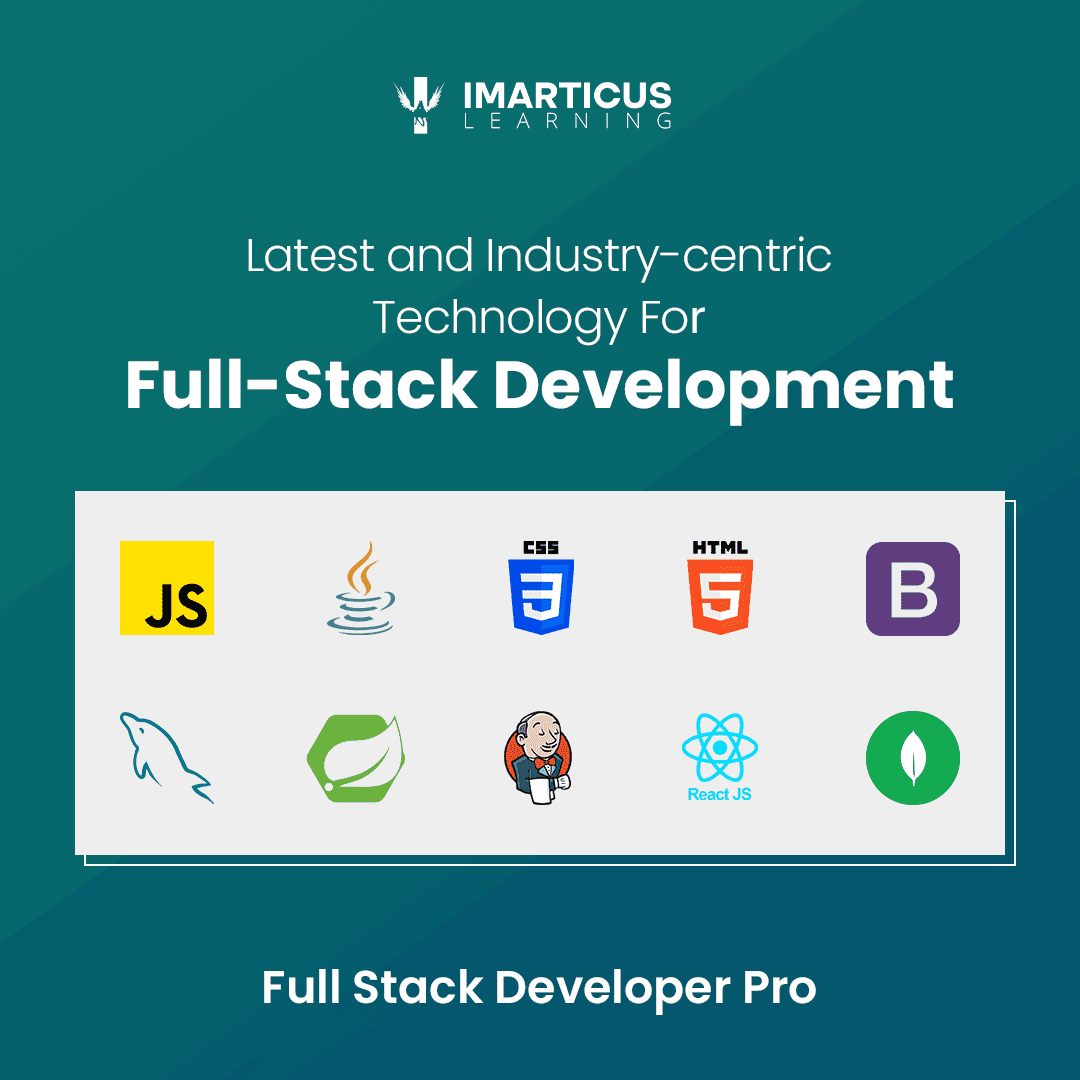
  • Establish a solid foundation in data structures while learning popular tools like Java, Spring, MongoDB, JavaScript, React, Docker, and Jenkins.
  • Our FSD Pro course provides learners with a solid foundation to build their professional success.
  • FSD Pro is the perfect program for tech lovers looking to get a foot in the door of the IT industry.
  • With tailored learning experiences, an interactive curriculum, and career services dedicated to helping you find full-stack developer jobs, this course offers everything needed for success – including job interviews guarantees!

 Visit our training centers in Mumbai, Thane, Chennai, Bengaluru, Gurgaon, Pune, Delhi, or Ahmedabad, or contact us via the chat support system.

How to prepare to get job interviews at top companies while completing your cyber security course

Are you a student pursuing your degree in Cyber Security and looking to secure a job at one of the top companies in the field? Landing that dream job takes more than luck – it requires meaningful effort, strategic planning, and proper preparation. 

Luckily, we have put together an all-inclusive guide on preparing yourself to be placed at some of the best cybersecurity companies. Throughout this post, we will discuss what skills and qualities employers seek when hiring graduates from technical fields like cybersecurity. 

We will also provide valuable insight into getting your foot into these competitive doors. So read on if you want to increase your chances of success!

Understand the cyber security industry

Get familiar with the cyber security industry and its evolving trends, tools, techniques, and products. Doing this, you will better understand the skills employers value and which ones you should concentrate on acquiring. You should also take time to research various cybersecurity companies and their hiring processes so that you can tailor your resume/CV and job applications to better align with their requirements.

Identify your skills and strengths.

Be ready to showcase them when the time comes. It could be anything from coding to problem-solving and reverse engineering, so ensure you understand your skill set well. Don’t forget to focus on certifications! Having relevant industry certifications that show off your knowledge can help boost your CV and attract potential employers.

Research potential employers and their needs

Finding a job can be overwhelming, but you should always begin by researching potential employers. This will help you establish their specific needs and how you can make yourself attractive to the company. Consider their history, values, culture, products or services, and brand identity to ensure they fit your skillset well. 

Prepare a resume that is tailored to the company’s needs

Create a resume that showcases your most relevant experience and shows off your technical abilities. If you’re new to the field, highlight any skills transferable to cyber security. Update your LinkedIn profile so potential employers can easily find you. Make sure it includes the same information as your resume, but add some details showing your skills and expertise in the field.

Stay up-to-date on trends and news in the cybersecurity industry

Keep up with industry trends by subscribing to relevant publications and joining online forums. Connect with people who work in the cyber security industry and build relationships with them. Make sure you have a portfolio of work to show potential employers — this can help set you apart from other applicants. Consider setting up a website or online profile that showcases your accomplishments and skills. Finally, work on improving your communication skills. 

Cyber security is a rapidly changing field that requires you to stay ahead of the curve and be able to explain complex concepts in simple terms. Strong verbal and written communication skills will help you get placed at top companies.

To succeed in cyber security, staying up-to-date on industry trends and honing your technical abilities is crucial. By researching potential employers, preparing for assessment tests, and updating your resume and portfolio, you will be well-positioned to get placed at top companies when you complete your cyber security course. 

Explore a career in cybersecurity with Imarticus Learning

Want to become a master of digital defense? Then an online cyber security analyst course can give you the skills needed for success in today’s tech-savvy world! Learn ethical hacking and join the ranks of professionals working as penetration testers, experts, analysts, incident handlers, or SOC Team members. It’s your ticket to cyber security stardom!

 Course Benefits For Learners:

  • This cyber security course with placement is the perfect way to prep for a career in ethical hacking and penetration testing! 
  • Our instructors will help you become a cybersecurity analyst by providing rigorous SOC team training and teaching essential problem-solving techniques, arming you with the knowledge to dominate cyber threats!
  • This cyber security training will cover the fundamentals of security practices, techniques, tools, and tactics, which come with a job interview guarantee.

Visit our training centers in Mumbai, Thane, Pune, Chennai, Bengaluru, Delhi, Gurgaon, or Ahmedabad, or get in touch with us via chat support.

The future and applications of machine learning in Fintech

Fintech as an evolving discipline, has been majorly facilitating banking industries. However, to perform more accurately, banking institutions are now inclined towards utilising Machine Learning algorithms to use. This will help in optimising money circulations regulated with ML-bSed credit scoring.  

Incorporating Machine Learning enhances the workflow, customer services and ways of conducting business. Using Machine learning in Fintech helps in opening new opportunities by expelling any kind of outdated techniques and setting the way for a confident future. 


Here, we will discuss the benefits of incorporating Machine Learning in Fintech and how it will be beneficial in future developments

Significance of Machine Learning in Fintech

Both Machine Learning and Fintech are evolving disciplines that are helping to shape the technology. Combining these two principles help in creating better technology. Here, we have pointed out some significance of Machine Learning in Fintech and how it will shape our future. 

  • Forecasting Financial Trends

Fintech companies can use ML algorithms to analyse market risks, identify future financial opportunities and reduce fraudulent activities. Companies often train their ML models on massive amounts of data to improve financial interactions, loan repayments, interactions with customers and of course, safeguarding the company stocks. The Machine Learning algorithms act as a warning system predicting any kind of risks or financial anomalies. 

  • Trading Algorithms

Algorithm trading generally involves the execution of different trading orders by keeping in mind the pre-programmed tradings already in existence with trading instructions. These trading instructions are created using ML algorithms conjugating with financial formulae. There are no preconceived notions present in this automatic algorithm trading. Algorithm trading poses several advantages. Since it is automatic it keeps in mind the changing market variables which are important to keep up with the market trends. 

  • Advanced Customer Support 

Machine Learning plays a vital role in providing customer support to their clients. It helps to answer the basic questions without making the customers wait at all. Machine Learning has created chatbots that have facilitated providing customers with ultimate support and solutions to their problems. This saves time for the Fintech companies as their agents do not have to engage with customers in solving basic problems. 

  • Outsmarting Thieves and Hackers

Fraudulent activities are one of the major concerns in the Fintech sector. Incorporating ML algorithms would reduce the risks of hacking data. ML algorithms help in evaluating huge data sets of simultaneous transactions in real life. By running ML algorithms the systems would be able to identify activities that might look suspicious. 

Comparison between Rule-based Fraud Detection and Machine Learning-based Fraud Detection

Before the concept of ML algorithm-based algorithm to detect fraudulence in Fintech companies, rule-based fraud detection was in use. Here, we have listed down a comparison for you to understand the need for Machine Learning in Fintech and how it has improved the conditions of a company. 

Rule-based Fraud Detection  Machine Learning-based Fraud Detection 
  • Catches obvious fraudulent activities. 
  • Catches the hidden and implicit data correlations. 
  • It requires manual work that is extremely time-consuming. 
  • Automatically detects fraudulent scenarios. 
  • Incorporates multiple verification steps harming the user experience. 
  • This reduces the number of verification measures. 
  • Processing takes a longer period. 
  • Real-time processing. 

What Is Machine Learning Importance in Fintech Companies? 

Machine Learning plays an important role in performing different regulations of the Fintech companies. They are helping to shape the future and reducing human contact thus improving accuracy. Here, we have listed down the importance of Machine Learning in Fintech companies that makes them one of a kind. 

  • Machine Learning helps in improving customer experiences and provides optimal financial performance analysis. 
  • Machine Learning plays an important role in providing better market opportunities by identifying hidden insights. 
  • Reduces the cost of process optimisation and human efforts altogether. 
  • Helps in delivering constant support with the help of incorporating chatbots and RPA. 
  • Ensures optimal decision-making by the companies to make the best financial decisions with the usage of data. 

The Future of Machine Learning in Fintech

Machine Learning possesses amicable qualities to displace human interaction for better decision-making. Machine Learning also aims to improve internal organisational processes as well. Fintech will be much more advanced once the qualities of Machine Learning are incorporated into the companies. The Fintech companies are bound to gain profit and have upfront information for any future risks. 

Conclusion 

Incorporation of Machine Learning in the Fintech industry is one of the best decisions taken. However, there needs to be a proper training program for future aspirants to have a budding career in the Fintech industry. Imarticus Learning’s online MBA in Fintech training program in association with KL University will be shaping the future of many aspirants. This is a 2-year program and guarantees 100% placement. The incorporation of Harvard case methodology for understanding the concepts of Machine Learning in Fintech is top-notch. If you want to enrol in this program and learn Fintech at ease, check out the website right away!

Is your full stack development course fee a worthwhile investment?

Becoming a full-stack developer might sound cumbersome, but it is a worthwhile investment to upgrade your career. It consists of lucrative job opportunities once you finish a full-stack developer online course

Who is a full-stack developer? A full stack developer is someone who not only helps in maintaining the front end but also the back end of the website. They are responsible for designing and creating websites and various applications for various platforms. They also build new APIs as well. The job spectrum of a full-stack developer is large and has been emerging ever since 2020. 

Here we are going to help you to decide whether a full-stack development certification is a worthwhile investment or not. 

Significance of a Full-Stack Developer In An Industry 

A full-stack developer should be proficient in both front-end and back-end development of the website. They play a major role in the company’s development. Here we have jotted down some primal significance of becoming a full-stack developer. 

Great Exposure 

Becoming a full-stack developer helps you get significant exposure that will be very beneficial for your career. A full-stack developer tends to provide solutions by not only thinking from a single point of view, but they try to encompass every aspect that might be beneficial for the company’s website. Such performance indicates the proficiency of the developer in the programming structure and its appearance in the front end. 

Complete Ownership 

The frequent shunting of duty between the back-end and the front-end ownership becomes crystal clear. It provides the full-stack developer with a clear insight and makes the resolution of bugs easier in code. 

Provides Ultimate Learning Opportunity 

The learning opportunity in the field of full-stack development is never low. The job provides the developers to spread their wings and learn. They even acquire a solution-oriented mindset that is beneficial in the corporate sector. Moreover, it allows the developers to study, enhance and polish their talents in both front and back ends throughout their careers. 

Benefits Of A Full-Stack Professional 

The work of the full-stack developer may sometimes seem to be cumbersome and sometimes intimidating. However, career prospects in this field are booming and one can learn a great expanse of skills and knowledge in this sector. Here we have jotted down the benefits of this job and how you can give your career a new height. 

High Demand 

The job poses high demands as they work on all three phases of the process: the display, the logic, and the database. Employers also desire multi-skilled personnel who can keep up with the market trends. An employer can trust the full-stack developer with a wide range of projects as they possess both front-end and back-end specialization. 

Being Creative and Flexible 


Full-stack developers know a variety of development topics. Hence, they possess greater flexibility in their work. They have greater control over the products they are working on and thus are well-versed with both sides. They have the ultimate understanding of both PHP and CSS, incorporating both the creative and the technical side. They enjoy plenty of freedom in their work making them enthusiastic to work in this industry. 

High Paying Salaries 

A full-stack developer is compensated well in any country. They earn well and save the company some money on certain operating costs. They can work with two or three regular programmers, thus saving the company a significant amount of money. An average salary of a full-stack developer is $81,750 per year. 

Requirements To Become A Full-Stack Developer 

The job of a full-stack developer is never easy. It comes with its pros and cons. Here are some basic requirements that you need to become a full-stack developer. 

  • To have a degree in computer science 
  • To have impeccable project management and structural skills 
  • To be well-versed in front-end languages like HTML, Java and CSS
  • To understand the agendas of JavaScript like AngularJS, Amber and react
  • To be skilled with server-side languages like Ruby, Python, Java, NET and PHP
  • To have a proper database understanding of MySQL, MongoDB and Oracle 
  • To have attention to detail
  • Having impeccable problem-solving skills 
  • Has to possess top-notch verbal communication skills 

Conclusion 

Becoming a full-stack developer and taking up a course in this subject will open a new window to upgrade your career. You can learn about website development better and hence you do not have to look back on your career again.

You can learn data structures and algorithms in Imarticus Learning’s Full-Stack Developer Pro course. You get a guaranteed job interviews once you finish this program alongside an 80% salary hike. This program will also provide you with great learning opportunities. This is a six-month professional course that will shape your career. Check out their website to enrol right away! 

What can you expect to learn while getting your full stack developer certification

Are you considering a career in full stack development but unsure what to expect? A full stack developer certificate can open the door to many opportunities, and with the right knowledge, you will be well on your way to becoming a successful web developer. 

With a deep understanding of frontend and backend technologies, you can gain invaluable skills such as designing user experiences, leveraging coding libraries and frameworks for creating robust instruction sets, and finding creative solutions using modern programming languages. 

Here’s an overview of what getting your full-stack developer certification entails – read on if you’re interested in knowing more about this dynamic field!

What is full stack developer certification?

A full stack developer certification is an essential qualification for software developers. It covers everything related to the design, development, maintenance, and support of an application’s entire frontend and backend infrastructure. 

This includes client-side scripting, coding, testing, and debugging; server-side programming languages such as HTML and CSS; server-side technologies such as Java and PHP; databases like MySQL; and a comprehensive understanding of software application components. 

On top of that, full-stack developers must have the skills to deploy applications successfully while navigating various deployment options and technologies from web servers to cloud services. As technology evolves, earning a full stack developer certification may open up more job opportunities for those looking to secure their place in the industry.

The benefits of getting a full stack developer certification

A full-stack developer certification can open up a world of career opportunities and is essential in many technology job searches. This certification demonstrates many basic and advanced skills, including web development, database management, and front-end programming abilities. With such a multi-dimensional understanding of the digital ecosystem, businesses are eager to hire individuals with this credential because they can think holistically about how systems work together. 

Being knowledgeable in multiple areas allows full-stack developers to save time because they don’t have to consult experts for every step of development; instead, they can identify issues quickly and implement solutions swiftly. 

You’ll have more freedom to work with different databases in the future. You might have more control over the finished product of your website design thanks to this increased flexibility. 

Additionally, employers value certifications highly; getting a full stack developer certification makes one more marketable in the tech industry, with more job offers from better employers offering higher salaries.

What can you expect to learn while pursuing a full-stack developer certification?

Pursuing a full-stack developer certification can significantly broaden your coding knowledge and help you become an in-demand tech professional. During this process, expect to gain proficiency in HTML, CSS, JavaScript, and other coding languages. You’ll also develop the skillset needed to create responsive web designs that look attractive on all devices. 

Additionally, completing the program will allow you to develop fast front-end UIs and secure backend databases. Full-stack certifications allow you to hone your skills for creating smooth server-side logic and advanced user authentication techniques. 

Typically, these certifications include a comprehensive overview of current best practices in DevOps and application management. If you have always dreamed of becoming a proficient web app developer, taking part in a full-stack developer course may be your best decision!

Learn data structures and algorithms with Imarticus Learning.

Through our Full Stack Developer online course, students will learn database architecture and algorithms. During this six-month full stack web development training, learners will learn data structure algorithms and the technical facets of front-end and back-end programming.

 Course Benefits for Learners:

  • Establish a solid foundation in data structures while learning popular tools like Java, Spring, MongoDB, JavaScript, React, Docker, and Jenkins.
  • Our FSD Pro course provides learners with a solid foundation to build their professional success.
  • FSD Pro is the perfect program for tech lovers looking to get a foot in the door of the IT industry.
  • With tailored learning experiences, an interactive curriculum, and career services dedicated to helping you find full-stack developer jobs, this course offers everything needed for success – including job interviews guarantees!

 Visit our training centers in Mumbai, Thane, Chennai, Bengaluru, Gurgaon, Pune, Delhi, or Ahmedabad, or contact us via the chat support system.