What are the perks of pursuing a cybersecurity course at IIT?

What Makes an IIT Cybersecurity Course Better than Any Other?

Cybersecurity is the future. It is a very important part of our lives. As technology develops, risks associated with it do as well. The E-world is getting more and more digitally connected. Hence the demand for cybersecurity experts has increased significantly in recent years. According to a report by DSCI (Data Security Council of India), the demand for cybersecurity professionals in India is expected to grow at a CAGR of 15.6% from 2019 to 2025.

cybersecurity course

Cybersecurity is an incredibly hot topic when it comes to careers in India. Here’s why you should pursue an IIT cybersecurity course. So, those interested in building a career in cybersecurity should pursue an IIT cybersecurity course. Pursuing a cybersecurity course at the Indian Institute of Technology can provide several benefits.

Here you can see how you can take your cyber career to the next level with IIT cybersecurity courses.

Perks of pursuing a cybersecurity course at IIT

1. High quality education

Ever wondered why a cybersecurity course at IIT is so attractive? Quality matters.

IIT is known for providing world class education. It has a reputation for being one of the best engineering institutions in India. Pursuing a cybersecurity course at IIT means that you will receive high quality education from experienced faculty members.

2. Industry oriented curriculum

The cybersecurity course curriculum at IIT is designed to be relevant to the industry. It prepares students for the latest developments and challenges in the field. The course covers topics such as network security and cyber forensics. This makes students tackle any challenges that come on their way.

3. Hands on experience

Cybersecurity is a practical field. It requires hands on experience. IITs provide opportunities for students to work on real world projects. It also provides them with valuable experience and exposure to the industry. This practical experience can help students develop the necessary skills to succeed in the field.

Rising career in cybersecurity

The demand for cybersecurity professionals is expected to increase rapidly in the coming years, as cyber threats become more frequent. According to a report by NASSCOM, the cybersecurity market in India is expected to reach $35 billion by 2025. It presents an opportunity for those interested in pursuing a career in cybersecurity.

Cybersecurity professionals are in high demand in a range of industries. It includes finance, healthcare and government. They can work in roles such as security analyst, network security engineer and cybersecurity consultant. The field offers excellent career growth opportunities. Also with the potential to earn high salaries.

Advanced certification program in cyber security by IIT Roorkee

The Advanced Certification Program In Cyber Security by IIT Roorkee and Imarticus Learning is a 6 month online weekend cybersecurity course. The course teaches you the important concepts of networking and information security, ethical hacking, cloud security, application security and incident handling. Thus helping students get ready for an exciting career in cybersecurity. This curriculum, which was developed in collaboration with CEC, IIT Roorkee, and Imarticus Learning, will give you the most in demand security tools and abilities.

You can develop cybersecurity concepts with the support of the IIT faculty sessions, and you can study security procedures, tools, software, and strategies from business professionals. The following are a few advantages of finishing IIT Roorkee’s Advanced Certification Program in Cyber Security:

A chance to work with leading companies

An opportunity to learn from industry experts

Students are provided with a certificate by IIT Roorkee and CEC.

Career assistance by Imarticus Learning which includes mock interviews and career mentorship. The alumni of the Advanced Certification Program in Cyber Security are working with companies like HSBC, Microsoft, Accenture, PwC, EY and more.

The course also includes a three day campus immersion program at IIT Roorkee. Students can visit the campus to network with others and get knowledge from IIT faculty.

Final thoughts

Pursuing a cybersecurity course  can provide students with various benefits. It includes high quality education, industry relevant curriculum, hands on experience, and more. The rising demand for cybersecurity professionals presents an opportunity for those interested in the field. Pursuing a IIT cybersecurity course can prepare students for a successful career in the cybersecurity industry.

The Advanced Certification Program in Cyber Security by IIT Roorkee is one of the best ways to learn cybersecurity skills. If you have a bachelor’s or master’s degree in mathematics, science, statistics, economics, computer science or engineering, then you are eligible for this course.


Learn hibernate and prepare for your next job

Hibernate, a Java framework, is a powerful tool for object-relational mapping. It is used to persist data in Java applications and makes it easier to access, update and delete information from a database. With Hibernate, developers can use an Object Oriented Programming approach when developing JDBC applications, as opposed to writing Structured Query Language (SQL) statements.

Whether a novice or experienced Java programmer with a good understanding of Hibernate, we can create flexible and efficient applications that are easy to maintain and stay ahead of the curve.

Where To Learn Hibernate?

We can take advantage of the many online courses, such as the Full Stack Developer Pro course, to get a comprehensive understanding of Hibernate and its associated technologies. The courses teach us how to use Hibernate to create object-oriented persistence layers for our Java applications.

We can also learn the fundamentals of Data Structures and Algorithms, which are essential for building efficient applications. Finally, the Python Full Stack Developer Course offers us an understanding of Hibernate and Spring, two popular Java frameworks.

By attending these courses, we can develop the essential skills to make a successful transition into our next job. With the skills and knowledge we gain, we can create applications that are well-structured and maintainable while keeping up with the latest industry trends.

So why wait? Get started with Hibernate and be prepared for the future!

What Are The Concepts Taught In Hibernate?

The tutorials, courses, and online resources teach us a wide range of concepts that can be used to create efficient applications with Hibernate.

First, we learn mathematics required for programming, such as algebra and trigonometry, as well as basic computer science concepts. This helps us to understand how computers process data, which is essential for creating efficient applications.

Next, we learn data structures and algorithms. Topics related to algorithms include:

Introduction to Algorithm

Analysis of Algorithm

Backtracking

Understanding Different Ways of Algorithm Graph/Bit/ Randomise

Measuring Algorithm Performance

Similarly, concepts related to data structures include:

Basic Overview of Data Structures

Choosing appropriate DS and Algo for Problem

Understanding TRIE

Introduction to Compressing Data with the Right Data Structure

Next, we learn concepts related to Hibernate, such as:

Introduction to Hibernate

Data Persistence with Hibernate

Mapping between Object and Relational Databases

Understanding the HQL Language

Mapping Objects with Annotations in Hibernate

Finally, we learn concepts related to Spring, such as:

Introduction to Spring

Spring Boot Application Structure and Configuration

REST Services in Spring

Security with Spring

Migrating from Hibernate to Spring

By mastering these topics, we can develop robust and secure applications. And with the right knowledge and experience, we can be well-prepared for the job market.

What Are The Prerequisites For Hibernate Courses?

While there aren’t any mandatory prerequisites for any of the courses, it is recommended to have some knowledge of Java and Object Oriented Programming (OOP) before taking them. Additionally, it’s beneficial to have some understanding of the SQL language and database structure. Having a good foundation in these topics, we’ll be well-prepared to take advantage of the benefits offered by the courses.

Full Stack Developer Course

To pursue the Imarticus Full Stack Developer Pro course, we need to be a recent graduate/postgraduate in STEM (CS, IT, Electronics) with more than 50% marks. If we are experienced professionals (up to 3 years) in non-development IT roles (like QA, testers, and IT support), and our current salary is >4 LPA, our profile will be reviewed to check eligibility. We will have to pass the admission test. Basic knowledge of at least 1 programming language is mandatory for admission.

Make sure to read all the prerequisites thoroughly before starting the courses and be well-prepared to get the most out of them.

What Are The Job Prospects For Hibernate?

With the skill set obtained from these courses, we can pursue jobs in software engineering, database administration, and web development. We can apply for roles like:

Java developer,

software engineer,

web application developer,

database administrator, and

system analyst.

Individuals can find decent to high-paying job opportunities in the various positions mentioned above. While the actual salary and additional perks will vary from company to company, experience, and other factors, most individuals can expect a competitive salary.

Additionally, those with knowledge and experience in Hibernate can pursue roles like senior software engineer and technical lead after a few years. With the right knowledge and experience, these positions can provide a lucrative career opportunity.

Hibernate is a powerful framework, and the demand for it is growing. With the right skills, we can be confident in landing our dream job! The job opportunities are vast and ever-expanding.

Hibernate is an essential skill for any aspiring software engineer, and its importance will only increase in the near future. With the right courses, like the Full Stack Developer Pro, we can learn Hibernate and be prepared for our next job. It can open up many exciting opportunities and help us further our careers in software engineering. So, apply today and get started!

Six proven ways to become a cyber security expert in 2023

Why become a Cyber security expert?

According to the Bureau of Labor Statistics, the demand for information security analysts will grow by 33% in 2030. This is much faster than the average for all occupations. The median annual wage for information security analysts in the United States was $103,590 in May 2020. It is similar in India as well!

Importance of becoming a Cyber Security Expert

Being a cyber security expert means job security, high salaries, and challenging work. This is an opportunity to make a difference in the world. There will always be a demand for this job as long as technology lasts!

In the digital age, cyber security has become an increasingly important field.

cybersecurity courses

With the advancements in technology, cyberattacks are a neverending threat. Companies and individuals need cybersecurity experts to protect them. As a result, these experts are highly sought after and command high salaries.

Here are six proven ways to be a cybersecurity expert:

1. Learn the Fundamentals of Cyber Security

To become a cyber security expert, you must have a solid understanding of its fundamentals. This includes knowledge of networking, programming, operating systems, and databases. You should also be familiar with common security threats and the tools used to prevent them.

One way to gain this knowledge is to enrol in a cybersecurity course. There are very few online courses available. So wisely choose that Cybersecurity Online Course that is of high quality.

2. Get Certified through cybersecurity training online

Cyber security certifications are a great way to prove your expertise and credibility. Several well-known certifications include CompTIA Security+, Certified Information Systems Security Professional (CISSP), and Certified Ethical Hacker (CEH).

Your certifications show potential employers that you own the knowledge and skills to secure their networks and data. There is no better course than Imarticus Learning’s PG in Cybersecurity. It includes EC-Council CEH Practical Exam Certification.

This course is very relevant to industry practices. There is an increasing demand for cybersecurity experts but a lack of professionals. So why not grab this opportunity to make an ever-lasting career?

3. Gain Practical Experience

A cybersecurity expert must have both book knowledge and practical experience. Good cybersecurity courses provide you with valuable real-world insights and practical knowledge.

Internships, apprenticeships, and entry-level positions in the field help you gain practical experience. This will give you hands-on experience with real-world systems and technologies. The course we recommend will also support your placement.

4. Stay Up-to-Date with the Latest Trends and Technologies

Cyber security is constantly evolving, with new threats and technologies always emerging. To stay relevant and market-fit, you must stay up-to-date with the latest trends and technologies. Read industry publications, attend conferences, and participate in online forums.

5. Build a Professional Network

Building a professional network is vital in any field, and cyber security is no exception. You can attend industry events and conferences to meet other cybersecurity professionals. Online communities and forums will help you connect with experts to share knowledge and insights.

Besides helping you get jobs, networking can also help you earn extra income through contract work. Yes, cybersecurity experts make more than is documented!

6. Practice Ethical Hacking

Finally, one of the best ways to become a cybersecurity expert is to practice ethical hacking.

Identify system and network vulnerabilities with techniques and tools that cyber criminals use. Doing this lets you learn how to protect systems and networks from real-world threats better.

Online labs and virtual environments are some resources available to practice ethical hacking. Remember, ethical hacking must only be done with permission and under controlled circumstances.

Why Imarticus Learning’s PG in Cybersecurity?

6000+ people have completed Imarticus Learning’s cybersecurity program and achieved brilliant careers! This is a leading learning platform for young professionals in India.

Choose Imarticus Learning’s cybersecurity PG course. Nudge your future in the right direction by becoming a cybersecurity expert. This is a ticket to your personal and career growth.

Training and experience can help you protect organisations and individuals from cyberattacks.

How is full stack web developer different from full stack developer

Full stack web development and full-stack development are commonly used terms in software development, but they are often used interchangeably. 

In this blog post, we’ll explore what these differences are and what skills are necessary for each role. Whether you’re considering a career in software development or want to understand the differences, this post will provide valuable insights and help clarify the distinction between full stack web development and full-stack development.

Full Stack Web Developer 

full stack development

Full-stack web development is a fascinating and rewarding field. As a full-stack web developer, you can bring ideas to life and impact the world by creating innovative and engaging websites and web applications.

But what is a full-stack web developer? Simply put, a full-stack web developer comprehensively understands a web application’s components, from the front-end user to the server-side back-end logic.

Take a closer look at what a full-stack web developer is responsible for:

  • Front-end development: It involves using HTML, CSS, and JavaScript to create visually appealing and interactive user interfaces.
  • Back-end development: It involves using languages such as Python, Ruby, or PHP and technologies such as Node.js to build the server-side logic that powers the application.
  • Database management: A full-stack web developer must be able to design, implement, and manage databases that store and retrieve data for the web application.
  • Deployment: Full-stack web developers must also be familiar with deploying web applications to production servers and maintaining them in a secure and scalable manner.

The skillset of a full-stack web developer provides a unique combination of technical and creative abilities that can lead to a range of exciting career opportunities. Whether you’re interested in building the next big e-commerce platform, designing innovative websites for small businesses, or developing cutting-edge web applications for Fortune companies, a career as a full-stack web developer offers endless possibilities.

So why should you consider becoming a full-stack web developer? Because it’s an industry that’s constantly evolving, providing you with opportunities to learn new technologies and develop your skills. Plus, the demand for full-stack web developers is increasing, making it an intelligent career choice with plenty of job opportunities.

Being a full-stack web developer allows you to make a real difference by building great web applications that positively impact people’s lives. If you’re searching for a challenging and rewarding career in technology, look no further than full-stack web development.

Differences between Full Stack Web Developer and Full Stack Developer

A Full Stack Web Developer is a software engineer specializing in developing client and server software for web applications. This typically involves working with HTML, CSS, and JavaScript for the front end and server-side languages such as PHP, Ruby, or Python for the back end. The developer ensures that all web application components work together seamlessly, from the user interface to the database.

A Full Stack Developer is a more general term that refers to a software engineer who can work on both the front-end and back-end of an application, regardless of the platform. This could include developing desktop applications, mobile applications, or other software systems. A Full Stack Developer may work with a broader range of technologies and programming languages and is not necessarily limited to web development.

In summary, a Full Stack Web Developer focuses specifically on web applications. In contrast, a Full Stack Developer has a broader skill set and can work on various software systems.

Learn data structures and algorithms with Imarticus Learning.

Through our Full-Stack Development certification course, students will learn database architecture and algorithms. During this six-month full stack developer online course, students will learn data structure algorithms and the technical facets of front-end and back-end programming.

Through online live interactive courses, the faculty will assist you in building a foundation for DSA and full-stack development. After weekly faculty training, the teaching assistants will answer questions through online sessions. On the weekends, the teaching assistants will also lead practical projects and practice sessions that you can join in person or online.

Course Benefits for Learners:

  • We provide resume writing, profile improvement, workshops to help students prepare for interviews, and one-on-one career counseling as part of our career services.
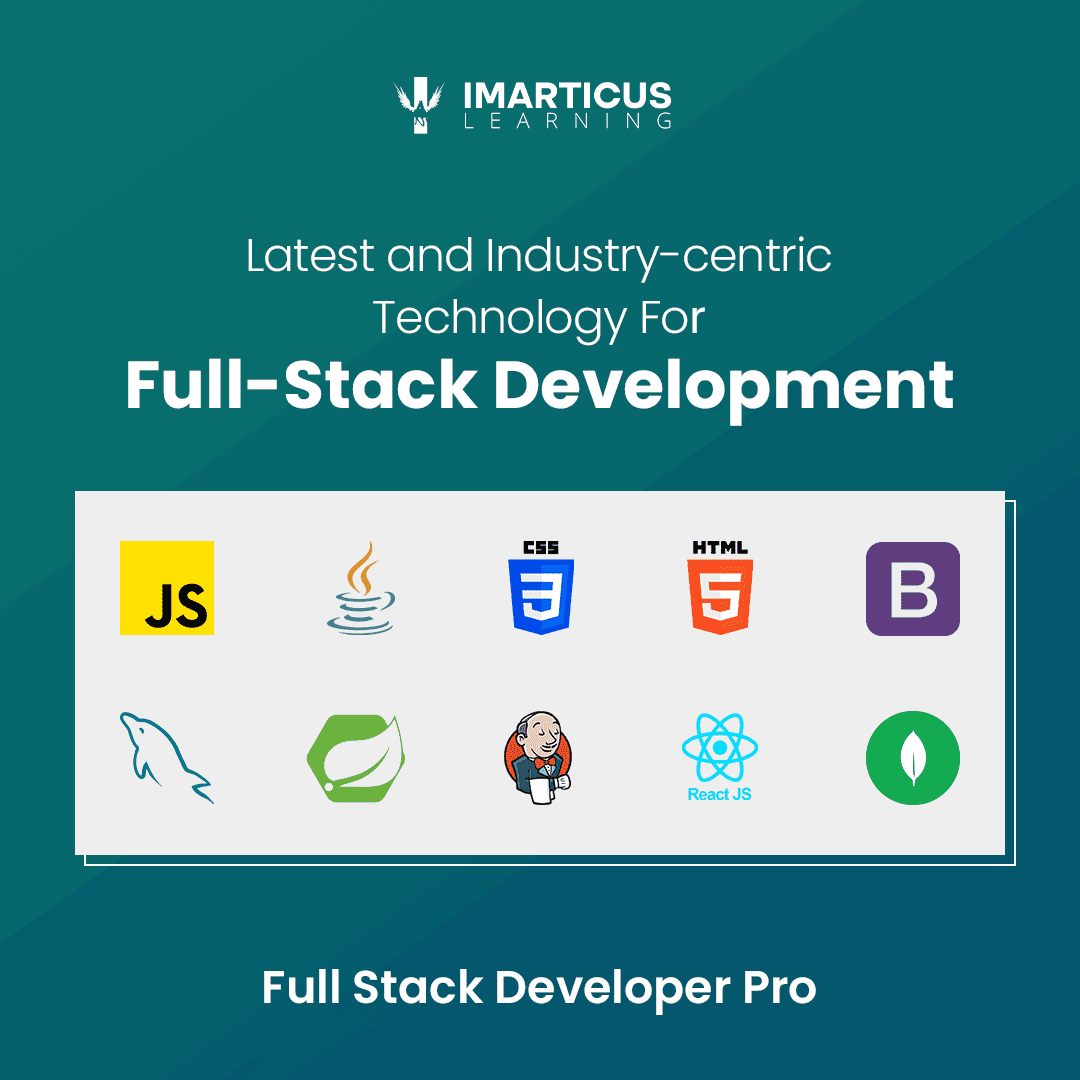
  • Establish a solid foundation in data structures while learning popular tools like Java, Spring, MongoDB, JavaScript, React, Docker, and Jenkins. 
  • Students can now participate in coding competitions run by our community project Skillenza to solve challenging business issues and stand out on resumes.

Top 5 DevOps Tools that are trending in 2023

Are you in search of top DevOps tools that are trending in 2023? Then you are at the right place. Read on to know more.

DevOps is a set of practices that combines development (Dev) and operations management (Ops) to streamline software and technology processes. It involves a collaborative effort between developers, operations teams, quality assurance and more, to ensure that your company has processes that are efficient and scalable.

To do this, it’s important to have the right set of tools in your company’s arsenal. Without the right tools, you may have great ideas, but that doesn’t always guarantee the most optimised results. So save yourself the trouble of trial and error and take a look at the top DevOps tools of 2023.

The top 5 DevOps tools of 2023

As DevOps is becoming an increasingly lucrative field for young professionals, there are also a host of new tools that are cropping up by the minute! Here, we’ve rounded up the top 5 DevOps tools of 2023.

Jenkins

Jenkins is one of the world’s leading open-source DevOps tools. The tool provides a wide range of plugins that will help DevOps developers build, deploy and automate any project.

It is a versatile tool that lets DevOps developers create and run tests on software code. It’s been around since 2004, originally as a Java program but it was later expanded to include support for other programs like Python and Ruby.

Chef

Chef integrates with a wide variety of other tools and services, making it an excellent choice for DevOps teams. Its flexibility and scalability make it suitable for a wide range of organizations, from small startups to large enterprises.

With Chef, you can customise the infrastructure: specifying which software should be installed, how it should be configured and how it should be maintained over time. Chef makes it easy to manage the entire infrastructure as code, which can be version-controlled, tested and deployed like any other software application.

Puppet

This is another open-source DevOps tool that is designed to simplify the configuration and maintenance of servers and applications across many platforms. It has a wide range of pre-built modules and plugins for automating common tasks—which makes it a great tool for ensuring consistency and accuracy even at the earliest stages. It also allows you to customise your infrastructure with modules as and when you need it.

Puppet is popular in large-scale IT environments and is particularly well-suited for managing complex, distributed systems.

Ansible

Like Puppet, Ansible is an open-source tool that focuses on simplifying the deployment and management of infrastructure by automating repetitive tasks. It uses YAML-based language to describe automation tasks, which makes it easy to understand and maintain. But what’s cool about Ansible is that it is agentless, meaning you don’t have to install any additional software on your system.

The tool is also incredibly versatile and can be used in a wide range of environments, from small-scale single-server setups to large-scale enterprise environments.

Git

Git is a highly popular tool among developers and DevOps teams. One of the best things about it is that it allows multiple developers to work on the same project simultaneously, without interfering with each other’s work. Git enables teams to track changes made to the code, collaborate effectively and revert to previous versions if needed.

This tool is also popular among DevOps developers because it’s easy to use, flexible, and it’s compatible with a wide range of platforms and operating systems.

What top tool should your DevOps team use?

Full Stack Developer Course

New DevOps tools come around every day and the market has far too many to count. It’s incredibly important that you use the DevOps tool that’s right for your purpose. So do the due diligence, and give ample time and trial to a tool before you commit to it.

It’s also equally, if not more, important to keep yourself up-to-date with the market’s trends and news. One way to update yourself with new information is to keep tabs on online resources like Imarticus Learning’s comprehensive Full Stack Developer’s Program to see how the discipline is evolving and the tools that are used as well.

We hope this list of the top 5 DevOps tools of 2023 gives you a headstart in finding the DevOps tool that’s perfect for you. Good luck!

A detailed overview of server-side programming

The world of programming is vast and growing every day. New languages are being created. New technologies are being invented, and new ways to make money as a programmer are being developed.

But, there are still some basic things that every programmer needs to know. One of these is server-side programming. Many people think you must do all programming on the client side—the browser—but this isn’t true.

In this article, we will cover what server side programming is and why it’s important for developers; then, we will go over some tips for setting up your environment before writing code using various languages such as PHP. Hopefully, you’ll feel confident about tackling these tasks by the end!  

Understanding Server-Side Programming 

Sessions, essentially a mechanism that enables a server to store data on the current user of a site and send various responses based on that information, allow developers to use server-side programming.

Server-side languages are generally more powerful than client-side languages because they don’t rely on the browser for processing. As such, you can use them to create databases or integrate them with other software.

Setting Up Your Environment

Setting up your local server environment is the first step to learning server-side programming. This will involve installing and configuring a piece of software called XAMPP, the backbone of your local development environment.

  • What is a Server?

Many of the functions that servers can offer are called “services,” such as performing computation for a client or sharing data or resources among many clients. Both a single client and a single server can accommodate multiple clients. 

A client process can run on a single device or connect to a server running on a different device over a network. Examples of common servers are database servers, web servers, game servers, file servers, mail servers, print servers, and application servers. 

The request-response model is typically used to implement (and is frequently associated with) client-server systems: a client also sends a request to the server, which acts upon it, and sends a response back to the client, typically along with a result or acknowledgment. 

When a computer is referred to as “server-class hardware,” it implies that it is optimized for hosting servers. This frequently implies that it is more capable and dependable than typical personal computers. Still, large computing clusters may instead be made up of a large number of interchangeable, relatively simple server components.

  • What Is A Local Server Environment?

For most developers, a local server is essential. It also permits local machine testing and development without worrying about losing an Internet connection, unintentionally opening up temporary security gaps, or continuously uploading files.

The options for setting up a local server are listed below. They can be divided into configured for a virtualized environment and those natively running installations for a particular OS (Linux, macOS, or Windows) (for example, Virtualbox or Docker). In either case, you must have a PHP server, a database server (such as MySQL, MariaDB, or PostgreSQL), and a web server (such as Apache or Nginx).

Building Server-Side Applications

Server-side applications are often more complex than client-side applications. Building a server-side application from scratch can be complicated and require understanding multiple technologies. 

The most common languages used in server-side programming include Java, PHP, Python, and Ruby. Each has pros and cons that make them suitable for different tasks. 

Data handling is a crucial component of server-side programming. Working with databases, which are used to store and organize massive amounts of information, is required for this. APIs (application programming interfaces) are common for server-side applications to exchange data with other servers or services.

Server side programming also entails creating and putting into place security protocols to safeguard the server and the data kept on it. This entails implementing user authentication and access control, using encryption to secure data transmissions, and keeping the server updated with security patches.

Explore a Career in full stack development with Imarticus Learning.

Our Full Stack Web Development certification course will teach students database architecture and algorithms. During this six-month full-stack developer online course, students will learn data structure algorithms and the technical facets of front-end and back-end programming. 

Course Benefits for Learners:

  • As part of our career services, we offer resume writing, profile improvement, workshops to help students prepare for interviews, and one-on-one career counseling.
  • While learning well-known tools like Java, Spring, MongoDB, JavaScript, React, Docker, and Jenkins, lay a strong foundation in data structures.
  • With the help of our community project Skillenza, students can now compete in coding challenges to solve complex business problems and stand out on resumes.

Information security – Its principles and types

Cyber-attacks are becoming more frequent and advanced. Information security (IS) is important for organisations of all sizes and industries. As a result, there is a growing demand for professionals who can work in this field. Thus, a career as a cybersecurity analyst is rewarding.

What is Information Security?

cybersecurity course

IS refers to the practices used to protect digital data. There are many ways to protect digital data. The most important is to have a system in place that can prevent data loss. One way to do this is by using a backup system. Another way to protect data is to encrypt it. Finally, security measures should be in place. This will allow data access only to authorised users.

Principles of Information Security

The principles of IS provide a framework for protecting digital data. The three main principles of IS are:

1. Confidentiality

It ensures that sensitive details are only accessible to authorised individuals or entities. Confidentiality measures include password protection, encryption and access controls.

Password protection limits data access using unique passwords or passphrases

Encryption transforms data into an unreadable format for authorised users only.

Access controls can be physical (e.g., biometric scanners) or digital (e.g., passwords)

2. Integrity

It refers to ensuring that data remains accurate and complete throughout its lifecycle. Measures to ensure data integrity include backups, version control and checksums.

Backups restore lost data.

Version control tracks file changes and enables reversion to previous versions.

Checksums ensure data integrity by generating a unique value based on content.

3. Availability

This ensures access to data only to authorised individuals when needed. Measures to ensure data availability include redundant systems, backups and disaster recovery planning.

Redundant systems are backups that can replace the primary system if it fails.

Disaster recovery planning involves restoring data and systems after an unexpected event like a natural disaster or cyber-attack.

Types of Information Security

IS is a vast field that includes many practices and techniques to protect digital data. There are several types of IS. Some of the most common types include:

1. Network Security

Network security is the practice of securing a computer network from unauthorised access, attacks or misuse.

This includes the implementation of firewalls, intrusion detection systems and virtual private networks. It provides protection against cyber-attacks and other malicious activities.

2. Application Security

It is the practice of securing software applications and computer programmes from unauthorised access, misuse or modification.

This type of security includes authentication and authorisation measures, encryption and secure coding practices to prevent cyber-attacks.

3. Cloud Security

It is the practice of securing data, applications and infrastructure hosted on cloud-based platforms.

This type of security includes the implementation of access controls, data encryption and network security measures. This secures and protects cloud-based services from cyber threats.

4. Physical Security

It includes securing physical assets, including computer systems, data centres and other critical infrastructure.

This type of security includes the use of physical access controls to prevent unauthorised access to sensitive areas. Examples include locks, security cameras and biometric scanners.

5. Operational Security

Operational security is the practice of managing security risks in daily operations.

It includes the development of security policies and procedures, employee training and incident response planning. It minimises and addresses security risks on time.

6. Disaster Recovery/Business Continuity

These practices minimise the impact of unexpected events, such as natural disasters or cyber-attacks, on business operations.

This type of security includes the development of contingency plans, backup systems and other measures. It ensures the recovery of critical data and systems in the event of a disaster.

Career as a Cybersecurity Analyst

Cybersecurity analysts identify and mitigate cyber threats. They conduct risk assessments and apply security measures. To pursue a career as a cybersecurity analyst, you should have a degree in computer science, information technology or a related field. You can also pursue training options, including IIT information security courses or cybersecurity courses with placement.

Take the Next Step

Information security is crucial for protecting digital data from theft and damage. The principles of confidentiality, integrity and availability provide a framework for protecting digital data.

Pursuing a career as a cybersecurity analyst is a promising career option due to the increasing demand for IS professionals. The IIT information security courses offered by Imarticus Learning can provide you necessary skills and knowledge for a successful career in IS.

CEC, IIT Roorkee and industry leaders have designed the curriculum of these cybersecurity courses with placement. The programme will teach you the most popular security tools and skills.

Imarticus Learning is a leading ed-tech platform for upskilling young professionals. We have several courses in subjects such as finance, analytics, technology and business administration.

Best programming languages used for data structures and algorithms

Data structures and algorithms are the heart of any application. As a developer, you must know which programming language to use when creating these structures and algorithms.

Programming languages have been evolving at a fast pace. Today we have various programming languages, and new language is always being introduced. But which programming language should you pick? 

Not all programming languages are equal, and not all are suitable for every task. Before you start learning a new language, it’s important to consider what kind of applications you’ll be building with it.

Full Stack Developer Course

Programming skills are crucial in today’s quickly advancing technology, especially if you want to work as a successful software developer or data scientist. However, choosing which programming language to concentrate on can be overwhelming, given the abundance of options.

To help you choose which programming language to learn, we’ll look at some of the most popular ones in this blog post.

Java

Java is a class-based, high-level, object-oriented programming language that aims to have as few implementation dependencies as possible. Because Java is a general-purpose programming language, compiled Java code doesn’t need to be recompiled to run on any platform that supports Java.

Writing once and running anywhere is what this is (WORA). Java applications are also typically compiled to bytecode on Java virtual machine, regardless of the underlying computer architecture (JVM). Although Java has fewer low-level facilities than C or C++, it has syntax similar to both. 

Unlike most traditional compiled languages, the Java runtime offers dynamic capabilities (like reflection and runtime code modification). 2019 saw Java as one of the most widely used languages.

Python

Python is a well-liked general-purpose programming language for data science because it is simple to learn and use. It is also known for its power and flexibility, making it possible for you to create complex applications in no time at all!

Python was not traditionally used for data structures or algorithms. But now Python is more widely used in the sector. You can use it in any coding interview to address the issues with the DS Algo. Python is a good option if you want to become a web developer or a data science specialist.

If you are learning a different language for your desired job role instead of C++, Java, or Python, you can use that language to solve data structure and algorithmic problems. Today, most employers let you conduct your coding interviews in any language you choose. But every company always prefers C++, Java, and Python.

C

Being at the other end of the spectrum from Python, C is a fantastic alternative. You must consider factors like pointers, static typing, and memory management (garbage collecting) because the language is syntactically much more complex. However, using C has the benefit of allowing for a lower-level understanding of algorithms and data structures.

More importantly, C lacks abstract data types like lists, queues, and other built-in functions. You will therefore need to construct it yourself. This can help you understand and know more about these subjects.

JavaScript

Along with HTML and CSS, the programming language known as JavaScript, or JS, is one of the foundational elements of the World Wide Web. 98% of websites will use JavaScript on the client side for webpage behavior by 2022, frequently integrating third-party libraries.

C++

An all-purpose programming language is C++. In almost all coding interviews, you can use C++ to solve problems based on data structures and algorithms. Although not as simple as Python, C++ is not a very difficult programming language. So you can learn how to implement data structures and algorithms using C++.

So, there you have it—the top programming languages for data structures and algorithms. Even though languages evolve, one thing always remains true: these languages can assist you in solving any issue without requiring you to focus on syntax or learn how to code.

Learn Full stack Development Certification with Imarticus Learning.

Our data structures and algorithms certification course will teach students database architecture and algorithms. During this six-month full stack developer online course, students will learn data structure algorithms and the technical facets of front-end and back-end programming.

Course Benefits for Learners:

  • As part of our career services, we offer resume writing, profile improvement, workshops to help students prepare for interviews, and one-on-one career counseling.
  • While learning well-known tools like Java, Spring, MongoDB, JavaScript, React, Docker, and Jenkins,  lay a strong foundation in data structures.
  • With the help of our community project Skillenza, students can now compete in coding challenges to solve complex business problems and stand out on resumes.

 Contact us through the chat support system, or visit one of our training centers in Mumbai, Thane, Pune, Chennai, Bengaluru, Delhi, Gurgaon, or Ahmedabad.

What is distributive law in FSD

In the Formal Language and Automata Theory (FSD) field, distributive law is a mathematical principle that states the distribution of a single operation over multiple operands. In FSD, distributive law is crucial in manipulating and simplifying expressions and languages, especially in finite state automata and regular expressions.

For instance, distributive law can simplify complex expressions and make them more manageable in the context of regular expressions. The distributive property of regular expressions states that a single operation, such as the union (|) operator, can be distributed over multiple operands, such as the concatenation (.) operator.  The use of distributive law makes it possible to simplify the regular expressions and build a finite state automaton that recognizes the language defined by the expression.

Introduction to the distributive law

Introduction to distributive law is a critical aspect of mathematics that has far-reaching implications in various fields, including computer science and engineering. The distributive law states that a single operation can be distributed over multiple operands, resulting in a more simplified and manageable expression.

Take, for instance, the expression “3(x + y).” According to the distributive law, we can simplify this expression by distributing the “3” over the two operands “x” and “y.” This gives us “3x + 3y,” which is much easier to work with.

Another example is the distributive property of regular expressions. In computer science, regular expressions describe patterns in strings of characters. You can apply distributive law to simplify complex expressions and make them more manageable. For instance, the regular expression “(a|b)a” can be simplified to “an (a|b)” using the distributive law.

Properties of distributive law in FSD

The properties of distributive law in Formal Language and Automata Theory (FSD) are essential concepts that describe the behavior of distributive law in this field. 

The following are the critical properties of distributive law in FSD:

  • Commutativity: This property states that the order of the operands does not affect the result of the operation. 
  • Associativity: This property states that the way the operands are grouped does not affect the result of the operation. 
  • Distributivity: This property states that you can use the distributive law to distribute a single operation over multiple operands.

These properties are crucial in FSD as they describe the behavior of the distributive law in this field and make it possible to simplify complex expressions and manipulate languages consistently and predictably. Understanding and utilizing these properties is essential for anyone working in FSD, from students to professionals.

Applications of distributive law in FSD

The distributive law has several critical applications in Formal Language and Automata Theory (FSD), which studies formal languages and finite automata. 

The following are some of the essential applications of distributive law in FSD:

  • Simplification of complex expressions: The distributive law can simplify complex expressions in FSD, especially in the context of regular expressions. The distributive law allows for the distribution of a single operation over multiple operands, making it possible to simplify complex expressions and make them more manageable.
  • Construction of finite state automata: The distributive law is used to construct finite state automata from regular expressions. By applying the distributive law, it is possible to simplify the regular expressions and build a finite state automaton that recognizes the language defined by the expression.
  • Solving problems related to automata and formal languages: The distributive law is a powerful tool that you can use to solve problems related to finite state automata and formal languages. For example, it can get used to determine the equivalence of two regular expressions or to simplify a regular expression that describes a language.

Understanding and utilizing distributive law is essential for solving problems related to formal languages and finite automata and for a deeper understanding of language theory.

Learn data structures and algorithms with Imarticus Learning.

Through our Full Stack Developer online course, students will learn database architecture and algorithms. During this six-month full stack developer certification, students will learn data structure algorithms and the technical facets of front-end and 

back-end programming.

Course Benefits for Learners:

  • We provide resume writing, profile improvement, workshops to help students prepare for interviews, and one-on-one career counseling as part of our career services.
  • Establish a solid foundation in data structures while learning popular tools like Java, Spring, MongoDB, JavaScript, React, Docker, and Jenkins.
  • Students can now participate in coding competitions run by our community project Skillenza to solve challenging business issues and stand out on resumes.

Benefits of getting trained as a cyber security analyst

Cybersecurity has become an increasingly important aspect of our digital lives. As we rely more & more on technology for our personal & professional needs, the risk of cyber attacks continues to grow. Cybersecurity analysts are professionals highly skilled in identifying and mitigating cyber threats. They protect systems by identifying potential problems, such as breaches or vulnerabilities, before they can be exploited by malicious hackers.

cybersecurity course

The benefits of getting trained as a cybersecurity analyst are numerous. Not only does it offer a highly rewarding career path with job security, but it also provides individuals with the skills & knowledge to protect themselves & their organizations from cyber threats. This blog explores the benefits of getting trained as a cybersecurity analyst in more detail, including increased demand for cybersecurity experts, opportunities for career advancement, enhanced skills & knowledge, and improved job security.

Let’s take a closer look at the advantages you will enjoy when you become a cyber-security analyst.

Increased demand for cyber security analysts

As our world becomes more digitally interconnected, the threat of cyber attacks continues to rise. From individual hackers to organized crime syndicates and state-sponsored cyber warfare, the need for cybersecurity professionals has never been greater. This has led to a significant increase in demand for cybersecurity analysts across various industries. The field is projected to grow 31% from 2019 to 2029, offering lucrative salaries averaging over $100,000 annually. Pursuing training as a cybersecurity analyst not only provides a rewarding career path but also makes a vital contribution to safeguarding sensitive information & systems from cyber attacks. 

Opportunities for career advancement

Training as a cybersecurity analyst can lead to opportunities for career advancement within the field. Cybersecurity threats are growing in frequency and complexity, increasing the demand for skilled professionals who can identify and mitigate these threats. This demand has created various career paths, such as CISO, Security Consultant, and Information Security Analyst. Pursuing ongoing education & training can further enhance skills and knowledge, leading to more opportunities for growth and advancement. By staying up-to-date with the latest trends & technologies, cybersecurity analysts can remain effective in their roles & continuously improve their skills.

Enhanced skills & knowledge

Training as a cybersecurity analyst provides individuals with valuable skills such as threat analysis, incident response, vulnerability management & risk assessment. These skills can be applied not only in the field of cybersecurity but also in related fields such as IT & business. In the IT field, cybersecurity skills can assist in managing and maintaining the security of IT systems, networks, and applications. In the business world, cyber security skills are essential for ensuring sensitive information security & developing and implementing security policies & procedures. These skills are in high demand across different industries, making cyber security training a valuable investment.

Improved job security 

Training as a cybersecurity analyst can improve job security due to the high demand for qualified professionals in the field. Cyber-security is a growing concern for businesses & organizations of all sizes, and the need for dedicated professionals to protect sensitive information is greater than ever. With the increase in cyber threats and attacks, organizations are willing to invest in qualified cybersecurity professionals to ensure the security of their digital assets.

In addition, cybersecurity is a continuously evolving field, and individuals who undergo training and education in this field are better equipped to stay up-to-date with the latest trends and technologies. This ongoing education and training can lead to better job performance & increased job security as companies seek to maintain their cybersecurity posture.

Overall, being trained as a cybersecurity analyst can improve job security due to the growing demand for qualified professionals in the field and the critical importance of cybersecurity in businesses & organizations.

Kickstart Your Career in Cybersecurity with Imarticus Learning

If you wish to pursue a career in cybersecurity & becoming an expert in digital defense, then look no further than Imarticus Learning’s IIM Lucknow certificate courses. With this capital market certification course, you’ll join the ranks of professionals working as penetration testers, subject matter experts, analysts, incident handlers, or SOC team members. The course provides the knowledge & skills required for success in today’s tech-savvy world, giving you the ticket to becoming a cybersecurity celebrity.

Here are the benefits of the course for learners:

  • Prepare for a career in Finance with our cyber security course with placement.
  • Our instructors provide rigorous SOC team training & teach essential problem-solving techniques, helping you become a cybersecurity analyst.
  • Our cyber security training course covers the fundamentals of security practices, techniques, tools & tactics and comes with a job interview guarantee.