What are the Careers in Banking and Finance?

A career in the banking & finance industry is life goals for many aspirants who want to make it big in life. Given the crucial nature of the job, it is held in high regards by many and invites a lot of competition. There are plenty of job roles in the banking and finance domain that require carried skills sets and a degree of specialization.

A common trait in the jobs offered by banks and financial institutions is that it’s highly rewarding but requires more dedication and time to succeed in the domain. The job roles also require you to have a certain level of technical understanding that you can achieve by opting for banking and finance courses. Let’s delve deeper into some of the key job roles that you can go for in the banking and finance segment.

Financial Analyst

One of the most promising career options in the finance sector is the role of a financial analyst. The main role of a financial analyst is to collect vital data, perform analysis and derive conclusions based on their findings. You will have to do an analysis of the company’s financial performance and also evaluate the competitor’s financial standing. Financial analysts are required to identify market trends and challenges that might arise in the future. They need to provide a solution to the problems identified in the analysis. It requires robust analytical skills and good financial acumen to succeed.

Accountant

The role of an accountant is probably one of the most common ones in the finance industry as almost all businesses require an accountant to manage their day-to-day finances. It is one of the mainstream career choices preferred by finance and commerce graduates.

They are required to evaluate the company’s taxes, analyses the balance sheet and other financial statements like cash flow, profit and loss, etc. Accountants are also required to prepare the budget and detect fraudulent transactions. You can also progress to the field of forensic accounting, chartered accountancy and tax consultancy after gaining experience as an accountant.

Trader/Stockbroker

The role of a stockbroker is to buy and sell stocks on various stock exchanges. A stockbroker can either work for himself or for a reputed finance firm that provides trading and related services. Other than stocks professional brokers can also trade in other financial instruments such as bonds, commodities, etc. It is important to know that it requires dedication and long hours to be successful as a trader or a stockbroker.

It can be very challenging and initially, you won’t have a desired work-life balance given the fast nature of the trades that take place daily depending upon the market fluctuations. It requires you to be a workaholic and self-disciplined.

Management Consultants

The role of a management consultant is very dynamic and requires you to have a proper understanding of the industries that you are targeting. It has a very broad spectrum and covers a range of things including performance evaluation and maximizing profits for businesses. The role of a management consultant is highly rewarding as you can earn a lot more than just your annual salaries. You need to have problem-solving and good communication skills to succeed in this field. Also, a master’s degree is a requirement by most companies who hire management consultants.

Business Analyst

The roles and responsibilities of a business analyst are very similar to that of a financial analyst. They are required to do comprehensive industry analysis and identify the challenges related to the business’s operations and technology. They act as a connecting link between the business and technology department of the organization.
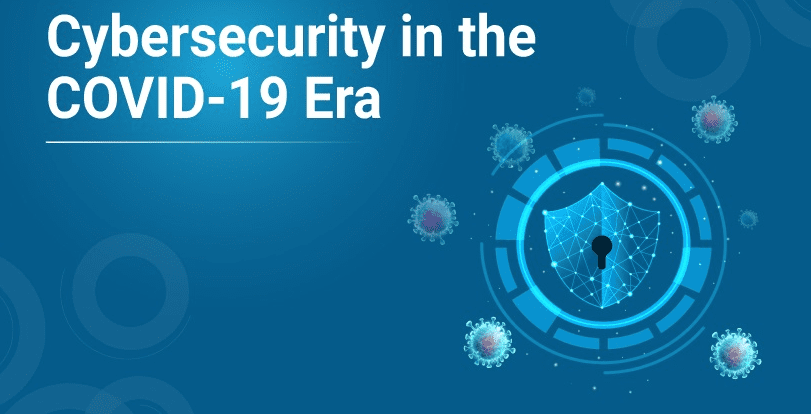

Thoughts on Cybersecurity in The COVID-19 Era!

It is not possible to name one sector that has not been affected by the Covid-19 epidemic. Around the world, sectors including cybersecurity have taken massive hits in how they perform. A clear sign of this is the growing number of cybersecurity cases involving online fraud, scams, and phishing.

Let’s take a brief look at how the Covid-19 outbreak has affected the world of cybersecurity.

Growing Number of Cyber Issues

Earlier in 2020, someone decided to sell the Statue of Unity online. Then there were attempts to dupe people who were trying to donate to the PM Cares fund. This was done by using fake UPI handles and extorting money from unsuspecting givers.

In India, cyber financial crime is not a new topic. But the uptick in the number of such cases is something to be noted. As more and more people quarantine themselves and try to work from home, there has been a rise in online transactions. Whether it is to pay phone bills or to buy essential groceries. This sudden shift to online transactions (more than what it was in the pre-covid era) has given rise to this uptick.

People around the world are in a state of desperation and anxiety, which fraudsters take advantage of. So, for many people, while transacting online, there is a lack of extra attention that they would have otherwise paid.

Government to the Rescue

Most of these cyber cases are a result of lack of caution on the part of the user. However, the government and its associated bodies are scrambling to further contain this increase in cyber attacks.

According to Medianama, the Indian central government has made sure that certain sectors get heightened security in this period. This is to prevent them from falling victims to online fraud or hijacking, which can further have a negative impact on normal life in the country.

These sectors are transport, government, telecom, financial services, power and energy, and strategic and public enterprises.

Combining Public and Private

The epidemic has also shifted the attention to the ongoing debate of public and private companies working together. Private organizations have the resources to help public companies prevent cyber abuse. This is in the form of VPNs and other advanced cyber machinery that can help weed out fraudsters from even entering a system.

As is known that small preventive steps can help avoid huge cyber disasters, naysayers are also finally accepting the idea of a possible collaboration between the public and the private.

Importance of Cyber Knowledge

One thing that has come to the centre of the discussion is that such situations reinforce the idea of how important basic cybersecurity knowledge is. It is up to each user to exercise caution while transacting online.

It can be as simple as setting different passwords across platforms, not responding to fake or fake-looking messages, and limiting the use of online payment methods. A bit of supervision in these activities can help avoid disasters.

Cybersecurity is one of the most vulnerable sectors in this age of corona virus. It is our collective responsibility to prevent it from harming the already-bleeding economy.

What is Credit Risk Modelling?

Credit risk modelling is a financial concept where models are created to calculate the chances of a borrower defaulting on his credit repayment. An example is an individual who has taken a credit card in his name; the risk model will speculate if and how he will default on the monthly card payments. And if he does, the total amount that he owes and the total loss to the lender is also calculated.

The use of this type of models that are created using historical data to gauge the probability of a credit default is known as credit risk modelling. It is an important resource for banks and financial institutions to check the credit holding capacity of individuals and businesses. The goal is to prevent losses.

How Does Credit Risk Modelling Define Borrowers?

A risk model essentially divides customers (borrowers) into two types:

Bad borrower

  • Has defaulted their payments several times over a short period of time
  • Has filed for bankruptcy
  • Last payment was more than 90 days ago
  • Associated accounts being inactive

Good borrower
Anyone who does not fall under the ‘bad borrower’ category is placed here
It should be noted that this classification is general in nature. Different organizations have different credit risk models. In some cases, the calculation mechanism of the models can also differ.

How Does It Work?
Credit risk modelling uses two methods to estimate the probability of a defaulting. Here they are:
In Judgmental Method, several factors defining the borrower are assessed. These also help in creating credit scores.

  • Credit history of the borrower
  • The difference of assets and liabilities of the borrower
  • Presence and value of the collateral such as property or gold
  • External factors such as recession
  • Borrower’s sources of income

Credit professionals look at these parameters to get an idea about the borrower. If none of the parameters yields a positive rating, the credit is usually denied.

On the other hand, in the Statistical Method, as the name suggests, statistics and historical data are used to conclude the credit capacity of a borrower. The advantage of this method is that it does not include the factor of bias in its calculation. Borrowers can be sure that they got an unbiased assessment.

Sources of Data for Credit Risk Modelling

Since it is not possible to collect data on a case-by-case basis, organizations depend on a variety of sources for this task. There are three main sources of data in this type of modelling:

  • Demographic – Personal details that are easy to collect as the borrower will furnish them during application (loan or credit card)
  • Individual History – The historical data about that specific borrower will be collected through partner agencies. If the borrower already has another account in the bank, this data and associated behaviour are also used
  • Credit Bureau – Credit score and other details are sourced from a central database

Credit risk modelling helps banks and financial institutions keep their money lending processes in check. It is one of the most reliable methods to prevent fraud.

Also Read: What is Credit Risk Management

What’s a Bitcoin and How Does it Work?

The 21st century witnessed one of the most revolutionary inventions in the form of blockchain technology. It’s perceived to be almost as radical as the internet technology that changed the way we live. One of the most popular uses of this ground-breaking technology is in the form of cryptocurrencies like Bitcoin. Let’s delve deeper into the subject to understand what is Bitcoin and how does it work,

Understanding Bitcoin

What is Bitcoin? This is a frequently asked question by people who want to understand and invest in this exponentially growing asset. Bitcoin is a popular cryptocurrency that has no central backing and is used in the peer to peer Bitcoin network. In simpler terms, it can be understood as a digital currency that is not represented by a central authority and doesn’t require any intermediary to function.

This means that there would be no transaction charges or fees what so ever. Bitcoin was officially launched as open-source software in 2009. It is among the world’s largest crypto-currencies when valued using the market capitalisation.

The aim of using Bitcoin is to remove all the intermediaries that exist and adds to the financial burden of common individuals. Also, the absence of a central authority makes it more transparent and less regulated. The underlying technology behind cryptocurrencies like Bitcoin is known as the Blockchain technology. Blockchain can be simply understood as a decentralised digital ledger that records transaction which can’t be altered later or manipulated by any one individual.

Any new entry will be visible to all the peers in the network, reducing the chances of fraud altogether. The use of cryptographic hashing and decentralisation is the key highlight for blockchain technology as it helps to create a more transparent system reducing the dependence on the intermediaries and chances of corruption.

Just to give you an analogy, think of the blockchain ledger as a shared spreadsheet. Any changes made to the spreadsheet is visible to all the people who have access to the spreadsheet, the same is the case with blockchain.

How Blockchain Works

Fiat currencies are issued as a legal tender and are backed by the central government; this includes the normal currencies that exchange hands daily like the US Dollar, Euro, Yen, Rupee, etc. Unlike a fiat currency, the Bitcoin doesn’t have a physical presence rather it is mined digitally and kept on a distributed digital ledger that multiple people in the network have access to. Bitcoin has very low and almost nil transaction fees, the present online transaction methods charge a good percentage of the transaction as a fee.

Bitcoin uses peer-to-peer technology and facilitates instant transactions using the network. The Bitcoin network has individuals and companies that own the governing computing power, it is comprised of miners. So who are the miners? Well, miners are people who help to process transactions on the blockchain, they are compensated using rewards and transaction charges paid in Bitcoin.

They are a decentralised authority who manages the reputation of the Bitcoin network. Using the Bitcoin mining process, the cryptocurrency is released into circulation.

Mining requires discovering new blocks by solving difficult puzzles, these blocks are added to the blockchain. One Bitcoin can be divided to a maximum of 8 decimal places; this smallest unit is called a Satoshi based on the mysterious founder of this revolutionary crypto-currency. You can Bitcoin using a credit card, bank account or cash, it will be transferred to your Bitcoin wallet and you can then use it to make a purchase or sell an item using the Bitcoin as an exchange medium. Every transaction is recorded in a digitally distributed blockchain ledger to maintain accountability.

Use of Machine Learning in Social Cause!

Watch Vinay Borhade, Founder and Director of AIQuest Solutions(LLP), Former Sr. Manager-Bank of America discusses how Machine Learning is used in Social Causes today. He goes into detail and shares some examples of its uses in water crisis, climatology, renewable energy, crisis management, and health nutrition.

Imarticus Learning is India’s leading professional education institute, offering certified industry-endorsed training in Financial Services, Investment Banking, Business Analysis, IT, Business Analytics & Wealth Management.

To know more about the course, please visit here – https://bit.ly/2N6yO0d

Website: https://imarticus.org/

Facebook: https://bit.ly/2y6UjKW

Twitter: https://bit.ly/2J11llx

LinkedIn: https://bit.ly/2xwSoPM

Applications of Analytic Used in Ecom & Social Media Sites – #KnowledgeBytes | Imarticus Learning

This Imarticus Learning video explains the Applications of Analytics. Amazon is one of the examples of applications of analytics. This video describes how Amazon has mastered the art of cross-selling by giving product recommendations on the right pages. This is possible because of the data analysis. Facebook is another example of analytics.

Facebook applies analytics to customize the notifications that the users receive. EA and Zynga from the gaming industry are other examples of the application of analytics. Another important application of analytics is the FICO credit score. Email spam filtering, which is a need for email applications, also uses analytics to give their users a better experience.

Check our complete #ImarticusPrograms playlist here: https://bit.ly/2JP52hM Subscribe to our channel to get video updates.

To know more about Data Analytics Certification, please visit here – https://imarticus.org/post-graduate-program-in-data-analytics/?utm_source=youtube&utm_medium=organic&utm_campaigntype=youtube

Why Imarticus?

Imarticus Learning offers a comprehensive range of professional Financial Services and Analytics programs that are designed to cater to an aspiring group of professionals who want a tailored program on making them career ready.

Our programs are driven by a constant need to be job relevant and stimulating, taking into consideration the dynamic nature of the Financial Services and Analytics market, and are taught by world-class professionals with specific domain expertise.

Headquartered in Mumbai, Imarticus has classroom and online delivery capabilities across India with dedicated centers located at Mumbai, Bangalore, Chennai, Pune, Hyderabad, Coimbatore, and Delhi.

For more information, please write back to us at info@imarticus.org Call us at IN: 1-800-267-7679 (toll-free)

Website: https://imarticus.org/

Facebook: https://bit.ly/2y6UjKW

Twitter: https://bit.ly/2J11llx

LinkedIn: https://bit.ly/2xwSoPM

Imarticus Learning – How Data Science is Helping to Transform Different Businesses

Did you know that many football clubs now use advanced analytics to identify rising talent and undervalued players? Watch this video as Ritu Sekhon – Analytics Consultant explains how data science is helping transform different businesses Imarticus Learning is India’s leading professional education institute, offering certified industry-endorsed training in Financial Services, Investment Banking, Business Analysis, IT, Business Analytics & Wealth Management. To know more about the course, please visit here – https://bit.ly/2Swd9ka Website: https://imarticus.org/ Facebook: https://bit.ly/2y6UjKW Twitter: https://bit.ly/2J11llx LinkedIn: https://bit.ly/2xwSoPM

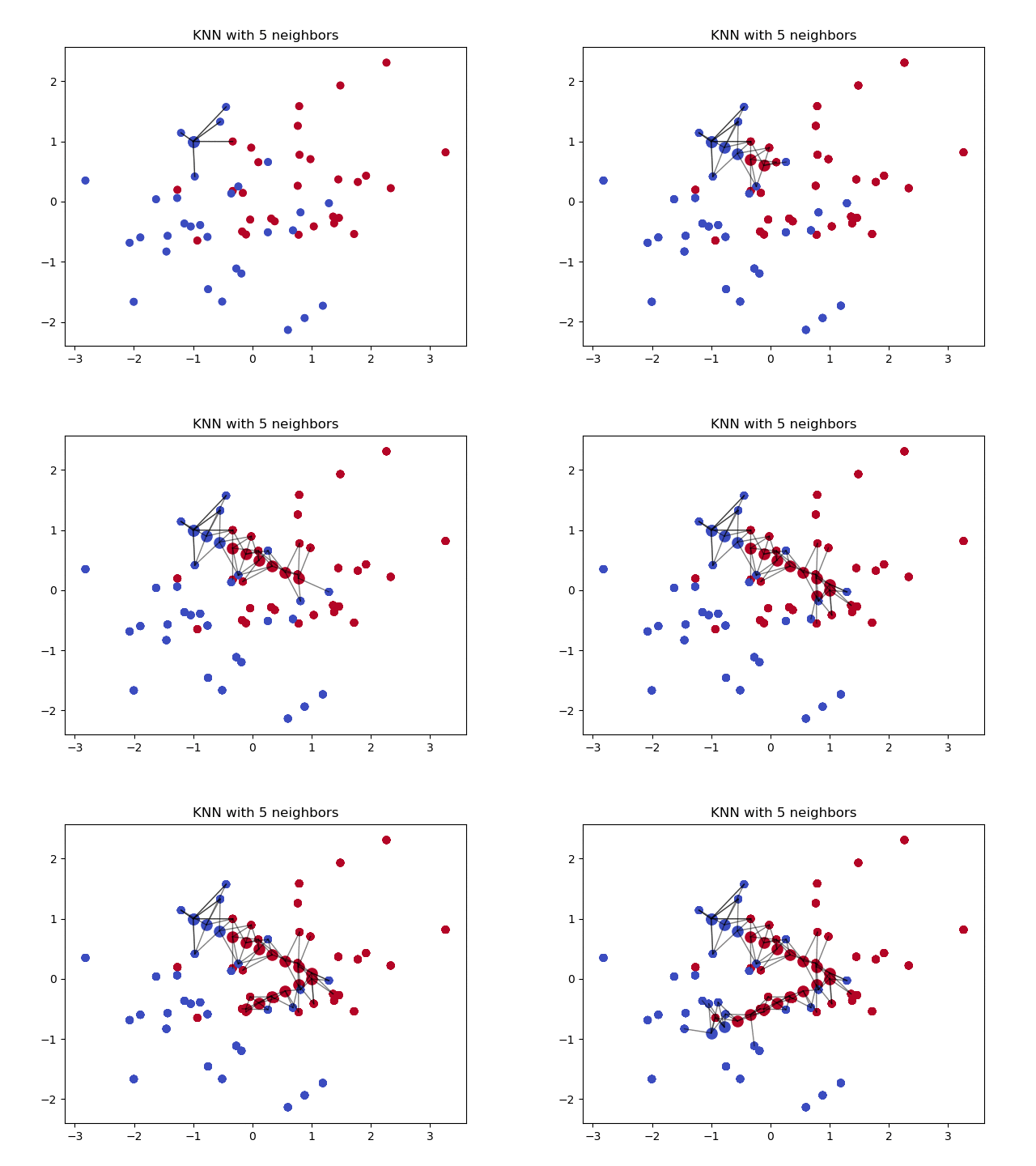
Imarticus Learning – Introduction to KNN

Watch Ritu Sekhon, Analytics consultant and trainer give an introduction to KNN (K Nearest Neighbour) and explain why we should use smaller data sets. Imarticus Learning is India’s leading professional education institute, offering certified industry-endorsed training in Financial Services, Investment Banking, Business Analysis, IT, Business Analytics & Wealth Management.

To know more about Post Graduate Program in Data Analytics, please visit here – https://bit.ly/2uKzLE0

Website: https://imarticus.org/

Facebook: https://bit.ly/2y6UjKW

Twitter: https://bit.ly/2J11llx

LinkedIn: https://bit.ly/2xwSoPM

Imarticus Learning – Introduction To Linear Regression

Watch Vinay Borhade Senior Manager ITS-Bank of America, giving an introduction about Linear Regression and how it used in Machine Learning. Imarticus Learning is India’s leading professional education institute, offering certified industry-endorsed training in Financial Services, Investment Banking, Business Analysis, IT, Business Analytics & Wealth Management.

To know more about Post Graduate Program in Data Analytics, please visit here –

https://imarticus.org/post-graduate-program-in-data-analytics/

Website: https://imarticus.org/

Facebook: https://bit.ly/2y6UjKW

Twitter: https://bit.ly/2J11llx

LinkedIn: https://bit.ly/2xwSoPM

Imarticus Learning – Introduction To Non-Linear Regression

Watch Vinay Borhade Senior Manager ITS-Bank of America, giving an introduction about non-linear regression and how it used in Machine Learning. Imarticus Learning is India’s leading professional education institute, offering certified industry-endorsed training in Financial Services, Investment Banking, Business Analysis, IT, Business Analytics & Wealth Management.

To know more about Post Graduate Program in Data Analytics, please visit here –

https://imarticus.org/post-graduate-program-in-data-analytics/

Website: https://imarticus.org/

Facebook: https://bit.ly/2y6UjKW

Twitter: https://bit.ly/2J11llx

LinkedIn: https://bit.ly/2xwSoPM