Have you ever spent months on a project or course, only to feel unsure halfway through, but kept going because you already put in time or money?
Many professionals in India find it difficult to cut losses or shift paths because of what they’ve already invested. Whether it’s your career path, business investment, or even a daily work decision, making the right call is tough when your past efforts cloud your judgment.
That twist of abandoning what you’ve poured effort into? That’s where the sunk cost comes in. And its smarter sibling? Opportunity cost.
In this blog, we’ll break down what holds people back, what you might be missing out on, and how the smartest decision-makers think differently, especially if you’re aiming to become a Chief Operating Officer or take up a leadership role.
What is opportunity cost?
In microeconomics, opportunity cost means the value of the best alternative you give up when you must choose between different options, all competing for limited resources.
Many people confuse the terms or treat them the same. But they work differently.
Sunk Cost: It’s gone. Whether it’s money, time, or energy, you can’t get it back.
Opportunity Cost: It’s what you’re giving up when you pick one choice over another.
Ask yourself: “If I continue this, what am I missing out on?” That’s the real question.
Understanding what is opportunity cost lets you shift from emotion-based choices to result-driven thinking.
Why People Hold Onto Sunk Costs (Even When It Hurts)
People hate to waste. That’s a natural bias. You’ve spent money on a degree or time building a role. Even when better options show up, you stick around. The loss feels personal.
For example:
You joined a certification course but hate it now. Still continuing?
You hired a team member who isn’t working out. Afraid to let them go?
In both cases, you are making choices based on what you’ve already spent, not what could benefit you now.
That’s where smart COOs and leaders pause. They look ahead, not behind. You must, too.
How Opportunity Cost Changes Decision-Making
Imagine you’re choosing between staying in your current job or applying to a leadership programme. On the surface, your current job feels safe. However, the opportunity cost is the missed chance to build new leadership skills and grow into a Chief Operating Officer role.
Opportunity cost example:
Choice
Short-Term Gain
Long-Term Miss (Opportunity Cost)
Stay in the same job.
Stability, no risk
Miss promotion, low salary growth
Enrol in a leadership programme
Learning investment
High-level roles, better pay, COO path
Knowing your opportunity cost makes the trade-off clear. You’re not just saying “no” to something. You’re choosing what really matters.
Where: FO is the return from the best option you didn’t choose (foregone option) CO is the return from the option you chose (current option)
You calculate the difference between what you could have earned and what you actually chose.
Let’s break it down with an example. Say you have two choices.
Option A: You invest your money in the stock market, hoping to earn capital gains. Option B: You reinvest the same amount into your own business to buy new equipment that boosts production efficiency. This would cut down your operational costs and increase your profit margins.
If you go with Option B, the opportunity cost is the potential return you missed from the stock market. By doing this calculation, you make decisions based on logic, not just assumptions.
Where You See These Costs in Everyday Work
Let’s break this down with daily scenarios.
Project decisions:
Sticking with a failing project because it’s halfway done? Sunk cost trap.
Dropping it to focus on a better opportunity? Smart move. That’s you considering opportunity cost.
Career shifts:
Holding onto an old role that isn’t aligned with your growth?
Moving into a learning programme (like the Imarticus Learning COO course) can open higher-level paths.
Resource allocation:
Keeping money in a marketing channel that’s not working?
That budget could deliver better results elsewhere. Always ask: what’s the opportunity cost?
When to Let Go: 5 Signals You Should Not Ignore
No growth in current role for over a year
New skills are needed, but you’re not learning
Better opportunities show up, but you hesitate
You feel stuck even when things are “stable.”
The gut says move on, but your mind says, “But I already spent so much.”
If you see 3 or more signs, pause. Reflect. You might be stuck in a sunk cost mindset.
Comparing the Two: Quick Summary Table
Aspect
Sunk Cost
Opportunity Cost
Definition
Past expense, can’t recover
Future gain you give up
Focus
What you’ve already spent
What you could be getting
Emotion involved
Regret, guilt
FOMO, curiosity
Smart approach
Acknowledge, move on
Evaluate, choose better
Smart leaders don’t just plan. They re-evaluate. They choose ROI over regret. They learn fast and pivot faster, especially in operations where time, money, and resources are tight.
To become a Chief Operating Officer, you must master this mindset. Stop justifying old choices. Start choosing based on what adds value today and tomorrow.
Step Into the Role of a COO with Real-World Business Learning
This intensive 6-month learning experience, created by IIM Nagpur and delivered through Imarticus Learning, helps you lead from the front.
It combines strategic modules, leadership case studies, and direct sessions with top operational heads. You’ll also have campus sessions to meet peers and faculty face-to-face, plus personalised Chamber Consulting.
From process improvement to people management, this programme gives you the hands-on knowledge to operate like a COO from day one. And yes, it ends with a prestigious certificate from IIM Nagpur.
Learn directly from seasoned COOs in India.
Deep dive into operational strategy, process optimisation, and supply chain leadership
GetConsulting from IIM Nagpur faculty and join global peers on campus.
Whether you’re transitioning into operations or already leading a team, this 6-month programme gives you real-world case learning, industry access, and a recognised certificate to build your COO journey.
Enrol now and reshape your future with Imarticus Learning!
FAQ
1. What is opportunity cost? It’s what you give up when you choose one thing over another.
2. Can you give an opportunity cost example in career growth? Choosing to stay in a low-growth job instead of joining a leadership course.
3. Why do people fall into the sunk cost trap? Because they don’t want their past efforts to feel wasted.
4. How do leaders make decisions using opportunity cost? They compare long-term benefits, not past expenses.
5. Why is it important to understand the difference between sunk and opportunity costs? It helps you avoid bad decisions and focus on future gains.
6. Is sunk cost always bad? No, but continuing just because of it often leads to poor outcomes.
7. What course should I take to become a Chief Operating Officer? The Global Senior Executive Leadership Programme Chief Operating Officer by Imarticus Learning is a top choice.
Have you ever felt like your organisation is always one step behind when it comes to identifying risks?
You’re not alone. Most Indian enterprises today still treat risk management like a compliance checklist, not a business enabler. But that outdated thinking could be costing you far more than you realise.
The more unpredictable the world gets, be it due to cyber threats, regulatory changes, or supply chain disruptions, the clearer it becomes that without a robust risk management framework, businesses will stay reactive instead of proactive.
Many finance leaders, especially those eyeing the C-suite, feel stuck juggling short-term operational needs with long-term risk foresight. If you’re one of them, and if you’re trying to balance control, agility, and accountability, you need a modern approach that integrates operational risk management frameworks with strategic decision-making.
Why Do Old Risk Management Frameworks No Longer Work?
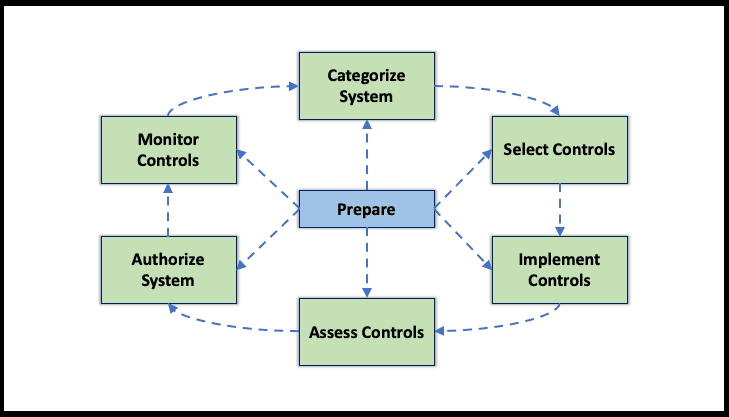
The Risk Management Framework (RMF) outlines a structured approach set by the United States government to manage risk and secure information systems, including computers and networks.
Managing a risk management framework requires ongoing effort. It involves reviewing and categorising security risks, selecting suitable controls, and carrying out regular updates.
In many Indian companies, risk is still something you ‘report’ after it happens. But modern businesses need something smarter.
Traditional systems often:
Focus only on financial or regulatory risks.
Lack of integration across departments.
Miss emerging threats like tech or reputational risks.
What you need instead is a risk management framework that adapts. One that acts as a radar system across your business, constantly scanning for internal and external risks. Enterprises that adopt this mindset manage crises better and even turn risks into strategic wins.
Components of a Modern Risk Management Framework
Think of your enterprise risk management setup as a living system, not a static process.
India’s GDP grew by 8.2% in FY24, showing strong resilience. However, growth slowed to 5.4% in Q2 of FY25, exposing some economic vulnerabilities. Looking ahead, GDP grew between 6.5% and 7%, driven largely by steady performance in the industrial and service sectors.
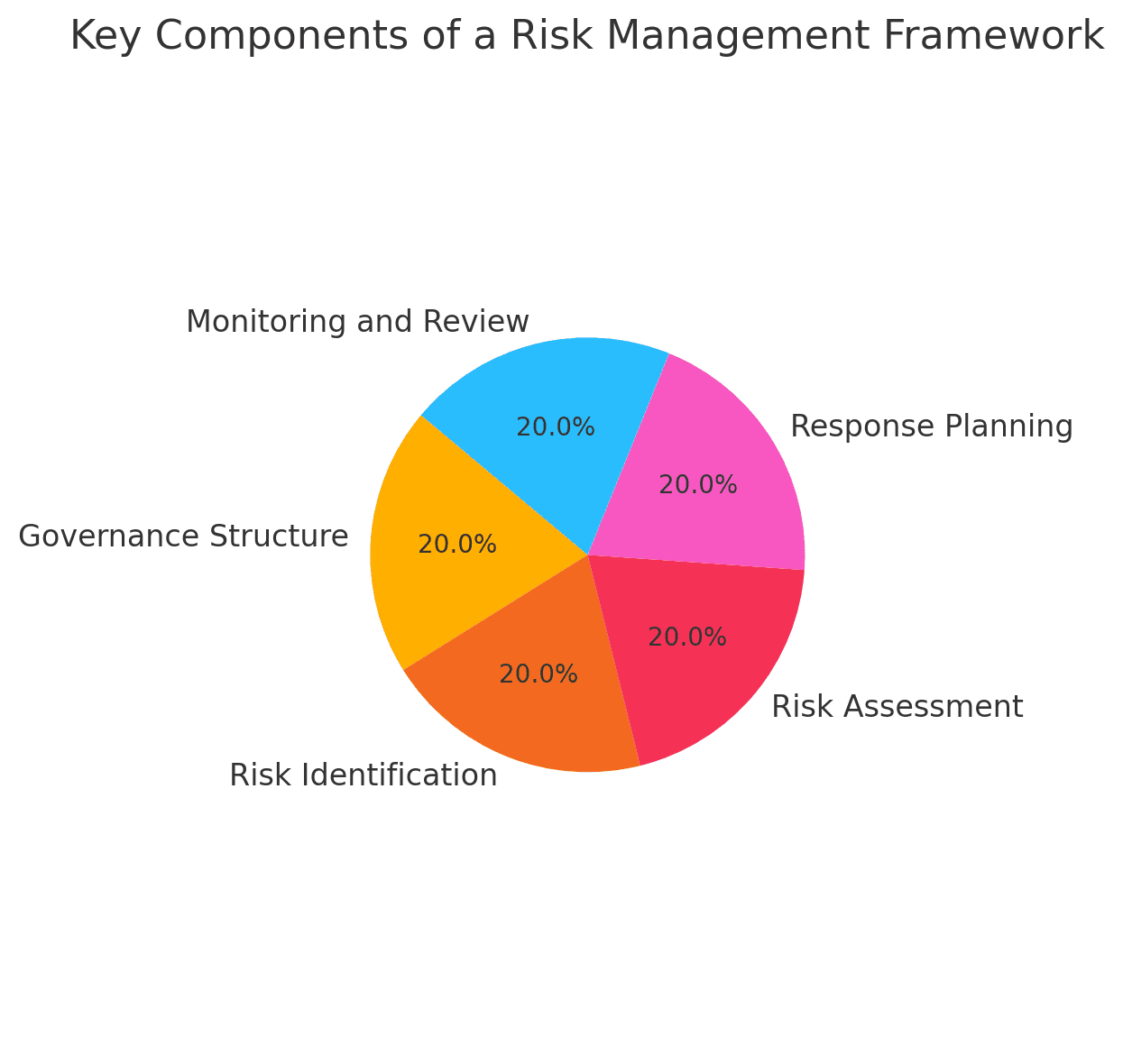
A good framework should include:
Governance Structure: Who owns risk in your company? This must be clearly defined.
Risk Identification: Regular workshops, industry reports, and employee feedback.
Risk Assessment: Assigning impact and likelihood ratings.
Response Planning: Control strategies (avoid, mitigate, accept, transfer).
Monitoring and Review: Dashboards, audits, regular board updates.
These parts work better when embedded into daily operations. Not just reviewed during the board meeting.
From Reactive to Proactive: Operational Risk Management in Action
So, how does an operational risk management framework actually help?
Let’s take a mid-sized manufacturing firm. A single quality failure in production can impact reputation, compliance, and revenue. If they’ve only documented these risks once a year, they’re stuck reacting.
However, if their operations team feeds weekly performance data into a central dashboard, trends become visible. A smart dashboard raises alerts if failure rates rise. That’s proactive. It’s about catching signals early and acting.
Here’s how it should ideally look:
Function
Example of Proactive Risk Trigger
Response Plan
Supply Chain
Delay in Tier-2 vendor shipments
Switch to an alternate vendor
Compliance
Change in RBI notification
Internal circular + training
Finance
Cash burn rate above 15% in Q1
Expense review + CFO call
Technology
Patch not applied to core ERP system
IT alert + fix timeline
That’s an operational risk management framework in action that is not on paper.
Why CFOs Must Lead the Enterprise Risk Agenda
CFOs aren’t just finance heads anymore. They’re the change agents. With more data flowing through finance teams than any other department, CFOs are best placed to:
Connect financial risks to operational triggers.
Forecast and quantify impact clearly.
Influence strategic decisions at the board level.
This is where a modern enterprise risk management model shines. It lets CFOs see beyond spreadsheets to people, processes, and technology gaps that could become risks tomorrow.
For finance leaders aiming for the next level, registering in a CFO course that teaches integrated risk thinking is the smart move. You don’t just manage money; you manage uncertainty.
Embedding Risk Culture Across Teams
A framework will fail without the right culture. Everyone from interns to CXO must feel they have a role in managing risk. How do you embed this?
Train line managers to spot and report risk.
Reward teams that surface potential threats early.
Make risk data visible through dashboards and weekly briefings.
When people across levels treat risk as shared accountability, you build a muscle that grows stronger over time. Your risk management framework becomes self-correcting.
Metrics That Matter in Risk Monitoring
Fancy models don’t mean much without feedback. Leading enterprises use indicators that tell them if their operational risk management framework is actually working.
Key metrics include:
Frequency of incident reporting across teams.
Time from risk detection to mitigation.
Number of risk exceptions closed per quarter.
Accuracy of risk forecasting vs. actual events.
These indicators help track maturity and flag weak areas before something breaks.
Take the Lead in Financial Strategy with Imarticus Learning
If you’re a finance professional aiming for strategic leadership, this is your sign to take the next step.
Imarticus Learning’s Chief Financial Officer Programme, in collaboration with the Indian School of Business, prepares you for the evolving expectations of CFOs.
This 8-month hybrid programme blends expert-led classes with hands-on leadership coaching. You’ll gain exposure to risk strategy, digital finance, stakeholder communication, and ethical leadership, which are everything needed to transition from a finance controller to a boardroom voice.
This 8-month blended programme is for professionals preparing to step into or already working in CFO roles. You will learn to think beyond day-to-day operations and start leading with foresight.
The curriculum covers the latest in enterprise strategy, corporate finance, digital transformation, stakeholder management, and enterprise risk management. It’s more than theory; you’ll work on real-world case studies, attend leadership coaching sessions, and gain direct exposure to what today’s boardrooms expect.
What sets this CFO course apart is its blend of online learning with campus immersion. You’ll engage with top ISB faculty, many of whom actively contribute to policy-making and industry innovation. This experience doesn’t just build technical skills. It strengthens your ability to lead through uncertainty and influence business outcomes at the highest level.
The programme also brings together CXOs and finance heads from across industries, giving you a strong network of peers. Whether you’re transitioning into the C-suite or looking to upgrade your leadership toolkit, this is your chance to build that edge.
Imarticus Learning has built this CFO course to support leaders like you, those who want to take charge of strategy, risk, and performance.
Explore the ISB Chief Financial Officer Programme and see how it aligns with your next big move!
FAQ
1. What is a risk management framework in an enterprise? A structured process involves identifying, assessing, and responding to risks that could affect business outcomes.
2. Why should CFOs understand risk management frameworks? Because they connect financial health with risk exposure, helping drive better decisions.
3. How does a CFO course help in implementing risk frameworks? It trains finance leaders in strategic planning, governance, and risk thinking.
4. Is enterprise risk management only for large companies? No. Even small and mid-sized firms need it for resilience and agility.
5. Can risk frameworks predict risks accurately? Not always, but they help reduce blind spots and prepare faster responses.
6. How often should a company review its risk framework? Ideally, it should be quarterly or after any major event/shift in business.
Are delays, returns, and lost sales hurting your brand’s success?
You are not alone. Many businesses struggle with scattered supply lines, unclear goals, or outdated systems. When your distribution management falls apart, it directly affects revenue, customer satisfaction, and team performance.
If you’ve felt stuck with poor fulfilment, missed targets, or rising logistics costs, you’re likely missing one crucial element: a modern, well-defined distribution strategy.
We will walk you through how effective distribution management can turn your business into a growth engine. From clear frameworks to practical tools, this is the roadmap sales and operations teams across India have sought.
Why Distribution Management Needs a Reboot
The world has changed. Today’s customers want fast delivery, transparent updates, and no excuses. Traditional sales and distribution management systems cannot cope with multiple fulfilment points, hybrid retail models, or demand-driven inventories.
A Distribution Management System (DMS) forms a set of applications that efficiently and reliably check and control electric power distribution networks. It supports control room and field personnel by helping them watch and manage the electric distribution system.
Here’s what businesses are facing:
Delivery timelines that keep slipping
Warehouse stockouts or overstock
No single source of truth for logistics
Fragmented communication between sales and operations
Instead of treating it as a backend task, distribution management should be a boardroom discussion. If done right, it enables not just delivery but growth.
How a Strong Distribution Strategy Impacts Sales
When distribution works, sales rise. It’s that simple.
The advanced distribution management system market has grown rapidly in recent years. It will increase from $2.53 billion in 2024 to $3 billion in 2025, reflecting a compound annual growth rate (CAGR) of 18.8%.
This growth during the historic period stems from the need to improve grid reliability and efficiency, the expansion of distributed energy resources (DERs), the adoption of smart grid technologies, the rise in renewable energy integration, and a strong focus on grid modernisation.
A good distribution strategy allows you to:
Serve the right product to the right location at the right time
Reduce sales team complaints about fulfilment issues
Bring predictability in dispatch and restocking
Forecast sales better with tighter operational alignment
It’s the glue between your warehouse and your revenue goals. Businesses that align distribution with market demand grow faster and respond quicker to competition.
Challenges That Hurt Distribution Performance
Distribution management is not about trucks and deliveries.
Problems can start from the boardroom and trickle down:
Lack of clear territory planning
Absence of centralised order tracking
Poor integration between ERP and warehouse tools
No training for frontline sales in the distribution processes
Even the best sales teams will fail if the fulfilment backend is weak.
Comparing Traditional vs Modern Distribution Models
Parameter
Traditional Model
Modern Model
Order Tracking
Manual or spreadsheet-based
Real-time, software-led
Inventory Updates
Delayed
Livestock visibility
Route Planning
Fixed, regardless of demand
Dynamic, based on customer zones
Returns Handling
Manual and delayed
Automated workflows with faster turnaround
Sales Forecasting
Gut-based
Data and market-trend-based
Aligning Sales and Distribution Management
To see real growth, your sales and distribution management teams must be in sync. How can you do this?
Create a shared dashboard – Sales and logistics should work from the same data.
Define clear SLAs – Service Level Agreements must be clear for sales, delivery, and support teams.
Upskill your sales force – Make sure they understand inventory systems, returns, and routing basics.
Connect CRM with logistics – Real-time customer info must reflect inventory and dispatch status.
This cross-team alignment reduces delays and boosts team productivity.
How Technology Is Changing Distribution Management
New-age businesses are using digital tools to scale faster. If you’re not using tech in your distribution strategy, you are already behind.
Cloud-based inventory management helps track every unit across locations.
AI-based demand forecasting reduces wastage and improves stock planning.
Mobile apps for delivery personnel improve accountability and proof of delivery.
Integration tools connect CRM, ERP, and WMS in one place.
Automation brings efficiency. Data brings decisions. Together, they fuel growth.
How to Build a Practical Distribution Strategy
Every brand needs its own version of a smart distribution strategy.
Start here:
Map your full supply chain, end to end.
Identify bottlenecks and recurring breakdowns.
Segment your products and geographies based on demand.
Choose tech tools that match your current and future scale.
Regularly train your people, not just on systems, but on the why behind them.
Good strategies are not theoretical; they work on the ground.
Why Your Marketing Courses Must Include Distribution
Too many marketing courses skip the operational side. But marketing and distribution go hand in hand.
After all:
What’s the point of a great campaign if the product is out of stock?
How can you offer a “next-day delivery” promise without warehouse visibility?
What’s the ROI on ads if fulfilment delays lead to cancelled orders?
A marketing course that also teaches sales and distribution management sets you up for leadership roles, not just campaigns.
Build the Future of Business with Imarticus Learning
This six-month immersive programme gives you the tools to:
Build actionable distribution strategies
Align marketing, sales, and operations
Gain real-world learning through case-led modules
Learn directly from global CBOs and seasoned business leaders
Whether you want to optimise your supply chain or shape a high-growth team, this programme elevates your leadership capabilities. You’ll also benefit from peer networking, international immersions, and IIM Nagpur’s expert chamber consulting sessions.
Take the next step toward becoming a future-ready business leader.
Enrol in the Global Senior Executive Leadership Programme – Chief Business Officer today!
Frequently Asked Questions
1. What is distribution management in simple words? It means planning, controlling, and tracking how goods move from the manufacturer to the customer.
2. Why is the distribution strategy important for business growth? A good strategy helps get products to customers faster, cheaper, and without issues.
3. How are sales and distribution management connected? Sales teams bring in orders, and distribution fulfils them. Both must work together.
4. Can marketing courses teach about distribution? Yes, some advanced marketing courses now include modules on logistics and fulfilment.
5. What are the top tools used in distribution management today? ERP software, warehouse systems, mobile tracking apps, and AI-based demand planners.
6. What challenges are common in poor distribution systems? Missed deliveries, wrong inventory, low customer satisfaction, and higher costs.
7. Is the Imarticus Learning course good for learning about business operations? Yes, it helps future Chief Business Officers understand strategy, distribution, and leadership.
8. Who should take up the Global Senior Executive Leadership Programme – CBO? Mid to senior-level professionals aiming for CBO or business strategy roles.
Leadership Development Training: Why It’s Critical for Executives
Executive Management Skills: How a General Management Programme Benefits
General Management Certification: A Career Stepping Stone
Strategic Decision-Making: The Heart of Business Leadership
Business Leadership Program: Essential Elements for Success
Corporate Leadership Training: Building Future-Ready Leaders
Management Skills for Executives: Closing the Gap Between Strategy and Execution
Advantages of a General Management Programme (Table)
Conclusion
Introduction
Think about being at the head of an organisation and making choices about its future and facilitating teams to achieve success and promote innovation. Leadership is not solely about managing people; it is about vision, strategy, and flexibility. Nevertheless, great leaders are not born; great leaders are made. This is where a General Management Programme becomes essential. Whether you’re an experienced executive enhancing your executive management capabilities or an emerging leader preparing for a larger role – joining a business leadership programme can be a big step towards professional development! In a competitive marketplace & an increasingly dynamic business landscape, professionals need formal education in effective decision making. We will reflect on the ways in which this program can help you harness your leadership power, develop your decision-making skills, and enhance career advancement strategies to help you with decision-making speed and effectiveness.
Understanding a General Management Programme
A General Management Programme (GMP) is an executive-level, intensive learning opportunity to build upon and increase management skills for executives. GMP includes foundational leadership principles, strategic decision-making, and business operations to aid professionals in addressing ambiguous and challenging business situations confidently. GMP is designed to narrow the chasm between information learnt through classic leadership practices and the requirements of a modern business environment. The GMP offered experiential learning, a global perspective, and exposure to industry insights. Participants gain valuable management knowledge through content-based presentations by business experts, and opportunities to engage in the learning environment with their peers.
Who is it for?
Mid-to-senior level managers seeking to make a transition into leadership roles.
Entrepreneurs looking to sharpen their strategic vision & operate more efficiently.
Managers looking to build a complete understanding of business functions so they can make better business decisions.
Professionals wanting to build an expansive knowledge of international business & a solid network.
Leadership Development Training: Why It’s Critical for Executives
In the fast-paced business world of today, leadership is not merely a designation—it’s a duty. Leadership development training provides professionals with:
The skills to motivate and lead teams effectively through communication, motivation, and vision.
Strengthened problem-solving & conflict-resolution abilities to effectively address organisational difficulties.
A richer insight into organisational behaviour & culture that leads to more effective change management and business advancement.
Heightened self-awareness & emotional intelligence that allows leaders to address stress, nurture teamwork and establish a high-performing workplace culture.
The chance to develop critical mentoring and coaching skills to support the development of emerging leaders within the organisation.
Executive Management Skills: Why a General Management Programme Makes a Difference
A General Management Programme enhances executive management skills by:
Offering practical business case studies to study challenging business issues and determine solutions.
Fostering strategic thinking and creative problem-solving – enabling executives to make sound decisions under pressure.
Developing communication & negotiation skill sets, which are appropriate for good leadership and stakeholder management.
Providing financial literacy, allowing professionals to – read financial statements, budgets, or plans for investment.
Giving access to data-based decision-making so leaders can utilise analytics & insights from data to enable business performance improvement.
General Management Certification: A Stepping Stone to Career Growth
Obtaining a general management certification proves your dedication to ongoing learning. It:
Verifies your business and leadership knowledge, indicating your capability to manage intricate management positions successfully.
Increases your career and income opportunities by making you a highly skilled executive in the workplace.
Grants exposure to a solid professional network, providing chances to get in touch with industry leaders and influential mentors.
Gains credibility in your organisation, putting you at the top of lists for promotions and leadership roles.
Enables you to remain one step ahead of changing business trends, with skills that remain contemporary and responsive to shifting market trends.
Strategic Decision-Making: The Key to Business Leadership
Strategic decision-making is perhaps the most important part of leadership. A General Management Programme imparts:
Data-driven decision-making skills enabling leaders to examine business scenarios in an objective and logical manner and create effective strategies.
Risk assessment and mitigation plans to equip businesses with market fluctuations, competition, and unexpected challenges.
Scenario planning for uncertain business landscapes, allowing leaders to create forward-looking instead of reactive strategies.
The skill to reconcile short-term objectives with long-term business sustainability, ensuring sustained success and profitability.
Methods to create innovation and promote creative problem-solving among teams, resulting in breakthrough business strategies.
Business Leadership Program: Key Elements for Success
A world-class business leadership programme emphasises:
Financial and operational management, allowing executives to maximise resources and fuel business growth.
Global business trends and market dynamics, enabling leaders to remain ahead in a more connected world.
Leadership ethics and corporate governance, emphasising the value of responsible leadership and decision-making.
Change management strategies that prepare executives to lead organisations through change effectively.
Hands-on experiential learning, such as simulations and real-world projects, that equip professionals for actual business challenges.
Delegation and utilisation of resources to be done effectively, enabling the leaders to drive maximum team output and performance.
Improved collaboration and performance at the team level due to enhanced leadership and interpersonal relationship skills.
Effective manoeuvring of change in the organisation to ensure transition during business expansions, mergers, or restructurings.
Better customer-focused strategies that allow businesses to better manage customer experiences and company reputation.
An outcome-based approach to leadership that aligns corporate goals with performance measures.
Advantages of a General Management Programme
Benefit
Description
Career Growth
Provides opportunities for senior leadership roles.
Strategic Thinking
Enables leaders to make decisions through frameworks.
Networking Opportunities
Connects you with industry experts.
Hands-on Learning
Provides real-world case studies and simulations.
Global Perspective
Entails international business trends.
Key Takeaways
A General Management Programme is a potent tool for leadership development.
It develops executive management skills and strategic decision-making.
General management certification improves career opportunities.
Practice-based learning using real-world case studies is given importance through programmes.
FAQs
1. How long is a General Management Programme?
A majority of the programmes take from a few weeks to several months, depending on the course format and institution.
2. Who is the General Management Programme designed for?
Professionals at a mid-senior level, entrepreneurs, and managers who want to develop their leadership and strategic decision-making capabilities.
3. How does leadership development training support executive professionals?
A leadership development programme will help build important leadership capabilities that include team management, decision-making, and problem-solving capabilities.
4. What are the advantages of general management certification?
Provides credible validation of expertise, improves professional opportunities, and establishes networks of professional networks.
5. How does corporate leadership training prepare professionals for top roles?
It improves crisis management, emotional intelligence, and strategic planning capabilities.
6. Does strategic decision-making form a central part of a General Management Programme?
Yes, it offers blueprints for making value-driven, high-impact business decisions.
7. Does a business leadership programme enhance financial management skills?
Yes! Such programmes typically feature financial strategy, budgeting, and risk management.
8. Which industries are most benefitted by management skills for executives?
Finance, technology, healthcare, and consulting industries benefit the most.
9. Are online General Management Programmes as effective as classroom programmes?
Yes, they are!
Most online courses provide flexibility, interactive learning, and relevant industry content.
10. How do I select the appropriate General Management Programme?
Look at accreditation, faculty qualifications, relevance of curriculum, and industry endorsement.
Conclusion
Leadership is an acquired competency that requires ongoing discipline and flexibility. A general management program provides the tools, knowledge, and network required to perform well in executive leadership. If you are hoping to refine your style of leadership, elevate your strategic thought, or elevate your career to its upper echelon, taking an active engagement with business leadership is most likely the best way to go about it. Engaging in structured executive education supports professional competency building that provides readiness, the accumulation of actionable knowledge and the application of that knowledge for success in today’s complex world of business.
Data Visualization in Excel: Bringing Data to Life
Excel Formulas for Data Analytics: Essential Functions
Best Excel Course for Data Analysts: How to Choose?
Excel Data Cleaning and Transformation: Preparing Data for Analysis
Career Prospects After Mastering Excel for Data Analytics
FAQs
Why Excel is Crucial for Data Analytics
Just ponder: you have at your hands a gigantic dataset; your boss wants the analysis done before the end of the day. Panic, or open Excel with confidence that you know how to play and display data? If you choose the latter, congratulations! You’re on your way to the data craft.
What caused data analysis tremors in this wonderful world nowadays are modern tools like Python, R, and SQL while Excel was still the way!? All the way from startups to Fortune 500 companies, Excel is among professionals worldwide. And Excel is being used for such things as analyzing and reporting data, as well as making a decision or reporting decisions. A course in structured data analytics that focuses on Excel may offer you the right depth of knowledge for a growth-filled career in data analysis.
What You’ll Learn in a Data Analytics Course
A properly designed data analytics course will equip you with Excel analytics expertise. Here’s a summary of major skills you’ll acquire:
Excel Fundamentals & Navigation – Master spreadsheet organisation, functions, and shortcuts to work effectively.
Data Cleaning & Transformation – Process dirty data effectively, maintaining accuracy in analysis.
Advanced Excel Skills – Master PivotTables, Power Query, and macros for powerful data manipulation.
Data Visualization using Excel – Design engaging charts and dashboards to effectively present insights.
Statistical Analysis & Forecasting – Utilise Excel functions to perform predictive modelling and trend analysis.
Excel Automation using VBA – Discover how to automate routine tasks, making workflow more efficient.
A complete data analytics course provides students with both theoretical and practical knowledge, making them job-ready in the competitive analytics market.
Excel for Data Analysis: Key Concepts
Excel is full of features that make it a powerful tool for data analytics. Let’s discuss some of the basic concepts:
Concept
Description
Data Cleaning
Removing duplicates, handling missing values, and transforming data
Sorting & Filtering
Organizing large datasets efficiently
PivotTables
Summarizing and analyzing large data quickly
Conditional Formatting
Highlighting important insights visually
Power Query
Automating data imports and transformations
Expert Excel Skills for Data Analysis
After you’re comfortable with the fundamentals, it’s time to explore more advanced Excel skills that can turbocharge your data analytics. These expert skills enable analysts to work with larger data sets, increase precision, and boost decision-making.
Power Pivot for Data Modelling – Work with giant data sets without breaking a sweat, creating relational models.
Goal Seek & Solver – Maximise business strategies by determining the optimal solutions to specified constraints.
These Excel power skills enable data analysts to make informed insights, process automation, and make effective inputs to business intelligence and decision-making.
Data Visualization in Excel: Making Data Pop
Numbers can tell a tale, but visualization makes it persuasive. Data visualization in Excel allows raw numbers to be translated into insightful observations to make findings communication-friendly.
Bar & Column Charts – Easily compare values for varying categories.
Pie Charts – Display proportions and patterns of distribution in a simple-to-interpret format.
Scatter Plots & Trend Lines – Reveal relationships between variables and monitor changes over time.
Heat Maps & Conditional Formatting – Dynamically highlight patterns and anomalies in datasets.
Dashboards with PivotTables & Slicers – Display multiple interactive insights in one view.
Waterfall & Funnel Charts – Break down financial data and customer conversion metrics.
Histogram & Pareto Charts – Understand frequency distributions and prioritise business strategies.
Data visualization in Excel allows analysts to translate complex data into actionable insights, helping businesses make informed decisions based on trends and patterns.
Excel Formulas for Data Analytics: Essential Functions
Excel offers a wide range of functions crucial for data analysis. Here are some must-know Excel formulas for data analytics:
Function
Usage
VLOOKUP & HLOOKUP
Search for values in datasets
INDEX & MATCH
More powerful alternative to VLOOKUP
IF & Nested IF
Perform logical tests
SUMIF & COUNTIF
Summarize data based on conditions
TEXT & DATE Functions
Manipulate text and dates effectively
Top Excel Course for Data Analysts: How to Decide?
With so many options out there, it can be confusing to choose the best Excel course for data analysts. The course should not only teach theoretical knowledge but also offer practical learning sessions. Here’s what to look for:
Comprehensive Curriculum – Covers both Excel fundamentals and advanced techniques.
Industry Recognition & Certification – Accredited programs add credibility to your resume.
Flexible Learning Options – Choose from self-paced, online, or instructor-led courses.
Real-World Applications – Ensure the course includes business case studies and scenario-based learning.
Instructor Expertise – Learn from industry professionals with practical experience.
Post-Course Support – Career guidance, forums, and community discussions available at long-term value.
The most effective Excel course for data analysts must map onto your career ambitions, with skills that are directly transferable to actual data challenges.
Excel Data Cleaning and Transformation: Preparing Data for Analysis
Before analyzing data, it’s essential to clean and organise it correctly. Excel data cleaning and transformation methods provide accuracy, consistency, and reliability of data, which is necessary for valuable insights.
Eliminating duplicates and dealing with missing values – Provides data accuracy and redundancy elimination.
Splitting and merging columns using Text-to-Columns & CONCATENATE – Organises data effectively.
Converting data types (numbers, dates, text) – Avoids calculation errors and inconsistencies.
Use of Power Query for automated data transformation – Streamlines cleaning and reshaping big datasets.
Use of Find & Replace for bulk edits – Rapidly standardises datasets.
Use of Trim, Proper & Clean functions – Eliminates unnecessary spaces, corrects text alignment, and corrects errors.
Standardising date formats & text case – Enhances readability and report consistency.
A properly executed Excel data transformation and cleaning process ensures that datasets are ready for analysis, making insights more actionable and reliable.
Career Opportunities After Excel Learning for Data Analytics
Learning Excel can lead to promising career opportunities in various industries such as finance, healthcare, e-commerce, and consulting. Some of the jobs where Excel for data analytics is in great demand are:
Data Analyst – Gather, process, and analyze data to deliver actionable insights.
Business Intelligence Analyst – Create dashboards and reports that support business decisions.
Financial Analyst – Perform budgeting, forecasting, and financial modelling in Excel.
Marketing Analyst – Study consumer behaviour and report on campaign efficacy.
Operations Analyst – Streamline supply chain processes and logistics.
Sales Analyst – Monitor sales trends and analyze areas for expansion.
HR Analytics Specialist – Apply analytics to optimize workforce management and worker engagement.
The ability of a professional to be analytical can be enhanced by the completion of a data analytics course with a focus on Excel and, therefore, they can become a valuable applicant or asset in today’s data-sensitive market.
FAQs
1. Is Excel still an important tool for data analytics?
Yes! Excel is still an essential tool for data analysis used globally across companies.
2. Why is learning advanced Excel skills important?
Advanced Excel skills increase efficiency, automate processes, and enhance data analysis capabilities.
3. In what ways does data visualization in Microsoft Excel contribute to decision making?
By such visuals, complex data becomes easily interpretable; business entities can thus identify and track trends and patterns immediately.
4. Can one create dashboards on Excel?
Certainly! It comprises terrific tools like PivotTables, Slicers, and integration with Power BI to create dashboards that are interactively usable.
5. Is an Excel-based data analytics course important for career development?
Definitely! Excel is highly in-demand across finance, marketing, business intelligence, and beyond.
6. How do Excel formulas for data analytics simplify processing data?
Such functions, including SUMIF, VLOOKUP, and INDEX-MATCH, allow for easy data extraction, aggregation, and analysis.
7. Best online platforms for the best Excel course for data analysts.
Some of the best platforms include Imarticus Learning, which indeed has very well-reputed data analytics courses from industry experts.
8. How does cleaning and transforming data in Excel influence analysis?
Clean data provides the right insights without errors, improving decision-making.
9. Is coding required to be an expert at Excel for data analysis?
No, built-in features in Excel enable data analysis without coding.
Excel is still a potent tool for data analytics in industries.
Advanced Excel skills enhance efficiency and automate procedures.
Data visualization in Excel aids in presenting insights effectively.
Excel data transformation and data cleaning are essential for the right analysis.
Selecting the top Excel course for data analysts can speed up your career advancement.
Conclusion
For someone aspiring for data analytics careers, there must be mastery of Excel because everything – from cleaning and analysing data to presenting it using insightful visualisations – is considered a very important part of an analyst’s toolbox. So take a data analytics course today to start on the road to a brilliant career in analytics!
So you’re considering a career in investment banking? Perhaps you’re attracted to the glamour, the high paychecks, or the intensity of financial markets. Whatever it is, getting into investment banking takes the proper training and skills. But with so many out there, how do you select the best investment banking course to begin with? This handbook includes all that you must know—right from choosing the apt investment banking certification to investment banking exam preparation and investing in job placements in top companies.
Table of Contents
What is Investment Banking?
Why Go for an Investment Banking Career?
Types of Investment Banking Courses
Top Investment Banking Courses in India
Investment Banking Training Courses: The Experience
Investment Banking Certification: What Do You Need to Choose?
Investment Banking Exam Preparation: Top Strategies
Skills Required to Excel as an Investment Banker
Career Opportunities After Joining an Investment Banking Course
Frequently Asked Questions About Investment Banking Courses
What is an Investment Bank?
Investment banking is all about financial consultations, mergers and acquisitions (M&A), underwriting, and asset management for corporations and the like or high-net-worth individuals. It is a very fast-moving domain that works with very fine-tuned analytical skills, financial knowledge, and strategic decision-making.
Why Invest in an Investment Banker Career?
High salary potential – Investment bankers are among the best-paid professionals in the financial sector.
Challenging & rewarding – Get to work on high-risk financial deals and strategic transactions.
International opportunities – Investment banking is a worldwide profession with career prospects in significant global financial centres.
Fast career advancement – With proper investment banking training program, you are able to rise through the corporate hierarchy rapidly.
Short-term courses that provide specialised training in investment banking skills.
Diploma Programs
More comprehensive than certifications, covering a wide range of finance and banking topics.
Postgraduate Programs
In-depth training designed for graduates and professionals looking to specialise in investment banking.
Online Courses
Flexible learning options from global universities and platforms like Coursera and Udemy.
Investment Banking Training Programs: What to Expect
A good investment banking training program usually consists of:
Financial Modelling & Valuation – Learning how to analyse businesses, construct valuation models, and make informed data-driven financial choices.
Mergers & Acquisitions (M&A) Fundamentals – Learning how businesses acquire, sell, and merge in order to build value.
Equity & Debt Capital Markets – Learning how firms raise capital via stock markets and bond issues.
Risk Management & Compliance – Learning about risk avoidance techniques, regulatory environments, and compliance policies.
Investment Strategies & Portfolio Management – Learning from institutional investors and hedge funds on constructing successful investment strategies.
Live Case Studies & Projects – Application-based learning to impart hands-on practice in structuring deals and overseeing intricate financial transactions.
Soft Skills & Communication – As investment banking entails dealing with clients, powerful presentation and negotiating skills are mandatory.
Investment Banking Certification: Which One Is Right for You?
Investment Banking Exam Prep: Strategies to Keep in Mind
Know the exam pattern – Familiarise yourself with the syllabus and question types prior to preparation.
Excel and valuation skills – Practice financial modelling to ensure strong Excel and valuation skills, as practical experience is essential for clearing exams and cracking interviews.
Keep abreast of business news – Read Bloomberg, Financial Times, and NSE announcements to keep oneself posted on sectoral trends and market fluctuations.
Practice mock tests – Enhance time management skills, accuracy, and confidence through the practice papers.
Join a course – There are various coaching institutions that have specifically designed exam preparation courses with individual study materials and experienced mentors.
Join study groups & forums – Interaction with other aspirants can offer advice, hints, and encouragement while preparing.
Career Opportunities After Completing an Investment Banking Course
A graduate of an investment banking program might find the following roles:
Investment Banking Analyst – Supports the creation of financial models, valuations, and market research.
Financial Analyst – Works for corporations and investment houses in analysing financial statements and assessing profitability.
M&A Associate – Involved in mergers and acquisitions and helps to navigate the tangled web of financial implications for businesses.
Risk Manager – Determines, restricts, and mitigates financial risks for investment firms and banks.
Asset Management Specialist – Supervisory roles will oversee portfolios of various HNW clients, institutional investors, and funds.
Equity Research Analyst – Conducts deep market research and recommends stock investment strategies to hedge funds and investors.
Private Equity Analyst – In an investment firm involving funding for starting up and fast-growing companies, analyzable deal opportunities will be analyzed.
Corporate Finance Consultant – Advises companies on fundraising, capital structuring, and financial planning.
FAQs on Investment Banking Courses
1. What is the best investment banking course for beginners?
2. Is CFA necessary for a career in investment banking?
While CFA is highly regarded, it is not mandatory. Many professionals enter investment banking through other investment banking certification programs.
3. How long does an investment banking course take?
Most investment banking courses last between- 3 to 12 months…depending on their depth and intensity.
4. What are the eligibility criteria for an investment banking course?
Most courses need a bachelor’s degree in commerce, finance, or a similar discipline. A few specialised courses take professionals with relevant work experience.
5. Do investment banking courses promise placements?
Institutes such as Imarticus Learning provide job guarantee courses, but it also relies on personal performance and market situations.
6. Are online investment banking courses worthwhile?
Yes, if they are from credible institutions. Search for courses that have practical projects and placement support.
7. What are the salary opportunities after finishing an investment banking course?
Salaries differ but starting positions usually provide ₹6-12 LPA, with seasoned professionals making much more.
8. How do I prepare for investment banking exams?
Utilise official study guides, practice financial modelling, and practice mock exams on a regular basis.
9. Which skills are most important for investment banking careers?
Analytical thinking, financial modelling, risk assessment, and negotiation skills are most important.
10. What are the investment banking trends of the future?
Investment banking is moving towards AI-based analytics and digital platforms, according to a McKinsey report.
Key Takeaways
Investment banking guarantees an astounding future to the qualified finance professionals.
Obtaining the appropriate investment banking course is paramount in the success of any individual’s career in this industry.
CFA, CIBOP, and IBCA are some certifications selected to provide added advantages over others in their career projections.
Investment banking necessitates being a good analytical and financial modelling machine.
The modernisation of the industry continues with the advent of AI capabilities along with the digital finance trend.
Conclusion
An investment banking course is the launching pad to a successful career in finance. Whether you are a new graduate or an employee, making the right choice of investment banking certification or training program can make all the difference. Stay updated, prepare thoroughly, and take strategic decisions towards your investment banking success!
Introduction: Why Every Manager Must Master AI in 2025
Artificial Intelligence (AI) is not a trend for buzzword for business, right now, this is a revolution of conducting business. AI is transforming leadership, decision-making, and strategy-making, with tremendous competitive benefits for those businesses who embrace it.
But now managers and executives do not have the AI skills needed to bring AI into business processes.
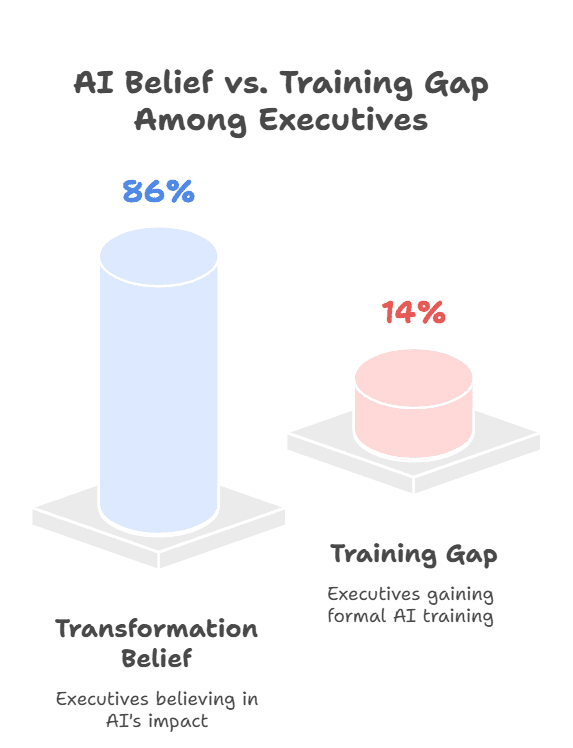
McKinsey estimates 84% of business executives consider AI an essential driver of future success, yet only 16% have been able to build AI capabilities at scale. (Source)
PwC analysis indicated adoption of AI would add as much as $15.7 trillion to the economy by 2030. (PwC AI Report)
Even with these statistics, most business leaders are not yet ready to use AI strategically.
This is the knowledge gap that can be filled by an executive AI course. An executive AI course offers the chance for executives to:
✔ Develop a sense of comprehension in AI business processes
✔ Leverage AI for competitiveness and innovation
✔ Deal with AI governance and ethics concerns
✔ Drive AI transformation in their organization
If you are a manager who would like to use your leadership to future-proof, an AI strategy for managers course is the investment you can make today.
What is an AI Course for Managers?
An AI course for managers is a unique course for business executives who wish to harness the power of AI without needing to be technical. Just as AI training is provided to engineers, these courses cover:
AI-based decision-making to enhance business strategy
How AI is revolutionizing finance, retail, and healthcare sectors
AI-influenced workflow optimization and automation to increase efficiency
Predictive analytics using AI for risk management
AI ethics, data privacy, regulation compliance
How AI Training Differ for Managers and Engineers
Area
AI Course for Managers
AI Course for Engineers
Subject Matter
Business strategy, leadership, decision-making
Coding, machine learning, AI model building
Who It’s For
Executives, business leaders, managers
Data scientists, software developers
Skills Taught
AI business application, automation, ethics, risk management
Deep learning, AI model training, neural networks
Outcome
Ability to integrate AI into leadership plans
Ability to create AI technologies
Why Business Leaders Need AI Training
1️⃣ Data-Driven Decision Making
AI helps business leaders make data-driven and insight-based decisions in real-time. Rather than trusting their intuition, AI looks at market trends, customer habits, and business performance to deliver actionable insights.
Example: Amazon AI algorithms test the customers’ interests so managers can set dynamic inventory levels and prices to increase efficiency and sales. (Source)
2️⃣ Improved Productivity and Automation
AI automates the low-value tasks so that managers and employees can engage in strategic high-leverage work.
Example: AI HR software in Unilever now screens first-line resumes, cutting hiring by 75%. (Source)
3️⃣ AI-Powered Competitive Advantage
AI-trained leadership forces companies to outcompete the competition. AI enables companies to individualise customer experience, sell more effectively, and optimise supply chain efficiency.
Example: PwC used AI to automate financial forecasting, and it gained 40% higher operational efficiency. (PwC AI Insights)
4️⃣ AI-driven Risk and Compliance Management
AI technology detects risk in real-time, from fraud to cyber attacks.
Example: Online fraud payments have been cut 60% among major banks that have AI-powered anti-fraud technology. (Source)
How to Select the Best Leadership AI Course
With so numerous AI courses to choose from, how do you select the best one?
Factor
What to Look For
Accreditation
Select courses from leading schools or industry giants.
Real-World Application
Features case studies, AI-based decision-making scenarios.
Flexible Learning
Designed for working executives (self-paced or weekend learning).
Hands-On AI Training
Delves into real-world use instead of theory alone.
AI Ethics & Governance
Includes AI compliance, security, and data governance best practices.
An AI training program for managers is a corporate training program that educates executives on how to understand and implement AI strategy in leadership, decision-making, and business operations. The training programs are not coding technical skills but on the strategic effect of AI on business development.
How long does an AI training program take?
Most 6-12 week executive AI courses, depending on the degree of learning and instructor-led or self-paced. Some executive AI courses are accelerated and can be completed in 3-4 weeks.
Do managers need technical skills before AI training?
No. Executive AI training is for non-technical business leaders. Not coding or software development, but applications of AI to leadership, automation, strategy, and decision-making.
Will profitability be increased with AI training?
Yes! AI streamlines business operations, minimizes drudgery, improves decision-making, and lowers operating costs. AI-driven insights enable businesses to become more intelligent, improve customer experience, and minimize risk, all adding up to profitability.
Is AI training within reach for non-tech managers?
Yes! AI affects all industries, ranging from finance and health care to retail, marketing, HR, and supply chain. Educating managers in AI enables them to innovate, maximize productivity, and propel their company’s competitive advantage.
Where will AI training make the biggest difference?
AI is firm-agnostic and can be used by any firm. Nevertheless, AI training for executives is most effective in:
Finance – AI for fraud detection, algorithmic trading, risk analysis.
Healthcare – AI for diagnosis, personalized treatment, hospital optimization.
Retail & E-commerce – AI for personalization, inventory management, dynamic pricing.
Marketing – AI-powered customer insights, ad targeting, content generation.
Manufacturing & Logistics – AI for predictive maintenance, supply chains automated.
What role does training AI play in leadership development?
An AI leadership program is worthwhile to executives:
✔ To base decisions on data rather than intuition.
✔ Execute AI-driven change in their firms.
✔ Pinpoint AI potential to automate & speed up innovation.
✔ Get a handle on AI ethics & compliance.
Will training AI be useful for small business owners & startup entrepreneurs?
Yes! AI is not just for big business—small business owners can apply AI to automate, market smarter, improve customer experience, & lower operational costs. Startup founders can use AI to grow, make markets more predictable, & raise investment.
What are some hands-on AI tools managers need to get familiar with?
Manager AI training often involves hands-on exposure to tools like:
ChatGPT & Google Bard – AI-powered content creation and AI-powered content creation.
Tableau & Power BI – AI-powered business analytics.
Salesforce Einstein – AI-powered CRM.
IBM Watson – AI-powered data analysis and business intelligence.
Google Vertex AI – Strategic forecasting AI models.
How do AI-driven decisions differ from regular decision-making?
Intuitive and experiential decision-making is traditional, while data-driven decision-making is done with AI. AI helps businesses make predictions, minimize errors, and optimize decision-making with real-time data analysis.
ROI of AI training for business leaders
AI training gives quantifiable benefits such as:
✔ Increased revenue – AI efficiency saves costs.
✔ Increased customer engagement – AI facilitates hyper-personalized experiences.
✔ Real-time decision-making – AI makes decisions based on real-time data.
✔ Improved risk detection – AI can identify security attacks and fraud ahead of time.
Will managers be replaced by AI?
No. AI will aid in decision-making but never substitute human leadership. AI does not possess emotional intelligence, creativity, or strategic capability that is unique in business leadership. AI makes decision-making by the manager more efficient.
How does AI training enable managers to develop a data culture?
An AI-trained executive can:
✔ Deploy AI adoption across departments.
✔ Train employees on AI-driven insights.
✔ Develop AI policies to enable AI use towards business objectives.
✔ Promote ethical application of AI in their organization.
What is the top AI course for managers in 2025?
One of the highest-rated executive AI training courses is PwC’s Generative AI for Managers Course. The course includes AI strategy, automation, ethics, and case studies of real scenarios.
In today’s data-driven world- businesses rely on analytics for better decision-making, and human resource management is no exception. Companies are increasingly leveraging HR data to improve hiring, performance management&employee engagement. This is where an HR analytics course can give you a competitive edge.
If you’re…considering a career in HR or looking to upskill- enrolling in an HR analytics certification can unlock numerous opportunities. Let’s explore the benefits… key insights, &why an HR analytics course is a must-have for HR professionals.
What is an HR Analytics Course?
An HR analytics course generally equips professionals with the- skills to analyse and interpret HR data to make informed business decisions. It covers various techniques such as:
✅ HR data collection & management ✅ Statistical analysis using Excel & Python ✅ Predictive modelling & machine learning ✅ HR metrics for employee engagement & retention
A well-structured HR data analysis course blends traditional HRM practices with analytics, helping professionals transform HR into a data-driven function.
Why HR Professionals Need HR Analytics Skills
1. Data-Driven Decision Making-
Gone are the days when HR decisions were based on instincts. Today HR teams use data analytics for HR to predict employee turnover, measure performance, &optimise recruitment strategies.
For instance, using predictive analytics, companies can identify employees who may leave within six months based on engagement scores and feedback analysis. This allows HR teams to intervene and improve retention rates.
2. Enhanced Recruitment and Talent Management-
With an advanced HR analytics course, professionals learn to:
Analyse candidate data to improve hiring accuracy
Use AI-powered screening tools to shortlist talent
Evaluate performance trends to match employees with the right roles
A case study by LinkedIn found that companies using HR analytics reduced hiring time by 60% and cut hiring costs by 40%.
3. Performance Management and Employee Engagement-
HR analytics tools help in identifying employee productivity trends and predicting disengagement risks. By analysing data from surveys, performance scores, and attendance, companies can implement strategies to improve employee engagement.
What Will You Learn in an HR Analytics Certification?
A well-structured HR analytics certification covers: ✔ HR metrics & dashboards using Excel & Power BI ✔ Python programming for HR analytics ✔ Statistical methods & predictive analytics ✔ Machine learning applications in HR
A great example is the Professional Certificate in HR Management and Analytics by IIT Roorkee, which combines HR expertise with modern analytics tools.
Looking for different HRM models that shape today’s workforce strategies? Here’s a great blog on HRM models.
How an HR Data Analysis Course Helps in Career Growth
Enrolling in an HR data analysis course helps you gain:
Expertise in tools like Excel, Python, and Power BI
Hands-on training with real-world HR case studies
Access to job portals & career mentoring
A certified HR analyst can work in roles such as:
HR Data Scientist – Using machine learning for HR insights
HR Business Partner – Aligning HR strategy with business goals
HR Consultant – Advising firms on data-driven HR strategies
Check out this YouTube video for deeper insights into HR analytics applications.
Why Choose an Advanced HR Analytics Course?
An advanced HR analytics course is ideal for:
HR professionals looking to move into analytics-driven roles
Business leaders seeking to enhance workforce efficiency
Data analysts who want to specialise in HR analytics
Key features of an advanced HR analytics course include:
Live training from industry experts & IIT faculty
Hands-on projects with 8+ real-world case studies
Exclusive campus immersion at IIT Roorkee
Learn more about how strategic HR models shape the future of HR analytics in this insightful article.
Is an HR Analytics Certification Worth It?
Absolutely! Companies today are willing to pay a premium for HR professionals skilled in data analytics for HR. Some statistics:
HR analysts with analytics skills earn 30-50% more than traditional HR roles
95% of HR executives say data-driven decision-making is the future of HR
Demand for HR data scientists has increased by 70% in the last 5 years
With an HR analytics certification, you stand out in the job market and gain the ability to drive real business impact.
FAQs
1. What is an HR analytics course, and how does it benefit HR professionals?
An HR analytics course trains professionals to use data-driven techniques for HR decision-making, helping them optimise recruitment, performance management, and employee engagement.
2. How is an HR analytics certification different from a traditional HR course?
An HR analytics certification focuses on data analytics for HR, teaching tools like Excel, Python, and machine learning to analyse workforce trends, while a traditional HR course primarily covers HR policies and administration.
3. Who should consider enrolling in an advanced HR analytics course?
An advanced HR analytics course is ideal for HR professionals, business leaders, and data analysts looking to gain expertise in HR data analysis, predictive modelling, and workforce strategy optimisation.
4. What skills will I gain from an HR data analysis course?
A well-structured HR data analysis course covers HR metrics, predictive analytics, machine learning applications, data visualisation, and statistical methods using industry-relevant tools.
5. How does data analytics for HR improve talent management?
Using data analytics for HR, companies can predict employee turnover, improve recruitment strategies, and enhance workforce productivity by analysing performance trends and engagement levels.
6. Do I need a technical background for an HR analytics certification?
No, most HR analytics certification programs are designed for HR professionals with no prior coding experience, offering step-by-step training in tools like Excel, Power BI, and Python.
7. How does an advanced HR analytics course impact career growth?
Completing an advanced HR analytics course can significantly increase job opportunities and salary potential, as companies actively seek HR professionals with data-driven decision-making skills.
8. What are the career prospects after completing an HR data analysis course?
Graduates of an HR data analysis course can pursue roles such as HR Analyst, HR Data Scientist, HR Business Partner, and HR Consultant, working with data-driven HR strategies to enhance workforce efficiency.
Conclusion: Future-Proof Your Career with an HR Analytics Course
The world of HR is evolving rapidly, and data-driven decision-making is at the heart of this transformation. Whether you’re an HR professional, a business leader, or a data enthusiast, an HR analytics course can boost your career, increase earning potential, and provide future-ready skills.
If you’re ready to take the next step, consider enrolling in a certified HR data analysis course that offers:
Industry-recognised certification
Hands-on projects & real-world analytics training
Career support with job portals & resume mentoring
The future of HR is data-driven, and the best way to stay ahead is to upskill with an HR analytics certification.
Association of Chartered Certified Accountants (ACCA) is a global professional accounting certification that offers a finance, accounting, and business career. You are a graduate, a business professional within industry, or an aspiring candidate looking for an international accountancy qualification. If one or more of these applies to you, ACCA eligibility requirements is the place to start.
This guide provides a full overview of the ACCA registration requirement, including qualifications, experience, exemptions, and register steps. Following this guide through to the end will have you fully informed of how to become eligible for ACCA and the steps to apply to become a Chartered Certified Accountant.
What is ACCA?
Association of Chartered Certified Accountants (ACCA) was founded in 1904 and grew to become one of the world’s most renowned associations of accountants. It is an international network with over 227,000 members and 544,000 students in 179 countries. ACCA provides a world-class qualification to professionalists for driving their career towards auditing, taxation, accounting, and business management.
ACCAs are extremely sought after by all employers like Big Four companies (Deloitte, PwC, EY, KPMG), multinationals, and banks because of their practical skills, ethical requirements, and strategic thinking.
Why ACCA?
Global Acceptance: Recognised in over 179 countries.
Global Curriculum: Covers financial and management accounting, tax, audit, and business strategy.
Global Mobility: Offers a route to audit, consultancy, corporate finance, risk management, and tax career.
Study while working: ACCA exams can be attempted along with work experience.
No Time Limit Schedule of study: Get certified at your convenience and ease.
But before applying, ACCA entry requirements must be met. Let us see who is eligible to enroll for this sought-after qualification.
ACCA Eligibility Criteria: Who Can Register?
1. ACCA Admission Criteria
To deem qualified for ACCA, candidates are expected to meet at least one of the following academics:
Standard Entry Route (For 10+2 Graduates)
The candidates should:
✅ Have done 10+2 higher secondary studies.
✅ Meet the following minimum marks:
Minimum 65% in two (Mathematics and English recommended).
Minimum 50% in other subjects.
It is the most widely used entry route by first-time high school performers.
Graduate Entry Route (For University Graduates)
If you hold a business, finance, or accounting bachelor’s degree, you will get exemption for some papers of the ACCA exams and will be able to lower the number of papers you will sit.
You can check it here:
Although, if your graduate degree is not accounting or finance, you have to give the exams with fewer exemptions or no exemptions.
Alternative Route – Foundations in Accountancy (FIA)
In case you don’t qualify for the eligibility requirement for regular ACCA entry, you can gain admission on the Foundations in Accountancy (FIA). On successfully clearing the Diploma in Accounting and Business via the FIA route, you are eligible for transfer to ACCA.
This route is most appropriate for the following students:
Whose education was below the 10+2 level.
Don’t need the minimum marks requirement.
Require a flexible path to ACCA.
More information on FIA:
2. ACCA Pattern of Exams and Progress
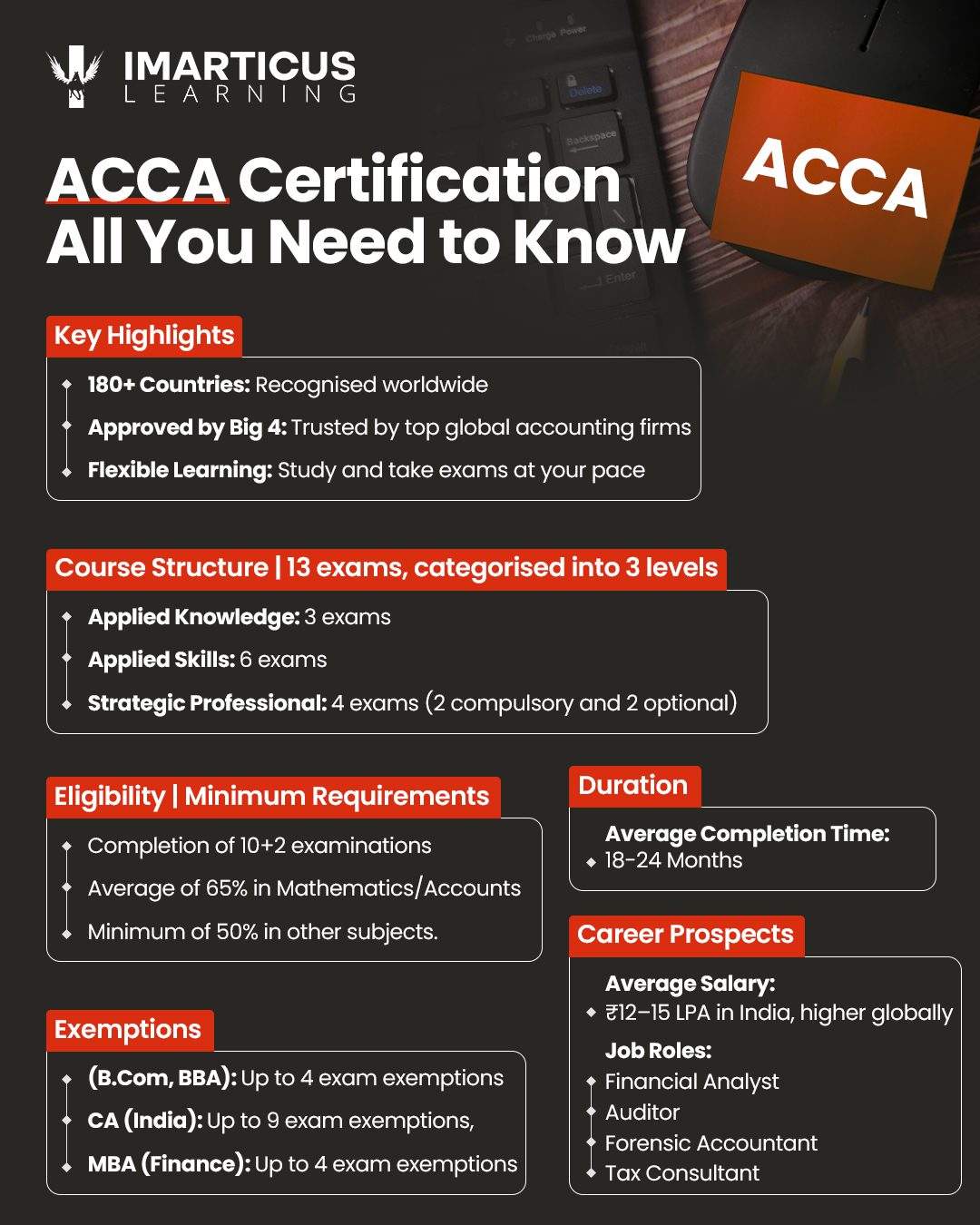
13 exams are needed in ACCA qualification, divided over three levels:
ACCA Level
Subject Areas
Applied Knowledge
Business and Technology, Management Accounting, Financial Accounting
Applied Skills
Corporate and Business Law, Performance Management, Taxation, Financial Reporting, Audit & Assurance, Financial Management
Strategic Professional
Strategic Business Leader, Strategic Business Reporting, and two optional papers from: Advanced Financial Management, Advanced Performance Management, Advanced Taxation, or Advanced Audit & Assurance
3. Work Experience Requirement (Practical Experience Requirement – PER)
In addition to exams, ACCA also requires the candidates to obtain three years (36 months) of work experience in the area to become a member.
PER Features
✔ The experience should be authenticated by an approved supervisor or employer.
✔ Nine core and technical performance objectives should be met by the candidates.
✔ ACCA exams can be taken before, alongside, or after experience.
It combines theoretical education with real industry practice for ACCA professionals.
4. Ethics and Professional Skills Module
ACCA students are required to pass the mandatory Ethics and Professional Skills Module, which is required to be passed before taking the Strategic Professional exams.
Why is This Important?
Instills ethical decision making in finance.
Encourages leadership and strategy thinking.
Enhancing professional judgment in real-life accounting scenarios.
The module facilitates ACCA professionals to meet employers’ and regulators’ global ethical needs.
5. Exemptions: Who Can Skip Sitting Some ACCA Exams?
ACCA rewards prior learning and provides exam exemptions on the basis of prior qualification.
Qualification
Possible Exemptions
Accounting & Finance Degree
Up to 9 papers (Applied Knowledge & Skills)
MBA or Business Degree
Very few Applied Knowledge papers
CA, CPA, or CIMA
Maximum exemptions
Check your ACCA exemptions here:
6. How to Apply for ACCA? (Step-by-Step Guide)
How to become an ACCA member: Follow these steps:
1️⃣ Register an ACCA account on the website.
2️⃣ Submit academic documents for eligibility verification.
Most people who search for ACCA course details expect a syllabus. What they rarely expect is a professional philosophy.
After years of mentoring ACCA aspirants, I’ve realised that the qualification isn’t just a staircase of exams – it’s a curriculum built to rewire how you think about numbers, governance, and decision-making. Each paper doesn’t merely test content; it builds a behavioural skill that global finance quietly demands.
And that’s exactly why most summaries of the ACCA syllabus miss the point: they stop at “13 papers, 3 levels, and a professional ethics module.” What matters more is what these layers are trying to teach you about business reality.
This breakdown isn’t another academic overview. It’s a functional interpretation of the ACCA pathway – how each level develops your decision logic, how the structure fits real-world finance workflows, and how you can use that knowledge to accelerate both exam performance and employability.
What Is the ACCA Qualification? And Why It Matters in 2025?
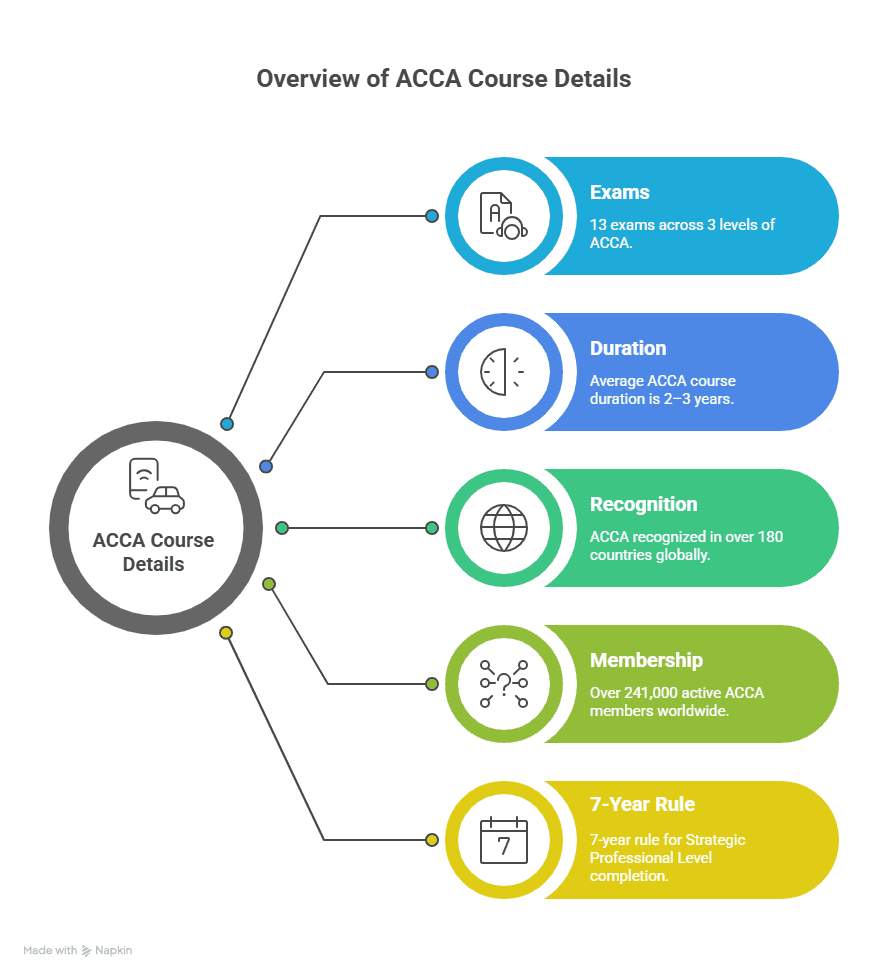
The Association of Chartered Certified Accountants (ACCA) is a globally recognised professional qualification that trains you in accounting, finance, taxation, auditing, business strategy, and ethics. It’s accepted in 180+ countries and has over 241,000 members worldwide.
Before exploring the full spectrum of ACCA subjects, let’s first understand what is ACCA and why it holds such high regard among multinational corporations worldwide.
In India, it’s gaining massive traction because Big 4 firms and global MNCs now prefer ACCA-qualified professionals for international reporting and compliance roles.
The beauty of the ACCA course lies in how it blends academic rigour with real-world adaptability. Unlike many regional accounting degrees that stay confined to one jurisdiction, ACCA’s framework mirrors the language of global business – International Financial Reporting Standards (IFRS).
So, whether you’re interpreting a balance sheet in London or auditing a firm in Dubai, the principles remain the same. Think of it as learning the “universal grammar” of accounting. Once you know it, you can converse fluently in finance anywhere in the world.
This video explains the ACCA Course Details comprehensively.
The ACCA Course Details: Structure, 3 Levels, 13 Papers, One Global Standard
If you’ve ever wondered how the ACCA qualification manages to produce accountants who can speak the language of business anywhere in the world, the secret lies in its structure. The ACCA course details are designed like a staircase: each step strengthens your financial foundation while preparing you for strategic leadership. Across three levels and 13 papers, ACCA ensures you evolve from student to strategist, from record-keeper to decision-maker.
Before diving into the ACCA syllabus itself, picture the journey as a well-engineered building:
The Applied Knowledge level forms the foundation, where you learn how financial data is created and managed.
The Applied Skills level builds the structure – teaching you how to interpret, analyse, and regulate that data.
Finally, the Strategic Professional level adds the top floors – where financial insight meets executive judgment.
Each of these levels reflects the real-world progression of an accountant’s career. At the beginning, you’re learning how businesses work. In the middle, you’re applying why they work. And at the end, you’re shaping where they go next.
To put it in perspective, over 240,000 ACCA members and 590,000 students follow this very structure globally. Whether you’re studying in Mumbai or Manchester, the same syllabus, same ethics module, and same exam standards apply. This consistency is what makes ACCA stand apart: it’s not just an exam system; it’s a global benchmark of competence.
Here’s a quick way to visualise the journey:
Each level builds not just on technical skill, but analytical maturity.
Level
No. of Exams
Focus Area
Applied Knowledge
3
Accounting fundamentals, business technology, and management accounting
Applied Skills
6
Law, taxation, financial reporting, audit, performance management, and financial management
Strategic Professional
4
Leadership, strategy, and advanced technical papers (two compulsory + two optional)
By the time you reach the Strategic Professional stage, you’ll be solving business cases the way CFOs and audit partners do.
ACCA Course Duration and Eligibility
ACCA understands that many of its learners are juggling university, work commitments, or even professional transitions. That’s why it offers flexibility at every step, from when you start to how fast you move through its 13 exams.
On average, most students complete ACCA in 2 to 3 years, but that’s just the median. You could sprint through in under two years if you study full-time, or stretch it to four if you’re balancing work and family. There’s no expiry date on ambition, and ACCA’s modular structure respects that.
What’s more, ACCA exams are conducted four times a year: March, June, September, and December- giving students ample flexibility to plan and progress. This quarterly rhythm means you don’t lose momentum, and you can re-strategise after every session if needed.
Eligibility Criteria:
Minimum qualification: 10+2 with English and Mathematics
For graduates (especially B.Com, BBA, or CA Inter students), direct entry with paper exemptions is possible.
Working professionals can pursue it alongside a job.
Existing Qualification
Possible ACCA Exemptions
12th Commerce
No exemption
B.Com / BBA
3–4 papers
CA Inter
Up to 6 papers
CA Qualified
Up to 9 papers
Check your ACCA Exemptions with this calculator here:
Whenever students come to me asking about ACCA course details, the first thing I clarify is how the exams actually work, how often they happen, how flexible they are, and what kind of questions to expect. Understanding this early helps you plan your preparation realistically, rather than feeling overwhelmed later.
The ACCA qualification is divided into three levels: Applied Knowledge, Applied Skills, and Strategic Professional, with a total of 13 papers. Each level builds on the previous one, taking you from the fundamentals of accounting and business to advanced topics like strategic reporting and leadership.
Watch this video to understand the full ACCA Exam Pattern in detail:
One of the things I genuinely appreciate about ACCA is its exam flexibility. Exams are held four times a year, and you can choose how many papers to attempt in each sitting. Some of my students take one exam at a time to focus deeply on each subject, while others attempt two or three together to move faster. It completely depends on your study routine and other commitments.
Level
Type
Duration
Applied Knowledge
Objective-based
2 hours
Applied Skills
Objective + case-based
3 hours
Strategic Professional
Scenario-based
3–4 hours
Another practical detail I always highlight is that the Applied Knowledge exams are computer-based and available on demand, meaning you don’t have to wait for a fixed exam window: you can book them whenever you’re ready. This is especially useful if you’re just starting your ACCA journey and want to maintain momentum.
Also, you only need 50% marks to pass each paper, and there’s no limit on the number of attempts. This takes a lot of pressure off because it lets you progress at your own pace, without the fear of a single failed attempt slowing you down.
When people talk about career opportunities after ACCA, they usually list job titles. But the truth is — ACCA doesn’t just decide where you work, it shapes how you fit into the financial ecosystem.
In 2025, finance is no longer a single lane. It’s a network where roles overlap between data, sustainability, compliance, and strategy. And this is exactly where ACCA-qualified professionals thrive. Their training in reporting, analysis, and ethics gives them a language that both CFOs and CEOs understand – they don’t just “close books,” they connect the dots between operations and outcomes.
You’ll now find ACCA professionals in places you wouldn’t expect ten years ago:
Leading data-driven audit automation teams at Deloitte,
Designing fintech risk models for neobanks,
Handling carbon accounting for sustainability-driven corporations, and
Advising cross-border M&A transactions from India to the Middle East.
An ACCA qualification opens doors across industries like consulting, audit, fintech, and corporate finance.
If you’re comparing finance certifications and wondering which one offers better long-term ROI, you might also want to check out the ACCA salary in India – It gives a clear idea of how another global qualification stacks up against the CFA in terms of pay and growth potential.
Beyond Numbers: Skills ACCA Builds That Others Miss
If I had to define what truly separates an ACCA-qualified professional from the rest, I wouldn’t start with accounting standards; I’d start with pattern recognition.
Because that’s what ACCA really teaches you: to see systems, not silos.
While most finance programs teach you how to record information, the ACCA course details teach you how to interpret it: how tax, ethics, data, and strategy influence each other in real business ecosystems. That’s what makes ACCA professionals invaluable in boardrooms; they don’t just know the numbers; they understand the storylines those numbers tell.
Here’s what that looks like in the modern workplace:
Strategic Agility, Not Just Strategic Thinking: The ACCA curriculum doesn’t give you static frameworks; it trains you to move between them. Whether it’s evaluating a merger or adapting a company’s reporting to new IFRS updates, you learn to make judgment calls under changing conditions; something AI still can’t replicate.
Decision Literacy: Most people see finance as record-keeping. ACCA flips that: it’s decision architecture. The emphasis on case-based exams means you learn why decisions succeed or fail, not just how they’re booked. That’s why ACCA professionals tend to become sounding boards for CEOs rather than back-office accountants.
Sustainability Fluency: ESG isn’t a side note anymore; it’s a new financial grammar. The fact that ACCA integrated sustainability concepts early on shows foresight. Today, graduates who can connect financial materiality with environmental and social outcomes are redefining corporate accountability from within.
Interdisciplinary Intelligence: The future CFO won’t be an accountant: they’ll be a systems thinker. And that’s where ACCA quietly leads. Its syllabus sits at the intersection of finance, technology, and ethics; a rare mix that helps professionals stay employable even as automation reshapes roles.
Example: ACCA now integrates ESG principles into the curriculum, reflecting global demand for ethical, sustainable finance leaders.
Future of ACCA in 2025 and Beyond
If there’s one thing the last decade has taught the finance world, it’s that transformation doesn’t always mean replacement; it often means refinement. The role of finance professionals is expanding into spaces that didn’t even exist a few years ago.
What’s remarkable is how the ACCA course balances global standards with regional adaptability. For instance, a student in India learns to interpret IFRS with the same rigour as one in London, but through case studies that reflect local markets and emerging economies. This dual approach: global framework, contextual understanding, is what keeps the qualification future-proof.
Industry data backs this up. According to the ACCA Global Talent Trends 2025, over 74% of employers now see ACCA-qualified professionals as “future-fit” because of their multidisciplinary training in finance, governance, and technology. Companies like HSBC, Unilever, and PwC are even integrating ACCA modules into internal upskilling programs, treating the curriculum as a benchmark for financial maturity.
Automation, AI, and sustainability are transforming finance roles. ACCA’s syllabus has already been adapted by introducing digital audit, analytics, and strategic business leadership modules.
By 2030, 70% of finance functions will use AI in reporting – ACCA-qualified professionals are being trained for exactly that world. (Source)
Key Takeaways and Free ACCA Resources to Help You Prepare
If you’ve made it this far, you already understand that the ACCA course isn’t just another professional qualification; it’s a roadmap that turns curiosity into expertise and discipline into global opportunity. But before you dive into preparation, let’s distil what really matters from everything we’ve explored.
ACCA is globally recognised and accepted in 180+ countries.
It comprises 13 exams over three levels.
Average completion time: 2–3 years.
Huge career scope in Big 4 and MNCs.
Flexible exam structure and online learning options.
Excellent ROI – starting salaries ₹6-8L, scaling up to ₹1Cr+.
Free and Trusted ACCA Preparation Resources
Here’s a curated list of credible tools and study aids – not the usual “exam dumps,” but real resources that deepen your understanding of the ACCA course details:
ACCA Practice Platform – Official mock exams and CBE-style question banks to simulate real exam environments.
ACCA Learning Hub – Free CPD and micro-certification courses designed by ACCA for continuous upskilling.
ACCA Study Support Resources – Official and community-driven platforms to make your preparation more efficient and exam-ready.
Preparing for the ACCA course can feel like charting a global journey, and every traveller needs the right map. In the short video below, we break down the most effective study support resources, from official ACCA tools to community-driven platforms, so you can learn smarter, stay consistent, and actually enjoy the process.
Why Imarticus Learning Stands Out for ACCA Prep
A well-structured approach transforms that chaos into progress. It’s not about rushing through the ACCA subject list – it’s about sequencing them smartly. Some learners thrive with a mentor-driven setup that mirrors how finance professionals actually think and work. That’s why I often point students toward the ACCA in collaboration with KPMG in India, offered by Imarticus Learning.
Gold / Approved Learning Partner Status Imarticus is recognised as an approved preparation partner for the ACCA qualification. This means its curriculum, materials and teaching approach align with ACCA’s global standards.
Industry Collaboration with KPMG in India The collaboration between Imarticus and KPMG in India brings real-world case studies and exposure to the ACCA prep. It’s not just exam prep – it gives you insight into how top finance firms operate, which helps you apply ACCA knowledge more meaningfully.
Kaplan-Powered Study Material Imarticus uses ACCA-approved content via Kaplan, meaning students get materials built for success, not just tuition. Having such curated resources reduces wasted preparation time and ensures you’re studying what matters.
Pass Guarantee / Placement Assurance Imarticus offers strong support: e.g., a money-back guarantee if professional-level ACCA exams aren’t cleared, as well as strong placement or internship commitments post certain levels.
Structured Learning & Flexibility The programme blends live classes, recorded sessions, doubt-clearing, and mentoring, suited for full-time students and working professionals alike. They map the ACCA course details (levels, papers, duration) into a manageable timeline.
FAQs on ACCA Course Details
Choosing a global qualification like ACCA comes with its fair share of curiosity. These frequently asked questions break down the ACCA course details, not as a checklist, but as insights from real academic and professional experience.
What is the breakdown of the ACCA?
The ACCA course details outline a clear three-level structure – Applied Knowledge (3 papers), Applied Skills (6 papers), and Strategic Professional (4 papers) – making a total of 13 exams. Each level deepens your understanding of finance, accounting, and strategic decision-making. At Imarticus Learning, we help students build a structured path through these levels, focusing on progression and conceptual clarity rather than cramming.
What are the details of the ACCA course?
The ACCA course comprises 13 subjects covering key areas like accounting, finance, auditing, taxation, business strategy, and ethics. Exams are held four times a year, offering flexibility for working professionals or full-time students. On average, the qualification can be completed in 2-3 years. Through Imarticus Learning’s guided mentorship, students follow a study plan that balances technical skills with analytical and strategic thinking – exactly what modern finance roles demand.
What is the 7-year rule in ACCA?
Under the ACCA course details, the 7-year rule applies to the Strategic Professional level. Once a student clears their first Strategic paper, they must complete the remaining exams within seven years. This ensures your knowledge stays current with global accounting standards.
What are the 9 papers of ACCA?
The first nine exams under the ACCA course cover the Applied Knowledge and Applied Skills levels. These include foundational subjects such as Business Technology (BT), Management Accounting (MA), Financial Accounting (FA), Corporate and Business Law (LW), and Financial Management (FM). At Imarticus Learning, our faculty connects each paper’s concepts to real business scenarios, helping learners understand applications beyond textbooks.
Can ACCA earn 1 crore?
Yes. Senior ACCA professionals in India, particularly those in multinational roles or CFO positions, can earn ₹1 crore+ annually, especially after 10-12 years of experience.
What is the hardest subject in ACCA?
Strategic Business Reporting (SBR) and Advanced Audit & Assurance (AAA) are considered the toughest due to their analytical and judgment-heavy nature.
Can a weak student crack ACCA?
Absolutely. The ACCA course rewards consistency and clarity, not memorisation. Even students with average academic backgrounds succeed when guided with the right approach. Imarticus Learning’s mentor-led programs focus on conceptual understanding and weekly progress tracking, helping every learner build the confidence to pass, one paper at a time.
Which are the 3 toughest exams in the world?
CA, CFA, and ACCA are often ranked among the top three toughest finance exams globally due to their conceptual depth and duration.
What is the easiest subject in ACCA?
Most students find Business & Technology (BT) and Financial Accounting (FA) relatively easier, as they focus on core understanding rather than interpretation.
Why ACCA Is the Smartest Bet for the Future Accountant
Here’s the thing – accounting is no longer about “ticking boxes” or “closing books.” It’s about making sense of a world run by data, ethics, and strategy.
The ACCA qualification gives you that lens – to not just work in finance, but to lead through finance.
Whether you’re a student eyeing international exposure or a professional looking for upward mobility, the ACCA course details tell a story of transformation – from learner to global finance leader.
So if you’ve been contemplating a career move that transcends borders, think of ACCA as your passport – stamped not just with global recognition, but with the skillset of the future. Because the hardest part of ACCA isn’t the syllabus, it’s starting with structure.
Explore how Imarticus Learning’s offering of ACCA in collaboration with KPMG in India simplifies theACCA course details into a clear, achievable plan designed by mentors who’ve guided hundreds on the same journey.