


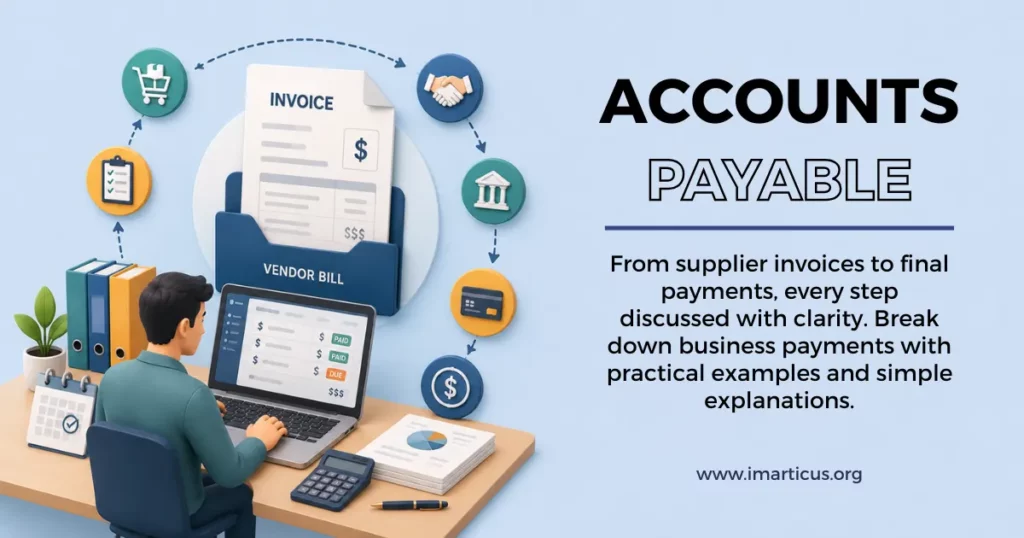
Analysing a company’s balance sheet often reveals a fundamental paradox: a business can report millions in operating profit while quietly bleeding working capital behind the scenes. This gap between accrual-based profitability and real liquidity is where financial strategy is actually tested. When evaluating an organisation’s financial health, headline revenue figures are secondary; the true indicator of operational discipline lies in the movement of accounts payable, short-term liabilities, vendor payment schedules, and the cash conversion cycle.
The management of accounts payable is rarely just about paying bills on time; it is a continuous leverage game. Extending Days Payable Outstanding (DPO) too aggressively risks damaging critical supplier relationships and losing early-payment discounts. Conversely, settling obligations prematurely drains corporate liquidity that could otherwise fuel short-term yield or cover volatile operational costs. Balancing these trade-offs requires an understanding of how routine journal entries directly impact enterprise valuation, working capital metrics, and treasury forecasts.
Whether you are reconciling accruals, structuring credit terms, or refining your skills through specialised finance courses, mastering the mechanics of short-term debt and liability control is fundamental to driving enterprise value. Modern finance leadership demands moving beyond ledger entries to actively controlling the levers of corporate cash flow.
Did You Know?
Research from Ardent Partners shows that efficient finance teams process vendor bills in just 3.1 days, while average teams take over 17 days to finish the same task.
Don’t Let Our Best Advice Get Buried
Add Imarticus as a Preferred Source — see more of what we publish, every time you search.

What Is Accounts Payable in Business Accounting?
I like to explain this concept using a simple daily life example that anyone can understand. Imagine you run a small neighbourhood bakery and buy fifty bags of flour from a local distributor. The supplier gives you the flour today but gives you thirty days to pay the bill.
The Accounts Payable Workflow Flow
| Step | Activity |
| 1 | Vendor Invoice Received |
| 2 | Match with Purchase Order (PO) and Goods Receipt |
| 3 | Record the Liability |
| 4 | Obtain Approval |
| 5 | Make the Cash Disbursement |
| 6 | Maintain a Strong Vendor Relationship |
Understanding what is accounts payable comes down to tracking the money you owe before cash leaves your bank account. In my experience, the phrase accounts payable meaning covers two distinct things in a business. It refers to the unpaid vendor bills and the specific financial accounting team that processes those payments.
Every business relies on outside vendors for raw materials, monthly utility services, and office equipment. Buying items on credit terms gives your business breathing room, but it creates a legal debt. Tracking these bills carefully protects your credit score and prevents sudden cash shortages.
When I train junior accountants, I emphasise that this department is not just an administrative expense. It acts as a primary guard against cash leakage and accidental overpayments. When your team manages vendor invoices well, your company stays safe from fraud and maintains strong credit terms.
A standard accounting degree opens the door, but securing high-value corporate finance offers demands specialised operational skills that immediately set you apart from typical B.Com graduates.
The Key Differences In Payable vs. Receivable Accounts
The main difference between accounts payable and accounts receivable comes down to cash direction. Accounts receivable records the cash your customers owe your business for products they bought on credit. Here is a simple side-by-side table I use to explain accounts payable vs. receivable quickly.
| Accounting Trait | Accounts Payable | Accounts Receivable | Cash Flow Impact | Balance Sheet Placement |
| Financial Nature | Short-term debts you owe to suppliers for credit purchases | Money customers owe your firm for completed credit sales | Creates a cash outflow when you settle your pending vendor bills | Listed under current liabilities on your balance sheet |
| Primary Account Type | Liability account carrying a normal credit balance by default | Asset account carrying a normal debit balance by default | Creates cash inflow when customers pay off their bills | Listed under current assets on your balance sheet |
| Core Operational Goal | Schedule payments strategically to protect working capital balances | Collect pending customer payments fast to avoid bad debt losses | Preserves your daily liquidity for ongoing operational costs | Changes your net working capital calculation every single month |
| Key Performance Metric | Measured using Days Payable Outstanding to track payment speeds | Measured using Days Sales Outstanding to track collection speeds | Controls your total cash conversion cycle length end to end | Impacts your short-term liquidity ratios during financial audits |
| Triggering Document | Created when you receive a bill or invoice from a supplier | Created when you send a sales invoice to a client | Dictates how much liquid cash you have available today | Shows lenders how much short-term debt you must cover soon |
Managing accounts payable and accounts receivable together ensures your business never runs out of cash. When customer collections line up with incoming vendor bills, your firm stays financially secure. Balancing accounts payable vs. receivable remains a core duty for every corporate finance team.
When I look at corporate working capital management, these two accounts tell the entire story. If your unpaid bills grow much faster than your incoming customer payments, you will face a serious cash squeeze. Keeping both accounts in healthy balance is the secret to running a stable business.
Also Read: How to Prepare and Balance a Bank Reconciliation Statement?
The Accounts Payable Journal Entry Guide
Recording an accounts payable journal entry requires basic double-entry accounting rules to keep your ledger balanced. You enter a debit to your expense or asset account and a credit to your liability account when a bill arrives. Here is a straightforward table showing how I recommend recording common transactions for a general ledger.
| Transaction Scenario | Debit Account | Credit Account | Financial Impact | Purpose of Entry |
| Buying Office Supplies on Credit | Office Expense Account | Accounts Payable Liability | Increases total expenses and increases short-term liabilities | Records the bill in your ledger upon receiving the invoice |
| Buying Store Inventory on Credit | Merchandise Inventory Asset | Accounts Payable Liability | Increases current assets and increases short-term liabilities | Adds physical inventory value to your balance sheet before payment |
| Receiving a Monthly Power Bill | Utility Expense Account | Accounts Payable Liability | Increases utility costs and raises pending short-term debt | Captures monthly operational costs in the correct accounting period |
| Paying Off a Vendor Bill in Cash | Accounts Payable Liability | Cash and Bank Account | Decreases total liabilities and decreases total bank balance | Shows that you settled a specific vendor bill completely using cash |
| Paying Early to Get a Discount | Accounts Payable Liability | Cash Account & Discounts | Clears the full liability while recording savings in a discount account | Captures early payment savings while reducing overall cash outflows |
Recording a clean accounts payable journal entry right away keeps your balance sheet accurate. Missing these bills leads to unrecorded debts, which can cause severe headaches during financial audits.
Understanding debits and credits is very easy once you see the logic behind them. When you debit an expense account, you record the cost of doing business today. Crediting the liability account shows that you still owe money for that cost. When you finally pay the bill, debiting the liability clears the debt, and crediting cash shows money leaving your bank.
In a nutshell: End-To-End Accounts Payable Cycle
Invoice Receipt → Data Extraction → Matching → Approval → General Ledger Posting → Payment Execution → Audit Trail
The Complete Accounts Payable Cycle and Workflow
The accounts payable cycle covers every single step from the moment a bill arrives until cash leaves your bank account. Following a standard accounts payable process stops double payments and protects your firm from simple clerical errors. Here is how a vendor bill moves through a corporate finance team step by step.
- Invoice intake starts when your central accounting team receives a digital or paper bill directly from a supplier.
- Data extraction logs essential bill details like vendor names, invoice numbers, line-item costs, and due dates into software.
- Document matching checks the vendor bill against original purchase orders and receiving slips to catch pricing errors.
- Management approval routes the verified bill to the right department lead so they can sign off on payment.
- Ledger posting records the bill details into your accounting system using a standard accounts payable journal entry.
- Payment execution transfers cash to your vendor through bank transfers, corporate cards, or physical paper checks.
- Record archiving stores the paid bill securely so your team can handle future tax checks and audit reviews easily.
Taking tight control of your accounts payable process keeps your financial records ready for audits. Setting up a predictable accounts payable cycle also builds vendor trust and unlocks valuable early payment discounts.
When I set up invoice workflows, I make sure every step has a clear owner. If nobody checks incoming bills against purchase orders, duplicate payments will slip through the cracks. A tight approval process protects your company cash while keeping vendor payments moving on time.
Accounts Payable With 2-Way vs. 3-Way Matching
Matching controls ensure your firm only pays for items your team actually ordered and received. Using 2-way matching in accounts payable connects vendor bills directly to original purchase orders. Adding warehouse receiving slips creates 3-way matching in accounts payable to stop payment fraud and vendor overcharges. This comparison table shows how I suggest choosing the right verification method for different company purchases.
| Feature Protocol | 2-Way Matching | 3-Way Matching | Best Use Case Scenario | Risk Mitigation Level |
| Required Documents | Vendor Invoice and Purchase Order | Vendor Invoice, Purchase Order, and Receiving Slip | Buying software licenses or hiring outside legal and consulting services | Offers basic protection against simple vendor pricing and rate mistakes |
| Primary Check Point | Confirms billed rates match original purchase order pricing terms | Confirms billed item counts match physical delivery receipts in warehouse | Buying physical store goods, machinery, and manufacturing raw materials | Offers strong protection against fake bills and missing delivery items |
| Processing Speed | Fast approval process requiring minimal manual paper reviews | Thorough review process requiring checks against warehouse delivery logs | Simple monthly service bills that require rapid approval turnarounds | Standard control system for buying and receiving physical merchandise |
| Automation Ease | Easy to automate using simple accounting software rules | Requires connecting accounting software directly to warehouse inventory systems | Enterprise companies ordering thousands of physical inventory items monthly | Advanced protection against accidental double payments and vendor billing fraud |
| Discrepancy Triggers | Catches price mismatches between purchase orders and final bills | Catches quantity differences between warehouse logs and vendor bills | Complex bulk purchases that arrive across several separate shipments | Creates a complete audit trail for internal risk management controls |
Using 2-way matching in accounts payable works best for simple service contracts where no physical goods are delivered. In my experience, companies rely on 3-way matching in accounts payable for physical inventory to verify items arrived before paying cash.
When a bill fails the matching test, my team puts it into an exception queue. For example, if a vendor bills you for ten laptops but the warehouse only received eight, you stop the payment. You resolve the missing items with the vendor before sending any cash out the door.
Implementing Modern Accounts Payable Automation
Switching from paper bills to modern accounts payable automation changes how your finance team works every day. Automated software scans incoming bills, checks purchase orders, and routes approvals without endless typing. Here are the primary advantages my team gained when we automated our manual finance tasks.
- Smart invoice scanning reads text from digital files using optical character recognition software to save time.
- Automated document matching runs 2-way matching in accounts payable in seconds to flag line-item price errors.
- Digital approval workflows send high-dollar bills straight to department heads based on pre-set spending limits.
- Scheduled payment tools release cash on exact due dates to keep working capital safe in your account longer.
- Fraud detection alerts flag duplicate invoice numbers and unapproved vendor bank changes before payments go out.
Investing in accounts payable automation cuts bill processing costs while speeding up weekly payment approvals. Finance teams that eliminate manual typing can focus on building stronger vendor relationships and managing cash flow.
Modern accounting software connects directly to large enterprise databases like NetSuite, SAP, and QuickBooks. This means every paid bill updates your general ledger instantly. As a finance leader, this gives me a clear and real-time view of our cash liabilities at any given moment.
Did You Know?
Processing statistics from DocuClipper show that manual bill entry carries a 3.6% error rate, while automated workflows lower error rates below 0.1%.
Essential Metrics and KPIs
Tracking clear performance numbers helps you spot hidden bottlenecks inside your accounting department. Monitoring these indicators allows team leaders to speed up approvals and eliminate costly processing mistakes. Here are five simple metrics I suggest tracking to keep operational payments running smoothly.
| Metric Name | How to Calculate | Target Benchmark | Why It Matters | Primary Goal |
| Days Payable Outstanding | (Ending AP / Cost of Goods Sold) * 365 Days | 45 to 60 Days | Shows how well your firm manages cash by tracking payment speeds | Working Capital Management |
| Cost Per Invoice | Total AP Overhead Costs / Total Invoices | Under $3.00 with Software | Highlights administrative waste and manual labour costs across your team | Operational Cost Reduction |
| Processing Cycle Time | Days Elapsed From Bill Receipt to Final Payment | Under 4 Days Total | Removes approval bottlenecks and prevents costly vendor late fees | Workflow Velocity Tracking |
| Invoice Error Rate | (Invoices with Mistakes / Total Invoices) * 100 | Under 10% Overall | Highlights bad vendor bills and missing purchase order details | Quality Control Accuracy |
| Touchless Processing Rate | (Invoices Processed Without Humans / Total) * 100 | Over 75% Total | Measures how well your automated software handles daily invoices | Digital Transformation Depth |
Checking these operational numbers regularly gives you real facts to improve your overall accounts payable process. Department leads who monitor processing speeds build fast, reliable teams that support long-term business growth.
I pay close attention to Days Payable Outstanding when planning corporate cash strategies. If you pay your bills too quickly, you drain liquid cash that could earn interest or fund daily growth. If you pay too slowly, you hurt vendor trust and risk late fees. Finding the sweet spot keeps your business financially strong.
Complementing formal degrees with global credentials like ACCA, CFA, FRM, or CMA opens immediate pathways to high-paying corporate finance roles right after graduation. Explore the top-paying corporate finance pathways open to BCom graduates who build specialised skill sets.
Career Paths And Hiring Insights
When I walk my students through careers in accounting and finance maps, I emphasise that accounts payable is far more than an entry-level stepping stone; it is a core treasury function with a structured leadership trajectory. Progression typically moves from transactional processing to strategic working capital oversight, ERP system governance, and cash flow analysis and forecasting.
Growing companies always need skilled finance professionals, creating steady accounts payable jobs across every industry. Entry-level accounts payable jobs focus on scanning bills and checking numbers, while managers lead software integration projects and cash forecasts.
If you are preparing for job interviews, take time to study common accounts payable interview questions. Being able to explain how you resolve price disputes and record complex bills proves you know real-world accounting.
Understanding how vendor payments fit into the bigger business picture helps you move up the career ladder faster. Accounting specialists work closely with procurement agents, warehouse managers, and corporate treasurers every day. Mastering these operational connections opens doors to senior roles like accounting manager, controller, or treasury director.
| Career Level | Typical Job Title | Average Annual Salary Range |
| Entry Level | Accounts Payable Clerk / Executive | ₹2.8 LPA – ₹4.2 LPA |
| Mid Level | Accounts Payable Specialist / Senior Analyst | ₹4.8 LPA – ₹7.5 LPA |
| Leadership | Assistant Manager / AP Team Lead | ₹8.5 LPA – ₹13.0 LPA |
| Executive | Accounts Payable Manager / Head of P2P | ₹14.0 LPA – ₹22.0+ LPA |
Interesting Insight→ Transitioning from mid-level roles to leadership requires moving beyond basic transaction speed. Mastering ERP systems like SAP FICO or Oracle Financials, alongside analytical skills in cash conversion metrics, is what opens up high-tier manager positions.
Why Choose Imarticus Learning For Your Finance Courses?
Understanding accounting basics like accounts payable is a great starting point, but landing a high-paying job in finance takes real-world preparation. You need to know how top companies operate, how to clear technical interviews, and how to stand out to employers. The finance courses offered by Imarticus Learning bridge this gap by turning core finance concepts into job-ready skills that employers actually look for.
- 7 Guaranteed Job Interviews: Job-oriented programs like CIBOP do not just give you a certificate; they back your training with a minimum of 7 guaranteed interviews at leading finance firms.
- Network of 1,000+ Hiring Partners: Get your resume directly in front of major global banks, Big 4 firms, and financial institutions that actively recruit from Imarticus.
- 60% Average Salary Boost: Learners consistently see an average 60% salary hike after completing their training, helping freshers and working professionals level up quickly.
- Learn from Real Industry Experts: Classes are taught by seasoned finance professionals with 15+ years of experience working at top global firms.
- Over 50,000 Placed Learners: Join an active community of tens of thousands of graduates who have successfully launched and grown their careers in finance.
- Hands-on Practical Training: Master real tools like Advanced Excel, Power BI, and live case studies so you can perform on the job from day one.
- Complete Interview & Career Prep: Get 1-on-1 help with resume building, LinkedIn profile setup, soft skills, and mock technical interviews before you meet employers.
FAQs About Accounts Payable
Understanding how vendor obligations move through a general ledger often raises practical doubts about workflow controls, financial reporting, and departmental roles. Clarifying these frequently asked questions helps finance professionals streamline daily cash management across the entire accounts payable function.
What is meant by accounts payable?
Accounts payable is the short-term money a business owes to vendors for goods or services bought on credit. You can build these core corporate accounting skills through practical training programs at Imarticus Learning.
What is the accounts payable (AP) process?
The accounts payable process includes receiving bills, checking details, getting approvals, recording entries, and paying vendors. Specialised courses at Imarticus Learning teach students how to manage these daily finance workflows efficiently.
What is the difference between accounts payable and receivable?
Accounts payable tracks money your firm owes to suppliers, while accounts receivable tracks money customers owe to you. You can study corporate cash strategies by joining industry-focused finance courses at Imarticus Learning.
What are 3-way accounts payable?
This safety check matches a vendor bill against the original purchase order and receiving slip before releasing cash. Mastering internal control systems like this is a core focus inside the accounting modules at Imarticus Learning.
What is the main role of accounts payable?
The main goal is paying vendor bills accurately on time while keeping enough cash on hand for daily business. You can gain hands-on operational finance experience by taking career courses at Imarticus Learning.
What is a KPI in accounts payable?
A key performance indicator is a metric that tracks processing speed, cost per bill, and team error rates.
How to monitor accounts payable?
Finance teams track pending bills by checking weekly ageing reports, watching processing costs, and balancing ledgers regularly.
Who manages accounts payable?
Specialists, staff accountants, and finance managers work together to handle daily vendor bill payments inside accounting departments.
Your Next Strategic Move in Finance With Accounts Payable Skill
Taking control of short-term business debt keeps cash flowing and builds strong relationships with your suppliers. From recording an accurate accounts payable journal entry to running automated document checks, solid payment processes keep companies financially safe.
Understanding vendor obligations, matching protocols, and double-entry postings gives you a solid grasp of how cash actually flows through a business. Moving from basic ledger entries to strategic working capital oversight is what transforms routine accounting into a high-impact career. When you know how to reduce processing costs, spot billing errors before cash leaves the bank, and implement touchless workflows, you make yourself invaluable to any corporate finance team.
Building that level of practical confidence takes more than memorising debits and credits. It comes from applying these mechanics to real-world business scenarios, mastering modern ERP tools, and understanding the broader procure-to-pay ecosystem.
Whether you are preparing for your first corporate accounting role, looking to step into a managerial position, or aiming to sharpen your operational skills alongside certifications like CIBOP, ACCA, or the CFA charter, getting hands-on guidance makes all the difference. Exploring industry-focused finance courses with Imarticus Learning is a great way to bridge the gap between classroom theory and the real-world skills top employers look for every day.
Liked This? Follow Us Where You Already Search.
Preferred Sources is Google’s built-in follow button — no app, no login, just more Imarticus in your results.