Marketing training is evolving with the rise of social media marketing

In today’s digitalised world, almost every person is expected to be a part of a social media platform. In order to have a blooming online identity, people create their profiles on popular platforms. This online presence has given rise to digital marketing. Professionals and businesses use social media platforms to sell their products and services.


With the development of Facebook and Instagram, various businesses started to create their online presence and started coming up with their social media marketing strategies. Experts who have knowledge about social media marketing changed the status of the existing e-commerce brands by increasing their traffic. Unlike other channels of communication, social media marketing is highly cost-effective as users have free access to these platforms.

The digital marketing certification course by Imarticus makes digital marketing professionals more effective, helps attract a huge amount of customers and generates profitable leads.

Why is It Important to Have Marketing Training?

  • It helps improve communication skills.

Whether a person is a social media marketer or just a general marketer, communication is one of the most important factors of a business. A marketer has to form a connection with the customer, attract them towards the product/service and then make the sale. Similarly, in social media marketing, marketers need to have excellent skills to reach their target audience. Digital marketing online training helps potential marketers to get better at this skill.

  • It helps them become aware of their competitors.

One of the key strategies of marketing is to be thoroughly aware of the potential competitors in the same field. To be able to research their successful measures or failing agendas is crucial. It helps a marketer form better strategies for success when they know who’s doing well in the business and who’s not. Most businesses choose to collaborate with each other to share their audience and increase their exposure, ultimately resulting in great profits for their businesses.

  • It opens doors to tremendous opportunities.

When a person is good at social media marketing, they do not have to follow a certain niche. They are valuable to all business spectrums such as healthcare, fashion, finance, education, technology, etc. Their skills make them needed for all sectors that need more exposure in the digital world. Any digital marketing certification course helps in adding more credibility to the skillsets of the marketer. It is safe to say that the employment opportunities for social media marketers are very high as they perform crucial functions for all kinds of businesses.

  • It allows them to influence their audience’s decisions.

A person with social media marketing training has the power to influence a big audience. These marketers’ roles are just like the influencers who arouse the interest of the public and make them feel that they are in need of a particular product or service. They say things that the public wants to hear and influence the opinions of the masses to lean towards their brands. The training courses strengthen these aspects of the marketer. 

  • It allows them to analyse and interpret data.

One of the key skills of a marketer is to be able to read and understand data metrics. This helps in deciphering the mentality of the people and ultimately affects the rapport between the brand and its services/products. Being able to get a better understanding of public opinion through customer feedback and calculating the data metrics to find out the sales in profit/loss is an important attribute of a marketer.

  • Marketing will stay to be a long-term demanded skill.

The modernised world today demands learned marketers more than ever. Since marketers have skills that help in various fields such as advertising, public relations, brand management, promotions, product development, etc. they are needed by all. It is safe to say that this demand will only rise in the future since diverse companies need marketers for their successful strategies to stay at the top of their games. This field will prosper more in the upcoming times. 

  • It helps them become critical thinkers.

Marketers have to deal with a lot of data on a daily basis. With these data comes the responsibility of formulating strategies that will help improve the status of the business. Marketers develop critical thinking since they have to analyse the data metrics and create solutions to all online problems. It compels them to be strategic and bring necessary changes.

Conclusion

Learning from a professional will always be different from any other medium. Imarticus offers a Postgraduate program in Digital Marketing, which allows students to learn directly from experienced experts. 

IIT’s New Courses For Working Professionals: Get the Best of Academia

The contribution of training to the success of businesses is not acknowledged properly. According to a recent research report, corporate training in India is currently in its growth phase. It also forecasts that the corporate training industry will sustain this growth over the next 10-15 years.

A LinkedIn study found that since 2015, the skills needed by employees have changed by 25% globally. According to the same study, the required skills could change by up to 44% by 2025 given the rapid changes in the workplace.

Future Of Corporate Training

Employee training is an essential part of any successful business. Training gives employees the necessary skills. To attract and keep top talent, organisations offer the resources and support their employees need to succeed.

A recent study found that 76% of employees prefer to stay with organisations that offer opportunities for continuous learning. Also, 55% of employees feel that extra training would help them perform better.

Why Train Employees?

Not every employee has the same educational background. They also do not have the same work experience. Each employee has a different approach to training. They also have different responses to learning incentives. A one-size-fits-all training method no longer works.

Organizations need to identify gaps in the abilities of their employees. Then they need to tailor IIT Courses For Working Professionals specific to their needs. A planned approach to employee training will yield superior results for both – the employees and the organization.

More and more organisations now recognise that training improves employee efficiency and productivity. Skilled employees enable the organization to achieve superior business outcomes. The right training helps employees better understand their roles and responsibilities. It also enables them to achieve their professional goals.

A good corporate training program builds a strong corporate brand. It helps impart the organization’s core values to employees. It also fosters a positive workplace culture. With a well-designed training program, employees can be guided to become stronger team players. Overall, employee training helps build an efficient and engaged workforce.

Online courses are cost-effective. They are now a proven method of employee training. With the wide choice of available online courses, choosing the right one is a difficult task. IIT online courses make for the ideal choice.

Online courses benefit participants in several ways including:

  • Greater freedom to choose a learning schedule
  • Access to the best institutes, courses and faculty
  • Lower costs
  • Greater personalisation – freedom to choose time and place for learning
  • Instant feedback on assessments
  • Repeated access to course material

We can help!

Imarticus Learning specialises in providing online courses. They offer a wide range of IIT courses for working professionalsThese courses help organisations save costs and increase efficiency. They provide access to the best of what academia has to offer. This helps the business gain a clear competitive advantage. The courses include a campus immersion module. Participants can interact, in person, with their peers and the IIT faculty.

Imarticus Learning specialises in working with the new generation of professionals. Our online learning programs help reduce the training duration without compromising training efficacy. During the course, the participants get hands-on training in solving real-life industry problems. This helps them test their understanding of the concepts taught during the course.

We work through a dedicated account manager for each of our clients. This helps deliver to our clients a superior training experience.

Imarticus has trained, through its programs, over 35,000 professionals from leading firms. Imarticus Learning‘s clients include IBM, KPMG, Genpact, Moody’s Analytics, Motilal Oswal, etc.

How to become a strategic chief marketing officer

A strategic chief marketing officer is one of the most crucial positions in any organization. The chief marketing officer plays a significant role in shaping the marketing strategy and has a leadership role in all organizational efforts.

In recent years, the chief marketing officer’s position has grown significantly. As a CMO, you are responsible for developing and implementing a company’s marketing strategy, managing the marketing budget, and evaluating the results of campaigns. 


You need to know how to use data and analytics to spot opportunities and develop strategies that boost business performance if you want to succeed in this position. This post will discuss the skills needed to become a strategic CMO and how to develop them.

What is a Strategic Chief Marketing Officer?

A Strategic Chief Marketing Officer (CMO) is a top-level executive responsible for leading an organization’s overall marketing strategy. They create and implement marketing campaigns, build and maintain customer relationships, and identify new business opportunities.

The strategic CMO is an integral part of the senior leadership team. It is responsible for driving growth and profitability for the organization by identifying and capitalizing on new opportunities and ensuring that the company’s marketing efforts align with its overall business objectives. 

They are visionary and strategic thinkers who can anticipate market trends and consumer behavior shifts and develop and execute marketing plans to help the company stay ahead of the curve.

Qualifications Needed to Become a Strategic Chief Marketing Officer

  • A Bachelor’s or Master’s degree in marketing, business, or a related field is typically required.
  • Proven experience in a leadership role within a marketing department, ideally at a senior level
  • Strong understanding of marketing principles, including market research, product development, advertising, and branding
  • Experience with digital marketing and e-commerce.
  • Strong strategic thinking and planning skills
  • Strong communication, leadership, and interpersonal skills
  • Ability to manage budgets and resources effectively
  • Strong business acumen and understanding of the industry and the company’s target market
  • Strong knowledge of technology and marketing automation tools
  • Experience with driving revenue growth and customer acquisition.
  • Good understanding of marketing laws, regulations, and compliance
  • Strong problem-solving and decision-making abilities.

Job Duties and Responsibilities of a Strategic Chief Marketing Officer

As a Strategic Chief Marketing Officer, you would be responsible for leading the overall marketing strategy for your organization. This would include creating and implementing campaigns that effectively communicate the value of your products and services to customers. You would also be responsible for building and maintaining customer relationships, identifying new business opportunities, and driving growth and profitability for the organization.

Some of the key job duties and responsibilities of a Strategic CMO include the following:

  • Developing and implementing a comprehensive marketing strategy that aligns with the organization’s overall business objectives
  • Identifying new business opportunities and capitalizing on market trends and shifts in consumer behavior
  • Leading the creation and execution of marketing campaigns, including advertising, promotions, and public relations.
  • Managing budgets and resources effectively and making data-driven decisions to optimize marketing efforts.
  • Collaborating with other senior leadership team members to ensure that the company’s marketing efforts are aligned with its overall business objectives.
  • Continuously monitoring market conditions, competitor activity, and customer insights to inform strategic decisions
  • Keeping up to date with marketing laws, regulations, and compliance and ensuring that the company adheres to them

As a Strategic CMO, you would play a vital role in driving the success of your organization. You would be responsible for creating and implementing marketing strategies that help the company stay ahead of the curve and capitalize on opportunities. With your strong strategic thinking, leadership, and marketing expertise, you would be well-positioned to drive growth and profitability for the organization. 

Discover Chief Marketing Officer Online Courses With Imarticus Learning

This is a cutting-edge CMO training program for aspiring Chief Marketing Officers and high-potential emerging leaders. The program provides fundamental marketing training to mid-level to senior-level marketing professionals.

Course Benefits For Learners:

  • The 10-month online CMO program, developed in partnership with Imarticus Learning, enables students to advance vertically more quickly, start international business initiatives, and achieve corporate objectives. 
  • The insightful curriculum develops future business leaders’ strategic, operational, and technological leadership skills. 
  • The IIM Raipur marketing courses equip you with the skills to create powerful business solutions and valuable strategies.

How is financial accounting different from managerial accounting

Regarding business and finance, accounting is a critical skill to learn. While many people think all accounting is the same, there are two distinct types: financial and managerial. But what’s the difference between them?

Whether you’re an eager student of business or trying to level up your career in the world of finances, understanding how these concepts differ can help you reach success faster! 

From preparing taxes to analyzing data reports, we’ll break down exactly how financial and managerial accounting diverge — so get ready for an eye-opening lesson on this dynamic duo!

What is Financial Accounting?

Financial accounting helps ensure that financial transactions are recorded, organized, and reported accurately so businesses can stay on top of their investments. Transactions are recorded in accounting ledgers, which are organized and analyzed to generate financial statements such as the balance sheet, income statement, and statement of cash flows. Financial accounting is designed to provide an accurate picture of a company’s financial position at any given time.

What is Managerial accounting?

Managerial accounting focuses on the internal workings of a business to inform decision-making. It involves activities such as budgeting and forecasting, cost analysis and pricing decisions, inventory management, analyzing sales trends, and performance measurement. 

The information provided by managerial accounting helps businesses understand their costs better to make data-driven decisions that will increase profits. Managerial accounting also serves as a tool for long-term planning. Unlike financial accounting, which looks at current financials only, managerial accounting provides insights into future performance.

The Difference Between Financial and Managerial Accounting

  • Financial accounting focuses on providing financial information to external users (e.g., shareholders, creditors, tax authorities), while managerial accounting provides internal financial information to management for decision-making.
  • Financial accounting involves the preparation of financial reports based on historical data, whereas managerial accounting involves forecasting and planning for the future based on assumptions and estimates.
  • Financial accounting utilizes generally accepted accounting principles (GAAP), while managerial accounting may use different methods depending on the company’s needs and preferences.
  • Financial statements are prepared mainly for external stakeholders, while managerial statements help managers make decisions related to operations and costs within a business.
  • Financial Accounting focuses on compliance with laws and regulations. In contrast, Managerial Accounting focuses more on increasing profitability by controlling costs and analyzing capital equipment or other assets investments.

Why Is It Important to Understand Both Types of Accounting?

pg diploma in fintech

Financial and managerial accounting may appear similar but they are two distinct fields. The former provides vital information to keep a business’s money matters in order – while the latter helps guide company decisions for maximum efficiency!

While both involve analyzing and reporting financial data, their methods and end goals differ dramatically.

Understanding both types of accounting is essential for any business leader who wants to stay competitive in today’s market environment. Financial accounting helps outside stakeholders better understand overall business performance, while managerial accounting gives internal decision-makers detailed insights into how best to allocate resources for maximum efficiency and profitability. 

With both types working harmoniously, businesses can better position themselves for success today and tomorrow. Now that you know the key differences between financial and managerial accounting, it’s important to understand why both types are essential for business success. 

Financial accounting provides an objective view of a company’s financial position, while managerial accounting gives managers the information they need to make knowledgeable decisions about where to allocate resources. By understanding and utilizing both types of accounting, businesses can keep track of their progress and make sound decisions to help them achieve their long-term goals.

Learn big data and analytics with Imarticus Learning

Imarticus Learning, in partnership with the renowned BIMTECH institute, has developed an impressive PGDM (Online) program that covers FinTech, Artificial Intelligence & Data Science. Executives with an MBA can give their careers a powerful boost. By beefing up their knowledge of relevant industries, they’ll set themselves on the path to success and ensure bright prospects.

Course Benefits for Learners:

  • Join a prestigious legacy of education excellence! Enroll in the PG diploma in management run by the esteemed Birla family, who have set an unparalleled record for quality instruction over 33 years. 
  • BIMTECH provides students with an unprecedented wealth of resources through the Knowledge Centre, boasting a collection of both physical and virtual libraries from world-renowned sources. 
  • Gain insight into global finance and technology leaders while staying up with cutting-edge trends and practices.

Data Scientist Careers: What You Should Know Now

Scientific usage of gathered and filtered information for extrapolating the outcome of an unknown (future) situation by using different tools and languages before presenting the data in a visually ready reckoning format for influencing business decisions is called data science. This process consists of two main tasks – exploratory data analysis and data engineering. Other related activities such as data visualisation, data analytics, model creation and model deployment complete the entire cycle and the entire gamut of activities which fall under data science.

Career Guidelines

data science course

The Data Scientist career is arguably the fastest-growing career in the software world and is not just meant for candidates who have a Bachelor’s degree in Software Engineering or Computer Science Engineering. Study on data science also includes artificial intelligence, machine learning and deep learning in the course. However, certain key skills and know-how are required before taking data science as a career option. Some basic guidelines for such aspiring candidates from the non-core or non-technical subjects or domains are as follows –

  • It may be noted that the activity of a Data Scientist on one platform is very different from that of another. So, a prospective candidate has to figure out the course that the candidate is interested in and is capable of handling. The candidate must learn the skill of data collection by reading articles or videos and develop the habit of recording information by taking notes.
  • Making friends in the data science community before taking a deep dive into this field is also another useful idea. Community discussions unravel many unknown facts and may help the aspiring Data Scientist to come across a solution. Besides, they may continually be aware of the best practices in the subject domain and come across leaders in this field, who have already tasted success, albeit from a different field.
  • A Data Scientist must be in the habit of upgrading his or her knowledge by studying the latest research papers or new tools, languages and algorithms that are being published from time to time. The constant inquisitiveness regarding the updated knowledge will help the candidate to scale more heights.

Career Options

Data science and machine learning courses in India result in highly rewarding careers. However, it may be noted that the application of data science is industry-specific and hence the knowledge of a Data Scientist is a bit incomplete until and unless he becomes a domain expert. The different jobs that a prospective candidate may hit upon after completing the course are as follows –

  1. Data Analyst – This is the beginner’s role that a candidate lands upon just after completing the course. The basic functions of this position are to gather raw data, clean them and apply algorithms to it by the usage of statistics and other tools. Besides, they have to be masters in PPT and other tools that are used for presentations. A business house takes decisions after they review its inputs.
  1. Data Scientist – The role of a Data Scientist is a consultant’s role and oversees the activities of a Data Analyst along with other important functions like model creation, implementation and testing. A Data Scientist, who is also an expert in domain knowledge, is an asset to the organisation. The models that he creates are more practical and expected to yield far more accurate future predictions. It is the role of a Data Scientist to derive the key performance indicators of an organisation.   
  1. Business Analyst – A Data Scientist with a strong interest in business development predictions and ample domain knowledge often chooses the career of a Business Analyst. However, in this case, it may be noted that he must also possess operational knowledge along with the past and present practical challenges faced by the business. It’s noteworthy to mention here that a Business Analyst can also extract the key performance indicators of a company.
  1. Statisticians – The role of the Statisticians is to collect and organise data in a way that a trend is visible through the interpretation of those data. The sole purpose is to make a business decision. They also play an immense role in advising on long-term organisational strategies. 
  1. Financial Analyst – A candidate coming from a finance background and foraying into the field of data science often chooses this portfolio. This position is of diverse nature and finds roles in banks, NBFCs and corporate, as well. We may find them as a Credit Analyst or a Financial Model Developer.
  1. Machine Learning Engineer – Machine Learning Engineers provide software solutions through clean data funnels. Strong statistics and programming skills coupled with software knowledge are their basic assets. They also run tests and experiments on the different models they create.

Conclusion

Data science has already picked up its growth trajectory in India, exponentially, and it has the potential to double the industry volume just within a couple of years. The IIT Roorkee data science and machine learning course at Imarticus is an online course. The duration of the course is 5 months. It is one of the best data science courses in India that will help you to achieve your dream. 

Is A Supply Chain Analytics Certification A Good Investment Of Your Time and Efforts?

Supply Chain Management is a rapidly growing field with tremendous potential for career growth. With the advancement of technology and globalisation, the demands on supply chain professionals have increased exponentially. A successful career in Supply Chain Management involves analysing data, understanding customer needs, and managing resources to ensure customer satisfaction.

Supply Chain professionals are highly sought after due to their ability to forecast market trends and respond quickly to changes in demand. They are expected to create efficient strategies for optimising inventory levels, manufacturing processes, distribution networks and transportation systems to reduce costs and improve customer service. Additionally, they must understand how each element of the supply chain affects one another to identify opportunities for improvement.

Those pursuing a career in Supply Chain Management should have strong analytical skills, make informed decisions quickly, and be comfortable working with various stakeholders. Supply Chain Managers must also possess excellent communication and problem-solving skills to collaborate with other departments and develop innovative solutions effectively.

How can a Supply Chain Analytics certification help gain industry insights?

best supply chain management and analytics courses

A Supply Chain Analytics certification provides professionals with the knowledge and skills necessary to identify trends and opportunities in the supply chain. Through a supply chain management course with analytics certification, individuals can improve their understanding of analytics tools, develop strategies for optimising performance, and gain insight into industry best practices. In addition, this certification can equip professionals with the ability to make data-driven decisions that will benefit their organisation.

Furthermore, Supply Chain Analysts can apply for certifications such as PMI’s SCMA (Supply Chain Management Analyst) or APICS’ Certified Supply Chain Professional (CSCP). These certifications provide comprehensive training on all aspects of supply chain management, from inventory control, logistics planning, demand forecasting and more. With these credentials, Supply Chain Analysts can demonstrate their expertise and add value to their organisation.

Pursuing a career in Supply Chain Management can open up numerous opportunities for professionals looking to build successful careers.

Certifications for Supply Chain professionals can provide them with the necessary knowledge and skills to develop efficient strategies that will benefit organisations in today’s competitive business environment.

The outlook for supply chain analysts in the industry is very positive over the next few years. According to the Bureau of Labor Statistics (BLS), employment for all logisticians, which includes supply chain analysts, is projected to grow 5% from 2019-2029, faster than the average for all occupations. A continued increase in global trade and rising customer expectations for quick delivery of goods drive growth in this field. Therefore, it’s likely that demand for experienced and knowledgeable supply chain analysts will remain high through 2023 and beyond.

What skills do you gain after a Supply Chain Analytics certification?

A Supply Chain Analytics certification can equip professionals with the ability to:

  • Analyse large amounts of data,
  • Interpret and conclude trends,
  • Implement changes that improve efficiency throughout the supply chain,
  • Identify areas for improvement in the organisation’s supply chain processes,
  • Collaboratively develop innovative solutions.

To become a supply chain analyst, the students, through the course, also learn how to use various analytics tools such as Big Data, Predictive Analytics, Machine Learning, and Artificial Intelligence (AI) to enhance decision-making capabilities.

Learn and Grow with Imarticus Learning:

The professional certification in supply chain management with Analytics from Imarticus Learning is a future-proof way to make a career with a new-age curriculum.

These certifications for the supply chain profession have been designed in collaboration with CEC, IIT Roorkee and industry leaders to provide a cutting-edge experience for candidates who wish to enter the operations and supply chain industry.

This course enables you to make data-driven decisions at strategic, operational, and tactical levels. With the current shortage of professionals with process and analytics talents, this certification prepares you for high-demand job roles such as Demand Planner, Supply Planner, and Supply and Operations Planner.

Course USPs: 

  • Premium education standards to be competitive
  • Unique pedagogy by IIT faculty & industry leaders.
  • The program prepares students to gain from trending opportunities.
  • Campus Immersion at IIT Roorkee

6 Financial Accounting Methods to Help You Make Great Financial Statements

Financial accounting is a key feature of performing financial statement analysis. The analysis of financial statements is a very important tool that allows companies to calculate profitability and study other financial parameters for a certain period of time. Financial accounting also allows the scrutiny of a company so that collective efforts can be taken towards proper interpretation.

Read on to learn about all the methods and techniques of financial statement analysis. If you are looking to become a financial analyst, then these tools and techniques will be useful.

Ratio Analysis

become a financial analyst

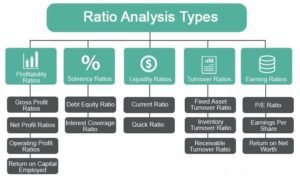
Ratio analysis is one of the best quantitative analysis tools. It is responsible for establishing various relationships between multiple aspects of financial statements. It helps to analyse the degree of change in the quantity that affects the balance sheet, income statement, cash flow statement and so on. 

Further, ratio analysis is an integral tool that is used for analysing a company’s financial performance. Financial analysis like this helps a company to take important decisions in the area of liquidity, solvency, profitability, efficiency, etc.

Common Size Statements

Often overlooked, a common size statement is as important as any other tool of financial statement analysis. The distinct element of a common size statement is that it calculates everything for a company on a base percentage basis. It directly impacts the financial statements of a business with a common figure and that is why, it is known as a common size statement. 

A common-size statement helps you to compare a company’s performance and results with another. Besides, another scenario can be that it allows the comparison of the performance of a company for two or more different periods. Notably, the comparison of performance is the key element of this financial statement analysis tool.

Comparative Statements

A company’s financial statements for different periods of time are known as comparative statements. To derive the result of comparative statements, financial analysts have to use various techniques that may compare the result of the financial performance for different time periods. Various elements of financial statements are compared and presented in the form of a table. This helps to make the data of various time periods short and crisp. 

A financial analyst course will help you to learn all about comparative statements in great detail. Do not miss out on them because without the knowledge of comparative statements you cannot become a successful financial analyst.

Fund Flow Analysis

A fund flow analysis or statement enables you to know the allocation of funds in your organisation. Without it, you cannot prepare the financial statement or utilise any other financial analysis tool. This analysis clearly shows the availability of resources in your organisation.

Apart from the availability of resources, it also helps to analyse the application of resources for a certain period of time. A fund flow statement requires a decent amount of research. It also makes it visible if there occurs any changes in the financial position of an organisation from the start of the accounting period to the end of the same.

Cash Flow Statement

A cash flow statement is another important financial analysis technique that depicts all the cash and cash equivalents inflows and outflows. If any of the cash or cash equivalents is affected by any change in the business, then the cash flow statement also brings that to light. You can easily compare cash flow statements to balance sheets to know the reasons behind the change in cash positions if occurs.

Also, a cash flow statement acts as a guide for preparing a balance sheet and a profit and loss account. It constantly allows a financial analyst to get the right cash balance of a company. Not only the inflow and outflow of cash but also the reasons behind the change in the cash position in a company are also stated in a cash flow statement. It acts as a summary of the cash account in a business.

Trend Analysis

Trend analysis is not a quantitative tool but a theory that acts as a technique for various organisations. It is based on the underlying principle that ‘what has happened in the past indicates what will happen in the future’. It is not completely a mathematical method as it uses historical data for its proper formulation.

Moreover, trend analysis can be adapted for two or more organisations at the same time or two or more periods of analysis of the performance of an organisation. It holds a series of information that helps you to arrive at some specific conclusions.

Bottom Line

These are all the major tools and techniques of financial statement analysis. If you are passionate about financial analysis and want to have a career in this discipline, then a financial analyst course can help you in this regard. Learn financial analysis with the help of the financial analysis certification course by Imarticus and excel in this field so that you can kick-start your career.

6 Skills You Need to Become a Cyber Security Analyst

Internet and digitisation are on the rise. As a result, cybersecurity threats are on the rise too. This has dramatically increased the demand for cybersecurity professionals in recent years. But since this field is still evolving, only a few people possess the skills required to become a cybersecurity analyst. Knowledge of the required skills can help you succeed in this industry. Here is a list of the essential skills needed to be a cybersecurity professional:

Networking

Cybersecurity attacks rely on computer networks to maximise damage. Isolated systems are rarely attacked. Thus, if you want to work as an analyst, you need to understand networking and data transmission within a network. This can help keep data safe. You should understand network protocols and know how to use them.

Knowledge of operating systems

cybersecurity course

If you want to become a cybersecurity professional, you need to have an in-depth knowledge of the different types of operating systems (OS). These include Windows, Linux and Mac OS. You should feel comfortable working in any operating environment. This is because a cyber threat can arise in any scenario. OS security techniques include antivirus software, firewalls and OS updates.

For example, the Kali Linux operating system provides certain tools. These tools can help in ethical hacking and penetration testing.

Coding

If you do not know how to code, your chances of growth in this field can get restricted. You should learn a few coding languages if you want to become a cybersecurity expert. There are a lot of popular coding languages used these days. These include C, C++, Python, HTML, SQL and JavaScript. These languages can help identify and fix loopholes. Thus, you will be able to defend the system against malware attacks.

Security

You need to have a solid understanding of security fundamentals for becoming a cybersecurity professional. You will be able to tackle cyber threats by analysing patterns and behaviours. Many companies are looking for cybersecurity experts who can protect cloud-based systems and devices. Thus, you must have strong cloud security skills.

The popularity of blockchain is on the rise. This is because of the security it offers. Cybersecurity analysts should know how to handle security issues related to blockchain. This will help you prepare for future challenges.

Today, many large organisations perform security audits. This is done to identify any loopholes in their security infrastructure. A security analyst should stay updated with the industry’s latest security trends and practices.

Incident handling and response

Incident handling and response refers to monitoring a security event from beginning to end. This involves investigating security incidents. You can then respond to them to neutralise or eliminate the immediate threat. Consequently, you will be able to restore the system.

When a system is breached, a cybersecurity professional needs to work as an incident response analyst. You will be expected to determine a strategy to resolve the issue.

Risk analysis

Risk analysis is a crucial function of cybersecurity professionals. It allows you to assess the impact of potential security threats. Thus, you will be able to develop strategies for preventing and responding to these threats.

All these technical skills are necessary to become a cybersecurity analyst. However, certain soft skills are also required if you wish to have a successful career in this field:

Communicating and documenting incidents

Analytical mindset

Critical thinking

Attention to detail

Ability to understand complex concepts

If you want to become a cybersecurity analyst, do feel overwhelmed by the complex nature of the job. You can opt for a certified cybersecurity course to learn the technical skills required to be successful in this field. Imarticus Learning’s cybersecurity course with placement is one of the best courses available.

This comprehensive postgraduate programme in cybersecurity covers all the necessary technical skills. It also incorporates new technologies in this field. This PG in cybersecurity course is designed in collaboration with industry leaders. This helps align with industry demands. It provides you with an immersive learning environment. It can prepare you to deal with real-world problems. You will also get several interview opportunities at the end of this course.

Fresh graduates with a Bachelor’s degree in IT / Computer Science and early career professionals with STEM / tech backgrounds are eligible to apply. This cybersecurity course with placement can be taken in two ways –

in the classroom

live training mode

We can confidently say that this is the most comprehensive and job-focused course to become a cybersecurity analyst.

Conclusion

Working in the field of cybersecurity requires a wide range of skills. Most of these skills come through practice and experience. However, to begin your career as a cybersecurity expert, our PG in cybersecurity programme is the ideal choice.

Learning and Training for Apache Hadoop Online

The amount of data generated online is increasing at a rapid pace. Organisations use raw data to derive meaningful insights to make decisions. Companies are adopting Big Data tools to process vast volumes of data from many sources. Apache Hadoop is a significant disruptor in Big Data. This technology has proved useful in capitalising on Big Data. For a career in Big Data and analytics, one must understand Apache Hadoop. A PG in Data Analytics course from a reliable and certified source is the way forward.

Let’s understand what Hadoop is all about.

What is Apache Hadoop?

Apache Hadoop is an open-source platform. It is used to store and process Big Data on a large scale. It offers reliable, scalable and distributed processing of massive amounts of data. Hadoop-based applications use data stored on clusters of commodity computers. These sysetms are inexpensive. Thus, Hadoop uses the computational power of an extensive network of clusters at a lower cost.

Doug Cutting and Mike Cafarella created the Big Data analytics platform in 2005. Many large businesses use Hadoop. It provides a cost-effective solution to store and process data. Big Data analytics is an emerging field used across many sectors. The good thing is that one can learn Hadoop online and prepare for a career in data analytics.

Applications of Apache Hadoop

Learning Hadoop can be excellent for a data analytics career. Let’s look at some of its primary uses in the real world.

Understanding customer requirements

best data analytics course

Companies in sectors like finance and telecom use Hadoop to get customer insights. For example, sales data determines when a specific product sells the most. Or why certain products sell more on particular hours or days. Hadoop can track social media data and online conversations about a business. Monitoring online data helps the business understand customers’ grievances and expectations. Hadoop’s insights can enhance the quality of service and improve customer satisfaction.

Security and law enforcement

Hadoop is also in use in the field of security. Many law enforcement agencies use it to become more efficient, proactive, and accountable. Hadoop enables them to detect suspicious activities and security breaches in real-time. The police department uses it to predict criminal activities and catch criminals. The national security agency of the USA uses it to prevent terrorist attacks.

Financial institutions also use Hadoop to detect any fraudulent transactions.

Healthcare intelligence

Healthcare providers and healthcare insurance companies are using Hadoop-based healthcare intelligence apps. These apps help process large data sets and devise smart business solutions at a lower cost. Hadoop’s scalable and inexpensive features can accommodate dynamic data and scale.

Financial trading and forecasting

Hadoop is quite popular in the field of financial trading. Its algorithm allows it to scan markets with predefined conditions and find trading opportunities. Most trading decisions are made using Hadoop in high-frequency trading.

Improving science and research

Hadoop plays a major role in the research field as well. A considerable amount of relevant data is extracted and analysed to conclude early. This saves time and effort and improves the quality of output.

Optimising business processes

The most common application of Hadoop is to optimise a company’s performance. It can improve various business processes. Workspaces are improved by monitoring the employees’ behaviour. Most business decisions can be taken with the help of insights derived using Hadoop.

Takeaway

Apache Hadoop has plenty of other applications as well. The good news is that one can easily learn Hadoop online. If you want a successful data science career, you need to build your knowledge base in the field. We at Imarticus Learning offer one of the best data science courses with placement. We have developed our Post graduate program in data analytics and machine learning after having an in-depth understanding of the data science job landscape. The data science course with placement has a cutting-edge curriculum that teaches all the in-demand data analytics tools and job-relevant skills. Applicants can also learn Hadoop online in this course.

This PG in data analytics course will transform learners into expert data scientists as the course includes real business projects, relevant case studies, and mentorship from industry experts. It guarantees interview opportunities for learners, as we have over 400 placement partners. Fresh graduates and early career professionals (0-5 years of experience) with a technical background are welcome to apply. Anyone interested in enrolling in the program can enquire about it or chat with us.

Data science is a highly rewarding career path with many job opportunities across several sectors. Our data science courses with placement will set anyone inclined to be a data analyst on the right path.

The various stages of anti-money laundering

Money laundering involves hiding funds through unlawful means. It is a serious offence. Criminals hide money through legal financial systems. Money laundering hides the origin of the funds. Criminals make a profit from such illegal activities.

There are local and global anti-money laundering (AML) regulations. They address money laundering.

Money laundering happens on a vast scale. This makes it difficult to address the issue. AML wants companies to have legal obligation. It helps companies understand money laundering risks. They have to know the stages of anti-money laundering. They can then address money laundering challenges.

An anti-money laundering course helps you understand key AML concepts. You learn to become AML compliant.

Imarticus Learning’s Investment Banking Course will teach you all about anti-money laundering. Placement is guaranteed.

Anti-money laundering laws are important for businesses. They combat money laundering. Learn about anti-money laundering in this article. You will also get to know about activities and controls.

What is Money Laundering?

Money laundering involves disguising illegal money. Criminals do money laundering in various ways. Examples include selling arms or terrorism funding. Others are contraband smuggling and human trafficking. There are three stages of money laundering.

Money laundering stages

1.      Placement

Criminals launder illegal funds into legitimate financial channels. They make them appear as legitimate sources of income. Examples include fake invoices and cash transactions.

2.      Layering

Illegal funds get placed within financial channels. Then, layering is done to hide the illicit fund origin. Criminals divide huge funds into small transactions. This helps them comply with AML regulations. It blurs the audit trail. Money laundering is impossible to detect due to layering.

3.      Integration

Laundered money gets withdrawn from legitimate accounts. Criminals then re-invest these funds through various smaller transactions. They do this to not attract the attention of AML authorities. They could pay loans to the directors of a shell company.

Why Businesses Should Prevent Money Laundering?

best investment banking courses with placement in India

Businesses should prevent money laundering. They should stop the illegal use of money. They should report any fishy transactions to the authorities. If they fail, then they will face action. They have to pay penalties or go to prison.

What is Anti-Money Laundering?

AML guidelines aim to stop money laundering activities. They prevent criminals from laundering money.

Anti-Money Laundering Controls

1.      Know your customer (KYC)

Businesses must be careful when identifying customers. Through KYC, businesses get to know about any illegal use of funds.

2.      Upgrade technology

Businesses should adopt the latest technology. It will help identify any fishy money laundering activity. Examples of technologies include AI and Big Data. Technology helps maintain accurate records of all transactions. They create an audit trail.

3.      Regular cross-communication

Anti-laundering parties include law enforcement authorities and governments. They also include AML regulators. Information exchange between them increases AML vigilance. Their efforts build public trust.

4.      Standardised systems

AML-compliant systems establish anti-fraud measures. Without them, it becomes difficult to communicate. A uniform system can prevent money laundering activities.

5.      AML training

The right staff is needed to detect money laundering activities. You should know investment banking concepts. Enrol yourself in AML courses. For example, Imarticus Learning’s Investment Banking Course.

Conclusion

Businesses use anti-money laundering measures to prevent fraud. The Imarticus Learning course helps you learn about AML regulations. Imarticus Learning’s Investment Banking certification course helps you develop the necessary skill sets. It guides you toward a career in banking, treasury or clearing services.

For more program information, visit our program webpage. There is chat support. You can also go to our training centres. We have centres in Mumbai, Thane and Pune. They are also there in Chennai, Bengaluru, Delhi, Gurgaon and Ahmedabad.