What Is Credit Risk for Banks?

Last Updated on 2 years ago by Imarticus Learning

What is Credit Risk?

One of the primary functions of commercial banks includes granting loans and advances to its borrowers, the borrowers can be individuals or corporations. Credit risk can be defined as the risk of default or non-compliance to legal contractual obligations on the borrower’s part. Simply put, it’s the scenario where the borrower fails to repay the borrowed amount to the bank within the period agreed upon previously as mentioned in the contract. Banks can also face credit risk situations on account of other cases such as interbank transactions, trade financing, exchange transactions, etc.

In more traditional terms, credit risk means that a lender may not receive the owed interest and the principal amount from the borrower which might lead cash flow interruptions for the lender and increased cost of loan collection.

It is hard to predict the risk of default in many cases but it can be assessed based on the buyers profile and transaction history to make more informed decisions and mitigate the losses. Credit risks are calculated by factoring in the borrowing party’s ability to repay the loan as per the give terms and conditions. The 5C approach is implemented by the lenders in the assessment of the credit risk; condition, capacity, capital, collateral, credit history.

What causes Credit Risk?

Now that we know what credit risk is, let’s find out what causes these undesirable credit risks for banks and other financial institutions.

Credit Concentration

The credit concentration factor is one of the primary reasons why we see cases of high credit risk in banks and financial institutions. In a layman’s term, it can be understood as putting all your eggs in one basket. So what does putting all your eggs in one basket does? Well, it increases the probability of loss because if you drop the basket you might lose all the eggs at once. Similarly, when a bank or a financial institution is focused on providing loans and advances to a specific sector, industry or community it might face high credit risk in case of an uphill event in those sectors or industries.

Let’s understand this situation with an example; suppose that a bank is only providing loans to real estate borrowing needs. Now if an economic downturn happens and there is a slump in the real estate sector, the bank will not be able to recover the amount and since it only provides loans to that sector it’ll run a risk of closing its operations.

The Credit Issuing Process

The credit issuing process is very crucial to the subject of risk assessment. This is the first stage where risks could be mitigated by proper assessment of the borrowing party as per the guidelines and norms of the banking institutions. The loopholes in the credit-issuing process can be due to various factors including the bank’s credit-granting policy and the monitoring process. Let’s find out about some of the loopholes in the issuing process that can cause major credit risk problems.

Inadequate Credit Assessment

Generally, banks take the 5C approach before granting credit to the borrower to asses the credit risk associated with the lending process. The 5Cs includes collateral, capacity to repay, capital, condition of loan and credit history. If any information is missing on these 5 grounds then the Credit Assessment process will fail to predict an accurate picture of the borrower’s ability to repay the loan amount.

Incompetent Monitoring

Monitoring is more like an after-sale service that benefits the bank. Monitoring has two aspects; one includes overviewing the repayments made by the borrower to ensure that it comes promptly. The other aspect includes monitoring the status of the collateral or security pledged to the bank for the credit amount. Generally, people take the loan against property, the value of the property can deteriorate over time and it might increase the probability of default given that the buyer will have less to lose from the default than earlier.

Also Read: What is Credit Risk Assesment

What is a Credit Risk Analyst Salary?

Last Updated on 5 years ago by Imarticus Learning

Who is a Credit Risk Analyst?

Understanding the role of a credit risk analyst requires and introduction to credit risk. Credit risk is the risk of default on a loan amount by the borrower. It is the probability of failure to repay the borrowed debt to the lender as per the agreement within the specified period. Credit risk causes cash flow disruptions for the lending party and can lead to severe losses.

The role of a credit risk analyst entails reviewing and assessing the financial history or credit history of the borrowing party to determine if they are eligible for the loan or not. The process of evaluating and assessing the credit risk is a complex one and doesn’t limit itself to a simple yes or no answer for the candidate.

The process of credit risk analysis involves applying a lot of financial techniques, making cash flow projections, predicting scenarios, etc. by the analysts. The analyst is required to calculate the probability of default and the extent of loss in case of default.

From a broader perspective, the role of a credit analyst has three aspects to it, the first one is gathering relevant information about the borrower followed by analyzing the information collected and finally making a decision based on the facts collected and analysis carried out.

How to Be a Credit Risk Analyst?

Credit risk analyst is one of the most desired professions in the banking and finance industry, the importance of the role has multiplied after the 2008 global financial crisis that led to a major recession globally. Banks and financial institutions are more focused to eradicate bad credits from their portfolios to ensure smooth cash flow to the business.

To get an entry-level position in the credit risk analyst field you need to have a bachelor’s degree in maths, statistics, economics, etc. The bottom line is you have to be good with crunching numbers; you need to be proficient with numbers. It requires you to have good analytical skills to make sense of the data gathered and come to a conclusion.
The role that incorporates evaluating consumer credits is easy to obtain and requires an associate degree with some relevant experience.

The business credit evaluation role requires you to have in-depth knowledge of finance and accounting principles. To have an added advantage you can also obtain the Credit Risk Certification by Risk Management Associations.

Remuneration for the role

A credit risk analyst is one of the most sought after career choices for people trying to make into the finance industry. It requires you to have a strong quantitative understanding and analytical know-how to perform the job. The role is very crucial to the smooth functioning of the banking and finance industry and a lot is riding on people performing in the capacity of the credit analyst. The remuneration is very lucrative and often reflects the hard work and commitment required to do the job.

As per 2019 reports, the average annual salary of a credit risk analyst in the United States was recorded approximately equal to $62,500. The salary varies greatly with your work experience, skills, and academic background. The average annual compensations for entry-level credit analyst in the US who have less than one year of work experience stands at $56,000. The salary estimates for people with considerable relevant work experience, usually more than 5 years, stands at $77,000.

The remunerations figures vary greatly with the city you are employed in and the organization that you work for. For the United States, the highest remuneration for the role of credit analysts was in New York City followed by Dallas and Chicago. The highest paying employer was Bank of America followed by Freddie Mac, JP Morgan, Goldman Sachs, City group.

What Is a Credit Risk Analyst?

Last Updated on 5 years ago by Imarticus Learning

Before jumping over to who is a credit analyst and what are their roles and responsibilities let’s put things in context and understand the basics of the credit analysis process starting with credit risk.

What is Credit Risk?

Credit risk can be simply defined as the risk of default on the debt amount when the borrowers fail to make the required payments as per the contract. The loss accounted could be partial or complete leading to disruptions in cash flow for the lender and increased cost of collecting the loan amount.

In an efficient market, the cost of borrowing varies with the degree of credit risk associated based on the borrower’s profile. A credit check is usually performed by the lender before advancing any credit to the borrower; the credit assessment is based on various parameters that can help determine the repaying capacity of the borrower.

The process of credit analysis

For any lending institution, it is important to evaluate the credit risk profile of the borrower to minimize and cut down on its losses. The process of credit analysis helps in assessing an applicant’s credit request or debt issue from companies to establish the credit risk associated with them. It is a method that aids in evaluating the creditworthiness of an individual or a corporation.

On the technical side of it, the credit analysis process includes applying various financial analysis techniques, creating future projections and evaluating future cash flows. It also involves judging the candidate on multiple aspects such as credit history, collateral provided ability to manage the loan amount, other sources of repayment, etc. The probability of default on the debt and extent of loss in case of default is also calculated by analysts to depict a holistic picture.

Credit Analyst Roles and Responsibilities

Now that we are familiar with the credit analysis process let’s see what does a credit analyst does? To put things in context here, a credit risk analyst is a person responsible for carrying out the whole credit analysis process.

From a broader perspective, the role of a credit risk analyst involves reviewing and assessing the financial history of a person or corporation to determine if they are a good fit for the desired borrower profile. The job of an analyst here is to determine the risk of default to the lending party.

It’s not always black and white while determining the credit risk profile, there is a big grey area in most of the cases. A credit risk analyst can’t simply say yes or no to a loan application. After their comprehensive assessment, the loan is structured depending upon the creditworthiness of the borrower, a risky borrower could be given a loan at a higher interest rate.

The credit analysis process involves a series of steps to be carried out by the analysts to present a holistic picture. The first step deals with relevant information gathering; this includes collecting relevant personal information about the applicant, gathering information about the business for which loan is required and information regarding the source of repayment and the collateral pledged to the lending party.

The second stage of the analysis process deals with analysing the information collected. This includes analysing the accuracy of the information gathered, the financial stability of the borrower, the effectiveness of the project/business, the possibility of repayment of the loan amount.

The final stage deals with the decision making step by the analysts based on the credit risk associated with the applicant, if the credit risk is in the acceptable range then the loans are granted, if not, the request for a loan is denied by the credit analyst.

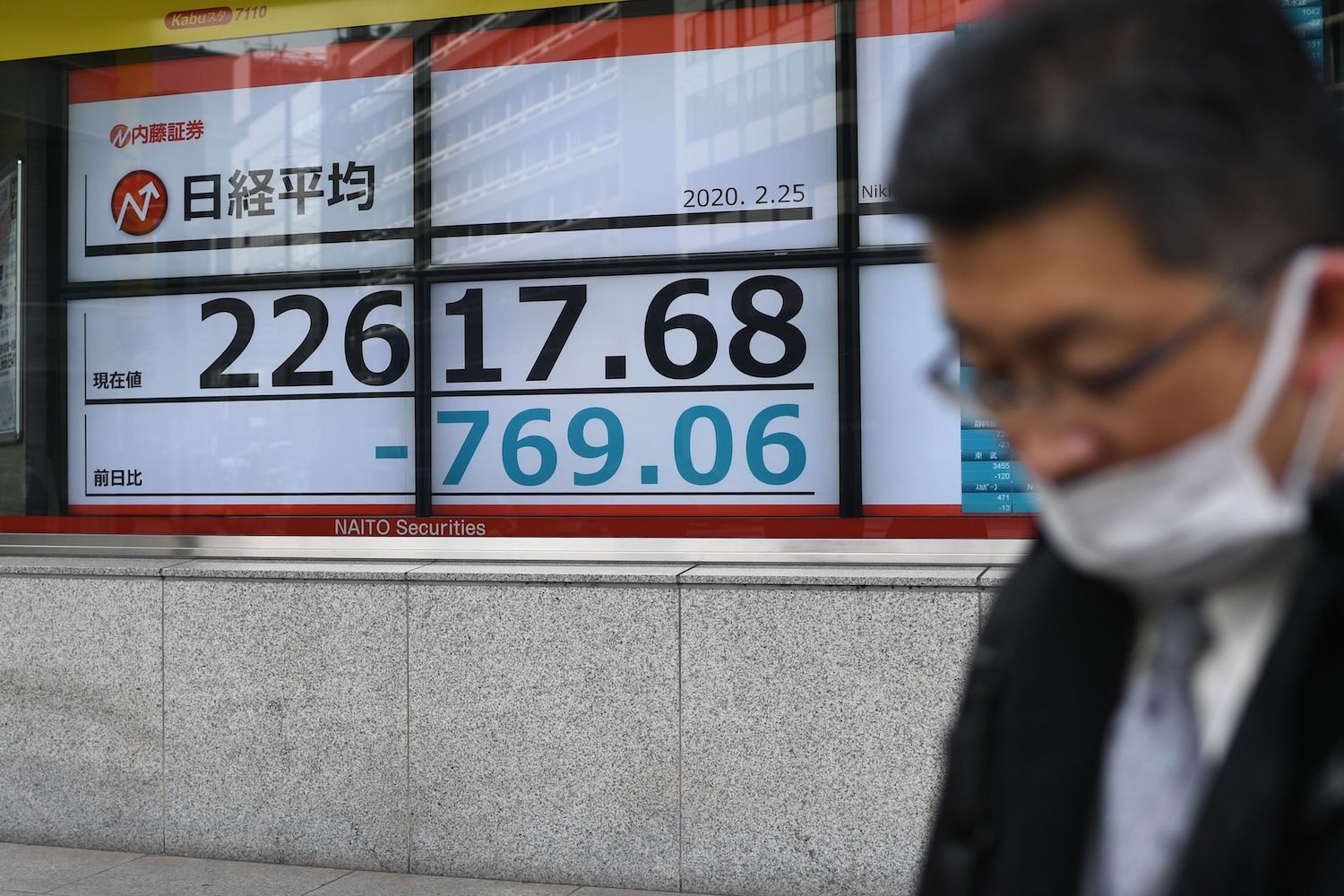
Corona Virus and Impact on Capital Markets!

Last Updated on 3 years ago by Imarticus Learning

The capital market involves investments for the long term in an entity’s capital constituents i.e., equity instruments and debt instruments. The entity uses these sources of funds to produce goods and services.

The COVID 19 disease, on the other hand, involves choking breaths, killing people, and adversely impacting investor confidence in capital market financial instruments. Consequently, COVID 19 has obstructed new investments and affected existing long-term investments. A system that cannot breathe cannot generate energy and in the absence of energy, all else fails.  Frozen sales activity due to increasing uncertainty is a boost for the savings driven economy, while consumption has reduced globally – from essential commodities like oil to trade of everyday requirements thereby reducing spending. Only time will tell if this is a working capital glitch which can be resolved or if there is much more to this than meets the eye.

Though the COVID 19 seems to be an Atlas that bears the brunt for everything wrong happening to the capital markets, the ever prevalent disconnect between entities that produce basic necessities like food, clothing, shelter, health and education and the financial system is just as much responsible for the ongoing misery. This disconnect has let COVID 19 seep through the openings and crumble supply chains due to social distancing, reduced activities, and the flow of data and information in our generally fast-paced era. On the other hand, consumption has reduced worldwide – from essential commodities like oil to trade of everyday requirements.

Inversion of yield curves is a primary indicator of a negative outlook to long term yields from investment in debt instruments. However, most other capital market representations, including the stock markets, in the current scenario are just as imperfect as the information available to them.

In light of the current scenario, cash, in line with the definition of financial assets (IFRS) remains the most preferred financial asset. The consequent liquidity crises in the investment circuit thus, due to a preference for cash, severe short-term losses, and uncertainty, have affected long term investments. New long-term investments have been blocked, and existing long-term investments are being sold off to recover for the losses incurred in short term trades.

The uncertainty due to the newness of the situation to the present market gurus leaves prediction of outcomes merely a fool’s errand. In the absence of reliability in the current investment system, hoping for homeostasis; while we prepare for a further cut in consumer spending to hoard cash seems to be the only certainty.

Feel free to visit for more information: https://www.linkedin.com/showcase/4821209/admin

Apache Spark or Hadoop: Which one is Better?

Last Updated on 6 years ago by Imarticus Learning

With the advent of the internet, data and its distribution have been in the prime focus. With millions of interconnected devices capable of distributing data anywhere in the world at any time, data and its usage is likely to grow in geometric progression. Such large sets of data, big data, has to be analyzed to learn about patterns and trends associated with it.

Data analysis has taken the business world to the next level and now the focus is on creating tools that could process the data faster and better. Apache Spark and Hadoop are two technological frameworks introduced to the data world for better data analysis. Though Spark and Hadoop share some similarities, they have unique characteristics that make them suitable for a certain kind of analysis. When you learn data analytics, you will learn about these two technologies.

Hadoop

Apache Hadoop is a Java-based framework. It is an open-source framework that allows us to store and analyze big data with simple programming. It can be used for data analysis across many clusters of systems and the result is generated by a combined effort of several modules like Hadoop Common, Hadoop Distributed File System (HDFS), Hadoop YARN and Hadoop MapReduce.

Hadoop: Advantages and Disadvantages

Advantages Disadvantages
Stores data on distributed file and hence, data processing is faster and hassle-free It is more suitable for bigger files. It cannot support small files effectively.
It is flexible and allows data collection from different sources such as e-mails and social media. It features a chain form of data processing. So it is not a choice for machine learning or other solutions based on Iterative learning.
It is highly scalable The security model is low/disabled. Data can be easily accessed/stolen
It does not need any specialized system to work, so it is inexpensive It is based on the highly exploited language – Java; so easier for hackers to access sensitive data.
It replicates every block and stores it and hence, data can be recovered easily. It supports only batch processing.

Spark

This framework is based on distributed data. Its major features include in-memory computation and cluster computing. Thus, the collection of data is better and faster. Spark is capable of hybrid processing, which is a combination of various methods of data processing.

Spark: Advantages and Disadvantages

Advantages Disadvantages
Dynamic data processing capable of managing parallel apps It does not have a file management system.
It has many built-in libraries for graph analytics and machine learning algorithms. Very high memory consumption, so it is expensive


It is capable of performing advanced analytics that supports ‘MAP’ and ‘Reduces’, graph algorithms, SQL queries, etc. It has less number of algorithms
Can be used to run ad-hoc queries and reused for batch-processing It requires manual optimization
Enables real-time data processing It supports only time-based window criteria, not record based window criteria
Supports many languages like Python, Java, and Scala Not capable of handling data backpressure.

Spark vs Hadoop

Feature Spark Hadoop
Speed fast slow
Memory needs more memory needs less memory
Ease of use Has user-friendly APIs for languages like Python, Scala, Java, and Spark SQL Have to write a MapReduce program in Java
Graph Processing good Better than Spark
Data processing supports iterative, interactive, graph, stream and batch processing Batch processing only

Conclusion

Both Spark and Hadoop have their strength and weaknesses. Though appears to be similar, they are suitable for different functions. Choosing Spark or Hadoop Training depends on your requirement – if you are looking for a big data framework that has better compatibility, ease-of-use, and performance, go for Spark. In terms of security, architecture, and cost-effectiveness, Hadoop is better than Spark.