How Is Ethical AI Different From Fair AI?

Artificial Intelligence is turning out to be an integral part of every part of businesses and human lives at a surprisingly faster pace. As much as it is transforming lives and processing easier, it comes with its share of drawbacks.

The topic here is the ethical and fair side of AI that has already proven to be a problem even for the big giants like Amazon and Apple. So the question here is how to rectify the problem without compromising the usefulness of AI.

In order to solve the issue, it is important to understand the difference between ethical AI and fair AI. Although they are not much different from each other, knowing the thin thread that separates them is crucial.

The dilemma of ethical AI

While AI  algorithms help replace several tasks which usually the human mind accomplishes, there are several pressing issues regarding the ethical outcomes it causes. Both  AI and Machine learning requires data that is fed manually, there is still no definite criteria on what qualifies as non-biased that leads to an ethical result.

If the algorithm leads to an unwanted advantage for anyone while someone else ends up on the receiving end it is considered unethical. The problem is defining what are ethical terms and what constitutes unethical. To solve this issue, leading brands have slowed down their progress with regard to the AI development in their business end.

An ethical AI will be the one that can accomplish ethical prediction and quality outcomes without impacting humans in one way or the other.

When is it a fair AI?

When it comes to fairness in AI predictions and outcomes, it is all about perceptions. A fair decision to one might appear unfair to another. So it is not easy to judge the AI program as unfair or fair.

While there are several issues with the unfair outcome of AI programs, what it really needs is a smarter and sensible approach.

  • It needs cooperation between humans and the AI system to evaluate and judge fairness. The employees need to be more intuitive and apply more common sense to do the job well.
  • As humane as AI seems to be it needs a bit more humanity than already has. Here, it is the company’s choices and values that can be used to determine the fairness in the AI system under development or use.
  • While creating the algorithms even the smallest factor and the most unimportant aspect should also be considered to create a more effective filter. This approach prevents a wider range of unethical and unfair decisions by the AI system.

The future of ethical AI

Owing to the past mistakes in the field of AI, many of the Artificial Intelligence training courses are trying to include a moral side in their curriculum. Since most of the unfair decisions by the machine is due to the social and economical perception by the humans, it needs correction right from the root level.

difference between ethical AI and fair AIIn order to pursue an Artificial Intelligence career, one must start thinking ethically and be able to decide between what is fair and unfair for the right matters. This is where critical thinking comes in handy.

Though it is difficult to create a Fair AI, it is easier with Ethical AI as long as it does not cause a clear bias with many factors in consideration.

Conclusion

What it shows is that machines can only impersonate humans and they are yet to reach that feat emotionally and for logical thinking capability. For them to reach that point, humans must change their views, perceptions, and work ethics.

How Artificial Intelligence Training Helps to Boost The Fashion and Advertising Agencies?

In a fast progressing world such as ours, the need for an efficient tool to speed up the process of our work has increased. With that demand came the answer to all our problems, Artificial intelligence (also known as AI).

At this moment in time AI is being used across almost all major industries. A large number of establishments not using AI face being left behind in our extremely competitive economic race.

In this article, we will be shedding light on its advantages in the fashion and advertising industries.

AI and the fashion industry:

AI has established its role in the fashion industry quite firmly. Fashion retailers are going bankrupt due to the lack of importance given to AI. Due to this high demand, each year, the total expenditure on AI in the fashion industry is estimated to reach a whopping $7.3 billion by the end of 2020.

In the fashion industry, where only the top 20% of global brands are considered to be profitable, the need for a tool to maintain their relevancy is immense. It allows easy access to large chunks of data, customer personalization, and various other services which the fashion companies will not be feasible to run without.

AI is used mainly in three areas:

  1. Apparel design: Due to its ability to collect intricately detailed data sets, fashion companies are using this technology to better satisfy and understand customer needs and also be able to design better clothing from feedback. Zalando which is a German-based fashion platform has been designing its clothes using AI which picks up information depending on a wide set of customer choices which range from the material of clothing to clothing style and color.
  2. Making manufacturing easy: Fashion trends are fast-changing and there is a need for the pattern of change to be identified. AI is able to do this with ease while also being able to supply the apparel to shelves much faster than a normal retailer. Taking advantage of this, companies can confidently provide immediate service thus gratifying their customers based on their demands and needs. Examples of companies using this are brands such as Zara, TopShop, and H&M.
  3. Selling merchandise virtually: AI has the ability to break down the walls between the online and in-store shopping experience. This is being done through augmented and virtual reality technology, allowing customers to access apparel online using AR. Certain brands like Tommy Hilfiger are using virtual reality to create virtual pop-up retail stores.

Now you may ask how this works. AI is largely used in the fashion industry in the form of chatbots using which the fashion brand gathers information about the customer’s needs and desires. It has become an indispensable tool and is able to identify the customers fast changing desires.

AI and the Advertising industry:

AI plays a very important role in the advertising industry as well. It is able to identify elements that will resonate with the viewers, creating ads without any human involvement. It is also able to perform audience targeting and ad buying. Major platforms are using AI, taking advantage of its ability to determine if viewers would click on the ad they are being presented with.

It is able to intelligently identify and segment audiences, build ad creative, test variations, improve performance and also optimize spend. It has proven to be advantageous to digital advertising and the careers of marketing experts who plan and run ad companies.

Advertising at scale is something that is tricky and impossible for humans to perform and AI comes in quite handy here. The technology has the unique ability to detect patterns and predict what changes need to be made to a campaign to improve it against its specific KPI. This does not take days, hours, or even minutes but can be done in a span of just a few seconds.

The advantages of AI in advertising are hence as follows:

  1.  Increasing revenue through analyzing data at scale
  2. Reducing costs by acting on data faster and automatically
  3. Creating a massive competitive advantage

It plays a key role in real-time advertising, buying, and selling. This is most popularly done with the help of third-party apps like Facebook, Instagram, and Snapchat. These ads are suggested through AI looking at the links that are promoted by the user.

Taking all these facts into consideration it is pretty clear that a career in AI, especially in our day and age has huge scope and its benefits are undeniable! AI is transforming the fashion and the advertising industry as well as many other industries and thus considering artificial intelligence training at this point is a very smart thing to do!

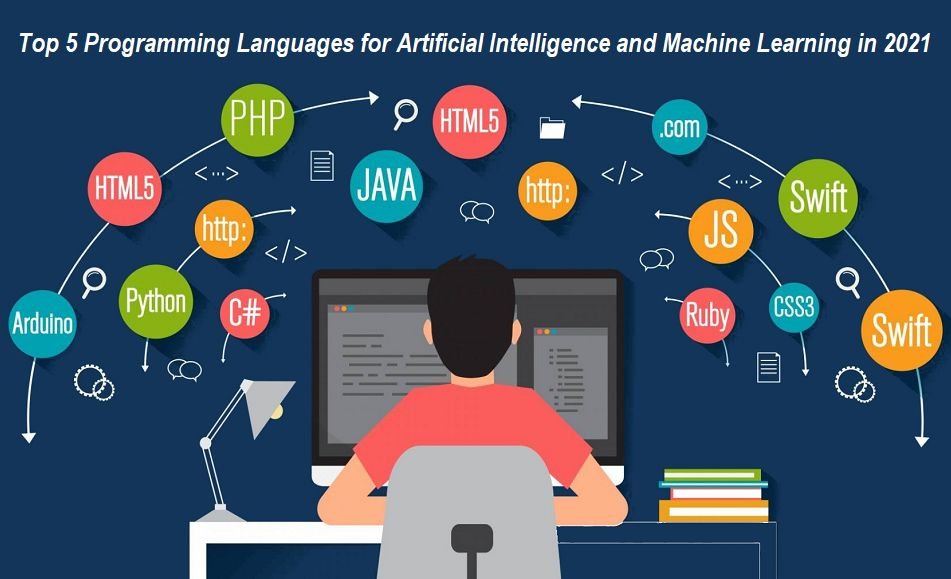
Comparing Different Programming Languages For Machine Learning!

Machine learning is a fascinating field. However, if you are just starting out in your machine learning career, then deciding where to begin is the toughest part. There are plenty of programming languages available that support machine learning. And each of these has its own uses and values.

Machine Learning CourseIn this article, we will dive deep into the different types of programming languages available along with their details to help you select the right one for you.



Let’s get started.

  • Python
  • Java
  • C++
  • MATLAB
  • R
  • Julia

Python

Python is one of the most famous programming languages and is used worldwide. It is used by over 8.2 million developers across the world. It has a vast library that is easy to access, handle, process, and transform data. Python offers better readability, more independence, and less complexity. Making it the No. 1 choice for machine learning engineers. However, the major shortcoming of Python is that it is relatively slower than C++ and its multithreading support is not good.

Java

Java is popular among those machine learning engineers who have a background in Java development. These engineers do not need to learn a completely new language for their machine learning implementation. Java offers easy dubbing, enhanced user-interaction, ease of use, and graphical representation. It also makes the scaling task easier for engineers. But Java is a slow and memory-consuming platform that requires significant memory space for running.

C++

C++ is a great programming language for building libraries. When it comes to game development, C++ is the most used language. Some C++ packages also support Tensorflow and Microsoft Cognitive Toolkit (CNTK) for deep learning. They come with OpenCV for computer vision. Shogun and MLPack are used for machine learning. DyNet, OpenNMS, and ANN support neural networks. However, C++ is mostly syntax-oriented, which is quite complex for beginners.

MATLAB

MATLAB – Matrix Laboratory is an innovative programming language. It is easy to use and understand language for machine learning aspirants. It supports GUI and is not constrained with complex syntax. It can easily perform code generation functions. It comes with predefined functions and helps optimize the coded models. Though MATLAB is a good language, it has its own shortcomings. MATLAB is a bit costly and is not easily available for free use. One can get a 30 days trial version with MATLAB, but for further use, it has to be bought.

R

R is a good alternative programming language for Python. With a userbase of over 2 million, R is used for various machine learning applications. It has significant benefits for statistical purposes. It is an open-source programming language with a good library. It supports matrix implementation, vectors, and other data structures. From data visualization to model evaluation, data sampling, data analysis, and more, R offers diverse packages. However, R lacks basic security and has lesser speed.

Julia

Julia is a dynamic programming language that can be used for a variety of general-purpose tasks. It works exceptionally well for computational and numerical analysis. It supports nearly all types of hardware and is used by major corporations like NASA, Apple, Oracle, etc. The codes of Julia are universally functional. They employ larger scalability. But it takes too much time to plot the data. Its packages are also not much mature.

Every programming language has its own pros and cons. Depending on your use, you should choose the one that best serves your purpose. A machine learning course can provide you with a deeper understanding of these languages along with their efficient use.

Certification in Artificial Intelligence and Machine Learning in Collaboration with E & ICT Academy, IIT Guhawati, and Imarticus Learning

Machine learning is powered by AI. With ML, we can power programs that are easily updated and modified to adapt to new environments and tasks- resulting in quick progress on difficult projects. ML and AI are almost synonymously used in tandem when it comes to the latest tech trends. And, AI has disrupted many industries forever – like SaaS, Manufacturing, Defense, Analytics, public sector, and so on.

If you learn machine learning through the best Machine Learning & AI course, you are likely on a fast and high-growth career trajectory.

Here is why!

#1. ML & AI Are Skills of the Future

Skills in ML can affect your long-term employment prospects because the field is projected to experience rapid growth.

With the emergence of advanced technologies like the Internet of Things (IoT), Machine Learning is experiencing a certain surge in demand and popularity.

If you learn machine learning by taking up data science certifications, there is an increase in the probability that you will have better job prospects as compared to someone without ML skills.

#2. Solve Real-World Problems

There is a lot of talk about how AI will replace jobs, but the truth is it will create new job opportunities. As an ML engineer, for instance, you get to work on projects that have a big impact in the real world and lead to business solutions that are meaningful.

#3. Versatile Growth Opportunities in the Data Sciences

Machine learning and artificial intelligence (ML &AI) skills are beneficial to a data science career. Both positions give you the opportunity to let your knowledge of both fields expand. Switching back and forth between roles can quickly enable you to become an invaluable resource in today’s rapidly changing world.

You want to have an advantage as early as possible so that you can learn about solving new and undiscovered problems. When the time comes, these skills will be in great demand and allow you to secure a career path on the rise.

What does a growth path in this domain look like?

Typically, a machine learning engineering career path begins with being a Machine Learning engineer. Machine learning engineers develop applications that automate common tasks previously done by humans and take care of the repetitive ones for humans to do efficiently without error.

When you earn a promotion as an ML engineer, you are then promoted to be an ML architect! Their responsibility is developing and designing prototypes for applications that need development.

There are a few other roles in the field which one could take on as well. These include ML data scientists, ML software engineers, senior software architects, and more.

New tech arenas keep developing into this space. So, keep your interest, skills, and industry demands aligned for the best growth!

How to make a successful career in AI & ML?

Want to learn machine learning with the best Machine Learning & AI course?

certification in Artificial Intelligence and Machine Learning

Imarticus brings to you the class-leading AI & ML certification in collaboration with E&ICT Academy of IIT-Guwahati.

Our highly-rated program has fostered hundreds of successful professionals serving the industry worldwide. Your chance to be a part of this prestigious career trek begins with us.

Enroll with Imarticus now!

What Do AI & ML Engineers Do in Real World Scenarios?

Worldwide industries are identifying AI/ML engineers as one of the fastest-growing job titles. Since the trend is likely to last long, this means there are millions of opportunities for the present-day freshers and those planning a career. Here is all you need to know about what AI/ML Engineers are and what they do!

What Is an Artificial Intelligence and Machine Learning Engineer?

Over the past years, the role of an ML engineer has evolved. Typically, they are computer programmers, but their focus extends beyond programming to perform specific tasks that enable machines to take actions without being specifically directed to perform those tasks.

What does a Modern-day AI/ML engineer do?

Bridging Model-Building and Production

The general purpose of an ML engineer is to act as a bridge between the statistical & model-building work of data scientists & to build production-ready & robust AI/ML systems, platforms & services. The AI/ML Engineer use their knowledge of & combine it with programming and software engineering skills to enable easier use of and access to said models and analyses.

They may translate the work of data scientists from environments such as python/R notebooks analytics applications, automating model training & evaluation processes.

Improving Systems

AI/ML engineer is responsible for developing machine learning algorithms to improve systems or processes by automating tasks that otherwise would be physically executed. The job role demands skills in programming, analysis, & an understanding of tools & techniques used to apply AI/ML to real-world tasks. With the rapid increase in the use of ML, more programmers incline Machine Learning & AI courses that educate them in relevant techniques & tools.

Artificial Intelligence and Machine Learning coursesImproving Operational Efficiency

Machine learning engineers spend their time doing several things like exploring data, organizing, cleaning, and analyzing data to find patterns & attributes to build machine learning models.

They are a part of a brainstorming team with product managers on customer needs & are expected to come up with new ideas. AI/ML Engineers monitor and fine-tuning ML models to improving team productivity.

Task-Oriented Machine Learning

A machine learning engineer monitors, optimizes, tests, trains, and deploys machine learning algorithms for specific tasks. At some places, ML engineers are expected to implement and carry on more ML-specific transformations, such as outlier detection, dimensionality reduction, feature engineering, missing value imputation, normalization, etc. Once the data is ready for the ML algorithm, the ML engineer is responsible for setting the training algorithm appropriately and executing it in a reasonable time to produce a satisfactory performance.

Grow and Learn Machine Learning with Imarticus Learning:

Explore the opportunity to learn Machine learning from the Best ML & AI Course that boosts your Data Science Career. An industry approved program designed by E&ICT Academy, IIT Guwahati, and Imarticus Learning for future Data Scientists & ML Engineers, this program builds a strong foundation of Data Science concepts, and industry experts will help you learn the practical implementation of Machine Learning, Deep Learning, and AI techniques through real-world projects from diverse industries.

This course goes a long way towards helping you unlock lucrative career opportunities in the coveted fields of Data Science and Artificial Intelligence. The 9-month extensive program will help you prepare for the Data Scientist, Data Analyst, Machine Learning Engineer, and AI Engineer roles.

The objective of this state-of-the-art Artificial Intelligence and Machine Learning Certification Course is to perfectly prepare you for the AI and Machine Learning job roles you aspire for

For further details, contact us through Live Chat Support system or visit our training centers in Mumbai, Thane, Pune, Chennai, Bengaluru, Hyderabad, Delhi, Gurgaon, and Ahmedabad.

Jobs of The Future: Artificial Intelligence and Machine Learning

COVID-19 has inverted the ways we lived. The jolts can be felt across workplaces, particularly where it has forced organizations to reduce activities, including leisure, restaurants, oil & gas, and airlines. Throughout COVID-19, the technology industry remains strong. The pandemic spurred technological innovation and enabled many to continue work despite lockdowns & other pandemic mitigation measures.

Benefits of AI?

  • Automation: AI gives a better understanding of machines to interpret a situation or perform necessary action. Tasks can be automated with minor human intervention through AI/ML. While automation takes place, the roles requiring human attention automatically become more productive with more time to focus on them.
  • Speed: AI is efficient in expediting much work when compared to humans. AI lets us complete tasks flexibly before deadlines. This reduces human labor & provides great speed & efficiency.
  • Accuracy: AI eliminates maximum chances of error. The machine always acts according to a fixed AI algorithm; there are fewer errors in every given scenario. In short, AI defines new limits of accuracy & precision with lesser risks.
  • Exploration: AI has helped to discover many new sites, for example, volcanic sites, ocean beds, etc. Humans being vulnerable to these sites, can’t reach and survive these scenarios. Robots are meant to go to these places and collect data.
  • Data Collection & Analysis: Data analytics is the future technology in today’s business world. Industries & businesses analyze valuable chunks of data & extract helpful information.

Applications of AI?

Artificial Intelligence and Machine Learning courses in IndiaAI is applicable in every conceivable field & recent advancements are increasing the relevance of AI in every sphere. Here are the top applications of AI:


  • Speech Recognition: AI allows us to convert spoken words into digital content. Speech recognition has various uses like voice-enabled messaging, content writing, voice-controlled remotes, & appliances. Speech recognition is also used for authorization & validation.
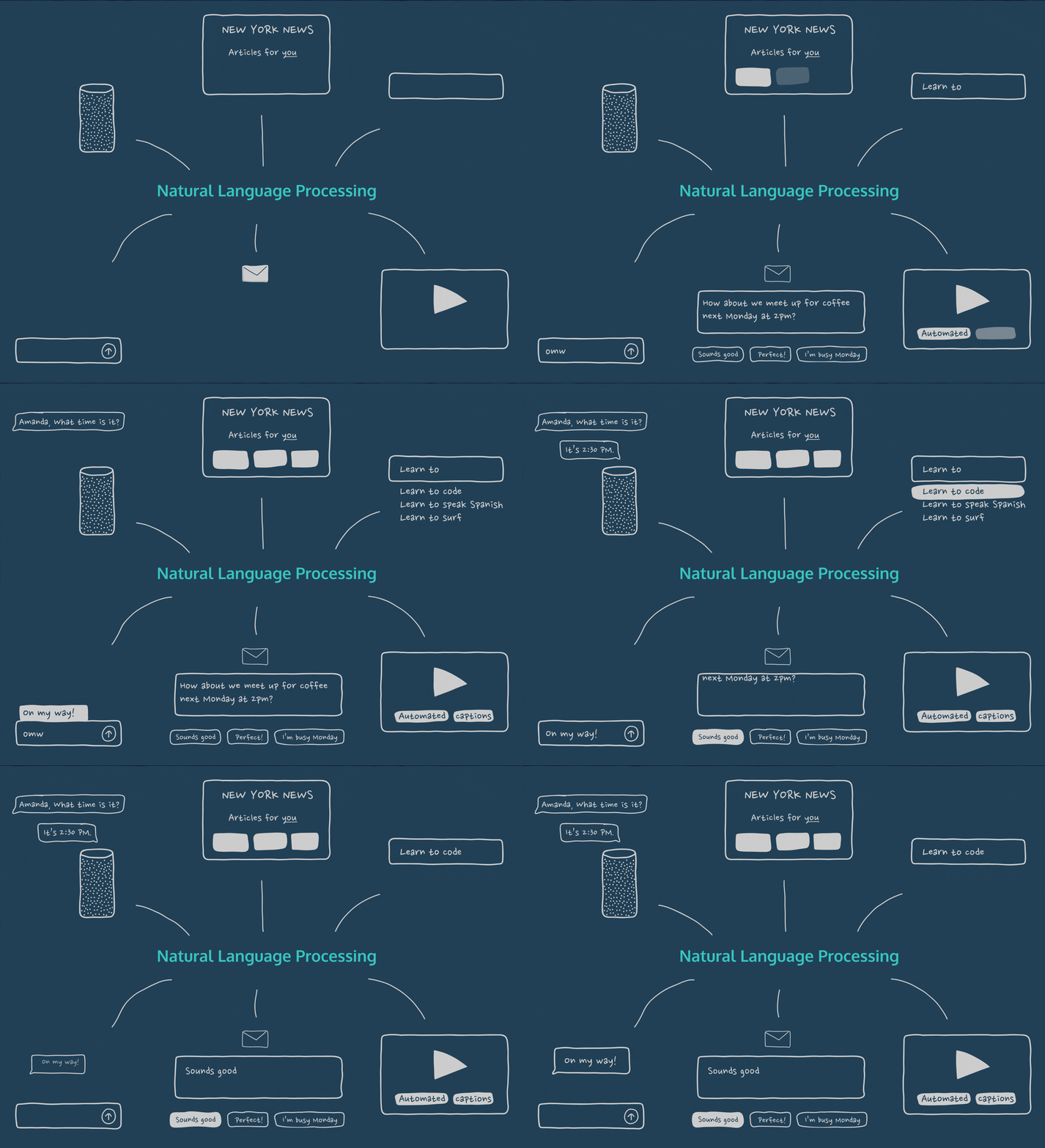
  • Natural Language Processing: NLP enables a machine to understand the human text. Virtual assistants like Siri, Google Assistant, Alexa, are all an example of chatbots working on the principle of NLP.
  • Stock Trading: There are AI platforms that allow automated stock trading. With the algorithms, these bots understand the fluctuations in the stock market & predict high-return stocks with more accuracy. The future scope of AI/ML in the finance sector is fuelled up due to the increasing craze for cryptocurrency.
  • Robots: Besides developing intelligent robots, AI has created robots that assist humans with routine tasks like cleaning, gardening, serving, etc.

Explore Careers in Artificial Intelligence with Imarticus Learning:

Freshers need to realize their competencies & acquire skills for AI roles with chances of upward mobility in career. The future scope of Artificial Intelligence is increasing due to new job roles & advancements in the AI sector. 42% of the IT workforce in India will require upskilling or reskilling by 2025. Imarticus Learning offers artificial intelligence and machine learning courses and machine learning certification courses to upskilling & and stay relevant.

The program builds a strong foundation of Data Science concepts. Industry experts will help you learn the practical implementation of Machine Learning, Deep Learning, and AI techniques through real-world projects from diverse industries. The 9-month extensive program will help you prepare for the Data Analyst, Data Scientist, Machine Learning Engineer, and AI Engineer roles.

This state-of-the-art Artificial Intelligence and Machine Learning Certification Course aim to let students learn machine learning & prepare for future jobs.

For further details, contact us through the Live Chat Support system or visit our training centers in Mumbai, Thane, Pune, Chennai, Bengaluru, Hyderabad, Delhi, Gurgaon, and Ahmedabad.

How The Machine Learning Works Behind Your Favorite Google Meet Backgrounds?

Google Meet has been a lifesaver for many professionals and students who are unable to step out of their homes for the last few months. This increasing usage of such virtual meeting platforms has improved the technology reach. This and Google AI has now increased the need for Machine Learning training and opened up a whole new world in technology.

Google’s AI of Google Meet now allows the user to change the background and reduce the noise level as well. Instead of the boring or the interiors of the home as the background, Machine Learning has helped customize the backgrounds for such meetings.

The technology behind the backgrounds

Google uses MediaPipe Objectron to get the 3D dimensions of images on mobile devices. It is also useful for background changes as well. They came up with an in-browser version of the Machine Learning model that can blur or replace the backgrounds. With these combined efforts of the ML, MediaPipe, and the OpenGL technology, its performance is better even in the devices with low power available.

Google uses WebGL for rendering, ML such as TFLite, and ZNNPack for web-based interference.

How does it work?

The MediaPipe uses the new low-level format of the binary code of WedAssembly. This can speed up the processing faster than JavaScript and can improve the speed of the tasks as well. The instructions from the WedAssembly are converted into simpler code by the browser.

  • First of all the ML segregates the user and its background.
  • Now, the user is masked by the ML interference into a low-resolution component.
  • The mask undergoes processing to refine its edges to be a smooth blend with the new background.
  • A WebGL2 is used to get the final output for the video where the mask is suitable with the replaced or the blurred background.

The technology here uses a lighter interference that uses less power and smaller storage space.

Refining the results

Although the masking effect is refined so it makes it easier to blend with the background, it could still end up having a halo effect. The light wrapping disables this possibility. The composting technique refines the edges of the mask and also allows the background light to adjust itself to blend the user with itself. The technique allows the light from the background to spill all over the edges of the mask to conceal the halo effect. This results in the fine blending of the background with the foreground image.

Performance in various devices

In the high-end devices, the image transition through the ML system continues at a higher resolution but in the low-end devices, there is a slight change. In the latter, the working mechanism automatically switches through the lighter models of ML so as to maintain the performance speed. Here, it skips the image refining process to send the final output.

The flexible configuration of the MediaPipe enables it to choose the most effective processing method.

Google AI and ML

The regular updates on Google AI and algorithms have opened new scope in the field of Machine Learning and its various prospects. While the Machine Learning Course provides basic knowledge, there is more to it when it is learned properly.

artificial intelligence coursesSince the internet-based virtual meetings are not going to disappear anytime soon, more changes in the working are expected. With each change, there is more to learn which naturally increases the importance of Machine learning and AI.


Bottom Line

Seeing all these, it would be not a bad idea to enroll in a machine learning course to start with the basics. Though this is a field with no limits, there is sure a lot to learn.

Bringing AI and Machine Learning Accessible to Enterprises Credit to Cloud!

Artificial Intelligence (AI) technology has been a game-changer for businesses. It has revolutionized how businesses operate and get the work done. Artificial intelligence technology imparts machines with the ability to understand and apply intelligence while processing complex data that would’ve earlier required human aid. Machine learning is a part of Artificial Intelligence technology and entails training machines to process information using large data sets.

Let’s discuss a real-life scenario to understand the functioning of machine learning technology better. Have you ever wondered why the prices keep on fluctuating when you book a Cab using Uber? Well, that’s machine learning technology into action for you.

Dynamic pricing is how the machine learning algorithms leverage buyer’s curiosity, demand, traffic congestions, etc. to regulate the cost and price the fare accordingly. Machine learning is increasingly being deployed by organizations to help with complex real-time data processing.

AI & ML Accessibility  

Accessibility has always been a challenge when it comes to adopting AI & ML technology for businesses; cloud solutions have helped paved the way for even smaller businesses to adopt AI & ML technology. Here is a list of few cloud services that is changing the way businesses adapt to AI & ML solutions.

  1. Amazon Web Services (AWS)

Amazon needs no introduction; it has always been about boosting customer satisfaction and improving business practices. AWS is a cloud solution offering from Amazon that provides a diverse range of machine learning solutions including Amazon SageMaker that simplifies the process of creating, training, and deploying machine learning models to work. Other machine learning-related solutions by AWS includes dynamic pricing models, search recommendations, automated customer service, etc.

  1. Google Cloud

Google’s cloud solution is second in this list of cloud services that have made machine learning more accessible for companies. After the development of an open-source platform named TensorFlow, Google has achieved new heights in the AI & ML arena. In addition to its indigenous open-source application, it is also associated with DeepMind, one of the most prominent players in the machine learning space. AlphaGo is a flagship program by DeepMind that has revolutionized the machine learning and AI space.

  1. Azure by Microsoft

Azure by Microsoft is another prominent name in the list of cloud platforms that have made machine learning more accessible for organizations of all sizes. Azure boasts of in-built machine learning services for organizations that want to leverage machine learning models into their business operations. To make it more easily and user-friendly it has both code-based and drag and drop functions. Azure aims to revolutionize the machine learning space by focusing on building a bias-free responsible machine learning solution.

Conclusion

Machine learning is an indispensable tool for businesses in the contemporary that rely on the use of sophisticated technology to operate and reach new customers. Machine learning career is in huge demand as more and more businesses are leveraging this remarkable technology to grow their business and optimize their operations.

One can opt for a machine learning course from reputed institutions like Imarticus Learning to obtain comprehensive knowledge about this technology and obtain a job with some of the most reputed organizations.

Career in Machine Learning – Check Job Profiles, Top Courses and Colleges, Fee Structure

Professionals in the sphere that is Machine Learning are very important and sought after in the Information Technology Industries across the globe. Through Machine Learning, human work has reduced significantly and boosted efficiency.

Machine learning has also helped reduce errors and a large number of companies have begun automating their systems. Business systems are using machine learning training to reduce costs and improve productivity along with performance as a whole.

Data scientistThere are a variety of career parts to pursue in the sphere that is Machine Learning and the positions offered are very rewarding.

Career Paths for Machine Learning Aspirants

  1. Software Engineer: Software Engineering aspirants need to know the nitty-gritty of code writing fluently as candidates will be needed to create code that would support the creation of specific algorithms. Using principles from engineering with computer science within mathematics from an engineering degree, designing and developing software is what computer software engineers are responsible for.The candidate for these jobs is required to have skills in listening to and understanding clientele requirements on a more detailed level. Along with this, they are also required to create a system in accordance with clientele parameters.
  2. Software developer: The job of a person in software development entails creating flow charts to assist coders in their work. Software developers are known to be the true brains behind any computer program. They are responsible for creating models, illustrative representations, strategic groundwork, and plotting out the required working of a complete system. They are required to test machinery and look at the working of each component.
  3. HTML Designer: These designers are involved in the creation of software for various social media platforms, big online stores, and banks as well. In banks the designs they put into effect help in increasing the number along with the efficiency of bank transactions that are managed and done online including those done electronically.
  4. Data Scientists: Involved in the procedure of analysis, they are responsible for utilizing data to find out vital information using inspecting and modeling processes.
  5. Computational Linguistics: The job of a computer linguist holds candidates responsible for helping computers in understanding spoken languages and to constantly improve currently existing systems.
  6. National Language Processing Scientist: The people in this position are needed to do the designing and development of machines and also applications that can learn patterns and translate various words imputed by a speaker to various other languages.

The demand for professionals in the area that is machine learning is growing every day. Various other career paths in this area include Data Analyst, Cloud Architect, Intelligence Developer for a Business and also Data Architecture.

Best Courses and Facilities for Training within India

The top 3 machine language courses available in India are listed below. Students,

professionals in analytics and also data scientists pick the finest programs to increase their skills and improve themselves.

  1. PGP in Machine Learning & Artificial Intelligence offered by IIIT-B
  2. Offered by IIT in Hyderabad is Fundamentals of ML
  3. PGP in Artificial Intelligence along with Machine Learning

Colleges Offering Machine Learning Courses

The various colleges offering machine learning courses in India are listed as follows:

  1. Indian Institute of Technology, Hyderabad
  2. DY Patil International University
  3. University of Petroleum and Energy Studies
  4. Jain University, Bangalore
  5. Sharda University
  6. Indraprastha Institute of Information Technology
  7. Vellore Institute of Technology
  8. SRM Institute of Science and Technology
  9. Dehradun Institute of Technology University
  10. SVVV (Shri Vaishnav Vidyapeeth Vishwavidyalaya)