An Investment Banking Course Ready for the AI Era

Finance still occurs at breakneck paces in 2025, and so does the training program that is producing next-generation bankers. There is one word that still reigns supreme over such a rapid shift and that is the Investment Banking program. With fintech and AI revolution ruling the financial services space, such programs are not the same programs they were five years back. They are hi-tech, technology-oriented, and future-engineered programs.

The Evolution of the Investment Banking Course in 2025

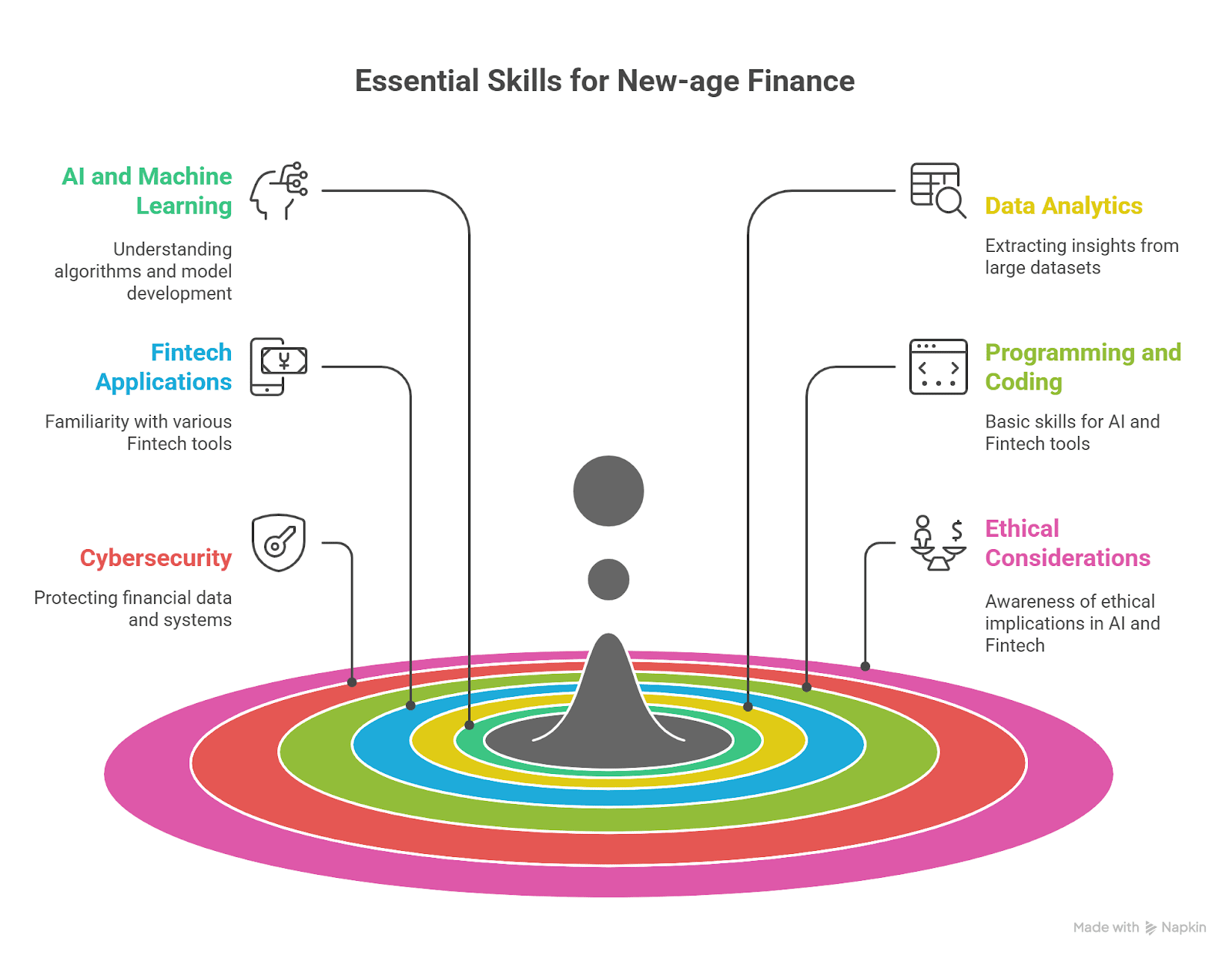
As fintech and AI tech merge, the investment banking syllabus for 2025 is evolving. The traditional corporate finance, mergers and acquisitions, and financial modeling syllabus is now interspersed with new tech, data analytics, and machine learning methods. The reason is simple: make students financially literate but also technology-literate to thrive in digitally reconstituted markets.

New courses utilize AI modules for real-world-esque financings, investment governance and strategy enactment, and risk estimation on ginormous data sets. Fintech case studies, however, enable learners to research new subjects such as blockchain banking, decentralized finance (DeFi), and robo-advisory models.

Why AI and Fintech Are Transforming Finance Education?

AI learning finance is pedagogical irreversibility, not a passing trend. It is the interactive simulations using AI that are replacing the lectures. Predictive modeling and machine-based trading are available at students’ fingertips to study in virtual labs of simulation where they are being taught by real-time feeds.

Likewise, fintech banking certifications are closing the gap between practice and theory. Most prominent certifications guarantee blockchain competence, API-based design, regtech, and cloud banking. Training institutes’ investment banking courses have understood that the best method to stay current is by continuously innovating with the fintech innovations and trends. 

Key Features of Investment Banking Course Trends

Certain trends are dominating the investment banking course trends of 2025:

  • Blended Learning Models: Transitioning towards hybrid lecture classroom and fully immersive virtual lab models.
  • Micro-Certifications: Fintech short-term certification including core curriculum.
  • Project-Based Curriculum: Emphasis on learning with AI tools and fintech solutions to solve real-world financial challenges.
  • Personalised Learning: AI-based platforms providing content customized according to the individual learner’s speed and ability to learn.
  • Global Finance Integration: Courses now integrating compulsory modules on potential bank career streams worldwide.

These alterations not just make the courses flexible but also have a tendency to increase overall access for working professionals, internet-based students, and international students.

How AI and Fintech Improve Employability in Finance?

One of the largest value additions of such enhanced courses is that they are employee-centric. AI-based courses on training websites monitor the talent of a learner, measure employability preparedness, and recommend specialization in streams to continue.

Apart from that, fintech-driven modules make the students career-ready in jobs like digital payment, compliance automation, risk detection, and AI-driven customer onboarding processes. The investment banking course is therefore a career driver for technology-enabled finance professionals.
Investment Banking course

Redefining the Investment Banking Course for 2025 and Beyond

What actually sets the day’s investment banking course apart is its future-oriented structure. Universities are joining forces with fintech companies in courses that map the sector’s future.

Collaborations with AI constructor and fintech start-ups provide students with real-world experience through internships, mentorship projects, and capstone projects. Collaborations make students become prepared for new positions such as:

  • Digital Investment Banking Analyst
  • Fintech Product Consultant
  • Quantitative Risk Modeller
  • Data-Driven Compliance Officer

In addition to this, soft skills like teleworking, flexibility, and ethical decision-making are increasingly being infused into learning platforms, and students are more concentrated.

The Global Influence of Finance Industry Technology

Use of technology within the money world to investment banking education is basic to international harmonization between money cultures. International students are now in a position to utilize globalized platforms and study the case studies of the leading markets such as London, Singapore, and New York.

With technology taking the shape of generative AI, deep learning models, and blockchain simulations, geography is no longer present, and the path of investment banking is set anywhere. These, web-based bootcamps with international networking opportunities and peer-to-peer interactions facilitated by AI, contribute to the richness of learning.

Making a Career in Global Finance Through Tech-Driven Learning

The future investment banking is swiftly becoming a passport for a well-paying professional career in global finance. The finance industry of 2025 requires hybrid competencies fusing financial and technical competencies.

The best of fintech-hiring courses places their top talent in asset managers, international banks, hedge funds, and regtech start-ups. The addition of research on the job market into course materials allows their students to possess the same skills employers are requesting.

Second, the practice of cross-border internships through virtual reality platforms and blockchain-verifiable certificates has encouraged mobility as well as openness.

Role of Investment Bankers in a Fintech World

As fintech is now a part of every single financial transaction, the population of investment bankers has grown. They not only help negotiate transactions, but also advise on tech interfaces, risk assessment, and AI-enabled regulatory compliance.

Courses are imparting investment bankers the skill to filter out massive data volumes, identify predictive insight through AI tools, and work with cross-functional tech teams. All these skills are revolutionizing leadership finance and giving rise to a new breed of banker: tech-enabled and insight-driven.

Choosing the Right Investment Banking Course in 2025

With all the shifting trends, selecting the proper course in investment banking in 2025 can be puzzling. The most significant factors to pay attention to are:

  • Interconnectedness of fintech and AI modules
  • Internships and industry collaborations
  • Hybrid or online mode of study
  • compatibility of the global curriculum
  • Live case studies and simulations

Select online courses that are not theoretical but offer hands-on tools, project work, and experience on digital platforms.

Why Certified Investment Banking Operations Professional (CIBOP) Is the Ideal Choice?

During this period of educational turmoil are training programs that blend the Certified Investment Banking Operations Professional (CIBOP™) by Imarticus Learning. It is a career-launching course in investment banking for 0-3 years of experience finance graduates.

With a high 85% placement rate and highest salary packages of ₹9 LPA, the course is set to provide students with hands-on banking operations like securities processing, wealth management, AML processes, and risk assessment. The 3-month and 6-month tenures are well-suited for working professionals and fresh student hires.

What Makes CIBOP Stand Out

  • Industry-focused Syllabus: With support from investment banks and fintech companies.
  • Project-first Orientation: Compliance, ethical banking, and trade-based money laundering applied modules
  • Guaranteed Career Support: 7 interview guarantees, 60% average salary increase, and access to 1000+ recruitment partners
  • Recognised Excellence: Best Education Provider in Finance at 30th Elets World Education Summit 2024

The training also encompasses aptitude, resume preparation, and mock interviews for placement readiness improvement.

CIBOP graduates can apply for the following positions:

  • Investment Banking Associate
  • Hedge Fund Analyst
  • Regulatory Reporting Officer
  • Trade Surveillance Analyst
  • Risk Management Consultant

With more than 50,000 students and 1200+ batches successfully trained, Imarticus Learning remains to shake up the investment banking courses industry in India and worldwide.

Conclusion

With the evolution towards a more technified global finance, investment banking education in 2025 will be a smart, versatile, and internationally oriented learning experience. Fintech and AI will drive it so that it equips its graduates to confidently encounter through the intricate mechanism of global finance.

To set a strong foundation in the subject of interest for the earnest, the Certified Investment Banking Operations Professional program offers the ideal combination of theory, technology, and career guarantee.

Frequently Asked Questions (FAQs)

1. What is the relevance of an investment banking course in 2025?

The investment banking course of 2025 is more technologically driven, where students are taught the type of job that incorporates finance, along with AI, data analysis, and fintech platforms.

2. How is AI used in finance education today?

AI is applied in finance education for personalized learning facilitation, simulation of trading scenarios, risk calculation automation, and career mapping.

3. Are fintech certifications important for investment banking careers?

Yes, fintech bank certification is supportive of conventional technological competencies such as blockchain, digital payments, and regtech, enriching the investment banking profession opportunities.

4. What are some top trends in investment banking courses?

Blended learning, AI programs, project modules, and global connectivity of finance are few of the most recent investment banking course trends.

5. How do investment banking courses support global finance careers?

Investment banking courses use global case studies, virtual internship, and globally recognized certifications to ease cross-border mobility.

6. What roles can I pursue after completing an investment banking course?

Professional qualifications such as Investment Banking Analyst, Hedge Fund Associate, Regulatory Reporting Analyst, and Risk Consultant can be selected.

7. Why should I choose the Certified Investment Banking Operations Professional course?

CIBOP delivers career guarantee, in-work training, technology-based study materials, and access to top employers globally, which is an ideal career start.

How to Choose the Best Investment Banking Course for Your Goals?

In this era of competitive finance, selecting a good investment banking course is either going to fuel or shatter your aspiration to secure a high-figure job in elite banking companies. As the demand for banking professionals too has gone up and there has been a boom in online courses in finance, it’s very important to locate a course that does more than just satisfy your career goals but also offers industry-specific training as well as employment placement assurances. This guidebook will guide you through the choice of the ideal investment banking course, so that you are able to acquire the ideal banking skills and certification to facilitate the growth of your banking career.

Understanding the Investment Banking Domain

Before going to any investment banking course, a person should know about investment banking. Investment banking means helping clients raise capital, merger and acquisition, financial counseling, and security trading. Investment banking requires critical analytical thinking, financial modeling, communication, and problem-solving capabilities. An effective investment banking course should wrap all these together and turn students job-ready.

investment banking course

Why an Investment Banking Course is Essential Today?

The world of finance is changing at a breakneck speed with increased dependence on technological resources and international financial markets. A structured banking certification lays the ground to:

  • Build strong capital markets knowledge
  • Know trade life cycles and security operations
  • Gain regulatory frameworks and compliance methods
  • Build hands-on experience by simulation in reality
  • Become acceptable by top-tier recruitment agencies and headhunters

Fundamentally, the optimum investment banking course bridges theoretical requirements and industry demands.

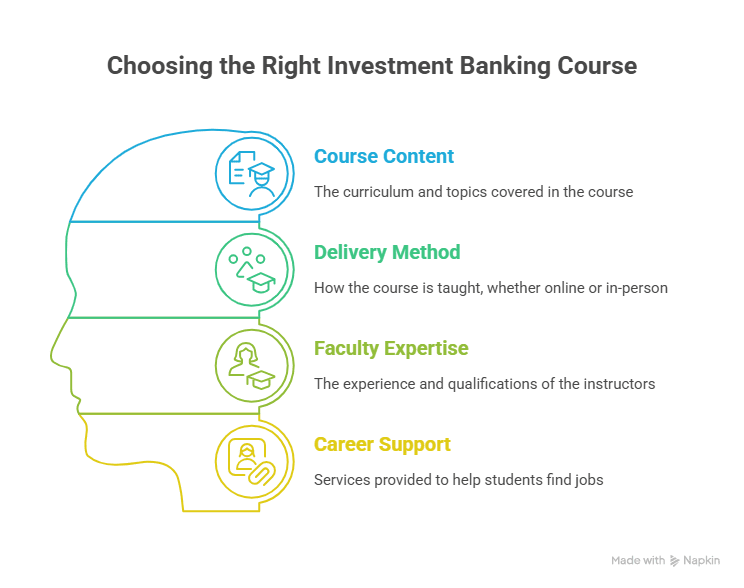
Top Considerations Before Choosing a Course

1. Accreditation and Recognition

Ensure that the course is industry-recognized and accredited by international finance groups. An effective course should be backed by authentic institutions and issue valid banking certification.

2. Curriculum Depth and Relevance

The course should thoroughly cover the following subjects:

  • Capital Markets
  • Financial Instruments
  • Trade Lifecycle
  • Risk and Compliance
  • Settlement Processes
  • Anti-money Laundering

A new and integrated curriculum is needed to develop fundamental banking skills.

3. Mode of Learning: Online vs Offline

There are so many online course programs available in finance, there has never been a better time to be flexible. But make sure the online system has live classes, interactive classes, case studies, and clearing doubt facilities.

4. Hands-On Experience and Case Studies

Search for courses with on-the-job exposure, industry case studies, and simulation software. On-the-job exposure is a significant requirement for no experience candidates.

5. Placement Assistance

Job placement or job guarantee must be arranged. 7+ guaranteed interviews, resume preparation, and mock interviews are provided by the top investment banking training programs.

6. Faculty and Mentorship

Trained experts from the financial industry are tasked with the responsibility of delivering timely and effective training. Ensure the mentor profile to confirm that they do exist.

7. Career Support Post-Certification

Verify programs that continue to provide career guidance post certification—through alumni networks, career alerts, or study resources.

Spotlight on Certified Investment Banking Operations Professional (CIBOP™)

Among the most popular and sought-after courses in India currently is the Certified Investment Banking Operations Professional (CIBOP™) course by Imarticus Learning. Here’s why it stands out:

  • 100% Job Guarantee: For finance graduates with 0-3 years of work experience.
  • Duration: Choose 3-month or 6-month modes.
  • Placement Success Rate: Records a whopping 85% placement success rate with pay package ranging up to 9 LPA.
  • Guaranteed Interviews: 7 guaranteed interviews with 1000+ hiring partners for students.
  • Salary Boost: 60% average salary increase post-certification.”
  • Alumni Network: 1200+ batches placed and 50,000+ learners.
  • Recognised Quality: Winner of Best Education Provider in Finance at 30th Elets World Education Summit 2024

This investment banking course blends tough school training with tough real-life experience. CIBOP curriculum entails trade lifecycle management, financial market infrastructure, and risk compliance, and thus it is perfect for freshers and early-career professionals.

Online vs Offline Investment Banking Courses

Online Finance Courses:

  • Learning from anywhere at anytime
  • Access to re-playable material
  • Affordable alternatives
  • International peer community

Offline/Hybrid Courses:

  • Peer-to-peer interaction
  • Facial guidance
  • Physical infrastructure for simulations
  • Structured timetables for discipline

Select the one that suits your learning style and way of life, depending on your goals.

Career Outcomes After Completing an Investment Banking Course

You can opt for positions like:

  • Investment Banking Analyst
  • Trade Support Analyst
  • Risk and Compliance Officer
  • KYC Analyst
  • Financial Market Operations Associate

These are some common roles common in banks, financial institutions, asset management firms, and foreign investment companies.

Benefits of Investment Banking Certification

A banking certificate provides you with credibility and acknowledges your professionalism towards growth. It certifies you as being proficient in:

  • Financial Instruments
  • Market Operations
  • Regulatory compliance
  • Process Optimisation
  • Risk Management

Most importantly, it gets your profile noticed amidst a competitive business environment.

Must-have Banking Skills for Career Growth

The finest investment banking training will make you expert at core skills like:

  • Financial Modelling
  • Excel and Financial Analysis
  • Trade Life Cycle Knowledge
  • Regulatory Compliance & Risk
  • Communication & Stakeholder Management

These are very transferable and sought-after finance skills in most finance careers.

How to Choose Between Finance Courses?

With so much out there in finance courses, how do you make your selection?

  • Select a course with formal placement guarantee.
  • Look at alumni success stories and outcomes.
  • Examine the quality of the curriculum.
  • Check faculty profiles.
  • Select a program with an honorable brand name and market reputation.
  • Selecting a Program for Your Intent

Choosing a Program That Matches Your Goals

If your motive is for rapid employment, global exposure, or domain shift, select an investment banking course that caters to your specific reason:

  • For rapid employment: Select guaranteed job courses such as CIBOP.
  • For knowledge depth: Select industry-specific case study-based programs.
  • For domain shift: Select internship-based or projects-based courses.

Red Flags to Avoid

  • Courses that don’t have renowned faculty or certifications
  • No career counseling or placement services
  • No practice in actual scenarios or market tools
  • Courses having no student or professional achievement criteria

FAQs

1. Who can apply for an investment banking course? 

Anybody with a finance, commerce, or economics background can pursue it. Freshers and professionals can all gain advantage from it.

2. What is the average salary after completing such a course? Average salary is between 4 to 9 LPA based on the course and performance.

3. Is placement guaranteed after the investment banking course? Certain courses like Imarticus CIBOP provide 100% job guarantee with guaranteed interviews.

4. Are online finance courses reliable? Yes, with the support of proven providers, online finance courses provide ease of convenience and real skills with relevance in the industry. 

5. What makes the CIBOP course unique? CIBOP™ has 1000+ hiring partners, 7 interview guarantees, and investment banking operations with real case studies.

6. How long does it take to complete an investment banking course?

Typically, most courses are 3-6 months long, depending on intensity and type.

7. What tools will I learn in the course? Excel, trade lifecycle tools, market simulation platforms, risk management frameworks.

8. Can I take an investment banking course without prior experience? Yes. Courses like CIBOP are for those having 0-3 years of work experience.

9. Is the course effective for career transition into banking? Yes. Formal courses with placement assistance can facilitate career transition.

10. What is the work culture of investment banking certified experts? Extremely hectic. MNC, investment bank, and fintech company placement is increasing, and certified experts are more dominant.

Conclusion

Choosing an investment banking course can make your whole finance career a success or a failure. If you are a fresher or want to change your career into the banking sector, the suitable course can provide you with apt banking skills, practical training, and placement opportunities. Find courseware such as Imarticus Learning’s Certified Investment Banking Operations Professional (CIBOP) to ensure career, industry expert mentoring, and reputation. 50,000+ students, a global curriculum, and 1000+ hiring firms make it your gateway to your dream job in banking.

Your money future begins with today’s choice. Invest in an investment banking course that aligns with your fantasy and access this high-risk, high-reward career.

The Ultimate Guide to Investment Banking Courses: What You Need to Know

Introduction

So you’re considering a career in investment banking? Perhaps you’re attracted to the glamour, the high paychecks, or the intensity of financial markets. Whatever it is, getting into investment banking takes the proper training and skills. But with so many out there, how do you select the best investment banking course to begin with? This handbook includes all that you must know—right from choosing the apt investment banking certification to investment banking exam preparation and investing in job placements in top companies.

Table of Contents

  • What is Investment Banking?
  • Why Go for an Investment Banking Career?
  • Types of Investment Banking Courses
  • Top Investment Banking Courses in India
  • Investment Banking Training Courses: The Experience
  • Investment Banking Certification: What Do You Need to Choose?
  • Investment Banking Exam Preparation: Top Strategies
  • Skills Required to Excel as an Investment Banker
  • Career Opportunities After Joining an Investment Banking Course
  • Frequently Asked Questions About Investment Banking Courses

What is an Investment Bank?

Investment banking is all about financial consultations, mergers and acquisitions (M&A), underwriting, and asset management for corporations and the like or high-net-worth individuals. It is a very fast-moving domain that works with very fine-tuned analytical skills, financial knowledge, and strategic decision-making.

Why Invest in an Investment Banker Career?

  • High salary potential – Investment bankers are among the best-paid professionals in the financial sector.
  • Challenging & rewarding – Get to work on high-risk financial deals and strategic transactions.
  • International opportunities – Investment banking is a worldwide profession with career prospects in significant global financial centres.
  • Fast career advancement – With proper investment banking training program, you are able to rise through the corporate hierarchy rapidly.

Types of Investment Banking Courses

Investment banking courses can be classified on the basis of their emphasis and duration:

Course TypeDescription
Certification ProgramsShort-term courses that provide specialised training in investment banking skills.
Diploma ProgramsMore comprehensive than certifications, covering a wide range of finance and banking topics.
Postgraduate ProgramsIn-depth training designed for graduates and professionals looking to specialise in investment banking.
Online CoursesFlexible learning options from global universities and platforms like Coursera and Udemy.

Investment Banking Training Programs: What to Expect

A good investment banking training program usually consists of:

  • Financial Modelling & Valuation – Learning how to analyse businesses, construct valuation models, and make informed data-driven financial choices.
  • Mergers & Acquisitions (M&A) Fundamentals – Learning how businesses acquire, sell, and merge in order to build value.
  • Equity & Debt Capital Markets – Learning how firms raise capital via stock markets and bond issues.
  • Risk Management & Compliance – Learning about risk avoidance techniques, regulatory environments, and compliance policies.
  • Investment Strategies & Portfolio Management – Learning from institutional investors and hedge funds on constructing successful investment strategies.
  • Live Case Studies & Projects – Application-based learning to impart hands-on practice in structuring deals and overseeing intricate financial transactions.
  • Soft Skills & Communication – As investment banking entails dealing with clients, powerful presentation and negotiating skills are mandatory.

Investment Banking Certification: Which One Is Right for You?

CertificationRecognized ByBest For
CFA (Chartered Financial Analyst)CFA InstituteThose seeking a global finance career
CIBOP (Certified Investment Banking Operations Professional)Imarticus LearningBeginners and mid-career professionals
FRM (Financial Risk Manager)GARPThose interested in risk management
IBCA (Investment Banking Certification)NSE AcademyIndian finance professionals

Investment Banking Exam Prep: Strategies to Keep in Mind

  • Know the exam pattern – Familiarise yourself with the syllabus and question types prior to preparation.
  • Excel and valuation skills – Practice financial modelling to ensure strong Excel and valuation skills, as practical experience is essential for clearing exams and cracking interviews.
  • Keep abreast of business news – Read Bloomberg, Financial Times, and NSE announcements to keep oneself posted on sectoral trends and market fluctuations.
  • Practice mock tests – Enhance time management skills, accuracy, and confidence through the practice papers.
  • Join a course – There are various coaching institutions that have specifically designed exam preparation courses with individual study materials and experienced mentors.
  • Join study groups & forums – Interaction with other aspirants can offer advice, hints, and encouragement while preparing.

Career Opportunities After Completing an Investment Banking Course

A graduate of an investment banking program might find the following roles:

  • Investment Banking Analyst – Supports the creation of financial models, valuations, and market research.
  • Financial Analyst – Works for corporations and investment houses in analysing financial statements and assessing profitability.
  • M&A Associate – Involved in mergers and acquisitions and helps to navigate the tangled web of financial implications for businesses.
  • Risk Manager – Determines, restricts, and mitigates financial risks for investment firms and banks.
  • Asset Management Specialist – Supervisory roles will oversee portfolios of various HNW clients, institutional investors, and funds.
  • Equity Research Analyst – Conducts deep market research and recommends stock investment strategies to hedge funds and investors.
  • Private Equity Analyst – In an investment firm involving funding for starting up and fast-growing companies, analyzable deal opportunities will be analyzed.
  • Corporate Finance Consultant – Advises companies on fundraising, capital structuring, and financial planning.

FAQs on Investment Banking Courses

1. What is the best investment banking course for beginners?

For beginners- Certified Investment Banking Operations Professional (CIBOP) by Imarticus Learning is the best choice, as it offers industry-specific training.

2. Is CFA necessary for a career in investment banking?

While CFA is highly regarded, it is not mandatory. Many professionals enter investment banking through other investment banking certification programs.

3. How long does an investment banking course take?

Most investment banking courses last between- 3 to 12 months…depending on their depth and intensity.

4. What are the eligibility criteria for an investment banking course?

Most courses need a bachelor’s degree in commerce, finance, or a similar discipline. A few specialised courses take professionals with relevant work experience.

5. Do investment banking courses promise placements?

Institutes such as Imarticus Learning provide job guarantee courses, but it also relies on personal performance and market situations.

6. Are online investment banking courses worthwhile?

Yes, if they are from credible institutions. Search for courses that have practical projects and placement support.

7. What are the salary opportunities after finishing an investment banking course?

Salaries differ but starting positions usually provide ₹6-12 LPA, with seasoned professionals making much more.

8. How do I prepare for investment banking exams?

Utilise official study guides, practice financial modelling, and practice mock exams on a regular basis.

9. Which skills are most important for investment banking careers?

Analytical thinking, financial modelling, risk assessment, and negotiation skills are most important.

10. What are the investment banking trends of the future?

Investment banking is moving towards AI-based analytics and digital platforms, according to a McKinsey report.

Key Takeaways

  • Investment banking guarantees an astounding future to the qualified finance professionals.
  • Obtaining the appropriate investment banking course is paramount in the success of any individual’s career in this industry.
  • CFA, CIBOP, and IBCA are some certifications selected to provide added advantages over others in their career projections.
  • Investment banking necessitates being a good analytical and financial modelling machine.
  • The modernisation of the industry continues with the advent of AI capabilities along with the digital finance trend.

Conclusion

An investment banking course is the launching pad to a successful career in finance. Whether you are a new graduate or an employee, making the right choice of investment banking certification or training program can make all the difference. Stay updated, prepare thoroughly, and take strategic decisions towards your investment banking success!

Helpful Resources:

  1. McKinsey: Investment Banking Trends
  2. Indeed: Become an Investment Banker

Smart Career Move: Take an Investment Banking Course

In the ever-evolving landscape of global finance investment banking continues to be one of the most sought-after and rewarding career paths. However… breaking into this field—& thriving in it—requires more than just academic qualifications. It demands technical knowledge; industry insight; and the kind of confidence that only comes from hands-on learning. That’s where an Investment Banking Course comes in.

Today, more professionals & graduates are choosing to invest in specialised programs… that equip-them with the tools they need to excel in this- highly competitive domain. If you’re wondering whether this is the right move for your career, you’re in the right place.


Understanding Investment Banking

Investment banking involves facilitating large & complex financial transactions for corporations, governments, and institutions. These services include raising capital, underwriting new debt & equity securities, mergers and acquisitions (M&A)… & providing strategic advisory services.

The day-to-day responsibilities of investment bankers are dynamic, analytical, and demand razor-sharp decision-making skills. You can gain a deeper understanding of the field through this blog on investment banking that covers its structure, responsibilities, and core activities.


Why Consider an Investment Banking Course?

Unlike traditional finance degrees that broadly cover multiple areas… an Investment Banking Course- is highly focused & practical. It prepares you specifically for the demands of investment banking roles—offering immersive training on financial modelling, valuation, trade life cycles& regulatory environments.

More importantly- these programs are curated in collaboration with industry experts…ensuring that the learning stays aligned with what hiring managers are looking for. With finance roles becoming increasingly demanding, recruiters are actively seeking individuals who come equipped with proven, job-ready skills—something a well-designed course can provide.


Key Benefits of an Investment Banking Course

Let’s delve into some of the most powerful benefits of an investment banking course that make it a smart investment for your future:

1. Industry-relevant Curriculum

You’ll learn real-world concepts like financial modelling, M&A advisory, equity research & portfolio management. These are skills that go far beyond what’s taught in traditional classrooms.

2. Hands-On Experience

Courses often include projects, simulations, and real-time market case studies. This helps learners gain a practical edge.

3. Placement Assistance

 Many programs, such as the Certified Investment Banking Operations Program,  offer dedicated career support, guaranteed interview opportunities & connections with top hiring partners.

4. Faster Career Transition

If you’re from a non-finance background or are looking to pivot careers… a course can help you transition into investment banking roles with confidence & clarity.

5. Higher Earning Potential

Professionals with certified investment banking skills and training often command higher salaries and are considered more competent than their…non-certified peers.

Check out this video


Summary of Key Benefits

BenefitDescription
Practical Skill DevelopmentMaster financial modelling, valuation, compliance, and risk analysis.
Career AdvancementGreater chances of promotions and job switching.
Global RecognitionMany certifications are recognised by global financial firms.
Networking OpportunitiesConnect with alumni, mentors, and industry leaders.
Customised LearningChoose from online or blended models that suit your lifestyle and goals.

The benefits of an investment banking course extend well beyond the classroom—they position you for long-term career success.


What You’ll Learn: Comprehensive Investment Banking Skills and Training

Whether you’re a graduate or a working professional,; these courses help you build competencies that employers value the most. Let’s look at some of the core areas covered:

  • Trade Life Cycle
  • Financial Statements & Ratio Analysis
  • Equity and Debt Instruments
  • Risk and Compliance (AML, KYC, FATCA)
  • Securities Market Operations
  • Mergers & Acquisitions and Corporate Actions
  • Financial Modelling & Valuation Techniques

These modules provide robust, in-depth investment banking skills & training that translate into real-world performance from day one on the job. To see how these skills apply to actual decision-making, check out this detailed analysis on investment decisions.


Choosing the Best Investment Banking Programs

Now that you know-what an investment banking course offers, the next step is choosing the right one. Here’s what to consider when comparing the best investment banking programs:

Accreditation and Industry Recognition

Opt for institutions that are recognised by industry leaders. Programs affiliated with global banks, industry experts, or certified by reputed universities often carry more weight.

Curriculum Depth and Practical Application

Courses that offer case studies, live projects, mock interviews, and one-on-one mentorship deliver more value.

Flexibility and Learning Format

Choose a course that aligns with your schedule—weekend batches, online classes, or blended learning formats.

Career Services

Look for offerings like resume building, interview prep, guaranteed interview opportunities, and access to hiring partners.

The Certified Investment Banking Operations Program by Imarticus Learning is one such program that ticks all the right boxes—practical training, industry connect, and career support.


Boosting Your Career Growth in Investment Banking

Enrolling in a top-tier course doesn’t just prepare-you for your first role—it sets you up for sustained career growth in investment banking.

Let’s explore how this plays out:

Entry into Global Firms

Professionals with specialised certifications often get noticed by global investment banks like Goldman Sachs, JP Morgan, and Barclays.

Faster Promotions

When you’re trained in niche areas like compliance, derivatives, and financial analysis, you’re more likely to take on leadership responsibilities early.

Geographic Mobility

Courses that teach international standards enable you to work in financial hubs across the world—from London to Hong Kong.

Salary Upside

Certified professionals can earn significantly more than their peers. While entry-level analysts may start at ₹6-8 LPA, experienced professionals can earn upwards of ₹20 LPA or more.

Ultimately,- a good Investment Banking Course acts as a catalyst for long-term career growth in investment banking, opening doors to both vertical and lateral movements.


How Investment Banking Courses Bridge the Gap Between Academia and Industry

One of the most… overlooked benefits of an investment banking course is its ability to bridge the gap between theoretical knowledge and on-the-job performance. While traditional degrees provide foundational understanding, they often miss the mark when it comes to application.

A specialised course:

  • Simulates Real Market Scenarios
    You’ll learn to handle live data, use industry-standard tools like Bloomberg, and present investment pitches.
  • Introduces Modern Tools and Platforms
    Whether it’s MS Excel for modelling, or tools for compliance checks, the training reflects current industry demands.
  • Develops Critical Thinking
    You’re not just learning how to use a tool—you’re learning how to make informed decisions using that tool.

This practical application is what employers today value most, and it’s exactly what courses like the Imarticus Investment Banking Program are designed to offer.


Who Should Take an Investment Banking Course?

An Investment Banking Course is ideal for:

  • Graduates (B.Com, BBA, BA Economics, etc.)
    Looking to break into investment banking right after college.
  • Finance Professionals
    Seeking career acceleration; role change; or domain specialisation.
  • Engineers and IT Professionals
    Looking to pivot into the finance sector & leverage analytical thinking.
  • MBA/CA Candidates
    Wanting an additional layer of practical; job-oriented training to enhance their CV.

You don’t need to be an… investment banking expert- to start but you do need the right mindset & the willingness to learn. Programs that offer investment banking skills and training in a structured and supported way can be transformational; regardless of your starting point.


FAQs

1. What are the benefits of an investment banking course?

Faster career moves; better pay; hands-on learning… all big benefits of an investment banking course.


2. How does it support career growth in investment banking?

It builds credibility & skills; helps you grow faster in the career growth in investment banking space.


3. What investment banking skills & training do I get?

You learn real-world tools—modelling, compliance, risk… top investment banking skills & training.


4. Who should take an investment banking course?

Freshers, finance grads & career switchers… anyone chasing career growth in investment banking.


5. Are the best investment banking programs beginner-friendly?

Yes! The best investment banking programs start from basics & go deep.


6. Can I do it with no finance background?

Yes—you’ll still get strong investment banking skills & training from scratch.


7. What defines the best investment banking programs?

Live projects; great mentors; placement support… that’s what the best investment banking programs offer.


8. How fast can I see results?

Many see results in 3–6 months… That’s one of the big benefits of an investment banking course.


Final Thoughts

In a world where finance is becoming more complex & interconnected, equipping yourself with the right skills is not optional—it’s essential. A well-structured Investment Banking Course is more than just a certification; it’s a launchpad for success in one of the most lucrative, respected, & intellectually stimulating fields in the world.

From foundational knowledge to job-ready expertise, the benefits of an investment banking course are wide-ranging & impactful. By enrolling in one of the best investment banking programs… you gain access to a powerful network, invaluable mentorship, and a clear path to career advancement.

If you’re ready to make a move that can truly redefine your career trajectory, then investing in yourself through specialised learning is the smartest decision you can make. Now is the time to get trained, get certified, & get ahead.

How BCom Graduates Can Secure a Job in Investment Banking?

Investment banking sounds fancy. High salaries, big deals, and a fast-paced lifestyle. But how does a BCom graduate get there? Is a degree enough, or do you need extra skills?

If you’re wondering how to break into investment banking jobs, this guide will walk you through everything, skills, certifications, internships, and real strategies to land a role.

But first, if you’re serious about a career in finance, check out these investment banking courses designed to give you hands-on training and industry exposure.

Can a BCom Graduate Get into Investment Banking?

Yes, but it’s not easy. Unlike MBA grads from top-tier B-schools, BCom graduates don’t get direct placements in investment banks. However, it’s possible if you:

  • Gain finance-specific skills
  • Get an investment banking internship
  • Earn relevant certifications
  • Network aggressively

With the right approach, even a BCom graduate can land a solid role in investment banking.

What Does an Investment Banker Do?

Before jumping in, let’s break down what investment banking really involves.

Key responsibilities of an investment banker:

  • Advising companies on mergers and acquisitions (M&A)
  • Raising capital through IPO and bond issuances
  • Performing financial modelling and valuation
  • Managing risk and investment portfolios

Common Investment Banking Job Roles

Job Role Key Responsibilities
Analyst Research, valuation models, preparing presentations
Associate Client interactions, financial analysis, deal execution
Vice President (VP) Leading teams, high-level deal structuring

Most BCom graduates start as analysts, which is an entry-level role.

Investment Banking Jobs After BCom

Not every investment banking role requires an MBA. BCom graduates can get into these areas:

Equity Research Analyst

  • Analysing stocks, preparing reports, predicting trends
  • Requires strong financial analysis skills

Financial Analyst

  • Budgeting, forecasting, and investment risk analysis
  • Works closely with investment banking teams

Operations Analyst

  • Handling trade settlements, compliance, and back-office tasks
  • Entry-level but provides banking exposure

Mergers and Acquisitions (M&A) Analyst

  • Assisting in company buyouts, due diligence, and valuations
  • Requires investment banking certification for better chances

Each role has different requirements, but all need strong finance and analytical skills.

Skills You Need for a Career in Investment Banking

A BCom degree gives you the basics, but a career in investment banking requires specific skills.

Must-Have Skills:

  • Financial Modelling and Valuation (DCF, LBO, M&A models)
  • Excel and PowerPoint Proficiency
  • Accounting and Financial Statements Analysis
  • Investment Banking Terminology
  • Presentation and Communication Skills

Technical vs Soft Skills in Investment Banking

Technical Skills Soft Skills
Financial modelling Problem-solving
Valuation techniques Communication
Market research Time management
MS Excel and PowerPoint Attention to detail

Tip: Learning financial modelling and Excel tricks can give you an edge over competitors.

Do You Need an Investment Banking Internship?

Short answer: Yes! Investment banking internships open doors to full-time jobs.

How to Get an Internship?

  • Apply at global banks (J.P. Morgan, Goldman Sachs, Morgan Stanley)
  • Look for roles in boutique investment firms and private equity firms
  • Use LinkedIn and networking to find hidden opportunities

An internship helps you build a network, gain real experience, and improve your resume.

Certifications That Can Boost Your Career

BCom alone isn’t enough. Certifications help you stand out from other candidates.

Best Certifications for Investment Banking Jobs

Getting certified gives you an edge and increases your job chances.

Best Investment Banking Courses

Want a structured way to learn investment banking? A proper course helps you:

  • Learn financial modelling and valuation
  • Understand mergers and acquisitions
  • Gain hands-on training with case studies

Check out this Certified Investment Banking Operations Program, it’s designed specifically for those who want to break into investment banking.

Resume and Interview Tips for Investment Banking Jobs

Your resume and interview play a huge role in getting hired.

How to Build a Strong Resume?

  1. Highlight finance-related projects and coursework
  2. Mention internships and financial modelling skills
  3. Use numbers and achievements (e.g., Analysed 10+ company reports)
  4. Keep it short and well-structured

Investment Banking Resume Guide

Interview Questions You Might Face

  • Why investment banking?
  • Walk me through a DCF valuation.
  • Explain a recent M&A deal you followed.
  • What makes you a good fit for this role?

Practising these questions helps you prepare for real interviews.

Where to Apply for Investment Banking Jobs?

Once you’re ready, it’s time to apply!

Best Places to Find Jobs

  • Company Websites (J.P. Morgan, Goldman Sachs, Citi)
  • LinkedIn and Naukri.com
  • Finance-Specific Job Portals (eFinancialCareers, Wall Street Oasis)

Top Investment Banking Firms to Work For

Applying strategically increases your chances of getting hired.

Final Thoughts

Breaking into investment banking jobs after BCom takes effort. You need the right skills, internships, certifications, and networking strategies.

If you want structured learning, check out this Certified Investment Banking Operations Program to fast-track your career.

With hard work and the right strategy, landing a role in investment banking is absolutely possible.

FAQs

  1. Can a BCom graduate get an investment banking job?

Yes! But you need financial modelling skills, certifications, and an internship for a better chance.

  1. What is the best job after BCom in investment banking?

Common roles include Financial Analyst, Equity Research Analyst, and M&A Analyst.

  1. Do I need an MBA for investment banking?

No, but an MBA or CFA helps in career growth. Many enter the field through internships and courses.

  1. Which investment banking firms hire BCom graduates?

Firms like Goldman Sachs, J.P. Morgan, Morgan Stanley, and Citi hire entry-level analysts.

  1. How much do investment bankers earn?

Entry-level salaries in India range from ₹6-12 LPA, while senior roles earn much higher.

  1. What is the best investment banking certification?

CFA, CIBOP, and financial modelling courses help boost your career prospects.

  1. Is investment banking hard to get into?

Yes, but with the right skills, networking, and preparation, you can land a job.

What Are Financial Products? An In-Depth Guide for Beginners

Financial products can be explained as contracts that can be traded in the market. Someone is selling these contracts and others are buying the same. Financial products are financial instruments that are available in various forms.

The reason for introducing the concept of a financial product is that it lets individuals convert their fiat currency into something they can sell to others within a marketplace. Financial products can be classified into various categories. Read on to learn more about financial products and their major classifications. 

Financial Products: Meaning and Definition

Financial products are generally referred to as any form of financial contract, which is equally well connected with financial infrastructure available to consumers and organisations or other entities such as government authorities, municipalities, sovereign bodies, etc. Such financial products are provided to consumers by financial institutions that consist of banks, brokerage companies, insurance agencies, investment, consumer finance, firms, and so on. All such institutions make up the financial services sector.

To understand ‘what are financial products’, one has to understand the concept of contractual agreement between two parties. One who promises to provide some service, in this case, it is financial service and the other who agrees to provide some consideration in exchange for receiving such service. The exchange of economic activities between the two parties establishes a continuous monetary relationship which facilitates the exchange of finance and ancillary services which is the foundation of the financial relationship.

The contractual agreement comes with a lot of legal provisions and is recorded in a terms sheet. Such agreement establishes continuous relationships during the lifetime of the financial product, depending upon various specified events. However, financial products are not real or tangible assets. These ancillary services can act as an asset for the companies that help them to facilitate the ongoing relationship between the parties.

Various effective banking courses are available that can help individuals to have an in-depth understanding of financial products.

Types of Financial Products 

As per the technical carb of financial products, they can be classified into four major categories. There are several types of financial products. However, the major classifications are:

Securities

Securities are the most traded instruments by companies, financial organisations, public entities, government entities, banks, etc. Generally, securities are a means of entitlement to a specific thing, such as a promise to fulfil a contract or a claim to an asset. It is a type of financial product most widely used within a marketplace.

Therefore, securities are promises having a tangible or intangible existence. In such a case, the promisor promises something to the promisee, who is the holder of a security something proportional in exchange for the security they hold. Securities can be both long-term and short-term in nature depending upon the requirement and financial capacity of the security holder.

Some of the most common types of securities are enumerated as follows:

  • Stocks

Stocks are the most commonly used securities, mainly when transactions occur between two or more businesses, financial institutions, government entities, etc. Stocks highlight part of ownership in an organisation. When someone purchases a stock, they get a share of ownership within the company.

Stock ownership comes with owning equity shares in a company and provides the owner with various rights and responsibilities. Such rights may include voting, representation, and decision-making rights. Companies sell stocks to individual investors to fetch finance for their operations.

Appreciation and depreciation of stocks may happen depending upon the market conditions. Appreciated stocks are a sign of profitability, whereas depreciated stocks represent losses. Investors buy stocks at lesser prices and when the value of the stocks increases, they sell them to earn profit.

  • Bonds

Bonds are a form of loan that individuals extend to companies or public entities selling bonds to raise money for their operations. However, bondholders are not the owners of the company. They are the creditors of the organisation. 

Bonds specify an obligation that the bond issuer will pay back the money along with the interest amount to the acquirer of the bond. This transaction will be completed on the maturity date of the bond. However, these are long-term investments with long maturity periods, such as 20 to 30 years.

Hence, bonds are nothing but loans advanced by individuals to companies. Acquiring bonds has fewer risk factors than buying stocks. At the same time, bonds yield lower returns than stocks. Stocks guarantee capital appreciation, whereas bonds fetch money through interest.

  • Mutual funds

Mutual funds are a type of financial security that allows many people to invest their money to purchase securities. In mutual funds, investors can combine their money to purchase more than what they can buy themselves. Individuals get a portion of the fund proportional to the amount they invest.

Mutual funds are categorised as index funds and exchange-traded funds. The former is a combination of securities that keeps track of one particular index, whereas the latter can be traded in the market in the same manner as stocks. Index funds may provide a sense of ownership, but that’s not the case with exchange-traded funds.

Derivatives

A derivative is a financial product that derives its value from an individual or a group of individual securities. The simplest example of a derivative is a contract between a buyer and a seller where the price of the derivative fluctuates, depending upon the price shifts of the concerned asset, which is called the benchmark. 

The most iconic feature of derivatives is that they are used to keep track of market fluctuations and movements, which helps companies or individuals leverage their holdings. Investors secure the right to buy or sell any security through derivatives at a specific time and price level. The risk associated with derivatives is considered to be high in capital markets.

Types of derivatives that are most widely used in the marketplace are stated as follows:

  • Futures

Future is the type of derivative that indicates a contract between two parties to buy and sell a security or an asset at a fixed price on a fixed date. One cannot change the price of the derivative; they see that the price of the share has increased and a lower amount has been kept fixed on the contract. It can be said that it depends a lot on probability as well. 

  • Options

Options also perform the same way as futures do except that the holder of a derivative is not obligated to exercise the contract. There is an obligation to trade in future derivatives, but options do not impose such an obligation. Hence, options are considered flexible when compared to futures.

  • Swaps

Swap is used to change the form of derivatives. It implies that swaps can change a particular kind of cash flow into another. A commodity swap allows individuals to trade based on the price level of an underlying commodity. There exist several types of swaps based on the class of asset such as credit, default swaps, currency swaps etc.

Commodities

A commodity is a type of financial product that has a tangible existence and highlights some ownership or share of ownership by an individual or a group of individuals. Generally, trading in commodities involves things like precious metals or natural resources. In a broader sense, commodities also include soft commodities, such as livestock, agricultural products, dairy products, etc. 

For instance, if an individual has reasons to believe that platinum prices will rise in future, then he may invest in platinum now and can earn profits when its prices potentially rise. The changing price of the commodities in various time periods is the key to earning profits in commodity trading. That is why commodities are generally recorded in portfolios as a hedge against inflationary pressure.

Generally, commodity trading becomes more popular if the stock market and other security trading encounter a sudden fall. Trading directly in commodities is a complex procedure and difficult when compared to trading in securities. 

However, individuals can indirectly invest their money in commodities by investing in various securities held by several companies that are responsible for manufacturing those commodities.

Currencies

Currencies are not fundamentally considered as a separate asset class or a financial product but can be included in the list because they can be traded in the market as well. Currencies are generally traded on cryptocurrencies, which are foreign exchanges that allow people to convert one type of currency to another. Currency trading is an absolute necessity as different countries and companies need to trade with each other.

However, there is no centrally controlled marketplace for currency trading as it exists for securities and stock trading. It indicates that currency trading generally occurs between individual investors. Individuals make money on forex markets in the form of currency trading as shifts in price take place.

With the advent of the Internet, current trading has become easier and more prevalent throughout the world. With the inclusion of online, foreign exchanges, currency trading has become widely accessible. 

The above-mentioned financial products list is a partial list. These are the major types of financial products. However, there exist other miscellaneous financial products as well that may or may not align with companies and market conditions at all times.

Conclusion 

It is significantly important to understand the basic concept of financial products to start your journey in the financial markets. One can enrol for the investment banking courses offered by Imarticus Learning to understand how financial products are dealt with. 

Understanding financial products helps individuals and companies to invest in a smart manner which helps them maintain the operational stability and monetary flow within the company. A career in investment banking comes with a lot of lucrative opportunities which you would not like to miss out on. 

What is Private Capital in Banking?

The growing markets for investment, real estate and equity funds have been the talk of the town in recent years. Many people, mainly youngsters, are gaining interest in investments and equity. One of the most popular spheres of the investment business is investment banking. It is a lucrative career option and yields exceptional returns for both the companies and the individuals.

To understand ‘what is private capital’ one must understand the approach of funding it provides to the companies. Private capital is an umbrella term that takes into account various approaches via which funds are provided to various organisations. It only includes sources of funding that do not come from the public forum or public markets. 

Read to gain a detailed understanding of private capital, the various sources of the same, and how it is different from the public market.

What is Private Capital?

Private capital can be described as capital raised from non-public sources. In simple words, capital raised by companies from sources other than public markets or traditional institutions is called private capital. These funds do not include sources like the sale of equities, securities on exchanges, government bonds, public markets and so on. When a company raises capital in the form of private equity and equity investment, that is when it is considered to be private capital.

In the same manner, capital that is extended to companies in the form of loans or debt is referred to as private debt. Hence, private capital is the culmination of both private equity and private debt. 

Private capital generally consists of the various private investment funds and entities that invest their money in privately held companies and real estate businesses. There are firms mainly dealing in private investment and they try to strike a balance between various fund investments as they refrain from investing most of their funds in a single company. Private equity funds invest in diverse and various companies to reduce over-exposure to a single investment and avoid any major loss that may arise. 

The Rise of Private Capital 

One of the major reasons for the advent of private capital is the retreat of various banks. Many banks have been shot or amalgamated, and have also reduced the interest rates. This, however, helps the banks to reduce their regulatory burden and be in a much better shape but has become undesirable for the investors. Investors were not getting good returns on their investments, and hence the shift to private capital happened in the early 2000s. 

Nowadays, investors want to invest in areas that can yield moderate to high returns with considerable risk. The importance of compounding has been realised and people nowadays want to invest their funds in more profitable areas rather than keeping their money with banks. Hence, companies started raising private capital that are from non-governmental sources. 

However, the rules regarding private capital are different from that of commercial banks. Banks are reducing their portfolio as private investment funds are moving into those areas. It has been seen that traditional banks are less suited in areas such as loan flexibility, regulatory restrictions and risk profile. However, private capital investors have extended their lending to start-ups and struggling companies and as a result, the companies are not borrowing funds from banks anymore. Thus, the rise in private capital took place.

Difference Between Private Capital and Public Capital

Private capital vs public capital is an essential concept that everyone in the investment sector must know. They should have a clear understanding of the type of equities they are dealing with. One should know the types of equity that can be used in various situations. 

One may take insightful investment banking courses to learn more about private and public capital and how it proves useful in various investment domains. 

The following table enumerates the details that one should know about private capital vs public capital:

Basis Public Capital  Private Capital
types of investors When a company is listed on a stock exchange and the general public can invest in those companies, regardless of their background, this type of capital is known as public capital. Anyone can become an investor in this case. Private equity involves a diverse range of investors that may be in the form of angel investors, crowdfunding, venture capital, etc. Private equity investors are generally responsible for investing in private companies.
disclosure of information about the company Public equity investors must disclose the financial information of the company to the general public. To raise private capital, disclosing financial information is not mandatory. However, it depends upon the preference of the company.
regulations In order to raise public capital, companies need to follow stringent regulatory rules and regulations. It has greater accountability to its investors. To raise private capital, regulatory requirements have been relaxed. Private equity firms do not need to disclose their investment information to the government or the public.
trading and investing In the case of public capital, investors can buy and sell assets without the permission of the company’s management. In the case of private capital, firms can buy and sell assets only after acquiring the prior permission of the company’s management.
flexibility to buy and sell shares to buy and sell the shares of public equity, no prior permission is necessary On the other hand, the consent of the company is mandatory to buy and sell the shares of private equity.
voting rights of investors Investors in public equity have voting rights to decide the management and also participate in important decisions of the company. Investors in private equity, do not have the right to participate in the decision-making process or management of the company.
conversion to a public company A public company is already well established and suitable to raise public equity. Private companies should possess the necessary qualifications to convert into a public company. 

Types of Private Capital 

Private capital is the money invested in true privately held companies that are not publicly traded. Private capital investments offer abroad, a range of opportunities to investors and also for the companies. Private equity funds are treated as alternative investing areas rather than purchasing real estate properties or stocks that have long-term growth potential. 

There are various types of private capital and the major ones are enumerated as follows:

Venture capital

Venture capital is the best form of private capital that funds new companies and start-ups. Venture capitalists study the market and select the companies that have huge growth potential but are in the early stages at the moment. The investors invest their funds in such companies that can expand more and yield high returns on investments.

Generally, venture capital funds take a minority stake in the company and do not take part in any controlling affairs of the company. The company management retains control of the business without any involvement of the venture capitalists. 

Venture capital is a risky approach as the company is new and has no track record of generating business. That is why only rich investors, angel investors, and investment bankers contribute their funds to such companies.

Leverage buoyant

A leverage-buoyant fund is a combination of an investment fund and a borrowed fund. Investors fund companies with huge amounts in order to make them profitable. This strategy combines the borrowed funds with the investors’ money where the fund manager gathers huge money to buy big companies.

With the help of leveraged buoyant private capital, companies are either bought outright or the purchasing company takes a majority share in the intended company to control the management and business decisions. It is purposely called leveraged buoyant because the purchasing entity leverages the creditors’ and investors’ funds for the purpose of buying larger businesses. This is done to gain large returns for the investors.

Growth equity

Growth equity is a type of private capital that is used by companies to boost expansion. It is also called expansion equity and it works similarly to venture capital. The major difference is that growth equity is less speculative than venture capital. The investors perform their due diligence to ensure that the companies in which they are investing, their funds are already profitable, have a good valuation in the market and have little to no debt upon them.

Growth capital invests in already developed and profitable companies rather than investing in new start-ups like that in the case of venture capital. This type of private capital focuses more on the growth potential of the company by providing it with elevation and exposure. This involves medium risk and allows investors to earn high returns.

Infrastructure

In this type of private capital, companies raise capital from private equity investors. Through this capital, companies purchase various assets, maintain and operate them and eventually sell them for profit. Investors invest in infrastructure only when it has essential utilities or services. Such utilities or services may include:

  • Utilities such as electricity, power, water, gas, etc.
  • Transportation facilities
  • Social infrastructure
  • Various types of renewable energy, such as wind farms, solar power plants, tidal plants, etc.

These are stable businesses and run for decades. Here, the profits are stable and involve low risk. Some businesses in infrastructure also have a monopoly such as airports or services of incredible value. 

Real estate private equity

Real estate private equity funds, as the name suggests, invest majorly in properties and real estate. This type of private capital invests both in low-risk projects and high-risk projects. The rental properties that offer predictable and stable returns involve relatively low risk, whereas the land properties that are more speculative and offer high returns involve greater risk. 

This type of private capital is managed by real estate private equity firms also known as REPE firms. They raise capital through limited partners who are outside investors. These funds are used to purchase, develop and operate real estate properties. It operates commercial, rental as well as residential real estate.

Funds of funds

This type of private capital raises capital from investors but does not necessarily invest in private entities. Instead, it invests in another portfolio or other private equity funds. This means, a firm dealing in funds of funds, investment, or another type of fund, such as venture, capital, or real estate private equity. The professionals and investors are in charge of managing this fund and are paid a management fee.

This type of private equity allows the investor to have a sense of diversification. This approach also allows investors to earn higher returns by investing in niche funds. 

Benefits of Investment Into Business From Private Capital Firms

The investment by private equity firms into a business is generally accompanied by business strategies that help a company to grow and flourish. Some of the major benefits of seeking investment from private capital firms are enumerated as follows:

  • Private capital firms help to raise long-term capital investments.
  • Businesses can gain the support of their investors by seeking their skills and expertise.
  • Sets a foundation for business growth and seeks additional funds as and when required.
  • Gain access to the network and alliances of the investors to assist with important business areas like talent management, critical thinking, decision-making, recruitment, and so on.
  • Assistance in building a capital structure plan that is best for a particular business keeping in mind long-term investment plans.

What Do Private Capital Firms Do?

After acquiring a business, private equity firms encourage management to make improvements to the company’s operations before selling the company or exiting it. A company can be sold to another investor who is willing to purchase it or the present owners can exit the company by going public.

The main focus of the private capital firms is to grow the revenue of the company. Several other goals of private equity firms include reducing costs, redefining, the depth structure, and multiple arbitrage. 

Some critics, on the other hand, opine that private equity firms destroy the long-term investment value and focus on short-term gains and easy returns. However, this is not a proven fact. Private firms provide funding to businesses which the traditional investors are banks deny to land money. In such cases, the act has been to these businesses.

Some believe that large private equity firms do not create wealth, but extract wealth out of the companies they invest in. Generally, private equity firms tend to sell companies to other private equity firms without properly maintaining transparency. On the other hand, it is said that smaller private equity firms that acquire smaller companies tend to perform better and add value to the existing business. 

Private Capital Jobs 

Private capital firms generally hire individuals who have little experience in the banking industry. Investment bankers generally follow a career in private equity firms while having a bachelor’s degree in finance, economics, or a related field. Learn more about investment banking and its prerequisites by enrolling in solid investment banking courses.

Landing a career in investment banking is quite a task. It is a very competitive profession and having prior experience is highly recommended. Some of the major job opportunities in investment banking are stated as follows: 

  • Junior associate/analyst: An entry-level investment banker does not get to independently work on the deals. They work in areas like reviewing data, understanding financial statistics, financial modeling and so on.
  • Senior associate: The senior analyst gets to work independently on the financial deals. They also generate new ideas that will work well in the present financial situation. They seal the deal on their own without any interference.
  • Vice president: this job position mainly facilitates communication in finalising the deals. They are not responsible for the sorting of data or preparation of data. They conclude and make decisions based on the prepared data.
  • Director: a director is responsible for raising funds for the company as well as facilitating the deal. The execution part is delegated to the subordinates and the major business decisions and negotiations are taken care of by the director. 
  • Partner: this is the final position for investment bankers. A partner is the face of the company and are the representatives of the same. They are responsible for maintaining client relationships. Here, technical abilities are not required, but one needs to be a master in negotiation skills. Also, partners invest funds in the company.

Criticisms of Private Capital

Entity, world, and private equity are largely used in businesses but there are people who are of a different opinion. Private equity has been criticised for a variety of reasons. The major criticisms of private equity are stated as follows:

  • Short-term profit goals: Many specialists think that private equity focuses more on short-term profit orientation, and ignores long-term capital investments. This, in turn, jeopardises the long-term sustainability of the business.
  • High debt: Leveraged buoyant and private capital transactions raise high debt levels to finance acquisitions. This debt amount tends to increase the financial burden and financial risk.
  • Cost and employee reduction: Private equity firms generally use extreme cost-cutting measures which include staff layoff, deterioration in work quality, etc.
  • Short holding periods: private equity firms do not hold companies for a long period of time and often sell them. This undermines the long-term potential of the company.
  • Lack of transparency: transactions of private equity firms are often complex and lack transparency. This creates difficulty for investors in assessing the estimated risk.
  • Negative impact on the local economy: selling of companies and restructuring the same results in loss of employment in a particular region creating a negative impact on the local economy.
  • Significant fees and costs: private equity firms charge high management and performance fees. Hence, it reduces the gains of the investors in the long run.
  • Long-term corporate health: private equity firms allegedly neglect the long-term growth and health of a company. The stringent measures to maximise short-term profits generally result in a company’s inability to grow in the long run.
  • Tax advantages: it is said that many private equity firms misuse the provision of tax advantages. It is depicted as an unfair practice as maximising tax liabilities by the companies produces public revenue.
  • Possible conflict of interests: the private equity managers may make decisions that fulfil their own interests rather than getting to the needs of the company. This creates a negative impact on the long-term sustainability and development of the business.

Conclusion

It becomes very difficult for companies to arrange their own funding, and that is when private equity firms come into play. These firms generate private capital that the companies can use for their operations and in return the investors get their returns on investment. Private equity investment in banking has been very popular in recent years for all the right reasons.

If you want to pursue a career in investment banking and are looking to learn the fundamentals of the same, consider enrolling for the Certified Investment Banking course by Imarticus Learning. Explore this lucrative profession with the best investment banking courses.

Frequently Asked Questions

  • What is an example of private capital?

Pension funds, funds of funds, insurance companies, endowments, and foundations are some of the major examples of private capital. 

  • What is the meaning of private capital?

What is private capital can be answered as a collection of investment strategies concerning private acids and businesses, excluding public companies and public assets like stocks and bonds.

  • Is it risky to invest in private equity?

Private equity involves moderate to high risk. One must have a prepared plan before investing and investing in diversification is advisable.

  • Who invests in private equity?

Generally, private equity is open to accredited investors and qualified clients only. These include institutional investors, angel investors, insurance companies, pension funds, etc.

Understanding NAV Calculation: A Beginner’s Guide to Mutual Funds!

If you are interested in investing in mutual funds, then it is important to consider their net asset value (NAV) before buying. Notably, NAV lets you know about the price at which you can buy the units of a fund. Generally, net asset value indicates how a mutual fund has performed in the past. Read ahead to know more about NAV calculation

What is Net Asset Value?

Mutual funds comprise several units that are held collectively by different investors. The price of each unit is referred to as net asset value. Reflecting a fund’s overall performance, the NAV of a mutual fund keeps on changing. And, this fluctuation is not based on demand and supply elements of the market, but the book value of assets. 

For open-end mutual funds, net asset value is calculated daily when the market closes at the end of each day. On the other hand, NAV for closed-end funds is usually calculated weekly or monthly.

It is to be noted that NAV is calculated and declared by the mutual fund house. Also, this value varies from one fund to another as it is dependent on factors like the fund size, the returns it generates, and the assets it is invested in. Further, if the net asset value is low, then you can get more mutual fund units compared to a higher NAV for the same amount of investment.

Understanding Mutual Fund NAV Calculation

The popular question, “how to calculate NAV of a mutual fund,” has a simple answer. The NAV calculation formula is: 

NAV = (Total Assets-Total Liabilities)/Total Units

Here, total assets mean the market value of all the securities in a portfolio. Also, it refers to the investments made in the mutual fund scheme. This would include bonds, equities, debentures, dividends and the interest accrued. Also, the value of assets may not get affected by market fluctuations. 

Simply put, total assets = value of all the assets under the scheme + cash holdings

Further, total liabilities are taken as the expenses incurred by the fund house/management or the remuneration paid to the fund manager. Also, they consist of the amount owed towards outstanding payments, foreign liabilities or money payable to lenders. Additionally, liabilities can include short- and long-term commitments.

In short, it can be represented as:

Total liabilities = payable money/interest (other liabilities) + expense ratio/fund management fee 

Besides, during mutual fund NAV calculation, total units indicate all the units held by all the investors in a scheme.

Relevance of NAV for Investors

As the nature, assets and liabilities of every mutual fund scheme are different, it is vital to focus on profitability and ignore the daily changes in NAV. Additionally, NAV is not comparable amongst mutual funds.

Acting as a cost per unit in a mutual fund on a particular day, NAV holds immense relevance for investors while buying or selling. Also, fluctuations in NAV over the years can offer a sense of direction in which the fund is moving towards. 

Conclusion

Considering the simple formula of NAV calculation, it can be stated that net asset value is the function of the total value of the assets in a mutual fund scheme, the cost borne by the asset management company for managing the scheme, and the scheme’s outstanding units. Also, it is advised to consider the NAV of a mutual fund as a trendline, reflecting how it started and where it has come.

If mutual funds and other investment options interest you, then you can also make a career as a financial advisor and work with large corporations and government entities. So, begin your journey to success with one of the reputable investment banking courses in India. Connect with Imarticus Learning to explore its  Certified Investment Banking Operations Professional (CIBOP) programme.

A Beginner’s Guide to Hedge Funds: Understanding the Basics and Key Terms

Hedge funds are often considered mysterious, complex entities reserved for the wealthy and financially knowledgeable.

But what exactly is a hedge fund, and how do they work?

In 1949, Australian investor Alfred Winslow Jones started the first hedge fund with his company, A.W. Jones & Co. He raised $100,000 and created a fund to reduce the risks of long-term stock investing by also betting against certain stocks, which is now known as the long/short equities model.

By 1952, Jones changed his fund to a limited partnership, introduced a 20% incentive fee for the managing partner, and became the first to mix short selling, borrowing money to invest (leverage), and performance-based compensation.

If you’re new to investing, this guide will help you unravel the basics and key terms associated with hedge funds. By the end, you’ll clearly understand what is a hedge fund, how it operates, and whether it might be something to consider in your financial future.

What is a Hedge Fund?

This investment fund pools capital from multiple investors and employs various strategies to generate returns. Unlike traditional mutual funds, usually limited to stocks and bonds, hedge funds can invest in various assets, including derivatives, real estate, currencies, and commodities.

The primary aim of a hedge fund is to maximize returns while minimizing risk, often called “hedging.” This approach involves sophisticated strategies that can profit in rising and falling markets. Because of this flexibility, hedge funds have the potential to offer higher returns than traditional investment vehicles, though they also come with higher risks.

Hedge Fund Meaning

The term “hedge fund” comes from “hedging” investments, which means protecting against potential losses by taking offsetting positions. For example, a hedge fund might invest in a stock but take a short position in a related stock to offset the market downturn risk. This strategy aims to “hedge” or protect the fund’s investments from volatility.

While the name suggests focusing on risk management, not all hedge funds employ hedging strategies; some pursue aggressive tactics to achieve high returns, which can lead to significant gains or losses. Therefore, understanding the specific strategy of a hedge fund is crucial for investors.

How Do Hedge Funds Work?

Hedge funds operate by pooling money from investors and using that capital to make various investments. These investments are managed by a professional fund manager or a team of managers who can pursue diverse strategies. The strategies can range from long/short equity (buying undervalued stocks and shorting overvalued ones) to event-driven strategies (capitalizing on corporate events like mergers or bankruptcies).

One of the characteristics of hedge funds is their ability to leverage or borrow additional capital to amplify returns. This can significantly increase the potential for profits and magnify the risk of losses. Hedge fund managers often charge fees based on performance, typically a management fee (around 2% of assets under management) & a performance fee (often 20% of profits).

Key Terms to Know

To better understand hedge funds, it is important to familiarize yourself with some terms commonly used in the industry:

  1. Alpha: This refers to the excess return a hedge fund generates relative to its benchmark index. It measures a fund manager’s ability to outperform the market.
  2. Beta: This measures a hedge fund’s sensitivity to market movements. A beta of 1 signifies that the fund moves in line with the market. While a beta greater than 1 also suggests higher volatility.
  3. Leverage: Using borrowed money to increase the return on investment. While leverage can amplify gains, it also increases the risk of significant losses.
  4. Short Selling: A strategy where a hedge fund borrows a security and sells it in the open market, intending to buy it back later at a lower price. If the price drops, the fund profits; if it rises, it incurs a loss.
  5. Derivatives: Financial instruments whose value is derived from an underlying asset, such as stocks, bonds, or commodities. Hedge funds use derivatives to hedge risks or speculate on price movements.
  6. Lock-Up Period: When investors cannot withdraw their money from the hedge fund. This allows the fund manager to invest with a long-term horizon without worrying about redemptions.
  7. High Water Mark: A clause in the performance fee structure that ensures the fund manager only earns fees on new profits, not on gains that merely recover previous losses.

Hedge Funds vs. Mutual Funds: What’s the Difference?

You might wonder how hedge funds differ if you’re familiar with mutual funds. While both are pooled investment vehicles, there are several key differences:

  1. Regulation: Mutual funds are regulated by the Securities and Exchange Commission, while hedge funds operate flexibly and have fewer restrictions.
  2. Investment Strategies: Mutual funds typically follow a more conservative approach, investing in a diversified portfolio of stocks and bonds. Hedge funds, on the other hand, can use a wide range of strategies, including short selling, leverage, and derivatives.
  3. Accessibility: Mutual funds are open to investors and usually have low minimum investment requirements. Hedge funds, however, are only available to accredited investors and require a substantial minimum investment.
  4. Fees: Mutual funds charge an annual management fee, typically around 1%, while hedge funds charge both a management fee & a performance fee, which can significantly increase the cost of investing.
  5. Liquidity: Mutual funds offer daily liquidity, meaning investors can buy & sell shares at the end of each trading day. Hedge funds often have lock-up periods and restricted redemption windows, making them less liquid.

Is a Hedge Fund Right for You?

Now that you understand hedge fund meaning and its basics, you might wonder if investing in a hedge fund is right for you. 

Here are a few things to consider:

  1. Your Risk Tolerance: Hedge funds can be risky investments, and their returns can be volatile. A hedge fund might be a good fit if you have a high-risk tolerance and are comfortable with losing money.
  2. Investment Horizon: Hedge funds often require a long-term commitment due to lock-up periods and redemption restrictions. If you need liquidity or have a short investment horizon, there may be better options than a hedge fund.
  3. Accredited Investor Status: Most hedge funds are only available to accredited investors, meaning you must meet a certain income.
  4. Diversification Needs: If you’re looking to diversify your portfolio with alternative investments, a hedge fund could provide exposure to assets and strategies not typically available in traditional markets.
  5. Fee Structure: Consider whether you’re comfortable with the high fees associated with hedge funds. The “2 and 20” structure can significantly impact your returns, especially if the fund underperforms.

The Final Words

Hedge funds are complex, high-risk, and high-reward investment vehicles that offer unique opportunities for those willing to navigate their intricacies. By understanding the hedge fund’s meaning, key terms, and pros and cons, you can decide if this option aligns well with your financial goals and risk tolerance.

While hedge funds may not be suitable for everyone, they can be an addition to a diversified investment portfolio for those who meet the requirements and are prepared for the risks. As with any investment, it’s crucial to research, understand what you’re getting into, and consult a financial advisor if needed.

Investing in hedge funds is an exciting and potentially lucrative endeavor, but it’s essential to approach it cautiously and understand the basics. Whether starting your investment journey or looking to expand your portfolio, hedge funds offer a world of possibilities for the investor.

Elevate Your Finance Career with Imarticus Learning

Imarticus Learning’s Certified Investment Banking Operations Professional (CIBOP™) course has been a beacon of excellence for over a decade, guiding finance professionals and transforming careers. 

By blending real-world scenarios with insights from industry leaders, our meticulously crafted curriculum delves deep into the complexities of securities operations, wealth and asset management, financial markets, risk management, and AML.

At Imarticus Learning, we offer more than investment banking courses; we deliver a transformative experience that empowers you to excel in investment banking operations.

Ready to Transform Your Career in Investment Banking?

Join the Imarticus Learning investment banking course today and take the first step toward a thriving career with our industry-leading curriculum, expert faculty, and unparalleled job support.

10 steps to solidify your risk management skills

Risk management skills involve identifying, assessing, and controlling risks arising from operational activities and business processes. It aims to protect an organisation’s capital and earnings by minimising potential losses.

And why not? Every organisation wants to protect its bottom line and safeguard its future. This article will explore 10 steps to solidify your risk management skills.

1. Understand Risk management

Developing a clear understanding of what is risk management is crucial. This means understanding the different risk types and the various methods to mitigate or manage these risks.

Once you understand the basics well, acquiring risk management skills and practising this knowledge is essential.

You can learn all about risk management through an investment banking course.

2. Identify Risks Affecting Your Business

Your business is prone to many risks, but some of the most common include the following:

Operational risks include supply chain disruptions, data breaches, and natural disasters. Financial risks include market volatility, interest rate changes, and credit risks. Compliance risks include things like regulatory changes and data breaches. Reputational risks include things like negative publicity and customer churn. Identifying risks that affect your business and taking measures to mitigate them can help protect your business from potential losses.

3. Understand How to Measure and Assess Risk

Identifying the factors contributing to risk in your specific industry or field is important. After recognising these factors, you must create a system for measuring their impact. This may involve setting up processes and procedures to mitigate potential risks, or it may simply be a case of increasing your awareness of them.

Once you have a way to measure risk, assess it by looking at all the factors contributing to the risk and making an informed decision about managing it.

4. Develop a Risk Management Plan

Use your risk management skills to develop a risk management plan that involves identifying and analysing each risk’s potential impact. You can only develop strategies for mitigating or eliminating each risk when you’re aware of it. Top investment banking certification programs can teach you how to develop an effective risk management plan.

5. Implement the Risk Management Plan

Implementing the risk management plan will ensure that your plan is effective and that potential risks are minimised.

To implement your plan, you’ll need to:

Assign responsibility for each risk.

Develop policies and procedures for managing risks.

Train employees on the policies and procedures.

Monitor risks on an ongoing basis.

Adjust the plan as needed based on changes in the business or environment.

6. Monitor and Review Risk Management Processes

You can follow these simple steps to monitor risk management processes effectively:

Stay current on changes in the business world that could affect your risks.

Ensure that you clearly understand all the risks associated with your business.

Have a plan for dealing with risks, and ensure all employees are aware of it.

7. Customise Risk Management Plan

Regularly reviewing and updating your risk management plan ensures that it remains relevant and effective.

Understand your business goals and objectives. What are you trying to achieve?

Identify the risks associated with achieving those goals. What could go wrong?

Evaluate the likelihood and impact of each risk. How likely is it to happen, and what are its consequences?

Develop strategies for dealing with each risk.

8. Communicate the Plan to all Stakeholders

Communicating the risk management plan to all stakeholders is important.

You need to define what the risks are and how they need to be managed. This information needs to be communicated to all stakeholders for feedback.

You must make adjustments before implementing the plan and reviewing the results based on the suggestions.

9. Train Employees

A good risk management plan will help to protect your business from potential legal liabilities and financial losses.

Some steps that you can take to train your employees include:

Providing them with a copy of your risk management policy.

Conducting regular training sessions on proper risk management procedures and following up.

Keeping employees up-to-date on any policy changes.

10. Audit your Risk Management System Regularly

By regularly auditing your risk management system, you can identify weaknesses and take steps to improve your risk management skills.

To evaluate the effectiveness of your risk management plan, consider how well it has helped you to identify and understand risks and put in place controls to manage them.

Conclusion

Risk management skills are critical for any business professional.

Understanding what is risk management and following the ten steps outlined in this article can solidify your risk management skills and help your organisation avoid costly mistakes.

Imarticus Learning’s Investment Banking Certification program will provide the skill sets necessary for you to gain an advantage in the investment banking field.

You can find out more about this Investment Banking Course online or by visiting their training centers in Mumbai, Thane, Pune, Chennai, Bengaluru, Delhi, Gurgaon, and Ahmedabad, or by contacting us via chat.