
Top 5 use cases of RPA in Banking with Examples

RPA or robotic process automation is used to provide efficient solutions to companies dealing with a high amount of data daily. The technology is of immense help to financial, insurance, and banking service providers. By helping banks in running data entry and customer service solutions regularly without disrupting the existing systems, RPA bots reduce the extra costs that come with it. The technology also helps improve the turnaround time and lessens the risk of human errors. Not just this, it lets employees focus on activities that really need human insights and manual labour. 

As the fintech sector is booming right now, a reinvention will create even more positions for the ones interested in it. This is why this is the golden time to pursue a fintech course that will lead to your dream career. A lot of institutions offer fintech certification in India, and Imarticus Learnings is the reputable one among them.

While pursuing the Imarticus fintech course, you get the right exposure needed to succeed in the domain. In this article, we are going to discuss what is the use of robotic process automation in finance in detail. So, read on…

Robotic Process Automation in Finance

RPA helps banks and other finance companies in a way that makes the experience smoother on both ends – the banks and the customers. With the help of UI, ML, and rules-based programming, it helps to provide the kind of solutions that currently does not have any other alternative. Notably, RPA helps in cutting down costs, increasing efficiency, and providing better customer service. It does all these without disrupting the ongoing systems and procedures at all.

Further, RPA bots help banks in more than one way. Here is a list of the major reasons for its increasing popularity:


  • Financial products processing: This is one of the major areas where RPA helps a lot. From trade finance, same-day fund transfer, account closures, loan processing, and validation to card management, RPA makes all these processes run smoothly.


  • Audit regulation: This too is another vertical where the impact of RPA is undeniable. Regulatory monitoring, quality assurance processing, and audits, RPA cuts down the extra costs that come with on-site monitoring and hiring extra help.


  • Data management: This is the area where RPA possibly helps the most. Be it financial reconciliation, verification checks, or digitization of papers, RPA makes the processes more efficient.


  • Customer satisfaction: This is a field that RPA has helped a lot with. From the faster supply of demands to predicting their needs based on past data and changing scenarios, RPA goes a long way to assure customer satisfaction.


  • Operational trading: Although this is a temporary solution, RPA helps this field by storing complicated limit orders.


Fintech is a field that is ever-growing in terms of job prospects. Check out Imarticus Learnings’ fintech course to get a better idea. Imarticus offers one of the best courses providing Fintech certification in India. This will help you ace all the skills you need to drive your career and give it the much-needed boost.

Top 5 trends -The future of cryptocurrency in Fintech

With the introduction of cryptocurrencies, it looks like the future has arrived. A few decades back, who would have thought of paperless currency in the market? Cryptocurrency has been a revolution for the fintech industry. The top fintech platforms are already integrating cryptocurrency investment to facilitate customers. The future looks bright for both, fintech industry and cryptocurrencies.

More and more governments are handing legal access to cryptocurrencies. In some countries, you can even shop for any product/service using cryptocurrency. Financial institutions are now hiring individuals that have completed a cryptocurrency course. If you are interested in building a career in the fintech industry, read on to know the top five cryptocurrency trends.

The emergence of DeFi technology

Defi (Decentralised Finance) is a technology that supports peer-to-peer digital transactions without third-party. There is no need for a centralized system to route the transactions to their target in DeFi. None other than blockchain could make decentralized transactions possible. Public blockchain channels are used to facilitate peer-to-peer transactions on Defi. Ethereum, the recently acknowledged cryptocurrency, is a prime example of DeFi technology. More and more cryptocurrencies based on DeFi technology will be launched in the future. A cryptocurrency course can help you know more about decentralized technologies for finance.

The emergence of stable coins

The biggest reason why most people fear investing in cryptocurrency is because of market volatilities. The price of cryptocurrencies often rises and falls drastically based on the market. However, this issue seems to be resolved due to the introduction of stable coins. Stablecoins are those digital currencies that have a static rate.

It happens because the price of stable coins is fixed by associating it to flat money or any exchange-traded commodity. Many fintech platforms are already facilitating customers with the purchase/sale of stable coins. It is expected that the market cap of stable coins will increase in the future.

Introduction of tax regimes for cryptocurrencies

More and more countries are now recognizing cryptocurrencies as legal currencies. Many countries have even released tax regimes for cryptocurrency regulations and trade. Some countries are planning on releasing tax regimes for cryptocurrency trade soon.

It comes as good news for fintech firms looking to offer cryptocurrency trade options to customers via their digital platforms. Many financial technology courses now include topics related to cryptocurrency. If you are looking to build a career in fintech, you should know about the trending cryptocurrencies.

Emergence of CBDCs

With cryptocurrencies reaching new heights, governments and central banks are also stepping into the game. Many countries have already launched state-backed cryptocurrencies for their citizens. CBDC (Central Bank Digital Currencies) is more likely considering the time authorities are spending on deciding the fate of cryptocurrency. CBDCs are also predicted to become an approved form of payment in near future.

Rise of NFTs

NFTs are digital assets that can be traded via cryptocurrencies. Some of the common NFTs are art pieces, in-game assets, and videos. More and more people are interested in NFTs as there is no complex onboarding process for buying them. More and more items are predicted to be traded as NFTs in the coming years.

How to learn more about cryptocurrency in fintech?

We at Imarticus Learning, offer the best financial technology courses to enthusiasts. Fintech courses offered by us are designed based on industry standards. If you want to build a career in fintech, an industry-recognized certificate and hands-on training will be perfect for you.

Our fintech courses come with placement support to help you get into the finance industry. You will also learn about the technologies that make fintech possible via our online courses. Start your fintech course now and learn more about cryptocurrency!

The Fintech Bubble: Principles of investing in Fintech

Since its emergence, fintech has been one of the growing industries worldwide. People immediately preferred fintech services over financial services offered by traditional banks. Many fintech start-ups came in recent years and, some of them even became successful. The market cap of fintech is continuously increasing due to more and more customers preferring digital transactions.

Traditional banks are arranging fintech training courses for their employees to undergo digital transformation. If you are looking to invest in a fintech start-up or start your fintech firm, you should have a basic understanding of the fintech bubble. Read on to know about some principles for investing in the fintech industry.

Did you notice the fintech bubble exploded?

Gone are the days when only a handful of fintech companies were there in the market. At present, many fintech firms are competing with each other. In 2015, there were more than 350 fintech start-ups that caught headlines. However, the number of fintech start-ups decreased as the fintech bubble exploded.

Many fintech firms had already established themselves at the top and it got hard for newcomers. However, this does not mean that fintech training courses are of no use.

Even if the fintech bubble exploded, the global market cap of the fintech industry is continuously increasing. The predicted CAGR (Compound Annual Growth Rate) for the fintech industry is also high. The only thing that is challenging in the fintech industry is the increased competition. At present, you will have to compete with many fintech giants to build your market share.

The top fintech firms have already gained the trust of customers and, it is hard to displace their market. However, with the right business strategies and reliable services, you can still become a fintech giant even after starting late.

Principles for investing in the fintech industry

Some of the principles for those looking to invest in the fintech industry are as follows:

  • If you are buying shares of any fintech company, look for those that are continuously innovating. There is no compulsion that you should buy shares of a fintech giant. A fintech company that is constantly innovating itself is moving in the right direction.

  • If you are investing in a fintech start-up, look for the technology stack used by the fintech platform. Invest in a fintech platform that uses blockchain for making digital transactions secure and fast. A financial technology course can help you understand the technologies used for creating a fintech platform.

  • Invest in a fintech platform that offers many financial services to customers. Besides facilitating customers with digital transactions, a fintech platform can also provide P2P lending, gold/stock trading, and many other services. Third-party integrations also make a fintech platform more popular than others.

  • Due diligence is required before investing in the fintech industry. If you are starting your fintech firm, perform due diligence to know the right time to start. You should consider market disruptions, trends, and financial reports before investing in the fintech industry or starting your fintech firm. A financial technology course can help you understand the driving features of a fintech platform.

How to learn financial technology?

You should obtain a fintech certificate online to become an expert in financial technology. We at Imarticus Learning ensure industry-oriented FinTech courses that can help in knowing the industry practices. Besides investors or entrepreneurs, our fintech courses are beneficial for young enthusiasts looking to build their careers.

Our fintech courses will make you work on several hands-on projects and case studies. Job aspirants will also receive placement support to kickstart their careers in the fintech industry. Obtain your fintech certificate online with Imarticus right away!

Latest – Top 10 Innovations in the world of Fintech in 2021

The term Fintech comes from combining the words Finance and Technology, therefore, the term covers all those companies that use new technologies to offer financial services. Financial companies are not the only ones to use this term, as universities and study centers are already offering many financial technology courses to specialize in this area.

The Fintech industry is growing rapidly, with more and more investment. Such growth makes it essential to understand how it works in order to take advantage of the opportunities it can provide. At Imarticus, we understand the important role of technology in every aspect of our lives and the big potential it has to create value and new products. For this reason, we offer different Fintech courses so that you can be at the forefront of technological innovation: MBA in Fintech and the SP Jain FinTech. 

If you want to know more about the programs and the importance of this industry, keep reading and you will understand why it is important to be in one of our Fintech specialization programs and the advantages of taking one of the best Fintech courses in India.

Here are the top 10 innovations in the world of Fintech. 

  • 1. Banking through digital platforms

With mobile phones and electronic devices, it is possible to access financial platforms quickly and efficiently.

  • 2. More paying options

Fintech also makes it possible for us to pay in a variety of ways. We no longer have to use only a credit card or cash, we can now pay with different services.

  • 3. Easier online payments

Thanks to the increase of electronic platforms and increased security, it is possible to make online payments much faster and easier.

  • 4. Cryptocurrencies

Fintech has helped to democratize the use of cryptocurrencies, as they allow you to buy and sell this type of virtual currency very easily.

  • 5. Digital insurance

As well as normal financial institutions, Fintechs also offer other types of insurance options in case you want to protect your resources.

  • 6. Blockchain

Blockchain is one of the great innovations of our time. It allows transactions to be made in a decentralized, transparent, and secure way so that anyone can see what is happening, making transactions fairer and more efficient. It is a distributed register that serves to store information in the form of transactions and is one of the basic building blocks for the functioning of cryptocurrencies.

  • 7. Big Data

Today we live in the information age. With the constant use of computers, telephones, and the internet, we produce an impressive amount of data that can be exploited to extract information and knowledge of value to any business.

  • 8. Fraud detection 

The fact of having technologies such as blockchain and data analysis makes it possible to trace possible financial fraud more easily.

  • 9. Internationality

By decentralizing financial systems, it is easier to make transactions or payments without having to rely on banks in any one country. Now it is easier and cheaper to send money or make transactions outside of your country.

  • 10. Service and customer service automation

It is possible to use artificial intelligence to automate processes such as customer service or other repetitive activities that are very common in traditional financial companies.

We have just selected some of the innovations that we believe have the most disruptive influence on the market, but you can learn more about this topic with our financial technological courses. Imarticus has some of the best fintech courses in India, you will learn from real-world experts all these innovative technologies and ideas that will help you in the future. If you want to know more information about the fintech courses, the MBA in fintech, or the SP Jain FinTech, do not hesitate to visit the Imarticus website to solve your doubts.

Promoting digitization in the commodity industry with blockchain in Fintech

Gone are the days when visiting a bank was the only way to make a financial transaction. At present, people can easily make financial transactions with just a few taps on their smartphones. The rise of fintech has helped people make financial transactions while sitting on their couches.

Have you ever wondered what technology stack makes fintech possible? Well, blockchain is one of the primary technologies used by the fintech industry. Many young enthusiasts go for a blockchain certification to enhance their skill set. Read on to know how blockchain in fintech is prompting digitization in the commodity industry.

Role of blockchain for financial technology

Blockchain is among the new-age technologies that are decentralized. Financial transactions in the commodity industry have become more secure with blockchain. The costs incurred by companies in the commodity industry for financial transactions are also reduced with blockchain.

best Fintech courses in IndiaCompanies in the commodity industry have started to realize the worth of blockchain experts. They are proactively hiring individuals that have blockchain certification. Some of the use cases of blockchain for fintech are as follows:

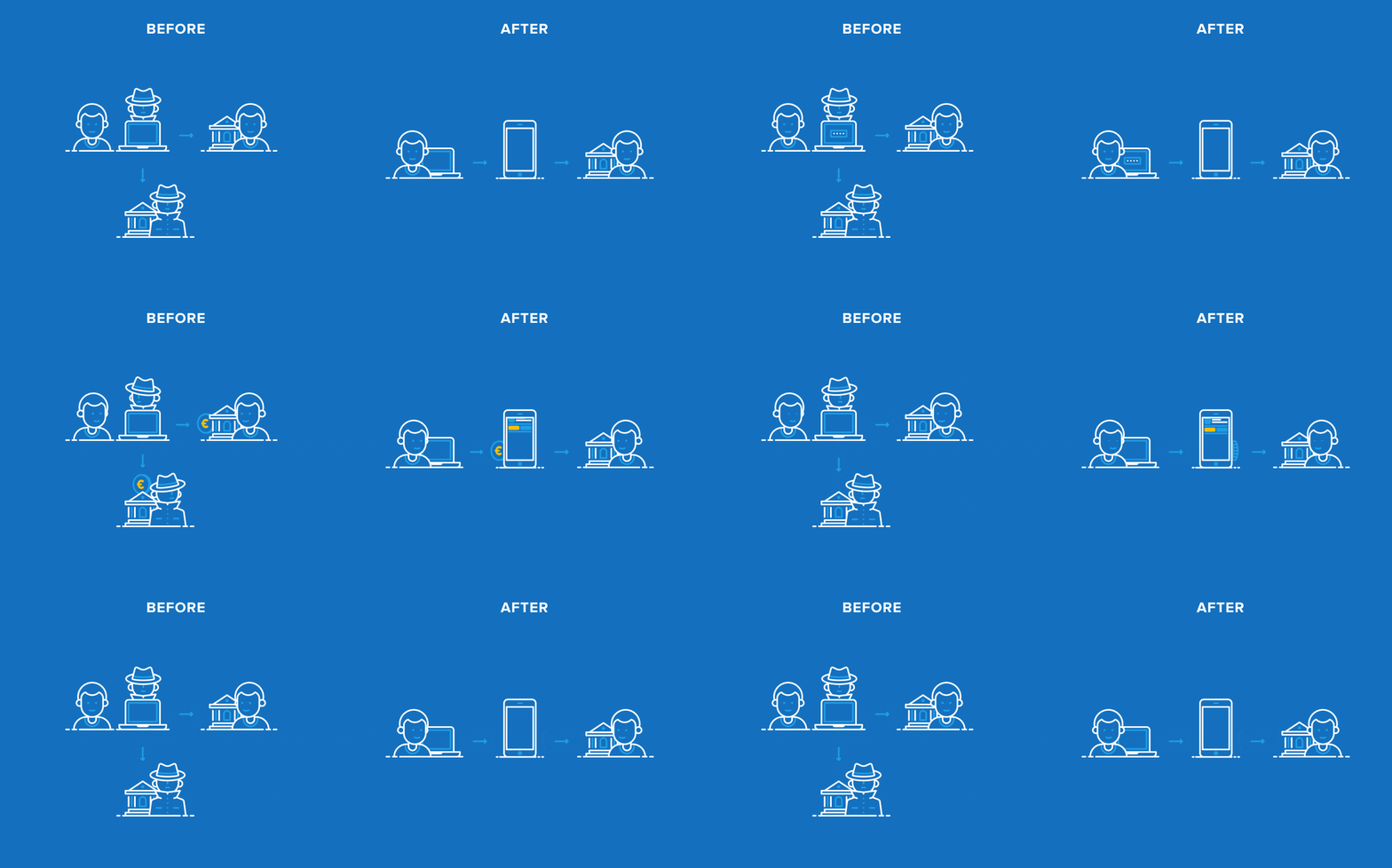
  • Since blockchain is a distributed technology, single points of failure that disrupt the entire system do not occur. There is no work for any intermediatory in a blockchain-powered transaction. The need for transfer agents is reduced since the introduction of blockchain. Blockchain-powered transactions are nearly impossible to be hacked or manipulated. 
  • Blockchain is a shared platform that enhances the transparency of network participants. The best part of a blockchain network is that participants can only see the financial transactions. Under no circumstances, a participant can change the financial transaction on a blockchain network. 
  • Due to its transparency, blockchain helps network participants to collaborate and access financial/transaction data. Opposite parties can come to an agreement quickly due to the transparency of a blockchain network. 
  • You can create tamper-proof software to support your business logic as blockchain offers high programmability. Blockchain also allows businesses to share data selectively to maintain privacy. According to stats, blockchain offers around ten times more cost benefits than other technologies for making financial transactions. 
  • Blockchain is a scalable technology and can adapt if the number of fintech transaction increase considerably. Each company in the commodity industry gets a global reach with blockchain and fintech. If there are periodic surges in the transaction activity, blockchain is capable of handling them.

A company in any commodity industry can go global and indulge in cross-border transactions with blockchain. Products offered by different companies in the commodity market are more or less the same. Different companies in the commodity industry compete for price with each other. When a company reduces costs incurred in making/managing financial transactions with blockchain, it can provide discounts to buyers.

If you are working in the commodity industry, a fintech course with blockchain can help you upgrade your career. Companies in the commodity industry are also focusing on hiring employees that have done a fintech course. Blockchain and fintech experts can help companies in safeguarding their financial transactions.

best Fintech courses in IndiaWhy choose Imarticus’s fintech course?
We offer a PGDM, MBA, and certification course for financial technology. Fintech courses will help you in learning the tools and technologies used in the industry. Among all the technologies used in the fintech industry, there will be a focus on blockchain. We also offer placement support to students who choose our financial technology courses.

You will work on several real-life projects during your fintech course. Not only you will learn industry practices, but also learn job-relevant skills with a financial technology course. Start your fintech course to make financial transactions in the commodity industry secure!

What is a Fintech Festival?All you Need to Know

Fintech is an industry that deals with finance technology. At its roots, technology in the finance industry can be traced back to when traders were writing on blackboards to show what sales they made in the stock market on any given day. From there, it has expanded into much more technologically advanced areas.

What Is a Fintech Festival?

Fintech Festival is an event for financial technology popping up around the world in recent years. As an industry grows and changes, so does its need for innovations and technologies.

It’s a platform where technology companies, enthusiasts, investors, and more celebrate innovations in the financial sector. A lack of exploration has led to a lot of work for people in finance technology. Another aspect of this industry’s growth is how quickly it has expanded in recent years.

The organizer of this festival is usually a technology company that specializes in the finance industry. During this festival, multiple booths display any new developments and other recent things they have been working on, allowing them to connect with potential investors and even their existing customers.

Why Do People Attend a Fintech Festival?

There are many reasons why people attend a fintech festival.

  • Many of these events attract entrepreneurs, industry leaders, and technology enthusiasts.
  • Of course, people who work in finance and technology will attend because they can learn about the latest advancements and meet like-minded professionals.
  • Other people might be interested in specific areas of Fintech such as blockchain, cryptocurrency, investments, banking, etc.

When is Fintech Festival 2022?

FinTech Festival India 2022 will play a vital role in bolstering the environment and promoting cooperation between Key global FinTechs. FinTech Festival in India would be followed by a series of ten Hybridized Micro Experience in eight Indian cities from February 2022 to March 2022, culminating in a Strong Global presence in New Delhi in March 2022.

How Much Do Fintech Festival Tickets Cost?

The price of fintech festival tickets varies depending on which one you attend and where it gets located. Most of these festivals are open to the public, but there is usually a small fee involved for you to register. Fortunately, many of them offer discounts on tickets if you buy multiple days’ worths or they have a special promotion going on at the time.

Explore and learn with Imarticus Learning

This one-of-a-kind FinTech course combines practical learning instruction with cutting-edge innovations like APIs, Blockchain, Cloud Computing, AI, Machine Learning, RPA, IoT, and Big Data to cover every essential element of FinTech. If students want to become a FinTech specialist and boost their job chances, their quest stops here, and a fantastic FinTech learning experience begins.

Fintech is an industry that deals with finance technology. At its roots, technology in the finance industry can be traced back to when traders were writing on blackboards to show what sales they made in the stock market on any given day. From there, it has expanded into much more technologically advanced areas.

What Is a Fintech Festival?

Fintech Festival is an event for financial technology popping up around the world in recent years. As an industry grows and changes, so does its need for innovations and technologies.

It’s a platform where technology companies, enthusiasts, investors, and more celebrate innovations in the financial sector. A lack of exploration has led to a lot of work for people in finance technology. Another aspect of this industry’s growth is how quickly it has expanded in recent years.

The organizer of this festival is usually a technology company that specializes in the finance industry. During this festival, multiple booths display any new developments and other recent things they have been working on, allowing them to connect with potential investors and even their existing customers.

Why Do People Attend a Fintech Festival?

There are many reasons why people attend a fintech festival.

  • Many of these events attract entrepreneurs, industry leaders, and technology enthusiasts.
  • Of course, people who work in finance and technology will attend because they can learn about the latest advancements and meet like-minded professionals.
  • Other people might be interested in specific areas of Fintech such as blockchain, cryptocurrency, investments, banking, etc.

When is Fintech Festival 2022?

FinTech Festival India 2022 will play a vital role in bolstering the environment and promoting cooperation between Key global FinTechs. FinTech Festival in India would be followed by a series of ten Hybridized Micro Experience in eight Indian cities from February 2022 to March 2022, culminating in a Strong Global presence in New Delhi in March 2022.

How Much Do Fintech Festival Tickets Cost?

The price of fintech festival tickets varies depending on which one you attend and where it gets located. Most of these festivals are open to the public, but there is usually a small fee involved for you to register. Fortunately, many of them offer discounts on tickets if you buy multiple days’ worths or they have a special promotion going on at the time.

Explore and learn with Imarticus Learning

This one-of-a-kind FinTech course combines practical learning instruction with cutting-edge innovations like APIs, Blockchain, Cloud Computing, AI, Machine Learning, RPA, IoT, and Big Data to cover every essential element of FinTech. If students want to become a FinTech specialist and boost their job chances, their quest stops here, and a fantastic FinTech learning experience begins.

Some course USP:

  • This Fintech training aids the students to learn job-relevant skills that prepare them for an exciting career in Fintech.
  • Impress employers & showcase skills with a certification endorsed by India’s most prestigious academic collaborations.
  • World-Class Academic Professors to learn from through live online sessions and discussions. It will help students understand the 360-degree practical learning implementation with assignments.

Why Financial Services Need Cloud Computing? How can it Benefit Them?

Cloud computing is a new expertise that has been popping up everywhere. It seems like every company is using it, but what are the benefits? Computing can use to cost-effectively store data and programs on an Internet server without buying expensive hardware.

This software model allows companies to break away from their traditional ways of doing things, which often means less time spent on maintenance and more time for innovation.

Why do financial services need Cloud Computing?

Financial services firms may use cloud computing by saving money through lower operating costs or increased productivity with more scalable systems and applications. It can enable the storage and sharing of information like customer data, financial documents, and other sensitive material.

How can Cloud Computing Benefit Financial Services Firms?

It is a new concept that is still growing and changing quickly. For this reason, financial services firms may want to get ahead of the curve by investigating everything that has to offer for their business.

  • It operates on servers located in data centers at its most basic level, allowing companies to store and share information more efficiently and cost-effectively.
  • Offsite data centers can further reduce expenses, as they do not require the purchase of servers or any on-premises hardware.
  • The financial market also has access to highly scalable cloud technology that you can quickly adapt to handle increases in user volume.
  • In addition to increased productivity, increased access to information can lead to better business strategies and more accurate financial forecasts.
  • They can save money on hardware with virtualized servers and pay only for the resources they use through per-usage billing.
  • They can also increase productivity by moving business applications to the cloud or improving collaboration with remote partners.
  • Financial services firms can further benefit their employees by giving them access to corporate information and data from any Web browser.
  • You don’t have to be concerned about its file storage and sharing capabilities and focus on providing excellent customer service and creating innovative products.

Explore and learn with Imarticus Learning

The ONLY FinTech course covers every vital element of the industry while also providing hands-on experience with popular technologies, including APIs, Blockchain, Cloud Computing, AI, Machine Learning, RPA, IoT, and Big Data.

Access resources powered by our Research, Knowledge, and Tech Partners such as PWC, Rise Mumbai, Automation Anywhere, BTA, and others to stay up to speed on the latest FinTech industry trends and practices.

Some course USP:

  • This Fintech course is with placement assurance aid the students to learn job-relevant skills that prepare them for an exciting career.
  • Impress employers & showcase skills with a certification endorsed by India’s most prestigious academic collaborations.
  • World-Class Academic Professors to learn from through live online sessions and discussions. It will help students understand the 360-degree practical learning implementation with assignments.

Top Cryptocurrency Exchanges in India of 2021

With the market’s exponential growth, it is not surprising that India has also seen an increase in its number of crypto exchanges. With 1.3 billion people, India will be one of the leading countries trading over the next decade. This blog post reviews some top trades in India worth investing in now or keeping an eye on as they grow.

What are cryptocurrency exchanges?

Cryptocurrency success has led to the creation of crypto exchanges. It is a platform where investors can purchase and trade cryptocurrencies like Bitcoin (BTC). Crypto exchanges allow you to own several cryptocurrencies without having to invest in expensive mining rigs.

Top 6 Crypto Exchanges in India:

  1. CoinDelta

CoinDelta is one of the leading exchanges in India that also has low trading fees. The site features an intuitive user that makes it easy for new investors to understand and experience. It was launched in December 2013, which means it has more than three years of experience in the Indian market.

  1. 2. Coinsecure

One of India’s most popular exchanges recommends the ideal exchange for traders wishing to invest in Bitcoin. The site supports multiple languages and has an easy-to-use trading interface with simple buy/sell options, live charts, etc. Although their fees are a little higher, they offer a fast and straightforward trading experience.

  1. BitBay

Based out of Poland, this exchange is not well-known in the Indian market; however, it offers some great features that make it one of the top exchanges around. It supports multiple fiat currencies and has an easy-to-use interface with advanced charting tools and several trading options.

  1. Coinome

An Indian exchange backed by the famous Bitcoin trading company, Zebpay, offers some impressive features that make it one of the top exchanges in India. It provides an instant account creation facility and has multiple payment options, high liquidity, and low fees.

  1. Koinex

One of India’s most popular exchanges, Koinex, offers some exciting features that make it stand apart from its competitors. It supports multiple cryptocurrencies and has live updates on the homepage with real-time order books and instant deposits. The site also has an impressive trading app for Android devices.

  1. WazirX

With over 300,000 registered users on its beta launch in October 2018, WazirX is one of the newer exchanges in India. However, as a new exchange, it has some impressive features and plans to expand its range of tradable cryptocurrencies. It offers high liquidity and low fees, along with an easy-to-use interface and excellent security features.

Explore and Learn with Imarticus Learning

The Professional Certificate In FinTech, developed by SP Jain School Of Global Management and Imarticus Learning, is Asia’s leading FinTech course. Hands-on training from industry professionals, real-world case studies, projects incorporating technologies like Blockchain and Cloud Computing, and significant interactions with FinTech industry leaders and entrepreneurs are all part of this course, making it an attraction for those eyeing a career in Crypto.

Some course USP:

  • This Cryptocurrency course is with placement assurance aid the students to learn job-relevant skills that prepare them for an exciting career.
  • Impress employers & showcase skills with a certification endorsed by India’s most prestigious academic collaborations.
  • World-Class Academic Professors to learn from through live online sessions and discussions. It will help students understand the 360-degree practical learning implementation with assignments.

Blockchain and FinTech: Career Opportunity or Threat?

The industry of financial services is one that has expanded at an exponential rate over the past couple of years and by the looks of it, it doesn’t look like its growth is going to slow down any time soon. With the establishment and growth of mobile payment, cryptocurrencies as well as online banking, a question that is largely being asked is whether digital systems such as these pose a threat to us while we go about our daily businesses.

There is an element of uncertainty to any revolutionary idea and FinTech is no different. FinTech has been finding a place in industries and organizations belonging to a variety of sectors, reaching almost all areas thus inspiring further change as well as innovation within it.

However, it is important to be careful and take measures to diminish the potential for this technology to be utilised as a tool for malpractice.

The inadequate performance of banks is among the several reasons contributing to the growth and popularity of FinTech. Banks seem to be having difficulty in gaining their cost of capital and thus are looking for newer business models as an aid. In order to remain competitive, banks are looking for various strategies that will help them evolve.

Fintech Career

Banks need to slowly start coming to terms with FinTech technology as well as its potential to start operating over a large number of sectors, thus not being limited to just financial services. An issue that is being posed at present is the development and use of blockchain technology.

The technology meets all the vital requirements for durable media, thus guaranteeing integrity as well as the confidentiality of the various documents sent to the client. This increases its appeal for potential use by banks. Customer empowerment is another key factor in the development of FinTech.

Advantages of FinTech

There are several advantages that FinTech provides its users with. FinTech improves efficiency, is faster and provides an improved experience in general for its clients as well as end-users. People do not have to be at the mercy of banks in dealing with various international payments as well as transactions.

Fintech CareerFinTech provides its users with an ability to perform all their important financial operations through their smart-phones or computers and these are processed in a matter of seconds.

Risks Posed By FinTech

Even though FinTech is advantageous in a large number of ways, like any other technology, FinTech also poses a few risks in its use. The first concern when talking about FinTech is the various risks posed by third-party services like cloud vendors. There is a level of operational risk posed by a third-party governance system.

Procyclicality is a possible risk which could come out of a number of sources and lead to various systematic risks. This becomes very important particularly when there is a high number or concentration in a platform or a market segment.

Another thing that may pose as a concern is various cross-border legal issues and various other regulatory issues which would need to be taken into account as well. When it comes to computation of big data and algorithm complexity, the lack of clarity makes regulatory disclosures all the more challenging.

Cyber risk is the most obvious threat that people worry about when it comes to any technology. The more we move towards digitalizing our world, the more we need to ensure that everything is up to date and mitigate security risks.

A career in FinTech right now is the smartest choice to make. FinTech courses would help in equipping with information and details required to succeed in this field. It is important to learn blockchain before stepping foot into the world of FinTech.

Smart Contracts: What are They & How do They Work?

With the progress of the blockchain system over the years, a lot of new features have started coming into play. Initially a manual system, it has now progressed to the point where transactions can be made completely automatically. That is, without involving any third parties at all. This is where smart contracts come into play. It ensures that the agreement between two people stays firm without the threat of any one of them backing out or delaying the process.

Here we are going to discuss what smart contracts are, how they work and what the benefits of using them are. The reason why the blockchain system has progressed so far is because of the highly adaptable nature of this industry. This is the reason why it has continued to remain afloat while others could not. 

So it is only plausible that this industry has also demanded professional opportunities recently. If you are someone wondering what to do with your career in the future, a Fintech course might just be what you need. A lot of institutions in India offer good courses.

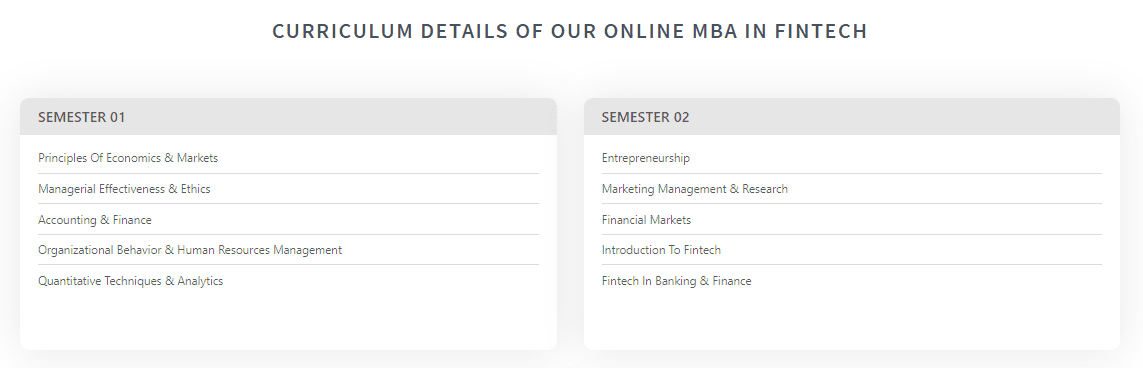
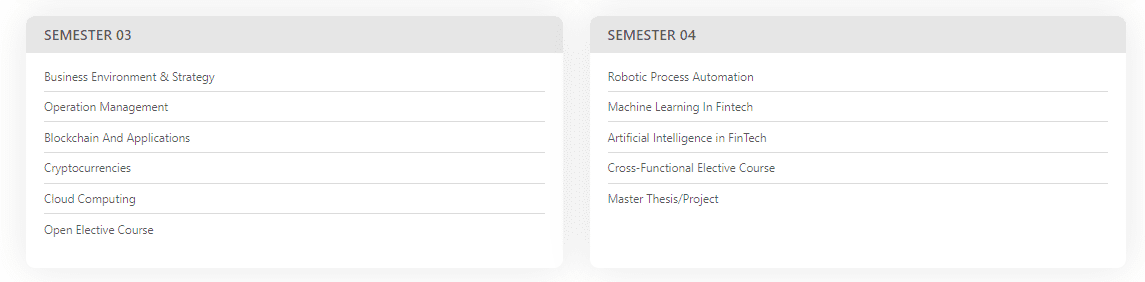
Imarticus Learnings is one of the best among them. They have a compact Fintech MBA degree with a blockchain and cryptocurrency course included in the curriculum. It will not only teach you all you need to get ahead in the game but would also provide good placement opportunities that will put you leagues ahead of your peers. 

MBA in Fintech with blockchain and cryptocurrency course

MBA in Fintech with Blockchain and cryptocurrency course

What are smart contracts?

Smart contracts are basically an agreement made between two parties recorded in a blockchain system. They are absolute and obviously, due to the extremely secure blockchain system, they can not be hacked into or tampered with in any way. These contracts function automatically, as in if an agreement is made of a transaction happening at a certain date if certain conditions are met, then given all goes according to plan, the transaction will be made automatically.

With no involvement required of a third party or even the parties involved in the first place, the system completes the transaction automatically, with cryptocurrency being the mode of payment that gets transferred to the respective payee’s digital wallet.

How do they function?

Basically in a blockchain system, two parties agree. For example, Rachel will buy a car from Monica with 150 Bitcoins on 18th October. And the ownership of the car will be transferred to Rachel when the amount is paid. Now, on 18th October, the amount gets credited to Monica automatically without Rachel having to do it manually at all. And just like that with the conditions met, the ownership of the car is now transferred to Rachel.

Benefits of using them

There are some serious benefits of using smart contracts. A few of them are listed here:

  • No need to involve any third parties, including brokers, lawyers, or even the bank.
  • Both parties are secure in their knowledge that the terms are absolute and the amount, as well as the goods, will be transferred to them without any delay. Which negates the chance of fraud completely.
  • Saves precious time as well as extra expenses on both ends.

Conclusion

Blockchain is a system that is now being used in or introduced to almost all sectors of business, education, and even health. So a degree in Fintech is the best possible course to take for career aspirants these days. Do check out Imarticus Learnings’ Fintech MBA program to get the boost you need in your career.