Is Fintech Reeling Under New Challenges?


Just recently, the startup ecosystem in the fintech saw RBI regulate and intervene to establish a beta-testing sandbox for fintech products. This move was to provide a controlled safe environment for the release of products. And then, the Fintech sector came across a new challenge to overcome. The crisis of liquidity in the NBFC sector! Earlier in the year, ILFS the largest NBFC player on the market defaulted on its payments causing the cash-crunch for other NBFCs as investors grew wary and the capital markets declined lending to shadow NBFC lenders. The rating experts ICRA and CRISIL were quick to downgrade Home-Financer DHFL after the interest default to investors on its NCD issues. The liquidity-starved DHFL missed its deadline for payment of investor interest on NCDs.

The question now is about the impact and whether this is a blow to the fintech space? Entrepreneurs are divided over their opinions. Funding has not stopped according to the statistics. Tiger Global Management’s funding round saw them raise USD 30 million from Fintech-Startup-Open who offer banking services for businesses and SMEs. Razorpay specializing in payment solutions could raise USD 75 million with assistance from Sequoia India led a group of financiers. However, CEO and founder of Qbera.com, Aditya Kumar, said the liquidity crunch originating from ILFS has made investors risk averse and there is a capital shortage from banks and partnering financial institutions. His company just got funded USD 3 million from lenders E-city Ventures last year.

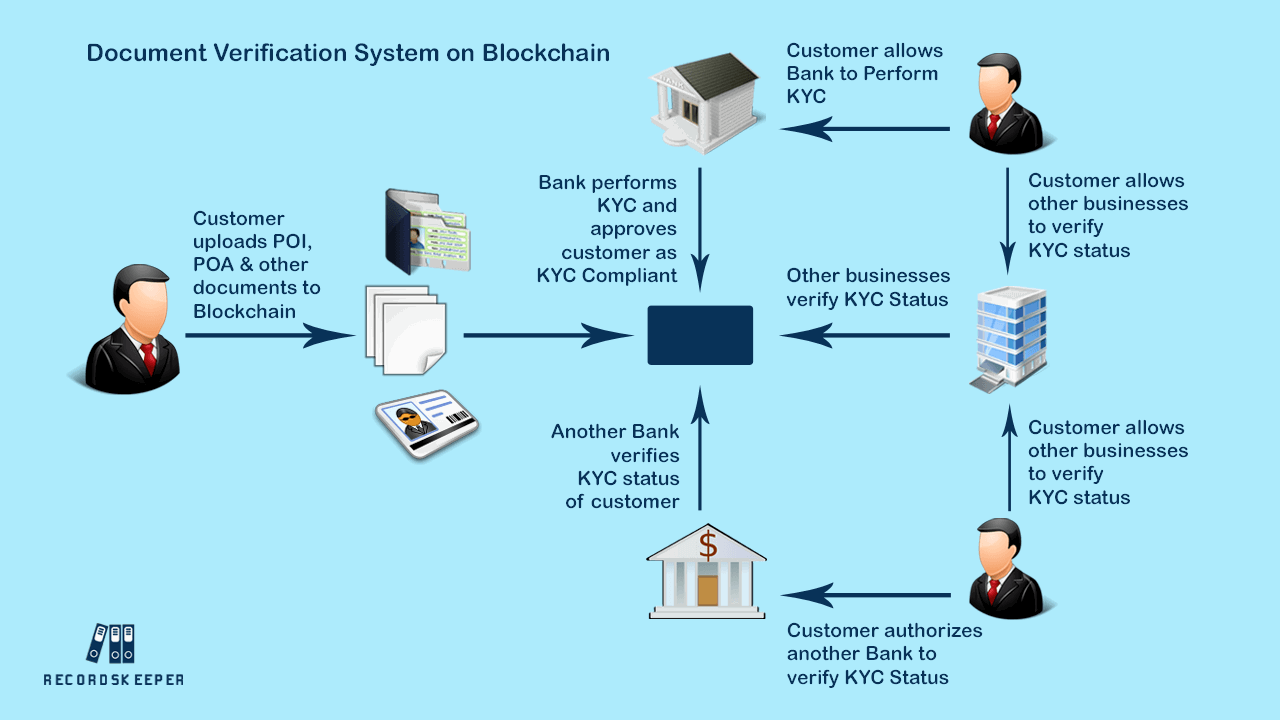
Citing data results from Medici insights oriented fintech platform and Zone Startups, between 2015 when fintech took off to 2018 a whopping 1,300 ventures cropped up in the fintech space. The P2P lending base uses funding loans of retailer investors and trust is key. But, it would be wrong to disqualify the fintech space on the count of the fund crisis in the NBFC segment. Fintech has an immense and broader scope than any other nascent industry. According to CEO and founder of LenDenClub, Bhavin Patel KYC is a challenge for the payment companies in the wallet segment and the liquidity of online lenders has definitely been impacted. Last year the LenDenClub got equity investments totaling to 3.5 crores in Rs.

CEO and founder of  CoinTribe, Amit Sachdev, felt the fintech industry should be classified as focused around SMEs and focused on the retail segment. The retail players are floundering to raise debt capital and equity as they have high costs in acquiring customers, the retail loans offer low yields and the product economics is not favorable to such financial measures. On the other hand, the SMEs dependent players do have debt lines and equity capital available to them. CoinTribe received a response of USD 10 million in funding from Sanre Partners and are focused on distribution and B2B partnerships with a SMEs focus.

Though the investors in the retail segment have adopted a circumspect cautious outlook, the P2P players in lending depend on the trust factor since their funding base is reliant on investors in the retail markets, according to RupeeCircle’s Co-founder Abhishek Gandhi. RupeeCircle was funded by Mahindra Finance to the tune of  4 crore Rs last year. Systematic communication ensures investor trust. From the start, their focus was both on recovery and lending and this has helped keep their rates of loss low and ensure investors do not distance themselves from them.

Overall, the Fintech segment is seeing steady growth. The fintech segment has over 175 deals, seen a cumulative sum of USD 1.5 in billions being invested in it last year according to data from Tracxn. This means strong players with the right growth figures and a profitable potential have succeeded in raising funds in spite of the poor market conditions and the resultant financial crisis.

Entrepreneurs are now more interested in scaling efficiently and significantly as lending partners are placing their bets on the SME focused lending segment, says Sachdev.

In FY 2019 CoinTribe saw 3x growth and are confident of these levels in the current year. They are betting on a 3-lever strategic approach of new product launches driven by SME business linkages and B2B partnerships to attain significant geographic expansion. Kumar from Qbera.com said they had an impressive 300 percent every-year rate of growth enabling their book-value to grow to beyond the 130 Crore Rs mark.

A framework that is robust, the use of AI technologies and a loan process that is seamless has helped them stay abreast of the market conditions. LenDenClub’s Patel was quick to point out that being a foundling finding new markets, they are still able to hit the 40 to 50 percent quarterly rate of growth mark.

Conclusions:

The Fintech courses offer immense job scope and opportunities. One can opt for training in this sector or in financial analysis from the reputed Imarticus Learning Academy to be a part of the revolution. For more details in brief and further career counseling, you can also search for – Imarticus Learning and can drop your query by filling up a simple form on the site or can contact us through the Live Chat Support system or can even visit one of our training centers based in – Mumbai, Thane, Pune, Chennai, Banglore, Hyderabad, Delhi, Gurgaon, and Ahmedabad.


How The Fintech Hub Plans to Drive India’s Need for Financial Innovation

A fintech hub complete with accelerator, incubator, and platform for investors is set to open shortly in Mumbai to help young startups and fintech app innovations. The fintech revolution in India is young and already disrupting the space. The governments have been touting this revolution as the next big wave which will put India ahead economically and make it a strength to reckon with.
The Digital India movement, which began just three years ago in 2016, saw a majority switch to the ease of the Unified Payments platform or UPI-payments. QR scanning and app-based banking solutions are currently the norms. The financial, governmental curbs to end black-money, demonetization, the introduction of cheap 4G services by Jio, the mushrooming of Fintech courses, the simplified GST norms, and the government setting aside budgeted funds to develop this sector have been a boost to the commercial space.
fintech certification
Today there exist about 2700 startups and a 72% adoption rate of solutions for payments, with many fintech startups being incubated at Bangalore, the Vizag Valley for Fintech, Star Tank by Paypal and the T-hub of YES bank according to the Inc42’s 2018 report. India is today the startup leader with Mumbai and Delhi being the financial centers and Bangalore the technological mainstay.
When compared to the USA, China, and several other countries, India is not recognized for Fintech. This indicates that the marketing & innovation processes and incubation levels or quality of products need to be tweaked, a national level policy enacted, an excellent fintech training course and nation-wide support strategy needs to be put in place to collaborate on such ecosystems, measures and ideas for the fintech segment.
The measures put in place:
According to Inc42’s Suniti Nanda, who is also the Govt of Maharashtra’s CFO, the focus is pan-India and not restricted to the Mumbai hub alone. Some of the year-long boxed initiatives are –

  • Setting up a base for the fintech segment, including a nation-wide live fintech registry. Able mentors, profiles, best practices used and a collaborative environment to promote the fintech initiative.
  • Setting up of accelerators and incubators like corporate accelerators and in multi-partner collaborations like with NPCI, PayU, Fino Payments Bank, Zone Startups, Kotak, ICICI and Barclay Banks partnered accelerators.
  • The proposed platform for investors will see buy-side investors and sell-side startups.
  • On-boarding of global investors will be showcased at road-shows where small players can interact, tie-up and collaborate in a safe and moderated environment.
  • A 3-year scheme of grants has been proposed for fund-creation for such startups and the fintech industry, where the fund will have industrial mentoring, banking support, private entities involvement, a better relational base, and such funds created will be jointly and agilely self-managed.
  • As rents are high and a pain-point for startups, the government has proposed a policy of rental reimbursements to the tune of 4 lakh rupees for three years, and this has benefitted about 50 such firms already.
  • Fintech education, polishing innovative ideas and talent, and developing excellent coding skills are being focused upon as the verticals of thrust and promotion in a bid to suit the demand for personnel.
  • Innovative Fintech courses are the need of the hour and premier institutes, reputed colleges and the industry have come together to create a modern syllabus, intern opportunities, and validated fintech certifications. Amazon, ICICI, Kotak, NASSCOM and many such leading institutions are helping make this a reality.

Concluding notes:
Fintech without an enabling environment needs proactive support across all states in India as the drive to the top is impossible when in isolation. Mumbai has emerged the leader by enabling its governmental policy for fintech industries and also ensuring that the best startups stay involved in the development of the sector.
It is vital that all states and people concerned are communicative, collaborative and contributive if we want to see fintech be the big-bang of tomorrow. India has the talent, resources, workforce, and a host of other advantages. What does appear to be missing is the collective intent to succeed and help others?
If the fintech revolution is where you wish to make your career, then doing a fintech training course becomes essential. Imarticus Learning can help you succeed by providing you practical skill-oriented training with strong mentorship, a measurable and well-accepted certification, assured placements and even a persona developing module. Why wait?

The Advantages of Taking Up Fintech Courses

Financial technology is not completely new. The industry has been around for enough time to witness its ups and downs. Everyone can see how technology is changing finance. But still, there are a lot of gaps in information. Still, there are hundreds of people who ask Why Fintech? Even today. There seem to be thousands of blogs and posts on the internet, but they confuse people even more. Too much information is often like no information.
In such a case, if you belong to the interested but confused group of people, then your only savior is FinTech courses. Financial technology has only one way to go, and that is up, as believed by the experts. The industry will grow even more strong, and it will be advantageous to have certification for FinTech courses on your side.

Here are a few advantages of learning FinTech courses:

  1. Financial Technology

One of the biggest reasons why FinTech learning is essential right now is technology. The finance industry is no longer in the initial stage. The industry has adopted technology and is changing really fast. The pace at which banks are going digital is alarming. So if you don’t adopt financial technology or keep believing in traditional transactions, then you will be obsolete in a year or two. Being in the finance field, you cannot afford that. You have to get trained in the latest market situation and nothing better than FinTech courses to do that.

  • For the masses

Financial technology has brought each and every aspect of finance to the everyday man. There are no middlemen or economic bifurcations anymore. From investment advice to the rate of interest, every data and risk assessment reaches the layman by just one click. Intermediaries have gone down and so have the rates of interest. Now personal and business capital is available to anyone who needs it. Everything is computer-based, and that is why FinTech is essential. If you go for FinTech courses at the right time, you can make sense of it all for your clientele at the right time.

  • Competitive advantage

Entering any industry without proper knowledge can be dangerous. Being able to understand what’s going around you and using the proper jargon can be advantageous all the time. When a client asks you why Fintech, you will know the answer. Understanding financial technology better will help you outsmart the competition. FinTech courses are needed to do your job properly in these times of fast-paced technological changes.

  • Become a pro

Being in the field of finance, you know that mastering any discipline of finance takes time and efforts. Financial technology is no different. It takes the effort to become a Fintech pro. Online courses and free materials are all good, but they are more like shortcuts. If you want to become successful, then a detailed knowledge of the industry is necessary, and that can be learned through proper certification FinTech courses only. There is something for everyone – from beginners to professionals. Your success in the finance industry is why Fintech learning is essential for you.
Conclusion
We live in an age where there is no shortage of resources. There are a plethora of FinTech courses online and offline. According to your requirement, you need to make a choice. Whether you are a traditional financer, a beginner, own a start-up or have your own established business in the financial technology industry, you have to be updated about Fintech. These advantages listed about should tell you why Fintech is essential for your career. In fact, now you should be asking why not Fintech?

How is The Ethereum Blockchain Different From The Bitcoin Blockchain?

How is The Ethereum Blockchain Different From The Bitcoin Blockchain?

You don’t need to attend a blockchain training or fintech course to have heard the names Ethereum and Bitcoin. These two names are very familiar to anyone who has been observing the blockchain and Fintech technology. Even though these two cryptocurrencies are based on the blockchain, there are few fundamental differences between them. This article will shed some lights on the specifics of each blockchain and show you what makes them different.
 Bitcoin: The Uncensored Money
The Bitcoin was invented by Satoshi Nakamoto in 2009. The primary objective of Bitcoin was to provide a peer-to-peer electronic cash system which will replace the traditional banking system. As a part of making things simple, the bitcoin’s protocol or Bitcoin’s blockchain was made just well enough and perfect to store, handle and perform transactions. Basically, this Bitcoin blockchain is a worldwide shared ledger that ensures easy transfer of value in the form of bitcoins. It means, unlike the traditional money, you can skip the part of seeking permission from banks or governments for sending money to anywhere in the world.
There are thousands of bitcoin nodes on the bitcoin’s blockchain that are able to verify the legitimacy of each payment. They eliminate the need for any third party in transactions. In simpler words, this blockchain doesn’t care who is making the transaction. It doesn’t care even if you are human or machine.
Ethereum: Not Just Money
In Ethereum, the blockchain technology or the Fintech courses is utilized to create applications beyond just supporting a digital currency.  Even though you can transfer value through it, Ethereum is not purely digital money. Ethereum can carry out transactions just as Bitcoin’s blockchain, but it is not limited to that. The primary difference between these two blockchains is Ethereum’s ability to store and execute newly coded programming logic. Using this facility, you can create smart contracts and DApps in Ethereum.
A smart contract is a computerized transaction protocol that takes place in terms of a predefined contract. In simpler terms, a smart contract executes “if-this-then-that” condition coded on to it. You can use Ethereum’s native programming language, Solidity to write smart contracts that are completely decentralized. You can eliminate the escrow services and intermediaries through this. Some of these intermediaries are Uber, freelancing platforms like Upwork, Airbnb, OYO, and eBay. Due to this facility, Etherum is also known as programmable money.
In other words, we can call Euthereum as a decentralized programmable blockchain-based software platform. To enable value transaction, a cryptocurrency named Ether is employed in this system.
Conclusion
So, now we understand that Ethereum is an advanced use of the blockchain. The bitcoin also uses blockchain technology but these two are never in competition with each other. In a general point of view, the purposes of these two blockchains are completely different. They can coexist and find solutions for many problems we are facing today. However, reports are suggesting that Bitcoin is developing other capabilities of Ethereum. When that finally happens, the comparison between them could be more competitive.

Reliance Realty to Build Fintech Center in Navi Mumbai

The emergence of the amalgamation of technology and finance-related knowledge has created a consistent demand for banking services, fintech evolution, catering to the financial and insurance segment services, IT and cloud-based services and technology, the NBFC sector services and in keeping with the flow the growth of knowledge and training centers and institutes. Over the next two decades, this is expected to be the growing, return-oriented and most rapidly developing the economic sector. The state and central governments also have gone all out to promote and have a growth policy in place for the disrupting fintech segment.
Little wonder then that very large players like Reliance also have jumped onto the bandwagon. With a current -2.78 percent on NSE, RCom has taken all necessary approvals and initiated the development of its infrastructure in a well-timed plan to use its assets to develop Navi Mumbai’s island Smart Center for Fintech through its subsidiary realty arm. The Knowledge City named after its founder Dhirubhai Ambani- DAKC will have 3 million sft leasable and saleable space spread over a sprawling 132 acres campus in the satellite Navi Mumbai city. The Maharashtra Government, DIT and MIDC have approved the move lending credence to the promotion of Fintech in Maharashtra. The project is being touted as being twice the available space of the business complex in the busy industrial area of Bandra-Kurla of the city of Navi Mumbai.
RCom was recently in the eye of the debt-storm with an outstanding debt amounting to a little over 46 thousand crores in rupees and its filing an insolvency application in February 2019. Among its leading 40 creditors are Chinese and domestic banks besides Ericson. Using the route of restructuring of Strategic Debts, working on the sale of its spectrum, and the sale of its Nippon subsidiary, R Com had promised its creditors like the European Ericson to repay 550-cr Rs and defaulted forcing them to approach the highest court and NCL tribunal. The heavily indebted and financially stressed R Com has yet to begin its payments and the time-bound NCLT fast-tracked resolution is yet to see progress, which has been the situation for over nearly a year-and-a-half now. As of today, the creditors have not received any proceeds and the resolution plans which are underway, seem a long way off.
Swedish Ericsson has been baying for blood and repayment causing RCom and its subsidiaries RTelecom and RInfratel are also expected to file for insolvency separately. In an NCLT aided move for debt repayment and tardy resolution, the NCLT was quick to point out that the drawn-up plans are subject to speedy debt resolution and debtor repayments in a transparent manner where the funds from monetization of assets will need to be fast-tracked since the 270 day framework prescribed is fast drawing to its end. On the other hand, Shri Anil Ambani the Chairman has always claimed the plot which was the corporate hub of its operations had a developable market-value of 25,000 Cr in rupees.
Concluding Notes:
On an ending note, the establishment of the smart center for fintech in Maharashtra at Navi Mumbai sees the Reliance giant utilizing its property of over 132 acres in setting up an over 3 million sft state-of-the-art facility. The nearly finished and bankrupt titan hopes to be in the thick of the fintech revolution with this move for a structured government backed monetization initiative. Whether this move will bail out the stressed industrial giant is yet to be seen. However, it is aligned with the state policy to promote and develop the Fintech sector as its newest gambit in industrial development.
Do you have a head for spotting trends in the evolving financial markets and see scope for the policies and promotion of the fintech segment? Are you hoping to make a career of this and need efficient result-oriented training? Then, it is very important to select a reputed and experienced training partner especially at the beginning of your career.
If you also wish to be a part of the fintech revolution and wish to know how you can make a career in this evolving and promising field, then, check out the finance, technology and fintech courses at Imarticus Learning. The Learning-experience is based on the latest improvements and the methodology lays emphasis on being able to practically apply your knowledge. Besides, who wouldn’t want an able, reputed mentor and assured placements?  Hurry, fintech is evolving rapidly.

How is your company implementing blockchain technology?

A blockchain is a public ledger which records and accounts for each and every bitcoin transaction that is made. Blockchain acts as an alternative to normal currency, centralized banking, and other transaction methods. It is changing the way we handle financial transactions. Blockchain maintains an ever-growing list of each and every transaction across every network, which is distributed over thousands of computers making it almost impossible to hack.
Our business uses the following applications to implement blockchain technology. 
Smart Contracts
This term was first coined in 1993 – but it is only recently that Smart Contracts has gained fame due to the 2013 release of the Ethereum Project. Smart Contracts are run on this Ethereum Project which acts as a decentralized platform – these are applications that run exactly as programmed without a chance of downtime, fraud, censorship or any third party interference.
Smart Contracts are self-automated computer programs that can carry out all terms of a contract without any external assistance. It is financial security that is routed to different recipients held in escrow. Smart contracts are unbreakable, and it helps the business to bypass unnecessary regulations. Smart Contracts also helps in lowering the cost for a subset of our common financial transactions.
Cloud Storage
Our company is also beta testing the cloud storage application, that will help decrease dependency whilst offering secure cloud storage. Users can store on the normal cloud for more than 300 times simply by using excess hard drive space – this process is similar to someone renting their home on Airbnb. On average, the world is spending more than $22 billion on cloud storage, and this has the capacity to be a source of revenue for average users. Cloud storage also has the potential to reduce the cost to store data for personal users as well as companies.
Supply-Chain Communications & Proof-of-Provenance
Most of the things that we purchase are not made by one single entity, rather by a chain of suppliers who trade their components – for example, graphite or lead for pencils – to one company that gets everything together and makes the final product. The major issue with this system is that even if a single one of those components fails, the brand had to take the heat. We use blockchain technology, that provides the stakeholders with digitally permanent records that are can be audited with no concern. This also ables the stakeholders to see the site of the product at each value-added step.
Paying Employees
We thought and decided that blockchain Certification can be used as an application to compensate employees as it has its roots in cryptocurrency. Since our business has a vast network of international workers, we have also incorporated Bitcoin into the payroll which has turned out to be a major cost saver.

fintech certification
The world’s first Bitcoin-based payroll service, Bitwage has found a way around the high fee structure that is associated with international money transfer, at a much-reduced amount of time as such payments do not need to move from one bank to the other – this has been very effective for our business as it saves both time and money for our employers and us. Since we use a public ledger, one can actually see and keep track of all the money during the entire transfer process. This form of payments is something many other companies and banks are betting on this year, and it has become a very large part of our business.
Electronic Voting
According to BitShares, which is a globally distributed database, DPOS or Delegated Proof of Stake is the fastest, most decentralized, efficient and flexible consensus model that is available. BitShare also states that DPOS helps to resolve consensus issues in a fair and democratic way as it leverages the power of stakeholder approval voting. Elected delegates can be used to tune all network parameters from fee schedules to block intervals and transaction sizes. It takes as little as an average of just 1 second to confirm transactions by a deterministic selection of block producers. Most of all, this consensus protocol is designed to protect our business against unwarranted regulatory interference.
Fintech Course
Fintech is a new form of financial technology that applies and uses technology to improve financial actions. In our business, we have also included blockchain training that includes short fin-tech courses for our employees and stakeholders to understand better what kinds of applications best fit blockchain and other forms of distributed public ledger technology. Since incorporating blockchain in our business, it has become imperative for our employees to understand the design rationale, the basic technology, the underlying fundamentals of cryptography and its limitations.

What technical skills are needed to become a Blockchain developer?

Blockchain technology has drawn much interest and is being adapted into every vertical like banking, Fintech, accounting, cryptocurrencies, the stock market, and real-estate segment, because of its efficient record keeping in distributed ledgers with transactions that are safe, secure and efficient.

There is no third-party involvement anywhere in the process and records can be viewed by the public, building a trustworthy secure payment system.

Opportunities abound, and many Fortune-500 companies like Capgemini, IBM, Accenture, etc. are headhunting. Indian salaries range according to Glassdoor in the range of Rs19 to 21K in India for fresh candidates and Rs 288 to 313K for the experienced at higher levels.

Technical skills required:
Code:
Blockchains run on code and is essential for logical interpretations and quantification.
Programming languages:
Blockchain technology uses languages like OOPs, flat and relational database and procedural language. Also required would be programming languages like C, JavaScript, and C.
The architecture of blockchains: 
Essential knowledge here would be the Bitcoin whitepaper, consensus, cryptographic hash functions, and distributed ledgers in blockchain fundamentals, its architecture and working. Decentralized architecture also means inexpensive perfect coding, MVC, Document-view, MVVM, fundamental communication architecture, G and bus architecture, and convention theory used for decentralizing the architecture and a fair understanding of fundamentals of distributed and centralized networks.
Structures of Data: 
Knowledge is required of data structure like Stack, Merkle trees, Patricia trees, advanced cryptography and a large number of data structures, Queues,  LinkedList, Tree, Hedera HashMaps, etc. is essential to understand how the language, technology, and data structure works.
Cryptography:
Methods of advanced cryptography like the hash functions ( KECCAK256, SHA256, etc.), sound knowledge of data structures, and a digital signature generating asynchronous cryptography are a must.
Development of Smart Contracts:
Functionalities of smart contracts to enable the business logic application of the blockchain, and specific network languages like Ethereum’s Solidity, Chaincode, Viper, etc.
Platforms and frameworks:
Coding for platforms like HashGraph, Hyper Ledge, Ethereum, EOS, etc.

fintech certification

Web-Development:

To develop applications that are de-centralized, both front and back application development including handling APIs, Dapps based interactive GU interfaces, handling requests, etc.
Smart Contract enablers:
Truffle suite installation and working on Mac, Windows, and Ubuntu.
Passion and technical skills will need to be combined. Read and learn about the history besides making a portfolio of small projects using the blockchain technology. You could also hone your skills at a reputed institute which is quite advantageous to you. A good blockchain training course will necessarily focus on a global curriculum; hands-on practical and project work which will help you build your industry and vertical relevant portfolio. Follow the protocol, do your fintech course at a reputed institute like Imarticus, learn at your convenience and get set to be career ready as a blockchain developer. The more you research, the better you learn. Continue enhancing your GitHub profile, attend the hackathons, and never quit.

How does Blockchain verification work?

One of the best features that have made blockchain so easily adaptable is the verification feature of transactions that are immutable, secure, permanently recorded, maintained as a public ledger and has no third-party interference.
How verification is achieved:
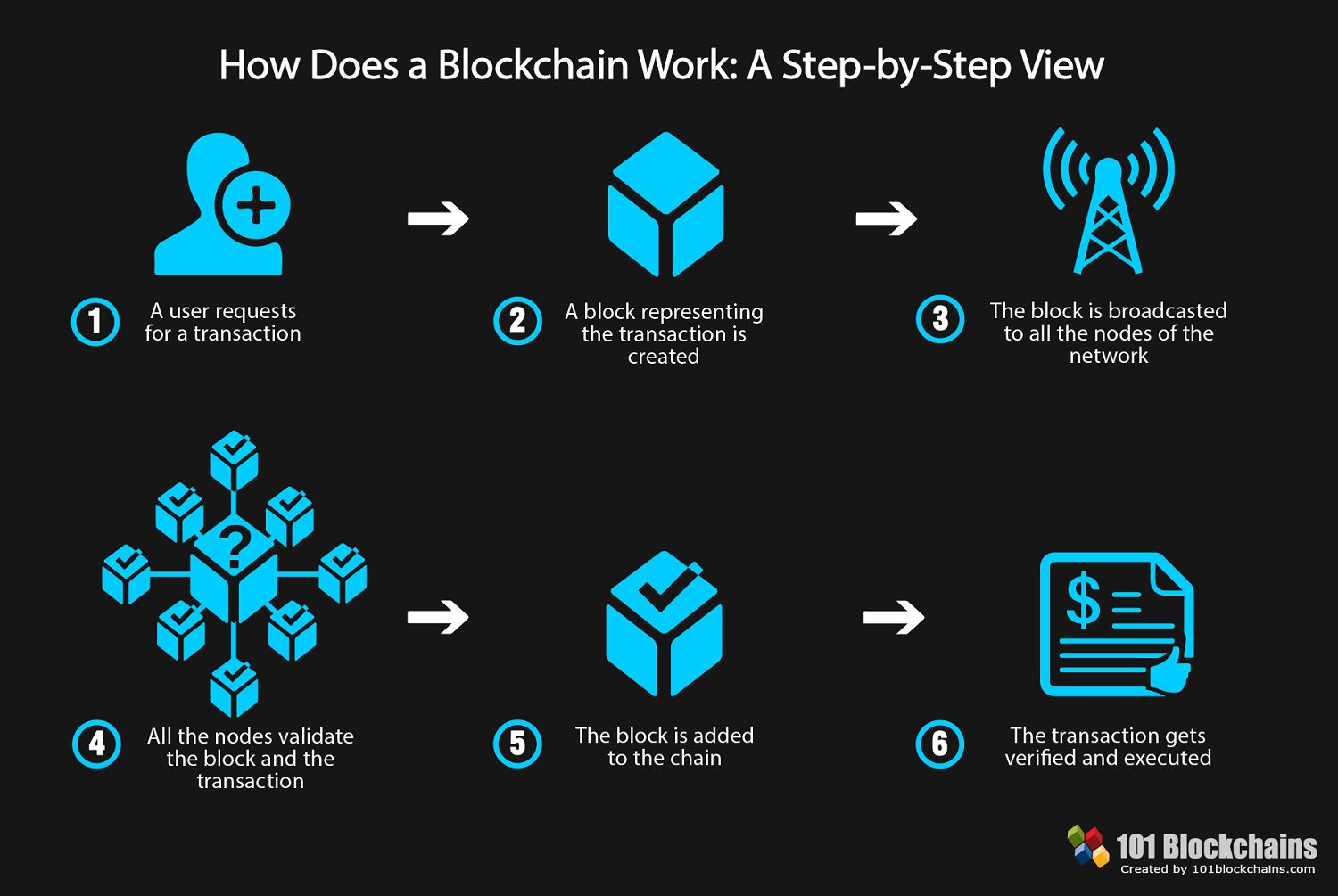
Blockchains are made of blocks of code joined together and is essentially a process based on consensus between transacting parties. The blockchain network has many nodes of such continuous blockchains. It functions as a ledger which is decentralized. Whenever a new block is introduced, the transaction gets a digital signature fingerprint which cannot be altered and consists of hashtag functions of the previous block with an output that is unique. If the output is changed and not verified the transaction becomes invalid and unverified. This means that all network nodes should receive the exact same output on executing the hash. If the change is acceptable by this test, the transaction is verified.
Blockchains provide security, immutable records, and verification as the prime features. The different blocks are held together by connecting hashtags, and each and every block holds the hash code of the preceding block got from the values generated when the new block is introduced.
Every initialized transaction has  the connecting nodes verify the following

  • Transaction history is immaterial, and the balance of the wallet address of the sender is checked.
  • Receiver address is also verified.

The request is approved if these conditions are met perfectly. A Digital authentication signature is formed by the request and unique private keys required for the transaction. This is then sent and verified across all nodes of the network for matching the key and signature by means of an output complex hashing algorithm generated with the request by a nonce. Nodes compete with each other to solve the hash thereby doubly ensuring the verification process.
Remember that the nodes are interconnected and are small configurations that are high-end and can solve the above code for the right output. They also broadcast the result to other transacting miner nodes in the network to ensure the solution is right. This ensures that all nodes are constantly watching the transactions and that the transaction is public verified.
It is important to note that a block can contain very many transactions. Only the transacting nodes that verify the transaction first is the rewarded miner thereby setting up a fool-proof verification system with healthy mining completion. Any miscalculation will result in invalidating the transaction broadcast across all connected nodes. Mining rewards are generally in the form of BTC or Ethereum on the Bitcoin blockchain network. A transaction is verified, validated and completed only when all nodes mine the information and receive their reward.
To learn all about this feature do a fintech course like the one at Imarticus which necessarily focuses on a global curriculum, hands-on practical blockchain training, and project work and which helps you build your industry and vertical relevant portfolio, learn at your convenience and get set to be career-ready as a blockchain developer.

How do you become a bitcoin/blockchain expert?

In the US companies like the conservative IBM, groups like the R3 Consortium and newbies like Bloq and several others were responsible for transforming the Bitcoin blockchain into the revolution of Blockchain technology. The core feature of blockchains is the distributed ledger which is public and stores all transactions which are verified, recorded and make use of cryptography for encryption resulting in unbeatable trustworthy, secure and transparent transactions. The awesome features of blockchains can be used in

  • Financial transactions and sectors needing immutable records like banks, stock markets, real estate transactions and such.
  • Recording rights, trademarks, patents and preventing plagiarism in music, literary, entertainment, art and such fields.
  • Legal contracts, recording of registration, agreements, transfer certificates, etc.
  • Insurance, Healthcare, subsidy distribution, and such sectors.

Types of Developers:
As a tech-geek, you can become a Core Blockchain Developer or a Blockchain Software Developer. Core developers deal with architecture development, protocol design, decision-making, consensus design, and design development. The developers of software deal with the protocol and architecture used in creating blockchain enabled applications.
fintech certification
Tech skills required:

  • Coding skills are essential for logical interpretations and quantification.
  • Cryptography and its methods like the hash functions (KECCAK256, SHA256, etc) and a digital signature generating asynchronous cryptography.
  • The architecture of blockchains laid out in the Bitcoin whitepaper, fundamentals of distributed and centralized networks, consensus, cryptographic hash functions, and distributed ledgers in blockchain fundamentals, its architecture and working, convention theory used for decentralizing the architecture, MVC, Document-view, MVVM, fundamental communication architecture, G and bus architecture.
  • Programming languages and relational database procedural languages like OOPs, C, JavaScript, C, etc.
  • Structures of Data including data structures like Stack, Merkle trees, Patricia trees, advanced cryptography, Queues,  LinkedList, Tree, Hedera HashMaps, etc.

·Smart Contract enablers like Truffle suite installation and working on Mac, Windows, and Ubuntu.

  • Platforms and frameworks like HashGraph, Hyper Ledge, Ethereum, EOS, etc.
  • Development of Smart Contracts including functionalities of smart contracts and specific network languages like Ethereum’s Solidity, Chaincode, Viper, etc.
  • Web-Development both front and backend decentralized application development, handling APIs, requests, Dapps based interactive GU interfaces, etc.

Job scope and payouts:
Indian salaries range according to Glassdoor in the range of Rs19 to 21K in India for fresh candidates and Rs 288 to 313K for the experienced at higher levels. In the US Application Developers get an average salary of 85,534$ pa and for a Software Engineer, it is about 98,460 $ pa. According to Upwork blockchain engineering and development is the second most-evolving sector.
In parting, if you are interested in pursuing a career as a blockchain developer then do a certified course from a reliable institute like Imarticus. This ensures you get both the theoretical knowledge, technical skills to adapt the learning into solutions, and practical knowledge of trends and industry-relevant knowledge to further your career. To learn all about blockchain technology or the bitcoin blockchain one can do a fintech course. Such blockchain certification can give your career a head-start.

Python makes an excellent language for a blockchain training project and here is why:

It is advanced and easy to learn
Python’s position in the tech scenario is growing stronger every day, and it has been around for a while now. Python has evolved over the years, and it is constantly supported by a passionate and growing community of developers. It is at an advanced stage which guarantees reliability and stability. It has come a long way and has a long way to go, and one can rest assured that one’s project won’t be based on a language that is on its way to becoming obsolete. Python is equipped with a gentle learning curve making it possible for developers to master it within a short span of time.
Python is minimal and simple 
At the core of Python’s philosophy are two major things – it is minimal and hence simple. These core aspects of Python are derived from many different features like for example, white spaces in Python, signify code blocks. Developers need not worry about adding keywords or curly brackets. Python can be used to code a blockchain without having the need to write a lot of code.
Python is popular 
Over the past few years, Python is becoming increasingly popular which makes it an excellent choice for a Blockchain-based project. According to this year’s TIOBE index, Python is ranked third amongst all programming languages, and according to the index, its popularity is only growing steadily. In practical terms, this means that one will have a comparatively easier time building one’s project as there are many developers who specialize in Python including professionals with a scientific or academic background. Pythons’ popularity also means that a team has access to its ever-growing community which shares useful knowledge and builds libraries. Most online courses in blockchain offer a Fintech course which strongly suggests the use of Python over other programming languages.
Python can be run compiled or uncompiled
Unlike other programming languages like C, Python is a scripted language that requires no compilation to be readable by machines, which makes it easier for developers. For example, if someone runs an application and notices a bug – if one is using a compiled language to fix it, one has to stop the application, return to the source code, fix the bug, recompile the code and restart the application. In Python, all one has to do is fix the bug and then reload the application. It is that simple. One does not have to recompile the code, making massive headway in building blockchains.
Python offers free packages for Blockchain
A big plus of using Python in a blockchain project is that it gives developers a collection of free packages to assist them to write code more efficiently. Here is a page with a complete list of these libraries.
Python for Blockchain
Blockchain has some very specific requirements when it comes to code and language. When one chooses a programming language for a Blockchain project, one has to be very sure that the language is secure, well functioning and scalable. An advanced, reliable language is a must to make the blockchains as safe as possible, and Python can be of great help.
Blockchain implementation
With Python, a simple Blockchain can be created in less than 50 lines of code. First, one needs to define what the block will look like. Each block in the blockchain is stored with an index and a timestamp. The key is blockchain integrity, so it should be ensured with a cryptographic hash of the index of the block, timestamp, data and a genesis block at the start.
Python is recommended for blockchain if one is trying to address a case of Internet of Things. One can easily perform many tasks with a single command with Python which makes the work of building blocks with the necessary information and linking them a much easier one to do.