


Last updated on May 15th, 2026 at 03:05 pm
A balance sheet is more than just a financial document—it’s a snapshot of a company’s financial standing, showing what it owns, what it owes & the equity invested by-shareholders. Interpreting this snapshot correctly is fundamental for anyone involved in finance… whether you’re… analysing business performance, making investment decisions, or preparing for a career in financial- services. That’s where Financial Analysis Courses come in, helping learners decode balance sheets with precision using real-world insights & structured methodologies.
These courses not only teach the theory behind balance sheet components but also focus on applying this knowledge through case studies in financial analysis. By immersing students in hands-on practice, they transform complex statements into understandable narratives—shaping finance professionals who are confident, informed & decision-ready.
Why Balance Sheets Matter in Financial Analysis
Before diving into how courses help- it’s essential to grasp why understanding balance sheets is so crucial. A balance sheet offers- a snapshot of a company’s financial position at a given point in time, listing assets, liabilities, & shareholder equity. It answers questions like:
- How much does the company own?
- How much does it owe?
- What’s the financial health of the business?
For professionals in roles such as-financial analysts, investment bankers, or auditors, the ability to dissect a balance sheet effectively is non-negotiable.
Don’t Let Our Best Advice Get Buried
Add Imarticus as a Preferred Source — see more of what we publish, every time you search.

What Financial Analysis Courses Offer
Modern Financial Analysis Courses are designed with a strategic blend of theory & application. Here’s how they bring balance sheet interpretation to life:
1. Balance Sheet Analysis Training Modules
These modules focus on identifying patterns-red flags, & financial ratios that reveal the real story behind the numbers. You’ll learn about liquidity, solvency, & operational efficiency using actual company data.
2. Hands-On Case Studies in Financial Analysis
Courses make heavy use of case studies in financial analysis… to replicate real-world scenarios. Analysing historical balance sheets of companies like Tesla, Infosys, or Reliance helps participants apply concepts in real time, which significantly strengthens learning retention.
3. Integrated Learning via Financial Modeling & Reporting
A solid understanding of the balance sheet comes from seeing how it interacts with the income statement & cash flow statement. Top courses offer holistic financial modeling & reporting techniques, helping learners build complete financial models from scratch.
Example: Balance Sheet Breakdown in a Case Study
Let’s look at a hypothetical example of how a balance sheet case study is tackled in a financial course:
| Item | XYZ Ltd (2023) | XYZ Ltd (2022) |
| Cash & Equivalents | ₹8,00,000 | ₹5,00,000 |
| Accounts Receivable | ₹12,00,000 | ₹9,00,000 |
| Inventory | ₹10,00,000 | ₹8,00,000 |
| Total Current Assets | ₹30,00,000 | ₹22,00,000 |
| Property, Plant & Equip | ₹20,00,000 | ₹18,00,000 |
| Total Assets | ₹50,00,000 | ₹40,00,000 |
| Accounts Payable | ₹6,00,000 | ₹4,00,000 |
| Long-term Debt | ₹14,00,000 | ₹12,00,000 |
| Shareholder Equity | ₹30,00,000 | ₹24,00,000 |
In a classroom setting, students analyse changes in key areas like working capital, debt ratios, & capital structure, followed by discussions around strategic implications—Is the company over-leveraged? Is inventory rising too quickly?
Interpreting Financial Statements with Purpose
Financial statement interpretation is not just about reading numbers… it’s about decoding what those numbers imply. The best Financial Analysis Courses integrate this skill through:
- Ratio analysis: Liquidity, solvency, & profitability ratios derived from the balance sheet.
- Comparative analysis: Comparing balance sheets across years or competitors.
- Trend identification: Spotting consistent financial behaviour over time.
For deeper insights into the foundations of financial interpretation, check out our related blog:
👉 Essentials of Financial Analysis
Investment Banking Course Insights: Balance Sheet Relevance
Investment banking course insights often highlight how balance sheets are used during valuation, M&A decisions, & IPO preparation. Understanding asset valuations or identifying goodwill impairments are standard tasks that require deep knowledge of balance sheet components.
These insights help bridge the gap between theoretical knowledge & practical, high-stakes finance decisions. You’ll also explore more of this in our blog:
👉 Financial Market Functions Every Investment Banker Should Know
How Courses Use Real Case Studies to Enhance Learning
Case-based learning transforms complex balance sheets into engaging narratives. Here’s how:
- Contextualisation: Learning the balance sheet of a startup vs a Fortune 500 firm offers different perspectives.
- Application of Strategy: Students recommend business strategies based on financial health.
- Decision-Making: Real case studies ask students to decide—invest, hold, or sell?
This approach is not just insightful but also mirrors actual responsibilities in financial roles.
The Power of Financial Modeling & Reporting
Beyond interpretation, financial modeling & reporting is the logical next step. Once the balance sheet is understood, you can project future financials. These models become crucial for:
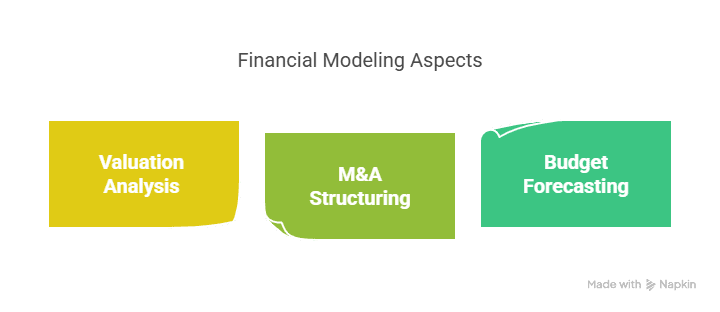
This skill is a cornerstone of professional finance roles & is taught extensively in top-tier Finance Courses for Professionals.
Finance Courses for Professionals: Designed for Career Growth
For working professionals aiming to climb the finance ladder, investing in the right training is key. The Postgraduate Financial Analysis Program by Imarticus Learning is tailored for this.
Here’s what it offers:
- Real-time balance sheet analysis training
- Project-based financial modeling & reporting
- Case simulations aligned with investment banking course insights
- Dedicated modules on financial statement interpretation
👉 Explore the Full Program Here
Outcomes of Learning Balance Sheet Interpretation
Here are just a few professional benefits of gaining balance sheet expertise through structured learning:
| Benefit | Impact on Career |
| Enhanced Decision-Making | Make smarter investments or business calls |
| Valuation Skills | Support IPO, M&A, & equity decisions |
| Strategic Planning | Align financial resources with long-term goals |
| Risk Management | Identify liquidity & solvency issues early |
| Career Mobility | Opens roles like analyst, associate, & consultant |
Interview Confidence Through Financial Fluency
Mastering the balance sheet also significantly boosts your performance in finance interviews. Courses often include mock interviews & real-world questions that recruiters ask.
Looking to prepare for interviews after your finance degree? Don’t miss this guide:
👉 Financial Analyst Interview Questions After BCom
Visual Learning with YouTube Resources
Prefer to learn by watching? Many platforms also include video modules to explain complex financial documents visually.
🎥 Check out this insightful YouTube session that breaks down financial modeling & reporting fundamentals:
👉 Watch Now
FAQs
1. What do Financial Analysis Courses cover?
They cover financial statements, ratio analysis, modelling techniques… & practical case studies for real-world skills.
2. Why is balance sheet analysis important?
It helps assess a company’s financial health… including assets, liabilities & equity structure.
3. Are case studies in financial analysis really useful?
Absolutely… they make theoretical concepts easier to apply in real-life situations.
4. Do these courses include financial modeling & reporting?
Yes… most courses include end-to-end modelling of financial statements.
5. How do I start understanding balance sheets?
Begin with the basics—assets, liabilities & equity… then move on to ratios & trends.
6. Will these courses help in investment banking roles?
Definitely… they offer valuable investment banking course insights through hands-on learning.
7. Are Financial Analysis Courses suitable for working professionals?
Yes… many are tailored as finance courses for professionals with flexible learning formats.
8. Is any background needed to join such a course?
A basic understanding of finance helps… but structured courses guide you step-by-step.
Final Thoughts
Financial Analysis Courses play a pivotal role in building financial confidence. From understanding balance sheets to deep dives into case studies in financial analysis, these programs equip learners with skills that are both practical & future-ready. Whether you’re exploring financial statement interpretation, working on financial modeling & reporting, or seeking investment banking course insights, these structured learning paths offer unmatched value.
And with immersive balance sheet analysis training, you’re not just reading numbers—you’re telling the story behind the business.
Liked This? Follow Us Where You Already Search.
Preferred Sources is Google’s built-in follow button — no app, no login, just more Imarticus in your results.