Digital Marketing Career: From Beginner to Pro

In an era where over 75 % of consumers discover brands online, mastering a digital marketing course is crucial for career growth and business success. (Source)

Whether you want to learn digital marketing from scratch or refine your online marketing skills for professionals, a structured programme bridges the gap between theory and practice, equipping you with up-to-date strategies, hands-on experience and a recognised certification. 

By 2024, over 90 % of organisations reported increased ROI after hiring certified digital professionals, underscoring the value of a formal digital marketing certification course. (Source)

Don’t worry this step-by-step digital marketing guide will give information about everything which will make it very easy for you to understand.

What Is a Digital Marketing Course?

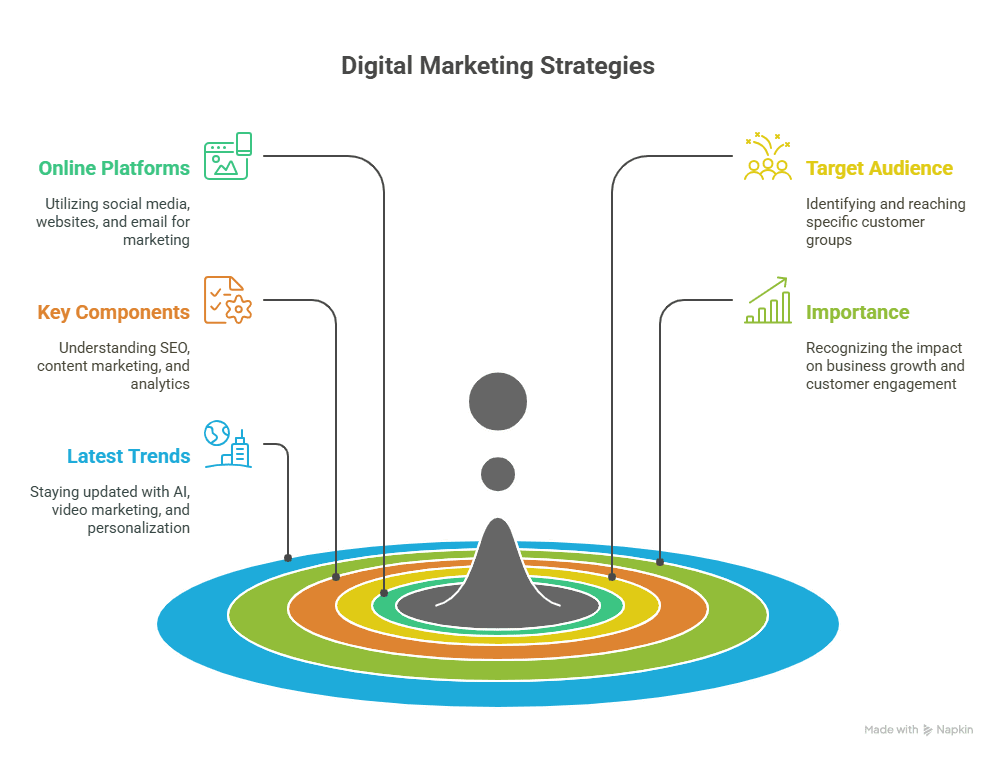
A digital marketing course is a comprehensive training pathway that teaches you how to plan, execute and optimise online marketing campaigns using social media, SEO, paid advertising, content marketing, email strategies and analytics.

Why You Need a Digital Marketing Certification Course

  • Credibility: A recognised certification validates your expertise and distinguishes you in a competitive job market.
  • High Demand: Marketers spent over US $1.1 trillion on advertising in 2024, with digital channels claiming 72.7 % of that investment .
  • Career Flexibility: Roles range from social media manager and SEO specialist to paid-ads strategist, email marketing expert and analytics consultant.
  • ROI Focus: Certified marketers report up to 30 % higher campaign ROI compared to non-certified peers .
  • Future-Proof Skillset: With ongoing algorithm changes and emerging technologies, continuous learning via a digital strategy training for beginners track keeps you at the forefront.

Course Snapshot: MyCaptain Digital Marketing Program

This digital marketing course from Imarticus Learning’s MyCaptain program has enrolled over 1.2 lakh learners, holds a 4.5/5 rating and boasts more than 1,600 successful placements.

Curriculum Breakdown: Learn Digital Marketing For Beginners from Scratch

Co-created with experts from Deloitte, Zomato, Rapido and MFine, the curriculum ensures a balanced mix of theory and real-world application:

  1. Fundamentals
    • Marketing funnels, customer personas and competitor analysis
    • Sales vs. marketing alignment

     2. SEO & Content Marketing

    • On-page, off-page and technical SEO
    • Keyword research using Google Keyword Planner and SEMrush

    3. Social Media Marketing

    Campaign planning for Instagram, LinkedIn and YouTube

    • Community management and influencer outreach

    4. Paid Advertising

    Google Ads and Facebook Ads

    • Budget allocation, bidding strategies and ROI tracking

    5. Email Marketing & Automation

    • Designing drip campaigns, segmentation and A/B testing
    • Tools like Mailchimp and HubSpot

    6. Analytics & Reporting

    • Google Analytics, conversion tracking and A/B testing
    • Dashboard creation with Data Studio

    7. AI-Enabled Marketing

    • Using tools like ChatGPT for content ideation and automation
    • Predictive analytics for campaign forecasting

    8. Career Support

    • Resume workshops, mock interviews and personal branding
    • Portfolio projects with brands such as Zoom, Lenskart and Myntra

    This online marketing skills for professionals track equips you to deliver data-driven campaigns and measurable results across every channel.

    Career Pathways and Roles

    Completing this digital marketing course opens doors to roles such as:

    • Social Media Manager: Craft and execute social strategies to grow communities.
    • SEO Specialist: Optimise websites to rank organically and boost traffic.
    • Paid Ads Strategist: Manage PPC campaigns on Google, LinkedIn and social platforms.
    • Content Marketing Manager: Develop compelling content calendars and lead-generation assets.
    • Email Marketing Executive: Build automated workflows to nurture and convert leads.
    • Digital Analytics Consultant: Interpret data to refine campaigns and improve ROI.
    Digital marketing course

    With these in-demand positions, professionals can command salaries ranging from ₹4 LPA for entry-level roles to over ₹15 LPA for experienced specialists.

    A Fresh Perspective: AI-Driven Digital Strategy Training for Beginners

    Integrating AI tools like ChatGPT and predictive analytics offers a unique angle. Learners automate content ideation, forecast campaign performance and adapt in real-time to shifting trends. This digital strategy training for beginners approach ensures you graduate not only with theoretical knowledge but with cutting-edge, practical skills that reflect current market demands.

    Industry Trends & Statistics

    • Global ad spend surpassed US $1 trillion in 2024, driven by tech giants reallocating budgets to digital channels .
    • Digital channels now account for 72.7 % of worldwide ad investment, with spend exceeding US $790 billion in 2024 .
    • By 2026, over 50 % of digital advertising budgets will be managed by AI-driven platforms, streamlining campaign optimisation and reducing manual workloads .

    These figures underscore why a career in digital marketing remains stable and growth-oriented.

    Who Should Enrol in This Course?

    This digital marketing course is ideal for:

    • Absolute beginners aiming to learn digital marketing from scratch
    • Marketing professionals seeking to upgrade their online marketing skills
    • Entrepreneurs and freelancers want a robust digital strategy foundation
    • C-suite executives exploring digital transformation

    Whether you’re starting out or scaling your expertise, this programme adapts to your journey.

    Top FAQs Before You Decide

    1. What are the prerequisites?

    None—basic computer literacy is sufficient.

    1. How is live interaction facilitated?

    Via Zoom, breakout rooms and dedicated doubt-clearing sessions.

    1. Will I receive a certification?

    Yes—a recognised digital marketing certification course certificate on completion.

    1. How many projects will I undertake?

    Six real-world projects covering SEO, social media, paid campaigns and email workflows.

    1. Are recorded sessions available?

    Yes, all live sessions are accessible on the LMS for revision

    Conclusion & Key Takeaways

    Enrolling in this digital marketing course transforms your ability to craft data-driven campaigns, engage audiences and deliver measurable outcomes. With an industry-aligned curriculum, AI integration and assured placements, you’re positioned for success.

    • Extensive Curriculum: From foundational topics to AI-powered strategies.
    • Industry Collaboration: Co-created with market leaders for real-world relevance.
    • Future-Ready Skills: AI and automation keep you ahead of market shifts.

    Ready to Accelerate Your Career?

    Enrol in the MyCaptain Digital Marketing Program Today.

    Skills You’ll Learn in a Financial Analysis Program

    When you enrol in a Financial Analysis Program, you’re signing up for more than just textbook knowledge. You’re stepping into a structured learning experience that builds critical thinking, practical abilities, & domain expertise…all essential to succeeding in the finance industry. Whether…you’re a fresh graduate or a working professional looking to upskill, understanding what this program can offer will help you make an informed decision.

    Here’s a comprehensive breakdown… of the core skills you’ll acquire & how they align with industry expectations.


    Understanding the Core: Financial Analysis Skills

    At the heart of every Financial Analysis Program lies a strong foundation in financial analysis skills. These include understanding and interpreting income statements, balance sheets & cash flow statements. You’ll also learn how to evaluate a- company’s performance, identify trends & assess risks.

    These skills are essential for roles in investment banking, equity research, corporate finance, & more.

    Core Financial Analysis SkillsReal-World Application
    Ratio analysisEvaluating profitability, liquidity, and solvency
    Trend analysisForecasting future performance
    Variance analysisBudgeting and performance tracking
    Horizontal and vertical analysisAssessing year-over-year and structural changes

    As you develop your analytical skills in finance… you’ll start to view business scenarios with a sharper lens, allowing you to make more informed decisions.

    Recommended Reading: Financial Analysis: Why It’s Crucial for Investment Banking


    Gaining Proficiency in Excel for Financial Analysis

    Excel is the backbone of financial data interpretation. A top-tier Financial Analysis Program will teach you how to use Excel for financial analysis effectively. This goes far beyond basic spreadsheet functions.

    Here’s a snapshot of some must-learn Excel functions:

    Excel FunctionPurpose in Finance
    VLOOKUP / INDEX-MATCHData organisation and lookup
    IF, AND, ORLogical analysis
    Pivot TablesDynamic reporting
    Data ValidationError-proofing models
    Conditional FormattingVisual analytics

    Learning to use Excel for financial analysis helps transform raw data into meaningful insights, streamlining reporting and decision-making processes. Mastery in Excel is also essential when preparing for financial modelling & forecasting roles.


    Developing Financial Modelling Skills

    A critical component of any Financial Analysis Program is developing solid financial modeling skills. You’ll learn to build models that predict a company’s future performance, simulate financial scenarios, & evaluate the financial impact of strategic decisions.

    You’ll typically build models for:

    • Discounted Cash Flow (DCF)
    • Leveraged Buyouts (LBO)
    • Mergers & Acquisitions (M&A)
    • Budget forecasting
    • Scenario analysis
    Model TypeUse Case
    DCF ModelValuation of companies
    LBO ModelEvaluating leveraged acquisitions
    Merger ModelAnalyzing synergy effects
    Budget Forecast ModelProjecting expenses and revenues

    Understanding how to manipulate these models enhances your investment analysis skills and prepares you for high-stakes financial roles.

    📺 Watch this video on how the right skills open career doors: Watch Now


    Learning Investment Analysis Skills

    Investment analysis skills go hand-in-hand with financial modelling. In a Financial Analysis Program… you’ll learn how to evaluate the risk and return of investment options using both quantitative & qualitative techniques.

    You’ll cover areas such as:

    • Security analysis
    • Portfolio theory
    • Risk-return trade-off
    • Equity and bond valuation

    By building strong investment analysis skills, you’ll be equipped to make smart decisions in asset management, wealth advisory, and portfolio management.

    🔍 Curious about entry-level finance roles? Explore Financial Analyst Interview Questions After BCom


    Honing Analytical Skills in Finance

    Finance is as much about numbers as it is about interpretation. Analytical skills in finance help professionals ask the right questions, spot inconsistencies, and dig deep into business performance metrics.

    Some critical areas include:

    • Data interpretation
    • Problem-solving
    • Critical thinking
    • Sensitivity analysis

    As part of your Financial Analysis Program, you’ll participate in real-world simulations and case studies that sharpen these skills. These hands-on activities teach you to make data-backed decisions — a non-negotiable ability in today’s complex financial world.


    Building Key Finance Skills

    In addition to technical proficiency, a robust Financial Analysis Program equips you with key finance skills that make you workplace-ready. These include:

    Key Finance SkillsPractical Use
    Business acumenUnderstanding market trends
    Communication skillsPresenting findings clearly
    Attention to detailMinimising financial errors
    Ethical awarenessNavigating compliance and regulations

    When you’re job-ready with both hard and soft skills, your value to employers multiplies. You’ll be able to not only crunch numbers but-also explain what they mean and how to act on them.


    Exploring Finance Skills for Beginners

    If you’re new to finance, don’t worry — the best Financial Analysis Program begins with the basics. It introduces finance skills for beginners and gradually advances to complex concepts.

    You’ll start with:

    • Introduction to financial statements
    • Time value of money
    • Budgeting and forecasting
    • Introductory Excel functions

    From there, the program scales up to real-world applications, ensuring a smooth transition from beginner to proficient analyst.

    💼 Check out how Imarticus Learning prepares freshers through its Postgraduate Financial Analysis Program — a career-launching opportunity for finance enthusiasts.


    Integrating Data and Technology

    Modern finance isn’t just about ledgers — it’s about insights from data. Many Financial Analysis Programs now include training in data analytics. This allows analysts to tap into vast datasets and make smarter predictions.

    You’ll learn to use tools like:

    • Power BI
    • Tableau
    • Python (for beginners)
    • SQL basics

    These technical capabilities amplify your financial modeling skills and give you a competitive edge in the job market.

    📘 For deeper insights, check out Data Analytics Skills For Every Professional


    FAQs

    Q1: Are these finance skills for beginners?
    Yes, it starts with the basics.


    Q2: What financial analysis skills will I gain?
    You’ll learn to read, interpret, and analyse financial data.


    Q3: Do I need Excel experience?
    No, you’ll learn Excel for financial analysis step by step.


    Q4: Will I build financial models?
    Yes, you’ll gain hands-on financial modeling skills.


    Q5: Are investment concepts covered?
    Yes, you’ll develop core investment analysis skills.


    Q6: How do I build analytical skills in finance?
    Through case studies, projects, and data interpretation.


    Q7: What are key finance skills I’ll use at work?
    Budgeting, forecasting, reporting, and communication.


    Q8: Is this suitable for beginners in finance?
    Absolutely, it’s designed for finance skills for beginners.

    Conclusion: Why These Skills Matter

    In today’s data-driven business environment, being technically sound isn’t enough. You need to be agile, insightful & ready to adapt. A Financial Analysis Program gives you a multi-dimensional skill set — one that combines technical know-how with practical application and strategic thinking.

    Here’s a recap of what you’ll learn:

    Skill AreaBenefit
    Financial analysis skillsEvaluate company performance
    Excel for financial analysisBuild automated dashboards and reports
    Financial modeling skillsForecast future business outcomes
    Investment analysis skillsMake data-backed investment decisions
    Analytical skills in financeSolve real-world financial problems
    Key finance skillsExcel in professional roles
    Finance skills for beginnersBuild a solid foundation in finance

    Whether you’re aiming for a role in corporate finance… investment banking, or business analytics, these competencies make you stand out.

    A structured, industry-aligned Financial Analysis Program like the one offered by Imarticus Learning ensures you don’t just learn, but thrive.

    Ready to make a career move that counts? Your finance journey begins with the right skills.

    Investment Banking Course Duration: Full-Time vs Part-Time Comparison

    Choosing the right investment banking course duration is a crucial decision for anyone looking to break into this competitive field. Whether you are a fresh graduate eager to dive full-time into the banking world or a working professional seeking to upgrade your skills- through a more flexible schedule…  understanding the differences between full-time banking course and part-time finance course options can shape your career trajectory.

    This blog explores the nuances of course duration banking, helping you weigh the study time comparison between the two formats. Additionally, we’ll highlight the benefits of flexible banking courses designed to fit various lifestyles, so you can make an informed choice.


    Understanding the Two Main Formats: Full-Time vs Part-Time

    The investment banking schedule is often rigorous & demanding. However, the structure of the course you choose can either compress your learning into a concentrated period or stretch it out for greater flexibility.

    AspectFull-Time Banking CoursePart-Time Finance Course
    Course Length Finance3 to 6 months6 months to 1 year or more
    Study Time ComparisonIntensive, 6-8 hours dailyFlexible, typically evenings/weekends
    Ideal forFresh graduates, career switchersWorking professionals, students
    Learning PaceFast-paced, immersiveGradual, allows balancing work/life
    Networking OpportunitiesHigh, due to cohort interactionModerate, fewer live sessions

    This table highlights how your lifestyle and current commitments can influence which format suits you best. For instance, if you want to accelerate your entry into investment banking, a full-time banking course offers a faster path. On the other hand, if juggling work and study is your priority, a part-time finance course with a more lenient investment banking schedule might be the answer.


    What to Expect from a Full-Time Banking Course

    A full-time banking course typically compresses the curriculum into an intensive learning period. This course length finance generally spans between three to six months, during which students dive deeply into core topics such as financial modelling, valuation, mergers and acquisitions, and equity research.

    The course duration banking in full-time programs is designed to mimic the demanding nature of real-world investment banking. You can expect:

    • Daily study hours ranging from 6 to 8 hours.
    • Live interactive sessions with instructors and peers.
    • Case studies and practical assignments.
    • Networking events and career services.

    This format suits those who can commit their time fully and want rapid upskilling or career shifts. For a clearer understanding of the skills you’ll develop in these courses, check out this insightful blog on skills that separate top investment bankers.


    The Advantage of a Part-Time Finance Course

    On the flip side, the part-time finance course caters to those who prefer flexibility. This might include professionals already working in finance, students with other commitments… or individuals testing the waters before fully committing.

    The investment banking schedule for part-time courses is typically designed around evenings & weekends, allowing learners to balance study with work and personal life. These courses can… last from six months up to a year or more, depending on the provider.

    Key features include:

    • Flexible timings to accommodate various time zones and schedules.
    • Modular learning, often with self-paced content.
    • Opportunities for live Q&A and mentoring sessions.
    • Possibility to apply learning in your current role immediately.

    If flexibility is your priority, flexible banking courses like this one can keep your career progression on track without sacrificing income or current responsibilities. Here’s a video explaining how to start your investment banking career with a certification that includes details on flexible study options.


    Study Time Comparison: What Suits You?

    Balancing the study time comparison between full-time and part-time banking courses is essential for a successful learning experience.

    FactorFull-Time Banking CoursePart-Time Finance Course
    Daily Study Hours6-8 hours2-3 hours
    Weekly Study Commitment40+ hours10-15 hours
    Time to Completion3-6 months6-12 months
    FlexibilityLowHigh
    Work/Life BalanceChallengingManageable

    Choosing a course length finance that matches your lifestyle ensures you can maintain motivation and performance. Overloading yourself might lead to burnout, whereas too slow a pace may dilute the learning impact.


    How Flexible Banking Courses Are Changing the Game

    The rise of flexible banking courses is revolutionising how aspiring bankers acquire their skills. Providers now offer hybrid models with recorded lectures, live sessions, and hands-on projects, making it easier for learners to personalise their investment banking schedule.

    One such program, the Certified Investment Banking Operations Program, blends flexibility with industry-relevant content, ideal for those seeking a practical edge in investment banking operations without compromising their day job.

    These courses empower learners to pick study hours that suit their peak productivity times and revisit concepts at their own pace. This flexibility doesn’t come at the cost of rigor; instead, it promotes sustained learning & better absorption of complex topics.


    Which Course Duration is Right for You?

    Answering this question involves honest self-assessment of your current situation and goals.

    • If you want to transition careers quickly: A full-time banking course with a shorter course duration banking might suit you best. It’s immersive and designed for rapid skill acquisition.
    • If you’re balancing work or other commitments: A part-time finance course or flexible banking courses that spread the curriculum over a longer period will offer the balance you need.
    • If networking is key: Full-time courses typically offer more opportunities for in-person or cohort-based networking, critical in investment banking.
    • If affordability is a concern: Part-time courses often allow you to continue earning while studying, reducing financial pressure.

    Take a look at this helpful guide on how business management skills help in investment banking to understand what complementary skills you might want to develop alongside your course.


    Additional Factors to Consider in Course Length Finance

    • Certification and Recognition: Ensure the course is recognised by industry bodies or top employers.
    • Placement Support: Check if the program offers interview guarantees or placement assistance.
    • Curriculum Depth: Some longer courses provide deeper specialisation in areas such as mergers and acquisitions or risk management.
    • Practical Exposure: Hands-on projects, case studies, and live simulations add significant value.

    For an overview of practical training, this video on skills required for investment banking provides real-world perspectives.


    FAQs

    1. What is the typical duration of a full-time banking course?
      Full-time banking courses usually last between 3 to 6 months, offering an intensive learning experience.
    2. Can I manage a part-time finance course while working?
      Yes, part-time finance courses are designed with flexible schedules to balance work and study effectively.
    3. How does the course duration banking affect my learning pace?
      Shorter course duration banking means faster learning but more intensive study hours, while longer courses offer a gradual pace.
    4. What does an investment banking schedule look like in a part-time course?
      It generally involves evening or weekend classes to accommodate working professionals.
    5. Are flexible banking courses suitable for beginners?
      Absolutely, flexible banking courses cater to different skill levels, allowing learners to study at their own pace.
    6. How does study time comparison differ between full-time and part-time courses?
      Full-time courses require more daily study hours… whereas part-time courses spread study time over weeks or months.
    7. Is the course length finance important for career planning?
      Yes, knowing the course length finance helps you schedule your learning around personal and professional commitments.
    8. Do flexible banking courses offer the same quality as full-time courses?
      Many flexible banking courses provide comprehensive content and practical exposure comparable to full-time programs.

    Final Thoughts

    Choosing the right investment banking course duration is not merely about the number of months but how well the course fits your life and learning style. Both full-time banking course and part-time finance course options offer distinct advantages, from fast-tracked, immersive experiences to flexible, balanced learning paths.

    Here’s a quick summary table to help you decide:

    CriterionFull-Time Banking CoursePart-Time Finance Course
    Duration3-6 months6-12+ months
    Study Hours per Week40+10-15
    FlexibilityLowHigh
    Ideal ForCareer Switchers, FreshersWorking Professionals
    Networking OpportunitiesHighModerate
    CostTypically higher upfrontSpread out over time

    By assessing your goals and commitments… you can select the course duration and structure that will best set you up for success in investment banking.

    For those ready to take the plunge, the Certified Investment Banking Operations Program offers a perfect blend of rigorous curriculum & flexibility — an excellent next step on your journey.

    If you want to dive deeper into related skills and career strategies, I recommend reading these blogs:

    The Ultimate Guide to Fintech Skills: What Employers Want

    The banking world is changing at lightening pace, and Fintech skills are no longer a nicety—they are a necessity. Whether you’re a bright student in India or a career professional considering a career change, knowing what employers want can help you secure your ideal Fintech career.

    Fintech unites finance and technology to create an entirely new world of employment, gadgets, and prospects. But the thing is, it’s no longer about being able to code or understand finance in a vacuum. Clients demand an exclusive cocktail of Fintech capabilities that infuses technological proficiency with domain insights and soft competencies to shine in this battleground.

    Table of Contents

    • Introduction to Fintech Skills
    • In-demand Fintech Skills for 2025
    • Skills Needed to Get Fintech Jobs: Technical & Soft Skills
    • Discovering Fintech Career Prospects in India
    • The Most Important Technical Skills in Fintech That You Should Have
    • Developing Your Fintech Resume Skills to Excite the Employers
    • The Best Fintech Courses to Learn
    • Frequently Asked Questions
    • Important Takeaways
    • Conclusion

    Introduction to Fintech Skills

    India’s Fintech ecosystem is flourishing. As per a NASSCOM report, India has more than 9,000 Fintech startups, which makes it one of the world’s fastest-growing markets. But with growth comes competition.

    To thrive in this sector, you require an empowering combination of Fintech capabilities—ranging from digital payments literacy to data analytics and blockchain mastery. The silver lining? These talents are not exclusive to coders. Graduates of finance, engineers, and even non-technical professionals can achieve a successful career in Fintech if they take the time to upskill.

    The question is, what specifically are recruiters on the lookout for? Let’s explore.

    In-demand Fintech Skills for 2025

    Fintech Skills

    The Fintech sector is changing fast, and the talent sets sought by employers shift swiftly as well. But a few in-demand skills in Fintech do remain stable based on market demand.

    Technical skills are a necessity, but it is flexibility. Employers welcome applicants who can not only prove technical skills, but can also solve the problem and prove creative thinking. The ability to quickly learn, explain well and cooperate in multiplexing teams is equally necessary.

    Here you need to develop the observation of skills in high demand for Fintech:

    • Data Analytics: This requires working with large data and extracting worthy intelligence.
    • Blockchain and Cryptography: blockchain basics, smart contracts and crypto-system.
    • AI and Machine Learning: Familiarity with AI uses fraud detection, risk management and individual finance.
    • Programming languages: The most demand is made after Python, Java, SQL and R.
    • Cyber ​​security awareness: Data security for digital transactions and systems.
    • Regulatory Compliance Knowledge: Knowledge of financial regulations and digital compliance.
    • UI/UX Design Knowledge: Creating user-friendly finance platforms. 

    It is reported by PwC that 82% of financial institutions intend to develop Fintech collaborations—showing high demand for these skills. 

    Skills Necessary for Fintech Roles: Technical & Soft Skills

    Becoming a foot in the door of a Fintech firm is not solely about technical magic. Hiring managers look for an integrated set of skills. A combination of hard and soft skills that are needed for Fintech roles makes the applicant truly exceptional.

    Technical skills lie the groundwork—but your communications, critical thinking, and business savvy might be the icebreaker during job interviews. Employers appreciate applicants who are able to express complicated tech in terms of workable business solutions.

    Crucial skills needed for Fintech roles are:

    Technical Skills:

    • Data visualization and data analysis tools
    • Cloud computing basics
    • API integration and management
    • Understanding financial products and markets
    • Blockchain architecture knowledge

    Soft Skills:

    • Ability to solve problems
    • Good communication
    • Collaboration with teams
    • Agility and flexibility
    • Entrepreneurial thinking

    Developing this synergy makes you job-ready for Fintech companies, startups, or traditional banks foraying into technology.

    Fintech Career Opportunities in India

    India’s Fintech revolution has unlocked a treasure trove of Fintech career prospects for budding professionals. From payment gateways to digital lending and Insurtech, the horizon is endless.

    But what’s more thrilling is the fact that Fintech careers are not the sole prerogative of techies. There is ample scope for finance professionals, data analytics enthusiasts, and even marketing and design specialists.

    Some popular Fintech career opportunities in India are:

    RoleDescription
    Data AnalystAnalysing consumer data to guide financial decisions
    Blockchain DeveloperBuilding secure and transparent financial solutions
    Product ManagerOverseeing the design and rollout of Fintech products
    Compliance OfficerEnsuring regulatory adherence in digital finance
    Cybersecurity AnalystProtecting financial systems from cyber threats
    Financial AnalystEvaluating financial data and market trends

    The emergence of digital banking, investment apps, and AI-based platforms guarantees that Fintech careers will only increase from here.

    Key Technical Skills in Fintech You Need

    The foundation of every effective Fintech professional is a strong technical skill base in Fintech. Soft skills are important, but your technical ability demonstrates to employers that you walk the talk.

    Surprisingly, you don’t have to be a hard-core software developer. However, you do need to be at ease with key technologies that power today’s financial platforms.

    Here’s a long list of technical skills in Fintech to prioritize:

    • Python programming for data analysis and automation
    • SQL for database management
    • Machine Learning basics
    • Cybersecurity best practices
    • Knowledge of digital payment architecture
    • Blockchain development and smart contract fundamentals
    • API integration methods
    • Data visualization with Tableau or Power BI
    • Mobile app development principles
    • Knowing cloud platforms such as AWS or Azure

    Mastering even a few of these domains can highly increase your employability in Fintech.

    Developing Your Fintech Resume Skills to Wow Employers

    Your first impression is your first impression-and in a competitive market, it is non-parasitic to highlight the correct fintech starting skills. Employers thrive through hundreds of CVs, so your skill section should reflect relevance, clarity and confidence.

    Beyond listing your skills, demonstrate projects, certificates and quantitative achievements that display your abilities.

    Tips to polish your Fintech resume skills section:

    • List both technical and soft skills (e.g., Python, data analysis, problem-solving)
    • Mention relevant certifications (such as Blockchain, Data Analytics, AI)
    • Highlight live projects or internships in Fintech
    • Employ action verbs: “Developed,” “Implemented,” “Optimized”
    • Quantify results: “Decreased processing time by 30%”
    • Customize your resume for every job position

    Need help to begin? Join the PGDM in Fintech by Imarticus Learning and develop job-ready skills as well as earn industry-approved credentials.

    Suggested Fintech Courses

    A formal course can accelerate your career in Fintech by training you in job-specific skills. Some of the world-renowned courses to look at are:

    CourseProviderHighlights
    PGDM in FintechImarticus LearningIndustry-focused, job-ready skills, placement support
    Certified Fintech PractitionerCFTEPractical modules on AI, blockchain, open banking
    Fintech: Foundations & ApplicationsWharton, CourseraStrong academic foundation with case studies

    Spending time and money on the right course boosts your resume and interview confidence.

    FAQs

    1. Are Fintech jobs only for IT professionals?

    No.. Fintech is open to opportunities for finance, data, design & marketing professionals if they learn specific Fintech skills.

    2. Do I require coding knowledge for a Fintech job?

    Coding is useful -but there are plenty of Fintech careers (e.g., product management, compliance) that are not coding-intensive, relying on domain knowledge and business acumen instead.

    3. Which are the best-paying Fintech jobs?

    Jobs such as blockchain developers, AI experts, and cybersecurity analysts are likely to be well-paid.

    4. How much time does it take to develop Fintech skills?

    Depends on your background. With dedicated learning, you can gain basic Fintech skills in 6–12 months.

    5. Is India a good place for Fintech employment?

    Yes. India’s Fintech industry is one of the fastest-growing in the world, providing plenty of career opportunities.

    6. Are Fintech certifications worthwhile?

    Yes, certifications from established platforms show your determination and hands-on experience to employers.

    7. Are soft skills crucial in Fintech?

     Extremely. Communication skills, critical thinking, and teamwork are critical in addition to technical skills.

    8. Are there opportunities to switch from conventional finance to Fintech?

     Absolutely. A majority of Fintech workers are from conventional bank or finance backgrounds, re-skilling as needed.

    9. Are experience or certifications preferred by employers?

     Ideally, both are required. Certifications are useful for entry-level personnel or career changers who have no hands-on experience.

    10. What’s the future of Fintech in India?

    The future is good- with growing digital adoption, government policies & international investments driving the industry’s growth.

    Key Takeaways

    • Fintech skills are essential for anyone hoping to see the future in finance and technology.
    • Employers seek both in-demand Fintech skills such as blockchain and AI, and soft skills.
    • A mix of skills needed to work in Fintech enhances your prospects.
    • Fintech career prospects in India are varied and expanding fast.
    • Developing your technical skills in Fintech makes you job-ready.
    • Don’t forget to hone your Fintech resume skills to remain competitive.

    Conclusion

    The Fintech revolution is here to stay, and by possessing the right Fintech skills, you can be at the forefront of the transformation. As either a student or established professional, ongoing learning is essential. The need for qualified Fintech talent will only increase, and those who are prepared will be the ones who reap the benefits.

    If a career in Fintech is on your mind, be serious about it, and opt for programs with structure such as the PGDM in Fintech by Imarticus Learning to acquire industry-relevant skills and remain at par.

    The future of finance is for the tech-heads—prepare accordingly.

    Top 10 Emerging FinTech Trends to Watch in 2025

    The world of financial technology is developing at the speed of electricity, and if you blink the eyelid, you can simply miss the next large innovation. As we step in 2025, the pace of change in fintech is only intensifying, how we interact with banks, investment, transactions and money. From AI-operated financial services to blockchain-driven solutions, the future of finance is more clever, sharp and more accessible than ever.

    Whether you are a technical enthusiast, a finance professional, or just one is curious about how your daily financial life is changing – it is necessary to understand these emerging fintech trends. So, let’s dive into the top 10 developments that shape digital banking, investment future & beyond in 2025.

    Financial technology

    Table of Contents

    • AI in Financial Technology Redefines Banking
    • Blockchain in Financial Services Goes Mainstream
    • Rise of Embedded Finance and Invisible Banking
    • Open Banking Goes Global
    • Digital Banking Future: Hyper-Personalisation
    • Cybersecurity Technologies Secure Fintech
    • Fintech Innovations 2025: DeFi Becomes Popular
    • Real-Time Payment Transforms Transactions
    • Green Fintech and Sustainable Finance Take Off
    • RegTech: Using Technology to Simplify Compliance
    • Key Takeaways
    • FAQs
    • Conclusion

    AI in Financial Technology Reshapes Banking

    Artificial Intelligence is not longer science fiction -it’s become reality that is now transforming financial technology industries. AI transforms industry operations by enhancing efficiency and security while improving decision-making processes through its capabilities in real-time fraud detection and automated customer support. 

    The year 2025 will witness AI-driven fintech systems controlling services ranging from robo-advisors to tailored banking solutions. 

    AI Applications in Fintech (2025)

    Application AreaImpact
    Fraud DetectionReal-time anomaly detection and prevention
    Chatbots & Virtual Assistants24/7 personalised customer service
    Credit Risk AnalysisImproved loan decisions using AI models
    Investment AdviceRobo-advisors offering tailored portfolios

    Blockchain in Financial Services Goes Mainstream

    Blockchain technology has long been associated with cryptocurrencies yet its actual capabilities in financial technology reach well beyond Bitcoin and Ethereum. The year 2025 will witness blockchain technology becoming an essential component of financial services to deliver secure, transparent, and efficient transactions. 

    Financial institutions experience operational transformation through complex interactions of smart contracts with decentralised finance systems and blockchain-based identity verification technologies. Governments and international banks are embracing blockchain for cross-border payments, settlement, and fraud avoidance.

    Long-Term Benefits of Blockchain in Financial Services:

    • Improved speed and transparency of transactions
    • Lower costs for cross-border transactions
    • Improved security and data integrity
    • Automation of lending and investing using smart contracts
    • KYC and identity management with blockchain

    Emergence of Embedded Finance and Invisible Banking

    Picture purchasing groceries, hailing rides, or taking out loans—albeit in your favorite apps—without ever going to a bank website. This is the beauty of embedded finance, which one of the most viable fintech trends to watch in 2025.

    Embedded finance brings financial technology together in non-financial platforms, making banking services an imperceptible and seamless process for the user. That movement is rapidly transforming e-commerce apps, ride-hailing, and even social media pages.

    Examples of Embedded Finance in 2025:

    • In-app Buy Now, Pay Later (BNPL) facilities
    • Digital wallets within ride-sharing apps
    • Micro-insurance products offered as add-ons with purchases
    • Investment facilities within e-commerce platforms

    Open Banking Goes Global

    Open banking is continuously acquiring land, and in 2025, it is ready to become a global criteria. This movement allows consumers to safely share their financial data with third -party providers, unlocking more competitive and individual services.

    The combination of financial technology and open API is promoting innovation in borrowing, payment and budget applications. One of the hallmarks of the future of digital banking, it enables consumers to gain control of their financial information.

    How Open Banking Is Good for Consumers:

    • Improved loan and credit opportunities
    • Consolidated financial views across accounts
    • Smooth changing of financial providers
    • Competitive pressure for innovation

    Explore more on open banking advancements

    Future of Digital Banking: Hyper-Personalisation

    Generic banking experiences are becoming increasingly obsolete. Thanks to AI and Big Data, the future of digital banking is all about hyper-personalization-about each individual customer analog products, services and experiences.

    In 2025, banks and fintech will take advantage of the future analysis to estimate the needs of customers and give relevant solutions in real time. From customised savings plans to bespoke credit offers, or proactive financial guidance, banking will be more human than ever.

    Hyper-Personalisation in Action:

    • AI-powered financial advice
    • Personalised loans and credit offers
    • Personalised budget and savings tools
    • Real-time spending alerts

    Cybersecurity Solutions Protect Fintech

    With fast expansion in financial technology comes heightened vulnerability to cyber-attacks. As more finance goes online, protecting valuable financial information is essential. Luckily, cybersecurity is keeping up with the menace.

    In 2025, expect to see biometric authentication, advanced encryption, and AI-powered threat detection become standard across fintech platforms. Security isn’t just a priority—it’s a competitive differentiator.

    Key Cybersecurity Trends in Fintech:

    • Biometric authentication (facial recognition, fingerprints)
    • Behavioural biometrics for fraud prevention
    • AI-based threat detection and response
    • Decentralised identity management

    Fintech Innovations 2025: DeFi Gains Traction

    Decentralized Finance (Defi) has been one of the most disruptive Fintech innovations. 2025 will be witnesses. By removing middlemen such as banks and brokers, DEFI allows users to borrow, lend, trade and earn interest through blockchain-based protocols.

    While DEFI faced regulatory obstacles in its early days, 2025 is likely to look at more mature, safe and widely adopted decentralized platforms. This could democratise access to global financial services.

    Why DeFi is Transforming Finance:

    • Peer-to-peer lending without the need for intermediaries
    • Decentralized exchanges for asset trading
    • Stablecoins for low-cost, borderless transactions
    • Yield farming and staking for passive income

    Real-Time Payments Revolutionize Transactions

    Instant gratification has become a norm in finance. Real-time payments-dissemination of immediate money between payments and businesses-a new standard in financial technology.

    In 2025, the real -time payment will be extended globally, which will be inspired by the progress in consumer demand, regulatory support and payment infrastructure. This will again apply how we transact, from everyday purchase to large corporate transfer.

    Benefits of Real-Time Payments:

    • Instant fund transfer 24/7
    • Enhanced business cash flow
    • Speedier payroll processing
    • Improved customer experience

    Discover more about real-time payment trends

    Green Fintech and Sustainable Finance Rise

    Stability in the finance world is no longer optional. In 2025, Financial Technology is playing an important role in running the environment, social and government (ESG) initiative.

    Green Fintech includes platforms that promote moral investment, carbon footprint tracking and durable banking practices. As consumers and investors demand more accountability, expects of solid finance solutions.

    Examples of Green Fintech in 2025:

    • Eco-friendly investment platforms
    • Carbon offset tracking tools
    • Digital banks with sustainable practices
    • Green bonds and impact investing alternatives

    RegTech: Making Compliance Easier with Technology

    As the fintech grows, the regulator is a burden. Enter Regtech-Technology that streamline compliance, reporting and risk management for financial institutions.

    In 2025, AI, machine learning and automation will help to comply with the Regtech solutions firms operated by automation and without slowing down innovation. It is necessary to balance development with consumer protection in financial technology location.

    RegTech Applications in 2025:

    • Automated anti-money laundering (AML) monitoring
    • Real-time regulatory reporting
    • AI-driven risk assessment
    • Compliance with changing global regulations

    Key Takeaways

    • Financial technology is revolutionizing banking, payments, investing, and more.
    • Financial technology AI is boosting personalisation and risk management.
    • Blockchain in financial services provides security, transparency, and efficiency.
    • New fintech trends such as embedded finance and DeFi are revolutionising user experiences.
    • Hyper-personalisation and open banking drive the future of digital banking.
    • Fintech innovations 2025 are real-time payments, green fintech, and RegTech.

    FAQs

    1. What is financial technology?

    Financial technology, or fintech, is the application of digital software and tools to provide financial services in an efficient, secure, and convenient manner than is possible traditionally.

    2. What will be the impact of AI on financial technology in 2025?

     AI will transform financial technology by facilitating real-time fraud detection, individualised banking, improved credit risk evaluation, and smarter investment tools.

    3. What is the position of blockchain in financial services?

    Blockchain provides secure, open transactions and smart contract automation and lowers costs and increases efficiency in financial services.

    4. Emerging fintech trends to monitor include:

    •  Embedded finance
    •  DeFi
    •  Real-time payments
    •  Green fintech
    •  Hyper-personalisation in banking

    5. What does the future of digital banking look like?

     Digital banking is one of the future hyper-recommendations, open banking, AI-managed recommendations and non-friction financial services.

    6. What is Defee and why does it matter?

    Defi, or decentralized finance, cuts middlemen from financial services, allowing colleagues to pay, lend and trade with colleagues with the help of blockchain technology.

    7. What is Regtech?

    Regtech implements new techniques such as AI and automation to make regulatory compliance, reporting and risk management easier for financial institutions.

    8. How are the revolution in real -time payment transactions?

    Real -time payments provide immediate fund transfer, business increases cash flow, customers fastening and daily transactions.

    9. What is Green Fintech?

    Green Fintech encourages permanent funds through digital banks with environmentally friendly investment platforms, carbon monitoring equipment and moral policies.

    10. How can I establish a career in fintech?

    You can create a fintech career through education relevant to the field like the MBA in Fintech offered by Imarticus Learning, which prepares you with needed skills in AI, blockchain, and digital finance.

    Conclusion

    Financial Technology is working with landscape innovation, and promises to be a historic year for the 2025 sector. From AI-Interacted Capitalization to Blockchain successes, these trends use our money, management and development.

    For those wishing to stay ahead in this fast-paced industry or pursue a career, understanding these trends is just the first step. In fact, consider enrolling in MBA in Fintech from Imarticus Learning, which is designed to equip a state -of -the -art skills for tomorrow’s fintech landscape.

    Be informed, be favorable, and be prepared for an exciting future in financial technology.

    How to Transitioning from Traditional Finance to a Career in Fintech

    Table of Contents

    • Introduction: Why Fintech is Reshaping Careers
    • Understanding the Shift: From Finance to Fintech Career Path
    • Upskilling for Fintech Jobs: The Key to Success
    • Fintech Certification for Working Professionals: Do You Need One?
    • Fintech Training for Finance Graduates: What to Expect
    • Emerging Fintech Job Opportunities in India
    • Best Fintech Programs for Professionals to Consider
    • Key Takeaways
    • FAQs
    • Conclusion

    Introduction: Why Fintech is Reshaping Careers

    The financial services sector shows constant change but its current speed of transformation reaches levels we have never seen before. Professional finance workers in India now see fintech careers as their main career direction instead of a specialized option. Technology now drives major changes in financial service delivery through mobile banking and blockchain systems which produces extensive new business possibilities. Traditional finance professionals who doubt their ability to enter fintech because they have spent years in the field should know that switching careers remains achievable. Your financial expertise becomes extremely valuable to the fintech revolution because this movement combines finance with technological solutions. This blog provides practical information for traditional professionals who want to enter the fintech industry through successful career transition.

    Understanding the Shift: From Finance to Fintech Career Path

    Career in Fintech

    The transition from finance to fintech requires professionals to develop digital competencies that enhance their existing core knowledge rather than abandoning their current specialization. All types of fintech companies including startups and established enterprises need employees who possess both financial fundamentals and the ability to operate within digital systems. The typical career shift from finance to fintech requires professionals to merge their understanding of financial markets and compliance with knowledge about emerging technologies including data analytics blockchain digital payments and AI. The table below offers a snapshot comparison between traditional finance roles and typical fintech roles:

    Traditional Finance RolesFintech Career Roles
    Investment Banking AnalystBlockchain Product Manager
    Risk AnalystData Scientist – Fintech
    Financial AdvisorDigital Wealth Manager
    Compliance OfficerRegTech Compliance Specialist
    Operations ManagerFintech Operations Strategist

    The boundaries between finance and technology are fading, and professionals who can bridge that gap are in high demand.

    Upskilling for Fintech Jobs: The Key to Success

    The fast-moving nature of fintech demands more than just traditional finance qualifications to maintain market relevance and competitiveness. The ability to stay competitive in the job market requires non-negotiable upskilling for fintech positions. Multiple educational paths exist today to help you gain new skills through either brief online training or complete degree programs which concentrate on fintech. The skills you choose to develop for your career goals include coding and data analytics alongside blockchain and machine learning as well as product management. The following essential skills represent crucial areas for finance professionals to develop when they prepare for fintech positions. 

    • The tools -Python, SQL & Tableau serve as the essential components in data analytics.
    • Blockchain & Cryptocurrencies: Understanding smart contracts & digital assets
    • Artificial Intelligence and Machine Learning: Basic of automation & predictive modelling
    • Digital Payment Systems: Knowledge of UPI, payment gateways, mobile wallets
    • Regulatory Technology (RegTech): Automating compliance & risk management
    • Cybersecurity Fundamentals: Securing financial data & digital transactions

    External Resource: World Economic Forum – Future of Jobs in Financial Services

    Fintech Certification for Working Professionals: Do You Need One?

    The majority of finance professionals inquire about the requirement of official credentials to begin their fintech careers. A working professional certification focused on fintech provides substantial advantages for both professional recognition and job market opportunities. The process of obtaining certifications proves your dedication toward continuous education as well as your capability to follow emerging industrial developments. Through these programs you obtain organized educational content which would normally take several years of self-directed learning to achieve. 

    Some globally recognised and India-relevant certifications include:

    • Imarticus Learning’s MBA in Fintech (Highly recommended for Indian professionals)
    • CFTE’s Fintech Foundation Certification
    • MIT Fintech: Future Commerce Program
    • Oxford Fintech Programme
    • Harvard’s Fintech Online Short Course

    To explore a highly relevant option for Indian professionals, consider enrolling for the MBA in Fintech by Imarticus Learning—a comprehensive program that blends finance and technology, tailored for the Indian market.

    Fintech Training for Finance Graduates: What to Expect

    Newly graduated finance students along with beginning finance professionals frequently experience stress because of the fast technological advances in the industry. New finance graduates can succeed through fintech training programs that provide both technical abilities and business competencies. The training programs maintain modularity together with flexibility and they maintain alignment with current industry requirements. The courses span from basic financial system fundamentals to advanced blockchain development and digital lending platforms and data-driven financial product creation.

    Here’s what typical fintech training for finance graduates covers:

    • Fundamentals of Banking and Financial Markets
    • Introduction to Financial Technologies
    • Data Science and Analytics for Finance
    • Blockchain and Cryptocurrencies Basics
    • Digital Payment Ecosystems
    • Fintech Product Development Lifecycle
    • Regulatory and Compliance Landscape

    External Resource: NASSCOM Report on Emerging Tech in Indian BFSI

    Emerging Fintech Job Opportunities in India

    The Indian financial technology industry experiences rapid growth because of increased digital usage and supportive regulations together with its tech-experienced population. The present moment represents the best time for anyone to join the fintech industry because of its multiple new fintech employment openings.

    A report by EY predicts that India’s fintech industry will achieve $150 billion market size in 2025. The expanding market creates increased requirements for skilled workers who will fill various professional positions.

    Here’s a look at some emerging fintech job opportunities:

    • Product Manager – Digital Lending
    • Data Scientist – Fintech Startups
    • Blockchain Developer – Financial Services
    • Cybersecurity Specialist – Digital Banking
    • Payment Systems Architect
    • Regulatory Compliance Analyst (RegTech)
    • AI/ML Specialist for Financial Products
    • Financial App UX/UI Designer
    • WealthTech Financial Advisor

    External Resource: EY India Fintech Report 2024

    Best Fintech Programs for Professionals to Consider

    The overwhelming number of programs available today makes it challenging to identify the best fintech programs for working professionals. The optimal program combines industry recognition with practical experience and technical skill development.

    The selection of a program should prioritize these features:

    • Practical case studies and real-world projects
    • Industry partnerships and networking opportunities
    • Mentorship from fintech experts
    • Curriculum aligned with global fintech trends
    • Flexible formats suitable for working professionals

    Top recommendations for the best fintech programs for professionals include:

    • MBA in Fintech – Imarticus Learning (India-focused and industry-driven)
    • CFTE Fintech Foundation Program
    • MIT Fintech: Future Commerce Course
    • Oxford Saïd Business School Fintech Programme
    • Harvard Fintech Online Short Course

    These programs can significantly accelerate your transition to a career in fintech, providing both credibility and in-demand skills.

    Key Takeaways

    • The demand for professionals with both finance and tech skills is soaring in India.
    • A career in fintech allows finance professionals to future-proof their careers.
    • Upskilling for fintech jobs is essential, with focus areas like data, AI, and blockchain.
    • Pursuing a fintech certification for working professionals enhances credibility.
    • Fintech training for finance graduates equips young professionals for industry demands.
    • India’s emerging fintech job opportunities cover roles in AI, blockchain, cybersecurity, and more.
    • Choosing from the best fintech programs for professionals can fast-track your career transition.

    FAQs

    1. Is it hard to switch from finance to fintech? 

    Fintech transition becomes accessible when you stay willing to acquire fresh technical knowledge. Your finance experience helps you establish a foothold yet you need to add appropriate technology competencies.

    2. What skills do I need for a career in fintech? 

    To remain competitive in fintech you need to acquire skills in data analytics and blockchain together with AI/ML and digital payments and cybersecurity on top of your finance expertise.

    3. How long does fintech training for finance graduates typically take? 

    Fintech training duration varies between programs because short courses run for 3 to 6 months but an MBA in Fintech requires 12 to 18 months to complete.

    4. Are fintech certifications recognised by employers? 

    Employers in the fintech industry highly regard certifications obtained from Imarticus as well as MIT and Harvard institutions.

    5. Can non-tech professionals build a fintech career?

     Absolutely! Many fintech roles such as -product management, operations & compliance, do not require deep technical expertise but do need understanding of technology’s impact.

    6. What are the salary prospects in a fintech career?

     Salaries vary based on role and experience.. but fintech often offers higher growth potential compared to traditional finance, especially for specialised roles like blockchain development or AI in finance.

    7. Is India a good market for fintech jobs?

     Yes.. India’s fintech market is booming -offering vast job opportunities due to high digital adoption, supportive government policies, and a large unbanked population.

    8. Do I need to know coding for fintech jobs?

     Not always. While technical roles may require coding, many non-tech roles in fintech value business, finance, and regulatory knowledge.

    9. Which industries within fintech are growing fastest?

     Digital lending, payment solutions, wealth tech, blockchain & RegTech are among the fast growing fintech segments in India.

    10. How do I start exploring fintech career options?

     Begin by researching roles that align with your interests – enrol in fintech training or certification programs & build your network within the fintech ecosystem.

    Conclusion

    Let’s be real: fintech isn’t just a buzzword anymore—it’s the center of gravity for anyone serious about a future in finance. The game’s changed. If you want to stand out, you’ll need to – keep upgrading your skills, collect the right certifications & actually get involved in the industry.. not just watch from the sidelines. Doesn’t really matter if you’re just starting out or you’ve been around the block—a proactive approach opens a lot of doors.

    If you’re genuinely eyeing this shift, the MBA in Fintech by Imarticus Learning is worth a look. The program’s designed to build your expertise, expand your network (yeah, connections still rule), and give you the confidence to compete—and win—in fintech’s fast-moving world.

     The future of finance is digital. The question is—are you ready to be part of it?

    10 Must-Have Skills In a Cybersecurity Course

    Cybersecurity has never been more important than it is now. Data breaches, ransomware attacks, and cybercrime are daily news. Organisations and people are on tenterhooks. If you’ve ever asked yourself what’s involved in protecting digital infrastructure or thought about a career in it, taking up a Cybersecurity course is the ideal starting point.

    But just what do you learn from a Cybersecurity class? In this blog, we outline the ten most critical skills you’ll acquire—skills that not only enable you to safeguard systems, but also make you extremely attractive to potential employers globally.

    Table of Contents

    • Cybersecurity Skills in Demand: Why They Matter
    • Mastering Ethical Hacking and Penetration Testing
    • Understanding Network Security Fundamentals
    • Learning the Cybersecurity Course Syllabus
    • Creating Information Security Awareness Training
    • Threat Detection and Incident Response Skills
    • Cloud Security Essentials
    • Risk Assessment and Management
    • Cryptography and Data Protection Techniques
    • Legal and Compliance Knowledge for Cybersecurity
    • Key Takeaways
    • FAQs
    • Conclusion

    Cybersecurity Skills in Demand: Why They Matter

    Cyber attacks have changed significantly in the last decade. From advanced phishing attacks to state-sponsored cyber-spying, the scenario is more intricate than ever. Organisations are in a hurry to onboard professionals with Cybersecurity skills in demand, but a wide skill gap still exists.

    A Cybersecurity program equips you with the skills and knowledge that today’s employers can’t get enough of. These abilities transcend textbook learning—they prepare you to address actual cyber threats.

    Cybersecurity course

    In-demand Cybersecurity Skills You’ll Acquire:

    • Techniques in vulnerability assessment
    • Incident response tactics
    • Monitoring security operations
    • Cloud security principles
    • Penetration testing and ethical hacking
    • Risk management techniques
    • Understanding compliance and regulations
    • Security architecture design
    • Threat intelligence analysis
    • Fundamentals of cryptography

    According to Cybersecurity Ventures– there will be 3.5 million unfilled cybersecurity jobs globally by 2025… a clear signal of how valuable these skills are.

    Mastering Ethical Hacking and Penetration Testing

    One of the most exciting aspects of a Cybersecurity course is learning the art of ethical hacking. You’ll gain insider knowledge on how hackers think, behave, and exploit vulnerabilities—but for good.

    Penetration testing and ethical hacking are about emulating cyberattacks on networks, applications, or systems to expose vulnerabilities before bad guys do. This is one of the most technical yet rewarding skills.

    Primary Ethical Hacking and Penetration Testing Skills:

    • Reconnaissance and information gathering
    • Ethically exploiting vulnerabilities
    • Employing tools such as – Metasploit, Burp Suite & Wireshark
    • Web application penetration testing
    • Wireless network testing
    • Reporting and communicating findings effectively

    A TechRepublic article points out that ethical hackers rank among the most in-demand occupations in the current cybersecurity environment.

    Understanding Network Security Basics

    At the center of every aspect of cybersecurity is one indispensable field—network security. Through your Cybersecurity course, you’ll gain a bedrock comprehension of network security basics.

    Securing networks is similar to constructing a fortress around virtual infrastructure. Lacking the proper defenses, sensitive information, financial assets, and business operations are ever-exposed to attack.

    Critical Network Security Concepts:

    • TCP/IP and network protocols
    • Firewall and intrusion prevention system (IPS) configurations
    • Virtual Private Networks (VPNs) and remote access
    • Network segmentation and zoning
    • Secure Wi-Fi settings
    • Common network attack detection and mitigation (DDoS, MITM)

    Here’s a quick summary table for better understanding:

    ConceptDescription
    FirewallControls incoming/outgoing traffic based on rules
    VPNEncrypts network connections for secure access
    IPSDetects and prevents malicious network activities
    Network SegmentationDivides networks to limit attack spread
    Secure Wi-FiConfigures wireless networks to prevent intrusion

    Familiarization with the Cybersecurity Course Syllabus

    Prior to joining any learning program, it’s important to go through the Cybersecurity course syllabus. A good syllabus guarantees you both theoretical and practical skills.

    A detailed Cybersecurity course syllabus equips you to solve real-world situations confidently. It gives you a direct path of learning and indicates the areas in which you’ll excel.

    Common Cybersecurity Course Syllabus Topics:

    • Introduction to Cybersecurity and Threat Landscape
    • Fundamentals of Networks and Security Protocols
    • Ethical Hacking and Vulnerability Assessment
    • Web and Application Security Principles
    • Cloud Security Essentials
    • Information Security Governance and Risk Management
    • Cryptography and Secure Communication
    • Legal, Compliance, and Privacy Considerations
    • Incident Response and Disaster Recovery Planning
    • Hands-on Labs and Capstone Project

    Building Information Security Training Awareness

    Information is probably the most important asset for individuals and companies these days. That’s why a Cybersecurity course spends considerable time on information security training.

    Information security training goes beyond technology—it fosters a security-first mindset across organisations. You’ll learn to protect sensitive information from theft, manipulation, or destruction.

    Benefits of Information Security Training:

    • Reduces human error—the leading cause of breaches
    • Increases organisational resilience to cyberattacks
    • Ensures compliance with data protection laws
    • Encourages proactive identification of risks
    • Boosts individual confidence in security practices

    Many global security breaches stem from a lack of information security awareness, as noted by IBM’s Data Breach Report.

    Threat Detection and Incident Response Skills

    Cyberattacks occur inevitably yet the outcome relies on how swiftly and effectively you react to these incidents. A Cybersecurity course trains you to detect threats proactively and respond effectively. The course teaches you how to recognize attack indicators before they reach critical stages and how to study attack routes and implement planned responses to minimize damage.

    Threat Detection and Incident Response Techniques:

    • Log analysis and security events
    • Identifying indicators of compromise (IOCs)
    • Deploying security information and event management (SIEM) tools
    • Coordinating response teams and communication
    • Conducting post-incident reviews
    • Documenting lessons learned

    Cloud Security Essentials

    With businesses rapidly migrating to cloud platforms, cloud security is now a must-have skill. The Cybersecurity course provides students essential knowledge for protecting both data and operations which operate within cloud infrastructure. Cloud environments require organizations to address specific security difficulties which emerge from shared responsibility frameworks and data protection issues. The ability to handle these challenges correctly remains essential for success.

    Core Cloud Security Concepts:

    • Cloud architecture and deployment models
    • Identity and access management (IAM)
    • Data encryption and secure storage
    • Cloud provider security best practices
    • Cloud compliance standards (e.g., ISO 27017, CSA STAR)

    Risk Assessment and Management

    Every organisation faces security risks but their future survival depends on how they control these risks. Cybersecurity courses require risk assessment and management as fundamental elements. You will develop abilities through case studies and practical activities to identify and assess risks while implementing methods to minimize threats to systems and data and operational processes.

    Elements of Risk Management:

    • Identifying assets and weaknesses
    • Determining threat likelihood and impact
    • Applying controls to reduce risks
    • Designing risk management frameworks
    • Communicating risks to stakeholders

    Cryptography and Data Protection Techniques

    In the digital age, protecting information means you must have strong cryptography skills. Your Cybersecurity course takes a deep dive into data protection techniques.

    Cryptography isn’t just for coders.. it’s essential for anyone tasked with safeguarding digital information – from passwords to classified documents.

    Cryptography Techniques You’ll Learn:

    • Symmetric and asymmetric encryption
    • Public Key Infrastructure (PKI)
    • Secure Hash Algorithms (SHA)
    • Digital signatures and certificates
    • Secure key management
    • Data masking and tokenisation

    Legal and Compliance Knowledge for Cybersecurity

    The understanding of legal and regulatory cybersecurity factors stands vital for people working in this field. Your Cybersecurity course will cover essential laws, standards, and frameworks. Global data privacy regulations are intensifying so businesses need to meet compliance standards. Knowing these requirements helps stop legal problems while building trust with customers.

    Legal and Compliance Subjects Discussed:

    • Data Protection Legislation (e.g., GDPR, CCPA)
    • Industry-specific compliance standards (e.g., PCI DSS, HIPAA)
    • ISO 27001 information security management
    • Regulatory reporting requirements
    • Cybercrime and intellectual property law

    Key Takeaways:

    • A Cybersecurity course provides you with vital technical and strategic expertise.
    • You’ll gain expertise in -ethical hacking, threat detection, cloud security, and risk management.
    • Knowledge of legal & compliance frameworks is vital in today’s regulated environment.
    • Demand for professionals with Cybersecurity skills in demand is rapidly growing.
    • Information security awareness is critical for both individuals and organisations.

    FAQs

    1. What is a Cybersecurity course?

    A Cybersecurity course offers organized education on the ways and means of defending networks, systems, and information against cyber attacks, giving students both technical and strategic skills.

    2. Is ethical hacking taught in every Cybersecurity course?

    The majority of fully featured Cybersecurity course programs incorporate ethical hacking and penetration testing to enable students to learn system weaknesses from the point of view of a hacker.

    3. How many months or years does it take to finish a Cybersecurity course?

    The length of time depends on the course, but the majority of entry to expert Cybersecurity courses range from 3 to 12 months.

    4. Is there a job prospect after taking a Cybersecurity course? 

    There exists a high market need for Cybersecurity professionals who can fill positions such as Security Analyst along with Ethical Hacker and Cloud Security Specialist roles. 

    5. What is the difference between information security training and cybersecurity? 

    Information security training focuses on protecting information assets while cybersecurity focuses on protecting networks and systems and digital infrastructure. 

    6. Do I get to learn about legal regulations in a Cybersecurity course? 

    Sure, most Cybersecurity course curricula include GDPR, CCPA and industry guidelines as an essential part of their curriculum. 

    7. Are there practical labs involved in Cybersecurity courses? 

    The practical labs together with real-world cases and simulations form an essential part of quality Cybersecurity course programs. 

    8. Do I require coding skills for a Cybersecurity course? 

    Coding skills at a basic level (Python, Bash) prove beneficial for ethical hacking and penetration testing roles although they remain optional for Cybersecurity courses.

    9. How up-to-date is cloud security in contemporary Cybersecurity courses?

    Cloud security is nowadays an essential element since cloud services have been widely implemented across sectors.

    10. Can a Cybersecurity course enable me to switch from another profession?

    Absolutely. Most programs are for new students or career switchers, offering the basis to get into the field of cybersecurity.

    Conclusion

    Studying cybersecurity unlocks entry into one of the most sought-after and highly influential professional fields today. Modern businesses require immediate protection of digital assets through skilled professionals who defend against escalating complex cyberattacks.

    If you’re willing to develop future-ready Cybersecurity skills in demand, check out the MBA in FinTech course by Imarticus Learning. It provides a great blend of technology, finance, and security expertise that matches industry requirements.

    Get set to be part of a community of security professionals and do your bit to secure the digital world.

    Ready to secure the digital frontier? Begin today!

    The Basics of Blockchain Technology: How It Works Explained

    Introduction

    Imagine a world of trust, transparency, and immutable information – this is the potential of blockchain technology. If you are a techie, a business leader, or just someone that has had “blockchain” mentioned to them at least once, understanding what blockchain technology is has become a top priority as it aggressively gains traction and becomes a disruptive phenomenon across every industry, including finance, healthcare, and supply chains.

    In this blog, we are going to help you understand blockchain explained in the most elementary way possible. You will learn how blockchain works, step by step, learn about the real-life applications of blockchain technology, and see why so many sectors of industry are adopting the use of blockchain technology. Let’s take a closer look at distributed ledger technology and understand the basics of blockchain technology!

    What is blockchain technology

    Table of Contents

    • What is Blockchain Technology?
    • Blockchain Explained for Beginners
    • How Blockchain Works Step by Step
    • Distributed Ledger Technology in Action
    • Blockchain Use Cases Across Industries
    • Benefits of Blockchain Technology
    • Key Takeaways
    • Conclusion
    • FAQs

    What is Blockchain Technology?

    Essentially, blockchain is a decentralized digital ledger that makes an account of transactions made across a network of computers. Where blockchain is unique is that the records are kept secure, are indisputable and are almost impossible to change. When people ponder, “what is blockchain technology”, they are asking how digital trust can be established without mediators in the form of banks and government.

    Imagine it as a shared spreadsheet duplicated across thousands or computers – everyone views the same data, but no one entity is in control of the information. This is the foundation of distributed ledger technology.

    Key Features of Blockchain Technology

    FeatureDescription
    DecentralisationNo central authority, peer-to-peer network
    TransparencyEvery participant can view the ledger
    ImmutabilityData, once added, cannot be changed without consensus
    SecurityCryptography ensures data integrity and security
    AutomationSmart contracts enable automated transactions

    Blockchain Explained for Beginners

    Blockchain might feel overwhelming for a beginner; but the idea is actually pretty simple. Just picture a chain of blocks – each block has a group of transactions tied together, and those blocks are linked the minute they are received in the order they were received forming a safe and immutable record.

    The best of blockchain technology is the unique ability to build trust without a third-party middleman, what is being ‘trusted’ is actually the technology that secures every transaction validating it in the process. This is especially valuable in industries that require transparency and security.

    Everyday Examples of Blockchain in Simple Terms

    • Sending cryptocurrency like Bitcoin
    • Tracking food safety in the supply chain
    • Verifying academic degrees
    • Authenticating luxury goods
    • Securing digital identity
    • Streamlining cross-border payments
    • Managing land registry records
    • Voting in digital elections
    • Preventing fraud in charity donations
    • Powering decentralised finance (DeFi)

    How Blockchain Works Step by Step

    Understanding how blockchain works “step by step” is crucial to grasp its power. Let’s break it down into a -simple, beginner friendly process. This will help demystify the technology & bring clarity to the concept.

    When people ask.. what is blockchain technology – they often want to know the mechanics behind it. Here’s how it functions:

    Step-by-Step Blockchain Process

    StepDescription
    1. Transaction InitiationA user requests a transaction (e.g., sending cryptocurrency)
    2. Block CreationThe transaction is grouped with others into a “block”
    3. VerificationParticipants (called nodes) validate the transaction
    4. Block Added to ChainVerified block is added to the blockchain
    5. Permanent RecordThe block becomes a permanent part of the ledger

    This process is powered by distributed ledger technology, ensuring the record is visible to all but controlled by none.

    Distributed Ledger Technology in Action

    Blockchains are built on distributed ledger technology (DLT). DLT.. unlike a typical database that is managed by a single entity, distributes information across the network. This design eliminates a single point of failure, and leads to more transparency in data distribution.

    If you are wondering what is blockchain technology in terms of DLT, then you can think of it as a specific type of distributed ledger. Blockchain records data in a sequence of blocks, but other forms of DLT also exist.

    Real-World Examples of Distributed Ledger Technology

    • Bitcoin and Ethereum networks for peer-to-peer transactions
    • Hyperledger Fabric for enterprise blockchain solutions
    • Corda used in banking and finance
    • IOTA for Internet of Things (IoT) transactions
    • Hedera Hashgraph offering alternative consensus mechanisms

    Blockchain Use Cases Across Industries

    Blockchain extends beyond cryptocurrencies. The full potential of blockchain technologies reaches far across sectors; closer to solving real, real-world dilemmas with transparency and efficiency. This is where the concept of what is blockchain technology may be most exciting. 

    Investing in blockchain empowers businesses, governments, and institutions. The goal? To offer better security, reduce costs, and promote innovation. From healthcare, to logistics, to endless possibilities.

    Popular Blockchain Use Cases

    • Supply chain tracking and transparency
    • Cross-border payments and remittances
    • Secure digital identity systems
    • Real estate transactions
    • Intellectual property protection
    • Smart contracts for automated agreements
    • Digital voting platforms
    • Healthcare data security and sharing
    • Energy grid management and peer-to-peer trading
    • Tokenisation of real-world assets like real estate

    Explore blockchain’s growing role in the finance world with this insightful report by Deloitte.

    Benefits of Blockchain Technology

    The advantages of blockchain technology are not limited to technical domains. Some of its primary benefits have fundamentally changed industries & challenged how we think about -trust, security, and efficiency.

    Understanding what is blockchain technology means recognizing the benefits it offers businesses, individuals and even governments. Below are some of the most important benefits driving global adoption.

    Key Benefits of Blockchain Technology

    BenefitDescription
    Enhanced SecurityCryptographic protection makes data tamper-resistant
    TransparencyOpen, verifiable records promote trust
    Reduced CostsCuts out intermediaries, saving time and money
    Efficiency & SpeedAutomated processes and faster transactions
    TraceabilityReal-time tracking of goods, data, and assets
    DecentralisationRemoves the need for a central controlling authority

    Read more about the economic impact of blockchain from Harvard Business Review.

    Key Takeaways

    • Blockchain technology refers to a secure, transparent, and decentralised system of ledger technology.
    • Blockchain explained for dummies: it preserves transactions and operations into linked, unalterable in blocks.
    • How the blockchain works step by step: users request a transaction, the process is verified by a vast network, and it is attached to the individuals ledger or distributed ledger which is all permanent.
    • Distributed ledger technology disperses and decentralises data into multiple nodes, abstracting them and making these notes not only autonomous but also resistant to unwanted third-party oversight or exposure.
    • Blockchain technology use cases and applications include finance, health care, supply chain, real estate, and many more.
    • Blockchain potential advantages could include increased security, lower costs, and increased efficiencies.

    Conclusion

    Blockchain technology is no longer a futuristic concept.. it’s a real, working solution transforming industries worldwide. As more organisations explore its potential- understanding what is blockchain technology becomes essential for anyone in business or technology.

    If you’re willing to delve into the financial aspect of blockchain and carve out a career in the thriving FinTech space, take a look at the MSc in FinTech – Building Future FinTech Leaders by Imarticus Learning. This industry-focused course helps you develop cutting-edge skills for the digital economy.

    FAQs

    1. What is blockchain technology in plain language?

     Blockchain technology is a kind of shared electronic book that logs transactions -securely, openly & permanently without the requirement of a central entity to manage it.

    2. How does blockchain provide security?

     Blockchain employs sophisticated cryptography & decentralised verification – so no individual or organisation can modify records without network players’ agreement.

    3. Is blockchain hackable?

    Although no technology is completely hack-proof, the design and cryptography of blockchain make it nearly impossible to hack, particularly public blockchains with vast and engaged networks.

    4. What sectors employ blockchain? 

    Blockchain serves as a technological solution that organizations implement in financial institutions and healthcare systems and real estate markets and supply chain operations and energy networks as well as digital voting systems and identity management platforms. 

    5. What is the function of distributed ledger technology? 

    Distributed ledger technology provides shared and updated data through a decentralised network that minimizes the chances of fraud, tampering, and central failures. 

    6. What is different about blockchain compared to conventional databases? 

    Blockchain operates as a secure and transparent system through linked blocks and decentralized verification processes which differentiate it from traditional databases. 

    7. Is blockchain just for cryptocurrencies? 

    Blockchain technology operates beyond cryptocurrency applications because it enables supply chain tracking and digital identity management and smart contract execution and healthcare data management. 

    8. What are smart contracts? 

    Smart contracts consist of blockchain-based digital contracts that automatically execute their programmed actions after specific conditions are met. 

    9. Can one easily learn blockchain as a beginner? 

    The availability of extensive online resources together with beginner-friendly courses and accessible literature enables anyone to learn blockchain with sufficient dedication. 

    10. How do I find out more about blockchain trends? 

    Statista’s blockchain market research along with other reliable sources provide worldwide trend information through their latest statistical data.

    Learning about blockchain is a skill worth having in the modern age of technology. Be curious and continue learning!

    Why Every Manager Should Consider a Generative AI Certification in 2025

    The AI wave isn’t coming – it’s already here. And if you’re a manager in 2025 still wondering whether to jump on board, the real question is – can you afford not to? With Gen AI certification programs becoming the go-to upskilling tool.. business leaders who hesitate may find themselves watching from the sidelines as competitors charge ahead.

    Whether you’re from finance, marketing, HR or operations -you don’t need to be a data scientist to benefit from AI. But you do need to understand how generative AI business applications are reshaping the professional landscape. Let’s unpack why every forward-thinking manager should seriously consider investing in a Gen AI certification in 2025.

    Gen AI certification

    Table of Contents

    • The AI Evolution: Why Managers Can’t Ignore It Anymore
    • AI Certification for Managers: Bridging the Knowledge Gap
    • Executive AI Training Program: The New Must-Have for Leaders
    • Generative AI Business Applications: Real-World Examples You Can’t Overlook
    • Is a Non-Technical AI Course Right for You?
    • The Case for Upskilling in AI for Professionals
    • Gen AI Certification: Course Comparison Table
    • FAQs About Gen AI Certification for Managers
    • Key Takeaways
    • Conclusion

    The AI Evolution: Why Managers Can’t Ignore It Anymore

    AI is more than just a tech buzzword – it’s a boardroom initiative. By 2025, businesses across all sectors are embedding AI into their everyday workflows – those that don’t will surely lag behind. That said, while we’re seeing an increase in excitement about AI, many mid and senior managers still feel they are out of the conversation. It feels overwhelming, behind a steep and technical wall, associated with data scientists.

    But here’s the reality: AI, especially generative AI business applications, has moved beyond the IT department. It’s now shaping strategy, improving efficiency, and driving competitive advantage across business functions. From content creation to customer service automation, generative AI is making its mark everywhere.

    According to McKinsey’s latest AI report, over 60% of businesses have adopted some form of AI, with generative AI seeing explosive growth. Those without foundational AI knowledge risk being left behind.

    AI Certification for Managers: Bridging the Knowledge Gap

    The truth is.. most managers don’t need to become AI engineers. But they do need to grasp how AI works, how to implement it responsibly & how it impacts decision-making. That’s where a Gen AI certification tailored for managers comes in.

    An AI certification for managers focuses on: strategic, practical AI knowledge – not coding. It empowers leaders to engage confidently with AI projects, drive AI adoption within teams & contribute to AI conversations at the leadership table.

    Benefits of an AI Certification for Managers:

    • Understand AI fundamentals without technical overload
    • Communicate effectively with technical teams
    • Identify AI opportunities within your function
    • Mitigate AI-related risks
    • Enhance your leadership profile

    Executive AI Training Program: The New Must-Have for Leaders

    In 2025, professional credibility often hinges on how well you understand emerging technologies. Enrolling in an executive AI training program demonstrates a proactive approach to staying relevant and leading with confidence.

    These programs go beyond theory. They equip managers with real-world case studies, strategic frameworks, and insights into generative AI business applications. You learn how AI drives business value, boosts efficiency, and reshapes markets – all without writing a single line of code.

    Why Enrol in an Executive AI Training Program:

    • Practical, business-focused AI knowledge
    • Exposure to real-world AI use cases
    • Network with AI-literate leaders
    • Gain a competitive career edge
    • Future-proof your skill set

    Generative AI Business Applications: Real-World Examples You Can’t Overlook

    Let’s be clear – generative AI isn’t just hype. Its real-world impact is already transforming industries. Understanding generative AI business applications is critical for managers across all sectors.

    Here’s how generative AI is driving change:

    IndustryGenerative AI Use Case
    MarketingAutomated content generation & campaign design
    FinanceFraud detection & predictive analytics
    HRAI-driven recruitment & talent assessments
    OperationsSupply chain optimisation & forecasting
    Product DevelopmentRapid prototyping & product design

    A Gen AI certification will help you see these possibilities and apply them effectively within your team.

    Is a Non-Technical AI Course Right for You?

    Many managers hesitate to explore AI due to the misconception that it’s too technical. That’s exactly why non-technical AI courses exist – to break down barriers and make AI accessible to non-engineering professionals.

    A good non-technical AI course simplifies complex AI concepts, focusing on business applications, strategy, and ethical considerations. You walk away understanding AI’s potential, limitations, and risks – without getting lost in algorithms.

    Look for These Features in a Non-Technical AI Course:

    • Simple, jargon-free explanations
    • Business use case examples
    • Ethical AI discussions
    • No coding requirements
    • Actionable strategic frameworks

    The Case for Upskilling in AI for Professionals

    With AI reshaping industries, upskilling in AI for professionals is no longer optional – it’s essential. Managers who fail to adapt risk stagnating their careers or making uninformed business decisions.

    AI is projected to contribute over $15 trillion to the global economy by 2030, as per PwC’s AI economic forecast. Those who invest in Gen AI certification now position themselves at the forefront of this shift.

    Top Reasons for Upskilling in AI for Professionals:

    • Stay relevant in a rapidly evolving market
    • Lead AI-driven initiatives with confidence
    • Avoid knowledge gaps that hinder decision-making
    • Gain cross-functional AI insights
    • Future-proof your leadership career

    If you’re ready to elevate your leadership with practical AI knowledge, explore the Generative AI for Managers course by Imarticus Learning. This executive AI training program designed in collaboration with PwC is a perfect starting point.

    Gen AI Certification: Course Comparison Table

    FeatureTechnical AI CourseGen AI Certification for Managers
    Coding RequirementsHighNone
    FocusAlgorithms & ModelsBusiness Strategy & Applications
    Target AudienceEngineers, DevelopersManagers, Business Leaders
    Use Case RelevanceTechnical ProjectsReal-world Business Applications
    Suitable for Non-Technical RolesNoYes

    FAQs About Gen AI Certification for Managers

    1. Is a Gen AI certification just for technical roles?

    No, most Gen AI certification programs were created for non-technical professionals, especially managers and business leaders looking to understand how to make use of AI without digging into coding.

    2. What is the timeline for completing a Gen AI certification? 

    This is program dependent, however, most executive AI training programs are flexible short-format programs that will allow busy professionals to complete it in a few weeks.

    3. Will a Gen AI certification help my career?

     Absolutely. AI is becoming a key business driver. 

    A Gen AI certification showcases your ability to lead in a tech-driven environment and makes you a more valuable asset to your organisation.

    4. Is it possible to use AI knowledge without a technical qualification? 

    Yes, that is the purpose of a non-technical AI course. Non-technical AI courses teach practitioners enough about AI so that they can make good strategic decisions, give directions on how AI projects can be implemented, and facilitate conversation with technical team members.

    5. What industries can benefit from AI certification for managers? 

    Pretty much every one. There are leaders in finance, marketing, human resources, healthcare, operations, and supply chain management, to name a few, that could benefit from advanced knowledge of AI in the workplace.

    6. What business applications are there for generative AI? 

    There are many possible applications for generative AI that can create major efficiencies, automate the creation of content, personalize the experience for customers, and even help create products when used in collaboration with other practitioners, all of which provides businesses with a competitive advantage.

    7. Is AI upskilling really necessary for managers? 

    Yes. AI upskilling for professionals, and particularly managers, can ensure you keep up to date, are aware of developments and can lead your business through AI-centred transformation.

    8. What is the difference between a technical AI course and a Gen AI certification for managers? 

    A technical AI course will teach you to code and to develop your own AI products: a Gen AI certification is aimed at strategic understanding of AI, and how you might apply AI in the context of your business, as a leader.

    9. Are AI certifications recognised by employers?

     Reputable AI certification for managers programs, especially those designed in partnership with organisations like PwC, are highly regarded by employers.

    10. Where can I find a credible Gen AI certification?

     You can explore well-recognised programs like the Generative AI for Managers course by Imarticus Learning, developed with PwC to meet the evolving needs of business leaders.

    Key Takeaways

    • AI is transforming every industry – managers can’t afford to stay uninformed.
    • A Gen AI certification bridges the gap between AI technology and business leadership.
    • AI certification for managers boosts credibility, confidence, and decision-making.
    • Executive AI training programs focus on real-world, strategic AI knowledge.
    • Generative AI business applications are reshaping marketing, HR, finance, and more.
    • Non-technical AI courses make AI accessible to professionals from all backgrounds.
    • Upskilling in AI for professionals ensures career relevance in an AI-driven world.

    Conclusion

    The question isn’t whether AI will impact your role as a manager – it already is. The real question is whether you’ll be equipped to lead in an AI-powered world. A Gen AI certification isn’t just another line on your CV.. it’s a strategic investment in your leadership future.

    In 2025 – the most successful managers won’t be the ones who know how to code, but the ones who know how to think, strategise & lead with AI. So, do you really need a Gen AI certification? If you want to future-proof your career and drive business success – the answer is a clear yes.

    Ready to become an AI-literate leader? Explore the Generative AI for Managers program by Imarticus Learning today and take the first step towards strategic AI mastery.

    Why Generative AI is a Must-Know for Today’s Managers: Skills, Strategy & Real-World Impact

    Introduction

    The pace of change in the work environment is relentless and now being relevant doesn’t just about being technically sound. Today’s manager is being required to deal with complexity in decision making, lead mixed teams, and adopt the newest technologies. And at the center of this technology development? Generative AI. If you are a manager today, you need to understand Generative AI – it’s that important.

    You don’t need to be a coder to appreciate the impact Generative AI is making across all sectors. From writing business documents to creating data-led strategies, it’s changing the way leadership and operations function. No matter if you work in marketing, operations, HR, or product management, the knowledge of how to deploy Generative AI can be a game changer.

    Generative AI

    Table of Contents

    • What is Generative AI?
    • Essential AI Skills for Business Leaders
    • Generative AI Applications in Business
    • AI-Driven Decision Making for Managers
    • Why Join an Executive AI Training Program
    • Advantages of a Non-Technical AI Course
    • Real-World Impact: Case Studies & Success Stories
    • Key Takeaways
    • Frequently Asked Questions (FAQs)
    • Conclusion

    What is Generative AI?

    Generative AI is AI that can create new content—text, images, audio, code or even business plans – based on patterns derived from existing data. Unlike predictive or classification AI models – Generative AI produces.

    Consider ChatGPT composing emails.. DALL-E producing marketing graphics or AI models designing personalized financial reports. It’s about enhancing human creativity and problem-solving at scale. For managers, this translates to unleashing new efficiencies and competitive edge.

    Examples of Generative AI Tools:

    Tool/PlatformApplication AreaUse Case
    ChatGPTContent CreationDrafting emails, reports, and presentations
    DALL-EVisual DesignCreating custom marketing graphics
    GitHub CopilotSoftware DevelopmentAssisting with code generation
    Jasper AIMarketing CopyGenerating social media content

    Essential AI Skills for Business Leaders

    Leadership today is not only about people, it’s also about tech savviness. Developing AI capabilities in business leaders is essential to power organisational success.

    You don’t need to build neural networks, but comprehension of AI fundamentals, strengths, and weaknesses is a must. Current management needs to be able to work with technology teams, evaluate AI tools, and include them in business strategy.

    AI Skills Necessary for Business Leaders:

    • Knowledge of AI concepts such as machine learning and Generative AI
    • Identifying business issues AI can address
    • Assessing AI providers and tools
    • Ethical AI considerations
    • Change management for AI implementation
    • Leading AI-driven teams
    • Fundamental prompt engineering for tools such as ChatGPT

    Generative AI can lead to substantial productivity improvements for executives who adopt it, according to McKinsey’s 2024 report.

    Business Applications of Generative AI

    The real potential of Generative AI is its extensive applications across functions and industries. No matter your sector, generative AI is changing workflows in business applications. Managers can lead and manage workflows more effectively, generate new ideas, and future-proof their teams if they understand these applications. Generative AI examples in practical application within business could include:

    • Content Creation: Automatic reports, blogs, presenations, etc.
    • Customer Support: AI chatbots who operate as an assistant 24/7
    • Product Development: AI generated prototypes and design suggestions
    • Marketing: Personalised campaigns using AI-generated content
    • Data Analysis: Generating summaries and insights from complex datasets
    • Training & HR: AI-crafted learning materials and onboarding resources

    A new Harvard Business Review article uncovers how high-performing companies are already using these use cases.

    AI-Powered Manager Decision Making

    Managers are suffering from perpetual decision fatigue—but AI-powered decision making brings relief. With Generative AI, executives can get data-driven insights, test scenarios, and perform repetitive tasks.

    Importantly, this allows managers to dedicate time to high-leverage, strategic decisions, supported by AI-created information.

    How AI Improves Decision Making:

    AreaImpact of Generative AI
    Market ResearchAI-generated trend reports
    Financial PlanningAutomated forecasting models
    Risk ManagementAI-simulated risk scenarios
    Strategic PlanningAI-driven scenario modelling
    HR DecisionsAI-generated candidate assessments

    Forbes recently highlighted that businesses employing AI-facilitated decision-making experience shorter cycles of innovation and enhanced risk management (source).

    Why Join an Executive AI Training Program

    Even veteran leaders can be left confused by AI buzzwords. An executive AI training program fits that role exactly, preparing decision-makers with knowledge related to AI, while also not going to deep into technicality.

    These programs focus on key aspects of AI literacy: strategic, ethical and operational literacy; preparing managers to be leaders in their organization when adopting AI technologies and the subsequent challenges of disruption.

    Advantages of Executive AI Training:

    • Making AI concepts, such as Generative AI, more understandable
    • Recognizing AI’s application in your particular industry
    • Hands-on experience with AI tools
    • Frameworks for ethical AI leadership
    • Establishing AI-aligned business strategies

    If you are ready to future-proof your leadership by applying AI knowledge, join Imarticus Learning’s Generative AI for Managers Program.

    Value of a Non-Technical AI Course

    Not all hands need to code—but all hands need AI literacy. A non-technical AI course is perfect for managers who need to understand AI’s possibilities without intricate programming.

    Such courses teach AI fundamentals, business uses, and leadership tactics, all in straightforward English. They’re meant to make AI understandable, actionable, and applicable for non-technical professionals.

    What You Gain from a Non-Technical AI Course:

    • AI basics simplified
    • Real-world business case studies
    • Hands-on with Generative AI tools
    • Insights into AI trends and risks
    • Communication skills for AI-led teams
    • Confidence to participate in AI discussions

    Real-World Impact: Case Studies & Success Stories

    Observing Generative AI in action aids in bringing theory to practice. In business across industries, managers already use AI for real-world business impact.

    Real Business Success Stories:

    • Marketing Firm: Cut campaign production time by 60% using AI-created content
    • Retail Chain: Improved product descriptions at scale with Generative AI
    • Consulting Company: Report writing automated, saving over 500 hours a year
    • HR Team: Empowered employees with AI-developed personalized training modules
    • Finance Department: Simplified risk analysis using AI-generated reports

    These cases prove that AI is no longer experimental—it’s in action.

    Key Takeaways

    • Generative AI is changing the face of leadership, creativity, and decision-making.
    • AI fluency is essential for managers, technical background or not.
    • AI competencies for business executives translate to improved cooperation with tech teams.
    • Business AI applications range from marketing, HR, and finance, to others.
    • AI-based decision making speeds up and improves accuracy.
    • Signing up for an executive AI training program speeds up AI preparedness.
    • A technical AI course equips managers to drive AI transformation.

    FAQs

    1. Does a manager need coding experience to learn Generative AI?

    No, contemporary AI training for managers is on strategy, applications, and decision-making, and not on technical coding skills.

    2. How does Generative AI boost team productivity?

    Elastic AI works to complete tedious tasks, write content, summarize reports, and formulate ideas for teams to concentrate on high-value work.

    3. Which sectors are the most established customers of Generative AI?

    While technology, finance and marketing are aggressively adopting, nearly all sectors- healthcare, education, retail- are joining the Generative AI army.

    4. Are there ethical issues regarding the use of Generative AI?

    Yes, ethically using AI means concerns about using data related to privacy, bias, and transparency must be addressed- therefore executive training on AI is a must.

    5. What’s the difference between AI and Generative AI?

    AI is an umbrella term for systems that behave as if they are intelligent.. like humans, whereas Generative AI specifically creates original content from learned patterns.

    6. How does AI-based decision making help managers?

    It provides – data-driven insights, simulations, and predictions, which allow for faster, more informed & ultimately strategic decisions.

    7. Can AI initiatives be led by non-technical professionals?

     Absolutely—after the right non-technical AI course comes the confidence to champion AI adoption and integration.

    8. Is there business leader demand for AI skills?

     Yes, organisations increasingly demand leaders who comprehend AI business value and can lead AI-powered projects successfully.

    9. How quickly is Generative AI advancing?

    Extremely quickly—new tools, features, and applications are coming out every month, so continuous learning is crucial.

    10. Where do I sign up for a trustworthy Generative AI course for managers?

    You can check out Imarticus Learning’s Generative AI for Managers Program, developed in partnership with PwC.

    Conclusion

    Leadership and AI are inextricably linked in the future. Whether you’re crafting strategy, managing operations, or developing innovation, a grasp of Generative AI will provide you with an undeniable competitive advantage. It means that managers of the future will manage smarter, faster, and more creatively.

    You don’t have to be a whiz in technology—but you must stay informed. From up-skilling essential AI competencies for business leaders to exploring generative AI applications in business, 20th century managers can no longer sit on the sidelines.

    It’s time to join in. Sign up for an executive AI training program, investigate a non-technical AI course, and become the leader who makes real-world AI happen—before your competitors do.

    This blog contains analysis based on reports and studies from McKinsey, HBR, and Forbes.