

AI is Now Being Used in Beer Brewing!

AI is now being used in beer brewing -from creating unique beer recipes to adapting recipes as per customer feedback. AI is doing it all…

With the advent of the digital revolution, Artificial Intelligence (AI) has gained immense impetus in recent years. Today, everyone is connected to everything because of the growing importance of the Internet of Things. Right from the time, you wake up until the time you close your day, technology plays a key role in taking you forward.

Alexa and Siri have now become household names and no doubt, why “Her” was a blockbuster in the cinemas. AI and Machine Learning are here to make your work easier, and your life smoother. It is also brilliant to know how even breweries today are using AI to enhance their beer production.

Brewed with AI
As discussed earlier, digitization and technology have significantly impacted our lives across spectrums, and there are several examples of various companies that have started employing AI in their processes to serve their customers better. Breweries are nowhere behind in this race of digitization, so let us discuss a few examples of how they are using AI in order to enhance the experience of the consumers.

Intelligent X
Intelligent X is one of the best examples of how a platform employed AI to enhance their beer. It came up with the world’s first beer, which is brewed with Artificial Intelligence Course and advances itself progressively based on customer feedback. They use AI algorithms and machine learning to augment the recipe and adjust it in accordance with the preferences of the customers. The brewery offers four types of beer for the customers to choose from:

  • Black AI
  • Golden AI
  • Pale AI
  • Amber AI

In order to brew the perfect beer that pleases all your senses, all you need to do is sign up with IntelligentX, train their algorithm according to what appeals to your palate, and you are good to go. In addition to this, you can follow the URL link on your beer can and give your feedback so that they can create a beer you would like. These beers come in classy and minimally designed black cans that reflect their origin and give a feeling that what you are experiencing is the beer from the future.

Champion Brewing
Another example of a very intelligent deployment of AI in brewing beer is that of Champion Brewing. They used machine learning in the process of developing the perfect IPA. They took the big step by initially getting information regarding the best and the worst IPA selling companies to get an insight into how to go about the entire project. Based on the same, did they determine the algorithm of brewing the best IPA with their AI?

RoboBEER
An Australian research team found out that the form of a freshly poured beer affects how people enjoy it. Building on to this, they created RoboBEER, which is a robot that can pour a beer with such precision that can produce consistent foam, pour after pour. These researchers also made a video of how the RoboBEER poured the beer tracked the beer color, consistency, bubble size, and all the other attributes. They then showed the same videos to everyone who participated in the research in order to get seek their feedback and thoughts with regard to the beer’s quality along with its clarity.
Conclusively, this shows how AI has become the nascent yet a very preferred trend, which is even being followed by the breweries around the world. It has added an unusual turn to the way the perfectly brewed well-crafted beer makes its way to your glass. With the help of this ever-evolving technology, we can anticipate our favorite drinks to be made precisely in accordance with our preference only with the help of your smartphone.

By deriving minutest of the insights right from the foam of the beer till the yeast used in the same, companies these days are striving to deliver their best with the help of immense research and execution from the ideation derived from their research amalgamating it with AI and Machine Learning. Looking at the various examples, we can surely say that we are living in the future in the present.

For more information you can also visit – Imarticus Learning contact us through the Live Chat Support or can even visit one of our training centers based in – Mumbai, Thane, Pune, Chennai, Bangalore, Delhi and Gurgaon.
Retrospectives Make Better Product Outcomes

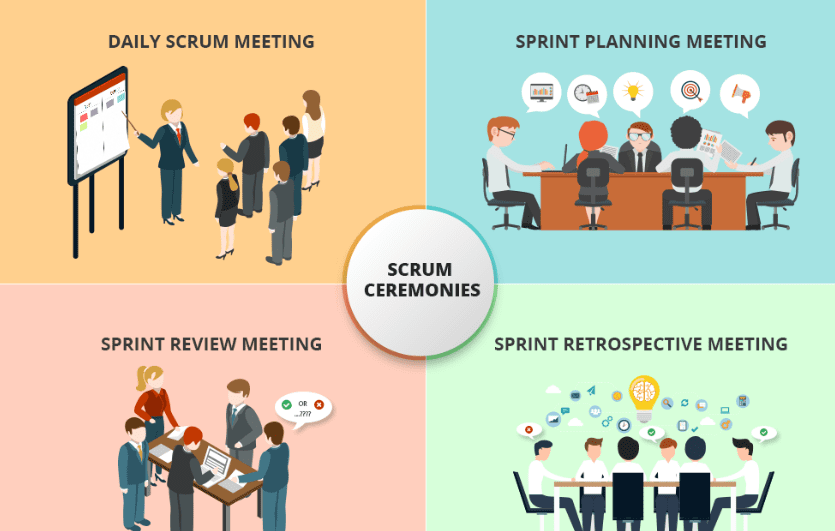
Most product managers and coaches struggle with frustrating outcomes. The answer to such a situation lies in the retrospectives. The Retrospectives-tool is an essential of the PMs toolkit and relies on learning, transparency and exploring curiosity in a safe environment. The product retrospectives can transform product processes, improve products, and offers an opportunity for continued learning through the iterative product development life-cycle.

Why Retrospectives?

The retrospective generates actions based on consensus and produces new information unlike the regular meets reviewing past performance, data and actions.
It is a based-in-reality change and action process which can be undertaken to occur at regular intervals. For example the quarterly review of road-maps, the finish of a sprint iteration, after a release, sales /client meeting, product launch or the hypothesis-testing. The retrospective reviews what, how and why in terms of reviewing over a fixed timeframe the desired outcome or event and comprises the entire product development community of stakeholders, customers, product and development teams.
The accruing benefits:
The retrospective is beneficial when it is able to: 

  • Use and gather community collective-wisdom.
  • Be neutral and non-judgmental about the truth.
  • Find areas for improvement and appreciation.
  • Generate beneficial product insights.
  • Try, change and make commitments to improvement actions.

The main benefits accrue when retrospectives are used for: 
·         Active Engagement.
·         Go beyond the process.
·         Use product data to make better product decisions.
Let us explore how retros help under each head.
Active engagement:
Retrospectives are important Scrum events for the teams in product development. However, the PD Managers avoid shoddily run meets on product quality instead of addressing the issues and making situations better. They are also useful in mutual learning and resolving key issues like strained team member relationships.
Transparency, a safe environment, and open communications are key in the retros. Product leadership starts with discussing in a neutral non-judgemental environment even undiscussables. The skilled facilitator can then help transition the team to the high-performance zone.

Go beyond the process:

Most times the Retrospectives are useful in development processes and go beyond product releases and sprint iterations. Retrospectives are event-based learning from events like the product launch, hypothesis test, product/customer research, roadmap-outcomes, and customer conferences. Your leverage depends on the events linked to your product, engaging the right people and post-event retros to learn from.

Use product data to make better product decisions:

Typically any retrospective involves the data gathering, culling of insights, and product-data focus for making good business decisions.

The Retrospective structure:

A structure has a series of activities like: 

  1. Readying the stage: Here one collects data required, starts the session with stakeholders, defines parameters for retro success, and creates retro safety.
  2. Using past data: Data here is used to recreate and tell the story using shared resources of quantitative and qualitative data.
  3. Draw present insights: This phase reflect on feelings and facts, interprets data accordingly, looks and understands the whole scenario while answering the top five retro-questions.
  4. Make future decisions: Here one decides the actions for implementation and decides what and when to change.
  5. Retro Closure: The whole process is reviewed for future use and improvements.

In retros, data is both quantitative (like coding, tech debts, quality, defects, etc) and qualitative (like happiness, reviews, reactions, etc). It also includes metrics of the HEART (like customer happiness, engagement, outcomes, adoption, task success, retention, etc). Factors like revenue, loss/win results, costing results over a time-period, metrics of marketing campaigns, test findings, hypothesis testing, and conversion rates are also part of it.

Retrospectives help to learn:

Retrospectives can enable learning when such learning is reinforced and is essential for self-direction, immediacy, and relevance. By Immediacy, one means you apply your learning immediately, by relevance one means it applies aptly to our situations,  and self-direction implies taking control of retrospection and make learning-based changes. Retrospectives hence should be mindful of everyone’s involvement in things that need change and the achievement of change itself.

Conclusion:

Retrospectives go beyond the obvious thinking. To practically use and reap better retrospective-based outcomes, the product leaders have to determine when to use, who can best facilitate, learn all about the timing, duration, etc, and possess safety from a psychological perspective.
In conclusion, ask yourself if using retrospectives and better productivity interests you. Do an Agile course at Imarticus Learning to further your career today.