What Are The Machine Learning Interview Questions?


It is not surprising that machines are an integral part of our eco-system driven by technology. Reaching a point in technical pinnacle was made easier from the time machine started learning and reasoning even without the intervention of a human being. The world is changing from the models developed by machine learning, artificial intelligence and deep learning which adapt themselves independently to a given scenario. Data being the lifeline of businesses obtaining machine learning training helps in better decision-making for the company to stay ahead of the competition.

Machine learning interview questions may pop up from any part of the subject like it may be about algorithms and the theory that works behind it, your programming skills and the ability to work over those algorithms and theory or about your general insights about machine learning and its applicability.

Here is a collection of a comprehensive set of interview questions about machine learning and guidelines for the answers:

1. What are the different types of machine learning?

Machines learn in the following ways:

Supervised learning: A supervised learning essentially needs a labeled data which are pre-defined data set using which machines provide a result when new data is introduced.

Unsupervised learning: Here machines learn through observation and defines structures through data as these models do not require labeled data.

Reinforcement learning: Here there is an agent and reward which can meet by trial and error method. Machine tries to figure out ways to maximize rewards by taking favorable action.

2. How does machine learning differ from deep learning?

Machine learning essentially uses algorithms to parse data, learn from them and makes informed decisions based on the learnings. Whereas, deep learning structures different algorithms and gimmicks an artificial neural system to make intelligent decisions by learning on its own.

3. Having too many False positives or False negatives which one is better? Explain

It completely depends on the question and domain for which we are figuring out a solution. For a medical domain showing false negatives may prove risky as it may show up no health problems when the patients are actually sick. If spam detection is the domain then false positives may categorize an important email as spam.

4. What is your idea about Google training data for self-driving cars?

Google uses Recaptcha to sense labeled data from storefronts and traffic signals from its eight sensors interpreted by Google’s software. Creator of Google’s self-driving car Sebastian Thrun’s insights is used to build a training data.

5. Your thoughts on data visualization tools and which data visualization libraries do you use?

You may explain your insights data visualization and your preferred tools. Some of the popular tools include R’sggplot, Python’s seaborn, Matplotlib, Plot.ly, and tableau.

6. Explain about a hash table?

In computing, a hash table is a data structure which that implements an associative array. It uses a hash function using which a key is mapped to certain values.

7. Explain the confusion matrix?

Confusion matrix or error matrix essentially visualizes the performance of algorithms in machine learning. In the below table TN= True negative, FN=False negative, TP=True Positive and FP=False positive.

8. Write pseudo-code for a parallel implementation by choosing an algorithm

Enlighten your knowledge about pseudo-code frameworks such as Peril-L and some visualization tools like Web sequence diagram to aid you in showcasing your talent to write a code that reflects parallelism well.

9. How do you handle missing or corrupted data in a dataset efficiently?

You could identify missing or corrupted data in a dataset and ideally drop them or replace them with another value. In pandas isnull() and dropna() are two useful methods which can be used to identify columns of missing or corrupted data and drop them or replace an invalid value with a placeholder value like fillna().

10. Difference between a linked list and an array?

An array consists of an ordered collection of objects wherein it assumes that every object has the same size. A linked list, on the other hand, is a series of objects with directions as to sequentially process them which helps a linked list to grow organically than an array.

Conclusion

For becoming a successful machine learning engineer, you could join Machine learning certification training to make yourself proficient in various topics of machine learning and its algorithms. From this curated list of interview questions, you would have understood that machine learning is an internal part of data science. Use these sample questions to broaden your knowledge about the questions that may pop up in your interview and be ready to spellbind the interviewer with your swift answers.

For more details, in brief, you can also search for – Imarticus Learning and can drop your query by filling up a simple form from the site or can contact us through the Live Chat Support system or can even visit one of our training centers based in – Mumbai, Thane, Pune, Chennai, Bangalore, Delhi, Gurgaon, and Ahmedabad.


How Criminals Are Using AI And Exploiting It To Further Crime?

AI can use the swarm technology of clusters of malware taking down multiple devices and victims. AI applications have been used in robotic devices and drone technology too. Even Google’s reCAPTCHA according to the reports of “I am Robot” can be successfully hacked 98% of the time.

It is everyone’s fear that the AI tutorials, sources, and tools which are freely available in the public domain will be more prevalent in creating hack ware than for any gainful purpose.

Here are the broad areas where hackers operate which are briefly discussed.

1. Affecting the data sources of the AI System:

ML poisoning uses studying the ML process and exploiting the spotted vulnerabilities by poisoning the data pool used for MLS algorithmic learning by. Former Deputy CIO for the White House and Xerox’s CISO Dr. Alissa Johnson talking to SecurityWeek commented that the AI output is only as good as its data source.

Autonomous vehicles and image recognition using CNNs and the working of these require resources to train them through third-parties or on cloud platforms where cyberattacks evade validation testing and are hard to detect. Another technique called “perturbation” uses a misplaced pattern of white pixel noises that can lead the bot to identify objects wrongly.

2. Chatbot Cybercrimes:

Kaspersky reports on Twitter confirm that 65 percent of the people prefer to text rather than use the phone.  The bots used for nearly every app serve as perfect conduits for hackers and cyber attacks.

Ex: The 2016 attack on Facebook tricked 10,000 users where a bot presented as a friend to get them to install malware.

Chatbots used commercially do not support the https protocol or TLA. Assistants from Amazon and Google are in constant listen-mode endangering private conversations. These are just the tip of the iceberg of malpractices on the IoT.

3. Ransomware:

AI-based chatbots can be used through ML tweaking to automate ransomware. They communicate with the targets for paying ransom easily and use the encrypted data to ensure the ransom amount is based on the bills generated.

4. Malware:

The very process of creating malware is simplified from manual to automatic by AI. Now the Cybercriminals can use rootkits, write Trojan codes, use password scrapers, etc with ease.

5. Identity Theft and Fraud:

The generation of synthetic text, images, audio, etc of AI can easily be exploited by the hackers. Ex: “Deepfake” pornographic videos that have surfaced online.

6. Intelligence garnering vulnerabilities:

Revealing new developments in AI causes the hackers to scale up the time and efforts involved in hacking by providing them almost simultaneously to cyber malware that can easily identify targets, vulnerability intelligence, and spear such attacks through phishing.

7. Whaling and Phishing:

ML and AI together can increase the bulk phishing attacks as also the targeted whaling attacks on individuals within a company specifically. McAfee Labs’ 2017 predictions state ML can be used to harness stolen records to create specific phishing emails. ZeroFOX in 2016 established that when compared to the manual process if one uses AI a 30 to 60 percent increase can be got in phishing tweets.

8. Repeated Attacks:

The ‘noise floor’ levels are used by malware to force the targeted ML to recalibrate due to repeated false positives. Then the malware in it attacks the system using the AI of the ML algorithm with the new calibrations.

9. The exploitation of Cyberspace:

Automated AI tools can lie incubating inside the software and weaken the immunity systems keeping the cyberspace environment ready for attacks at will.

10. Distributed Denial-of-Service (DDoS) Attacks

Successful strains of malware like the Mirai malware are copycat versions of successful software using AI that can affect the ARC-based processors used by IoT devices. Ex: The Dyn Systems DNS servers were hacked into on 21st October 2016, and the DDoS attack affected several big websites like Spotify, Reddit, Twitter, Netflix, etc.

CEO and founder of Space X and Tesla Elon Musk commented that AI was susceptible to finding complex optimal solutions like the Mirai DDoS malware. Read with the Deloitte’s warning that DDoS attacks are expected to reach one Tbit/sec and Fortinet predictions that “hivenets” capable of acting and self-learning without the botnet herder’s instructions would peak in 2018 means that AI’s capabilities have an urgent need for being restricted to gainful applications and not for attacks by cyberhackers.

Concluding notes:

AI has the potential to be used by hackers and cybercriminals using evolved AI techniques. The field of Cybersecurity is dynamic and uses the very same AI developments providing the ill-intentioned knowledge on how to hack into it. Is AI defense the best solution then for defense against the AIs growth and popularity?

To learn all about AI, ML and cybersecurity try the courses at Imarticus Learning where they enable you to be career-ready in these fields.

How Can You Learn Deep Learning Quickly?


Why is Deep Learning important to learn in today’s world of ever-changing technologies? Human capabilities to do tasks especially on very large volumes of data are limited. AI stepped in to help train computers and other devices to aid our tasks. And how does it do so? The evolved devices use ML to learn by themselves recognizing data patterns and arriving at predictions and forecasts very much like the human brain. Hence one would need to learn all of the above-mentioned concepts to even reach the deep-learning possibility.

In order to learn ML, one would need to have knowledge of Java, R or Python and suites like DL4J, Keras, and TensorFlow among others depending on the areas you are interested in. It is also important to have the Machine Learning Course before one delves into deep-learning. And yes there is a lot of statistics, probability theory, mathematics and algebra involved which you will have to revise and learn to apply.


If you are interested in learning Deep Learning quickly, here are the top four ways to do so.

A. Do a course: One of the best ways is to scour the net for the best top free MOOC courses or do a completely paid but skill oriented course. Many are online courses and there are classroom courses as well. For the working professional course from a reputed training partner like Imarticus Learning makes perfect sense. Just remember that to learn Deep learning you will need to have access to the best industry-relevant solutions and resources like mentoring, assured placements, certification and of course practical learning.

B. Use Deep Learning videos: This is a good resource for those with some knowledge of machine learning and can help tweak your performance. Some of the best resources of such videos are ML for Neural Networks by the Toronto University, the tutorials of Stanford University on Deep Learning, ConvNet resources on Github, and videos by Virginia Tech, E and CE, the Youtube, etc.

C. Community Learning: There are communities available online like the Deep Learning community and r-learning communities from Quora, Reddit, etc. Such communities can be of immense help once you have a firm grasp of the subject and need to resolve or are practicing your skills.

D. DIY books: There is a wealth of books available to learn Deep Learning and understand the subject better. Do some research on the best deep-learning resources, the limits of it, differences between ML and deep-learning, and such topics. DIY books are easy to read and hard to practice with. Some excellent books are the TensorFlow-Deep Learning, Nielsen’s Neural Networks-and-Deep Learning, and Chollet’s Python and Deep Learning.

The Disadvantages:

  1. Rote knowledge is never really helpful and the syllabus is very vast and full of complicated subjects.
  2. The practice is the key is only acquired through constantly doing relevant tasks on relevant and industry-standard technology.
  3. Mentorship is very important to learn the current best practices.
  4. Time is a constraint, especially for working professionals.
  5. The best value courses are often paid-for courses.
  6. DIY is bereft of certification and hence a measure of your skills.
  7. The DIY approach may also never train you for the certification exams.
  8. Assured placements in the paid for courses are a huge draw for freshers making a career in deep-learning.
  9. There are non-transferable soft-skills that you require and do not find in the packages.
  10. Industry acceptance is often sadly lacking for the self-learning candidates.

Conclusion:

Learning is always a process where reinforcement and practice scores. Though there are many options available to do deep-learning for free and on one’s own, the route is never easy. Thus it seems the paid courses, like the one at Imarticus Learning, is definitely a better bet. Especially if the course is combined with mentorship of certified trainers, assured placements, widely accepted certification, personalized personality-development modules and a skill-oriented approach with tons of practice as the one at Imarticus is.

The Imarticus Learning courses deliver well-rounded and skilled personnel and offer a variety of latest technology courses which are based on industry demand.

Given the above information, the quickest way to master deep-learning definitely appears to be doing a course at Imarticus. If you want to be job-ready from day one, then don’t wait. Hurry and enroll. We have multiple centers in India – Mumbai, Thane, Pune, Chennai, Banglore, Hyderabad, Delhi, Gurgaon and Ahmedabad. So you can consider as per your need!!


How Do You Start Learning Artificial Intelligence? Is it Possible to Get Research Work in The Field of AI?

The last decade saw the introduction of Machine Learning Training, Deep-Learning and Neural networks in AI to acquire the capacity to reach computational levels and mimic human intelligence.
The future scope of Machine Learning appears bright with ML enabled AI being irreplaceable and a composite part of evolving technologies in all verticals, industries, production means, robotics, laser uses, self-driven cars and smart mobile devices that have become a part of our lives. It thus makes perfect sense to learn Machine Learning and make a well-paying career in the field. Since the early 50’s a lot of research has gone into making these developments possible, and the trend for continued research into AI has made it the most promising technology of the future.

Why study AI:

AI rules and has become a reality in our lives in so many different ways. From our smartphones and assistants like Siri, Google, Alexa etc, the video games and Google searches we do, self-driven cars, smart traffic lights, automatic parking, robotic production arms, medical aids and devices like the CAT scans and MRI, G-mail and so many more are all AI-enabled data-driven applications, that one sees across verticals and without which our lives would not be so comfortable. Fields like self-learning, ML algorithm creation, data storage in clouds, smart neural networking, and predictive analysis from data analytics are symbiotic. Let us look at how one can get AI skills.
Getting started with AI and ML learning:
To start AI learning the web offers DIY tutorials and resources for beginners and those who wish to do free courses. However, there is a limit to technical knowledge learned in such ‘learn machine learning’ modules, as most of these need hours of practice to get adept and fluent in. So, the best route appears to be in doing a paid classroom Machine Learning Course.

Here’s a simple tutorial to study ML and AI.

1. Select a research topic that interests you:

Do brush through the online tutorials on the topic on the internet. Apply this to small solutions as you practice your learning. If you do not understand the topic well enough use Kaggle the community forum to post your issues and continue learning from the community too. Just stay motivated, focused and dedicated while learning.
2. Look for similar algorithm solutions:
The process of your solution would essentially be to find a fast solution and it helps when you have a similar algorithm. You will need to tweak its performance, make the data trainable for the ML algorithm selected, train the model, check the outcomes, retest and retrain where and when required by evaluating the performance of the solution. Then test and research its capabilities to be true, accurate and produce the best results or outcomes.

3. Use all resources to better the solution:

Use all resources like data cleaning, simple algorithms, testing practices, and creative data analytics to enhance your solution. Often data cleaning and formatting will produce better results than self-taught algorithms for deep learning in a self-taught solution. The idea is to keep it simple and increase ROI.

4. Share and tweak your unique solution:

Feedback and testing in real-time in a community can help you further enhance the solution while offering you some advice on what is wrong and the mentorship to get it right.

5. Continue the process with different issues and solutions:

Make every task step problem you encounter an issue for a unique solution. Keep adding such small solutions to your portfolio and sharing it on Kaggle. You need to study how to translate outcomes and abstract concepts into tiny segmented problems with solutions to get ahead and find ML solutions in AI.

6. Participate in hackathons and Kaggle events:

Such exercises are not for winning but testing your solution-skills using different cross-functional approaches and will also hone your team-performance skills. Practice your collaborative, communicative and contributory skills.

7. Practice and make use of ML in your profession:

Identify your career aims and never miss an opportunity to enroll for classroom sessions, webinars, internships, community learning, etc.
Concluding notes:
AI is a combination of topics and research opportunities abound when you learn to use your knowledge professionally. Thus the future scope of Machine Learning which underlies AI contains newer adaptations which will emerge. With more data and emerging technological changes, the field of AI offers tremendous developmental scope and employability in research and application fields to millions of career aspirants.
Do a machine learning training at Imarticus Learning to help with improving your ML practical skills, enhance your resume and portfolio and get a highly-paid career with assured placements. Why wait?

Ships Of The Future -Will Run on AI Instead of A Crew?

Technology has taken a high route since Artificial Intelligence has gained immense impetus over the years. Alexa and Siri have become household names as millions of their users, start the day, and close the same with them.

Artificial Intelligence is also seen to be transforming a number of industries including the shipping industry.

This means that your cruise ships are about to you take you into the future. They will be driven by artificial intelligence instead of a crew member. In the year 2017, two friends Ugo Vollmar and clement Renault were all set to work on a self-driving car project until they stumbled upon an article that talked about autonomous shipping which made them sail in a different direction.

Human resources and autonomy 

Autonomy would operate in a different manner when it comes to water than it does for roads. In the case of waterways, it will not completely eliminate the human resources on board. This is because when it comes to cars, there is only one person that takes over the entire control to operate it while for ships, there is a bare minimum of at least 20 crew members on board, all of them being assigned crucial duties.

Thus, in the case of roads, that one person can be completely replaced by autonomy, but not all the crew members can be replaced by autonomy in its entirety.

“Diesel engines require replacement of filters in oil systems—the fuel system has a separator that can get clogged. There are a lot of these things the crew is doing all the time” quoted Oskar Levander, the head of Rolls Royce’s autonomous system efforts.

This is why it can be said that the helm is most likely to be operated with autonomy using a robot or remote control while a part of the crew can help in taking care of the vessel. In addition to this, these automated journeys will have special rules created by the International Maritime Organisation which is most likely to happen in the coming years.

Key examples

One of the examples of companies that have employed artificial intelligence in order to robotize ships is Shone. They visualize employing artificial intelligence by planting sensors like radar and cameras that can help simulate a number of hazards around the ship and to navigate amidst them. Autonomous shipping helps in cutting costs of consumer goods as well as provides a safer environment for passenger ferries and cruise liners. Tugboats and ferries are likely to operate autonomously for at least a part of the time, the ones that only operate for shorter distances and time duration.

Finland and Norway have staked out testing areas for pioneering the commercial applications of autonomous systems that are likely to happen on the small coastal waters of Scandinavia. Rolls Royce orchestrated the first-ever public demonstration of an autonomous voyage by a passenger’s vessel. It was a state-run vessel that happened to avoid obstacles for 1 mile and also docked automatically.

Rolls Royce also revealed that on the day of the demonstration and the trails before that, the vessel was able to perform well even in rough waters, handling snow and strong winds which indicates that we are moving towards a world that will have machines employed everywhere to augment our experiences and make life easier.

Transportation made easy

At ports like Scandinavia where small ferries play a crucial part in the transportation network, in order to carry cars across fjords and connecting them to islands, autonomous systems will have it made it a lot easier. This is because the remote-control systems could allow for an expansion of service at the routes that are not very long, especially during the late hours and help reduce staffing, thus cutting costs, increasing efficiency and saving time. You can save big bucks by employing autonomous systems as the crew costs are really high and you can eliminate a big part of the same with artificial intelligence.

In a nutshell, we can say that we are moving towards living in a world that will be much easy to live in. Machine learning Training and Artificial Intelligence are taking over various industries eliminating its glitches and making operations better and more efficient.

For more details in brief and further career counseling, you can also search for – Imarticus Learning and can drop your query by filling up a form from the website or can contact us through the Live Chat Support system or can even visit one of our training centers based in – Mumbai, Thane, Pune, Chennai, Hyderabad, Delhi and Gurgaon.

AI is Now Being Used in Beer Brewing!

AI is now being used in beer brewing -from creating unique beer recipes to adapting recipes as per customer feedback. AI is doing it all…

With the advent of the digital revolution, Artificial Intelligence (AI) has gained immense impetus in recent years. Today, everyone is connected to everything because of the growing importance of the Internet of Things. Right from the time, you wake up until the time you close your day, technology plays a key role in taking you forward.

Alexa and Siri have now become household names and no doubt, why “Her” was a blockbuster in the cinemas. AI and Machine Learning are here to make your work easier, and your life smoother. It is also brilliant to know how even breweries today are using AI to enhance their beer production.

Brewed with AI
As discussed earlier, digitization and technology have significantly impacted our lives across spectrums, and there are several examples of various companies that have started employing AI in their processes to serve their customers better. Breweries are nowhere behind in this race of digitization, so let us discuss a few examples of how they are using AI in order to enhance the experience of the consumers.

Intelligent X
Intelligent X is one of the best examples of how a platform employed AI to enhance their beer. It came up with the world’s first beer, which is brewed with Artificial Intelligence Course and advances itself progressively based on customer feedback. They use AI algorithms and machine learning to augment the recipe and adjust it in accordance with the preferences of the customers. The brewery offers four types of beer for the customers to choose from:

  • Black AI
  • Golden AI
  • Pale AI
  • Amber AI

In order to brew the perfect beer that pleases all your senses, all you need to do is sign up with IntelligentX, train their algorithm according to what appeals to your palate, and you are good to go. In addition to this, you can follow the URL link on your beer can and give your feedback so that they can create a beer you would like. These beers come in classy and minimally designed black cans that reflect their origin and give a feeling that what you are experiencing is the beer from the future.

Champion Brewing
Another example of a very intelligent deployment of AI in brewing beer is that of Champion Brewing. They used machine learning in the process of developing the perfect IPA. They took the big step by initially getting information regarding the best and the worst IPA selling companies to get an insight into how to go about the entire project. Based on the same, did they determine the algorithm of brewing the best IPA with their AI?

RoboBEER
An Australian research team found out that the form of a freshly poured beer affects how people enjoy it. Building on to this, they created RoboBEER, which is a robot that can pour a beer with such precision that can produce consistent foam, pour after pour. These researchers also made a video of how the RoboBEER poured the beer tracked the beer color, consistency, bubble size, and all the other attributes. They then showed the same videos to everyone who participated in the research in order to get seek their feedback and thoughts with regard to the beer’s quality along with its clarity.
Conclusively, this shows how AI has become the nascent yet a very preferred trend, which is even being followed by the breweries around the world. It has added an unusual turn to the way the perfectly brewed well-crafted beer makes its way to your glass. With the help of this ever-evolving technology, we can anticipate our favorite drinks to be made precisely in accordance with our preference only with the help of your smartphone.

By deriving minutest of the insights right from the foam of the beer till the yeast used in the same, companies these days are striving to deliver their best with the help of immense research and execution from the ideation derived from their research amalgamating it with AI and Machine Learning. Looking at the various examples, we can surely say that we are living in the future in the present.

For more information you can also visit – Imarticus Learning contact us through the Live Chat Support or can even visit one of our training centers based in – Mumbai, Thane, Pune, Chennai, Bangalore, Delhi and Gurgaon.

How have statistical machines influenced Machine Learning?

The past few years have witnessed tremendous growth of machine learning across various industries. From being a technology of the future, machine learning is now providing resources for billion-dollar businesses. One of the latest trend observed in this field is the application of statistical mechanics to process complex information. The areas where statistical mechanics is applied ranges from natural models of learning to cryptosystems and error correcting codes. This article discusses how has statistical mechanics influenced machine learning.
What is Statistical Mechanics?
Statistical mechanics is a prominent subject of the modern day’s physics. The fundamental study of any physical system with large numbers of degrees of freedom requires statistical mechanics. This approach makes use of probability theory, statistical methods and microscopic laws.
The statistical mechanics enables a better study of how macroscopic concepts such as temperature and pressure are related to the descriptions of the microscopic state which shifts around an average state. This helps us to connect the thermodynamic quantities such as heat capacity to the microscopic behavior. In classical thermodynamics, the only feasible option to do this is measure and tabulate all such quantities for each material.
Also, it can be used to study the systems that are in a non-equilibrium state. Statistical mechanics is often used for microscopically modeling the speed of irreversible processes. Chemical reactions or flows of particles and heat are examples of such processes.
So, How is it Influencing Machine Learning?
Anyone who has been following machine learning training would have heard about the backpropagation method used to train the neural networks. The main advantage of this method is the reduced loss functions and thereby improved accuracy. There is a relationship between the loss functions and many-dimensional space of the model’s coefficients. So, it is very beneficent to make the analogy to another many-dimensional minimization problem, potential energy minimization of the many-body physical system.
A statistical mechanical technique, called simulated annealing is used to find the energy minimum of a theoretical model for a condensed matter system. It involves simulating the motion of particles according to the physical laws with the temperature reducing from a higher to lower temperature gradually. With proper scheduling of the temperature reduction, we can settle the system into the lowest energy basin. In complex systems, it is often found that achieving global minimum every time is not possible. However, a more accurate value than that of the standard gradient descent method can be found.
Because of the similarities between the neural network loss functions and many-particle potential energy functions, simulated annealing has also been found to be applicable for training the artificial neural networks. Other many techniques used for minimizing artificial neural networks also use such analogies to physics. So basically,  statistical mechanics and its techniques are being applied to improve machine learning, especially the deep learning algorithms.
If you find machine learning interesting and worth making a career out of it, join a machine learning course to know more about this. Also, in this time of data revolution, a machine learning certification can be very useful for your career prospects.

How do you balance Machine Learning theory and practice?

Machine learning is no longer a technology from the future. The technology giants like Google, Facebook, Netflix, etc. have been using machine learning to improve their user experience for a very long time. Now, the applications of machine learning are growing across the industries and this technology is driving businesses worth billions of dollars. Along with the applications,  the demand for professionals with expertise in ML has grown immensely in the past few years.
So, it is indeed a good time to learn machine learning for better career prospects. A machine learning course is the best practical way to start your learning process. However, often people get too much stuck to the theory and fall behind in the practical experience. Well, it is not the best way to learn anything. This article will help you balance learning machine learning theory and practice. Read on to find out more.
Theory vs Practice 
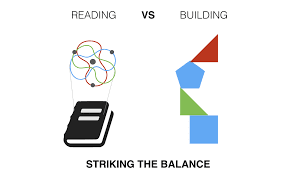
For practitioners of ML, the theory and practice are complementary aspects of their career. To become successful in this field, you will have to strike the balance between what you read and the problems in real life. So many people avoid building things because it is hard. Building involves constant tracing of bugs, endlessly traversing stack overflow, attempts to bring so many parts together and so many more work. Theory on the other hands is comparatively easy.
You can find all the concepts settled in place and we can just consume everything as to how we wish things will work. But if it doesn’t feel hard, you are not learning anything properly. It will be a lot easier for us to rip through journals and understand the concepts, but reading about the achievements of others will not make you any better in this field. You have to build what you read and fail so many times to get an understanding that cannot be achieved by reading alone.
Build what you read
It is the one simple thing you can do to strike a balance between theory and practice. Build a neural network. It may perform poorly, but you will learn how different it is from the journals. Attend a Kaggle competition and let your ranking stare at you even if it is low. Hack together a javascript application to run your ML algorithms in the back end only just to see it fail for unknown reasons.
Always do projects. Your machine learning certification program might have projects as part of their curriculum, but don’t be limited to those. Just remember that everything you make during the learning process does not have to work. Even the failures are great teachers in this process. They will provide you with the practical experience you will need to excel in the industry.
Practicing everything you read may make it harder for you, but once you learn to volley theory and practice back and forth, you will certainly get the results better than you were looking for. Only such a balanced approach towards ML will help you make an effect on the real world problems.

How Machine Learning is Reshaping Location-Based Services?

Today life is a lot different from what it used to be a decade ago. The use of smartphones and location-empowered services is commonplace today. Think about the driving maps, forecasts of local weather and how the products that flash on your screen are perhaps just what you were looking for.
Location-enabled GPS services, devices that use them and each time we interact and use them generates data that allows data analysts to learn about our user-preferences, opportunities for expansion of their products, competitor services and much more. And all this was made possible by intelligent use of AI and ML concepts.
Here are some scenarios where AI and ML are set to make our lives better through location-based services.

  • Smart real-time gaming options without geographical boundaries.
  • Automatic driver-less transport.
  • Use of futuristic smartphone-like cyborgs.
  • Executing perilous tasks like bomb-disposals, precision cutting, and welding, etc.
  • Thermostats and smart grids for energy distribution to mitigate damage to our environment.
  • Robots and elderly care improvements.
  • Healthcare and diagnosis of diseases like cancer, diabetes, and more.
  • Monitoring banking, credit card and financial frauds.
  • Personalized tools for the digital media experience.
  • Customized investment reports and advice.
  • Improved logistics and systems for distribution.
  • Smart homes.
  • Integration of face and voice integration, biometrics and security into smart apps.

So how can machine learning actually impact the geo-location empowered services?
Navigational ease:
Firstly, through navigation that is empowering, democratic, accurate and proactive. This does mean that those days of paper maps, searching for the nearest petrol station or location, being late at the office since the traffic pileups were huge and so many more small inconveniences will be a thing of the past. We will gracefully move to enhanced machine learning smartphones that use the past data and recognize patterns to inform us if the route we use to commute to office has traffic snarls and provide us with alternative routes, suggest the nearest restaurant at lunchtime, find our misplaced keys, help us locate old friends in the area etc all by using a voice command to the digital assistant like Alexa, Siri or Google.
ML can make planning your day, how and when to get to where you need to be, providing you driving and navigational routes and information, and pinging you on when to leave your location a breeze. No wonder then that most companies like Uber, Nokia, Tesla, Lyft and even smarter startups that are yet to shine are investing heavily on ML and its development for real-time, locational navigational aids, smart cars, driverless electric vehicles and more.
Better applications: 
Secondly, our apps are set to get smarter by the moment. At the moment most smartphones including Google, Apple, Nokia among many others are functioning as assistants and have replaced those to-do lists and calendar keeping for chores that include shopping, grocery pickups, and such.
Greater use of smart recommendatory technology:
And thirdly, mobile apps set smartphones apart and the more intelligent apps the better the phone experience gets.  The time is not far off when ML will be able to use your data to actually know your preferences and needs. Imagine your phone keeping very accurate track of your grocery lists, where you buy them, planning and scheduling your shopping trips, reminding you when your gas is low, providing you with the easiest time-saving route to commute to wherever you need to go and yes, keep dreaming and letting the manufacturer’s know your needs for the future apps. The smart apps of the future would use your voice commands to suggest hotels, holiday destinations, diners, and even help you in budgeting. That’s where the applications of the future are headed to.
In summation, ML has the potential to pair with location-using technologies to improve and get smarter by the day. The future appears to be one where this pairing will be gainfully used and pay huge dividends in making life more easily livable.
To do the best machine learning courses try Imarticus Learning. They have an excellent track record of being industrially relevant, have an assured placement program and use futuristic and modern practical learning enabled ways of teaching even complex subjects like AI, ML and many more. Go ahead and empower yourself with such a course if you believe in a bright locational enabled ML smart future.

What are good ideas for Hackathon in Machine Learning?


Hackathons are not merely fetes where you can show off your skills but are also huge opportunities aimed at engaging gainfully and celebrating solving business issues and problems.

The Indian hackathons are corporate sponsored glitz-and-swag events where developers can compete and push boundaries by tackling industry-relevant issues in an environment that is supportive, has fireside learning, exposure to the latest gadgetry and quite like a convoluted career fair.

Job opportunities, internships, different vertical exposure, startup offers, mentorships, peer interactions, rights to brag and prizes abound. For the ML starters, it can be the pitch to learn on, join a community, hone skills, get ideas, and find the right tools and projects in coding, discover the best training and even get placed.

Take your pick from popular and reputed hackathons like MachineHack, TechGig, Hackerearth, Kaggle, and OpenML. Here are some hackathon ideas that can be advantageously used.

  1. Reach out to the online community through online ongoing hackathons where tech and ML beginners can participate, work on third-party APIs and resolutions and learn from the community. Alexa is being tweaked by Amazon in this manner.
  2. Permit multiple categories, levels, and submissions: Teams can participate in multiple category hackathons as individuals or by submitting multiple solutions at hackathons. This builds team spirit, allows multiple submissions in various categories and promotes working in communicative teams.
  3. A balanced cross-functional team yields better results: This secret in hackathons helps teams compete better, ensures better team coordination, provides a platform for the newcomers to work with the experienced and definitely satisfies learning for the whole team. Go for the prize with your team!
  4. Count results to be superior to techniques:  All hackathon participants should use their stack wisely and well, and showcase in the prototype their algorithm and skills in programming. Many a failure occurs with developing scalable models instead of the prototype, using complex databases, algorithms, and a limited stack to develop the prototype in the specified timeframe.
  5. Hackathons are about prizes for quality problems: Nobody expects a complete solution. What does impress is a simple tweak, innovation or prototype that has the potential to solve and provide a scalable solution?
  6. The product demo is essential: While the presentation has a bearing on the success and winning becomes addictive the product demo is crucial as it sums up the learning, efforts, and technology used. The real winners are those who compete and learn from their mistakes.
  7. Follow the hackathon code: The opportunity to learn should not cause problems for others. Follow the guidelines and conduct codes to provide a supportive environment for all.
  8. Exploit the learning opportunity: To break into the ML field you will need to do a machine learning course and get practical machine learning training with a reputed institute like Imarticus. Then move on to hackathons because these are events akin to sprints where hardware/software is tweaked over the next 24 to 48 hours. The skills and tasks are graded and provide participants with the chance to come up with quick solutions without needing code understanding. Do explore the workshops and 101 sessions on coding to help pick-up the requisite skills.

On a concluding note, there will be various platforms hosting events and hackathons both offline and online which provide participants for everyone.