The two paths from Natural Language Processing to Deep Learning

The two paths from Natural Language Processing to Deep Learning

Natural Language Processing is a branch of linguistics, computer science, and artificial intelligence that deals with the interaction between computers and human language, in particular how to design computers to handle and evaluate huge volumes of natural language data. We want a computer that can “understand” the text in documents, including its context and subtleties.

As a result, the papers’ data and insights may be correctly extracted by the technology, which can also classify and arrange the documents themselves.

Massive amounts of unprocessed, text-heavy data need a system like this, which is widely used in machine learning. Professionals with expertise in designing models that analyze voice and language, find contextual correlations, and generate insights from this unprocessed data will be in high demand as AI continues to grow. Natural Language Processing and Deep Learning with Python are one of the most common phrases used in the domain of Artificial Intelligence nowadays.  

In machine learning and artificial intelligence, a technique known as “deep learning” mimics human learning processes. Data science, which encompasses the statistical analysis and forecasting models, relies heavily on deep learning techniques to do its work. For data scientists, deep learning is a godsend since it speeds up the process of processing and understanding massive volumes of data. 

It is possible to think of deep learning as the automation of predictive analytics. Deep learning algorithms are piled in a hierarchical structure of increasing complexity and abstraction, while typical machine learning algorithms are linear.

Neural Networks and Deep Learning

A Neural Network, also known as an Artificial Neural Network, is made up of layers. Imagine the neurons in a human brain; they are the computing units, and they form a single layer when layered. stacking neurons together creates several layers. It is termed the input layer because it contains the data that we are working with. We run our algorithms and get an output, which is then utilized to do our computations for the following layer, the output layer.

At each successive layer, all of one layer’s neurons are linked to those at each successive layer, which are then linked to the next layer, and so on, until we reach our output layer, where we achieve our desired outcome for the specific data we were working with. Those layers that are between the input and output layers are referred to as Hidden Layers. A Neural Network is the result of this process.

A deep neural network is an artificial neural network with two or more hidden layers, and a model built on a deep neural network is referred to as Deep Learning

What are the main components of Natural Language Processing?

NLP consists of a number of components, a few of them are mentioned below:

  • Analysis of morphological and lexical patterns.
  • Syntactic Analysis: Study of logical meaning from a given part of the information, be it text or audio.
  • Semantic Analysis: Used to analyze the meaning of words.

Here’s Why Upskilling With A Machine Learning Course Is Imperative In 2022

Machine learning has incorporated itself into your everyday lives to a great extent. This futuristic technology is empowering the world a little more with each passing day. Be it product recommendations at window shopping, fraud detection in the financial institutions, or content used by various social media platforms like Instagram, Facebook, and LinkedIn, everything uses machine learning algorithms. Simply put, machine learning is the future and it plays a very important role in our lives. And this is what makes machine learning so important. 

It doesn’t matter in which field you’re in, you can take your career to the next level by taking a machine learning course. In this blog, we will discuss why you need to upskill with a machine learning course in 2022!

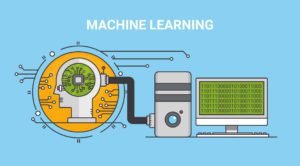
Machine Learning

Why Machine Learning Course in 2022? 

Machine learning has emerged as the most sought-after skill to have because of the increasing demand and the numerous benefits that it offers. Below are some reasons why a machine learning course is imperative in 2022:

1. Better Growth and Career Opportunities 

A TMR report suggests that Machine Learning as a Service (MLaaS) is expected to rise from just $1.07 billion (in 2016) to a whopping $19.9 million by 2025. As you can see, this is not normal growth, the demand for ML is increasing exponentially. 

If you’re planning to give a boost to your career then ML is the best tool to do that. Learning this course can help you become a part of both the global and contemporary world. Machine learning is not limited to just the IT industry, it has a strong foothold in areas like cyber security, medicine, image recognition, facial recognition, and many more. As more and more businesses are realizing that this technology is impacting their business, they are investing more and more in it. 

For example, Netflix has put a reward of $1 million to anyone who can sharpen their machine learning algorithm by increasing its efficiency to 10%. This clearly indicates that even the slightest enhancement of ML algorithms can offer immense profit to the company, and thus more and more businesses are behind people who know ML. 

2. Attractive Salaries 

If you’re looking for a hike in your salary, then there is no better way than upskilling with a machine learning certification. Believe it or not, the best machine learning professionals earn as much as the popular sports personalities. According to Glassdoor.co.in, the average salary of a machine learning engineer is INR 10 lakhs per year ﹘ and it is their starting salary which eventually goes as high as INR 15 to 25 lakh per annum. 

3. Lack of Machine Learning Can Be Harmful to Companies 

Technological advancements are happening at the speed of lightning. And due to this, many corporations are left behind. Digital transformation is a vast field, and the fact is, there are not enough ML professionals to cater to increasing demands. 

If we look at the stats, then a New York Times study that took place in 2017 stated that the total number of professionals in the AI and ML field was less than 10,000 people all across the globe. 

This number is most likely to both increase and decrease. It is likely to increase because of the increased number of job opportunities that are being created, and it’s likely to decrease because more and more people are upskilling with ML every day. 

The best part about upskilling with ML is that you don’t need to have an advanced set of skills and qualifications to take a machine learning course, anyone from any background can learn it. 

Machine Learning is the Heart and Soul of Data Science 

There is no doubt that data science rules the market because of its innovative viability and all-explaining nature. And machine learning is the heart and soul of this pioneering technology. By becoming proficient in ML, you can build your career in the field of data science as well. Note that many organizations have data scientists and ML engineers working hand in hand to complete highly demanding tasks. You can get exposure to the world of data science while having a chance to learn and work with industry-leading experts. 

How to Get Started with Machine Learning in 2022?

Once you’ve made up your mind to become a machine learning expert, you’re just a step away from upskilling your career. All you need to do is find and enroll in the right machine learning course or certification program. With a combination of the right ML course, deduction, practice, and experience, you can soon become a machine learning professional. 

The Bottom Line

That’s all about why machine learning is the best way to upskill in 2022. We have discussed everything from the importance of machine learning, its potential benefits, and why you should learn machine learning. It’s up to you to use this data to make the right decision. 

4 key differences between AI courses and robotics

4 key differences between AI courses and robotics

Artificial Intelligence and robotics are branches of science that people often get confused with. People think that they are related to each other, that one is a branch of the other. The fact is, though they serve some similar purposes of automation of some systems, they are entirely different.

Those who want to pursue a career in either of these must understand this difference. One should not enrol for an AI certification thinking that it deals with making robots. Let’s find out what are the main differences between AI and robotics. 

Artificial Intelligence vs Robotics

An artificially intelligent robot is what is making the public confused about the relationship between AI and robotics. The main differences between them are mentioned here.

  1. Robotics is a branch of engineering while Artificial Intelligence is a part of computer science.
  2. Robotics creates robots that have a physical form, while AI creates smart machines that can solve problems for humans or make their tasks simpler.
  3.  Robots are programmed to do different tasks which enables them to be autonomous or semi-autonomous. They cannot make changes on their own. On the other hand, algorithms can make modifications based on the input they get, using machine learning or similar tools.
  4. Artificial intelligence is widely used in the daily lives of the public while robots are used in selected areas, which is very low at the moment. 

At the same time, it should be noted that not all robots that we know about have a physical form. The term ‘bots’ refers to robots but the one that most of us see in our day-to-day lives refers to the chatbots, search engine bots, etc are software and are only part of the digital world so they may not be called real robots. 

Where do AI and Robotics meet?

AI and robotics meet where Artificial Intelligence is used in the programming of the robots to make them intelligent. They are known as intelligent robots where the robots make the physical part and the AI forms its ‘brain’. Such robots can move, pick up things, and can also keep them at their specific places.

What helps the robot here are AI algorithms and a camera that helps determine the usual places. AI here almost works as a ‘sixth sense’ where the robot can be sensitized to use its various ‘senses’. 

Future of AI in robotics

AI and robotics are here to stay for a long time. This combination could perform several tasks very well, regardless of how complex they seem to be. People could own a robot and even be able to train them to do customized jobs for them. Intelligent robots could be useful in various industries such as delivery systems, agriculture, etc. 

One can find several AI and Robotics courses. Those who want to pursue that career could start with the Artificial intelligence and Machine Learning course that introduces them to all the latest technologies and tools in this field. The AIML course at Imarticus is conducted by the IIT Guwahati. Participants for this course will be getting lectures directly from the academic professors as well as from the experts in the industry.  

Conclusion

One of the cons of the future of AI and robotics is the lack of enough creativity to practically use them. To counter this, we need more interested people in the AI industry. The primary step towards this should be the Artificial Intelligence certification, both entry-level and intermediate. At Imarticus, one can find one of the finest courses that will provide expertise, experience, and proper guidance. Enroll now!

AI for decision-making: Self-driving cars and the future of artificial intelligence certification

AI for decision-making: Self-driving cars and the future of artificial intelligence certification

The development of self-driving cars needs decision-making models that can cope with urban junctions that are both dynamic and complicated. For autonomous cars to function well, it is critical to precisely identify other vehicles’ paths and simultaneously consider effectiveness and security while interacting with each other.

A self-driving car relies heavily on its vision to detect impediments, read traffic signs, interpret traffic signal status and eventually make an appropriate choice based on what it observes using the principles of artificial intelligence and machine learning. This is a crucial and powerful feature of the vehicle. Read on…

How does a self-driving car perceive information?

A self-driving car must be able to see and identify objects in its environment. This ability to sense the environment around them is a critical property for self-driving automobiles. In order to make this happen, a self-driving car consists of three types of sensors:

  • Cameras: They must have high resolution and adequately portray the surroundings. To ensure that the automobile gets visual data from all directions, cameras must work concurrently to provide a 360-degree image of the surrounding area.
  • LiDAR System: It stands for Light Detection and Ranging, a technique of measuring distances by shooting a laser and then observing the amount of time it takes for it to be reflected back by an object. A three-dimensional picture is created when an LiDAR sensor is used in conjunction with cameras. The automobile can now visualize its surrounding in three dimensions.
  • RADAR System: RADAR is an acronym for radio detection and ranging. Camera sensors are augmented with radar detectors during cases of poor visibility. When an object is detected, radio waves are used to relay back information about the object’s speed and position.

Decision-making in self-driving cars

In self-driving cars, the ability to make quick decisions is critical. In an unpredictable situation, they need a system that is both dynamic and accurate. Sensor readings are not always accurate and drivers often make erratic decisions while being behind the wheel. There is no way to directly quantify these things. 

Deep reinforcement learning (DRL) is employed by self-driving cars for decision-making. Notably, deep reinforcement learning is based on a decision-making mechanism known as Markov Decision Process (MDP). In most cases, a Markov Decision Process is utilized to make predictions about how other drivers will act in the near future.

The automobile must first make the decision to design a route. In order to reach its destination, the automobile has to design the most efficient path from where it is now present. All other options are compared to identify the best one.

After the route has been set, the car has to figure out how to go there on its own. Fixed features like highways, junctions, and typical traffic are known to the automobile, but it is unable to predict precisely what other road users will be doing. Probabilistic forecasting techniques like MDPs are used to address this unpredictability in the behaviour of other road users.

After the behavior layer settles on a path, the system responsible for managing the motion of the car takes control of the car’s movement. This includes the vehicle’s speed, lane-changing, and more, all of which must be tailored to the environment in which the vehicle is operating.

Conclusion

The goal of self-driving automobiles is to improve the safety and efficiency of road traffic. Despite the fact that it shows promise, much work remains. Learn more about self-driving cars and their working with Imarticus’ machine learning course and get your AI certification. Do not hesitate, hurry and apply now

Enabling a Smarter Technology with Machine Learning Courses

Enabling a Smarter Technology with Machine Learning Courses

Machine learning has become more prevalent in enabling smarter technology in a technology-driven era. Many renowned companies worldwide heavily invest in machine learning technologies for an Artificial Intelligence (AI)-powered manufacturing process.

For instance, AI and machine learning have reduced labor costs and downtime with the industrial IoT. In addition, many companies have experienced better quality control with the advancement in machine learning. 

Today, you can grab many opportunities by polishing your skills in this field. According to O’Reilly’s Machine learning Adoption Survey, job titles related to machine learning are widely used in organizations: data scientist (81%), machine learning engineer (39%), and deep learning engineer (20%). Whether you opt for a post-graduation in machine learning or seek deep learning training, let us become more familiar with the industry. 

5 Ways Machine Learning Courses Help You Enable Smarter Technology

Here are a few examples of machine learning implementations that enable smarter technology.

Product Development

Planning and designing new products and updates usually requires extensive research and information, which can be time-consuming, thereby affecting the final product. In this phase, machine learning is chiefly implemented and helps you yield potential results. 

It helps gather customer data, analyze it to meet customer demands, and find business opportunities. Moreover, machine learning can help execute a flawless evaluation of the risk of developing new products. 

Smart Manufacturing

Another significant impact of machine learning is the daily improvement of processes throughout the manufacturing cycle. This technology has helped manufacturers detect their weak points, such as bottlenecks, unprofitable product methods, etc.

With better data analysis and IoT, manufacturers could develop efficient production methodologies and take an in-depth look into inventory, assets, logistics, and supply chain management. Thus, a data analytics course with placements can help you understand how the analysis works and supports the overall production line.

Quality Control

Machine learning helps improve quality control in two ways. First, it can easily find defects in the final product and packaging. Second, one can use machine learning to increase the quality of the manufacturing process, thereby laying a solid foundation considering the quality aspect. With this automated testing process, manual processes and errors can be avoided, requirements can be predicted, and fast and reliable answers can be obtained.

Cybersecurity

With the increasing cybersecurity concern of the digital world, machine learning has come to the rescue. This is because most apps and devices are dependent on on-premise platforms, operating systems, cloud, networks, and applications. Fortunately, with the Zero Trust Security (ZTS) plan, you can easily regulate and control users’ access to data and information.

Robots

Eventually, companies are using their best machine learning techniques to approach the innovative technology of robots. Robots are quite helpful as they can handle dangerous tasks that humans cannot. With a fast pace of innovation, robots nowadays use their machine learning technologies and capabilities to efficiently tackle complicated and complex processes, quickly surpassing the outdated thresholds. Furthermore, industrial AI-powered robots are more aware of people and surroundings.

Final Thoughts

With excellent solutions and practical applications in today’s world, machine learning plays a crucial role in enabling smarter and better technology. If you are planning to boost your technology career by pursuing machine learning courses, a post-graduation in machine learning can help you.

We at Imarticus Learning provide professional courses that make you industry-ready. Choose from a range of technology, finance, data analytics, and marketing courses that offer top-tier collaborations, qualified faculty, and more! 

Contact us today or visit your nearest training center in Mumbai, Thane, Pune, Chennai, Bengaluru, Delhi, and Gurgaon. 

6 Trends Shaping the Future of Data Science

6 Trends Shaping the Future of Data Science

Introduction

The data science industry is rapidly evolving. The field is changing from the types of data collected to the tools and techniques used to analyze it. More and more companies are using these insights as part of their business strategies. As the world becomes more digitally adept, data scientists are in high demand to help businesses make sense of the information they collect.

At Imarticus, we offer data science courses as we are always on the lookout for what’s next in this rapidly changing future of data science

Here are six predictions for trends shaping the future of data science:

1. Data Collection Becomes More Ubiquitous

As companies become more comfortable with data to improve their business performance, they will likely collect more data about their customers and employees. In particular, we expect to see an increase in the amount of location-based information that companies collect about their customers’ movements (and even their emotions).

We are still in the early stages of understanding how to use data to make better decisions, but we are beginning to understand which best practices are most effective. For example, there’s a growing consensus that it’s essential to train your models on as much data as possible—not just large datasets but a variety of datasets representing different data types and problem areas.

2. Data Scientists Become More Valuable

As companies start collecting more data types, they’ll need to hire people who can help them make sense of it all. They will be willing to pay top dollar for those people because they know how important it is to access insights from every corner of their organization. There will also be an increased demand for people training in applied statistics or machine learning to apply those skills broadly across all areas. 

Data democratization: Data scientists are not just going to be working in corporations anymore—anyone with an internet connection can harness the power of data science.

3. The Internet of Things 

IoT is already changing/defining how we interact with our environment, and it will continue to change how we interact with data. As our physical world becomes increasingly connected, we can analyze our surroundings better and understand what they mean.

4. Machine learning

ML is becoming more accessible than ever before. Thanks to cloud computing and powerful open-source tools like TensorFlow and Keras, even non-coders can create powerful models without needing a Ph.D. in mathematics or computer science.

Additionally, there is a growing awareness regarding the importance of machine learning algorithms that can handle complex tasks with no human-defined solution. It means creating systems that can learn from their users’ behavior over time and use this information to solve new problems. It is similar to how Google Search knows what you want when you type in “tacos” or “puppies” while providing recommendations based on your previous searches.

5. Deep learning

Deep learning helps us understand language at a deeper level than ever before. By analyzing a text at various levels—from individual words up to sentences, paragraphs, and entire documents—we can extract information that would otherwise be impossible to find using traditional keyword search or keyword matching algorithms.

6. The growth of Big Data

As more people start using personal data to make discoveries, we’re going to see a lot more information about human behavior emerging—and as it becomes easier for people everywhere to collect this information and share it with others, we’ll see even more discoveries made through crowdsourcing efforts than ever before.

The future of data science will also be shaped by developments in automation technology, including AI assistants like Siri or Alexa. These technologies allow us to interact with computers in new ways. For example, they can understand natural language input like commands or questions and provide answers quickly without requiring us to learn programming languages.

Conclusion

The future of data science is an exciting one. We’ve already seen some incredible advancements and more to come. Now is the best time ever to enrol in data science courses and build a career for a digital future.

Imarticus learning offers a Certificate Program in Data Science and Machine Learning to guide and train you with the best resources to prepare you for this data journey.

Get in touch with us and find a detailed analysis of how this program can potentially revamp your career. Contact us through chat support or drive to our training centers in Mumbai, Thane, Pune, Chennai, Bengaluru, Delhi, and Gurgaon for more information.

Unsupervised V/S Supervised Learning: The Ultimate Tech Battle 

Unsupervised V/S Supervised Learning: The Ultimate Tech Battle

To understand machine learning, it is crucial to understand the type of data and how to utilize it to the best of our efforts to solve real-world problems. This is where AI ML courses provide the proper guidance needed to get started. Within artificial intelligence and machine learning, supervised and unsupervised learning are the two basic approaches to handling data; these patterns can help you predict future behaviour or outcomes. 

Supervised Learning

Supervised learning is a machine learning technique that allows computers to learn from examples. In supervised learning, the computer is provided with a set of training data (a list of inputs and corresponding outputs) to learn how to map input data into output data. The most common application of supervised learning is for classification—the computer learns to recognize patterns in the data and make predictions based on those patterns.

The most common supervised learning applications are prediction, classification, and regression. Classification is used when you want to assign an object or a piece of information into one or more categories. In contrast, regression is used when you want to predict the values of some variable(s) based on other variables.

Supervised learning has many applications in the real world, including

Prediction: Predicting what will happen next.

Classification: Identifying categories and subcategories of items.

-Regression: Finding trends based on historical data. 

Unsupervised Learning

Unsupervised machine learning is a type of AI that enables a computer to learn and make predictions without being given any specific examples of correct answers or any input data that has been marked as correct.

In this type of learning, the algorithm is provided with unlabeled data and must be able to figure out how to group it into meaningful groups. One example would be grouping similar images into categories like “cats” or “not cats.” Another example would be identifying objects within an image, like a dog or a cat.

Unsupervised learning is a type of machine learning that involves analyzing data without any prior knowledge about the structure or patterns in it. In unsupervised learning, an algorithm will attempt to find patterns in the data and use them to make predictions.

Unsupervised learning is used in natural language processing, computer vision, and other fields. Unsupervised learning can be used for many different purposes, but there are some common applications including: 

  • Discovering hidden variables
  • Identifying relationships between variables
  • Identifying anomalies in data, predicting values
  • Finding clusters or groups within a data set.Here’s what both of them have to offer against the other-
Unsupervised Supervised
Unsupervised learning, also known as self-organized learning or unguided learning, means that you do not give any specific training examples to your model. You just provide it with a set of data and let it learn from it. This type of learning is usually used for clustering and dimensionality reduction. It is also called inductive inference because we use training data to learn how to generalize from our observations about some phenomenon in order to make good predictions about future events involving that same phenomenon.
The algorithm is given a set of data and must identify patterns within it. For example, if you have a list of songs and their genres, then the goal would be to determine the genre of each song without any other information. Here, an algorithm is given a dataset along with metadata—information about how it should be interpreted—and then learns to categorize new examples according to what it has learned from its training data. For example, if you have training data consisting of images labeled as “cat” or “dog,” then the goal would be for your algorithm to learn what category each image belongs in so that when presented with new images, it can correctly identify them as well.
This type of machine learning has many applications in fields such as medicine, where it can be used to identify cancerous cells in medical images; finance, where it can be used to predict stock prices; and retail, where it can help identify products likely to be purchased by customers. Supervised learning can be used to build predictive models that can be used in many different business applications, such as fraud detection and customer churn prediction. It can also be used for modeling time series data, recommendation systems, and classification problems.

Unsupervised learning is ideal for finding hidden patterns in your data. These patterns can help you predict future behavior or outcomes. You can use unsupervised learning to find clusters of similar customers, for example, and then use those clusters to predict what products they’ll buy next. Or you can use them to find correlations between different variables—like age and income—and then use those correlations as a starting point for further research into specific groups of people who share those characteristics.

Supervised learning is also useful because it helps you build classifiers—a fancy word for “systems that classify things.” You might want to create a classifier that identifies whether or not someone has cancer-based on their medical records (which would be an example of supervised learning) or one that identifies if someone is behaving differently based on their social media activity.

To learn more about the prediction techniques and the integrated course offered by Imarticus learning, get in touch through our website or our offline learning centers near you. This course is led by a prestigious IIT Guwahati college. Get you the best coaching needed to boost your career growth; get in touch with our experts today!

An insight into self-supervised learning

A subtype of machine learning and artificial intelligence is supervised learning. It is characterized by its reliance on labeled datasets to train algorithms capable of reliably classifying data or forecasting events.

An approach known as self-supervised learning uses unlabeled input data to produce a supervised learning method.

There is plenty of unlabelled data to choose from. Self-supervised learning is motivated by the desire to first acquire usable data representations from an unlabelled sea of information, and then tune those representations by labeling them for a supervised learning method.

Principle of Working

Self-supervised learning relies on the structure of the data as a source of supervisory signals. With self-supervised learning, the goal is to make predictions about inputs that are either unobserved or concealed, based on the inputs that are both visible and invisible.

Importance of Self-supervised Learning

To predict the consequences of unknown data, supervised learning needs labeled data. Large datasets, on the other hand, maybe required in order to construct proper models and arrive at accurate predictions. It may be difficult to manually identify huge training datasets. When dealing with large volumes of data, self-supervised learning can manage it all.

Computer vision tasks that use OpenCV and Convolutional Neural Networks are often performed via self-supervised learning. Self-supervised learning may enhance computer vision and voice recognition systems by reducing the need for example instances, which are necessary for building correct models.

Human supervision is required for supervised models to function properly. There are exceptions to this rule, though. Reinforcement learning may then be used to encourage machines to start from scratch in situations where they can get instant feedback without causing any harm. However, this may not apply to all situations in the actual world. 

Prior to making decisions, human beings may consider the repercussions of their actions, and they don’t need to experience every possible outcome to make a decision. Even machines have the ability to function in the same manner. Self-supervised learning takes over now. It creates labels without human participation and allows robots to come up with a resolution on their own.

Applications of Self-supervised Learning

Computer vision and Natural Language Processing (NLP) are the primary areas of application of self-supervised learning systems. There are other areas where self-supervised learning is applied. Most of them are mentioned below:

  • It is used for coloring images in grayscale
  • It is used for filling up missing gaps in pictures, audio clips, or text
  • It is used in surgeries to predict the depth of cut in the healthcare industry. It also provides better vision in medical visualization by colourisation using computer vision
  • It is used in self-driving cars. The self-supervised learning technique allows the car to calculate the terrain on which it is and also the distance between other cars
  • It is used in ChatBots as well

Conclusion:

Using self-supervised learning for voice recognition has shown encouraging results in recent years and is now being employed by companies like Meta and others. Self-supervised learning’s main selling point is that training may be conducted with data of lesser quality while still boosting final results. Using self-supervised learning mimics the way people learn to identify items better. 

Learn machine learning & AI with Imarticus’ AI & machine learning certification. This is an all-inclusive program that covers all the tools widely used in the domain of data analytics and machine learning in just 9 months.

To assist candidates in developing into skilled data scientists, the curriculum includes real-world business projects, case studies, and mentoring from relevant industry leaders. Secure your AI & Machine Learning Certification now by clicking here.

How do artificial intelligence and machine learning courses enable the economics of abundance?

In this current world, the global economy is in a problematic situation. Jobs for skilled workers have become stagnant and economic inequality is increasing. Besides, the planet is also in a vulnerable position now. Thus, as a critique of our current economic system, the idea of ‘economics of abundance’ has risen to prominence. This rejects the idea of living with scarcity-generating institutions that provide high value when kept on hold.  

Artificial intelligence (AI) is the solution for current economic change to bring in an economy of abundance. This economy is built to make the world sustainable, bringing in social equality and the freedom of self-expression. So, to be a part of this economic change, it is essential to understand artificial intelligence and machine learning in-depth. Furthermore, this change can bring in myriad job opportunities that will allow individuals to sustain themselves freely.

Importance of AI and ML in Economics of Abundance 

Millennials are growing in the generation of scarcity, where the economy is different. The modern age of youth understands that access is more important than ownership. Further, being more sustainable in this world means minimizing waste and providing emphasis on decentralization. Nevertheless, the below-mentioned pointers are some of the effects of artificial intelligence in enabling an economy of abundance. 


  • Cooperative Business


Today, the sharing of profits between coordinators and providers of goods and services is unbalanced. Hence, artificial intelligence can be implemented to create coordination and planning that provides more value to organizations and consumers. 


  • Health Infrastructure 


AI leads to affordable health care with early diagnostic facilities. Early detection of life-threatening diseases can provide ample time against emergencies. Apart from it, the shift from manual operation to AI control operations is preventive and proactive. More importantly, the healthcare system will become more affordable, thus making it accessible for all communities. Hence, to shift this paradigm, it is essential to learn machine learning and artificial intelligence.

best artificial intelligence courses by E&ICT Academy, IIT Guwahati


  • Open Learning 


The right to education can be significantly accomplished with the help of AI. Notably, AI can ease the individual education requirement at its own pace and assessment. Also, as the pandemic has triggered online education, this shift in dimension has a varied impact on tech-enabled learning. This helps students get massive access to academic materials by lowering the cost of education. 


  • Livable Cities 


AI-driven motilities have a significant impact on how cities are designed. Now, citizens are focusing on smart communication rather than mobility. This provides room for the diversity of citizens and richness within a culture. In the near future, the world will witness more and more smart cities with an emphasis on smart AI motilities. 

For example, London has around 20,000 ghost homes despite a growing number of homeless people and the cost of house rent. There is an apparent problem when houses are kept for wealth rather than shelter. Hence, AI can solve this problem and provide more shelters to homeless people.  


  • Energy 


The older generation has seen an abundant supply of energy resources such as coal and petroleum. But, as these are exploited unreasonably, they are on the brink of drying up. Hence, modern-day individuals are more interested in renewable energy that can provide sustainable energy for all. Thus, AI can efficiently supply and distribute power to all individuals in this scenario.  

Hence, knowing deep learning artificial intelligence can provide a chance to create a better and more sustainable world for upcoming generations. The idea of ‘economics of abundance’ has shifted the economic mindset completely of millennials. Also, artificial intelligence can create a world where everyone gets an equal opportunity in learning, earning, and food. However, arriving in this new dimension of the world is unlikely if we are not going to kick out the economy of scarcity. 

The fourth industrial revolution: The primer on Artificial Intelligence and Machine Learning courses

We are living in the fourth industrial revolution. It is a time when technology is rapidly changing and evolving. One of the most critical aspects of this revolution is artificial intelligence (AI) and machine learning (ML). These technologies impact every industry and will continue to do so in the future. If you want to stay ahead of the curve, it’s essential to understand these technologies and learn how to use them.

This blog will provide a primer on AI and ML courses. We will also discuss why it’s vital for you to learn about these technologies. 

The fourth industrial revolution is a period of rapid technological progress and digital transformation. The fourth industrial revolution brings in a new age of automation, data-driven decision-making, and intelligent machines due to innovative technologies such as artificial intelligence (AI) and machine learning (ML). 

What are the key drivers of the fourth industrial revolution?

The key drivers of the fourth industrial revolution include:

  • Rapid technological advancement and digital transformation
  • The emergence of new technologies such as AI and ML
  • Increased connectivity and interdependence among countries, businesses, and individuals
  • Shifting demographics (e.g., an aging population)
  • Increased volatility, uncertainty, and risk
  • Rising income inequality

As we stand on the brink of a fourth industrial revolution, it’s more important than ever to understand the technologies driving it. One of the transformative technologies of our time is artificial intelligence (AI). From how we work and communicate to how we travel and entertain, AI has the potential to change almost every aspect of our lives.

What is the future of AI and machine learning?

The future looks bright for Artificial Intelligence (AI) and Machine Learning (ML), with both technologies experiencing exponential growth in recent years. The applications of AI and ML are limitless, spanning across industries such as finance, healthcare, manufacturing, retail, transportation, and logistics. Businesses need to gain a strong understanding of AI and ML to stay ahead of the curve and seize the opportunities brought about by these technologies,

Fortunately, there are many courses available that can provide this essential knowledge. Here is a primer on the best AI and ML courses, perfect for those looking to get started in this fascinating field.

Discover the AIML course by Imarticus Learning:

This Artificial Intelligence and Machine Learning certification combine the E & ICT Academy, IIT Guwahati, and the best industry leaders. This 9-month course will help students prepare for data scientists, data analysts, machine learning engineers, and AI engineers.

This course will help students strengthen their fundamental AI competencies. Students can now use the Expert Mentorship service to build a practical understanding of artificial intelligence and machine learning. Take advantage of real-world projects from a variety of sectors. This course has a long way to go towards assisting you in seizing lucrative job possibilities in the hot fields of artificial intelligence and machine learning.

Course Benefits for Learners:

  • Prepare for a fascinating data science profession by acquiring in-demand data science and AI abilities with 25 real-world projects that give employers diverse industry exposure.

  • Impress employers and display your AI skills with an E & ICT Academy, IIT Guwahati, and an Imarticus Learning-endorsed certificate.

  • Students can now participate in live online seminars and discussions with one of the finest instructors in India.