
Top 5 use cases of RPA in Banking with Examples

RPA or robotic process automation is used to provide efficient solutions to companies dealing with a high amount of data daily. The technology is of immense help to financial, insurance, and banking service providers. By helping banks in running data entry and customer service solutions regularly without disrupting the existing systems, RPA bots reduce the extra costs that come with it. The technology also helps improve the turnaround time and lessens the risk of human errors. Not just this, it lets employees focus on activities that really need human insights and manual labour. 

As the fintech sector is booming right now, a reinvention will create even more positions for the ones interested in it. This is why this is the golden time to pursue a fintech course that will lead to your dream career. A lot of institutions offer fintech certification in India, and Imarticus Learnings is the reputable one among them.

While pursuing the Imarticus fintech course, you get the right exposure needed to succeed in the domain. In this article, we are going to discuss what is the use of robotic process automation in finance in detail. So, read on…

Robotic Process Automation in Finance

RPA helps banks and other finance companies in a way that makes the experience smoother on both ends – the banks and the customers. With the help of UI, ML, and rules-based programming, it helps to provide the kind of solutions that currently does not have any other alternative. Notably, RPA helps in cutting down costs, increasing efficiency, and providing better customer service. It does all these without disrupting the ongoing systems and procedures at all.

Further, RPA bots help banks in more than one way. Here is a list of the major reasons for its increasing popularity:


  • Financial products processing: This is one of the major areas where RPA helps a lot. From trade finance, same-day fund transfer, account closures, loan processing, and validation to card management, RPA makes all these processes run smoothly.


  • Audit regulation: This too is another vertical where the impact of RPA is undeniable. Regulatory monitoring, quality assurance processing, and audits, RPA cuts down the extra costs that come with on-site monitoring and hiring extra help.


  • Data management: This is the area where RPA possibly helps the most. Be it financial reconciliation, verification checks, or digitization of papers, RPA makes the processes more efficient.


  • Customer satisfaction: This is a field that RPA has helped a lot with. From the faster supply of demands to predicting their needs based on past data and changing scenarios, RPA goes a long way to assure customer satisfaction.


  • Operational trading: Although this is a temporary solution, RPA helps this field by storing complicated limit orders.


Fintech is a field that is ever-growing in terms of job prospects. Check out Imarticus Learnings’ fintech course to get a better idea. Imarticus offers one of the best courses providing Fintech certification in India. This will help you ace all the skills you need to drive your career and give it the much-needed boost.

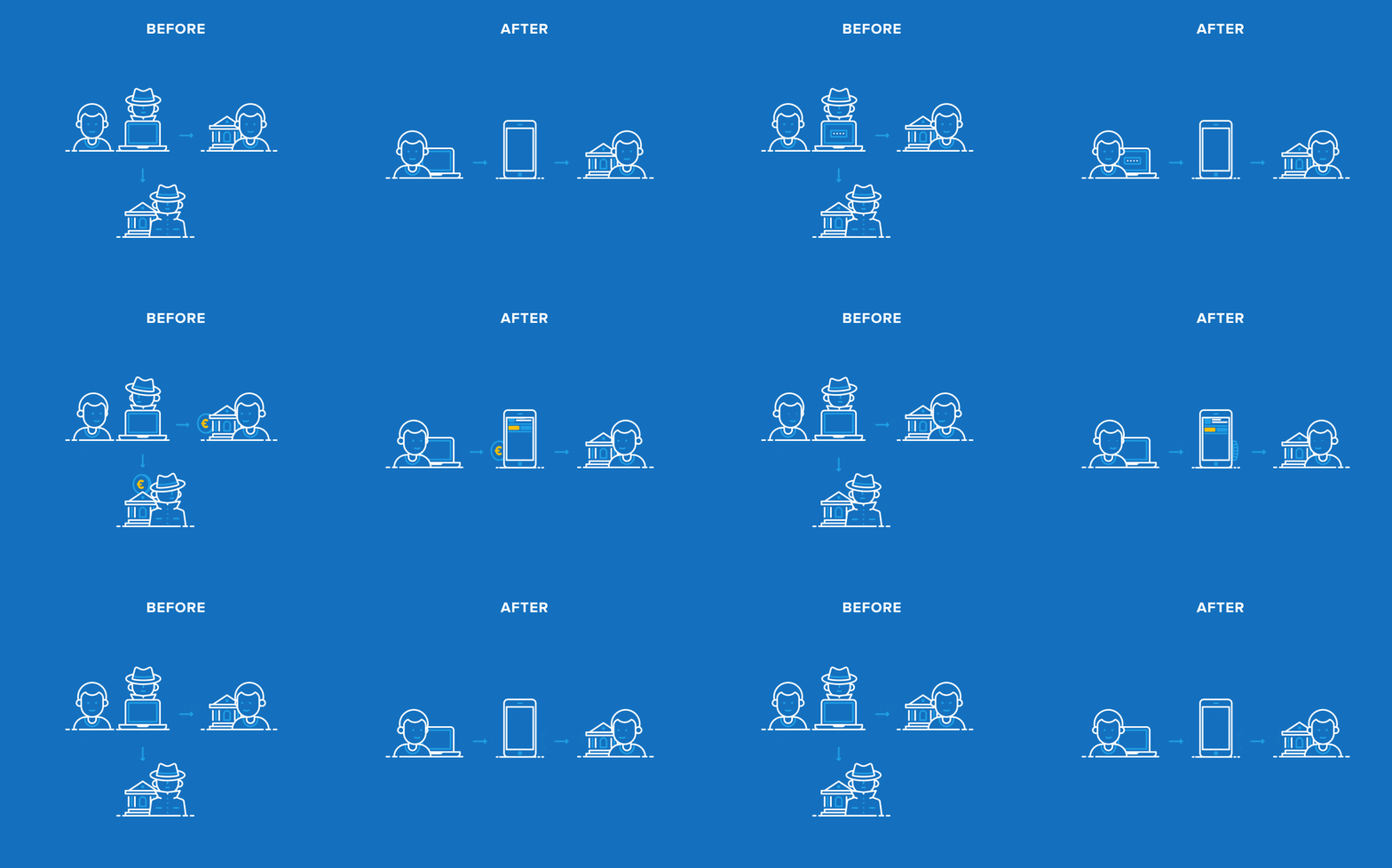
Top 5 trends -The future of cryptocurrency in Fintech

With the introduction of cryptocurrencies, it looks like the future has arrived. A few decades back, who would have thought of paperless currency in the market? Cryptocurrency has been a revolution for the fintech industry. The top fintech platforms are already integrating cryptocurrency investment to facilitate customers. The future looks bright for both, fintech industry and cryptocurrencies.

More and more governments are handing legal access to cryptocurrencies. In some countries, you can even shop for any product/service using cryptocurrency. Financial institutions are now hiring individuals that have completed a cryptocurrency course. If you are interested in building a career in the fintech industry, read on to know the top five cryptocurrency trends.

The emergence of DeFi technology

Defi (Decentralised Finance) is a technology that supports peer-to-peer digital transactions without third-party. There is no need for a centralized system to route the transactions to their target in DeFi. None other than blockchain could make decentralized transactions possible. Public blockchain channels are used to facilitate peer-to-peer transactions on Defi. Ethereum, the recently acknowledged cryptocurrency, is a prime example of DeFi technology. More and more cryptocurrencies based on DeFi technology will be launched in the future. A cryptocurrency course can help you know more about decentralized technologies for finance.

The emergence of stable coins

The biggest reason why most people fear investing in cryptocurrency is because of market volatilities. The price of cryptocurrencies often rises and falls drastically based on the market. However, this issue seems to be resolved due to the introduction of stable coins. Stablecoins are those digital currencies that have a static rate.

It happens because the price of stable coins is fixed by associating it to flat money or any exchange-traded commodity. Many fintech platforms are already facilitating customers with the purchase/sale of stable coins. It is expected that the market cap of stable coins will increase in the future.

Introduction of tax regimes for cryptocurrencies

More and more countries are now recognizing cryptocurrencies as legal currencies. Many countries have even released tax regimes for cryptocurrency regulations and trade. Some countries are planning on releasing tax regimes for cryptocurrency trade soon.

It comes as good news for fintech firms looking to offer cryptocurrency trade options to customers via their digital platforms. Many financial technology courses now include topics related to cryptocurrency. If you are looking to build a career in fintech, you should know about the trending cryptocurrencies.

Emergence of CBDCs

With cryptocurrencies reaching new heights, governments and central banks are also stepping into the game. Many countries have already launched state-backed cryptocurrencies for their citizens. CBDC (Central Bank Digital Currencies) is more likely considering the time authorities are spending on deciding the fate of cryptocurrency. CBDCs are also predicted to become an approved form of payment in near future.

Rise of NFTs

NFTs are digital assets that can be traded via cryptocurrencies. Some of the common NFTs are art pieces, in-game assets, and videos. More and more people are interested in NFTs as there is no complex onboarding process for buying them. More and more items are predicted to be traded as NFTs in the coming years.

How to learn more about cryptocurrency in fintech?

We at Imarticus Learning, offer the best financial technology courses to enthusiasts. Fintech courses offered by us are designed based on industry standards. If you want to build a career in fintech, an industry-recognized certificate and hands-on training will be perfect for you.

Our fintech courses come with placement support to help you get into the finance industry. You will also learn about the technologies that make fintech possible via our online courses. Start your fintech course now and learn more about cryptocurrency!

The Fintech Bubble: Principles of investing in Fintech

Since its emergence, fintech has been one of the growing industries worldwide. People immediately preferred fintech services over financial services offered by traditional banks. Many fintech start-ups came in recent years and, some of them even became successful. The market cap of fintech is continuously increasing due to more and more customers preferring digital transactions.

Traditional banks are arranging fintech training courses for their employees to undergo digital transformation. If you are looking to invest in a fintech start-up or start your fintech firm, you should have a basic understanding of the fintech bubble. Read on to know about some principles for investing in the fintech industry.

Did you notice the fintech bubble exploded?

Gone are the days when only a handful of fintech companies were there in the market. At present, many fintech firms are competing with each other. In 2015, there were more than 350 fintech start-ups that caught headlines. However, the number of fintech start-ups decreased as the fintech bubble exploded.

Many fintech firms had already established themselves at the top and it got hard for newcomers. However, this does not mean that fintech training courses are of no use.

Even if the fintech bubble exploded, the global market cap of the fintech industry is continuously increasing. The predicted CAGR (Compound Annual Growth Rate) for the fintech industry is also high. The only thing that is challenging in the fintech industry is the increased competition. At present, you will have to compete with many fintech giants to build your market share.

The top fintech firms have already gained the trust of customers and, it is hard to displace their market. However, with the right business strategies and reliable services, you can still become a fintech giant even after starting late.

Principles for investing in the fintech industry

Some of the principles for those looking to invest in the fintech industry are as follows:

  • If you are buying shares of any fintech company, look for those that are continuously innovating. There is no compulsion that you should buy shares of a fintech giant. A fintech company that is constantly innovating itself is moving in the right direction.

  • If you are investing in a fintech start-up, look for the technology stack used by the fintech platform. Invest in a fintech platform that uses blockchain for making digital transactions secure and fast. A financial technology course can help you understand the technologies used for creating a fintech platform.

  • Invest in a fintech platform that offers many financial services to customers. Besides facilitating customers with digital transactions, a fintech platform can also provide P2P lending, gold/stock trading, and many other services. Third-party integrations also make a fintech platform more popular than others.

  • Due diligence is required before investing in the fintech industry. If you are starting your fintech firm, perform due diligence to know the right time to start. You should consider market disruptions, trends, and financial reports before investing in the fintech industry or starting your fintech firm. A financial technology course can help you understand the driving features of a fintech platform.

How to learn financial technology?

You should obtain a fintech certificate online to become an expert in financial technology. We at Imarticus Learning ensure industry-oriented FinTech courses that can help in knowing the industry practices. Besides investors or entrepreneurs, our fintech courses are beneficial for young enthusiasts looking to build their careers.

Our fintech courses will make you work on several hands-on projects and case studies. Job aspirants will also receive placement support to kickstart their careers in the fintech industry. Obtain your fintech certificate online with Imarticus right away!

Blockchain and FinTech: Career Opportunity or Threat?

The industry of financial services is one that has expanded at an exponential rate over the past couple of years and by the looks of it, it doesn’t look like its growth is going to slow down any time soon. With the establishment and growth of mobile payment, cryptocurrencies as well as online banking, a question that is largely being asked is whether digital systems such as these pose a threat to us while we go about our daily businesses.

There is an element of uncertainty to any revolutionary idea and FinTech is no different. FinTech has been finding a place in industries and organizations belonging to a variety of sectors, reaching almost all areas thus inspiring further change as well as innovation within it.

However, it is important to be careful and take measures to diminish the potential for this technology to be utilised as a tool for malpractice.

The inadequate performance of banks is among the several reasons contributing to the growth and popularity of FinTech. Banks seem to be having difficulty in gaining their cost of capital and thus are looking for newer business models as an aid. In order to remain competitive, banks are looking for various strategies that will help them evolve.

Fintech Career

Banks need to slowly start coming to terms with FinTech technology as well as its potential to start operating over a large number of sectors, thus not being limited to just financial services. An issue that is being posed at present is the development and use of blockchain technology.

The technology meets all the vital requirements for durable media, thus guaranteeing integrity as well as the confidentiality of the various documents sent to the client. This increases its appeal for potential use by banks. Customer empowerment is another key factor in the development of FinTech.

Advantages of FinTech

There are several advantages that FinTech provides its users with. FinTech improves efficiency, is faster and provides an improved experience in general for its clients as well as end-users. People do not have to be at the mercy of banks in dealing with various international payments as well as transactions.

Fintech CareerFinTech provides its users with an ability to perform all their important financial operations through their smart-phones or computers and these are processed in a matter of seconds.

Risks Posed By FinTech

Even though FinTech is advantageous in a large number of ways, like any other technology, FinTech also poses a few risks in its use. The first concern when talking about FinTech is the various risks posed by third-party services like cloud vendors. There is a level of operational risk posed by a third-party governance system.

Procyclicality is a possible risk which could come out of a number of sources and lead to various systematic risks. This becomes very important particularly when there is a high number or concentration in a platform or a market segment.

Another thing that may pose as a concern is various cross-border legal issues and various other regulatory issues which would need to be taken into account as well. When it comes to computation of big data and algorithm complexity, the lack of clarity makes regulatory disclosures all the more challenging.

Cyber risk is the most obvious threat that people worry about when it comes to any technology. The more we move towards digitalizing our world, the more we need to ensure that everything is up to date and mitigate security risks.

A career in FinTech right now is the smartest choice to make. FinTech courses would help in equipping with information and details required to succeed in this field. It is important to learn blockchain before stepping foot into the world of FinTech.

How will cloud, Blockchain, and IoT impact insurance?

As technology continues to advance, new opportunities arise for insurance companies. Cloud computing is one of the most recent innovations that has changed how data is stored and accessed. With the rise of Blockchain technology, people wonder if this will change how insurers operate their businesses.

Finally, with the Internet of Things (IoT), insurers can collect more data than ever before about their customers and business practices. How will these three things impact insurance? Let’s explore!

The Rise of Cloud Computing for Insurance

Cloud computing is a great way to increase the speed at which insurers can access data. Instead of having their server or an extensive database that may be prone to hacking, businesses can use cloud-based services from Amazon and Google. It allows these companies to handle all the security measures so that insurers can focus on other things. Since insurers can work faster and more efficiently, they can reduce costs and potentially increase profits.

Is Blockchain Technology the Future of Insurance?

Blockchain technology is an excellent way for users to create secure transactions without relying on a third party. This type of digital ledger system ensures that records are accurate and transparent. In the insurance industry, there are a few different ways you can use this technology.

  • You can pay out claims instantly without waiting for a third party to verify the payment.
  • Users can track their policy history from one insurer to another. It would prevent people from double-paying or having overlapping insurance plans.
  • Individuals can share their medical history with multiple companies to get better rates.

These are a few instances of how Blockchain can change how people do business in the insurance industry.

The Internet of Things Enhances Insurance Operations

With more devices connected to the internet, insurance companies can gather more data than ever before. This information can determine how likely people are to file claims or if their customers are at risk of accidents. It allows them to create better products that help people manage risks on their own. And when combined with cloud-based services and Blockchain technology, it is clear that IoT will be a critical part of the insurance industry in the future.

The advancement of technology is changing how people do business. From cloud computing to Blockchain, insurance companies can work faster and more efficiently than ever before. It may lead insurers to decrease their costs and increase profits in their businesses.

While this can be an advantage, it can also be a challenge for insurance companies. Since there is more competition, insurers must find new ways to stand out from their competitors and offer customers the best service possible.

Explore and Learn with Imarticus Learning

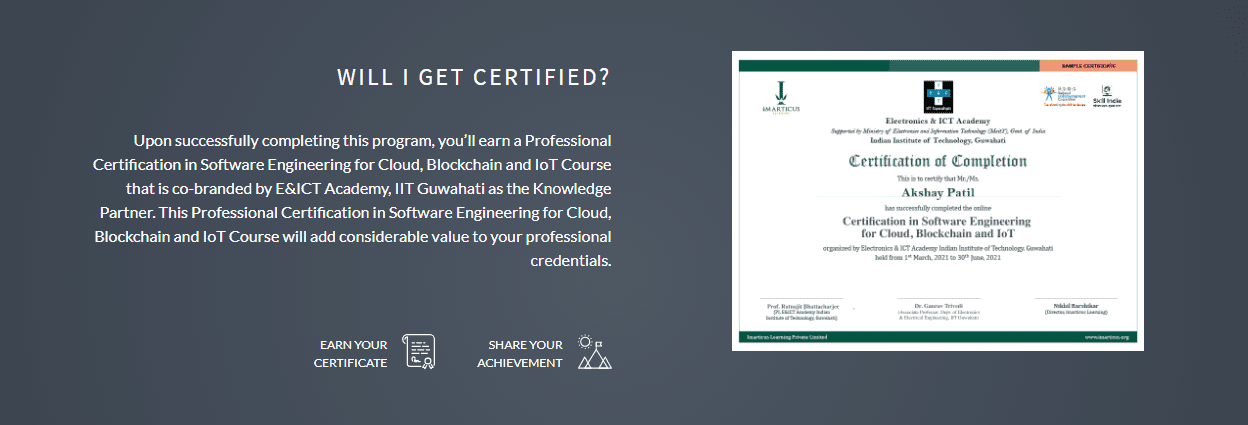
The Software Engineering certification online for Cloud, Blockchain, and IoT program collaborates with E&ICT Academy, IIT Guwahati, and industry experts to give aspiring Software Engineers the most pleasing learning experience possible. This intensive 9-month curriculum will prepare students for the new-age Software Engineer position, focusing on Cloud, Blockchain, and IoT.

certification in Blockchain, Cloud and IoTSome course USP:

  • This cloud DevOps engineer course for students is with placement assurance aid the students to learn job-relevant skills.
  • Impress employers & showcase skills with the certification in Software Engineering endorsed by India’s most prestigious academic collaborations.
  • World-Class Academic Professors to learn from through live online sessions and discussions.

How is Fintech spilling Opportunities for the Agricultural Sector?

The fintech sector is a rising industry that has come to define the contemporary era. The term “fintech” refers to financial technologies and encompasses digital innovations in payments, lending, insurance, and investment management. One of the primary reasons for this growth is that these companies offer better solutions than traditional financial institutions.

The Scope of the Fintech Industry?

The Fintech sector is a fast-growing industry that has been evolving rapidly since the word was first coined in 1999.

  • The Fintech sector is revolutionizing the way we do business. It will be difficult for banks to compete with this new wave of technology that has come about in recent years.
  • There are many opportunities in the agricultural industry, but it’s essential to know where you stand on your current level of technological development before taking any steps forward.
  • India’s fintech market is the world’s fastest-growing- 67 percent of the more than 2,100 fintech entities in operation have been set up in the last five years. India’s fintech market is valued at US$31 billion, which is projected to grow to US$84 billion by 2025.
  • The fintech transaction value size is projected to grow to US$138 billion by 2023 from US$66 billion in 2019.
  • According to a Boston Consulting Group report, Indian fintech companies will reach a valuation of US$150-160 billion by 2025, becoming thrice more valuable in the next five years.

Evolution of Fintech: Opportunities for Agricultural Sector

Fintech is now looking at opportunities to serve agricultural sectors and farms across India, which can potentially transform rural life by providing access to affordable credit and insurance products- two things that we take for granted but are often inaccessible without significant wealth or connections. Here is how Fintech is assisting Agricultural Sector:

  • Easy Loans for Farmers: The agricultural sector needs to borrow money frequently. With Fintech, there are no middlemen, the efforts of the fintech sector to make direct loans are consistent.
  • Direct Connections: Farmers have better opportunities to establish direct connections with lenders & other institutions for better operations. This change can potentially stabilize the sector.
  • Ongoing Payment Model: Instead of paying large payments for equipment & tools, farmers can now use various ongoing payment programs. People can better organize finances more efficiently by paying for what is used, skipping problems arising from conventional payment models.
  • Affordable Financial Services: Financial services are becoming more accessible to farmers. Some companies are focusing on this aspect to bring a greater variety of financial tools & utilities.
  • Better Insurance: The availability of crop insurance plans for farmers is shaping the sector in a better manner.

Grow your Career with Imarticus Learning:

Imarticus Learning has collaborated with prestigious universities to enhance robust Fintech Training courses. Enroll in MBA FinTech, which covers every paradigm of cutting-edge New Age FinTech solutions. The curriculum is designed to provide students with in-depth exposure to critical elements of the FinTech domain.

This program covers every critical aspect of FinTech via hands-on training with prominent technologies such as API, Blockchain, Cloud Computing, AI, Machine Learning, RPA, IoT, and Big Data. This program enables students to apply what they learn while dealing with real business scenarios & problems.

Some Course USP’s:

  • UGC Entitled Online Degree Programs
  • NAAC ‘A’ Graded University with Graded Autonomy Status
  • Top Ranked University in India – NIRF & QS World Rankings
  • Program Delivery follows the prescribed four quadrants approach from UGC
  • Learning Hours and Credits at par with Full-Time Classroom Programs
  • Innovative Programs Accredited by Global Professional Bodies

If you want to skyrocket your FinTech career prospects by transforming into a FinTech expert, your search ends here, and a spectacular FinTech learning journey begins. Contact us through the Live Chat Support system.

How Blockchain is Enabling Secure Payment Through dApps?

Blockchain technique has introduced new horizons to more than one aspect of the corporate industry. Blockchains are basically a record of transactions made through cryptocurrencies arranged in blocks. It is completely secure in a way that hacking is almost impossible as all the transactional information is visible to all the parties involved in this loop.

But, where is it all stored? This is where dApps come into play. These apps are open-sourced and decentralized applications that are responsible for the transactions being made in the blockchain system. Below are the key aspects of dApps, how they actually work as well as the benefits of their use. Please go through the whole thing to get a better idea.

 dApps: The key aspects

dApps are in their infantile stage so there are a lot more evolutions to be witnessed as time goes. Here are a few key aspects that we have managed to observe in their nature as of yet:

  • Open-source platform: There are no specific governing bodies supervising the system. All the conditions are decided by the mutual confirmation of customers. The code of conduct is visible to all the parties involved for verification.
  • Decentralized system: All the records of all transactions are stored in the blockchain system. This means that no single party can capitalize their control on the system which ensures further safety.
  • Safety measures: The community partaking in dApps follows a specific set of algorithms to verify value proof. Such as Proof of Work as well as Proof of Stake.

 How do they work?

There are mainly three types of dApps we have observed as of yet. Here we are going to explain how each type works:

  • Type 1: The dApps of this category are known for having their own blockchain system. Bitcoin or its equivalent cryptocurrencies that have an internal blockchain system belong to this category.
  • Type 2: This dApps category works by making the Type 1 blockchain system it’s base. These are mostly protocols and use tokens to function properly. Such as the Omni Protocol. The main advantage is no involvement of any middleman.
  • Type 3: This category works by utilizing the protocol of the Type 2 category of dApps. Its main work is altering data servers as well as centers with the system resources of customers. It is autonomous which helps to create censorship-free apps and websites. A good example is a SAFE Network. It uses the Omni Protocol to issue Safecoin that is necessary for its function.

 The benefits of dApps

 There are, of course, reasons why dApps are getting more popular by the day. Here we have listed a few of them:

  • They are decentralized which makes them extremely secure and hack-proof. There is no possibility of any single party capitalizing their control on it.
  • They ensure a lot faster transactions as there is no mediator app for the transactions to go through.
  • They also ensure more anonymity and verified information as all the parties involved can check the details by logging in to the blockchain system.

 Blockchains are gaining more and more popularity daily, and because of that now Apps have joined the bandwagon. This is why new Blockchain courses all over the world as well as in India have been introduced.

Blockchain coursesImarticus Learnings as usual have come up with a marvelous Fintech MBA program that offers a Bitcoin course as well as Blockchain technology courses. If you are looking to prosper in your career, then this is just the chance for you.

How Blockchain Can Help To Aviation Industry’s Services?

The modern airline industry has advanced quite a lot in the past few years, and yet there are some drawbacks in the industry that need to be fixed before it can realize its true potential. One such area of optimization and improvement in the airline industry is data collection.

Today the airline industry collects data on its planes through the use of 40 or more systems, and each of these are stored in different locations, owing to which there is no central database through which the entire flight system can be managed at the same time. This process of data collection not only leads to mismanagement but also a huge cost incurred due to the maintenance of multiple systems, sometimes by competitors in the same industry.

A Decentralized Management System 

The use of blockchain technology in the airline industry can prove to be beneficial and helpful across many different sectors. For example, at present, when a plane is serviced or repaired, multiple systems capture the state of the new components being installed, but often this data is not accurate.

Blockchain CareerOn the other hand, if a digital ledger is created through blockchain training, it can take a snapshot each time a component is replaced or repaired, along with the credentials of the manufacturer, assembler, and technician. Through this snapshot, a real-time clone of the component can be created, which can then be monitored to understand the overall condition of the system.

And the application of blockchain doesn’t stop here. Following the above-mentioned example, the same principle can be applied to each and every component of the airplane, thus facilitating the overall monitoring of the entire system at all points in time.

Implemented at a large scale, the application of this system can help in:

  • Significantly reducing the overall cost of maintaining airplanes and also reduce the amount of downtime due to unplanned maintenance.
  • It can significantly increase the value of planes when being sold in the secondhand market, as a clear real-time snapshot of the entire system can be shared with the buyer immediately.
  • Increasing the productivity of workers, both in maintenance as well as in manufacturing, as the overall system will work in a much more controlled, efficient, and timely manner.

Areas of Improvement

Although the larger impact of blockchain implementation on the airline industry is yet to be estimated, there are three main areas where the immediate benefits can be witnessed.

Maintenance

  • Efficiency: With the implementation of blockchain technology, the current time spent by professionals on routine maintenance and inspection will be drastically reduced.Blockchain Career
  • Defeating Duplicacy: A common issue with the airline’s spare parts industry is the fact that often buyers are duped via duplicate parts. With the implementation of blockchain, buyers can immediately compare their products to a ledger and thus confirm authenticity.

Finance

  • Increased Value in Reselling: Due to the absence of a real-time maintenance record, the price of airplanes in the secondary market is often less as the actual condition of the plane and its components cannot be correctly estimated. With blockchain technology and the creation of a real-time ledger, this issue can be immediately addressed.

Workforce

Every year, the airline industry employs hundreds and thousands of professionals around the world, and while there is a system to maintain them, a system of verification and identification is absent. With the implementation of blockchain technology, a ledger of personnel can also be included, which will assist in better monitoring and overall management.

Conclusion

The right implementation of blockchain technology can create many benefits for the global airline industry and thus if you want a blockchain career in the airlines industry now is the time to start.

How is FinTech Helping the Sports Business Industry in 2021?

In recent years, FinTech has influenced several industries. The use of FinTech can not only optimize different operations but also generate more revenue by improving user experience. Since the implementation of FinTech is now widespread, many jobs are available. The sports business industry can benefit from the use of FinTech.

If you are interested in sports as well as financial technology, you can enroll in FinTech courses online. Imarticus Learning offers a comprehensive course in FinTech that allows students to find jobs in several sectors.

 Use of FinTech in the Sports Business Industry

A career in FinTech has endless scope. The sports business industry is currently booming and the application of FinTech can increase revenue. FinTech is applied in the following aspects of the sports business.

  • Sports Broadcasts

Sports broadcasts have gained popularity and several networks invest in different data sharing options. The broadcasts can be monetized effectively with FinTech solutions. Blockchain technology can be applied to understand viewer preferences and provide content accordingly. Since the networks are decentralized, it is easier to monetize the data.

  • Sale of Tickets

FinTech solutions have enabled better optimization of virtual transactions. The sale of tickets to sporting events is a huge form of gaining profits in the sports business. Online verification ledgers can be used to provide secured payment gateways and prevent fraud. Customers often use cryptocurrency in this sector. Cryptocurrency can be used to purchase tickets to events as well as subscriptions for sporting channels or streaming platforms.

  • Sale of Sports Memorabilia

The sale of sports memorabilia is a significant part of the sports business industry. Implementation of FinTech has helped to increase the online sale of sports memorabilia and similar products. However, the online sale has also increased the risk of counterfeit products. But the use of online security technologies helps to ensure that sellers and users are genuine. Secure networks can also be created for the sale of products.

FinTech can be implemented in sports statistics. The statistics can be used to understand viewer responses and provide improved services. These services can be monetized better, ensuring profits. FinTech can also be utilized in the online sports industry. Online games, modeled after real sporting events, have gained popularity. They are quite significant in generating profits in the sports business industry.

Become a FinTech Expert

To use FinTech in the sports business, you need hands-on training and Industry experience. Imarticus Learning offers professional certification in FinTech. The course includes teaching in online mode and several real-world case studies.

These case studies are instrumental in preparing students to use FinTech in the sports industry. Blockchain and cloud computing is essential for a successful career in FinTech, particularly in the sports business industry. Imarticus Learning includes both these topics in the curriculum. The curriculum has been designed by industry experts to ensure that students understand how the professional field functions. Of all FinTech courses online, this one from Imarticus Learning includes access to the FinTech community.

This allows students to expand their networks and interact with professionals. Imarticus Learning also has several industry partnerships. These partnerships ensure that students have access to current resources and learn more about the recent trends in FinTech solutions. Students can use these trends to optimize sports business and help to increase the growth of revenue for specific companies.

If you are looking for a career in FinTech, the professional Fintech certificate course from Imarticus Learning is the best option. Students can interact with their peers and instructors, participate in webinars and gain more experience. This will ensure a stable and rewarding job in FinTech, particularly in the sports business industry.

Keen to Know What Transitions a Fintech Aspirant to a Fintech Expert? Check This Out!

Financial services have experienced a major paradigm shift due to the introduction of fintech. Digital banks are replacing traditional ways of accessing financial services. The current fintech market in India is more than 1,900 billion and will grow with an impressive CAGR in the coming years.

There are a lot of job opportunities in the fintech sector and you can build a successful career in fintech by choosing the right career path. Read on to know more about the transitions required to become a fintech expert.

 Get the Right Education

A bachelor’s degree in mathematics or computer is the best to get into the fintech industry. Many fintech aspirants also have degrees in business, accounting, economics, etc. Getting a degree will not teach you about the working of the fintech industry but it will help you in developing an analytical & statistical mind.

Many fintech aspirants also prefer to get a master’s degree for opting for senior job roles in the fintech industry. One should also try to be updated with the modern-day technologies used in the fintech industry. AI (Artificial Intelligence), ML (Machine Learning), deep learning, etc. are used widely to improve fintech solutions.

A technical degree with Fintech Course as a specialization will also help you in getting into the fintech industry. Along with getting a degree, you can also opt for internships, sponsored/individual projects, workshops, etc. in fintech for boosting your knowledge.

Fintech TrainingYou can target any particular job role in the fintech industry based on your skillset. There are many types of job roles in the fintech industry like a compliance expert, cybersecurity expert, data scientist, financial analyst, etc.

Acquire Necessary Skills

You will require several technical & non-technical skills to become a fintech expert which is as follows:

  • You should have good problem-solving skills to create better ways of providing financial services to people with the aid of technology.
  • You should have good analytical skills to draw conclusions and to analyze various solutions.
  • Good programming skills are required to become a fintech expert. Programming languages like C#, C++, Java, Python, SQL, etc. are widely used in the fintech industry. You should also be aware of the databases used in the fintech industry.
  • You also should have good financial skills to become an expert. You should be able to read & analyze financial statements & reports for creating better financial services.
  • You should know about the applications/tools used in the fintech industry know about the practices involved in the fintech industry. You should also be familiar with the latest technologies like AI, blockchain, etc. used in the fintech industry.
  • You will also have to possess some soft skills like collaborative skills, communication skills, adaptability, etc. to thrive in the fintech sector.

 Get the Right Certification Course

Besides getting a degree in the related field, you will need to get a certification in fintech from a reliable source to know about the working methodology of the fintech sector. Imarticus Learning is a reliable source that provides you an online Professional Certification in FinTech course. This course by Imarticus Learning is associated with the SP Jain School of Global Management. You will get to learn via an industry-first approach and will get to study real-life case studies.

This course touches on many aspects/processes involved in the fintech industry like payments lending, API, RPA (Robotic Process Automation)cryptocurrency management, blockchain, etc. You can choose from the Core Modules (for broad coverage) & PRO Modules (for in-depth coverage) of the aforementioned course.

Imarticus also provides several other courses like Pro Degree in Financial Analysis & PG Program in Finance and Accounts to know more about the financial services/industry. The Project: Paradigm Shift provided by the fintech course will help you in creating/transforming business ideas.

Conclusion

Personal capabilities are the main factor for upskilling in any industry. You will only end up working smartly if you follow the right career path. You will get to work on various projects by opting for the fintech course provided by Imarticus Learning.

It provides an excellent practical environment to implement the things learned in the course. Expert faculties which are associated with reputed firms/institutions will be teaching you if you opt for Imarticus courses. Start your fintech course now!