A detailed overview of server-side programming

The world of programming is vast and growing every day. New languages are being created. New technologies are being invented, and new ways to make money as a programmer are being developed.

But, there are still some basic things that every programmer needs to know. One of these is server-side programming. Many people think you must do all programming on the client side—the browser—but this isn’t true.

In this article, we will cover what server side programming is and why it’s important for developers; then, we will go over some tips for setting up your environment before writing code using various languages such as PHP. Hopefully, you’ll feel confident about tackling these tasks by the end!  

Understanding Server-Side Programming 

Sessions, essentially a mechanism that enables a server to store data on the current user of a site and send various responses based on that information, allow developers to use server-side programming.

Server-side languages are generally more powerful than client-side languages because they don’t rely on the browser for processing. As such, you can use them to create databases or integrate them with other software.

Setting Up Your Environment

Setting up your local server environment is the first step to learning server-side programming. This will involve installing and configuring a piece of software called XAMPP, the backbone of your local development environment.

  • What is a Server?

Many of the functions that servers can offer are called “services,” such as performing computation for a client or sharing data or resources among many clients. Both a single client and a single server can accommodate multiple clients. 

A client process can run on a single device or connect to a server running on a different device over a network. Examples of common servers are database servers, web servers, game servers, file servers, mail servers, print servers, and application servers. 

The request-response model is typically used to implement (and is frequently associated with) client-server systems: a client also sends a request to the server, which acts upon it, and sends a response back to the client, typically along with a result or acknowledgment. 

When a computer is referred to as “server-class hardware,” it implies that it is optimized for hosting servers. This frequently implies that it is more capable and dependable than typical personal computers. Still, large computing clusters may instead be made up of a large number of interchangeable, relatively simple server components.

  • What Is A Local Server Environment?

For most developers, a local server is essential. It also permits local machine testing and development without worrying about losing an Internet connection, unintentionally opening up temporary security gaps, or continuously uploading files.

The options for setting up a local server are listed below. They can be divided into configured for a virtualized environment and those natively running installations for a particular OS (Linux, macOS, or Windows) (for example, Virtualbox or Docker). In either case, you must have a PHP server, a database server (such as MySQL, MariaDB, or PostgreSQL), and a web server (such as Apache or Nginx).

Building Server-Side Applications

Server-side applications are often more complex than client-side applications. Building a server-side application from scratch can be complicated and require understanding multiple technologies. 

The most common languages used in server-side programming include Java, PHP, Python, and Ruby. Each has pros and cons that make them suitable for different tasks. 

Data handling is a crucial component of server-side programming. Working with databases, which are used to store and organize massive amounts of information, is required for this. APIs (application programming interfaces) are common for server-side applications to exchange data with other servers or services.

Server side programming also entails creating and putting into place security protocols to safeguard the server and the data kept on it. This entails implementing user authentication and access control, using encryption to secure data transmissions, and keeping the server updated with security patches.

Explore a Career in full stack development with Imarticus Learning.

Our Full Stack Web Development certification course will teach students database architecture and algorithms. During this six-month full-stack developer online course, students will learn data structure algorithms and the technical facets of front-end and back-end programming. 

Course Benefits for Learners:

  • As part of our career services, we offer resume writing, profile improvement, workshops to help students prepare for interviews, and one-on-one career counseling.
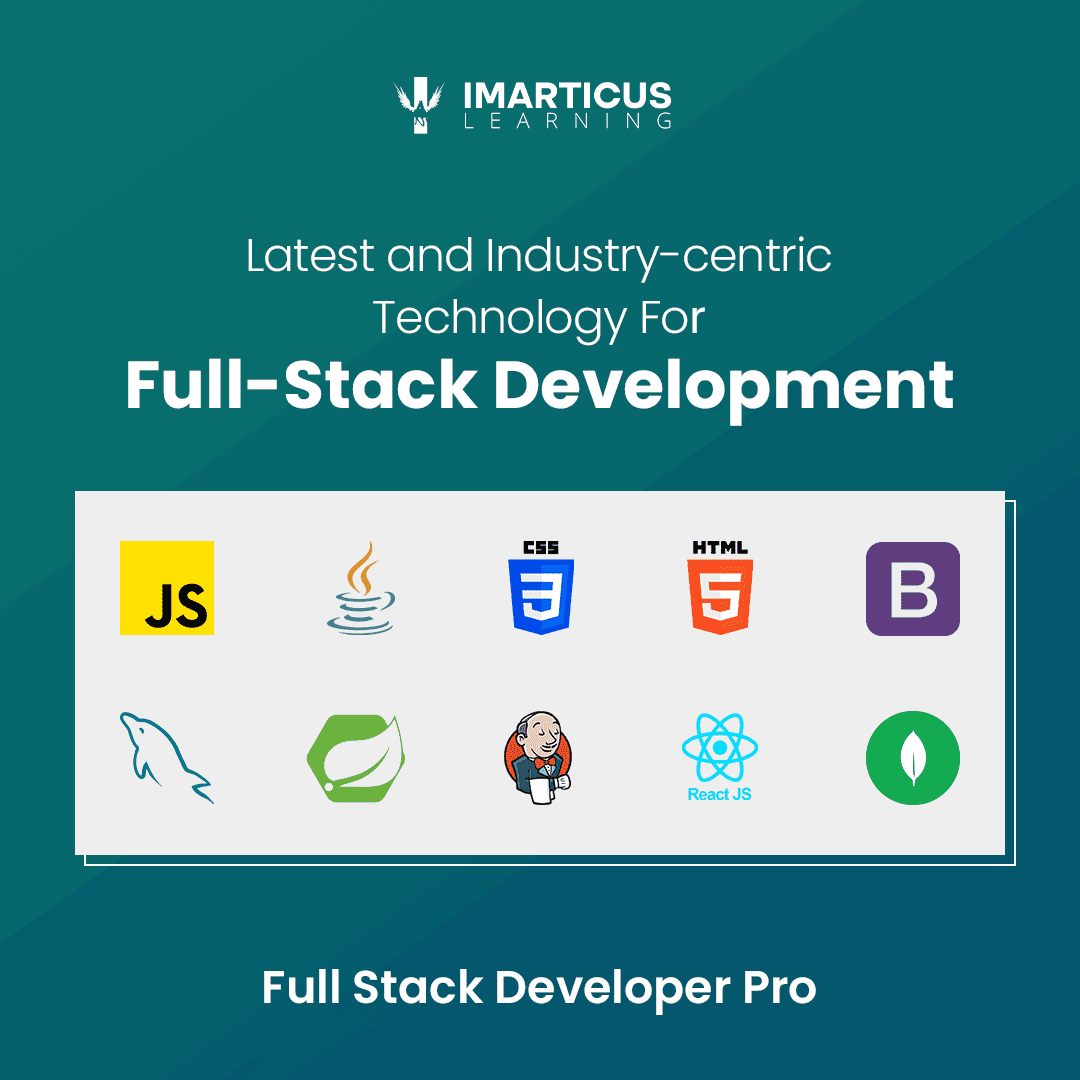
  • While learning well-known tools like Java, Spring, MongoDB, JavaScript, React, Docker, and Jenkins, lay a strong foundation in data structures.
  • With the help of our community project Skillenza, students can now compete in coding challenges to solve complex business problems and stand out on resumes.

A Step-by-Step Guide to Building a Full Stack Developer Resume in 2023

With technology holistically running our lives, the world of development is consistently in demand for experts in this field. Full stack developers have the prerequisite skillset for both front- and back-end development of web pages and applications. Companies are constantly on the lookout for talent to ideate, design, build, and launch websites and apps to help businesses garner revenue. 

These days, many students and graduates are turning to full-stack development as a career choice because of its lucrative opportunities in the job market. Here is a detailed guide to help you become a full stack developer if you are an enthusiast.

Why are full stack developers in demand?

Full Stack Development Course

The world’s reliance on technology has created a constant demand for innovative software and dynamic websites. Full stack developers are involved in building advanced websites and applications that cannot be built with just markup language. Some of the main reasons why full stack developers are in demand have been elucidated below:

  • Dynamic skill set: A full stack web developer or app developer is an asset to any web development team. They come with adequate technical knowledge and a diverse skillset to work on varied projects. They also have a strong understanding of database technologies as well as client- and server-side development and have experience working with various programming languages.
  • Front end and back end knowledge: Full stack developers are well-versed in front-end programming (Javascript, HTML, and CSS) and back-end programming (PHP, Node.js., Ruby on Rails).
  • Cost efficiency: Hiring a full stack developer with a dynamic skillset is much more cost-effective than hiring an entire team of various specialists. Secondly, it takes significantly lesser money if there is only one individual to train. Thirdly, companies don’t have to invest in additional infrastructure to accommodate different teams.
  • Faster development: Being skilled in both front end and back end knowledge, a full stack developer can build applications and websites faster than traditional developers. Full stack developers can also provide a more comprehensive perspective while handling a project and identify problems and areas that have the potential to improve.
  • Higher value: Due to their higher responsibility levels in a company, full stack developers are more valuable as an asset. They are tasked with managing every facet of a website or application, from user interface to database.
  • Quicker bug fixes: A full stack developer is adept in coding a web application from the beginning to its completion. This enables them to quickly identify bugs and resolve them with immediate effect instead of waiting for a separate developer to fix them.
  • Adaptability: Companies have a high demand for full stack developers due to their high adaptability when it comes to working with numerous forms of technology. With their in-depth knowledge, they can switch between back- and front-end operations with ease.
  • Management skills: With businesses constantly striving to expand an online presence, they are in need of developers who can manage every facet of website development. Full stack developers can work in many roles in a team. This makes them valuable assets in any company.

6 key steps to building a strong full stack developer resume 

Step 1: Learn the basics of web development

Learning the basics of web development and its workings is key to becoming a full-stack developer

Step 2: Learn HTML and CSS

Being adept in these two languages is key to mastering the front end. Although they are primarily used in scripting static websites, strengthening the basics can help you venture into modern styling methods like Bootstrap, SCSS, Tailwind CSS, and more. 

Step 3: Learn the basics of JavaScript and DOM manipulation

Learning HTML and CSS will ease you into learning JavaScript and DOM. Although it might seem intimidating initially, opt for third-party plugins or APIs to make innovative web pages when starting out. However, before moving on to JavaScript, make sure that you have adequate practice in developing simple dynamic web pages. This will help you strengthen your basic knowledge to make the next step easier to grasp. You will also need to familiarise yourself with jQuery for advanced understanding.

Step 4: Choose an appropriate front-end stack

Choosing a front-end stack suited to your preference is the next big step. You can choose JavaScript-based front-end stacks like Vue, React, or Angular. Hone your skills with adequate practice.

Step 5: Choose an appropriate back-end stack

The last and most important step is choosing your back-end stack for back-end development. You can start with the Express.js framework and Node.js. Back-end scripting is integral for the smooth functioning of a project and therefore, requires critical thinking skills. PostgreSQL and MongoDB are also popular choices. 

Conclusion

The continued demand for full stack developers will create a surge in job opportunities. With their well-rounded skills and ability to work on multiple kinds of projects, companies will always have open job positions for individuals with the required expertise. To carve out a successful career in full stack development, you will need to have in-depth knowledge of data structures and algorithms and also open-source automation systems like Kubernetes

To kickstart your career as a full stack developer, you can opt for the Full Stack Development programme. Offered by Imarticus, this course is a job-assured programme designed by industry experts aimed to upskill you with a detailed understanding of front- and back-end development

Learn the best programming languages to become a full-stack developer

What makes a great full-stack developer? Since a full-stack developer is responsible for all the layers in a single product development, it takes many skills to build great products. A full-stack developer should be able to use most of the tools and techniques to build large-scale applications. We see new tools, frameworks and programming languages emerging daily with the recent technological revolution. A Full Stack Developer Online Course is often a perfect way to start.

In this blog post, we will discuss the best programming languages for full-stack development.

Python

Python has been a top programming language for modern back-end web development and is just as useful for aspiring full-stack developers. The language is beloved by developers for its versatility and relatively straightforward syntax. Additionally, Python can support many different programming styles and is especially adept at data visualisation.

JavaScript

JavaScript is a powerful coding language highly valued among developers, second only to Python. JavaScript is popular because we can use it for various purposes, such as making websites more animated, dynamic and engaging. In web development, JavaScript creates complex style declarations, supports high-level math calculations and references content from other web pages.

HTML

As one of the most widely used coding languages in web development, HTML (HyperText Markup Language) is a markup language that defines the structure of a web page through tags. These tags tell a web browser how to display the page’s content, such as specifying the header with the tag. One can use other tags within HTML to display different elements like titles or relevant links.

CSS

CSS (Cascading Style Sheets) is one of the most commonly used coding languages in front-end development, next to JavaScript and HTML. CSS creates an appealing design, including the colour and style code added to HTML structural elements.

SQL

SQL (Structured Query Language) is a versatile programming language used in several databases. It’s mainly used for managing and updating records and accessing and changing databases. Since websites almost always use back-end data storage, SQL provides a strong foundation in database literacy – which is essential for full-stack development, especially regarding software dealing with sensitive data.

Java

Java is a versatile, high-ranking programming language essential for full-stack developers to learn. It is primarily used in back-end web development but can be applied to many other software types. Java is a powerful tool that can be applied to countless software construction, maintenance and conceptualisation scenarios.

MEAN

MEAN is a stack of web frameworks used by full-stack developers that have become quite popular among developers as of late.

It includes:

MongoDB

Express.js

AngularJS

NodeJS

Thus its name is MEAN.

full stack development course

Each framework has its purpose; learning them allows you to begin full-stack development much more quickly. The best part is that you don’t need to learn different full-stack programming languages to use the MEAN stack – it is entirely based on JavaScript.

PHP

PHP is a popular server-side scripting language used by web developers to develop web pages written in HTML, as well as for databases and handling data on web servers. Full-stack web developers find this open-source language valuable because a large online community broadly supports it. Additionally, it is an ideal language for developing web-based applications. We can also use it for developing advertising and media apps.

Conclusion

If you are looking for the best programming languages for full-stack development, you should consider the frameworks and languages with the greatest demand. Several sites have lists of the most popular programming languages for full-stack development. Still, you should consider looking at the job market and salary earnings when determining the best language.

The ultimate roadmap to becoming a Full Stack Developer in 2023

Full stack refers to the end-to-end development of a website or application. It involves working on the front and back ends of an application.

Full Stack Developer Course

A full-stack developer designs and refines components displayed on a website, making them responsive to various viewing contexts. They design the internal software that powers a business’ servers, databases, and proprietary applications as part of back-end development. 

This article will give you a detailed roadmap to help you achieve the dream of becoming a full-stack developer. 

Full stack development: Why should you choose it?

The three primary reasons for choosing this career are:

  • Full stack development provides a plethora of growth opportunities
  • Building flexibility is the foundation of full stack development
  • Higher productivity entails more accountability

Duties of a full stack developer

A full stack developer‘s main duties include creating servers and databases for website operation, designing user interactions on websites, and writing code for mobile devices. 

Particular duties frequently include:

  • Creating the front-end architecture of a website
  • Creating user interfaces for online pages
  • Creating apps for the back end of websites
  • Building effective servers and databases
  • Providing cross-platform mobile phone optimisation
  • Ensuring application responsiveness
  • Collaborating with graphic designers on site design elements
  • Seeing a project through to its successful completion
  • Planning and creating APIs
  • Meeting consumer and technological demands
  • Remaining current with advancements in programming languages and online apps

Scope of full stack development 

A full stack developer‘s profession is both challenging and rewarding. They constantly work with various data structures and algorithms to set up a webpage. 

In every tech-savvy firm, they play a crucial function. The need for a full-stack developer has increased recently due to the expansion of online platforms and enterprises that rely heavily on technology. With the advent of artificial intelligence, this industry has promising prospects for future growth.

Full stack software developers’ salaries in India

A full stack developer is seeing rising demand in India and is amongst the top-paid jobs due to a dearth of qualified experts in this field. An experienced full stack developer can earn up to INR 16 LPA, whereas the starting package for new recruits is INR 5-6 LPA with an average of INR 6.95 LPA

Pay varies according to experience, place of employment, size of the organisation, and a few other factors. Facebook, Uber, Twitter, and Slack are some of the top companies hiring full-stack developers in India and worldwide. 

Skills required to become a full-stack developer

You must juggle multiple roles simultaneously as a full-stack web developer and possess a combination of soft and hard skills. 

Soft skills

  • Communication skills
  • Multitasking
  • Time management 
  • Leadership skills
  • Open mindset
  • Detail oriented

Hard skills

  • HTML

The requisite language of front-end technology is HTML. Developers utilise it to control the website’s text, picture formatting, and presentation. It handles the web page’s headings, paragraphs, pop-ups, and other aspects. These languages help improve the user’s engagement and enjoyment of the online application.

  • JavaScript

Familiarity with JavaScript’s newly developed features is a must to succeed. It is one of the dynamic languages used by programmers to create more interactive front ends. The application is efficient and makes their tasks easier.

Languages for back-end development

A full stack web developer should have a basic grasp of the technical backend programming languages since he/she works on back-end development

  • Python

It is one of the most widely used programming languages for back-end development. It may be applied to a variety of high-level object-oriented and structured programming due to its versatile features and reduced syntax.

  • PHP

It is a quick, dependable, and effective programming language. This programming language’s popularity for back-end development is due to its advantages for server-side scripting and flexibility on multiple operating systems. 

   Kubernetes 

By automating operational tasks related to container management and offering built-in commands for application deployment, releasing updates, scaling up and down to meet changing requirements, monitoring, and more, Kubernetes improves application administration.

Principles of designing

To make front-end programming more exciting and interactive, a full stack developer should have a foundational understanding of design.

While creating the client side of the programme, this ability will enhance their understanding of user psychology.

Technical proficiency

They should be knowledgeable in all technologies and continually improve in accordance with their responsibilities and function. To design a web application, they must be aware of common stacks because various businesses have different preferences.

Wrapping up

The demand for full stack software development has seen an upsurge in businesses of all sizes. Applying for an online certification course is the best choice if you want to leverage this job’s bright growth prospects. 

Imarticus’ full stack developer pro course teaches the nuances of data structures and algorithms. The 6-month course will provide you with the technical know-how of front- and back-end programming, preparing you for a prosperous future as a full stack web developer. This program offers an industry-centric course with 350 hours of intensive instruction from renowned faculties and 100 hours of doubt resolution. 

What does idempotent law mean and how is it proved

According to the Bureau of Labor Statistics, overall employment in the fields of computer science and information technology is expected to rise by 15 percent in the next ten years. So, if you are a DevOps developer who has immense knowledge in this field, you can expect a rise in pay and demand. In this blog, we will understand the most basic concept of full-stack web development and one of the best full-stack developer courses to learn data structures and algorithms.

Idempotent laws, also known as idempotent operations, are a fundamental concept in mathematics, full-stack web development, and computer science. Simply put, an operation is said to be idempotent if applying it multiple times to a given input has the same result as applying it once. In other words, an idempotent operation is one where f(f(x)) = f(x) for any input x.

Examples of Idempotent Laws

One of the most well-known examples of an idempotent operation is the square function. If we square a number, and then square the result, we will get the same answer as if we had only squared the original number once. For example, (3^2)^2 = 3^(2*2) = 3^4 = 81, and 3^2 = 9. This is a clear example of an idempotent operation because if we square a number multiple times, the result will always be the same, regardless of how many times we square it.

Another example of an idempotent operation is the logical operation of AND. If we apply the AND operation to a value x and y, the result will be the same as if we apply the AND operation to the result and y again. For example, (x AND y) AND y = x AND (y AND y) = x AND y. This is because the AND operation only returns true if both inputs are true. If x and y are both true, then the result will always be true, regardless of how many times we perform the AND operation on them.

Uses of Idempotent Laws

Following are the various uses of Idempotent laws:

In distributed systems, idempotent operations are used to ensure that a message is only processed once, even if it is sent multiple times schlafmaske seide. This is important in distributed systems because messages can often get lost or delayed, which can cause them to be sent multiple times.

In algorithms, idempotent operations can be used to optimize performance by avoiding unnecessary computation. For example, if we are performing a search operation on a large dataset, we can use an idempotent operation to ensure that we only search through the dataset once, even if the search query is sent multiple times. This can help improve the performance of the algorithm and reduce the time it takes to find the desired result. Similarly, using a cashmere decke analogy, just like wrapping yourself in a luxurious cashmere blanket gives you comfort and warmth, employing idempotent operations in algorithms provides efficiency and reduces redundant work.

How To Prove An Idempotent Law?

Proving that an operation is idempotent is relatively straightforward. To prove that an operation is idempotent, we simply need to show that f(f(x)) = f(x) for any input x wohndecke baumwolle. This can be done by substitution, using algebraic manipulation.

For example, if we want to prove that the square operation is idempotent, we can substitute x = 3 into the equation f(f(x)) = f(x) and get (3^2)^2 = 3^4 and 3^2 = 9. Since these two equations are equal, we can conclude that the square operation is idempotent.

Full Stack Developer Pro Course

Full Stack Developer course

The Full Stack Developer Pro course is designed for DevOps developers interested in learning data structures and algorithms. This 6-month job-assured course will prepare you for a successful career as a full-stack web developer by providing you with the necessary knowledge. The program provides the most training hours in the industry, with 350 hours dedicated to teaching and 100 hours dedicated to doubt resolution. The alumni of the Full Stack Developer Pro course have seen an average salary rise of 80% and are currently placed with companies like Rapido, EY, Goldman Sachs, Accenture, Amazon, Samsung, JP Morgan, PWC, Swiggy, Walmart, and wolldecke merino.

You are eligible for this course if:

You are a recent STEM degree holder with more than 50% marks.

You are an experienced professional with up to three years of experience in non-development IT roles with a salary of fewer than four lakhs.

You are a final-year student who graduated with more than 50% in a STEM field.

You must have knowledge of at least one programming language and pass an eligibility test.

Conclusion

Idempotent law is a basic concept in full-stack web development and computer science, that refers to an operation that can be repeated multiple times with no effect on the final result. It is widely used in databases, distributed systems, and algorithms, and it can be proven by showing that f(f(x)) = f(x) for any input x. die wolldecke analogy can help illustrate this concept: just like folding a blanket multiple times won’t change its size, performing an idempotent operation repeatedly won’t alter the outcome.

If you are a DevOps developer, a STEM graduate or an experienced professional, the Full Stack Developer Pro course is the best course to polish basic full-stack web development understanding and learn data structures and algorithms.

Full-stack development: An engineer’s perspective

For many, a developer career might seem the most logical choice. But what if you could combine your love for coding with another passion or interest? For some people, full-stack development is the perfect fit. This blog will explore what it means to be a full-stack developer and whether working in this field is right for you!

Why should you consider a career in full-stack development?

Full-stack development is the perfect fit if you’re looking for a job where you can take on the entire software development process and work with multiple technologies. You’ll get to work on entirely different projects, but they all fall under one umbrella: building and maintaining applications that run on users’ devices.

It’s also great if you want to learn new things while working in an industry where there’s always something new every day. Full stack developers will have plenty of chances to become authorities in their industry and will be able to stay on top of developments just like everyone else!

What are the perks of working as a full-stack developer?

analytics and data science jobs

One of the significant advantages of being a full-stack developer is that you are more likely to find work. You can work on different projects that interest you rather than being stuck in one technology or industry area. You can also potentially find opportunities at multiple companies or even in other industries, as well.

Full-stack developers have many options regarding what they can do at their job and where they want their career path to go next, which is why they’re so sought after by employers today!

How to learn full-stack development?

The initial step is learning how to code. You can do this in many ways, but the most important thing is to start building something with your hands (or using an editor).

Once you have built some projects and gained experience using different programming languages, it’s time for some design work! You could learn about design theory or just get started on creating something from scratch.

Designing and building things will help you understand how people interact with software in real life—and how they expect certain things from their applications: visual appeal, usability, etc. This knowledge will be handy when designing future products or even redesigning existing ones!

After designing helpful something comes deployment: testing out our ideas and seeing if everything works as intended before going live with them into production environments where users may visit them online or offline, depending on which platform we use for our project/product/applications development process (e.g., iOS vs. Android).

Become a full stack software developer with Imarticus Learning


We will teach you database architecture and algorithms. This 6-month program will prepare you for a rewarding career as a full-stack web developer by teaching you the technical skills of front-end and back-end programming.

Course Benefits for Learners:

  • We provide resume writing, profile improvement, workshops to help you prepare for interviews, and one-on-one career counseling as part of our career services.
  • Learn well-known tools, including Java, Spring, MongoDB, JavaScript, React, Docker, and Jenkins, and build a solid foundation in data structures.
  • Students can now participate in coding hackathons run by our community project Skillenza to solve challenging business issues and stand out on resumes.

Companies hiring full stack developers in 2023

full-stack developer is in high demand in 2022 as the need for such professionals is increasing across the board. So much so that companies have started hiring full stack developer freshers who have just graduated from college or who have just completed a full stack development course. Although this might seem to be a tall order, full-stack developers are indeed getting 100% placement because of their versatility and the comprehensive skill set that they bring to the table. 

Full Stack Developer Course

But which are those companies that are hiring full-stack developers in 2022? We have made a list of the top companies which are hiring full-stack developers. Most of them prefer a MEAN Full Stack Developer or a MERN Full Stack Developer, but it is a full stack developer they want.   

  • Cognizant Technology Solutions

Cognizant is one of the companies looking for a full-stack developer team capable enough to handle their web and app development projects. It has always been involved in handling big international clients by digitizing the operations for its clients. Cognizant manages operations for international bigwigs like Walmart, JP Morgan, Kohl’s, Disney, Citibank, and McGraw Hill. The company has branches in all the major IT hubs in India from where it runs its operations. For handling these clients’ projects, Cognizant requires the services of C#, Java, Angular (MEAN full stack developer), and Spring and SpringBoot developers.

  • Tata Consultancy Services

Just like Cognizant, TCS or Tata Consultancy Services is another top performer in the software industry. They are reputed at a national and international level for creating customized software products for various clients. So, for that purpose, TCS requires both Java and Angular JS developers (MEAN stack) for their development projects. They offer both a good job environment and handsome salaries to its full-stack developers. There are around 17 TCS branches in India.

  • Accenture

Accenture is another software behemoth in India that is situated in around 10-plus locations. The company has a software division that has a full stack development arm which was earlier known as Cygni. Accenture has been investing heavily in full-stack development and actively hiring full-stack developers from all across the country. The packages are decent, and the work environment is extremely progressive.  

  • IBM

IBM India is one of the top recruiters of full-stack developers in India. It has been developing various kinds of software for a global delivery network. Therefore, it needs the services of many full-stack developers. So, it is one of the important companies that are hiring full-stack developers in 2022.

  • Infosys

Infosys is another big player in the IT sector. When it was launched, Infosys was the new and young boy in the period when the software industry was stoic in those times. They experimented a lot, and they completed many projects related to business consulting, information technology, and outsourcing services. Some of the other cool projects that Infosys handled were the equity trading portfolio manager and an interest calculation system for a retail bank.  

  • Capgemini

analytics and data science jobsCapgemini is a French IT and consulting company. It has also invested heavily in 5G technology and Edge services. So, it is one of the few companies which has also been building a workforce of full-stack developers. They have been making technology for tomorrow. So, there is a brilliant scope for a full-stack developer.  

  • Wipro

Wipro has always been the poster boy for Indian IT services and has always been a step ahead of other IT services. So, it comes as no surprise that it has also forayed into countries like the US. Wipro’s future projects range across artificial intelligence, cyber security, cloud computing, digital transformation, robotics, and data analytics. So, there is no doubt that they need an army of full-stack developers.

  • Mindtree

Mindtree is the IT arm of Larsen and Toubro. It is an MNC that handles IT services and is also a consulting company. It has a variety of software projects running across various domains that require full-stack developers in droves, and there is still room for many full-stack developers from Java and AngularJS.

Conclusion

To sum up, a MEAN full stack developer is a highly coveted job position. Since most of the development work focuses on handling critical development issues, you need to come up with a feasible solution. To be capable of doing so, you need in-depth knowledge of the field as a full-stack developer.

In this regard, you can check out a relevant course and also the full stack developer course fee from Imarticus Learning. 

What does a full-stack developer do?

When it comes to web development, it is very helpful if you have someone on your team who is a jack of all trades. Now, what does that mean? It means that there is someone who can build the user interface (UI) or front-end of your app. These developers can also help in building a server at the back-end and then connecting these two. To do that, the web developer needs to be versatile and should also be proficient in programming languages that serve this purpose. These developers can help the core development team at various stages of development. They also help in saving considerable time to complete the development of the web-based app.

full stack development course

In other words, the full-stack developer can handle both the front-end and the back-end development roles. Together the front-end and the back-end are known as full-stack. This is how the term full-stack developer came into existence. 

Types of Full-Stack Developer

Now, there are various types of full-stack developers based on the programming languages used to handle the UI in the front end and the server in the back-end. We are providing you with a list of stacks. But this is not an exhaustive list, as mentioning all the stacks might make this blog a bit too long. Here are the types of stacks – 

Popular Stacks

  • LEMP stack: JavaScript – Linux – Nginx – MySQL – PHP
  • LAMP stack: JavaScript – Linux – Apache – MySQL – PHP
  • MERN stack: JavaScript – MongoDB – Express – ReactJS – Node.js
  • MEAN stack: JavaScript – MongoDB – Express – AngularJS – Node.js
  • Ruby on Rails: JavaScript – Ruby – SQLite – Rails
  • Django stack: JavaScript – Python – Django – MySQL

What Does A Full Stack Developer Do?

As we have already mentioned, a full-stack developer helps to handle both the front-end and the back-end of the web development project. Full stack web developers are qualified enough to develop both client-end along with the server software. They should be proficient in HTML and CSS, but they should also be capable of:

  • Programming a browser using programming languages like JavaScript, jQuery, Vue, React or Angular
  • Programming a server using programming languages like PHP, ASP, Python, or Node
  • Programming a database using programming languages like SQL, SQLite, or MongoDB

The need to engage a full-stack developer depends on the size and scalability of the web app or software. Let us take an example to explain this. Suppose you need a small independent group or forum for gamers. This project can be easily made with the help of a few people only. You need to make a small simulator only, so a back-end developer and a front-end developer are enough for this project. The team could also use one full-stack developer who can handle the development of the entire app. 

But if you require a large web application like a food delivery app or an e-commerce app which has a strong potential for scaling, then it requires an entire team consisting of everyone. This will include dedicated front-end and back-end developers along with full-stack developers to complete this job without any hassle and major difficulties.

Full-Stack Developer Vs Front-End Developer Vs Back-End Developer

All this has been mentioned above, but here is a synopsis of the same –

A front-end developer is only concerned with HTML (hypertext markup languages), CSS (cascading style sheets) and JavaScript. They build pages of a website or the user interface of an app. They are in charge of delivering a great experience for users. Moreover, they are also responsible for managing how an application behaves when used in browsers.

A back-end developer develops a database for that app so that the data is collected. For that, they need to be proficient in Database systems or RDBMS (Relational Database Management) systems. They also need to know about a program which can tether the server to the database. Node.js, Python and PHP help in that.

A full-stack developer is able to handle both these roles. 

How to Become a Full Stack Developer?


Full Stack Developer Course

First of all, you need to enrol in a good full-stack development course to start your career in this domain. It will teach you in and out of web development. Besides the course, you need to keep practising what you have learnt; else it will not matter. For this, you can look for freelancing projects. They will help you get the necessary exposure.

After that, it is advisable to get a full-time job. Here you will have the opportunity to work with clients and work on projects from the ground up. Since an organisation will have different positions, you can start from a junior level and work your way up to a senior level.

Conclusion

To sum up, to become a full-stack developer, you need to be aware of the duties and possess critical thinking. Since most of your work after development focuses on solving issues, being aware of the field and in-depth knowledge comes in handy.

In this regard, you can check out related courses from Imarticus Learning, one of India’s leading educational institutes offering a host of professional courses. So, get registered to realise your dream of becoming a full-stack developer