

Software companies are using Agile methodology and even the BAs are calling their work ‘Agile Requirements’. According to Karl Wieger, there is a huge difference between the activities for requirements on traditional and agile projects. Rather the work specified as “agile requirements” is not very conceptually different having evolved from the traditional waterfall methods. The major areas where requirements activities are handled differently are discussed below.
Responsibilities and roles:
In Agile the elicitation, specification, reviews and analysis of requirements is a collaborative team-process with the product owner, analyst, key stakeholders, developers, and other business user representatives.
The roles in Agile need the PO to be responsible for the backlog of products and preparing the user stories for implementation. The developers ensure the information of the user stories is sufficient for development. Some projects may have the BA as a PO while others may use a dedicated BA to help the PO prioritize and elaborate user stories.
Timing:
Timing of the requirements is crucial to projects. Traditional methods create a detailed project requirement report at the very beginning including the basic sequencing, estimation and prioritization chores. Agile, however, relies on a just-in-time approach where requirement details are generated before the implementation of sets of functionalities.
This approach no doubt ensures the information is up-to-date. But, it can be blind to the dependencies of requirements and implications on the architecture. That’s why the teams look at the broad project scope and architectural requirements in early iterations. Adding functional requirements happens on an on-going basis and in small doses of releases, unlike the traditional processes. While agile can produce more small marketable releases in one project cycle any error in the requirements of a traditional project can be expensive to re-work or re-do.
Both methods focus on risk mitigation to enable forward movement on the project. However, agile teams anticipate rework, refactoring and testing making them ready to accept iterations and rework.
Fig-1. Standard requirements that occur with agile iterations.
Deliverable Forms:
User stories are in reality use case individual flows. The traditional BA may use cases to flesh out the functional requirements. In contrast, an agile project uses the specific requirements of a user story in writing the granular acceptance tests and ensuring the right implementation of the story.
Using the very same information one method describes what to build while the other specifies how to know if you’ve built it right and functional. Tests are very useful in discovering the chinks in specifications. Using just one method is hence a limited view. Ideally, the incorporation of both views is good. However, Agile teams are limited by the roles of the team and specify that the product owner writes the acceptance criteria and user stories.
Terminology:
While traditional methods use functional requirements and use cases Agile projects call them acceptance criteria and user stories. No matter what you call the terms it is essential that apt communications help the testers and developers do their job better. This leads to efficiency and effective productivity.
Detailing and Documentation:
Light-weight documentation is the norm on Agile projects unlike the document-reliant traditional practices since developers and customers frequently communicate and collaborate.
The requirements are precisely developed by the BAs or as a team responsibility through recorded conversations and very few standard regulation-required documents.
Many Agile user stories list the help of the analysis visual model and acceptance criteria to list the highest/ riskiest-impact functionality. The costs of acquiring information are high and to save time projects should adapt to just-enough recorded documentation for risk management.
Prioritization:
In Agile, backlog prioritization is continuous and undergoes many iterations. Items remain on the backlog when under-development and get discarded if not workable. This is not the case with the traditional methodology where the requirements are prioritized at the project onset and not really reviewed frequently. The impact of prioritization on ALL projects needs dynamic management of the backlog as an essential best-practice.
Concluding Notes:
Projects need to define their business-value and ensure that their business-processes and project activities add value to their prioritized practical methods. While Agile is certainly beneficial for projects the BAs practices and principles falls more into a traditional role. It is also true that most Agile teams lack BA specific organic expertise.
To learn how the “agile requirements” are somehow different and special do an Agile course at the reputed Imarticus Learning Academy.
Category: Technology
Analytics, Change Management & Technology
What Does Full Stack Developer Mean

What Does Full Stack Developer Mean
Quick adaptations to the ever-evolving technologies and the ecosystem of organisational requirements in an organisation need a full-stack developer with multi-tasking capabilities, domain knowledge, and practical skills to suggest and implement practical solutions in software application development.
The three layers in development that a Full-stack developer addresses are:
- Front end Presentation layer, which faces the end-user and needs specific technologies and language skills.
- Backend Logic layer, which has the logical data applications and no production of user interfaces.
- Sub-layer of data where data is assimilated, cleaned, read, deleted, created or updated through programming languages.
Who is a Full-Stack Developer?
An engineer is a full-stack developer when he multi-tasks and copes with solutions for databases, systems engineering, and servers and is also client-facing. Depending on project and client requirements, the stack depends on the application and could hence be categorised as a native, mobile, or web stack.
The technologies required are different for the various ends, layers, servers, etc. and a collection of such technological modules is called a stack. Thus full-stack technologies combine sets and subsets of technologies that work together and are in sync to produce the desired outcomes.
The full-stack developer’s essential skills are flexibility and adeptness at and between all layers. The Full stack developer course skills include:
- Profile yourself on GitHub or SourceTree, which is essential for community learning.
- Coding skills for logical quantification and interpretations use CSS3, JavaScipt, and HTML5.
- The web architecture concepts of centralised and distributed networks, cryptographic hash functions, consensus, MVC, distributed ledgers convention theory, MVVM, document-view, G, bus and communication architecture are essentials.
- Frameworks and Platforms like Hyper Ledger, HashGraph, EOS, Ethereum, etc.
- Front-end languages, database relational procedural languages like C, OOPs, Python, JavaScript, C, R etc.
- Data Structures like Stack, Patricia and Merkle trees, Queues, advanced cryptography, Hedera HashMaps, LinkedList etc. Add in database knowledge and manipulation techniques.
- Backend languages like Nodejs, frameworks like Django, Flask, etc.
- Protocols like REST, HTTP and such.
- Enablers of Smart Contract like the Truffle suite installation and working on Windows and Ubuntu. Mac and such.
- Techniques in data storage like cloud storage.
- Methods in Cryptography like (KECCAK256, SHA256, etc.) hash functions, asynchronous digital-signature generating cryptography and more.
- Both ends and centralised web development, handling APIs, Dapps-based interactive GU interfaces, requests, and such.
- Smart Contracts Development network languages like Ethereum’s Solidity, Viper, Chaincode, etc.
What career options are available for full-stack developers?
Full-stack web developers are able to use a range of technologies. They can therefore handle more facets of a project than the average developer because of this. They are therefore in great demand. Both client and server software can be developed by a full-stack Web developer.
Job Scope and Payouts:
Glassdoor claims the fresher salary range in India is 19 to 21K Rs, and annual salaries for the experienced job aspirants are 288 to 313K Rs depending on their experience levels. The average payouts in the USA, according to Upwork, are 85,534$ pa and 98,460 $ pa for software engineers.
The 2016 Stack Overflow developer study shows that full-stack developers enjoy great demand and excellent payouts. The advancements and pace of technological and skill changes required of full-stack developers offer organisations a jack-of-all-trades one-stop solution in hiring, which is effective and cost-efficient.
Parting Notes:
With software rapidly evolving, terms like full-stack programmers, DevOps, frontend, backend, and such have become accepted in computer parlance. You will need to efficiently use tools, techniques and best practices in database management, design, coding, prototyping, modelling, testing, deployment, and data storage to create an application for the web, mobile or desktop.
And in this process, are you aware that you switch from rear-end platforms to frontend applications, server needs and a complete technological stack of technologies to not only use these backends, frontend and mean applications but also to switch between them.
Thus when a full-stack developer brings in productivity, ultra-efficiency, flexibility and domain expertise, his payouts become large when you consider that they handle the jobs of all ends seamlessly and replace unnecessary developers at each end of the infrastructure.
Especially in cross-functional Agile team scenarios used in large industries today, the full-stack developer is a crucial organisational asset.
The Full stack developer training factor is important and can be availed through a reputed institute like Imarticus Learning. Get in touch with us today!
How do Full Stack Developers Keep Up With Their Technology Stack

How do Full Stack Developers Keep Up With Their Technology Stack
Full-stack developer jobs have immense potential, job satisfaction and handsome payouts. Changes in technology and the thrust for new-age industries has seen the mushrooming of full-stack technology domain experts, a startup boom, and classroom-based training institutes for applications that may be mobile, web or desktop based. Some of these training academies like the reputed Imarticus Learning also offer personality development, an industry-relevant measurable and well-accepted global certification, and assured placement service for coders who develop their full-stack capabilities with them.
Who Is a Full Stack Developer?
A developer skilled in full-stack coding handles front, back, server and data management storage tasks using a technology stack that comprises of specific tasks and technological programs for each task. A Full stack developer is adept at interconnecting and adeptly moving between the components to provide a holistic and complete coding solution for a particular application.
We can thus have different developers like the
• The frontend developer.
• The MEAN stack developer.
• The backend developer.
• The full-stack developer.
This programmer also has to code the various layers with the stack components and includes:
• Logical layer of processes
• Storage and database layer of processes.
• User authentication and validation.
• Configuration of servers.
How to keep up with the technology stack:
A full-stack developer’s knowledge needs to be up to date and practically oriented.
Step 1: Do a Full stack developer course to learn the stack languages.
Here is a comprehensive list of skills that may be required of a developer with a full-stack.
• Profile yourself on GitHub or SourceTree which is essential for community learning.
• Coding skills for logical quantification and interpretations use CSS3,JavaScipt, and HTML5.
• The web architecture concepts of centralized and distributed networks, cryptographic hash functions, consensus, MVC, distributed ledgers convention theory, MVVM, document-view, G, bus and communication architecture are essentials.
• Frameworks and Platforms like Hyper Ledger, HashGraph, EOS, Ethereum, etc.
• Front-end languages, database relational procedural languages like C, OOPs, Python, JavaScript, C, R etc.
• Data Structures like Stack, Petrecia and Merkle trees, Queues, advanced cryptography, Hedera HashMaps, LinkedList etc. Add in database knowledge and manipulation techniques.
• Backend languages like Nodejs, PHP, Python, SQL, Java, and frameworks like Django, Flask etc.
• Protocols like REST, HTTP and such.
• Enablers of Smart Contract like theTruffle suite installation and working on Windows, Ubuntu. Mac and such.
• Techniques in data storage like cloud storage.
• Both ends and centralized web-development, handling APIs, Dapps based interactive GU interfaces, requests, and such.
Step 2: Continued learning and refining knowledge.
To gain an understanding of complex concepts applicability and interconnections you will need to
• Create test web pages to test your knowledge application.
• Become proficient in Javascript which currently runs 99% of the web applications.
• Refresh the application for factors like
• Improve coding skills and conceptual knowledge.
Step 3: Excel in multi-tasking.
You should choose wisely the one top language to master like Javascript or Python and learn to multitask in its suite of programs. It is hard enough to gain mastery in just one full-stack where your knowledge is an ace in one and comprehensive but inter-connective with the rest. Refurbish your knowledge at regular intervals with nextgen technologies so you have the adaptability factor even if you wish to make career changes.
Step 4: Do the Imarticus course.
Learning online is tedious and not recommended except for further learning. Classroom learning from a reputed institute like Imarticus is highly recommended for the many learning advantages discussed in the beginning.
Ensure that the course also has sufficient time factored in and treat the fees as an investment in your career. Mentorship, community learning, hands-on practice, vertical relevant project work, certifications and portfolio preparation will help you land those high-paying jobs with ample growth scope.
Step 5: Practice until perfect.
After learning the languages the most important task is to PRACTICE unceasingly the interconnectivity and applications of the stack. Place emphasis on
• The right coding and data structures.
• File separation and management.
• Ecosystems for media file hosting
• Ensuring task locations are either client/server-side.
• Using online and community resources.
Step 6: Work on assignments and internships.
Go beyond your job and look for extra assignments or internships that help you add value and upskill. Be courteous and learn from others to be a team player adding value to the organization’s initiatives for employee skill development.
In parting, we wish you luck in your endeavours. Imarticus Learning’s Full stack developer course can help you make the Full stack developer job role a career reality. Hurry and enrol!
Retrospectives Make Better Product Outcomes
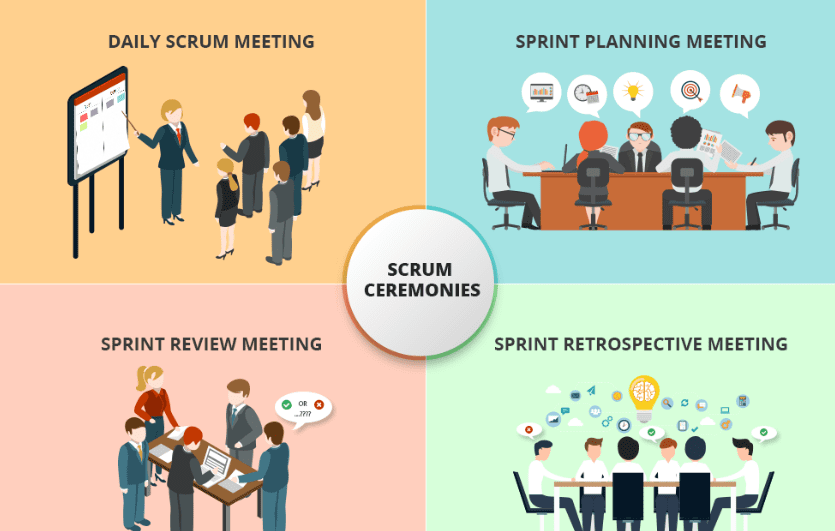
Most product managers and coaches struggle with frustrating outcomes. The answer to such a situation lies in the retrospectives. The Retrospectives-tool is an essential of the PMs toolkit and relies on learning, transparency and exploring curiosity in a safe environment. The product retrospectives can transform product processes, improve products, and offers an opportunity for continued learning through the iterative product development life-cycle.
Why Retrospectives?
The retrospective generates actions based on consensus and produces new information unlike the regular meets reviewing past performance, data and actions.
It is a based-in-reality change and action process which can be undertaken to occur at regular intervals. For example the quarterly review of road-maps, the finish of a sprint iteration, after a release, sales /client meeting, product launch or the hypothesis-testing. The retrospective reviews what, how and why in terms of reviewing over a fixed timeframe the desired outcome or event and comprises the entire product development community of stakeholders, customers, product and development teams.
The accruing benefits:
The retrospective is beneficial when it is able to:
- Use and gather community collective-wisdom.
- Be neutral and non-judgmental about the truth.
- Find areas for improvement and appreciation.
- Generate beneficial product insights.
- Try, change and make commitments to improvement actions.
The main benefits accrue when retrospectives are used for:
· Active Engagement.
· Go beyond the process.
· Use product data to make better product decisions.
Let us explore how retros help under each head.
Active engagement:
Retrospectives are important Scrum events for the teams in product development. However, the PD Managers avoid shoddily run meets on product quality instead of addressing the issues and making situations better. They are also useful in mutual learning and resolving key issues like strained team member relationships.
Transparency, a safe environment, and open communications are key in the retros. Product leadership starts with discussing in a neutral non-judgemental environment even undiscussables. The skilled facilitator can then help transition the team to the high-performance zone.
Go beyond the process:
Most times the Retrospectives are useful in development processes and go beyond product releases and sprint iterations. Retrospectives are event-based learning from events like the product launch, hypothesis test, product/customer research, roadmap-outcomes, and customer conferences. Your leverage depends on the events linked to your product, engaging the right people and post-event retros to learn from.
Use product data to make better product decisions:
Typically any retrospective involves the data gathering, culling of insights, and product-data focus for making good business decisions.
The Retrospective structure:
A structure has a series of activities like:
- Readying the stage: Here one collects data required, starts the session with stakeholders, defines parameters for retro success, and creates retro safety.
- Using past data: Data here is used to recreate and tell the story using shared resources of quantitative and qualitative data.
- Draw present insights: This phase reflect on feelings and facts, interprets data accordingly, looks and understands the whole scenario while answering the top five retro-questions.
- Make future decisions: Here one decides the actions for implementation and decides what and when to change.
- Retro Closure: The whole process is reviewed for future use and improvements.
In retros, data is both quantitative (like coding, tech debts, quality, defects, etc) and qualitative (like happiness, reviews, reactions, etc). It also includes metrics of the HEART (like customer happiness, engagement, outcomes, adoption, task success, retention, etc). Factors like revenue, loss/win results, costing results over a time-period, metrics of marketing campaigns, test findings, hypothesis testing, and conversion rates are also part of it.
Retrospectives help to learn:
Retrospectives can enable learning when such learning is reinforced and is essential for self-direction, immediacy, and relevance. By Immediacy, one means you apply your learning immediately, by relevance one means it applies aptly to our situations, and self-direction implies taking control of retrospection and make learning-based changes. Retrospectives hence should be mindful of everyone’s involvement in things that need change and the achievement of change itself.
Conclusion:
Retrospectives go beyond the obvious thinking. To practically use and reap better retrospective-based outcomes, the product leaders have to determine when to use, who can best facilitate, learn all about the timing, duration, etc, and possess safety from a psychological perspective.
In conclusion, ask yourself if using retrospectives and better productivity interests you. Do an Agile course at Imarticus Learning to further your career today.
How Big Is The Agile Methodologies Provider Industry
Let us first understand what Agile methodology is all about. Under Agile methodologies, the software is developed in an escalating, incremental manner through rapid cycles. The process focuses on adaptability and customer satisfaction of the software product. Each cycle of software building is better and incremental than the previous one, and thus the cycle continues.
There are various reasons why Agile methodology has gained worldwide fame, appreciation, and popularity.
(a)One of them being that Agile is used to prevent large projects from failing, it had a prime focus on business profitability and delivering software as opposed to documentation.
(b)It is user-friendly and treats the user/consumer in a friendly way rather than a machine-centric manner.
There are certain strong strategies that Agile has adapted to have become this popular and widely acclaimed. They are as follows:
1. It shares the common value and goal of fixing large scale projects
2. It is user/customer/human centric rather than being machine-centric. This has positively impacted the productivity of Agile users and shown proven efficiency in business successes.
3. Inclusive/collaborative approach – The agile methodology has a very inclusive feature that supports the entire Agile team and promotes collaborative efforts of the team through its built-in flexibility.
4. Some Agile methodologies are very popular and user-friendly. These include Extreme Programming (XP), SCRUM, Features Driven Development (FDD) and Dynamic Systems Development Method (DSDM)
5. Agile methodology helps you perform quicker and can also be developed at a good pace.
There many Agile methodology courses and certifications that you can sign up for. You can start with basics, and if you have previous exposure to the software development and its aspects such as coding, testing, and other software skills, it helps you gain Agile knowledge much more efficiently. From mastering an adaptive approach to product development, the courses are streamlined for your needs/requirements.
What You Will Gain From An Agile Certification Course?
1. You will gain the knowledge base, skills, tools and techniques involved in Agile methodologies and will be able to understand, apply and implement the principles of Agile.
2. You will also learn to smoothly coordinate Agile development processes including managing your respective teams, bringing about a social culture of experimentation, and running sprints.
3. In the final project completion stage, you should be able to apply, everything that you have learnt to a real-world hands-on practical project and demonstrate your skills and abilities.
4. Flexible schedules to learn the course in case you are already a working professional. Many education platforms offer online certification courses and you can time these according to your convenience.
The job opportunities you will encounter are many to pick from. You can become an Agile Scrum Master, Technical project manager, Technology manager, Scrum Master consultant, Project leader, Senior Agile transformer, and Agile coach/tutor/mentor/guide and give lessons and coach many more hundreds of people, Product Owner handling the business operations too, and/or software development manager, among other opportunities. The Agile Scrum certification promises you a great career with a heavy income. A career with a business analyst certification India is also possible using these skills and knowledge base.
What Does a Sourcing Manager Need to Know About Scrum
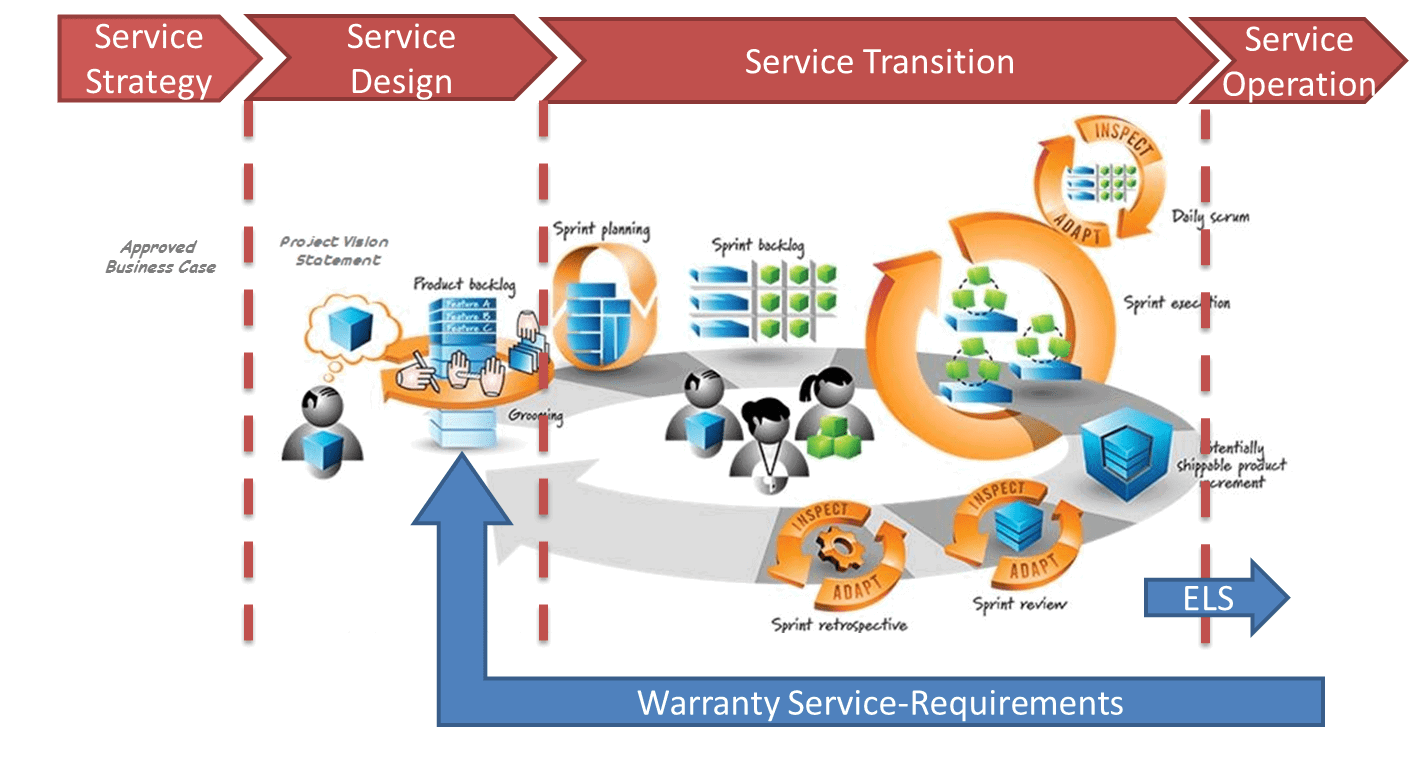
The sourcing manager’s role can be quite arbitrary and is very important especially in Agile and Scrum practicing ones. Traditionally the role of a manager was boxed into middle management and senior management categories who decided the quantity of work that needs to happen and who or how to go about achieving these desired attributes. So should the procurements manager also be Scrum compliant? Should the PO and the team be a part of the procurement strategy as envisioned in Scrum? And, is there a clash between the SM and sourcing manager’s responsibilities? Let’s explore.
Sourcing Manager Vs Product Owner:
Scrum principles have a clear mandate for the SM, PO and the Scrum team. The PO is responsible to bring clarity between the team and the client. As a PO the job role is definitely about the value of the products and customer needs. It also encompasses the work-prioritization schedules which the team self-organizes and executes. It has little to do with the sourcing of items; third-party vendor development etc and the sourcing manager would do well to remember that work-control is part of the Scrum team’s responsibility and does not need delegation of jobs.
Sourcing Manager Vs SM:
The role of the SM is a multi-tasking sourcing manager in the making. The SM role is designated to develop and enhance the self-organized capacities of the team in producing sellable products quickly. As there is a huge area that envelopes the duties already being executed by the SM the sourcing manager would do well to remember that he bats for the management team. He can build value and enable both the SM and team by removing hurdles, ushering in improvements and practicing Scrum values more diligently. He is the enabler and management’s teacher on Scrum Teams.
The Sourcing Manager’s Role:
As part of the mid-level management team, the sourcing manager would need to keep the complete picture in mind and enable the building of great customer experience, rapid quick-release marketable products, and building capacities in the organization. As you ascend to higher levels it becomes more about strategy-making, enabling decisions, and bettering the organizational key parameters and productivity.
It is important for the sourcing manager to understand that to build organizational capacity upwards from the Scrum team, it is vital to enable horizontal capacity building. The Agile principles also place emphasis on customer collaboration and changes being systemic. This does interfere with the important negotiation of contracts. If the sourcing for technology, and product development enablers are product and project related, it will make perfect sense to allow the Scrum team to decide on sourcing.
How to be an Agile sourcing manager:
In Agile practice on a Scrum framework the collaboration of multiple vendor and requirements, delineating the procurement process, collaboration strategy decisions, maintaining cordial relationships between team and vendors and ensuring loyal vendor and customer experiences are goals for every ideal sourcing manager or/and SM. The Scrum teams are then free to take decisions on delegated work achievement in a self-organized and managed manner as a team.
Vendor selection is crucial in sourcing. If from a third-party the negotiation starts with the PO and the need for finance. Procurement applications like the Source web can be very helpful in sourcing. To place emphasis on quality, timely-deliveries, procurement lead-time, vendor capabilities, site requirements, pricing, and such parameters the reverse auction strategy works very well within the Scrum framework.
The true enabler in sourcing is removing the hurdles in terms of financials to enable the Scrum team to perform optimally. Since Scrum and Agile are best practices, that teach everyone on the team to be multi-purpose, multi-tasking and self-enabling progressive team members one will require even the management to be Agile. The main role the sourcing manager would then be a wee bit of the PO, SM and traditional Manager’s role rolled into one!
Conclusions:
The Scrum team activities do not include procurement and the management would need to ensure sourcing, procurement or contracts specialist to fill the sourcing and procurement void. Thus the sourcing manager is the management’s tight rope walker on a Scrum team who ensures the Agile multiple C’s of collaboration, communication, contribution, and management cordiality.
To learn more about Scrum, Agile and best practices in project management, Imarticus Learning scores high as a reputed training partner. Enroll and use the opportunity to grow yourself.
Ten Contracts For Your Next Agile Project!
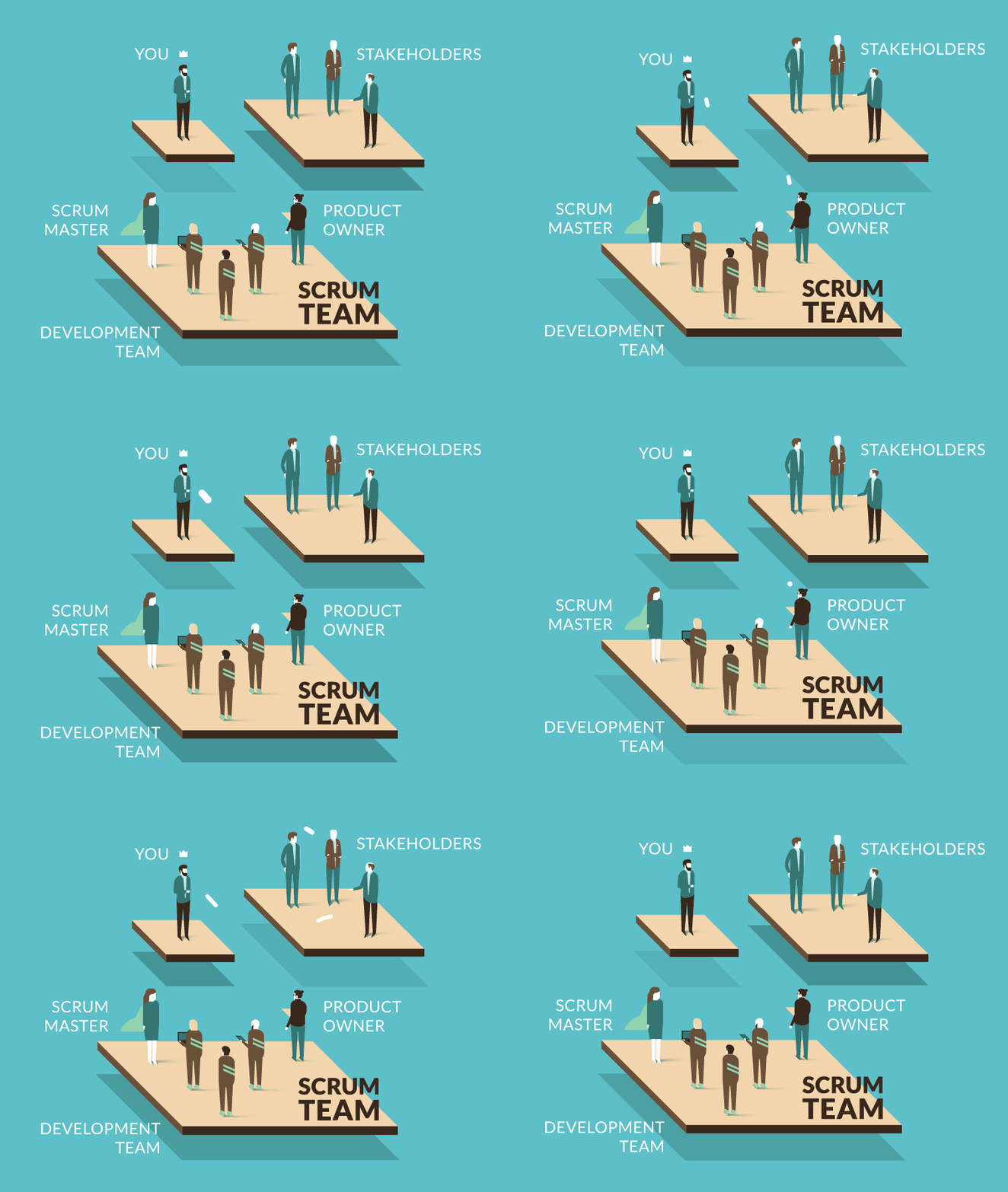
An iterative approach like Agile Project Management, guides a project throughout the production process, just like in Agile Software Development, where several iterations are reviewed and critiqued by stakeholders before moving onto the next step of the project. There are different types of contracts governing various types of agile projects. Such contracts or agreements may seem to be a set of guidelines or rules to be followed, but they hold significance as fixed instruments, which can lead to unfavorable consequences if not obliged to. Agile contracting lets the parties focus on the result of the Agile in a collective manner.
Here are ten contracts for your next agile project:
1. Fixed Price
Here the risk is mostly associated with the developer or supplier who agrees on the deliverables. The customer intends to have this sort of a contract since the target price is fixed; the developer tries to complete the project at a lower cost than the target cost and the satisfaction of the customer is guaranteed. After all, that is the prima facie of developers. However, if the project takes longer or costs more than the fixed price, then the cost is borne by the developer leading less scope for changes in this type of contracts.
2. Incremental delivery contracts
The project is broken down into segments, wherein the customer reviews the development stage at predetermined review points. Both parties evaluate the pros and cons at each review point and then decide on the further steps. At the end of each successful review point, both parties have incentives. Each increment subsequently improves the overall development of the project that ultimately is a result of cooperation leveraged in incremental delivery contracts as opposed to the rigidly fixed price contracts.
3. Time and materials
It is one of the most convenient forms of contracts wherein the supplier makes the payment for the amount of work or service that is done using necessary materials for creation. Since the customer holds the edge of changing minds, the supplier enjoys this type of contracts. However, such agreements sustain firmly on the legitimate efforts of the supplier to cut down the cost for the benefit of the longevity of the arrangements.
4. Time and materials with fixed scope and a cost ceiling
In this form of contract, if the supplier completes the task early, the payment will be made only for the actual efforts. There is no scope for incentives for finishing the project early. Having said that since the cost of the project is capped, the supplier will aim to achieve the maximum capped cost of the project.
5. Time and materials with variable scope and ceiling
As a consequence of the capped limit, the financial risk associated with the customer is less. The variable range and capped budget bring a collaborative approach from both supplier and customer to complete the project. This sort of contract is ideal for budget oriented projects. A constructive relationship upholds this type of contracting in achieving desired business.
6. Bonus/Penalty clause
As the name suggests, the supplier will be rewarded with the bonus upon early completion of the task and will be penalized for late deliveries. Such contracts reduce the potential risk of late deliveries for the customers. Penalty clause makes the supplier forsee the consequences related to delay and drives towards completing the task on time or even early.
7. Joint Ventures
The two parties involved in the agile project agrees upon to invest in a project with mutual interest. Though the development phase of the project may not be rewarding for either of the parties involved. There must be a return on investment for both parties either from the revenue or by the end result of the project. Here the project itself to be considered as a separate company which needs to be developed and marketed for a common benefit.
8. Money for nothing changes for free
This type of contract was created by Jeff Sutherland, which involves two clauses. The first clause is altered for free. This clause essentially leverages space for any new features to be added in a project without charging any fee for the changes made. Secondly, money for nothing clause is a win-win situation for both supplier and customer. Here the supplier separates the different segments of a project and delivers the most prioritized segment first.
9. Fixed profit
Every project ideally has a predetermined cost and profit estimation. By using fixed profit contracts, the parties involved in making the said project, agree upon a fixed amount regardless of the time period of the work completed. Since there is an incentive set for both, parties like the customer save cost, and the supplier has the chance of seeing higher profits.
10. Sprint contract
A sprint contract is ideal for Scrum projects wherein a project is broken down into bits. An agreement between the product owner and a team performing a sprint is known as a Sprint contract. The team tries to convince the product owner by delivering expected quality work in one sprint.
In a nutshell, having proper contracts reduces the risk associated with your clients, as it increases human accountability at both ends. Though your agreement does not serve as your project manager, it certainly acts as a risk mitigation technique. So even if you have a cordial relationship with your clients, a contract in place never hurts!
To know more about the Contracts for your next Agile Project, you can also consider our Business Analyst Certification.
How do You Become a Business Analyst?

Sawan Arora, a student of the online Agile Business Analyst & Scrum certification course talks about his experience at Imarticus.
We caught up for a chat with Sawan Arora, a student of the online Agile Business Analyst & Scrum certification course. Here’s what he has to say about the program.
Hi, my name is Sawan Arora, and I have recently completed the Agile Business Analyst & Scrum Prodegree at Imarticus Learning. The course curriculum is excellent and includes business analysis, agile & scrum, project management, and additionally, you get access to a lot of SAP instructional videos.
Initially, I was a bit nervous about joining an online Agile & Scrum certification course because I was not sure how it would be in comparison to a classroom training program. But as soon as the course began, and I attended the sessions, it turned out to be a smart decision, and it was a significant step towards my career goals.
The faculty at Imarticus is definitely at par; no exceeds industry standards. The knowledge level they have and their skills are excellent. I was trained by Mr. Mukhraj Saberwal, who has over 18 years of experience. His lectures were terrific, and all his sessions were very interactive. The entire class would interact with him extensively, and there were a lot of queries and doubts that we used to pass on to him.
It was just like we were in a classroom training program because whenever we asked any questions, he was prompt in his response.
There is a lot of good content to learn and knowledge to gain during these 160 hours of training, and you get access to an LMS portal from Imarticus that has all of the learning material on it. You can access it anytime, anywhere as long as you have a decent internet connection. LMS was an essential aspect of the learning journey.
On completion of the program, you get 35 PDU’s from IIBA, and that makes you eligible for the CCBA or ECBA exams if you have the required experience. The course in all really helps you know the skills a business analyst should have – you get a good exposure of agile and scrum methodologies, and hands-on knowledge of project management.
So, no matter if you are an experienced professional or a fresher, if you want to learn business analysis, I would highly recommend you join Imarticus Learning.
Not to forget, you also receive access to Imarticus Learning’s placement portal where you can find a job on completion of the course.
Do you want to kickstart your career as an Agile Business Analyst or Scrum Master? Click here and inquire about the program now.
What is the career progression of a senior Full-Stack developer?

What is the career progression of a senior Full-Stack developer?
A full stack developer is an all in one resource in the field of Web-development. These engineers are capable of handling both back-end and front-end operations of a website.
Obviously, it takes years of education and work experience to become a successful full stack developer. This article is about the career progression of a senior full stack developer. Read on to find out.
The Journey to the Top
Not all professionals in this field begin their journey after mastering every aspect of front-end and back-end technologies. But you have to be very keen to perfect your skills throughout the journey. Often, the full stack developers are migrated to this profession from front-end or back-end development.
Even they start from the entry level and move to junior and eventually reaches the seniorcr level full stack engineering. To make this journey quicker, the following traits will help you.
- A strong desire to master full stock technologies.
- Creating applications that speak to customer requirements.
- Spend time to learn from feedback and advice from colleagues.
- Always sharpen your technical skills by learning new programs and stay up to date.
The job growth offered for full stack developers are very high. If you have the right amount of dedication, willingness to learn and perseverance, you can graduate into a more lucrative and respected senior position over time.
Taking a full stack developer course will help you move forward in this career journey and increase your knowledge in the business practices. Since there is a huge number of organizations in need of visually stunning and creative applications, the future for full stack developers is predicted to be bright.
What is Expected from a Senior Full Stack Developer?
As I mentioned earlier, you don’t have to master all the skills required to work as a beginner level developer. But, as your career develops, you are expected to fulfill the following duties.
- Develop and maintain the client side and server side applications.
- Work along with other developers and marketing teams to ensure the necessary feature are included in the project.
- Design tests that can be implemented on software to keep them alive.
- Adapt to expanding technologies and trends.
Where to Go From the Top?
It is clear that working your way up to the of a senior full stack developer can be exciting and challenging. Such a position itself can represent your years of hard work and industry experience. It is quite easy for a senior professional to stay at this hard-earned position for years and enjoy an exhilarating career.
They can utilize their fluency in both front-end and back-end coding to mentor junior members of the project team. If they wish to move to some other compatible job roles, plenty of opportunities are available there too. The most significant roles they can take on are senior software engineers and principal software developers. In these roles, they can lead their teams to design and deploy applications that can guide an entire organization.
In the opinion of experts, full stack engineers will continue to be a profession in high demand for the upcoming years. The growth of businesses that rely on a strong web presence is going to positively affect this field.
If you find it interesting and matching your career dreams, start working towards it as soon as possible. Joining a full stack developer tutorial will help you start your journey on the right foot.
What is Agile Methodology?
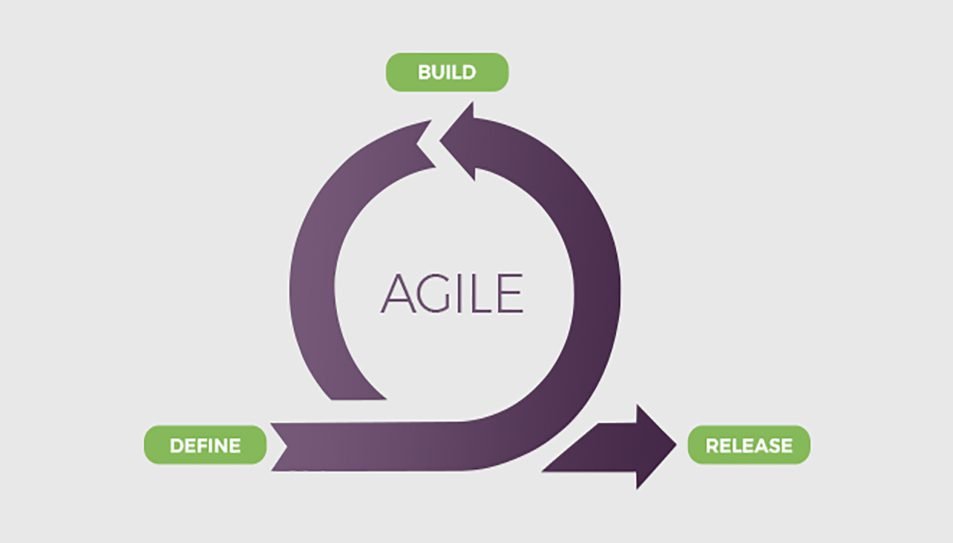
Agile thinking is Lean and continuous. It relies on Scrum values and a number of different methods that form a combination way of tackling solutions to improving productivity and efficiency in enterprises with a large emphasis on customer-first policies and principles. Agile has caught everyone’s imagination because of the fantastic outcomes from transitioning to these values.
The Methodology Involved
Agile is no methodology. In reality, it is a way of thinking, a task-training philosophy and a flexible simple mindset. It comprises of Scrum frameworks and others too along with different sets of methodologies that aid specific task aspects in the Agile Manifesto.
The frameworks and methodology sets that are used in Agile are
• Scrum methodology
• Lean development of software.
• DSDM/ Dynamic-Systems-Development method
• XP/ Extreme Programming.
• ATDD/ Acceptance-Test-Driven-Development method.
• TDD/ Test-Driven-Development method.
Let us explore how these methodologies fit into the Agile framework and its practice.
Scrum:
Scrum is widely used in software development using Agile as an incremental and iterative way of handling team-oriented developmental software projects, applications, and products. The Scrum team members are all equal and work together towards the common goal while being flexible, self-organizing, communicative and collaborative as a team. Scrum also works very well with tools and techniques in TDD, DSDM, Lean and XP and offers an excellent framework to function in.
Lean development:
Lean agile methodology principles emphasize minimizing waste and maximizing customer-values to create the ideal customer-environment with minimum resources, focused key processes and zero waste. Optimization of assets, technology, product flow, inter-departmental communications, and various inter-related processes all along the value-stream leads to eliminating wastage. Such practices do lead to lower costs, higher production, more efficient processes, faster time-cycles, lesser defects and of course increase in productivity, efficiency and more accuracy.
XP/ Extreme Programming:
The XP software development method in Agile is again related to iterative customer requirements, frequent release cycles, and shorter time-cycles in development. The improvements are very visible in the areas of
• Flexible communication.
• Process simplicity.
• Constructive feedback.
• Peer and customer respect.
• Courage for appropriate feedback.
DSDM:
DSDM is a part of the agile method used for the development of software. The extended DSDM 4.2 embodies the DSDM principles to be used for consistent deliveries.
These are:
• Business needs focus.
• Timely deliveries.
• Consistent collaboration.
• Zero compromises on quality parameters.
• Using firm foundations and incremental development method.
• Incorporate iterations.
• Clear and continuous communications.
• Demonstrating measures of control.
DSDM the non-IT solution from the Agile Alliance gives great results in time, quality and cost control using prioritization by the MoSCoW method of must, should, could, and won’t-have constraints.
TDD:
This process uses repetition of short cycles of development in a project lifecycle. Testing here begins with coding the automated test-case, defining its new functions, improvements and such before re-testing and factoring in the changes required until the code reaches the acceptable pre-determined values. It has immense scope in debugging, and legacy code testing improvements.
ATDD:
The agile methodology process stresses collaboration between stakeholders to ensure that testing and iteration is a result of communication and thus fool-proof. Agile is thus really a collection of rediscovered best practices being put together under the umbrella called agile methodology.
The Agile learning course:
To become an Agile coach one will need to get trained and demonstrate the applications of Agile. The Agile coach is the key team-mentor for effective team management. The coach embodies and instills the values of Agile while implementing Agile practices, the Agile mindset, and team-collaboration to get desired outcomes of shorter time cycles and rapid release cycles of market-viable products.
Imarticus Academy’s agile certification courses provide continued learning certification courses. The certification is globally recognized and approved as a standard of Agile skill certification which permit the Agile coaches to do-and-learn by taking on the responsibility of an Agile coach. The course uses practical simulation of team-management scenarios and helps inculcate the Agile practices and skills through role plays, effective immersive mentoring, quizzes and such forward-thinking training methods.
The agile methodology training outcomes aimed for are:
• Nurturing Agile-Lean mindset and culture to usher in iterations, positive change management, and Scrum Agile tenets and attitude.
• Inculcating successful Agile values and core competencies.
• Proficiency in Agile Scrum practices, tools, techniques, skills, and best practices useful to both existing and new coaches in team transitioning.
• Resolution of conflicts and handling issues related to them more effectively.
• Empowering oneself and the team to achieve set goals using mock and practice sessions.
Course topics:
No formal educational qualifications are required for the agile certification though an understanding and experience in Agile practices do count.
Some of the important topics covered practically and
• Developing Agile methodology thinking and mindset.
• Equipping through skilling for the coach’s role and responsibilities.
• Raise self-awareness and organization to promote and improve team motivation and dynamics.
• Transition and mentor Agile transformations and roles.
• Resolve effectively hurdles and team-conflicts.
• Collaborative communication and building contributive teams.
• Recognize and remove impediments, obstacles, issues, and change-resistance.
• Define and maintain coaching limits with neutrality.
• Improving team-performance through effective mentoring and coaching.
• Imbibe agility by recognizing and handling organizational and systemic challenges.
• Create product and personal backlogs as records of performance.
The IT major Yahoo! discovered that teams with an Agile coach who has trained and certified from such courses actually brought about increased the productivity of 300% when compared with teams where no Agile coaching is provided. Their improved performance was a mere 35% in comparison.
More and more industries especially large enterprises with cross-functional teams have used Agile to improve their production and efficiency. However, unless every team member is on the same wavelength and has the identical mindset Agile may just remain lip-service and not produce the desired outcome even with an Agile coach.
In parting, one finds that there is a lot of debate about the trending Agile methodology being adopted by corporate giants and industries alike. Learning Agile changes your mindset and simplifies the execution of complex tasks. The agile certification course leads you through the various methods and agile methodology which comprise the best-practices in Agile.
At Imarticus Learning Academy, these courses lay emphasis on practical work in industry-relevant situations. Besides certification they empower you to think Agile, transform teams and lead from the front for team-success. Improve your prospects and career with such futuristic courses. Hurry!