CPA Salary in India: How to Triple Your Income in Under 2 Years

CPA Salary in India: How to Triple Your Income in Under 2 Years

While manoeuvring the financial landscape can be arduous, the journey itself can be remarkably fulfilling, especially for those who possess a Certified Public Accountant (CPA) certification. The CPA salary range in India is an indication of the worth and prestige this internationally-renowned qualification adds to an individual’s career. But would you believe that you can achieve a triple increase of your CPA salary in India under two years – if you go about it the right way? Perhaps that bold prediction appears to be quite exaggerated – but given the right career journey, continual skills development, and networking, it’s a reasonable target.

In this blog post, we will outline how to not only maximise your CPA salary in India but also potentially make quantum leaps in your career journey. Therefore, whether you are an established CPA considering your next career move or an aspiring CPA wanting to understand the earning potential of a valued certification, you’re in the right place to understand more about ramping up your financial career growth. Let’s get started and improve our chance of tripling your CPA salary in India in under two years!

Analytics of CPA Salary Progression in India

Within the financial ecosystem of India, the journey for a Certified Public Accountant (CPA) is recognised more than ever for its significance. As the demand for CPAs in India continues to grow, the impact has been felt in their salary trajectories, and prospects are attractive to those looking into this career path. The average salary for a CPA in India is about INR 7 Lakh per year. A few years later, you can expect that salary to triple. This shows how quickly and how much you can make as a CPA in India. There are several reasons for this rapid growth at this stage in your career:

  • Level of Experience: As you gain experience as a CPA, you can earn a higher salary. After only a few years, you will see a significant rise in your salary.
  • Skills and Knowledge: Those who continue to learn new skills can demand a higher salary. Specific skill sets in key areas (financial analysis, regulatory compliance, tax advisory, etc.) allow a CPA to earn a premium over those of similar position and experience.
  • Geography: Your salary is also influenced by the city you work in. If you choose a metro city, you can expect to earn a higher salary based on the dense representation of multi-national companies and the greater cost of living.

As a rough guideline, here is a salary progression for a CPA in India:

# of Years of Experience Average Salary (Rs)
Less than 1 year 3 – 4 Lakh
1 – 3 years 4 – 7 Lakh
3 – 5 years 7 – 12 Lakh
More than 5 years 12 Lakh and more

Overall, CPA salary growth in India is strong and swift. In addition, given the intrinsic stability and respect that accompany this career, the CPA version is an attractive career option for qualified finance professionals in India.

The Explosive Growth of Certified Public Accountants

The increasing focus on financial services has escalated the demand for Certified Public Accountants (CPAs). The demand for CPAs has led to a significant increase in the Indian CPA salary. The earnings potential of a CPA is incredible and carries immense potential for those looking for a rewarding career in finance and accounting.

CPAs are not just accountants; they are strategic advisors and decision-makers. Their knowledge of business operations, tax regulations, and financial processes enhances their value to the job market and their earnings potential.

In the Indian context, you may consider a CPA’s potential earnings like this:

  • CPA – Entry Level: In their early career, the average CPA salary in India is between INR 7-9 lakhs per year.
  • CPA – Mid Level: A few years in the industry increases the salary in the region of INR 10-20 lakhs per year.
  • CPA – Senior Level: The highest-level positions can have salaries of more than INR 20 lakhs.

To increase your CPA earnings potential, consider the following:

  • Continuous Learning: Financial rules and technologies change rapidly. Stay ahead with constant learning.
  • Specialisation: Specialist CPAs in areas such as taxation and auditing will make higher salaries than generalists.
  • Build Relationships: Strong working relationships can lead to new opportunities.

In summary, the CPA earnings potential in India is excellent and provides a rewarding career path. With the proper knowledge and approach, a CPA can significantly boost their salary in less than two years.

Climbing the Accountancy Career Ladder

The journey towards an effective and lucrative accountancy career, primarily as a Certified Public Accountant (CPA), relies on effective career planning, dedication, enthusiasm and flair, or, altogether, a lot of luck. Although a CPA career progression map can be highly rewarding, it is worth noting that, with some research and an effective plan, you could potentially triple your salary in less than two years, particularly in a vibrant and emerging economy such as India.

  • Career Element 1: After gaining your CPA qualification, you will most likely start your entry-level job as an Audit Associate or a Tax Associate. At this stage in India, you can expect a CPA salary to range between INR 7-12 lakh per annum.
  • Career Element 2: After gaining sufficient work experience (anywhere from two to five years), you can expect to progress to a mid-level position such as a Senior Accountant or Financial Analyst. The approximate CPA salary in India for these roles can break into the range of INR 12-24 lakh per annum.
  • Career Element 3: With even more experience and expertise, you can aim for a senior managerial role such as Finance Manager, Controller, or even CFO. Here is where the CPA salary in India and your potential earnings could climb or exceed to the range of INR 24-60 lakh per annum.

To efficiently move up your career ladder as a CPA, it is crucial to continuously upskill, network, and actively seek challenging opportunities, and most importantly, leave room for luck. The CPA qualification is internationally recognised and gives a clear path to a successful career opportunity. With India’s rapid and continuous economic growth, the demand for CPAs to enhance their careers and salaries will surely be plentiful with the right skills, determination and a little bit of luck.

Identifying High-Earning Industries for Chartered Professional Accountants

To maximise your CPA salary in India, it is essential to know which industries tend to pay the most for your skills. Specific sectors are known to pay high wages, and if you can get into these industries, you will have more opportunities to increase your income in the future.

  • Financial Services: The financial services industry is one of the highest-paying industries for CPAs. Financial institutions such as banks, insurance companies, and investment businesses will regularly hire CPAs to perform complicated financial transactions, while ensuring compliance with taxing mandates. CPAs have a strong understanding of risk management, as well as a working knowledge of financial planning, which gives them significant leverage when negotiating compensation in the industry.
  • Information Technology: As modern society continues to evolve and rely on technology, the IT industry has emerged as a hot spot for CPA jobs in India. Tech firms seek financial professionals to manage their complex economic systems, which often comprise a diverse and variable mix of liabilities, equity, and ownership models. CPA job titles in technology-related companies may include, but are not limited to, financial planning and analysis, risk management, and/or corporate finance.
  • Manufacturing: The manufacturing industry is another industry where compensation is lucrative for CPAs. Positions may include active involvement in budgeting, cost management, and financial analysis. Given the fact that many multinational manufacturing companies have headquarters in India, the opportunities to capitalise on your CPA license will be abundant.

Overall, if you can focus on working in these industries, you may be able to maximise your CPA salary in India. Additionally, as you increase your skills and experience in a particular sector, your earning potential will likely increase, while also increasing your opportunities for career advancement. Keep in mind that the key to a higher CPA salary is to understand where your skills are valued and then direct your career path in that direction.

Practical Strategies to Dramatically Increase Your CPA Salary in India

As a Certified Public Accountant (CPA) in India, increasing your income is likely a key focus. Here, we explore a few strategies to help you maximise your income, potentially tripling it over the next 2 years.

First, continue your education. The finance industry undergoes rapid change, and you may be left behind if you do not keep up with current trends, tools, and regulations. By taking professional development courses, you increase your skills and marketability, which will also increase your expected CPA salary in India.

Second, try to pursue specialisation. You will have the ability as a CPA to concentrate in areas such as auditing, financial consulting, or taxation. As specialisation often equates to expertise, this can make you even more valuable through the specialisation process.

Here are some additional strategies:

  • Networking: Create a network of relationships that includes influential people in the finance industry. These relationships will provide you with connections that can help get you into higher-paying jobs.
  • Certification: Pursue new certifications that relate to your field. The more certifications you carry, the more potential your CPA salary in India can have.
  • Negotiation: Learn how to negotiate your salary. Negotiation is essential to helping you increase your income over the long term.

Finally, you may want to consider moving into private practice. Although it often requires a decent investment up front, the potential return can lead to a massive increase in your CPA income. Just remember, the road to tripling your income is a marathon, not a sprint. With patience, focus, and the proper techniques, you can achieve income goals!

Imarticus Learning’s Best CPA Certification course is perfect for professionals in finance as it is for students training to be Certified Public Accountants! It prepares you to write the challenging CPA exam, but it also gives you applied learning skills that are relevant to the changing landscape of the global finance space. The content of this course aligns with our blog topic, providing you with information and understanding of the power and influence of the CPA role in the current business climate. You will have an edge in this comprehensive course that may enhance your CPA salary in India, as well as expose you to new opportunities and niches in the finance industry across the globe. Theory and practice will provide a thorough understanding of the role of a CPA and make you a more marketable professional. If you are looking to reach new heights in your Professional career, this CPA Certification is your launch pad!

ACCA Career Journeys That Skip the Traditional Big 4 Route

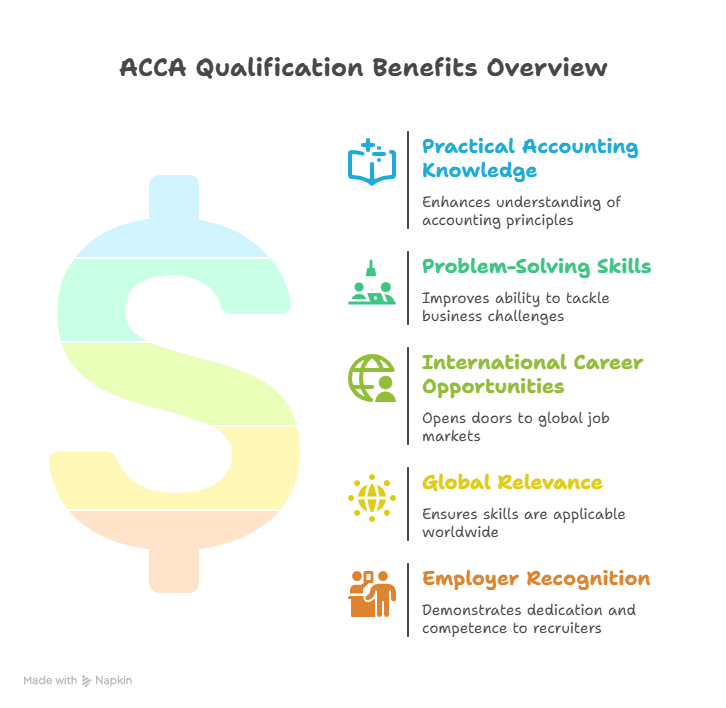
Starting an ACCA career is often seen as an adventure in the vast world of the Big 4 accounting firms; however, the career opportunities available are far broader than just these four firms, with many opportunities that remain unknown to us. This blog will explore the various career paths ACCA professionals can take, which may be outside of the standard Big Four perspective. We will review the often off-the-beaten-path track in the ACCA career universe, with roles in all manner of industries, from finance to education and everything in between! We intend to introduce you to the fantastic opportunities that a non-traditional career as an ACCA could present to you, and give you the intrigue to skip over the familiar highway to travel on your unique road towards your professional career path. With that in mind, whether you are an aspiring ACCA, a recent graduate, or a professional willing to make a change, we hope this blog will encourage thinking outside the box and present you with fresh ideas for a career with your ACCA. Sit back and enjoy the adventure as we take you on the ACCA career path tour.

Exploring the many roads of ACCA Career options (Outside the Big 4)

While many ACCA professionals aspire to work in one of the Big 4 accounting firms, there are numerous opportunities beyond these traditional paths. An ACCA (Association of Chartered Certified Accountants) career opens up all types of job roles in many markets, not just the Big 4.

  • Corporate: ACCA professionals are also popular across the corporate sector. From controllers to CFOs, ACCA qualifications are designed for people who want to pursue high-level financial management roles.
  • Public Sector: ACCA careers can also be in government entities and public sector organisations. These careers may involve supervision of financial management, auditing, and budgeting.
  • Not-for-Profit Organisations: Not-for-profit entities often seek ACCA professionals to oversee finances, allocate resources, and ensure financial transparency.
  • Educational Institutions: ACCA professionals can also find careers in education, either lecturing or developing financial and accounting curricula.
  • Consultancy: If you prefer a dynamic environment, career opportunities abound in consultancy. ACCA professionals can consult on financial management, risk management, and strategic planning for many businesses.

As you can see, ACCA careers are not limited to traditional pathways. The career opportunities within ACCA are vast, and ACCA professionals can determine their career paths. As long as you have the appropriate skills and mindset, there are many opportunities in various sectors for an ACCA professional.

Consider your Options: Diverse Opportunities with an ACCA Qualification

It is a common belief that you only get to work at one of the ‘Big 4’ accounting firms with an ACCA qualification. However, that is not true – an ACCA qualification enables you to find many alternative careers with many more benefits and drawbacks.

For example, ACCA qualified people can work in:

  1. Financial Consultancy: ACCA careers closely align with principles of finance to provide advice to businesses to help them maximise income and reduce expenses. The work involved as a consultant typically requires, in addition to financial expertise, a focus on economic strategy, risk, and financial forecasting.
  2. Teaching or Academia: If you love to teach, as an ACCA, you could have a great career in academia. You can continue working in your ACCA field, whether as a lecturer or researcher, or any combination of them, to assist the next generation of financial professionals.
  3. Non-Government organisations (NGO’s): NGO’s frequently employ ACCA professionals to maintain and manage their finances, ensuring funding is spent correctly and accounted for. This role involves vectors of financial strategy and direction, but is further weighted by social obligations.
  4. Own Business: Many ACCAs utilise their financial abilities and pursue their businesses. This path offers an alternative vocational opportunity to be your boss, carries significant responsibility and high expectations.

Remember, whilst ACCA is a stepping stone to employment within the ‘Big 4’, it is equally an opportunity to follow a variety of career paths. In closing, don’t limit yourselves, but explore some alternative ACCA career paths to see where your qualification may take you on your journey.

Entering the Startup Ecosystem as an ACCA

The startup ecosystem is an exciting and energised space that offers the required unique skill set that ACCA professionals have. Most ACCA roles in the startup environment embody the nature of diverse, challenging yet rewarding, nurturing the opportunity for a successful ACCA payout outside of the traditional Big 4 offering. ACCA practitioners can assume several key roles in startups as follows:

  • Financial Controller: An ACCA practitioner in this capacity will manage the whole of a startup’s financial activities, ensuring that all financial operations run smoothly and comply with regulations.
  • Business Advisor: ACCA practitioners can act as business advisors by using their broad-based financial and business skills to provide strategic advice and guidance to startups that can help them through financial complexities and business challenges.
  • Internal Auditor: An ACCA practitioner can act as the internal auditor, ensuring that a startup is complying with financial regulations and standards to mitigate risks.

The table below provides a summary of the key accountabilities and skills related to the ACCA roles we have discussed:

Role Accountabilities Skills
Financial Controller Managing financial operations, budgeting, and reporting Financial management, strategic planning, and leadership
Business Advisor Providing strategic business advice, financial planning Business acumen, problem-solving, and communication
Internal Auditor Ensuring compliance and risk management Attentiveness, risk assessment, and integrity

Pursuing an ACCA career in startups is about more than just crunching numbers. It is about being part of a team that builds something from the ground up, enjoying the thrills of entrepreneurship, and making an impact. It is about promoting an area of expertise to support the mission of the startup. Whether you are an ACCA graduate or an experienced practitioner, the startup world offers incredible opportunities and rewards for your career pathway!

Exploring the Road Less Travelled in Small and Medium-Sized Enterprises

Starting an ACCA career is by no means a straight path to the Big 4. SMEs have a lot to offer ACCA professionals.

In SMEs, employees are exposed to a broader range of responsibilities earlier than they would have been in a larger company. This is because smaller teams often require you to wear multiple hats! As an ACCA professional working for an SME, you will have:

  1. A wider range of tasks, skill-building and learning experiences outside of your area of expertise or practice.
  2. A much greater opportunity to contribute to the organisation because of the smaller teams in SMEs.
  3. Faster job progression – SMEs tend to work at a faster pace than larger entities.

Finally, given the flatter hierarchical structures at many SMEs, working relationships between employees and senior management tend to be closer. This can play an essential role in your future career, too, providing insights that may not be present at larger organisations!

There are also some disciplinary challenges with an ACCA career in another SME, including limited resources, unstructured or limited training programs, and heavier workloads. However, the potential opportunities for development, growth, and ability to have an impact is favourable to me as an ACCA professional.

Bottom line? If you are newly qualified or an ACCA member contemplating a career change, SMEs are an exciting alternative to consider. The road to success is not always the most walked-upon road.

Diversifying your ACCA career: Look beyond the Big 4

While you’ll often find an ACCA career will often land in the big four, you should take the opportunity to consider the range of jobs available to you; these fields include finance and banking, healthcare, and retail, to name a few. Your ACCA qualification allows access to a range of industry sectors.

  • Finance and Banking: With solid training and a strong background in financial management, ACCA is a highly regarded professional in the finance and banking industry. ACCA professionals are involved in a range of activities, including risk awareness, planning for capital purchases, and investment banking.
  • Healthcare: The healthcare industry similarly has full-time and employed ACCA professionals, as the financial management activities emphasise understanding financial consequences when it comes to budgeting, financial reporting, and the ability to develop long-term strategies.
  • Retail and FMCG: As an ACCA professional in this space, you are ideally suited for taking advantage of opportunities for accumulating, interpreting and understanding roles involving supply chain cost data, and the development of pricing and revenue growth plans.
  • Technology: The tech industry is characterised by risk-taking and disruptiveness, driving positive change in a fast-moving world. ACCA professionals can find roles in technology companies using skills in financial modelling, business analysis, and advisory strategies.
  • Government and non-profit: Many ACCA professionals contribute to the public sector or charitable organisations by providing a mark of integrity and credibility, as well as developing business processes and policies, such as producing budget forecasts for government departments and all forms of public funds.

The above list reveals that there is a range of sectors with different ACCA opportunities, allowing you to develop your career path according to your interest, focus or desired outcome. Always remember, your career as an ACCA professional is not limited to the Big Four; however, as a qualified professional with skills and knowledge, you will have a meaningful career in any sector. Enjoy the flexibility that your ACCA qualification provides, and embrace the opportunities that await you. Who knows, your new ACCA career journey could be just around the corner.

Check out the new opportunities available in finance and accounting as part of our ACCA Certification course at Imarticus Learning. The ACCA Certification course builds the knowledge and skills necessary for a successful ACCA career. It aligns well with the purpose of this blog on professional development in the finance industry, and we love providing our readers with the experience. This course covers a wide range of material while building a solid foundation in financial management, taxation, auditing, and much more. ACCA Certification grants candidates global possibilities as it is recognised in over 180 countries. Thus, whether you are an aspiring accountant or an accountant wanting to level up in your career, the ACCA Certification can serve as a significant career milestone. So make the smart move towards a fruitful ACCA career, and create new professional opportunities with us at Imarticus Learning.

Frequently Asked Questions

What is an ACCA Career?

An ACCA career is defined as a professional journey pursued by individuals who have received the ACCA (Association of Chartered Certified Accountants) qualification. This qualification is globally recognised and opens new doors to opportunities in many roles related to finance or accounting at many organisations worldwide. Not only that, but it does not limit you to just the traditional path at the Big 4 accounting firms, and there’s also a wide array of alternative pathways.

Can I skip the traditional Big 4 pathway in my ACCA Career?

While many qualified ACCA professionals tend to start at the Big 4 accounting firms, that is not the only route available to you. You may want to consider whether opportunities in banking, insurance, public sector, corporate finance or even charity work, are more appealing options. You may also wish to look at academic or consulting roles. Just keep in mind that your ACCA qualification provides useful transferable skills for a wide array of jobs to go beyond the Big 4.

What are the possible advantages of taking an alternative route in my ACCA Career?

There are many advantages to taking an alternative route in your ACCA Career. The alternative pathway allows you to not only avoid the pressure cooker environments often associated with the Big 4 firms, but also achieve a better work-life balance. This alternative route also allows for a different set of experiences and skills, which could potentially benefit you when considering future career progression. It may also afford you opportunities for work within areas that are in better alignment with your interests or long-term career objectives.

What is the job outlook for those who choose an alternative ACCA Career?

The job outlook for those who choose an alternative ACCA Career is strong, and, considering the demand for ACCA qualified professionals spans numerous sectors outside of just the Big 4. In other words, the diversity of skills and knowledge obtained through an ACCA qualification prepares people to transition between different roles or different sectors, and having the ability to pivot between different options gives a good indication of job security and long-term career prospects.

If I skip the Big Four route initially, can I work there later in my ACCA Career?

Yes, you can! Ultimately, pursuing an alternative pathway first does not prevent you from working with one of the Big 4 firms at a later stage in your ACCA Career. The experience you will gain working in an alternative role may afford you a much more diverse experience that will make you a more appealing candidate when you decide to move. Your wider breadth of knowledge and diversity will put you in a position to distinguish yourself.

Why 93% of Global Companies Will Rely on Data Analytics by 2030 – Skills You Need

Why 93% of Global Companies Will Rely on Data Analytics by 2030 – Skills You Need

As we continue to forge ahead into the digital future, it’s clear that data analytics will play a pivotal role in business. By 2030, it is expected that 93% of companies worldwide will be using data analytics to inform their growth and strategy. Knowing this, the power of data analytics in business is undeniable. It can provide solutions around predicting consumer behaviours, improving business processes, and resolving social problems. With this significantly bright future for data analytics, there are specific skills that will support its potential.

This blog post will discuss the skills necessary and how to develop them to create a pathway to potential work in data analytics. If you are looking to update your skills for a new career or simply interested in learning about data science, this blog will help explain the rapidly changing and exciting work in data analytics!

The Demand for Knowledge in the Data Science Field

The impact of data analytics in guiding business strategies and decisions is growing at an enormous pace. Following a recent survey, we know that it is expected that 93% of the world’s companies will rely on data analytics by 2030, which highlights the advantages of considering a role in data science.

For anyone seriously considering a career in data analytics or science, a bright future awaits, offering exciting opportunities to develop technical and analytical skills that converge with solving real-world problems. Here are some key skills needed to succeed in the industry:

  • Familiarity with programming languages, including but not limited to Python, R, and SQL
  • Deep understanding of the concepts of machine learning and AI
  • Strong skills related to statistical analysis
  • Ability to visualise data and draw conclusions

Additionally, the data analytics of the future will require professionals to become aware of trends and new technologies, including:

  • Predictive and prescriptive analytics
  • Big data processing
  • Real-time analytics
  • Automated machine learning

Due to the continuous exponential growth of generated data, there is an increasing need for qualified professionals in data science. Thus, a career in data science can be very lucrative and can potentially be very rewarding, especially for individuals who enjoy problem-solving and have an interest in technology.

As companies become reliant on data-driven results to achieve objectives, there will continue to be an increased demand for data science professionals. Therefore, developing a career in data science might be one of the best decisions you can make for the future.

Demand for Data Analytics Skills is Rising

With data at the centre of driving decisions for business, the need for data analytics skills has increased. Companies are seeking professionals who know how to collect, analyse and present data. A recent study identified that 93% of global companies will be using data analytics to inform their decisions by 2030. It would seem that there is an exciting future for data analytics, so it is important to build the associated skills in a structured Data Analytics Course. An encompassing data analytics course can deliver:

  • A well-rounded understanding of the role of data in strategic decision-making
  • The skills to effectively analyse, interpret and visualise data.
  • The knowledge to make data-informed decisions that drive business improvement.
  • An understanding of how to use the most common data analytics tools and programming languages.

As businesses undergo digital transformation as a means of survival, data analytics is no longer a nice-to-have – it is a need-to-have. In a world where companies are inundated with prime data, the ability to distil insights from large data sets to develop actionable plans is a capability for which organisations are willing to pay dearly. So, with the growing demand for data expertise, and in uncertainty surrounding the future of work, if you’re going to invest in something to make yourself more employable to future employers and to remain a relevant employee now, a data analytics course is a logical investment in your career.

As we move toward a more data-driven future, the need for data analytics skills will only escalate. It’s only a matter of time until the ability to gather data and use it to inform decisions becomes a reality for every business.

One thing is for sure: the future of data science and the future of data analytics is bright.

By 2030, it’s predicted that 93% of companies globally will use data analytics to inform decision making, improve processes and innovate their services. This expected reliance highlights the critical nature of understanding how data science will progress into the future.

  • Trend One: Automation – The automation of data analytics is going to increase, which will mean that companies will be able to process huge amounts of data in a short period of time. Not only will this mean that data analytics will be quicker and easier, but it will free data analysts up to focus on more strategic rather than tactical work.
  • Trend Two: Integration – Data science will also continue to integrate with other fields. The healthcare and finance worlds will rely on data analytics to bring innovation and develop better services.
  • Trend Three: Democratisation – As software gets easier to use, people across all demographics will use data and understand it. The democratisation of data will mean that, regardless of previous experience, an increasing number of people will be able to understand and use data as part of their job.
Trends Impact
Automation Increased Efficiency
Integration Cross-sector Innovation
Democratisation Wider Usage of Data

If these trends come to fruition, the future of data analytics has the potential to alter the world in which we live profoundly, learn, and work. This will mean that as we move towards the future, data analytics professionals will need to develop new skills and engage in additional training to continue to be productive and competitive. Understanding these trends will be the first step to equipping yourself for the data-driven future.

Mastering The Fundamentals: An In-depth Guide to Data Analytics Proficiency

As we enter an age in which data is considered the new oil, the landscape for data analytics in the future is expected to change and shape the outlook of business across all industries. With 93% of companies worldwide expected to use data analytics by 2030, the demand for skilled data analysts will continue to increase.

First, data analytics would not exist without a strong background in statistics and mathematical algorithms. Knowledge of statistics is critical to make sense of large and complex data sets because only then can an analyst make an informed prediction. Second, a key part of data analytics is understanding programming languages like Python, R or SAS. Programming languages like these are necessary for data analysts to manipulate databases, perform statistical analysis, and create visualisations to illustrate trends in data.

Additionally, a data analytics analyst would need familiarity with data management tools and software programs like Hadoop, Tableau, or Power BI. Data management software enables your organisation to store, process, and analyse a considerable volume of data, making the task of data analytics simpler.

  • Statistics and Mathematical Algorithms
  • Programming languages (e.g., Python, R, SAS)
  • Data management tools (e.g., Hadoop, Tableau, Power BI)

Nonetheless, soft skills are equally important as technical skills and will likely be even more valuable in the future of data analytics. Problem solving, critical thinking and communication are essential skills to have. And while a great data analyst can efficiently process numbers, they can also interpret the “story” of the data and effectively communicate findings to stakeholders.

In summary, even though significant growth will occur in the next decade in data analytics, the fundamental base of these skills will remain. Hence, all people and organisations should continue to develop and improve these skills so that they can continue to be proactive.

The Future of Data Analytics

The future of data analytics is bright. It has unlimited growth potential, especially for anyone looking to pursue a career as a data scientist. The inevitable shift to data-driven decision-making has significantly raised the bar for data analytics, and the trend of relying on data analytics will likely continue. Current studies have predicted that by the end of this decade, 93% of companies will have grown to rely on data analytics.

The growth capabilities of data science are just one part of the potential that interest in this career field offers. There are a few big things driving the potential of a career in data science:

  1. Rising Need for Data Science: As more businesses begin to rely on data analytics, the need for data scientists will rapidly begin to develop. All of this will help individuals wanting to grow in their careers if they have the skills to do so.
  2. Competitive Advantage: Data analytics can give a significant competitive advantage. Data analytics can help business people make better decisions, which in turn lead to better performance and profit.
  3. Transferable Skills: The skills obtained in data analytics easily transfer from one industry to another. Many industries, more now than ever, are using data analytics to make better business and operational decisions. From health care to finance, data analytics is relevant.

In reality, the future of data analytics isn’t about getting better at looking through numbers and trends. The future of data analytics is focused on providing valuable and relevant information that can help individuals, organisations, and sectors succeed competitively in their market. With the world economy increasingly reliant on digitalisation, career growth in data science is truly remarkable.

As the analytics environment continues to evolve, so too will the demand for people who wish to ride that wave. If you are thinking about embarking on any career in data science, now is the time to prepare yourself with the critical skills and join the data revolution.

Imarticus Learning takes you on an exciting adventure of understanding and interpreting data with our specially designed Data Analytics Course. This all-encompassing course is an interlacing of knowledge and practice as it prepares you for the inevitable and ultra-competitive future of data analytics. Whether you are a novice who wants to gain an understanding of the world of data science or a working professional who wants to expand their skillset, this course will be the perfect launchpad for your future.

This course is relevant and closely related to topics you will find on our blog. It accompanies you through a journey in which you will learn to understand, analyse and leverage data from various sources as effectively as possible, all to gain a competitive advantage in your early career. When you master the ability to understand data analytics in use today, whilst keeping it all relevant to future trends, you won’t just shape your learning experience, you will also unlock significant opportunities in a world of data.

FAQ – Frequently Asked Questions

What does data analytics mean for global companies?

Data analytics is essential to global companies because it allows them to make data-driven decisions that can optimise operations and increase customer insight. It provides a company with insights that will enable them to improve their value to their customers (performance, efficiency and profitability). In the future, data analytics will become even more critical, and in the next 10 years, it is projected that 93% of global companies will rely on data analytics.

What is the future of data analytics for the global corporate sector?

The future of data analytics is bright for the global corporate sector. With the exponential growth in data generation and the advancements in technology, data analytics will become further embedded in all aspects of business. It is important to note that the ability to take in this data and put it to use will be key. It is expected that by 2030, 93% of global companies will rely on data analytics.

What are the skills needed for success in data analytics?

Many skills contribute to success in the field of data analytics. Fundamentals of mathematics and statistics, comfort with software systems and programming languages used for data analysis, and how to read and interpret complex relations and data are some examples. Other essential skills include problem-solving and attention to detail. The skills mentioned will be even more helpful as data analytics is used increasingly.

How does one prepare for the future reliance on data analytics?

To prepare for the future of data analytics, you will need to gain the skills you need, as well as keep pace with the developments and trends in the field. The preparations may involve taking courses, going to workshops or webinars, and gaining hands-on experience through internships or projects. Also, remember to understand how the data analytics role will apply to your particular industry, particularly on how it can learn and navigate the impacts of data analytics business decisions.

What can companies provide in terms of benefits when relying on data analytics?

There are many benefits to companies that rely on data analytics. It provides decision-making that is not just happening with no basis; it also includes decision-making that is based on context. It is also easier to identify trends and patterns, which in turn improves efficiency and productivity, and saves you money. In addition, it provides relevant insights about customers, enabling them to develop customised services and products based on their expectations. As the future gap in data analytics functionality closes, companies that adopt the data analytics tool first will be ahead of the curve.

Inside the $1 Trillion Data Science Industry – Career Growth and Skills in Demand

Inside the $1 Trillion Data Science Industry – Career Growth and Skills in Demand

As a powerful force with an estimated $1 trillion valuation, the data science industry is now an unstoppable force that is attracting passionate professionals from all over the globe. While a great deal of the appeal for data science and analytics jobs pertain to the high-paying nature of the industry, the industry itself offers an amount of career growth that is somewhat hard to image. This high-paying industry has experienced blistering growth among the population of data scientists, with a surge in the number of people wanting to research, develop, and create insights from big data.

But what is driving this growth? Additionally, what, specifically, are employers looking for? The blog will take a deeper dive into the world of data science growth, how this industry will change our career landscape, how growth looks, and what skills will be in demand. Join us as we explore the reality of data science and analytics, and prepare yourself to navigate the fascinating and complex space of the $1 trillion industry.

The Journey of Big Data: Your Pathway to a Successful Career

The destination of a rewarding career in data science and analytics presents a clear step-by-step journey that has its challenges but also its high rewards. A robust space in the $1 trillion data industry umbrella presents a promising path, offering an exciting, stable, and rewarding future for those with the right skills.

Most data science career ladders begin with even the most rudimentary skills in mathematics, statistics, and computer science, either being taught or self-taught with whatever resources are available. This allows future data scientists to develop the critical skills needed to analyse complex data sets.

  • Bachelor: Mathematics, Statistics, Computer Science, or other related fields.

As one climbs the ladder, additional qualifications namely a Master’s or PhD (especially if in data science) gives candidates a competitive advantage. In addition, having a specialisation in machine learning or artificial intelligence will also be advantageous.

  • Masters/PhD: Data Science, Machine Learning, AI.

In combination with academic qualifications, practical experience is extremely valuable. This can be achieved through internships, real-world projects, or even data science competitions.

  • Practical Experience: Internships, Projects, Competitions.

Lastly, proficiency in key data science tools and programming languages is essential. At the very minimum, it is advantageous to have familiarity with tools like Python, R, SQL, or Hadoop, among others.

  • Needed Tools: Python, R, SQL, Hadoop.

As this is a developing field, keeping up to date with trends and new tools is vital, thus creating opportunities for upward mobility on the data science career path (i.e. Data Analyst, Data Scientist, and eventually Chief Data Officer). Data science and analytics careers offer a rewarding path that leverages technical and innovative skillsets, as well as creative and strategic thinking, to create a significant impact in big data.

Discovering Possibilities with Data Science and Analytics

A career in the fast-growing field of data science and analytics is certainly a rewarding career path and opens a world of opportunity in various sectors. With demand for data analytics skills at an all-time high, there are many opportunities for promising careers and significant growth:

  1. Sector variety: Data analytics professionals are not restricted to one industry. They can work in a variety of industries such as healthcare, finance, retail, and technology, and help with developing data-driven decision-making and strategy.
  2. Job variety: Data science and analytics jobs come in all sorts of shapes and sizes, literally. Data Analyst, Data Scientist, Business Intelligence Analyst, and Data Engineer vary greatly in focus and expertise. The job market can satisfy a wide array of analytics needs for a business.
  3. Growth opportunities: Starting as a data analyst, with the proper experience and education, you would be qualified for promotions to senior professional positions like Data Architect or Analytics Manager. These positions involve higher levels of responsibility and ultimately greater pay.
  4. Higher than average salaries: Due to skill shortages and high demand, data analytics career options typically pay very well, making data analytics positions highly desirable career choices. In conclusion, data analytics career paths are numerous and diverse, with significant opportunities for professional development. Whether you are an experienced data practitioner or a new enthusiast, data science and the data analytics space can offer an extremely rewarding and lucrative career.

The Data Science Landscape Keeps Expanding

As we enter the 21st century, the field of data science and analytics continues to grow rapidly, ensuring a positive outlook. The existing digital transformation will see to it that the field of data analytics quickly expands, provided skilled people pursue the opportunities available.

  • Untangling Unique Data Structures: One of the primary factors driving data analytics is the vast amount of data generated daily. It’s no secret that unique data structures are becoming more common. As you probably guessed, the need for data science and analytics work is increasing. The future will also demand more people who can unravel or unscramble complex data structures to discover meaningful knowledge.
  • Predictive Analytics: Another area that is expected to receive prominence is the growth of predictive analytics. Organisations are starting to consider predictive models to drive their decision-making process. The role of data scientists enables them to build predictive models for organisations in this process.
  • Data-Driven Operations and Decision Making: Organisations are becoming more data-driven and utilising analytics to drive their operations and strategy. This has shown there is an increasing acceptance of using knowledge from analytics to drive business operations and decision-making. This trend will lead to a greater demand for data science and analytics personnel.
  • Emphasis on Data Privacy: As data analytics continues to advance, so must the attention paid to privacy and security. Future practitioners will face the challenge of protecting data while at the same time providing value from it.

To sum up, the future of data analytics is expansive and diverse. With the increasing demand for professionals in data science and analytics jobs, numerous career options are available in this industry for those willing to evolve and adapt to changes. From predictive analytics to data-informed decision making, the future of data science has unlimited promise.

A Rapidly Growing Demand for Data Science Professionals

As the digital revolution has exploded in the amount of data being created, the need for data science jobs has also exploded. Companies worldwide are increasingly relying on data-driven insights to stay competitive, leading to a significant surge in data science and analytics jobs.

The ability to extract useful information from massive amounts of data is a highly sought-after skill. For this reason, there has been a dramatic increase in the number of individuals wanting to pursue data science careers. There are two primary reasons behind this:

  • A desire for data-driven decision making is on the rise: Companies are becoming increasingly data-conscious, as well as needing to hire more data science professionals.
  • There is overwhelming growth in data creation: Exponential worldwide data creation is sparking demand for specialists who can make sense of this data explosion. – Earnings potential: Data science roles usually come with high salaries because of high demand and a lack of skills available in the market.

As for the specific skills that are in high demand, data scientists are usually expected to show proficiency in:

  • Programming languages such as R or Python
  • Statistics
  • Machine learning models
  • Visualisation and presentation

In conclusion, demand for data science jobs is a result of the digital revolution and is unlikely to reverse. As businesses continue to leverage data to improve their decision-making, the demand for data science and analytics jobs will remain high.

How to know if you have what is needed for success in Data Analysis?

In the fast-growing area of data science and analytics jobs, if you have the correct skill set, you can completely outshine the competition. The most in-demand skills in Analytics are a key part of success in this data-driven environment.

First and foremost, understanding and manipulating large data sets is the first skill you need to be a data scientist. You then need to have programming experience, primarily using R and Python, because these are usually the two primary programming languages for most data analytics.

Another skill is the ability to build predictive models and machine learning algorithms. Predictive models allow businesses to make data-based predictions, forecasts and data-driven decisions, providing a competitive advantage in the marketplace. Here is a summary of the primary required data analytics skills:

  • Data management and data manipulation
  • Python and R expertise
  • Predictive modelling
  • Machine Learning algorithms
  • Statistical analysis and Mathematics
  • Data visualization

Nevertheless, technical skills are not the only things that matter. Critical soft skills such as analytical thinking, decision-making, and communication are equally important. These skills assist individuals in interpreting raw data and articulating the outcome in relatable terms.

In conclusion, no matter how complicated, labelled, and structured the data may be, the real skill is how you interpret that data and make data-driven decisions. This requires both technical skills and soft skills, making you an asset in the job market in data science and analytics jobs.

In summary, the primary required skills for data analytics provide a guide to success in the examples we’ve explored in this growing field. By enhancing your learning of the primary skills needed for data analytics, you will increase your opportunities and make a difference when working in this growing field valued at 1 trillion dollars in data science.

Take full advantage of your data with our specially selected best data science course. This course is designed to be informative and relevant, teaching you how to interpret the complexities of data science and apply data analytics skills. The course is appropriate whether you are a beginner wanting to begin your career path to data science, or an expert seeking to upskill your current skills. The course aligns with industry trends and needs, making it perfect for those looking to enter a data science and analytics role. It focuses on both theoretical and practical aspects of the data science and analytics job. The course delivery is by working professionals who offer a great range of knowledge and experience. Why not learn what you want to be and study and build a career in a highly sought-after industry?
Join us, and see how data can benefit you!

FAQ

What is the current state of the jobs for data science and analytics?

The jobs for data science and analytics are currently thriving! The digital age is in full swing, and businesses of all shapes and sizes are realising the need to develop insights from the vast amount of data created in their everyday operations. Due to this realisation, the number of data scientists and analysts continues to balloon. Data science has evolved into one of the most in-demand professions around the globe. With the industry now worth over $1 trillion!

What skills are currently in demand for the data science space?

Data science is constantly looking for a plethora of unique skill sets. The first essential skill would be a solid mathematical and statistical base. This is important for data scientists because they often use complex mathematical models and algorithms. Demand for programming skills is growing, particularly about the use of languages such as Python and R. Demand also exists in the area of machine learning, data visualisation and the use of big data platforms – including Hadoop and Spark, and also soft skills in the area of non-technical skills, such as communication and problem solving.

What does the career growth look like in data science and analytics jobs?

The career growth in data science and analytics jobs is incredible. Data Scientists and Data Analysts start as junior data scientists or analysts, and then, with experience, continue to progress into senior positions, ranging from Senior Data Scientist or Data Architect to Chief Data Officer. The pace of progression is rapid, and in many cases, people are in senior positions within 3-5 years. Due to the increasing use of data science in all industries, the growth trajectory in this field is abundant, and there are unlimited opportunities to progress and diversify your career.

What types of roles are in the data science industry?

The data science industry encompasses a wide range of roles. For example, a Data Analyst is an entry-level role that involves analysing data to assist the business in making informed decisions. A Data Engineer works on the infrastructure of a data platform, preparing and cleansing data to ensure it is in a format ready for data scientists to analyse. A Data Scientist is a primary role in the data science industry and requires many skills to extract insights and create predictions from data. A role of Machine Learning Engineer will involve building machines/systems that learn from the data and base decisions on the data. The role of Data Visualisation Expert will translate data into a visual format that can be easily viewed and understood by the business.

What is the average salary of data science and analytics jobs?

The average salaries of data science and analytics jobs vary depending on the role, experience and location. Still, these roles are generally well-paid due to the high demand and skills acquired through work experience.

2025–2030: Data-Driven Investment Banking Roles to Surge 70% – How to Leverage


With the digital disruption of the competitive landscape of finance, investment banking roles are poised to experience significant growth. Projected data indicates that there will be a considerable increase in investment banking roles from 2025 to 2030, estimated to be about 70%. The increase of these roles is not by accident. The industry is rapidly transforming because of data. This is not just some economic news, as you all know, it is an industry move, and the time for commitment is now. The finance industry sees this fantastic opportunity and is mobilising towards a data-driven process. This is why we are in the moment to look at the upcoming opportunities. The difference between you and successful candidates is one word – opportunity – having the ability to create opportunities by using the proper skill set at the right point in time.

This blog offers an alternative perspective on the evolving investment banking landscape and guides how to position yourself in this exciting opportunity meaningfully. With the right tools and knowledge, you should not only be ready for the changes but also be in the lead with a key role in shaping the future of investment banking.

The Growing Importance of Analytical Skills in the Financial Services Industry

The evolution of investment banking analytical skill sets is already evolving. It is important to note that the increase in emphasis on data skills in banking is mainly driving this rapid evolution. That is, with an observed increase by 70% of data-driven roles, it seems even more critical for banking professionals to pursue an understanding of the importance of industry data research and analysis and how data adds value to banking.

The ability to engage and deploy data skills in communicating and understanding data analysis will therefore be critical. The above range of skills has wide-ranging implications in the following areas:

  • Risk Management: Entry-level professionals with solid data skills will have the knowledge to identify, evaluate, and control exposure to financial risks, making better decisions.
  • Customer Insight: Data analytics can provide insights into customer behaviour, allowing banks to develop an offering of products/services needed by a specific type of customer.
  • Fraud Identification: Data analytics can identify aberrations in behaviour patterns and find evidence of potentially fraudulent activity for analysis.

It is important to note that the ability to take large amounts of data and turn it into usable strategy is highly sought after in the investment banking profession. One way to add value to data is through data visualisation. It produces a straightforward, concise, and compelling narrative of what the data is saying and aids decision-makers in choosing a path to follow.

In summary, it is essential to note that data is playing an increasingly relevant role in investment banking. The ability to harness insights from risk awareness and customer behaviour is no longer optional; the ability to sort through the data is becoming a prerequisite for success. The need to adapt to data is a requirement for anyone in the investment banking profession who wants to remain relevant.

The Data-Driven Role in Investment Banking is on the Rise and Unstoppable

The banking and investment sectors are experiencing an impending transformational change. The demand for data-driven decision-making has increased exponentially, especially in investment banking. Between 2020 and 2030, data-driven roles are expected to surge by 70 per cent, making banking operations and their future increasingly dominated by data. Multiple factors are contributing to this shift:

  • New Technologies: The ongoing development of technology, such as Artificial Intelligence (AI) and Machine Learning (ML), has created a legitimate need for roles based around data analysis and data interpretation.
  • Risk Management: Investment banking entails significant financial risk, and, as a result, the ability to sift through large amounts of data for risk analysis will only become more central in the sector.
  • Operational Performance: By making decisions based on data, banks can operate more efficiently, provide better customer service, and improve their overall profitability.

In light of these developments, the specific job tasks associated with investment banking jobs are poised to increase considerably. To cite specific examples: data scientists, data developers, and data analysts are all going to be in significant demand given their expertise on the analysis and interpretation of data and their ability to extract patterns from large data sets. The same could be said for those positions that are related to the development of AI and ML. The positions that will have the highest expected growth in demand will likely be AI specialists and ML engineers.

Investment banking operations in the future, therefore, will become more data-driven. As the industry sees more positions targeted towards the analysis of data, we expect firms to scout for and hire people who have an understanding of data analytics roles to enhance their placement opportunities and ultimately create a new workforce/development model to respond to the emergent data demand trend, which includes the emerging adoption of AI and ML.

Expected Increase in Data-Based Roles in Investment Banking

The finance industry has always thrived in an ever-changing environment, and one of these sectors that will see 100% growth and position availability is investment banking. The anticipated job growth from 2025-2030 for data-based positions in investment banking is expected to grow by 70%. This increase is primarily derived from the rising prominence of big data, machine learning, and AI in decision-making.

There are three main reasons for this increase:

  1. A need for analytics: Investment banking roles are increasingly requiring skills in advanced analytics, as the vast amount of available data necessitates evidence-based decision-making.
  2. Regulatory and oversight role: The finance sector will always be heavily scrutinised and regulated. Regulators want the bank to provide data-backed explanations/reasons for their actions.
  3. Technology: A host of new and emerging AI and machine learning technologies have introduced innovative ways to provide investment banking services, including detailed and accurate financial predictions.

The job market is already responding to these changes. From surveys;

  • 30% of all jobs in investment banking were data jobs in 2025
  • 70% will be in 2030

So, the direction of travel in terms of investment banking roles is clear: there is a concerted movement towards data jobs. This is not speculation; it is already here. If you are thinking about getting into investment banking or moving up within it, then it would certainly be prudent to improve your data analytics skills to be a valuable employee.

The Growing Role of Data Analysis in the Finance Sector

Moving into a data-driven future, there is much to consider about how data analytics will influence the finance sector, including investment banking roles. Investment banks are always looking for new ways to leverage data analytics to make better decisions, predict market changes, and ultimately enhance performance.

Using data analytics in finance has numerous benefits:

  • Risk Management: Investment banks can use predictive analytics to identify risks, their impact and proactively mitigate them.
  • Understanding Customer Behaviour: By leveraging data analytics, investment banks can gain insights into customer behaviour and develop more effective strategies to meet customer needs through tailored products and services.
  • Fraud detection: With an increasingly complex set of algorithms in place, data analytics will identify irregular patterns with the potential for fraudulent activity.
  • Enhanced Decision Making: Data analytics provides actionable information to inform better decisions, ultimately driving revenue growth and potentially increasing profit.

The future of the investment banking roles is shaping up to be data-driven – below is a table indicating this growth from 2025 to 2030 in investment banking:

Year Year Predicted Increase of Data-Driven Jobs
2025 50%
2030 70%

Data analytics in finance is both a more intuitive business practice and the next significant disruption in investment banking. Data analytics will transform the fast-thinking, ambitious role of the investment banker, helping to redefine new roles, streamline processes, and change the trajectory of the financial industry over the next two decades. Performing well in data analytics is a high-value, scalable skill in investment banking.

Unlocking Your Potential in the Growing Field of Investment Banking

With the demand for investment banking roles predicted to increase by 70% by 2025 – 2030, it is vital to equip yourself with the fundamental skills and knowledge to succeed in this new field. Focusing on banking career readiness is a great way to open new doors in financial services.

Three areas to consider for banking career readiness include:

  1. Digital Skills: The banking sector is moving towards digitalisation, so knowing how digital technologies work (i.e. blockchain, AI) is very important.
  2. Analytical Skills: Investment banking jobs require a high skill level in interpreting data. Developing a skill set to analyse data effectively will be necessary.
  3. Regulatory Aspects of Digital Financial Management: The rules of the road in the banking sector are changing daily, so knowing and understanding them is critical. Knowledge of local and global financial regulations will help you stand out as a candidate.

To prepare you for banking career readiness, you may want to consider additional training and/or related certifications. This will help you stand out as a candidate.

It is also equally important to stress that there will still be a need for soft skills (e.g. communication, leadership, problem-solving) in a data-driven industry. Capitalising on the development of both their technical skills and soft skills will help you increase your potential in today’s competitive landscape in investment banking. By concentrating primarily on these areas, you will be ensuring you are ready for the explosion of investment banking roles, and you will be prepared for a successful career in the finance sector.

Investment banking roles are proliferating across the financial sector. To get an edge, you must upskill and ensure you stay current with the latest developments in the industry. Imarticus Learning’s investment banking course is fully optimised for the opportunity we see emerging in the market. While we are consistent with the topics covered in this blog post, the program is designed to provide you with a comprehensive overview of the operations and functions of investment banking. The investment banking course will provide a practical experience within the industry, showcasing the best skills for operating in this ever-evolving, booming sector.

Explore new career pathways in investment banking by learning from industry experts while gaining an in-depth understanding of the sector. The course will not only provide you with the requisite theoretical input, in addition to sector exposure, but will leave you job-ready as well. The Imarticus Learning investment banking course will be your ticket to an exciting career in investment banking.

Frequently Asked Questions

What are data-backed investment banking roles?

Data-driven investment banking roles are defined as positions in the investment banking sector that depend on the analysis of large sets of data and regular data interpretation to help determine investment decisions. These roles usually require the use of sophisticated statistical tools and approaches to interpret trends, predict market actions, and advise investments. They are becoming more crucial as the global banking industry inevitably moves closer to an entirely paperless, digital, and data-driven world.

Why are data-driven investment banking roles expected to increase by 70% between 2025 and 2030?

There are a few reasons projected for the increase in data-driven roles in investment banking. First, there is the ongoing digital disruption of the banking industry that is producing more data than we can even begin to think about analysing or interpreting. Second, advancements in data analysis technologies (like artificial intelligence and machine learning) will further enable those roles to leverage, analyse, and interpret the data in ways we couldn’t even consider before. Last, there is an increased awareness of the value that data analysis brings to decision-making in the banking industry. As such there is an increased need for professionals equipped with data analysis skills.

What skills are necessary to leverage data-driven investment banking roles?

Individuals looking to leverage data-driven roles in investment banking generally need to have a strong knowledge of finance, as well as an advanced skill set in data analysis. This includes advanced statistical analysis of data, data mining, predictive modelling, and machine learning algorithms. Having experience with regulations and ethical considerations around data privacy is also an essential skill that entrepreneurs and analysts will need to consider. Soft skills—including problem solving, decision-making, critical thinking and communication—are also an important factor, as these roles typically include presentations on complex data insights into a more easily understood format.

How can someone prepare for the surge of data-driven investment banking roles?

Ideally, preparation for data-driven investment banking roles should include both education and practical experience. A formal education in finance, statistics, computer science or an allied field will provide the formal educational context. Practical knowledge and skills can be developed through internships, projects, or previous jobs that allow for data analysis. Lastly, being up to date on current industry trends and technologies will be critical.

What is the outlook for data-driven investment banking roles?

The outlook for data-driven investment banking roles is very promising, considering the expectation for growth in demand. This suggests that these roles will become increasingly critical as more banking institutions recognise the value of data evaluation in their decision-making processes. As new technologies emerge and existing technologies and methodologies evolve, we can expect data-driven investment banking to also grow in demand.

78% of Post-Trade Banking Jobs to Evolve by 2030 – Key Skills & Opportunities

The future of investment banking is set for massive disruption. According to a recent report, 78% of roles in post-trade banking are projected to change by 2030, which is a significant shift. How ready will we be?

This evolution will not only relate to the arrival of new technologies but will also encompass what the skills, roles, and opportunities look like in a period of significant discontinuity. As we begin to see the end of a paradigm, it is helpful for people to know what skills will be required and what opportunities are likely to arise.

The objective of this blog is to provide a roadmap for professionals, both aspiring and experienced, to navigate the evolving investment banking landscape. By understanding these changes, we can prepare ourselves to move forward, and although there might be challenges ahead, there will also be opportunities to embrace in these potentially disruptive times.

The Future of Post-Trade Jobs

In fast-moving financial markets,  job evolution is a given that will happen. As investment banking continues to develop with cutting-edge technologies, it is predicted that by 2030, 78% of post-trade banking jobs will change.

The expected changes will occur in the following:

  1. Artificial Intelligence: As AI becomes more front and centre, post-trade professionals may become more involved in managing, understanding, and analysing data generated by AI.
  2. Regulation: There will be more emphasis on understanding and working with the global finance regulatory framework, requiring advanced knowledge.
  3. Risk: As the market becomes increasingly complex and the effects of the global risk environment become more pronounced, skills associated with risk management will become even more crucial going forward.

Expect many new opportunities within investment banking for those willing to invest in the future of post-trade roles and continue to develop their skills in new areas.

In summary, the post-trade job evolution is laid out below as it will progress to 2030:

Current Role Evolution by 2030
Data analysis AI Management
Transaction processing Regulatory Compliance
Risk assessment Advanced Risk Management

These changes are a reflection of the challenges being faced in the finance industry and the need for ongoing learning and skill enhancement. The future of investment banking is a promising time for those finding themselves working in post-trade jobs, with new roles, new technologies, and new opportunities ahead.

New Skill Sets for the Future of Investment Banking

The financial world is changing rapidly, and the future of investment banking will not be different. With 2030 approaching, it is essential to identify the changing skill sets. Listed below are several key investment banking skill trends that may shape the industry:

  1. Digital Literacy: If investment banking continues to provide services through new digital platforms accurately, digital literacy may become imperative for all investment bankers. Familiarity with financial technology solutions, blockchain technology, and data analytics is likely to be a standard requirement across all levels of employment.
  2. Sustainability Knowledge: The conversation of sustainability is growing on a global scale. Investment bankers will need to understand sustainable finance and the importance of ESG (Environmental, Social, Governance) factors on an investment strategy: What is it? And how does it impact investment strategy?
  3. Regulatory Compliance: As laws and regulations continue to evolve, it is crucial to stay informed about the latest compliance requirements to effectively implement legal investment practices and maintain trust with clients and stakeholders.
  4. Soft Skills: In the context of investment banking, it is unrealistic to expect soft skills to be less important than technical skills; the practice of soft skills is a driver of building relationships and growing a book of business.
  5. Adaptability: The banking sector is fast-paced even for seasoned professionals. Therefore, the ability to adapt to new situations quickly and utilise new information positively may be an adaptive skill in the future, through the contemplative nature of investment banking.

These skills, paired with a solid understanding of investment banking, will help professionals navigate the evolving landscape of the industry. As investment banking continues its evolution, skills identified will evolve.

The Evolution of Investment Banking: A Look to the Future

Today, banking operations are undergoing a transformation that is unprecedented due to technology advancements and evolving customer needs. This evolution provides both challenges and opportunities in investment banking.

The three main drivers of this evolution are:

  1. Technology: Automation and AI are enhancing processes, improving risk management, and increasing efficiencies.
  2. Regulation: The future of investment banking will be fluid, based on regulatory changes and operational responses.
  3. Customer demands: Customers want digital banking with personalised service and seamless user interfaces.

According to industry estimates, approximately 78% of post-trade banking jobs will evolve by 2030, marking a significant paradigm shift in the future of banking operations. The entire shift will continue to create a new set of roles and skill sets:

  • Data Analysts: As data becomes more important to everyone, data analysts will be required in investment banking.
  • Risk Managers: Risk management will be elevated due to regulatory changes and increasingly complicated financial products.
  • Tech Specialists: Investment banks will require specialists with knowledge of AI, machine learning, and blockchain.

Overall, it is anticipated that this transformational period will have implications for the future of investment banking. Changes and technology can be uncomfortable, but investment banks have a responsibility to prepare for a more profitable and sustainable future. Preemptively considering the changes is essential to remain competitive in investment banking.

Recruitment in Investment Banking is Changing

The future of investment banking will be changing drastically in the next decade due to a variety of factors, including technology, regulatory requirements and client expectations, which are all influencing investment bank hiring trends, including:

  • Increased interest in data scientists and technologists: The rise in FinTech, coupled with growing AI adoption, is creating a hiring marketplace that favours technologists over finance candidates.
  • Increased demand for regulatory-focused positions: As banking regulations emerge on a global scale, and become more complicated, there are now regulatory specialists focused on institutions’ own unique rules that need to be hired to navigate the intricacies of those regulations.
  • The emergence of soft skills: including problem-solving, adaptability, and communication, is taking precedence over “hard” skills as technology evolves, replacing various aspects of a financial professional’s work.

In response to these shifts, investment banking institutions are changing their hiring strategies: they are hiring from layman backgrounds, specifically STEM, in addition to advancing their training programs for current employees seeking to update their skill sets to improve their future practice.

To be competitive in the future of investment banking, candidates must make an effort to upgrade their skills and effectively navigate a changing environment. Changes in recruitment trends do reflect a shift in not only job opportunities in the investment banking industry, but also ultimately, pathways for career development. These changes signify exciting new opportunities for candidates willing to embrace them.

To summarise, investment banking of the future will reflect the melding of finance, technology, and regulation, mixed with some soft skills!

Advantages of a Career in Banking

A career in banking can offer many benefits, both financially and in personal and professional development.

The first characteristic value: Stability and job security.
The future of investment banking may change, but the industry provides a good prospect for a lifelong career. Predictions suggest that by 2030, 78% of post-trade banking jobs will have changed drastically, which can mean new opportunities or skill set requirements.

Key Advantages:

  1. Career Advancement– Banking careers have a clear career path with structures for advancement and promotion.
  2. Upskilling– it will demand a new skill set in the future of investment banking. The learning will be enjoyable and reward your long-term professional value.
  3. Diversity– Banks operate in a global world, providing exposure to diverse cultures, people, and business practices.
  4. Competitive Salaries– Banking jobs generally attract good salary packages and additional benefits.

Banking careers are more than doing money transactions. Many skills will be developed and learnt in a career in banking, including problem-solving, communication, leadership, and many others. These skills will all be needed in the future of investment banking.

The future of investment banking will be more digital, more inclusive, and more customer-focused. The change will create exciting opportunities for those who can learn and adapt, and enjoy being part of a continually changing environment. If you are considering a career in banking, you have a lot to look forward to. Imarticus Learning offers you the opportunity to build your career in finance with the best investment banking course. This investment banking course has been thoughtfully constructed to provide you with knowledge, practical skills, and the future of investment banking.

In this course, you will explore investment banking operations, learn about trends in the investment banking sector, and understand the future of investment banking. Furthermore, it touches upon the topics discussed in this blog, which will strengthen your understanding of investment banking and enable you to apply that knowledge in real life. Choosing this course will assure that you are investing in a better future and that you’ll have the skill set necessary to function and thrive in the investment banking environment.

FAQs

What do we mean by the future of investment banking in terms of post-trade banking jobs?

The future of investment banking is changing quickly. We will distribute research in different modes over time. To what extent are jobs in post-trade banking to change by 2030; it is estimated that 78% are likely to change significantly. Post-trade banking encompasses all processes that occur after a trade is completed, including clearing, settlement, and reporting. Post-trade banking jobs will be transformed drastically in the coming years through technological advancements, such as artificial intelligence (AI), blockchain technology, and automation. This will open up new opportunities and calls for new skills in the industry.

What key skills will be needed in the future of investment banking?

As the future of investment banking changes, so will the key skills needed to work in these roles. Professionals will be required to have great flair in the ability to utilise technological advances, data analytics, and clearly understand regulatory requirements and risk management. Besides, soft skills such as adaptability, problem solving and clear communication will be vital as the financial landscape continues to change and young professionals find their place in this transition.

What will be the opportunities for the future of investment banking by 2030?

The transformation of post-trade banking jobs will present many opportunities by 2030. As these roles will be driven by technology into the future, the sector will need more technologists, data analysts and emerging technology specialists supporting and working in investment banking. As a consequence of this transformation, talented professionals will be offered opportunities to upskill and adapt to a new job or existing role.

How can someone prepare for the future of investment banking?

Professionals should prepare for the future of investment banking by ensuring that they develop both technical and soft skills in equal measures. Understanding the most recent technologies, such as blockchain and AI, and having experience in using them will be important. Equally as important, no skill will matter without good, effective communication, problem-solving, and general adaptability, which will again be worthwhile. Keeping up with trends and staying vigilant about change will help prepare for the industry’s future shifts.

How will the evolution of jobs in post-trade banking impact the overall industry of investment banking?

The evolution of jobs in post-trade banking will likely have a major effect on the overall industry of investment banking as has been the case throughout the evolution of the sector. As jobs in post-trade banking become more technology-related, investment banks will adapt to change and adjust their strategies and processes to leverage and utilise the technology. This could lead to a more efficient, streamlined industry, promoting the pride and risk associated with data analysis and better use of technology in a fast-paced environment. Additionally, we will create a highly competitive market for young, inexperienced jobs.

89% of Investment Banking Roles Will Need Data & Tech Skills by 2030 – How to Prepare


As the finance industry has continued to evolve at a rapid pace, so has the investment banking career path; financial services, particularly investment banking, are quickly adapting to the changing influence of both data and technology. One report suggested that by 2030, nearly 89% of roles in investment banking will require some level of proficiency with technology and data. The implications of this are considerable—this fact arguably indicates a complete rethinking of banking, as the role of data analytics and ‘technology savvy-ness’ will be critical to the future world of investment banking. With the inevitable rise of investment banking data and technology, the question then becomes how do current and future investment banking professionals prepare themselves to start acquiring the necessary skills to remain relevant? This blog post will touch on these points and other useful information to prepare for the changing and evolving investment banking world. For both new job seekers and experienced professionals, now it is time to accept the inevitable intersection of both investment banking, data and technology. So, let’s discuss the future and how to prepare for it.

Future of Career Landscape in investment banking

As technology and its adoption continue to be refined, the finance industry has not been left untouched. More specifically, we are certainly seeing a shift in job trends within investment banking careers. From a recent predictive report about data roles in the finance industry, it predicted that by 2030, roughly 89% of roles in investment banking will require technical and data skills.

The factors that influence this are multiple:

  • Increasing reliance on data analytics: Investment banks now have to use data analytics regarding investments, thus banks have significantly more reliance on data in their decision-making process, which leads to a need for professionals who have usable knowledge of data and how to analyse it.
  • Technological skills are becoming critical with the rise of fintech: Fintech has radically altered the traditional banking roles, making technical skills crucial in investment banking.
  • Streamlining operations has led to greater automation of rote tasks: The push for greater efficiencies has led to new automated ways of completing many processes which require employees to have technical skills to operate and troubleshoot.

To remain competitive, individuals interested in an investment banking role have to be the first to adapt. Focusing on developing and honing your data and technology skills will be key to maintaining a successful career. You must prepare whether you have been in the sector for five years or are just beginning your career.

Investment banking is a fast-changing career, and being able to predict and adapt to these roles can be the differentiator in achieving success in the industry. Without changing, those who stand still will be left behind as the sector evolves. Staying informed on the latest trends and growing your skills are key to a successful investment banking career in the future.

An Evolution in Investment Banking Careers

The finance sector, and particularly investment banking, is about to see a significant transformation; financial services firms are now looking to new technologies to establish a new norm, which recognises data proficiency as a critical skill set. This shift not only impacts investment banking careers, but it will establish a new threshold for the profession. Analysts expect that by 2030, an astonishing 89% of positions in investment banking will require data and tech skills. Let’s now take a look at this more closely:

  • A solid understanding of data analysis tools and techniques helps identify market trends, making informed decisions, and achieving profitability.
  • An understanding of programming languages: Languages such as Python, R, and SQL are increasingly becoming the universal language of the finance industry. In working with data for manipulation and statistical analysis, programming languages help streamline outputs.
  • Knowledge of Artificial Intelligence (AI) and Machine Learning (ML): These capabilities are transforming financial decision-making and are critical tools in the investment banking toolbox.
  • An understanding of Big Data platforms: Platforms such as Hadoop and Spark are used in big data situations, which happen daily in the data-oriented finance sector.

In this evolving world, it is essential to understand that these data/tech skills are not just an extra, but rather, a requirement for those pursuing an investment banking career. Data/tech skills are necessary to keep competitive, relevant, and at the edge of the industry. If you plan to pursue investment banking, you must equip yourself with these skills to establish an effective and sustainable career.

The Transformation of Investment Banking: A Look Ahead

The world of investment banking is about to undergo a significant transformation over the next ten years. Given the rapid evolution of technology and digital advancements, the traditional career in investment banking is set to change considerably.

First, we can see the growing importance of data analytics and artificial intelligence. Future investment bankers will be as adept at using data analysis and data visualisation tools as they are at reading balance sheets. It is expected that by 2030, 89% of jobs in the investment banking industry will require a level of data and technology acumen, with the industry shifting to accommodate new skillset requirements.

  • Data Analytics: The ability to analyse vast amounts of data and present findings in an actionable manner will be invaluable.
  • Artificial Intelligence: Familiarity with application tools that aid in predictive analyses and risk assessments will be required.
  • Cybersecurity: With the growing trend toward digital transactions, the fundamentals of cybersecurity will become increasingly important.

Secondly, we have the rise of FinTech firms, which continue to innovate and disrupt traditional investment banking. These companies are leveraging technology and introducing innovative solutions to deliver customer-centric products and services faster, more transparently, and at lower costs.

To prepare for these challenges, individuals contemplating an investment banking career will need to commit to learning and developing their skills in data and technology. This may involve enrolling in courses, attending industry seminars and gaining experience.

Also, the investment banking industry will have to change the way it recruits talent. Firms are likely to start hiring individuals with an understanding of technology, data analytics and quantitative skills, along with the traditional skillset of investment banking.

The future of investment banking is going to be an exciting one. It will combine traditional financial skills, data-driven financial insights, and cutting-edge technology skills. Embracing those changes and adapting accordingly will be the key to a prosperous future in investment banking.

Adapting to the Technology Changes in Investment Bank Careers

Like many areas of society, technology is evolving the way investment banking operations jobs function. Data and artificial intelligence (AI) are changing the way banking traditionally operates, and therefore, technological competence is now a critical skill in the investment banking career landscape.

  • Temple for Tech: In traditional investment banking operations jobs, there was not necessarily a strong emphasis on technology. As investment strategy has evolved, it now requires skilled workers who can use software programs, AI, and data analytics. By 2030, a survey found that nearly 89% of jobs in this sector will require these types of skills.
  • Data Analysis Skills: In this age of investment banking careers, professionals with a strong understanding of data analysis are considered desirable. Investment bankers can now make well-informed decisions, analyse trends, and predict potential investment opportunities using big data tools.
  • Tech Reports: As the banking industry grows increasingly digital, workers skilled in the use of banking software and also an understanding on blockchain principles and fintech innovations will become highly sought after.
  • Upskill for Future Roles: If you are considering a career in investment banking operations or want to secure your career future, it’s crucial to develop competence in data analytics and other emerging technologies. Many online courses and certifications exist and will prepare workers for the future.

Regardless of the investment banking sector you want to pursue, adapting to change is paramount. The future is digital, and those who can optimise technology and gain an upper hand through it will lead in the investment banking world.

A Look at the Pros of Pursuing a Potential Career in Investment Banking

A career in investment banking offers numerous advantages that are vast and worth pursuing. The rewards include a variety of factors, ranging from financial benefits to opportunities for personal development, thus investing banking a highly desirable career path for many driven and ambitious individuals.

Financial Benefits:

Investment banking positions are very lucrative, and one of the main advantages of a career in investment banking is the financial compensation. Not only do investment bankers earn a lucrative salary, but they also receive generous year-end bonuses, which offer a huge incentive and reward for a career in investment banking.

  • Competitive Base salary
  • Significant bonuses for performance

Professional Development:

A career in investment banking has numerous professional development opportunities. The intense learning curve in a career of investment banking provides professionals the ability to learn a considerable amount of information about finance, investment, and market knowledge in a short amount of time.

  • Quick, intense skill development and learning
  • Exposure to industry-leading investment strategies

Networking:

A career in investment banking offers a unique opportunity to network with professionals. Investment banking professionals often work with high-profile clients and industry leaders, creating numerous opportunities to build meaningful relationships that will further their careers for many years to come.

  • Work with industry leaders.
  • Create valuable networks

Personal Development:

A career in investment banking involves professionals in various high-stakes situations, making important decisions quickly, and developing resilience along with a strong work ethic based on demanding conditions.

  • Development of problem-solving abilities
  • Development of resiliency

Overall, a career in investment banking provides you with many valuable advantages. The combination of monetary rewards, professional and personal improvement and extensive networking opportunities makes it excellent for the individual who wants to make their mark in the financial industry.

Imarticus Learning offers a carefully planned investment banking course to help you establish yourself in the fast-paced world of finance. This extensive course provides an excellent path for those interested in starting their investment banking career because it allows for a solid foundation. The course curriculum adheres to global standards and covers everything about investment banking operations, providing best-practice insights into working in investment banking.

The course has been designed to align with our blog, allowing readers to reflect on the blog’s content sections and apply their primary skills. The investment banking course can prepare you against the odds to help you differentiate yourself from the many job seekers. You will develop key skills from industry practitioners, receive globally recognised certifications, and be provided with the opportunity to enter the respected field of investment banking. If you are looking to develop your career, this is the course for you.

Frequently Asked Questions

What are the essential skills to develop to be prepared for an investment banking profession in the future?

Based on new trends, it is anticipated that by 2030, 89% of investment banking sector roles will require good knowledge of data and technology. This indicates that to be a successful investment banker, you will need broad data analysis, coding, artificial intelligence, and blockchain skills. Knowledge of software such as Python, R, and SQL, as well as the ability to parse and interpret complex datasets, will be very useful.

Why are data and technology skills becoming more important in investment banking?

There is a clear transition occurring in the investment banking sphere, as it embraces the rapid developments in technology and the increasing value of data. As technology develops, banks are using data analytics to assess large amounts of information to make informed decisions, reduce risk, and maintain day-to-day efficiencies. Technologies such as artificial intelligence and blockchain are already impacting the finances of many corporations and will continue to do so. As a result, data and tech skills will become a requirement for a career in investment banking.

What is the best way to acquire data and technology skills for an investment banking career?

There a few avenues to obtain necessary skillsets, for a career in investment banking. In universities and colleges, there are several courses that recognise this evolution and are focused on data science and technology. There are also online platforms that offer a plethora of courses covering a wide range of value-adding data and tech skills. Finally, perhaps the most traditional method is to gain experience and hone skills through internships or part-time roles.

How will data and technology skills change the role of an investment banker by 2030?

The role of an investment banker is predicted to change significantly by the year 2030, as 89% of roles require data and technology skills. Hence, investment bankers will have to possess advanced data analysis and technology strategy skills. For example, it could be commonplace for an investment banker to develop algorithms to inform trading, develop financial models via data platforms, or introduce novel blockchain solutions.

How can an investment banker stay relevant with evolving data and technology skills?

It is vital to remain relevant for a successful investment banking career, as it relates to data and technology skills. Attending conferences and industry-associated workshops, as well as online courses regularly, are good ways to remain abreast. Additionally, participating in professional networks and leveraging social media to stay updated on the latest technology and data skills trends is vital.

Does the shift to data and technology skills mean traditional banking skills will be less relevant?

Rather than simply being an ‘evolution’ of project-based, traditional banking skills will still be extremely valuable. This investment banking shift will likely require an eclectic mix of multiple talents and technical abilities.

Team Leadership Made Easy with a General Management Course

Managing a team with different personalities, backgrounds & opinions can be exciting… but also overwhelming. When everyone comes to the table with unique perspectives… it sparks innovation — but it can also lead to conflict, confusion & delays. That’s why leaders need the right skills, mindset & structure to ensure harmony while pushing progress forward.

Whether you’re an emerging leader or a seasoned manager… this blog will guide you through the best ways to navigate differing viewpoints & lead your team to success. Plus, if you’re looking to deepen your skills, we’ll show you how a general management course can help you master team dynamics in complex workplace environments.


 Why Do Team Members Have Different Ideas?

People think differently because of:

  • Diverse backgrounds & work experiences
  • Personality differences
  • Conflicting goals or motivations
  • Varying levels of expertise
General management course

When managed well, this diversity becomes a superpower… But if ignored, it can quickly spiral into misunderstandings & roadblocks.


The Real Challenge: Handling Conflicting Ideas at Work

Let’s face it — handling conflicting ideas at work isn’t easy. One person wants to prioritise speed… another values perfection… & someone else thinks a completely different strategy is best.

Without proper systems & leadership, these ideas can clash. That’s where structured communication, empathy & clear decision-making help.

Here’s a simple breakdown of common conflicts:

Conflict TypeExampleResolution Tip
Creative DifferencesDebating two marketing ideasUse team voting or A/B testing
Role ClarityOverlapping responsibilitiesSet clear job roles & KPIs
Personality ClashesStrong opinions vs quiet contributorsUse facilitation tools like round-robin input

These situations can get tense… but learning the right team management strategies for leaders helps prevent emotional burnout & keeps the team focused on results.


5 Team Management Strategies for Leaders

Here are proven team management strategies for leaders to keep your team aligned when everyone thinks differently:

1. Set a Clear North Star

Everyone must know the mission. A shared goal helps filter out irrelevant opinions… & keeps the team grounded.

2. Create Space for Every Voice

Use structured brainstorming or silent idea boards so that introverts & extroverts are equally heard.

3. Prioritise Ideas Based on Impact

Use a matrix like the one below to decide which ideas to execute:

CriteriaHigh ImpactLow Impact
Easy to Implement✅ Do now💭 Maybe later
Hard to Implement🧠 Plan & delegate❌ Avoid

4. Address Disagreements Early

Delaying conflict makes it worse. Use early check-ins & one-on-one conversations to smooth friction.

5. Reward Collaboration

When people feel recognised for working together… they’ll be more open-minded.


Conflict Resolution in Teams: Practical Tools

Whether it’s tension between departments or creative differences on a project… conflict resolution in teams is a must-have skill for any leader.

Some helpful methods include:

Conflict TypeResolution Technique
Personality ConflictUse mediation or a neutral facilitator
MiscommunicationApply active listening & reflective feedback
Misaligned GoalsRevisit the team charter or project brief

These techniques are often explored in depth in a general management course where you learn through case studies & simulations… not just theory.


 Leading Diverse Teams Effectively

In today’s global work culture, leading diverse teams effectively is more than a buzzword — it’s a business necessity.

People bring in ideas shaped by culture, experience & age… & it’s your job as a leader to channel that into innovation, not confusion.

Here’s what effective diversity leadership looks like:

PracticeImpact
Embrace cultural awarenessBuilds mutual respect
Encourage inclusive decision-makingBoosts engagement & trust
Promote psychological safetyEmpowers innovation & honesty

The Essentials of Leadership, Management & Strategic People Leadership blog dives deeper into these aspects & how leaders can shape stronger teams through empathy & direction.


 Encouraging Collaboration in the Workplace

If you want your team to stop arguing over ideas & start building on them… then focus on encouraging collaboration in the workplace.

Here’s how to do it:

  1. Use Collaboration Tools: Slack, Miro, Notion — these let ideas flow without pressure
  2. Host Cross-Functional Huddles: Weekly 15-minute team syncs boost clarity
  3. Celebrate Wins Together: Group appreciation encourages joint effort
  4. Gamify Tasks: Points-based systems motivate people to help each other

For added inspiration, check out these employee motivational techniques that fuel collaboration through recognition & rewards.


 Why a General Management Course Can Help

Sometimes, managing a team with differing opinions requires more than just experience… it calls for formal leadership training. A general management course not only strengthens your decision-making skills… it also helps you understand business holistically.

Here’s why it matters:

FeatureBenefit
Cross-functional trainingHelps leaders understand all business units
Strategic frameworksEquip you to handle conflict logically
Simulations & case studiesOffer real-world scenarios to practise
Leadership modulesSharpen emotional intelligence & people skills

If you’re serious about improving your ability to lead complex teams, exploring the best general management course is a smart first step. You’ll gain access to expert faculty, real business cases & peer learning — all aligned with today’s leadership demands.


 A Quick Summary Table

TopicTip
Handling conflicting ideas at workCreate structured idea filtering processes
Team management strategies for leadersUse shared goals, feedback loops & clarity
Conflict resolution in teamsUse early intervention & communication tools
Leading diverse teams effectivelyEmbrace inclusivity & psychological safety
Encouraging collaboration in the workplaceUse tools, recognition & cross-team engagement
General management courseBuild strategic & people leadership skills

 Final Thoughts

Leading a team full of different ideas can feel chaotic… but it’s also an opportunity to create something amazing. With the right approach to conflict resolution in teams…inclusive practices & effective collaboration, you can turn differences into strengths.

And if you’re looking to elevate your leadership game, investing in the best general management course will give you a long-term edge — whether it’s managing cross-functional teams, scaling decision-making or leading under pressure.

Looking to lead with more confidence & clarity? Explore this blog on general management programmes to discover your path.

Because when great minds clash… even better ideas emerge. You just need to know how to manage the magic.

Master Credit Analysis with a Top Banking and Finance Course

If you’re aiming for a rewarding career in credit analysis—with visibility, stability & upward mobility—then a well-structured banking and finance course is your foundation. In particular, modules on credit assessment, risk evaluation, and financial reporting are indispensable in today’s fast-evolving credit ecosystem.

Whether you’re wondering how to become a credit analyst, exploring credit analysis courses in India, or weighing the skills needed for real-world finance roles—this guide is for you. Let’s break it down—clearly, practically, and with direction.


Why a Credit Analysis Career Makes Sense Today

Banks, NBFCs, fintechs, and corporates are aggressively expanding… and that requires robust credit decisions. That’s why the demand for professionals who can assess borrowers—big or small—is skyrocketing. A focused credit analysis course India course can springboard your career in credit analysis across multiple industries.

  • High demand – credit decisions underpin business lending, project finance, trade, and more.
  • Visibility & influence – as a credit analyst, your findings often inform leadership decisions.
  • Career growth – from analyst → manager → credit head or risk specialist.

What a Banking and Finance Course Needs to Cover

To launch a successful career in credit analysis, your banking and finance course must go beyond basics—it should train you in data analysis, financial modeling, borrower evaluation & risk frameworks.

Look for these key modules:

ModuleWhy It Matters
Financial Statement AnalysisUnderstand balance sheets, P&L, cash flow and ratio interpretation
Credit Risk Assessment FrameworksLearn to quantify risk and evaluate borrower profiles
Cash Flow & Collateral ModellingBuild models to evaluate repayment capacity and backup options
Industry & Macro AnalysisAssess external factors impacting borrower performance
Compliance, Documentation & KYCUnderstand regulatory requirements around lending
Case Studies & Credit Memo WritingDevelop real credit memos for lending decisions

A program like Imarticus credit analyst course often includes these, creating a clear transition path from training → hire-ready.


Choosing the Right Credit Analysis Course in India

There are many options—but not all are created equal. Here’s how to evaluate them smartly:

✅ Blueprint: What to Look For

  1. Industry-oriented curriculum
    Does it cover core credit skills? Does it simulate lending decisions?
  2. Hands-on financial modeling
    Ensure it teaches tools like Excel modeling and scenario testing.
  3. Placement assistance & mentoring
    Does it offer mock interviews, resume support or hiring access?
  4. Faculty experience
    Instructors with real lending / credit background = better learning.
  5. Credibility of provider
    Programs like Imarticus credit analyst course combine certification + job readiness in a credible framework.

How to Become a Credit Analyst: Step-by-Step

Curious about how to become a credit analyst? Here’s a clear, methodical path:

  1. Develop foundational finance skills via a comprehensive financial statement analysis course
  2. Specialise in credit risk through a strong credit analysis course India
  3. Apply knowledge practically through case studies and credit memos
  4. Use placement support within your banking and finance course to land interviews
  5. Join the sector, start as a junior analyst—then grow into senior roles

Most top-tier courses also spotlight these steps within their structure.


Essential Skills for Banking and Finance Jobs

To succeed in credit or other finance roles, you need much more than theoretical knowledge. Let’s break down the key competencies:

Technical Skills

  • Financial modeling – proficiency in Excel and projecting cash flows
  • Ratio interpretation – ability to read liquidity, leverage & coverage ratios
  • Risk metrics – credit scoring, default probability, credit rating
  • Analytical tools – use of Power BI, data visualization, BI dashboards

Human-Centered Skills

  • Credit memo writing – concise rationale behind decisions
  • Stakeholder engagement – explain risks/opportunities clearly
  • Problem-solving – uncover anomalies and suggest solutions
  • Ethics & compliance – maintain transparency, prevent fraud

A solid program will integrate both—preparing you for real industry demands.


Role of Imarticus in Credit Analyst Preparation

Imarticus credit analyst course is a strong contender if you want a career-aligned program with placement support.

  • Combines banking and finance course fundamentals with focused credit modules
  • Uses financial statement analysis course frameworks to teach statement reading → linkage → borrower evaluation
  • Offers placement support—mock interviews, resume review & partner hiring access
  • Delivers learning via weekend online batches—ideal for working professionals or freshers
banking and finance course

✔️ It’s one of the few programs in India that helps you go from credential → confidence → career entry in credit.


Beyond Credit: Other Job Roles After Banking and Finance Course

Completing a credit-focused banking and finance course opens doors beyond credit itself. These include:

Job RoleWhy It Fits
Financial AnalystUse financial statement insights for forecasting and valuation
Risk AnalystSpecialised in sector risk and digital fraud
Relationship ManagerUse credit understanding to support client acquisition & retention
Debt Capital MarketsApply structuring skills for bond-related lending decisions
Corporate BankingCombine credit & industry knowledge to serve corporate borrowers

These roles benefit from credit skills and are usually part of the career in credit analysis trajectory.


Compare: Credit Analysis Course vs Generic Finance Programs

When choosing, contrast depth vs. breadth. Here’s a simplified view:

Course TypeCredit-FocusedGeneral Finance/Banking Course
Depth in lendingHigh – deep insight into credit decisionsModerate – covers risk but not granular lending
Job-specific placementYes – targeted interviewsBroader placement, maybe not credit-specific
Time to job readinessShorter – 3–6 months to hiring skillsLonger – may need more time for credit practice
Role flexibilityMostly credit & risk rolesWider range – FP&A, treasury, compliance, credit

If your target is credit, then a focused credit analysis pathway is most efficient.


Real-World Project Exposure = Better Hiring Outcomes

Recruiters frequently cite “hands-on experience” as a top differentiator. With relevant financial modeling, credit analysis memos, scenario testing, and case evaluations—candidates immediately stand out.

That’s why selecting a program with capstone projects is so important.


Starting Salary & Growth in Credit Roles

Let’s talk numbers—always a key motivator:

Experience LevelEstimated Salary (INR/year)
Entry-level Credit Analyst4–6 LPA
2–4 years’ senior Analyst6–10 LPA
5+ years / Manager Levels10–20+ LPA

These roles offer steady upward mobility—with leadership growth in roles like Head of Credit Risk, Structured Lending Manager, or even CFO roles later.


FAQs

1. Which is the best credit analysis course India offers for beginners?
One with real cases… expert faculty… & placement help.

2. How to become a credit analyst without prior experience?
Start with core skills… then take a certified course.

3. What are the top skills needed for banking and finance jobs today?
Statement reading… risk basics… Excel… & clear thinking.

4. Is the Imarticus credit analyst course useful for freshers?
Yes… it’s beginner-friendly… & recruiter-connected.

5. Can I skip an MBA & just do a financial statement analysis course?
Yes… it’s focused… faster… & very job-ready.

6. What are typical job roles after banking and finance course completion?
Credit analyst… risk associate… RM… & more.

7. Is a career in credit analysis stable in 2025?
Yes… demand is rising… across fintech & banking.

8. Do I need finance background for a credit analysis course India recommends?
Not always… just be sharp… & open to learning.

Final Thoughts: Launching Your Credit Career with the Right Learning

If your vision is a career in credit analysis, you’ll need a program that’s narrowly and expertly tuned to the needs of lenders. The combination of banking and finance course fundamentals + deep credit analysis course India modules makes for the ideal launchpad.

When you pair it with practical exposure—financial statement analysis courses, placement support, mentor guidance—you turn aspiration into a high-paying, high-growth timeline.

And if you want to see what that looks like in action, consider exploring the Imarticus credit analyst course, where structured training meets hiring support for roles in credit, risk, and finance.

👉 Bonus: Explore how valuation models and analysis apply in lending and M&A in this blog on valuation methods, and learn how broader financial roles evolve in this career impact feature.

The Ultimate Guide to Choosing the Right Course for Financial Analyst Online

Choosing the right path to build a finance career can feel overwhelming. So many platforms… so many promises. But if your goal is to actually become a financial analyst—one who works with numbers, builds strategy, & drives business decisions—you’ve got to start with the right foundation.

That means selecting from the best courses for financial analyst roles—programs that offer a blend of real-world learning, flexibility… & outcomes that lead to success.

In this guide, we break down what to look for, compare program types, and show you how to make the right call based on your goals in 2025 & beyond.


What Do Courses for Financial Analyst Roles Actually Teach?

At their core, the best courses for financial analyst positions help you:

  • Read & analyse financial statements
  • Forecast revenues, costs & profits
  • Evaluate investment opportunities
  • Create clear, decision-driving presentations
  • Understand macro trends & business performance

Let’s look at what’s typically covered:

ModuleWhat You’ll Learn
Financial Statement AnalysisInterpret income statements, balance sheets… & cash flows
Excel for FinanceAdvanced formulas, pivot tables & dashboards
Business ValuationApply DCF, comparables & other models to value companies
Financial ModellingCreate dynamic models to test scenarios & build forecasts
Strategy & Decision MakingUse numbers to drive smarter business outcomes

Courses that combine these areas make you job-ready, not just qualified.


Why Online Finance Training Works in 2025

Gone are the days of needing to sit in a physical classroom to learn high-level finance. With quality online finance training, you get the best of both worlds—expert teaching & total flexibility.

Here’s what top online programs offer:

  • Live mentor-led classes
  • Access to real industry projects
  • Doubt-solving & career guidance
  • Weekend & evening flexibility for working pros

It’s why platforms like Imarticus Learning now offer powerful Postgraduate Financial Analysis Program options that combine rigour with remote access.

And if you want a quick visual snapshot of what to expect, this short video explainer lays it all out beautifully.


How to Become a Financial Analyst: Start With the Right Course

To truly become a financial analyst, it’s not just about theory. Employers want practical, applied finance talent.

The right course helps you:

  • Apply concepts to real businesses
  • Use tools like Excel, PowerPoint, & dashboards
  • Work on scenario-based problem-solving
  • Understand how finance aligns with marketing, ops & strategy

You can also check out this blog on the growing scope of financial analysis to see how broad your future options can be.


What Makes a Course “Flexible” Yet Powerful?

In a fast-paced world, flexible finance learning is a game-changer.

You should be able to:

  • Watch sessions live or recorded
  • Learn at your pace… but with structured deadlines
  • Fit learning around your job, college, or family life

Here’s a quick comparison:

Learning TypeProsBest For
Live Online (Weekend)Structured… interactive… great for peer learningWorking professionals
Self-paced Video ModulesTotal flexibility… slower feedback cycleFreshers or independent learners
Hybrid (Live + Recorded)Best of both… structure with freedomAnyone seeking balance

A course like the Postgraduate Financial Analysis Program offers this blend, letting you build credibility—without pausing your life.


What to Look for in Job-Ready Finance Skills

Not all courses translate into employability. If you’re serious about landing a role fast, you need to develop job-ready finance skills that companies care about.

These include:

  • Excel Modelling
  • Financial Report Creation
  • Ratio & Variance Analysis
  • Valuation Models (DCF, comparables)
  • Presentation Building & Storytelling

A great course will teach you to think like a business partner, not just an analyst.

Want to explore exciting roles? This blog on M&A careers for CA graduates offers a real-world peek into where these skills lead.


How to Choose the Right Finance Course With Placement

Placements matter. A finance course with placement doesn’t just train you—it helps you get hired.

Here’s what a good one includes:

Placement FeatureWhy It Matters
Guaranteed InterviewsMore chances to get hired without extra applications
Resume + Soft Skill WorkshopsPrepares you to sell yourself confidently
Mock InterviewsHelps you perform better when it counts
Access to Hiring PartnersDirect pipelines into companies across industries

If this matters to you (and it should), go for programs that promise placement, not just theory. Imarticus, for example, provides 7 assured interviews with its Postgraduate Program.


Best Career Paths After Completing Courses for Financial Analyst Roles

Once you complete a top-tier course, here are some roles you can explore:

Job TitleWhat You’ll Do
Financial AnalystAnalyse data… forecast trends… advise leadership
FP&A AnalystBuild budgets… run what-if scenarios… monitor variance
Equity Research AssociateStudy stocks… write reports… advise investors
Corporate Strategy AnalystGuide mergers, pricing, new launches… with data insights
Investment AnalystEvaluate potential investments & risk-return balances

These roles demand sharp thinking, great presentation… & the ability to use data to influence people.


Real Students. Real Outcomes.

Still unsure? Check this out:

Student TypeBackgroundOutcome After Course
MCom GraduateNo prior job experiencePlaced at KPMG as Financial Analyst
BBA + Gap YearLooking to restart careerLanded FP&A role at fintech firm
Working Accountant3 years exp in auditSwitched to business finance at a startup

Curious about MCom graduates’ earning potential? Read this blog on MCom salary in India to see how upskilling affects income.


 Your Ultimate Checklist: What to Look For

Before you sign up, run your chosen course through this checklist:

 ✅ Is the curriculum aligned with current job roles?
✅ Does it offer online finance training with expert faculty?
✅ Can you become a financial analyst with real-world case practice?
✅ Is there flexible finance learning (weekend or self-paced)?
✅ Do they provide job-ready finance skills via hands-on projects?
✅ Is it a finance course with placement guarantees?

If you’ve ticked most of these… you’re good to go.


FAQs

1. What is online finance training?
It’s virtual learning with real-time classes & hands-on projects.

2. Can I become a financial analyst without a degree?
Yes… but you’ll need solid skills & practical exposure.

3. How does flexible finance learning work?
Learn at your pace… weekends, evenings or anytime.

4. What are job-ready finance skills?
Excel, forecasting, valuations… all that recruiters love.

5. Is online finance training suitable for freshers?
Yes—especially when it includes real-world practice.

6. Why is flexible finance learning better than traditional?
It saves time, fits your life… & still gets results.

7. How do I develop job-ready finance skills quickly?
Take a course with case studies, mentoring & projects.

8. What’s the benefit of a finance course with placement?
You study… then get interviews lined up—simple!

 Final Thoughts: Choose a Course That Builds Confidence… Not Just Credits

The finance world moves fast—but the right skills keep you ahead.

Whether you’re just starting out or looking to upskill after years in the field, there are incredible courses for financial analyst careers available today. Prioritise those that offer:

  • Flexibility without compromising quality
  • Mentorship from real professionals
  • Industry-recognised certification
  • Clear career outcomes… not just knowledge

The Postgraduate Financial Analysis Program from Imarticus is a great option if you’re looking for the perfect blend of learning, flexibility… & placement.