The Future of Ecommerce in India

Last Updated on 4 years ago by Imarticus Learning

By Manish Kumar.
Ecommerce in India has been growing at a rapid pace and has given a new dimension to how the people shop in India. Statistics show that it will continue to grow; the growth rate one day will be more realistic and become stable eventually. It is very difficult to predict at this point in time when the growth rate would stabilize.
Currently, this growth rate is being accelerated using levers like deep product discounts, coupons, cash backs, etc. This model would slowly go down because companies one day have to focus on the bottom line and not just top lines for long run sustainability and profitability.
Besides that, big brick & mortar giants like Birla, Reliance, Tata, etc have launched, and are still launching, their ecommerce businesses to compete with pure-play tech driven giants like Amazon, Flipkart, Snapdeal, and other online shopping giants.

But the big question being, is this another bubble which is going to burst?
As per a recent survey by Deloitte’s state of media democracy only 15% of users who log into e-commerce websites in India actually end up buying something. The main problem e-commerce websites are facing in India is generating organic traffic.
India being a highly price sensitive market, customer retention is another major issue. A typical Indian user will visit all the possible e-commerce websites and end up buying from a source where he will be offered the lowest price and that is how some of the big price comparison websites make money.
Flipkart has been able to make quite some success when it comes to Indian space of e-tailing mainly because they have been able to offer products on a price much lesser than their competitors and brick and mortar stores. Amazon. In, of late has given a very stiff competition to other major players by providing great customer service.
Having said that, the winner in this segment is still decided by GMV (Gross Merchandize Value) and not the real profit on papers.
Imarticus Learning is an analytics and finance institute that have courses of those docip-thumbnail (1)mains. We have been ranked top 4 analytics institutes in the country. Imarticus even offers Python online course called Certification in Python. Python is a powerful open-source language that is extremely versatile and has the potential to build web applications and act as a data analytics tool, making it extremely useful for aspirants who wish to enter the E-Commerce arena.

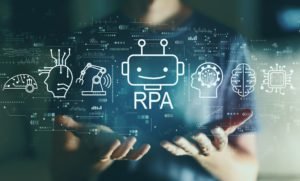
Robotic Process Automation (RPA) and How is it Used in FinTech Today?

Last Updated on 2 years ago by Imarticus Learning

RPA (robotic process automation) is a robust solution that allows businesses to automate processes. It’s widely popular in different sectors but you might wonder, “What are the uses of RPA in Fintech?”

To help you find the answer, we have prepared the following article:

What is Robotic Process Automation?

RPA online training in FintechRobotic process automation, RPA in short, is a technology that simplifies building, deploying, and managing robots that mimic human actions. These robots interact with software and digital systems just like humans do.

RPA training allows you to build robots that can recognize what’s shown on a screen, enter information, identify data, navigate a system, and perform various other activities. These solutions automate specific tasks in your business that will allow you to enhance your productivity and efficiency.

Use of RPA in FinTech

Robotic process automation offers a ton of advantages to businesses regardless of their industry. It allows them to reduce their operation costs, improve their efficiency, and make the organization more manageable.

In FinTech, there are many use cases of RPA.

  • Banks use RPA to increase their operational visibility and improve their data security. RPA allows them to improve their compliance implementations and make them more efficient.
  • In accounting, RPA automates customer credit monitoring, sales quotation generating, distributing invoices, and doing necessary follow-ups.
  • Accounts payable can utilize RPA in processing vendor invoices, responding to inquiries, managing the various payments, and cross-checking invoices with the purchasing orders.
  • RPA can simplify the KYC process by optimizing the nitty-gritty tasks of the verification process. They can also gather all the relevant data through optical character recognition.
  • RPA can help in intercompany reconciliations. It can automate checking different orders and transactional data. The bots can also approve the matching orders automatically and alert the necessary parties if they found any inconsistencies.

Become a FinTech Professional

RPA has a ton of advantages but it’s a relatively new technology. That’s why the demand for RPA (robotic process automation) experts is constantly on the rise. Finance companies want professionals who are skilled in this field and can implement the necessary solutions effectively.

To become an expert in RPA for the finance sector, you should look for Fintech courses in India. Taking one of the best Fintech courses in India will help you learn the necessary skills quickly through experts and mentors.

There are many options for Fintech courses in India. You should choose one that teaches you the latest skills and concepts such as blockchain, cloud computing, machine learning, and many others. Learning skills like blockchain and cloud computing will help you stay on top of the industry trends and accelerate your career growth.

Look for online Fintech certification programs in India as they allow you to learn safely from home without compromising with the quality.

RPA has become a necessity for modern finance companies if they want to keep up with the competition. If you want to learn about RPA in the context of Fintech, you should enroll in one of the Fintech certification programs available online.

Learn more about the best Fintech courses in India with Imarticus Learning.

Why Choose a Career in Digital Marketing?

Last Updated on 2 years ago by Imarticus Learning

Choosing the right career trajectory can be daunting for anyone. Finding something you love while searching for stability and a particular lifestyle, in the long run, can be tiring.

Best Digital Marketing Online Course with Placement in IndiaMost students don’t think of pursuing digital marketing in the long run but if you choose the best digital marketing course for yourself, then the opportunities in this dynamic field open up; you’ll realize that the outlook of a career in digital marketing is only positive.

Read on to know more about the benefits of this versatile field and digital marketing training!

What is Digital Marketing?

Online digital marketing courses will teach you all the basics of digital marketing give you an in-depth analysis of what it is. But to briefly understand, digital marketing basically means the use of the internet for publicity and advertisement.

It works similar to traditional marketing and involves building relationships with customers and connecting with them but it also encompasses the promotion of brands, building preferences, and increasing sales through different digital marketing platforms.

Digital marketing has become well-known because it gives a better and more accurate measure of data and incurs lower costs than traditional marketing. These principles will be deeply covered and explained more properly if you pursue a digital marketing course online.

Why Choose a Career in Digital Marketing?

If you want to take up a digital marketing course and undergo digital marketing training, then you must first understand the benefits of choosing a career in digital marketing.

  1. Broad Spectrum of Choices – Digital marketing careers are versatile, flexible, and encompass many roles and areas one will probably touch upon in online digital marketing courses, training, or his/her job. These include –
    1. Video/Audio Production
    2. Search Engine Optimization (SEO)
    3. Interactive Technology (such as AI)
    4. Search Engine Marketing (SEM)
    5. Mobile Marketing
    6. E-commerce
    7. Social Media
    8. Email Marketing
    9. Web Development
    10. Marketing Automation
    11. Web Design
    12. Content Management and Curation
    13. Analytics
    14. Copywriting and Editing
    15. Business/Marketing Strategy
  2. High Compensation and Increased Demand – There is no denying the fact that all businesses must move to digital marketing sooner or later. This has made the demand for digital marketing professionals outweigh the supply opening up plenty of opportunities for people interested in the field.
  3. Constantly Evolving and Keeping you up to Date – As different new platforms are launched, the field of digital marketing keeps evolving and makes the job of digital marketers scoop out new trends and understand how they affect discoverability, something you’ll learn how to do in a digital marketing course. This keeps them up to date on the latest developments in the tech world.
  4. Does not require any Specific Academic Background – Academic background holds very little importance when it comes to digital marketing. If you have the ability to think out of the box and you have a passion for the job, then you’re good to go.

Conclusion

There are many other advantages of a career in digital marketing as well, such as – you can be creative, train at your own pace, be self-employed, work with different people every day, and many more. You can benefit greatly from the job if you have any digital marketing course online and are well-versed with its specifics. To enroll in the best digital marketing course, click here.

Related Article:

How Can Digital Marketing Boost Your Brand Value

Role Of A Big Data In Digital Marketing


What is Artificial Intelligence?

Last Updated on 2 years ago by Imarticus Learning

You don’t have to be a tech geek to have heard of the term Artificial Intelligence (AI). There are many articles that even state that AI will take over the world and in a way, AI has been a valuable tool in the business market. So, the question is: What is AI?

Artificial Intelligence in a nutshell:

There are many artificial intelligence tutorials on the internet to learn about this concept. In a few words, AI refers to a machine, especially a computer, doing the work of human intelligence. Instead of using humans to perform tasks like analyzing data, speech recognition, and more, now machines are equipped to do the same tasks using a couple of algorithms.

Artificial Intelligence courseIn an artificial intelligence tutorial, you will learn the basics of AI, its applications, and how it can be used to make an otherwise tedious process simple.

Many corporate giants like Google, Apple, Facebook use AI to constantly improve their services and collect valuable data.

Artificial intelligence careers are promising in the current market as they have a wide range of applications in different fields. Some of the major artificial intelligence careers include:

  • Big Data Engineer
  • Business Intelligence Developer
  • Data Scientist
  • Machine Learning Engineer
  • AI Data Analyst

There are many other fields and roles that you can apply for after receiving your course training in all things AI.

What is Data Science?

One of the top career opportunities in AI is as a Data Scientist. Let us explain this concept in short:

Data science courses include programming skills, mathematics, statistics, domain expertise, and more. This is to understand the data collected from AI and derive meaningful insights. These insights are then turned over to decision-makers to plan out business goals.

If you’re hearing phrases like Big Data, Machine Learning, Business Intelligence, and others, chances are they are referring to a data science course. Taking up a data science course can guarantee a lucrative job opportunity.

There are many data science courses in India. From an 11-month crash course to a 3-year diploma, there are many options you can look into. You can research the best data science courses in India to find the top institutions recommended for you.

Business Analytics Courses

While the job of a data scientist is to derive meaningful insights from the data, it is the job of a Business Analyst to turn them into tangible business decisions. This is another opportunity that ranks high on the pay scale in the AI industry. All you need to do is take up a business analytics course to gain knowledge on the topic and land a job in the relevant field.

Related Article:

https://imarticus.org/does-machine-learning-excite-you-check-out-the-imarticus-data-science-course/