How To Advance Your Business With Analytics & Build The Right Team?

In 2020, data is a goldmine of information, and if you can collect and analyze the right data sets, a lot can be achieved in a short period of time.

As companies around the world, start recognizing and collecting more data points from their customers, it is crucial than ever before to have a data analytics team, which can not only process and analyze the collected data but also emphasize sharing key insights which will assist you in advancing your business.

LinkedIn, the number one job search portal reported that 2020 saw a 25% increase in professionals who are seeking a Big Data Career in data science and analytics.

Bi Data CareerWhile this clearly indicates that the importance of data scientists is on a steady rise, it also indicates that companies need to better analyze the capabilities of each individual domain to choose the right man for the job.

How to Choose and Build the Right Data Analytics Team for Your Company?

One of the first and most crucial aspects to understand and embrace is the fact that in 2020, data scientists come with a variety of different skill sets, and thus it is essential to recognize each of the skills and categorize them into the functions best suited for.

While building an analytics team for your organization, you can follow either of two different approaches.

  1. The Direct Method of Segmentation
  2. The Indirect Method of Appreciation

The Direct Method of Segmentation

The concept of the direct method of segmentation is based on the ideology that each data scientist depending on their skill set can be grouped into either of three different designations and then hires can be made based on deciding which skill is required first.

  1. Data Engineers: Data Engineers are the crux of any data analytics team you want to design. The main skill sets you should look for in a data engineer include, ETL (Extraction, Transformation, and Load), Data Warehousing, data processing, and other similar roles.The fundamental job of a data engineer can be summarized as preparing the data for further analysis by data scientists and analysts, who form the rest of the team. They generally have a degree in Big Data Analytics Training.
    Big Data Career

  2. Data Analysts: Using the data prepared by data engineers, analysts extract critical information and decisions which are helpful in solving problems and contribute to advancing business decisions within the organization.
  3. Data Scientists: Data scientists form the last hierarchy of the team and are mainly responsible for crafting and perfecting algorithms using either Machine Learning or Artificial Intelligence to make compelling decisions from unstructured data sets. While a data scientist can easily be tasked with the responsibilities of both analysts and engineers, in big teams these designations are separated for better utilization of time and resources.

The Indirect Method of Appreciation

The indirect method of appreciation is based on the concept of recognizing people who have a broad range of skills, but also in-depth knowledge in a few key areas. This method of hiring can be understood using the “T-Shaped” skill concept, where the horizontal bar of the T represents the broader knowledge set of the hires, and the vertical bar represents the specialized knowledge in key areas.

The overall aim of this methodology is always to find the right set of people, who have the expertise and the knowledge to get the work done in a timely manner.

Conclusion

Building the right data analytics team for your business can not only contribute to its immediate success but also long-term growth. Thus always make it a point to invest the right amount of resources and figuring out which methodology of hiring works best for your business.


Boost your Career and Secure a Job During the Pandemic by Availing our Great Fightback Offers today!

Imarticus Learning introduces the ‘Great Fight Back Offer’ where you can sign up for selected courses and avail of good discounts for a limited period from 26th April-30th April 2021. Sign up today and avail of up to 30% Flat Off on placement-oriented, future-skill professional training programs.

 Covid-19 has changed the ways we lived. We are living amidst new normalcy, and we hope it fades out soon. Before we can unmask and return to normal, safety and health has to be a priority for all. The latter priorities being livelihood!

Yes, patterns of the industries have shifted, and employment and recruitment processes have changed. The parameters and eligibility criteria are moving to different alignment rapidly!

Does it put a question in the mind of what to do to advance and keep up the pace?

Well, the answer is simple to update and upgrade your skills. Those looking for an advance in their respective careers can look for new-age career programs. While those falling short of opportunities can consider shifting their career into a different industry.

Learn Data AnalyticsA practical approach and expert advice can work wonders for any task as it lays down a strategic path to be followed.
Upgrade for New Age Career with Imarticus

Imarticus Learning has transformed many careers by enabling aspirants to acquire in-demand skills using an ‘Industry-First approach.’ The idea is to prepare a talent pipeline for the jobs of tomorrow!

With the growing commercial and technological advancements in the global markets, Finance, Analytics, Technology, and Marketing are the industries that tend to secure the top-most position in terms of job opportunities.

These industries are rapidly becoming one of the most lucrative careers in the business world. Finance and Analytics Courses play a significant role in data evaluation for businesses to streamline decision-making processes. Technology simply helps to implement the strategy coming in through management.

‘The Great Fight Back Offer’

Why let Covid ruin your career when you can upgrade and become a skilled new-age professional! With the online learning mode of Imarticus, you get the facility to learn at home, thus, remaining safe and ensure productivity in the spare time.

Register today and empower your career prospects most affordably!

Edge Vs Cloud: Which Is Better For Data Analytics?

What is Edge Computing?

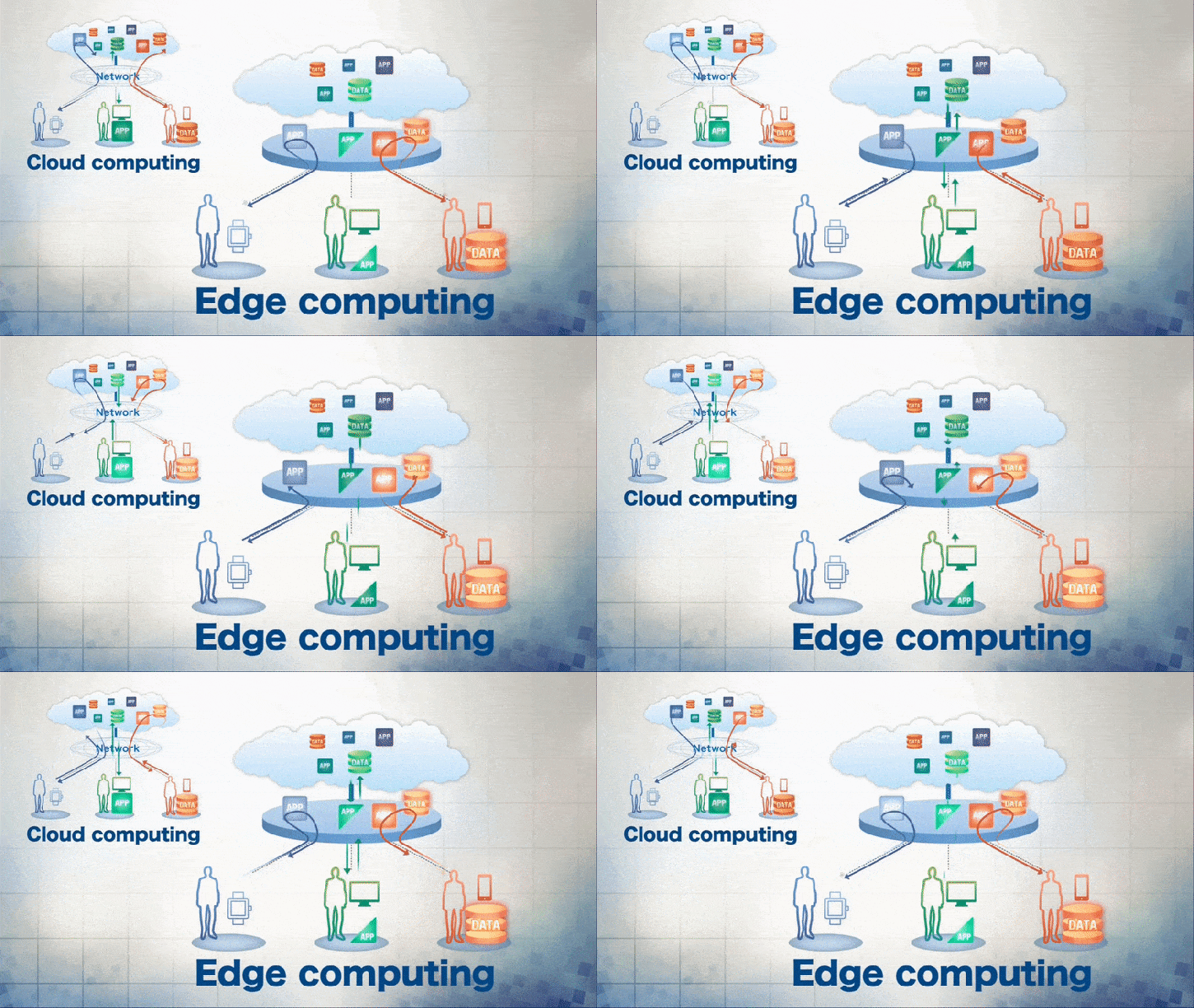
Edge computing is a segregated topology which serves to bring processed information closer to the device that is gathering the data rather than relying on a central unit which would be located much farther away.

What is Cloud Computing?

Cloud computing involves the process of delivering important information and services such as storage without the need for involvement of active management.

Which Out of the Two Is Better For Data Analysis?

In today’s world where AI has become an extremely important part of our lives, developers are looking to merge the devices we use on a day-to-day basis with artificial intelligence to make running businesses easier for organizations.

In such cases, we must look at the various computing methods that can make this possible in an efficient manner. Here, you would think that cloud computing would hold an important position in making the most suitable and ideal decisions. Platforms which are based on cloud allow developers to quickly create, deploy and handle their applications.

These would include playing the role of a platform of data for applications, application development which would help bridge the gap between data and users, and so on. It is popular for its flexibility with data storage and the ability to perform analysis processes.

On the other hand, edge computing allows applications and various other analytical and service processes of data to be done away from a central data unit, bringing it nearer to end-users. It allows the processing to take place within the locally available resources, thus bringing it a step back from the intricately planned cloud model where data processing happens in specific data centres.

Let us dive into this further in detail.

Cloud vs Edge Computing: Latency Problems

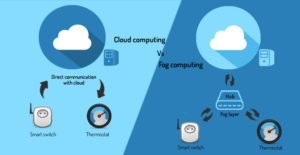
Cloud computing is used extensively across various organizations and companies for data analysis. However, there may be situations where a business may face problems in collecting, transporting and analysing the data given.

Edge and cloud computing for Data AnalyticsWhen data is transferred to a remote cloud server, it allows the user to perform various complex algorithms with machine learning and thus predict the maintenance needs of a particular section. This is then forwarded to a dashboard on a personal system where one can determine what decisions are to be made further. This is all done comfortably from home or the office.
This is great, however, as one begins to increase the intensity of operations, one may begin to run into issues such as physical limitations on the bandwidth of the network and thus also latency issues.

Edge computing does a great job at reducing latency issues by involving a local server, maybe even on the device itself. The only difference here is that the issue with latency is solved at the expense of the processing power offered by cloud computing methods.

Businesses, with edge computing, are now being able to decrease data volumes which would need to be uploaded and stored in the cloud. This thus makes the process of data analysis less time-consuming.

Edge computing may still interact with other website applications and servers. It includes physical sensor thus allowing it to help run smarter algorithms and facilitate real-time processing which is used in smart vehicles, drones and smart appliances. It may not be as strong as a remote server, but it helps reduce the bandwidth strain that one would normally face with cloud computing.

Data Analytics CareerA big data analytics courses would help equip a person aspiring to work in the field of data analysis with all the information that would be necessary. A big data analytics career is a good option because it is an ever-expanding field with a large number of opportunities!

5 Reasons to Learn Hadoop!

Big Data Analytics is ruling the world. Organizations across the world have realized the potential of Big data analytics to push their business decisions to be more informed and data-driven. Data analytics has become imperative in terms of uncovering the hidden patterns, deriving correlations, understanding business information, and learning the market trends.

Hadoop is open-source software that facilitates the storage and processing of a large amount of data. It is scalable and reliable and can be used on distributed computing that does not share any common memory or discs. So, is it good to learn Hadoop? Let us look at the top five reasons to learn Hadoop.

  1. Bright Career Prospects

More than 90% of the companies have invested in big data and they are in the hunt for talents to manage the data for them. This unveils a big career path ahead for big data and Hadoop trained professionals. If you are looking for a lucrative career in big data, you should get Hadoop training to brighten up your future employment prospects.

  1. Many Choice of Profiles

There are many different profiles related to Hadoop depending upon your proficiency, learning skills, and experience. You will be amazed at the designations available – have a look at some of them:

  • Hadoop Admin
  • Hadoop Developer,
  • Data Engineer
  • Data Analyst
  • Data Scientist
  • Big Data Architect
  • Software Engineer
  • Senior Software Engineer
  1. Constant Increase in the Demand

Big data and its applications are ever-increasing, and this works in favor of Hadoop professionals too. Big data has now become the basic requirement for effective business strategy formulation and hence, the companies are on a constant lookout for talents who can collect, process, and interpret data. The demand is only going to increase in the coming years. Getting Hadoop training will help you to be future-ready.

  1. Accelerated Career Growth

As mentioned earlier, there are many different profiles associated with Hadoop. Depending upon your skills, experience level, and your willingness to learn, you can easily move up your career ladder and secure a more challenging and rewarding position.

The fact that many global market leaders are big recruiters of data professionals the scope of data science-related jobs is as vast as the sea. Also, unlike many other jobs where the supply of talents is far exceeding the demand, there is a serious shortage of skillful professionals in data analytics. This increases the chances of employability by many folds.

  1. It Promises Good Pay

The fact that Hadoop is the leader in big data job postings gives you a taste of the situation. There is a serious lacuna in terms of good talents, and companies are ready to pay fat salaries for the right talent. All you need to do is to sharpen your skills and keep yourself updated all the time.

Conclusion

You now know the top reasons to learn Hadoop. Ease of learning and high demand makes it a hot pick among aspiring data professionals. Hadoop skills will earn you brownie points and help you get your dream job.

Big Data And Hadoop – The Career Options! Worthwhile To Explore More!

The importance of Data Analytics was realized when data became the focus of major consulting and research firms across the globe. Some of the major decisions involve data on a daily basis. A career in data analytics is just what these organizations look for in a potential employee.

To be successful in data analytics, there are certainly effective ways:

How do you start a career in data analytics?

Understand the tools of the trade: These tools can be SAS, SQL, R, etc. Knowledge of tools is essentially just a start. You can pick the one that is easily accessible to you at the moment.

Learn to use tricks: You can do this by expanding your professional network with experienced professionals within the organizations you plan to join in the future or reach out to institutions that offer a course in data analytics.

Find your way into data analytics: Grab opportunities within your professional network. Take a course in data analytics – there are several renowned institutions that offer it. At Imarticus Learning, the data analytics course exposes you to real-life business examples through case studies and provides you with reading and learning material along with hands-on learning experience which is just the perfect fit to make a career in data analytics.

How can you learn business analytics?

Many organizations across the globe have witnessed a change in the way data influences their business. Analytics is a powerful tool for decision-making, resolving operational issues and boosting performance, allowing companies to reach their full potential and objectives.

There is an increased demand for data science professionals, and by developing analytical skills, even someone who does not already have a business background, can still learn it.

If you are a graduate, getting an MBA can help you gain relevant skills and solve complex business challenges at the organizations you may work in the future.

Here are some of the most effective ways how you can learn business analytics:

Take up an Online Business Analytics Course

At Imarticus, we offer an ocean of opportunities for learners. Our business analytics online course provides a great way to be job-ready and also become a data-driven decision maker. Our courses can be paused, rewound, and visited whenever you want.

Learn Things Hands-On

With our courses, you can add more to your skill-set by gaining a hands-on experience, all while managing other important demands in your life at your own convenience.

Expand Your Network

Your contacts on your professional network, both offline and online, can help you succeed, gain important skills, and help you perform better. You can contact them and learn new experiences through examples and guidance.

How do you learn big data analytics?

Big Data means collecting huge and complex data which cannot be stored easily and process. Big data can be in the form of interactions from the users’ social media, businesses, and mobile phones or transport systems.

Big Data Analytics is the process of managing these huge data sets from various sources using database management tools or data processing applications to be used by data analysts, and deliver the data products to organizations that run on data for their business.

The biggest challenges are capturing, curating, searching, storing, transfer, sharing, analysing and visualization of the huge data collected from random sources.

For being skilled and knowledgeable in using big data for the right purposes, in the right way, and at the right time, one needs to learn big data analytics. Learners can opt for big data analytics tutorial provided by renowned institutions such as Imarticus Learning, that offer a courses in big data analytics.

Learn Big Data Analytics and HadoopA deep-dive into the world of big data offered at Imarticus Learning teaches you the most fundamental concepts and methods and tools used to effectively manage data in general and on-the-job at organizations which deal with big data every day.

How can you learn Hadoop and Big Data?

The most important challenges that come with Big Data are data quality, discovery, analytics, storage, security, and skill shortage. That is exactly why it is necessary to understand Hadoop and Big Data, and to learn to work with them. Hadoop can handle large data volumes, structured or unstructured. Many organizations that deal with data on a daily basis use Hadoop to run applications which have thousands of terabytes of data.  Hadoop can run on a personal computer too. That’s what makes it a really adaptable and useful tool.

So, how does one attain the skills required to use this amazing tool?

The answer is obvious – Big Data Hadoop Training!

Business Analytics coursesImarticus Learning offers courses in Big Data Analytics, which includes learning several tools used in the process. Through a Big Data Hadoop Training, you can understand the complexities of Hadoop, its components, and learn to use it quickly.

The course covers everything you need if you are planning to start a career in Data Analytics. You will also get a deep insight into how big the Big Data market is, the different employment options, the latest trends, the history of Hadoop, Hive, and Pig.

Can the Hadoop course be completed via online training mode?

Due to the major challenges that arise while using Big Data, like data quality, discovery, analytics, storage, security, and skill shortage, it is necessary to understand how to use Hadoop, and to learn to work with it. Hadoop can help handle large data volumes, whether structured or unstructured. Many organizations that deal with data on a daily basis depend on tools Hadoop to run applications with thousands of terabytes of data.  Hadoop is so adaptable that it can even be used on a personal computer.

So, can one learn Hadoop via online training?

Big Data Online TrainingThe answer is – Big Yes!

In Hyderabad, and multiple locations throughout India, Imarticus Learning offers courses in Big Data Analytics, which includes learning how to use several tools. Imarticus Learning offers Hadoop training in Hyderabad. The course offers a deep-dive into Hadoop. It helps the learners understand the complexities of Hadoop, its components, and learn to use it quickly and effectively.

The course covers everything you need if you are planning to start a career in Data Analytics, specifically concerning Big Data. You will also get a deep insight into how big the Big Data market is, the different employment options, the latest trends, the history of Hadoop, Hive, and Pig.

How Big Data and AI Work Together?

Since our childhood, we have been taught to arrange the raw data to get significant information from it, because raw data itself is meaningless as there is no interpretation behind it. Machine learning (specifically AI) helps to gain the required insights from Big Data to make it purposeful.

At very advanced level AI revolves around a brain(artificial) which analyses the data and makes decisions.

The artificial intelligence is much more required in the field of Data analytics because the traditional analytics are failing miserably to operate the large volume of data that is being created. The fact that more data leads to more purposeful insights results in the intervention of AI in Data analytics.

Both AI and Big data go hand in hand. AI helps in playing around with a lot more data and excessive data helps to train the AI in a better way. In other words, as there is no existence of business without customers, the similar way the power of computers is not very useful in the absence of Big data.

Most of us think that AI is increasingly reducing human intervention in decision making, leading to loss of jobs. Actually, the machine can make decisions based only on the facts, whereas humans use their emotional psyche to make decisions.

The integration of AI and Big data is leading to the more purposeful use of the emotional intelligence of humans in coherence with the facts and figures to make better decisions. This coherence along with proper Big Data analytics training helps businesses to identify the interest of customers in minimal time.

Globalization of business: The availability of a wide range of AI tools in the market leads to its adoption by many companies. The integration of Big Data and AI is helping companies to market the same product in different regions of the world by keeping the track of consumer behavior using AI. This helps in smoother functioning of business in culturally diverse regions without harming the sentiments of the consumers.

Change is always consistent
With the changing needs of customers AI should always improve. To bring in the massive changes in AI catering the future needs one must focus on the AI technologies used with Big Data. Some of the AI technologies used in Big data are:

Disorder recognition is a tool helps in fault detection, sensor network, system health with big data technology.

Bayes’ theory is used to determine the probability (Conditional) of occurrence of an event based on the events which have already been occurred. This theory is best used to recognize the pattern of customer’s interaction with the company results in business providing optimized choices, leading to customer satisfaction.

Pattern Recognition is a technique of machine learning in which AI is trained by giving it certain amount of data, followed by correcting its mistakes manually, which makes AI to recognize the pattern. For example, if I want to train my AI to read my handwriting and convert it into typed text, I will first train my AI using my handwritten notes and then correct its mistakes. This way after few attempts, AI would be able to understand my handwritten notes well.

Graph theory: Through the study of graphs and node relationships, the data can be mapped to the linearity. This model is useful and can help big data analysts to recognize patterns.

To summarize with, both Big Data and AI are two most emerging technologies and go hand in hand. One could utilize AI to decide on how to proceed with big data analysis instead of depending on people. Conversely, Big Data could be used by AI in its self-learning and/or decision making.

What Is Big Data Analytics Training Online?

What is Big Data?

Big data is the analysis of large datasets to find trends, links or other invisible visions with small data sets or traditional operations. The burgeoning growth of devices and sensors connected to the Internet is a major factor requiring hundreds or thousands of computers for big data, storage, processing, and analysis.

An example of big data used in the development of autonomous vehicles- Self-driving car sensors can detect and analyze millions of data points to improve performance and avoid accidents.

Big Data Online Course

Learn the basics of big data and learn how to design and implement a Big Data Analysis solution using this free online course that presents this required field. Master technologies like Hadoop, Azure, and Spark and their implementation.

For big data pre-approval, consider the Microsoft Professional course with 15 big data courses. This multi-unit program is designed to pave the way for a new career. Learn how to handle real-time data flow and implement big, real-time data analysis solutions.

You will learn analytics and artificial intelligence and the use of Spark for implementing analytical solutions. This is one of the major benefits of big data. Start with a self-guided course that covers the basics of big data technologies, data formats, and databases.

About this course

Acquiring basic skills in today’s digital age and storing, processing, and analyzing data help you make business decisions.

As part of the Big Data program, this course will deepen your Big Data Analytics knowledge and improve your programming, Analytics and Artificial Intelligence Training. You will learn how to use basic tools like Apache Spark and R.

The topics for this course are:

  • A big analysis of cloud-based data
  • The predictive analysis includes stochastic and statistical models.
  • Extensive application for data analysis
  • Analysis of problem space and data needs.
  • At the end of this course, you will address a wide range of data science issues with creativity and initiatives.

Big data function

If you like data processing, analytics, and computer programming and want to join one of the hottest areas, big data is the best choice. Big companies like Amazon AWS, Microsoft, IBM, and LinkedIn are trying to broaden their horizons. At the time of this article, Big Data had already included more than 1,600 full-time jobs with an estimated salary ranging from $ 90,000 to $ 140,000 per year. Senior positions include big data developers, big data engineers, and big architects.

Workers are responsible for building big data analytics systems of big data in real-time. Because the Internet of Things (IoT) generates large amounts of data, companies need to find a way to get more ideas to stay competitive.

The demand for professionals who can design big data solutions is high and salaries are very competitive. Required programming languages ​​and tools include C ++, Hadoop, Sparks, HDFS, Soop, Scala, MapReduce, Spark, Java, Apache Hadoop, Apache, Python, SQL, and more.

Explore big data careers with online courses

Learn the basics of big data platforms like Hive, HBase, and Kafka, SQL, Hadoop, Pig, Spark and see if your exciting career is right for you. Start with a Microsoft introductory course and proceed to a full certification program. The basic course is self-contained, so you can sign up and start studying today!

Should You Start With Big Data Training Or Learn Data Analytics?

While the difference between Big Data and Data Analytics isn’t huge, it’s an important one. Career streams in Data Science can diverge into two separate branches based on which one of the above you choose. 

Both Big Data and Data Analytics focus on the same thing – processing large chunks of data for valuable insights. But the methodologies and tools used for the same are different. Therefore, you can choose to specialize in one career stream and continue progressing in it, or you can learn both. 

In order to make a clear distinction, let’s define both the streams separately. 

What is Big Data?

Big Data refers to the management and operations performed on extremely large data sets (one data set is often greater than 100GB) in order to extract patterns, trends, and insights that can power business decisions. Therefore, you have to cultivate expertise working with a large amount of data, and meet specific challenges that it presents. 


  • What all you learn in Big Data Analytics Training?


  • Data optimization techniques. 
  • Finding relationships and patterns. 
  • Big Data tools such as Hadoop, MapReduce, etc.
  • Compiling, sorting, and processing data using Python, R, etc.

What is Data Analytics?

Data analytics deals with obtaining relevant and very specific information out of smaller data sets. Where a Big Data analyst will sort through millions of rows of data, a Data Analyst will work on finding the statistical parameters in a given range. It involves reporting of elementary but well-defined parameters than can be analyzed for business value. 

  • What is taught when you learn Data Analytics? 
  • Applying statistical principles to data sets. 
  • Compiling and disseminating information from data sets. 
  • Generating goal-oriented reports for decision-makers. 
  • Working with analytical techniques for smaller data sets. 

Which one to learn first?

  • Direct Path 

At Imarticus, we have made both the options available to the students. They can dive straight into Big Data Analytics Training which will prepare them for Big Data from grassroots levels.

Learning Big Data directly ensures that the students are absorbing the concepts they’ll use in professional places directly. They’ll be trained on various tools used in Big Data so that they can come to speed with the industry scenario. 

Same is the case with Data Analytics. Students can learn Data Analytics directly and make it as their career objective. In case they don’t want to get into Big Data, this is an excellent Data Science alternative for them. 

  • Progressive Path

The second option available to students is to specialize in both Big Data and Data Analytics but in a progressive way. They’ll study Data Analytics first and then shift their focus to Big Data. 

Although there is a significant difference between the two career streams, the underlying concepts remain the same. Therefore, someone with the knowledge of Data Analytics will not find it difficult to make the switch. Rather, they’ll be able to advance their career at will. 

Conclusion

As Data Science flourishes as a career, Big Data and Data Analytics continue to be the two best career streams in the market. Our courses cater to both the streams exclusively, as well as, in an integrated way for students to plan their career logically.  

How Big Data is Implemented in Business?

Big data is everywhere, and behind every organized solution, you face on the daily. The term refers to massive sets of data that inundate businesses during day-to-day operations– but it’s not the data dump itself that matters to businesses, but the goldmine of insights it reveals once it’s sifted through, analyzed and put into plain and simple words.

The amount of data an average business sees in a day is torrential. Big data scientists find themselves having to deal with the ‘three V’s’ as they’re called:

  • Volume: tonnes of data from a dozen different sources including social media and daily transactions
  • Variety: structured and unstructured data; numeric or stock; video or audio
  • Velocity: Breakneck speeds at which data flows in from all channels into the dump

Big data is highly complex and interrelated, which means sifting through and making sense of it can be quite the herculean task. However, the insights gathered through the process of going through the dump can enable reductions in costs, effort and time. It can also open up new revenue streams, enable the development of new products and bolster analytical and strategic business decision-making.

How is big data implemented in business?

The traditional method of storing data is by using relational database software, built for Structured Query Language (SQL). However, the future of big data began looking too complex for businesses to be able to control, which led to the introduction of NoSQL.

NoSQL is customizable and scalable, making them ideal solutions for businesses both big and small. It’s made specifically for big data, and stores data in the following ways:

  • Document storage
  • Graph storage
  • Key-value storage
  • Column family storage

NoSQL provides real-time, super-quick access to data, without the need for schemas and columns. This allows the running of real-time programs towards furthering business processes. Without the schema middleman, data scientists can directly interact with tonnes of data, which in turn saves any business a lot of effort, time and money.

Why is big data important in business?

Industry professionals and students alike are looking to learn big data analytics and science because of the plethora of job options it opens up in the world of business.

Access to information

Bug data opens up new avenues for businesses to explore, be it in terms of generating revenue, introducing new products or strengthening marketing. It enables real-time data monitoring and allows for A/B testing where necessary without too much of an impact on ‘business as usual’ if the strategy doesn’t work out.

Faster decision-making

Hadoop and other in-memory analytics software allow businesses to conduct analyses on information immediately, further enabling them to come to crucial decisions faster and based on data instead of speculation. Big data can also be leveraged to lookup more updated and dynamic data, allowing decision-making to be accurate as well.

Conclusion
As a good data analytics course will show you, big data is in use across several burgeoning industries, each with their own means and end goals. Be it manufacturing, pharmaceuticals, retail or even governments, there is no place big data can’t be implemented– which means there is no place big data specialists can’t go.

Data Analytics Changing the Structure of Media and Entertainment Industry

Data Analytics Changing the Structure of the Media and Entertainment Industry

Big Data Analytics Course is a highly searched course on Search Engines. Also termed as Data analytics, it is among the indomitable tools that allow businesses to compete in the market. Around 73% of the businesses are involved with Data Analytics in some ways. There is hardly any sector that remains unaffected by Big Data.

The media and entertainment industry are one of the primary adopters of data analytics. The industry generates a huge amount of data, which is basically in digital form. The data also comes with the capability of changing the research space regarding the consumers.

Media and entertainment companies are increasingly transforming and executing Big Data analytics and machine learning in various areas.

Here are some of the primary areas. 

  • Improvised Ad Targeting;

According to the Big Data Analytics Courses, advertising is an important aspect. The concept comes with features like advanced segments, detailed view of customers, hyper-targeted ads, and much more. Working on advanced analytics includes improvised ad targeting to help the correct viewers visualize the ads. Along with the standard advertisements, using video marketing campaigns, social media platforms are also helpful in improving the ad target to obtain data in bulk.

  • Optimization of Media Scheduling;

Data analytics consists of collecting data from various sources to derive efficient predictions regarding the actions of the users. The external sources of data collection are much essential. The detailed predictions would also be more accurate for the complete optimization of the audience for obtaining more views. The companies can also look for personalized advertisers for using the demographic data obtained before.

  • Getting new sources of revenue 

This is among the prime chapters of the Big Data Analytics courses. With the help of data analytics, it becomes easier to get new sources of revenue in terms of media and entertainment. In today’s competitive market, identifying the innovative resources of revenues, apart from the traditional advertising campaigns and partnerships, is considered to be one of the valuable assets for the company. The companies can also go with the digital conversion of the micro-segmented customers for advertising the exchanges and networks.

  • Social Media Analysis;

In the digital market, nearly all companies use social media on a regular basis for proper analysis of the data collected. Be it Facebook, Instagram, Twitter, or any other social media platform, it generates data in bulk, which is helpful in real-time analysis. This is also a cost-effective way of data processing with a large amount of data. For obtaining actual feedback, the usage of multiple sensors for the theaters or smartphones is also an effective way of social media analysis.

Some other applications used for detailed data analytics of the media and entertainment industry include data visualization, inference engines, cross-sell, and many more. Through all these techniques, the companies can easily analyze the services and the data obtained from them, taking all the requirements into consideration.

Big Data is a boon for the media and entertainment industry. Media comes with improved access to the data of the consumers compared to other sectors. By analyzing the data from the content consumed, the users would have a clear insight into the effective formats, consumption patterns and viewing provided. Using the analytical data is also helpful for the media companies in working over various issues regarding the channels and the formats that would attract consumers.

So, are you looking for effective Big Data Analysis Courses? Get in touch with Imarticus Learning for all your needs.