What is a good Excel book for corporate financial analysis (controller, financial planning & analysis)?

Last Updated on 5 years ago by Imarticus Learning

Financial modeling can be best learned through practice.  If you are just starting to learn financial modeling, reading up on the different financial models will help you clear the fundamentals. Microsoft Excel is one of the most-used programs which are used for financial modeling.

The following books are helpful to clear the basics of financial modeling and planning, and also discusses how to analyze data sets. They also show how Excel can be used for the same models.

Mastering Financial Modelling in Microsoft Excel: This book by Alastair Day will help you master the concept of financial modeling and how they can be generated through Excel. Complex issues are discussed with ease, with solutions to practical problems. Some of the major topics covered by the book are spreadsheet designs, processes, and methodologies.

Various techniques which can be used to check and improve existing models are also given in the book. Tests for every scenario are also given along with different Excel formulas and functions.

Financial Modeling in Practice: A Concise Guide for Intermediate and Advanced Levels: It is an engaging, easily readable book authored by Michael Rees. This is a great book for students as different Excel functions and tools for financial modeling are easily explained with scenarios, explanations, and illustrations.

It also teaches the basics of how to design a model, detail out its structure, and make them accurate, relevant and easily understandable. The book also explores different add-ins such as @RISK and Precision Tree, which are very useful for risk assessment. Different examples of how these models have been used in practical solutions are explained in great detail in the book.

Best Practices for Equity Research Analysis: The book by James Valentine is aimed at equity research, and is useful for anyone who wants a career in this field. The book explains concepts from the business’ point of view. The book explains ideas on valuation, behavioral finance, and due diligence.

The author’s own experiences are clearly stated in the book as well. It focuses on the importance of clear communication through the different models which are generated. Tips and tricks which can be used in Excel are explained in detail in the book.

Financial Analysis and Modeling using Excel and VBA: The book discusses the world of Visual Basic for Applications (VBA), as used in different Excel models. It is written by Chandan Sengupta and is relevant for both students and financial modelers who want to include VBA in their analysis.

It goes into the detailed features in Excel which are necessary for financial analysis course and modeling. Examples of these models are statistical analysis, Ribbon, data analysis, and PivotTables. This book also teaches financial analysis and modeling through different features of VBA and Excel.

You can learn by the different examples that are given as assignments in the book. Iterative solutions to different problem scenarios are also explained in great detail in the book.
What is the future of Artificial Intelligence?

Last Updated on 5 years ago by Imarticus Learning

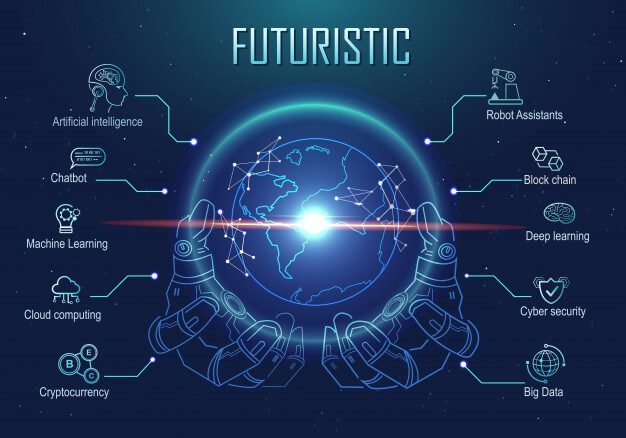
One of the biggest developments in the world of computer science has undoubtedly been Artificial Intelligence. The ability of your machine to learn and understand all about certain processes and then implement methods to improve the same is one of the most in-demand jobs today.

It becomes necessary to evaluate a company’s software and see how they can implement artificial intelligence methods.

There is so much that is possible while applying artificial intelligence in marketing. By 2020, more than 30% of the companies worldwide will use AI to help streamline their sales. This will help them increase efficiency and focus more on converting sales and rates.

Here are a few other places where AI will play a prominent role:

  1. Driverless vehicles:

Automated vehicles aren’t a dream anymore. The likes of Tesla have already started implementing driverless cars on the road. The U.S. Department of Transportation has gone ahead and released certain definitions and rules pertaining to the various levels of automation which can be implemented.

Uber was also acquired by Google in order to help scale their properties and capture the driverless market in time. AI could help save lives lost in accidents and potentially save close to 30,000 people in the United States every decade.

As it is a disruptive technology, it is expected to create some big changes. It can also automate many jobs which affect people. In the near future, it is expected to be used for opportunity more than threats.

       2. Process automation:
Robotic process automation refers to the use of machine learning to automate tasks dependent on rules. It will help individuals focus on certain crucial aspects of their work and leave the routine work to machines.

Automated projects will take up a bulk of the automation work in the world of machine learning and artificial intelligence. Companies are always looking to be cost-effective and automated machinery will help them achieve that goal over the long term.

     3. Sales and marketing:
Artificial Intelligence is also being employed in so many sales and marketing sectors. AI can be used as a useful tool to make repetitive tasks much easier. This includes tasks such as scheduling, paperwork and even timesheets to make it easier.

Marketing teams will also be able to weed out fake leads from genuine ones to make it easier to choose the right people to market to. They will be able to make the process simpler and allow everyone to get better at their daily tasks.

Overall, artificial intelligence is on the route to make the world a better and easier place to live and work in. It is a disruptive technology which will create dramatic changes. It can also be used to automate a multitude of jobs, especially in the production sector and make it easier for companies to become cost-effective.

Over the long run, where this will head to cannot be predicted but by the looks of it, it seems like a good place to be in. With Imarticus, you will be able to take up an artificial intelligence course that makes it simpler for you to succeed. In the battle between machine learning vs artificial intelligence, you are the real winner!

What are other uses of a blockchain apart from cryptocurrencies?

Last Updated on 5 years ago by Imarticus Learning


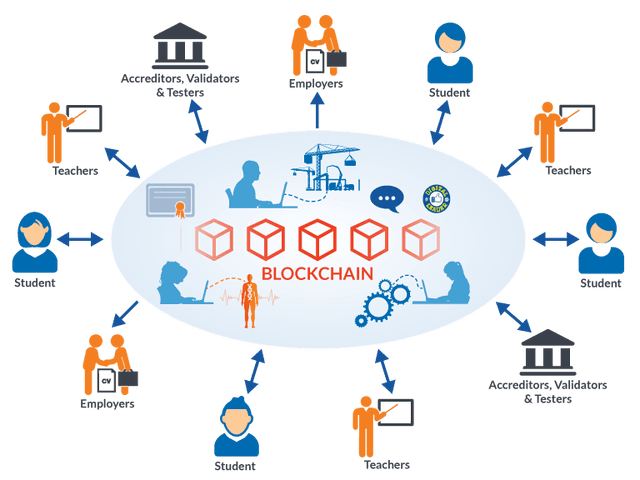
Blockchain has been the primary technology behind the rising popularity of cryptocurrencies, especially in 2017. It is the concept of having a transaction system without the involvement of any financial intermediaries, which has been revolutionary in its time. It completely obliterated the need for banks and transaction fees, and time required for long distance transactions.

Blockchain technology is not just meant for the cryptocurrency. Here are some of the potential ways in which it can be used in the modern world.

Processing payments and transferring of money: Banking transactions can become much simpler when blockchain is involved. Transfer of funds from one party to another can be facilitated 24 x 7. Banks are not involved in the process, and therefore, the transaction can be completed within seconds.

Supply chain management: There is no need for records or physical bookkeeping when it comes to maintaining supply chains. Blockchain would help business owners figure out the issues in the supply chain much easily, and then locate the issues in real time. The technology would help perform quality control checks in the supply process from the place of origin to the retailer.

Rewards programmes in retail transactions: Loyalty rewards are an effective process to keep customers and maintain revenue for many retail businesses. Including blockchain in this system would completely eliminate the need for paper and card bases loyalty reward points. The token-based system would reward customers in a fast and effective way. Fraud and other issues would also not arise which is common in the current systems. Customers would find this system more reliable and would come back to shop from the same retail chain.

Digital IDs: Digital identification has become an increasingly important concept. It eliminates the need to carry your identification document around. It will also help people in remote areas get access to resources or banking services. Microsoft is currently working on digital IDs through its Authenticator app. It is currently used by many people and gives them control of their digital identities. Blockchain technology is instrumental to facilitate the process. The company is also working on decentralized digital IDs as well.

Sharing of data:  Blockchain can be used to share or sell unused data. The cryptocurrency IOTA has recently launched a beta version of the Data Marketplace. Involving blockchain can help unused enterprise data be used in a number of industries. Currently, IOTA has more than 35 brand-name products currently, with Microsoft being one of them.

Protection of copyrights and loyalties: Copyrights and loyalties for music and other shareable creations have become unclear, with digital and other platforms are involved. Involving blockchain in the process would help secure the transactions which take place for such products. Loyalties and copyrights would also be maintained properly as a  part of the process. Blockchain training offers a real-time distribution of data, which can be especially helpful when it comes to profit-sharing.

Online voting: Blockchain offers transparency in the system which can be very useful when it comes to voting. It can help you put votes digitally, and all regulators can clearly keep a track on the votes, making your vote really matter.

Reliance Capital Downgraded by ICRA

Last Updated on 5 years ago by Imarticus Learning

R-Capital was recently IC-Ratings Association downgraded. What does that mean and how can we use this information?
Why the rating is important:
The IC-Ratings Association forum comprises of representatives from commercial banks, leading institutions in investments and finance, and companies in financial services to benchmark and rates the invest ability factor. It is an independent company listed on stock exchanges both in Mumbai and nationally, as it is a public limited company.

Global alliances:

The ratings are used by Moody’s who offer services to investors, technical and financial services globally to companies, training, research, concept management, spotting capital market trends, and providing investor service, product ratings. Moody’s is also the largest stakeholder on the rating agency.
The ICRA rating:
The rating is crucial to the common investor because

  • It gives comprehensive company information.
  • Provides users of the rating a wider field to choose investments and products from the capital and money markets.
  • Enable company fundraising from a wider market.
  • Assist the monitoring agencies to ensure measurability of performance and transparency in the rating process.
  • Aids intermediaries and institutions in the fundraising process.

The recent downward rating of Rel-Capital by ICRA to A4 from A2 has several negative connotations. The Brickwork and CARE ratings also put them on a watch-list for credit implications that can only be negative for Reliance. The key subsidiaries of Reliance HFL and Reliance CFL were also mentioned as having a negative impact on the financial position while the profile of liquidity stands weakened and Reliance itself faces rating revisions.
Here is the lowdown on the rating factors.

    • The Anil Ambani led group has been impacted by the slow monetization of its services and businesses in the non-financial market thus impacting liquidity which is stuck in investments that are non-core in nature.
    • The critical subsidiaries of Reliance in the Home and Commercial Finance sectors are also stressed. This means that the inflow of money is lower than the debts incurred and due for repayment considering their position over the coming six months.
    • The funds need to be brought in by rapid disinvestments in the assets held by the non-core and core segments of their business and imply that the fund inflow expectations were unrealistic and much higher than the true position. The most critical factor will be whether they can raise these funds in time and pay off the accumulated debts in time. These issues point to huge borrowings and lack of flexibility in capital management.
    • Though management confidence is keeping the situation afloat there is no transparency in the funds-recovery positions of capital advanced to and obtained from Rel-Capital, Rel-Commercial Finance, and Rel-Home Finance. Thus the criticality of the fund’s position and repayment capacity remains unclear.

In response to being downgraded as a good investment choice, the company claimed that the rating was inappropriate and unjustifiable mainly because none of the parameters of operation used for rating had actually changed. They claimed the rating had accounted for Rs 950 crore being the outstanding debt to be repaid by the 30th of September this year and that this was a mere commercial on-paper transaction which did not affect its liquidity position.
Further, they claimed it would be converting into money its Rel-LAM with Nippon at the present valuation of the market to raise Rs 5,000 Cr and includes a 42.88% holding which is earning a good premium on disinvestment. It has also approached SEBI with their prospectus and plans to monetize the holdings in Rel-General Insurance wherein they have a stake-hold of 49%. Speaking more about their monetization drive they also indicated that they would cut by half their debt-servicing demands and raise a total capital of 10,000 Cr Rs in total to regain their ratings.
Conclusion:
The Reliance group of companies appears to be in a grave financial crisis with mounting debts and a debt restructuring and monetization program that will take far too long. The debtors may push hard and lead the company to file for bankruptcy.
In parting, to understand financial ratings and effectively use them in today’s ratings dependent financial markets, you will need some formal training at a well-reputed institute like Imarticus. Enroll immediately in their financial analyst courses which will make you job-prepared, aid your resume with certification and of course, give you excellent hands-on practice, a comprehensive practical oriented- curriculum which allows you to hit your career grounds running!